
Wildlife
Mammals
What really makes a mammal, how the groups relate to each other, and every mammal article on this site in one place.
Mammals are the group people think they already understand, which is exactly why the mistakes are so consistent. Pandas get called bears and red pandas get called pandas. Skunks get filed with badgers. Hyenas get treated as dogs when they sit closer to cats. Hippos get grouped with rhinos when their nearest living relatives are whales. This page is the corrected map, and underneath it every mammal article on this site, organised by what the animals actually are rather than what they look like.
What actually makes a mammal
Hair and milk are the two everyone knows. The diagnostic character, the one that separates mammals from every other vertebrate lineage in the fossil record, is the ear.
You have three bones in each middle ear: malleus, incus and stapes. Reptiles have one. The other two are not new inventions. They are the articular and quadrate bones, which in your ancestors formed the jaw joint and which migrated backwards into the ear across roughly a hundred million years. The transition is documented in successive fossils, and it is one of the best evidenced macroevolutionary sequences we have. If you want a single fact that makes the mammal group real rather than a convenience label, that is the one.
Add a single lower jaw bone, the dentary, where reptiles have several; a neocortex; a diaphragm; and a four chambered heart with a left aortic arch, where birds kept the right. Mammary glands give the group its name but leave almost nothing in the fossil record, so palaeontologists work from the jaw and the ear.
How many mammal species are there?
More than there were when you were at school, and the number is still climbing. The American Society of Mammalogists Mammal Diversity Database, version 2 as of August 2024, recognises:
| 6,759 | total species recognised |
| 6,629 | wild and extant |
| 113 | recently extinct |
| 17 | domestic |
| 1,353 | genera |
| 167 | families |
The count has risen 68.8 per cent since 1980, at roughly 65 species a year, mostly through splitting existing species once genetic data showed they were more than one thing, rather than through finding animals nobody had ever seen. Projections in the 2025 review in the Journal of Mammalogy put the total near 7,079 by 2030.
The figure that should worry you more is this one: 25 per cent of recognised mammal species are either Data Deficient or Not Evaluated. One mammal in four has never been properly assessed for extinction risk. We are describing the group faster than we are assessing it.
Four groupings that are wrong, and why
- Red pandas are not pandas. The giant panda is a genuine bear, Ursidae. The red panda sits alone in Ailuridae, and its closest relatives are the mustelids, raccoons and skunks. Same name, different branch entirely.
- Skunks are not mustelids. They were classified as such for a long time on appearance, then molecular work moved them into their own family, Mephitidae.
- Hyenas are not dogs. They belong to Feliformia, the cat side of Carnivora, alongside mongooses and civets. The resemblance to a canid is convergence, not relatedness.
- Hippos are not related to rhinos or to pigs. Hippos are even toed, Artiodactyla, and their closest living relatives are the whales and dolphins. Rhinos are odd toed, Perissodactyla, sitting with horses and tapirs. Large grey megafauna is a folk category, not a taxon.
If a term below is unfamiliar, the glossary of ecology terms defines more than 1,500 of them, and the wider concepts sit in the ecology section.
Every mammal on this site
185 articles, grouped by order and then by animal. Where a group has enough depth it has its own full guide; the rest are listed article by article. I am adding guides steadily, so groups will move from lists to links over the coming weeks.
Carnivora
The carnivores
Wolves
Canis lupus and its relatives, Canidae. Read the full guide to wolves, which pulls together all 20 articles with sources.
Coyotes
Canis latrans, Canidae. Read the full guide to coyotes, which pulls together all 11 articles with sources, plus the continental range expansion, eastern coyote genetics, diet data and why culling fails.
Foxes
Vulpes and Urocyon, Canidae. Read the full guide to foxes.
Big cats as a group
Panthera plus the cheetah, a popular grouping rather than a strict one.
- Detailed Comparison of All 10 Types of Big Cats Around the World
- Top 5 Deadliest and Most Dangerous Big Cats in the World
Lions
Panthera leo, Felidae. Read the full guide to lions, which pulls together all 9 articles with sources, plus the two subspecies, pride structure, what the mane signals, the roar anatomy and the 2025 Asiatic lion census.
Tigers
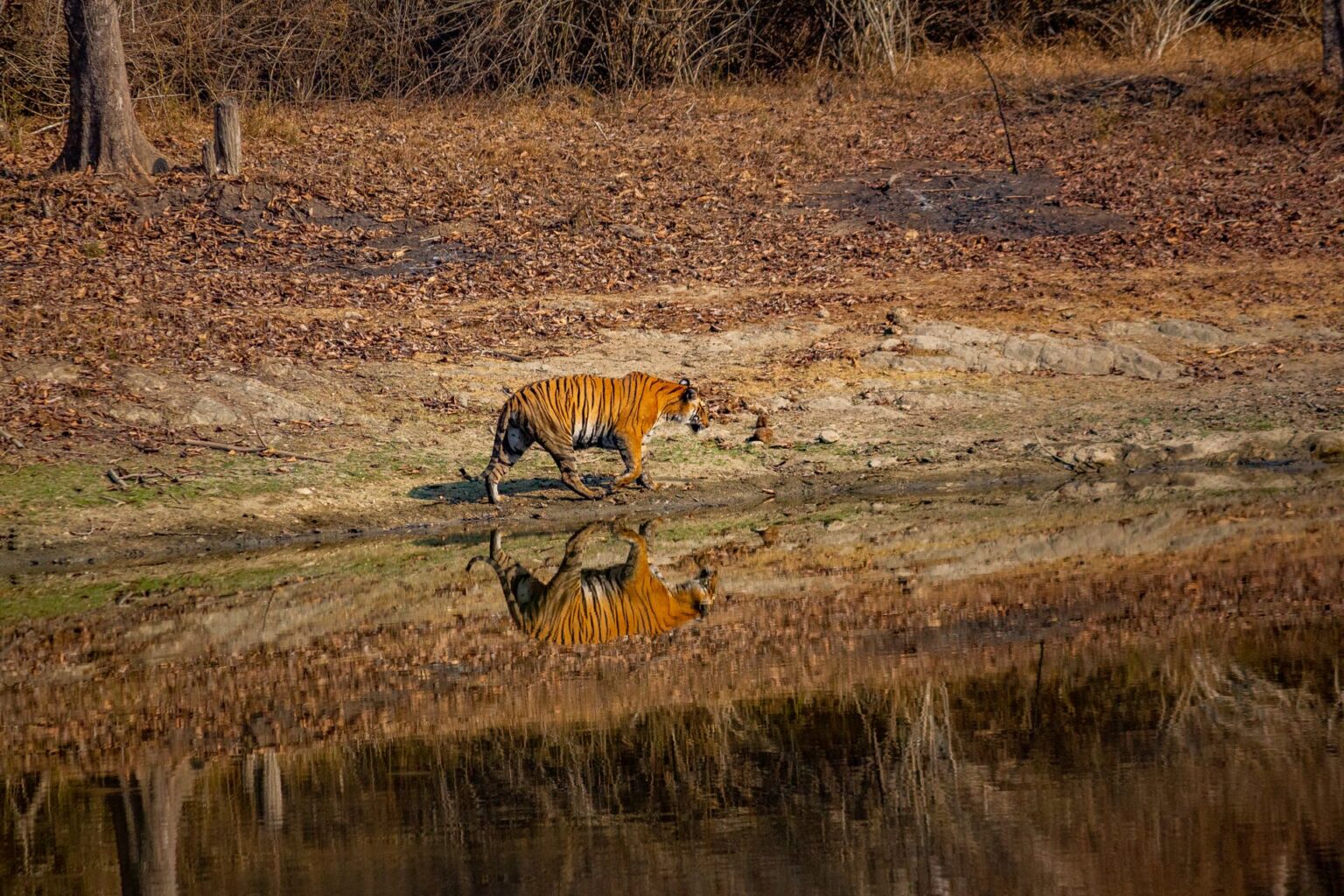
Panthera tigris, Felidae. Read the full guide to tigers, which pulls together all 13 articles with sources, plus subspecies, size, hunting, breeding and current populations.
Jaguars
Panthera onca, Felidae. Read the full guide to jaguars.
Leopards
Panthera pardus and the snow leopard P. uncia, Felidae.
- How high can a snow leopard jump?
- How often do leopards attack humans?
- What is the ecological role of the leopard?
Cheetahs
Acinonyx jubatus, Felidae. Not a Panthera cat, which is why it cannot roar. Read the full guide to cheetahs.
Bobcats and lynx
Lynx, Felidae. The bobcat is Lynx rufus. Read the full guide to bobcats.
Bears
Ursidae. The giant panda is a genuine bear, the red panda is not. Read the full guide to bears, which pulls together all 15 articles with sources, plus all eight species, hibernation physiology, size, attacks and conservation.
Badgers
Taxidea, Meles and Mellivora, Mustelidae. Read the full guide to badgers.
Otters
Lutrinae, Mustelidae.
- Otter Facts, Types, Diet, Reproduction, Classification
- Do Otters Mate For Life? Fully explained
- Can Otters Live On Land? (Here’s What They Do!)
- Do Otters Build Dams? [No! Here’s What They Do]
Martens and fishers
Martes and Pekania, Mustelidae.
Raccoons
Procyonidae.
Hyenas
Hyaenidae, closer to cats than to dogs.
Mongooses and meerkats
Herpestidae.
Primates
The primates
Gorillas
Gorilla, Hominidae.
- Gorilla Family Structure: Fascinating Insights into How Gorilla Troops Are Organized
- Gorilla Strength
- Do Gorillas Eat Banana Peels?
- How High and Far Can Gorillas Jump?
- Can Gorillas Swim?
- How Strong Are Silverback Gorillas? [Full Info + Strength …
Orangutans
Pongo, Hominidae.
- Bornean Orangutan Lifespan
- Orangutan Intelligence: How These Primates Outsmart Their Jungle Neighbors
- How Strong Are Orangutans?
- Orangutan Teeth: Everything You Need To Know
Baboons
Papio, Cercopithecidae.
Monkeys
various families across two infraorders.
Artiodactyla
Even toed hoofed mammals, and the whales
Hippos
Hippopotamidae. Their closest living relatives are the cetaceans. Read the full guide to hippos, which pulls together all 9 articles with sources, plus both species, why hippos cannot swim, the 2024 airborne study and how dangerous they really are.
Camels
Camelus, Camelidae. Read the full guide to camels, which pulls together all 6 articles with sources, plus hump biology, water physiology and the wild camel’s status.
Llamas and alpacas
Lama and Vicugna, Camelidae.
Moose
Alces alces, Cervidae.
- How Deep Can Moose Dive?
- Are Moose Dangerous to Humans?
- Moose Poop Vs. Elk Poop: 6 Key Differences Explained
- How fast can a moose run?
- Why moose antlers fall off?
Deer and elk
Cervidae.
Giraffes
Giraffidae.
Gazelles
Bovidae.
Wild pigs
Suidae.
Dolphins
Delphinidae.
Whales
Cetacea.
Perissodactyla
Odd toed hoofed mammals
Rhinos
Rhinocerotidae.
Proboscidea
Elephants
Elephants
Elephantidae. Read the full guide to elephants, which pulls together all 9 articles with sources, plus the three species, trunk biomechanics, tuskless evolution, matriarchs and ethical elephant tourism.
Xenarthra
Armadillos and sloths, an ancient South American radiation
Sloths
Pilosa.
Armadillos
Cingulata.
- Armadillo Facts: Armor, Quadruplets and Leprosy
- Armadillo Poop: What Does Armadillo Poop Look Like
- Do Armadillos Lay Eggs? [No, Here’s What They Do Instead]
Marsupialia
The marsupials
Kangaroos and quokkas
Macropodidae.
- The Quokka Life Cycle, Stage By Stage
- Quokka Mating Habits: Breeding Season, Courtship and Embryonic Diapause
- How Strong Are Kangaroos?
- Red kangaroo adaptations for survival
Koalas
Phascolarctidae.
Rodents, bats and small mammals
Beavers
Castoridae.
Squirrels and chipmunks
Sciuridae.
Capybaras
Caviidae.
Bats
Chiroptera, the only mammals capable of powered flight.
Written by Erzsebet Frey, MSc Ecology, University of Belgrade. Taxonomy follows the ASM Mammal Diversity Database version 2. Last reviewed September 2026.
From the shop
Gifts for people who love the wild
Wildlife themed t-shirts, notebooks, tote bags, bandanas and guides, designed by an ecologist.
Visit the shop