
A fox hunting a mouse it cannot see will jump north east. Not usually, not roughly: measurably, across hundreds of recorded attacks, and when it jumps that way it succeeds about four times more often than when it jumps any other way. Nobody has fully explained it. That is the fox in one behaviour, an animal that turns out to be doing something stranger than you expected the moment you look closely.
I am a wildlife biologist with an MSc in ecology. Every figure on this page comes from a published study or a conservation assessment, and where a popular claim does not survive checking, I say so rather than repeat it.
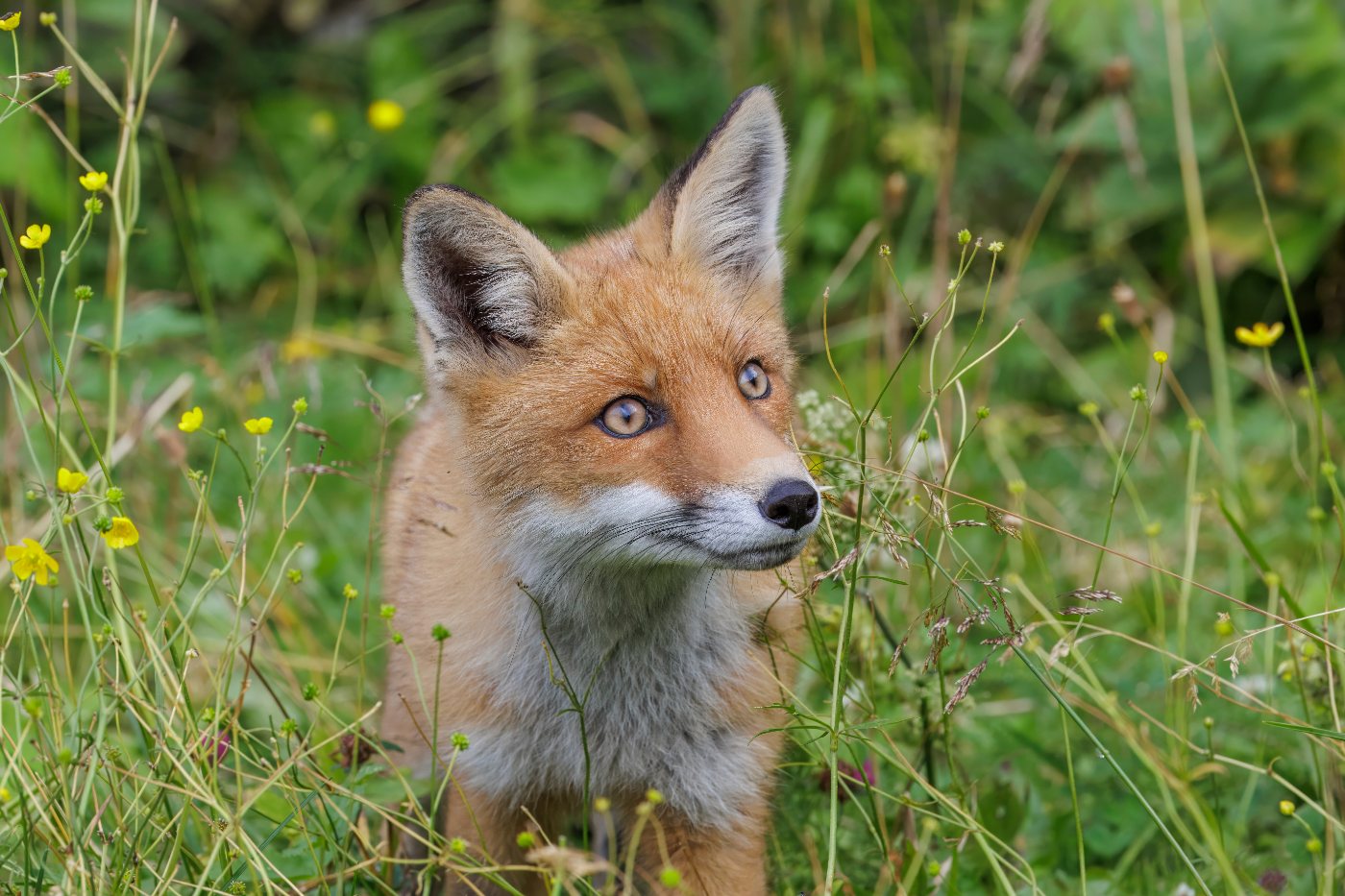
Foxes at a glance
| What a fox is | A small omnivorous canid, not a small wolf and not on the road to becoming one |
| True foxes | Twelve species in the genus Vulpes, out of roughly 23 animals called “fox” worldwide |
| The familiar one | Red fox, Vulpes vulpes, the widest ranging of all canids |
| Red fox weight | 3 to 14 kg, with northern animals at the top of the range |
| Head and body | 46 to 90 cm, plus a long bushy tail called a brush |
| Litter | 1 to 13 kits, averaging 5, after a gestation of 49 to 55 days |
| Home range | 5 to 12 square km in good habitat, 20 to 50 square km in poor |
| Lifespan | Usually 3 years in the wild, rarely much more, up to 15 in captivity |
| Social structure | Solitary hunters, sometimes in small family groups. Never a pack |
| Smallest | Fennec fox, Vulpes zerda, from about 1 kg. The smallest canid alive |
| Introduced to | Australia and the Falkland Islands, with severe consequences in Australia |
The compass in the hunt
Start with the strangest thing foxes do, because it reframes everything else about them.
Mousing is the behaviour everyone recognises from wildlife footage. A fox stands still, head cocked, listening. Then it launches into a high vertical arc and comes down front feet first onto prey it has never seen, buried under snow or hidden in tall grass. It is a hard problem: the fox has to convert a sound into a distance, and it gets one attempt.
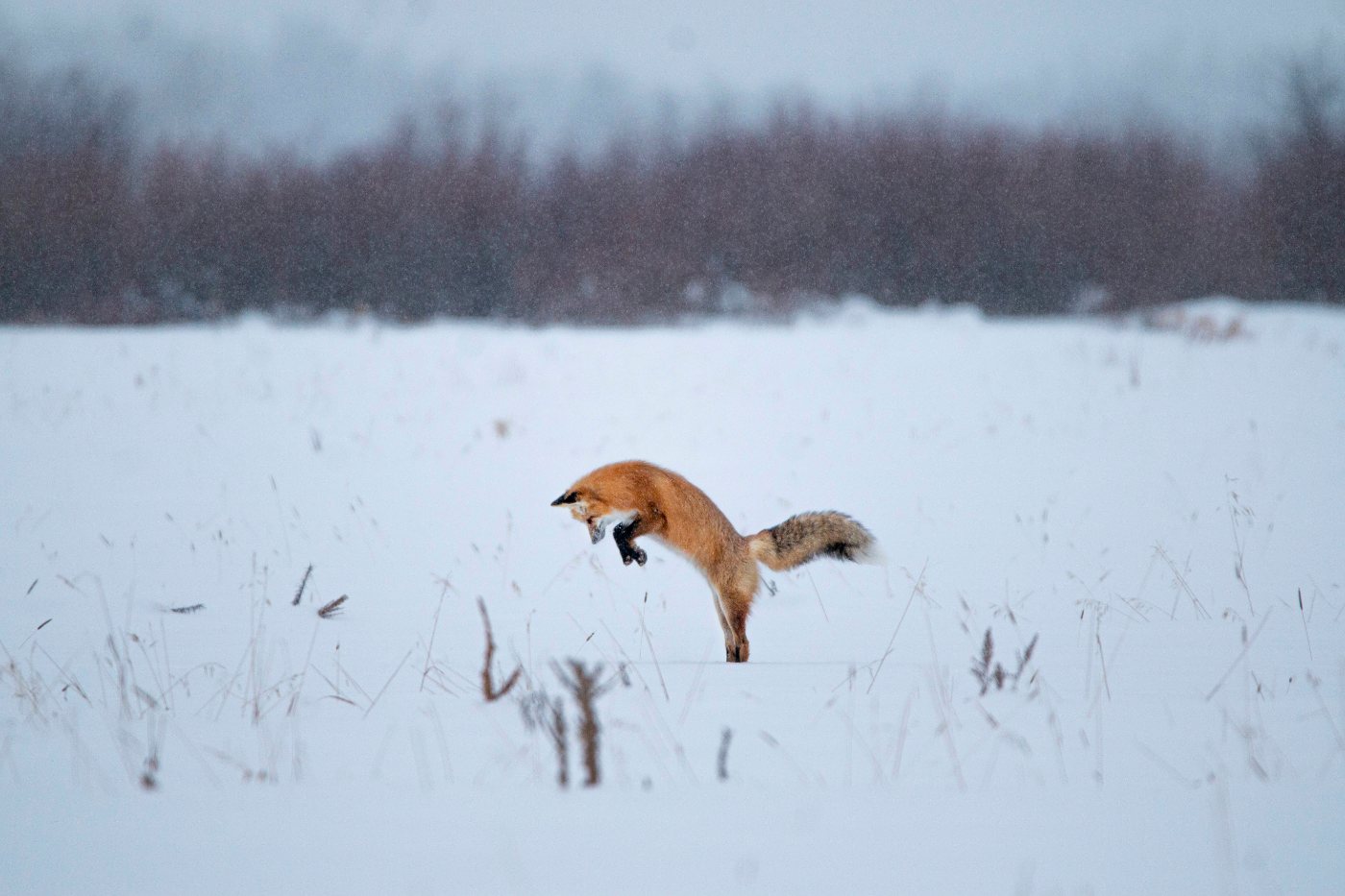
A Czech team led by Jaroslav Červený recorded nearly 600 of these attacks and found something nobody was looking for. The jumps were not randomly oriented. They clustered on a roughly north east bearing. And the outcome followed the direction:
- 74 percent of north east oriented attacks succeeded.
- 18 percent of attacks in other directions succeeded.
The effect showed up specifically when the fox could not see the prey. In open ground with the target visible, direction stopped mattering. The leading interpretation is that the fox perceives the Earth’s magnetic field as a fixed reference, and uses the point where the sound and the magnetic bearing line up as a rangefinder. The animal is not navigating. It is measuring.
I want to be careful here, because this is the kind of finding that gets flattened in retelling. The correlation is robust and published in Biology Letters. The mechanism is still a hypothesis. What is not in doubt is that a fox jumping at a mouse it cannot see is doing something with the Earth’s magnetic field, and that we found this out only in 2011, in one of the most watched animals on the planet.
The Canadian marble fox is not a species
This one matters, because it is the fox question people search for most and almost every answer online gets it wrong.
There is no such animal as a Canadian marble fox in the wild. It is not a species, not a subspecies, not a hybrid, and not Canadian in any meaningful sense. It is a red fox, Vulpes vulpes, carrying a colour mutation that was selected for and fixed on fur farms. Genetically it is the same animal as the fox in your garden.
Red foxes are unusually variable in colour, and the fur trade spent more than a century breeding for that variation. The names you see are trade names, not taxonomy:
- Silver fox. A melanistic red fox. This one does occur naturally, and it was the most valuable pelt in the North American fur trade.
- Cross fox. A partially melanistic red fox with a dark band across the shoulders. Also natural.
- Marble, arctic marble, sunglow, platinum, pearl. Farm produced colour morphs. These are breeding lines, not animals you will find in a forest.
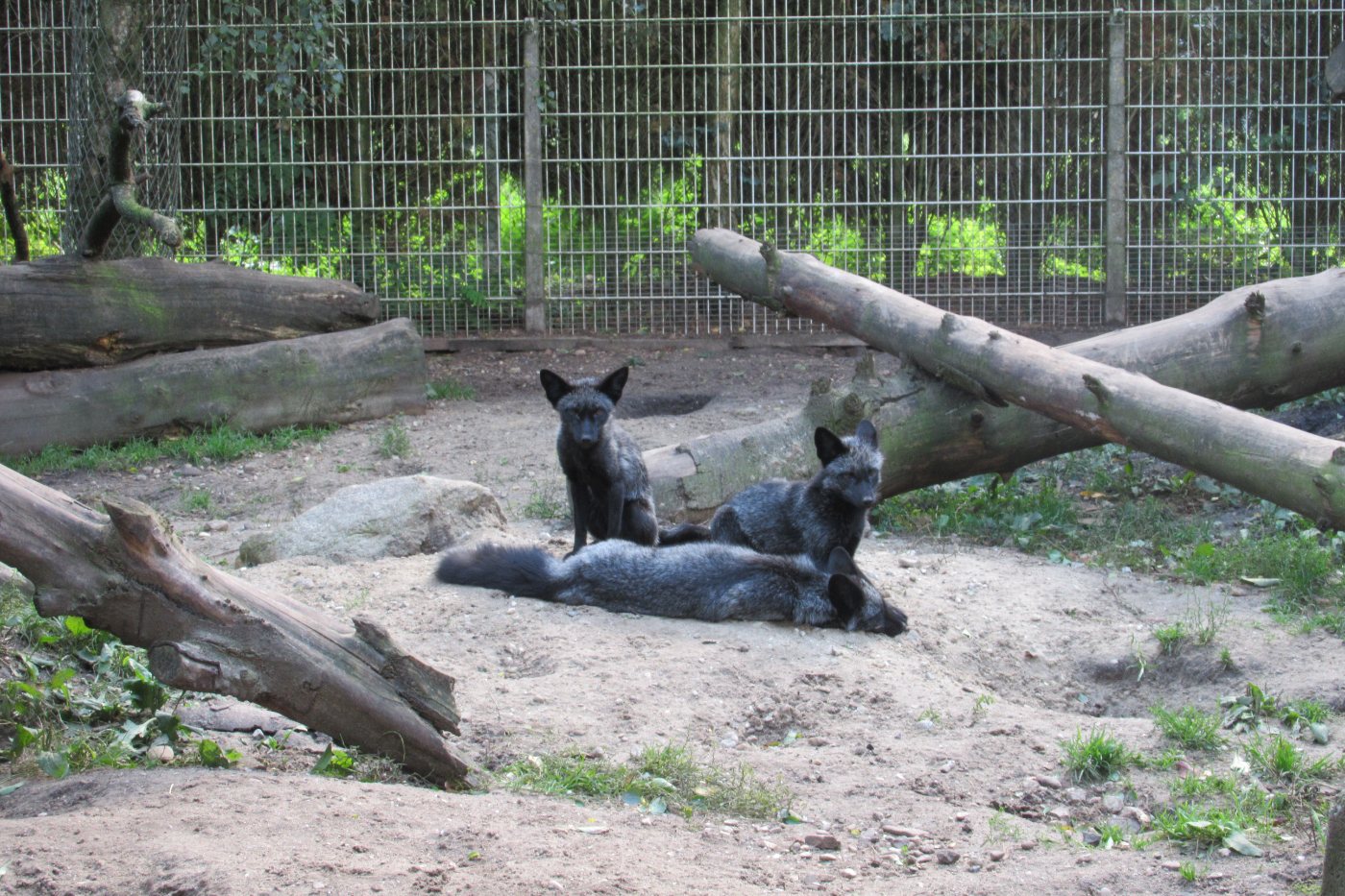
The practical consequence is the part that gets left out. A marble fox exists because a fur farm made it, and the ones sold as exotic pets come from that same industry. They are red foxes with all the behaviour that implies: they dig, they scent mark indoors with something genuinely difficult to live with, they are crepuscular, and they do not tame in the way a dog does. The appearance is the only part that was bred. Nothing about the animal underneath was.
My longer piece on the animal and where the story came from is at Canadian marble fox.
Fox, coyote or wolf
All three are canids and the confusion is understandable at a distance. Up close they are not similar animals at all, and the differences are not just size.
| Red fox | Coyote | Grey wolf | |
|---|---|---|---|
| Weight | 3 to 14 kg | 7 to 20 kg | 25 to 60 kg |
| Build | Light, low, long tailed | Lean, leggy | Heavy, deep chested |
| Muzzle | Narrow and pointed | Narrow | Broad and blocky |
| Ears | Large and pointed for the head | Large | Proportionally small and rounded |
| Tail | Very bushy, often white tipped, carried level | Bushy, carried low | Straight, carried level |
| Social unit | Solitary, sometimes a family group | Pair or small group | Pack |
| Hunting | Alone, small prey, pounce | Alone or in pairs | Cooperative, large prey |
| Voice | Screams, barks, gekkering | Yips and group howls | Long low howls |
The tail is the fastest field mark. A fox brush is disproportionately thick and long for the animal, usually with a white tip, and it is carried out behind rather than tucked.
The deeper difference is what they are for. A wolf is built to bring down animals larger than itself, which requires a pack, and everything about wolf society follows from that. A fox is built to catch things smaller than itself, one at a time, which requires no help at all. That is why foxes are solitary and why they persist in landscapes where wolves cannot: a fox needs a hedgerow and some voles, not a wilderness and an elk herd.
The full comparisons are in fox vs wolf and coyote vs wolf vs fox. The coyote in its own right is covered at coyotes and the wolf at wolves.
The extremes: arctic fox and fennec fox
Two species in the same genus, at opposite ends of the thermal range a mammal can occupy, solving the same problem in mirrored directions. Put them side by side and you can read the physics off their bodies.
Arctic fox, Vulpes lagopus
The arctic fox has the best insulation of any mammal that has been measured. Its lower critical temperature, the point at which an animal must start burning extra energy simply to stay warm, sits below minus 40 degrees Celsius. The exact figure has never been established because the researchers ran out of cold. Their equipment could not go low enough to find it.
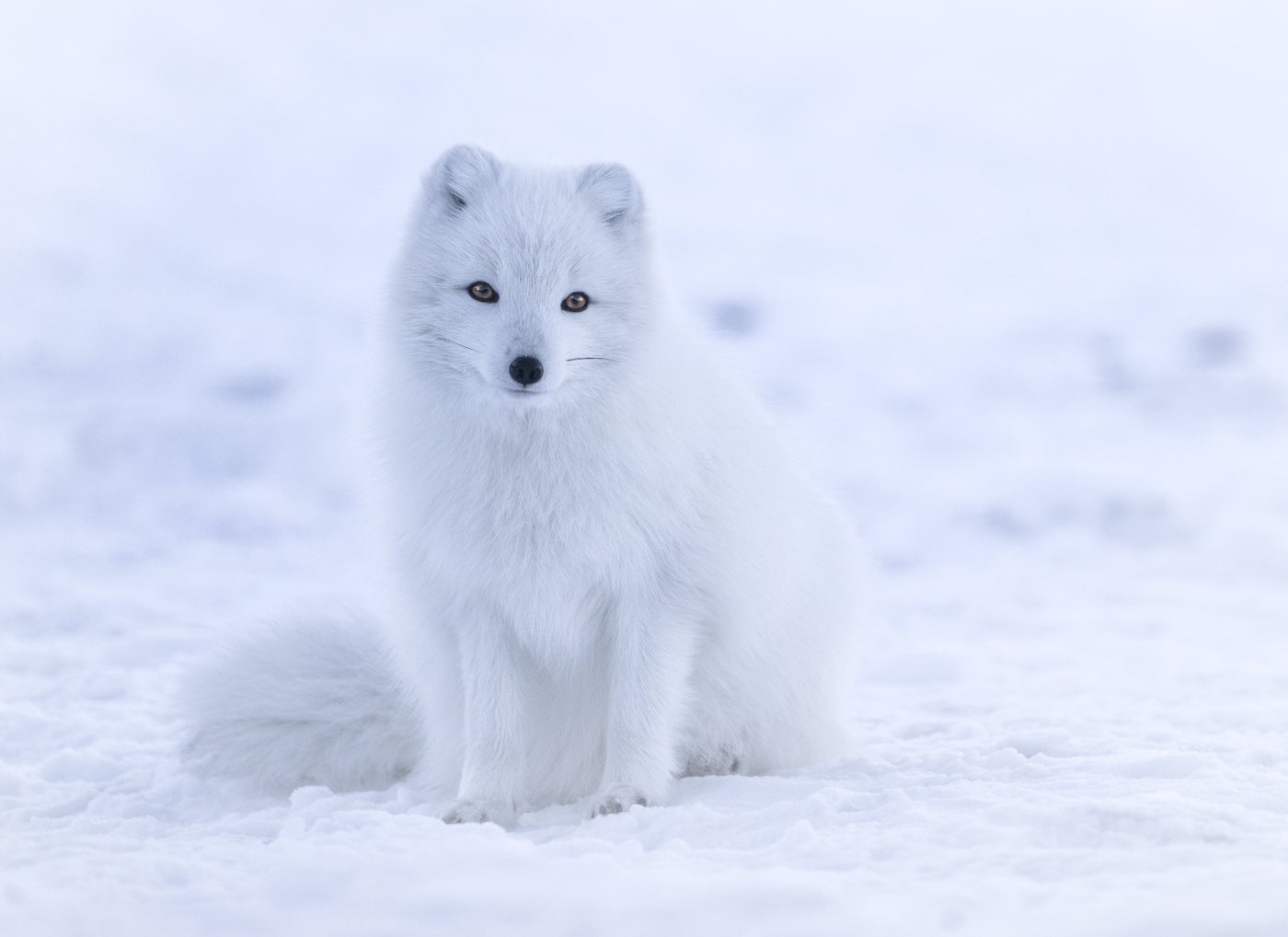
Sit with that for a second. Through an ordinary polar winter, an arctic fox is often not thermally stressed at all. It is simply outside.
Everything about its shape serves that. Short ears, short muzzle, short legs, compact body: minimum surface area for the volume, which is Allen’s rule made visible. Dense winter fur that roughly doubles in depth from summer. Fur on the soles of the feet, which is what lagopus means, hare footed. And a coat that switches from brown to white and back with the season.
Fennec fox, Vulpes zerda
The fennec is the smallest canid alive, from about 1 kg, and it has the largest ear to body ratio of any member of the dog family. Ears of 9 to 10 cm on an animal the size of a small cat.
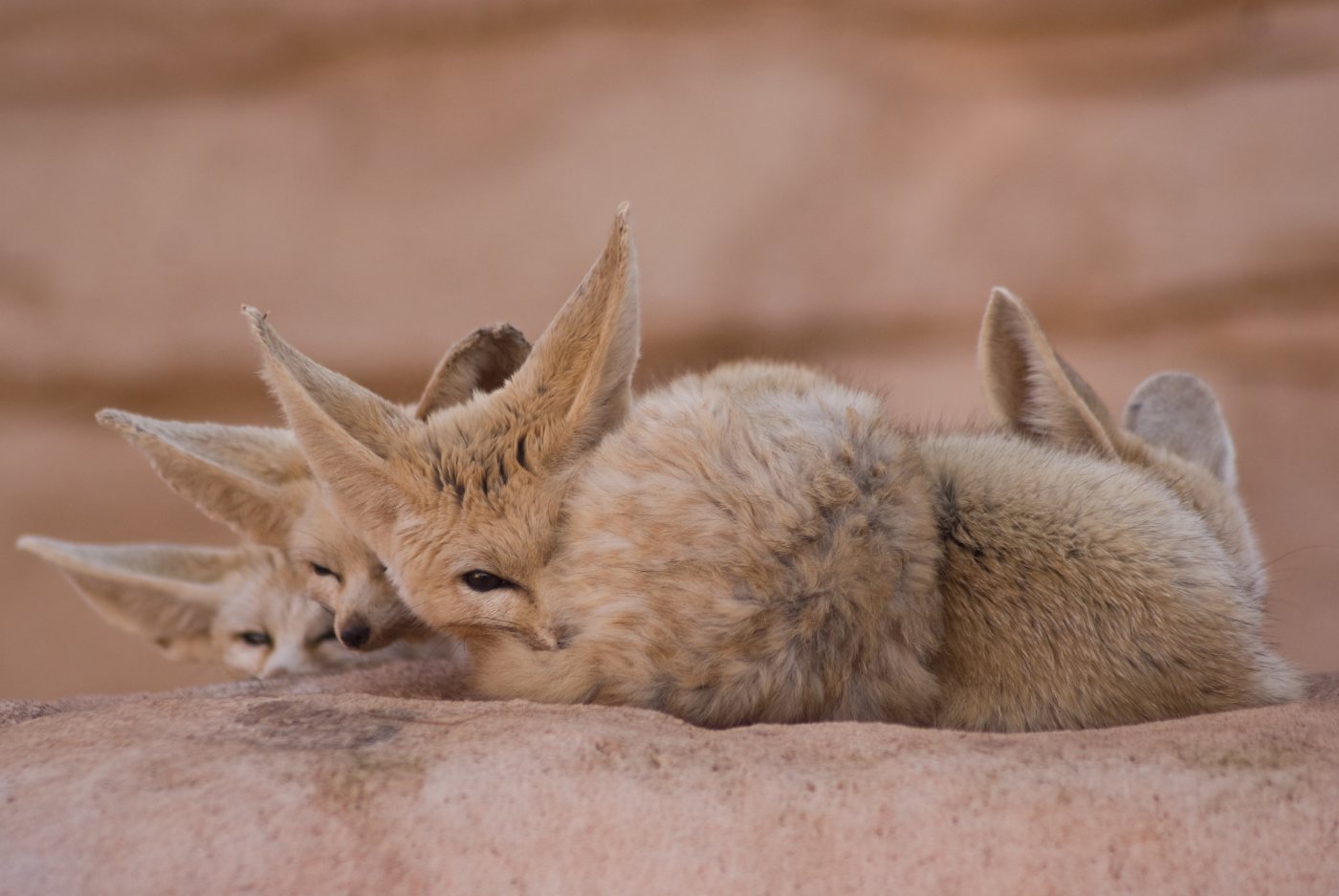
Those ears are radiators. A thin, richly vascularised surface held out into moving air sheds heat efficiently, which is exactly the opposite of what the arctic fox needs and exactly what a Sahara animal does need. They also work as parabolic collectors for locating insects and small vertebrates moving under sand.
Same genus, same basic body plan, one built to hold heat in and one built to throw it away, and the difference is written almost entirely in the ears and the extremities. There is more on the northern species in arctic fox facts.
What foxes actually eat
Foxes are omnivores, and the honest description of a red fox diet is that it is whatever the season is offering. A red fox eats roughly 0.5 to 1 kg of food a day and will take:
- Small rodents, especially voles, which are the caloric backbone almost everywhere.
- Rabbits and hares, where they are available.
- Birds and eggs, including ground nesting species.
- Invertebrates, in quantity. Earthworms and beetles matter far more than most people assume.
- Fruit, in autumn, in volume. Blackberries, apples, whatever is fruiting.
- Carrion and human refuse, wherever people are.
The caching behaviour is worth knowing because it is often misread. A fox that kills more than it can eat is not being wasteful or vindictive. It buries the surplus in scattered single item caches and returns to them, and it can relocate them with real precision. This is also why a fox in a hen house can kill everything present: the behaviour is triggered by prey that keeps moving in an enclosed space, and in the wild the surplus would have been cached. Under a roof, the fox is interrupted and the caching never happens.
Family life, and why most foxes die young
Red foxes breed once a year. Mating is in winter, which is when the screaming starts and people phone the council about it. Gestation is 49 to 55 days, and litters average five kits, though anything from one to thirteen is on record.
- Kits are born blind, deaf and dark coated, in an earth or a den taken over from another animal.
- The vixen stays underground with them for the first two weeks or so, and the dog fox brings food to the den.
- Non breeding helpers, usually the vixen’s daughters from a previous year, sometimes stay to help raise the litter. This is the closest a fox gets to a pack, and it is a family group, not a hunting unit.
- Dispersal comes in autumn, and it is the most dangerous thing a fox ever does. Young males can travel tens of kilometres through unfamiliar ground full of roads.
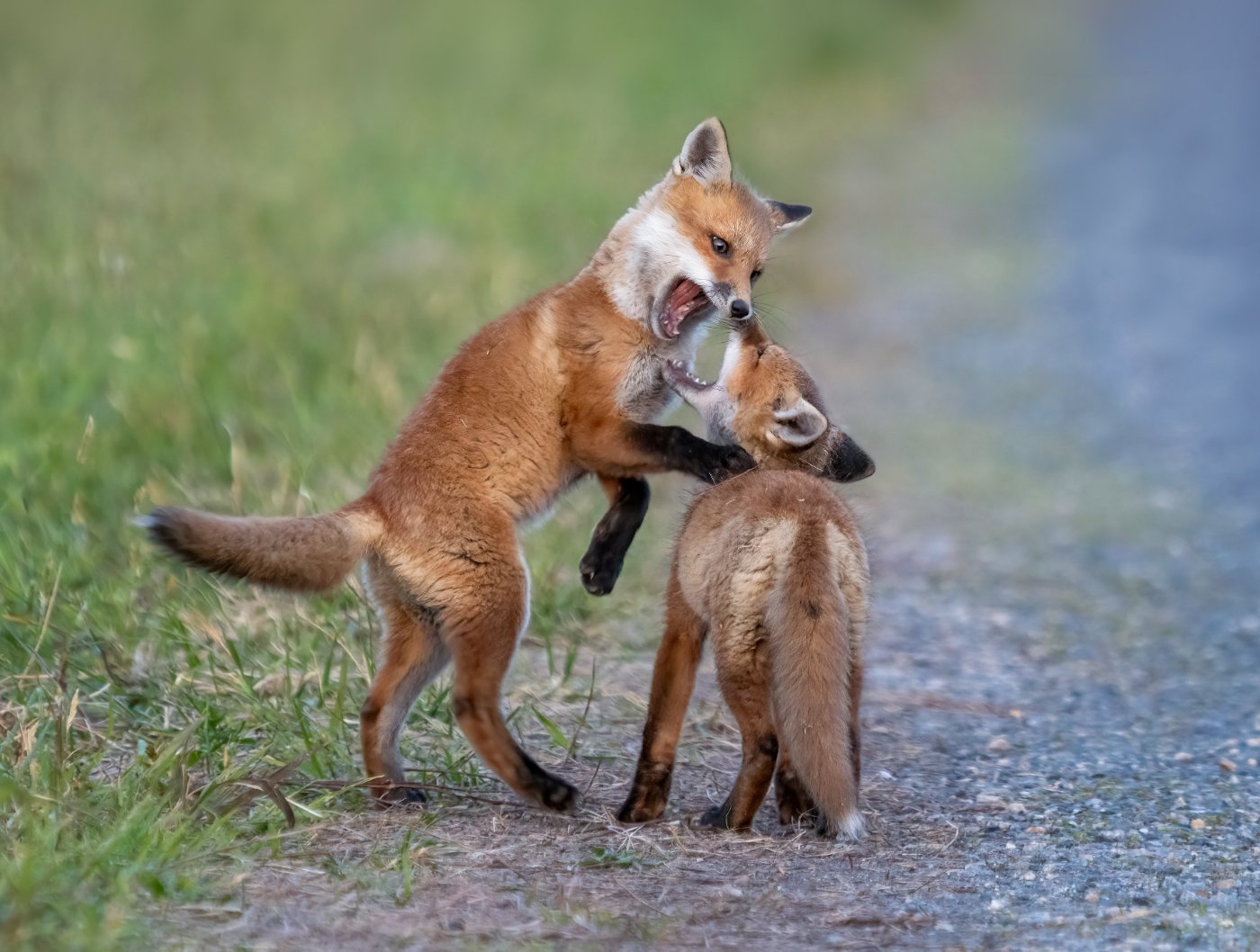
Here is the number that reframes everything: a wild red fox typically lives about three years, and in captivity can reach fifteen. That gap is not about food. It is about roads, disease, and the mortality that dispersal imposes. Most foxes you see are young. A fox that reaches five years old in the wild has survived something.
The experiment that made foxes famous
In 1959, at the Institute of Cytology and Genetics in Novosibirsk, Dmitri Belyaev began breeding silver foxes on a single criterion: how tolerant an individual was of a human hand. Nothing else was selected for. Not coat, not shape, not size.
Within a handful of generations there were foxes that wagged their tails at approaching people and whined when they left. And alongside the behaviour, unselected, other things arrived: floppy ears, curled tails, piebald and mottled coats, shorter rounder muzzles, smaller adrenal glands, lower stress hormones, longer breeding seasons. The same cluster that separates dogs from wolves. The experiment appeared to show that selecting for tameness alone drags the rest of domestication along behind it.
It is one of the most cited results in evolutionary biology, and it is worth knowing that it is now contested.
In 2020 a group of researchers pointed out that Belyaev’s founding animals were not wild. They were 130 silver foxes from fur farms on Prince Edward Island, where foxes had been bred in captivity since at least the 1880s. Photographs from 1920s fur farms show spotted coats and apparently docile animals decades before the Soviet experiment began. If the traits were already present in the founding population, then the experiment concentrated them rather than created them, and the clean story of tameness generating a whole syndrome gets much less clean. Lyudmila Trut, who has run the project for decades, disputes this and maintains the piebald coats appeared under selection.
I include the dispute because it is genuinely unresolved and because the flattened version of this story is everywhere. What is not in dispute: a Soviet geneticist selected foxes for one behavioural trait for sixty years, and the animals changed in ways nobody instructed them to.
Foxes and people
The red fox is the most widely distributed wild canid on earth, and a large part of that is because it does well where we are. Urban foxes are not displaced or desperate animals. They are foxes using a habitat that offers dense food, warmth and very few predators, and urban densities can exceed rural ones.
Two things worth being straight about:
- Foxes are not dangerous to people. They are small, they are not territorial toward humans, and their default response is to leave. Attacks are vanishingly rare.
- Feeding them is not kindness. A fox that associates people with food loses the wariness that keeps it alive and becomes someone else’s problem, usually fatally.
Where foxes genuinely cause harm is where they do not belong. The red fox introduced to Australia in the 1850s met a fauna with no evolutionary experience of a predator like it, and it is now implicated in the decline and extinction of a long list of native mammals and ground nesting birds. The same adaptability that makes a fox charming in a British garden makes it catastrophic in a landscape that never had one.
The foxes that are in trouble
The red fox is thriving and it dominates the conversation, which hides the fact that several fox species are among the rarest carnivores on earth. Darwin’s fox in Chile is Endangered with a few hundred adults. The Sechuran fox and the Blanford’s fox are poorly known. Range restricted island and desert species are the vulnerable ones, always.
But the story I keep coming back to is the island fox, because it is the one that worked.
The island fox is a dwarf grey fox found only on the Channel Islands off California, an animal the size of a house cat. In the late 1990s it collapsed. DDT had removed the bald eagles that had always held those islands, golden eagles moved into the vacancy, and golden eagles, unlike bald eagles, hunt mammals. Feral pigs on the islands had built the prey base that made the eagles stay. Canine distemper hit Santa Catalina at the same time.
- San Miguel Island: 1,780 foxes down to 15.
- Santa Rosa Island: 450 down to 15.
- Santa Cruz Island: over 1,400 down to 55.
They were listed as endangered in 2004. The response was captive breeding, vaccination against distemper, removing the feral pigs, relocating golden eagles rather than killing them, and restoring bald eagles to reclaim the territory. By 2015 San Miguel held about 700 foxes, Santa Rosa 1,200, Santa Cruz 2,100. In August 2016, three of the four subspecies were fully delisted.
Twelve years from listing to recovery. It remains the fastest recovery of any mammal ever listed under the Endangered Species Act. Fifteen animals on an island is the sort of number that usually appears in an obituary. This time it did not.
Common questions about foxes
Is a Canadian marble fox a real species?
No. It is a red fox, Vulpes vulpes, with a colour morph produced by selective breeding on fur farms. It is not a species, not a subspecies, not a hybrid, and it does not occur in the wild.
Are foxes dogs or cats?
Dogs. Foxes are canids, in the same family as wolves, coyotes and domestic dogs. They have a few cat like traits, including vertically slit pupils and partially retractable claws in some species, but those are convergent adaptations to hunting small prey alone, not evidence of relatedness.
Do foxes live in packs?
No. They hunt alone. They sometimes live in small family groups where a vixen’s grown daughters stay on as helpers, but there is no pack, no cooperative hunting and no pack hierarchy of the kind wolves have.
How long do foxes live?
About three years in the wild, though up to fifteen in captivity. Roads, disease and the dangers of dispersal account for most of the difference.
Why do foxes scream at night?
Mostly in winter, and mostly about mating and territory. The scream that sounds so alarming is usually a vixen. Foxes also bark, and gekker, a chattering call used in disputes.
Can you keep a fox as a pet?
Legally it depends on where you live, and practically it is a poor idea. Even fur farm bred foxes are not domesticated animals. They dig, they scent mark indoors in a way most people cannot live with, they are active at dawn and dusk, and they need far more space and enrichment than a house provides.
How many kinds of fox are there?
Twelve species in the genus Vulpes, the true foxes, and roughly 23 animals worldwide carry the name across several genera, including the grey fox and the South American zorros, which are not Vulpes at all.
Do foxes really use magnetic fields?
The evidence says something is going on. Nearly 600 recorded mousing attacks clustered on a north east bearing, and those attacks succeeded 74 percent of the time against 18 percent for other directions, specifically when the prey was hidden. The magnetic rangefinder explanation is the leading hypothesis rather than a settled fact.
Everything on this site about foxes
For the other canids on this site see wolves and coyotes, and for the rest of the animal guides start from mammals.
Sources
- Červený, J., Begall, S., Koubek, P., Nováková, P. and Burda, H. (2011). Directional preference may enhance hunting accuracy in foraging foxes. Biology Letters 7: 355 to 357.
- Prestrud, P. (1991). Adaptations by the arctic fox (Alopex lagopus) to the polar winter. Arctic 44(2): 132 to 138.
- Trut, L., Oskina, I. and Kharlamova, A. The silver fox domestication experiment, and Dugatkin, L. (2018), Evolution: Education and Outreach 11:16.
- Lord, K.A. et al. (2020). The history of farm foxes undermines the animal domestication syndrome. Trends in Ecology and Evolution 35(2): 125 to 136.
- US Fish and Wildlife Service (2016). Island fox delisting announcement and recovery figures for San Miguel, Santa Rosa and Santa Cruz Islands.
- Animal Diversity Web and the IUCN Canid Specialist Group species accounts for Vulpes vulpes, Vulpes lagopus and Vulpes zerda.
From the shop
Gifts for people who love the wild
Wildlife themed t-shirts, notebooks, tote bags, bandanas and guides, designed by an ecologist.
Visit the shop