
Two animals are called badgers on either side of the Atlantic, and they are not close relatives. One lives in a family clan inside a tunnel system that may have been occupied since before the house you live in was built. The other lives alone, digs a new hole most nights, and sometimes hunts in partnership with a coyote. And the most famous badger of all is not a badger at all.
I am a wildlife biologist with an MSc in ecology. Every figure here comes from a published study or a conservation assessment, and where a familiar claim is contested, I say so rather than pick the tidier version.
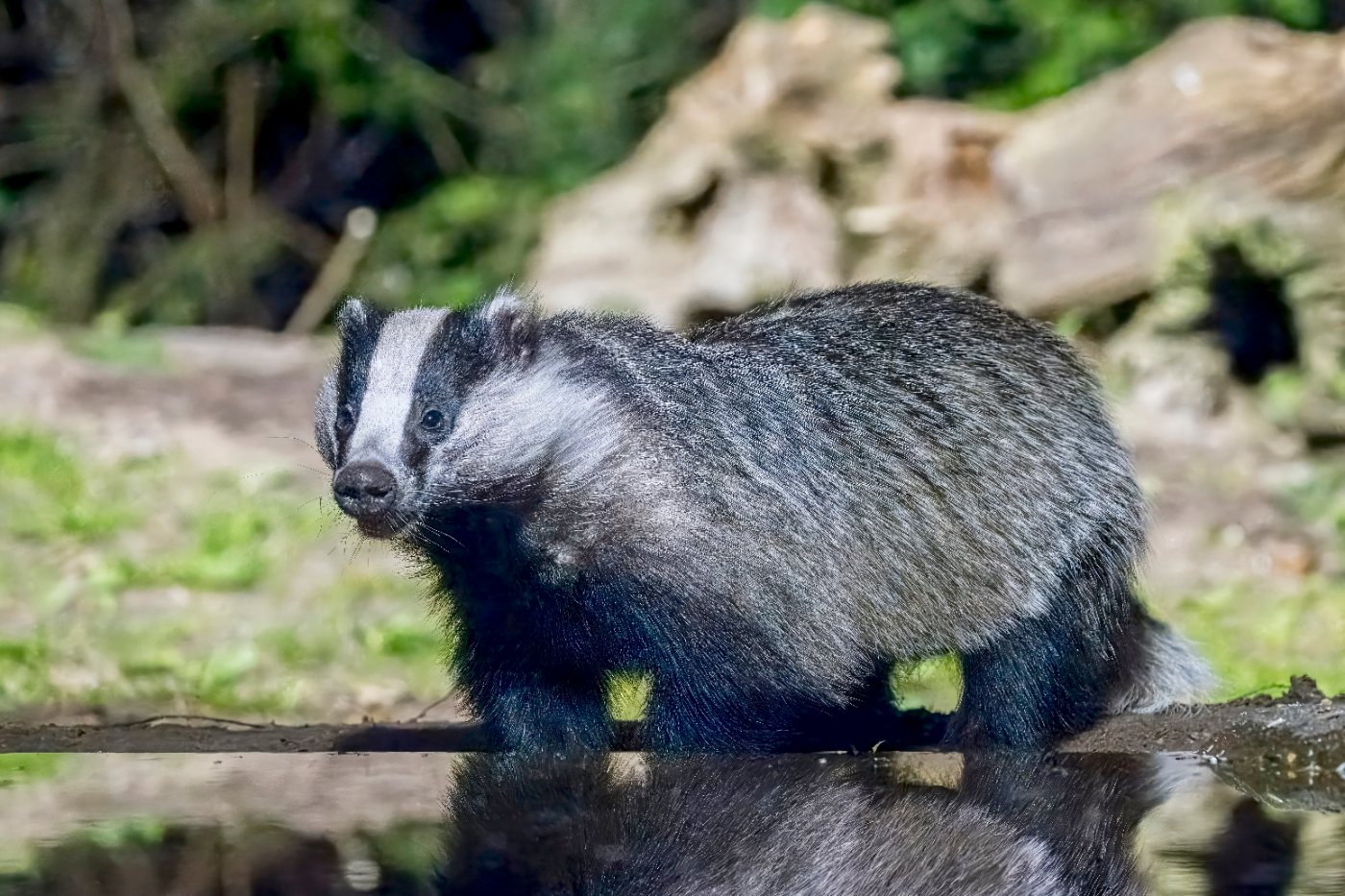
Badgers at a glance
| Family | Mustelidae, the same family as otters, weasels and wolverines |
| True badgers | Subfamily Melinae: Meles and the hog badgers, Arctonyx |
| American badger | Taxidea taxus, alone in subfamily Taxideinae |
| Honey badger | Mellivora capensis, alone in subfamily Mellivorinae. Not a true badger |
| European badger weight | 6 to 7 kg in summer, 12 to 14 kg going into winter |
| American badger weight | 4 to 12 kg, with no comparable seasonal swing |
| Social life | European badgers live in clans. American and honey badgers are solitary |
| Hibernation | None of them truly hibernate. American badgers use torpor bouts of about 29 hours |
| Lifespan | American badgers 9 to 10 years in the wild, up to 14 recorded |
| IUCN status | Least Concern for the European, American and honey badger alike |
The two badgers are not the same animal
This is the confusion worth clearing first, because almost everything else follows from it. A British badger and an American badger are both mustelids, both dig, and both have striped faces. Beyond that they diverge completely, and they last shared an ancestor a long way back.
| European badger | American badger | |
|---|---|---|
| Species | Meles meles | Taxidea taxus |
| Subfamily | Melinae, a true badger | Taxideinae, on its own |
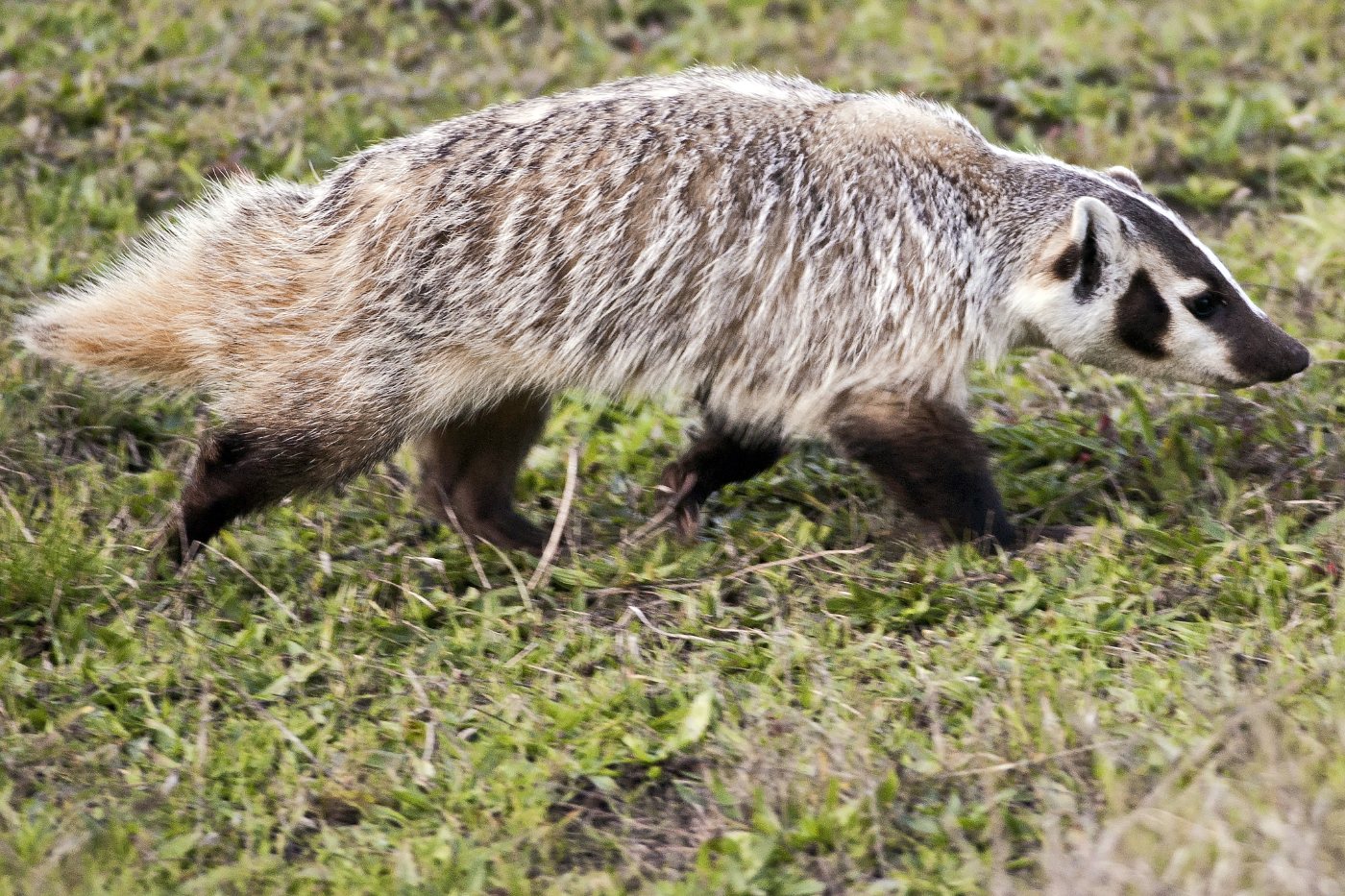
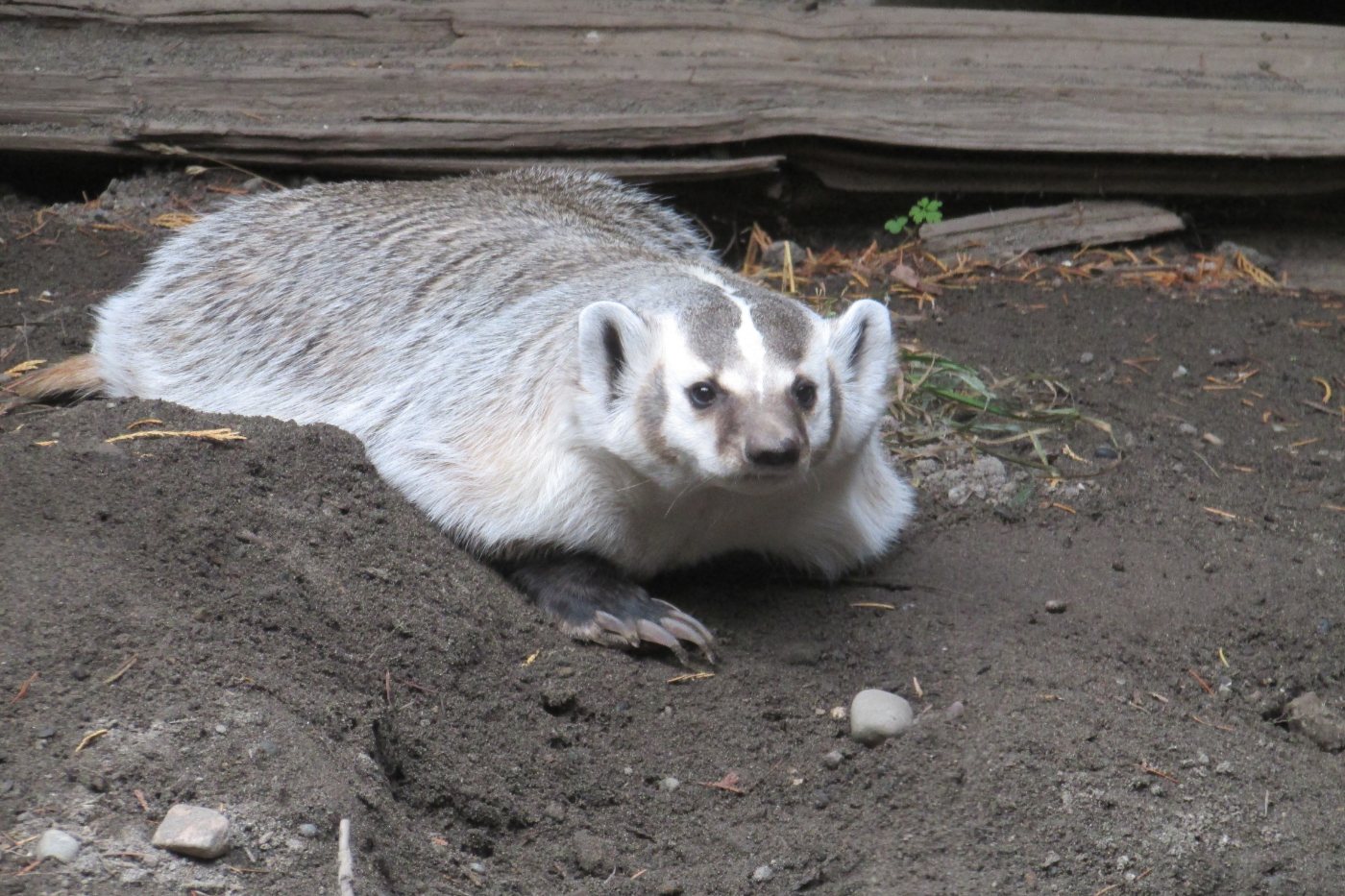
| Face | Two black stripes running through the eyes | One white stripe over the crown |
| Body shape | Heavy, rounded, low | Flatter and wider, almost pressed to the ground |
| Social | Clans of up to a dozen or more where food allows | Solitary |
| Home | A permanent sett used for generations | Temporary burrows, often a fresh one nightly |
| Main food | Earthworms, in bulk | Burrowing rodents, hunted by digging them out |
| Temperament | Shy, retiring, rarely seen | Formidable when cornered |
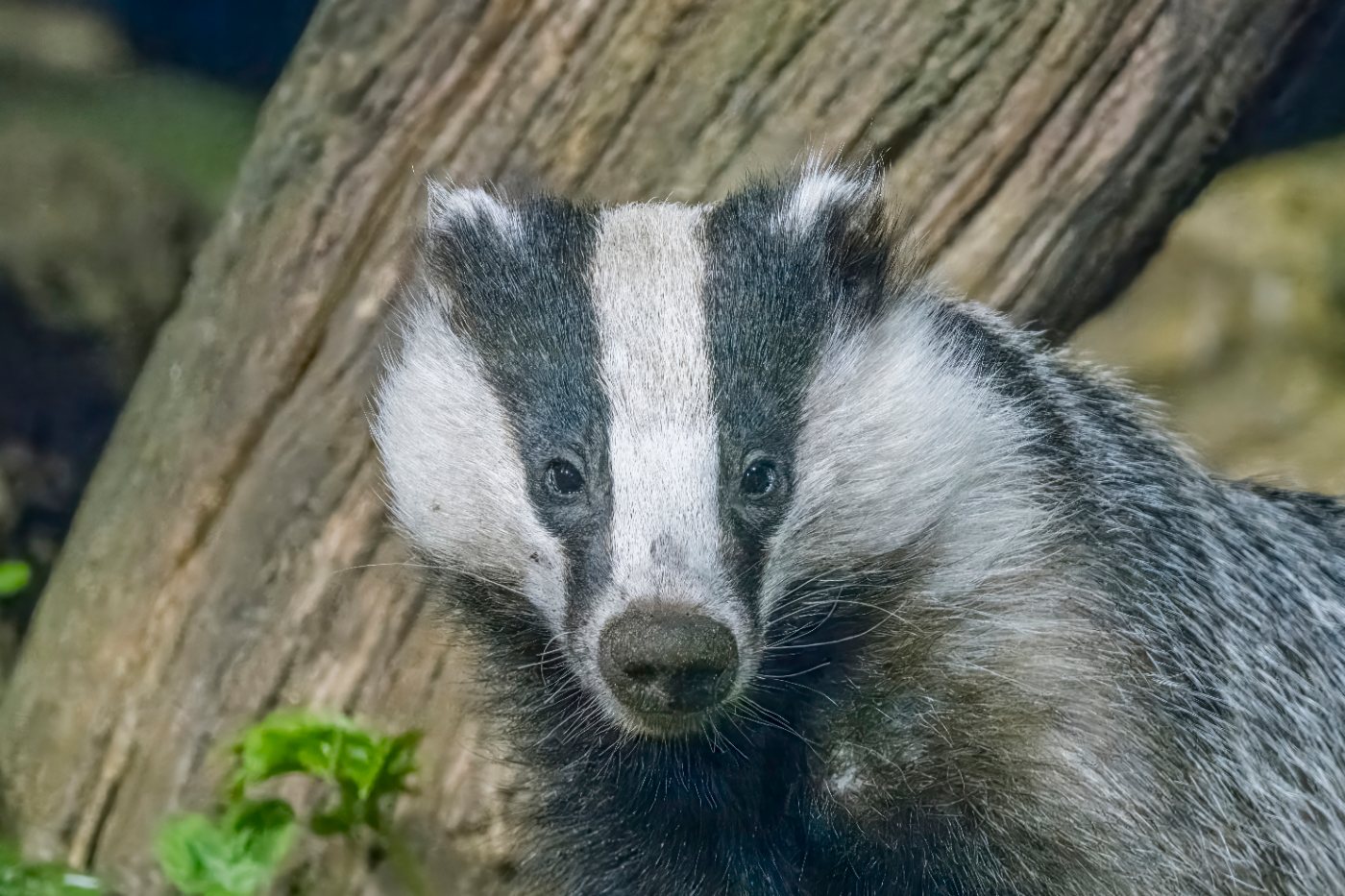
The face is the fastest way in. Two stripes through the eyes means Europe. One stripe over the top of the head means North America. Everything else about the two animals is downstream of one difference: what they eat.
The comparisons are covered in full in American badger vs European badger, and identification more broadly in what do badgers look like.
Earthworms, and why a European badger lives in a clan
A European badger is, functionally, an earthworm specialist with the body of a carnivore. Worms make up the bulk of the diet through spring and autumn, and on a warm damp night a badger can take hundreds of them from a single field.
That sounds unglamorous until you work out what it implies. Earthworms are not a resource you defend. They surface unpredictably, they are spread thinly across pasture, and a good night depends on the weather rather than on the ground being yours. A food supply like that cannot be monopolised, so there is nothing to be gained by excluding your relatives from it. That is the leading explanation for why European badgers tolerate each other at densities no other solitary mustelid would accept: clans of ten or more in the richest British landscapes, sharing a sett, foraging alone.
It is worth being precise about what that clan is. It is not a pack. There is no cooperative hunting, no coordinated defence, no shared care of young in the way a wolf pack works. It is a group of animals sharing a very good hole, going out separately to eat worms, and coming back.
And they do not hibernate, which surprises people. A European badger goes into winter carrying twice its summer weight, becomes much less active, spends long stretches underground, and comes out on mild nights. The weight is the strategy, not sleep.
The sett
A main sett is not a burrow. It is a multi level tunnel system with many entrances, sleeping chambers lined with bedding that the badgers drag in and periodically drag out to air, and separate latrines dug at the boundary of the territory.
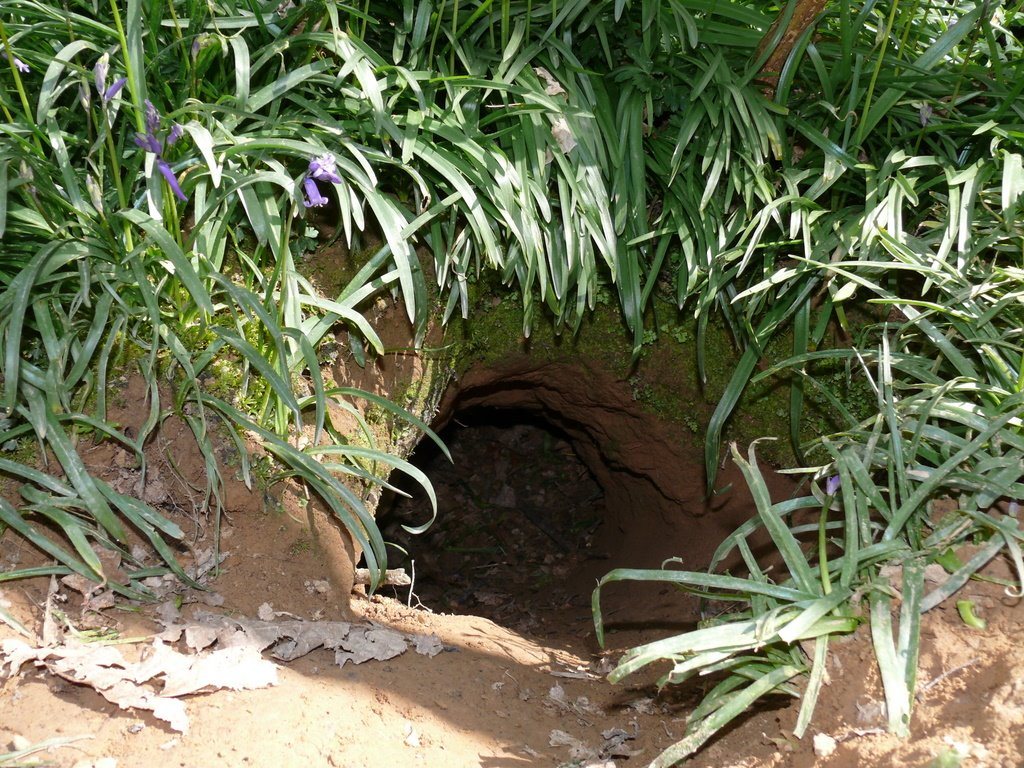
The part that stops me every time is the timescale. A main sett is inherited. Successive generations extend it, and large setts in Britain have been in continuous use for decades, in some documented cases well over a century. When you stand at a sett entrance you are looking at a structure older than most of the buildings around it, built by animals that never knew the ones who started it.
How to tell a sett from something else, in the field:
- Shape. The entrance is wider than it is tall, a flattened D, typically 25 to 35 cm across. A fox earth is rounder and usually smaller.
- Spoil heap. A large fan of excavated soil below the entrance, often with old bedding, discarded grass and bracken in it.
- Smell. A fox earth smells strongly. A sett does not.
- Paths. Well worn runs radiating away from the sett, often under fences where the badger has forced a gap at a fixed height.
- Latrines. Shallow dug pits used repeatedly, sited near territory boundaries. Foxes do not do this.
The American badger does the opposite. It digs constantly, uses a burrow briefly, and moves on, because it is not returning to a home. It is excavating its dinner. There is more in badger dens.
The badger and the coyote
There is a photograph that goes around every couple of years: a coyote and a badger travelling together through a culvert. People assume it is a fluke, or a joke, or staged. It is none of those. It is a documented hunting association, and it was studied properly in 1992.
Minta, Minta and Mangel followed badgers and coyotes hunting Uinta ground squirrels in Wyoming and found the two species pairing up repeatedly. The logic is almost too neat. A ground squirrel escapes a coyote by going down its burrow. It escapes a badger by coming up and running. When both predators are present, neither exit works.
The measured outcome went both ways:
- Coyotes hunting with a badger consumed prey at higher rates than coyotes hunting alone, and covered ground at lower locomotion cost.
- Badgers hunting with a coyote spent significantly more time below ground and active, and likely dug less for each squirrel caught.
Neither animal shares the kill. Whoever gets the squirrel keeps it. What both get is a better hunt, and that is enough for the behaviour to persist without any cooperation in the sentimental sense. It is two predators exploiting the fact that their prey has exactly two escape routes and each of them covers one.
The coyote side of this is covered at coyotes.
The honey badger is not a badger
The honey badger, Mellivora capensis, is the only living member of the subfamily Mellivorinae. It is a mustelid, so it is a relative of true badgers in the way that a stoat is, but it is not one of them, and it is more closely allied to the martens than to Meles. The name is a historical accident of it being a stocky digging animal with a pale back.
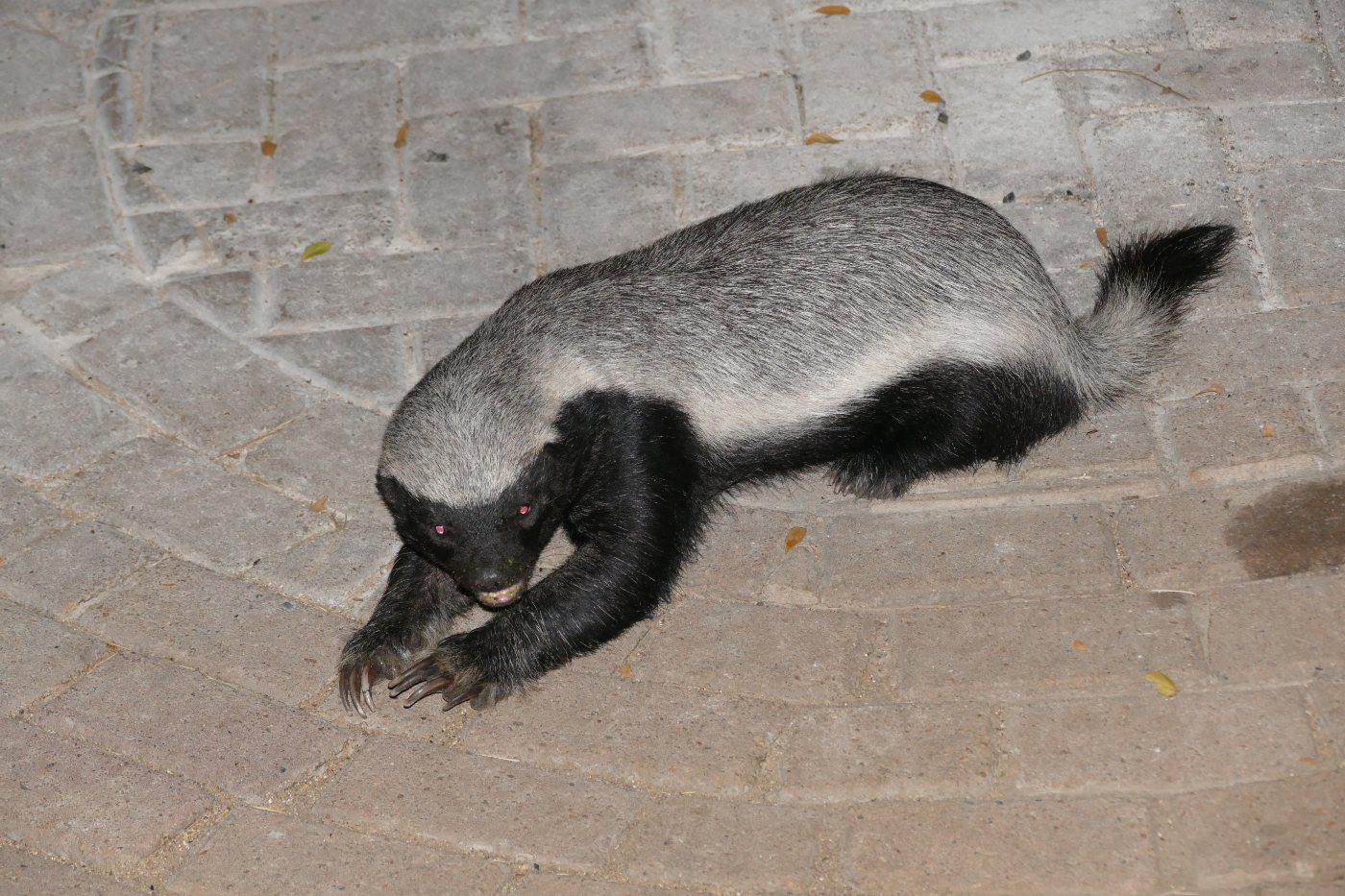
What it is famous for is being difficult to kill, and that reputation has a real anatomical basis rather than being pure internet folklore:
- The skin is about 6 mm thick at the neck and remarkably loose. A honey badger held by the scruff can rotate inside its own skin far enough to bite whatever is holding it.
- Bee stings, porcupine quills and most bites struggle to penetrate it, which is what allows an animal of 16 kg or less to raid hives and take on animals much larger than itself.
- It is not immune to venom, and this is where the internet version overreaches. Honey badgers show meaningful resistance and have survived bites that would kill comparable mammals, but resistance is not immunity and they do die from snakebite.
It is listed as Least Concern, it eats more or less anything from insects to small vertebrates to berries, and it is one of the most persistent problem solvers in the mustelid family. The comparison people always want is in wolverine vs honey badger, and the species itself in honey badger facts. Worth saying: the wolverine is not a badger either. It is Gulo gulo, a very large weasel.
Teeth, and what they tell you
Badger dentition is one of those details that looks like trivia until you notice it is a diet written in bone.
The European badger has broad, flattened molars with large crushing surfaces, and a jaw articulation so tightly locked into the skull that the lower jaw usually cannot be detached from a clean skull without breaking it. That is an omnivore’s mouth built for grinding: worms, roots, fruit, insects, carrion, whatever the field offers.
The American badger keeps sharper, more carnassial teeth, because it is a specialist predator of burrowing rodents rather than a generalist forager. The honey badger’s mouth is different again, built to get into things that do not want to be opened.
The species by species counts are in badger teeth.
Not a badger, and not that badger
Badgers get misidentified constantly, usually from a security camera at night, and usually as something North American and stripy.
- Skunk. Stripes run lengthways down the back, the tail is long and plumed, the body is much lighter, and the animal moves in an unhurried way that a badger does not. A badger’s stripe is on the head only.
- Raccoon. A black facial mask rather than a stripe, a ringed tail, and hands. Raccoons climb well and are frequently up something. Badgers are not.
- Wolverine. Bigger, bear like in profile, with a pale band along the flanks rather than a head stripe, and confined to boreal and mountain country.
- Groundhog. A rodent. No stripes at all, but similar burrow spoil, which is where the confusion starts.
The two that come up most are covered in badger vs skunk and badger vs raccoon.
On climbing: badgers are built to go down, not up. The claws are excavation tools, curved and blunt rather than hooked, and the body is heavy and low. A European badger can scramble up a sloping trunk or a wire fence when it has a reason to, and there is footage of it happening. But it is clumsy, uncommon, and nothing like a raccoon or a marten. That question gets its own answer in can badgers climb trees.
What kills a badger
An adult badger has very few natural predators anywhere in its range, which is the whole point of being a heavily built, powerfully armed animal that lives in a hole.
- Cubs and kits are vulnerable, to foxes, birds of prey, and in North America to coyotes, cougars and bears.
- Adults are occasionally taken by wolves, bears, cougars and, in Europe historically, lynx, but rarely and usually opportunistically.
- Roads are the dominant cause of death for European badgers across much of their range, by a wide margin.
- People are the rest of it: persecution, sett interference, and in Britain, culling.
The full picture is in what eats a badger.
Badgers and bovine TB
No account of badgers is complete without this, and it is the hardest section to write honestly, because it is a live policy dispute with real losses on both sides. I am going to lay out what the evidence says and where it is contested, rather than tell you what to conclude.
The situation: bovine tuberculosis is a serious disease of cattle, and a herd breakdown is financially and personally devastating for a farmer. Badgers can carry Mycobacterium bovis, and transmission between badgers and cattle does occur in both directions. Those points are not in dispute.
What is disputed is whether killing badgers helps.
- The Randomised Badger Culling Trial ran in Britain from the late 1990s and remains the largest field experiment on the question. Its concluding analyses reported reduced cattle TB inside culled areas but increased incidence in the land immediately around them.
- The proposed mechanism was perturbation. Culling breaks up badger social groups, survivors range more widely than they otherwise would, and infection travels with them. The trial’s own authors concluded that badger culling could make no meaningful contribution to controlling cattle TB in Britain.
- England culled anyway. From 2013, roughly 230,000 badgers were killed under licence.
- The statistics are now being reopened. A 2024 reanalysis of the trial data in Scientific Reports found that most reasonable statistical approaches showed no effect of culling on herd incidence at all, and argued that the original model was overfitted, with too few data points for the number of variables. On that reading the perturbation effect may itself be an artefact of the analysis rather than a real biological phenomenon.
Read that carefully, because it is easy to misread in either direction. The 2024 work does not say culling is safe or that badgers are irrelevant to TB. It says the evidence that culling reduces cattle TB is much weaker than the policy assumed, and so is the evidence for the perturbation mechanism that was the main scientific argument against it.
What is not seriously contested is that cattle to cattle transmission, herd movements and the sensitivity of the skin test are large parts of the problem, and that badger vaccination is viable and increasingly used. The honest summary is that a great many badgers have been killed on evidence that has not held up well, and that the farmers living with herd breakdowns still need an answer.
Common questions about badgers
What is the difference between an American and a European badger?
They are different species in different subfamilies. The European badger has two black stripes running through the eyes, lives in clans in a permanent sett, and eats mostly earthworms. The American badger has one white stripe over the crown, lives alone, digs fresh burrows constantly, and hunts burrowing rodents.
Is a honey badger a badger?
No. It is a mustelid, so a distant relative, but it sits alone in its own subfamily and is more closely related to martens than to true badgers. The name is a historical accident.
Are honey badgers immune to snake venom?
Resistant, not immune. They have survived bites that would kill comparable mammals, and their thick loose skin prevents many strikes from landing at all, but honey badgers do die from snakebite.
Do badgers hibernate?
No. European badgers roughly double their weight before winter and stay underground for long stretches, emerging on mild nights. American badgers enter torpor bouts of around 29 hours with a substantial drop in body temperature, which is not true hibernation either.
Can badgers climb trees?
Badly, and rarely. European badgers can scramble up a sloping trunk or a fence when motivated. The claws are digging tools, not hooks, and the body is heavy and low. Climbing is not part of how a badger lives.
Do badgers really hunt with coyotes?
Yes, and it is documented rather than anecdotal. A 1992 study found coyotes consumed prey at higher rates when paired with a badger, and badgers spent more time below ground and active. The prey has two escape routes and each predator covers one.
How long do badgers use the same sett?
Main setts are inherited and extended across generations. Large British setts have been in continuous use for decades and in documented cases for well over a century.
Are badgers dangerous?
Not to people going about their business. European badgers are shy and avoid humans. Any badger that is cornered, trapped or defending young is a powerful animal with serious claws and a crushing bite, so the answer is to give it a way out, not to approach it.
Everything on this site about badgers
- American badger vs European badger
- What do badgers look like
- Badger teeth
- Badger dens
- Can badgers climb trees
- What eats a badger
- Badger vs skunk
- Badger vs raccoon
- Honey badger facts
- Wolverine vs honey badger
For the other animals badgers share ground with see coyotes and foxes, and for the rest of the animal guides start from mammals.
Sources
- Minta, S.C., Minta, K.A. and Mangel, M. (1992). Hunting associations between badgers (Taxidea taxus) and coyotes (Canis latrans). Journal of Mammalogy 73(4): 814 to 820.
- Donnelly, C.A. et al. (2007). Impacts of widespread badger culling on cattle tuberculosis: concluding analyses from a large scale field trial. International Journal of Infectious Diseases.
- Langton, T.E.S. et al. (2024). Absence of effects of widespread badger culling on tuberculosis in cattle. Scientific Reports.
- Animal Diversity Web species account for Taxidea taxus, including mass, torpor, home range and longevity.
- IUCN Red List assessments for Meles meles, Taxidea taxus and Mellivora capensis, all Least Concern.
- Wildlife Online species account for Meles meles, including seasonal mass, clan size and diet.
From the shop
Gifts for people who love the wild
Wildlife themed t-shirts, notebooks, tote bags, bandanas and guides, designed by an ecologist.
Visit the shop