

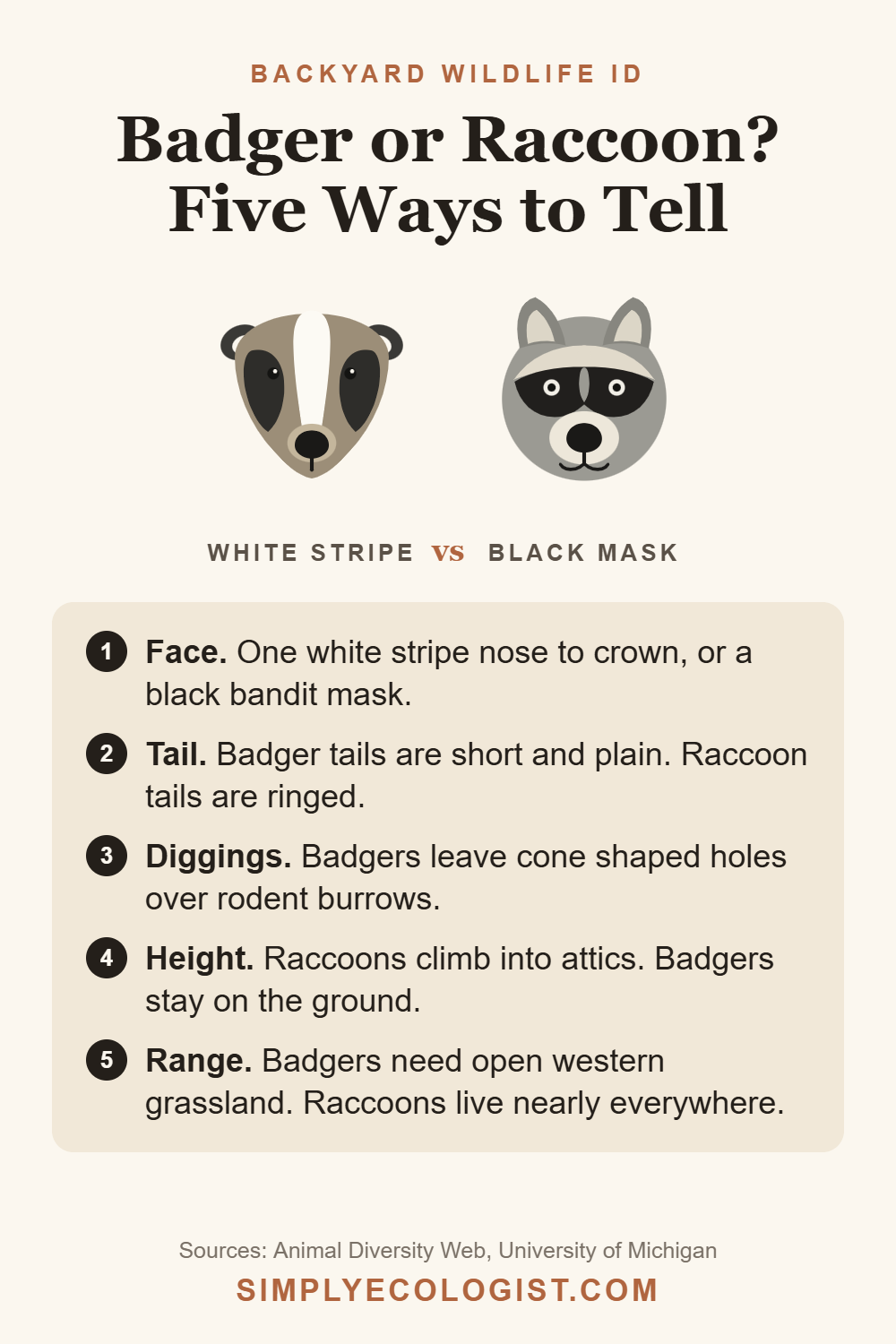
Badgers display a bold white stripe from nose to crown, while raccoons wear a black mask across gray fur. Badgers favor open grasslands west of the Mississippi, digging deep tunnels for prey. Raccoons thrive nationwide, exploiting attics and trash with dexterous paws. Badgers are specialized carnivores; raccoons eat nearly anything. Both are nocturnal but leave different traces, conical burrows versus tipped bins. Their confrontation outcomes depend on terrain, with badgers dominating ground and raccoons escaping upward. Understanding these distinctions clarifies which animal you’re observing and how to respond. The details below expand each comparison further.
A note on how to use this. I am an ecologist by training, with an MSc in ecology and field seasons behind me in Europe, South America and Asia, and the habit that transfers to any backyard is the same: identify from the sign, not from the glimpse. Almost nobody gets a clean look at either of these animals, because both work after dark. What you actually get is a hole, a tipped bin, or three seconds of movement at the edge of a torch beam. So the comparisons below are ordered the way a surveyor would use them, starting with the clues that survive bad light.
Key Takeaways
- Raccoons display a black “bandit” mask; badgers show a bold white nose to back stripe with dark cheeks.
- Badgers are specialized carnivores digging for rodents; raccoons are opportunistic omnivores raiding trash and streams.
- Badgers inhabit dry western grasslands and prairies; raccoons thrive nationwide in forests, suburbs, and cities.
- Badgers create deep tunnel networks undermining structures; raccoons cause shallow turf damage and structural entry attempts.
- Badgers occur largely west of the Mississippi River; raccoons occupy every state in the continental U.S. plus Alaska.
| Feature | American badger | Raccoon |
|---|---|---|
| Face | One white stripe from the nose over the crown, with dark cheek patches | Black mask across the eyes, pale brow above it |
| Tail | Short and plain, about 5 to 6 in | Bushy, 8 to 12 in, with 5 to 7 dark rings |
| Body shape | Low, wide and flattened, carried close to the ground | Rounder and higher off the ground, back arched |
| Head and body | About 23 to 26 in | 16 to 28 in |
| Weight | 9 to 22 lb, averaging about 15 lb | 15 to 40 lb |
| Front claws | Long digging claws, an inch or more | Short, dexterous and hand like |
| Diet | Specialist carnivore, mostly burrowing rodents | Opportunistic omnivore, almost anything |
| Range | Great Plains core, mostly west of the Mississippi, spreading east since the early 1900s | Every mainland state, absent from Hawaii |
| Sign it leaves | A cone shaped excavation at a rodent burrow | Tipped bins, rolled turf, prints like small hands |
| Climbs | No | Yes, readily |
Measurements from the Mammals of Texas account held by the Texas Tech Natural Science Research Laboratory, the Illinois Department of Natural Resources, and Animal Diversity Web.
Part of my complete guide to badgers, which covers American versus European badgers, setts and clans, diet, identification and conservation, with sources.
Badger Vs Raccoon: 5 Ways to Tell Them Apart
Distinguishing badgers from raccoons demands close attention. Their diets reveal fundamental differences. Badgers are specialized carnivores, meaning they eat primarily meat. They hunt ground prey like moles, squirrels, and rats. Raccoons are omnivores, consuming garbage, fruits, insects, and small animals.
Their homes differ sharply. Badgers dig extensive underground dens and tunnels. These burrows can undermine driveways and foundations. Raccoons prefer trees, attics, or abandoned burrows. They rarely excavate their own shelters.
Damage patterns help identification. Raccoons tip trash cans, tear gardens, and pry vents or siding. Badger damage stays limited to digging and soil disturbance.
Geography matters too. Raccoons live in every state on the mainland. Badgers stay largely west of the Mississippi River, with smaller populations in Illinois, Ohio, Michigan, and Indiana.
Face Masks vs White Stripes: Spot the Marking Difference
Because coloration varies with lighting and distance, the most dependable way to separate these two mammals involves examining their contrasting facial and body markings.
Raccoons wear a distinctive black “bandit” mask across their eyes. It contrasts sharply with gray fur. Badgers carry a bold white stripe from nose to head to back. Dark cheek patches often frame it. From afar both appear gray. Up close the patterns diverge clearly.
- Eye mask signals raccoon; longitudinal stripe signals badger.
- Adults show markings best; juveniles display fainter versions.
- Photographs or focused glances at facial regions quickly settle identification.
Observers learn to check the eye area for a mask, or trace nose to back for a stripe.
This practice builds reliable recognition. Patience matters. Wildlife watching rewards careful attention.
Which Animal Is Digging in Your Yard?
Markings help you spot the difference at a glance. Digging patterns reveal even more. Badgers create deep, conical burrows with loose soil piles. Their tunnels stretch several feet, undermining lawns and driveways. They’re specialist burrowers. Raccoons leave shallow, raked up holes instead. These appear near turf and flowerbeds. They’re foraging, not truly burrowing.
Badgers focus on open ground. They hunt small mammals like moles and voles. Their dig sites cluster where prey lives. Raccoons dig more randomly. They seek worms, insects, and pet food. Opportunity guides them.
Multiple den entrances with smooth worn tunnels signal badgers. Torn trash and overturned containers point to raccoons. Tree access or attic entry confirms them.
Tracks provide final proof. Badger prints show long claws on stout feet near burrows. Raccoon tracks look like small human hands. Their droppings contain fruit or garbage.
If you remember one test, make it height. The badger is a ground animal with a low, wide body and no useful climbing ability. The raccoon has hands. Anything disturbed above knee height, a bin lid, a bird feeder, a soffit, a vent, was not a badger, and that single check resolves more backyard cases than any amount of description of fur.
Badger Diet: Carnivore Hunting Habits
Badgers target small mammals with precision. They’ll track ground squirrels, moles, and pocket gophers by scent before digging them out with powerful forelimbs. The USDA Forest Service species review for Taxidea taxus catalogues that prey list in detail.
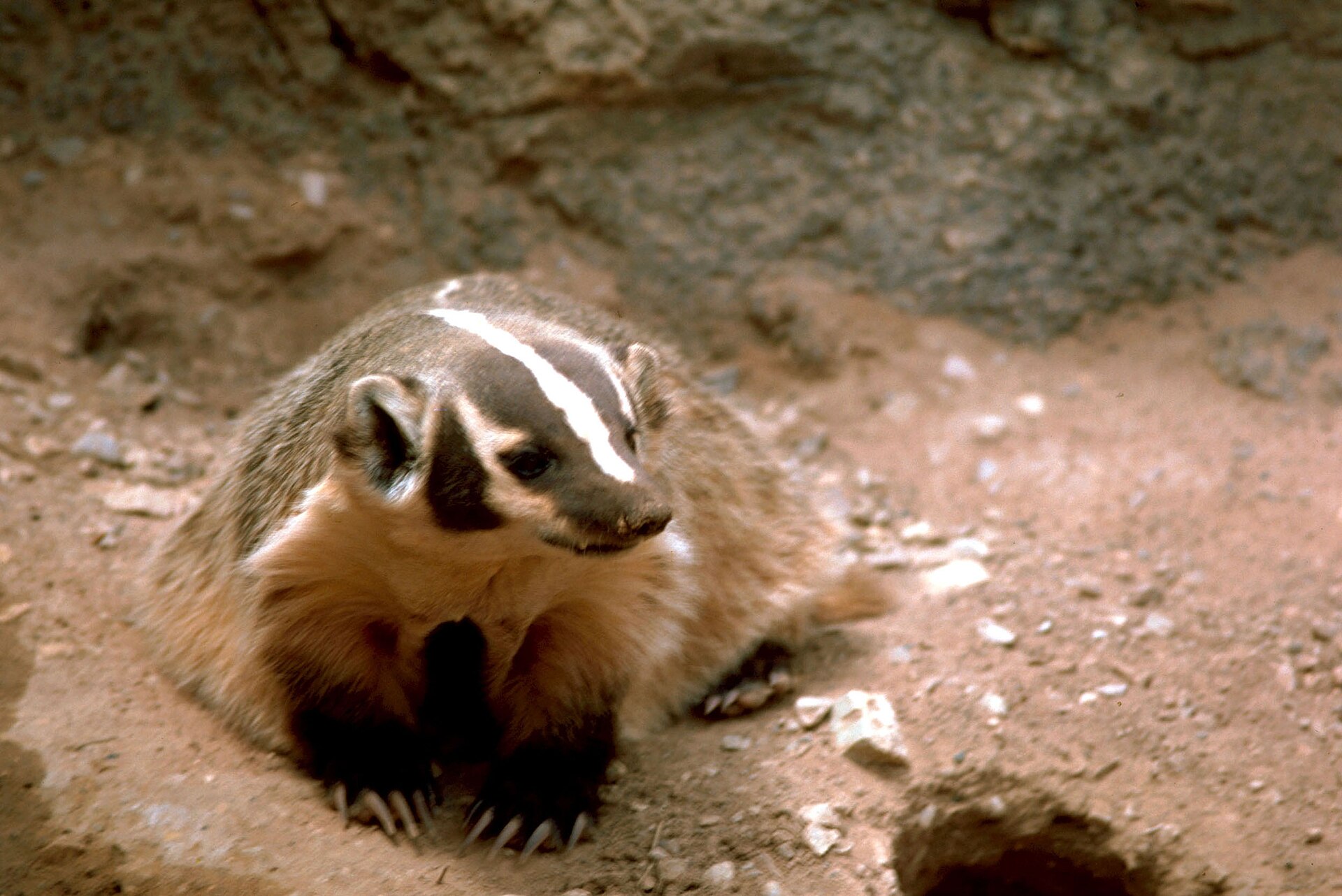
Their nocturnal habits match the underground activity patterns of these prey, making nighttime hunts consistently productive.
Prey Selection Patterns
Digging defines the badger’s approach to finding food. This predator targets small mammals it can excavate from underground spaces. It specializes in converting soil into opportunity.
Badgers pursue ground dwelling prey. Their forelimbs power through tunnels to capture moles, pocket gophers, and rats. An individual often concentrates on one abundant species. A badger may eat mostly moles where populations spike. It’s opportunistic, not loyal. The diet stays carnivorous. Plant material rarely appears. Energy comes from vertebrates plus large invertebrates like earthworms and insects.
Key prey selection patterns include:
- Tunnel dependent targets: Badgers prioritize animals living in burrows they can access.
- Local abundance focus: They’ll switch to whatever small mammal dominates an area.
- Solitary specialization: Each badger hunts alone, matching effort to personal energy needs.
This measured strategy reflects adaptation, not preference.
Nocturnal Hunting Behavior
Nightfall typically triggers the badger’s shift from rest to pursuit.
The badger hunts as a carnivore, digging for moles, ground squirrels, and rats with powerful forelimbs and long claws. It locates prey by scent and sound underground. It excavates tunnels several feet long to reach nests.
Raccoons also move at night. They’re opportunistic omnivores, not dedicated hunters. They forage on the surface, in trees, and near water sources. They raid gardens, trash bins, and outdoor pet food dishes. They don’t dig extensive burrows like badgers.
Both animals follow food. Badgers target burrowing mammals in lawns. Raccoons pursue accessible human related waste. This distinction shapes their ecological roles. One controls underground rodent populations, while the other adapts readily to human environments. Their nocturnal paths rarely cross, yet both leave visible traces by morning.
Raccoon Diet: Why They’ll Eat Almost Anything
Raccoons frequently demonstrate one of nature’s least choosy approaches to eating. They’re omnivores, meaning they’ll consume both plants and animals without preference. Their dexterous front paws function like hands, letting them pry open trash bins and probe shallow streams for food. The Animal Diversity Web account for Procyon lotor sets out the same omnivorous range.
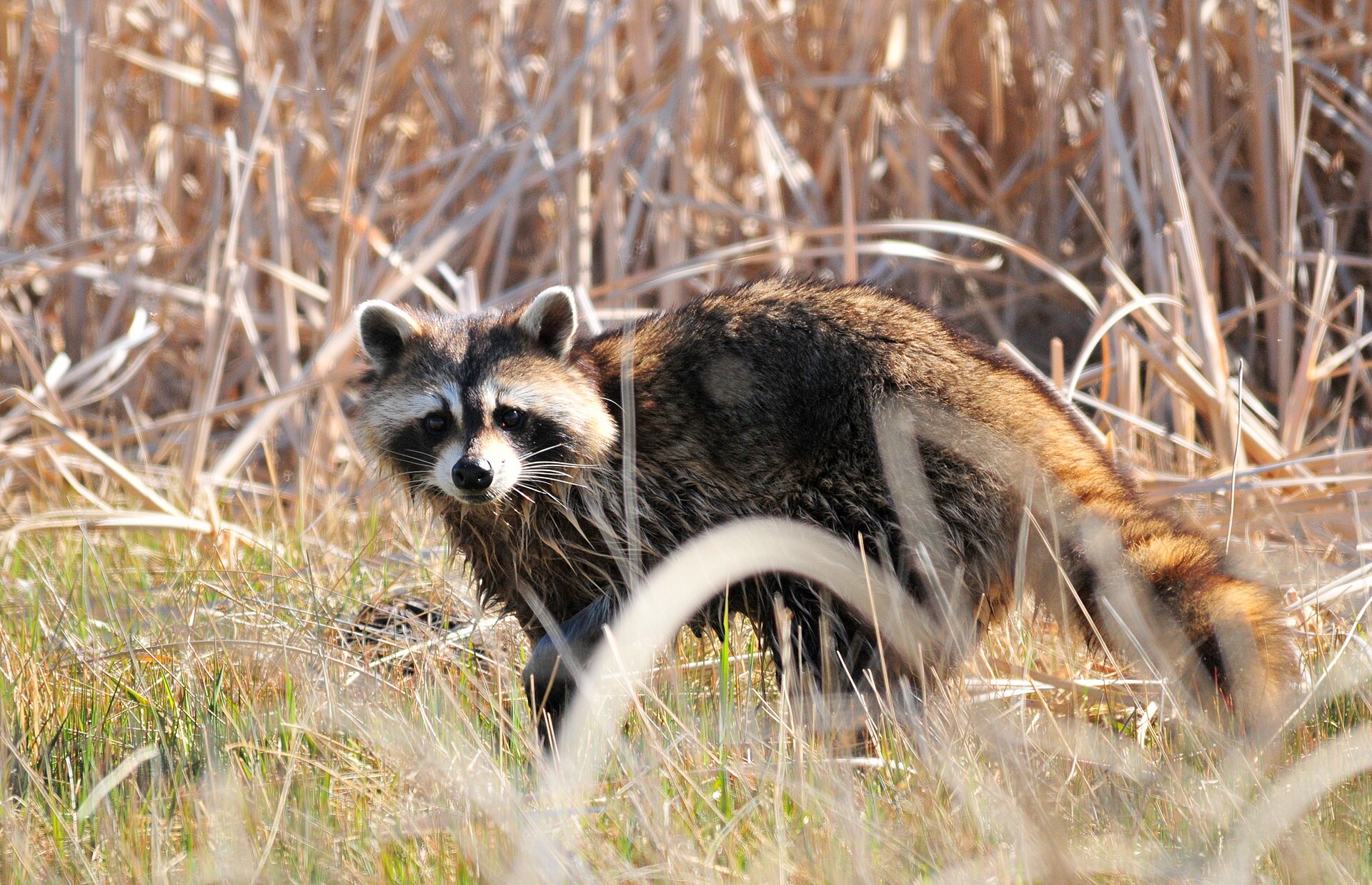
This adaptability explains their success. Raccoons’ll raid gardens, compost piles, and pet food bowls with equal enthusiasm. Seasonal shifts shape their choices: they gorge on fruits and nuts in late summer to build fat reserves, then pivot toward protein sources and human leftovers when winter approaches.
Their diet includes:
- Garbage and food waste from unsecured containers
- Small animals: insects, frogs, eggs, and rodents
- Agricultural crops and backyard produce
This opportunism lets raccoons thrive across diverse landscapes. They don’t specialize, and that’s precisely why they’re everywhere.
Badger Burrows: How Tunnels Threaten Your Foundation
Badgers spend much of their lives below ground, where they carve out extensive tunnel systems with multiple nests and connecting passages. These networks can stretch several feet beneath lawns and reach right up to building foundations. When badgers undermine soil supporting driveways, sidewalks, or foundation footings, the ground settles or collapses. Cracks form. Structures become unstable. If you are trying to read the hole itself, our guide to identifying animal burrows and holes walks through the shape, spoil pile and entrance clues species by species.
Repeated digging strips lateral support from shallow foundations and frost protected slabs. Differential settlement follows, and repairs grow costly. Badger burrows hide their damage well. Concealed openings and spoil piles mask voids beneath turf. Homeowners often notice nothing until foundation cracks appear. One habit makes the mess add up fast: through the summer a badger will often dig a fresh burrow rather than reuse yesterday’s, so a single resident animal can pock a lawn with holes inside a fortnight.
Simply sealing surface entrances fails. Undermined voids remain, threatening integrity. Professionals must remove the animals and backfill tunnels. This restores soil density and protects the foundation. Early intervention matters more than most homeowners realize.
Where Raccoons Live: Trees, Attics, and Abandoned Dens
Raccoons prefer nesting in tree cavities, attics, and chimneys.
They readily occupy abandoned badger burrows to raise kits, especially in suburban zones.
In cities they’ve adapted remarkably, exploiting roof vents and soffits to survive year round near human food sources.
Preferred Nesting Locations
Across forests, suburbs, and cities, raccoons seek shelter in places that offer warmth, safety, and easy access to food. These adaptable mammals demonstrate remarkable flexibility in their housing choices. They’ll climb. They’ll squeeze. They’ll exploit any weakness in a structure.
- Tree cavities and abandoned woodpecker holes provide natural shelter in wooded areas, offering elevation and protection from ground predators.
- Attics, chimneys, and wall voids attract raccoons with consistent warmth and seclusion, particularly during harsh weather.
- Roof spaces, sheds, and crawlspaces serve urban populations well, accessible through torn vents or gaps near eaves.
Females select enclosed sites for spring birthing. Security matters then. The young need stable temperatures and hidden spaces. This nesting behavior reveals how raccoons thrive alongside humans. They’ve learned our structures serve their needs.
Abandoned Burrow Usage
When ground dens become available, raccoons don’t hesitate to move in. They commonly take over abandoned badger burrows, using the existing underground tunnels and nest chambers to raise their young. Badger burrow systems often contain multiple nests connected by several feet of tunnel. This creates ready made shelter that raccoons exploit.
Raccoons don’t dig these homes themselves. They’re equally likely to den in trees or attics, but they preferentially occupy ground dens when suitable abandoned burrows exist. Occupied burrows show telltale signs: leaves and grasses line the interior, and raccoon tracks and scat appear at the entrance. Fresh digging won’t be present.
Homeowners may notice increased nocturnal activity nearby. Trash raiding often follows. In spring, young raccoons emerge from these adopted dens. The pattern reveals practical opportunism, not loyalty to any single den type.
Urban Habitat Adaptation
Badger burrows aren’t the only shelter raccoons commandeer. These habitat generalists exploit diverse urban structures statewide across the U.S. They adapt readily. Trees provide cavities and dense canopy hollows for raising kits. Attics offer insulated, dry spaces; raccoons rip vents or bend siding to enter. Wall voids serve similar purposes. Their nocturnal behavior and omnivorous diet drive den selection near reliable food. Garbage bins, pet food, and fruit trees attract them. Parks, yards, sewers, and suburban green spaces all host populations.
Raccoons thrive where resources exist. Three factors explain this success:
- Structural flexibility: they use natural and human made shelters interchangeably
- Dietary breadth: they consume nearly anything edible
- Behavioral plasticity: they adjust activity patterns to avoid human conflict
This adaptability guarantees persistence. It also creates management challenges for homeowners and wildlife officials alike.
Badger Territory: Where You’ll Find Them in the U.S
The American badger’s range stretches across most of the western United States. They occupy every state west of the Mississippi River. They also live in Illinois, Indiana, Michigan, and Ohio. Range and denning figures here follow the Animal Diversity Web account for the American badger, which records dens reaching three metres deep with roughly ten metres of tunnel. That eastern edge is recent. The range has been creeping eastward since the early 1900s, which is why Ohio and Michigan hold resident badgers today where a century ago they held none.
Badgers prefer open, dry habitats. They favor grasslands, prairie, and sagebrush. Agricultural fields suit them well. Loose soil makes digging easier. They construct multiple burrows connected by tunnels. Nests rest several feet underground. Badgers often build on field edges, pastures, and fence lines.
Their range overlaps with human landscapes. Rural and suburban yards attract them. Rodents like moles and gophers draw badgers near homes. Seasonal activity peaks in spring and fall. Badgers are solitary and territorial. They expand territory size when prey grows scarce. This behavior helps them survive in challenging conditions.
Raccoon Range: Why They Are in Almost Every State
Raccoons occupy every mainland U.S. state through three key advantages. They exploit adaptable food sources, consuming garbage, pet food, insects, and small animals that specialists can’t use. They range widely to do it. The Internet Center for Wildlife Damage Management puts a male raccoon’s home range at roughly 3 to 20 square miles and a female’s at 1 to 6.
They flourish in urban environments by denning in attics and sheds, and their climate resilience lets them expand northward despite cold winters.
Adaptable Food Sources
Omnivory, eating both plants and animals, explains much of raccoon success. Badgers dig for ground rodents and moles. Raccoons don’t limit themselves this way. They’ll take garbage, fruit, nuts, insects, small mammals, eggs, and pet food. This flexibility matters. It lets them live anywhere.
- Trash and compost bins provide calories in every town.
- Bird feeders and outdoor pet bowls offer reliable, year round nutrition.
- Seasonal food pulses, fruit ripening, insect emergences, crop harvests, keep populations fed through changing climates.
Raccoons forage at night. They exploit what’s available. Even small yards with unsecured garbage support breeding adults. They aren’t picky. That’s why they’re in every state.
Urban Environment Thriving
Because cities offer warmth, shelter, and endless calories, raccoons have colonized every mainland U.S. state. Hawaii is the one holdout, where the animal is banned and has never established a wild population. These adaptable omnivores thrive on garbage, pet food, rodents, and insects. Their dexterous front paws and problem solving skills let them open trash bins and raid attics. This increases their survival and reproduction.
Unlike badgers that dig burrows, raccoons exploit human structures. They use trees, sewers, attics, and even old badger dens. Urban habitats prove attractive and safe. Easy food sources draw raccoons into neighborhoods. They establish lasting populations there.
Raccoons tolerate human activity well. Badgers remain limited mostly west of the Mississippi. This contrast explains the raccoon’s range expansion. Their flexibility guarantees success across diverse landscapes.
Climate Resilience Factors
From Alaska’s long winters to Florida’s humid summers, raccoons survive temperature extremes that limit many mammals. They regulate exposure using insulated dens, tree cavities, attics, and burrows. Their omnivorous diet, garbage, fruits, insects, rodents, eggs, lets them exploit year round food sources across ecosystems. The cost of that endurance is visible on the animal: in the northern part of the range a raccoon may shed up to half its autumn body weight before spring.
Three factors drive their climate resilience:
- Behavioral flexibility: Nocturnal foraging and opportunistic scavenging let raccoons thrive in forests, wetlands, suburbs, and cities alike.
- Reproductive adaptability: females raise one litter of three to seven kits every spring after a gestation of about 63 days, and that reliable annual output lets local populations rebound quickly after a hard winter. Delayed implantation, a trait often misattributed to raccoons, actually belongs to the badger, which mates in late summer but holds the embryo in arrest until December or February. The result is a seven month pregnancy containing roughly six weeks of actual growth.
- Habitat connectivity: Raccoons disperse along rivers, greenways, and suburban networks, maintaining range persistence despite local climate variation.
This adaptability, biodiversity, meaning the variety of life in an area, positions raccoons uniquely. They aren’t merely surviving. They’re expanding.
Badger or Raccoon: Which Damages Property Worse?
Property damage from wildlife turns up in different ways. Raccoons generally cause more property damage than badgers. They tear vents, bend siding, rip up gardens, and knock over trash bins. They’re also more likely to enter attics or wall spaces. This leads to insulation damage, noise, and potential disease issues inside homes.
Badger damage stays more limited. They dig extensive burrows that undermine driveways, sidewalks, lawns, and foundations. These tunnels create structural hazards. Badger burrows often include multiple nests connected by several feet of tunnel. The ground can collapse and destabilize landscaping.
Because raccoons are omnivorous and opportunistic, they cause ongoing, varied damage around yards. Badger impacts remain more localized to digging and soil disruption. For homeowners, raccoons present the broader challenge.
How Raccoons Get Into Your Home
Raccoons don’t wait for invitations. They’ll rip open soffit vents, bend back metal siding, and enlarge gaps around eaves to reach attics. These animals compress their bodies through openings just 4 to 6 inches wide. They bend bone structure, slipping through damaged vents or gaps under porches.
Raccoons exploit existing weaknesses. They’ll tear loose flashing, push past torn screens, and enter through missing chimney caps. Once inside, mothers raise kits in attic voids. Established raccoons return repeatedly until entry points are secured.
Food and shelter draw them closer. Outdoor pet food, unsecured trash, and accessible crawlspaces increase break in risk. Homeowners often overlook small gaps until rustling sounds begin overhead.
Common entry methods include:
- Damaged roof vents: raccoons bend or remove covers entirely
- Chimney gaps: missing caps create direct access
- Soffit intersections: weakened joints separate under persistent pressure
Keep Badgers Out: Yard Protection That Works
Homeowners can block badger intrusions through three proven approaches. Physical barriers like buried fencing stop tunneling, while removing food sources and shelter reduces a property’s appeal to foraging animals.
When these measures fail, licensed professionals provide safe removal without causing further structural damage.
Physical Barrier Methods
Against determined digging, a simple fence rarely suffices. Property owners must install physical barriers that address badgers’ burrowing instincts directly.
- Buried perimeter fencing is the one measure with a published figure behind it. The Internet Center for Wildlife Damage Management, the USDA and university run reference on wildlife damage, reports that mesh buried 12 to 18 inches deep will exclude most badgers. Taking it to 24 inches and turning the bottom outward by 6 to 12 inches buys margin on loose or sandy soil.
- Reinforced materials follow trade practice rather than an agency standard: heavy gauge (14 to 16) galvanized welded wire with 2 inch or smaller openings, which resists claw damage and squeeze through entry.
- Structural reinforcement is likewise a builder’s rule of thumb, not a published spec: concrete footings or buried stone barriers extending 2 to 3 feet deep beneath decks and garden beds, where the soil stays loose.
One caveat worth stating plainly: the same reference rates exclusion fencing impractical over large areas, because the cost and labour outrun the damage. Ring the thing you are actually protecting, not the property line.
Regular inspection of soil disruptions around foundations proves essential, as badgers return to existing burrows. These methods don’t harm wildlife. They simply redirect animal energy elsewhere, preserving both property and the badger’s natural behaviors.
Natural Deterrent Options
Badgers often arrive unannounced, and property owners must respond with layered defenses that respect wildlife while protecting land. Motion activated sprinklers startle nocturnal visitors with sudden water bursts. Buried hardware cloth, 18 to 24 inches deep, blocks digging attempts. Attractant removal matters: secure compost, eliminate rodent burrows, store pet food indoors. Bright nighttime lighting and ultrasonic devices increase perceived risk. Reinforce structures promptly. Fill gaps, level soil, repair tunnels. These measures reduce conflict without harm.
Biodiversity, the variety of living species in an area, benefits when humans coexist carefully. One homeowner noted sprinklers halved visits in two weeks. Consistency yields results. Each tactic alone falters; combined, they create effective deterrence.
Professional Removal Services
When DIY methods fall short, it’s time to call in experts.
Professional wildlife control services address persistent badger problems that threaten structures or landscaping. Trained technicians assess damage and implement targeted solutions.
Three key services they provide:
- Humane trapping and removal: licensed operators capture badgers using live traps, then relocate them following local regulations.
- Structural repair: crews fill burrows and reinforce undermined foundations, preventing collapse.
- Exclusion systems: they install underground barriers, typically hardware cloth buried 12 to 18 inches deep with 6 to 8 inch outward flanges at the base.
These specialists also identify attractants that homeowners miss. Their work isn’t cheap, but it’s effective.
For property owners facing recurring invasions, professional intervention offers lasting resolution that saves money long term.
Raccoon Proof Your Trash: Tested Methods
Keeping raccoons out of household trash calls for a layered approach rooted in the animal’s physical abilities and behavior.
Homeowners should deploy heavy duty wildlife resistant trash cans, either metal or thick polyethylene, equipped with twist or clamp style locking lids. Raccoons open flimsy plastic with ease. They’ll struggle with these.
Secure lids further using bungee cords or carabiner clips tightened taut over the top. Simple straps fail. Anchored fasteners hold.
Store bins inside a locked garage or sturdy shed overnight. Raccoons hunt primarily between dusk and dawn. Morning curbside placement by 6 a.m. shrinks their window to minutes.
Seal smelly scraps in containers or freeze them. Raccoons detect odors at remarkable distances. Deny them the signal.
Cornered by a Badger: What Happens Next?
Although a badger prefers to avoid human contact, it won’t hesitate to defend itself when escape routes disappear.
A cornered badger often stands firm. It hisses, growls, and snarls while baring its teeth. The animal won’t usually flee. Instead, it confronts the threat directly. This differs from more evasive wildlife behavior.
- Vocal warnings: The badger uses aggressive sounds to intimidate before physical engagement.
- Escape attempts: It may burrow rapidly or retreat into a nearby den if available.
- Physical defense: If pressed further, sharp claws and powerful bites pose serious injury risk.
Badgers aren’t social animals. Solitary nature means no pack support. They’re protective, especially near young. Anyone encountering this situation should back away slowly. Don’t turn your back. Space allows retreat. Wildlife professionals handle these cases safely. Self intervention risks harm.
Raccoon Confrontation: Will They Stand Their Ground?
How does a raccoon respond when escape seems impossible? The animal will usually avoid direct confrontation. It prefers climbing trees or retreating to attics. However, cornered raccoons become defensive. They hiss, growl, and lunge. They pose serious bite risks to humans and pets.
Adult raccoons sometimes stand their ground briefly. They defend food sources or den entrances. Sustained fighting remains uncommon. Escape remains their priority. Their strong forepaws and sharp teeth cause injury. They transmit rabies and leptospirosis, a bacterial disease affecting kidneys and liver. Never handle one.
Food availability strongly influences raccoon boldness. Remove attractants like garbage and pet food. Secure potential den sites. These steps discourage confrontations. The pattern is clear: raccoons choose flight over fight when possible. Their defensive displays serve as warnings, not invitations to engage.
Badger vs Raccoon: Who Wins a Fight?
A badger’s claws tear through soil with ease. This digging strength translates directly to combat power. American badgers possess stocky bodies and strong forelimbs that deliver powerful slashes in close combat. Raccoons rely on dexterous paws and biting. They lack specialized weaponry. For a heavier weight version of the same question, see how the wolverine matches up against the honey badger.
In direct confrontation, a badger’s thick neck and loose skin protect crucial areas. The badger anchors to ground and fights aggressively. Raccoons avoid direct conflict. They climb trees, enter attics, or use cunning escape routes.
Three factors shape fight outcomes:
- Physical build favors the badger’s dense musculature and defensive adaptations.
- Aggression levels differ; badgers stand ground while raccoons retreat.
- Terrain matters; open ground aids the badger, vertical spaces aid raccoons.
Outcome depends on size, health, and circumstance. Generally, the badger’s adaptations prevail.
Badger and Raccoon Questions, Answered
What is the difference between a badger and a raccoon?
A badger wears a single white stripe running from its nose over the crown, with dark patches on the cheeks, and has a low flattened body built for digging. A raccoon wears a black mask across the eyes and has a bushy tail ringed with 5 to 7 dark bands. Badgers are ground animals that cannot climb. Raccoons climb readily.
Is a badger or a raccoon digging in my yard?
Look at the shape of the hole. A badger digs a wide cone shaped excavation at the entrance of a rodent burrow, throwing a fan of soil behind it, and it will be hunting rather than feeding on your plants. A raccoon rolls back turf in flat sheets to reach grubs and leaves paw prints that look like small hands. Damage above knee height is never a badger.
What do badgers eat?
American badgers are specialist carnivores that hunt burrowing rodents, chiefly pocket gophers, ground squirrels, prairie dogs, moles, kangaroo rats and voles. They catch most of their food by digging it out rather than chasing it down.
What do raccoons eat?
Raccoons are opportunistic omnivores. They take fruit, nuts, insects, crayfish, frogs, eggs, small rodents, pet food, compost and household rubbish, and shift seasonally toward whatever is most abundant, gorging on fruit and nuts in late summer to lay down fat.
Where do American badgers live in the United States?
The core range is the Great Plains and the open, dry country of the western states, largely west of the Mississippi River. The range has been expanding eastward since the early 1900s, so badgers are now resident in Illinois, Indiana, Michigan and Ohio as well.
Do raccoons live in every US state?
Raccoons occupy every state on the mainland, including Alaska. Hawaii is the exception. Raccoons are prohibited there and have never established a wild population, so the common claim that they live in all fifty states is not correct.
Which causes more property damage, a badger or a raccoon?
Raccoons cause more damage to more homes, because they enter structures. They tear vents and soffits, get into attics and wall cavities, ruin insulation and tip bins. Badger damage is rarer but can be more serious when it happens, because tunnelling under a slab or footing removes the soil that supports it.
Who would win a fight between a badger and a raccoon?
On open ground the badger wins. It is built for close combat, with long claws, thick loose skin and a ferocious defensive response when cornered. The raccoon avoids the fight instead: it climbs. Terrain decides the outcome, which is why the two rarely meet in a serious confrontation at all.
Final Thoughts
Both creatures shape ecosystems differently. Badgers control rodent populations through predation. Raccoons spread seeds and nutrients through their omnivorous foraging. Biodiversity, the variety of life in an area, benefits from each species’ unique role. One evening, a homeowner might spot striped fur and a flattened body slipping underground. The next morning, masked bandits scatter trash across the same lawn. These coincidences remind us: coexistence requires understanding, not fear.

Erzsebet Frey (Eli Frey) is an ecologist and online entrepreneur with a Master of Science in Ecology from the University of Belgrade. Originally from Serbia, she has lived in Sri Lanka since 2017. Eli has worked internationally in countries like Oman, Brazil, Germany, and Sri Lanka. In 2018, she expanded into SEO and blogging, completing courses from UC Davis and Edinburgh. Eli has founded multiple websites focused on biology, ecology, environmental science, sustainable and simple living, and outdoor activities. She enjoys creating nature and simple living videos on YouTube and participates in speleology, diving, and hiking.
From the shop
Gifts for people who love the wild
Wildlife themed t-shirts, notebooks, tote bags, bandanas and guides, designed by an ecologist.
Visit the shop