
There are probably three million bobcats in the United States, and most people will never see one. That is the whole animal in a sentence. It is the most successful wild cat in North America and one of the least observed, because it has spent the last century getting quietly better at living next to us while we were not looking.
I am a wildlife biologist with an MSc in ecology. Every figure on this page comes from a published study or a conservation assessment, and where a familiar claim does not hold up, I say so instead of repeating it.
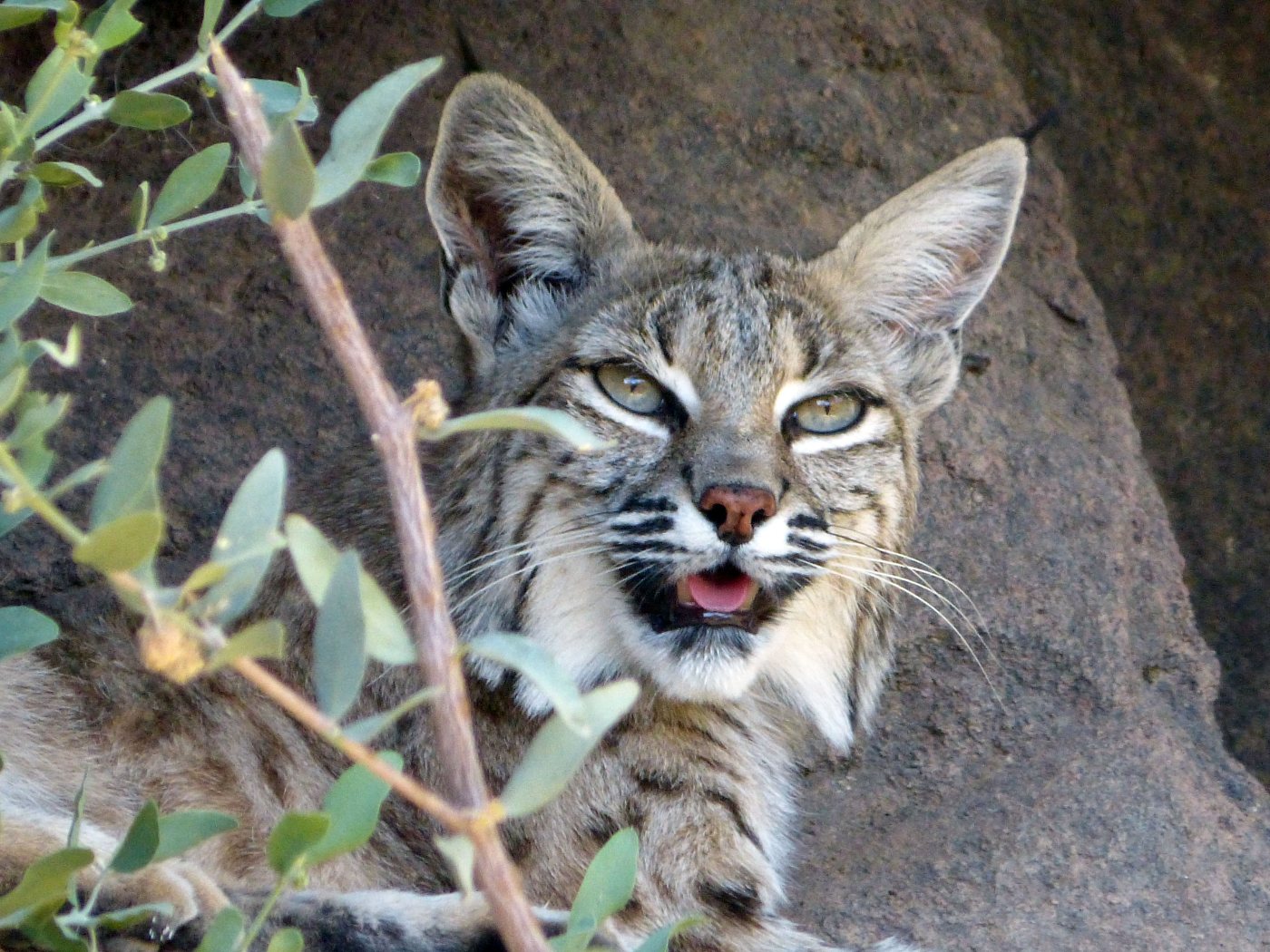
Bobcats at a glance
| Scientific name | Lynx rufus |
| Family | Felidae, genus Lynx |
| Weight | Usually 6 to 13 kg, with large northern males heavier |
| Head and body | 65 to 105 cm, plus a tail of only 9 to 20 cm |
| Shoulder height | Around 53 cm |
| Range | Southern Canada to central Mexico, the most widely distributed wild cat in North America |
| US population | 2.3 to 3.6 million, up from an estimated 725,000 to 1,017,000 in 1981 |
| Main prey | Rabbits and hares, then whatever else is abundant |
| Home range | From about 6 square km in southern California to 325 square km in New York |
| Litter | Usually two to four kittens after a gestation of 50 to 70 days |
| Lifespan | 12 to 13 years in the wild |
| IUCN status | Least Concern, and increasing |
The comeback nobody noticed
Most conservation stories on this site are about loss. This one is not, and it is worth sitting with because it is rarer than it should be.
In 1981 the best available estimate put the United States bobcat population at roughly 725,000 to 1,017,000 animals. When Roberts and Crimmins repeated the exercise using state agency data for 2008, the number had more than doubled, to 2,352,276 to 3,571,681. In 1996 about twenty states reported growing populations. By 2008 thirty two did. Only Florida reported a decline.
Nothing dramatic caused this. It was the accumulation of unremarkable decisions: regulated harvest seasons replacing unlimited trapping, farmland reverting to scrub and young forest, and a cat flexible enough to use both. Bobcats returned to states in the Midwest where they had been wiped out by the early 1900s. Ohio, which had none for most of the twentieth century, now has a managed and monitored population.
The Florida exception is instructive. Bobcat numbers there have fallen in the south of the state, and the leading explanation is the invasive Burmese python, which has removed so much of the small and medium mammal base that the predators above it have nothing left to hunt. A cat that survived a century of trapping is being displaced by a snake that arrived in the 1980s.
How to know you are looking at a bobcat
Bobcats get mistaken for house cats, for Canada lynx, and for mountain lions, which is impressive given how different those three are from each other. The confusions are all solvable.
- Against a large house cat. The tail settles it. A bobcat tail is 9 to 20 cm, black on the upper surface and white underneath, and it is carried like a stub rather than a rope. The hind legs are also noticeably longer than the front, which gives a bobcat a slightly tipped forward, springy walk.
- Against a mountain lion. Size and tail again. A cougar is three to four times heavier with a tail nearly as long as its body. If the tail is short, it is not a cougar.
- Against a Canada lynx. This is the only genuinely tricky one, and it only arises along the northern edge of the bobcat range. It has its own section below.
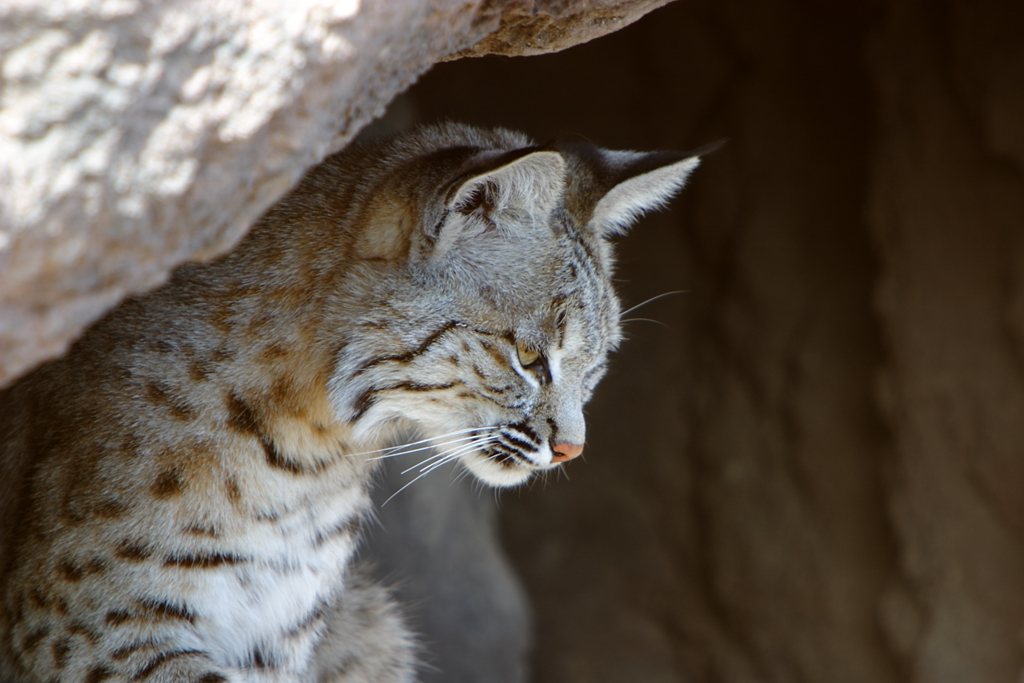
Coat pattern varies enormously across the range, from heavily spotted desert animals to nearly plain grey northern ones, which is why colour is a poor identification cue and structure is a good one. The details are in what do bobcats look like, the tail question in do bobcats have tails, and the measurements in bobcat size and comparison.
Bobcat or Canada lynx
These two are close relatives, they overlap along a band across southern Canada and the northern United States, and they occasionally hybridise. They are still easy to separate once you know that almost every difference between them comes down to snow.
| Bobcat | Canada lynx | |
|---|---|---|
| Tail tip | Black on top, white underneath | Black all the way round |
| Paws | Ordinary cat feet | Huge, furred, twice as effective at carrying weight on snow |
| Ear tufts | Short, sometimes barely there | Long and obvious |
| Facial ruff | Modest | Deep and flared |
| Legs | Long hind legs, normal proportions | Longer still, stilted look |
| Coat | Often clearly spotted | Usually plain grey, faintly marked |
| Diet | Rabbits, then anything | Snowshoe hare, 60 to 97 percent of the diet |
| Habitat | Almost everything | Boreal forest with deep snow |
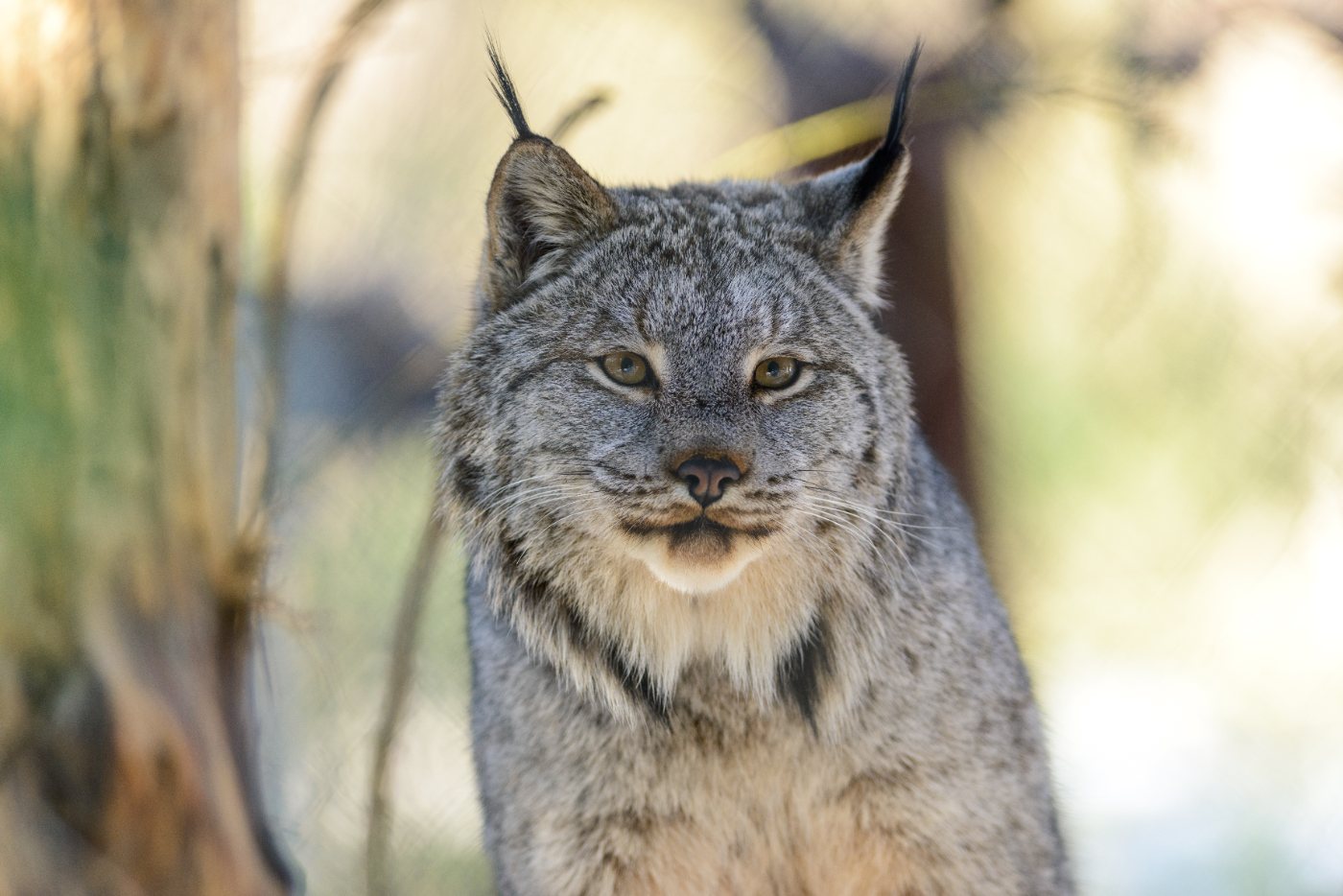
The tail tip is the field mark to memorise. Everything else varies.
The deeper difference is strategy. The Canada lynx is a specialist, and it is one of the most extreme specialists in the cat family: no other cat depends on a single prey species the way it depends on the snowshoe hare. That dependence locks it into the hare’s population cycle, which runs on a rhythm of nine to eleven years with the lynx following one to two years behind. Between the peak and the trough of that cycle, lynx density can vary seventeen fold. The animal is not in trouble when its numbers crash. That is simply what the system does.
The bobcat took the opposite bet. It eats rabbits when rabbits are there and something else when they are not, and it will accept desert, swamp, forest, farmland and suburb. That is why one of them occupies most of a continent and the other occupies the boreal forest, and it is also why, where the two meet, the bobcat tends to push north into ground the lynx used to hold as winters get milder and the snow that gave the lynx its advantage stops arriving.
The other three lynxes
The bobcat is one of four species in the genus Lynx, and the other three are worth knowing because together they show how differently the same body plan can be played.
- Canada lynx (Lynx canadensis). Boreal North America, 8 to 12 kg, Least Concern, tied to the snowshoe hare cycle. Threatened in the contiguous United States, secure in Canada.
- Eurasian lynx (Lynx lynx). The big one, up to about 30 kg, ranging from western Europe across Siberia. It takes roe deer and chamois, which no other lynx attempts, and it has been reintroduced across parts of Europe with real success.
- Iberian lynx (Lynx pardinus). Spain and Portugal, a rabbit specialist as narrow as the Canada lynx is a hare specialist, and the best conservation story in the cat family.
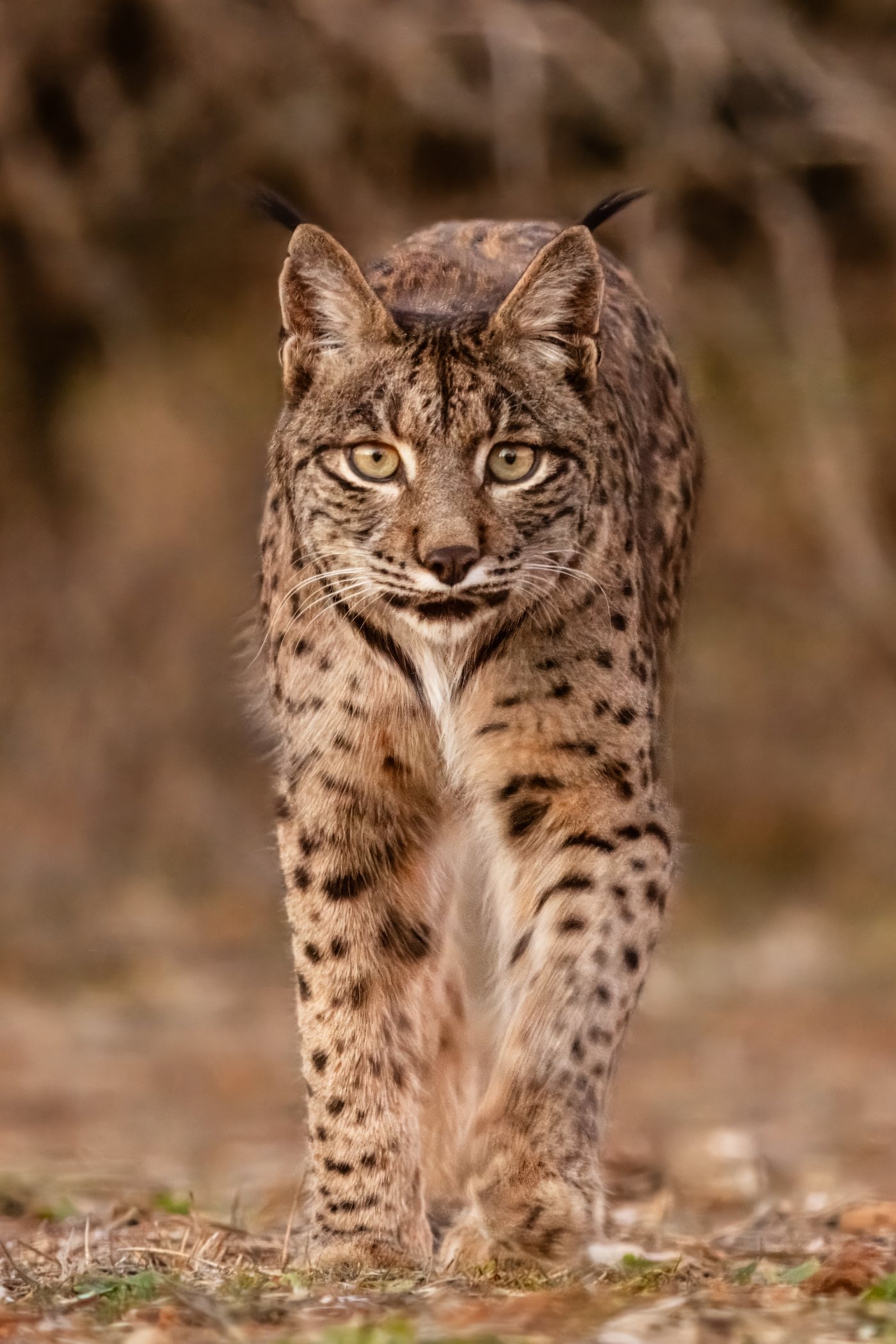
The Iberian lynx deserves more than a line. In 2002 fewer than one hundred were left alive, in two isolated pockets of scrub in southern Spain. It was the most endangered cat on earth and there was no serious expectation it would survive. Captive breeding, reintroduction, buying and restoring habitat, rebuilding the rabbit populations it lives on, and building crossings so the cats stopped dying on roads: none of it clever, all of it sustained for two decades. By 2025 the count stood at 2,663, and the IUCN moved the species from Endangered to Vulnerable.
It is still Vulnerable, not recovered. But a species that was down to double digits is now measured in thousands, and it happened because people decided it should.
What a bobcat eats
Rabbits and hares are the foundation. Across almost every study, in almost every part of the range, cottontails and jackrabbits make up the largest share of the diet. But the honest summary is that a bobcat eats whatever is most available, and that flexibility is the reason it is still here.
- Rabbits and hares, the mainstay almost everywhere.
- Rodents, from voles and mice to squirrels and woodrats, which carry bobcats through periods when rabbits crash.
- Birds, including ground nesting species and, in some regions, wild turkey.
- Deer, mostly fawns in early summer and winter weakened adults. This is real but seasonal and regional, not routine.
- Reptiles, insects and carrion, taken opportunistically.
The deer question comes up constantly and deserves a straight answer. A 9 kg cat killing a deer sounds implausible, and for a healthy adult deer it usually is. But bobcats do take fawns, and fawn predation studies in the southeastern United States record bobcats as a meaningful cause of fawn mortality alongside coyotes. In deep snow, where a deer flounders and a cat can move on the crust, adults become possible. It is not the everyday diet. It is what the animal is capable of when conditions tip.
The equipment behind that is covered in bobcat teeth, and the broader survival toolkit in bobcat adaptations.
Territory, dens and raising kittens
Bobcats are solitary and territorial, and the size of a territory tells you almost everything about the quality of the ground. Home ranges run from roughly 6 square km in rich southern California habitat to 325 square km in New York. Same species, fifty fold difference, driven almost entirely by how much prey is available and how hard the winter is.
Males hold larger ranges that overlap those of several females. Females overlap each other far less, because a female’s range has to feed her and her kittens without help.
- Mating peaks in late winter, roughly February and March across most of the range.
- Gestation is 50 to 70 days.
- Litters are usually two to four kittens, occasionally one to six.
- Natal dens are rock crevices, hollow logs, dense brush piles and the space under fallen trees, chosen for concealment rather than comfort. A female keeps several alternate dens and moves the litter between them.
- Kittens open their eyes at around nine or ten days and stay with the mother through their first winter.
The moving between dens is the part people find surprising, and it is straightforward once you think about what a den is for. A fixed location accumulates scent, remains and risk. A female who relocates every few weeks is not being fussy. She is staying ahead of anything that might find the kittens.
There is more in what does a bobcat den look like and bobcat mating season, and the climbing question, which matters for both hunting and escape, in can bobcats climb trees.
Living alongside people
Bobcats live in suburbs, on golf courses, in city parks and along the edges of towns across most of their range, and the great majority of residents have no idea. They are crepuscular, they use drainage lines and hedgerows as cover, and they avoid people with real determination.
Attacks on humans are close to nonexistent. The rare documented cases almost always involve a rabid animal or a cornered one. A bobcat that notices you first will simply be gone.
The real friction points are smaller and more practical:
- Cats and small dogs. A bobcat will take an unattended small pet. Bringing animals in at dusk solves it.
- Chickens. Secure housing solves it. Chicken wire does not; hardware cloth does.
- Rodenticide. Poison put out for rats moves up the food chain into the animals that eat rats. Anticoagulant rodenticides have been found in urban bobcat populations, linked to severe mange and death. This is the quiet one, and it is the one worth caring about.
How bobcats sort out space with the other mid sized carnivore they meet constantly is covered in bobcat vs coyote.
Where bobcats still lose
Least Concern and increasing is a genuinely good status, and it should not be softened. But a healthy continental total hides local pressures that matter.
- Roads. In recovering and recolonising populations, vehicle collisions are often the single largest recorded cause of death. Modelling work on the Ohio population found roadkill significant enough to shape whether that population keeps growing.
- Rodenticide and disease. Anticoagulant poisons accumulate in bobcats through their prey and are associated with severe, often fatal mange in urban populations.
- The fur trade. Bobcat pelts remain commercially valuable and the species is listed on CITES Appendix II, which regulates rather than prohibits trade. Harvest is legal and managed in most states, and the managed part is doing its job, but demand tracks fashion and can move quickly.
- Habitat fragmentation. Bobcats tolerate development remarkably well until the patches stop connecting. Isolated urban populations lose genetic diversity fast.
- Invasive predators. The Florida decline, driven by Burmese pythons removing the prey base out from under them.
None of this threatens the species. All of it shapes whether there are bobcats in any particular place, which is usually the version of the question that matters to the person asking it.
Common questions about bobcats
How big is a bobcat?
Usually 6 to 13 kg, 65 to 105 cm in head and body length, and about 53 cm at the shoulder. Roughly twice the size of a large house cat. Northern animals run heavier than southern ones.
Do bobcats have tails?
Yes, a short one of 9 to 20 cm. It is black on the upper surface and white underneath, which is the quickest way to tell a bobcat from a Canada lynx, whose tail tip is black all the way round.
How many bobcats are there?
Between 2.3 and 3.6 million in the United States alone, up from an estimated 725,000 to 1,017,000 in 1981. The IUCN lists the species as Least Concern with an increasing trend.
Are bobcats dangerous to people?
Effectively no. Attacks are extremely rare and almost always involve a rabid or cornered animal. Small pets left out unattended are a real risk; people are not.
Can bobcats kill deer?
Yes, but conditionally. Fawns in early summer and winter weakened or snow bound adults are within reach. A healthy adult deer in good conditions generally is not.
What is the difference between a bobcat and a lynx?
A bobcat is a lynx. It is one of four species in the genus Lynx, alongside the Canada lynx, the Eurasian lynx and the Iberian lynx. When people say “lynx” in North America they usually mean the Canada lynx, which has a fully black tail tip, much larger furred paws, longer ear tufts and a diet built almost entirely on snowshoe hare.
Where do bobcats sleep?
In rock crevices, hollow logs, brush piles and dense cover, and rarely in the same place for long. A female with kittens keeps several dens and moves the litter between them.
Can bobcats climb trees?
Very well. They climb to rest, to escape dogs and coyotes, and occasionally to ambush from above. They also swim when they have to, though they prefer not to.
Everything on this site about bobcats
- Bobcat size and comparison: how big is a bobcat
- What do bobcats look like
- Do bobcats have tails
- Bobcat adaptations
- Bobcat teeth and bite strength
- What does a bobcat den look like
- Bobcat mating season
- Can bobcats climb trees
- Bobcat vs coyote
The other mid sized North American predator bobcats share ground with is covered at coyotes, and for the rest of the animal guides on this site, start from mammals.
Sources
- Roberts, N.M. and Crimmins, S.M. (2010). Bobcat population status and management in North America: evidence of large scale population increase. Journal of Fish and Wildlife Management 1: 169 to 174.
- Kelly, M. et al. (2016). Lynx rufus. The IUCN Red List of Threatened Species, Least Concern.
- IUCN Cat Specialist Group species accounts for Lynx rufus, Lynx canadensis, Lynx lynx and Lynx pardinus.
- Dyck, M. et al. (2023). Simulated effects of roadkill and harvest on the viability of a recovering bobcat population. Journal of Wildlife Management.
- Epstein, M. et al. Predation on white tailed deer fawns by bobcats, foxes and alligators. Proceedings of the Southeastern Association of Fish and Wildlife Agencies.
- IUCN Red List assessment and 2024 status change for Lynx pardinus, and the 2025 Iberian lynx census.
From the shop
Gifts for people who love the wild
Wildlife themed t-shirts, notebooks, tote bags, bandanas and guides, designed by an ecologist.
Visit the shop