
The camel is the animal that best rewards actually checking. Almost every well known camel fact is either wrong, or right for the wrong reason. The humps do not store water, which most people now know, but the usual correction is also wrong. Nobody has ever documented a three humped camel, yet the question is asked constantly, and there is a real and rather good reason why. And the wild camel, the one that genuinely matters for conservation, had its status changed in October 2025 in a way that almost no page on the internet has caught up with.
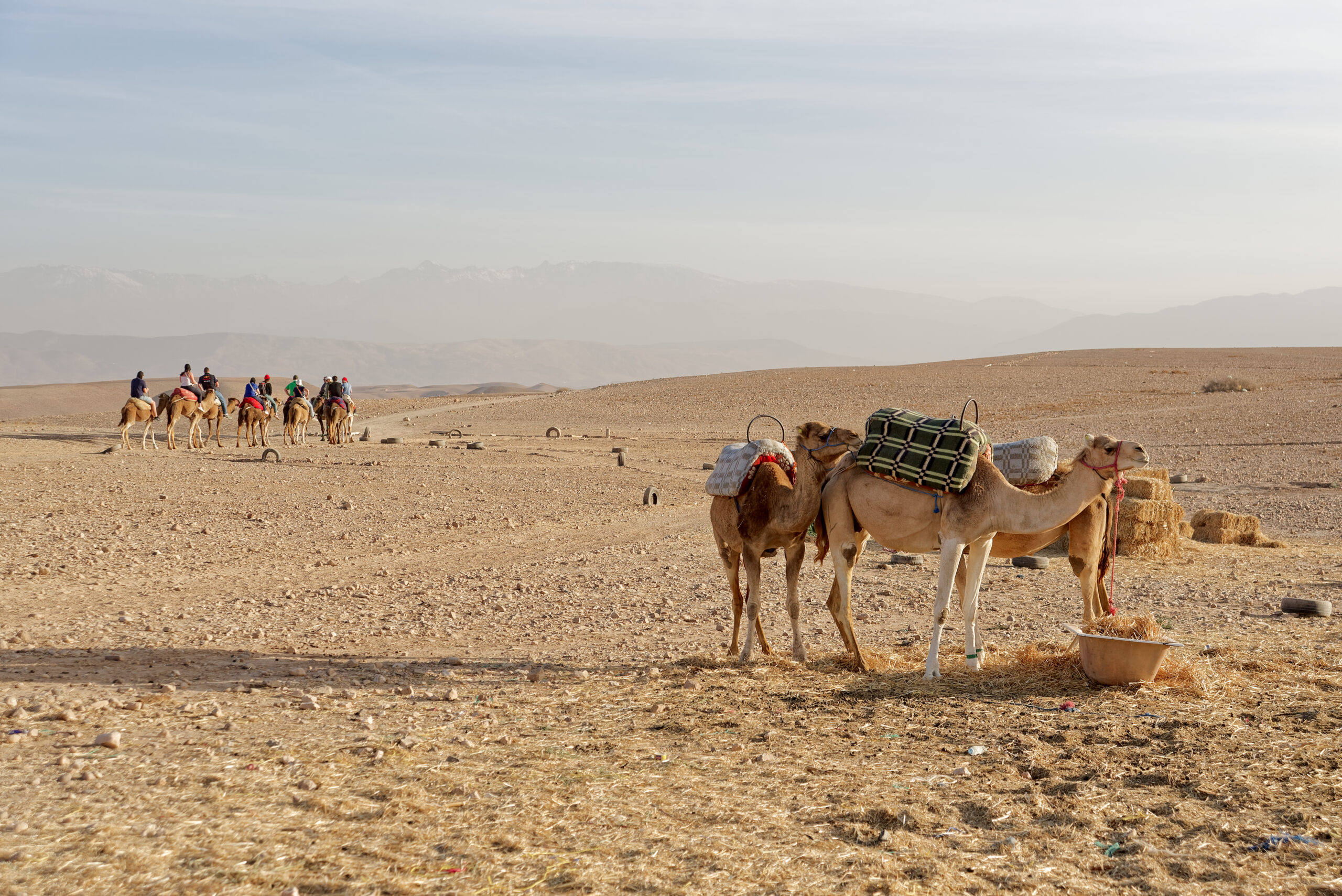
Are there camels with three humps?
No. There are three living camel species and the hump count is fixed at one or two.
| Species | Common name | Humps |
|---|---|---|
| Camelus dromedarius | Dromedary | One |
| Camelus bactrianus | Domestic Bactrian | Two |
| Camelus ferus | Wild camel | Two, but smaller and pyramid shaped, roughly half the size of a domestic Bactrian’s |
I went looking for veterinary case reports of supernumerary humps and found none. I want to be precise about what that means: I can tell you no documented case surfaced, not that the literature has affirmatively ruled it out. The definitive table of camelid congenital defects sits behind a paywall I could not get past. Treat it as an absence of evidence, which is still a good deal more than anyone else on this question will give you.
So why does the question keep coming? Three real reasons, and the first is genuinely interesting.
Hybrid camels have one long hump with a notch in it
Dromedaries and Bactrians interbreed, and the first generation cross does not get one hump or two. It gets one very large hump running from the shoulder back over the lumbar vertebrae, with a distinct indentation a few centimetres deep near the front. Turkish herders call this shape the almond hump, badem hörgüç.
That is the description from Maurizio Dioli’s 2020 review of crossbreeding practice in Turkey and Kazakhstan, which is the best documentation of camel hybridisation in the literature. A partially divided single hump, on an animal that can stand two metres at the shoulder, seen at a distance, is exactly the kind of thing that turns into a story about extra humps.
Hump number is not simply heritable either, so backcrosses shuffle it. By the fourth to sixth backcross generation the animals are nearly indistinguishable from pure dromedaries.
The naming is elaborate, because which parent is which matters:
| Name | Cross |
|---|---|
| tülü or besrek (male), maya (female) | Male Bactrian × female dromedary, Turkish method |
| iner-maya | Male Bactrian × female dromedary, Turkmen method |
| nar-maya or nar | Male dromedary × female Bactrian, Kazakh method |
| teke | Male F1 × female dromedary |
| yegen | Female F1 maya × male dromedary |
| kospak | Nar-maya F1 × male Bactrian |
The hybrids show real hybrid vigour: bigger than either parent, faster growing, longer working lives. Ottoman era hybrids carried 400 to 500 kg, more than twice a purebred load. F1 animals are fertile, but F2 offspring from crossing two hybrids were historically described as poorly developed with deformed chests and joints and unreliable temperament, which is why F1 males are usually castrated.
A 19th century anatomist really did report an extra hump
This is my favourite part. The Italian anatomist Lombardini reported finding an atrophied second hump in front of the main hump in dromedary foetuses and adults, and the finding fed a serious theory that dromedaries and Bactrians were a single species.
Dioli tracked it down in a 2014 paper. The animals Lombardini examined came from the San Rossore herd in Tuscany, which contained hybrids rather than pure dromedaries. A later study of 72 dromedary foetuses and 16 calves found no rudimentary second hump at all. A real published claim, traced to its source, and explained.
My longer take on the question is in can camels have 3 humps.
What is actually in a hump, and why the usual correction is also wrong
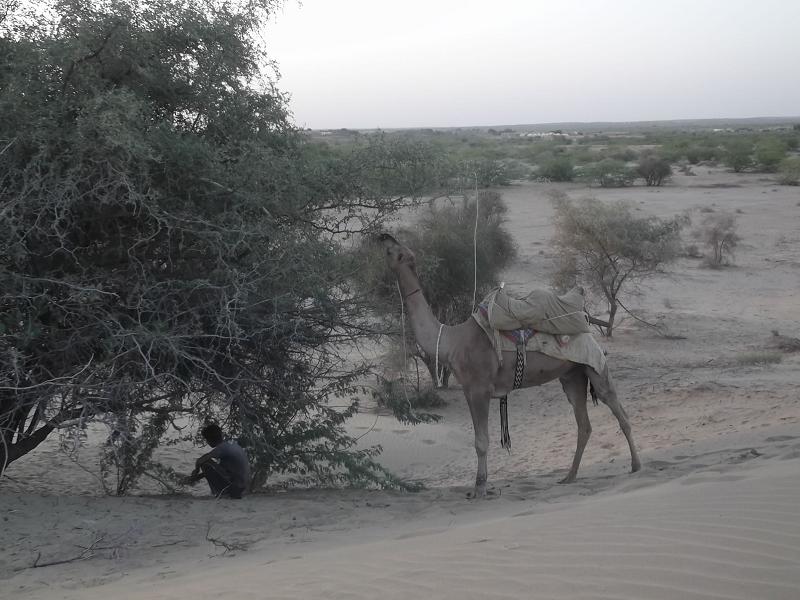
Fat and fibrous tissue. Bengoumi and colleagues measured it in 2005: lipid makes up 52.9 to 64.7 per cent of hump mass, rising with overfeeding. In the same trial, underfed camels lost up to 41 per cent of hump weight and overfed animals gained up to 71 per cent, with fat cell volume moving from 138 to 253 picolitres. A starved camel’s hump shrinks and flops over sideways.
Everyone now knows the hump is not a water tank. What almost every page then says is that it is an indirect water store, because burning fat produces metabolic water. A 40 kg hump fully oxidised yields roughly 43 litres of water, since a gram of fat yields about 1.07 grams of water. That sounds satisfying and it is wrong.
Burning fat requires oxygen. Getting oxygen requires breathing. Breathing hot dry air costs water. The FAO puts numbers on it: at 36 degrees Celsius and 10 per cent relative humidity, a camel loses 23.5 grams of respiratory water in the process of producing 12.3 grams of metabolic water.
That is a net loss of about eleven grams for every twelve grams made. Nearly two to one against. In the conditions where a camel would actually need the water, oxidising hump fat loses more water than it makes.
So the hump is an energy store, full stop. There is a second and rather elegant benefit: concentrating the fat in one dorsal lump rather than spreading it under the skin leaves the rest of the body free to dump heat. A camel wearing its fat as an even layer would cook.
How camels actually handle water
The real adaptations are not in the hump at all. They are in the blood, the nose, the gut and the thermostat.
Drinking
Camels dehydrated by 20 to 25 per cent of body weight replaced about 60 per cent of the lost weight in a single drink, which came to 80 to 100 litres. That is Macfarlane and Howard in 1972, via the FAO. You will see 200 litres quoted widely; I could not find a solid source for it, so I am not repeating it. Camels also do not always rehydrate in one go. Herders’ camels at North Horr in Kenya drank three times over 2.3 hours.
More on this in how much water can a camel drink.
The trick is protecting the blood, not storing the water
Most mammals die at around 15 per cent loss of body weight to dehydration. Camels tolerate over 30 per cent, and can go 15 to 20 days losing 1 to 2 per cent a day, against three or four days for cattle.
What kills a dehydrating mammal is usually circulatory. Water leaves the blood, plasma thickens, circulation fails. In a camel it does not. Schmidt-Nielsen measured a 290 kg camel that lost 17 per cent of its body weight and suffered only an 8.8 per cent fall in plasma volume, with 38 per cent of the lost fluid drawn from the gut instead. The gut acts as the reservoir and the blood is protected.
The red blood cells help. They are oval rather than round, aligned long axis to flow, and they can swell to 240 per cent of their original volume without bursting, against about 150 per cent in other species. Camel cells begin to haemolyse only at 75 to 100 milliosmoles, where donkey and cattle cells go at 170 to 190. Around 60 per cent of the water in a camelid red cell is osmotically inactive, against 26 to 33 per cent in humans and cattle. Perk described the camel erythrocyte in Nature in 1963.
The camel lets its own temperature swing
A dehydrated camel allows its core temperature to move about six degrees across the day, dropping to roughly 34 degrees around six in the morning and not beginning to sweat until it reaches 40. A human varies by about two degrees. Storing heat in the body during the day and shedding it passively at night, rather than evaporating water to stay cool, is one of the largest single savings in the animal. That is Schmidt-Nielsen and colleagues, 1956, and it still holds.
The nose reclaims water from exhaled breath
This is the most impressive piece of engineering in the animal. In a dehydrated camel at night, exhaled air leaves at close to ambient temperature and at around 75 per cent relative humidity, rather than at body temperature and fully saturated. The dry nasal surfaces work hygroscopically, giving up moisture as air is drawn in and reabsorbing it as air passes back out.
The saving is roughly 60 per cent of the water that would otherwise leave in the breath. The nasal surface area involved is over 1,000 square centimetres, against 160 to 180 in a human. Schmidt-Nielsen, Schroter and Shkolnik published it in 1981. You will see this paper dated 1970 in several places, including one large biomimicry database. The Royal Society and PubMed both give 1981.
The kidney, where the camel is good but not the champion
Here is a correction that goes the other way. Camel kidneys are usually described as extraordinary concentrators. Measured maximum urine osmolality in dehydrated dromedaries came out at a mean maximum of 1,466 milliosmoles per kilogram, with the highest individual at 2,372, alongside a 75 per cent drop in filtration rate. Impressive, but desert rodents exceed 9,000 and dik-diks pass 4,000. The camel is not the mammalian record holder for urine concentration.
Where it wins is volume. Cattle excrete 20 to 40 litres of urine a day; a camel manages on 1.3. The renal medulla averages four times the thickness of the cortex, with strong aquaporin 2 expression in the collecting tubules, per a 2023 comparison against oxen kidneys. Faeces come out at 45 per cent moisture, against 50 in sheep and 60 in cattle. The camel is not doing one spectacular thing. It is doing a dozen ordinary things unusually well.
The three species, and the one that is nearly gone
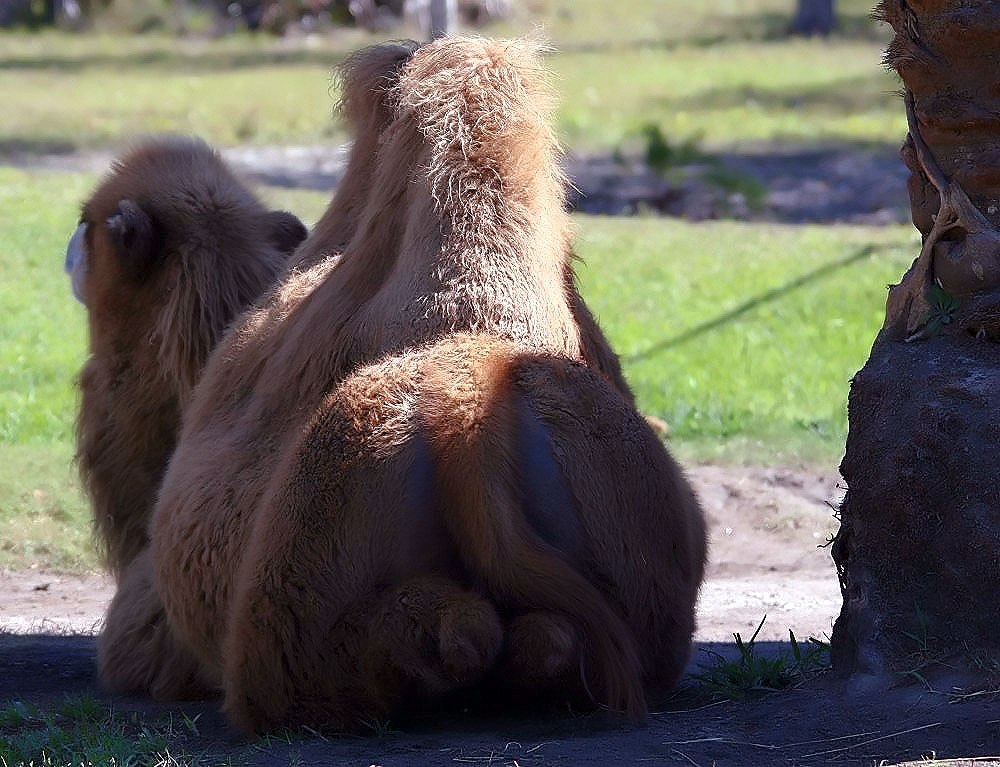
There are roughly 35.5 million camels in the world on the official 2018 FAO figure, and probably more than 40 million in reality. The population has grown 3.07 per cent a year since 1961 and multiplied 2.75 times over that period, with the fastest growth in Mali, Niger, Chad, Kenya and Nigeria at nearly 19 per cent a year.
Almost all of them are dromedaries. Bactrians are only about 2.8 per cent of the world total, roughly a million animals, and their numbers are flat to slightly declining.
The wild camel is a separate species, and its status changed in October 2025
Most pages you will find still say the wild camel is Critically Endangered with about 950 animals left. Both halves of that are out of date.
On 11 October 2025 the IUCN reclassified Camelus ferus from Critically Endangered to Endangered. Read that carefully, because it is not good news in the way it sounds. The reason is that the predicted catastrophic decline did not happen, so the species no longer meets the criterion of an 80 per cent reduction over three generations. It now qualifies as Endangered on the basis of small, fragmented population size instead. The Wild Camel Protection Foundation put it plainly: the change reflects updated data, not reduced threats.
The current numbers, from the 2026 Mammalian Species account:
| 780 to 1,380 | mature individuals |
| 1,040 to 1,840 | total population |
| 640 to 740 | in China |
| 400 to 1,100 | in Mongolia |
| 66 | in captivity, 26 in China and 40 in Mongolia |
| 69 to 71 per cent | range contraction since the early 1900s |
The much repeated 950 figure traces back to a 2004 estimate. It is not current.
Is it a real species or just a feral Bactrian? A real species, and this is settled. It diverged from the Bactrian lineage long before anyone domesticated anything. The divergence date varies a lot by which marker you use, from about 27,000 years on the Y chromosome to 0.43 million years on whole genome data to 0.7 to 2.3 million years on mitochondrial DNA. But Bactrian domestication happened only 4,000 to 6,000 years ago, which is far too recent to explain any of those numbers. Microsatellite work also shows the wild camel is not a direct ancestor of the domestic Bactrian. It is a sister species, not an escapee.
You can tell them apart in the field: wild camels are smaller and slimmer legged, with a flatter skull, shorter muzzle and ears, smaller feet, those small pyramid shaped humps, and no chest calluses. They also carry a variant of the TRPV1 ion channel that lowers temperature sensitivity, letting them tolerate up to 46 degrees, and they can drink hypersaline water that would kill their competitors.
One more thing worth knowing. A 2023 paper in Oryx argued that calling this animal the wild Bactrian camel actively harms it, because it conflates roughly a thousand wild animals with about 454,000 domestic Bactrians in Mongolia alone. Names matter in conservation funding. Call it the wild camel.
Do camels spit, and what is it?
Not spit, technically. Spitting means saliva from the mouth. What a camel ejects is regurgitated forestomach contents, a green slurry of partly fermented plant material and fluid. It is closer to a directed vomit than to spitting, and it is a defensive and social signal rather than an attack.
Camelids are pseudoruminants with a three compartment stomach, not the four chambers of a true ruminant, and the material comes from that forestomach region. Being honest about the limits: I could not find a rigorous study identifying which compartment specifically, or characterising the composition. Anyone telling you precisely is guessing. Dromedaries eject cud when excited; Bactrians reportedly do not spit deliberately unless badly handled.
Do not confuse spitting with the dulla, the inflatable soft palate sac that male camels evert from the mouth as a pink bladder during rut. That is a breeding display. The two get mixed up constantly in popular writing. More in can and do camels spit.
Australia has the largest feral camel population on Earth
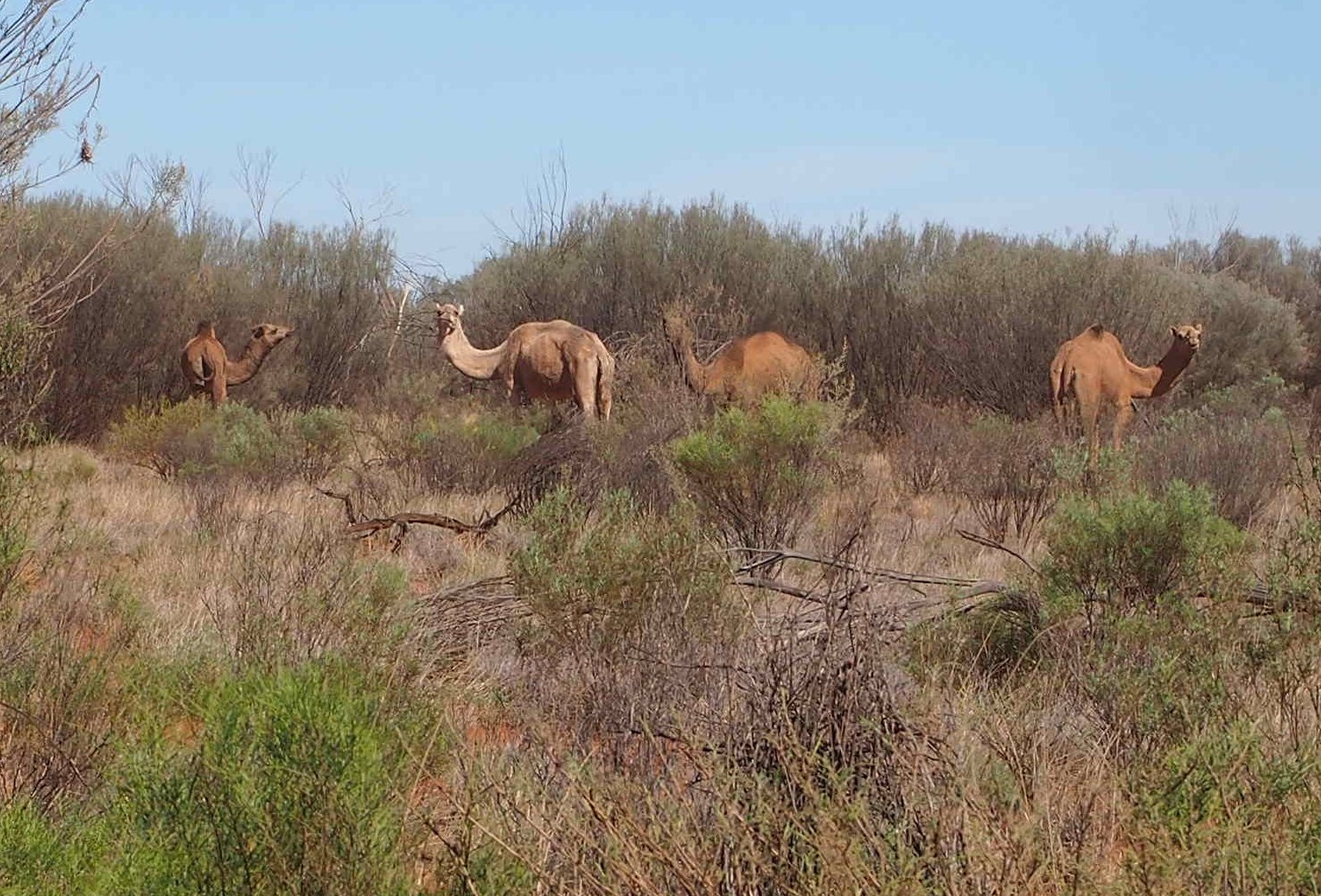
The first camels reached Port Adelaide on 12 October 1840 aboard the Apolline. Only one survived the voyage, a camel named Harry. Between 1870 and 1900 at least 15,000 more arrived with their handlers, mostly dromedaries from British India, Afghanistan, Somalia and Arabia. The cameleers, universally called Afghans although most were Pashtun, Baluchi, Punjabi or Sindhi, ran the inland freight trade until motor transport arrived in the 1920s and 1930s. Then the camels were released.
The numbers now are genuinely contested and I am going to show you the disagreement rather than pick a side. By 2008 the population had passed a million and was doubling every eight to ten years. The Australian Feral Camel Management Project ran from 2009 to 2013 on 19 million Australian dollars and removed about 160,000 animals, more than 130,000 of them by aerial culling. The largest single operation took 11,560 camels in 280 helicopter hours in the southwest Northern Territory in mid 2012, at roughly 30 dollars a head. That brought the population down to around 300,000 by 2013.
Then the funding stopped. Ninti One estimated four million dollars a year was needed to hold the line, and no ongoing funding was committed. Recent journalism claims the population is back over a million, but I could not find a published aerial survey behind that figure. What is defensible: numbers were cut to roughly 300,000 by 2013, and have been rebuilding since at an estimated ten per cent a year.
South Australia culled 4,000 to 5,000 camels in the APY Lands over five days in January 2020 during drought. The summer of 2025 and 2026 brought the same problem again, with camels converging on water, damaging infrastructure and culturally significant sites, and dying in numbers that create carcass disposal problems. It is a hard management question and the answers are not comfortable.
Five things about camels you probably did not know
A camel blood oddity became an approved human medicine
In 1993 a team in Brussels found that camels make functional antibodies with no light chains at all, just heavy chain dimers with an extended hinge, and that these still bind an enormous range of antigens. Hamers-Casterman and colleagues published it in Nature, and it turned out to be a feature of all camelids.
The binding domain can be isolated on its own as a nanobody, far smaller than a conventional antibody, stable, and able to reach binding sites that normal antibodies physically cannot. On 6 February 2019 the FDA approved Cablivi, the first nanobody based medicine, for acquired thrombotic thrombocytopenic purpura. A curiosity of camel immunology, noticed in 1993, became an approved drug 26 years later.
The foot is unlike any other mammal’s
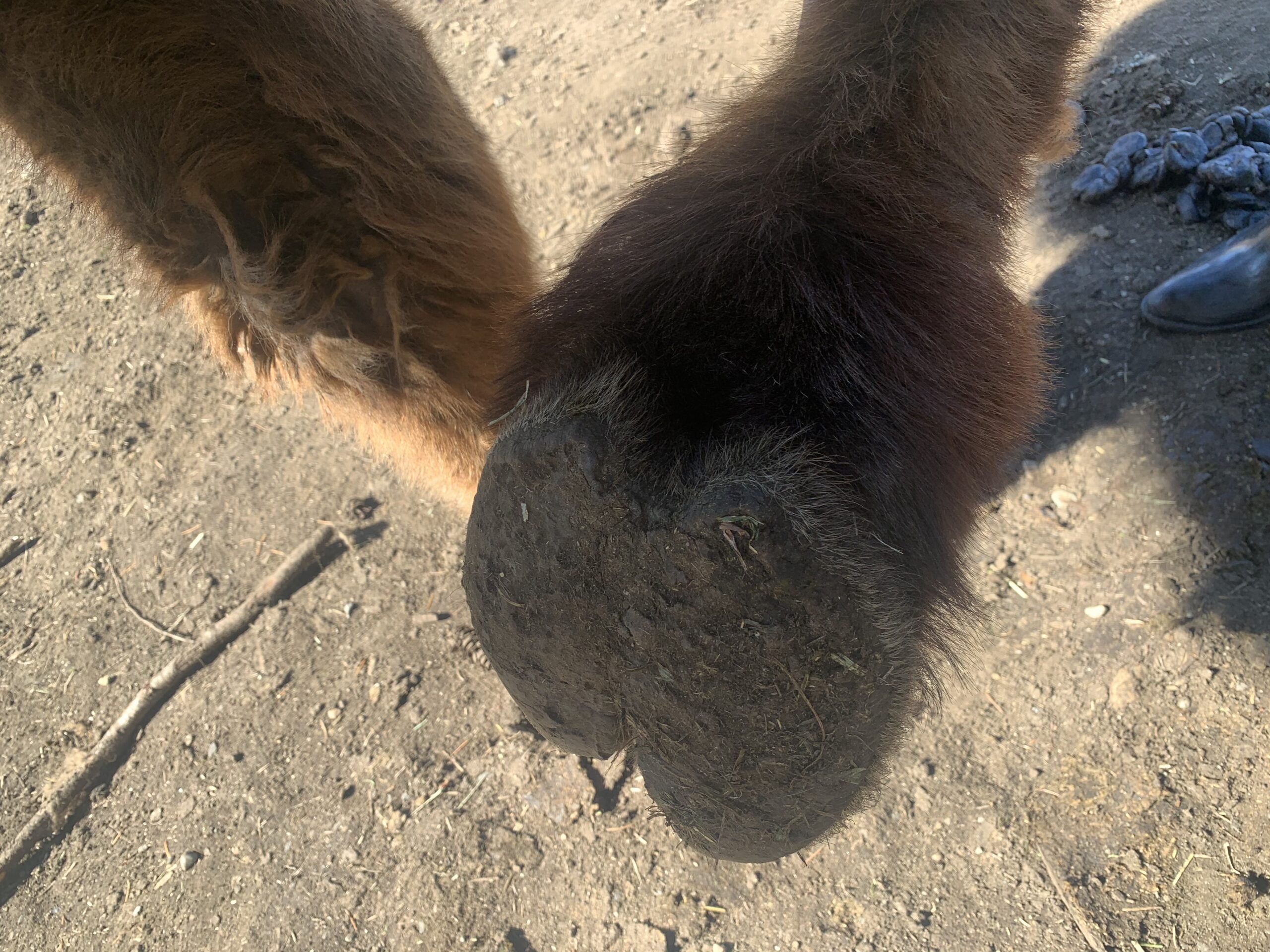
Two toes sitting on one broad elastic pad, with the hooves reduced to two toenails at the front rather than carrying any weight. Dissection shows three digital cushions inside. The pad spreads under load like a snowshoe, which is why camels cross soft sand that would bog a horse. No other mammal has this arrangement.
The eyelashes are the mathematically right length
Across species, eyelashes tend to sit at about one third the width of the eye they protect, which is the ratio that best diverts airflow and keeps dust and drying air off the surface. Camel lashes follow it. They also have a genuine nictitating membrane, a third eyelid that sweeps sand across the eye, and slit nostrils that close completely against blowing sand.
Camel milk has three to five times the vitamin C of cow milk
Which matters enormously in arid regions with little fresh produce. It is also lower and more variable in lactose at 2 to 6 per cent, and it lacks beta lactoglobulin, giving it a different allergen profile from cow milk.
You will see camel milk sold as a treatment for diabetes and autism. Be careful. The trials are small, short and heterogeneous, and the researchers themselves say larger randomised controlled trials with standardised protocols are needed before any clinical conclusion. Interesting, promising, not established.
The wild dromedary is extinct, and it went recently
There is no wild population of Camelus dromedarius anywhere. Almathen and colleagues reconstructed what happened from 1,083 modern camels across 21 countries plus ancient DNA up to 7,000 years old. Dromedaries were domesticated on the southeast coast of the Arabian Peninsula, and wild dromedaries then persisted alongside the domestic herds and were repeatedly used to restock them, before dying out around the start of the common era.
The date of domestication is contested. Almathen puts it in the late second millennium BCE, roughly 1100 to 800 BCE, on osteometry. A 2023 paper argues for 4,000 to 5,000 years ago instead, through a directed rather than accidental pathway. Both are on the table.
Every camel article on this site
- Can camels have 3 humps
- How much water can a camel drink
- Can and do camels spit
- Do camels have tails
- Can camels jump
- Do llamas have top teeth, on the South American side of the camel family
Sources
- Dioli, M. (2020). Dromedary and Bactrian camel crossbreeding husbandry practices in Turkey and Kazakhstan. Pastoralism 10, article 6.
- Dioli, M. (2014). The Missing Hump. Journal of Camel Practice and Research 21(2).
- Bengoumi, M. et al. (2005). Effects of feeding level on body weight, hump size, lipid content and adipocyte volume in the dromedary camel. Animal Research 54(5).
- FAO. Water balance, in The Camel, citing King et al. 1978 and Macfarlane and Howard 1972.
- Perk, K. (1963). The Camel’s Erythrocyte. Nature 200: 272 to 273.
- Schmidt-Nielsen, K., Schroter, R.C. and Shkolnik, A. (1981). Desaturation of exhaled air in camels. Proceedings of the Royal Society B 211.
- El-Hady, E. et al. (2023). Comparative analysis of the Arabian camel and oxen kidney. Frontiers in Animal Science 4.
- Leslie, D.M. Jr., Jemmett, A.M. and Abramov, A.V. (2026). Camelus ferus. Mammalian Species 58(1044).
- Faye, B. (2020). How many large camelids in the world? Pastoralism 10(1): 25.
- Hamers-Casterman, C. et al. (1993). Naturally occurring antibodies devoid of light chains. Nature 363: 446 to 448.
- Almathen, F. et al. (2016). Ancient and modern DNA reveal dynamics of domestication and cross-continental dispersal of the dromedary. PNAS 113(24).
- Hart, Q. and Edwards, G. (2016). Outcomes of the Australian Feral Camel Management Project. The Rangeland Journal 38(2).
Camels sit inside the wider mammals section, and unfamiliar terms are defined in the glossary of ecology terms.
Written by Erzsebet Frey, MSc Ecology, University of Belgrade. Last reviewed September 2026.
From the shop
Gifts for people who love the wild
Wildlife themed t-shirts, notebooks, tote bags, bandanas and guides, designed by an ecologist.
Visit the shop