
There are eight species of bear alive today, and almost everything most people believe about them is either out of date or was never true. Bears do not truly hibernate, but what they do instead is stranger and more useful to medicine than hibernation is. Polar bear fur is not white. Grizzlies can climb trees. The giant panda is a bear with the gut of a carnivore that has committed itself entirely to grass.
I am a wildlife biologist with an MSc in ecology, and this page is the reference I wanted when I started working on bears. Every figure below is either measured in a published study or clearly flagged as an estimate. Where the evidence is thin, I say so rather than rounding it into a confident number.
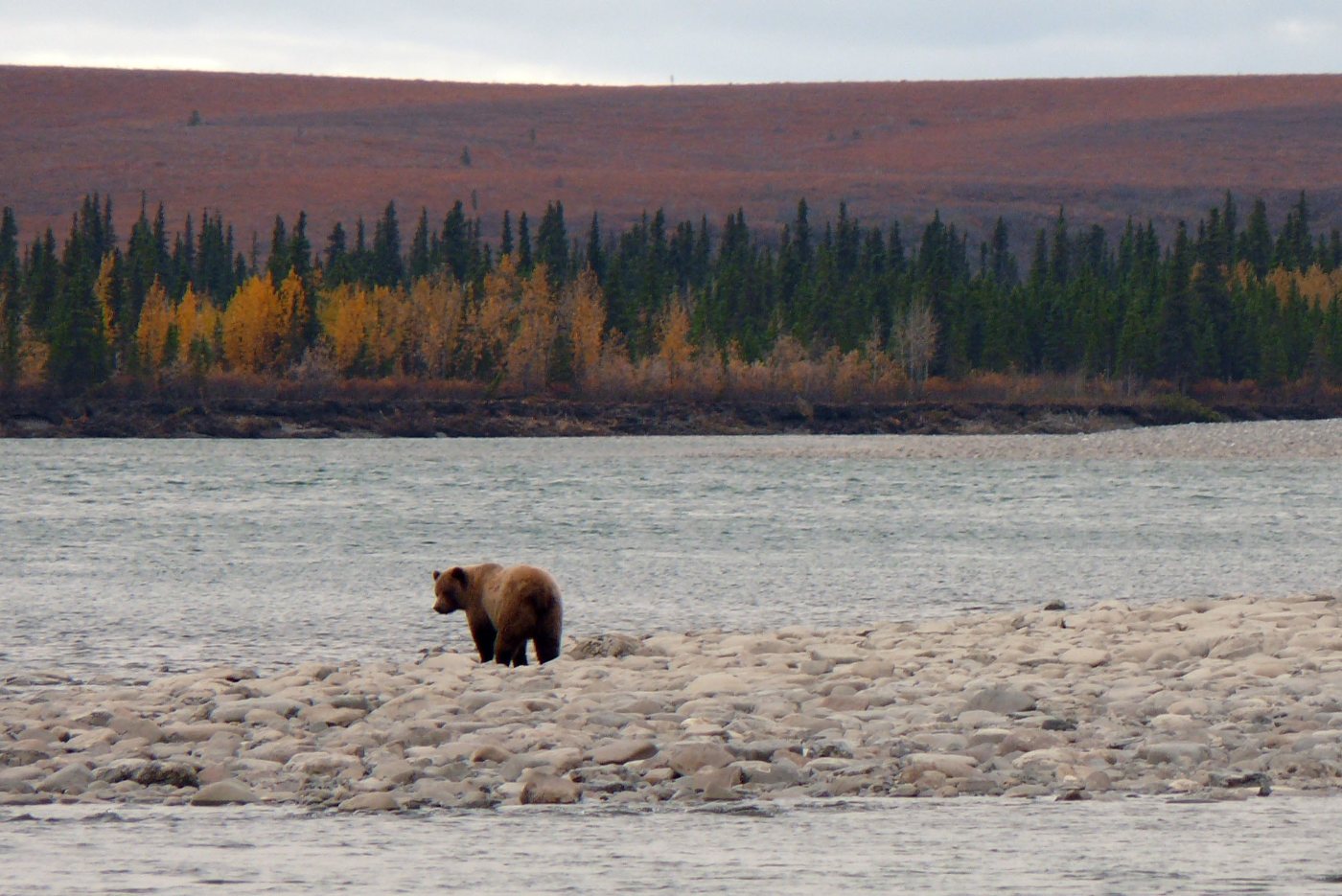
Bears at a glance
| Family | Ursidae, order Carnivora |
| Living species | Eight |
| Largest | Polar bear and Kodiak brown bear, males to about 635 kg |
| Smallest | Sun bear, around 27 to 65 kg |
| Distribution | Every continent except Africa, Australia and Antarctica |
| Diet | Omnivorous in six species, almost entirely meat in one, almost entirely bamboo in one |
| Winter dormancy | Deep metabolic suppression, not classical hibernation |
| Litter size | One to four cubs, two most common |
| Lifespan | Roughly 20 to 30 years in the wild depending on species |
| Conservation | Six of the eight species are threatened or in decline |
The eight bears
All living bears descend from a common ancestor and all belong to one family, Ursidae. Two things surprise people about this list. The first is that the giant panda is a genuine bear, confirmed by genetics decades ago. The second is that the red panda and the koala are not bears at all: the red panda is the only living member of its own family, Ailuridae, and the koala is a marsupial with no close relationship to bears whatsoever. Only the name is shared.
| Bear | Scientific name | Where it lives | IUCN status |
|---|---|---|---|
| Brown bear (includes grizzly and Kodiak) | Ursus arctos | North America, Europe, Asia | Least Concern overall, but many isolated populations are critical |
| American black bear | Ursus americanus | North America | Least Concern, roughly 900,000 animals |
| Polar bear | Ursus maritimus | Arctic sea ice and coasts | Vulnerable, about 26,000 |
| Asiatic black bear | Ursus thibetanus | Himalayas to Japan and Russia | Vulnerable, no reliable population estimate |
| Sun bear | Helarctos malayanus | Southeast Asia | Vulnerable, declined at least 30 percent in 30 years |
| Sloth bear | Melursus ursinus | India, Sri Lanka, Nepal | Vulnerable, probably gone from Bangladesh |
| Andean or spectacled bear | Tremarctos ornatus | Andes of South America | Vulnerable |
| Giant panda | Ailuropoda melanoleuca | Six mountain ranges in central China | Vulnerable since 2016, about 1,864 wild adults |
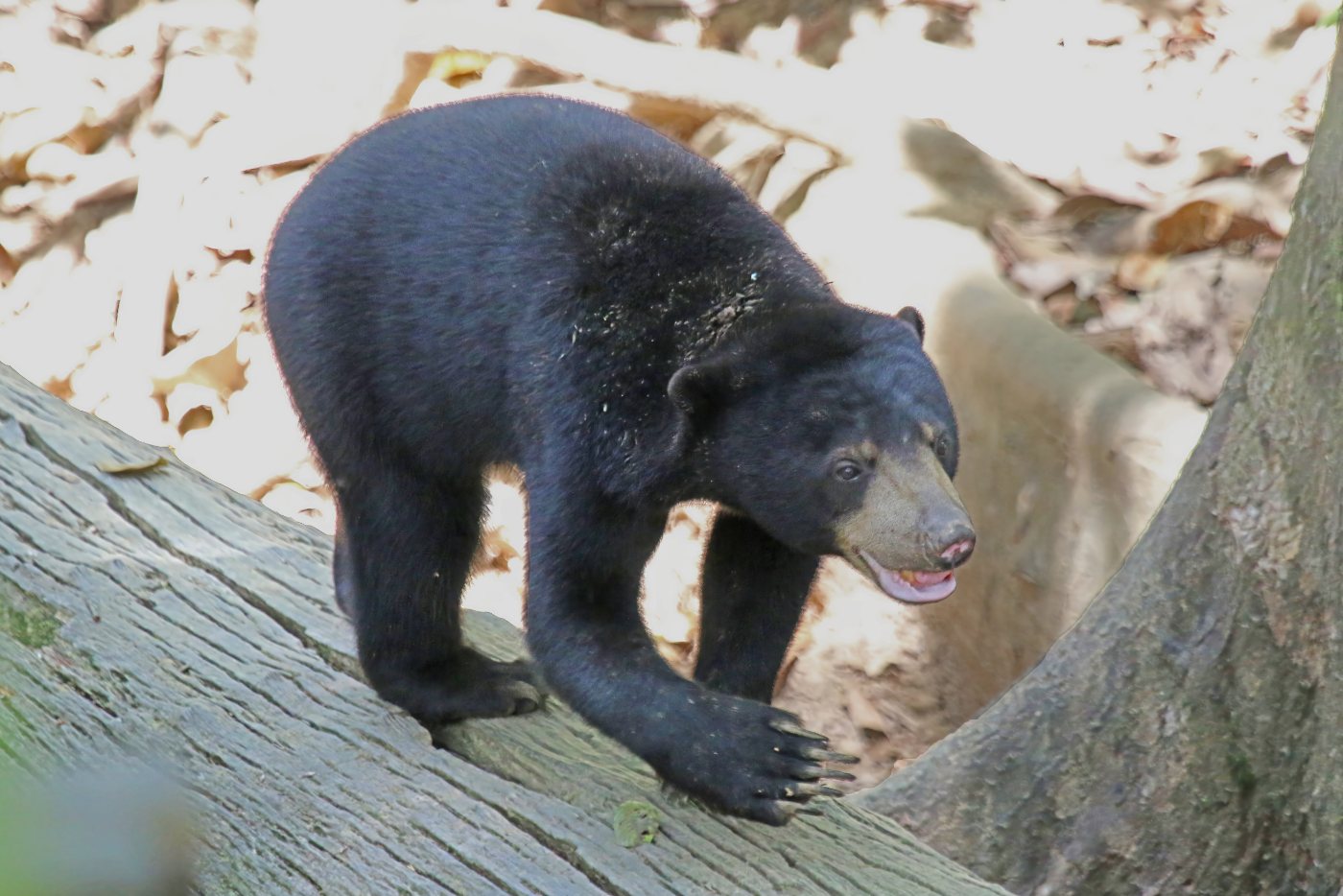
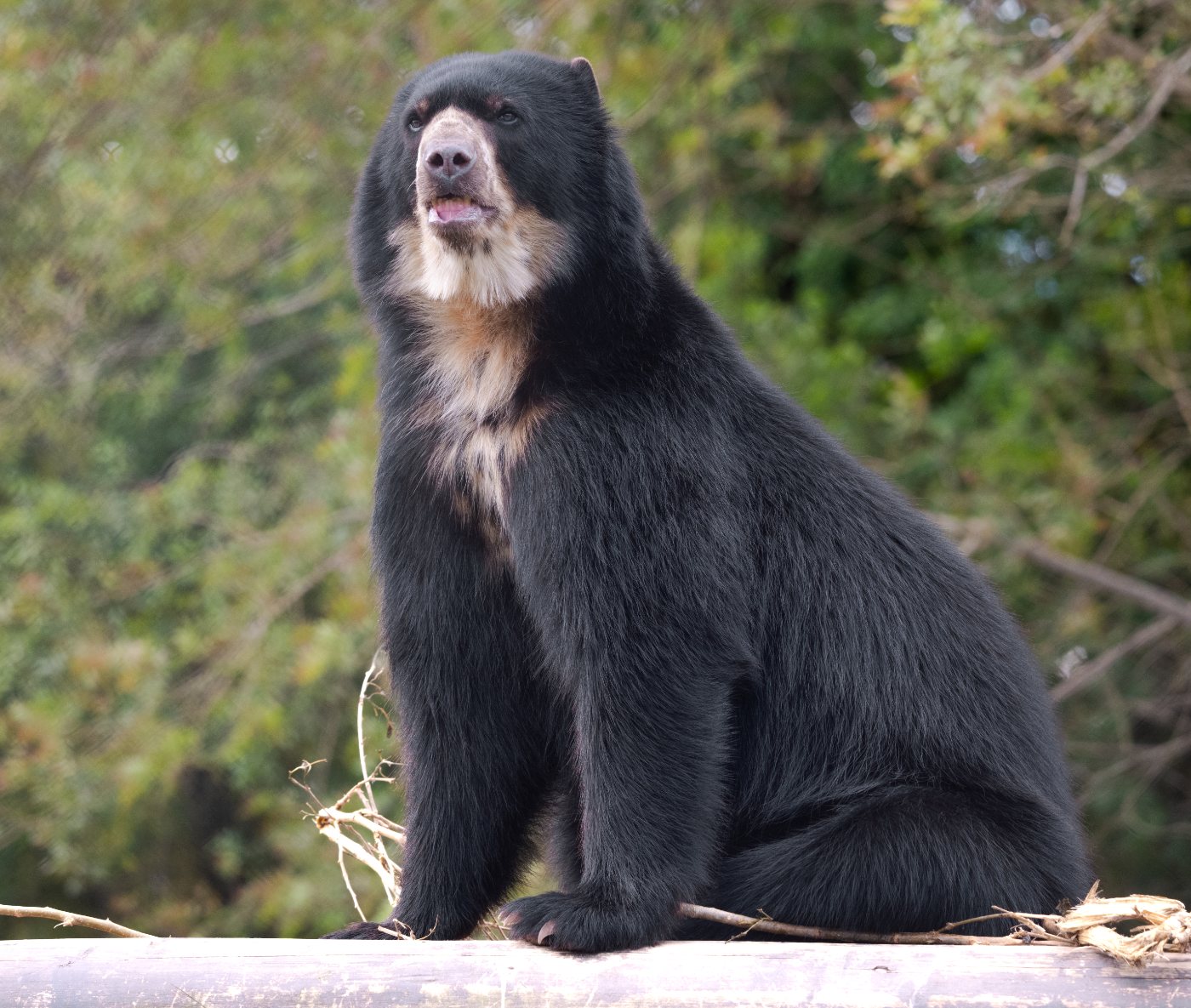
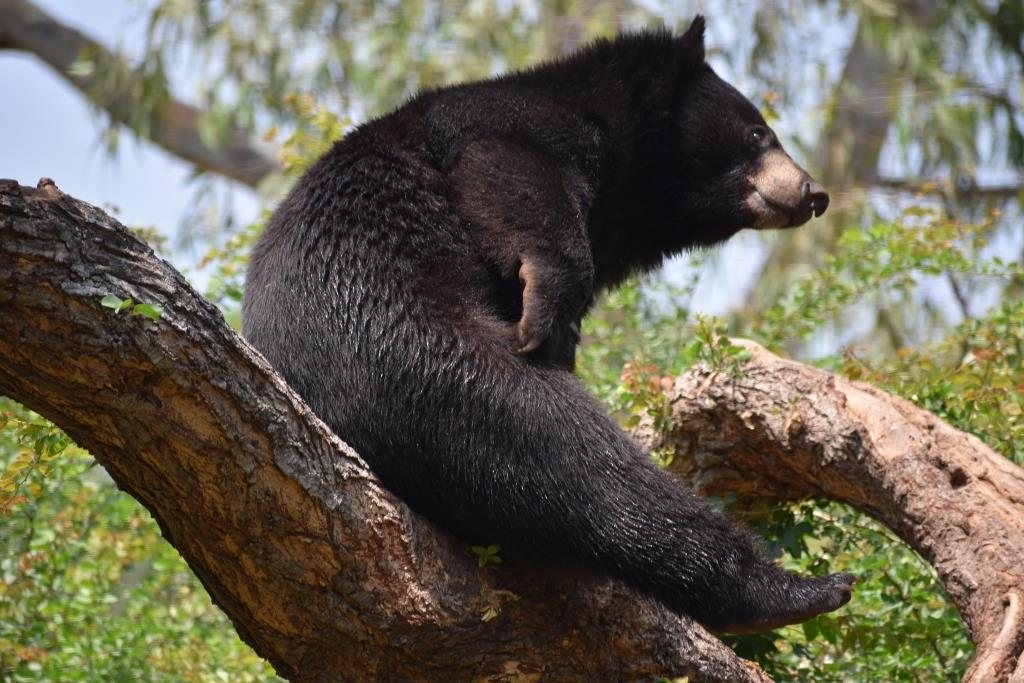
The pattern in that table is worth pausing on. The two species doing well, the brown bear and the American black bear, are the two that live mainly in wealthy northern countries with large protected areas and funded wildlife agencies. The six in trouble are all Asian or South American. It is not a coincidence, and it is not really about the biology of the bears.
Hibernation, and why bears do not really do it
This is the bear question I get asked most, and the honest answer is more interesting than the myth.
A classical hibernator, a ground squirrel say, drops its body temperature close to freezing and lets its metabolism follow the temperature down. Bears do not. Tøien and colleagues instrumented black bears and recorded them continuously through five months of winter dormancy, and what they found broke the standard rule that metabolism halves for every ten degrees of cooling:
- Metabolic rate fell by 75 percent against summer levels.
- Body temperature fell only five or six degrees, cycling slowly between about 30 and 36 degrees Celsius on two to seven day cycles.
- Heart rate dropped from about 55 beats per minute to about 14, with long pauses between breaths.
- On emergence in spring, metabolism was still only half of normal summer levels, and took two to three weeks to recover.
In other words, bears uncouple metabolism from temperature. They shut the engine down while keeping the cabin warm, which is why a denning bear can wake and defend itself within seconds while a hibernating ground squirrel needs an hour to become functional. Calling it torpor or winter dormancy rather than hibernation is more accurate, though many biologists now simply say bears are a different kind of hibernator.
Three further things happen in the den that have no equivalent in human physiology, and that is exactly why medical researchers keep studying them:
- No urination or defecation for months. Urea is broken down and the nitrogen recycled into new protein rather than being excreted. A human would die of uraemia.
- Almost no muscle wasting. A person immobilised for five months loses substantial muscle mass. A bear emerges with most of its strength intact.
- No bone loss. Denning bears keep remodelling bone in balance, which is why they are studied as a model for osteoporosis and for long duration spaceflight.
Not every bear dens. Pregnant polar bear females do, in snow dens where the cubs are born, while other polar bears remain active on the ice all winter. Tropical bears, the sun bear and the sloth bear, do not den at all: there is no season to sit out. I go through the physiology in more detail in bear hibernation.
Size, strength and what bears can actually do
How big is a big bear
Bear size claims are wildly inflated online, so here are official figures. The US Fish and Wildlife Service gives Kodiak brown bears, the largest brown bear population, as:
- Adult males 272 to 635 kg (600 to 1,400 lb), adult females 136 to 318 kg.
- Shoulder height on all fours 0.9 to 1.5 m.
- Standing height up to about 3 m (10 ft).
- Coastal brown bears weigh roughly twice as much as interior grizzlies, because they have salmon and the interior bears do not.
That last point is the one to remember. Grizzly and Kodiak are the same species. The difference between a 200 kg interior grizzly and a 600 kg Kodiak is not genetics, it is calories. The full breakdown of standing and shoulder measurements is in how tall is a grizzly bear.
Strength
Very few bear strength figures come from measurement rather than anecdote, and I would treat any precise multiplier of human strength as invented. What is well documented is the anatomy. Bears have a heavily muscled hump over the shoulders, which is the anchor for the forelimb muscles used in digging, and forelimb bone proportions built for force rather than speed. Brown bears routinely excavate boulders and dig dens through frozen ground, and both brown bears and polar bears have been recorded dragging carcasses far heavier than themselves.
The comparisons people actually want are between species, and there the honest ranking is polar bear and large brown bear at the top, American black bear well below them despite being far stronger than a human, and sun bear at the bottom by mass while having proportionally the longest claws of any bear. I cover the two most searched cases in how strong are polar bears and how strong are black bears.
Climbing
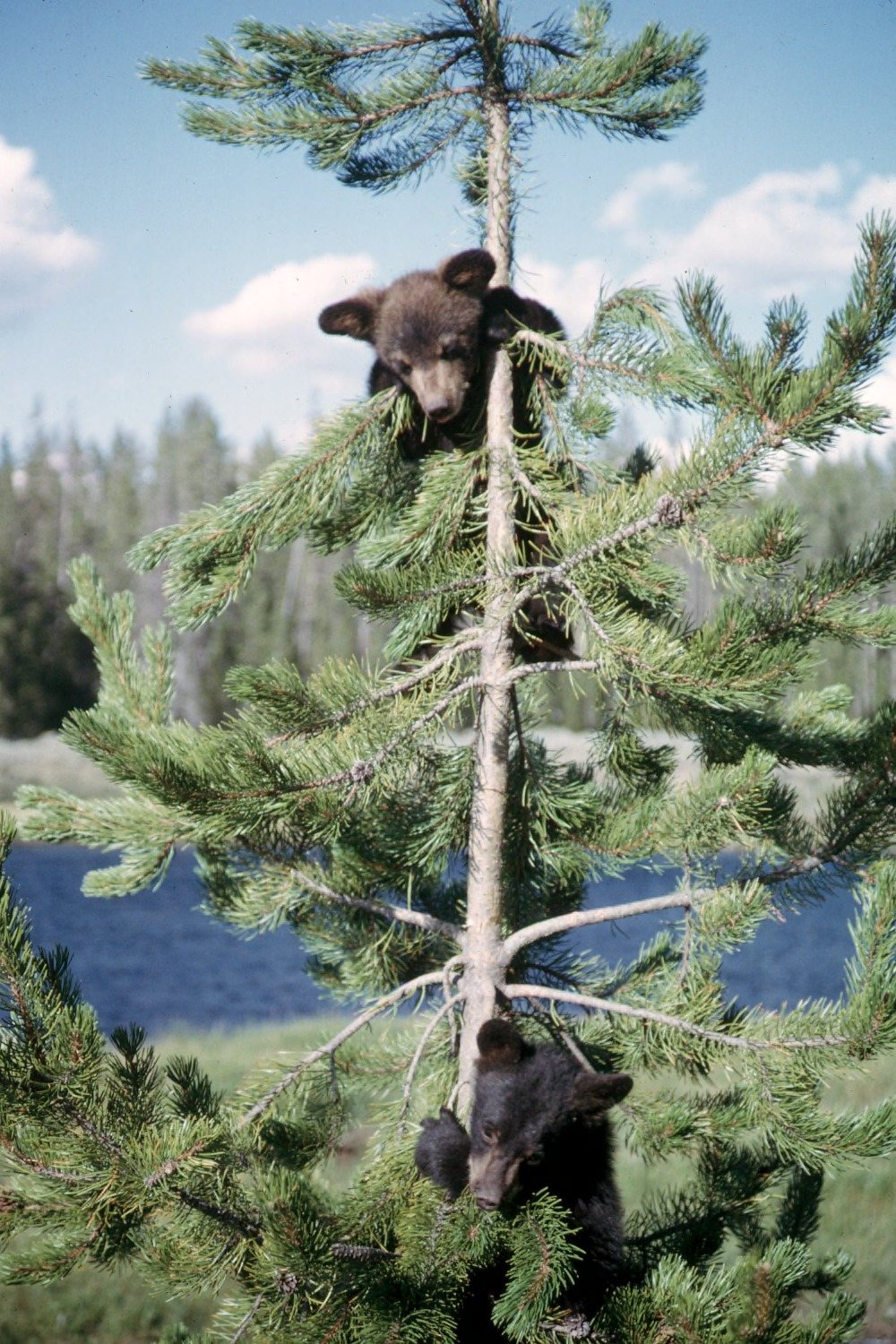
The old advice that you can escape a grizzly by climbing a tree has killed people. It rests on a half truth. Black bears are excellent climbers throughout life, with short curved claws that work like crampons. Grizzlies have long, relatively straight digging claws and a heavy build, so adults climb badly and rarely. But badly is not never: grizzlies climb when the tree has low branches or a broken trunk, and young grizzlies climb well. A bear that wants to reach you in a tree usually can. The detail is in can grizzly bears climb trees.
Tails
Yes, every bear has a tail, and no, you will almost never see it. Bear tails run roughly 5 to 20 cm depending on species, buried in thick rump fur and doing nothing much: bears do not need a tail for balance, for signalling or for swatting flies. The sloth bear has the longest at around 15 to 18 cm, useful because cubs ride on their mother’s back and the tail gives them something to grip near. More in do bears have tails and how long are they.
What bears eat
Bears are in the order Carnivora but only one of them is a carnivore in practice. The rest are omnivores with a carnivore’s teeth and a generalist’s stomach, which is exactly why they thrive near people and exactly why they get into trouble.
| Bear | What it mostly eats |
|---|---|
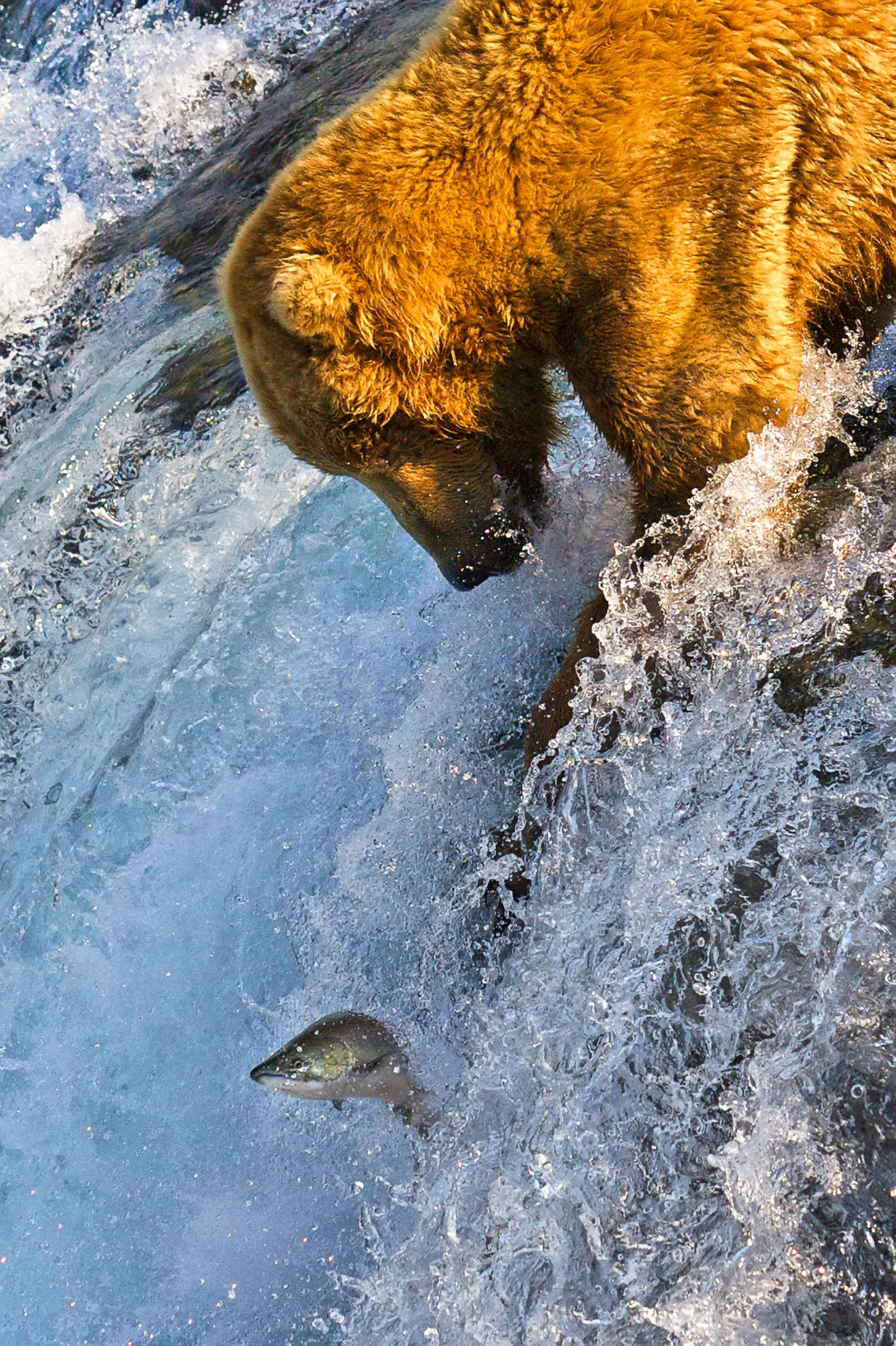
| Brown bear | Grasses, sedges, roots, berries, insects, salmon where available, carrion, occasional large prey. Plant material dominates by volume almost everywhere. |
| American black bear | Roughly 85 percent plant matter across the year: berries, nuts, acorns, plus insects and carrion. |
| Polar bear | Almost entirely seals, mainly ringed and bearded. The only bear that is a true carnivore. |
| Giant panda | Around 99 percent bamboo, roughly 12 to 38 kg of it a day. |
| Sloth bear | Termites and ants, sucked out of nests through a gap in the front teeth, plus fruit and honey. |
| Sun bear | Insects, honey, figs and other fruit, taken with a tongue up to 25 cm long. |
| Asiatic black bear | Fruit, nuts, insects, some meat and carrion. |
| Andean bear | Bromeliads, palm hearts, fruit. Among the most vegetarian bears. |
The panda problem
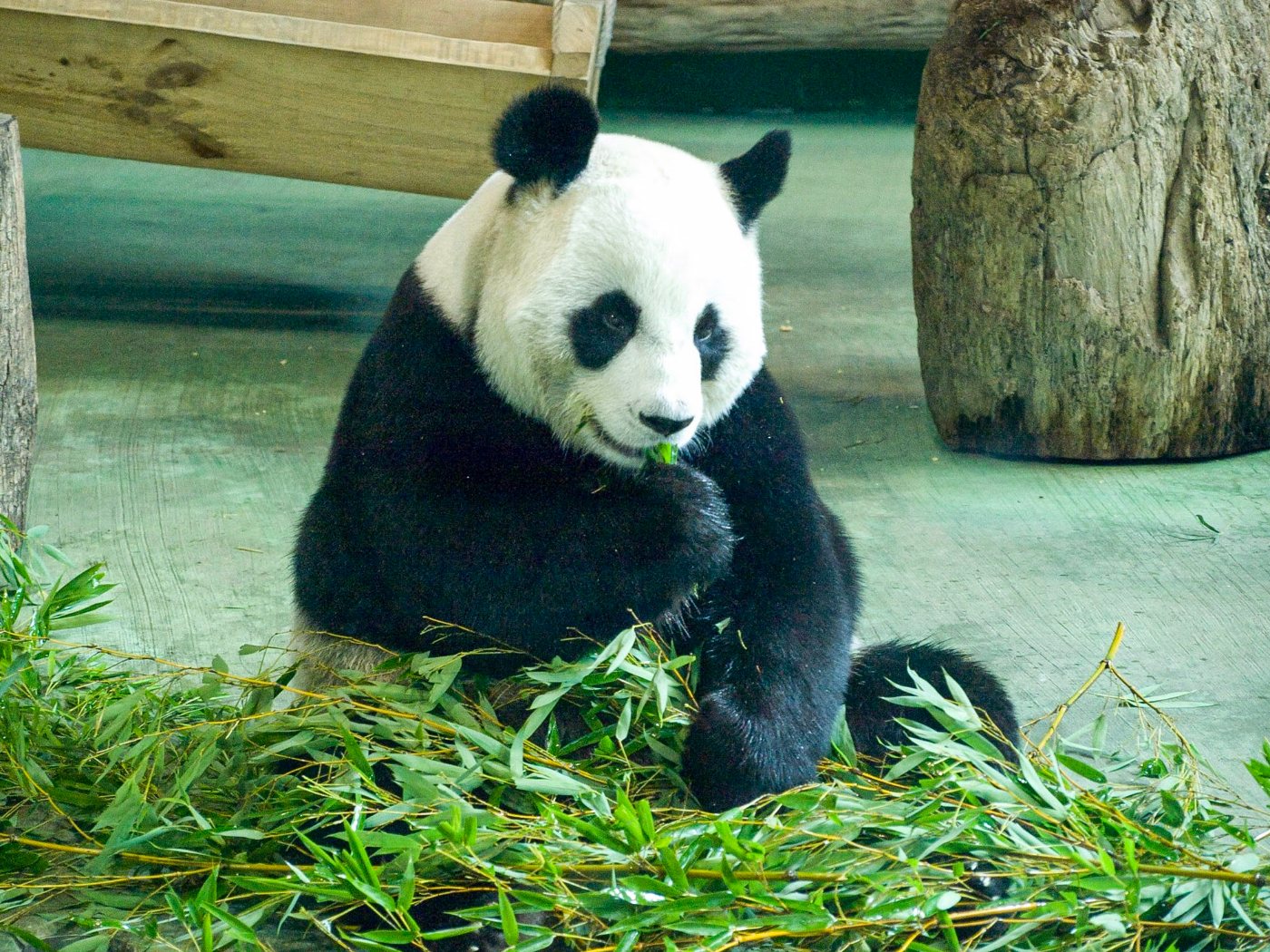
The giant panda is one of evolution’s stranger outcomes. It has the short digestive tract of a carnivore, a gut microbiome closer to a bear’s than to any grazing mammal’s, and no ability to digest cellulose efficiently. It solves this by brute force: eating for ten to sixteen hours a day, extracting a small fraction of the available energy, and passing the rest. It also grew a false thumb, an enlarged wrist bone that works as an opposable pad for stripping bamboo, which is a different solution from the one primates arrived at.
Bamboo also flowers and dies synchronously across whole valleys on cycles of decades, which historically meant local famine. Pandas coped by moving. Now the corridors between bamboo patches are farmland and roads, and that, not hunting, is the real threat. What controls how much a panda eats and when is covered in what affects panda bamboo consumption.
How polar bears hunt
Polar bear hunting is the best measured bear predation there is, and the numbers are humbling. In a study at Hornsund, Svalbard, observers recorded 62 hunting attempts on ringed seals. Six succeeded. That is an overall success rate of 9.7 percent, broken down as:
- Attacks on seal birth lairs under the snow: 12 attempts, 4 kills, 33 percent, by far the most productive method.
- Attacks on haul out lairs: 31 attempts, 1 kill, 2 percent.
- Waiting at breathing holes: 13 attempts, 1 kill, 8 percent.
- Stalking charges at basking seals: 10 attempts, 1 kill, 10 percent.
Of nine carcasses examined, seven were pups or juveniles. A polar bear is not overpowering healthy adult seals in open water. It is exploiting a narrow window in spring when naive pups sit in snow lairs on stable ice, and that window is precisely what a shorter ice season removes. More on the technique in how polar bears hunt.
Do bears eat other predators
Rarely as prey, often as competition. Brown bears and wolves overlap across most of the northern hemisphere and the usual interaction is theft: bears displace wolves from kills far more often than the reverse, because a single bear outweighs an entire pack member for member. Wolves in turn kill bear cubs when they can. Actual predation of adult wolves by bears is very unusual. Amur tigers do kill bears in the Russian Far East, where bears make up around 3 percent of tiger diet, which is one of the few well documented cases of a cat regularly preying on a bear. The full picture is in do bears eat wolves, and the polar bear’s own predators, which amount to other polar bears and humans, in what eats the polar bear.
Polar bears and the Arctic
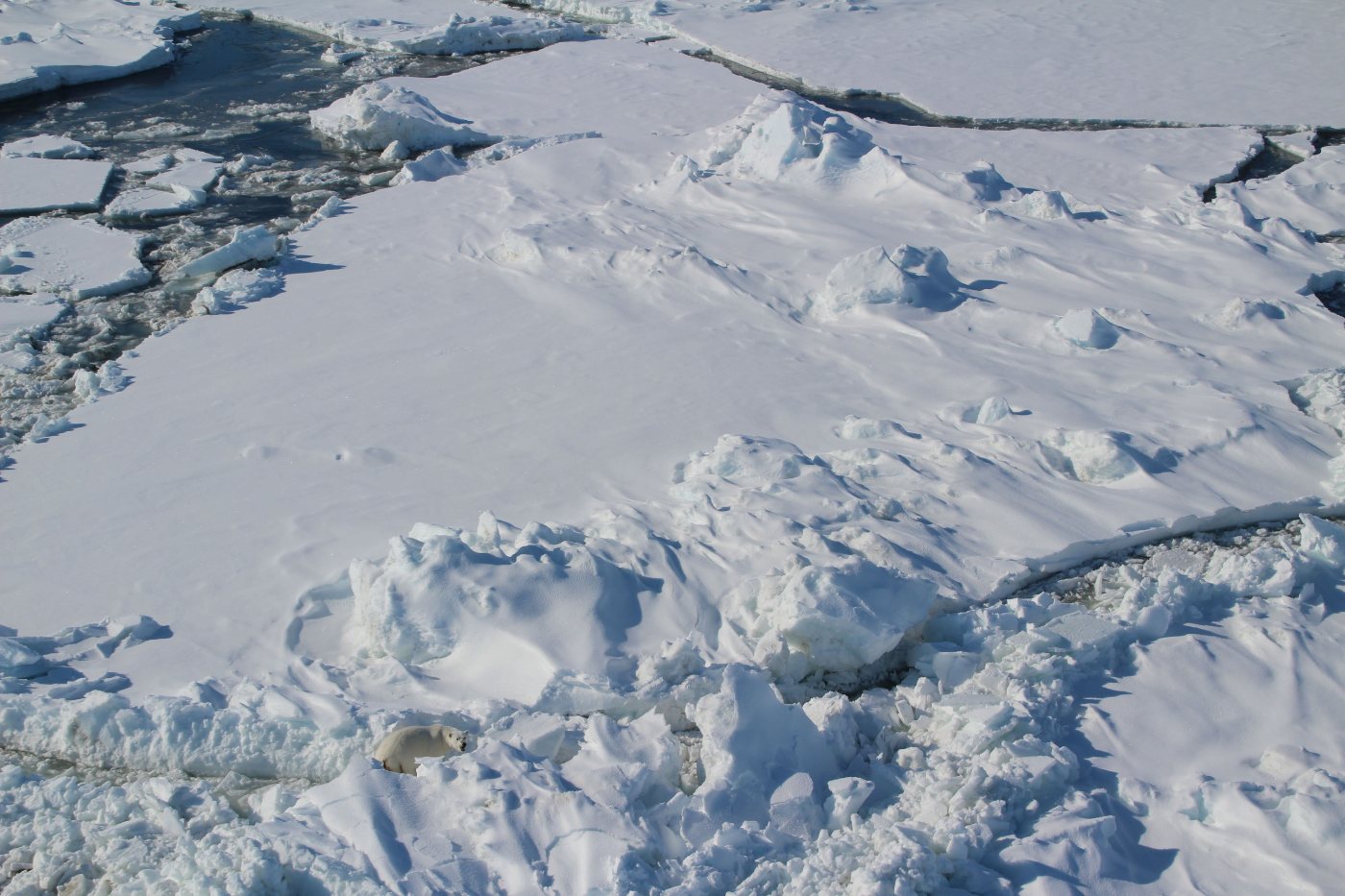
The polar bear is a brown bear that went to sea, and the adaptations are recent enough to still look like modifications rather than a redesign.
- The fur is not white. Each guard hair is unpigmented and hollow, and scatters light the way snow does. The skin underneath is black.
- Fat, not fur, does the insulating. A blubber layer up to about 11 cm thick carries most of the thermal load. Polar bears overheat easily when running.
- The feet are built for ice. Wide, up to 30 cm across to spread weight on thin ice, with dense fur between the pads and papillae on the soles for grip.
- They are marine mammals by law and by ecology. They hunt from sea ice, not from land, and swims of well over 100 km have been recorded, though long swims are a sign of trouble rather than a talent.
- The nose does the work. Seals under a metre of snow are located by scent.
The current global estimate is roughly 26,000 polar bears across 20 recognised subpopulations, listed by the IUCN as Vulnerable. What that headline hides is how little is known: of the 20 subpopulations, nine are data deficient, five appear stable, two appear to have increased, two appear to have decreased, and one has very likely decreased. Anyone claiming a confident global trend, in either direction, is going beyond the data. What is not in doubt is the mechanism. Polar bears need sea ice to hunt, the ice free season is lengthening, and a bear on land in summer is a bear that is fasting. My full breakdown of the adaptations is in how polar bears adapt to the Arctic.
Bears and people
Bear attacks are rare, badly reported, and the single topic where getting the detail right actually matters for someone’s safety. So this section is specific.
Two completely different kinds of attack
- Defensive. The overwhelming majority. A surprised bear, a female with cubs, or a bear on a carcass. The bear wants the threat gone, not eaten. It stops when you stop being a threat.
- Predatory. Very rare, and behaves nothing like the above. A bear that follows, circles, or approaches silently and steadily is assessing you as food. This is more often a black bear than a grizzly, which reverses what most people assume.
The old rule of thumb, play dead for brown, fight back for black, is a rough encoding of that distinction, and the reason it is rough is that the response should follow the bear’s motivation rather than its species. Play dead for a defensive attack. Fight, loudly and aiming at the face, for a predatory one, whatever the species.
Bear spray works, and there are numbers
Smith and colleagues analysed 83 bear spray incidents in Alaska between 1985 and 2006. The results are as close to unambiguous as field data gets:
- Brown bears: spray stopped the unwanted behaviour in 92 percent of cases (46 of 50).
- Black bears: 90 percent (18 of 20).
- Polar bears: 100 percent, though only two incidents.
- Of 175 people involved in defensive spraying incidents, 98 percent were uninjured.
- Three people were injured, all by brown bears, none seriously enough to need hospital. Nobody died.
Carry it accessibly, on a hip or chest holster rather than inside a pack, and know that it works as a cloud at close range, not as a spray you aim carefully at distance.
The species people underestimate
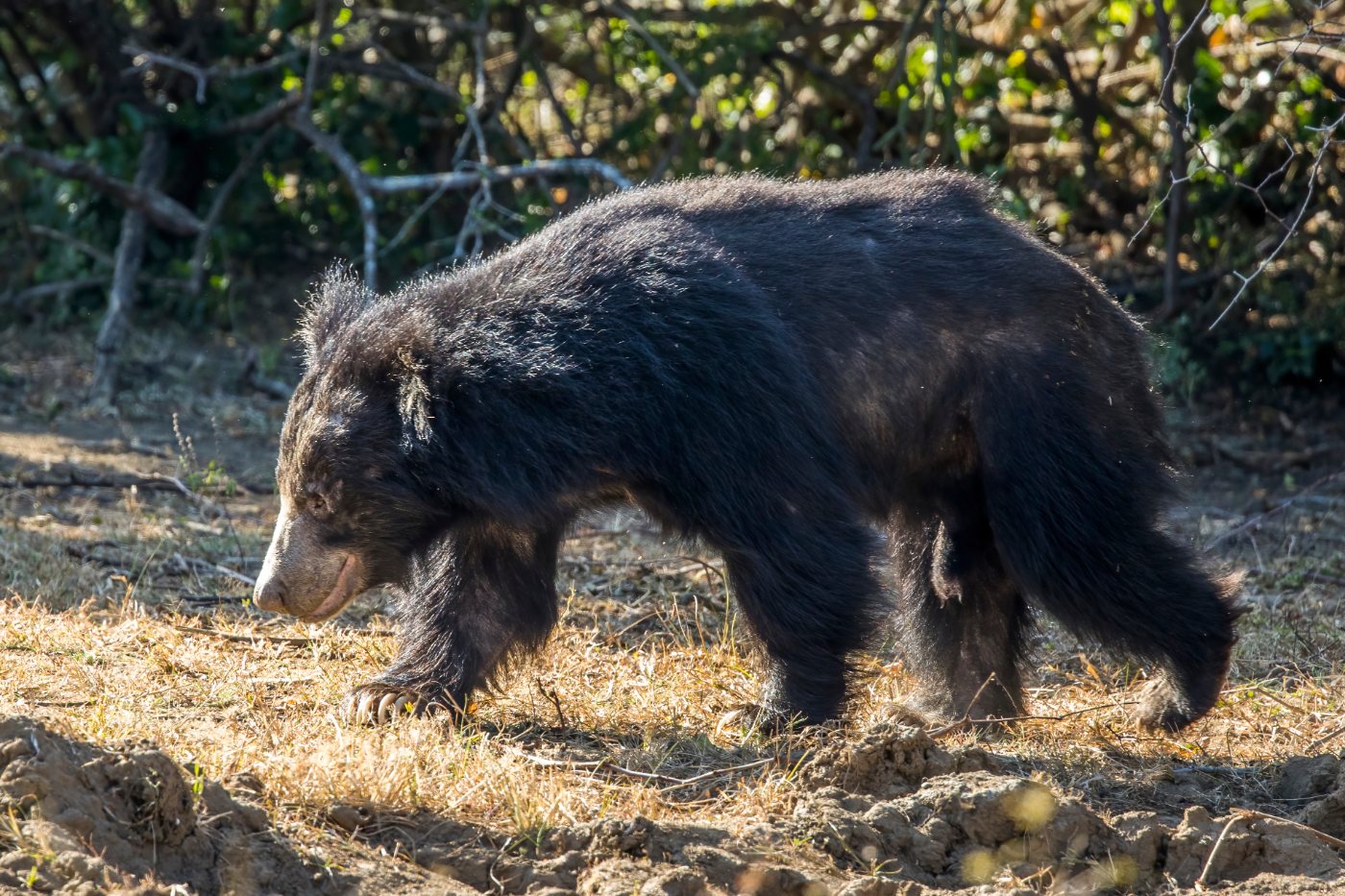
Sloth bears injure and kill more people in India than tigers or leopards do. They are short sighted, poor at hearing an approach, and live in scrub that people walk through daily, so encounters are sudden and the bear’s response is to charge. Sun bears, despite weighing less than an adult human, have long claws and a reputation among fieldworkers for being unpredictable when surprised. Neither of these is a bear people are afraid of, which is part of the problem. See are sun bears dangerous, sloth bear behaviour, are pandas dangerous, and the overview in do bears eat humans.
The thing that actually prevents attacks
Food. Almost every serious bear problem in North America traces back to a bear that learned to associate people with calories: unsecured bins, fed bears, food left in tents. A bear that has made that association is usually killed within a year or two. The old saying in bear management is blunt and correct: a fed bear is a dead bear.
Breeding, cubs and why bear reproduction is so slow
Bears reproduce more slowly than almost any land mammal of their size, and that single fact drives most of their conservation problems.
- Delayed implantation. Bears mate in late spring or summer, but the fertilised egg floats free and does not implant until autumn, and only if the female has put on enough fat. A poor berry year means no cubs, decided months after mating.
- Tiny newborns. Cubs are born in the den in midwinter weighing a few hundred grams, blind and barely furred, to a mother who is fasting. Relative to adult size, bears have the smallest newborns of any placental mammal.
- Long dependence. Cubs stay with the mother for around 1.5 to 2.5 years depending on species.
- Long intervals. A female therefore breeds every two to four years, and may raise fewer than ten cubs in a lifetime.
- Infanticide. Males kill cubs, which returns the female to breeding condition. In some brown bear populations this is a leading cause of cub death.
Add it up and a bear population that loses its adult females recovers over decades, not seasons. It is why hunting quotas are set on female mortality specifically, and why a single road through a small population matters so much.
Senses and intelligence
Bears are led by their noses to a degree that is hard to overstate. The olfactory area of a bear’s nasal cavity is many times larger than a dog’s, and polar bears locate seals under compacted snow while brown bears find carrion from kilometres away. Hearing is good, roughly better than ours. Eyesight is the sense people underestimate: bears see about as well as humans in daylight, in colour, which matters because they identify ripe berries by sight.
On intelligence, bears perform well on the tasks that have actually been tested: they solve puzzle boxes, use tools (Andean bears and brown bears have been recorded using rocks to scratch or manipulate objects), remember productive feeding sites across years, and in one captive study a black bear demonstrated numerical discrimination on a touchscreen. Their reputation for problem solving with bins, coolers and car doors is not folklore, it is the same cognition applied to a landscape we built.
Conservation: what the eight species actually face
Six of eight bear species are threatened. The pressures differ by species and lumping them together is how bad conservation decisions get made.
- Polar bear. Sea ice loss, which no local action can fix. Everything else is secondary.
- Sun bear and Asiatic black bear. Deforestation plus the bile trade. Bears are kept in cages and milked for bile used in traditional medicine, which is both a welfare catastrophe and a driver of wild capture.
- Sloth bear. Habitat loss and conflict. Its stronghold is now largely inside tiger reserves, which means it benefits from tiger money by accident rather than by design.
- Andean bear. Habitat fragmentation in the Andes and killing in retaliation for livestock and maize raiding.
- Giant panda. Improving. Numbers rose enough for the IUCN to move it from Endangered to Vulnerable in 2016, and the Giant Panda National Park now covers about 70 percent of remaining habitat and 88 percent of wild pandas. Fragmentation between bamboo patches remains the limit.
- Brown bear and American black bear. Secure overall, locally precarious. The brown bears of the Cantabrians, the Apennines and the Gobi number in the tens to low hundreds, and Least Concern as a global label hides them completely.
The uncomfortable pattern is funding. Conservation money follows charisma and geography, and the bears in the worst trouble are the ones fewest people can name.
Common questions about bears
How many species of bear are there?
Eight. Brown, American black, polar, Asiatic black, sun, sloth, Andean and giant panda. Red pandas and koalas are not bears.
Do bears really hibernate?
Not in the classical sense. They cut metabolism by about 75 percent while letting body temperature fall only five or six degrees, and can wake immediately. Tropical bears do not den at all.
What is the largest bear?
Polar bears and Kodiak brown bears are close enough that the answer depends on the individual. Kodiak males run 272 to 635 kg; large polar bear males are comparable. The largest ever recorded of either exceeded 900 kg, but those are outliers, not typical animals.
Can bears run fast?
A grizzly reaches about 55 km per hour in a short burst, faster than any human over any distance, uphill or down. Running from a bear is never the answer.
Is a panda a bear?
The giant panda is, genetically confirmed and squarely inside Ursidae. The red panda is not: it is the only living member of the family Ailuridae, more closely related to weasels and raccoons than to bears.
Do bears have tails?
All of them, roughly 5 to 20 cm long and hidden in rump fur.
How long do bears live?
Around 20 to 25 years in the wild for most species, with individuals into their thirties recorded. Captive bears live longer, into their late thirties in some cases.
Everything on this site about bears
- Understanding bear hibernation
- Do bears have tails, and how long are they
- How tall is a grizzly bear, standing and on all fours
- Can grizzly bears climb trees
- How strong are black bears
- How strong are polar bears
- How polar bears adapt to the Arctic
- How polar bears hunt
- What eats the polar bear
- Do bears eat humans, and three reasons bears attack
- Are sun bears dangerous
- Sloth bear behaviour
- Do bears eat wolves
- Are pandas dangerous
- What affects panda bamboo consumption
Bears are one family within the carnivores. For the wider picture, and the other animal guides on this site, start from mammals. Bears also overlap with two other predators covered here in depth: wolves and tigers.
Sources
- Tøien, Ø. et al. (2011). Hibernation in black bears: independence of metabolic suppression from body temperature. Science 331: 906 to 909.
- Smith, T. S. et al. (2008). Efficacy of bear deterrent spray in Alaska. Journal of Wildlife Management 72: 640 to 645.
- IUCN SSC Bear Specialist Group, global status review of the eight bear species.
- IUCN SSC Polar Bear Specialist Group, subpopulation status table and 2024 status report.
- US Fish and Wildlife Service, Kodiak brown bear species profile.
- Stempniewicz, L. et al. Polar bear predation on ringed seals in the fast ice of Hornsund, Svalbard. Polar Research.
- San Diego Zoo Wildlife Alliance, giant panda population fact sheet, including the fourth national survey figure of 1,864.
- IUCN (2016). Giant panda reassessed from Endangered to Vulnerable.
🌿 Explore the Wild Side!
Discover eBooks, guides, templates and stylish wildlife-themed T-shirts, notebooks, scrunchies, bandanas, and tote bags. Perfect for nature lovers and wildlife enthusiasts!
Visit My Shop →