
The bigger picture
Part of my complete guide to bears, which covers all eight bear species, hibernation, size and strength, diet, attacks and conservation, with sources.
Monitored wildlife populations have fallen 73 percent on average since 1970, according to the WWF Living Planet Report 2024, which makes every species on this page part of a much bigger story.
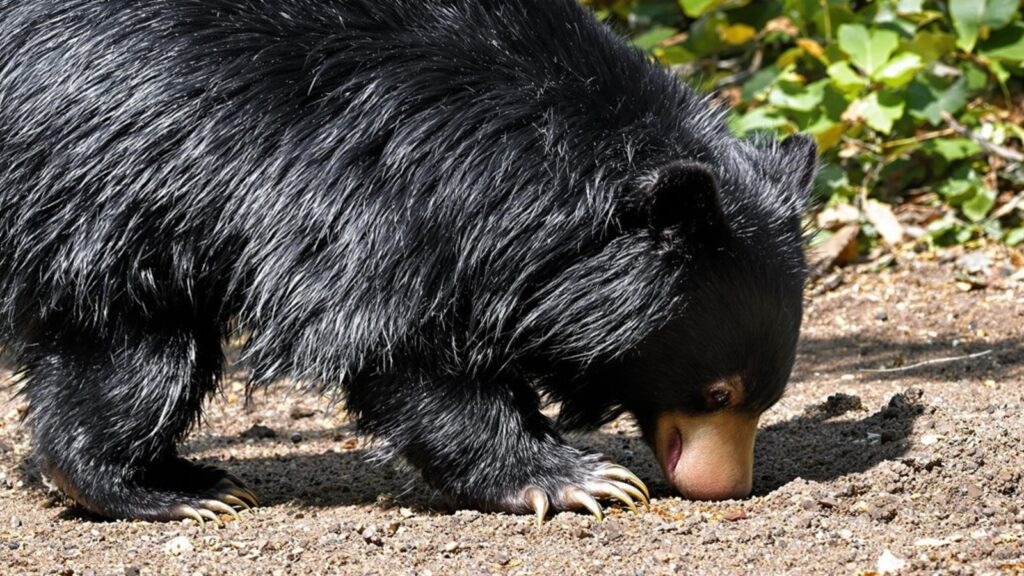
You’ll find sloth bears are solitary creatures with a fierce streak, known for their explosive charges when threatened. They’re clever foragers, using their long claws to dig for ants and termites, and a unique vacuuming technique to extract them without ingesting debris.
Sloth bears are adept climbers, using their curved claws and specialized foot structure to navigate trees for rest, food, and safety. They also establish territories through scent marking and prefer mixed forests near water with low human disturbance. Keep exploring to uncover more about these fascinating animals and the conservation challenges they face.
Solitary Lifestyle
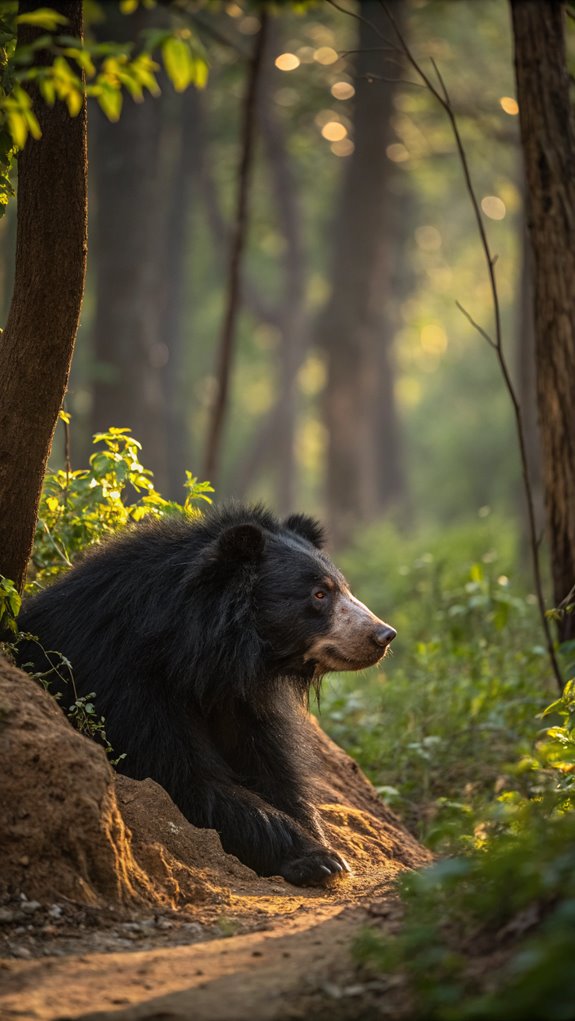
Sloth bears, known for their shaggy coat and long snout, lead a primarily solitary and territorial lifestyle. You’ll rarely spot them in groups unless there’s an abundance of resources.
They mark their home ranges by stripping bark from trees, a behavior that helps them establish and maintain their territories. This solitary nature is likely due to their need for large home ranges to sustain themselves. Females have a gestation period of 6-7 months.
When it comes to confrontations with other bears, sloth bears typically avoid them. They prefer to keep to themselves and minimize interactions with others of their kind. This behavior allows them to focus on foraging for food and conserving energy.
Their habitat preferences are determined by the availability of ants and termite colonies, which form a significant part of their diet. Seasonal variations in habitat use are associated with food availability, and sloth bears prefer areas with less human disturbance.
They don’t show significant differences in their use of various habitat types, but they do have a preference for mixed forests and grasslands.
Sloth bears have adapted their behavior to suit their environment. They can be nocturnal, diurnal, or crepuscular, depending on the circumstances. They sleep for 10 to 14 hours a day and don’t hibernate. To avoid potential conflicts with humans, they may adjust their sleep cycles accordingly.
They often forage for food at night and rest during the day, with their behavior influenced by both anthropogenic and environmental factors.
Aggressive Nature
They’re notorious for their aggressive behavior, and for good reason. Sloth bears have developed this trait as an evolutionary adaptation to defend against large predators like tigers.
When they perceive humans as threats, they react defensively, often focusing their attacks on the head and neck to neutralize the danger quickly. Sloth bears are responsible for the highest number of human attacks among all bear species.
You might witness a sloth bear rear up on its hind legs, brandishing its clawed forepaws in a defensive posture. If threatened at close range, it’ll stand and charge explosively, engaging in physical confrontation when necessary.
These behaviors have been shaped by thousands of years of coexistence with tigers, as sloth bears can’t outrun or quickly climb trees to escape.
Their aggressive nature leads to frequent human-bear conflicts due to habitat overlap, complicating conservation efforts. Attacks on humans often result in retaliatory killings, contributing to a potential 30% population decline. To mitigate this, it’s essential to educate local communities on how to avoid encounters.
Interestingly, sloth bears react aggressively to tigers, often successfully deterring them. They coexist with other bear species without aggression but remain wary of tigers, which prey upon them. This predation risk has influenced their aggressive behavior as an adaptation to living with large predators.
Unique Feeding Technique
Specialized insect hunters, sloth bears have evolved a unique feeding technique that sets them apart from other bear species. With their long, sharp claws, they skillfully dig into insect mounds, using their strong sense of smell to detect grubs up to 3 feet below ground.
Once they’ve reached the insects, they close their nostrils and use their lips like a vacuum nozzle, sucking out the termites through their specialized hollowed bony palate. This adaptation allows them to efficiently extract their primary food source without ingesting dirt or debris.
Sloth bears don’t just rely on their physical adaptations; they also employ clever foraging strategies. They can crack open dung balls to access the dung beetle larvae inside, and they’re not afraid to climb trees in search of honey, despite the potential for bee stings.
Unlike other bear species, sloth bears don’t congregate in feeding groups, preferring to forage independently. Fecal analysis and field observations have been used to study their dietary composition and foraging behaviors in the wild.
Their diet is closely tied to seasonal changes, with insects dominating from September through April and fruits becoming more important from May through August. Seasonal movements between lowland and upland habitats are driven by the availability of termites, which can be reduced in lowlands during the fruiting season due to flooding.
In captivity, sloth bears receive a diet that mimics their natural feeding habits, including mealworms and honey, with vegetables like potatoes or sweet potatoes used to hydrate the mealworms without causing mold growth. By understanding and catering to their unique dietary needs, we can guarantee the well-being of these fascinating animals.
Climbing Abilities
With their long, curved claws and strong arms, sloth bears are excellent climbers despite their seemingly sluggish appearance on the ground. Their specialized foot structure, featuring a hairless web connecting the toe pads, contributes to their effective climbing and digging abilities.
Once in the trees, they display remarkable agility, easily maneuvering and even hanging upside down while feeding on honeycombs and fruits. Sloth bears are the most insectivorous of all bear species.
Sloth bears utilize trees for various purposes, including resting, feeding, and protection. They often create day-beds out of broken branches and climb trees to knock down beehives, accessing the honey on the forest floor below. When fruit is in season, particularly favorites like mangoes, figs, and jackfruits, they’ll climb to reach them.
Trees also provide daytime shelter from heat and predators, with mothers carrying their cubs up trees as a primary defense. Their elongated claw structure, while more suitable for digging termites, still allows for climbing accessible trees. However, an adult sloth bear’s weight and size can limit its speed and agility compared to cubs.
They also use trees for territorial marking, scraping with their forepaws and rubbing their flanks against the trunks. Despite their climbing prowess, sloth bears are solitary and won’t congregate in feeding groups. They’re also unlikely to climb trees to escape predators, preferring to stand their ground.
Their ability to gallop faster than running humans makes climbing unnecessary for quick escapes. Nonetheless, their climbing skills remain an essential aspect of their behavior and survival in their natural habitat.
Aquatic Adaptations
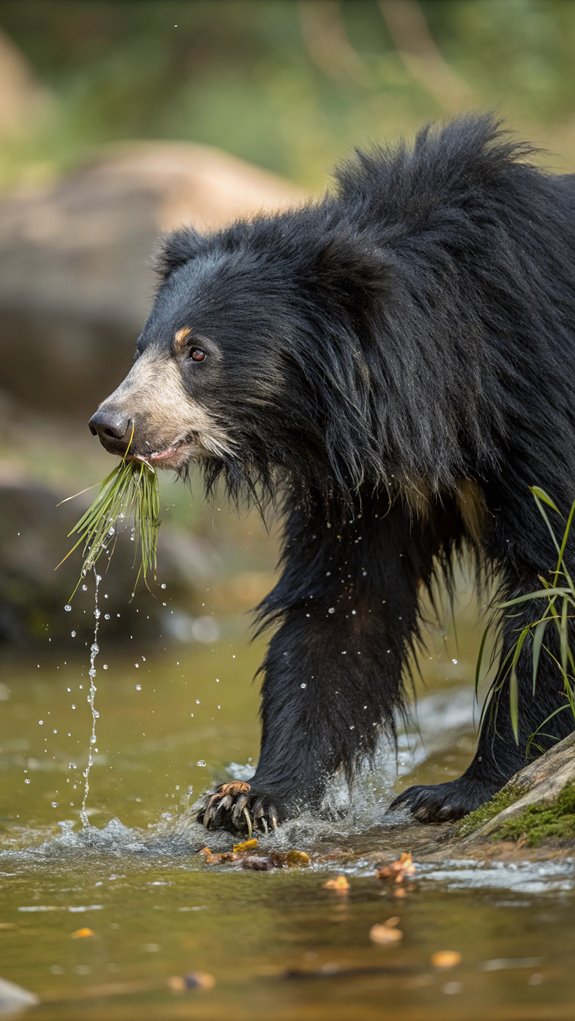
Sloth bears may not be known for their love of water, but they possess surprising aquatic adaptations that allow them to traverse their diverse habitats with ease. They’re capable swimmers, galloping faster than running humans when crossing rivers and lakes.
While specific studies on their swimming abilities are lacking, it’s clear that this skill is essential for their survival in habitats that include various water sources. Sloth bears can close their nostrils underwater, which helps them swim more efficiently.
Their elongated claws, which hinder their climbing abilities compared to black bears, don’t seem to affect their swimming prowess. Sloth bears inhabit a wide range of habitats, from dry grasslands to moist tropical forests, and the presence of water in these environments necessitates their ability to swim. They rely on natural water storage in ground fissures and shaded areas for daily hydration.
In water, as on land, sloth bears exhibit defensive rather than predatory behavior. When threatened, they focus on neutralizing the threat by attacking the head and neck. Understanding this defensive nature is important for developing safety protocols and fostering coexistence between humans and sloth bears.
However, habitat destruction and human activities pose significant challenges to sloth bears’ access to water and overall well-being. Conservation efforts, such as protecting the Daroji Sloth Bear Sanctuary, are fundamental for preserving their natural habitats and ensuring their survival.
As sloth bears are forced to adapt to changing landscapes, their ability to swim remains a key skill in traversing the challenges they face.
Territorial Marking
While their aquatic adaptations allow sloth bears to navigate diverse habitats, they also employ various methods of territorial marking to communicate and defend their territories. Chemical signaling through urination and defecation is a primary means of marking.
You’ll also find them engaging in pedi-marking, where they rub their feet on the ground near den entrances. Sloth bears use vocalizations to communicate with other bears and establish their presence in the area.
For female sloth bears, genital rubbing during estrus serves as a form of scent-marking to attract potential mates. They strategically place these scent marks to facilitate social interactions within overlapping home ranges.
Territorial marking serves multiple functions for sloth bears. It helps defend territories from other bears, reducing conflict. For females, genital rubbing during estrus attracts mates, aiding in reproduction.
Scent-marking allows them to convey information about their presence and status, while pedi-marking and urination establish boundaries. These behaviors contribute to maintaining intraspecies coexistence in shared habitats.
Various factors influence territorial marking in sloth bears. The breeding season sees increased scent-marking by females during estrus, influenced by male presence and female age. Environmental factors, like den locations, and social dynamics, such as overlapping home ranges, also impact marking strategies.
Camera trap studies have documented sloth bears’ complex communication through territorial marking, while captive studies provide insights into scent-marking during estrus. Field observations highlight the importance of marking in their communication. They’ve developed specific adaptations, like pedi-marking, to facilitate this behavior.
Understanding territorial marking can aid in conservation efforts by identifying critical habitat areas for sloth bears.
Habitat Preferences
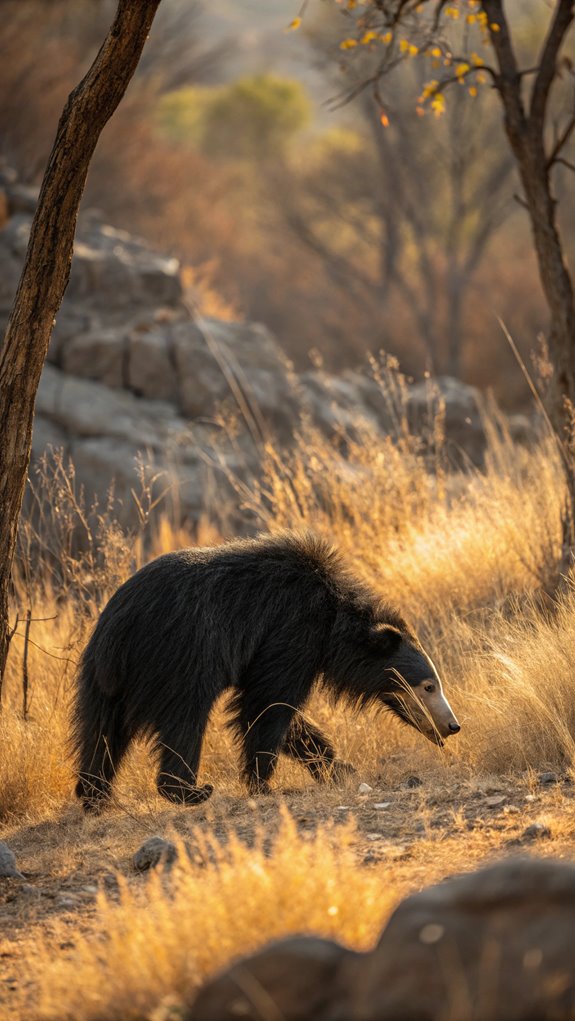
Inhabiting a diverse array of environments, from dry and wet forests to grasslands with scattered vegetation, sloth bears demonstrate adaptability in their habitat preferences. They’re particularly drawn to mixed forests due to the abundance of their primary food sources – ants and termites.
You’ll also find them in riverine and Sal forests, though they’re less preferred, especially during the wet season when the saturated ground makes foraging difficult.
Sloth bears are myrmecophagous, meaning their diet heavily relies on termites and ants. However, they’re also opportunistic omnivores and will supplement their insectivorous diet with fruits when available, as well as eggs, honey, carrion, and vegetation.
This dietary flexibility influences their habitat choices, as they seek out areas with the highest food availability. The Deccan Plateau region is a notable habitat for sloth bears.
In addition to food, sloth bears consider other environmental factors when selecting their habitats. They prefer areas with boulder formations that provide shelter and natural ventilation, like the extensive cavern systems found in Daroji Sloth Bear Sanctuary.
Moist soil is also favored as it makes digging for termites easier. During the wet season, you may find sloth bears moving to higher elevations to avoid the saturated ground conditions.
Proximity to water sources and minimal human disturbance are key factors in sloth bear habitat selection. Their distribution pattern is clumped, reflecting their preference for areas with abundant food resources.
As the seasons change, so do their habitat choices, driven by shifts in food availability and environmental conditions. Understanding these habitat preferences is essential for conserving this unique species.

Erzsebet Frey (Eli Frey) is an ecologist and online entrepreneur with a Master of Science in Ecology from the University of Belgrade. Originally from Serbia, she has lived in Sri Lanka since 2017. Eli has worked internationally in countries like Oman, Brazil, Germany, and Sri Lanka. In 2018, she expanded into SEO and blogging, completing courses from UC Davis and Edinburgh. Eli has founded multiple websites focused on biology, ecology, environmental science, sustainable and simple living, and outdoor activities. She enjoys creating nature and simple living videos on YouTube and participates in speleology, diving, and hiking.
From the shop
Gifts for people who love the wild
Wildlife themed t-shirts, notebooks, tote bags, bandanas and guides, designed by an ecologist.
Visit the shop