
New research (2025)
Insects are declining even in pristine, protected places. A 2025 analysis of long term monitoring data found losses in ecosystems far from farms and cities, which makes every insect friendly garden more valuable.
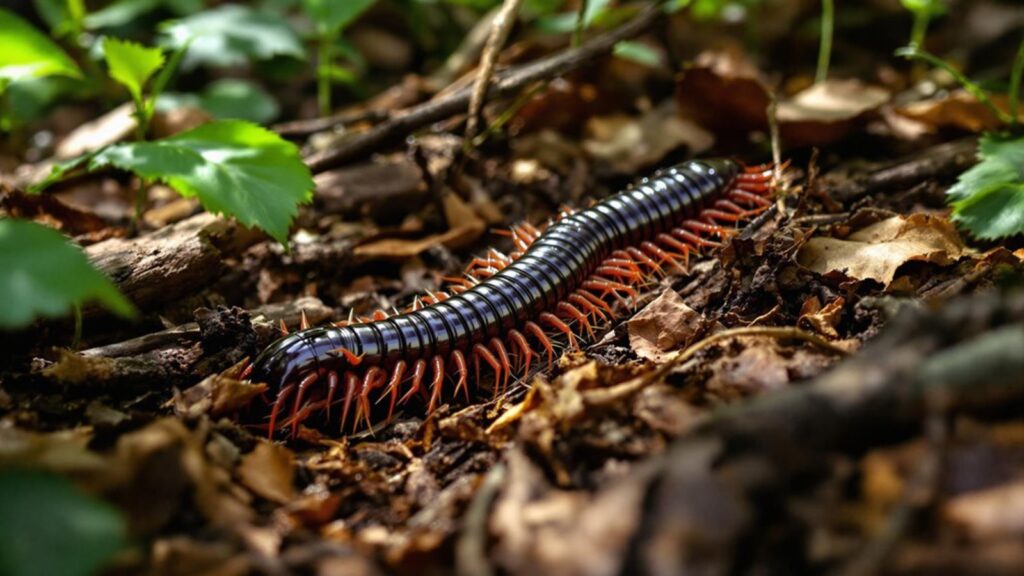
Did you know giant centipedes aren’t confined to remote jungles? They’ve adapted to thrive in diverse habitats worldwide, from deserts to rainforests and even urban areas. Species like Scolopendra gigantea and Scolopendra subspinipes prefer damp, dark environments under logs, rocks, or debris near food sources.
They require specific temperature, humidity, and substrate conditions to burrow and survive. These top predators influence ecosystems by preying on insects, spiders, and small vertebrates while aiding in nutrient cycling and soil health.
Their global presence showcases remarkable adaptability, with ongoing research uncovering fascinating insights into their ecological roles. Keep exploring to discover more about these incredible creatures.
Native Range
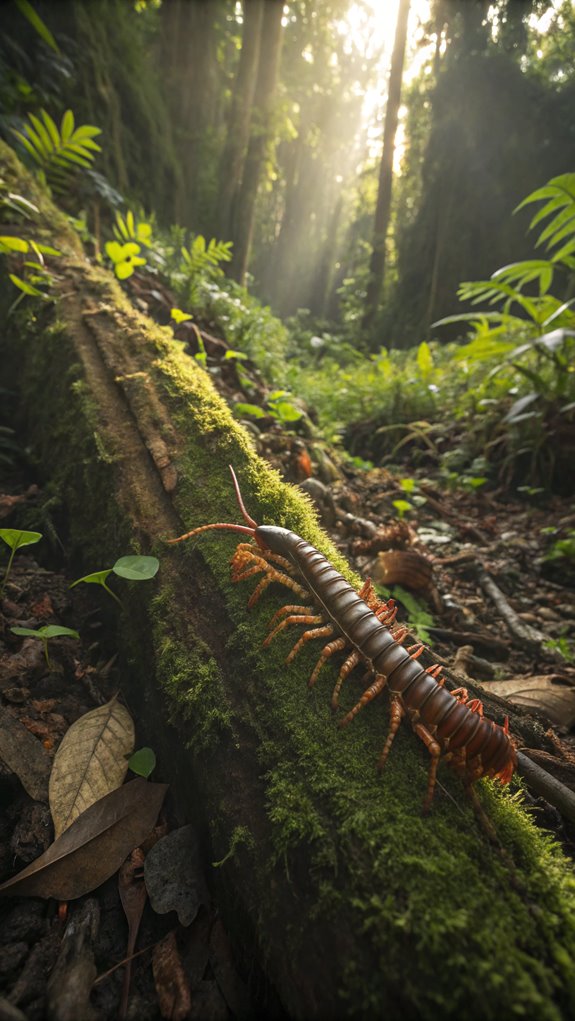
You might be surprised to learn that giant centipedes are found in a variety of locations around the world. Two notable species, Scolopendra gigantea and Scolopendra subspinipes, have distinct native ranges.
S. gigantea is native to northern South America, including countries like Colombia, Venezuela, Aruba, and Curaçao. You’ll also find them on specific islands such as Margarita and Trinidad. They thrive in the tropical and subtropical regions of these areas, inhabiting dry forests and various moist environments.
On the other hand, S. subspinipes has a broader geographic range, spanning southeastern Asia, including Indonesia and Malaysia, as well as tropical and subtropical regions from Russia to the Malaysian and Indonesian islands.
They’ve also made their way to Australia and parts of Central and South America, though their presence in the southern United States is unclear and may be due to human introduction. The Caribbean islands also fall within their range. S. subspinipes preys on various arachnids and small vertebrates within its habitat range.
Despite their different native ranges, both species share similar habitat preferences. They seek out moist environments like those found under logs, in leaf litter, and in the soil.
You can encounter them in various habitats, including forests, woodlands, heath, rainforests, and even deserts. They often take shelter in dark, humid places like caves or under rocks and bark. While they can inhabit dry habitats, they require access to moist areas to retreat to when needed.
Introduced Regions
Outside their native ranges, giant centipedes have been accidentally introduced to several regions around the world. Records show they’ve been introduced to Saint Thomas in the U.S. Virgin Islands, Hispaniola (Haiti and the Dominican Republic), Mexico, Puerto Rico, and Honduras.
However, there are also unverified or suspected introductions in other regions. The lack of verified museum specimens from some reported areas has led to assumptions of labeling errors or misidentifications. Giant centipedes can grow up to 30 cm long in their introduced South American range.
There’s limited reliable data on introductions outside their core native range, and the possibility of human transport leading to introductions can’t be ruled out. Further research is needed to confirm these introduced populations.
In the regions where they’ve been introduced, giant centipedes inhabit tropical or sub-tropical rainforests, tropical dry forests, and dark, moist places such as leaf litter or under rocks. They’ve shown potential for adapting to human-modified environments and can be found in a variety of microhabitats similar to their native range.
The introduction of giant centipedes to new regions raises concerns about their potential impact on local ecosystems. They may compete with native species for resources and could potentially prey on local fauna. There are also concerns about the risk of venomous bites to humans.
Monitoring and management of introduced populations are essential to mitigate any negative impacts they may have on the environment and human safety.
Geographic Distribution
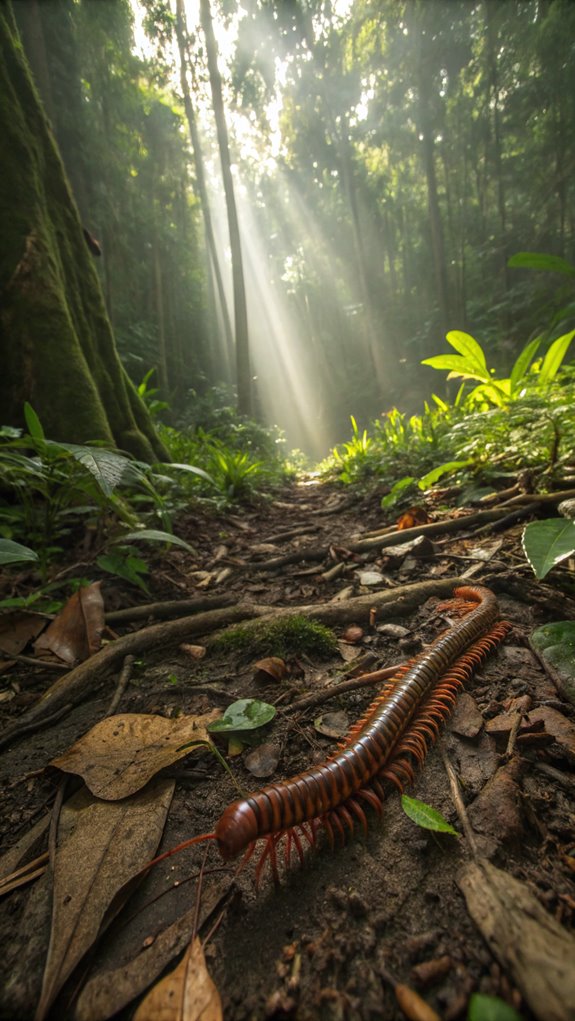
The geographic distribution of giant centipedes spans several continents, with each species occupying specific regions within their native ranges.
You’ll find the Giant Desert Centipede in the southern United States and Mexico, including Arkansas, Southern Missouri, Louisiana, Kansas, Oklahoma, Texas, New Mexico, Arizona, and Northern Mexico. The Giant Desert Centipede is the largest centipede species in North America.
The Amazonian Giant Centipede is native to the northern portion of South America, primarily in the Amazon rainforest and surrounding areas of Colombia, Venezuela, and Brazil.
Scolopendra subspinipes has an extensive range covering much of southeastern Asia, tropical and subtropical Asia, Australia, South and Central America, the Caribbean islands, and possibly parts of the southern United States.
While there’s some geographic overlap between species, particularly in Mexico for the Giant Desert Centipede and the introduced range of Scolopendra subspinipes, each species has specific regional preferences within their broader geographic ranges.
Giant centipedes are absent from colder northern climates of the United States and higher latitudes outside their native ranges due to specific habitat needs that limit their geographic distribution.
Both the Giant Desert Centipede and the Amazonian Giant Centipede have stable populations within their native ranges, but potential threats like habitat loss and climate change could impact these species, especially the Amazonian Giant Centipede.
Scolopendra subspinipes has been introduced to various regions outside its native range, which can affect local ecosystems. As vital predators in controlling populations of other small animals, continuous monitoring is necessary to assess the impact of environmental changes on these centipede species.
Preferred Environments
While giant centipedes occupy a variety of habitats, they’ve specific environmental preferences that dictate where you’re most likely to find them. They seek out damp environments, typically under logs, rocks, or debris on the ground.
You’ll discover them in moist, humid locations within various habitats, usually in high-moisture areas like soils and leaf litter. Look under rocks, logs, bark, and even in cool, damp basements. Species distribution is heavily influenced by moisture levels and temperature ranges.
Giant centipedes also prefer areas near food sources, such as earthworms and other invertebrates. You’re more likely to spot them where there’s an abundance of prey species, including cockroaches and spiders.
They hunt under the cover of darkness in locations rich in organic matter, like decaying wood and leaves, where small insects and arthropods thrive.
These creatures require shelter and protection from predators and drying out. You’ll find them in places with dense vegetation or structures that offer cover, such as under mulch, brush, and in dark, undisturbed spots. They may even burrow into the soil for added protection.
Environmental conditions play a significant role in giant centipede habitat preferences. They avoid bright light and gravitate towards dark places. Due to their lack of a waxy coating on their exoskeletons, they require moist environments to survive and will enter an inert state when their surroundings become too dry.
Giant centipedes prefer cooler temperatures and may burrow deeper into the soil during winter. Ultimately, humid locations are essential to prevent them from drying out.
Microhabitat Requirements
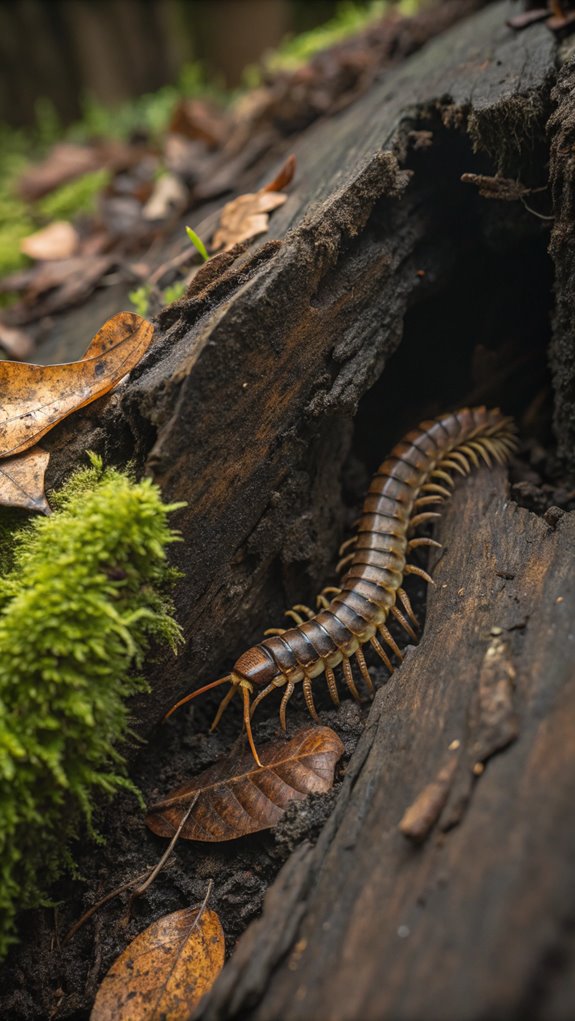
In addition to their preferred environments, giant centipedes have specific microhabitat requirements that must be met for their survival and well-being in captivity.
You’ll need to provide several inches of substrate, ideally a mixture of 70% cocofiber and 30% peat moss, to allow burrowing behavior. Avoid pine or cedar shavings due to resin dangers. You can add leaf litter or old wood, but flash-boil these first. Lightly pack the substrate to facilitate burrowing.
Include log or bark hides and leaf litter to mimic the rainforest floor and provide security. Use corkwood for additional hiding spots. Avoid tank top access to prevent escapes and add a shallow water dish, changing it daily.
Maintain humidity at 75% or higher by misting well weekly, keeping the substrate damp but not sopping wet. Change water frequently to guarantee clean access and prevent dehydration in the humid environment that’s vital for giant centipedes.
Most species do well at normal to warm room temperature, between 65-75°F. Some, like South American giants, require warmer temperatures of 80°F or higher. Giant centipedes can live up to 6 years with proper care and maintenance of their habitat.
Use external heating, such as pads, based on local weather and seasonal needs to maintain consistent temperatures and humidity levels. Meeting these microhabitat requirements is essential for keeping giant centipedes healthy and thriving in captivity.
Adaptations to Habitats
Giant centipedes have evolved an impressive array of adaptations that enable them to thrive in diverse habitats worldwide, from harsh deserts to humid rainforests. You’ll find desert-dwelling species like the giant desert centipede that hide during the scorching day and emerge to hunt at night.
On the other end of the temperature spectrum, wood centipedes can tolerate freezing to survive winter’s chill. Wood centipedes inoculate against freezing, highlighting their cold climate adaptability.
No matter the climate, centipedes generally prefer damp, humid microhabitats within their broader ranges. Some species are even confined to perpetually moist caves. In the tropics, giants like the Amazonian centipede reside in soil, leaf litter and rotting logs.
Nocturnal habits help centipedes avoid dehydration and scorching sunlight. Their flat, flexible bodies and numerous legs let them navigate through tight soil crevices with ease. Venomous forcipules – modified front limbs – allow them to subdue a variety of prey. Keen antennae guide them to victims in the dark.
As generalist predators, centipedes aren’t picky eaters. Males entice mates by depositing sperm on silken pads. Attentive mothers protectively coil around their eggs. Some species may produce two generations per year.
From parched dunes to lush jungles, centipedes’ wide-ranging adaptations have helped them conquer diverse ecosystems. Their amalgamation of moisture-conserving physiology, nocturnal stealth, and flexible hunting tactics makes them versatile survivors. With forcipules, antennae and scores of nimble legs, they’re well-equipped to navigate the complexities of their habitats.
Ecosystem Roles
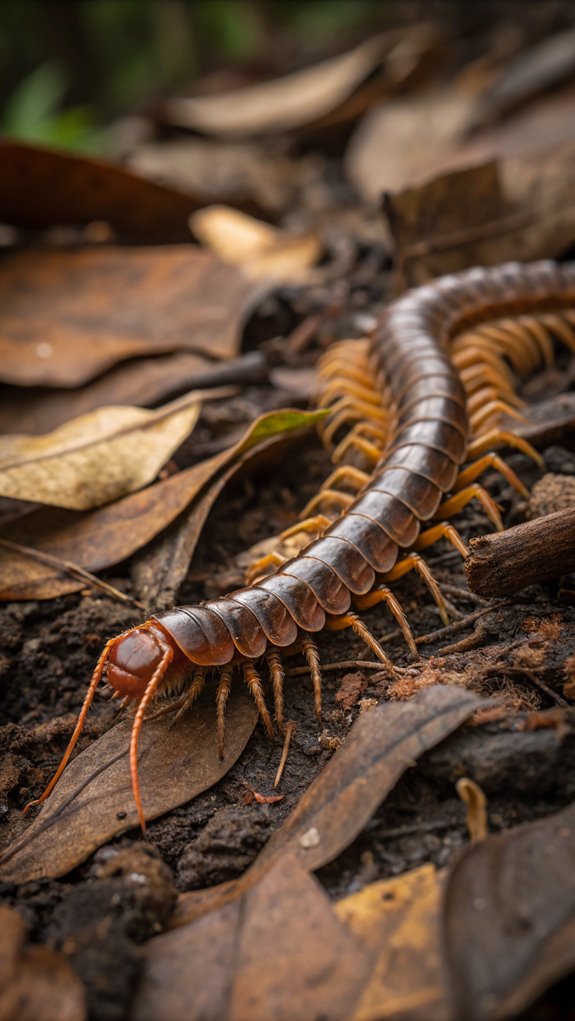
As key predators and prey in their ecosystems, giant centipedes play an essential role in shaping the dynamics of their habitats.
They’re top-order predators in certain ecosystems, influencing trophic structure and nutrient flow through their diet of insects, spiders, and small vertebrates like lizards, frogs, and mice. Their feeding habits introduce nutrients that would otherwise be unavailable and help control pest populations, benefiting gardeners and farmers.
Giant centipedes also contribute to nutrient cycling and decomposition by breaking down organic matter through their consumption of insects and other small animals.
Their burrowing activities aid soil health by allowing rainwater to penetrate the soil more easily. As myriapods, they are essential for healthy soil structure and aeration. As decomposers, they process dead organic material, which is fundamental for maintaining ecosystem balance.
In island environments, they can increase nutrient flow by introducing marine nutrients through predation on seabird chicks. These arthropods are an important component of healthy soils, contributing to soil structure and fertility. They serve as a significant link in food webs, acting as both predators and prey for other animals.
Their diverse diet, which includes both vertebrates and invertebrates, underscores their ecological significance in regulating populations of other animals and shaping ecosystem dynamics. Interactions with other species further highlight the complexity and interconnectedness of the ecosystems giant centipedes inhabit.
They’re preyed upon by birds, mammals, and larger predators like snakes and spiders. At the same time, their feeding habits can influence the reproductive output of vertebrates, particularly seabirds, by preying on their chicks, exerting top-down pressure on vertebrate populations and affecting ecosystem structure.
Burrowing Behavior
Beyond their essential roles in ecosystem dynamics, giant centipedes display fascinating burrowing behaviors that showcase their adaptability and impact on their habitats. When you observe these arthropods, you’ll notice they employ various techniques to construct and maintain their subterranean dwellings.
Intrusion is a quick entry method where they force their way into the substrate, often along zones of weakness or in loose sediments. Once below the surface, they combine this with compression and excavation techniques to create well-defined burrows.
As you watch them excavate, you’ll see them using their walking legs, pedipalps, and maxilla to remove sediment by kicking, throwing, or carrying it out of the developing burrow.
They deposit this material directly by the entrance or carry it several body lengths away. The result is a range of burrow forms, from vertical shafts to complex mazeworks with rough interior surfaces.
You might also witness them backfilling their burrows with excavated sediment as they move through. These dwellings, which can be temporary or permanent, serve as ambush predation sites or prey traps.
They often feature multiple surface openings, branching tunnel networks, and expanded chambers. Each predatory arthropod species produces unique burrows linked to specific behaviors. Giant centipedes have been burrowing since the Silurian period.
Giant centipedes’ burrowing behavior is also vital for their survival in various habitats. Since they lack a waxy cuticle, they require a moist microhabitat to avoid rapid water loss.
Prey and Predators
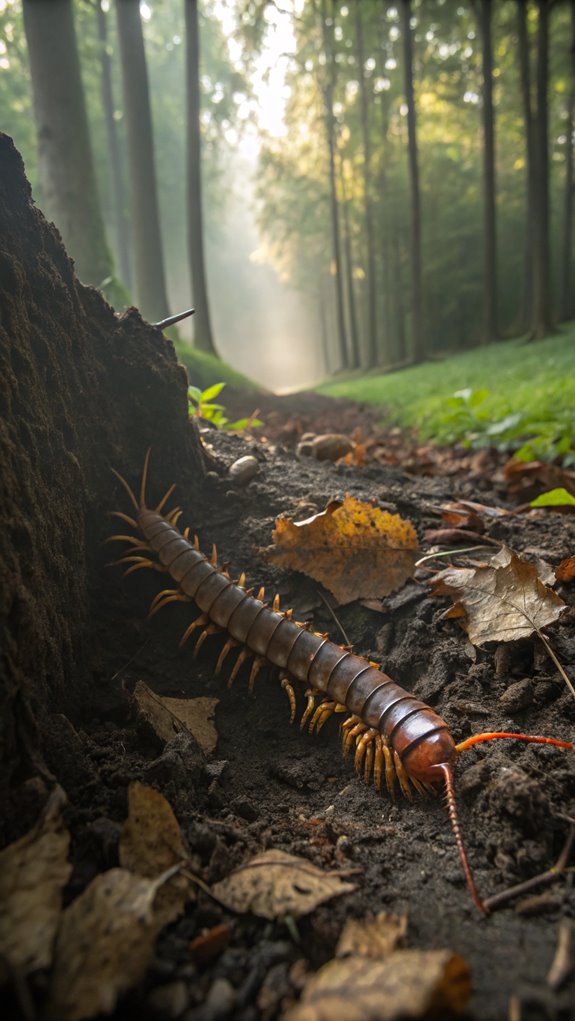
Through their role as both predator and prey, giant centipedes are intricately linked to the complex food webs of their habitats. As predators, they feast on a wide array of creatures, from insects and spiders to small reptiles, amphibians, mammals, and birds.
Their nocturnal habits and sensory antennae help them detect and capture prey in the dark, while their fast-acting venom immobilizes their victims. Some species even climb cave ceilings to ambush bats, demonstrating their adaptability as hunters. Their diverse diet influences the populations of various species in their ecosystem.
However, giant centipedes aren’t just predators; they’re also prey for various animals. Birds of prey, snakes, lizards, and some mammals like mongooses and small cats hunt these arthropods.
Even scorpions, spiders, and large insects like ground beetles and ants may target young or injured centipedes. To defend themselves, they rely on their speed, venomous fangs, and defensive behaviors like waving their legs to deter predators.
If injured, they can regenerate lost legs, increasing their chances of survival. Cannibalism and territorial behavior also play a role in the predator-prey dynamics of giant centipedes. They may eat injured members of their own species and aggressively defend their hunting grounds and mating partners from rivals.
This solitary and territorial nature increases the risk of predation and injury, but it also helps them maintain their position in the food web. Through this complex interplay of predation and defense, giant centipedes contribute to the balance and diversity of their ecosystems.
Population Dynamics
Giant centipedes, masterful survivors, have spread across the globe, inhabiting diverse environments from deserts to rainforests. You’ll find them on every continent except Antarctica, thriving in soil, leaf litter, under rocks, and near moisture sources.
They’ve even adapted to urban life, occasionally entering structures near leaking pipes or accumulated moisture. Centipedes also inhabit savanna, forest, and scrub forest biomes.
However, their lack of a waxy cuticle covering limits them to humid environments.
Their life cycle begins with eggs laid in spring and summer, which develop into nymphs that molt through four instars before reaching adulthood. Females provide parental care, curling around their eggs and young, grooming them to ward off fungi and bacteria. Some species, like Scolopendra gigantea, can live up to ten years.
Mating involves males depositing spermatophores for females to take up, though a few species reproduce parthenogenetically. They’re considered K-selected, laying a small number of eggs and having a long gestation period compared to insects.
You’ll encounter giant centipedes from the Arctic Circle to tropical rainforests, with different species being more common in specific regions. For example, the Amazonian Giant Centipede is prevalent in South America.
Researchers continue to discover new species, even in urban areas like New York City’s Central Park, highlighting their adaptability and global presence. As masterful survivors, giant centipedes have successfully populated a wide range of habitats across the world.

Erzsebet Frey (Eli Frey) is an ecologist and online entrepreneur with a Master of Science in Ecology from the University of Belgrade. Originally from Serbia, she has lived in Sri Lanka since 2017. Eli has worked internationally in countries like Oman, Brazil, Germany, and Sri Lanka. In 2018, she expanded into SEO and blogging, completing courses from UC Davis and Edinburgh. Eli has founded multiple websites focused on biology, ecology, environmental science, sustainable and simple living, and outdoor activities. She enjoys creating nature and simple living videos on YouTube and participates in speleology, diving, and hiking.
From the shop
Gifts for people who love the wild
Wildlife themed t-shirts, notebooks, tote bags, bandanas and guides, designed by an ecologist.
Visit the shop