
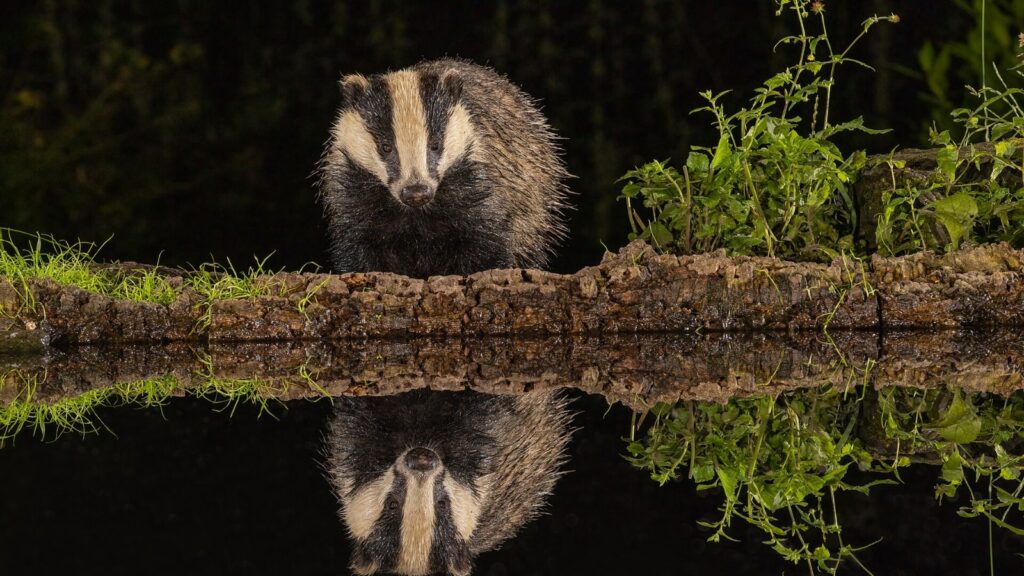
To conduct a mammal survey, select methods aligned with your research goals while considering species and habitat types. Use live traps for detailed data or non invasive options like camera traps and footprint tunnels for minimal disturbance.
Mammals can be surveyed in a dozen different ways, and the right one depends on your question and your budget. Use this comparison of ecological survey methods to match the technique to what you actually need to find out.
Create standardized sampling grids or transects, document environmental variables, and follow ethical practices when handling animals. Organize data systematically and employ appropriate statistical analyses. Proper technique combinations will greatly enhance your survey’s accuracy and scientific value.
The method decides what you find
In a 2021 study at Oceano Dunes in California, camera traps and live traps were run at the same 40 stations. Cameras detected deer mice at 97% of stations against 44% for live traps, and outperformed live trapping for all six rodent species tested. The animal you failed to catch is not the same thing as the animal that was not there.
Key takeaways
- Pick the method from the question, not from the kit: presence and absence rarely justifies live trapping.
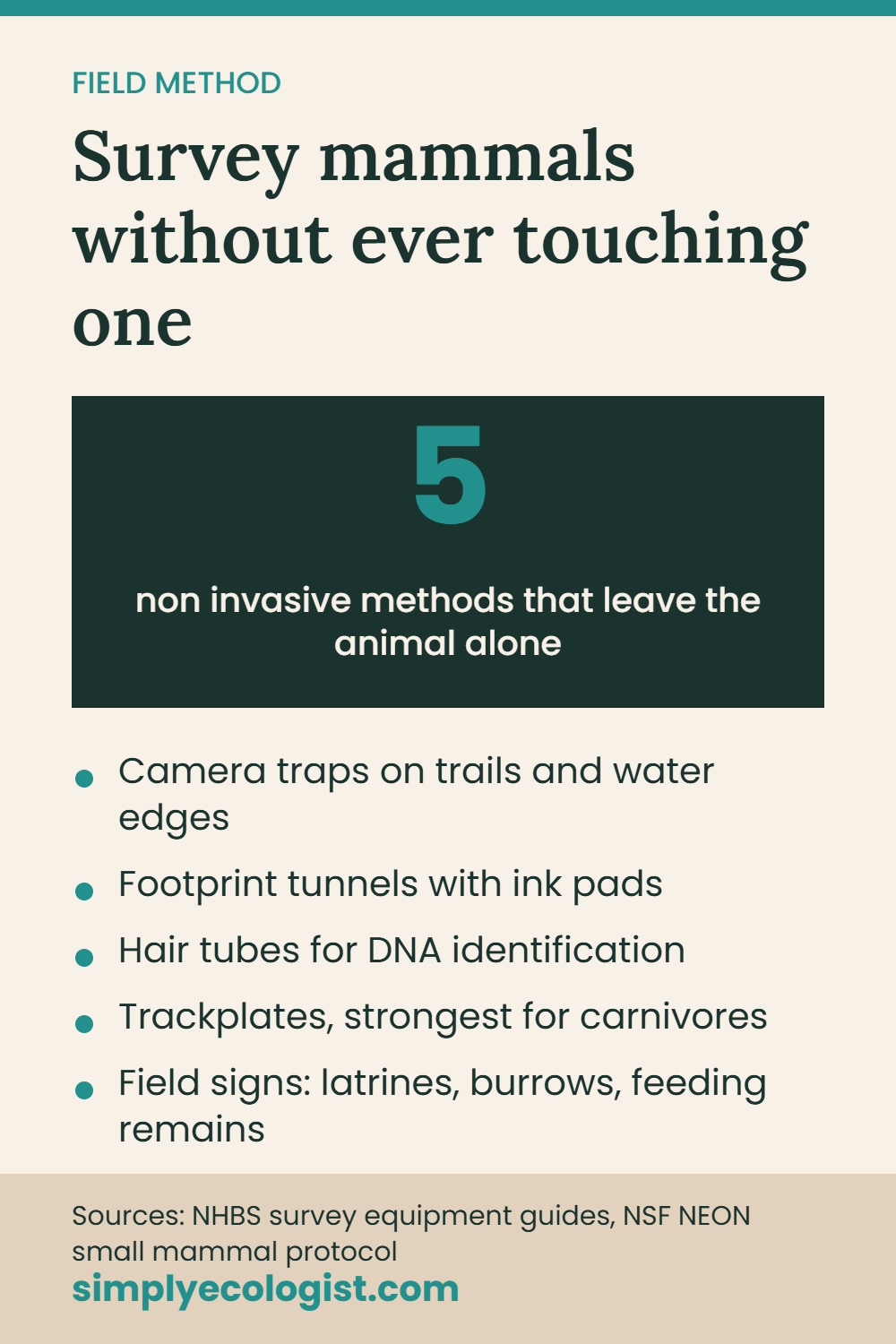
- Camera traps, footprint tunnels, hair tubes and trackplates answer most survey questions without handling an animal.
- Live trap only when you need the animal in the hand, and pre bait for three days first.
- Standard small mammal grid: 90m by 90m, 100 traps, 10m spacing.
- In the US, invasiveness triggers IACUC review and state permits govern trapping. In the UK, licences attach to species such as dormice and bats, not to methods.
Which Mammal Survey Method Should You Use?
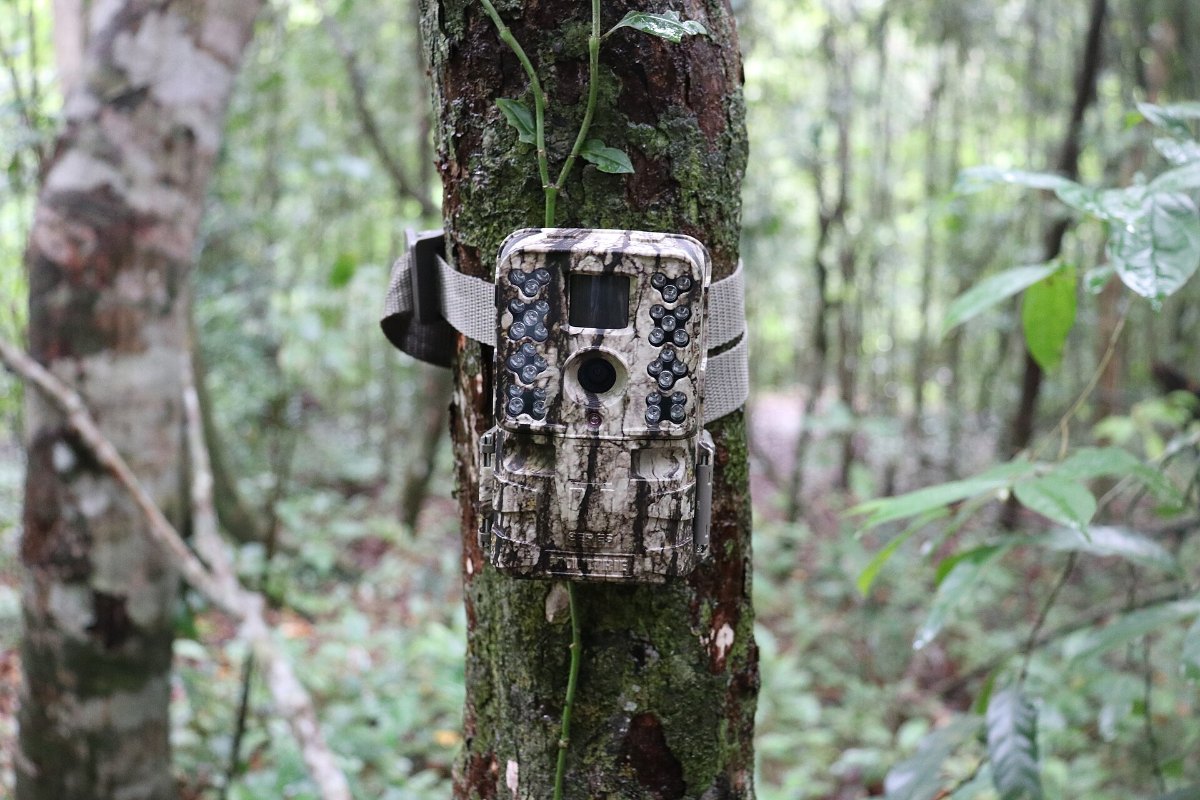
A successful mammal survey requires selecting the right monitoring technique for your specific research goals.
Active methods like live trapping provide detailed biometric data through capture mark recapture approaches, while less invasive options such as footprint tunnels can identify species presence without handling.
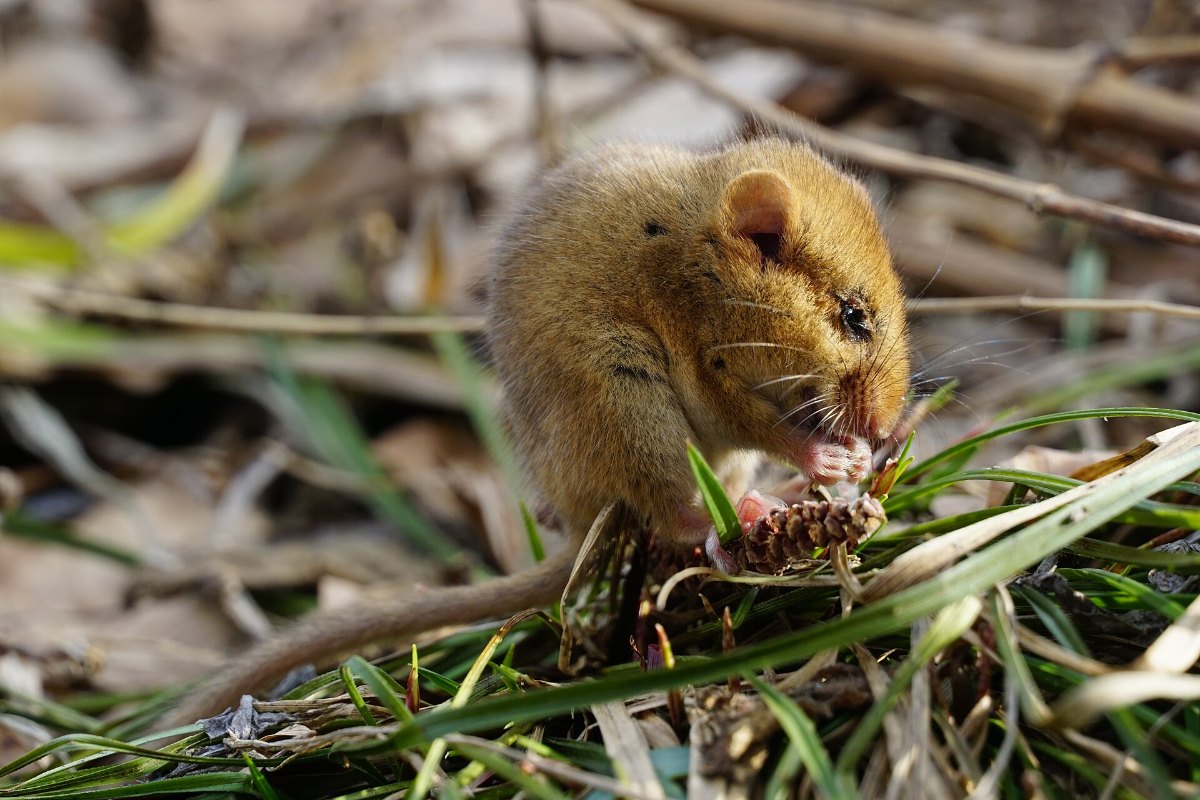
For protected species like dormice, specialized nest tubes are necessary, and licensed handling may be required.
Your survey strategy should match habitat conditions and target species.
For example: Small mammals serve as valuable indicator species for monitoring changes in agricultural landscapes and ecosystem health.
Camera traps excel at thorough inventories with minimal disturbance, while trackplates often detect carnivores more effectively.
Consider using the standardized Multiple Species Inventory and Monitoring protocols when surveying across regions.
Weather conditions greatly impact survey effectiveness. Rain can compromise footprint detection and trackplate functionality.
To maximize reliability, combine multiple techniques and supplement with habitat characterization data.
Remember that surveyor training directly affects identification accuracy, so invest in proper field guides and reference materials before beginning.
| Method | What it gives you | Effort per site | Rough cost | Main weakness |
|---|---|---|---|---|
| Camera traps | Species presence, activity timing, some abundance via random encounter models | Two visits, deploy and collect, plus image processing | Moderate up front, low per night | Image sorting time; misses very small or fast species without close focus |
| Live trapping | Identity, sex, weight, condition, recaptures, parasites | High: pre baiting plus daily checks for the whole trapping period | High in labour, moderate in kit | Welfare risk, permits, and lower detection than cameras for most rodents |
| Footprint tunnels | Presence and absence for small and medium mammals | Low, quick to check | Low | Prints can be ambiguous between similar species |
| Hair tubes | Species identification from DNA or hair structure | Low in the field, high in the lab | Low field cost, high lab cost | Needs laboratory analysis and turnaround time |
| Trackplates | Presence, strongest for carnivores | Low to moderate | Low | Rain and damp degrade the plate surface |
| Field signs | Presence, territory use, latrines, setts, feeding remains | Low, but needs a trained eye | Very low | Signs persist, so they date poorly and can overstate current use |
Those differences are measurable, not theoretical. In the 2021 Oceano Dunes comparison, run across five plots of eight stations each with both methods at every station, camera trap detection ran ahead of live trapping for every species tested: Heermann’s kangaroo rat at 69% of stations against 17%, big eared woodrat at 62% against 22%, California mouse at 50% against 18%, and deer mouse at 97% against 44%.
California vole was recorded only by cameras. The authors concluded that camera trapping paired with machine learning image sorting is the more practical option for most rodent monitoring.
Planning Your Survey: Site Selection and Sampling Design
Effective site selection forms the foundation of any successful mammal survey.
Begin by creating detailed vegetation maps showing native plant communities, water bodies, and key terrain features. Identify critical microhabitats like caves or tree hollows that target species might use.
Stratify your survey by habitat type, guaranteeing you’ve included representative samples of each vegetation alliance. You’ll want to establish clear study boundaries using GIS tools and prioritize rare or ephemeral habitats that may host endemic species.
Consider both temporal and spatial factors in your design. Schedule surveys during ideal detection periods, avoiding extreme weather conditions and align with species specific activity patterns.
For thorough coverage, deploy systematic sampling grids or transects that incorporate microhabitat features.
Include replicate sites to account for seasonal variability and maintain consistency by standardizing methods across your team.
This approach guarantees scientifically robust data that can be compared across time and locations.
What Equipment Do You Need for a Mammal Survey?
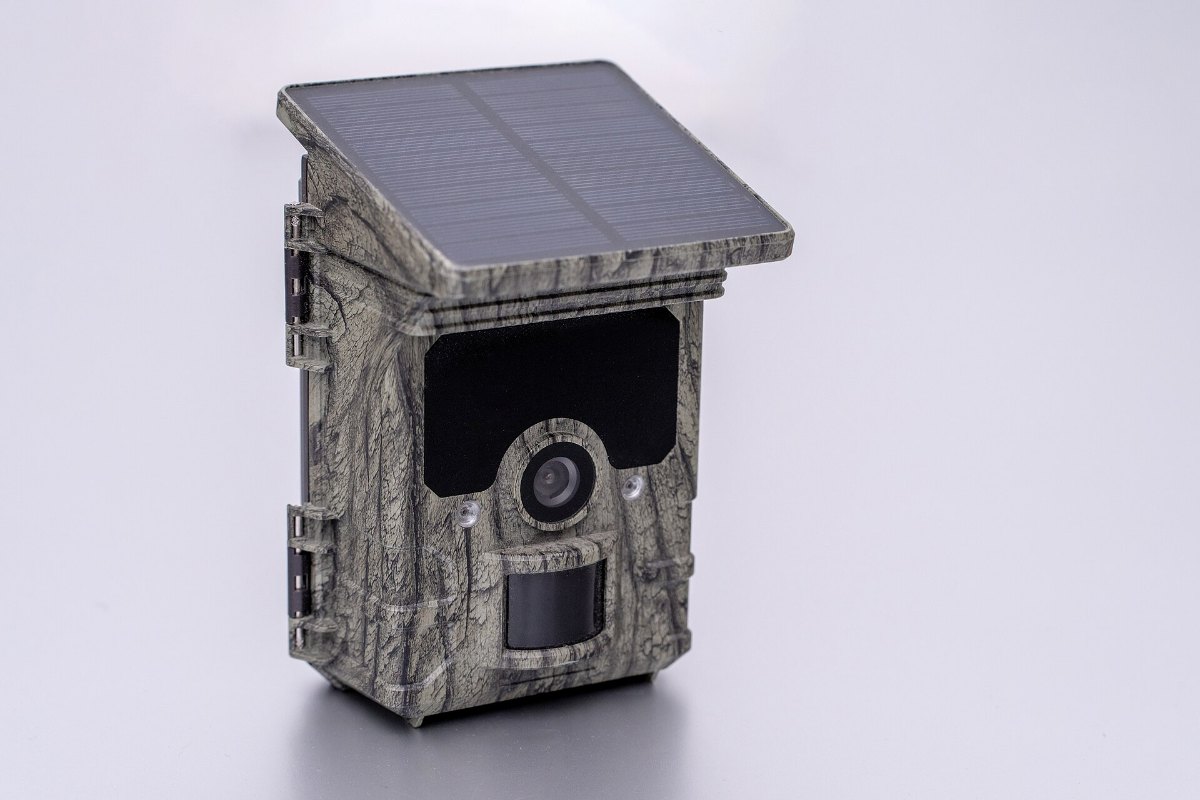
Because mammal surveys require specialized gear tailored to target species, selecting the right equipment is essential to your survey’s success.
For small mammals, choose between Longworth traps (durable with detachable tunnels) or Sherman traps (lightweight, foldable) alongside spring scales and protective gloves.
When seeking non invasive methods, footprint tunnels with ink pads work well for hedgehogs and dormice, while squirrel surveys benefit from specialized hair tubes that differentiate between red and gray species. Equipment selection should align with seasonal restrictions that apply to protected species surveys.
For broader habitat assessment, deploy camera and trackplate arrays strategically. Position trackplates at centerpoints with cameras at varying distances. These systems are particularly effective for detecting bears and mesocarnivores during 10 day sampling windows.
Don’t forget supplementary tools: binoculars for daytime observation, electronic detectors for locating traps, mist nets for bats, and radio collars for tracking larger mammals’ movement patterns.
Live Trapping Techniques and Animal Welfare Considerations
Live trapping represents the cornerstone of mammal survey methodology, though its successful implementation requires careful attention to both technical efficiency and animal welfare.
When selecting trap types, consider that Sherman traps capture more species but mesh live traps offer higher success rates for rodents. Pitfall traps excel at catching semi fossorial species like shrews.
You’ll need to check traps frequently to prevent mortality from exposure or stress. Always provide bedding material such as hay and make certain traps are well ventilated.
When handling animals, use gloves and calm procedures to minimize stress and injury.
Pre bait your traps for three days before active trapping to enhance capture rates. Space trap stations 10m apart in a grid. That is the spacing the NSF NEON small mammal protocol uses, and it is what produces the standard 90m by 90m grid of 100 traps described later in this guide.
Remember that combined methods, like supplementing live trapping with camera surveys, will improve detection accuracy, especially for elusive species.
Always obtain proper licenses when working with protected species.
Non Invasive Methods: Camera Traps, Hair Samples, and Footprint Tunnels
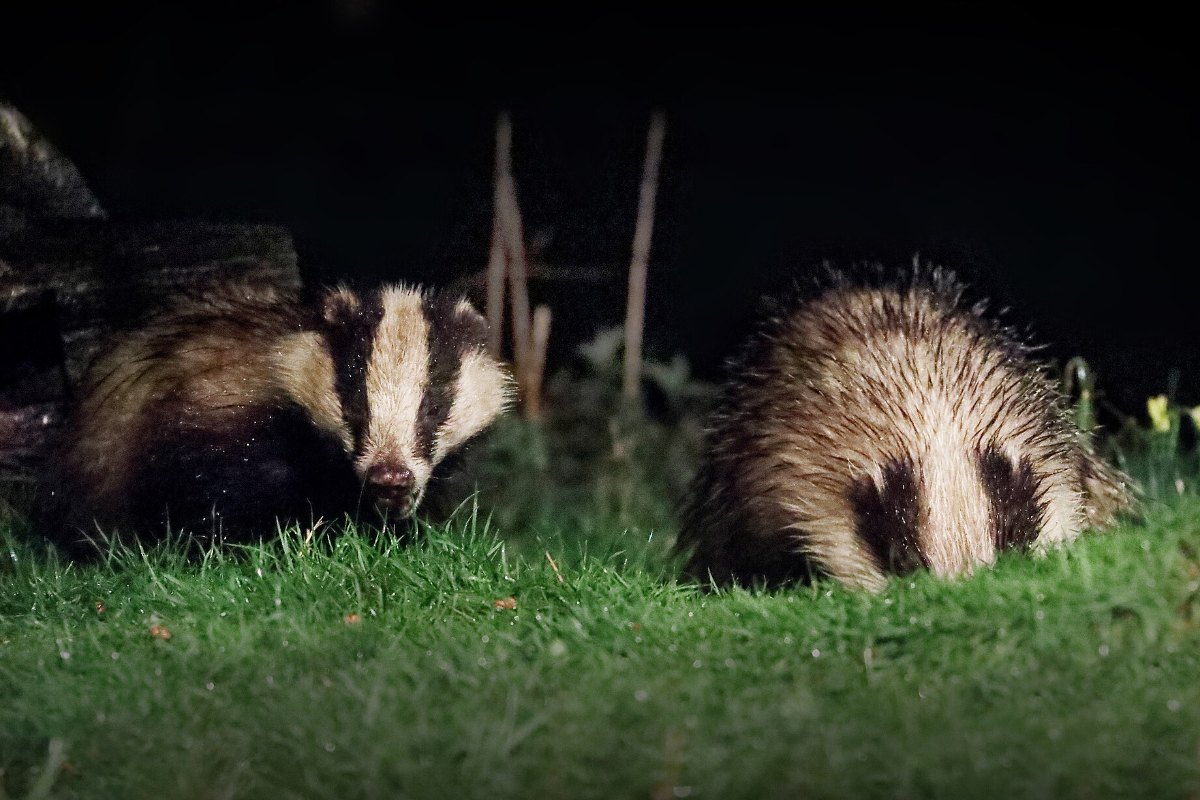
Non invasive monitoring methods offer three primary advantages over live trapping: reduced stress to animals, decreased field labor, and continuous data collection. The same shift has happened in other groups.
A bird survey now leans on acoustic recorders for work that once needed an observer standing in the cold, and the reasoning is identical: the animal behaves normally when nobody is there.
When using camera traps, place them along trails or near water sources using systematic or random sampling designs. Consider rotating locations periodically and using baits to increase detection rates.
For hair sample collection, utilize naturally deposited materials or hair snagging devices. DNA analysis from these samples provides species identification and population data without handling animals.
Footprint tunnels employ ink pads and tracking paper with bait to capture small mammal prints. They’re quicker to check than camera traps and particularly useful for presence/absence surveys and public engagement. The lightweight design of tunnels makes them easily transportable to various field locations.
Each method has limitations: cameras may miss cryptic species, hair samples require laboratory analysis, and footprint tunnels work primarily for smaller mammals.
Consider your study objectives, budget constraints, and target species when selecting the most appropriate non invasive technique for your survey.
Field Signs and Visual Encounter Surveys
Field signs and visual observations provide reliable mammal detection methods without specialized equipment. If you also run a reptile survey on the same site, walk the two together: refugia checks and mammal field sign transects cover similar ground, and the weather windows overlap more than you would expect.
Walk your transects in the middle of the day, broadly mid morning to mid afternoon, and keep the window the same on every visit.
Published winter transect studies commonly use a block between about 08:30 and 14:30, but the exact hours matter far less than repeating them. You’ll need to identify key indicators like latrines, feeding remains, and burrows.
Look for water vole droppings in piles near waterways and chopped vegetation at feeding stations.
For effective surveys, walk consistent transects of a fixed length, typically 100m to 200m in dense habitat, repeated several times to reduce detection bias. Record both direct sightings and field signs simultaneously, ensuring accurate species identification to prevent data misrepresentation. GPS tag all observations for precise documentation.
While visual encounter surveys excel at detecting diurnal species, they’re best paired with other methods for nocturnal animals. When resources are limited, field sign surveys offer rapid assessments with less labor than camera trapping. These traditional survey methods remain labour intensive but economical compared to newer technologies.
Pay special attention to species specific signs like otter tracks, badger setts, and carnivore latrines which follow distinct spatial patterns.
Data Collection, Recording, and Storage Protocols
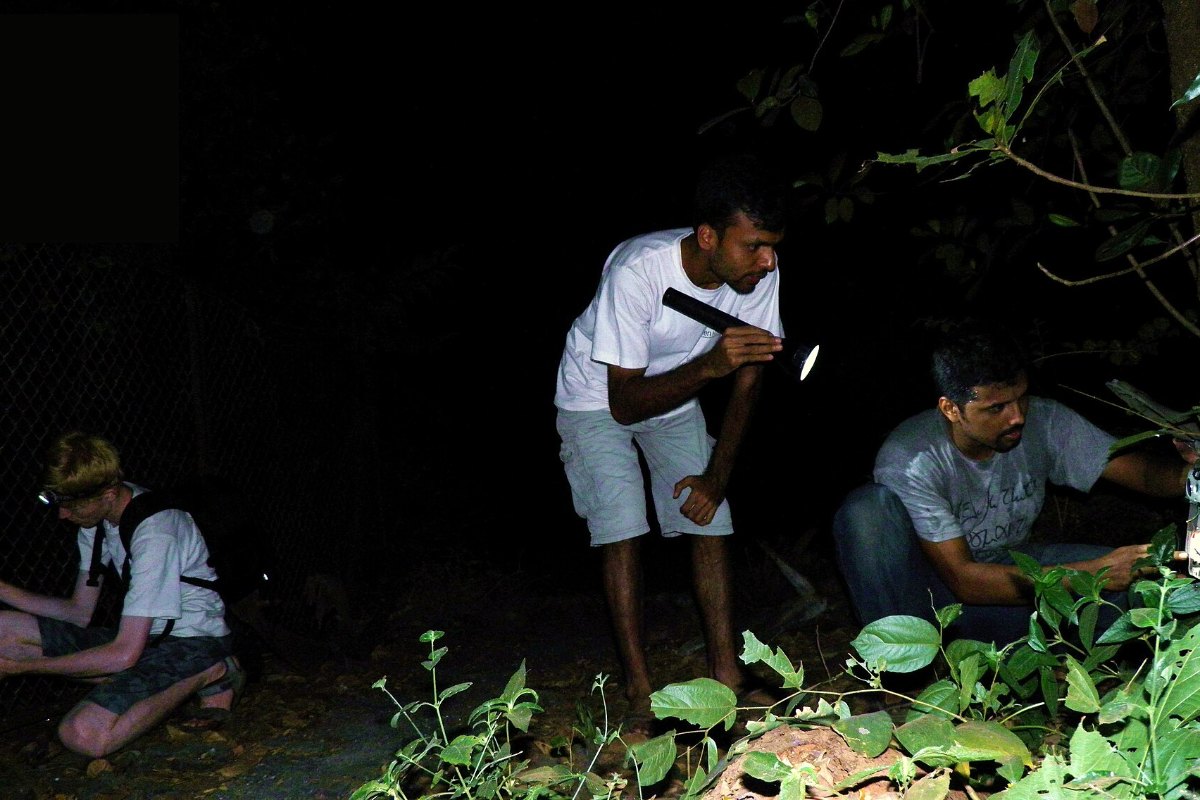
Effective mammal survey success depends entirely on robust data collection, recording, and storage protocols that guarantee scientific validity and reproducibility.
Implement standardized field methods that include transect sampling with measured observer distances, camera trap grids strategically positioned during peak activity times, and live trapping using Sherman traps in 90x90m grids with 100 traps per site.
Record environmental variables during collection, adjusting protocols based on lunar cycles and weather conditions to minimize animal stress.
For biological sampling, maintain consistent handling procedures, collect DNA material from hair snares or scat, and preserve samples at appropriate temperatures. When processing captured mammals, assess them for tick quantity and life stage to monitor potential disease vectors.
Document data using both field notebooks and electronic devices, ensuring all entries include precise taxonomic information, GPS coordinates, and habitat descriptions.
Store your data in redundant systems using hierarchical databases that include metadata descriptions and standardized naming conventions to facilitate future analyses and collaborative research.
Statistical Analysis and Population Estimation
Once you’ve collected your mammal survey data, proper statistical analysis becomes essential for extracting meaningful population estimates and ecological insights.
Select the appropriate estimation method based on your survey goals. Mark recapture for detailed population structure, distance sampling for density calculation, or camera trapping with Random Encounter Models when individual recognition isn’t possible.
Utilize specialized software like DISTANCE or R programming to analyze your data. Calculate key statistical indices such as Shannon Wiener for diversity measurement and implement bootstrapping to generate reliable confidence intervals.
Remember to account for detection probability by incorporating runtime likelihoods and surveyor competence assessments. Many large mammal species are difficult to accurately count due to their natural camouflage and mobility across varied terrain.
For robust results, validate your findings through multiple complementary methods.
Concurrent track surveys can provide rapid presence data while camera trapping yields more detailed records over time. Cross reference your methods to identify potential biases and adjust your population estimates accordingly.
Do You Need a Licence to Survey Mammals?
It depends on where you are and, above all, on what you do to the animal. Watching, recording field signs and running camera traps needs no permit in most places. Trapping, marking and handling almost always does. Get this settled before the first trap goes out, not after.
If you are surveying in the US
The Animal Welfare Act is narrower than it looks, and this is where most guides get it wrong. USDA APHIS states plainly that a study on free living wild animals in their natural habitat is a field study, and that facilities conducting only field studies do not need to register.
What triggers registration and IACUC oversight is invasiveness, not handling in itself: major surgery, blood collection, implanted devices, anything causing more than momentary pain, or work that materially alters behaviour, such as disturbing nests in the breeding season or moving animals beyond their normal range. Your institution’s IACUC makes that determination, so take the protocol to them first.
State law is usually the binding constraint. Most states require a scientific collecting permit from the state wildlife agency to trap, mark or handle wild mammals, and the categories differ by state. Federally listed species need a section 10(a)(1)(A) recovery permit from the US Fish and Wildlife Service.
Marine mammals sit under the Marine Mammal Protection Act, where both Level A and Level B harassment are prohibited, with NOAA Fisheries and the Fish and Wildlife Service splitting oversight by species.
If you are surveying in the UK
There is no general licence for surveying common mammals, and camera traps, footprint tunnels, hair tubes and field sign surveys need no permit at all. Licences attach to species rather than to methods.
Hazel dormouse and bat work requires a licence from Natural England, NatureScot or Natural Resources Wales depending on the country, and badger setts are protected under the Protection of Badgers Act 1992.
Live trapping of unprotected small mammals is not licensed, but it still carries a duty of care, and most institutions will want ethical approval before you set a trap line.
Wherever you are
Check trap frequency requirements, provide bedding, and plan the checking round before you plan the grid. If you cannot commit to checking traps on schedule, use a non invasive method instead. Consider trail camera sampling as a non invasive option that preserves habitat integrity while still gathering usable data.
Combining Methods for Comprehensive Mammal Monitoring
Combining multiple monitoring techniques yields far more thorough results than any single method can provide on its own.
Consider pairing trackplate arrays with camera stations to detect both carnivores and herbivores at varying distances, while visual encounter surveys contextualize these findings with habitat data.
For ideal detection, cross validate indirect methods with direct observations. Deploy camera traps in tunnel setups and supplement with photogrammetry for body size estimation. When monitoring specific functional groups, tailor your approach accordingly.
Trackplates and cameras work well for carnivores, while camera surveys paired with habitat mapping suit herbivores. For marine mammals, photogrammetry offers a non invasive method to analyze body condition and reproductive status without disturbing the animals.
Long running monitoring programmes revisit sites on a multi year cycle, with a full resample every few years, to balance cost against ecological relevance.
Where a programme needs a standard sampling unit around each monitoring point, a fixed radius buffer of one or two hundred metres is a common choice. Set the cycle and the buffer from your own site and question rather than copying a figure out of another programme.
For low detection species, combine live trapping with genetic sampling methods like hair tubes to maximize identification while minimizing animal stress.
Header image: Andy Morffew from Itchen Abbas, Hampshire, UK, CC BY 2.0, via Wikimedia Commons
References
- https://www.nhbs.com/en/blog/nhbs-guide-to-small-mammal-survey-equipment
- https://www.mooc-conservation.org/assets/courseware/v1/54c7fa8b34a8299e3afa8ab29861cc9f/asset-v1:IUCN-Papaco+MOOC-SE+EN-1+type@asset+block/M3_L6.pdf
- https://academic.oup.com/biohorizons/article/4/1/40/238741
- https://www.cloudbridge.org/wp-content/uploads/2011/09/2010-Medium-Large-Mammals-Cailly-Duffay-Mazille-Eng.pdf
- https://www.agriculture.gov.au/sites/default/files/documents/survey-guidelines-mammals.pdf
- https://apps.dtic.mil/sti/tr/pdf/ADA508442.pdf
- https://www.sandiego.gov/sites/default/files/legacy/planning/programs/mscp/pdf/biosurveyguidefull.pdf

Erzsebet Frey (Eli Frey) is an ecologist and online entrepreneur with a Master of Science in Ecology from the University of Belgrade. Originally from Serbia, she has lived in Sri Lanka since 2017. Eli has worked internationally in countries like Oman, Brazil, Germany, and Sri Lanka. In 2018, she expanded into SEO and blogging, completing courses from UC Davis and Edinburgh. Eli has founded multiple websites focused on biology, ecology, environmental science, sustainable and simple living, and outdoor activities. She enjoys creating nature and simple living videos on YouTube and participates in speleology, diving, and hiking.
From the shop
Gifts for people who love the wild
Wildlife themed t-shirts, notebooks, tote bags, bandanas and guides, designed by an ecologist.
Visit the shop