

Why field methods matter
Careful monitoring pays off. A 2025 analysis found insects declining even in pristine ecosystems, a trend only visible because researchers kept collecting standardized field data year after year. Good methods are how nature tells us what is happening.
To effectively monitor biodiversity, you need clear objectives and carefully selected indicators. Employ appropriate sampling methods like point, line, and plot sampling, as well as acoustic and roving surveys.
Leverage tools such as bioacoustics, camera traps, remote sensing, eDNA, and genomics to gather extensive data. Implement your monitoring program with a focus on adaptive management, regular reporting, and alignment with global frameworks.
By adhering to international standards and continuously evaluating your efforts, you’ll optimize conservation outcomes. Keep exploring to discover the intricacies of biodiversity monitoring protocols and how they can help protect the incredible diversity of life on our planet.
Objectives and Indicators
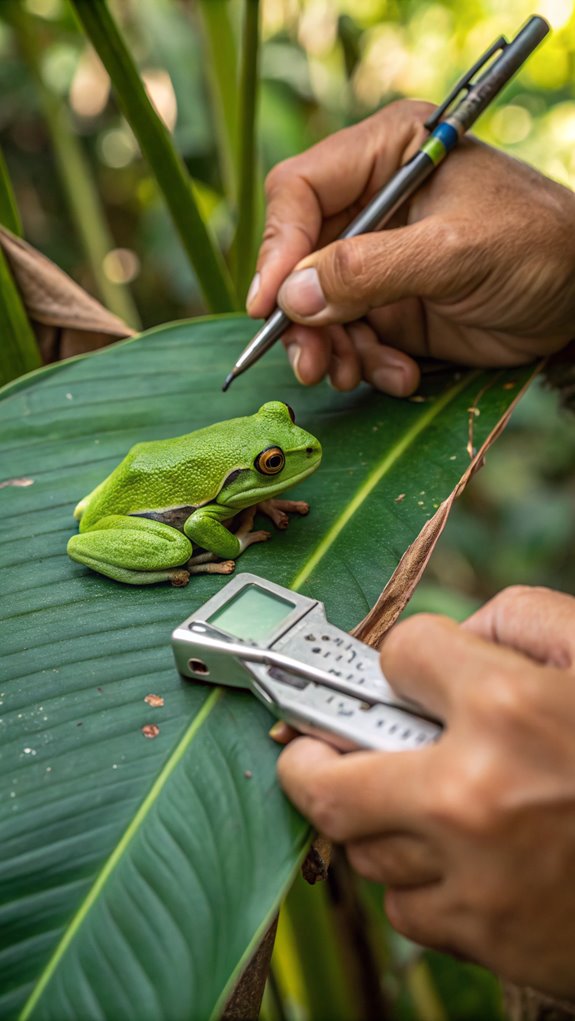
Why monitor biodiversity? Biodiversity monitoring protocols aim to standardize data collection across different areas and time frames, informing conservation decision-making, evaluating the effectiveness of policies and management practices, guaranteeing sustainable management, and reporting progress on international commitments.
The Species Habitat Index (SHI) evaluates ecosystem integrity through species components, utilizing annual remote sensing and species occurrence data.
You’ll find that biodiversity indicators play an essential role in tracking the status and trends of biodiversity at various levels. Species indicators focus on individual species’ conservation status, considering factors like habitat loss, protected area coverage, and data collection. The Ad Hoc Technical Expert Group (AHTEG) provides guidance on operationalizing monitoring strategies.
Ecosystem indicators, on the other hand, monitor the extent, rate of change, fragmentation, and degradation of key ecosystems. Headline indicators provide a broad overview of biodiversity status and trends, as used in the Kunming-Montreal Global Biodiversity Framework, while component indicators offer detailed measurements within specific biodiversity components.
Complementary indicators support thorough biodiversity evaluations by providing additional data. The selection of appropriate indicators is vital to accurately reflect biodiversity status and trends. You should consider factors such as species abundance, ecosystem health, and the influence of temporal and spatial scales on monitoring.
Systematic data collection through standardized protocols is vital for meaningful comparisons, and adequate funding must be secured for long-term monitoring and data analysis. Additionally, training and capacity building on the use of protocols and data collection methods are necessary to guarantee consistent monitoring across different regions and time frames.
Sampling Methods
Selecting the right sampling techniques is crucial for effective biodiversity monitoring. You have several methods at your disposal, each with its strengths. Point and line sampling collect data on habitat characteristics, while plot and plotless sampling determine density, composition, and biomass. Acoustic surveys excel at detecting species with brief calling periods, and combining automated digital recorders (ADR) with dip net surveys provides thorough detection. Home range size can also influence the effectiveness of different sampling methods for a given species. Visual encounter surveys (VES) are highly effective for species identification and are a key component of anuran biodiversity assessments.
When comparing efficiency, consider roving surveys for reducing uncertainty and detecting change, especially in marine environments. Transect methods can work well with citizen scientists using a reduced species list. Efficiency curves help improve effort, and resampling approaches guide sampling design.
Implement fixed-coverage stopping to avoid oversampling and wasted resources, and use multivariate error analysis to reveal the extent of oversampling. An unbalanced sampling approach is recommended for setting minimum required effort on a site-to-site basis.
Balance taxonomic resolution with thoroughness and cost when selecting methods. eDNA, satellite imagery, and soundscape recordings can contribute to monitoring at various scales. Rarefaction methods reduce biases in biodiversity estimates.
Ultimately, site-specific conditions must be considered when determining peak sampling effort. By carefully selecting and enhancing your sampling methods, you’ll guarantee that your biodiversity monitoring program is efficient, effective, and yields robust results.
Tools and Technologies
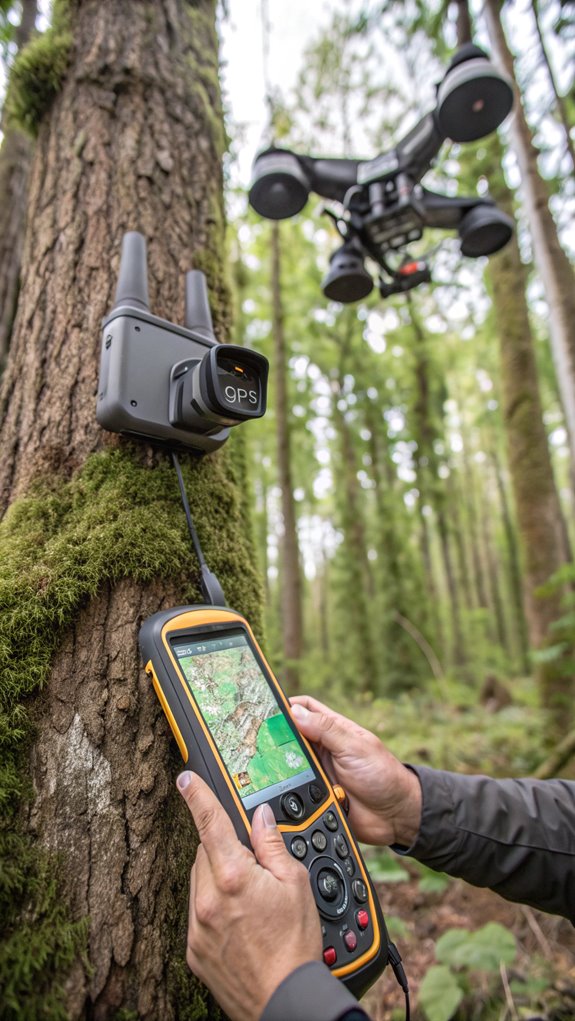
Cutting-edge tools and technologies are revolutionizing biodiversity monitoring, empowering researchers to gather more accurate, extensive data than ever before. Bioacoustics, employing devices like Wildlife Acoustics Song Meters and hydrophones, is widely used for monitoring mammals (70%) and birds (65%). Sensor networks exhibit very low deployment rates, primarily for monitoring fish (10%).
Camera traps, such as AMI traps and Wilsus models, are also heavily deployed for mammals (75%). These technologies face constraints related to data issues, costs, and technical difficulties.
Remote sensing, including satellite-based observations and UAV-based hyperspectral and LiDAR data, enables large-scale biodiversity monitoring, tracking land cover disturbances, and estimating species diversity. It covers vast, inaccessible areas and enhances accuracy and efficiency.
However, data integration challenges and high costs for high-resolution imagery are notable constraints.
eDNA and genomics, using techniques like metabarcoding and autosamplers, offer non-invasive, cost-effective, and highly accurate species identification and abundance estimation. They enable high-precision biodiversity monitoring and restoration tracking.
Technical difficulties in sample processing and the need for specialized expertise are the main constraints.
Integrating these technologies with each other and with ground-based monitoring methods holds immense potential for thorough ecosystem monitoring. Combining bioacoustics, camera traps, and eDNA can provide a holistic view of biodiversity.
As these tools continue to advance, they’ll play an increasingly crucial role in understanding and conserving Earth’s precious biodiversity.
Implementation and Evaluation
Once you’ve selected the ideal tools and technologies for your biodiversity monitoring program, you’ll need to focus on effective implementation and evaluation. Start by establishing clear objectives that focus on determining ecosystem health and identifying abnormal changes. Develop a conceptual model of the ecosystems you’re monitoring, identifying all components and their relationships.
Next, conduct design studies to establish monitoring protocols, including selecting parameters to measure and field-testing sampling procedures. Obtain sustained funding and staff, build infrastructure, execute protocols, and apply information to relevant management issues. Citizen science initiatives can help expand the scope and reduce costs of monitoring programs.
Recognize that both management and monitoring of ecosystems are experimental endeavors and approach them iteratively to reduce uncertainty and cost. Develop indicators from results chains to articulate outcome statements and create targeted indicators for managing biodiversity projects.
Ascertain your indicators are relevant, useful, and based on explicit theories of change to support effective monitoring and evaluation. Use indicators to facilitate learning and adaptation at various levels of the program cycle, from activity to project to strategic plans.
Integrate your indicators with the program cycle to inform learning, adaptive management, and effectiveness across scales. Compare the efficiency of different sampling methodologies to select one that yields biodiversity metrics relevant to conservation and management. The Threat Reduction Assessment (TRA) can be a useful tool for assessing the effectiveness of conservation actions and understanding trends in biodiversity.
Regularly evaluate the effectiveness of your monitoring program and make adaptive modifications as needed. By following these principles, you’ll ascertain your biodiversity monitoring program is effectively implemented and evaluated, providing valuable insights for conservation and management.
International Standards
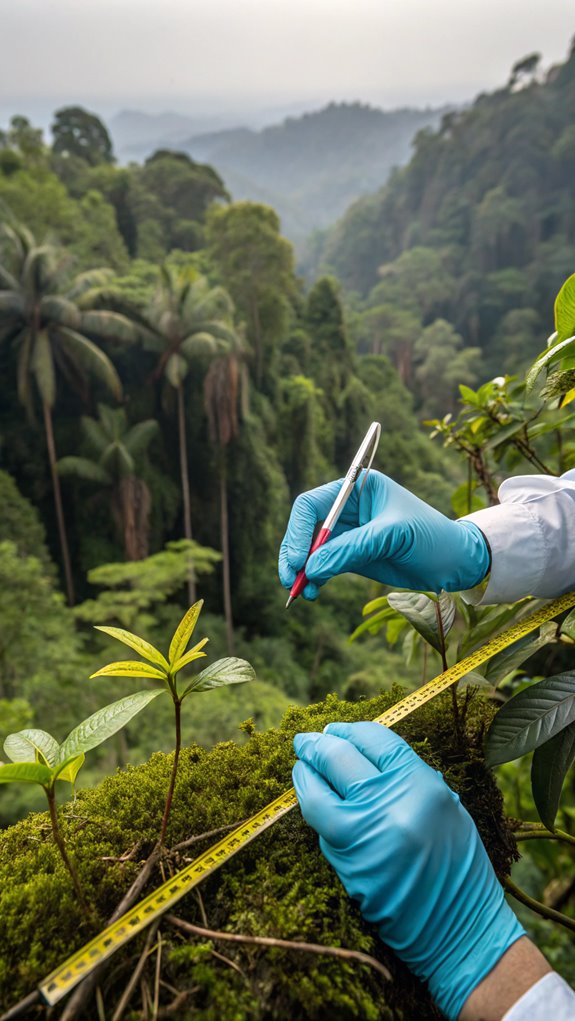
Embracing international standards is vital for guaranteeing your biodiversity monitoring program aligns with global best practices and contributes to broader conservation efforts.
Start by setting clear objectives based on the pressure-state-response framework, which is used worldwide for monitoring indicators. Standardizing your indicators and methods will enable comparability and facilitate regional and global reporting.
Adopt a thorough approach that includes environmental, biodiversity, socio-economic, and management effectiveness components.
Refer to guidelines provided by organizations like FAO, REDD+, and USAID to develop your monitoring system. These guidelines will help you establish clear indicators and targets for species, habitats, ecosystem services, and forestry practices. The Joint UNECE/FAO Forestry and Timber Section aids in capacity development for sustainable forest management and biodiversity monitoring.
Determine the appropriate monitoring frequency and methods based on your objectives and available resources. Effective data management is essential for successful monitoring and reporting.
Involve stakeholders and coordinate among various levels of management to guarantee participation and buy-in. Harmonize your biodiversity indicators and methods with those used by other countries to enhance comparability.
Regularly report your findings to stakeholders and international bodies to monitor progress and effectiveness. Collaborate with international organizations to align your efforts with frameworks like the Kunming-Montreal Global Biodiversity Framework.
Protocols only work when the method suits the question. This free tool for choosing ecological survey methods filters 188 techniques by taxon, question, habitat, month and budget.

Erzsebet Frey (Eli Frey) is an ecologist and online entrepreneur with a Master of Science in Ecology from the University of Belgrade. Originally from Serbia, she has lived in Sri Lanka since 2017. Eli has worked internationally in countries like Oman, Brazil, Germany, and Sri Lanka. In 2018, she expanded into SEO and blogging, completing courses from UC Davis and Edinburgh. Eli has founded multiple websites focused on biology, ecology, environmental science, sustainable and simple living, and outdoor activities. She enjoys creating nature and simple living videos on YouTube and participates in speleology, diving, and hiking.
From the shop
Gifts for people who love the wild
Wildlife themed t-shirts, notebooks, tote bags, bandanas and guides, designed by an ecologist.
Visit the shop