
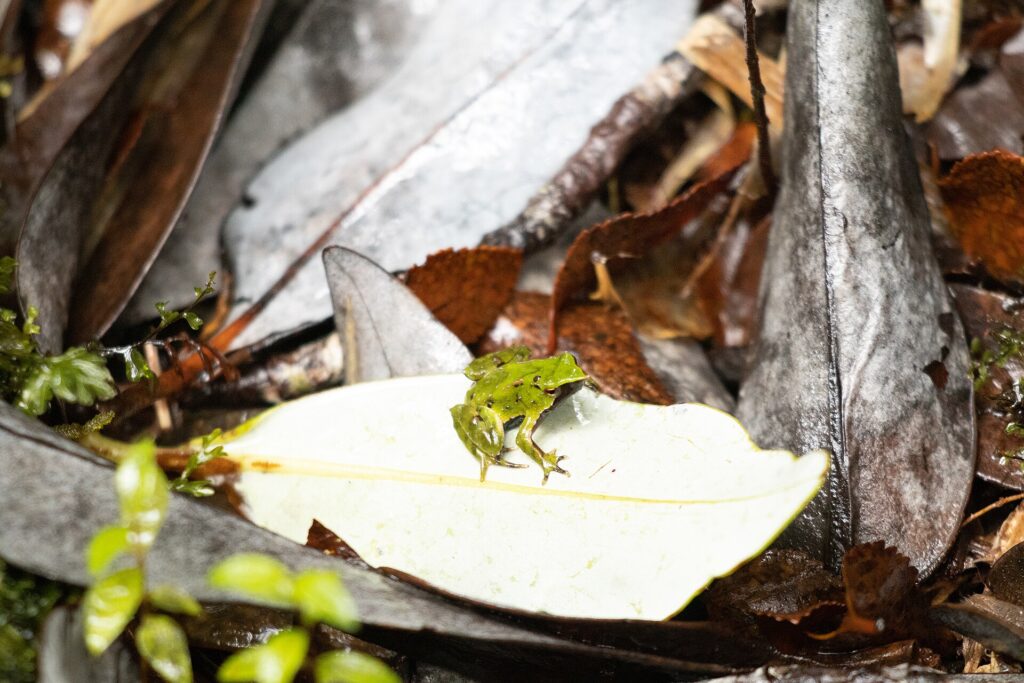
Darwin’s frog is the only animal alive today in which the father swallows his own eggs and carries the developing young inside his throat until fully formed froglets hop out of his mouth. No other vertebrate on the planet does this. Its one relative that shared the habit, the Chile Darwin’s frog, has not been seen since 1980.
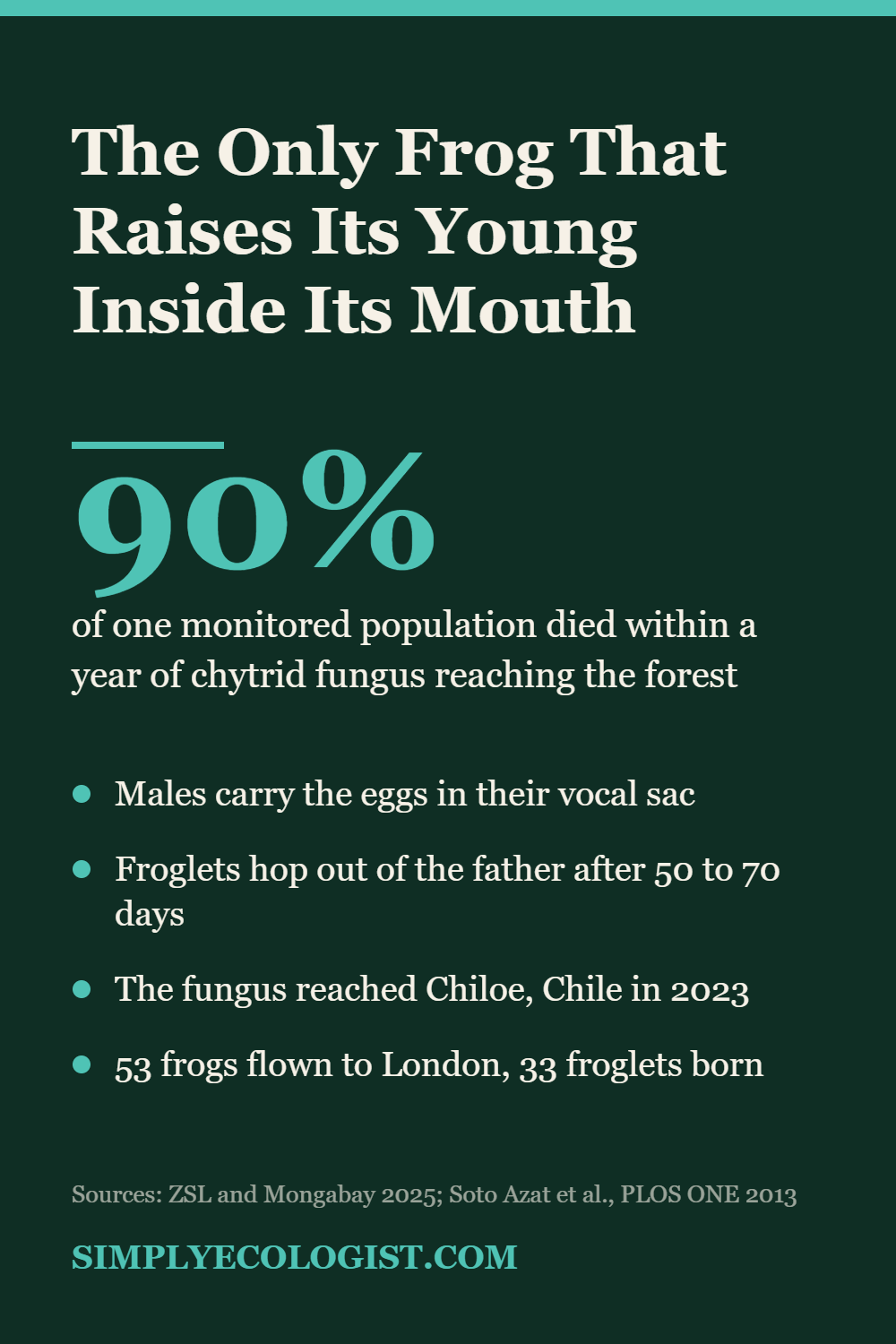
That alone would make Rhinoderma darwinii worth knowing. What makes it urgent is what happened in 2023, when a fungal pathogen reached one of the last strongholds of the species and wiped out roughly nine in every ten monitored frogs within a single year.
Here is what the science actually says about this frog: how it lives, how the mouth brooding works, and how close it is to following its twin into extinction.
Key takeaways
- Darwin’s frog is the only living animal in which the father broods his young inside his vocal sac and releases fully formed froglets from his mouth.
- It is a thumbnail sized frog of the Valdivian temperate rainforest of southern Chile and Argentina, and it is listed as Endangered.
- Its only close relative, the Chile Darwin’s frog, has not been seen since 1980 and is presumed extinct.
- Chytrid fungus reached Chiloe in 2023 and killed roughly 90 percent of one monitored population within a year, which triggered an emergency rescue to London Zoo in 2024.
Darwin’s Frog at a Glance
| Scientific name | Rhinoderma darwinii Duméril and Bibron, 1841 |
| Common names | Darwin’s frog, southern Darwin’s frog, ranita de Darwin |
| Family | Rhinodermatidae (order Anura) |
| Size | Males about 22 to 28 mm, females about 25 to 31 mm snout to vent |
| Weight | Only a couple of grams |
| Range | Southern Chile (Concepción to Palena) and adjacent Argentina (Neuquén, Río Negro) |
| Habitat | Valdivian temperate rainforest, forest bogs, cool stream banks |
| Elevation | Sea level to about 1,100 m, with records to roughly 1,500 m |
| Diet | Small forest invertebrates, taken by sit and wait ambush |
| Reproduction | Vocal sac brooding by the male, about 50 to 70 days |
| Lifespan | Not reliably documented; the widely repeated 10 to 15 years is unsourced |
| IUCN status | Endangered, assessed 2018 |
What Is Darwin’s Frog?
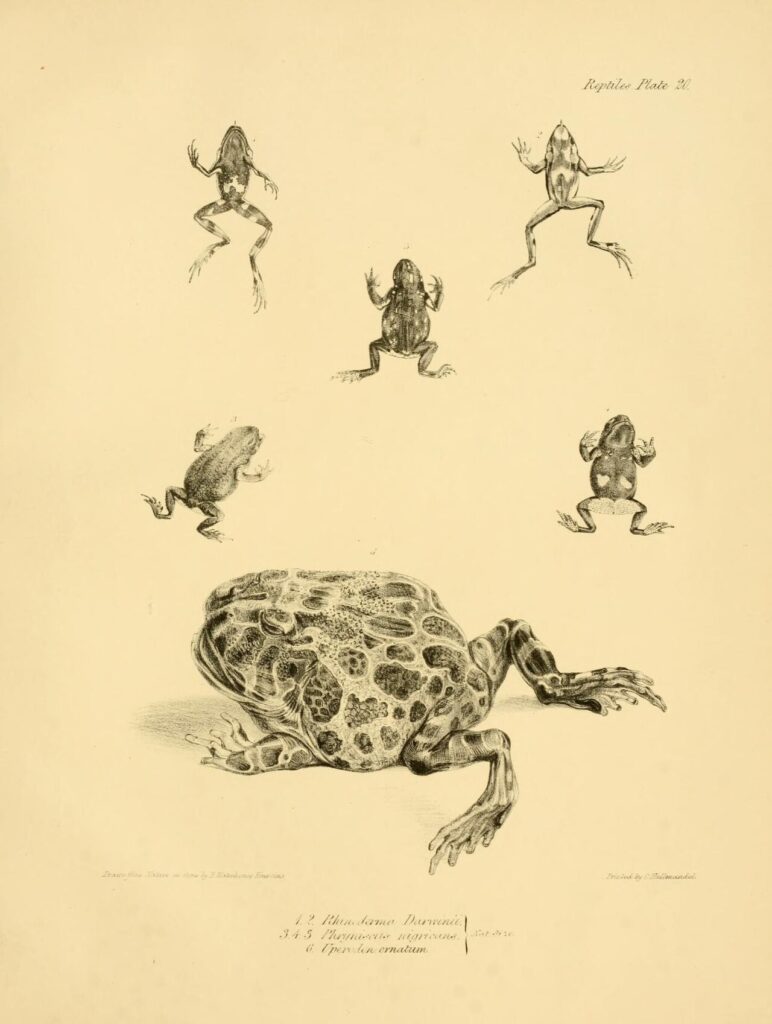
Charles Darwin collected the first known specimens in the forests of southern Chile during the voyage of the Beagle in the 1830s. The species was formally described seven years later, in 1841, by the French zoologists André Marie Constant Duméril and Gabriel Bibron, who named it after the man who found it.
It sits in its own small family, Rhinodermatidae, which contains just two species: Rhinoderma darwinii, the southern Darwin’s frog, and Rhinoderma rufum, the Chile Darwin’s frog. Both evolved the same extraordinary reproductive strategy. Only one of them is still with us.
What Darwin’s Frog Looks Like
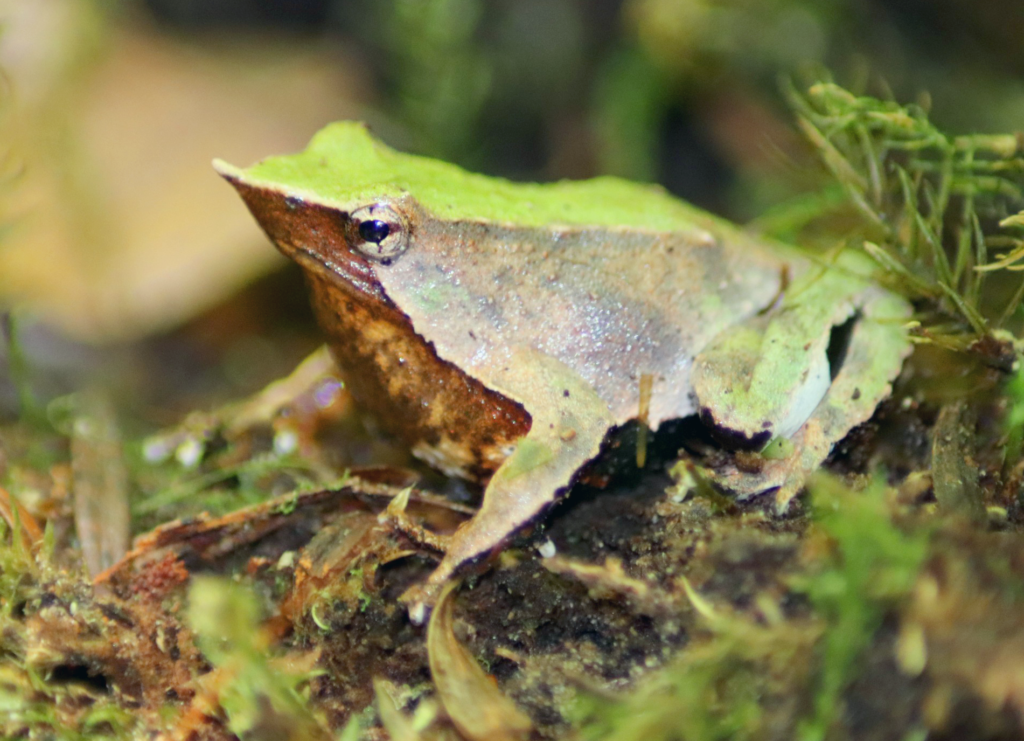
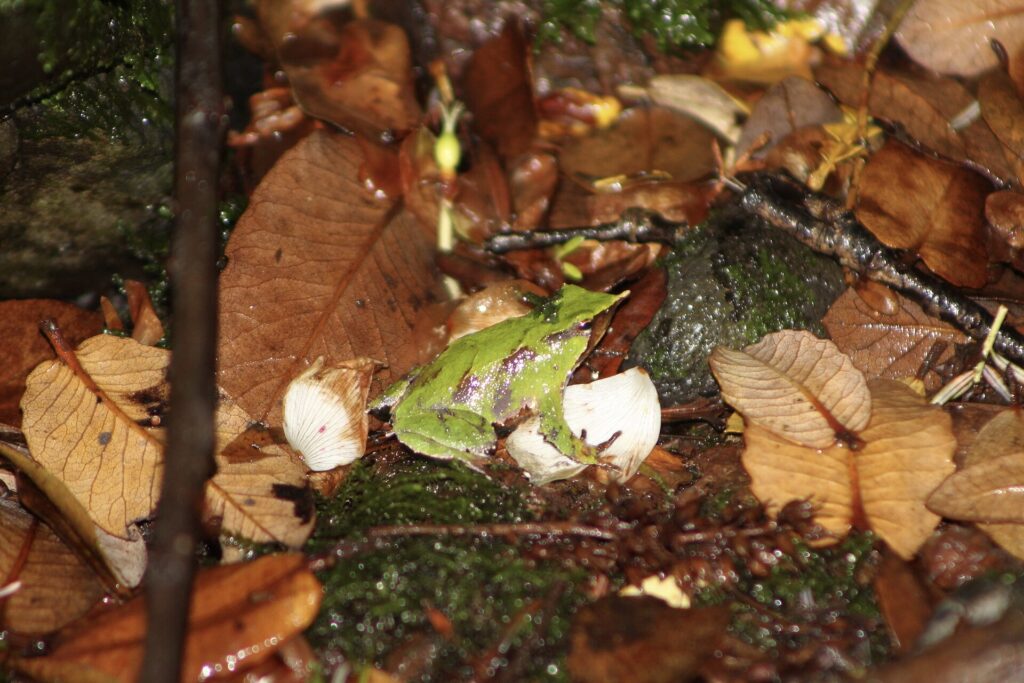
The first thing you notice is the nose. A fleshy, pointed projection extends from the snout, giving the head a sharply triangular outline. Combined with the frog’s slender limbs and mottled colouring, the effect is a dead leaf lying on the forest floor. It is one of the more convincing pieces of camouflage in the amphibian world.
Adults are tiny. Males measure roughly 22 to 28 mm from snout to vent and females about 25 to 31 mm, so a full grown frog sits comfortably on a thumbnail and weighs only a couple of grams. Any source telling you this animal weighs half an ounce is out by a factor of five or more.
The upper body ranges from brown to bright green, sometimes both on the same animal, occasionally with a V shaped mark down the back. Females tend toward brown. Males are more variable, and brooding males are often partly or entirely green. Captive individuals have been observed shifting from brown to green over the course of a year, apparently tracking the colour of their surroundings.
Turn one over and the disguise ends. The underside is boldly black with large white blotches, and the pattern is unique to each individual, which is useful for researchers doing mark and recapture work without tagging the animal.
Where Darwin’s Frog Lives
Darwin’s frog is endemic to the Valdivian temperate rainforest of southern South America. In Chile the range runs from Concepción Province south to Palena Province, including Chiloé Island. In Argentina it holds on in Neuquén and Río Negro provinces, where it is genuinely rare.
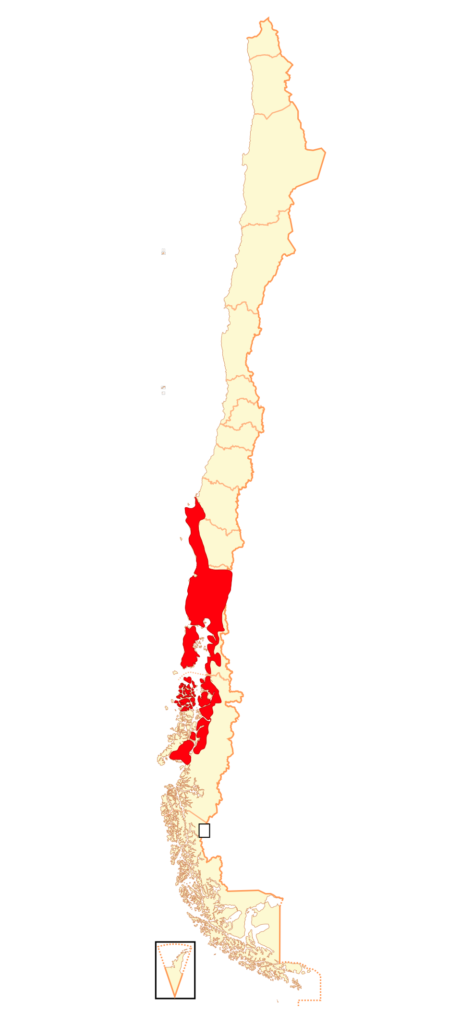
The frog is a specialist of cool, wet, shaded ground: mossy forest floor, bogs, coarse woody debris and the banks of slow streams, at water and air temperatures usually between about 5 and 21 degrees Celsius. Good habitat means mature native forest with an open understorey of young trees, shrubs and grassy glades. Most records fall below about 1,100 m, with a handful up to roughly 1,500 m.
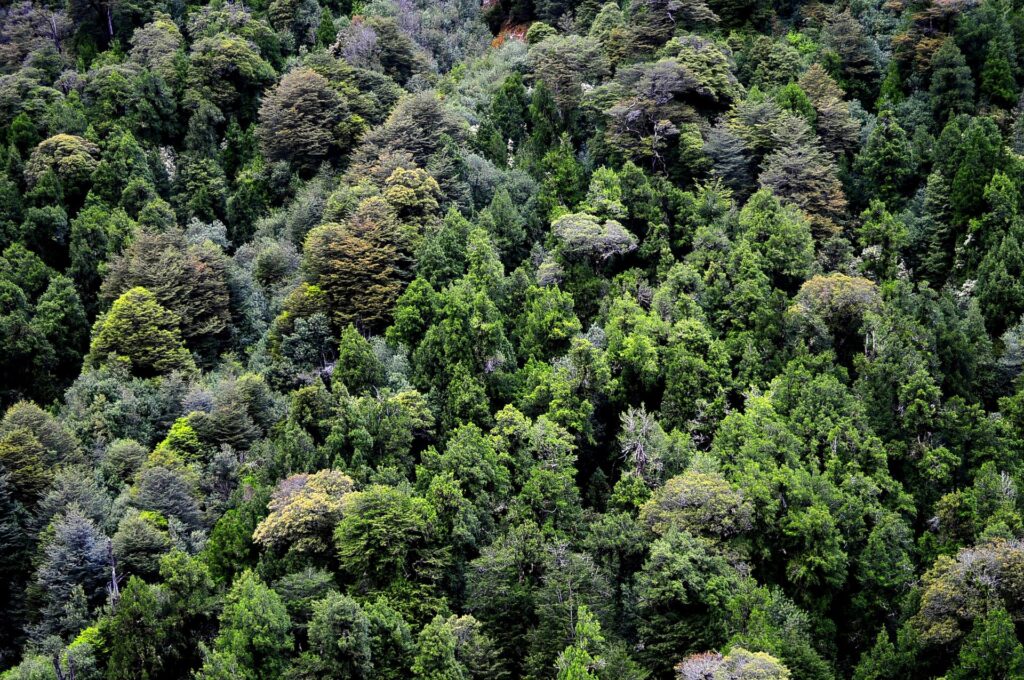
That habitat requirement is the species’ central vulnerability. Where native forest has been replaced with pine and eucalyptus plantations, the frog is simply gone.
What Darwin’s Frog Eats
Darwin’s frog is an ambush predator that eats small forest invertebrates. Prey records are dominated by herbivorous and detritivorous invertebrates, essentially whatever is abundant in the leaf litter around it: insects, spiders, small snails, worms and other soft bodied prey small enough for a frog the size of a thumbnail.
The hunting style is sit and wait. The frog stays motionless, relying on its leaf mimicry, and strikes only when something moves within range. It does not pursue prey across open ground, which fits an animal whose entire survival strategy is not being noticed.
Behaviour: A Leaf That Plays Dead
Unlike most frogs, Darwin’s frog is largely diurnal. It basks in patches of sunlight on the forest floor and moves about during the day, though males call both day and night through the breeding season, which runs from November to March in the austral spring and summer. The call is a rapid, repeated high note, usually transcribed as a series of “piiiip” notes.
Its defence is a two stage bluff. Stage one is to freeze and be a leaf. If that fails and the frog is disturbed, stage two is to flip onto its back and lie completely still, belly up, showing that startling black and white pattern. This kind of death feigning, called thanatosis, works because many predators lose interest in prey that has stopped moving.
Outside the breeding season these are solitary animals. They are not colonial, they do not form breeding aggregations in ponds, and they have no aquatic larval stage at all, which is one reason they are so tightly bound to damp forest rather than to water bodies.
Mouth Brooding: How It Actually Works
This is the part that made the species famous, and it is routinely described sloppily. Here is the sequence.
- The female lays on land. She deposits a small clutch of large yolky eggs in damp leaf litter or moss, not in water. Clutch sizes reported in the literature are small, typically a few to a few dozen eggs.
- The male stands guard. For roughly three to four weeks he stays with the clutch, keeping it damp and defended, while the embryos develop inside the jelly.
- He waits for movement. The trigger is the embryos beginning to twitch inside the eggs. Only then does the male scoop them up with his tongue and take them into his mouth.
- They slide into the vocal sac. The eggs pass into his greatly enlarged vocal sac, which in this species has been repurposed from a sound producing bag into a nursery. A male can carry a handful of young at a time, with up to about 19 recorded.
- He feeds them from his own body. The tadpoles hatch inside him and are nourished on secretions produced by the lining of the vocal sac, on top of their remaining yolk. They never touch open water.
- Froglets emerge from his mouth. After roughly 50 to 70 days the young complete metamorphosis inside their father and hop out of his mouth as fully formed miniature frogs, ready to feed themselves.
Two details are worth pausing on. First, brooding males keep calling, which means they are advertising for more mates while carrying young in the same organ they call with. Second, because the entire larval phase happens inside the father, this species has fully escaped the pond. That is a spectacular adaptation for a rainforest floor with few permanent water bodies, and it is also a trap: a frog with no aquatic stage cannot disperse along waterways when its patch of forest disappears.
The biological term for this is neomelia, brooding of young inside the vocal sac. If you want the wider context of how unusual this is, see our overview of frog breeding behaviour.
The Twin That Vanished: Rhinoderma rufum
The Chile Darwin’s frog, Rhinoderma rufum, lived further north and did something slightly different: the male carried the tadpoles in his vocal sac only partway, then released them into water to finish development. It was, in effect, the halfway version of the same evolutionary idea.
The last confirmed record is from 1980. A large study published in 2013 searched 223 sites across Chile and Argentina between 2008 and 2012 and examined 2,244 museum specimens from 50 institutions. It found no living R. rufum at all, and statistical modelling placed the extinction at around 1982. The species is currently listed as Critically Endangered and possibly extinct.
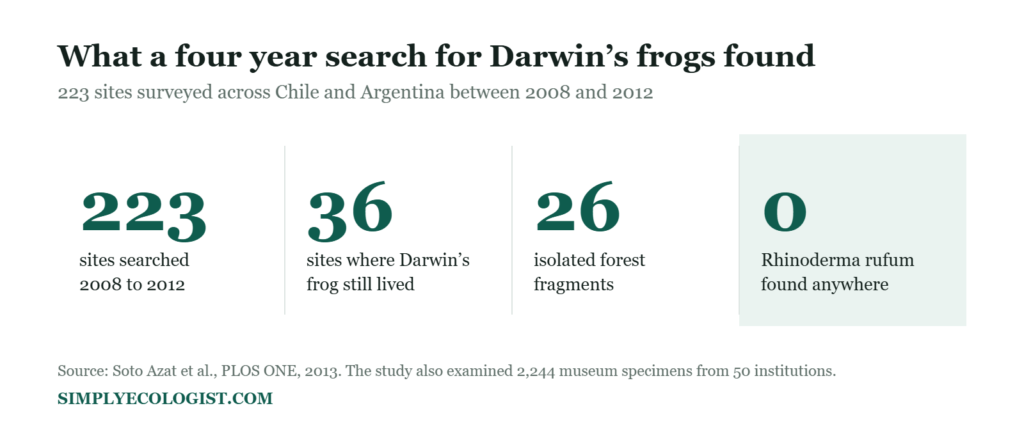
The same study found R. darwinii surviving at just 36 sites scattered across 26 fragmented areas, with an average of only about 33 frogs per population. The healthiest numbers were on Chiloé Island. Hold that fact, because of where the 2023 outbreak happened.
Conservation Status and Threats
Darwin’s frog is listed as Endangered on the IUCN Red List, assessed in 2018. Even that listing flatters the situation, because where the species survives it now does so as scattered remnants of a once continuous range.
Habitat loss
The conversion of Valdivian native forest to pine and eucalyptus plantations is the long running driver. In parts of the frog’s range, natural forest cover fell by around 67 percent between 1975 and 2000. Logging, fire and forest fragmentation continue to shrink and isolate what is left.
Chytrid fungus
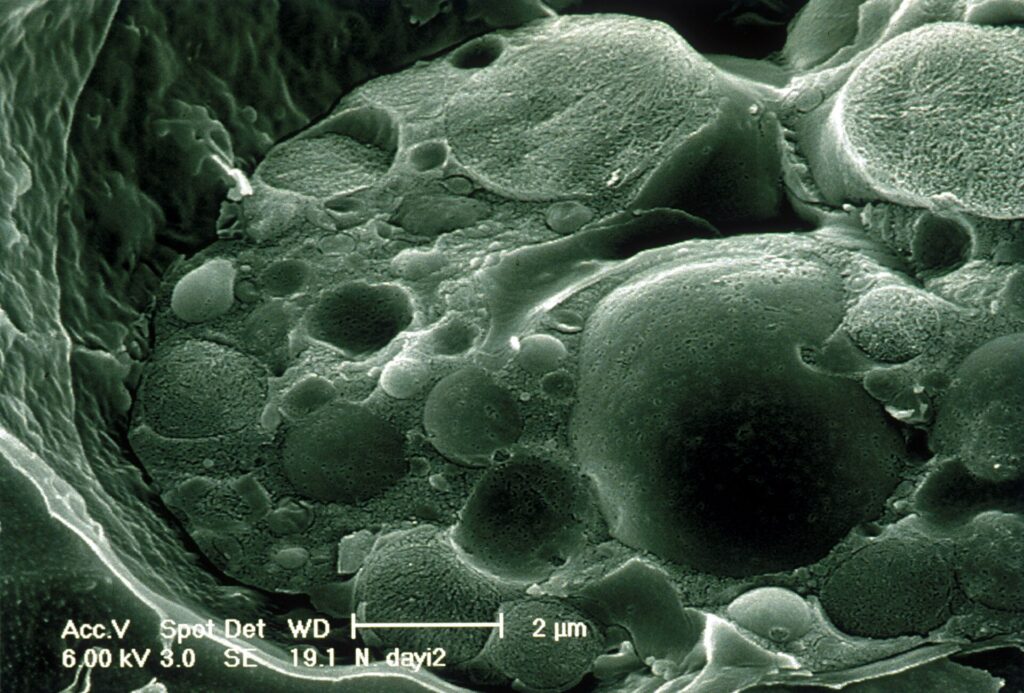
The amphibian chytrid fungus Batrachochytrium dendrobatidis, usually shortened to Bd, attacks the skin. Because frogs breathe and regulate salts through their skin, a heavy infection is often fatal. Bd is the most destructive pathogen ever recorded in vertebrates: a global review published in Science in 2019 tied it to declines in 501 amphibian species, 90 of which are confirmed or presumed extinct.
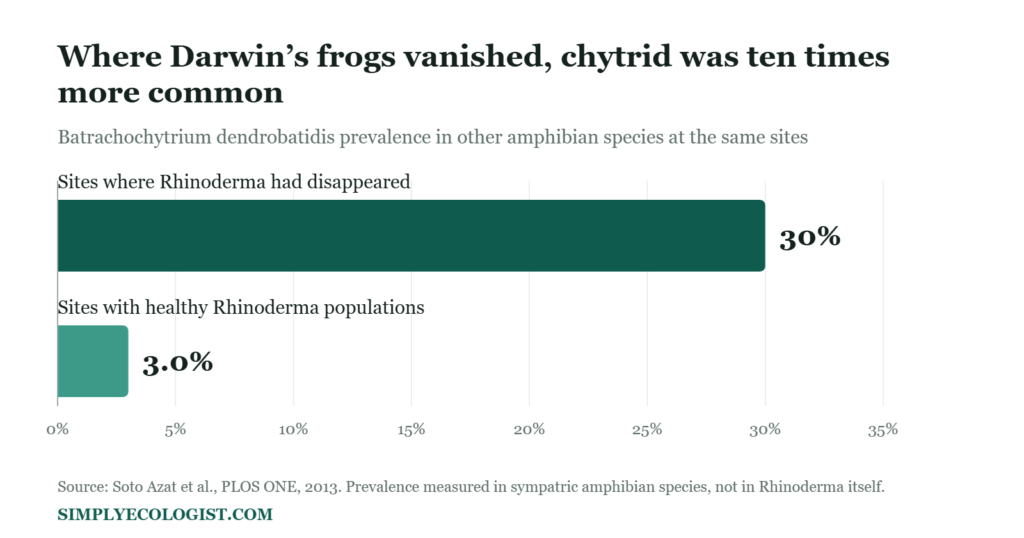
A 2013 study found Bd across roughly 1,305 km of central and southern Chile. Live Darwin’s frogs showed low infection rates, about 1.9 percent of 369 animals tested, but the pattern in the wider community was damning: at sites where Rhinoderma had disappeared, Bd prevalence in other amphibians was around 30 percent, against about 3 percent at sites where the frogs were still doing well. One Darwin’s frog was found dead at the capture site with a very heavy infection load, confirmed by tissue examination as fatal chytridiomycosis. The most likely reading is that infected Darwin’s frogs die fast rather than carrying the fungus for long.
Other pressures
Volcanic eruptions have removed local populations outright, including Chaitén in 2008 and 2009 and Puyehue in 2011 and 2012. Historical over collection for the pet trade ran into the late 1980s. Climate change is projected to cut the species’ ability to disperse substantially, and introduced predators and wildfire add further pressure on small isolated groups.
2023 to 2025: The Crash and the Rescue
In 2023, chytrid fungus was detected in Parque Tantauco, a private reserve on Chiloé Island that held one of the best remaining populations of Darwin’s frog. Within a single year, roughly 90 percent of the monitored frogs there were gone.
In October 2024 a team led by the Zoological Society of London, working with the Chilean NGO Ranita de Darwin, Parque Tantauco, Universidad Andrés Bello, Universidad de Concepción and Zoo Leipzig, mounted an emergency rescue. They collected 53 frogs, among them 11 brooding males, and moved them roughly 7,000 miles by boat, plane and car into a biosecure facility at London Zoo.
The gamble paid off. By early 2025, 33 froglets had emerged from the mouths of those 11 males in London, the first generation of an insurance population intended to support eventual reintroduction in Chile once the disease situation there is better understood.
It is a genuinely good news story, and it is also a warning. A species can be reasonably well protected on paper, sitting inside a private reserve with active monitoring, and still lose ninety percent of a population in twelve months to something that arrives on the wind and on wet feet. For more on why protected habitat alone is not enough, see our guide to conservation strategies for endangered species habitats.
How You Can Help
- Never move amphibians, mud or water between sites. Bd travels on boots, nets, tyres and gear. If you do fieldwork or hike in wet habitat, disinfect and dry your kit between catchments.
- Do not buy wild caught amphibians. The global pet trade is a major route by which chytrid strains have been spread between continents.
- Support the organisations doing the work. Ranita de Darwin, Parque Tantauco and ZSL run the field monitoring, habitat restoration and captive breeding for this species.
- Record what you see. If you are in the Valdivian forest, log observations to iNaturalist. Distribution data for rare, cryptic species is genuinely limited and citizen records feed into real assessments.
- Push for native forest, not plantation. The single biggest long term lever for this frog is keeping mature Valdivian rainforest standing.
Frequently Asked Questions
Does the male Darwin’s frog really give birth through its mouth?
Effectively, yes, although he does not give birth in the mammalian sense. The male takes fertilised eggs into his vocal sac, the tadpoles hatch and complete their whole development inside him, and fully formed froglets then emerge from his mouth after roughly 50 to 70 days.
Is Darwin’s frog poisonous?
It is not a notably toxic species. Its defences are camouflage, stillness and death feigning rather than potent skin toxins, unlike the poison dart frogs of the tropics.
How long does Darwin’s frog live?
Honestly, nobody knows well. Longevity in the wild has not been properly documented for this species, and figures of ten to fifteen years that circulate online are not backed by solid published data. Captive individuals do live for several years.
Is Darwin’s frog extinct?
The southern Darwin’s frog, Rhinoderma darwinii, is still alive but Endangered. Its close relative the Chile Darwin’s frog, Rhinoderma rufum, has not been recorded since 1980 and is listed as Critically Endangered and possibly extinct, with modelling placing its extinction around 1982.
Where can you see Darwin’s frog?
In the wild it occurs in Valdivian temperate rainforest in southern Chile and adjacent Argentina, but it is small, cryptic and rare, so encounters are unlikely without a guide who knows the sites. In captivity, London Zoo and Zoo Leipzig hold the species as part of the conservation breeding programme.
Why is it called Darwin’s frog?
Charles Darwin collected the first specimens in southern Chile during the voyage of the Beagle in the 1830s. Duméril and Bibron described the species in 1841 and named it in his honour.
The Bottom Line
Darwin’s frog is a two centimetre animal that solved the problem of raising young without water by turning its own throat into a womb. It survived the loss of most of its forest. What it may not survive is a fungus that reached its last good island in 2023 and removed nine tenths of a monitored population in a year.
Its sister species already went. Whether this one follows is, for once, still an open question, and 33 froglets in a biosecure room in London are part of the answer.
Sources
- Soto Azat, C. et al. (2013). The Population Decline and Extinction of Darwin’s Frogs. PLOS ONE 8(6): e66957.
- Soto Azat, C. et al. (2013). Is Chytridiomycosis Driving Darwin’s Frogs to Extinction? PLOS ONE 8(11): e79862.
- IUCN Red List, Rhinoderma darwinii, assessed 2018; IUCN Green Status assessment, October 2021.
- Zoological Society of London, Saving the Southern Darwin’s Frog programme.
- London Zoo (2025). 33 Endangered froglets born, after deadly fungus rescue mission.
- Scheele, B. C. et al. (2019). Amphibian fungal panzootic causes catastrophic and ongoing loss of biodiversity. Science 363(6434): 1459 to 1463.
- AmphibiaWeb, Rhinoderma darwinii species account.

Erzsebet Frey (Eli Frey) is an ecologist and online entrepreneur with a Master of Science in Ecology from the University of Belgrade. Originally from Serbia, she has lived in Sri Lanka since 2017. Eli has worked internationally in countries like Oman, Brazil, Germany, and Sri Lanka. In 2018, she expanded into SEO and blogging, completing courses from UC Davis and Edinburgh. Eli has founded multiple websites focused on biology, ecology, environmental science, sustainable and simple living, and outdoor activities. She enjoys creating nature and simple living videos on YouTube and participates in speleology, diving, and hiking.
From the shop
Gifts for people who love the wild
Wildlife themed t-shirts, notebooks, tote bags, bandanas and guides, designed by an ecologist.
Visit the shop