
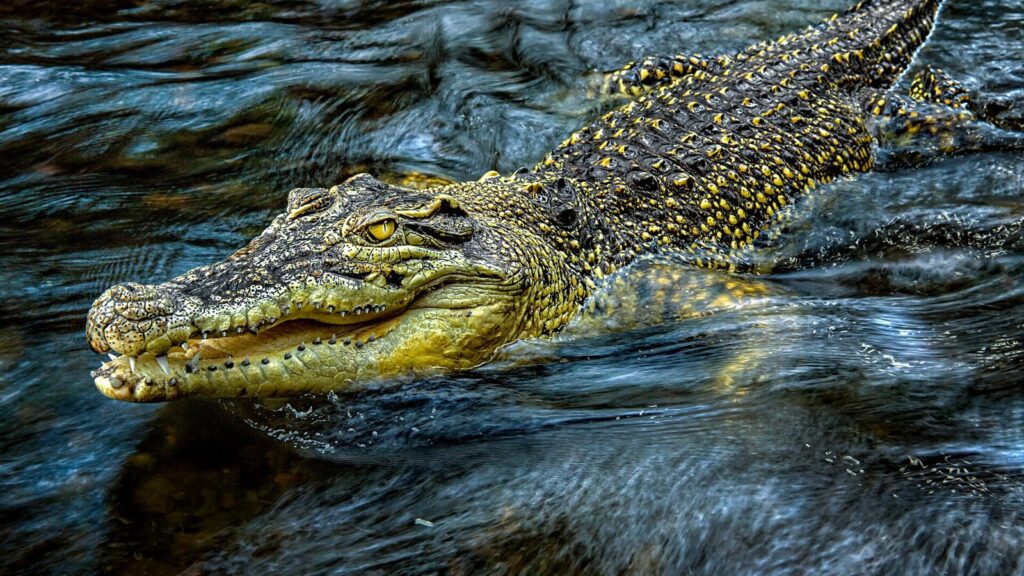
The Nile crocodile is linked to more than 300 reported attacks on people each year across Africa, which makes it the crocodilian responsible for the most human casualties. Note the wording: Encyclopaedia Britannica counts attacks, not deaths, and only a share of those attacks are fatal. The saltwater crocodile possesses the strongest bite ever measured, exceeding 16,000 newtons. India’s mugger crocodile recorded 110 attacks between 2008 and 2013. The American alligator caused 379 Florida incidents from 1948 to 2005. The American crocodile, black caiman, Cuban crocodile, and gharial complete the list, each presenting distinct risks through size, aggression, or habitat overlap with human settlements. Biodiversity, meaning the variety of life in an area, depends on protecting these apex predators. Understanding their behavior reduces preventable tragedies. There’s more to uncover about what makes each species uniquely threatening. One note on method before the list: this ranks on recorded attacks and on how often those attacks prove fatal, not on size, bite force or reputation. The biggest crocodilian is not automatically the most dangerous one, and the most dangerous one is not the most aggressive.
Key Takeaways
- The Nile crocodile is linked to more than 300 reported attacks a year across Africa. That figure counts attacks, not deaths.
- The saltwater crocodile causes far fewer attacks but kills a much higher share of the people it bites, and it has the strongest bite force ever measured in a living animal.
- American alligators bite often and kill rarely: 379 attacks and 17 deaths between 1948 and 2005, most following an attempt to feed or handle the animal.
- The gharial is on this list as the exception. It is a fish specialist that has never been recorded attacking a living person, and it is Critically Endangered.
- Attack data is unreliable in both directions. It is under recorded in remote and conflict affected areas, and over attributed when a body is found in the water.
| Species | Attacks on record | Share of attacks that prove fatal | Typical adult length |
|---|---|---|---|
| Nile crocodile | More than 300 reported attacks a year | Around 63 percent in one published estimate | 11 to 16 feet |
| Saltwater crocodile | About 30 attacks, 2000 to 2007 | About half overall, roughly 25 percent in Australia | 14 to 17 feet |
| Mugger crocodile | 110 attacks, 2008 to 2013 | Just under half | 10 to 13 feet |
| American alligator | 379 attacks and 17 deaths, 1948 to 2005 | About 4 percent | 11 to 12 feet |
| American crocodile | About 90 attacks and roughly 20 deaths | About 22 percent | 13 to 16 feet |
| Black caiman | 43 attacks, 2008 to October 2013 | Fewer than one in five | 13 feet and over |
| Cuban crocodile | Too few records to rank, one confirmed fatality | Not calculable | About 10 feet |
| Gharial | No records of attacks on living people | Not applicable | 11 to 15 feet |
The short version: two species, the Nile crocodile and the saltwater crocodile, account for almost every fatal crocodilian attack recorded anywhere in the world. Everything else on this list is either rare, rarely fatal, or, in the gharial’s case, not a threat to people at all.
Nile Crocodile: The Deadliest to Humans
Often, the Nile crocodile kills more people than any other crocodilian. This crocodile species, Crocodylus niloticus, accounts for over 300 attacks annually across Africa.
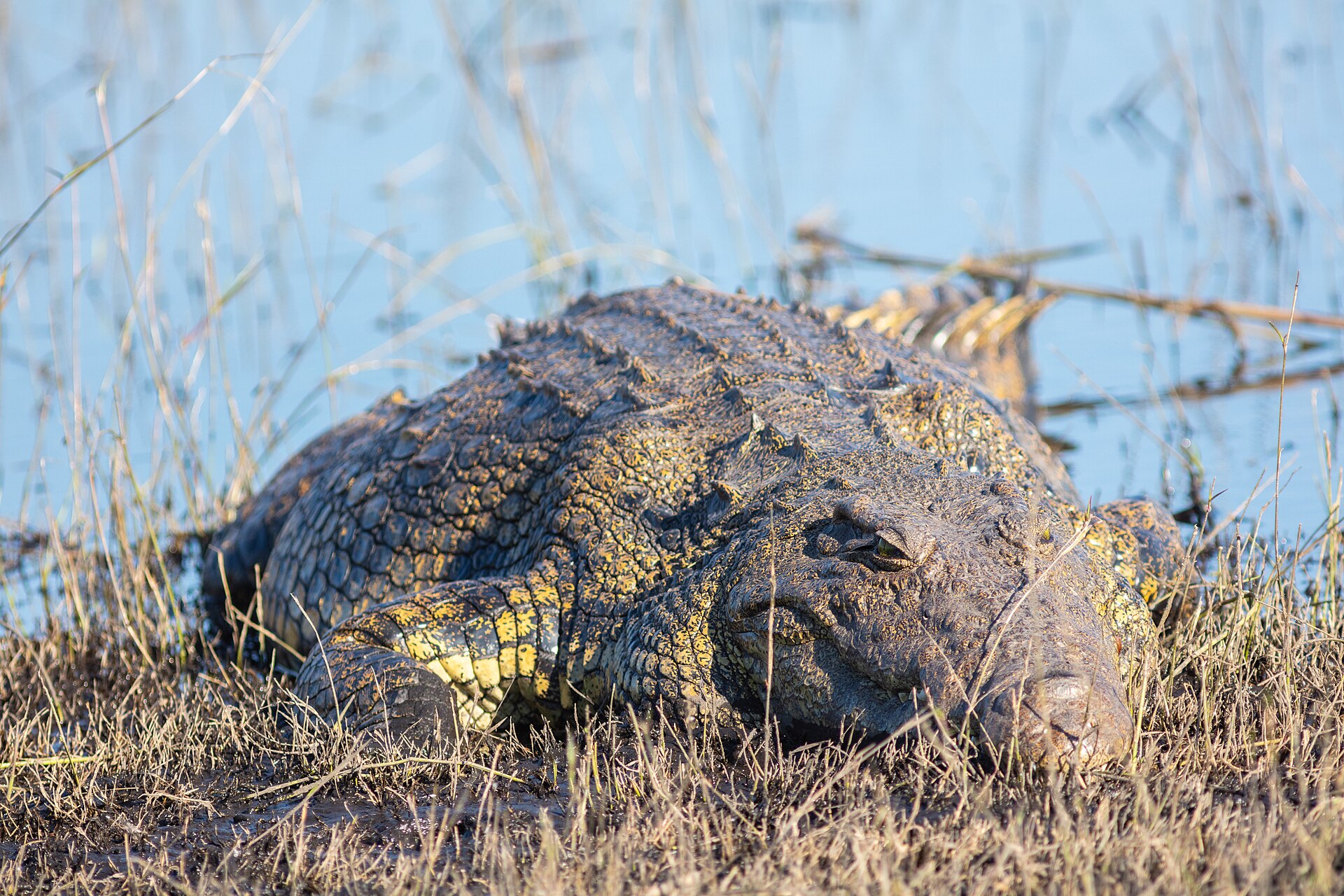
Most adults measure roughly 11 to 16 feet, and only exceptional old males approach 20 feet or pass a thousand pounds. They drag zebras and wildebeests into water. Their bite ranks among the strongest measured. They ambush prey at river margins.
The Nile crocodile inhabits diverse freshwater and brackish habitats throughout much of Africa. People fish, bathe, and cross these waterways daily. This overlap creates frequent encounters.
Large size, aggression, and high densities contribute to fatalities. The Nile crocodile’s proximity to human populations explains its deadliness. No other crocodilian matches this combination of power and contact with people. Exposure explains more of that total than temperament does. The Nile crocodile lives in the rivers, lakes and irrigation channels that millions of people use every day for fishing, washing, collecting water and watering livestock, usually at the same shallow margins where crocodiles hunt and often at dawn and dusk. A species with identical behaviour and a range across empty country would barely register in the statistics.
Saltwater Crocodile: The Largest Living Predator
- They possess the strongest bite of any animal, measured at over 16,000 newtons in direct measurements by Erickson and colleagues, published in PLoS ONE in 2012.
- They employ a “death roll” to tear apart large prey, including water buffalo and sharks.
- Recorded attacks from 2000 to 2007 reached nearly 30 in Australia and Malaysia, with fatality rates near 25% and 50% respectively.
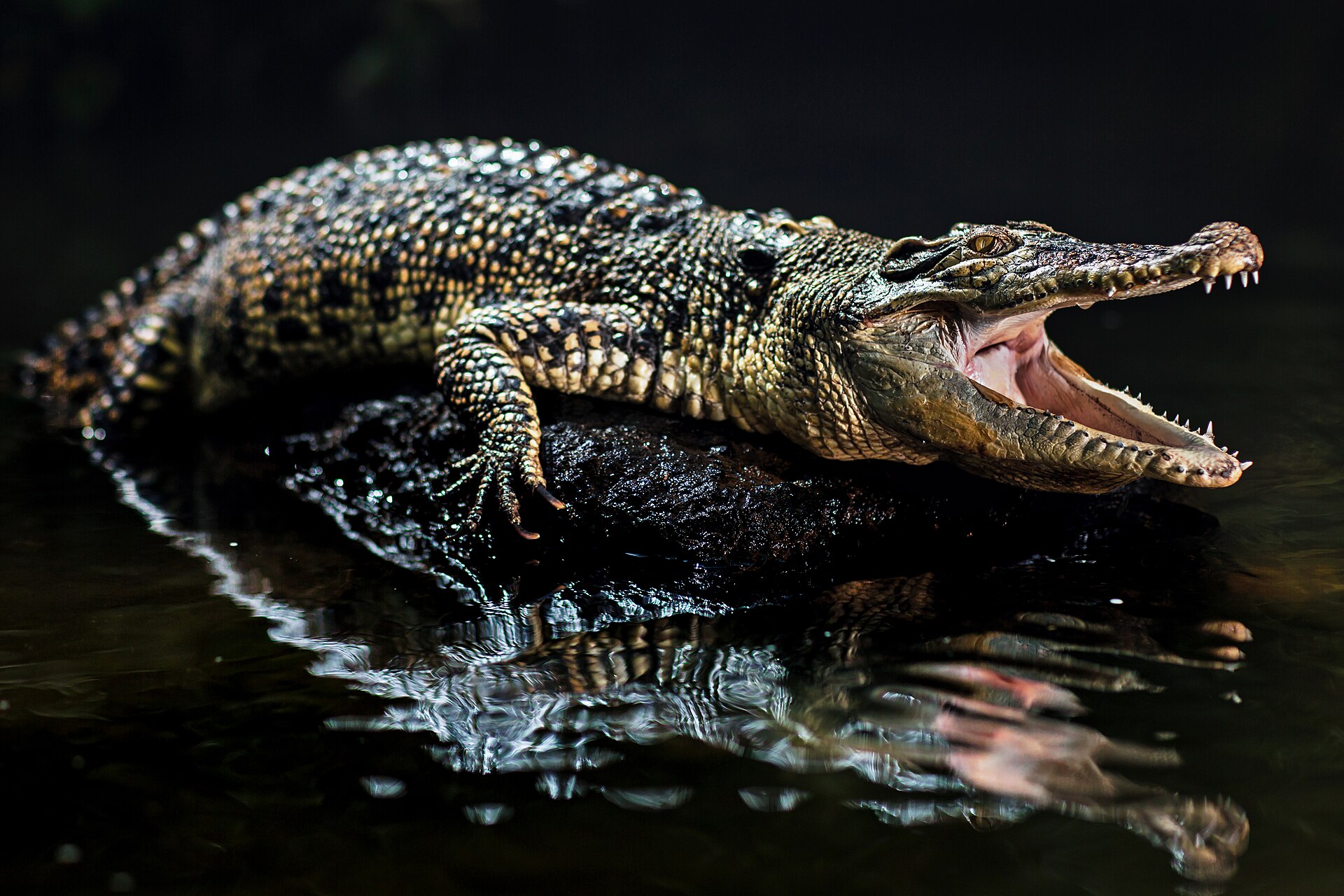
Heavily armored and patient, saltwater crocodiles ambush prey with lethal efficiency.
They’re apex predators.
Human intrusion into their territory invites significant risk.
Respect their space.
Mugger Crocodile: The Ambush Predator Behind India’s Attack Numbers
Although the mugger crocodile lacks the saltwater crocodile’s massive size, it’s no less deadly in its domain. This species inhabits freshwater pools, wetlands, lakes and slow moving streams across the Indian subcontinent, reaching 13 to 16.5 feet in length. Its wide, flat snout and heavy build enable powerful ambush attacks.
The mugger crocodile feeds mainly on fish and reptiles. It’ll take deer when opportunity allows. Between 2008 and 2013, CrocBITE recorded 110 attacks, with roughly one third fatal. The animal’s adaptability is striking. It thrives in reservoirs, rivers and marshes alike.
Its submerged ambush tactics make it one of India’s most dangerous crocodilians. People who live near freshwater bodies face real risk. The mugger doesn’t seek conflict. It simply defends its territory with lethal efficiency.
American Alligator: Many Bites, Very Few Deaths
The American alligator grows large. Males reach 13 to 15 feet and over 1,000 pounds. This size and strength let them seriously injure or kill, though attacks stay uncommon, averaging under 11 yearly in Florida with fatalities below 10%.
Most incidents trace back to human choices, feeding, capturing, or handling, which means the risk rises with behavior, not just proximity. People build homes near lakes, streams, and swamps across the Gulf Coast; the animals don’t seek conflict, but they live where people now do.
Size And Strength
Because of their impressive physical dimensions, American alligators possess lethal capabilities that are often underestimated.
Adult males usually run closer to 11 to 12 feet. The Florida Fish and Wildlife Conservation Commission puts the state length record at 14 feet 3.5 inches and the weight record at 1,043 pounds, so a 15 foot, half ton alligator is a record animal rather than a typical one. This mass provides substantial leverage in struggles.
As apex predators, they dominate freshwater ecosystems. Their bite is extremely powerful for their size.
A stocky, muscular build enables them to subdue large prey. They perform violent head shake or roll maneuvers to drown victims.
Their ambush preference in murky water makes them deceptively dangerous near shorelines. People often don’t see them coming.
- Robust bite mechanics crush bone and tissue with minimal effort
- Stocky build allows explosive acceleration from stillness
- Powerful tail generates force for rapid strikes and submersion
Their strength demands respect.
Attack Statistics
While American alligators rarely kill people, they bite more often than many assume. Between 1948 and 2005, Florida documented 379 attacks with just 17 deaths, a fatality rate near 4.5%. From 2000 to 2007, incidents averaged nearly 11 yearly, with fatalities below 10%. These numbers reflect frequent human exposure in shared freshwater spaces.
American alligator attacks occur more regularly than those by Nile Crocodiles, American crocodiles, or Black caimans. Yet outcomes differ sharply. Nile Crocodiles kill far more often. The American alligator’s lower lethality stems from less aggressive tendencies toward humans.
Most bites follow direct handling attempts. People provoke these encounters. The pattern suggests education could reduce incidents. Florida’s statistics demonstrate coexistence remains possible, though vigilance matters near any crocodilian habitat.
Human Conflict Causes
Though American alligators rank among the least lethal crocodilians, human choices drive most dangerous encounters. The American alligator, found in freshwater across the southeastern United States, doesn’t seek human conflict. However, people enter their territory often. They’re found in freshwater lakes, streams, swamps, and marshes. Sometimes they’re in saltier mangroves too.
Adult males usually reach 11 to 12 feet, with record animals passing 14 feet. They can inflict serious injury when defensive. Between 1948 and 2005, 379 attacks caused 17 deaths. That’s under 5% fatality. From 2000 to 2007, Florida saw about 11 attacks yearly. Most weren’t lethal.
- People trying to capture or handle alligators cause many incidents
- Nesting season and mating season increase defensive aggression
- Population growth in Florida expands human alligator overlap
The American alligator will pose a threat when provoked. Respect and distance prevent most problems.
American Crocodile: Misunderstood Coastal Giant
The American crocodile occupies a broad coastal range from southern Florida through northern South America, preferring estuaries and mangroves where salt and fresh water mix.
They’re less aggressive toward humans than many crocodilians, with only about 90 recorded attacks between 2008 and 2013, roughly 20 fatal. Their rarity as a threat reflects both their habitat preferences and their dietary focus on fish and small vertebrates rather than large mammals.
Habitat and Range
Across coastal shorelines from southern Florida to northern South America, the American crocodile claims territory few other reptiles can tolerate. This species occupies mangrove swamps, brackish river mouths, and coastal estuaries where freshwater meets saltwater. Unlike strictly freshwater crocodilians, it tolerates salinity fluctuations that would harm other species.
- Salt tolerance allows occupation of lagoons and tidal creeks where prey concentrates
- Adults reach 16.5 feet yet prefer fish and small vertebrates over large mammals
- Development pressures concentrate in these narrow coastal zones
The American crocodile’s range extends through Mexico, the Caribbean, and Central America. Its habitat preferences reflect physiological adaptation. Biodiversity, the variety of life in an area, remains higher where these predators control prey populations. Quiet persistence defines this coastal giant’s existence.
Human Interaction Patterns
Encounters between American crocodiles and humans occur regularly along coastlines where development pushes people into estuarine habitats. American crocodiles, found in brackish waters from Florida through the Caribbean to northern South America, bring large reptiles into beach and lagoon settings where people swim and fish.
Adult males reach about 16.5 feet. They prefer smaller prey. This helps explain why attacks stay relatively uncommon. CrocBITE recorded roughly 90 attacks between 2008 and 2013, with about 20 fatalities. The species ranks as considered dangerous, yet its fatality rate falls below more aggressive relatives.
Most incidents happen at dawn or dusk. People enter crocodile waters or surprise nesting females. Conservation successes have stabilized populations. Human crocodile overlap increases. Local education and safe water use practices matter more now.
Black Caiman: South America’s Apex Ambusher
Few predators dominate South America’s waterways as completely as the black caiman. This crocodilian species inhabits the Amazon basin from Peru and Ecuador eastward to Guyana and Suriname.
Adult males often exceed 13 feet. They hunt fish, other reptiles, and capybara, large rodents reaching four feet in length. Their dark coloration aids nocturnal ambush hunting in rivers, lakes, and flooded forests.
Between 2008 and October 2013, CrocBITE recorded 43 human attacks. Fewer than one fifth proved fatal. This statistic suggests that while dangerous, black caimans don’t rank among the most deadly crocodilians globally.
- Population recovery continues after declines from hunting and habitat loss
- They remain one of the largest crocodilian species in South America
- Conservation efforts focus on protecting remaining Amazon habitats
The black caiman illustrates biodiversity, the variety of life in an ecosystem. Its presence indicates wetland health.
Cuban Crocodile: Agile on Land, and Almost Never Encountered
The Cuban crocodile occupies a narrow ecological niche. It lives in freshwater ecosystems in Cuba and nearby islands, averaging around 10 feet in length. This makes it smaller than some other large crocodilians, but it remains highly muscular and agile.
Unlike many crocodiles, the Cuban crocodile moves with unusual terrestrial agility. It adopts a more upright gait, allowing quicker movement on land. This ability aids ambush hunting and reflects bold, intelligent behavior.
Its comparatively broad snout and powerful jaws enable varied prey capture, including fish, birds, and small to medium mammals. The species shows strong territorial aggression. Combined with its fearlessness, this creates genuine risk in human encounters despite its modest size.
Conservation dependence and restricted range limit incident documentation. Accurate statistics remain scarce compared with widespread species like Nile or saltwater crocodiles. That scarcity is worth stating plainly rather than glossing over. Only one fatal attack has ever been confirmed for this species. It is Critically Endangered, confined to the Zapata Swamp and the Isle of Youth, and it appears on this list for what it is capable of rather than for anything it has done. Ranking it on attack data is not possible, and any source that gives it a firm position is guessing.
Gharial: The One Species Here That Does Not Attack People
Dwelling in the murky currents of the Ganges and its tributaries, the gharial cuts a strange figure among crocodilians. This fish eating specialist, native to northern India and Nepal, reaches 12 to 15 feet in length. Its needle thin snout and interlocking teeth snap sideways with speed, not strength. The gharial can’t tackle large mammals. It pursues slippery prey instead.
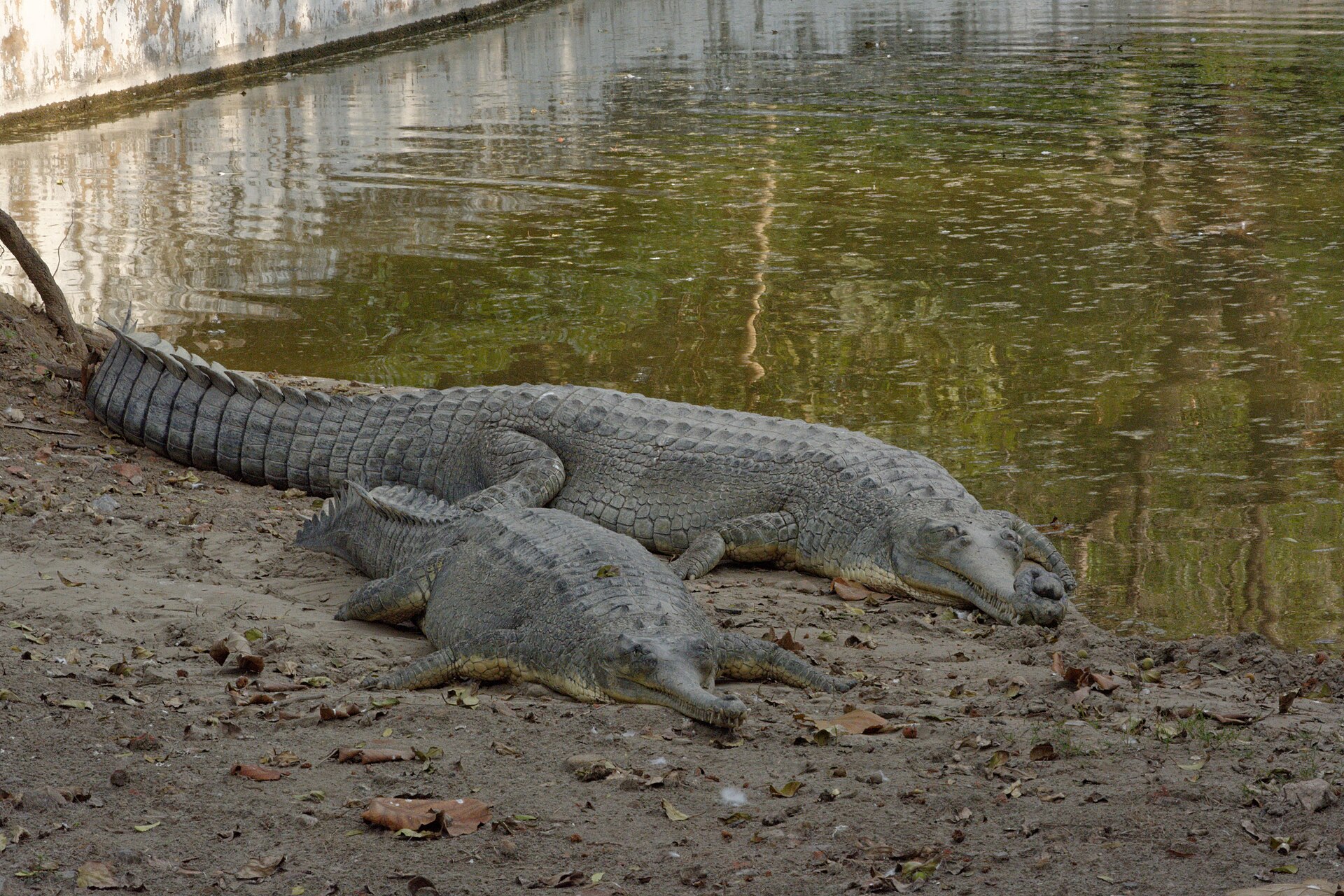
- Their jaws generate low bite force, sacrificing power for precision in water
- Critically endangered, they survive in fragmented Indian river systems
- Habitat loss and depleted fish stocks threaten their continued existence
The corpse eating reputation is a misreading. Jewellery recovered from gharial stomachs, most likely swallowed with scavenged material or as gastroliths, is the likeliest source of the local belief that the animals ate people. A gharial cannot tear or swallow large prey, it does not attack living humans, and it has been listed as Critically Endangered on the IUCN Red List since 2007, with a global population estimated at no more than about 900 animals. It belongs on this list only as the exception that shows what actually makes the other seven dangerous. The species embodies a quiet ecological role, one worth understanding before it vanishes.
Why These Numbers Are Harder to Compare Than They Look
Every figure in the table above comes from a record that somebody had to make. In a 2015 paper in the journal Oryx, the conservation researcher Simon Pooley set out why crocodile attack data is unusually unreliable. Attacks go unrecorded in places that are remote, poor or affected by conflict, which describes a great deal of the Nile crocodile’s range. Minor injuries in particular rarely reach anyone who writes them down.
Less obviously, the data also over counts. Pooley notes that people who disappear in waterways are often assumed to have been taken by a crocodile with no confirmation, and that a crocodile found feeding on a body is frequently blamed for a death it had nothing to do with. That is the same mechanism that built the gharial’s reputation as a corpse eater, and it means the direction of the error is not always the one you would expect.
From the field: the practical consequence, for anyone who works with this kind of data, is that attack counts are presence only records. They tell you where somebody wrote something down. They do not tell you how many people were in the water, how often, or doing what. A country with functioning wildlife reporting will always look more dangerous on paper than a country without one, and the table above should be read with that firmly in mind.
How to Stay Safe Around Crocodiles
Ranking the danger is only useful if it changes what someone does. Most recorded attacks share a small number of circumstances, and most of those circumstances are avoidable.
- Stay back from the water’s edge in crocodile country. The great majority of attacks happen in shallow water or within a couple of metres of the bank, not out in open water.
- Treat dawn and dusk as the high risk hours. That is when crocodilians hunt, and when a large share of attacks are recorded.
- Do not use the same spot twice for washing, fishing or collecting water. Crocodiles learn routines, and a predictable human is an easy ambush.
- Assume a crocodile is present even when you cannot see one. A resting crocodile shows almost nothing above the surface, and murky water hides the rest.
- Never feed a crocodilian and never handle one. In the United States most alligator bites follow an attempt to feed, capture or move the animal.
- Keep dogs and livestock away from the bank. Both attract attention, and both draw people down to the water to retrieve them.
- Follow local signage and local advice. People who live alongside these animals know which stretches of water are the problem ones.
None of this is exotic knowledge. It is the same short list that wildlife agencies in Australia, Florida, India and southern Africa all converge on, and it covers very nearly every scenario in the attack records.
Dangerous Crocodiles: Frequently Asked Questions
Which crocodile is the most dangerous to humans?
The Nile crocodile. It is linked to more than 300 reported attacks a year across Africa, more than any other crocodilian, largely because it lives in rivers and lakes that millions of people use daily. The saltwater crocodile causes fewer recorded attacks but a far higher share of them are fatal.
How many people do crocodiles kill each year?
No single global registry counts every case, and most figures in circulation are attack counts rather than death counts. Encyclopaedia Britannica reports more than 300 Nile crocodile attacks a year, roughly 30 saltwater crocodile attacks between 2000 and 2007, and 110 mugger crocodile attacks between 2008 and 2013.
What is the strongest crocodile bite force?
The saltwater crocodile. Erickson and colleagues measured bites of over 16,000 newtons, about 3,700 pounds of force, in a 17 foot animal. That is the strongest bite force ever recorded in a living species.
Are alligators more dangerous than crocodiles?
No. American alligators account for 379 recorded attacks and 17 deaths in the United States between 1948 and 2005, and most bites follow attempts to feed, capture or handle them. Nile and saltwater crocodiles cause far more fatalities.
Do gharials attack humans?
No. The gharial is a fish specialist with a narrow snout and interlocking teeth that cannot tear or swallow large prey. The belief that it eats people probably comes from jewellery found in gharial stomachs. It is Critically Endangered, with a global population estimated at no more than about 900 animals.
When and where do most crocodile attacks happen?
Most attacks occur in shallow water at the edge of rivers, lakes and estuaries, and are concentrated around dawn and dusk when crocodilians hunt. Fishing, collecting water, bathing and washing livestock account for a large share of encounters.
Final Thoughts
These crocodilians command caution. Biodiversity, meaning the variety of life in a place, depends on their survival. Each species shapes its ecosystem. Conservation matters. Coexistence demands respect.

Erzsebet Frey (Eli Frey) is an ecologist and online entrepreneur with a Master of Science in Ecology from the University of Belgrade. Originally from Serbia, she has lived in Sri Lanka since 2017. Eli has worked internationally in countries like Oman, Brazil, Germany, and Sri Lanka. In 2018, she expanded into SEO and blogging, completing courses from UC Davis and Edinburgh. Eli has founded multiple websites focused on biology, ecology, environmental science, sustainable and simple living, and outdoor activities. She enjoys creating nature and simple living videos on YouTube and participates in speleology, diving, and hiking.
🌿 Explore the Wild Side!
Discover eBooks, guides, templates and stylish wildlife-themed T-shirts, notebooks, scrunchies, bandanas, and tote bags. Perfect for nature lovers and wildlife enthusiasts!
Visit My Shop →