
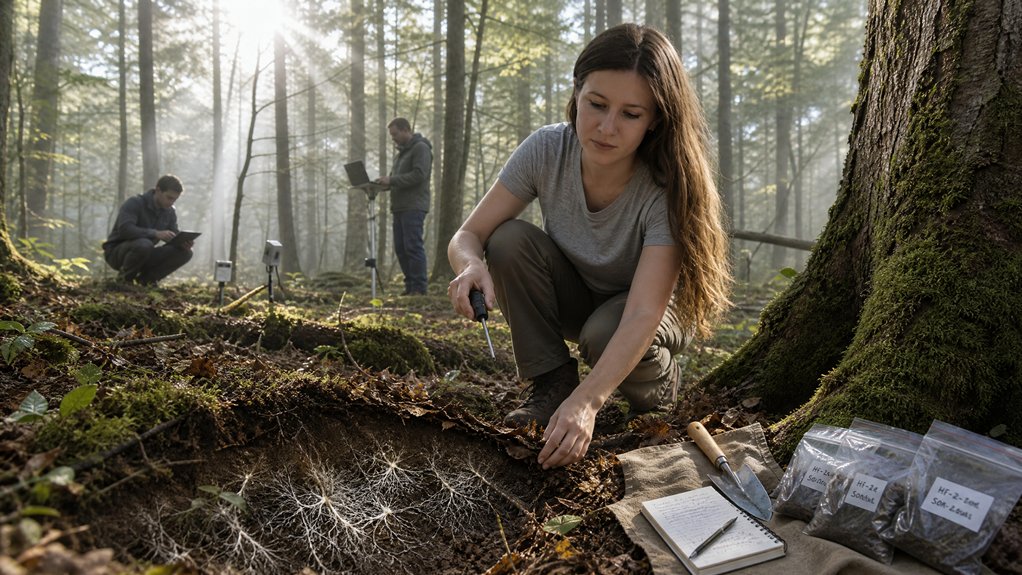
Scientists just mapped Earth’s arbuscular mycorrhizal fungi, thread like organisms living in plant roots. Using over 16,000 soil samples, researchers estimate roughly 110 quadrillion kilometers of hyphae (the fungal threads that absorb nutrients) worldwide, long enough to reach the Sun and back nearly a billion times (ScienceDaily). This network stores about 300 megatons of carbon and helps capture up to 4.3 billion tons of CO2 yearly. You’re standing on something far bigger, and stranger, than you’d expect.
Key Takeaways
- Scientists created the first global map of arbuscular mycorrhizal fungi, analyzing over 16,000 soil cores from 322 studies.
- The mapped fungal network spans roughly 110 quadrillion kilometers of hyphae, dwarfing the Amazon rainforest in scale.
- These fungi form symbiotic partnerships with over 70% of land plants, trading phosphorus and nitrogen for carbon.
- Grasslands hold the densest fungal networks, storing about 40% of global AM fungal biomass.
- Farming practices like tillage and heavy fertilizer use significantly damage these vital underground fungal networks.
What Scientists Discovered About Earth’s Fungal Network
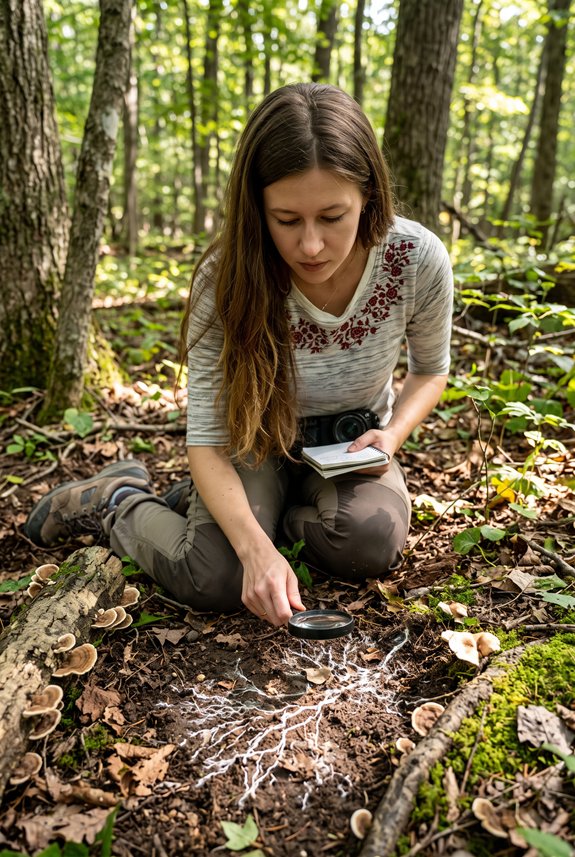
Dig beneath your feet, and you’ll find a network larger than anyone imagined. Scientists published the first global map of arbuscular mycorrhizal fungi in Science, drawing on over 16,000 soil cores and machine-learning models. They found that topsoil holds about 4.4 meters of fungal threads, called hyphae, per square centimeter. Multiplied across the planet, that’s roughly 110 quadrillion kilometers of underground connectivity, thin fungal strands linking plant roots together.
This microbial symbiosis, a partnership between fungi and plant roots that trades nutrients for sugars, supports plant health worldwide. The fungi’s collective biomass reaches about 300 megatons of carbon, four to six times heavier than humanity. That scale reflects genuine hyphal resilience, a network built to persist across diverse soils and climates.
What Are Arbuscular Mycorrhizal Fungi?
Picturing a strand one tenth the width of a human hair, and you’ll start to grasp how small these organisms really are. Arbuscular mycorrhizal fungi are soil fungi that build vast underground networks, linking plant roots across entire ecosystems. This connection is a form of root symbiosis, a relationship where both organisms benefit. Inside root cells, the fungi form tiny branching structures called arbuscules. These structures handle nutrient exchange: fungi deliver phosphorus and nitrogen from the soil, while plants return carbon they’ve captured from the air.
More than 70% of land plants rely on this partnership, including wheat, corn, and rice. The fungi can extend a plant’s reach by up to 100 times, pulling in water and nutrients roots alone couldn’t access.
How Researchers Mapped 68 Quadrillion Miles of Hyphae
Building a map this large starts with something small: soil cores pulled from the ground, one plot at a time. Researchers gathered more than 16,000 cores from 322 studies across the globe.
They paired that fieldwork with imaging methods in the lab, examining over 300,000 hyphae strands under magnification, some captured by a custom-built robot. This soil mapping effort trained machine-learning models to recognize patterns. The models absorbed climate data, soil chemistry, and vegetation type, then predicted hyphal density at 1 km² resolution worldwide.
The result: an estimated 110 quadrillion kilometers of fungal threads underground. Data gaps remain, though, particularly in the Sahara, Greenland, and parts of tropical forests, where scientists still lack enough samples to map confidently.
Bigger Than the Amazon Rainforest
Once you have a number like 110 quadrillion kilometers, the next question is simple: what does that actually compare to? Researchers chose the Amazon rainforest, a familiar symbol of biodiversity, meaning the variety of living things in one place. The comparison holds up.
Grasslands alone store roughly 40% of the world’s arbuscular mycorrhizal biomass, and these fungi weigh about 300 megatons of carbon combined. That’s four to six times the mass of every human on Earth. This scale challenges old mycorrhizal myths, the assumption that fungi matter less than visible plants. It’s also fueling interest in urban mycology and fungal art, as people find new ways to picture networks too small to see but too large to ignore.
Why Wild Grasslands Have the Densest Fungal Networks
Walking across an untouched steppe or wading through a flooded grassland like the Sudd, you’re standing above the planet’s richest fungal real estate. These ecosystems hold about 40% of the world’s hyphal biomass. Topsoil here reaches roughly 6.6 meters of hyphae per square centimeter, far above the global average of 4.4.
Grasses build extensive mycorrhizal partnerships, extending root connectivity up to 100-fold beyond what roots alone could reach. This lets plants tap nutrients and water across wide, root-free soil volumes, easing plant competition for scarce resources. The networks also shelter soil microfauna, tiny organisms like mites and nematodes that cycle nutrients.
Without tilling or heavy fertilizer, these grasslands keep their fungal webs intact, supporting soil structure, carbon storage, and biodiversity, meaning a wider variety of living things.
How Croplands Lose Half Their Fungal Networks
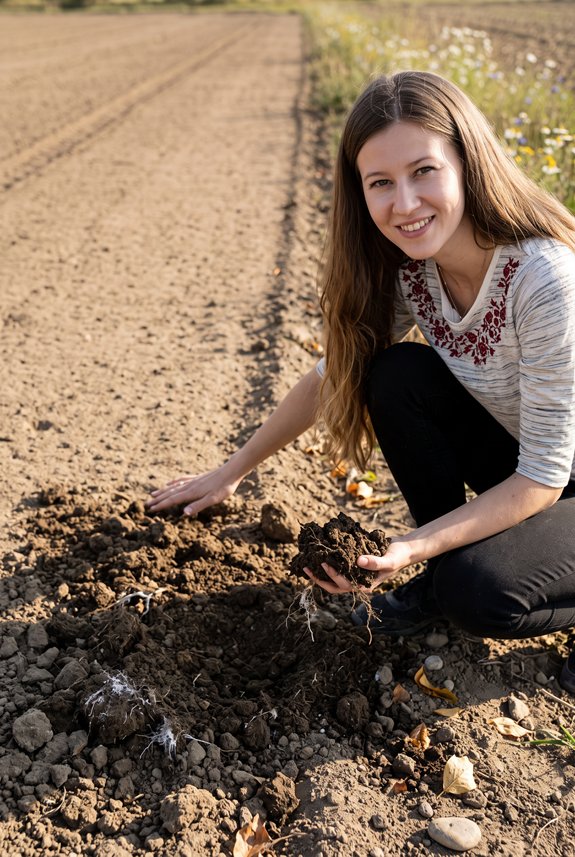
Loss tells a different story underground. When you till a field, you physically tear apart hyphae networks, the thin fungal threads that connect plant roots underground. That’s a form of soil sterilization, a process that strips soil of living organisms. Croplands show 47-50% lower hyphal density than nearby grasslands.
Crop monocultures, fields growing a single species year after year, don’t help either. They lack the plant diversity that feeds varied fungal partnerships. Heavy fertilizer use compounds the problem: when nutrients sit readily available in soil, plants stop investing in fungal partners. Agrochemical runoff carries these excess nutrients further, disrupting fungal networks beyond field borders. You’re left with quieter soil, less connected, less alive.
Fungal Network Density by Ecosystem
| Ecosystem | Hyphal density (topsoil) | Share of AM fungal biomass |
|---|---|---|
| Wild grasslands | ~6.6 m per cm² | ~40% of the global total |
| Global average (all land) | ~4.4 m per cm² | Baseline |
| Croplands | ~47-50% lower than grasslands | Cut by tillage & fertilizer |
How Fungal Networks Pull Carbon Out of the Air
Because plants can’t move carbon dioxide straight into soil on their own, they rely on fungal partners to carry it there. Plant respiration pulls CO2 from the air, but atmospheric exchange only starts the process. You breathe out carbon dioxide; plants breathe it in. Fungal hyphae finish the job. They absorb sugars plants make from that carbon, then die and decompose underground. That decomposition locks carbon into stable soil aggregates, clumps of soil bound together, which hold carbon for years instead of releasing it.
Across the globe, this happens at scale. Scientists estimate 3.9 to 4.3 billion tons of CO2 equivalent get captured yearly, roughly 11% of human emissions. Even urban sequestration, carbon storage in city soils and parks, depends on this same quiet fungal work beneath your feet.
What 4.3 Billion Tons of CO2 Really Means
Scale can obscure meaning, so it helps to break this number down. Researchers calculated 4.3 billion tons of CO2 equivalent by scaling up measured hyphal biomass, about 300 megatons of fungal carbon, using known growth and turnover rates across thousands of soil samples.
That figure represents annual flux, not permanent storage. Carbon permanence, meaning how long carbon stays locked in soil rather than cycling back into the air, remains uncertain here.
Turnover dynamics matter too: hyphae grow fast and die fast, so only part of their carbon becomes stable organic matter. Understood in proper sequestration context, this number shows real climate potential, but it’s a starting estimate, not a guaranteed offset.
Gaps in sampling still leave room for revision.
Why This Fungal Network Matters for Climate Policy
Invisibility has long been the fungal network’s defining trait, and that invisibility has kept it out of climate conversations for decades. You can’t include what you can’t count. This new map changes that, giving fungal biomass a place in carbon accounting, the practice of tracking how much carbon ecosystems store or release. That matters for international targets like the Paris Agreement, which rely on measurable data, not guesswork.
Grasslands hold 40% of global AM fungal biomass, yet farming cuts that density nearly in half. Recognizing this could shape policy incentives, financial or regulatory encouragement for practices like no-till farming or reduced fertilizer use. You’re looking at a natural climate tool that’s finally visible enough to protect. Strikingly, the study found that about 95% of these fungal biodiversity hotspots sit outside protected areas, so most of this carbon infrastructure has no formal protection today.
4 Farming Practices That Protect Fungal Networks
Ditch the plow, and you protect what’s underneath it. Tilling tears apart hyphal networks, the thread like fungal strands that move nutrients through soil. Fields under reduced tillage show far less disruption, and croplands using this method retain closer to grassland level fungal density instead of losing nearly half of it.
Cutting back on synthetic fertilizer helps too. When you feed plants less nitrogen and phosphorus artificially, they lean more on fungal partners for nutrients, keeping the symbiosis active.
Planting cover crops, vegetation grown between main harvests, keeps roots in the ground year-round, giving fungi a constant host.
Finally, organic amendments like compost add structure and habitat fungi need to persist. Together, these four practices simply keep soil life intact.
How to Support Fungal Networks in Your Soil
Whether you manage a backyard garden or a working farm, the choices you make below the surface matter as much as what you plant above it. Skip the tiller. Disturbing soil breaks fragile hyphae, the thread like strands fungi use to move nutrients and water.
Limit synthetic fertilizer, especially phosphorus, since rich soil can make plants less dependent on fungal partners. Add compost tea, a liquid brewed from compost, to feed garden fungi and boost biodiversity, meaning the variety of organisms living in your soil.
Keep something growing year-round through cover crops. Even in urban soils, small patches of native plants can rebuild fungal networks. These small choices add up, quietly restoring what lies beneath your feet.
Frequently Asked Questions
What Is the Hidden Web of Fungus Beneath the Earth?
It’s a vast web of arbuscular mycorrhizal fungal hyphae beneath your feet, boosting underground biodiversity while trading nutrients with plant roots. You’ll find it storing soil carbon and driving network resilience across grasslands and croplands worldwide.
What Is the Most Terrifying Fungus?
You’re facing a silent puppeteer: Candida auris. Forget mind controlling fungi from horror films, real psychotropic pathogens lurk in soil, but this multidrug-resistant yeast, armed with brutal antifungal resistance, quietly kills from within your bloodstream.
What Fungus Is Found in 70% of All Plant Species?
You’ll find arbuscular mycorrhizal fungi in about 70% of land plants. Through symbiotic evolution, they’ve mastered root communication, forming nutrient highways that trade phosphorus and nitrogen for plant carbon underground.
Do Mycorrhizal Fungi Really Work?
Yes, they truly thrive! Fungal filaments forge soil partnerships that boost your plant’s roots, driving nutrient exchange for phosphorus and nitrogen. You’re witnessing real plant communication underground, an ancient, effective alliance benefiting nearly every ecosystem you encounter.

Erzsebet Frey (Eli Frey) is an ecologist and online entrepreneur with a Master of Science in Ecology from the University of Belgrade. Originally from Serbia, she has lived in Sri Lanka since 2017. Eli has worked internationally in countries like Oman, Brazil, Germany, and Sri Lanka. In 2018, she expanded into SEO and blogging, completing courses from UC Davis and Edinburgh. Eli has founded multiple websites focused on biology, ecology, environmental science, sustainable and simple living, and outdoor activities. She enjoys creating nature and simple living videos on YouTube and participates in speleology, diving, and hiking.
From the shop
Gifts for people who love the wild
Wildlife themed t-shirts, notebooks, tote bags, bandanas and guides, designed by an ecologist.
Visit the shop