
Conservation context
More than one in five reptile species are threatened with extinction, according to the first global reptile assessment, which makes understanding them matter more than ever.
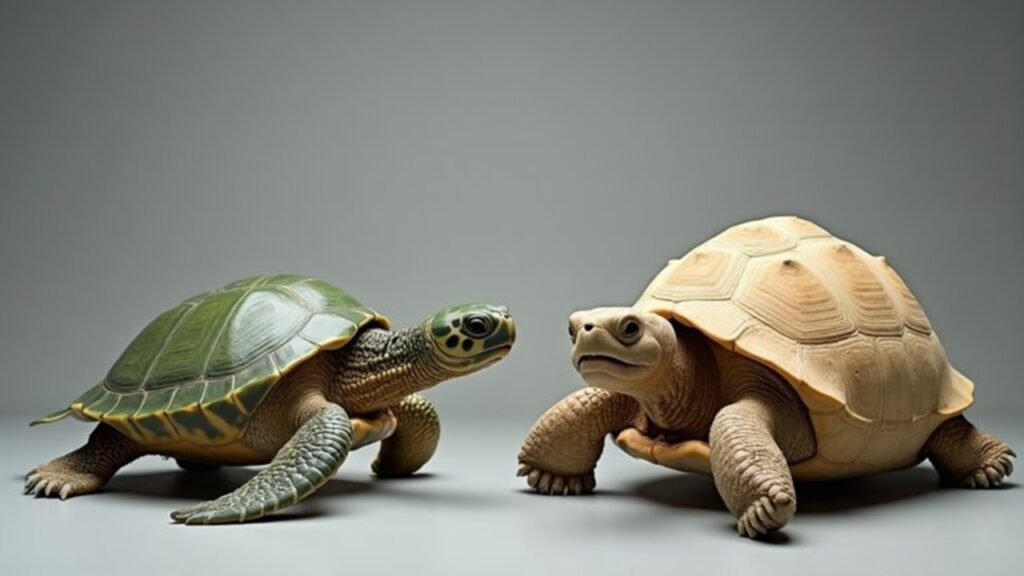
You can spot the difference between turtles and tortoises by looking at where they live and how they’re built. Turtles spend most of their time in water, with streamlined shells and webbed feet or flippers for swimming.
Tortoises live strictly on land, with heavy dome-shaped shells and thick, stumpy legs for walking. Their diets differ too – turtles are typically omnivores eating both plants and small prey, while tortoises mainly munch on vegetation.
You’ll notice turtles move gracefully in water but awkwardly on land, whereas tortoises plod steadily on terra firma. There’s much more to discover about these fascinating shelled creatures.
Habitat and Environment
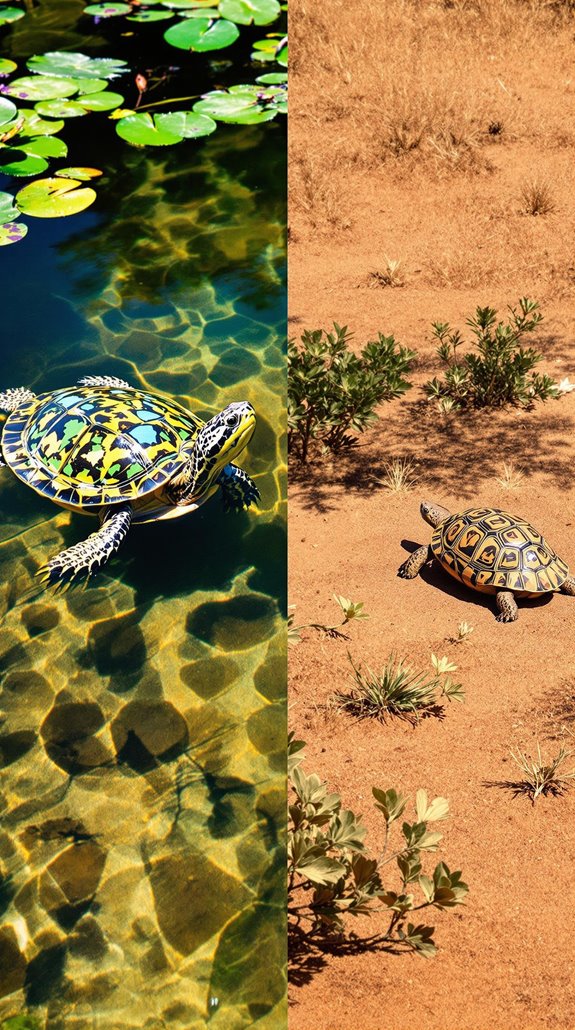
Nature’s ancient wanderers inhabit distinctly different environments. You’ll find turtles spending most of their time in or near water, whether it’s freshwater lakes, rivers, marshes, or marine environments.
They’re well-adapted to aquatic life, with streamlined shells and webbed feet that help them swim efficiently. Some sea turtles travel thousands of miles across oceans, while freshwater species stick to their local waterways.
Tortoises, in contrast, are strictly land-dwellers. You’ll spot them in various terrestrial habitats, from deserts and grasslands to tropical forests.
They’ve evolved to handle dry conditions and can survive in areas where water is scarce. Their sturdy, dome-shaped shells protect them from the harsh sun, while their elephant-like feet help them traverse rough terrain.
The environment where you find these reptiles directly impacts their shell shape and limb structure. Turtles have flatter, more hydrodynamic shells that reduce water resistance, while tortoises display high-domed shells that can withstand attacks from predators.
You can often identify which is which just by looking at where they live and how their bodies have adapted to their surroundings.
Physical Features and Shell Design
The most striking differences between these reptiles emerge right from their shells and body structures. You’ll notice that tortoises have heavy, dome-shaped shells with sturdy pillars to support their weight on land.
Their shells are typically brown or black, providing excellent camouflage in their terrestrial environment. In contrast, turtles have lighter, streamlined shells that are often flatter and more hydrodynamic, helping them swim efficiently.
When you look at their limbs, you’ll see that tortoises have thick, stumpy legs with round, elephant-like feet designed for walking on land. They’ve also got sharp claws for digging.
Turtles, however, have flipper-like legs or webbed feet with long claws that help them paddle through water and grasp food. You can spot a sea turtle by its distinctive paddle-shaped flippers.
The shell’s texture differs too. You’ll find that a tortoise’s shell features distinct growth rings and segments, while a turtle’s shell is typically smoother with less pronounced scutes. A turtle’s shell is also more flexible and lighter, allowing for better maneuverability in water.
Swimming and Movement
Most differences between turtles and tortoises become apparent when you watch them move. Turtles are excellent swimmers, with streamlined shells and webbed feet that help them glide effortlessly through water.
You’ll notice they’re quite agile in aquatic environments but may appear awkward when walking on land. Their flippers and webbed feet are perfect for swimming but aren’t designed for efficient land movement.
Tortoises, in contrast, are built for life on terra firma. You’ll see they have sturdy, column-like legs with tough scales, similar to elephant feet, which help them traverse rough terrain.
They can’t swim well and may actually drown if placed in deep water. When you observe their movement, you’ll notice they plod along steadily and deliberately, perfectly adapted to their terrestrial lifestyle.
If you’re trying to identify whether you’re looking at a turtle or tortoise, watch how they move. A creature that dives smoothly into water and swims gracefully is certainly a turtle. If it’s slowly but confidently walking on land and avoids water, you’re likely watching a tortoise.
Dietary Preferences
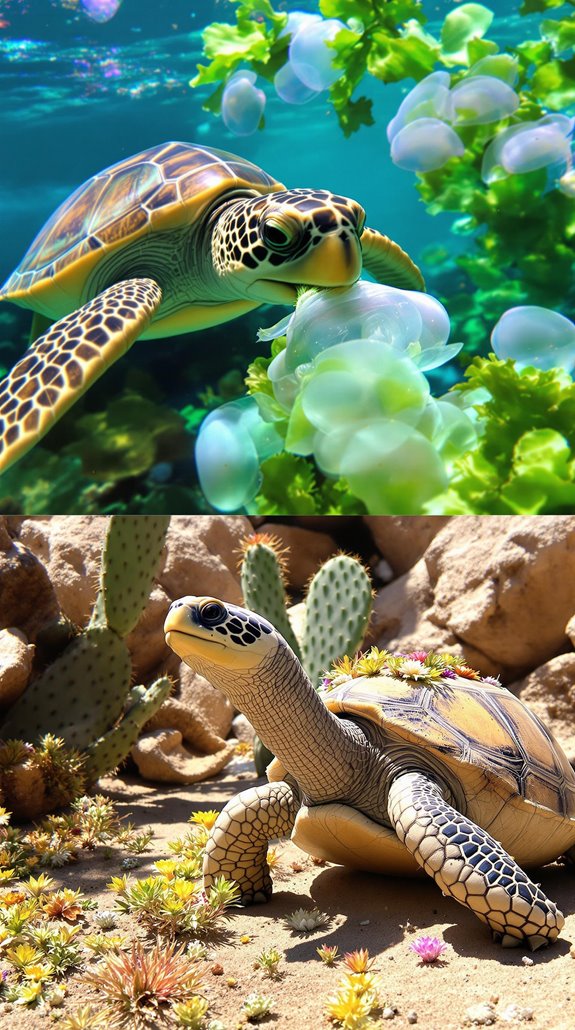
Diving into dietary habits reveals another essential distinction between these reptiles. Turtles and tortoises have evolved different diets based on their natural habitats and lifestyles.
You’ll find that most turtles are omnivores, meaning they eat both plant and animal matter. Their diet typically includes fish, insects, snails, worms, and various aquatic plants.
Sea turtles have specialized diets – some feed primarily on jellyfish, while others prefer seagrass. Freshwater turtles often scavenge for food underwater and can even catch small fish.
In contrast, tortoises are primarily herbivores. You’ll see them munching on grasses, leaves, flowers, and succulent plants.
They’ve developed strong, sturdy jaws to handle tough vegetation, and their digestive systems are specially adapted to break down plant fiber. While some tortoise species might occasionally eat insects or carrion, it’s not a significant part of their diet.
If you’re keeping either as a pet, it’s vital to understand these dietary differences. You’ll need to provide turtles with a varied diet that includes both protein and vegetables, while tortoises require a diet rich in fiber and calcium-rich plants.
Lifespan and Reproduction
When comparing longevity between these reptiles, you’ll find that both turtles and tortoises are known for their remarkable lifespans, though tortoises generally live longer. While most turtles can live between 20-50 years, tortoises regularly surpass 100 years, with some specimens reaching over 150 years in captivity.
Reproductive habits also differ between these species. You’ll notice that turtles typically reach sexual maturity earlier, usually between 5-10 years, while tortoises don’t mature until they’re 20-25 years old.
Turtles lay their eggs in sandy banks near water bodies, often producing multiple clutches per year with 2-12 eggs each. They’ll return to the same nesting sites repeatedly.
In contrast, tortoises dig deep nests in dry soil, where females deposit 1-4 clutches annually, containing 4-8 eggs each. You’ll see that temperature plays a significant role in determining the sex of hatchlings in both species.
For turtles, warmer temperatures typically produce females, while cooler temperatures result in males. Tortoise eggs follow a similar pattern, though the specific temperature thresholds may vary between species.
Social Behavior
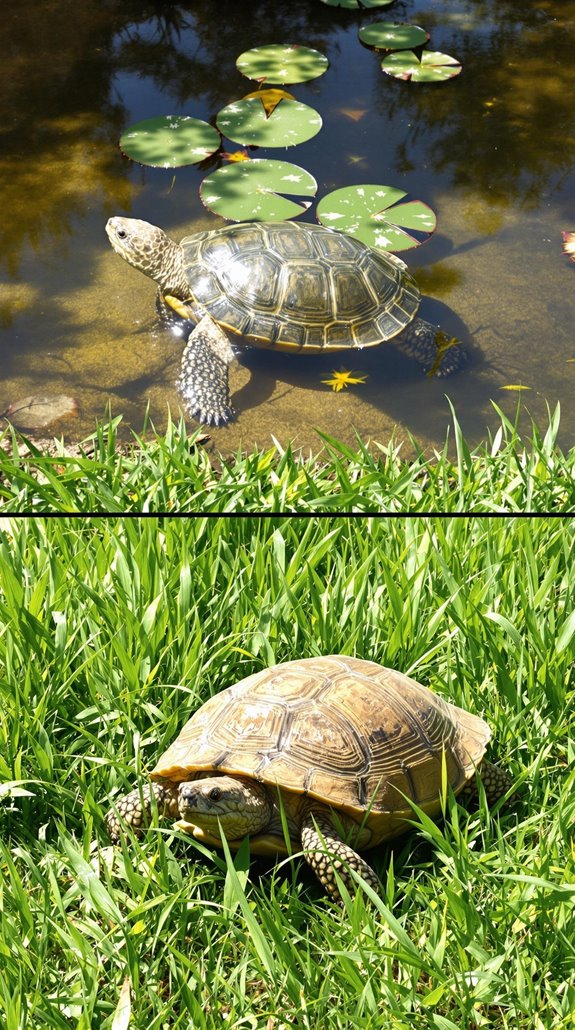
These reptiles exhibit distinct social patterns that set them apart from each other. When you observe turtles, you’ll find they’re generally more social creatures, often basking in groups and sharing feeding areas peacefully.
In the wild, you’ll see them clustering together on logs or rocks, particularly aquatic species that enjoy communal sunbathing. They don’t form lasting bonds but tolerate each other’s presence well.
Tortoises, on the other hand, tend to be more solitary and territorial. You’ll rarely find them seeking out the company of others except during mating season.
When you introduce two male tortoises, they might engage in combat, pushing and ramming each other to establish dominance. They’re known to defend their territory and preferred feeding spots aggressively.
You can notice these differences clearly in captivity. Multiple turtles can often share the same enclosure harmoniously, while tortoises typically do better in individual habitats.
If you’re keeping them as pets, you’ll need to take into account these social tendencies when planning their living space. Male tortoises, in particular, shouldn’t be housed together due to their territorial nature.
Species Types Worldwide

Numerous species of turtles and tortoises exist worldwide, with turtles inhabiting every continent except Antarctica. You’ll find sea turtles in all major oceans, while freshwater turtles live in rivers, lakes, and wetlands across the globe. Tortoises, in contrast, are primarily found in warm, dry regions of Africa, Asia, and the Americas.
There are approximately 360 species of turtles and tortoises combined. You can find the largest concentration of turtle species in Southeast Asia and North America. Notable sea turtle species include the leatherback, green, loggerhead, and hawksbill turtles. Common freshwater species you might encounter are the painted turtle, red-eared slider, and snapping turtle.
Among tortoises, you’ll discover the giant Galápagos tortoise, which can weigh up to 900 pounds, and the tiny speckled padloper tortoise of South Africa, which grows to only 4 inches.
Other well-known tortoise species include the African spurred tortoise, Russian tortoise, and Mediterranean spur-thighed tortoise. You can also find distinct species in Madagascar, such as the radiated tortoise and the ploughshare tortoise.

Erzsebet Frey (Eli Frey) is an ecologist and online entrepreneur with a Master of Science in Ecology from the University of Belgrade. Originally from Serbia, she has lived in Sri Lanka since 2017. Eli has worked internationally in countries like Oman, Brazil, Germany, and Sri Lanka. In 2018, she expanded into SEO and blogging, completing courses from UC Davis and Edinburgh. Eli has founded multiple websites focused on biology, ecology, environmental science, sustainable and simple living, and outdoor activities. She enjoys creating nature and simple living videos on YouTube and participates in speleology, diving, and hiking.
From the shop
Gifts for people who love the wild
Wildlife themed t-shirts, notebooks, tote bags, bandanas and guides, designed by an ecologist.
Visit the shop