
The bigger picture
Monitored wildlife populations have fallen 73 percent on average since 1970, according to the WWF Living Planet Report 2024, which makes every species on this page part of a much bigger story.
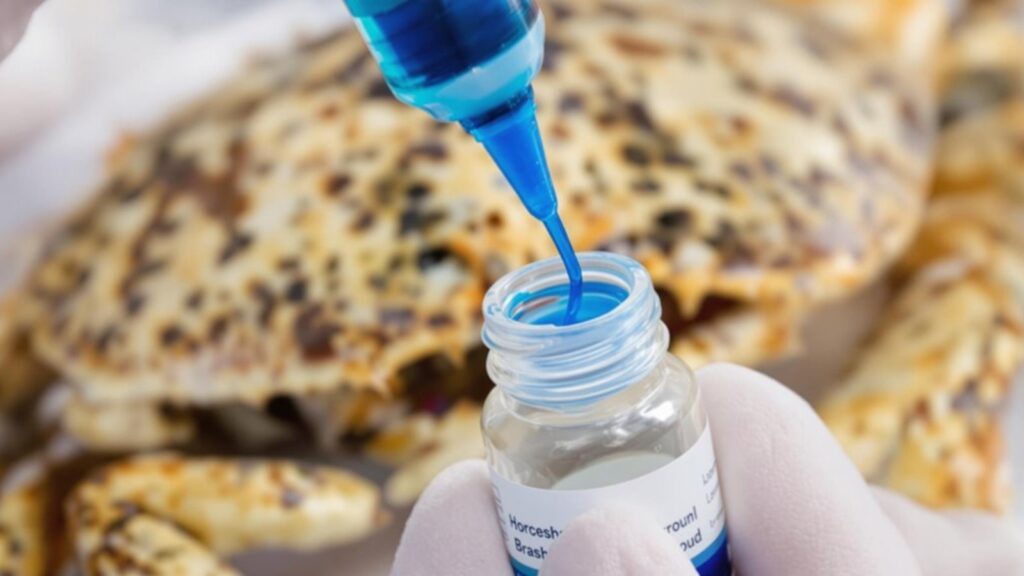
Horseshoe crab blood is a biomedical marvel, thanks to its unique composition of copper-based hemocyanin and infection-fighting amebocytes. It’s the key ingredient in Limulus amebocyte lysate (LAL), which detects bacterial toxins in vaccines and medical devices.
The harvesting process involves collecting crabs, extracting their blood, and returning them to the sea, but it can impact their health and populations. With the blood valued at $15,000 per quart, it’s a multi-million dollar industry.
However, the growing demand puts pressure on these ancient creatures. Scientists are exploring synthetic alternatives to protect the crabs while ensuring drug safety. But there’s more to this fascinating story.
Blue Blood Composition
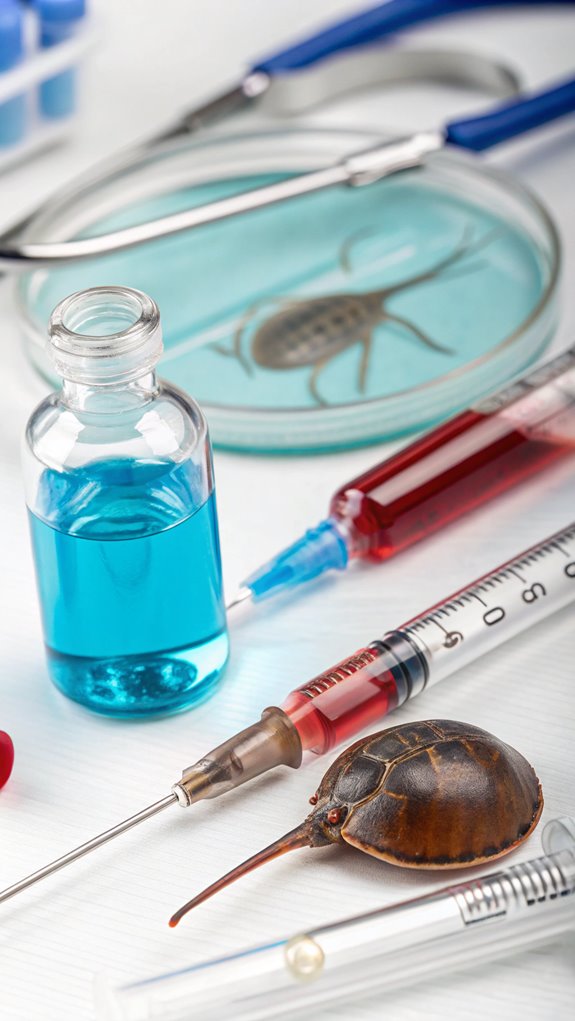
The remarkable blue blood of horseshoe crabs is a marvel of nature, with its unique composition and properties. You’ll find that the key component responsible for its striking color is hemocyanin, a copper-based protein that transports oxygen.
This sets it apart from the iron-based hemoglobin found in vertebrates. Hemocyanin floats freely in the horseshoe crab’s circulatory system, unlike hemoglobin, which is contained within red blood cells.
The distinct protein structure of hemocyanin in horseshoe crabs is also significant, differing from that of other invertebrates. The blood coagulation system in horseshoe crabs involves an enzyme cascade that is triggered when endotoxins are detected.
Horseshoe crab blood plays a critical role in clotting, thanks to its only cellular component: amebocytes. When the blood encounters endotoxins from Gram-negative bacteria, it triggers an immediate clotting reaction.
This involves a cascade of inactive enzymes being activated by the endotoxin, leading to the formation of a clot. Coagulogen, a clottable protein, is activated by the clotting enzyme to form coagulin, which ultimately forms the clot.
This clotting mechanism serves as a protective function, helping to trap bacteria and prevent infection in the horseshoe crab.
The unique properties of horseshoe crab blood have made it invaluable in biomedical applications, particularly in testing for endotoxins in injectable drugs and medical devices.
However, the harvesting process, which involves extracting up to 400 cc of blood from a single horseshoe crab, has raised concerns about mortality rates and the impact on wild populations. As a result, efforts are underway to develop synthetic alternatives to reduce the reliance on wild-caught horseshoe crabs.
Limulus Amebocyte Lysate (LAL)
From the remarkable blue blood of horseshoe crabs, scientists have isolated a powerful tool for detecting bacterial endotoxins: Limulus Amebocyte Lysate (LAL). The extraction process involves separating the amoebocyte cells from the hemolymph, lysing them through sonication, and purifying the LAL using techniques like organic solvent extraction and affinity chromatography.
Buffering the LAL to a specific pH range and lyophilizing it with inert stabilizers enhances its stability and sensitivity to endotoxins.
LAL’s mechanism of action is fascinating. It reacts with minute amounts of Gram-negative bacterial endotoxins, initiating a stepwise reaction that converts coagulogen to coagulin, forming a gel.
This high sensitivity, detecting as little as 10^-10 grams of endotoxin, makes LAL indispensable for guaranteeing the sterility of medical equipment and injectable drugs. The FDA requires LAL testing for all injectable and intravenous drugs produced in the U.S.
The biomedical significance of LAL can’t be overstated. It’s vital for detecting contaminating pyrogens in pharmaceuticals intended for human use.
Research on LAL has also contributed to a better understanding of human vision and the development of safer medical products. The compound eyes of horseshoe crabs have been studied extensively to gain insights into visual processing.
However, the conservation of horseshoe crabs is essential due to their unique biological properties. Sustainable harvesting practices, such as non-destructive methods and avoiding anti-coagulant agents, are important to secure the long-term availability of LAL while preserving the biodiversity of these ancient creatures.
As we continue to rely on LAL for its life-saving applications, it’s our responsibility to protect the source of this remarkable substance.
Biomedical Applications
Horseshoe crab blood plays an indispensable role in ensuring the safety and sterility of medical products. It’s used to test vaccines, medical equipment, and injectable drugs for bacterial toxins and endotoxins. This unique blood contains amebocytes that clot around invading bacteria, making it invaluable for detecting contamination.
It’s pivotal for maintaining the safety of all injectable and intravenous drugs produced in the U.S., as well as prosthetics and other medical devices. Despite its medical importance, the harvest of horseshoe crab blood raises conservation concerns.
The biomedical importance of horseshoe crab blood can’t be overstated. It’s irreplaceable in current medical testing practices and plays a significant role in the biopharmaceutical supply chain.
However, harvesting the blood poses conservation concerns, with a 10-15% mortality rate for the crabs. Only five federally licensed manufacturers are allowed to process the blood, and they’re working with conservation efforts to develop sustainable harvesting protocols.
To address these concerns, synthetic alternatives are being developed. Companies are working to create animal-free testing solutions, such as Recombinant Factor C (rFC), a genetically engineered protein that mimics the function of horseshoe crab blood. These alternatives aim to reduce reliance on the natural resource while still maintaining the highest standards of medical safety.
The unique properties of horseshoe crab blood make it a fundamental component in the biomedical industry. As we move forward, it’s important to balance the need for this life-saving resource with the imperative to conserve the species and protect the coastal ecosystems they inhabit.
Continued research into sustainable harvesting methods and synthetic alternatives will be key to achieving this balance.
Harvesting Process
To obtain the life-saving blood, a meticulous harvesting process is followed. It starts with selecting healthy crabs, usually found in shallow waters and sandy beaches along the Atlantic coast of North America. The crabs are gently captured and transported to a specialized facility for blood extraction.
They’re chilled in a cold room for about an hour before the process begins. The bleeding station is prepared with pre-chilled centrifuge tubes and an ice bath to keep the blood cold during collection, and ethanol is used to maintain sterile conditions.
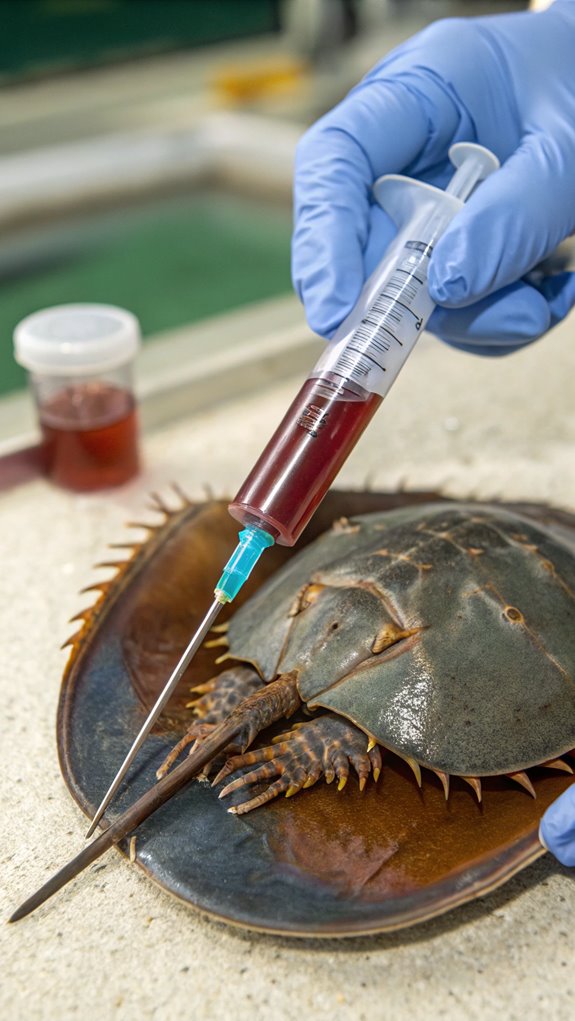
A sterile needle is inserted through the hinge joint to access the heart and collect blood. It’s extracted from the dorsal sinus or the gill area, depending on the method used.
The needle is carefully positioned to guarantee smooth and even blood flow into the collection tubes. Repeated bleeding can occur once or twice a month.
The process is performed with minimal harm to the creature, and the crabs are returned to their natural habitat after the procedure. The amount of blood taken is typically around 10-20% of the crab’s blood volume.
However, there are challenges and concerns. Stress from removal, transportation, and handling can negatively impact the crabs’ health. The current method of harvesting can result in a 10-15% mortality rate among the crabs.
Studies have shown that frequent bleeding can affect the spawning patterns of female horseshoe crabs. Removing large volumes of blood without appropriate care can lead to health issues. The overall health and well-being of the crabs during and after the harvesting process are critical concerns.
Ecological Impact
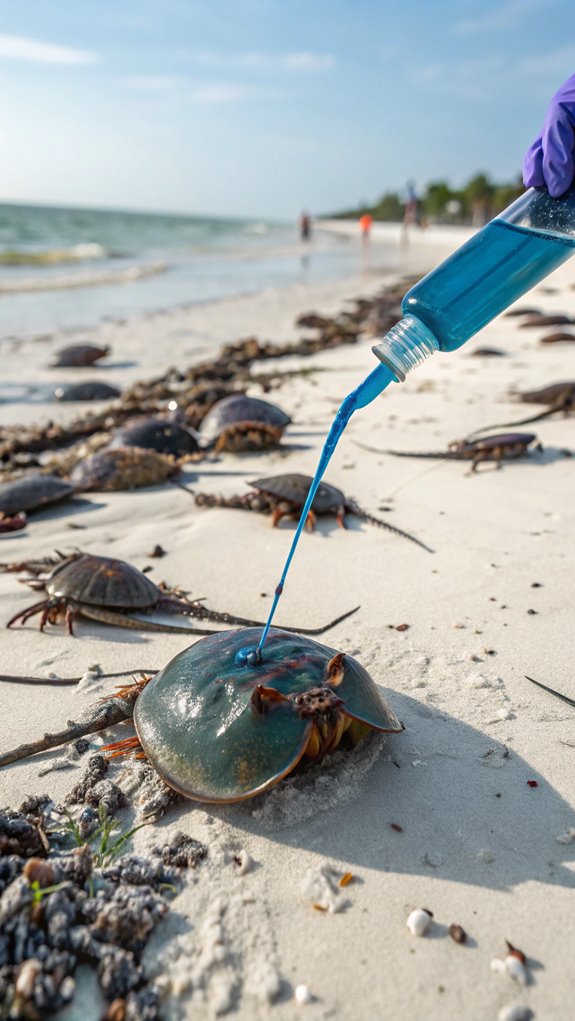
The harvesting of horseshoe crab blood has far-reaching ecological consequences that extend beyond the species itself. You may not realize it, but these ancient creatures play a vital role in maintaining the balance of marine ecosystems.
When their populations decline due to overfishing for biomedical and bait purposes, it triggers a ripple effect that impacts various other species. The Atlantic States Marine Fisheries Commission manages horseshoe crab populations through the Horseshoe Crab Fishery Management Plan.
Horseshoe crabs are essential food sources for many marine animals, including six species of long-distance migrant shorebirds that rely on their eggs for survival during their northward migration.
The red knot, for example, is now listed as threatened under the Endangered Species Act due to insufficient food sources, including horseshoe crab eggs. As bioturbators and hosts to epibionts, horseshoe crabs also influence the health and diversity of benthic invertebrate populations.
Climate change further compounds the threats to horseshoe crab populations and their ecological roles. Increasingly frequent storms and rising sea levels diminish suitable spawning habitats, while temperature changes can negatively impact their blood quality and overall health.
When removed from water for extended periods during harvesting, horseshoe crabs can develop severe hypoxia and metabolic acidosis, compromising their ability to adapt to changing environmental conditions.
The ecological impact of horseshoe crab blood harvesting is a stark reminder of the delicate balance and interdependence within marine ecosystems.
As the demand for their valuable blood continues to drive overfishing, it’s essential to reflect on the long-term consequences and work towards sustainable management practices that prioritize the health and resilience of these ancient creatures and the ecosystems they support.
Conservation Efforts
Conserving these ancient marine animals requires a multifaceted approach that addresses the challenges posed by commercial interests and the biomedical industry’s reliance on their valuable blood.
Conservation practices include regulated harvesting, where state regulations enforce harvest limits to prevent overharvesting. Controlled bleeding programs adhere to conservation standards, and hand-harvesting techniques minimize harm to the crabs. Quick return policies guarantee crabs are back in the sea within 36 hours, and population monitoring through tagging and counting helps track their numbers. The ASMFC’s 2019 assessments indicated a stable population.
However, conservation challenges persist. The commercial baiting industry poses a significant threat, and the species is considered vulnerable by the IUCN. Without the biomedical industry’s demand, legal protection isn’t assured, and overfishing would occur, as evidenced by the extensive use of horseshoe crabs for bait in 2016.
The regulatory framework plays an essential role, with specific permits required for biomedical harvesting and use. Enforcement includes suspending permits for non-compliance, and monthly harvesting reports and pre-harvest notifications are mandatory.
Some states, like New Jersey, have moratoriums on commercial harvesting but exempt blood collection.
Technological advances offer hope for reducing reliance on horseshoe crab blood. Optimized technologies like FDA-licensed LAL cartridges reduce raw material usage by 95%.
Synthetic alternatives are gaining recognition, but they haven’t yet demonstrated sufficient safety and efficacy for FDA licensing. As the industry evolves, the adoption of synthetic alternatives could lead to wider use, protecting horseshoe crabs from overharvesting.
It’s a delicate balance between conservation and meeting biomedical needs.
Biomedical Industry
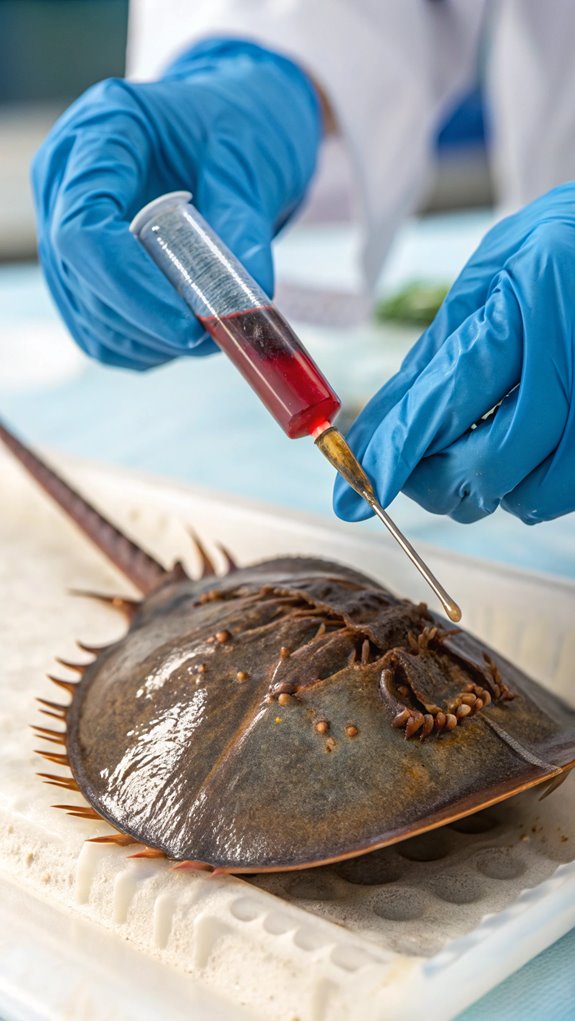
While conservation efforts attempt to protect horseshoe crabs, their blood plays a vital role in the biomedical industry. It’s used to produce Limulus amebocyte lysate (LAL), which detects bacterial endotoxins in medical products.
In 2015, the ASMFC reported that 559,903 horseshoe crabs were transported to biomedical facilities for LAL production. The Golden Goose Award recognized the significance of LAL research in 2019.
The process involves drawing 50 to 400 mL of blood using a hypodermic needle, and only five federally licensed manufacturers on the East Coast process the blood for LAL. It’s essential for testing vaccines, intravenous drugs, and implantable medical devices.
However, the impact on horseshoe crabs is significant. The ASMFC estimates a 15% mortality rate from biomedical bleeding, with female horseshoe crabs having a higher mortality rate of 30% compared to 8% for males.
The harvest process also leads to injuries and mortality during handling and transportation. The mortality rate jumps to 26% when including crabs sold for bait after biomedical bleeding.
The industry is moving towards developing synthetic alternatives to reduce dependence on wild horseshoe crabs. Companies like Lonza offer animal-free testing solutions to protect natural resources.
The pharmaceutical industry faces risks in relying on the blood of a wild animal for essential drug safety testing. The global
Economic Value
Beyond its ecological importance, the horseshoe crab’s blood has immense economic value in the biomedical industry. Each quart of this blood is estimated to be worth $15,000, contributing to a multi-million dollar business.
The blood is used for testing vaccines, drugs, and medical devices, playing a vital role in guaranteeing the safety and efficiency of the industry. The horseshoe crab market is supported by companies such as Associates of Cape Cod, Cambrex, and Charles River Endosafe.
Up to 1 million crabs are harvested annually for blood extraction, resulting in a substantial annual market value. However, the practice of bloodletting poses a significant threat to the species, with 15-30% of crabs dying after the procedure.
The industry’s practices, combined with other threats, could reduce populations by 30% over four decades. This is particularly concerning given the horseshoe crab’s ecological importance, as other species, including endangered shorebirds, depend on their eggs for nutrition.
To address these challenges, new standards are being introduced to encourage the use of synthetic alternatives, reducing the reliance on horseshoe crab blood. The shift to sustainable alternatives is seen as necessary to protect the species and maintain the stability of the biomedical supply chain.
Researchers are exploring synthetic alternatives to reduce the industry’s reliance on this wild animal, while also addressing ethical concerns surrounding the use of animal blood for testing purposes.
As demand for vaccines and medical devices increases, the need for alternatives becomes even more pressing. The development of synthetic alternatives opens new avenues for innovation in the biomedical testing sector, guaranteeing the long-term sustainability of the industry.
Research and Development
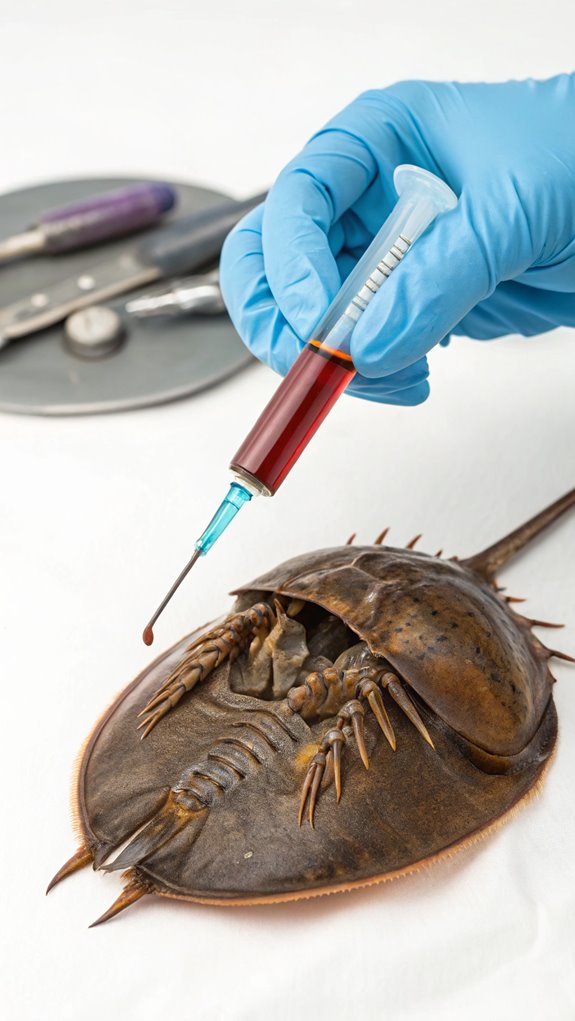
Researchers are actively exploring synthetic alternatives to horseshoe crab blood, driven by the need to protect the species and secure a sustainable biomedical testing supply chain.
Several promising avenues are being investigated, including recombinant Factor C (rFC), a genetically engineered molecule derived from the horseshoe crab’s clotting factor. This synthetic alternative has shown potential in detecting endotoxins with sensitivity comparable to the traditional LAL test.
By reducing reliance on horseshoe crab blood, rFC could help alleviate the pressure on wild populations while guaranteeing a reliable supply for critical medical testing. The high value of horseshoe crab blood, at approximately $15,000 per quart, underscores the urgency of developing cost-effective alternatives.
Another area of research focuses on understanding the unique properties of horseshoe crab blood and its amebocytes. Scientists are studying the molecular mechanisms behind the blood’s exceptional ability to detect and neutralize bacterial contamination.
By deciphering these processes, researchers hope to develop novel synthetic compounds that mimic the blood’s antimicrobial properties without the need for harvesting from live animals.
Alongside synthetic alternatives, efforts are underway to optimize and refine the existing LAL test. Researchers are working on improving the sensitivity and specificity of the assay, aiming to minimize the amount of horseshoe crab blood required per test.
Advancements in microfluidic technologies and miniaturization could further reduce the volume of blood needed, thereby decreasing the impact on wild populations.
As research progresses, it’s important to strike a balance between the development of alternative testing methods and the conservation of horseshoe crabs. Collaboration among scientists, biomedical companies, and conservation organizations is essential to secure a sustainable future for both the species and the critical medical applications that rely on their blood.
Future Alternatives
The future of biomedical testing lies in the adoption of synthetic alternatives to horseshoe crab blood. Recombinant factor C (rFC), derived from genetically engineered yeast, performs the same function as LAL in detecting bacterial endotoxins without relying on horseshoe crabs.
It’s considered a safe and effective alternative, but despite its availability, the pharmaceutical industry still heavily relies on horseshoe crab blood for testing vaccines and medical devices.
Scientists, environmentalists, and wildlife conservationists urge the industry to shift to synthetic alternatives to protect the species and guarantee a more reliable supply chain for lifesaving medicines.
Regulatory hurdles have been a barrier to adopting rFC, but recent developments aim to alleviate this. The European Pharmacopoeia recognized synthetic alternatives as equivalent to LAL in 2020, and the U.S. Pharmacopeia is set to simplify their use with a new standard in early 2024.
Organizations like Revive & Restore seek to identify and remove barriers to rFC adoption, paving the way for a more sustainable future in biomedical testing.
The increasing demand for horseshoe crab blood due to expanded uses in medical device, vaccine, and injectable drug testing poses significant risks to the species. Over-harvesting, combined with threats from climate change and habitat loss, raises conservation concerns.

Erzsebet Frey (Eli Frey) is an ecologist and online entrepreneur with a Master of Science in Ecology from the University of Belgrade. Originally from Serbia, she has lived in Sri Lanka since 2017. Eli has worked internationally in countries like Oman, Brazil, Germany, and Sri Lanka. In 2018, she expanded into SEO and blogging, completing courses from UC Davis and Edinburgh. Eli has founded multiple websites focused on biology, ecology, environmental science, sustainable and simple living, and outdoor activities. She enjoys creating nature and simple living videos on YouTube and participates in speleology, diving, and hiking.
From the shop
Gifts for people who love the wild
Wildlife themed t-shirts, notebooks, tote bags, bandanas and guides, designed by an ecologist.
Visit the shop