
Key Takeaways
- The Southeast Asian soldier fly *Parastratiosphecomyia stratiosphecomyioides* holds the record at 42 letters.
- Lengthy names often combine descriptive terms, discoverer surnames, and geographic markers.
- The longer *Gammaracanthuskytodermogammarus loricatobaicalensis*, at 51 letters, was suppressed by the ICZN as unusable.
- Greek and Latin roots like *rhino-* (nose) and *cephal-* (head) build precise anatomical descriptions.
- Tiny species like *Paedophryne amauensis* sometimes carry names longer than their entire bodies.
The Longest Scientific Name Ever Recorded
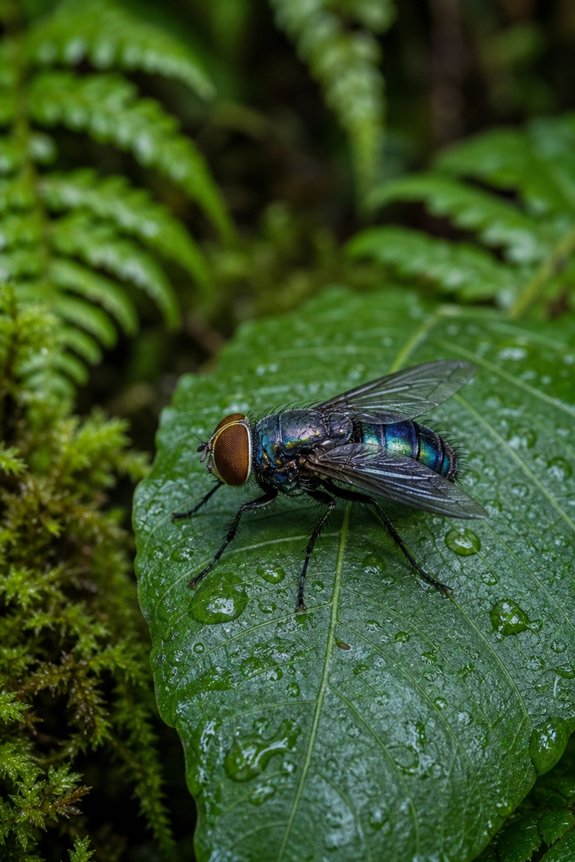
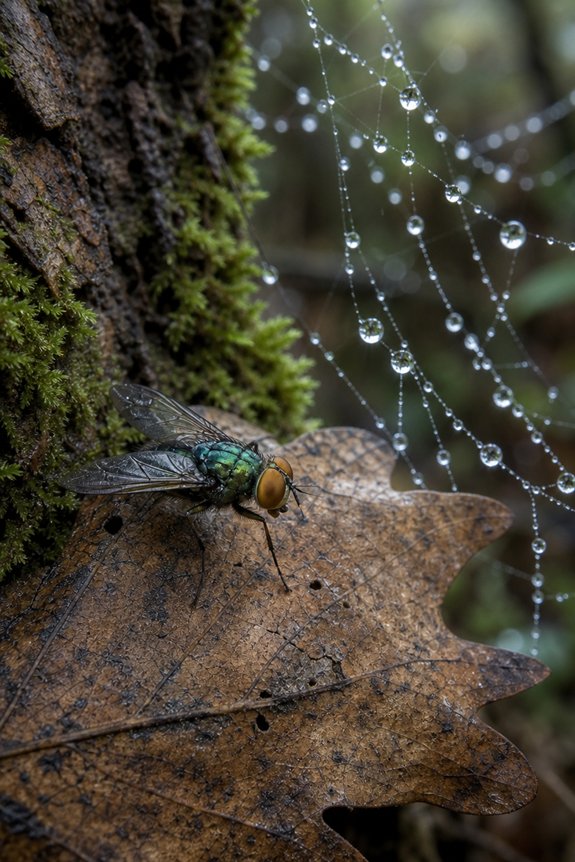
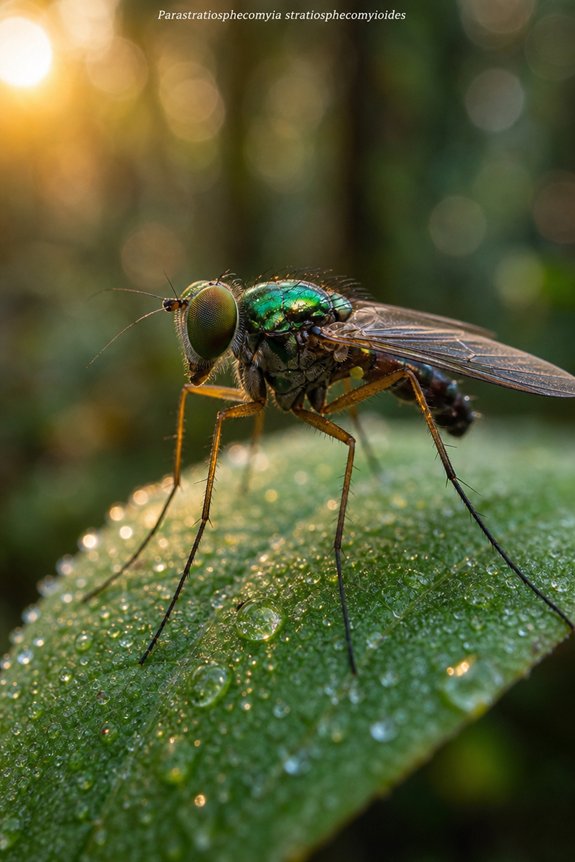
The longest scientific name given to any animal belongs to a Southeast Asian soldier fly: Parastratiosphecomyia stratiosphecomyioides. Guinness World Records puts it at 42 letters, split evenly, 21 in the genus and 21 in the species epithet.Two things about that name are worth pausing on. It is a binomial, meaning two words, not the sprawling multi word construction people often imagine. And the fly it belongs to is unremarkable, a metallic green insect from Thailand that nobody would look at twice.The name itself repeats. Stratiosphecomyia is an existing genus, Para marks a relative of it, and stratiosphecomyioides means resembling Stratiosphecomyia. The length comes from taxonomic bookkeeping rather than from anyone describing every body part they saw.Biodiversity, the variety of living things on Earth, demands clear labels. Names identify species uniquely. They connect past research to present study.The International Code of Zoological Nomenclature governs animal names, and it sets no limit on length at all. What it can do is suppress a name, and it has.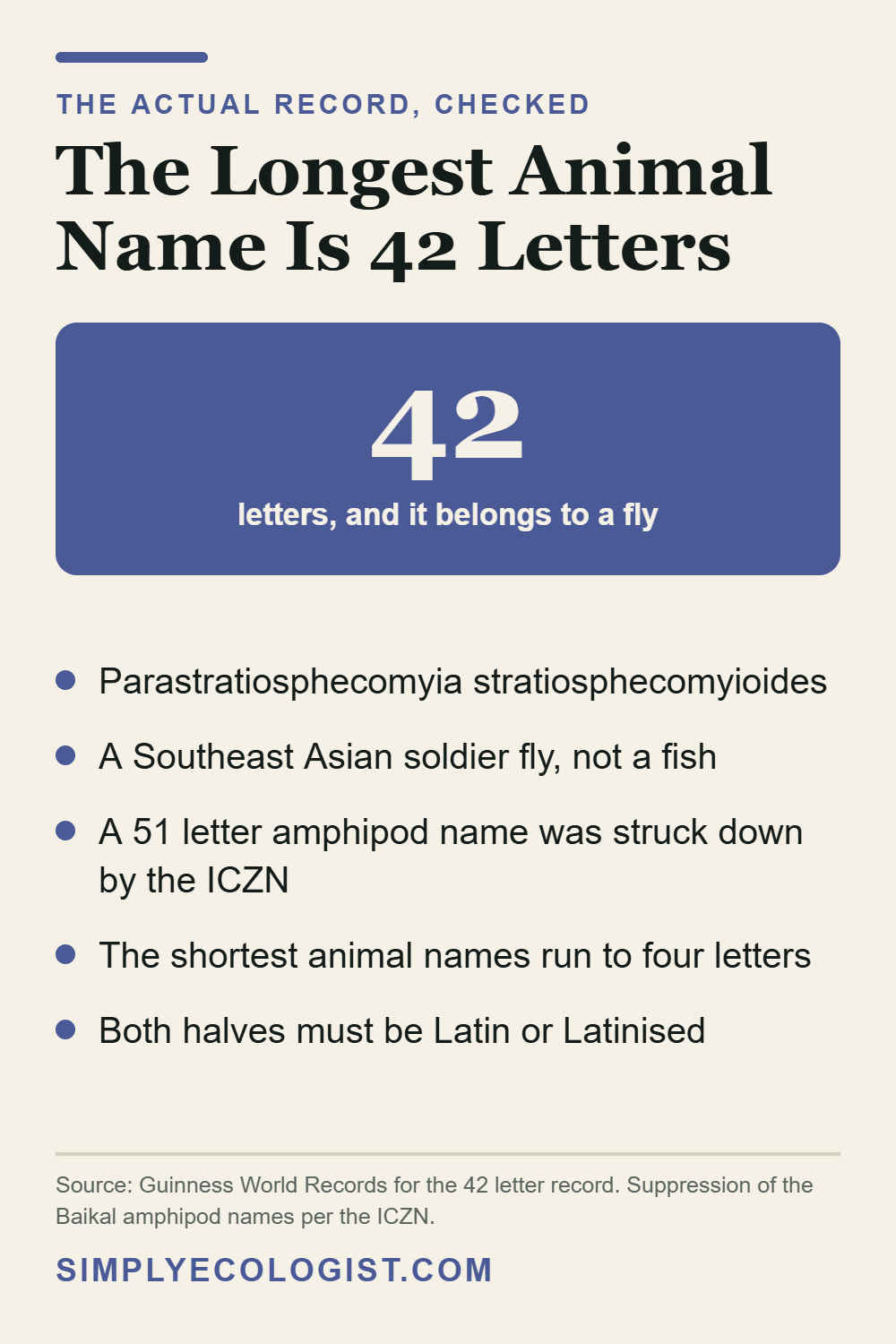
The 51 Letter Name That Was Struck Down
A longer name did exist once. In 1926 the Polish naturalist Benedykt Dybowski published a series of names for amphipods, small shrimp like crustaceans, from Lake Baikal. One of them was Gammaracanthuskytodermogammarus loricatobaicalensis, which runs to 51 letters.It did not survive. The International Commission on Zoological Nomenclature suppressed Dybowski’s names, reasoning that they would result in more confusion than uniformity. The names are still printed in lists of curiosities, but they are not valid, and no animal officially carries one.That decision is the most revealing thing in this whole subject. The code has no rule against a long name, and it still refused these. The objection was never length on its own. It was that a name nobody can use stops doing the one job a name has.Among names that remain valid, the runners up sit far below the fly. Cyrtodactylus australotitiwangsaensis, a Malaysian gecko, is the longest for any living vertebrate. Microstomatichthyoborus bashforddeani, an African freshwater fish, is the longest for a fish. Neither approaches 42 letters.The Shortest Animal Names, for Contrast
The record runs the other way too, and the gap is startling. The shortest binomials in zoology come in at four letters.Ia io is a bat, Great Evening Bat, from South and East Asia. Yi qi is a small feathered dinosaur from China, described in 2015, whose name means strange wing in Mandarin. Both are four letters including the space, against 42 for the soldier fly.Setting the two extremes side by side makes the real point better than either does alone. The code that allows a 42 letter name also allows a four letter one. Nothing in the rules pushes toward length. What produces the long names is habit, bookkeeping and the occasional taxonomist who could have chosen otherwise.| Name | Letters | Animal | Status |
|---|---|---|---|
| Gammaracanthuskytodermogammarus loricatobaicalensis | 51 | Lake Baikal amphipod | Suppressed by the ICZN |
| Parastratiosphecomyia stratiosphecomyioides | 42 | Southeast Asian soldier fly | Valid, and the Guinness record |
| Microstomatichthyoborus bashforddeani | 37 | African freshwater fish | Valid, longest for a fish |
| Cyrtodactylus australotitiwangsaensis | 36 | Malaysian bent toed gecko | Valid, longest living vertebrate |
| Chilobrachys jonitriantisvansickleae | 35 | Tarantula | Valid, longest for a spider |
| Ia io | 4 | Great Evening Bat | Valid, among the shortest |
| Yi qi | 4 | Feathered dinosaur, described 2015 | Valid, among the shortest |
The 30 Letter Medical Name That Became a Fish
Why Scientists Refuse to Keep Names Short
The 4 Rules That Stretch Scientific Names to Their Limit
Maximum Character Limits
Although scientific naming follows strict conventions, length itself carries no formal limit in the codes governing taxonomy, the practice of classifying Earth’s organisms. The International Code of Zoological Nomenclature regulates animal names, but it doesn’t restrict character count. Practical constraints emerge anyway.Four factors keep names manageable:- Publication space, lengthy names consume limited journal pages
- Memory burden, scientists remember biodiversity, the variety of life on Earth, more easily with shorter terms
- Database fields, many systems truncate entries at 255 characters
- Communication clarity, colleagues understand brief names in urgent fieldwork
Genus Species Hierarchy
These practical constraints shape everyday work, yet they don’t define where names come from. The genus species hierarchy imposes its own demands. Scientists follow four rigid rules. Each rule stretches names toward complexity.First, the genus must stand alone. It groups related organisms, those sharing ancestry. Second, in zoology the species epithet may repeat the genus. *Bison bison* and *Vulpes vulpes* are perfectly valid, while botany takes the opposite view and forbids it. Third, both parts require Latin or Latinized forms. This preserves consistency across languages. Fourth, priority governs: the earliest valid name holds. Older descriptions win, even when they’re unwieldy.Biodiversity (the full variety of life) forces expansion. More species mean more names. More names mean more combinations. Taxonomists don’t choose length freely. The system demands it. They work within these boundaries, accepting the weight.Etymology Over Practicality
While scientists work within strict naming conventions, they rarely choose brevity when describing a species. The tension between precise meaning and manageable length drives four key practices that extend names considerably.- Honoring multiple discoverers, Each contributor receives recognition, adding syllables.
- Describing minute features, Tiny anatomical details, like “pseudomacrocephalic” (falsely large headed), enter formal names.
- Embedding location data, Place names accumulate, especially for biodiversity, the variety of life in a particular habitat.
- Preserving etymological roots, Greek and Latin compounds resist abbreviation.
Animals With Names Longer Than 30 Letters
Scientific Naming Conventions
Because scientists needed a universal system to classify Earth’s vast array of life, they developed binomial nomenclature, a two part naming structure that gives every species a unique identity. This system, established by Carl Linnaeus, whose tenth edition of Systema Naturae in 1758 is the starting point for animal names, uses Latin or Greek roots to describe physical traits, habitats, or discoverers. Long names emerge when taxonomists add subspecies or honor multiple people.Consider why these names stretch beyond thirty letters:- Descriptive terms pile up to capture unique features
- Scientists’ surnames append to honor contributors
- Location markers specify where specimens originate
- Subspecies distinctions require additional identifiers
Pronunciation Challenges Faced
Pronunciation requires breaking the name into smaller parts, a process called syllabification. Scientists divide lengthy names into manageable segments. Each segment carries stress on specific syllables.The lungworm *Pseudocapillaroides xenopi* contains eleven syllables. Speakers often stumble over the “pseudo” prefix. It derives from Greek, meaning “false.” The suffix “-oides” indicates resemblance.Taxonomists face daily difficulties. They present research at conferences. Mispronunciation causes confusion. It undermines scientific communication.Biodiversity, the variety of life in a particular habitat, depends on accurate naming. Researchers catalog species. They preserve knowledge across generations.The tongue twister *Myrmecophaga tridactyla* (giant anteater) challenges even experts. Its Greek roots describe “ant eating” behavior and “three fingers.”Precision matters. Names connect discovery to understanding.Memorable Examples Listed
Taxonomy, the science of naming and classifying organisms, yields some remarkably lengthy labels. Scientists create these names to capture biodiversity, the variety of life forms on Earth. Some species bear names exceeding thirty letters.Consider these memorable examples:- *Parastratiosphecomyia stratiosphecomyioides*, a soldier fly with forty two letters
- *Pseudocrenilabrus philander dispersus*, a cichlid fish reaching thirty five letters
- *Griseotyrannus aurantioatrocristatus*, the crowned slaty flycatcher at thirty three letters
- *Myrmecophaga tridactyla*, the giant anteater, a modest twenty two letters but still notable
Parasitic Wasps With the Most Twisted Long Names
Deep Sea Creatures With Unpronounceably Long Names
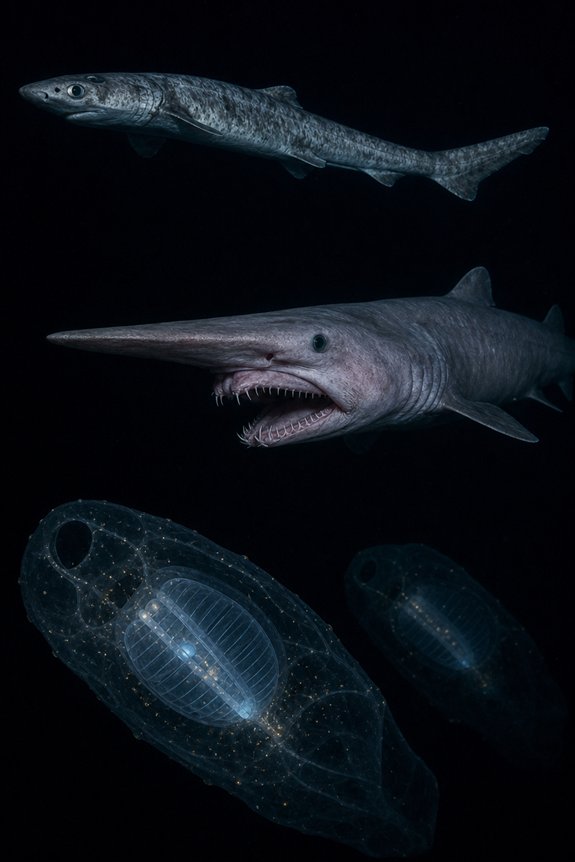
- *Grimpoteuthis bathynectes*, the Dumbo octopus, named for its ear like fins
- *Bathynomus giganteus*, a giant isopod, a crustacean resembling oversized woodlice
- *Melanocetus johnsonii*, the humpback anglerfish, a predator with bioluminescent lures
- *Mitsukurina owstoni*, the goblin shark, with a protrusible jaw for catching prey
Long Names That Map Where Animals Live
The Selfish Scientists Who Gave Animals 30 Letter Names
Ego in Taxonomy
Although taxonomy aims to organize Earth’s life forms with impartial precision, human vanity has occasionally left its mark on scientific names. Biodiversity, the variety of living things on Earth, suffers when personal ambition shapes classification.Scientists have embedded their identities into Latin nomenclature. Consider these patterns:- Researchers insert colleagues’ surnames into species epithets. *Megalonyx jeffersonii* honours Thomas Jefferson, who described the fossil but did not name it after himself.
- Some honor mentors, spouses, or rivals through coded references in lengthy designations.
- Competitive taxonomists race to publish first, generating hastily constructed thirty letter names.
- Certain descriptions contain hidden messages, acronyms, or inside jokes invisible to lay readers.
Unpronounceable Latin Monstrosities
Personal ambition in taxonomy doesn’t stop at embedding surnames into species names. Some scientists construct unpronounceable Latin monstrosities, creating names that exceed thirty letters. *Parastratiosphecomyia stratiosphecomyioides*, a fly, holds the record at forty two letters. These names aren’t jokes. They’re serious attempts at precision.Long names often describe location or anatomy. *Myxococcus llanfairpwllgwyngyllgogerychwyrndrobwllllantysiliogogogochensis*, a bacterium, borrows from a Welsh village. Scientists face pressure to distinguish species, the variety of life forms, in crowded fields. Latin provides international consistency.Yet practicality suffers. Field researchers can’t easily discuss *Pseudopseudohypoparathyroidism* in conversation. The practice reveals tension between precision and accessibility.Some biologists now advocate shorter names. Biodiversity, the total diversity of living things, deserves labels that people can actually use.Greek and Latin Roots That Bulk Up Every Long Name
- *Rhino-* means nose, as in rhinoceros.
- *Cephal-* means head, appearing in octopus relatives.
- *Ptero-* means wing or fin, common in flying creatures.
- *Chondr-* means cartilage, describing flexible skeletons.
Beetles, Flies, and Insects With the Longest Names
Mammals Whose Long Names Defy Brevity
Etymological Name Origins
Although scientific naming follows strict conventions, the resulting titles often stretch across multiple words. Scientists build these names from Greek and Latin roots. Each root carries precise meaning. The system creates clarity across languages.Consider how etymology shapes length:- Descriptive roots compound easily. “Micro” means small. “Pithecus” means ape. Together they form longer units.
- Honorific names embed person or place. A discoverer’s name extends a title considerably.
- Habitat markers add location. “Montanus” indicates mountain dwellers. “Aquaticus” signals water association.
- Taxonomic levels stack. Family names precede genus. Genus precedes species. Biodiversity, the variety of life in a place, demands this specificity.
Record Breaking Mammal Names
While the previous section examined how naming conventions create length, specific mammals carry titles that push these principles to their limits. The western gorilla’s subspecies, *Gorilla gorilla gorilla*, repeats its genus and species names, creating a three part label. This isn’t error. It’s taxonomy’s strict hierarchy. The convention requires full designation even when words duplicate.Biodiversity, the variety of life in a particular habitat, generates these lengthy identifiers. Each discovery demands distinct naming. The pygmy sperm whale, *Kogia breviceps*, illustrates another pattern: descriptive Latin compounds that translate to “short headed.” These names serve science, not speech.One finds seventeen syllables in the longest accepted common mammal name. That fact strikes some readers as absurd. Yet precision matters more than convenience in biological record keeping.Scientific Versus Common Names
The gap between what scientists call an animal and what the public calls it often reveals how purpose shapes language.Common names serve everyday conversation. They stay short and memorable. Scientific names do something else. They pin down exact species among millions, avoiding confusion across languages and borders.Consider how this plays out with mammals carrying lengthy scientific labels:- The pygmy marmoset’s formal name, *Cebuella pygmaea*, distinguishes it from all other primates.
- The African bush elephant, *Loxodonta africana*, separates it from its forest cousin.
- *Balaenoptera musculus* names the blue whale with precision no common term achieves.
- The fisher, *Pekania pennanti*, corrects the mistaken belief it’s a cat.
Birds With Surprisingly Lengthy Scientific Names
Reptiles and Amphibians With Names Longer Than Their Bodies

Small Frog Species
Curiosity often drives scientists toward creatures that challenge our assumptions about proportion. Small frog species demonstrate this principle clearly. Their scientific names often exceed their body length, creating an interesting paradox for researchers.Consider these examples:- *Stumpffia tridactyla* measures 8 millimeters, yet its name spans 19 characters
- *Paedophryne amauensis* reaches 7.7 millimeters with a 20 character designation
- *Eleutherodactylus iberia* grows to 10 millimeters while carrying 22 characters
- *Brachycephalus didactylus* extends merely 8 millimeters with 23 characters
Tiny Salamanders Listed
Salamanders present a parallel case. The Thorius arboreus, or arboreal minute salamander, measures barely twenty millimeters. Its full Latin name contains twenty two characters, one for roughly every millimetre of the animal. Biodiversity, meaning the variety of life forms in an ecosystem, concentrates heavily in such small species. Researchers have identified thirty Thorius species. Most inhabit isolated Mexican cloud forests. Their tiny size demands precise microhabitats. Moist leaf litter becomes essential shelter. Climate change threatens these restricted ranges. The Thorius pennatulus carries an even longer designation. Its name spans twenty four letters. The creature itself remains under three centimeters. Scientists note this pattern repeats across plethodontid salamanders. Name length correlates with taxonomic specificity, not body size. Protection efforts continue.Miniature Lizard Names
Consider these miniature species:- The *Madagascar dwarf chameleon* (*Brookesia micra*) spans one inch fully grown
- The *Virgin Islands dwarf gecko* (*Sphaerodactylus parthenopion*) weighs under one gram
- The *Jaragua sphaero* (*Sphaerodactylus ariasae*) shares the title of smallest reptile
- The *Bavay’s gecko* (*Eurydactylodes agricolae*) bears a name exceeding its three inch frame
When Common Names Outdo Scientific Ones
A Practical Guide to Pronouncing 40 Letter Animal Names
- Divide the name at each vowel cluster
- Stress the third to last syllable in most cases
- Practice with shorter segments first
- Record yourself and compare to guides
Where to Actually Hear These Names Pronounced
No official pronunciation standard exists for scientific names. That is not an oversight, it is a consequence: Latin has been read aloud differently in different countries for centuries, and taxonomy inherited all of those habits at once.In practice this means two researchers can say the same name unrecognisably differently and both be correct. English speakers tend toward a traditional English Latin, continental European speakers toward classical or church Latin, and most people simply follow whoever taught them.What fills the gap is informal: recordings made by museums and universities, pronunciation entries in taxonomic databases, and a scattering of hobbyist videos. None of it is authoritative, and taxonomists mostly settle the question by writing the name down.Worth remembering when you stumble over one of these. There is no correct version you are failing to produce.The Push for Shorter Names: and Why It’s Failing
- Tradition binds taxonomy. Scientists inherit centuries of naming conventions. They won’t discard them lightly.
- Precision matters. Shortened names lose information. *Parastratiosphecomyia stratiosphecomyioides* becomes “the fly.” That’s not useful.
- Databases resist change. Millions of records use full names. Conversion costs time and money.
- Global coordination fails. No single authority controls naming. Consensus proves impossible.
Why Every Long Name Means One More Species Discovered
The Long Names Taxonomists Wish They Could Take Back
- *Parastratiosphecomyia stratiosphecomyioides*, a fly whose 42 letter name serves no clear purpose
- *Gammaracanthuskytodermogammarus loricatobaicalensis*, an amphipod with 50 letters that researchers avoid saying aloud
- *Myrmecophaga tridactyla*, the giant anteater, less absurd but still clunky for common use
- *Pneumonoultramicroscopicsilicovolcanoconiosis*, not an animal, yet it reminds scientists what happens when length overtakes function
Final Thoughts
Long names are maps, not obstacles. Each syllable marks a species found, a mystery solved. Biodiversity, the variety of life on Earth, grows clearer with every label. Taxonomists don’t waste breath. They’re building a library where nothing gets lost. The work continues. Names will stretch further. That’s the point.
Erzsebet Frey (Eli Frey) is an ecologist and online entrepreneur with a Master of Science in Ecology from the University of Belgrade. Originally from Serbia, she has lived in Sri Lanka since 2017. Eli has worked internationally in countries like Oman, Brazil, Germany, and Sri Lanka. In 2018, she expanded into SEO and blogging, completing courses from UC Davis and Edinburgh. Eli has founded multiple websites focused on biology, ecology, environmental science, sustainable and simple living, and outdoor activities. She enjoys creating nature and simple living videos on YouTube and participates in speleology, diving, and hiking.
From the shop
Gifts for people who love the wild
Wildlife themed t-shirts, notebooks, tote bags, bandanas and guides, designed by an ecologist.
Visit the shop