
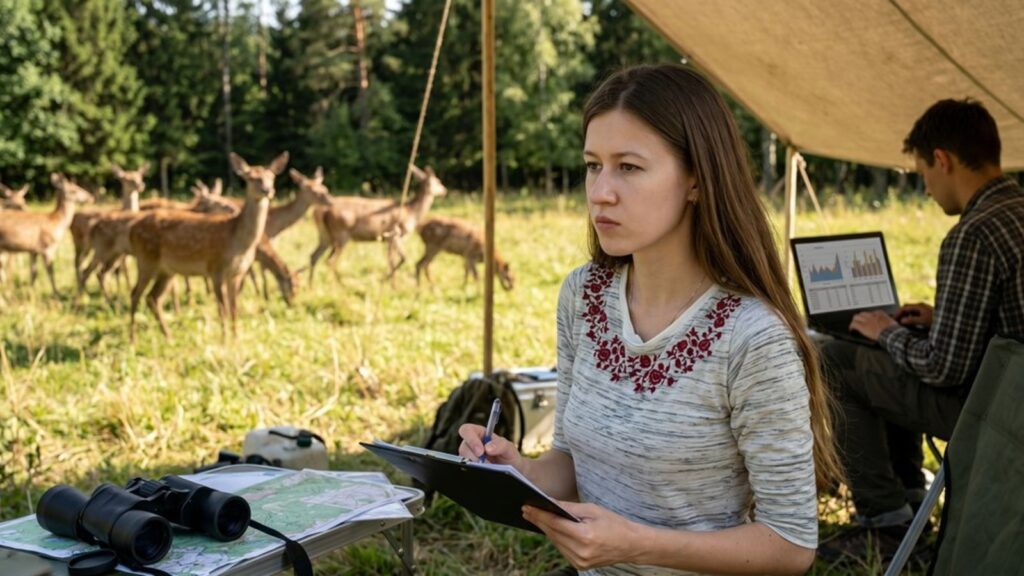
If you’re drawn to discovering why ecosystems work the way they do, academic ecology lets you pursue curiosity driven research and publish findings that advance scientific understanding. If you’d rather protect a habitat, influence policy, or recover a species, applied ecology puts existing knowledge to work toward measurable outcomes. In discussing the differences, the terms academic vs applied ecology arise, highlighting the unique skills and rewards of each path, which demand strong skills that reflect in everything from your daily schedule to your salary.
Key Takeaways
- Academic ecology generates new knowledge through curiosity-driven research, while applied ecology translates existing knowledge into practical conservation solutions.
- Academic careers reward publications and grants, whereas applied roles measure success through restored habitats, species recovery, and policy influence.
- Applied salaries progress faster, with senior roles reaching $90k–$110k, while academic progression is slower with lengthy postdoctoral periods.
- Applied roles require field logistics, species identification, and stakeholder engagement; academic roles demand research design, statistical expertise, and grant writing.
- A bachelor’s or master’s degree often suffices for applied ecology, while academic careers typically require a PhD and strong publication record.
The Core Difference Between Academic and Applied Ecology
When you first consider a career in ecology, the most important fork in the road is whether you want to generate new knowledge or apply existing knowledge to solve real problems.
Academic ecology is curiosity driven, guided by philosophical aims, the deep desire to understand how nature works, and evaluated through publications and grants.
Applied ecology, by contrast, focuses on knowledge translation, meaning it takes scientific findings and converts them into practical solutions like habitat restoration or invasive species control.
This brings us to the distinction between academic vs applied ecology, where your epistemic values, or what you believe counts as meaningful scientific achievement, will shape which path feels right.
One path rewards theoretical discovery; the other rewards measurable environmental outcomes. Both matter deeply, and recognizing this difference early helps you make a more honest, fulfilling career choice.
| Academic Ecology | Applied Ecology | |
|---|---|---|
| Primary Goal | Generate new knowledge | Translate knowledge into solutions |
| Success Measured By | Citations, h-index, grants | Restored hectares, species recovery, policy outcomes |
| Education Required | PhD typically required | Bachelor’s or Master’s often sufficient |
| Salary Progression | Slower; postdoc years can mirror entry-level pay | Faster; senior roles reach $90k–$110k (US) |
How Academic and Applied Ecologists Measure Career Progress
Once you understand what separates academic from applied ecology at a philosophical level, the next honest question becomes more practical: how does each path actually keep score?
Applied ecology measures progress differently: restored hectares, species recovery data, compliance reports delivered on time, and client satisfaction. Community impact becomes your currency here, demonstrated through real outcomes rather than published arguments.
In academia, you’re evaluated through public metrics, citation counts, h-index scores, and grant funding, numbers visible to any hiring committee. Mentorship networks matter too, shaping your scholarly reputation over years.
Both paths reward networking and professional involvement, but academics climb by building scholarly reputation, while applied ecologists advance by proving they can deliver practical results that genuinely change conditions on the ground.
What a Typical Workday Looks Like in Each Ecology Career
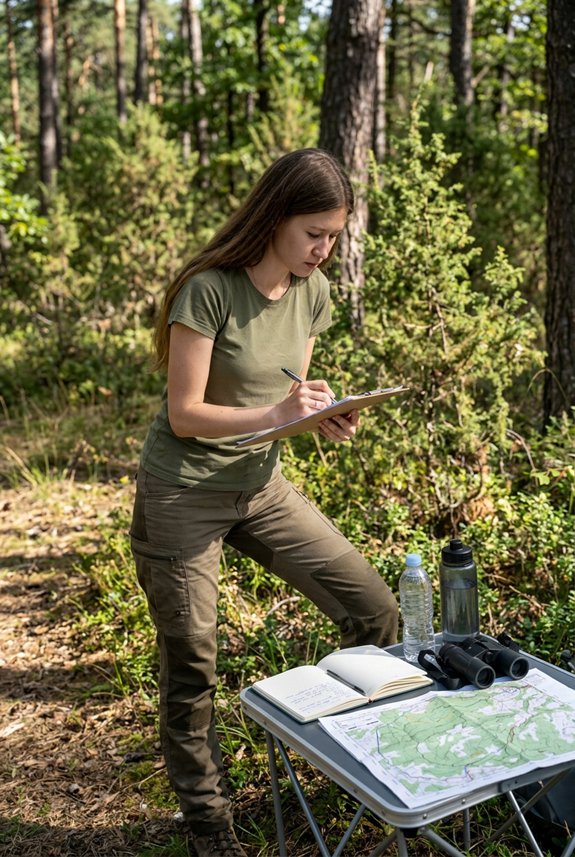
Behind the career philosophies and progress metrics lies something more immediate, what actually fills your hours from morning to evening.
In academia, you’ll often use time blocking strategies, scheduling lectures, grant writing, and manuscript work in distinct, protected chunks, because these tasks demand deep focus across months long cycles. Seasonal workflows shape your year too: fieldwork clusters in summer, teaching dominates fall and spring.
In applied ecology, your daily logistics look quite different. You’re coordinating field surveys, habitat checks, monitoring equipment, landowner access, often spending full days outdoors, then returning to data entry and compliance reports with tighter deadlines.
Stakeholder meetings replace seminars, and client needs replace peer review timelines. Both paths involve real effort and meaningful work; they simply arrange that effort very differently across each day.
Academic vs Applied Ecology: How Do Salaries Compare?
Money isn’t everything, but it shapes real decisions, and ecology is no exception. For a full breakdown of how pay varies by specialisation and sector, see our ecologist salary range guide.
In applied roles, like government or consultancy, salary progression tends to move faster and higher, with senior positions often reaching $90k–$110k in the US or £40,000+ in the UK.
According to the U.S. Bureau of Labor Statistics, environmental scientists and specialists , a category that includes many applied ecologists, earned a median annual salary of $80,060 in 2024, with the top 10% exceeding $134,000.
Academic salaries, meanwhile, can feel slower to climb , especially during postdoc years, when pay often mirrors entry-level applied work. A 2018 survey published in Nature found that US government ecologists earned a mean of $84,900 annually, outpacing most academic postdoctoral positions.
Benefits comparison also deserves your attention: applied employers often provide structured bonuses and clearer advancement, whereas academia offers tenure track security, but only for a few. Understanding these patterns helps you choose a path that genuinely fits your life.
Academic vs Applied Ecology: Where Are the Jobs?
Finding ecology jobs, whether in academia or applied work isn’t just about knowing where to look, but understanding that each path lives in its own distinct corner of the job market.
Academic roles, like faculty positions and postdocs, appear on university websites and academic job boards, while applied roles like consultancy, restoration, monitoring, concentrate on conservation platforms, government vacancy sites, and NGO listings.
Entry-level applied positions often surface on student focused job platforms, such as Conservation Careers Academy, making these especially worth bookmarking early.
Application timing matters too, since academic hiring follows predictable seasonal cycles, while applied roles open year round.
Across both paths, networking strategies remain your most reliable tool, professional societies and direct employer connections frequently reveal openings that never reach public boards, so cultivate those relationships consistently and intentionally.
The demand for applied ecologists is growing faster than many people expect. The BLS projects approximately 8,500 annual job openings for environmental scientists and specialists through 2034 , driven by climate change adaptation, habitat restoration programs, and tightening environmental compliance requirements.
Academic positions, by contrast, remain highly competitive: according to the same Nature survey, 66% of ecology PhD holders in the US work at academic institutions, yet faculty openings represent only a fraction of total ecology job listings at any given time
Funding Sources and Job Security Compared
Once you understand where ecology jobs live, it helps to ask what keeps those jobs alive, and that question leads directly to funding. Academic positions rely on competitive grants, university budgets, and endowment strategies, long term investment funds that support research when outside money runs thin.
That mix sounds stable, but it isn’t always: your job security often depends on winning grants consistently and publishing regularly.
Applied roles, by contrast, draw funding from government contracts, NGO budgets, and fee based projects, offering steadier income but vulnerability to shifting political priorities.
Smart organizations in both sectors practice donor diversification, spreading income across multiple sources, and contingency planning, preparing backup strategies when funding drops unexpectedly. Knowing these financial realities helps you choose a path that genuinely fits your goals and tolerance for uncertainty.
What Skills Do You Actually Need as an Academic Ecologist?

Shifting from funding into skill-building, it’s worth pausing to ask what academic ecology actually demands of you on a daily basis, because the answer is more layered than most people expect.
You’ll need strong research design and statistical skills, both frequentist and Bayesian, meaning different mathematical approaches to interpreting data.
Grant writing, the craft of persuading funders your work matters, becomes a recurring responsibility.
You’ll also teach, mentor students, and serve on committees, so communication matters deeply.
Lab management, organizing people, equipment, and workflows efficiently, keeps your research running smoothly.
Field ethics, the principled treatment of ecosystems and organisms during data collection, reflects your professional integrity.
Coding in R and Python, plus reproducible analysis pipelines, rounds out a skill set that’s genuinely broad, quietly demanding, and deeply rewarding.
What Skills Do You Actually Need as an Applied Ecologist?
Moving from academic ecology into applied work means trading some of that hypothesis driven freedom for a different kind of rigor, one measured in practical outcomes rather than published papers.
You’ll need strong field logistics skills: planning surveys, managing equipment, and leading crews through unpredictable conditions.
Species identification, habitat assessment, and restoration tasks aren’t optional extras, they’re baseline expectations.
Tech proficiency matters too, so you’ll want experience with drones, camera traps, R, Python, and spatial tools that process real world, often messy datasets.
Community science, meaning collaborative monitoring projects involving local volunteers or landowners, also strengthens your profile considerably.
Beyond the technical side, you’ll regularly translate complex findings into clear reports for planners and policymakers, making communication just as essential as any fieldwork credential you carry.
Do You Need a PhD for Applied Ecology Careers?
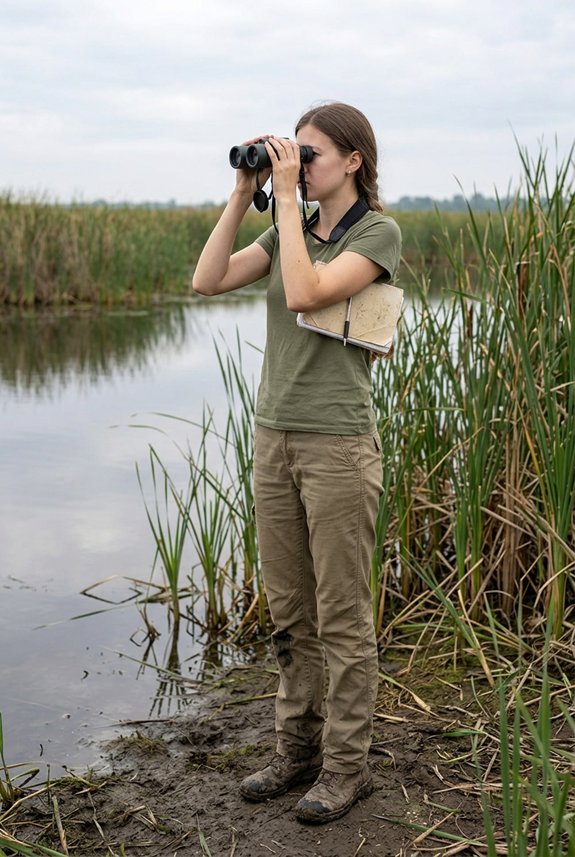
Those practical skills covered in the last section raise a natural follow-up question: how much formal education do you actually need to land and grow in applied ecology work? For many entry-level roles, a bachelor’s or master’s degree is genuinely enough, especially when you pair it with fieldwork experience and transferable skills, abilities that move usefully between jobs, like GIS mapping, data analysis, and clear reporting.
Career pathways in consultancy or government often reward demonstrated competence over credentials alone. A PhD becomes more valuable when roles require advanced modelling or independent research leadership.
Industry partnerships with universities can also open doors without a doctorate. So reflect honestly on your goals: your qualifications matter, but your practical experience and professional network frequently matter more.
Does Publishing Matter as Much in Applied Ecology?
Publishing is a cornerstone of academic ecology, the primary currency by which researchers demonstrate their value, build their reputation, and secure funding, but in applied ecology, that equation shifts considerably.
If you’re pursuing applied roles, you’ll find that employer expectations often prioritize practical outcomes over publication relevance. Consultancies, government agencies, and NGOs typically reward demonstrated field skills, project delivery, and technical reports, documents like Environmental Impact Assessments, over peer-reviewed paper counts.
That said, publishing can strengthen your credibility and open hybrid pathways, so it’s worth considering strategically. Impact metrics in applied settings measure real world results: species protected, policies influenced, habitats restored.
You don’t need an impressive journal record to succeed, but understanding what each employer values helps you present your experience honestly and effectively.
How Much Stakeholder Engagement Does Each Career Require?
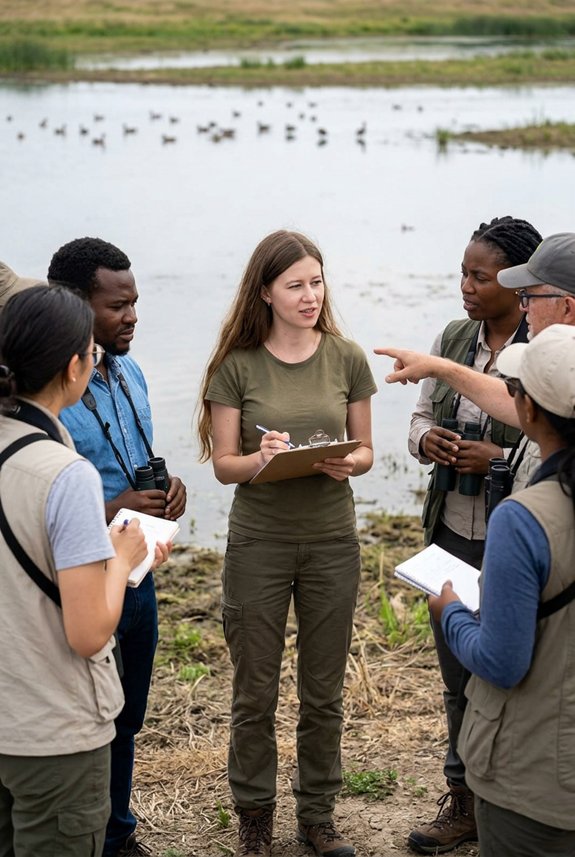
Stakeholder engagement, the ongoing process of communicating and coordinating with people outside your immediate team, like landowners, regulators, and community members, looks quite different depending on whether you’re working in applied or academic ecology.
In applied roles, you’ll likely engage stakeholders weekly, coordinating with planners, regulators, and the public, while handling policy translation, converting technical findings into clear guidance decision-makers can actually use and occasionally steering conflict mediation when competing interests arise on a project site.
Academic ecologists engage less frequently day to day, though senior researchers do coordinate with funders and community science partners, meaning projects that involve public data collection alongside scientists.
Both pathways reward strong relationship building, but applied ecology demands consistent, structured engagement as a core professional responsibility, not a periodic obligation.
Academic vs Applied Ecology: Which Suits Your Working Style?
If you thrive in lab solitude, working independently on long-term questions, writing, and analyzing data over months or years, academia may suit you well.
If you prefer field rhythms, moving between sites, teams, and tangible goals across shorter project cycles, applied roles often feel more energizing.
Consider stakeholder pace, too: applied work means regular feedback from clients, agencies, or communities, whereas academic timelines stretch across grants and publications.
Think honestly about whether you want to mentor students and shape theory, or deliver practical outcomes like habitat assessments and restoration plans, both paths matter deeply.
In my own career as an ecologist working across the world, I’ve moved between both modes, running field surveys for conservation NGOs in some years, contributing to research programs in others. What I’ve noticed is that the ecologists who thrive long term are usually the ones who chose their path based on how they want to spend their actual working days, not just the career outcomes they want on paper.
Hybrid Roles That Blend Both Career Paths

Between the two paths you’ve been weighing lies a third option that many ecologists find genuinely satisfying: hybrid roles that draw from both academic and applied traditions.
Government research labs, NGO programs, and university affiliated centers often hire ecologists who publish peer reviewed studies while also delivering management plans and policy briefs.
These positions reward skill translation, rephrasing your research abilities in ways that non scientists can immediately use.
You’ll build interdisciplinary partnerships with engineers, policymakers, and community groups, learning to communicate across very different professional cultures.
Hybrid roles also ask you to navigate ethical tradeoffs, meaning moments where scientific ideals meet budget limits or political pressures.
Soft skills like stakeholder engagement and project management carry real weight here, sometimes substituting entirely for formal managerial credentials you haven’t yet earned.
Can You Switch Between Academic and Applied Ecology?
Hybrid roles make it clear that the line between academic and applied ecology isn’t fixed, and that raises a natural question: can you cross that line more than once? You can, but timing matters.
Early shifts, through internships or fellowships, tend to go smoothly, while switching after a decade in academia can feel harder, since employers sometimes view outside experience with skepticism.
That’s where skill translation becomes essential: reframing your research abilities, modeling, statistics, field surveys, in language that applied employers recognize and value.
Your transition narratives, meaning how you tell your career story, should highlight outcomes and real-world relevance. When I made my own transitions between project based field work and more research oriented roles, the skill that opened the most doors wasn’t a publication or a certification, it was being able to clearly explain what I’d measured, why it mattered, and what decision it informed.
Networking strategies also matter deeply here; maintaining contacts across both sectors, attending professional events, and staying collaborative keeps doors open in either direction, giving you genuine flexibility throughout your career.
Five Questions That Will Tell You Which Path to Take
All the talk about switching paths and hybrid roles eventually leads back to a more personal question: which path actually fits you? Five honest questions can help clarify that.
Do you prefer curiosity driven research or goal driven projects with clear outcomes? Are you comfortable with the long, uncertain timeline of academic tenure? Do you love hands on field surveys and restoration work? Does your skill set lean toward GIS, R, or stakeholder communication, or toward publishing and teaching?
Finally, consider your career values, lifestyle priorities, and risk tolerance: meaning, how much instability you’re willing to accept in exchange for freedom or impact. Your answers won’t hand you a perfect decision, but they’ll reveal what you actually want, which is usually the most useful place to start.
Frequently Asked Questions
What Is the Difference Between Basic and Applied Ecology?
Basic ecology’s your curiosity-driven pursuit of ecosystem modeling, theoretical ecology, and biodiversity theory, advancing pure knowledge. Applied ecology’s where you tackle real-world environmental problems, translating those foundations into practical conservation and management solutions.
What Is the Difference Between Academic and Applied Research?
In academic research, you’ll focus on curiosity-driven research design and publication ethics, while applied research directs your data interpretation toward solving real-world environmental problems with immediate, measurable outcomes.
What Are 5 Potential Jobs That Students of Ecology Can Obtain?
You can pursue field technician, ecological consultant, conservation scientist, data scientist, or academic researcher roles. You’ll also find niches in conservation consulting, urban ecology projects, and even ecological entrepreneurship if you’re driven to innovate independently.
What Are the 4 Types of Ecology?
Like branches of a tree, the four types of ecology are organismal, population, community, and ecosystem ecology—each exploring life at different scales, from behavioral ecology and landscape ecology to ecosystem ecology’s broad nutrient cycles.

Erzsebet Frey (Eli Frey) is an ecologist and online entrepreneur with a Master of Science in Ecology from the University of Belgrade. Originally from Serbia, she has lived in Sri Lanka since 2017. Eli has worked internationally in countries like Oman, Brazil, Germany, and Sri Lanka. In 2018, she expanded into SEO and blogging, completing courses from UC Davis and Edinburgh. Eli has founded multiple websites focused on biology, ecology, environmental science, sustainable and simple living, and outdoor activities. She enjoys creating nature and simple living videos on YouTube and participates in speleology, diving, and hiking.