
This post contains affiliate links from Amazon and other affiliate networks. As an Amazon Associate I earn from qualifying purchases, at no extra cost to you. I only recommend products I have used or researched.
Wildlife Near Me
Wildlife in the USA: where and when to see 52 animals
Most people who come home from a national park without seeing anything were not unlucky. They arrived at ten in the morning, walked the trail at walking pace, and looked at the view instead of the treeline. This is the other way of doing it: pick a park or a wildlife refuge and a month, and you get the animals that are realistically there, the hour to be in position, how to approach without pushing them away, what sign to read when you cannot find them, and where to sleep so that being out at first light is easy.
I am a wildlife biologist and I have run field surveys across most animal groups, in several countries. What follows is the method, not a listicle. That includes telling you plainly which animals you should not plan a trip around at all.
Where are you going?
Pick a place and the whole page becomes that place.
Yellowstone National Park
Pick a month to get the sunrise time and the hour to be in position.
- Near certainAmerican bisonAll yearFirst two hours after sunrise and the last two before dark; herds bed down and chew cud through the middle of the day.
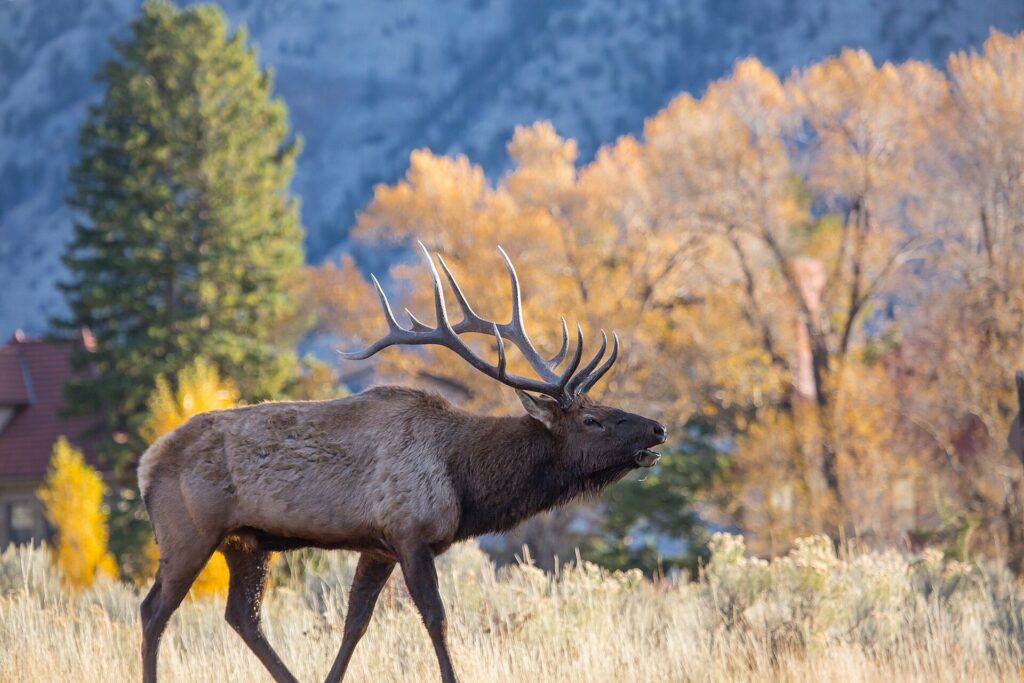
- Near certainElkSep to DecDawn and the hour before dark, in open meadow.
- Near certainCoyoteAll yearDawn and dusk, but coyotes hunt in daylight far more than people expect, especially in winter and in parks where they are not persecuted.
- Near certainBald eagleAll yearMorning, perched conspicuously on a bare limb over water while they wait for the day to warm.
- Near certainSandhill craneNov to FebThe half hour before sunrise, when they lift off the roost water in waves, and the last hour of light when they drop back in.
- Near certainMarmotsJun to SepMid morning, once the sun has hit the rocks.
- Near certainChipmunks and ground squirrelsMay to SepMid morning onwards.
- Good chanceMooseJul to OctFirst light and last light, in willow flats and pond edges.
- Good chancePronghornFeb to NovAll day, unusually.
- Good chanceBighorn sheepOct to DecEarly morning on cliff faces and roadside cuts, and again late afternoon.
- Good chanceAmerican black bearApr to OctEarly morning and evening, and through the day in autumn when they are feeding hard before denning.
- Good chanceAmerican beaverApr to SepThe last hour of light, and the first.
- Good chanceAmerican pikaJun to SepAny daylight hour in summer.
- Good chanceRed foxAll yearDawn and dusk, and through the night.
- LuckyGrizzly bearMay to SepFirst and last light in spring and autumn.
- LuckyNorth American river otterMar to OctFirst light is by far the best.
- LuckyNorth American porcupineAll yearAfter dark, and at dawn on the way back to a den.
- Lifetime sightingGray wolfOct to MarThe first hour of light, and that is close to the only hour.
- Near certainAmerican bisonAll yearFirst two hours after sunrise and the last two before dark; herds bed down and chew cud through the middle of the day.
- Near certainElkSep to DecDawn and the hour before dark, in open meadow.
- Near certainCoyoteAll yearDawn and dusk, but coyotes hunt in daylight far more than people expect, especially in winter and in parks where they are not persecuted.
- Near certainSandhill craneNov to FebThe half hour before sunrise, when they lift off the roost water in waves, and the last hour of light when they drop back in.
- Near certainMarmotsJun to SepMid morning, once the sun has hit the rocks.
- Near certainChipmunks and ground squirrelsMay to SepMid morning onwards.
- Good chanceMooseJul to OctFirst light and last light, in willow flats and pond edges.
- Good chancePronghornFeb to NovAll day, unusually.
- Good chanceAmerican beaverApr to SepThe last hour of light, and the first.
- Good chanceAmerican pikaJun to SepAny daylight hour in summer.
- LuckyGrizzly bearMay to SepFirst and last light in spring and autumn.
- LuckyNorth American river otterMar to OctFirst light is by far the best.
- LuckyNorth American porcupineAll yearAfter dark, and at dawn on the way back to a den.
- Near certainBald eagleAll yearMorning, perched conspicuously on a bare limb over water while they wait for the day to warm.
- Near certainMarmotsJun to SepMid morning, once the sun has hit the rocks.
- Near certainChipmunks and ground squirrelsMay to SepMid morning onwards.
- Good chanceMooseJul to OctFirst light and last light, in willow flats and pond edges.
- Good chanceBighorn sheepOct to DecEarly morning on cliff faces and roadside cuts, and again late afternoon.
- Good chanceMountain goatJul to OctAny daylight hour, but morning gives better light on the faces they use.
- Good chanceAmerican black bearApr to OctEarly morning and evening, and through the day in autumn when they are feeding hard before denning.
- Good chanceAmerican beaverApr to SepThe last hour of light, and the first.
- Good chanceAmerican pikaJun to SepAny daylight hour in summer.
- Good chanceRed foxAll yearDawn and dusk, and through the night.
- LuckyGrizzly bearMay to SepFirst and last light in spring and autumn.
- LuckyNorth American porcupineAll yearAfter dark, and at dawn on the way back to a den.
- Near certainElkSep to DecDawn and the hour before dark, in open meadow.
- Near certainMule deerAll yearDawn and dusk on sagebrush flats, canyon bottoms and lodge lawns.
- Near certainMarmotsJun to SepMid morning, once the sun has hit the rocks.
- Near certainChipmunks and ground squirrelsMay to SepMid morning onwards.
- Good chanceMooseJul to OctFirst light and last light, in willow flats and pond edges.
- Good chanceBighorn sheepOct to DecEarly morning on cliff faces and roadside cuts, and again late afternoon.
- Good chanceAmerican black bearApr to OctEarly morning and evening, and through the day in autumn when they are feeding hard before denning.
- Good chanceAmerican beaverApr to SepThe last hour of light, and the first.
- Good chanceAmerican pikaJun to SepAny daylight hour in summer.
- Good chanceRed foxAll yearDawn and dusk, and through the night.
- LuckyNorth American river otterMar to OctFirst light is by far the best.
- LuckyNorth American porcupineAll yearAfter dark, and at dawn on the way back to a den.
- Near certainAmerican bisonAll yearFirst two hours after sunrise and the last two before dark; herds bed down and chew cud through the middle of the day.
- Near certainMule deerAll yearDawn and dusk on sagebrush flats, canyon bottoms and lodge lawns.
- Near certainCoyoteAll yearDawn and dusk, but coyotes hunt in daylight far more than people expect, especially in winter and in parks where they are not persecuted.
- Near certainBlack-tailed prairie dogApr to SepMid morning and late afternoon.
- Near certainWild turkeyAll yearFirst and last light, when flocks move between the roost trees and open feeding ground.
- Near certainChipmunks and ground squirrelsMay to SepMid morning onwards.
- Near certainBlack-tailed jackrabbitAll yearDusk and dawn, and through the night.
- Good chancePronghornFeb to NovAll day, unusually.
- Good chanceBighorn sheepOct to DecEarly morning on cliff faces and roadside cuts, and again late afternoon.
- LuckyNorth American porcupineAll yearAfter dark, and at dawn on the way back to a den.
- Near certainMarmotsJun to SepMid morning, once the sun has hit the rocks.
- Near certainChipmunks and ground squirrelsMay to SepMid morning onwards.
- Good chanceMooseJul to OctFirst light and last light, in willow flats and pond edges.
- Good chanceAmerican beaverApr to SepThe last hour of light, and the first.
- Good chanceCaribouJul to SepAny hour in the Alaskan summer, when there is effectively no darkness.
- Good chanceDall sheepJul to SepAny daylight hour, high on the slopes.
- Good chanceRed foxAll yearDawn and dusk, and through the night.
- LuckyGrizzly bearMay to SepFirst and last light in spring and autumn.
- LuckyNorth American porcupineAll yearAfter dark, and at dawn on the way back to a den.
- Lifetime sightingGray wolfOct to MarThe first hour of light, and that is close to the only hour.
- Near certainHarbor and grey sealsAll yearAround low tide, whatever the clock says.
- Near certainBald eagleAll yearMorning, perched conspicuously on a bare limb over water while they wait for the day to warm.
- Good chanceHumpback whaleJul to OctWhenever the sea is calm.
- Good chancePuffinsJun to SepAny daylight hour in the breeding season, but boats go early because the sea is calmer and the birds are ferrying fish to burrows through the morning.
- LuckyGrizzly bearMay to SepFirst and last light in spring and autumn.
- Near certainHarbor and grey sealsAll yearAround low tide, whatever the clock says.
- Near certainBald eagleAll yearMorning, perched conspicuously on a bare limb over water while they wait for the day to warm.
- Good chanceSea otterAll yearAny daylight hour.
- Good chanceHumpback whaleJul to OctWhenever the sea is calm.
- Good chanceGray whaleNov to AprMorning, before the wind gets up and puts whitecaps on the water.
- Good chancePuffinsJun to SepAny daylight hour in the breeding season, but boats go early because the sea is calmer and the birds are ferrying fish to burrows through the morning.
- LuckyOrcaMay to SepAny daylight hour, from a boat.
- LuckyNorth American porcupineAll yearAfter dark, and at dawn on the way back to a den.
- Near certainAmerican bisonAll yearFirst two hours after sunrise and the last two before dark; herds bed down and chew cud through the middle of the day.
- Near certainWhite-tailed deerAll yearThe half hour either side of sunrise and sunset, at field edges and along forest roads.
- Near certainCoyoteAll yearDawn and dusk, but coyotes hunt in daylight far more than people expect, especially in winter and in parks where they are not persecuted.
- Near certainBlack-tailed prairie dogApr to SepMid morning and late afternoon.
- Near certainAssateague wild horsesAll yearEarly morning and evening on the marsh and dune edges; they move to the beach in the middle of the day in summer to escape insects.
- Near certainWild turkeyAll yearFirst and last light, when flocks move between the roost trees and open feeding ground.
- Near certainBlack-tailed jackrabbitAll yearDusk and dawn, and through the night.
- Good chancePronghornFeb to NovAll day, unusually.
- Near certainAmerican bisonAll yearFirst two hours after sunrise and the last two before dark; herds bed down and chew cud through the middle of the day.
- Near certainElkSep to DecDawn and the hour before dark, in open meadow.
- Near certainBlack-tailed prairie dogApr to SepMid morning and late afternoon.
- Near certainWild turkeyAll yearFirst and last light, when flocks move between the roost trees and open feeding ground.
- Good chancePronghornFeb to NovAll day, unusually.
- Good chanceBighorn sheepOct to DecEarly morning on cliff faces and roadside cuts, and again late afternoon.
- Near certainWhite-tailed deerAll yearThe half hour either side of sunrise and sunset, at field edges and along forest roads.
- Near certainBottlenose dolphinAll yearAny daylight hour.
- Near certainWest Indian manateeDec to MarEarly morning in winter, at warm water refuges.
- Near certainAmerican alligatorAll yearMid morning in cool weather, when they haul out to bask, which is the opposite of most species here.
- Near certainBald eagleAll yearMorning, perched conspicuously on a bare limb over water while they wait for the day to warm.
- Near certainRaccoonAll yearAfter dark, and the hour either side of it.
- Good chanceRoseate spoonbillOct to AprA falling tide, whatever the clock says, and then early morning for the colour.
- Good chanceNine-banded armadilloAll yearDusk and after dark in summer, and through the middle of the day in cool weather.
- Good chanceGreen sea turtleMay to OctFor turtles in the water, mid morning when the light is high and the sea is calm.
- LuckyBobcatOct to MarDawn and dusk, and through the day in winter.
- LuckyNorth American river otterMar to OctFirst light is by far the best.
- Near certainMule deerAll yearDawn and dusk on sagebrush flats, canyon bottoms and lodge lawns.
- Near certainCoyoteAll yearDawn and dusk, but coyotes hunt in daylight far more than people expect, especially in winter and in parks where they are not persecuted.
- Near certainWild turkeyAll yearFirst and last light, when flocks move between the roost trees and open feeding ground.
- Near certainBlack-tailed jackrabbitAll yearDusk and dawn, and through the night.
- Good chanceAmerican black bearApr to OctEarly morning and evening, and through the day in autumn when they are feeding hard before denning.
- Good chanceJavelinaAll yearEarly morning and evening in summer; in winter they move around in the middle of the day.
- Good chanceGreater roadrunnerAll yearMorning, especially just after sunrise when they sun themselves with the back feathers raised to warm up.
- Good chanceNine-banded armadilloAll yearDusk and after dark in summer, and through the middle of the day in cool weather.
- LuckyBobcatOct to MarDawn and dusk, and through the day in winter.
- Lifetime sightingMountain lionAll yearNight, mostly.
- Near certainMule deerAll yearDawn and dusk on sagebrush flats, canyon bottoms and lodge lawns.
- Near certainCoyoteAll yearDawn and dusk, but coyotes hunt in daylight far more than people expect, especially in winter and in parks where they are not persecuted.
- Near certainWild turkeyAll yearFirst and last light, when flocks move between the roost trees and open feeding ground.
- Near certainBlack-tailed jackrabbitAll yearDusk and dawn, and through the night.
- Good chanceJavelinaAll yearEarly morning and evening in summer; in winter they move around in the middle of the day.
- Good chanceGreater roadrunnerAll yearMorning, especially just after sunrise when they sun themselves with the back feathers raised to warm up.
- LuckyBobcatOct to MarDawn and dusk, and through the day in winter.
- Lifetime sightingMountain lionAll yearNight, mostly.
- Near certainCoyoteAll yearDawn and dusk, but coyotes hunt in daylight far more than people expect, especially in winter and in parks where they are not persecuted.
- Near certainBlack-tailed jackrabbitAll yearDusk and dawn, and through the night.
- Good chanceBighorn sheepOct to DecEarly morning on cliff faces and roadside cuts, and again late afternoon.
- Good chanceGreater roadrunnerAll yearMorning, especially just after sunrise when they sun themselves with the back feathers raised to warm up.
- LuckyBobcatOct to MarDawn and dusk, and through the day in winter.
- Near certainWhite-tailed deerAll yearThe half hour either side of sunrise and sunset, at field edges and along forest roads.
- Near certainBottlenose dolphinAll yearAny daylight hour.
- Near certainBald eagleAll yearMorning, perched conspicuously on a bare limb over water while they wait for the day to warm.
- Near certainAssateague wild horsesAll yearEarly morning and evening on the marsh and dune edges; they move to the beach in the middle of the day in summer to escape insects.
- Near certainRaccoonAll yearAfter dark, and the hour either side of it.
- Good chanceRed foxAll yearDawn and dusk, and through the night.
- Near certainElkSep to DecDawn and the hour before dark, in open meadow.
- Near certainHarbor and grey sealsAll yearAround low tide, whatever the clock says.
- Near certainBald eagleAll yearMorning, perched conspicuously on a bare limb over water while they wait for the day to warm.
- Near certainMarmotsJun to SepMid morning, once the sun has hit the rocks.
- Near certainChipmunks and ground squirrelsMay to SepMid morning onwards.
- Good chanceMountain goatJul to OctAny daylight hour, but morning gives better light on the faces they use.
- Good chanceAmerican black bearApr to OctEarly morning and evening, and through the day in autumn when they are feeding hard before denning.
- Good chanceSea otterAll yearAny daylight hour.
- Good chanceGray whaleNov to AprMorning, before the wind gets up and puts whitecaps on the water.
- LuckyNorth American river otterMar to OctFirst light is by far the best.
- LuckyOrcaMay to SepAny daylight hour, from a boat.
- Near certainElkSep to DecDawn and the hour before dark, in open meadow.
- Near certainMarmotsJun to SepMid morning, once the sun has hit the rocks.
- Near certainChipmunks and ground squirrelsMay to SepMid morning onwards.
- Good chanceMountain goatJul to OctAny daylight hour, but morning gives better light on the faces they use.
- Good chanceAmerican black bearApr to OctEarly morning and evening, and through the day in autumn when they are feeding hard before denning.
- Good chanceAmerican pikaJun to SepAny daylight hour in summer.
- Near certainElkSep to DecDawn and the hour before dark, in open meadow.
- Near certainHarbor and grey sealsAll yearAround low tide, whatever the clock says.
- Near certainBald eagleAll yearMorning, perched conspicuously on a bare limb over water while they wait for the day to warm.
- Good chanceGray whaleNov to AprMorning, before the wind gets up and puts whitecaps on the water.
- LuckyNorth American river otterMar to OctFirst light is by far the best.
- Near certainElkSep to DecDawn and the hour before dark, in open meadow.
- Near certainCoyoteAll yearDawn and dusk, but coyotes hunt in daylight far more than people expect, especially in winter and in parks where they are not persecuted.
- Near certainHarbor and grey sealsAll yearAround low tide, whatever the clock says.
- Near certainNorthern elephant sealDec to MarAny daylight hour in winter.
- Near certainWild turkeyAll yearFirst and last light, when flocks move between the roost trees and open feeding ground.
- Good chanceHumpback whaleJul to OctWhenever the sea is calm.
- Good chanceGray whaleNov to AprMorning, before the wind gets up and puts whitecaps on the water.
- LuckyBobcatOct to MarDawn and dusk, and through the day in winter.
- LuckyOrcaMay to SepAny daylight hour, from a boat.
- Near certainHarbor and grey sealsAll yearAround low tide, whatever the clock says.
- Near certainNorthern elephant sealDec to MarAny daylight hour in winter.
- Near certainBottlenose dolphinAll yearAny daylight hour.
- Good chanceSea otterAll yearAny daylight hour.
- Good chanceHumpback whaleJul to OctWhenever the sea is calm.
- Good chanceGray whaleNov to AprMorning, before the wind gets up and puts whitecaps on the water.
- Good chanceGreen sea turtleMay to OctFor turtles in the water, mid morning when the light is high and the sea is calm.
- LuckyOrcaMay to SepAny daylight hour, from a boat.
- Near certainMule deerAll yearDawn and dusk on sagebrush flats, canyon bottoms and lodge lawns.
- Near certainCoyoteAll yearDawn and dusk, but coyotes hunt in daylight far more than people expect, especially in winter and in parks where they are not persecuted.
- Near certainMarmotsJun to SepMid morning, once the sun has hit the rocks.
- Near certainWild turkeyAll yearFirst and last light, when flocks move between the roost trees and open feeding ground.
- Near certainRaccoonAll yearAfter dark, and the hour either side of it.
- Near certainChipmunks and ground squirrelsMay to SepMid morning onwards.
- Good chanceAmerican black bearApr to OctEarly morning and evening, and through the day in autumn when they are feeding hard before denning.
- Good chanceAmerican pikaJun to SepAny daylight hour in summer.
- LuckyBobcatOct to MarDawn and dusk, and through the day in winter.
- Lifetime sightingMountain lionAll yearNight, mostly.
- Near certainMule deerAll yearDawn and dusk on sagebrush flats, canyon bottoms and lodge lawns.
- Near certainCoyoteAll yearDawn and dusk, but coyotes hunt in daylight far more than people expect, especially in winter and in parks where they are not persecuted.
- Near certainMarmotsJun to SepMid morning, once the sun has hit the rocks.
- Near certainWild turkeyAll yearFirst and last light, when flocks move between the roost trees and open feeding ground.
- Near certainChipmunks and ground squirrelsMay to SepMid morning onwards.
- Good chanceAmerican black bearApr to OctEarly morning and evening, and through the day in autumn when they are feeding hard before denning.
- Good chanceAmerican pikaJun to SepAny daylight hour in summer.
- LuckyNorth American river otterMar to OctFirst light is by far the best.
- Near certainElkSep to DecDawn and the hour before dark, in open meadow.
- Near certainMule deerAll yearDawn and dusk on sagebrush flats, canyon bottoms and lodge lawns.
- Near certainWild turkeyAll yearFirst and last light, when flocks move between the roost trees and open feeding ground.
- Near certainChipmunks and ground squirrelsMay to SepMid morning onwards.
- Good chanceBighorn sheepOct to DecEarly morning on cliff faces and roadside cuts, and again late afternoon.
- LuckyCalifornia condorApr to SepLate morning through afternoon, once thermals have built.
- Lifetime sightingMountain lionAll yearNight, mostly.
- Near certainMule deerAll yearDawn and dusk on sagebrush flats, canyon bottoms and lodge lawns.
- Near certainWild turkeyAll yearFirst and last light, when flocks move between the roost trees and open feeding ground.
- Near certainChipmunks and ground squirrelsMay to SepMid morning onwards.
- Good chanceBighorn sheepOct to DecEarly morning on cliff faces and roadside cuts, and again late afternoon.
- LuckyCalifornia condorApr to SepLate morning through afternoon, once thermals have built.
- Lifetime sightingMountain lionAll yearNight, mostly.
- Near certainWhite-tailed deerAll yearThe half hour either side of sunrise and sunset, at field edges and along forest roads.
- Near certainBald eagleAll yearMorning, perched conspicuously on a bare limb over water while they wait for the day to warm.
- Good chanceMooseJul to OctFirst light and last light, in willow flats and pond edges.
- Good chanceAmerican black bearApr to OctEarly morning and evening, and through the day in autumn when they are feeding hard before denning.
- Good chanceAmerican beaverApr to SepThe last hour of light, and the first.
- Good chanceRed foxAll yearDawn and dusk, and through the night.
- LuckyNorth American river otterMar to OctFirst light is by far the best.
- LuckyNorth American porcupineAll yearAfter dark, and at dawn on the way back to a den.
- Lifetime sightingGray wolfOct to MarThe first hour of light, and that is close to the only hour.
- Near certainElkSep to DecDawn and the hour before dark, in open meadow.
- Near certainWhite-tailed deerAll yearThe half hour either side of sunrise and sunset, at field edges and along forest roads.
- Near certainCoyoteAll yearDawn and dusk, but coyotes hunt in daylight far more than people expect, especially in winter and in parks where they are not persecuted.
- Near certainWild turkeyAll yearFirst and last light, when flocks move between the roost trees and open feeding ground.
- Near certainRaccoonAll yearAfter dark, and the hour either side of it.
- Good chanceAmerican black bearApr to OctEarly morning and evening, and through the day in autumn when they are feeding hard before denning.
- Good chanceNine-banded armadilloAll yearDusk and after dark in summer, and through the middle of the day in cool weather.
- Near certainWhite-tailed deerAll yearThe half hour either side of sunrise and sunset, at field edges and along forest roads.
- Near certainCoyoteAll yearDawn and dusk, but coyotes hunt in daylight far more than people expect, especially in winter and in parks where they are not persecuted.
- Near certainWild turkeyAll yearFirst and last light, when flocks move between the roost trees and open feeding ground.
- Near certainRaccoonAll yearAfter dark, and the hour either side of it.
- Good chanceAmerican black bearApr to OctEarly morning and evening, and through the day in autumn when they are feeding hard before denning.
- Good chanceRed foxAll yearDawn and dusk, and through the night.
- Near certainWhite-tailed deerAll yearThe half hour either side of sunrise and sunset, at field edges and along forest roads.
- Near certainHarbor and grey sealsAll yearAround low tide, whatever the clock says.
- Near certainBald eagleAll yearMorning, perched conspicuously on a bare limb over water while they wait for the day to warm.
- Near certainRaccoonAll yearAfter dark, and the hour either side of it.
- Good chanceHumpback whaleJul to OctWhenever the sea is calm.
- Good chancePuffinsJun to SepAny daylight hour in the breeding season, but boats go early because the sea is calmer and the birds are ferrying fish to burrows through the morning.
- Good chanceRed foxAll yearDawn and dusk, and through the night.
- LuckyNorth American porcupineAll yearAfter dark, and at dawn on the way back to a den.
- Near certainWhite-tailed deerAll yearThe half hour either side of sunrise and sunset, at field edges and along forest roads.
- Near certainHarbor and grey sealsAll yearAround low tide, whatever the clock says.
- Near certainBottlenose dolphinAll yearAny daylight hour.
- Near certainRaccoonAll yearAfter dark, and the hour either side of it.
- Good chanceHumpback whaleJul to OctWhenever the sea is calm.
- Good chanceRed foxAll yearDawn and dusk, and through the night.
- Good chanceGreen sea turtleMay to OctFor turtles in the water, mid morning when the light is high and the sea is calm.
- Good chanceHumpback whaleJul to OctWhenever the sea is calm.
- Good chanceNeneSep to AprMorning and late afternoon, on open grassy areas and roadside pull outs.
- Good chanceGreen sea turtleMay to OctFor turtles in the water, mid morning when the light is high and the sea is calm.
- Good chanceHawaiian honeycreepersAll yearThe first two hours of daylight, when they feed hardest in flowering ohia trees.
- Near certainMule deerAll yearDawn and dusk on sagebrush flats, canyon bottoms and lodge lawns.
- Near certainCoyoteAll yearDawn and dusk, but coyotes hunt in daylight far more than people expect, especially in winter and in parks where they are not persecuted.
- Near certainBald eagleAll yearMorning, perched conspicuously on a bare limb over water while they wait for the day to warm.
- Near certainSandhill craneNov to FebThe half hour before sunrise, when they lift off the roost water in waves, and the last hour of light when they drop back in.
- Near certainSnow gooseNov to FebDawn and dusk at the roost.
- Near certainBlack-tailed jackrabbitAll yearDusk and dawn, and through the night.
- Near certainAmerican alligatorAll yearMid morning in cool weather, when they haul out to bask, which is the opposite of most species here.
- Near certainBald eagleAll yearMorning, perched conspicuously on a bare limb over water while they wait for the day to warm.
- Near certainRaccoonAll yearAfter dark, and the hour either side of it.
- Good chanceRoseate spoonbillOct to AprA falling tide, whatever the clock says, and then early morning for the colour.
- Good chanceGreen sea turtleMay to OctFor turtles in the water, mid morning when the light is high and the sea is calm.
- LuckyBobcatOct to MarDawn and dusk, and through the day in winter.
- LuckyNorth American river otterMar to OctFirst light is by far the best.
- Near certainWest Indian manateeDec to MarEarly morning in winter, at warm water refuges.
- Near certainAmerican alligatorAll yearMid morning in cool weather, when they haul out to bask, which is the opposite of most species here.
- Near certainBald eagleAll yearMorning, perched conspicuously on a bare limb over water while they wait for the day to warm.
- Near certainRaccoonAll yearAfter dark, and the hour either side of it.
- Good chanceRoseate spoonbillOct to AprA falling tide, whatever the clock says, and then early morning for the colour.
- Good chanceGreen sea turtleMay to OctFor turtles in the water, mid morning when the light is high and the sea is calm.
- Good chanceAmerican avocetMay to SepAny daylight hour on shallow water, but early and late light on that rust coloured head is what makes the trip worth it.
- LuckyBobcatOct to MarDawn and dusk, and through the day in winter.
- Near certainWhite-tailed deerAll yearThe half hour either side of sunrise and sunset, at field edges and along forest roads.
- Near certainAmerican alligatorAll yearMid morning in cool weather, when they haul out to bask, which is the opposite of most species here.
- Near certainSandhill craneNov to FebThe half hour before sunrise, when they lift off the roost water in waves, and the last hour of light when they drop back in.
- Good chanceJavelinaAll yearEarly morning and evening in summer; in winter they move around in the middle of the day.
- Good chanceWhooping craneDec to MarMorning and late afternoon, when family groups move between the salt flats and freshwater ponds.
- Good chanceRoseate spoonbillOct to AprA falling tide, whatever the clock says, and then early morning for the colour.
- Good chanceNine-banded armadilloAll yearDusk and after dark in summer, and through the middle of the day in cool weather.
- Good chanceAmerican avocetMay to SepAny daylight hour on shallow water, but early and late light on that rust coloured head is what makes the trip worth it.
- LuckyBobcatOct to MarDawn and dusk, and through the day in winter.
- Near certainBald eagleAll yearMorning, perched conspicuously on a bare limb over water while they wait for the day to warm.
- Near certainSandhill craneNov to FebThe half hour before sunrise, when they lift off the roost water in waves, and the last hour of light when they drop back in.
- Near certainSnow gooseNov to FebDawn and dusk at the roost.
- Good chanceRed foxAll yearDawn and dusk, and through the night.
- Good chanceAmerican avocetMay to SepAny daylight hour on shallow water, but early and late light on that rust coloured head is what makes the trip worth it.
- Near certainWhite-tailed deerAll yearThe half hour either side of sunrise and sunset, at field edges and along forest roads.
- Near certainBald eagleAll yearMorning, perched conspicuously on a bare limb over water while they wait for the day to warm.
- Near certainRaccoonAll yearAfter dark, and the hour either side of it.
- Good chanceTundra swanNov to FebAll day on open water, but the light at either end of the day is what makes a swan flock worth photographing.
- Good chanceRed foxAll yearDawn and dusk, and through the night.
- LuckyNorth American river otterMar to OctFirst light is by far the best.
- Near certainAmerican alligatorAll yearMid morning in cool weather, when they haul out to bask, which is the opposite of most species here.
- Near certainSandhill craneNov to FebThe half hour before sunrise, when they lift off the roost water in waves, and the last hour of light when they drop back in.
- Near certainWild turkeyAll yearFirst and last light, when flocks move between the roost trees and open feeding ground.
- Near certainRaccoonAll yearAfter dark, and the hour either side of it.
- Good chanceAmerican black bearApr to OctEarly morning and evening, and through the day in autumn when they are feeding hard before denning.
- Good chanceNine-banded armadilloAll yearDusk and after dark in summer, and through the middle of the day in cool weather.
- LuckyNorth American river otterMar to OctFirst light is by far the best.
- Near certainAmerican bisonAll yearFirst two hours after sunrise and the last two before dark; herds bed down and chew cud through the middle of the day.
- Near certainElkSep to DecDawn and the hour before dark, in open meadow.
- Near certainMule deerAll yearDawn and dusk on sagebrush flats, canyon bottoms and lodge lawns.
- Near certainCoyoteAll yearDawn and dusk, but coyotes hunt in daylight far more than people expect, especially in winter and in parks where they are not persecuted.
- Near certainBald eagleAll yearMorning, perched conspicuously on a bare limb over water while they wait for the day to warm.
- Good chancePronghornFeb to NovAll day, unusually.
- Good chanceBighorn sheepOct to DecEarly morning on cliff faces and roadside cuts, and again late afternoon.
- Good chanceTundra swanNov to FebAll day on open water, but the light at either end of the day is what makes a swan flock worth photographing.
- Near certainMule deerAll yearDawn and dusk on sagebrush flats, canyon bottoms and lodge lawns.
- Near certainBald eagleAll yearMorning, perched conspicuously on a bare limb over water while they wait for the day to warm.
- Near certainSnow gooseNov to FebDawn and dusk at the roost.
- Good chanceTundra swanNov to FebAll day on open water, but the light at either end of the day is what makes a swan flock worth photographing.
- Good chanceAmerican avocetMay to SepAny daylight hour on shallow water, but early and late light on that rust coloured head is what makes the trip worth it.
- Near certainBald eagleAll yearMorning, perched conspicuously on a bare limb over water while they wait for the day to warm.
- Near certainSnow gooseNov to FebDawn and dusk at the roost.
- Good chanceTundra swanNov to FebAll day on open water, but the light at either end of the day is what makes a swan flock worth photographing.
- Good chanceAmerican avocetMay to SepAny daylight hour on shallow water, but early and late light on that rust coloured head is what makes the trip worth it.
- LuckyNorth American river otterMar to OctFirst light is by far the best.
- Near certainMule deerAll yearDawn and dusk on sagebrush flats, canyon bottoms and lodge lawns.
- Near certainCoyoteAll yearDawn and dusk, but coyotes hunt in daylight far more than people expect, especially in winter and in parks where they are not persecuted.
- Near certainSandhill craneNov to FebThe half hour before sunrise, when they lift off the roost water in waves, and the last hour of light when they drop back in.
- Good chancePronghornFeb to NovAll day, unusually.
- Good chanceTundra swanNov to FebAll day on open water, but the light at either end of the day is what makes a swan flock worth photographing.
- Good chanceAmerican avocetMay to SepAny daylight hour on shallow water, but early and late light on that rust coloured head is what makes the trip worth it.
- Near certainAmerican bisonAll yearFirst two hours after sunrise and the last two before dark; herds bed down and chew cud through the middle of the day.
- Near certainElkSep to DecDawn and the hour before dark, in open meadow.
- Near certainWhite-tailed deerAll yearThe half hour either side of sunrise and sunset, at field edges and along forest roads.
- Near certainCoyoteAll yearDawn and dusk, but coyotes hunt in daylight far more than people expect, especially in winter and in parks where they are not persecuted.
- Near certainBlack-tailed prairie dogApr to SepMid morning and late afternoon.
- Near certainWild turkeyAll yearFirst and last light, when flocks move between the roost trees and open feeding ground.
- Near certainBlack-tailed jackrabbitAll yearDusk and dawn, and through the night.
- LuckyNorth American river otterMar to OctFirst light is by far the best.
- Near certainHarbor and grey sealsAll yearAround low tide, whatever the clock says.
- Near certainBald eagleAll yearMorning, perched conspicuously on a bare limb over water while they wait for the day to warm.
- Good chanceSea otterAll yearAny daylight hour.
- Good chanceHumpback whaleJul to OctWhenever the sea is calm.
- Good chancePuffinsJun to SepAny daylight hour in the breeding season, but boats go early because the sea is calmer and the birds are ferrying fish to burrows through the morning.
- LuckyGrizzly bearMay to SepFirst and last light in spring and autumn.
- Near certainAmerican alligatorAll yearMid morning in cool weather, when they haul out to bask, which is the opposite of most species here.
- Near certainRaccoonAll yearAfter dark, and the hour either side of it.
- Good chanceRoseate spoonbillOct to AprA falling tide, whatever the clock says, and then early morning for the colour.
- Good chanceGreen sea turtleMay to OctFor turtles in the water, mid morning when the light is high and the sea is calm.
- LuckyNorth American river otterMar to OctFirst light is by far the best.
- Near certainBald eagleAll yearMorning, perched conspicuously on a bare limb over water while they wait for the day to warm.
- Good chanceTundra swanNov to FebAll day on open water, but the light at either end of the day is what makes a swan flock worth photographing.
- Good chanceAmerican avocetMay to SepAny daylight hour on shallow water, but early and late light on that rust coloured head is what makes the trip worth it.
Nothing on this list is a realistic target there in that month. That is useful information: pick a different month, or a different park.
Yellowstone National Park
Wyoming, Montana and Idaho
Where you stay Gardiner, Montana for the north entrance and West Yellowstone for the west; Cooke City and Silver Gate for the northeast and the Lamar Valley
Booking reality In park lodges release rooms about 13 months ahead and peak July and August dates go within days. Most in park properties run roughly May to October. Gardiner and West Yellowstone motels want 4 to 8 months notice.
Also common hereUinta ground squirrels on every roadside verge, red squirrels, snowshoe hares, ravens working the picnic areas, trumpeter swans on the Madison in winter, and osprey on the Yellowstone River.
Budget Roughly under $130 a night in high season
Roosevelt Lodge Cabins Tower Roosevelt, inside the park
Reviewers love the genuinely rustic Old West feel and the cookout rides, but warn that Roughrider cabins have wood stoves, no bathroom and thin walls.
For wildlife The best placed in park lodging for Lamar Valley. Wolf and bear watchers can be at the pullouts before first light and bison walk through the cabin loop.
Alpine Motel West Yellowstone, Montana
One of the highest rated properties in town across more than a thousand reviews for spotless rooms and value; the only gripe is small dated bathrooms.
For wildlife Walking distance to the West Entrance for a pre dawn run to the Madison and Firehole valleys for elk and bison.
Yellowstone Village Inn Gardiner, Montana
Well rated over hundreds of reviews for the indoor pool and roomy family units, though the decor is dated and highway noise reaches some rooms.
For wildlife Elk and pronghorn graze the flats around Gardiner year round, and it is about 50 minutes to the Lamar Valley pullouts.
Mid range Roughly $130 to $280
Mammoth Hot Springs Hotel & Cabins Mammoth Hot Springs, inside the park
The 2019 renovated rooms and the location rate highly, but the cheapest rooms share a bathroom down the hall and there are no televisions.
For wildlife Bull elk bed down on the hotel lawn and parade ground, especially during the September and October rut. Wildlife arrives at your door.
Yellowstone Basin Inn Gardiner, Montana
Close to the top rated property in the Gardiner area across roughly a thousand reviews for immaculate suites and an excellent breakfast; it is a short drive from town restaurants.
For wildlife On a hillside above the Yellowstone River with deer, pronghorn and elk on the property, and the closest quality base to a dawn Lamar run.
Explorer Cabins at Yellowstone West Yellowstone, Montana
More than a thousand reviews rate the cabins highly for space, kitchenettes and quiet, while critics say the price is steep for a cabin court with no restaurant.
For wildlife Easy early departure to the Madison River corridor and Hayden Valley, though nothing on the grounds.
Higher end $280 and up
Old Faithful Inn Old Faithful, inside the park
Universally admired for its cathedral like log lobby, but reviewers are blunt that the historic rooms are small and creaky and some share bathrooms.
For wildlife Bison graze the geyser basin boardwalks at dawn and dusk right outside, and it is the best base for the Firehole elk and bison herds.
Lake Yellowstone Hotel & Cabins Lake Village, inside the park
The park's most refined lodging, praised for the restored 1891 building and the sunroom over the lake, with a surcharge for a lake view and very basic Frontier cabins.
For wildlife Closest quality lodging to Hayden Valley, the premier grizzly, wolf and bison area, plus otters and bald eagles on the lakeshore.
Sage Lodge Pray, Montana
A genuinely five star Montana lodge with outstanding service, spa and dining; the only consistent criticism is price and distance from the gate.
For wildlife In Paradise Valley on the Yellowstone River where elk, mule deer, bighorn and bald eagles are routine.
Guided wildlife tours Booked on GetYourGuide and Viator
From West Yellowstone: Lamar Valley Wildlife Tour by Van GetYourGuide
A naturalist drives a large window van into Lamar Valley with spotting scopes to find wolves, bears, bison and pronghorn, with a picnic lunch.
Why this one Lamar is the park's wolf and bear corridor and the whole day is built around scope assisted spotting rather than geyser stops.
Privately Guided Safari at Sunset from West Yellowstone GetYourGuide
A late afternoon private departure into Hayden Valley timed for when wolves, bears, elk, bison and moose become active, optics provided.
Why this one Deliberately scheduled for the dusk activity window rather than midday sightseeing hours.
Private Yellowstone Wildlife Tour Viator
A private guide with binoculars and scopes works Hayden Valley, Lamar Valley and the Northern Range for bison, elk, bears and wolves.
Why this one The itinerary is chosen by where animals are that day, not by a fixed geyser basin route.
Grand Teton National Park
Wyoming
Where you stay Jackson, Wyoming to the south, plus Moose, Moran and Colter Bay inside the park
Booking reality Reservations open about 13 months ahead and Jackson Lake Lodge and Jenny Lake Lodge sell out for July and August by the previous winter. In park lodges close from roughly early October to late May.
Also common hereUinta ground squirrels, yellow pine chipmunks, muskrats in the beaver ponds, ospreys on the Snake River, sandhill cranes in the willow flats and trumpeter swans on Flat Creek.
Budget Roughly under $130 a night in high season
Colter Bay Village Colter Bay, inside the park
Reviewers value the location above all and like the restored log cabins, but the tent cabins are canvas bunk shelters with a shared bathhouse.
For wildlife Minutes from Oxbow Bend and Willow Flats, two of the best dawn spots in the park for moose, elk, beaver, otters and bald eagles.
Flat Creek Inn Jackson, Wyoming
Reliably rated the best value in Jackson, with reviewers mentioning the elk refuge views, though the rooms are plain and sit on a busy highway.
For wildlife Directly on the National Elk Refuge boundary. Trumpeter swans, pronghorn, bighorn and thousands of wintering elk are visible from the car park.
The Virginian Lodge Jackson, Wyoming
The refreshed western rooms and big outdoor pool rate well for the price, but light sleepers complain about bar and highway noise.
For wildlife Nothing on the grounds, but 20 minutes from the Gros Ventre road where moose and bison are reliable at dawn.
Mid range Roughly $130 to $280
Headwaters Lodge & Cabins at Flagg Ranch Moran, Wyoming
Reviewers like the quiet forest setting and the fact that it is the only lodging between the two parks, while criticising thin walls and limited dining.
For wildlife In the Snake River corridor between the parks, genuine grizzly and moose country.
Elk Refuge Inn Jackson, Wyoming
Over 1,400 reviews praise the refuge facing balconies and quiet nights; the rooms are simple and the road out front carries traffic.
For wildlife Rooms look across the National Elk Refuge. Guests watch elk, pronghorn, bighorn and coyotes from their balcony before breakfast.
Cowboy Village Resort Jackson, Wyoming
Nearly 1,500 reviews rate the log cabins highly for privacy and kitchenettes, though the cabins are packed close together and parking is tight.
For wildlife No animals on the grounds, but the most convenient full kitchen base for pre dawn runs to Moose Wilson Road and Antelope Flats.
Higher end $280 and up
Jackson Lake Lodge Moran, inside the park
The 60 foot lobby windows onto the Tetons are one of the great hotel views in America, though many say the 1950s cottage rooms are ordinary for the price.
For wildlife The terrace overlooks Willow Flats where moose, elk and grizzlies are regularly spotted with a scope from your chair. Arguably the best passive wildlife viewing of any US park hotel.
Signal Mountain Lodge Moran, inside the park
Very well reviewed for lakefront cabins with decks and a relaxed feel, though room quality varies between categories and there is no air conditioning.
For wildlife Lakeshore setting with moose in the willows, otters and eagles, and access to the Signal Mountain summit road for elk and bear at dusk.
Jenny Lake Lodge Moose, inside the park
Described as the most special place people have stayed in the Tetons, with superb food and real seclusion; the price is extraordinary and the cabins are deliberately rustic.
For wildlife Tucked into the moraine forest below the Cathedral Group with moose in the surrounding meadows.
Guided wildlife tours Booked on GetYourGuide and Viator
Grand Teton Wildlife Safari in Open-Air Vehicle with Guide Viator
A dawn or dusk safari looking for moose, bison, elk, bears and mule deer, with binoculars and snacks.
Why this one Departures are set at dawn and dusk because that is when Teton animals move, and the 4.9 rating across 1,300 plus reviews is built on sightings.
Half-Day Grand Teton Wildlife Safari Private Tour Viator
A private naturalist takes you through the National Elk Refuge, Moose Wilson Road and Mormon Row at sunrise or sunset with scopes.
Why this one Moose Wilson Road and the Elk Refuge are the park's two best animal corridors and the tour visits them at the exact low light hours.
Jackson: Grand Teton Sunrise Safari with Naturalist Guide GetYourGuide
An early morning run through Grand Teton with a naturalist, stopping to scope moose, elk, bison, bears and bald eagles.
Why this one A sunrise only naturalist product where the commentary is animal behaviour, not park history.
Glacier National Park
Montana
Where you stay West Glacier and Apgar on the west; St. Mary and Many Glacier on the east; East Glacier Park for Two Medicine
Booking reality Bookings open about 13 months ahead and Many Glacier Hotel sells out within hours for July and August. In park lodges run mid May to late September only, and a vehicle reservation is required for Going to the Sun Road and Many Glacier in peak summer.
Also common hereColumbian ground squirrels all over the Logan Pass meadows, Clark's nutcrackers at every overlook, snowshoe hares at dusk, harlequin ducks on McDonald Creek in early summer.
Budget Roughly under $130 a night in high season
Mountain Pine Motel East Glacier Park, Montana
Rated highly across nearly 500 reviews for spotless rooms and welcoming owners; it is a genuinely basic older motel with no breakfast or pool.
For wildlife Quiet wooded setting where deer are common and the closest cheap base to Two Medicine for early moose and black bear.
Travelers Rest Lodge East Glacier Park, Montana
One of the best rated places on the east side for its hostel and private room mix and communal kitchen, with shared bathrooms in the cheapest beds.
For wildlife Popular with hikers heading into Two Medicine and Cut Bank, both reliable for moose, bighorn and black bear at first light.
Apgar Village Lodge & Cabins Apgar Village, inside the park
Valued as the only genuinely affordable in park option on the west side, though the rooms are dated, walls are thin and some units need two nights.
For wildlife On the shore of Lake McDonald with deer through the village, loons and eagles, and a head start on Going to the Sun Road at dawn.
Mid range Roughly $130 to $280
Swiftcurrent Motor Inn Many Glacier, inside the park
Reviewers accept the very plain rooms and shared bath cabins because the location is unmatched, but complain about insulation and long dining queues.
For wildlife The single best wildlife base in Glacier. Grizzlies are routinely watched on the Mount Altyn and Grinnell slopes from the car park, and moose feed in Fishercap Lake ten minutes away.
Rising Sun Motor Inn & Cabins St. Mary area, inside the park
Clean, quiet and superbly placed on the Sun Road, though the rooms are utterly basic for the price and there is no wifi or cell service.
For wildlife Overlooks St. Mary Lake with bighorn and black bear common along the Sun Road, and Logan Pass reachable before the crowds.
Cedar Creek Lodge Columbia Falls, Montana
Well reviewed for large modern rooms, a good pool and a substantial free breakfast; the criticism is that it is a business style hotel with no park atmosphere.
For wildlife No wildlife on the grounds. A comfortable, reliable base when in park lodging is sold out.
Higher end $280 and up
Many Glacier Hotel Many Glacier, inside the park
The Swiss chalet lobby and lake setting are called the most beautiful in the national park system, with repeated warnings about small historic rooms and no connectivity.
For wildlife Grizzly bears are regularly watched with binoculars on the slopes above the hotel from the back deck, and moose feed in the lake shallows at dusk.
Lake McDonald Lodge Lake McDonald, inside the park
Loved for the hunting lodge great room and lakefront lawn, though the historic rooms are cramped and the cheaper motel units lack the charm.
For wildlife On the Sun Road for a dawn drive to Logan Pass. Black bears and deer are common in the McDonald Creek corridor.
Belton Chalet West Glacier, Montana
A beautifully restored 1910 railway chalet with an excellent restaurant, though almost every review mentions the freight trains through the night.
For wildlife Closest quality lodging to the West Entrance for a first light Sun Road departure.
Guided wildlife tours Booked on GetYourGuide and Viator
Glacier has almost no dedicated wildlife tour on either platform. GetYourGuide's wildlife category for the park returns nothing and Viator's inventory is rafting, audio drives and Going to the Sun Road buses. For real bear and goat viewing, use the park's own ranger programmes and the Many Glacier trailheads at first light.
Nature Walk in Glacier National Park Viator
A guide vans you into the park for two short walks in the Lake McDonald valley and along the North Fork, interpreting flora, fauna and fire ecology.
Why this one The only genuinely naturalist led interpretive product in the park on either platform, so wildlife is looked for rather than driven past.
Half Day Scenic Float on the Middle Fork of the Flathead River Viator
A calm float along the park boundary where guides point out bald eagles, osprey and occasionally bears and deer on the banks.
Why this one River corridors are where Glacier's animals come to drink, so a slow float sees more than a road tour, though sightings are incidental.
Rocky Mountain National Park
Colorado
Where you stay Estes Park on the east side and Grand Lake on the west
Booking reality There is no lodging inside the park. Estes Park sells out for July to September and for elk rut weekends in late September and October three to six months ahead. Timed entry permits are required from late May to mid October, and Trail Ridge Road closes from late October to late May.
Also common hereGolden mantled ground squirrels and least chipmunks on the tundra, snowshoe hares turning white in October, Steller's jays, Clark's nutcrackers and ptarmigan above treeline.
Budget Roughly under $130 a night in high season
Gateway Inn Grand Lake, Colorado
Rated well across more than 700 reviews for value and an indoor pool, though the rooms are dated and the restaurant is inconsistent.
For wildlife Minutes from the Kawuneeche Valley, the most dependable moose area in the park, plus a resident elk herd around Grand Lake.
Spirit Lake Lodge Grand Lake, Colorado
Reviewers like the walkable boardwalk location and hot tub, with complaints about small older rooms and street noise on summer weekends.
For wildlife A very short pre dawn drive to the Coyote Valley and Holzwarth moose meadows.
Blue Door Inn Estes Park, Colorado
Among the best rated in Estes Park across roughly 1,400 reviews for a smart budget renovation and good beds; there is no breakfast or pool.
For wildlife Elk wander the Estes Park streets and golf course through the autumn rut, and it is ten minutes to Moraine Park for the dawn bugling.
Mid range Roughly $130 to $280
Murphy's Resort at Estes Park Estes Park, Colorado
With well over 2,500 reviews it is among the most praised in town for its riverside setting and hot tub, though rooms vary between buildings.
For wildlife On Fall River where elk regularly cross the property, and the closest mid range base to a first light Horseshoe Park run.
The Maxwell Inn Estes Park, Colorado
Strongly rated for clean updated rooms and mountain views from the balconies; it is a converted older motel and some rooms face the car park.
For wildlife Elk are a regular sight on the surrounding hillsides and in town during the rut.
Western Riviera Lakeside Lodging Grand Lake, Colorado
Reviewers rate the lakefront cabins very highly, noting the motel rooms are more ordinary and summer weekends are noisy.
For wildlife Directly on Grand Lake with osprey and eagles overhead and the shortest drive to the Kawuneeche moose meadows.
Higher end $280 and up
Boulder Brook on Fall River Estes Park, Colorado
One of the highest scoring properties in Estes Park for streamside suites, spa tubs and total quiet; it is self catering with no restaurant.
For wildlife Elk and mule deer graze the riverside lawns and cross Fall River in front of the suites, and it is closest to Sheep Lakes for bighorn.
Della Terra Mountain Chateau Estes Park, Colorado
Highly rated for suites with private hot tubs and Continental Divide views, though it operates heavily as a wedding venue and the access road is steep.
For wildlife On a ridge above the Fall River valley where elk herds move through daily.
The Stanley Hotel Estes Park, Colorado
With over 4,000 reviews the consensus is split: guests love the 1909 grandeur and the view of Longs Peak, but many describe small noisy rooms and add on fees.
For wildlife The hillside lawns are a favourite elk gathering spot in the September and October rut, with bulls bugling on the property most autumn evenings.
Guided wildlife tours Booked on GetYourGuide and Viator
Premier Wildlife Tours in Rocky Mountain National Park Viator
A private full day expedition to off the track locations with binoculars and scopes, targeting bighorn sheep, moose, elk and mule deer.
Why this one The whole premise is skipping the crowded scenic pullouts in favour of where the animals actually are.
Elk Watching Tour Viator
A late afternoon departure from Estes Park in an open 4×4 built around elk viewing and photography, stopping at Sprague Lake and the Alluvial Fan.
Why this one Timed for the late afternoon elk movement and specifically an elk watching product, not a Trail Ridge Road scenic drive.
Private Evening Wildlife Safari from Estes Park Viator
An evening private safari with a guide of over a decade's experience using scopes to find elk, moose and bighorn after the day crowds leave.
Why this one Runs in the evening activity window and the guide is a wildlife specialist rather than a general park interpreter.
Badlands National Park
South Dakota
Where you stay Wall for the Pinnacles Entrance and Interior for the Ben Reifel Entrance; Rapid City is the regional airport
Booking reality Cedar Pass Lodge is the only in park lodging and runs mid April to mid October, selling out for June to August six to twelve months ahead. Every motel in Wall is booked solid and priced at a multiple during the Sturgis rally in early August.
Also common hereSharp tailed grouse, burrowing owls living in the prairie dog towns, western meadowlarks, bull snakes and prairie rattlesnakes, and swift fox on the western grasslands.
Budget Roughly under $130 a night in high season
Sunshine Inn Wall, South Dakota
Rated highly across some 600 reviews for large clean rooms, a good breakfast and helpful owners; it is a plain older motel on the edge of town.
For wildlife The closest budget base to the Sage Creek Rim Road, where bison, bighorn and prairie dog towns are reliable at sunrise.
Welsh's Motel Wall, South Dakota
A small family run motel rated well for cleanliness and quiet, and clear about being basic with no breakfast.
For wildlife Nothing on the grounds; a cheap quiet bed ten minutes from the Sage Creek bison and bighorn loop.
Super 8 by Wyndham Wall Wall, South Dakota
A predictable chain option, acceptable for the price with a decent breakfast and a pool, though many mention thin walls and interstate noise.
For wildlife No wildlife angle. A reliable fallback when the independent Wall motels sell out.
Mid range Roughly $130 to $280
Cedar Pass Lodge Interior, inside the park
Strongly rated across more than 800 reviews for modern eco cabins with private decks facing the formations, with the caveat of no cell signal.
For wildlife The only in park lodging. Bighorn sheep frequently walk through the cabin area and you can be at the Door and Window overlooks for sunrise before anyone else.
Circle View Guest Ranch Interior, South Dakota
One of the best rated properties in the region for warm hosts and huge home cooked breakfasts; it is a working ranch with simple rooms rather than a hotel.
For wildlife A working cattle ranch bordering the park with bison, pronghorn, mule deer and coyotes visible from the property and dark sky viewing off the porch.
Best Western Plains Motel Wall, South Dakota
The most reviewed hotel in Wall, rated well for a heated pool and hot breakfast beside Wall Drug, though rooms are dated and Sturgis pricing is extreme.
For wildlife No wildlife on site, but the most convenient full service base for repeated early runs down the Sage Creek Rim Road.
Higher end $280 and up
Hotel Alex Johnson Rapid City, Curio Collection by Hilton Rapid City, South Dakota
Reviewers love the 1928 landmark building and walkable downtown position, but a substantial minority complain about small uneven rooms and fees.
For wildlife No wildlife angle. A comfortable regional base for combining Badlands with Custer State Park.
Under Canvas Mount Rushmore Keystone, South Dakota
Safari style tents, wood stoves and stargazing rate very highly, with consistent flags about price and the walk to shared facilities in cheaper tents.
For wildlife In ponderosa forest where deer and wild turkey are constant, though a long drive from the Badlands prairie herds.
State Game Lodge Custer State Park, South Dakota
Praised for the 1920s stone and timber lodge and the buffalo dining room, though the historic rooms are small and dated.
For wildlife The strongest pure wildlife lodging in South Dakota. A 1,400 head bison herd, pronghorn, elk and the famous begging burros are on the Wildlife Loop Road that starts at the door.
Guided wildlife tours Booked on GetYourGuide and Viator
Badlands National Park: Wildlife Photography Tour GetYourGuide
A private guided drive targeting burrowing owls, prairie dogs, pronghorn, bison, bighorn sheep and raptors, with photography coaching and lunch.
Why this one The route is chosen around animal habitat and the guide teaches you how to shoot what you find.
Wildlife Biologist's Field Expedition: The Badlands Uncovered Viator
A wildlife biologist drives the Badlands Loop and the Sage Creek Wilderness Area with binoculars provided.
Why this one Led by an actual wildlife biologist and includes Sage Creek, the bison and bighorn ground most bus tours skip.
Badlands Sunset and Wildlife Tour Viator
A private afternoon into evening run through Hay Butte, Pinnacles and the Badlands Wall before sunset.
Why this one Deliberately scheduled for the evening hours when bighorn, bison and pronghorn come out onto the grasslands.
Denali National Park
Alaska
Where you stay Healy and Denali Park (McKinley Park), Alaska
Booking reality Book 9 to 12 months ahead for mid June to mid August. Almost everything at the park entrance is seasonal, roughly mid May to mid September, and only the Healy properties stay open year round. Reserve park road bus tickets at the same time as your room, and check the Denali Park Road status before booking anything deep in the park.
Also common hereArctic ground squirrels, snowshoe hares, red foxes, hoary marmots on the scree, willow ptarmigan on the park road and beaver ponds along the entrance area.
Budget Roughly under $130 a night in high season
Aurora Denali Lodge Healy, Alaska
Rated number one of four hotels in Healy and a Travelers' Choice winner for spotless rooms and a good free breakfast; the wooded setting means nothing walkable for dinner.
For wildlife Moose browse the spruce and willow around the property most evenings, and it is the shortest cheap bed commute to the first morning park road buses.
Denali Park Hotel Healy, Alaska
A no frills roadside motel rated for price, location and helpful staff while consistently flagging dated furnishings and patchy housekeeping.
For wildlife Nothing beyond the occasional moose. Value is purely as a cheap base for early departures onto the park road.
White Moose Lodge Healy, Alaska
A simple, clean, family run summer motel with free continental breakfast that guests call fine value for Alaska, though rooms are small and plain.
For wildlife One of the cheapest beds within 20 minutes of the Denali Visitor Center and the Savage River shuttle.
Mid range Roughly $130 to $280
Denali Lakeview Inn Healy, Alaska
Guests love the picture window views across Otto Lake to the Alaska Range; the trade offs are a steep access road and a thin continental breakfast.
For wildlife Otto Lake below the inn draws trumpeter swans, loons and moose, with beaver working the shoreline at dusk, watchable from your room.
EarthSong Lodge Healy, Alaska
Owner built log cabins on open tundra with famously knowledgeable hosts, rated 4.6 across 360 plus reviews; some find the cabins genuinely rustic.
For wildlife On open tundra near the park's northern boundary. Caribou, moose and ptarmigan are seen from the property and the owners keep a working sled dog kennel.
Backwoods Lodge Cantwell, Alaska
A small, immaculately kept, locally owned 12 room lodge whose rooms punch well above the price; the catch is the drive and almost nowhere to eat in Cantwell.
For wildlife At the Denali Highway junction, one of the best road accessible stretches in Alaska for caribou, moose and grizzly, with a fraction of the traffic.
Higher end $280 and up
Denali Bluffs Hotel Denali Park, Alaska
The most convenient hotel to the entrance with helpful staff and a decent grill, but reviews repeatedly call the rooms dated and the hillside buildings mean stairs.
For wildlife Under a mile from the Visitor Center and the Savage River shuttle stop, the shortest possible commute onto the park road at dawn.
Grande Denali Lodge Denali Park, Alaska
The clifftop position gives the best views of any hotel at the entrance, but reviewers describe the rooms as tired and the rates high for what is delivered.
For wildlife Overlooks the Nenana River canyon where Dall sheep are sometimes visible on the ridges.
Camp Denali Kantishna, mile 92 inside the park
Rated 4.9 and widely called the finest wilderness lodge experience in Alaska for its naturalist guides and cabins looking straight at Denali; the price and shared bathhouse are the only complaints.
For wildlife The single best wildlife base in the park. Grizzly, caribou, wolf, moose and Dall sheep are seen from the property and on daily guided outings deep in the interior.
Guided wildlife tours Booked on GetYourGuide and Viator
The classic Tundra Wilderness Tour is sold only by the park concessionaire and is not on either platform. What is listed is mostly ATV, rafting and flightseeing, so these three are the honest best available.
Denali in a Day Sightseeing Package Viator
Includes roughly four hours on the transit bus deep along the Denali Park Road with binoculars, watching for moose, bears and caribou.
Why this one The park road bus is the single best way to actually see Denali's big animals, and this is the only way to book that access on these platforms.
Denali Backcountry Safari Viator
A guided run along the Stampede Trail into backcountry outside the park road corridor, watching for caribou, moose, bears and foxes.
Why this one An explicit wildlife watching drive into animal country rather than a scenic transfer, though reviews note sightings are hit or miss.
Denali Park Nature Walk with Expert Naturalist Viator
A naturalist leads a walk along Riley Creek through boreal forest explaining how the plants and animals of the taiga interact.
Why this one A genuine naturalist led walk rated 5.0 over 400 reviews, though it is ecology teaching rather than big animal spotting.
Katmai National Park
Alaska
Where you stay King Salmon, Alaska, then a 20 minute floatplane to Brooks Camp
Booking reality Brooks Lodge is allocated by a reservation lottery that opens roughly 18 months ahead and is effectively gone within minutes for the July sockeye run. The season is 1 June to 18 September. All access is by air, so budget for the floatplane on top of the room. Katmai genuinely cannot fill standard price bands: there is one lodging property at Brooks Camp plus a campground, and everything else is a fly in lodge or a small inn in King Salmon, with Homer used as a base for day flights to the coastal bear meadows.
Also common hereBald eagles everywhere on the river, red foxes around Brooks Camp, sea otters and harbour seals in Naknek Lake, and salmon by the hundred thousand, which is the whole reason the bears are there.
Budget Roughly under $130 a night in high season
Antlers Inn King Salmon, Alaska
The cheapest straightforward bed in King Salmon, with clean rooms, kitchenettes and airport pickup, but it is a plain roadhouse inn with very limited food nearby.
For wildlife No wildlife at the property. Its whole purpose is an affordable overnight base for the floatplane hop to Brooks Falls.
Driftwood Inn & Homer Seaside Lodges Homer, Alaska
Rated 4.6 across 1,100 plus reviews and Homer's clear best value, with spotless rooms and a great Bishop's Beach location; rooms in the historic inn are small.
For wildlife Bald eagles, sea otters and shorebirds along Bishop's Beach outside the door, and Homer is the main departure point for day flights to Katmai coastal bear viewing.
Best Western Bidarka Inn Homer, Alaska
A reliable full service hotel with an actual restaurant and hot breakfast that reviewers call clean and convenient, and just as consistently call dated for the price.
For wildlife No wildlife at the hotel. A practical, walkable base for Katmai coastal bear flights and Kachemak Bay wildlife tours.
Mid range Roughly $130 to $280
Katmai Bed & Breakfast King Salmon, Alaska
Rated 4.9 and repeatedly singled out because the owners plan the entire Brooks Falls trip and arrange flights and transfers; it is tiny, so it books out very early.
For wildlife On the Naknek River where brown bears and eagles work the salmon run, and the hosts coordinate the day trips to Brooks Falls.
Bear Trail Lodge King Salmon, Alaska
A genuinely comfortable riverside lodge with excellent food and guides, a clear step above anything else in town, though it is built around multi day packages.
For wildlife Brown bears fish the Naknek River bank in front of the lodge in season, and it runs its own bear viewing flights to Brooks Falls and the coast.
Aspen Suites Hotel Homer Homer, Alaska
Rated 4.8, with new all suite rooms and full kitchens that guests call the most comfortable beds in Homer; it is a business style block with no view.
For wildlife None at the hotel. A comfort and convenience base for Katmai coastal bear flights.
Higher end $280 and up
Brooks Lodge Brooks Camp, inside the park
The only lodging at Brooks Falls and the reason people come, since walking to the platforms at first and last light is unmatched, but the rooms are spartan and the price shocks nearly every reviewer.
For wildlife Unbeatable. Dozens of brown bears fish the sockeye run at Brooks Falls in July and again in September, a short boardwalk from your door.
Alaska Trophy Adventures Lodge Alagnak River, Katmai region
Rated 5.0 across 370 plus reviews for guides, food and riverfront cabins, and one of the highest rated lodges in Alaska; it sells only as multi day all inclusive packages.
For wildlife 160 acres of private frontage on the Alagnak Wild River inside the preserve. Brown bears fish within sight of the lodge.
Land's End Resort Homer, Alaska
The setting at the end of the Homer Spit with Kachemak Bay filling the windows is what 1,800 plus reviewers rave about; opinion is split on the older rooms and service.
For wildlife Sea otters, bald eagles and seabirds directly off the deck, and the Spit's operators fly straight to Katmai's coastal bear meadows.
Guided wildlife tours Booked on GetYourGuide and Viator
Brooks Falls Katmai Bear Viewing in a Float Plane Viator
A 90 minute floatplane from Homer lands at Brooks Camp, then a safety orientation and roughly three hours on the platforms watching brown bears catch salmon.
Why this one The most famous bear viewing spectacle in North America, and the flight exists only to get you to it.
Katmai Alaska: Brooks Falls Bear Viewing by Floatplane GetYourGuide
A floatplane flies you to Brooks Camp for the ranger orientation, the walk to the falls and three hours of viewing from the platforms.
Why this one Ground time is spent entirely on the bear platforms, with no scenic detours added.
Katmai Coastal Bear Viewing Day Trip from Homer Viator
A day trip by air from Homer into Katmai for bear viewing at the coastal meadows or Brooks Falls.
Why this one A purpose built bear viewing day trip where the flight is transport, not flightseeing.
Kenai Fjords National Park
Alaska
Where you stay Seward, Alaska
Booking reality The season runs mid May to mid September and the town is at capacity for the 4 July Mount Marathon race and on cruise ship days, so book 6 to 9 months ahead for July and August. Several properties close in winter. Book your Kenai Fjords day cruise at the same time as the room.
Also common hereSea lions on the Chiswell Islands, Dall's porpoise, mountain goats on the fjord walls, black bears on the Exit Glacier road and horned and tufted puffins on the cliffs.
Budget Roughly under $130 a night in high season
Marina Motel Seward, Alaska
A tidy 1950s motor court with retro character, fridges, a free town shuttle and an unbeatable walk everywhere location; rooms are small and basic.
For wildlife A five minute walk to the harbour where every Kenai Fjords whale, orca and puffin cruise departs.
Abode Well Cabins Seward, Alaska
Private, quiet, beautifully finished forest cabins run by the Seavey mushing family that guests call outstanding value; you drive for every meal.
For wildlife Secluded spruce forest where moose and porcupine wander past the porches, and the closest budget lodging to the Exit Glacier road.
The Breeze Inn Seward, Alaska
An unbeatable position right on the harbour with a decent diner, but 550 plus reviews are mixed on dated rooms, thin walls and dock noise.
For wildlife Steps from the harbour where sea otters and bald eagles loiter around the docks and the wildlife cruises tie up.
Mid range Roughly $130 to $280
Seward Gateway Hotel Seward, Alaska
Rated 4.7 and the newest hotel in town with modern spotless rooms, breakfast and a free shuttle, though it is a plain building set back from the waterfront.
For wildlife No wildlife at the hotel. Its value is a comfortable, reliable base with a shuttle to the harbour cruises.
Bear Lake Lodgings B&B Seward, Alaska
Rated 4.9 across nearly 600 reviews for three course Alaskan breakfasts and a lakeside setting; it is small, so it books out months ahead.
For wildlife On Bear Lake with loons, eagles, beaver and moose along the shore, salmon running the creek in season and free use of the kayaks.
Hotel Edgewater Seward, Alaska
A comfortable modern downtown hotel with bay view rooms and a first rate location, though reviewers note thin walls and rates that spike on cruise days.
For wildlife Directly across from Resurrection Bay. Sea otters and eagles are visible from the room windows.
Higher end $280 and up
Seward Windsong Lodge Seward, Alaska
A handsome full service lodge in a quiet glacier valley with a well regarded restaurant; the recurring criticism is that it is eight miles out of town with nothing walkable.
For wildlife In the Resurrection River valley on the Exit Glacier approach where black bears, moose and Dall sheep are regularly seen along the road.
Orca Island Cabins Humpy Cove, Resurrection Bay
Rated 4.9 and repeatedly described as the highlight of an Alaska trip, waterfront yurts on a private island with kayaks included; you pack your own food.
For wildlife Sea otters, harbour seals, Dall's porpoise and orca pass the island regularly and puffins nest on nearby cliffs, all watchable from the deck.
Kenai Fjords Glacier Lodge Pedersen Lagoon, inside the park
The only lodge inside the park, with guests rating the guided kayaking, food and glacier front cabins very highly; the fixed package structure and price are the drawbacks.
For wildlife In a 1,700 acre wildlife sanctuary on Pedersen Lagoon: black bear, moose, harbour seals hauled out on the icebergs, sea otters and eagles, with naturalist guides on every outing.
Guided wildlife tours Booked on GetYourGuide and Viator
Kenai Fjords National Park Glacier and Wildlife Cruise Viator
A cruise from Seward to Holgate or Aialik Glacier and out to the Chiswell Islands with an onboard naturalist, binoculars and lunch.
Why this one Carries a dedicated naturalist and routes to the seabird and Steller sea lion colonies, not just the glacier face.
Seward: Kenai Fjords National Park Glacier and Wildlife Cruise GetYourGuide
A heated vessel runs into the fjords with a guide narrating wildlife behaviour, looking for whales, sea lions, sea otters and puffins, with a hot lunch.
Why this one The commentary is about animal behaviour and the boat detours to haul outs and bird cliffs rather than running straight to the ice.
Half-day Resurrection Bay and Wildlife Tour Viator
A captain narrated half day cruise focused on whales, sea otters, harbor seals, Steller sea lions and seabird colonies, with lunch aboard.
Why this one The marine mammal option rather than the glacier option, and reviewers report fin whales, humpbacks, sea lions and seals on a single run.
Theodore Roosevelt National Park
North Dakota
Where you stay Medora for the South Unit and Watford City for the North Unit
Booking reality Medora is a summer town: most lodging runs mid May to mid September and rooms sell out on Medora Musical nights and holiday weekends, so book 4 to 6 months ahead for June to August. Dickinson, 35 miles east, is the dependable off season and budget fallback. Theodore Roosevelt has no true luxury lodging; the top tier here peaks around $200 to $320.
Also common hereSharp tailed grouse, wild turkeys in the cottonwood bottoms, beaver on the Little Missouri, golden eagles over the badlands and prairie rattlesnakes on the loop road.
Budget Roughly under $130 a night in high season
Elkhorn Quarters Medora, North Dakota
Well priced, clean tiny house style units within walking distance of everything in Medora; they are genuinely compact and short on amenities.
For wildlife Three minutes from the South Unit scenic loop where bison, wild horses, prairie dogs and elk are routine.
Microtel Inn & Suites by Wyndham Dickinson Dickinson, North Dakota
Rated 4.3 across 660 plus reviews as a dependably clean budget chain with a good hot breakfast; rooms are small and it sits in a highway commercial strip.
For wildlife None at the hotel. A 35 minute drive to the South Unit's bison, elk and prairie dog towns.
Roosevelt Inn & Suites Watford City, North Dakota
Straightforward, clean and good value with a pool and breakfast, and by far the most convenient bed for the North Unit; it can be busy with work crews.
For wildlife The closest lodging to the North Unit, which offers the park's most reliable bighorn sheep sightings plus a resident bison herd.
Mid range Roughly $130 to $280
AmericInn by Wyndham Medora Medora, North Dakota
Rated the best value in Medora across 700 plus reviews for clean rooms and an indoor pool, though breakfast is basic and summer rates feel steep.
For wildlife Two miles from the South Unit scenic loop where bison, wild horses, prairie dogs and elk are seen on most drives.
Badlands Motel Medora, North Dakota
A recently updated drive up motel praised for cleanliness and pet friendliness, but reviewers just as consistently say it is overpriced for a motel.
For wildlife Walking distance to the South Unit entrance road; deer and prairie dogs are common on the edge of town.
Hawthorn Suites by Wyndham Dickinson Dickinson, North Dakota
Rated 4.6 across 500 plus reviews for spacious suites with kitchenettes and a generous breakfast; the location is a highway strip.
For wildlife None at the hotel. A comfortable base for day trips into the South Unit's bison and elk country.
Higher end $280 and up
Rough Riders Hotel Medora, North Dakota
Rated 4.4 across 640 plus reviews and ranked first in Medora for genuine Old West character and a good restaurant, with complaints about dining hours and tight parking.
For wildlife A two minute drive from the South Unit entrance; the Little Missouri bottoms behind town hold deer, turkey and beaver at dusk.
Hotel 1883 Medora, North Dakota
A brand new 100 room hotel opened in July 2026 whose early guests praise the spacious rooms and Badlands views, though it shows new property teething problems.
For wildlife Steps from the South Unit entrance and the Little Missouri bottoms where deer and wild turkey feed at dawn and dusk.
Ferris Inn Medora, North Dakota
Medora's most historic stay, with themed rooms guests find genuinely charming, but it is a small period building with stairs and no hotel services.
For wildlife Minutes from the park entrance; the cottonwood bottoms along the Little Missouri hold deer, beaver and a heavy songbird passage.
Guided wildlife tours Booked on GetYourGuide and Viator
There is essentially one genuine guided wildlife tour for this park on either platform. Everything else in the North Dakota listings is a self guided driving audio tour or an e-bike rental in Medora.
Chasing Horses Wildlife Photography Experience Viator
A private guide tracks the park's free roaming wild horse bands, also finding bison and other resident animals, with photography coaching throughout.
Why this one The park's wild horses are its signature wildlife and this is a tracking tour built around finding specific bands, not a loop drive.
Wind Cave National Park
South Dakota
Where you stay Hot Springs, South Dakota, 11 miles south, and Custer, about 20 miles north
Booking reality Peak season is June to August and the whole Black Hills is booked solid and price gouged for the Sturgis rally in early August, so lock that window in 6 to 9 months ahead. Wind Cave itself has no lodging, only Elk Mountain Campground. Cave tour tickets are limited and often gone by midday in summer.
Also common hereBurrowing owls in the prairie dog towns, sharp tailed grouse, wild turkeys, Rocky Mountain elk in the timber and the begging burros over the boundary in Custer State Park.
Budget Roughly under $130 a night in high season
Hot Springs Hills Inn Hot Springs, South Dakota
Rated 4.4 across 400 plus reviews as the best reviewed budget hotel in Hot Springs, with clean quiet rooms and a solid free breakfast.
For wildlife Fifteen minutes from Wind Cave's mixed grass prairie where the bison herd, elk, pronghorn and prairie dog towns are along the park road.
Super 8 by Wyndham Hot Springs Hot Springs, South Dakota
Exactly what you expect from a well kept Super 8: cheap, clean and well placed for both Wind Cave and Custer State Park, with small dated rooms.
For wildlife None on site. A 15 minute drive puts you among Wind Cave's prairie dog towns and bison.
Chalet Motel Custer, South Dakota
A small, spotlessly kept family run motel that reviewers repeatedly call charming and great value; it is simple, with no breakfast.
For wildlife Five minutes from the Custer State Park west entrance and 25 minutes from Wind Cave, well placed for an early run at the Wildlife Loop bison herd.
Mid range Roughly $130 to $280
Bavarian Inn Black Hills Custer, South Dakota
Rated 4.7 across 1,300 plus reviews and ranked first for value in Custer for its pools and large rooms; it is big and slightly kitschy.
For wildlife Twenty minutes from both Wind Cave and the Custer State Park Wildlife Loop where bison, pronghorn and the begging burros are near certain.
Rocket Motel Custer, South Dakota
Rated 4.6 across nearly 700 reviews for beautifully restored retro motor court styling and a central location; rooms are compact with no breakfast.
For wildlife No wildlife on site, but the best placed town base for dawn drives onto the Wildlife Loop and south into Wind Cave.
Blue Bell Lodge Custer State Park, South Dakota
Rated 4.2 across 325 reviews for western themed log cabins, hayrides and a chuckwagon cookout, with gripes about no wifi and inconsistent restaurant quality.
For wildlife At the southwest end of the Wildlife Loop and the closest park lodge to Wind Cave. Bison, elk, pronghorn and burros are commonly seen from the cabin doors at dawn.
Higher end $280 and up
State Game Lodge Custer State Park, South Dakota
A grand 1920s stone and timber lodge with a well liked dining room; value is the weak point, with historic rooms described as small and service inconsistent.
For wildlife The hub of Custer State Park's wildlife programme. The buffalo safari jeep tours leave from the door and the 1,300 head bison herd is minutes away.
Creekside Lodge Custer State Park, South Dakota
The modern choice inside the park with contemporary rooms that suit travellers who want a normal hotel; it has none of the historic character.
For wildlife On Grace Coolidge Creek where deer, wild turkey and elk wander the grounds, with the Wildlife Loop entrance five minutes away.
Sylvan Lake Lodge Custer State Park, South Dakota
The most scenic of the park lodges, a 1930s stone building beside Sylvan Lake, though rooms feel dated for the price and it is furthest from Wind Cave.
For wildlife Mountain goats and bighorn sheep are regular along the Needles Highway right outside.
Guided wildlife tours Booked on GetYourGuide and Viator
Wind Cave has no wildlife tour of its own on either platform, and the cave tours are sold through the federal recreation site rather than these marketplaces. The products below all work the adjoining Custer State Park Wildlife Loop, which shares the same bison, elk and pronghorn.
Full Day Jeep Bison Safari with Lakeside Picnic Lunch Viator
Pickup in Rapid City, then an open top Jeep runs the 19 mile Wildlife Loop among free roaming bison herds, with a climb up Mt Coolidge and a picnic.
Why this one The Wildlife Loop bison herd is the point of the day and the open top Jeep is the vehicle the park's herd tours actually use.
Custer State Park Wildlife Photography Tour Viator
A private guided day working the park's habitat for bison, pronghorn, bighorn sheep, elk and burros with photography coaching.
Why this one Route and timing are driven by where animals will be photographable, not by a fixed scenic itinerary.
From Rapid City: Custer State Park Private Safari and Hiking GetYourGuide
An open air jeep safari to get close to roaming buffalo, antelope, mule deer, mountain goats, coyotes, elk and bighorn, with time on foot.
Why this one An open air safari through the herd country with hiking added, rather than a Mount Rushmore circuit that touches the park.
Everglades National Park
Florida
Where you stay Homestead and Florida City for the Ernest F. Coe main entrance, Everglades City for the Gulf Coast entrance, and Flamingo at the end of the main park road
Booking reality High season is the dry winter, roughly December to April, when wildlife concentrates at gator holes and mosquitoes are tolerable. Book Homestead and Florida City 2 to 3 months ahead for January to March, and Flamingo Lodge 6 to 12 months out because it has only 24 units. Summer is hot, wet and mosquito heavy, and rates fall 30 to 50 percent.
Also common hereAnhingas and cormorants drying their wings at Royal Palm, purple gallinules, wood storks, great blue and tricoloured herons, marsh rabbits, and green iguanas and Burmese pythons, both introduced.
Budget Roughly under $130 a night in high season
Everglades International Hostel Florida City, Florida
A long running, quirky garden hostel loved for cheap dorms and private rooms and its own Everglades tours, though the buildings are old and walls are thin.
For wildlife Runs guided canoe and slough slog trips and is the cheapest base for a dawn run to Anhinga Trail, the single best alligator and wading bird spot in the park.
Best Western Gateway To The Keys Florida City, Florida
With well over 2,000 verified reviews it is the dependable Florida City workhorse with clean rooms and a good pool, though it sits on a noisy highway strip.
For wildlife No wildlife on site, but the closest reliable chain to the Homestead entrance for a pre dawn start toward Royal Palm and Shark Valley.
Ivey House Everglades Adventures Hotel Everglades City, Florida
A simple, friendly inn praised for its location, breakfast and knowledgeable staff, with small plain motel grade rooms.
For wildlife The attached outfitter runs guided kayak and boat trips into the Ten Thousand Islands, the best access to dolphins, manatees and mangrove wading birds.
Mid range Roughly $130 to $280
Fairfield Inn & Suites Homestead Florida City Florida City, Florida
One of the newest properties in the gateway strip and consistently rated the cleanest and most modern option, though it is a generic chain build.
For wildlife No wildlife on site. Value is purely as a comfortable launch pad for early Anhinga Trail and Shark Valley mornings.
Hampton Inn & Suites Homestead Miami South Homestead, Florida
Reliable Hilton standards with a good hot breakfast and helpful staff, but a few minutes further from the park than the Florida City cluster.
For wildlife None on the property. Useful because it is equidistant from the Homestead entrance, Shark Valley and Biscayne National Park.
Flamingo Lodge Flamingo, inside the park
The only real hotel inside the park and a genuine treat for the bay views and dark skies, but reviewers flag thin walls, a two night winter minimum and seasonal mosquitoes.
For wildlife Unbeatable. American crocodiles regularly haul out at the marina, manatees drift in the basin, and ospreys, roseate spoonbills and shorebirds work Florida Bay below the balconies.
Higher end $280 and up
Baker's Cay Resort Key Largo, Curio Collection by Hilton Key Largo, Florida
A polished hammock and tropical hardwood resort with excellent grounds and strong service, let down by resort fees and a small natural beach.
For wildlife Set in native hardwood hammock where iguanas, ospreys and wading birds are everyday sightings.
Playa Largo Resort & Spa, Autograph Collection Key Largo, Florida
Widely rated the most refined resort in the Upper Keys with a large private beach and excellent restaurants, though the price and resort fee draw complaints.
For wildlife Bayfront grounds attract pelicans, herons and ospreys, and the watersports desk runs backcountry trips toward Florida Bay.
Inn on Fifth Naples, Florida
An elegant, walkable downtown Naples hotel with superb service and a spa; the gripes are street noise and rooms smaller than the price suggests.
For wildlife No wildlife on site, but the most comfortable base for the Everglades City side and the Big Cypress and Fakahatchee corridors where panther and bear sightings occur.
Guided wildlife tours Booked on GetYourGuide and Viator
Two-Hour Everglades Dolphin, Manatee and Birding Boat Tour Viator
A six guest skiff runs the backcountry mangrove creeks and Ten Thousand Islands looking for dolphins, manatees, sea turtles, bald eagles and spoonbills.
Why this one The whole itinerary is animal spotting with a naturalist captain, and it reaches shallow water most operators cannot.
Everglades National Park: Boat Assisted Kayak Eco Tour GetYourGuide
A power boat carries kayaks deep into the Ten Thousand Islands, then you paddle mangrove tunnels and tidal creeks with a naturalist.
Why this one Small group guide led paddling into habitat where birds, gators, dolphins and manatees actually are, not a scenic cruise.
Everglades National Park Airboat Tour and Wildlife Show GetYourGuide
A 35 to 40 minute narrated airboat run across the sawgrass looking for alligators, turtles and wading birds, then a wildlife presentation.
Why this one The cheapest reliable way to see wild gators and Everglades birdlife up close, with 7,900 plus reviews at 4.5.
Big Bend National Park
Texas
Where you stay Terlingua and Study Butte for the west entrance, Lajitas, Marathon for the north entrance, and Alpine
Booking reality Peak demand is spring, roughly March through April with spring break the busiest week, plus Thanksgiving, Christmas and New Year. Chisos Mountains Lodge is the only lodging inside the park and books 6 to 12 months ahead. June to August is dangerously hot at low elevation and is the cheapest time. Fuel, food and cell service are scarce, so plan supplies in advance.
Also common hereMexican jays on the Chisos porches, greater roadrunners, acorn woodpeckers, rock squirrels, ringtails after dark, and the Colima warbler, which breeds nowhere else in the United States.
Budget Roughly under $130 a night in high season
Chisos Mining Company Motel Terlingua and Study Butte, Texas
The cheapest bed genuinely close to the west entrance and a long standing backpacker standby, though hundreds of reviews split between fine for the price and complaints about tired quirky rooms.
For wildlife Minutes from the west gate, which makes dawn and dusk drives on Ross Maxwell Scenic Drive easy, the best javelina, roadrunner and mule deer window.
Marathon Motel & RV Park Marathon, Texas
A restored 1940s motor court that reviewers rate far above its price for character and the on site dark sky observatory, though the drive into the park is long.
For wildlife Its observatory and open desert setting make it a favourite with astrophotographers, and pronghorn and jackrabbits are common on the Marathon flats at dawn.
Antelope Lodge Alpine, Texas
A well kept 1940s stone cottage motor court with friendly owners and good value, but the furthest of these bases from the park.
For wildlife No wildlife on the property. Alpine works as a stocking up base with cooler nights and Davis Mountains birding within reach.
Mid range Roughly $130 to $280
Chisos Mountains Lodge Chisos Basin, inside the park
The only lodging inside Big Bend and worth it for the Basin setting and cool air, but the 1960s buildings are dated and water system problems have caused disruption.
For wildlife The best wildlife base in the park. Black bears and javelina wander the Basin, Colima warbler breeds on the Pinnacles and Boot Canyon trails, and Mexican jays are on the porch.
Big Bend Casitas at Far Flung Outdoor Center Terlingua, Texas
Private casitas with kitchenettes and porches that draw consistently high marks for cleanliness and quiet, with a bare bones setting and no restaurant.
For wildlife The attached outfitters run Rio Grande raft trips through Santa Elena Canyon, and the dark desert around the casitas is good for nightjars, elf owls and javelina.
Big Bend Holiday Hotel Terlingua Ghost Town, Texas
Atmospheric rooms in the Ghost Town within walking distance of the Starlight Theatre, criticised for a strict cancellation policy and variable room quality.
For wildlife The ghost town setting is excellent for stargazing and evening bat flights, with the west entrance a short drive for dawn.
Higher end $280 and up
Gage Hotel Marathon, Texas
A genuinely special 1927 railroad hotel with beautiful grounds, a top rated restaurant and a spa, though historic wing rooms are small and some share bathrooms.
For wildlife Big walled gardens draw hummingbirds and desert songbirds, and Marathon sits in prime pronghorn and dark sky country.
Lajitas Golf Resort Lajitas, Texas
The most full service property in the region with golf, spa, pools and river access, but reviews note inconsistent service and a slightly faded feel for the price.
For wildlife On the Rio Grande corridor where javelina, roadrunners, grey fox and desert bighorn are all possible, bordering Big Bend Ranch State Park.
Willow House Terlingua, Texas
Architect designed stand alone casitas with floor to ceiling desert views that guests call the most beautiful stay in the region, offset by minimal services.
For wildlife Built on hundreds of private desert acres with no light pollution. The casitas are designed for watching the desert from bed, and javelina and desert birds move through.
Guided wildlife tours Booked on GetYourGuide and Viator
Big Bend has no dedicated wildlife, birding or naturalist safari tour on either platform; its Viator inventory is almost entirely self guided audio driving tours. The area's real birding specialist sells direct from Terlingua. The two river trips below are the only guided products with a genuine fauna component.
Floating the Rio Grande, Big Bend National Park Viator
A full day guided raft float through Hot Springs Canyon with a riverside lunch and guide commentary on canyon geology, flora and fauna.
Why this one The river corridor is where Big Bend's wildlife concentrates, and the guides interpret it, unlike the park's audio driving tours.
Hot Springs Canyon Full Day Viator
Paddle and hike along the Rio Grande through Hot Springs Canyon with a riverside lunch and a stop at the hot springs.
Why this one Guided time on the water and in the riparian zone is the closest Big Bend gets to a wildlife trip; turtles and river birds are common.
Saguaro National Park
Arizona
Where you stay Tucson, Arizona. The park has two districts, Rincon Mountain to the east and Tucson Mountain to the west, about 30 miles apart with the city between them
Booking reality High season is November through April, peaking January to March. The Tucson Gem and Mineral Show in late January and February fills the city and roughly doubles rates. The guest ranches sell out six months ahead for winter and close or run limited operations in high summer. June to September is over 100F and the cheapest by far. There is no lodging inside either district.
Also common hereGambel's quail, cactus wrens nesting in the cholla, Gila woodpeckers in the saguaros, Harris's hawks hunting in family groups, desert cottontails, and Gila monsters after summer rain.
Budget Roughly under $130 a night in high season
Hotel McCoy – Art, Coffee, Beer, Wine Tucson, Arizona
A converted mid century motel turned art hotel rated highly for personality, murals and pool, with the trade offs of freeway noise and small rooms.
For wildlife No wildlife on site. Its position just off the interstate makes it the fastest budget base for reaching either district at sunrise.
Casino Del Sol Resort Tucson, Arizona
Rated the best value in Tucson across roughly 1,500 reviews for large clean rooms and multiple restaurants, though it is a casino property well south of the centre.
For wildlife No wildlife programme, but quick access to Saguaro West and the Arizona Sonora Desert Museum.
Hilton Tucson East Tucson, Arizona
The most convenient full service hotel for Saguaro East with over 1,600 reviews praising value and staff, while critics call the building dated.
For wildlife None on site. The draw is being close enough to Cactus Forest Loop Drive for dawn drives when Gambel's quail, coyotes and javelina are active.
Mid range Roughly $130 to $280
Lodge on the Desert Tucson, Arizona
A 1930s hacienda style hideaway rated around 4.4 across roughly 1,500 reviews for its gardens, courtyard fireplaces and excellent restaurant.
For wildlife Lush walled desert gardens are surprisingly good for hummingbirds, cactus wrens, Gila woodpeckers and evening bats.
Cat Mountain Lodge & Roadside Inn Tucson, Arizona
A small desert bed and breakfast guests repeatedly call a hidden treasure for its setting, hosts and breakfasts, though it is modest with few rooms.
For wildlife The closest lodging to Saguaro West. The property sits in open saguaro desert where javelina, jackrabbits, Harris's hawks and cottontails come through.
The Westin La Paloma Resort & Spa Tucson, Arizona
A large Catalina foothills resort with over 4,000 reviews praising the pools and views, criticised for resort fees and long walks between buildings.
For wildlife Backs onto the Santa Catalina foothills where coyotes, bobcats, javelina and roadrunners cross the golf course, and the hummingbird feeders are busy year round.
Higher end $280 and up
Tanque Verde Ranch Tucson, Arizona
A historic 640 acre dude ranch with all meals, riding and activities included that guests consistently rate as a bucket list stay.
For wildlife Outstanding. The ranch borders Saguaro East and the Coronado National Forest, runs a full naturalist programme, and coyotes, javelina, deer, bobcats, Gila monsters and over 200 bird species are recorded on the property.
White Stallion Ranch Tucson, Arizona
A family run 3,000 acre guest ranch praised for warm hospitality and excellent riding, with the caveat that it closes for part of the summer.
For wildlife In Sonoran desert adjoining Saguaro West and Tucson Mountain Park, with wild javelina, mule deer, roadrunners and desert raptors seen daily on trail rides.
JW Marriott Tucson Starr Pass Resort & Spa Tucson, Arizona
A large, well run desert resort with strong reviews for the setting, spa and sunsets, let down by a high resort fee and a scale that feels corporate to some.
For wildlife Built into Tucson Mountain Park among saguaros, with a nature trail on the grounds and regular javelina, coyote, roadrunner and Harris's hawk sightings from the terraces.
Guided wildlife tours Booked on GetYourGuide and Viator
Guided Hike in the Sonoran Desert Viator
A private guided desert hike matched to your fitness, with the guide interpreting saguaro forest ecology and looking for javelina, coyotes and roadrunners.
Why this one The listing explicitly sells the elusive fauna angle and is guide led on foot at animal active hours, not a drive by.
Arizona-Sonora Desert Museum Admission Viator
Admission to the outdoor living museum on the edge of Saguaro West, with mountain lions, ocelots, javelina, coyotes, rattlesnakes, a hummingbird aviary and the Raptor Free Flight demonstration.
Why this one A native Sonoran Desert wildlife facility where you reliably see the animals Saguaro's trails rarely show.
When Nature Calls: Exploring the Sonoran Desert Viator
A full day of Sonoran Desert ecology combining the Desert Museum, Saguaro National Park West and Gates Pass.
Why this one Built around desert natural history and a native wildlife collection rather than town sights.
Joshua Tree National Park
California
Where you stay Twentynine Palms for the North Entrance, Joshua Tree for the West Entrance, and Yucca Valley
Booking reality There is no lodging inside the park. High season runs October through May and peaks in March and April; book weekends 2 to 4 months ahead. Coachella and Stagecoach weekends in April spike prices across the Morongo Basin. June through August is over 100F and hiking is limited to dawn. The park has no water or fuel inside.
Also common hereDesert cottontails, antelope ground squirrels, chuckwallas on the boulders, cactus wrens, phainopeplas in the mistletoe, and desert tortoises in spring after rain.
Budget Roughly under $130 a night in high season
Harmony Motel Twentynine Palms, California
A cheerful hilltop 1950s motel famous as the place U2 stayed while making The Joshua Tree, loved for the pool and owners, though rooms vary in quality.
For wildlife The hillside setting and dark skies are good for jackrabbits, roadrunners and kit fox at dusk, minutes from the North Entrance.
El Rancho Dolores Twentynine Palms, California
A plain, long established independent motel that delivers a clean quiet room with a pool for the lowest rates in town, with dated fittings.
For wildlife None on site. Purely a cheap, close bed for early starts into the park's north side.
Field Station Joshua Tree Yucca Valley, California
A modern gear friendly basecamp hotel with a pool, coffee shop and firepit that reviewers like for design and value, though the rooms are deliberately spare.
For wildlife No wildlife on site, but set up for climbers and hikers with gear storage and local route advice for early morning trips.
Mid range Roughly $130 to $280
29 Palms Inn Twentynine Palms, California
A rambling collection of adobe bungalows around a natural oasis, adored for its atmosphere and restaurant, with the fair warning that accommodation is rustic and inconsistent.
For wildlife The best wildlife lodging at Joshua Tree. The 70 acre property is built around the Oasis of Mara, one of the desert's few natural water sources, and is a known birding site for orioles, warblers, quail, roadrunners and coyotes.
Joshua Tree Inn Joshua Tree, California
An atmospheric 1949 Spanish Colonial courtyard motel with a cult following, praised for the garden and character but described by some as dated.
For wildlife The walled garden attracts hummingbirds and desert songbirds and the West Entrance is ten minutes away for dawn wildlife hours.
Holiday Inn Express & Suites Twentynine Palms Twentynine Palms, California
The most predictable modern chain option on the park's north side with reliable rooms and a pool, but a generic build with none of the local character.
For wildlife None on site. A comfortable air conditioned base close to the Oasis of Mara and North Entrance.
Higher end $280 and up
AutoCamp Joshua Tree Joshua Tree, California
Airstreams and design cabins on open desert land with a pool and clubhouse that guests rate very highly, while critics point to the price for what is glamping.
For wildlife Open desert siting with excellent dark skies and firepits; jackrabbits, roadrunners and coyotes are routine around the units at dawn and dusk.
Sacred Sands Joshua Tree, California
A tiny two suite straw bale bed and breakfast on a boulder ridge with private outdoor showers and elaborate breakfasts that earns near perfect reviews.
For wildlife Perched over open desert immediately outside the park boundary, with superb dark skies and regular cottontail, quail and coyote sightings from the decks.
Hotel Wren Twentynine Palms, California
A stylish adults only boutique conversion with a saltwater pool and desert modern design, though it is small and charges resort level rates for a former motel footprint.
For wildlife The adults only, low light desert setting is genuinely good for stargazing and evening bat and nightjar activity.
Guided wildlife tours Booked on GetYourGuide and Viator
There is genuinely no wildlife tour for Joshua Tree on either platform. The commercial inventory is stargazing, jeep sightseeing, audio driving tours and day trips from Los Angeles and Las Vegas. The two guided hikes below at least make park fauna part of the interpretation.
Half-Day Guided Hike in Joshua Tree National Park Viator
A local naturalist walks a small group through the park interpreting flora, fauna, geology and human history.
Why this one Naturalist led on foot with fauna explicitly in the brief, and the strongest social proof in the park at 5.0 across 122 reviews.
Guided Tour of Joshua Tree National Park with Local Expert Viator
A local expert guides you through the park's landmarks with interpretation of the desert ecosystems and local history.
Why this one Ecosystem interpretation by a resident guide is the only wildlife adjacent framing available here.
Assateague Island National Seashore
Maryland and Virginia
Where you stay Berlin and Ocean City, Maryland for the northern district, and Chincoteague, Virginia for the southern district
Booking reality High season is mid June through Labor Day and the two ends of the island book separately. Chincoteague sells out completely for Pony Penning in the last week of July, so book 9 to 12 months ahead for that week. Shoulder season is far cheaper, less buggy and better for shorebird and raptor migration. There is no hotel lodging on the island itself, only campgrounds, and the two districts are not connected by road.
Also common hereSika deer, which are an introduced Asian deer and now more numerous than the whitetails, plus red foxes, diamondback terrapins, ghost crabs, snowy egrets and huge autumn shorebird passage.
Budget Roughly under $130 a night in high season
Spark by Hilton Chincoteague Island Chincoteague Island, Virginia
A recently rebranded budget Hilton that reviewers find clean, freshly refreshed and good value with free breakfast, though it is basic and away from the waterfront.
For wildlife The cheapest reliable bed for a dawn drive onto Wildlife Loop when the ponies, sika deer and wading birds are most active.
Island Resort Chincoteague Island, Virginia
A family owned bayfront property that guests rate above its price for the private 600 foot boardwalk and pools, while rooms are dated motel standard.
For wildlife Its own boardwalk and observation deck over Chincoteague Bay are excellent for egrets, herons, osprey and sunset shorebird activity without leaving the property.
Francis Scott Key Family Resort Ocean City, Maryland
A long running West Ocean City family resort with pools and generous room sizes that families rate highly for value, though it is a mile from the beach.
For wildlife No wildlife on site. The draw is being the fastest run to the Maryland causeway where the wild horses graze the marshes.
Mid range Roughly $130 to $280
Refuge Inn Chincoteague Island, Virginia
The classic Chincoteague pony watchers' inn, praised for its pine shaded setting and unbeatable position at the refuge gate, with rooms described as dated.
For wildlife Outstanding. The inn keeps its own resident Chincoteague ponies grazing on the grounds and is the closest lodging to the refuge gate for early Wildlife Loop birding.
Hampton Inn & Suites Chincoteague-Waterfront Chincoteague Island, Virginia
Widely rated the most consistently comfortable hotel on the island with waterfront rooms and a good breakfast, with complaints about summer pricing and small parking.
For wildlife On the channel where ospreys, egrets and terns work the water in front of the balconies.
The Atlantic Hotel Berlin, Maryland
An 1895 Victorian hotel on Berlin's historic main street with a well regarded bistro, loved for character but with small creaky period rooms and no pool.
For wildlife No wildlife on site. The quiet, non boardwalk alternative to Ocean City and a straightforward drive to the Maryland horses and marshes.
Higher end $280 and up
Princess Royale Oceanfront Resort Ocean City, Maryland
Maryland's largest oceanfront resort with all suite rooms and a huge indoor pool atrium that families rate well, though reviews flag dated decor in some suites.
For wildlife No wildlife on the property, but the beach in front is good for sanderlings, terns and dolphins offshore.
Hilton Garden Inn Ocean City Oceanfront Ocean City, Maryland
Rebuilt to Hilton standards and praised for genuinely oceanfront rooms and the beach bar location, criticised for parking charges and steep summer rates.
For wildlife None on the grounds. The most comfortable oceanfront base within a short drive of both the Maryland herd and the Ocean City inlet's seabird and dolphin watching.
Fairfield Inn and Suites Chincoteague Island Waterfront Chincoteague Island, Virginia
The newest hotel on Chincoteague with modern waterfront rooms and a strong breakfast, offset by peak season pricing well past what the brand normally commands.
For wildlife Waterfront position over the channel gives easy osprey, egret and heron watching, and it is minutes from the refuge for the ponies and the autumn snow goose passage.
Guided wildlife tours Booked on GetYourGuide and Viator
Chincoteague: Premier Pony and Wildlife Small Group Boat Tour GetYourGuide
A small group boat runs the back bays behind Assateague to find the wild pony bands, plus bald eagles, ospreys, herons and dolphins.
Why this one Explicitly a pony and wildlife trip on a small boat that gets into the shallow marsh where the herds and wading birds actually are.
Wild Pony Watching Boat Tour from Chincoteague Viator
A narrated cruise along the Assateague shoreline to see the wild ponies from the water, with frequent dolphin, eagle and shorebird sightings.
Why this one The most reviewed wildlife product on the island and run by a dedicated wildlife cruise operator with live naturalist narration.
Chincoteague to Assateague Island Kayak Tour GetYourGuide
A guided paddle from Chincoteague across to the Assateague marshes looking for wild ponies, herons, egrets, ospreys and rays.
Why this one A silent, low approach into pony and wading bird habitat that motorboats cannot reach.
Olympic National Park
Washington
Where you stay Port Angeles for the north and Hurricane Ridge, Forks for the west and the Hoh, and Quinault for the south rain forest
Booking reality In park lodges sell out 6 to 12 months ahead for July and August. Kalaloch Lodge and Lake Quinault Lodge run year round, Lake Crescent Lodge roughly April to January, Sol Duc Hot Springs Resort March to November, and Log Cabin Resort mid May to late September. Hurricane Ridge Road is weather dependent in winter.
Also common hereDouglas squirrels in the Hoh, Olympic marmots found nowhere else on earth, banana slugs, harlequin ducks on the rivers, Steller's jays and dippers working the whitewater.
Budget Roughly under $130 a night in high season
Super 8 by Wyndham Port Angeles at Olympic National Park Port Angeles, Washington
Clean, cheap and well placed for an early Hurricane Ridge start with a decent free breakfast, but rooms are dated and road noise is a recurring gripe.
For wildlife Nothing on the property. Its value is being close enough for a pre dawn drive to Hurricane Ridge for marmots, black tailed deer and occasional black bear.
Quality Inn Port Angeles – Near Olympic National Park Port Angeles, Washington
Around 4.0 from 600 plus reviews for friendly staff and a hot breakfast, though several guests report tired rooms and inconsistent housekeeping.
For wildlife No wildlife at the hotel, but Ediz Hook five minutes away is reliable for harbour seals, sea otters and seabirds.
Pacific Inn Motel Forks, Washington
A long standing family run motel rated for spotless rooms, helpful owners and fair prices, with small basic rooms and a plain highway setting.
For wildlife The cheapest base for dawn runs to the Hoh for Roosevelt elk and to the coast for eagles and sea otters.
Mid range Roughly $130 to $280
Lake Quinault Lodge Quinault, Washington
Guests love the 1926 lodge's fireplace lobby, lawn and lake setting, but consistently warn that rooms are small and dated with no TV or reliable cell signal.
For wildlife Roosevelt elk graze the Quinault valley meadows within minutes, and bald eagles and river otters work the lake in front of the lawn.
Lake Crescent Lodge Lake Crescent, inside the park
Reviewers rave about the lakeside location and the Roosevelt Fireplace Cabins, while the cheapest historic rooms with shared bathrooms draw regular complaints.
For wildlife Lakeside setting with river otters, mergansers and bald eagles, and black tailed deer on the lawns most evenings.
Sol Duc Hot Springs Resort Sol Duc Valley, inside the park
The mineral hot pools and deep old growth setting win people over, but reviews are blunt that the cabins are dated and expensive and the pools get crowded midday.
For wildlife Salmon Cascades is a 10 minute drive for autumn coho leaping, and black bear and elk are regularly seen along the Sol Duc road at dawn.
Higher end $280 and up
Kalaloch Lodge Kalaloch, inside the park
The bluff cabins with ocean views and wood stoves are widely called unforgettable, though guests grumble about high prices and basic main lodge rooms.
For wildlife Bluff top cabins overlook a beach on the grey whale migration route, with tidepools, sea otters offshore and constant shorebird and eagle traffic.
Colette's Bed and Breakfast Inn Port Angeles, Washington
Rated near 4.9 across 400 plus reviews for bluff top gardens, huge suites and exceptional multi course breakfasts; the only criticism is price and a no children policy.
For wildlife Ten acres of bluff garden above the Strait of Juan de Fuca with resident deer, hummingbirds and eagles, and passing marine mammals below.
Sea Cliff Gardens Bed & Breakfast Port Angeles, Washington
Close to a perfect 5.0 from nearly 600 reviews for immaculate rooms and elaborate breakfasts; the few complaints are cost and adults only minimum stay rules.
For wildlife Clifftop gardens over the Strait of Juan de Fuca where bald eagles, harbour seals and passing whales can be watched from the grounds.
Guided wildlife tours Booked on GetYourGuide and Viator
The wildlife inventory here is marine and departs from the peninsula ports rather than from inside the park; land based Olympic listings are all rainforest and Hurricane Ridge sightseeing.
Port Townsend Whale Watching Tour Viator
A fast catamaran runs toward the San Juan Islands for orcas, humpbacks, harbor seals and porpoises, with an onboard hydrophone.
Why this one A dedicated whale watching boat with naturalists and the best proven wildlife product on the peninsula at 4.8 from 1,448 reviews.
Port Townsend Wildlife Watching Boat Cruise Viator
A naturalist guided boat cruise searching for whales, sea lions and other marine mammals and seabirds.
Why this one Sold purely as wildlife watching with a naturalist aboard, and the cheapest guided marine wildlife option on the peninsula.
Half-Day Sea Kayaking Trip Near Olympic National Park Viator
A guided sea kayak paddle on the Strait of Juan de Fuca watching for harbor seals, bald eagles, river otters, whales and tide pool life.
Why this one Maximum eight paddlers at water level with a guide naming the wildlife, rather than a bus or drive tour.
Mount Rainier National Park
Washington
Where you stay Ashford for the Nisqually Entrance in the southwest and Packwood for Stevens Canyon and Ohanapecosh in the southeast
Booking reality Paradise Inn runs roughly mid May to end September and the National Park Inn is year round; both open reservations about 13 months out and summer weekends go almost immediately. Timed entry reservations apply to the Paradise and Sunrise corridors in summer, and Sunrise Road usually opens only from late June to early October.
Also common hereHoary marmots and pikas at Paradise, Douglas squirrels and chipmunks everywhere, Clark's nutcrackers, gray jays that will land on your hand, and ptarmigan above the meadows.
Budget Roughly under $130 a night in high season
Whittaker's Motel and Historic Bunkhouse Ashford, Washington
A climbers' institution booked for the price, espresso bar and location, though reviews are consistent that the rooms and bunkhouse are very basic and worn.
For wildlife None on site. Purely a cheap, close staging point for dawn drives up the Nisqually corridor.
Cowlitz River Lodge Packwood, Washington
Rated around 4.1 from nearly 200 reviews for clean quiet rooms and mountain views, with complaints centred on dated decor and a very simple breakfast.
For wildlife Backs onto the Cowlitz River, and Packwood is known for a Roosevelt elk herd that grazes lawns and the golf course in autumn.
Alexander's Lodge at Mt. Rainier Ashford, Washington
The 1912 building, trout pond and proximity to the gate get praise, but reviewers repeatedly flag creaky dated rooms and patchy restaurant service.
For wildlife A stocked trout pond and forest grounds on site, with deer and elk frequently seen along the Nisqually road at first light.
Mid range Roughly $130 to $280
Nisqually Lodge Ashford, Washington
Around 4.1 from 400 plus reviews as a straightforward clean base with a big stone fireplace and hot tub, though rooms are motel plain.
For wildlife No wildlife on the grounds, but the most practical mid range base for early Longmire and Paradise wildlife drives.
Mountain Meadows Inn Ashford, Washington
One of the highest rated properties in Ashford at 4.7 for warm hosts, excellent breakfasts and peaceful forested grounds.
For wildlife Set on wooded acres with a pond, resident deer, owls and good songbird activity right outside the rooms.
Historic Hotel Packwood Packwood, Washington
A 1912 hotel restored in 2022 that reviewers call charming and spotless, though some rooms are small and a few share bathrooms.
For wildlife In the middle of Packwood, where Roosevelt elk regularly wander through town and graze lawns during the autumn rut.
Higher end $280 and up
Paradise Inn at Mount Rainier Paradise, inside the park
The 1916 log lobby and walking into the meadows at sunrise are what guests remember, but reviews are unanimous that rooms are tiny and spartan with no wifi or TV.
For wildlife The single best wildlife base in the park: hoary marmots, black tailed deer and frequent black bear sightings in the Paradise meadows on foot from the lobby.
National Park Inn at Mount Rainier Longmire, inside the park
Loved for its year round in park location and porch view of the mountain, with the standard caveats of small dated rooms and no cell service.
For wildlife Longmire meadow directly in front sees elk and deer at dawn and dusk, and the surrounding old growth is good for owls and woodpeckers.
Stormking Cabins & Spa Ashford, Washington
Rated 4.8 from 200 plus reviews for beautifully designed private cabins, outdoor cedar tubs and real seclusion; the criticisms are price and strict minimum stays.
For wildlife Private forest cabins beside the Nisqually River with deer and abundant birdlife on the grounds, minutes from dawn park entry.
Guided wildlife tours Booked on GetYourGuide and Viator
Mount Rainier has no wildlife focused tour on either platform. Every Rainier product is a Seattle day trip, an audio driving tour or a private charter. The two guided walks below at least put you on foot in the subalpine meadows where marmots, goats and deer actually are, but neither is sold as a wildlife tour.
Mount Rainier Small Group All-Inclusive Day Tour from Seattle Viator
A small group day trip with guided hiking or snowshoeing at Paradise, gear and lunch included.
Why this one Small group on foot in the subalpine meadows, which is the one place Rainier's marmots, deer and goats are encountered.
Guided Hike on Mt. Rainier: Old Forest, Falls and Glacier Views Viator
A guided hiking day through old growth forest to waterfalls and glacier viewpoints with commentary on the forest ecosystem.
Why this one Real time hiking in old growth habitat with a guide, which is the realistic way to encounter Rainier's forest wildlife.
Redwood National and State Parks
California
Where you stay Crescent City to the north, Klamath in the centre, Orick for Prairie Creek, and Trinidad in the far south
Booking reality No lodging inside the parks apart from campgrounds, so all beds are in the gateway towns. Crescent City and Trinidad fill for July and August; book 3 to 4 months ahead, and 5 to 6 months for Elk Meadow Cabins and the Trinidad inns. Winter storms can shut sections of the coast highway, and Fern Canyon's access road is typically open only late spring to autumn with a permit in summer.
Also common hereBanana slugs, Steller's jays, ravens, Pacific giant salamanders in the creeks, black tailed deer through the campgrounds and grey whales offshore from the Klamath overlook.
Budget Roughly under $130 a night in high season
Curly Redwood Lodge Crescent City, California
A 1950s motel panelled entirely in one giant redwood tree, which reviewers find charmingly retro and great value, while others say it is simply old.
For wildlife Nothing on site, but Crescent Beach harbour seals and the Battery Point tidepools are minutes away.
Ocean View Inn Crescent City, California
Around 4.1 from 700 plus reviews for clean recently updated rooms and a good breakfast at a low price; complaints focus on street noise.
For wildlife Close to Crescent City harbour where sea lions haul out, and grey whales pass offshore in winter and spring.
Best Western Plus Northwoods Inn Crescent City, California
With 1,500 plus reviews it is the most consistent chain option in town, praised for breakfast and staff, though a fair number find the rooms tired.
For wildlife No wildlife at the hotel. A dependable base for early runs to Jedediah Smith and the Klamath River Overlook.
Mid range Roughly $130 to $280
Lighthouse Inn Crescent City, California
Rated 4.2 from over 1,200 reviews for large clean nautical themed rooms and good breakfast, with occasional grumbles about ageing fixtures.
For wildlife Walkable to the Crescent City waterfront for sea lions, brown pelicans and shorebirds.
The Historic Requa Inn Klamath, California
A Yurok owned 1914 inn that guests describe as atmospheric and beautifully sited above the river with excellent dinners, though rooms are small and there are no TVs.
For wildlife Above the Klamath River mouth, one of the best spots on the north coast for bald eagles, ospreys, harbour seals and sea lions.
Turtle Rocks Oceanfront Inn Trinidad, California
Rated 4.7 from nearly 300 reviews for glass walled ocean view rooms, private decks and a generous breakfast; the criticisms are price and some dated rooms.
For wildlife Ocean facing decks look straight onto sea stacks with sea lions, seabird colonies and grey whales visible from the room in season.
Higher end $280 and up
Elk Meadow Cabins Orick, California
4.7 from 200 plus reviews for spacious, well equipped former mill cabins in an unbeatable location, though reviewers warn about the price and no cell service.
For wildlife The single best wildlife lodging in the parks. Roosevelt elk herds graze the meadow the cabins face, and elk trails start on site.
Lost Whale Inn Trinidad, California
Rated 4.7 from 400 plus reviews for a spectacular clifftop setting, hot tub over the ocean and a memorable multi course breakfast.
For wildlife Clifftop garden above a sea lion haul out, with grey whale watching from the lawn in winter and spring.
Trinidad Bay Bed and Breakfast Hotel Trinidad, California
One of the highest rated properties on the coast at 4.8 for its harbour view location and hot breakfasts delivered to the room.
For wildlife Steps from Trinidad Head, a reliable spot for migrating whales, sea lions and nesting seabirds on the offshore rocks.
Guided wildlife tours Booked on GetYourGuide and Viator
Redwood has essentially no wildlife tour on either platform. The area's real wildlife trips, the Trinidad Bay whale and wildlife kayak tours and the Humboldt Bay paddles, are booked direct rather than through these marketplaces. Roosevelt elk viewing at Elk Meadow and Gold Bluffs Beach is free and self guided, and it is excellent.
Guided Walking Tours in Redwood National and State Parks Viator
A local guide walks you through old growth redwood groves explaining the forest ecosystem, with wildlife spotting offered as an option.
Why this one The only guided, in park, naturalist style product on either platform, with the caveat that wildlife is secondary to the trees.
Point Reyes National Seashore
California
Where you stay Point Reyes Station, Olema and Inverness; Petaluma for cheaper beds
Booking reality There are almost no genuinely budget beds inside the Point Reyes triangle, so budget travellers should base in Petaluma, 35 to 45 minutes east. Weekends book 2 to 3 months ahead and most inns impose two night weekend minimums. Plan around the wildlife calendar: elephant seals at Chimney Rock December to March with a mandatory shuttle on winter weekends, tule elk rut August to October, and grey whales January to April.
Also common hereTule elk, which occur here and almost nowhere else, plus badgers on Pierce Point, black tailed deer, ospreys, tundra swans in winter and enormous numbers of wintering shorebirds.
Budget Roughly under $130 a night in high season
Quality Inn Petaluma – Sonoma Petaluma, California
Around 3.9 from 400 plus reviews as a clean, cheap, reliable overnight with easy freeway access, though dated with a basic breakfast.
For wildlife None. A price driven base only, a 40 minute drive from the seashore.
Best Western Petaluma Inn Petaluma, California
Rated 4.0 from over 800 reviews for friendly staff and a pool; the recurring criticism is tired rooms and inconsistent air conditioning.
For wildlife None on site. It simply keeps the trip affordable within reach of the seashore.
Metro Hotel & Cafe Petaluma, California
An eccentric, individually decorated small hotel with 1,100 plus reviews at 4.6, loved for its garden and character, though rooms are small and some share bathrooms.
For wildlife None at the property, but the most pleasant cheap base for day trips to the elk range and the estero.
Mid range Roughly $130 to $280
Motel Inverness Inverness, California
Rated 4.5 from 200 plus reviews for a spotless, quiet, well run motel with a great lakeside lawn; the trade offs are simple rooms and limited food nearby.
For wildlife Backs onto a Tomales Bay lagoon with an observation deck good for herons, egrets, harbour seals and wintering waterfowl.
Cottages at Point Reyes Seashore Inverness Park, California
4.5 from around 390 reviews for roomy cottages with kitchens and fireplaces in a quiet wooded setting; complaints centre on ageing furnishings.
For wildlife Wooded grounds with deer and quail, minutes from Olema Marsh and Bear Valley birding.
Limantour Lodge Point Reyes National Seashore, California
The former hostel, now privately run, is rated 4.4 and praised for the only in park location and real quiet, though prices have risen sharply and the buildings remain plain.
For wildlife The only lodging inside the seashore. Limantour Estero's harbour seals, tule elk, bobcats and shorebirds are minutes away on foot or by car.
Higher end $280 and up
Olema House Olema, California
Guests consistently rate the setting, creekside gardens and restaurant highly, but a steady thread of reviews says the rooms are small for the price.
For wildlife On Olema Creek beside Bear Valley, with deer on the lawn, owls at night and coho spawning in the creek in winter.
Nick's Cove Marshall, California
The over water and hillside cottages on Tomales Bay draw superlatives for views and the restaurant, tempered by comments that it is expensive and the highway runs close.
For wildlife Cottages sit on the water with harbour seals, ospreys, egrets and very large winter waterbird numbers visible from the deck.
Black Heron Inn Point Reyes Station, California
Rated 4.8 from 240 plus reviews for panoramic hilltop views, spacious rooms and hosts who go out of their way; the negatives are the steep access road and price.
For wildlife Hilltop position over the Olema valley with resident deer and hawks overhead, and quick access to the elk range and elephant seal viewpoints.
Guided wildlife tours Booked on GetYourGuide and Viator
No genuine wildlife tour is bookable on either platform for Point Reyes. Everything listed is a self guided audio driving tour or a San Francisco combo day trip. The real operators here sell direct: Point Reyes Safaris for tule elk, elephant seals, bobcats and raptors, and the Tomales Bay kayak outfits for wildlife and bioluminescence paddles. Winter elephant seal viewing at Chimney Rock and Drakes Beach and grey whale watching from the lighthouse are free and self guided via the park shuttle.
Channel Islands National Park
California
Where you stay Ventura Harbor, the main boat departure point, and Oxnard. There are no hotels on the islands themselves, only primitive campgrounds, so every property here is on the mainland
Booking reality Book the boat before the hotel. Sailings to Santa Cruz and Anacapa fill weeks ahead in summer and are cancelled in rough weather, and Santa Rosa and San Miguel run limited seasonal schedules. Hotels should be booked 1 to 3 months ahead for summer weekends. Boats leave early, so stay near Ventura Harbor the night before rather than driving in.
Also common hereThe island fox, found on six islands and nowhere else in the world, plus island scrub jays on Santa Cruz, brown pelicans, Brandt's cormorants and huge sea lion rookeries.
Budget Roughly under $130 a night in high season
Vagabond Inn Ventura Ventura, California
A no frills but well located motel two blocks from Old Town with a pool and free parking, rated for value while reviewers are candid that rooms are dated.
For wildlife None on site; a footbridge behind the property reaches the beach and pier for pelicans and shorebirds.
Crystal Lodge Motel Ventura, California
Reviewers like the remodelled rooms with kitchenettes and the downtown location, but a significant minority report saggy beds and worn furnishings.
For wildlife None at the motel; the Ventura River estuary and promenade are a short drive for shorebirds.
Comfort Inn & Suites Ventura Beach Ventura, California
Rated around 4.2 from 1,300 plus reviews as clean, modern and good value with a solid free breakfast, though it sits beside the freeway.
For wildlife Near the beach and the Ventura River estuary, decent for shorebirds and pelicans, but nothing on the property.
Mid range Roughly $130 to $280
Four Points by Sheraton Ventura Harbor Resort Ventura, California
The closest mainstream hotel to the boats, praised for marina views and sheer convenience, while reviews are frank that the buildings are dated.
For wildlife On the harbour where sea lions, pelicans and egrets loaf around the docks, with the park visitor center a few minutes' walk.
Holiday Inn Express Hotel & Suites Ventura Harbor Ventura, California
A dependable clean chain option with a good breakfast and the best location to price ratio near the harbour, though rooms are small and walls thin.
For wildlife Harbour location with pelicans, herons and sea lions around the marina, and the ferry dock minutes away.
Hampton Inn Channel Islands Harbor Oxnard, California
With nearly 1,200 reviews at 4.3 it is the strongest rated harbour hotel in the area for clean rooms and waterfront position; the criticisms are parking fees.
For wildlife Channel Islands Harbor has resident sea lions and herons, and Ormond Beach nearby is a major shorebird and snowy plover site.
Higher end $280 and up
Ventura Beach Marriott Ventura, California
Reviewers rate the location, renovated rooms and pool highly, but resort and parking fees plus inconsistent service are frequent complaints.
For wildlife Beachfront promenade good for dolphins, pelicans and grey whales passing close inshore in winter and early spring.
Crowne Plaza Ventura Beach By IHG Ventura, California
The only true beachfront high rise in town, loved for ocean view balconies, though its 1,600 plus reviews repeatedly mention ageing rooms and parking charges.
For wildlife Directly on the sand beside Ventura Pier, one of the easiest places locally to scan at dawn for dolphins, whales and pelican flocks.
Zachari Dunes on Mandalay Beach, Curio Collection by Hilton Oxnard, California
An all suite oceanfront resort with a well liked pool and direct dune access, but post rebrand reviews are mixed, citing patchy maintenance and high resort fees.
For wildlife Fronts the Mandalay Beach dunes, a western snowy plover nesting area and a productive sunrise shorebird walk.
Guided wildlife tours Booked on GetYourGuide and Viator
The park's main wildlife operator is the boat concessionaire in Ventura Harbor, which runs whale, wildlife and birding cruises to the islands and books direct rather than through these platforms. The two sea cave kayak day trips below include the wildlife rich crossing.
Channel Islands National Park Sea Cave Kayaking from Ventura Harbor Viator
A boat crossing to Santa Cruz Island followed by a guided paddle through the sea caves, watching for whales, dolphins, harbor seals and sea lions.
Why this one The crossing runs through the marine sanctuary and the guides work the wildlife actively; 5.0 from 114 reviews.
Sea Cave Kayaking at Channel Islands National Park Viator
Ferry to Scorpion Anchorage on Santa Cruz Island then a guided kayak along the coast and into the sea caves.
Why this one A guided marine wildlife paddle inside the national park, and the island is the only place to see the endemic island fox.
Yosemite National Park
California
Where you stay Mariposa, Midpines and El Portal on the 140; Groveland on the 120; Oakhurst and Fish Camp on the 41
Booking reality In park lodging is sold on a rolling 366 day window and summer dates at The Ahwahnee can vanish the morning they open, so aim for 9 to 12 months ahead. The Wawona Hotel is currently closed for facility assessment. Yosemite has used peak season timed entry reservations in recent summers, so check before you buy flights. Tioga Road and Glacier Point Road close from roughly November to late May.
Also common hereDouglas squirrels, golden mantled ground squirrels, Steller's jays, acorn woodpeckers, ringtails after dark and great grey owls in the Crane Flat meadows, the rarest bird in the park.
Budget Roughly under $130 a night in high season
Yosemite Bug Rustic Mountain Resort Midpines, California
Reviewers love the friendly hostel meets lodge atmosphere and the surprisingly good cafe, but rooms are basic and the steep hillside means stairs and awkward parking.
For wildlife On a forested Sierra foothill slope where mule deer and woodpeckers are routine, and an easy pre dawn run down to the Valley meadows.
Curry Village Yosemite Valley, inside the park
The cheapest way to sleep in the Valley and the location is unbeatable, but most units are thin walled canvas tent cabins with shared bathhouses.
For wildlife You are standing in the Valley itself, where black bears, mule deer and coyotes move through at dawn and dusk. Food must go in the bear lockers for exactly that reason.
Mariposa Lodge Mariposa, California
A long running, well kept motel praised for tidy rooms, a pleasant garden courtyard and helpful owners, though the decor is dated.
For wildlife No wildlife draw at the property. A cheap, well placed base for early drives into the Valley meadows.
Mid range Roughly $130 to $280
Yosemite Valley Lodge Yosemite Valley, inside the park
The best all round in park base for shuttle access and walk to the falls position, but reviewers note the rooms are plain motel grade for the price.
For wildlife Rooms back onto pine forest and meadow edge where deer graze most evenings and bears occasionally pass through the parking areas.
Yosemite View Lodge El Portal, California
The closest hotel outside the park, with river facing balconies that guests rave about, though opinion splits sharply on ageing rooms and peak pricing.
For wildlife Built on the Merced River, so deer, river otters, American dippers and mergansers are visible from the balconies.
Evergreen Lodge at Yosemite Groveland, California
A much loved forest cabin resort with excellent staff and strong family programming, but cabins are deliberately rustic and the Valley is a long drive.
For wildlife Deep in Stanislaus National Forest beside Hetch Hetchy, a quiet corner with bears, deer and great grey owl habitat and a fraction of the Valley's crowds.
Higher end $280 and up
The Ahwahnee Yosemite Valley, inside the park
A genuinely spectacular 1927 landmark whose granite and timber Great Lounge justifies the pilgrimage, though a steady stream of reviewers finds the rooms do not match the price.
For wildlife Its windows and lawn look directly onto Ahwahnee Meadow, one of the most reliable places in the Valley for deer, coyote and dusk bear sightings.
Rush Creek Lodge at Yosemite Groveland, California
A modern hillside resort with outstanding pools, a spa and constant family activities that earns very high ratings, but it is an hour from the Valley.
For wildlife On a pine and oak ridge with deer, bobcats and busy birdlife on the property, and quick access to Tuolumne Grove and Hetch Hetchy.
Tenaya at Yosemite Fish Camp, California
A full service mountain resort with pools, spa and solid restaurants that families rate highly, though reviewers flag resort fees and inconsistent service.
For wildlife Surrounded by Sierra National Forest, with mule deer and wild turkeys regularly on the grounds and fast access to Wawona Meadow at dawn.
Guided wildlife tours Booked on GetYourGuide and Viator
Yosemite has no genuinely wildlife focused tour on either platform. Viator's own wildlife watching tag for Yosemite returns only guided hikes and sightseeing. The two naturalist led hikes below are the closest thing.
Guided Yosemite Hiking Excursion Viator
A licensed naturalist leads a small group on a valley or high country hike, interpreting the park's ecology, plants and animal signs.
Why this one The only regularly running guided Yosemite product that Viator itself files under wildlife watching.
Private Family Hike in Yosemite Viator
A private guide takes a family on an easy paced hike with hands on natural history, looking for deer, birds and other valley wildlife.
Why this one Built around animal and nature discovery for children rather than scenic stops.
Sequoia and Kings Canyon National Parks
California
Where you stay Three Rivers for the Ash Mountain Entrance, and Grant Grove Village for Kings Canyon
Booking reality The in park lodges are all run by one concessioner; reserve six to twelve months ahead for summer. Cedar Grove Lodge is open only spring through mid October and the road into Cedar Grove closes for winter. Tyre chains are frequently required on the Generals Highway in winter, and the steep entrance road bans long vehicles.
Also common hereDouglas squirrels dropping cones on you in the Giant Forest, Steller's jays, marmots and pikas in the high country, ringtails around the lodges and Pacific fishers, rarely seen.
Budget Roughly under $130 a night in high season
Lazy J Ranch Motel Three Rivers, California
A friendly, immaculately kept older motel with cottages, lawns and river access that reviewers rate well above its price, though rooms are simple.
For wildlife Riverside grounds on the Kaweah with deer, quail and heavy birdlife on site, and a short drive into the foothills where black bears feed.
Sequoia Riverfront Cabins Three Rivers, California
Private riverside cabins praised for the setting and the value, but they are rustic and self catering and maintenance varies from cabin to cabin.
For wildlife Directly on the Kaweah River, good for river otters, herons and dawn deer, with bear country beginning immediately upstream.
Sierra Lodge Three Rivers, California
A clean, straightforward motel with mountain view balconies and a pool, though the decor is basic and roadside rooms pick up noise.
For wildlife Balconies look over the Kaweah foothills where deer and raptors are common, but the property is a roadside base rather than a destination.
Mid range Roughly $130 to $280
John Muir Lodge Grant Grove Village, inside the park
A comfortable park lodge built around a big stone fireplace in an unbeatable location, though rooms are plain and cell and wifi service is effectively nonexistent.
For wildlife In mixed conifer forest at Grant Grove where mule deer and black bears move through the village most mornings and evenings.
Cedar Grove Lodge Cedar Grove, inside the park
The only lodging deep in Kings Canyon and loved for its riverside quiet and star filled skies, but rooms are motel basic and it is a long winding drive.
For wildlife Minutes from Zumwalt Meadow, the single best wildlife meadow in the parks, with reliable bear, deer and bird activity along the Kings River. Open May to mid October only.
Buckeye Tree Lodge & Cabins Three Rivers, California
The closest lodging to the park gate, with river view rooms and lawns that guests consistently rate the best in Three Rivers, though rooms are compact.
For wildlife The lawn runs down to the Kaweah River. Deer, ringtails, herons and hummingbirds are routine sightings from the balconies.
Higher end $280 and up
Wuksachi Lodge Sequoia National Park, California
The only full hotel inside Sequoia, with a handsome stone and timber lobby and a superb location, but reviewers repeatedly say the rooms are dated for the price.
For wildlife At 7,200 feet in the Giant Forest zone where black bears, mule deer and Steller's jays are frequently seen right outside the rooms.
Rio Sierra Riverhouse Three Rivers, California
A small, stylish riverfront boutique property with a fiercely loyal following for its private beach and hosts, though it has only a handful of rooms and no restaurant.
For wildlife Its own Kaweah River beach is excellent for river otters, herons, kingfishers and dawn deer, with bears in the surrounding foothills.
Sequoia High Sierra Camp Big Meadows, near Grant Grove, California
Remarkable back country glamping with chef cooked meals and canvas bungalows that guests describe as a highlight of their lives, but it is hike in only with no electricity.
For wildlife At roughly 8,200 feet in Sequoia National Forest with bears, deer and marmots around camp and no light pollution at all.
Guided wildlife tours Booked on GetYourGuide and Viator
Sequoia and Kings Canyon genuinely have no wildlife tours on either platform. The category is almost entirely self guided audio driving tours plus sequoia hikes. The two guide led walks below are the only interpretive options.
Heart of the Giant Forest Hike Viator
A guided walk through the Giant Forest grove with interpretation of the grove ecosystem, its birds and black bear sign.
Why this one Guide led and interpretive on foot, which is as close to a naturalist outing as this park has on either platform.
Outdoor Day Retreat with the Giant Sequoias Viator
A slow, small group guided day in the sequoia groves focused on quiet observation of the forest and the animals in it.
Why this one Small group and guide led with an observation focus, rather than the bus and audio tour products that fill the rest of the category.
Grand Canyon National Park
Arizona
Where you stay Grand Canyon Village inside the park, Tusayan 7 miles south, and Williams and Flagstaff about an hour away
Booking reality In park lodges open 13 months out and El Tovar and the Bright Angel rim cabins routinely sell out 6 to 12 months ahead for spring and autumn. Phantom Ranch is lottery only, about 15 months in advance. The South Rim is open year round with no timed entry, but the ageing water pipeline has forced temporary lodge closures, so confirm status before travel.
Also common hereRock squirrels on the rim, which bite more visitors than any other animal in the park, plus ravens, white throated swifts, collared lizards, and ringtails after dark.
Budget Roughly under $130 a night in high season
Bright Angel Lodge & Cabins Grand Canyon Village, inside the park
A historic Mary Colter lodge with arguably the best location in the park at a genuinely low price, but the cheapest rooms are tiny with hall or shared bathrooms.
For wildlife Rim side: elk and mule deer wander the village lawns daily and California condors ride the thermals past Lookout Studio next door.
Maswik Lodge Grand Canyon Village, inside the park
The rebuilt Maswik South rooms earn strong reviews for comfort and value, though the complex is motel style and spread out with only a food court on site.
For wildlife Among ponderosa pines in the village where elk graze the grounds regularly, especially at dusk.
Grand Canyon Railway Hotel Williams, Arizona
A well run hotel with big clean rooms and a genuinely fun train connection to the rim, but it is an hour from the canyon.
For wildlife The Kaibab National Forest around Williams holds elk and pronghorn, and the train journey itself frequently turns up elk beside the tracks.
Mid range Roughly $130 to $280
Yavapai Lodge Grand Canyon Village, inside the park
The largest in park lodge, with the only real tavern and a market next door, but rooms are dated, some have no air conditioning, and it sits back from the rim.
For wildlife Surrounded by pinyon juniper and pine woodland where elk and mule deer are seen most evenings, sometimes right outside the room doors.
Kachina Lodge Grand Canyon Village, inside the park
Plain, functional 1960s rooms redeemed entirely by an extraordinary rim edge position, with the minor annoyance that check in is over at El Tovar.
For wildlife Canyon side rooms look straight into the gorge. Condors and ravens work the thermals and elk use the Rim Trail just outside.
Holiday Inn Resort The Squire at Grand Canyon by IHG Tusayan, Arizona
The biggest resort in Tusayan with bowling, a pool and several restaurants that families rate highly, though parts feel dated and it gets very busy.
For wildlife Elk are seen regularly along the highway between Tusayan and the park entrance at dawn and dusk.
Higher end $280 and up
El Tovar Hotel Grand Canyon Village, inside the park
The crown jewel of the historic park lodges with a superb dining room, though rooms are small and old for the money and service reviews are uneven.
For wildlife Rim front: elk graze the front lawn, condors pass at eye level, and the veranda is one of the best dusk wildlife watching spots in the village.
The Grand Hotel at the Grand Canyon Tusayan, Arizona
The most polished hotel in Tusayan with a good restaurant and consistently praised staff, though rooms are standard upscale chain and you are still seven miles from the rim.
For wildlife Elk routinely graze the Tusayan roadsides and forest edges around the hotel, making late evening returns productive.
Under Canvas Grand Canyon Valle, Arizona
Beautifully sited safari tent glamping with wood stoves and exceptional stargazing, but tents get genuinely cold and it operates only in the warm season.
For wildlife On a large high desert juniper property with pronghorn, coyotes and jackrabbits on site, plus some of the darkest skies near the canyon.
Guided wildlife tours Booked on GetYourGuide and Viator
No wildlife tour exists for the South Rim on either platform. The inventory is helicopter flightseeing, jeep rim tours, the railway and day trips from Las Vegas and Sedona. Recommending any of them as a wildlife tour would be dishonest. Watch condors from Lookout Studio in the middle of the day instead, and the elk find you.
Zion National Park
Utah
Where you stay Springdale at the south entrance, Hurricane and La Verkin 30 minutes west for cheaper rooms, and Kanab for the east side
Booking reality Zion Lodge is the only in park hotel, sold roughly 13 months out and effectively full for spring through autumn six months ahead. Springdale should be booked 4 to 6 months ahead for March to October. From roughly March to late November private cars are banned in Zion Canyon and you must use the free shuttle, so staying on the Springdale town shuttle line matters. Angels Landing requires a separate permit lottery.
Also common hereRock squirrels, wild turkeys on the canyon floor, ringtails, canyon tree frogs in the Narrows, peregrine falcons on the walls and the Zion snail, found only in this canyon.
Budget Roughly under $130 a night in high season
Wingate by Wyndham Hurricane/Zion National Park Hurricane, Utah
A Travellers' Choice winner with over 700 reviews praising spotless modern rooms and a good breakfast; the only real drawback is the distance.
For wildlife None at the property. It is a highway side chain hotel and all the wildlife is inside Zion Canyon.
Comfort Inn & Suites Zion Park Area Hurricane, Utah
One of the highest rated budget options in the area for cleanliness, breakfast and value, though it is small with limited amenities.
For wildlife None. A practical, cheap base rather than a wildlife property.
Bumbleberry Inn Springdale, Utah
A long standing Springdale inn with a pool and a well liked included breakfast, but nearly 2,000 reviews agree the rooms are basic and dated for what Springdale charges.
For wildlife Red rock backdrop with mule deer grazing the grounds and town lawns at dusk, and canyon wrens overhead.
Mid range Roughly $130 to $280
Zion Park Motel Springdale, Utah
A tidy family run motel repeatedly called the best value in Springdale for its location and pool, though the furnishings are old school.
For wildlife On the Virgin River side of Springdale where mule deer walk through town most evenings and wild turkeys turn up on the fringes.
Driftwood Lodge Springdale, Utah
A relaxed lodge on landscaped riverside grounds with big red rock views, two pools and a solid restaurant, though rooms vary between buildings.
For wildlife Its lawns run toward the Virgin River and deer feed on the property routinely; good early morning birding along the river edge.
Best Western Plus Zion Canyon Inn & Suites Springdale, Utah
The highest rated hotel in Springdale, praised for spacious modern rooms, a good pool and helpful staff, with the only real complaint being peak pricing.
For wildlife Deer are common on the property and surrounding lawns at dawn and dusk; condors are occasionally visible over the canyon walls.
Higher end $280 and up
Zion Lodge Zion National Park, Utah
The only lodging inside the park and worth it for the sunrise and sunset access and the huge cottonwood lawn, though rooms are dated for the price.
For wildlife The best wildlife address in Zion. Mule deer graze the lawn nightly, wild turkeys wander through, and it is closest to the Virgin River corridor where bighorn and condors are seen.
Desert Pearl Inn Springdale, Utah
With over 3,500 reviews and a 4.8 average it is the most consistently loved hotel in Springdale for huge riverside rooms and a beautiful pool, though it has no restaurant.
For wildlife Built directly on the Virgin River with a private riverfront walk. Deer, herons, beaver sign and excellent dawn birding right below the balconies.
Cliffrose Springdale, Curio Collection by Hilton Springdale, Utah
Five acres of riverside gardens right at the park gate with two pools and a good restaurant, though it is the priciest option in town.
For wildlife Its riverside gardens are the best hotel wildlife watching in Springdale, with deer, wild turkeys and heavy songbird traffic, and the park boundary a two minute walk away.
Guided wildlife tours Booked on GetYourGuide and Viator
No wildlife focused tour is bookable for Zion on either platform. The inventory is canyoneering, e-bikes, jeep tours, Narrows outfitting and Las Vegas day trips. Bighorn sheep and condor viewing in Zion is done independently from the shuttle and the Zion Mount Carmel Highway, and it works well.
Voyageurs National Park
Minnesota
Where you stay International Falls and Ranier for Rainy Lake, Kabetogama and Ash River off Highway 53, and Crane Lake at the southeast corner
Booking reality Almost all lodging is family run lakeside resorts that open roughly mid May through late September, and many still require multi night or full week bookings in July and August. Reserve six to twelve months ahead for peak summer. Kettle Falls Hotel is reachable only by boat or floatplane, so book the room and the boat together. In winter access is by ice road, snowmobile and ski only, and most resorts close entirely.
Also common hereCommon loons calling every night, which is the sound of this park, plus beaver everywhere, red foxes, snowshoe hares, ospreys and pine martens in the winter forest.
Budget Roughly under $130 a night in high season
Cobblestone Hotel & Suites – International Falls International Falls, Minnesota
The most reliable modern hotel in International Falls, consistently rated for clean rooms and friendly staff, though it is a standard chain build with no lake frontage.
For wildlife None at the property, but the closest year round base to the Rainy Lake Visitor Center and its boat tours and eagle watching shoreline.
AmericInn by Wyndham International Falls International Falls, Minnesota
Very highly rated for attentive staff, cleanliness and a good hot breakfast, though the building is older than its ratings suggest.
For wildlife No wildlife draw. It works as a cheap, dependable staging point for early departures onto Rainy Lake.
Hilltop Lodge And Cabins by Venserra International Falls, Minnesota
Cheap, quiet cabin style lodging with pine woods surroundings that budget travellers and anglers rate as good value, though the units are dated.
For wildlife In boreal forest on the edge of town where deer, snowshoe hares and northern birds are common around the cabins.
Mid range Roughly $130 to $280
Kettle Falls Hotel Kabetogama Peninsula, inside the park
A wonderfully atmospheric 1910 hotel on the Canadian border with a famously tilted saloon floor and total isolation, though rooms are old and getting there is an expedition.
For wildlife About as good as it gets in the park. You are on the Kabetogama Peninsula among wolves, moose, black bears, otters, loons and bald eagles, with no roads at all.
Ash Trail Lodge Ash River, Minnesota
A classic north woods lodge with cabins, a bar and restaurant and boat rentals that guests praise for the setting, though the cabins are rustic and vary in condition.
For wildlife On the Ash River corridor right at the park boundary. Loons, eagles, beaver and otter are daily, and it is one of the better spots to hear wolves at night.
Voyagaire Lodge Crane Lake, Minnesota
A well reviewed lodge and marina with a good restaurant that anchors the Crane Lake end of the park, though rooms are dated and it is a long drive from anywhere.
For wildlife Directly on the water at the quietest entrance to the park, with eagles, loons, otters and frequent moose and wolf sign on the Namakan shorelines.
Higher end $280 and up
Northern Lights Resort & Outfitting Kabetogama, Minnesota
One of the highest rated resorts on the lake, praised for beautifully kept lakeside cabins, excellent guiding and warm owners, though it often requires longer stays.
For wildlife Its own guides run wildlife trips onto Kabetogama, and the shoreline delivers loons, eagles, otters and regular bear and moose sightings.
The Pines of Kabetogama Resort Kabetogama, Minnesota
Consistently among the best reviewed properties in the area for well maintained modern cabins and attentive owners, though it books out very early.
For wildlife Lakeside pine forest with loons calling nightly, eagles nesting nearby and easy boat access to the peninsula's wolf and moose country.
Nelson's Resort Crane Lake, Minnesota
A historic 1931 log cabin resort with a strong dining room and a devotedly returning clientele, though it is old fashioned by design.
For wildlife On a quiet bay at the edge of the Boundary Waters and Voyageurs, prime territory for loons, eagles, otters, black bear and wolf howls after dark.
Guided wildlife tours Booked on GetYourGuide and Viator
Voyageurs is not a bookable destination on either platform. The wildlife boat trips out of Rainy Lake and the ranger led boat tours are sold direct or through the federal recreation site. Book those instead.
Great Smoky Mountains National Park
Tennessee and North Carolina
Where you stay Gatlinburg and Townsend in Tennessee; Cherokee, Maggie Valley and Waynesville in North Carolina
Booking reality Book 6 to 12 months ahead for October leaf season, the September and October elk rut, and any Cades Cove weekend. The park never closes but Newfound Gap Road shuts for winter storms, and Cades Cove Loop Road is vehicle free on Wednesdays from early May to late September. Cataloochee Valley is reached only by a slow gravel road that can close in ice.
Also common hereThirty species of salamander, which is more than anywhere else on earth, plus wild turkeys, groundhogs at Cades Cove, river otters reintroduced to the streams, and the synchronous fireflies in June.
Budget Roughly under $130 a night in high season
Best Western Cades Cove Inn Townsend, Tennessee
Consistently called clean, quiet and unbeatably placed for Cades Cove with a good hot breakfast, though rooms are plain and dated.
For wildlife The closest chain hotel to Cades Cove, where black bear, white tailed deer and wild turkey are reliably seen on the dawn and dusk loop drives.
Baymont by Wyndham Cherokee Smoky Mountains Cherokee, North Carolina
Guests rate it good value with friendly staff and a convenient location, but note thin walls and inconsistent housekeeping.
For wildlife Walking distance to the Oconaluftee fields, the most reliable elk viewing spot in the park at dawn and dusk, plus the elk that wander into Cherokee itself.
Microtel Inn & Suites by Wyndham Gatlinburg Gatlinburg, Tennessee
A dependable budget pick praised for cleanliness and a quiet setting off the strip, with the usual complaints of small rooms and a thin breakfast.
For wildlife No wildlife on the property, but close enough to Sugarlands to be on Roaring Fork or Cades Cove at first light.
Mid range Roughly $130 to $280
Greystone Lodge On the River Gatlinburg, Tennessee
With over 3,000 reviews it earns steady praise for river view balconies and a walkable downtown location, though rooms vary in age and street noise is a gripe.
For wildlife The Little Pigeon River runs past the balconies, with heron, kingfisher and the occasional bear crossing on the far bank.
Bearskin Lodge on the River Gatlinburg, Tennessee
Widely reviewed as the nicest mid range option in town for riverside rooms and a quiet end of the strip, but guests flag tight parking and steep October pricing.
For wildlife Riverfront rooms overlook the water where deer and the odd black bear come down to drink; the Roaring Fork Motor Nature Trail is minutes away.
Jonathan Creek Inn and Villas Maggie Valley, North Carolina
A long standing favourite on the North Carolina side for creekside rooms and owners who hand out elk viewing advice, though the buildings are older.
For wildlife Staff run their own Cataloochee elk guidance, and the creek behind the rooms draws trout, heron and deer. The valley bugling season peaks in late September.
Higher end $280 and up
The Swag Waynesville, North Carolina
Near universally rated one of the finest inns in the Appalachians for its ridge top setting and all inclusive meals, with the only criticism being price and a rough access road.
For wildlife At 5,000 feet on the park boundary with black bear, deer and high elevation birdlife on the doorstep, and private trail access straight into the park.
Cataloochee Ranch Maggie Valley, North Carolina
Reopened after a full restoration and now rated superbly for mountain top views and riding, though several recent guests report service wobbles at peak times.
For wildlife A working ranch adjoining the park at 5,000 feet, with deer and turkey on the meadows and guided rides into black bear country.
Dancing Bear Lodge Townsend, Tennessee
Praised for handsome private cabins and an outstanding on site bistro on the quiet side of the park, with complaints centring on steep rates.
For wildlife Wooded grounds see regular deer, wild turkey and barred owls, and it is the closest upscale base to the Cades Cove wildlife loop.
Guided wildlife tours Booked on GetYourGuide and Viator
There is exactly one true wildlife product here on either platform, the synchronous firefly walk. There is no bear or elk safari; the Cataloochee elk operator retired in 2024 and the Cades Cove products are self guided audio driving tours.
Great Smoky Mountains: Rare Synchronous Firefly and Waterfalls Walk GetYourGuide
An evening guided walk timed to the synchronous firefly display, combining a waterfall hike with the mass flashing show after dark.
Why this one A single species wildlife spectacle and the only genuine animal watching booking in the Smokies on either platform.
Great Smoky Mountains: Folklore, Flora and Fauna Storytelling Hikes Viator
A guided hike where the guide identifies the park's plants and animals and tells the mountain stories attached to them.
Why this one Fauna identification is the stated point of the walk, unlike the Cades Cove and Newfound Gap driving products.
Sharing Nature with Children: Hands-On Smoky Mountain Discovery Viator
A naturalist runs a hands on outing for families, turning over logs and streambed rocks to find salamanders, insects and stream life.
Why this one Animal finding fieldwork with a naturalist, targeting the Smokies' actual signature wildlife in the most salamander rich park in the country.
Shenandoah National Park
Virginia
Where you stay Luray and Front Royal for the north and centre, Waynesboro for the south
Booking reality In park lodges are seasonal: roughly late March to early November for Skyland, May to late November for Big Meadows Lodge, and April to early November for Lewis Mountain Cabins. Book 9 to 12 months ahead for October foliage weekends. Skyline Drive is technically open year round but sections close without notice during ice and snow from December to March.
Also common hereGroundhogs on the verges, wild turkeys, barred owls, timber rattlesnakes on rocky slopes, peregrine falcons on the cliffs and eastern chipmunks at every overlook.
Budget Roughly under $130 a night in high season
Days Inn by Wyndham Luray Shenandoah Luray, Virginia
Accepted as a clean, cheap and well located base with friendly staff, while consistently noting worn rooms and a very basic breakfast.
For wildlife Nothing on site, but the cheapest bed close enough to be on Skyline Drive for the dawn deer and bear activity.
Hillside Hotel Luray, Virginia
A family run motel that reviewers repeatedly say punches above its price for cleanliness, mountain views and a pleasant pool and fire pit.
For wildlife Rural edge of town setting with deer in the surrounding fields at dusk and a short run up to the Skyline Drive overlooks.
Lewis Mountain Cabins Skyline Drive mile 57.5, inside the park
The cheapest lodging inside the park and loved for its quiet, uncrowded forest setting, but the cabins are genuinely rustic with thin walls and patchy phone signal.
For wildlife Deer graze between the cabins most evenings and black bear sightings on the adjacent Appalachian Trail section are routine in summer.
Mid range Roughly $130 to $280
Skyland Resort Skyline Drive mile 41.7, inside the park
The valley views, taproom and trail access draw strong praise, but with nearly 3,000 reviews the recurring complaints are tired motel style rooms and no air conditioning in some blocks.
For wildlife One of the best bases in the park for dawn deer and black bear, with bears regularly crossing the resort road and peregrine falcons on the cliffs at Stony Man.
Big Meadows Lodge Skyline Drive mile 51, inside the park
The stone lobby, Great Room fireplace and sunset views over the meadow are widely loved, while reviewers warn the older rooms are small and dark.
For wildlife Big Meadows is the single best wildlife clearing in Shenandoah, with white tailed deer nightly, frequent black bear and a strong showing of woodcock and grassland birds.
The Mimslyn Inn Luray, Virginia
A grand 1930s hotel praised for its handsome public rooms, veranda and restaurant, with the usual historic building caveats of variable room sizes.
For wildlife No wildlife on the grounds, but the most comfortable base within a quarter hour of the wildlife rich central district.
Higher end $280 and up
The Iris Inn Waynesboro, Virginia
Hillside rooms and cabins with soaking tubs and long valley views earn excellent reviews, though a few guests find the decor uneven between buildings.
For wildlife In woodland on the Blue Ridge escarpment with deer, wild turkey and hawk activity from the private decks.
Boar's Head Resort Charlottesville, Virginia
A polished full service resort with strong marks for spa, grounds and dining, criticised mainly for resort fees and long walks between wings.
For wildlife Lakeside and wooded grounds hold heron, osprey and deer, and it is a comfortable base for the south district.
The Inn at Little Washington Washington, Virginia
Reviews for the three star dining and theatrical service are close to rapturous, with the only consistent criticism being the extraordinary cost.
For wildlife There is none on the property. This is a dining destination that happens to sit 12 miles from the park's central wildlife district.
Guided wildlife tours Booked on GetYourGuide and Viator
Shenandoah has no dedicated wildlife tour on either platform. Its inventory is Skyline Drive driving tours, Luray Caverns combinations and audio tours from Washington. Big Meadows at dawn and dusk, on your own, is better than any of them.
Shenandoah Private Skyline Drive Day Tour from Washington DC Viator
A private guide drives Skyline Drive with stops including Big Meadows, the park's most reliable spot for deer and black bear at dawn and dusk.
Why this one Big Meadows wildlife spotting is written into the itinerary rather than being incidental to the overlooks.
Acadia National Park
Maine
Where you stay Bar Harbor, Maine, with Trenton, Ellsworth and Southwest Harbor as alternatives
Booking reality July through mid October is peak and Bar Harbor sells out; book 6 to 12 months ahead for foliage and cruise ship weeks. Many Bar Harbor motels close from late October to April or May, and a timed vehicle reservation is required for the Cadillac Summit Road from late May to late October.
Also common hereRed squirrels, harbour porpoises off the headlands, peregrine falcons at Precipice, common eiders in the coves, and enormous numbers of warblers on spring migration.
Budget Roughly under $130 a night in high season
Acadia Gateway Motel Trenton, Maine
A no frills roadside motel rated as clean, quiet and genuinely cheap for the area, with small dated rooms and a location well outside Bar Harbor.
For wildlife No wildlife on site, but the Trenton mudflats are good for wading birds and bald eagles on the drive in.
Comfort Inn Ellsworth – Bar Harbor Ellsworth, Maine
A solid chain fallback praised for a proper breakfast and prices well below Bar Harbor, though it is a highway property with dated rooms.
For wildlife Nothing on the property, but close to the Union River tidal flats and a practical base for early starts down the Schoodic Peninsula.
Edenbrook Motel Bar Harbor, Maine
A long running family motel valued for friendly owners and the cheapest genuine Bar Harbor address, but rooms are basic and July rates push past true budget.
For wildlife Wooded slope behind the motel with warblers and deer; the Hulls Cove entrance to Park Loop Road is under two miles away.
Mid range Roughly $130 to $280
Best Western Acadia Park Inn Bar Harbor, Maine
With nearly 1,900 reviews it is rated the most consistently reliable mid range option in Bar Harbor, criticised for standard chain rooms and steep in season pricing.
For wildlife No wildlife on site, but the closest well rated hotel to the Park Loop Road entrance for dawn starts at Sieur de Monts and Sand Beach.
Bar Harbor Motel Bar Harbor, Maine
Nearly 3,000 reviews average very high for spacious grounds, a quiet wooded setting and helpful staff, with grumbles limited to older bathrooms.
For wildlife Eight acres of woods and lawn with resident red squirrels, warblers and deer, and a shuttle stop for car free park access.
Acadia Inn Bar Harbor, Maine
Reviewers like the modern rooms, pool and free shuttle stop right outside, while noting road noise on one side and an adequate rather than memorable breakfast.
For wildlife Backs onto woodland with a short walk to the Duck Brook trails, and on the shuttle route for early morning park drop offs.
Higher end $280 and up
Bar Harbor Inn Bar Harbor, Maine
With over 3,700 reviews it is the town benchmark for oceanfront rooms and a walkable harbour setting, though rooms in the older building are weaker value.
For wildlife Directly on Frenchman Bay with harbour seals, eiders, cormorants and passing porpoise from the lawn, and the Shore Path and Bar Island sandbar on the doorstep.
West Street Hotel Bar Harbor, Maine
The rooftop adults only pool and bay views draw strong praise, but reviewers repeatedly say the pricing and parking charges are aggressive.
For wildlife Overlooks Frenchman Bay and the Bar Island sandbar, with seals and seabirds visible from the rooftop and whale watch boats leaving from the pier below.
Harborside Hotel, Spa & Marina Bar Harbor, Maine
Waterfront position, marina and spa are the draw and the suites impress, but with more than 1,600 reviews the average is dragged down by inconsistent housekeeping.
For wildlife Its marina frontage on Frenchman Bay is a good spot for harbour seals and eiders, and whale watching and puffin cruises depart a short walk away.
Guided wildlife tours Booked on GetYourGuide and Viator
Bar Harbor's real wildlife fleet, the puffin, whale and seabird cruise operators, sells direct and is not on either platform. No puffin cruise is bookable through these marketplaces, so book those separately.
Aqua Safari Kayak Tour from Southwest Harbor Viator
A guided sea kayak paddle through Western Bay and the islands off Mount Desert Island, watching for harbor seals, ospreys, bald eagles and porpoises.
Why this one Wildlife is the stated object of the paddle and the quiet kayak gets far closer to seals and seabirds than any Park Loop Road bus.
Acadia National Park Morning Cruise Viator
A narrated morning boat cruise out to Somes Sound and the Cranberry Isles with seals on the ledges, nesting seabirds and eagles.
Why this one Reviewers consistently report seals and birds as the point of the trip and the captain works the ledges for them.
Cape Cod National Seashore
Massachusetts
Where you stay Eastham and Wellfleet for the Salt Pond Visitor Center, and Provincetown for the Province Lands end
Booking reality Book 6 to 9 months ahead for July and August, when the Outer Cape effectively sells out. Many motels and cottage colonies are seasonal, opening roughly May and closing late October. Race Point and Herring Cove parking fills by mid morning in summer, whale watch season runs April to October, and grey seal numbers off Chatham peak in autumn and winter.
Also common hereGrey seals in the hundreds off Chatham, eastern coyotes on the dunes, diamondback terrapins in the marsh, piping plovers on the beaches in summer and northern gannets offshore in winter.
Budget Roughly under $130 a night in high season
Viking Shores Motor Inn Eastham, Massachusetts
A dependable older motor inn liked for its pool and the lowest rates near the Seashore, with reviewers clear that rooms are dated and basic.
For wildlife Minutes from Coast Guard Beach and the Nauset Marsh trail, where grey and harbour seals haul out and shorebirds work the marsh at low tide.
Blue Dolphin Inn Eastham, Massachusetts
Reviewers call it clean, friendly and well priced with a useful pool, while noting small tired rooms and a main road location that carries traffic noise.
For wildlife Between Nauset Marsh and First Encounter Beach, both strong low tide spots for shorebirds, terns and seals.
Ocean Park Inn Eastham, Massachusetts
Cheapest of the Eastham motels and adequate for a beach base, but reviews are genuinely mixed, with recurring complaints about maintenance.
For wildlife No wildlife on site. Its value is proximity to the Nauset Marsh and Fort Hill wildlife walks a few minutes away.
Mid range Roughly $130 to $280
Cape Colony Inn Provincetown, Massachusetts
More than 2,000 reviews average high for the generous breakfast, big grounds and quiet position away from the crowds, though rooms are simple.
For wildlife Closest well rated hotel to Race Point, where grey seals patrol the surf line, and a short drive to the whale watch fleet working Stellwagen Bank.
The Even'tide Wellfleet, Massachusetts
A well kept family run motel and cottage complex praised for its big indoor pool and repeat guest atmosphere, though it books out a year in advance.
For wildlife Between the Wellfleet Bay Wildlife Sanctuary and the Atlantic beaches, giving access to terns, plovers, diamondback terrapins and seal watching.
Inn at the Oaks-Cape Cod Eastham, Massachusetts
A Victorian inn well reviewed for hearty breakfasts and an unbeatable position opposite the visitor center, with a few guests finding the shared spaces dated.
For wildlife You can walk from the door onto the Nauset Marsh Trail and Fort Hill, the best marsh birding and seal spotting on the lower Seashore.
Higher end $280 and up
Land's End Inn Provincetown, Massachusetts
Perched on Gull Hill with panoramic bay views and eccentric antique filled rooms, it earns near perfect scores, limited only by steep stairs and no lift.
For wildlife Commanding views over Provincetown Harbor where humpbacks occasionally feed close in, and ten minutes from Race Point's seals and the Beech Forest birding loop.
Brass Key Guesthouse Provincetown, Massachusetts
Consistently rated among the best in Provincetown for immaculate rooms and poolside service, criticised only for the price and some street noise.
For wildlife A five minute walk to MacMillan Pier, where the Stellwagen Bank whale watch boats depart for humpback, finback and minke.
Chatham Bars Inn Chatham, Massachusetts
A grand oceanfront resort with excellent marks for its beach, spa and dining, though reviewers regularly flag punishing prices and resort fees.
For wildlife At the gateway to Monomoy National Wildlife Refuge, home to one of the largest grey seal colonies on the US east coast, with seal and birding boat trips from the inn's own beach.
Guided wildlife tours Booked on GetYourGuide and Viator
Whale Watch Cruise from Provincetown Viator
A cruise from MacMillan Pier out to Stellwagen Bank with a naturalist narrating humpback, finback, minke and right whale sightings.
Why this one A dedicated whale watch to a federally protected feeding ground with a naturalist aboard, not a harbour sightseeing sail.
Provincetown: Whale Watching Cruise GetYourGuide
Departs MacMillan Wharf for Stellwagen Bank with open viewing decks and a heated cabin, tracking feeding humpbacks and finbacks.
Why this one Rated 4.7 from about 295 reviews and sold purely as a whale watching trip, with the sanctuary rather than the scenery as the destination.
Provincetown: Whale Watching Cruise with a Guide GetYourGuide
A guided whale watching cruise from Provincetown into Cape Cod Bay and Stellwagen Bank with a guide interpreting the whales and seabirds.
Why this one A second guided option from the Outer Cape, again sold on the animals rather than the coastline.
Hawaii Volcanoes National Park
Hawaii
Where you stay Volcano Village, one mile from the entrance, and Hilo about 30 miles away
Booking reality Book 3 to 6 months ahead in general, and expect Volcano House and Volcano Village to sell out within days whenever a new eruptive episode begins. The park is open 24 hours year round with no seasonal closures, but Chain of Craters Road and sections of Crater Rim Drive close without warning during eruptions or high volcanic gas, and some areas close for nene nesting from November to March.
Also common hereThe nene and the honeycreepers are the headline, and beyond them Hawaiian hawks over the forest, Hawaiian hoary bats at dusk, white tailed tropicbirds soaring inside the crater, and green sea turtles on the coast below.
Budget Roughly under $130 a night in high season
Aloha Crater Lodge Volcano, Hawaii
Widely noted as the cheapest bed near the park entrance with helpful hosts and a quirky rainforest setting, but reviews are mixed on cleanliness and damp.
For wildlife Rainforest garden where apapane and Japanese white eye are active at dawn, and a five minute run to the Kilauea Iki and Kipukapuaulu bird walks.
Hotel Volcano Inn Volcano, Hawaii
Nearly 600 reviews rate it good value for the location, botanical garden and 24 hour hot tub, with criticism of small rustic rooms and damp at altitude.
For wildlife The inn's own ohia and hapuu garden pulls in apapane and amakihi honeycreepers first thing, and Kipukapuaulu, the park's best forest bird kipuka, is 10 minutes away.
Chalet Kilauea Volcano, Hawaii
Guests enjoy the eccentric themed rooms and generous space for the money, though reviews note dated bathrooms and uneven service.
For wildlife In mature ohia rainforest with honeycreepers overhead and easy pre dawn access to the park for nene on the Chain of Craters Road.
Mid range Roughly $130 to $280
Kilauea Lodge and Restaurant Volcano, Hawaii
With over 1,600 reviews it is the most consistently praised property in Volcano Village for its 1938 lodge character and on site restaurant.
For wildlife Rainforest grounds with a resident honeycreeper population, and the closest full service lodge to the Kipukapuaulu forest bird loop.
Grand Naniloa Hotel Hilo – a DoubleTree by Hilton Hilo, Hawaii
The Hilo Bay views, pool and refreshed rooms get good marks, but reviewers regularly complain about parking and resort fees and stretched service.
For wildlife Fronts Hilo Bay and the Banyan Drive shoreline where sea turtles feed close in, with Waiakea Pond's herons and stilts a short walk away.
SCP Hilo Hotel Hilo, Hawaii
Reviewers like the bayfront location and good value renovated rooms, while noting that the building is old and the wellness hotel styling is not to everyone's taste.
For wildlife Overlooks Hilo Bay, a dependable spot for green sea turtles and reef herons, and a practical base for combining the park with the Hamakua coast.
Higher end $280 and up
Volcano House Hawaii Volcanoes National Park, Hawaii
With over 1,400 reviews the crater rim location and breakfast views are unmatched, but guests are blunt that the rooms are dated and thin walled for the price.
For wildlife The only lodging inside the park, so you can be out for nene at dawn on Crater Rim Drive, and the Kipukapuaulu bird trails are minutes away.
Volcano Village Lodge Volcano, Hawaii
Nearly 900 reviews rate the private rainforest bungalows and breakfast delivered to the door very highly, with criticism aimed at the price and dawn roosters.
For wildlife Deep ohia and tree fern rainforest with honeycreepers and Hawaiian hawks, and the quietest wildlife listening setting within a few minutes of the park.
Volcano Rainforest Retreat Volcano, Hawaii
Standalone cottages with Japanese soaking tubs and outdoor showers earn excellent reviews for privacy and design, tempered by comments on damp and cool nights.
For wildlife Purpose built in native rainforest, with apapane and amakihi and short access to the Kipukapuaulu endemic bird loop.
Guided wildlife tours Booked on GetYourGuide and Viator
The park itself has no wildlife tours on either platform; its listings are volcano, lava tube and helicopter products. All three picks are Big Island marine wildlife trips out of Kailua-Kona, which is where the island's real wildlife watching is sold.
Big Island Manta Ray Night Snorkel Viator
An evening boat trip to a lit plankton station off Kona where snorkelers float at the surface while giant manta rays barrel roll to feed beneath them.
Why this one The most reviewed wildlife experience on the island at 4.8 from over 6,000 reviews, and a single species encounter with wild mantas.
Zodiac Raft Whale Watching Adventure Viator
A small rigid hull zodiac runs the Kona coast in humpback season with a hydrophone to listen to singing whales and get low, close looks.
Why this one Rated 4.9 from nearly 500 reviews and dedicated to whales, with a raft small enough to work sightings rather than a scenic catamaran.
Kona Snorkel Tour: Captain Cook Reef, Dolphins and Sea Caves Viator
A boat runs the Kona coast to Kealakekua Bay looking for resident spinner dolphin pods, then snorkels the protected reef with its turtles.
Why this one Built around finding wild spinner dolphins and reef life, not around the monument or the coastline.
Bosque del Apache National Wildlife Refuge
New Mexico
From late November to January the refuge funnels tens of thousands of snow geese and sandhill cranes into a handful of flooded fields, and the mass pre dawn blast off from the roost ponds is one of the loudest and most reliable wildlife spectacles in North America. A 12 mile loop road puts you within metres of birds that ignore a stationary car.
Best window Mid November to mid February, peaking late November through early January. The two events that matter are the fly out about 30 minutes before sunrise and the fly in during the last hour of light. The Festival of the Cranes falls in the second half of November. The visitor centre is closed Wednesdays.
Where you stay Socorro, New Mexico, 20 miles north. The hamlet of San Antonio sits at the refuge turn off but has almost no beds
Booking reality $5 per vehicle per day or $15 annual, self pay at the entrance and free with any federal recreation pass. The loop needs no reservation. Socorro has only a few hundred rooms and they sell out three to six months ahead for the Festival of the Cranes and Thanksgiving.
Also worth the tripRoss's goose, northern harrier, wild turkey.
Budget Roughly under $130 a night in high season
Best Western Socorro Hotel & Suites Socorro, New Mexico
Consistently rated clean, quiet and good value with an indoor pool and a proper hot breakfast, though the decor is dated and the setting is pure interstate frontage road.
For wildlife No on site nature, but a straightforward 25 minute run down to the refuge, which is what matters for a 5.30am departure to the fly out.
Mid range Roughly $130 to $280
Holiday Inn Express Socorro Socorro, New Mexico
The most consistently well kept hotel in Socorro, praised for spotless rooms and helpful staff, with the usual gripes about interstate and freight train noise on the wrong side of the building.
For wildlife Nothing wildlife specific on site. The value is secure parking for scopes and long lenses and an easy pre dawn exit.
Higher end $280 and up
Sierra Grande, a Ted Turner Retreat Truth or Consequences, New Mexico
A 17 room historic lodge with private geothermal soaking tubs, a well regarded spa and a good restaurant, genuinely special but far enough away that the crane fly out means a 4.30am alarm.
For wildlife Socorro has no luxury hotel at all, so this is the nearest real one, and it runs guided wildlife trips onto Ted Turner's ranches including bison and a summer bat emergence.
Guided wildlife tours Booked on GetYourGuide and Viator
No guided wildlife tour is sold for Bosque del Apache on either platform, and none is needed: the 12 mile loop road is the tour, and the fly out at dawn is free. The Festival of the Cranes in November runs its own guided workshops, booked direct.
J.N. Ding Darling National Wildlife Refuge
Florida
A falling tide on the four mile Wildlife Drive strands fish across the mangrove flats and pulls roseate spoonbills, reddish egrets, white pelicans and night herons into the open a few metres from the car. Everglades National Park has far more wilderness but much lower odds on any given morning.
Best window December to April, when wintering birds peak and the heat and mosquitoes are lowest. Within that window the tide chart matters more than the date, so aim for a falling or low tide when the flats are exposed. The Wildlife Drive is closed every single Friday, all year, holidays included.
Where you stay Sanibel Island itself, with Fort Myers and Fort Myers Beach on the mainland for cheaper beds
Booking reality $10 per vehicle for the Wildlife Drive, $1 per cyclist or walker, federal passes accepted, no reservation required. Tarpon Bay tram and kayak trips are worth booking three to seven days ahead in winter, and Sanibel lodging for December to April should be locked in three to six months out.
Also worth the tripreddish egret, American white pelican, yellow crowned night heron, osprey.
Budget Roughly under $130 a night in high season
Hampton Inn & Suites Fort Myers Beach/Sanibel Gateway Fort Myers Beach, Florida
A reliable, well maintained Hampton with a good breakfast and helpful staff, and the honest trade off is that you are on the mainland side of the causeway rather than on the island.
For wildlife Nothing on site, and it is here because Sanibel genuinely has no budget band left after Hurricane Ian; the cheapest island rooms start around $185 in season.
Mid range Roughly $130 to $280
Sanibel Inn Sanibel, Florida
Mature, heavily planted beachfront grounds and a deliberately low key feel that regulars return for, though rooms are comfortable rather than smart and the resort fee irritates a lot of reviewers.
For wildlife Ten minutes from the refuge gate for a low tide start, and the Gulf beach out front is good for wintering plovers, sanderlings and ospreys at first light.
Higher end $280 and up
Sundial Beach Resort & Spa Sanibel, Florida
A fully rebuilt Gulf front resort with a mile of private beach, five pools and a spa that families rate highly, though its scale and layered fees make it much less peaceful than Sanibel's small inns.
For wildlife Direct Gulf frontage means ospreys, brown pelicans and offshore dolphins from the beach before breakfast.
Guided wildlife tours Booked on GetYourGuide and Viator
No tour operates inside Ding Darling itself on either platform, and the refuge concessioner sells direct. All three picks are boat and kayak wildlife trips in the surrounding Sanibel and Pine Island Sound waters.
Sanibel Private Eco Boat Tour Viator
A private eco charter works the Sanibel and Pine Island Sound backwaters and mangrove islands for dolphins, manatees, spoonbills, ospreys and wading bird rookeries.
Why this one Rated 5.0 and sold explicitly as exploring wildlife and nature, in exactly the estuary Ding Darling protects.
Full Day Sanibel Eco Boat Charter with Gulf and Pine Island Viator
A long format eco charter running Sanibel, the Gulf side and Pine Island Sound with time on the bird islands and manatee water.
Why this one The extra hours let the captain reach the rookery islands and manatee holes a 90 minute dolphin cruise cannot.
Dolphin Wildlife Cruise, Fort Myers Beach Viator
A local naturalist and biologist narrates a cruise through Estero Bay searching for bottlenose dolphins, manatees and native shorebirds.
Why this one Rated 4.9 from 101 reviews with a working biologist on board, which separates it from the tiki boat dolphin cruises on this coast.
Merritt Island National Wildlife Refuge
Florida
The refuge shares a barrier island with Kennedy Space Center, and decades of closed security buffer have left one of the densest concentrations of wintering waterfowl and wading birds in Florida, with 330 recorded bird species. Black Point Wildlife Drive and the Haulover Canal manatee deck deliver spoonbills, painted buntings and winter manatees without leaving the car.
Best window Late October to early April, with December through February strongest for wintering ducks, spoonbills and manatees. The unusual risk here is not seasonal but operational: NASA can close refuge roads and the visitor centre at short notice around launches, so check the launch schedule.
Where you stay Titusville, Florida
Booking reality $10 per vehicle daily or $25 annual for Black Point Wildlife Drive, federal passes accepted, no reservation needed. Titusville hotel rates roughly double and sell out weeks ahead on launch weekends, so check the manifest before you commit to dates.
Also worth the trippainted bunting, reddish egret, wood stork, Florida scrub jay.
Budget Roughly under $130 a night in high season
Best Western Space Shuttle Inn Titusville, Florida
Dated but well run and consistently rated clean, with a large pool and free breakfast, though it sits inland with no river views and some rooms show their age.
For wildlife No on site nature. It is simply the cheapest reliable base within fifteen minutes of Black Point for a sunrise start.
Mid range Roughly $130 to $280
Hyatt Place Titusville / Kennedy Space Center Titusville, Florida
Modern, unusually spacious rooms and a well liked launch viewing lounge draw strong reviews, offset by pricing that spikes hard around launches.
For wildlife Fifteen minutes from Black Point and about the same from Haulover Canal, the most dependable manatee viewing point on the refuge.
Higher end $280 and up
Courtyard by Marriott Titusville Kennedy Space Center Titusville, Florida
The newest hotel in town, with genuinely large rooms and a rooftop bar over the Indian River, but Titusville has no true resort so this is the top of the market rather than luxury proper.
For wildlife The rooftop looks straight across the Indian River lagoon at the refuge, and dolphins and manatees turn up in the channel below through winter.
Guided wildlife tours Booked on GetYourGuide and Viator
No refuge tour is sold on either platform. Black Point Wildlife Drive is self guided, and the Haulover Canal manatee deck is free. Local kayak outfitters running the Indian River lagoon and bioluminescence trips book direct.
Aransas National Wildlife Refuge
Texas
This salt marsh is the wintering ground of the only self sustaining wild flock of whooping cranes on earth, and from late October to March you can watch North America's tallest bird from a 40 foot observation tower or from a shallow draft boat out of Fulton Harbor. The cranes return to the same marsh territories every single winter.
Best window Late October through March, with December to February the most reliable once the birds have settled into territories. Go early or late in the day when cranes move between the salt flats and freshwater ponds. Summer is hot, fly ridden and completely crane free.
Where you stay Rockport and Fulton, Texas, about an hour south. Austwell is the refuge village but has essentially no lodging
Booking reality Roughly $5 per person or $10 per vehicle, or $15 annual, federal passes accepted. The 16 mile auto tour and the observation tower need no reservation. Whooping crane boat tours from Fulton Harbor are the thing to book, two to four weeks ahead for December to February weekends.
Also worth the tripreddish egret.
Budget Roughly under $130 a night in high season
La Quinta Inn & Suites by Wyndham Rockport-Fulton Rockport, Texas
Updated, clean rooms and friendly staff at a fair price make it the best of Rockport's cheap chains, with no atmosphere whatsoever and a thin breakfast.
For wildlife Sensible base for the hour long run to Austwell, and Rockport's own Connie Hagar sanctuary and the Fulton harbourfront are minutes away for a second birding session.
Mid range Roughly $130 to $280
Hampton Inn & Suites Rockport-Fulton Rockport, Texas
The most consistently well reviewed hotel in the area, spotless with a good breakfast and genuinely helpful staff, though it is set back from the water with no bay views.
For wildlife The best organised base for a crane trip: most Rockport whooping crane boats leave from Fulton Harbor about five minutes away, and departures are early.
Higher end $280 and up
The Lighthouse Inn at Aransas Bay Rockport, Texas
Bayfront rooms with balconies over Aransas Bay and a pier that guests love, let down by an older building with worn patches, and Rockport has no genuine luxury hotel so this is the closest thing.
For wildlife The balconies and the private pier overlook the bay itself, so herons, black skimmers and pelicans are on offer without leaving the property.
Guided wildlife tours Booked on GetYourGuide and Viator
The real whooping crane boat tours out of Rockport and Port Aransas are sold direct and do not appear on either platform, and neither lists Rockport as a destination. Book the crane boat direct; the dolphin trips below are what these platforms carry.
Private Dolphin Watch and Sunset Boat Tour, Port Aransas Viator
A private boat works the Port Aransas ship channel and island flats for resident bottlenose dolphins, with wading birds and spoonbills along the spoil islands.
Why this one Rated 4.9 from 128 reviews and sold on finding the resident dolphin pods, the closest genuine Aransas area wildlife trip on either platform.
Private Dolphin Watch Boat Tour, Port Aransas GetYourGuide
A private charter out of Port Aransas that searches the jetties, channel and bay flats for bottlenose dolphins and coastal birdlife.
Why this one The only wildlife watching booking GetYourGuide carries anywhere near Aransas Bay.
Bombay Hook National Wildlife Refuge
Delaware
Bombay Hook packs well over 100,000 snow geese into its impoundments in some winters, and in May the Delaware Bay shore behind it hosts the second largest spring shorebird staging area in North America, timed to horseshoe crab spawning. A 12 mile gravel loop with three observation towers turns your car into a hide.
Best window Two distinct windows: late October to January for snow geese, ducks and raptors in enormous numbers, and the first three weeks of May for the horseshoe crab and shorebird spectacle. Time your arrival for a morning high tide, which pushes birds into the impoundments with the sun behind you.
Where you stay Smyrna, Delaware, 12 miles away, with Dover for a wider choice of rooms
Booking reality $4 per vehicle per day, $2 per walker or cyclist, or $12 annual; buy and print it before you go because mobile signal at the refuge is patchy. Check the published hunt day closures before an autumn visit.
Also worth the tripAmerican avocet, red knot, great egret, northern harrier, black necked stilt, red fox.
Budget Roughly under $130 a night in high season
Quality Inn Smyrna Smyrna, Delaware
A plain, no frills chain hotel that reviewers call clean, cheap and extremely well placed for the refuge, provided you expect nothing beyond the basics.
For wildlife The nearest bed to the gate, so you can be at the Raymond Pool tower for the morning high tide roost twenty minutes after leaving your room.
Mid range Roughly $130 to $280
Home2 Suites by Hilton Dover Dover, Delaware
Modern all suite rooms with kitchenettes and reliably good housekeeping, sitting on a busy commercial strip that nobody would call attractive.
For wildlife The kitchenettes genuinely help on long birding days for packed lunches and early coffee; otherwise no on site interest.
Higher end $280 and up
Bally's Dover Casino Resort Dover, Delaware
The largest and most full service property in the area with several restaurants and a spa, but it is a casino hotel with tired stretches, and there is honestly no luxury hotel anywhere near Bombay Hook.
For wildlife None at all. The practical value is late food service after a dusk session and a 30 minute drive back to the loop at dawn.
Guided wildlife tours Booked on GetYourGuide and Viator
No tours are sold for Bombay Hook on either platform. The 12 mile auto loop and its three observation towers are the whole experience and cost four dollars.
Blackwater National Wildlife Refuge
Maryland
Blackwater holds the largest breeding population of bald eagles on the Atlantic coast north of Florida plus the world's best population of the recovered Delmarva fox squirrel, across 32,000 acres of tidal marsh nicknamed the Everglades of the North. Assateague an hour east is about ponies and dunes; Blackwater gives you a short Wildlife Drive where eagles are close to guaranteed.
Best window November to March for eagles, wintering geese and tundra swans, with eagle activity most visible around the February and March nesting period. Most of the Wildlife Drive closes on set deer hunt days in October, December and January, and the visitor centre is closed Mondays.
Where you stay Cambridge, Maryland
Booking reality $3 per vehicle, $1 per pedestrian or cyclist, or $12 annual, with federal passes admitting you free. The Wildlife Drive needs no reservation. Check the hunt calendar before an October to January visit.
Also worth the tripDelmarva fox squirrel, Canada goose, great blue heron, osprey, sika deer.
Budget Roughly under $130 a night in high season
Comfort Inn & Suites Cambridge Cambridge, Maryland
Clean rooms, a decent breakfast and pleasant staff make it a solid budget chain, though it is plain and sits on the highway strip rather than near the water.
For wildlife No on site interest. It buys you a 20 minute pre dawn run to the Wildlife Drive for the eagle activity at first light.
Mid range Roughly $130 to $280
Holiday Inn Express Cambridge Cambridge, Maryland
Consistently well kept with comfortable beds and a strong breakfast, let down only by a functional highway location and occasional road noise.
For wildlife Nothing wildlife specific, but the most dependable early start base in town.
Higher end $280 and up
Hyatt Regency Chesapeake Bay Golf Resort, Spa and Marina Cambridge, Maryland
A large waterfront resort with a marina, golf, spa and real river views that most guests rate highly, though it feels corporate and food prices draw steady complaints.
For wildlife It sits directly on the Choptank, with ospreys nesting on the marina pilings through summer and bald eagles regularly overhead.
Guided wildlife tours Booked on GetYourGuide and Viator
No tours are sold for Blackwater on either platform. The Wildlife Drive is short, cheap and self guided, and the local outfitters running marsh paddles book direct.
Okefenokee National Wildlife Refuge
Georgia
Inscribed as a UNESCO World Heritage Site in July 2026, the Okefenokee is the largest lowland freshwater peatland in the subtropical world, 402,000 acres of blackwater swamp holding alligators in extraordinary numbers, sandhill cranes, wood storks, black bears and 234 recorded bird species. You can paddle a marked water trail deep into a designated wilderness and sleep on a wooden platform in the middle of it, which no national park in the East will let you do.
Best window March to early May is the sweet spot: alligators are basking, cranes and wading birds are nesting, the carnivorous plants are flowering, and the biting insects have not yet peaked. October and November are a quieter second choice. Summer is punishing heat with daily storms.
Where you stay Folkston, Georgia for the main Suwannee Canal entrance; Fargo for the western Stephen C. Foster entrance and Waycross for the northern one
Booking reality $5 per vehicle for seven days or $15 annual, federal passes accepted. Guided boat tours are usually walk up but worth booking several days ahead in spring. Overnight canoe camping permits are the real bottleneck: released exactly two months ahead by phone only, and the good March and April dates go within minutes.
Also worth the tripwood stork, gopher tortoise, barred owl, red cockaded woodpecker.
Budget Roughly under $130 a night in high season
Western Motel Folkston, Georgia
A simple, family run roadside motel that reviewers rate for cleanliness, value and friendly owners rather than for style, with basic rooms and no real breakfast.
For wildlife The cheapest bed close to the main gate, which matters because the morning guided boat tours leave early and the swamp is quietest before the day trippers arrive.
Mid range Roughly $130 to $280
The Inn at Folkston Folkston, Georgia
A genuinely warm small bed and breakfast with excellent breakfasts and hosts who know the swamp well, though it has only a handful of rooms and books out fast in spring.
For wildlife The innkeepers cater specifically to Okefenokee visitors and can steer you to current sightings and outfitters.
Higher end $280 and up
Jekyll Island Club Resort Jekyll Island, Georgia
A beautifully restored Gilded Age clubhouse with riverfront verandas and lovely grounds, though some historic rooms are small and it is a long way from the swamp; Folkston has nothing remotely luxurious.
For wildlife Jekyll is a wildlife destination in its own right, with nesting loggerhead turtles in summer, a sea turtle centre, and painted buntings and wood storks in the maritime forest.
Guided wildlife tours Booked on GetYourGuide and Viator
Only two Okefenokee products exist across both platforms, both naturalist led and both genuine. The swamp park and the refuge concessioners also sell direct.
Okefenokee Swamp: Guided Kayak Tour with a Local Naturalist GetYourGuide
A local naturalist paddles a small group through the blackwater prairies and cypress runs, finding alligators, sandhill cranes, wading birds, turtles and pitcher plants at eye level.
Why this one A naturalist guided paddle inside the refuge, silent enough to get close to alligators and nesting birds.
Okefenokee Swamp: Guided Boat Tour with a Local Naturalist GetYourGuide
A naturalist runs a boat deep into the swamp interior, spotting alligators, herons, egrets, ibis, woodpeckers and turtles along the water trails.
Why this one Wildlife interpretation by a local naturalist is the whole product, and the boat reaches interior habitat you cannot walk to.
National Elk Refuge
Wyoming
An average of 7,500 elk winter on the flats immediately north of Jackson, close enough to watch from a horse drawn sleigh, alongside bighorn sheep on Miller Butte, trumpeter swans on Flat Creek and dependable bald eagles. Grand Teton and Yellowstone next door largely close and empty out in winter, and this is precisely where those parks' animals have gone.
Best window Mid December to early April, when the elk are on the refuge. January and February give the largest concentrations and the best odds on bighorn sheep along Miller Butte. Sleigh rides run roughly 16 December to 6 April, daily 10am to 4pm, closed Christmas Day.
Where you stay Jackson, Wyoming. The refuge boundary starts at the edge of town
Booking reality Refuge entry and Refuge Road are free. Sleigh rides cost roughly $25 to $30 per adult, departing every 20 to 30 minutes from the visitor centre. Reservations are not required but are strongly advised over Christmas, New Year and Presidents' Day, and Jackson hotels for those weeks want three to six months notice.
Also worth the triptrumpeter swan.
Budget Roughly under $130 a night in high season
Elk Refuge Inn Jackson, Wyoming
Simple, spotless rooms with kitchenettes and private balconies looking straight onto the refuge, with the honest caveat that it is a motel with no restaurant or pool and summer rates climb well out of the budget band.
For wildlife The best sited property on this whole list: wintering elk on the refuge flats are routinely visible from your own balcony, and the sleigh ride check in is a mile down the road.
Mid range Roughly $130 to $280
The Rockwell Inn Jackson, Wyoming
Recently refreshed suites with fireplaces and kitchenettes, warmly reviewed for value and a location a few blocks from Town Square, with the usual complaints about parking.
For wildlife It sits on the road that runs straight to the refuge and the sleigh ride departure point, so you can walk to the visitor centre rather than drive.
Higher end $280 and up
Hotel Jackson Jackson, Wyoming
Jackson's most highly rated boutique hotel, with beautiful rooms, excellent service and a strong restaurant, at prices to match and in a downtown spot that gets busy in ski season.
For wildlife No on site wildlife, but five minutes from Refuge Road and a practical base for dawn wildlife drives into Grand Teton.
Guided wildlife tours Booked on GetYourGuide and Viator
Private Grand Teton Wildlife Safari, Elk Refuge Sleigh Ride and Lunch Viator
A private guide runs a morning wildlife safari in Grand Teton, then puts the group on a horse drawn sleigh out among the wintering elk herd, with lunch.
Why this one Combines a scope led wildlife safari with the sleigh ride directly into the refuge elk herd, the single best animal encounter in Jackson.
Grand Teton and National Elk Refuge Winter Day Trip Viator
A full winter day of wildlife spotting in Grand Teton paired with the horse drawn sleigh ride among several thousand elk on the refuge.
Why this one The sleigh ride is a core inclusion, not an add on, and the Teton half is run as a wildlife search with optics.
Half-Day Wildlife Safari Tour in Grand Teton National Park Viator
A naturalist drives the Teton wildlife corridors at dawn or dusk with scopes, working known moose, pronghorn, bear, bison and elk ground including the refuge edge.
Why this one Rated 4.8 from 386 reviews and structured as a scope and binocular animal search, not a scenic drive with photo stops.
Klamath Basin National Wildlife Refuge Complex
California and Oregon
This is the pinch point of the Pacific Flyway, where up to 80 percent of the flyway's migrating waterfowl funnel through a handful of shallow lakes, and the winter concentration of bald eagles drawn to that food is the largest in the lower 48 states. Crater Lake two hours north is a spectacular hole in the ground with almost no accessible wildlife.
Best window Late January to mid February is the single best window, when bald eagles peak and tundra swans and geese are still on the water. Late February to March gives the biggest spring goose numbers with easier weather. Bear Valley Refuge is closed to all public entry, so the eagle roost must be watched from public roads at dawn.
Where you stay Klamath Falls, Oregon for hotels and food; Tulelake and Merrill, California if you want to sleep beside the marsh
Booking reality No entrance fee and no permits for wildlife watching. Nothing to reserve on the refuge itself, so the only booking is your bed, and Klamath Falls rooms should be locked in four to eight weeks ahead for February weekends. Take a vehicle with decent clearance for icy gravel dikes.
Also worth the tripRoss's goose, rough legged hawk, American white pelican.
Budget Roughly under $130 a night in high season
Golden West Motel Klamath Falls, Oregon
A spotless, owner run 1950s motor court rated among the best reviewed lodgings in town for cleanliness and value, though it is genuinely no frills with no breakfast and an office that first timers struggle to find.
For wildlife Sits on the south side of town on the direct road to the refuges, which saves 15 minutes on a pre dawn eagle run.
Mid range Roughly $130 to $280
Holiday Inn Express & Suites Klamath Falls Central Klamath Falls, Oregon
Reliably clean and comfortable with spacious rooms and a well stocked hot breakfast, but reviewers consistently flag the price as high for Klamath Falls and housekeeping as hit and miss.
For wildlife Breakfast opens early enough for a dawn start and the hotel is on the road out to the basin.
Higher end $280 and up
Running Y Resort Klamath Falls, Oregon
The only resort grade property in the basin, praised for its lakeside setting, spa and trails, though many guests find the rooms dated for the money and sound carries between them.
For wildlife Eight miles of paved trail on the shoulder of Upper Klamath Lake with resident pelicans, eagles and deer, so there is birding on the doorstep before you even drive out.
Guided wildlife tours Booked on GetYourGuide and Viator
No tours are sold for the Klamath Basin refuges on either platform. The auto tour routes are free and self guided, and the winter eagle roost at Bear Valley is watched from public roads at dawn.
Sacramento National Wildlife Refuge Complex
California
Winter floods the Sacramento Valley rice country and packs roughly a quarter of a million geese and half a million ducks into a handful of managed marshes, and the six mile auto tour puts you inside that noise with the birds sometimes yards from the car window. Lassen Volcanic 90 minutes away is snowbound and empty of large wildlife in exactly these months.
Best window Late November through December is the peak, when goose numbers top out; January and early February stay excellent and are quieter. The classic dawn and dusk fly offs happen in that window. Summer is hot, dry and largely birdless as the marshes are drawn down.
Where you stay Willows for the main refuge, Colusa for the Colusa unit, Chico if you want restaurants and a better hotel
Booking reality A pass is required for the Sacramento auto tour only: $6 for a day or $12 for the year, at the kiosk or online, and a federal duck stamp or America the Beautiful pass also works. The Colusa auto tour is free. Book Willows rooms two to four weeks ahead for December weekends.
Also worth the tripRoss's goose, greater white fronted goose, northern pintail.
Budget Roughly under $130 a night in high season
Holiday Inn Express & Suites Willows Willows, California
The top rated hotel in Willows and a genuinely modern, immaculate stop with a strong free breakfast and helpful staff, let down by noisy air conditioning units and the odd musty room.
For wildlife Closest good bed to the auto tour gate, so you can be at the entrance for the pre dawn opening and back for breakfast.
Mid range Roughly $130 to $280
Hotel Diamond Chico, California
A restored downtown landmark that wins awards for its charm, staff and walkable location, though some rooms are small and a minority of guests find the finishes tired for the price.
For wildlife No wildlife on site, but Chico's Bidwell Park and the Sacramento River refuge units are close by for an afternoon between goose sessions.
Higher end $280 and up
Hotel Katerina Chico, California
Chico's newest and most polished property, with a rooftop bar, pool, sauna and notably spacious rooms, though it sits away from downtown and service can wobble at peak times.
For wildlife None to speak of, and honestly the Sacramento Valley has no true resort tier, so this is the ceiling rather than a wildlife lodge.
Guided wildlife tours Booked on GetYourGuide and Viator
No tours are sold for the Sacramento refuges on either platform. The six mile auto tour is the experience and costs six dollars.
Malheur National Wildlife Refuge
Oregon
Malheur is a 187,000 acre wetland island in the high desert, and the 40 mile Center Patrol Road threads it, so a single slow drive can produce sandhill cranes on nests, trumpeter swans, ten thousand ibis and a desert songbird fallout in the cottonwoods at headquarters. It delivers more species and more behaviour than any Oregon national park, with near total solitude.
Best window Late April to late May is the window: waterfowl still thick, cranes on territory, avocets and ibis breeding, and the famous songbird fallout at headquarters peaking in the last ten days of May. Early October is the alternative for staging cranes. The visitor center is open 1 March to 30 September only.
Where you stay Burns and Hines for services, Frenchglen at the refuge's southern end for the true dawn start base
Booking reality Entry is free, no permits and no tours to reserve, but there is no fuel, food or lodging on the refuge so everything depends on your bed. Frenchglen Hotel runs 15 March to 31 October and its handful of rooms sell out months ahead, and the mid April bird festival books out the whole county, so reserve six months out for spring.
Also worth the triptrumpeter swan, white faced ibis, American avocet, wild horses.
Budget Roughly under $130 a night in high season
Frenchglen Hotel Frenchglen, Oregon
A tiny 1916 state heritage hotel adored for its screened porch, warm hosts and excellent family style dinners, with the honest trade off of small rooms, thin walls and shared bathrooms.
For wildlife You are inside the refuge's southern end, with the P Ranch swallow and owl roosts and the Blitzen River within walking distance at dusk.
Mid range Roughly $130 to $280
Historic Central Hotel Burns, Oregon
A beautifully restored prohibition era hotel with the best reviews in Harney County for design and cleanliness, though rooms are sparsely furnished and the cheaper ones share a bathroom.
For wildlife No wildlife on site, but the most comfortable base for the 30 mile pre dawn run to headquarters and the Buena Vista overlook.
Higher end $280 and up
Steens Mountain Guest Ranch Diamond, Oregon
Harney County has no luxury hotel at all, so this superbly reviewed family run working ranch is the honest top of the market: genuine hospitality, home cooking and horses rather than a spa.
For wildlife Set below Steens Mountain among the Kiger mustang country, with pronghorn, raptors and the Diamond Craters loop on the doorstep.
Guided wildlife tours Booked on GetYourGuide and Viator
No tours are sold for Malheur on either platform. The Center Patrol Road is self guided and free, and the spring bird festival runs its own field trips, booked direct.
Wichita Mountains Wildlife Refuge
Oklahoma
This is the oldest managed wildlife refuge in the country and it holds roughly 650 free ranging bison, about 1,000 elk and a herd of Texas longhorns on 59,000 acres of granite and mixed grass prairie, all viewable from public roads without a guide. Oklahoma has no national park, and even the big western parks rarely give you bison and elk this reliably in a single morning.
Best window Late September to late October is the best window: elk are bugling, the heat has broken and the prairie colour is up. Mid July to mid August is the bison rut but summer heat forces hiking restrictions to sunrise until 10am, and parts close for controlled hunts from mid November into December.
Where you stay Medicine Park at the eastern gate, Lawton for the full range of hotels and restaurants
Booking reality There is no entrance fee. Camping is reservation only at roughly $12 to $24 a night and backcountry camping needs a permit. Bugling elk tours run in September and October, require reservations, cap at six people and have a minimum age of eight, so book the moment the schedule posts in late summer.
Also worth the tripTexas longhorn cattle, wild turkey.
Budget Roughly under $130 a night in high season
Sleep Inn & Suites Lawton Near Fort Sill Lawton, Oklahoma
One of the highest rated hotels in Lawton for its price, with large clean rooms and a decent free breakfast, though it is a plain interstate side property with no character.
For wildlife Nothing on site, but cheap enough to justify two nights so you can do both a dawn and a dusk elk drive.
Mid range Roughly $130 to $280
Hilton Garden Inn Lawton-Fort Sill Lawton, Oklahoma
The top ranked hotel in Lawton, repeatedly praised for outstanding staff and a hot cooked breakfast, with recent renovation disruption and some housekeeping lapses as the downside.
For wildlife None on site. Its value is a proper breakfast and reliable rooms before a long day on the refuge loop.
Higher end $280 and up
InnHabit Tiny House Resort Medicine Park, Oklahoma
There is genuinely no luxury hotel anywhere near this refuge, so the closest thing to upmarket is this design led cluster of handcrafted tiny houses, well liked for its striking units but with a small review base and self service rather than hotel staffing.
For wildlife By far the closest bed to the refuge gate, in a cobblestone creek village where deer and turkey wander the streets at dawn.
Guided wildlife tours Booked on GetYourGuide and Viator
No tours are sold for Wichita Mountains on either platform. The refuge roads are free and self guided, and the autumn bugling elk tours are run by the refuge friends group with reservations booked direct, capped at six people.
Kodiak National Wildlife Refuge
Alaska
Nearly two million roadless acres hold about 3,500 Kodiak brown bears, the largest bears on earth, and in July and August they fish shoulder to shoulder at Frazer Lake's falls and fish pass, where five to ten animals at a time is normal. Katmai across the strait is the famous alternative but means platforms, permits and crowds; Kodiak trips typically put a handful of people on a gravel bar with no queue.
Best window Early July to late August, timed to the sockeye run; September into early October shifts to silver salmon and fatter bears but weather grounds more flights. Nothing closes seasonally because nothing is built, but Kodiak's fog and wind cancel flights routinely, so build two spare days into any trip.
Where you stay Kodiak town, which is where every floatplane, charter and bed is. There is no road into the refuge
Booking reality The refuge is free but you cannot reach it without paying to fly. Day floatplane bear viewing charters run about $950 per person with a two person minimum, roughly 5 hours door to door, and multi day lodge packages inside the refuge start around $5,600 per person. Book flights, charter and beds six to twelve months ahead for July and August.
Also worth the tripSitka black tailed deer, sockeye salmon.
Budget Roughly under $130 a night in high season
Cranky Crow Bed and Breakfast Kodiak, Alaska
Kodiak has no genuine budget option, so this is the closest thing: a spotless, well run five bedroom guesthouse with a superb shared kitchen and consistently high ratings, though the promised breakfast is not always delivered.
For wildlife The shared kitchen and freezer suit early starts and long days out, and the quiet neighbourhood has eagles overhead constantly.
Mid range Roughly $130 to $280
Best Western Kodiak Inn Kodiak, Alaska
The most practical base in town, harbourfront and walkable with friendly staff, free breakfast, an airport shuttle and fish freezer space, but the building is visibly ageing with erratic heating.
For wildlife Overlooks St Paul Harbor, where sea otters and eagles are a daily sight from the window, and it is where most air charters collect guests.
Higher end $280 and up
Kodiak Bear Center and Lodge Karluk Lake, inside the refuge
The only high end option and it is an all inclusive package rather than a hotel, with private cabins, hot water and all meals, rated very highly for guides and access, though the fixed multi day format rules out casual visits.
For wildlife This is the wildlife: twice daily guided bear viewing by catamaran and on foot at three sites on Karluk Lake, plus eagles and salmon at the door.
Guided wildlife tours Booked on GetYourGuide and Viator
The famous fly in Kodiak brown bear viewing at Frazer Lake and the Katmai coast is not sold on either platform. Book the air charters direct. Kodiak has one operator on these marketplaces, with two boat products.
Kodiak Whale and Sea Life Watching Tour Viator
A private heated boat leaves Dog Bay to look for humpback, fin and gray whales along with tufted puffins, sea otters, Steller sea lions, harbor seals and bald eagles.
Why this one Rated 5.0 from 48 reviews and sold entirely on the animals, with a captain who works sightings rather than a scenic harbour loop.
Observe Kodiak Wildlife at Sea Viator
A short evening private run out of Dog Bay past the harbour to watch Kodiak's coastal marine wildlife, sea otters, seabirds and sea lions among them.
Why this one The listing exists purely to observe wildlife at sea; the shorter evening version of the same operator's whale trip.
Arthur R. Marshall Loxahatchee National Wildlife Refuge
Florida
This is the last northern remnant of the true Everglades, 145,000 acres of sawgrass and cypress with a wheelchair accessible boardwalk, nearly seven miles of impoundment trails and a canoe trail that put alligators, limpkins and wading birds within metres of you. It is 20 minutes from a Palm Beach hotel and one of the more dependable places in south Florida for endangered snail kites.
Best window December to early April: the dry season concentrates fish and therefore herons, egrets, ibis, wood storks and alligators into shrinking pools, migrant warblers are in, and the humidity and mosquitoes are tolerable. Summer is hot, wet and stormy with birds dispersed across flooded marsh.
Where you stay Boynton Beach for the headquarters entrance, with Delray Beach and Wellington as comfortable alternatives
Booking reality $10 per vehicle for a day or $25 for the year, free on foot or by bike, and a federal duck stamp or America the Beautiful pass covers it. Nothing needs reserving. Palm Beach County hotel prices climb hard from January to April, so book two to three months ahead for the peak dry season.
Also worth the tripsnail kite, wood stork, limpkin, purple gallinule, great blue heron.
Budget Roughly under $130 a night in high season
Hampton Inn & Suites Boynton Beach Boynton Beach, Florida
The best reviewed hotel in Boynton Beach thanks to genuinely excellent staff, a good free breakfast and a strong pool, but the decor and carpets are dated and housekeeping is inconsistent.
For wildlife No wildlife on site, though it is close enough to the refuge for a 6am start and back for breakfast, which matters in Florida heat.
Mid range Roughly $130 to $280
Courtyard by Marriott Boynton Beach Boynton Beach, Florida
Recently renovated with a smart lobby, pool and hot tub and clean modern rooms, though its ratings sit lower than the local Hampton and service is described as variable.
For wildlife None on site. Its merit is space to spread out wet gear and an easy run west to the refuge.
Higher end $280 and up
Opal Grand Oceanfront Resort & Spa Delray Beach, Florida
A genuinely upscale beachfront resort with a spa, a well regarded restaurant and rooftop bar and a walkable location, marred at times by construction noise and premium season value complaints.
For wildlife None at the refuge level, but the Atlantic beach in front produces brown pelicans, terns and, from March, nesting sea turtle tracks at dawn.
Guided wildlife tours Booked on GetYourGuide and Viator
No tours are sold for Loxahatchee on either platform. The boardwalk and impoundment trails are self guided, and the canoe trail outfitters book direct.
Bear River Migratory Bird Refuge
Utah
Where the Bear River dies into the Great Salt Lake sits the largest freshwater marsh in that ecosystem, 74,000 acres that hold tens of thousands of tundra swans on migration and nesting colonies of up to 10,000 white faced ibis plus thousands of avocets and stilts. Utah's five national parks are all rock and sand with negligible birdlife.
Best window Late September to early November is the best single window: tundra swans arrive in the tens of thousands, waterfowl numbers peak and the light is superb. Late April to May is the alternative for breeding avocets, stilts and ibis. The standard auto tour route closes for maintenance from early April to mid September, with an alternate route in its place.
Where you stay Brigham City, with Ogden a reasonable alternative for more choice
Booking reality There is no entrance fee, no permit and nothing to reserve. The auto tour and trails run sunrise to sunset year round, weather permitting. Simply turn up, ideally within two hours of sunrise, and note that portions can be affected during the autumn waterfowl hunt.
Also worth the tripAmerican avocet, black necked stilt, white faced ibis, western grebe, cinnamon teal, northern harrier.
Budget Roughly under $130 a night in high season
Holiday Inn Express & Suites Brigham City – North Utah Brigham City, Utah
A well kept modern property with genuinely good ratings for clean rooms and friendly staff, and a breakfast reviewers call adequate rather than memorable, in a freeway side location with no atmosphere.
For wildlife Nothing on site, but a straight 20 minute run west to the refuge for a first light start.
Mid range Roughly $130 to $280
Hampton Inn Brigham City Brigham City, Utah
The highest rated hotel in Brigham City, consistently called clean, quiet and comfortable with a good breakfast buffet and pool, though some guests report patchy housekeeping.
For wildlife No wildlife, but its walkable Main Street position means dinner without driving, useful when you have been out until dusk.
Higher end $280 and up
Compass Rose Lodge Huntsville, Utah
Box Elder County has no luxury hotel whatsoever, so the nearest real one is this 15 room boutique lodge in Ogden Valley, superbly reviewed for its calm design and private observatory, with the plain drawback of a long drive to the marsh.
For wildlife No refuge wildlife, but the on site observatory and dark Ogden Valley skies make it the one property here worth a night for its own sake.
Guided wildlife tours Booked on GetYourGuide and Viator
No tours are sold for Bear River on either platform. The 12 mile auto tour is free, self guided and open sunrise to sunset.
Explore the rest
Every other place, and the full field method for all 52 animals.
National parks: Rockies and Plains
National parks: Pacific Coast
National parks: Southwest
National parks: Alaska
National parks: Southeast
National parks: Atlantic Coast
National parks: Midwest
National parks: Hawaii
National wildlife refuges
All 52 animals
Every entry says what most people get wrong.
American alligator
Alligator mississippiensis
Near certain You should see this if you are in the right place at the right hour.
Best hours Mid morning in cool weather, when they haul out to bask, which is the opposite of most species here. In summer, early and late.
How to actually find one
How to get close 15 feet minimum and further with a nest. Never stand between an alligator and water, which is where it will go if startled, and never let a dog near the edge. Alligators that have been fed by people lose all caution and are the ones that kill.
Signs to read Gator holes, which are deep pools kept open through the dry season and which concentrate every other animal in the Everglades; slides on muddy banks; and drag marks with a tail line down the middle.
What you will confuse it with American crocodiles in south Florida, which is a genuinely useful distinction. An alligator has a broad rounded snout and is dark; a crocodile has a narrow pointed snout, is pale grey green, and shows the fourth tooth outside the closed mouth.
Honest odds Certain. Anhinga Trail at Royal Palm, Shark Valley and the La Chua Trail at Paynes Prairie all give you alligators within minutes.
What to bring None. Insect repellent in summer.
Law and distance Feeding an alligator is a crime in Florida. 15 feet minimum distance.
Why you missed it You will not miss them. What people miss is the dry season effect: from December to April the water drops, everything concentrates at the gator holes, and the wildlife watching becomes extraordinary. In the wet season it all disperses.
American avocet
Recurvirostra americana
Good chance Realistic on a well planned visit, not guaranteed.
Best hours Any daylight hour on shallow water, but early and late light on that rust coloured head is what makes the trip worth it.
How to actually find one
How to get close From a car on a dike road, which they largely ignore. On foot they flush at a long distance and mob you noisily if you are near a nest.
Signs to read The feeding action is diagnostic: a bird wading belly deep sweeping a thin upturned bill side to side through the water. In breeding areas, loud repeated alarm calls mean you are too close to a nest.
What you will confuse it with Black necked stilt, which shares the same pools. Stilts are black and white with absurd pink legs and a straight bill; avocets have the upturned bill and a cinnamon head in summer.
Honest odds Good on the western refuges in the breeding season. Bear River, Malheur, the Sacramento complex and the Klamath Basin all hold them in thousands.
What to bring Binoculars, and a scope if you want to sort them from the stilts at range.
Law and distance Standard refuge rules. Keep to the auto tour and do not walk dikes in the nesting season.
Why you missed it You went in winter. Avocets are on these marshes from roughly April to September, and the northern refuges are largely frozen and empty of them the rest of the year.
American beaver
Castor canadensis
Good chance Realistic on a well planned visit, not guaranteed.
Best hours The last hour of light, and the first. Beaver are crepuscular and the evening session is more reliable than the morning.
How to actually find one
How to get close Approach the pond before dusk, sit downwind and stay put. A tail slap means it has detected you; if you freeze completely it will usually resurface within ten minutes.
Signs to read Impossible to miss and far more interesting than most people realise. Felled trees with pencil point stumps and chip piles; dams and lodges; canals cut through marsh; and mud and stick scent mounds at the water's edge.
What you will confuse it with Muskrat, which is a third the size with a thin vertical tail, and otter, which rolls and dives.
Honest odds Good if you commit an evening. Grand Teton's Schwabacher Landing and the Colter Bay ponds, Voyageurs everywhere, and Rocky Mountain's Kawuneeche Valley are reliable.
What to bring Insect repellent, which matters more than optics on a summer pond at dusk.
Law and distance 25 yards, and do not damage or climb on a lodge or dam.
Why you missed it You arrived at dusk. Be in position 45 minutes before sunset, settled and quiet, and you will usually be watching before the light goes. Arriving at the moment you want to see something is the single most common mistake in wildlife watching.
American bison
Bison bison
Near certain You should see this if you are in the right place at the right hour.
Best hours First two hours after sunrise and the last two before dark; herds bed down and chew cud through the middle of the day.
How to actually find one
How to get close Do not approach at all. Bison are the animal that injures the most people in Yellowstone, more than bears. Stay 25 yards back, keep your vehicle between you and the animal where possible, and treat a raised tail as the last warning you will get. They run at 35 miles per hour from a standing start.
Signs to read Wallows, which are bare dish shaped hollows of dry dust the size of a car; rubbed and polished fence posts and lone trees; dung pats the size of dinner plates; and hair caught on bark at chest height.
What you will confuse it with Nothing, once you see one. From a distance in heat haze a bison herd can be mistaken for black cattle, but bison carry the mass forward in a shoulder hump and drop away at the hips, while cattle are level along the back.
Honest odds Effectively guaranteed. In Yellowstone's Lamar and Hayden valleys, Badlands' Sage Creek and Custer State Park's Wildlife Loop you will see bison on a single morning drive.
What to bring Nothing needed. Binoculars make the rut worth watching properly.
Law and distance 25 yards minimum in all national parks. Blocking a road for a photograph is an offence in Yellowstone and is enforced.
Why you missed it You did not miss them. What most people miss is the rut, which runs late July into August, when bulls bellow, wallow and fight. Turn up in June and you get grazing cattle. Turn up in August and you get the show.
American black bear
Ursus americanus
Good chance Realistic on a well planned visit, not guaranteed.
Best hours Early morning and evening, and through the day in autumn when they are feeding hard before denning.
How to actually find one
How to get close 50 yards minimum. Black bears are usually timid but food conditioned animals are not. If one approaches, make yourself large, make noise and back away; do not play dead with a black bear.
Signs to read Claw marks on smooth barked trees, especially beech and aspen; torn apart logs; scat full of berries or acorns; and in the Smokies, bent over branches in oak crowns where a bear has pulled the nuts in.
What you will confuse it with Grizzlies in the northern Rockies. Elsewhere in America a bear is a black bear. Colour varies from black through cinnamon to blonde in the west.
Honest odds Good in the right places. Cades Cove in the Smokies, the Shenandoah section of Skyline Drive, and Yosemite Valley all produce regular sightings. In the Smokies most visitors who drive Cades Cove at dawn twice will see one.
What to bring Binoculars. Bear canister or locker discipline for your food.
Law and distance 50 yards. Storing food improperly is a citable offence in every bear park and it is the reason bears end up destroyed.
Why you missed it You drove Cades Cove at eleven in the morning with four hundred other cars. The loop opens at sunrise; be on it then, and in autumn watch the oak crowns rather than the fields.
American pika
Ochotona princeps
Good chance Realistic on a well planned visit, not guaranteed.
Best hours Any daylight hour in summer. They do not hibernate, so they work through the whole day gathering vegetation.
How to actually find one
How to get close Stand still at the edge of a talus slope and watch one spot. Pikas run a circuit between the meadow and their haypile and will come back past the same rock every few minutes.
Signs to read The haypile, which is a stack of drying vegetation tucked under a rock slab and is the single best sign. Also the call, a sharp nasal eep that carries and sounds like a squeaky toy.
What you will confuse it with Nothing. A pika looks like a small round rabbit with no visible tail and short round ears, and it lives in broken rock.
Honest odds Good above roughly 8,000 feet in the Rockies and Sierra, and lower in the northern parks. Rocky Mountain's tundra, Logan Pass and the Rainier high country are reliable.
What to bring Binoculars, and patience for a single talus slope.
Law and distance Standard. Do not move rocks or disturb haypiles; those are a winter food store.
Why you missed it You heard one and looked for a rabbit. Pikas are grey on grey rock and about the size of a fist. Follow the call to a slope, then watch for movement rather than searching for a shape.
Assateague wild horses
Equus ferus caballus
Near certain You should see this if you are in the right place at the right hour.
Best hours Early morning and evening on the marsh and dune edges; they move to the beach in the middle of the day in summer to escape insects.
How to actually find one
How to get close 40 feet is the legal minimum on Assateague and it is enforced with fines. These horses bite and kick, people are injured every year, and horses that learn to raid coolers get hit by cars. Do not feed them, and secure your food.
Signs to read Grazed salt marsh, dung piles on trail junctions, and hoof prints on the beach.
What you will confuse it with Nothing. On the Virginia side the Chincoteague ponies are owned and managed by the local fire company rather than being federally managed, which is a real distinction rather than a technicality.
Honest odds Certain. The Maryland district's marsh and campground roads and the Chincoteague Wildlife Loop both produce horses on almost any visit.
What to bring None. Insect repellent from May to September is genuinely essential here.
Law and distance 40 feet minimum in the Maryland district. Feeding or touching is prohibited and fined.
Why you missed it Nothing to miss, but the event worth planning for is the Pony Swim and Pony Penning at Chincoteague in the last week of July. Book a year ahead; the island sells out completely.
Bald eagle
Haliaeetus leucocephalus
Near certain You should see this if you are in the right place at the right hour.
Best hours Morning, perched conspicuously on a bare limb over water while they wait for the day to warm.
How to actually find one
How to get close Stay well back from nests, which is a legal requirement, not just courtesy. Disturbance during incubation can cause abandonment.
Signs to read Huge stick nests in the tallest tree with a view, used year after year; whitewash and prey remains below a perch; and the presence of an eagle usually means fish.
What you will confuse it with Immature bald eagles fool almost everyone, because they are mottled brown with no white head for four to five years and are frequently called golden eagles. Look at the bill: a bald eagle's is massive and yellow even when young.
Honest odds Certain on the right water. Voyageurs, Olympic's Hoh and coastal rivers, Kenai Fjords, the Klamath River Overlook, and Assateague and Chincoteague in winter.
What to bring Binoculars.
Law and distance Protected by the Bald and Golden Eagle Protection Act. Nest disturbance is a federal offence.
Why you missed it You looked in the sky. Eagles spend most of the day perched. Scan the dead branches at the top of shoreline trees, not the air.
Bighorn sheep
Ovis canadensis
Good chance Realistic on a well planned visit, not guaranteed.
Best hours Early morning on cliff faces and roadside cuts, and again late afternoon. In hot deserts they come to water at dawn.
How to actually find one
How to get close They are calm around roads and will sometimes walk past you. Do not follow them uphill and do not get between a group and the cliff, which is their escape route. 25 yards.
Signs to read Droppings like small dark acorns concentrated on ledges; well worn narrow trails traversing steep faces; and lamb bedding areas on inaccessible ledges.
What you will confuse it with Mountain goats where the two overlap in Glacier. Goats are white and shaggy with thin black spike horns; bighorns are grey brown with a white rump and heavy curled horns on rams.
Honest odds Good at specific places, poor elsewhere. Badlands' Pinnacles area, the Many Glacier road, Rocky Mountain's Sheep Lakes in May and June, and Zion's east side above the tunnel are the dependable ones.
What to bring Binoculars. They are often much higher than you think.
Law and distance 25 yards. In Rocky Mountain, Sheep Lakes has its own crossing protocol in early summer, so follow the ranger direction.
Why you missed it You scanned the skyline. Bighorns spend most of the day part way down the face, motionless, and the colour is an almost perfect match for the rock. Search the middle third of the slope, slowly, and look for a white rump rather than a whole animal.
Black-tailed jackrabbit
Lepus californicus
Near certain You should see this if you are in the right place at the right hour.
Best hours Dusk and dawn, and through the night. In cool weather they sit out in the open in daylight.
How to actually find one
How to get close A jackrabbit will sit absolutely still and let you pass within a few metres, betting that you have not seen it. It only runs when you look straight at it. Walk slowly and scan for the ears rather than the body.
Signs to read Forms, which are shallow scrapes under a bush where one has been lying, plus round pellet droppings and browsed shrub tips.
What you will confuse it with Desert cottontail, which is a third the size with short ears and a white powder puff tail. A jackrabbit's ears are enormous and black tipped.
Honest odds Certain in the desert parks. Joshua Tree, Saguaro, Big Bend and the Badlands prairie all produce them on an evening walk.
What to bring A torch after dark. Their eyes reflect strongly.
Law and distance Standard.
Why you missed it You looked for a rabbit. Look for two black tipped ears above a bush, standing still. That is what a jackrabbit is at a hundred yards, and once you have seen the shape once you will find them everywhere.
Black-tailed prairie dog
Cynomys ludovicianus
Near certain You should see this if you are in the right place at the right hour.
Best hours Mid morning and late afternoon. They go quiet in the heat of the day in summer and stay underground in hard winter weather.
How to actually find one
How to get close Sit down at the edge of a town and wait. Within ten minutes the alarm calls stop and the whole colony resumes, which is the point: a prairie dog town watched properly is one of the best hours in American wildlife.
Signs to read Unmistakable. Cratered mounds, clipped short grass in a circle around the town, and a constant two note alarm bark.
What you will confuse it with Ground squirrels, which are smaller, more slender and do not build raised mound craters.
Honest odds Certain. Badlands' Roberts Prairie Dog Town, Wind Cave, and the Theodore Roosevelt South Unit are all guaranteed.
What to bring Binoculars, and something to sit on.
Law and distance Do not feed them. Plague circulates in prairie dog colonies and fleas can transmit it, so keep your distance and keep dogs away.
Why you missed it You stopped for two minutes and drove on. Prairie dog towns are also the best place in America to see burrowing owls, ferruginous hawks, badgers and rattlesnakes, because everything hunts there. Give it an hour.
Bobcat
Lynx rufus
Lucky Some people wait years. Plan the trip around something else.
Best hours Dawn and dusk, and through the day in winter. They hunt marsh and grassland edges where rodents are dense.
How to actually find one
How to get close Stay in the vehicle. A bobcat hunting will often tolerate a stationary car at 30 yards and will vanish the second a door opens. If on foot, freeze and let it work past you.
Signs to read Round tracks about two inches with no claw marks, four toes and an asymmetric lead toe; scat often buried or scraped over; and scratched logs.
What you will confuse it with House cats at distance, and in the north, Canada lynx. A bobcat has a short banded tail with a white underside, spotted flanks and modest ear tufts. A lynx has enormous feet, a fully black tail tip and long ear tufts.
Honest odds Genuinely lucky. Point Reyes is the best bet in America for a daytime bobcat, hunting the grassland along Pierce Point Road and around the Bear Valley meadows. Everglades and Big Bend also produce them.
What to bring Binoculars, patience, and a willingness to drive slowly.
Law and distance 25 yards. Do not follow one off trail.
Why you missed it You were moving too fast. Bobcats sit still in short grass and look like a stone. At Point Reyes, drive the Pierce Point Road at ten miles an hour at dawn and scan the pasture, and check every lump.
Bottlenose dolphin
Tursiops truncatus
Near certain You should see this if you are in the right place at the right hour.
Best hours Any daylight hour. Around inlets and channels they often work the moving tide, so an hour either side of a tide change is productive.
How to actually find one
How to get close From shore, a pier, or a boat that does not chase. Dolphins will often approach a boat themselves to bow ride, which is allowed; pursuing them is not.
Signs to read Rolling dorsal fins in a line; birds and bait fish scattering; and in shallow Florida water, mud rings where dolphins have herded fish.
What you will confuse it with Nothing much in most US waters, though in Florida a manatee's back surfacing can fool people for a moment. Manatees do not have a dorsal fin.
Honest odds Certain in Florida and along the mid Atlantic. Everglades boat trips, the Assateague and Chincoteague channels and Cape Cod all deliver.
What to bring Polarised sunglasses, which genuinely double what you can see on the water.
Law and distance 50 yards from a vessel. Feeding wild dolphins is a federal offence and it kills them.
Why you missed it You had the sun in front of you. Work with the sun behind you and wear polarised lenses; the surface glare is what hides dolphins, not distance.
California condor
Gymnogyps californianus
Lucky Some people wait years. Plan the trip around something else.
Best hours Late morning through afternoon, once thermals have built. Unlike almost everything else here, condors are a midday animal.
How to actually find one
How to get close From the canyon rim viewpoints. Never approach a perched bird or a carcass.
Signs to read Numbered wing tags, which every wild condor carries; and a flat, remarkably steady soaring profile with almost no rocking.
What you will confuse it with Turkey vultures, which is the mistake almost everyone makes. A turkey vulture holds its wings in a shallow V and rocks constantly; a condor holds them flat and steady, is nearly twice the size, and shows large white triangles under the front of the wing.
Honest odds Genuinely good at a couple of specific places despite the tiny population. The Grand Canyon South Rim around Lookout Studio and Bright Angel Lodge in the middle of the day, and Zion's Angels Landing and Big Bend Canyon area.
What to bring Binoculars. The wing tag number lets you look up the individual bird's history afterwards, which is worth doing.
Law and distance Critically endangered and federally protected. Report any tagged bird sighting to the park; it genuinely feeds into the recovery programme.
Why you missed it You went at dawn like everyone told you to. Condors need thermals. Be on the rim between eleven and three, sit at Lookout Studio, and watch the air below the rim rather than above it.
Caribou
Rangifer tarandus
Good chance Realistic on a well planned visit, not guaranteed.
Best hours Any hour in the Alaskan summer, when there is effectively no darkness. Best light for viewing and photography is late evening.
How to actually find one
How to get close From the park road and the bus. Do not walk toward a group; caribou move away steadily and you simply push them further from everyone else.
Signs to read Shed antlers on the tundra, from both sexes, which is unusual among deer; heavily grazed lichen; and well worn migration trails visible as pale lines across a slope.
What you will confuse it with Nothing else in Denali. Both sexes carry antlers, which no other American deer does.
Honest odds Good on a Denali park road bus in summer. Most full day bus trips produce caribou, along with grizzly, moose and Dall sheep.
What to bring Binoculars are essential, since most sightings are at distance across tundra. Book the bus in advance.
Law and distance Stay with the bus and follow the driver's direction. Denali has strict rules about approaching wildlife from the road.
Why you missed it You took a short shuttle. The wildlife is deeper in the park; take the longest bus you have time for, sit on the left going out, and scan the open tundra rather than the road edge.
Chipmunks and ground squirrels
Tamias and Callospermophilus species
Near certain You should see this if you are in the right place at the right hour.
Best hours Mid morning onwards. They warm up before they get busy, so the middle of the day is genuinely the best time.
How to actually find one
How to get close They will come to you, and that is the danger. Every habituated chipmunk in a national park was made by somebody's sandwich. Sit, watch, and keep your food shut.
Signs to read Middens of stripped cone scales on stumps and logs, seed husks on flat rocks, and burrow holes with no soil pile at the entrance.
What you will confuse it with Each other, constantly, and it is worth learning. Chipmunks have stripes running through the face; golden mantled ground squirrels have stripes only on the body and a plain face.
Honest odds Certain in every western park with conifers, and along the Grand Canyon rim, where they are also the single most common cause of visitor bites.
What to bring None.
Law and distance Feeding is prohibited everywhere and enforced at the Grand Canyon. Rodent bites are the most common wildlife injury in the park system.
Why you missed it Nothing missed, but there is a real skill here: separating the species. Learn the face stripe and you have learned the first genuinely useful identification skill of the trip.
Coyote
Canis latrans
Near certain You should see this if you are in the right place at the right hour.
Best hours Dawn and dusk, but coyotes hunt in daylight far more than people expect, especially in winter and in parks where they are not persecuted.
How to actually find one
How to get close They will often ignore you at 40 yards while hunting voles. Stay in the vehicle or stay still. Never feed one, and never let a coyote associate you with food, which is how they become a problem and end up killed.
Signs to read Neat oval tracks in a straight line, about two and a half inches; scat rich in fur and often placed deliberately on trail junctions and rocks; and the yipping chorus at dusk.
What you will confuse it with Wolves in the northern Rockies and domestic dogs everywhere. A coyote trots with its tail held low and straight; dogs carry the tail up and move erratically.
Honest odds Certain across most of the west. Yellowstone, Point Reyes, Joshua Tree, Saguaro and Badlands all give regular daytime sightings.
What to bring None, though binoculars help you separate them from wolves.
Law and distance 25 yards and no feeding.
Why you missed it You dismissed it as a dog. In parks, that trotting brown canid crossing a meadow at 200 yards is almost always a coyote, and watching one hunt voles, that high vertical pounce, is one of the best things you can see on an ordinary morning.
Dall sheep
Ovis dalli
Good chance Realistic on a well planned visit, not guaranteed.
Best hours Any daylight hour, high on the slopes. Morning light on the south faces makes them easier to pick out.
How to actually find one
How to get close You will be watching from far below. Dall sheep live on steep ground precisely so that nothing can reach them.
Signs to read White dots on green slopes, which is genuinely what you are looking for; plus trails traversing scree and droppings on ledges.
What you will confuse it with Snow patches and pale rocks, constantly. If it has not moved after five minutes of watching, it is not a sheep.
Honest odds Good. Denali was established in part to protect Dall sheep and the Polychrome and Igloo Canyon areas hold them reliably. Most full day bus trips find them.
What to bring Binoculars, and ideally a scope, though the bus drivers usually have one.
Law and distance Follow bus and park rules; you cannot approach them anyway.
Why you missed it You scanned with the naked eye. At the distances involved a Dall sheep is a white speck. Systematically sweep green slopes with binoculars and look for specks that move.
Elk
Cervus canadensis
Near certain You should see this if you are in the right place at the right hour.
Best hours Dawn and the hour before dark, in open meadow. Through the rut they call at night too, and the sound carries for a mile.
How to actually find one
How to get close 25 yards, and further in September and October. A rutting bull will charge, and cows with calves in late spring are equally dangerous. Stay on the road or the boardwalk, use the car as a hide, and never put yourself between a bull and his cows.
Signs to read Rubs where bulls have stripped the bark off young trees at chest height, leaving pale scars; wallows that smell strongly of urine; cropped meadow edges; and tracks larger and blunter than deer, about four inches long.
What you will confuse it with Mule deer at distance, but elk are twice the size with a pale rump patch and a dark neck mane. A bull's antlers sweep back over the shoulders rather than forking upward.
Honest odds Near certain at the right sites. Rocky Mountain's Moraine Park and Horseshoe Park, Yellowstone's Mammoth lawns, the Oconaluftee fields in the Smokies and the Cataloochee Valley all hold elk you can count on.
What to bring Binoculars. A scope if you want to watch a rut properly from a safe distance.
Law and distance 25 yards. Some parks close meadows entirely during the calving season in May and June.
Why you missed it You went in July. The elk were at altitude in the timber where it was cool. Go the last week of September or the first two weeks of October and the same meadows will be full of bugling bulls at first light.
Gray whale
Eschrichtius robustus
Good chance Realistic on a well planned visit, not guaranteed.
Best hours Morning, before the wind gets up and puts whitecaps on the water. Whitecaps end shore based whale watching.
How to actually find one
How to get close Shore watching is genuinely the best way. Grey whales migrate close in, often within half a mile of headlands.
Signs to read A low bushy heart shaped blow; a mottled grey back with knuckles instead of a dorsal fin; and, close in, a distinctive muddy plume when they feed on the bottom.
What you will confuse it with Humpbacks. Grey whales have no dorsal fin, just a low ridge of bumps, and the blow is shorter and bushier.
Honest odds Good on the right dates from a good headland. Point Reyes Lighthouse, Klamath River Overlook in Redwood, and the Olympic coast from January to April as they head north with calves.
What to bring Binoculars, a windproof layer, and a headland with height.
Law and distance 100 yards from a vessel.
Why you missed it You picked a windy afternoon. Go at first light on a calm day, get elevation, and scan the same stretch of horizon repeatedly for at least 30 minutes. Whale watching is a time investment, not a glance.
Gray wolf
Canis lupus
Lifetime sighting Do not plan a trip around this one. Learn the sign instead.
Best hours The first hour of light, and that is close to the only hour. Wolves are largely done moving by full sunrise.
How to actually find one
How to get close You will not get near one. Watching is done at half a mile or more with a scope. Never approach a den or rendezvous site, and never follow tracks toward one.
Signs to read Tracks four to five inches long in a near straight line, much larger than a coyote's and with a deliberate, economical gait; scat full of hair and bone fragments; and kill sites with ravens and magpies overhead, which is what the professionals actually watch for.
What you will confuse it with Coyotes, endlessly. A wolf is roughly twice the weight, carries its head level with or above the back when trotting, and has short rounded ears. Coyotes have pointed ears, a narrow muzzle and a lighter, bouncier trot.
Honest odds Low, and honest about it. In Yellowstone's Lamar Valley in winter, a week of dawn starts gives you a genuine chance. In summer, most visitors never see one. Denali and Voyageurs are longer odds still.
What to bring A spotting scope is essentially mandatory. Warm clothes: the good months are the cold ones.
Law and distance 100 yards in Yellowstone. Do not use recorded calls, which is prohibited and disrupts pack behaviour.
Why you missed it You looked for wolves. Look for ravens instead. Circling birds and a cluster of scopes already set up on a pullout are what find wolves, and the wolf watchers in Lamar are generous with what they are seeing if you ask politely.
Greater roadrunner
Geococcyx californianus
Good chance Realistic on a well planned visit, not guaranteed.
Best hours Morning, especially just after sunrise when they sun themselves with the back feathers raised to warm up.
How to actually find one
How to get close They are bold and often work around campgrounds and picnic areas. Stay still and let one come past; they will approach within a few yards of a person who is not moving.
Signs to read Distinctive X shaped tracks, since two toes point forward and two back; and a low descending coo, quite unlike anything you would expect from the cartoon.
What you will confuse it with Nothing. A large streaked ground bird running with its tail out behind it is a roadrunner.
Honest odds Good in the Sonoran and Chihuahuan deserts. Saguaro, Joshua Tree and Big Bend all produce them, usually along roads and washes.
What to bring Binoculars, though often not needed.
Law and distance Standard. Do not feed.
Why you missed it You drove. Roadrunners are found by walking desert washes and road edges slowly at dawn, or by sitting at a campground and letting one come to you.
Green sea turtle
Chelonia mydas
Good chance Realistic on a well planned visit, not guaranteed.
Best hours For turtles in the water, mid morning when the light is high and the sea is calm. For nesting, after dark from late May to August, and only on an organised walk.
How to actually find one
How to get close In water, float still and let it come to you. Never chase, touch or ride a turtle; it is a federal offence and it forces the animal to surface early. On a nesting beach, no white torches, no flash and no walking in front of a turtle.
Signs to read Crawls, which are the tractor tread tracks up a beach at dawn, are the giveaway that a beach is active. In the water, a head the size of a fist surfacing for one breath and going straight back down.
What you will confuse it with Loggerhead, which has a much bigger blocky head and a reddish shell. Green turtles have a small rounded head and a smooth oval shell.
Honest odds Good in Hawaii and south Florida. The Big Island coast, Kealakekua Bay, the Florida Keys and Merritt Island all deliver, and the Florida nesting beaches run organised walks in June and July.
What to bring Mask and snorkel, or polarised sunglasses from shore.
Law and distance Protected under the Endangered Species Act. Approaching, touching or harassing carries real penalties, and Hawaii posts a minimum distance of ten feet.
Why you missed it You swam. Turtles feed on algae in the shallows and will tolerate a person floating still far better than one swimming toward them. Stop moving and they come back.
Grizzly bear
Ursus arctos horribilis
Lucky Some people wait years. Plan the trip around something else.
Best hours First and last light in spring and autumn. At Katmai in July they fish through the whole day.
How to actually find one
How to get close Do not. 100 yards is the legal minimum and the sensible one. Carry bear spray on the belt, not in the pack, know how to use it, and make noise on blind corners. Never run. If a grizzly charges, stand your ground and use the spray at about 30 feet.
Signs to read Tracks with claw marks well forward of the toe pads; dug up ground where they have worked for roots or ground squirrels; overturned rocks and torn stumps; scat full of berry seeds or grass; and rub trees with hair at shoulder height.
What you will confuse it with Black bears constantly. Colour is useless, since black bears are often brown. Look for the shoulder hump, the dished face and the long front claws. A grizzly's rump is lower than its shoulders; a black bear's is higher.
Honest odds Realistically, several days of dawn watching in Yellowstone or Grand Teton for one distant bear. Katmai and Denali change the maths completely: Brooks Falls in July is close to guaranteed.
What to bring Bear spray, binoculars, and a spotting scope if you are watching from a valley pullout.
Law and distance 100 yards in Yellowstone, Grand Teton, Glacier and Denali. Approaching closer is a federal offence and people are cited every season.
Why you missed it You were driving. Grizzly watching is a static activity: pick a pullout over open country at dawn, set up a scope, and stay for two hours. The people who see bears are the ones already parked when the light comes.
Harbor and grey seals
Phoca vitulina and Halichoerus grypus
Near certain You should see this if you are in the right place at the right hour.
Best hours Around low tide, whatever the clock says. Seals haul out on exposed sandbars and rocks, so the tide table matters far more than the hour.
How to actually find one
How to get close Stay 150 feet back on land. A flushed haul out means pups separated from mothers, and on the east coast it is also how you get bitten. Watch from above where you can.
Signs to read Haul out rocks polished and stained; a strong smell; and heads bobbing offshore watching you, which is normal seal behaviour and not distress.
What you will confuse it with Harbor and grey seals overlap in New England. A harbor seal has a short concave dog like face; a grey seal has a long straight roman nose, which is why they are called horseheads.
Honest odds Certain at the right tide. Point Reyes, Acadia, Cape Cod's Chatham and Monomoy, Olympic's coast and the Kenai Fjords all deliver.
What to bring A tide table, which is free, and binoculars.
Law and distance Marine Mammal Protection Act: 150 feet minimum. Never touch a pup on a beach, even alone; the mother is usually offshore watching.
Why you missed it You went at high tide. Check the tide chart, aim for the two hours either side of low water, and the same empty rock will have forty seals on it.
Hawaiian honeycreepers
Himatione sanguinea and Chlorodrepanis virens
Good chance Realistic on a well planned visit, not guaranteed.
Best hours The first two hours of daylight, when they feed hardest in flowering ohia trees.
How to actually find one
How to get close Stand under a flowering ohia and wait. They come to the flowers, so choosing the right tree matters far more than moving quietly.
Signs to read Listen rather than look. The apapane has a squeaky, creaky, wildly varied song, and both species make a hard chip note as they move through the canopy.
What you will confuse it with The introduced Japanese white eye, which is small, green and everywhere. Honeycreepers have curved bills; the white eye has a straight bill and a white eye ring.
Honest odds Good at altitude in Hawaii Volcanoes. Kipukapuaulu and the Crater Rim ohia forest are the reliable spots, and the crimson apapane is the commoner of the two.
What to bring Binoculars, and a flowering ohia tree.
Law and distance Stay on trails. These forests are what remain of an avifauna that has lost most of its species, and mosquito borne disease spread by foot traffic and standing water is part of why.
Why you missed it You birded at sea level. Honeycreepers survive only above the mosquito line, roughly 4,000 feet, which is exactly where Hawaii Volcanoes sits. That altitude is the whole reason the park is the place to see them.
Humpback whale
Megaptera novaeangliae
Good chance Realistic on a well planned visit, not guaranteed.
Best hours Whenever the sea is calm. Morning usually has less wind and a flatter surface, which makes spotting far easier.
How to actually find one
How to get close From a licensed boat that follows the approach rules, or from a headland. Never drive a private boat at a whale.
Signs to read A bushy vertical blow up to ten feet; a small dorsal fin on a humped back as it rolls; and the tail flukes lifting clear on a deep dive, which means it will be down for several minutes.
What you will confuse it with Fin and minke whales in New England. A humpback shows very long white flippers, a knobbly head and lifts its flukes; fin whales are faster, sleeker and rarely fluke.
Honest odds Very good in season and place. Stellwagen Bank out of Provincetown from April to October, Kenai Fjords out of Seward in summer, and the Hawaiian channels from January to March.
What to bring Binoculars, seasickness tablets taken an hour before boarding, and far more warm clothing than the air temperature on shore suggests.
Law and distance 100 yards from a vessel under federal rules, and 100 yards in Hawaii by law during the breeding season.
Why you missed it You looked at the water. Look at the horizon line and the middle distance instead, and watch for birds working bait. Whales are found by scanning wide and slow, not by staring at one patch of sea.
Javelina
Dicotyles tajacu
Good chance Realistic on a well planned visit, not guaranteed.
Best hours Early morning and evening in summer; in winter they move around in the middle of the day.
How to actually find one
How to get close They have poor eyesight and a very good nose, so wind is everything. Approach into the wind and you can get close. A startled herd scatters explosively and a cornered one will bite; keep 25 yards and never bring a dog near.
Signs to read Rooted up ground and shredded prickly pear pads; three toed tracks smaller than a deer's and more rounded; and a strong musky smell that lingers where a herd has passed, which is often how you find them.
What you will confuse it with Feral hogs in Texas. Javelina are smaller, grey with a pale collar, and have a straight short tail; feral hogs are larger, variably coloured and longer legged.
Honest odds Good in Tucson and Big Bend. The Chisos Basin campground and the desert around Saguaro West produce them regularly, often around dusk.
What to bring None. A headtorch with a red filter for dusk.
Law and distance 25 yards. Do not feed, and secure food at desert campgrounds.
Why you missed it You looked for a pig in the open. Javelina rest in the shade of dense thorn scrub through the heat and move at the edges of the day. Smell is often the first clue, so if you catch a strong musk on a desert trail, stop and look.
Marmots
Marmota flaviventris and Marmota caligata
Near certain You should see this if you are in the right place at the right hour.
Best hours Mid morning, once the sun has hit the rocks. Marmots are one of the few animals here that are easier at ten in the morning than at dawn.
How to actually find one
How to get close Sit down on a rock near a colony and wait. They will resume feeding within ten minutes and often walk within a few feet. Never feed one; habituated marmots chew car wiring and get relocated or killed.
Signs to read A sharp single whistle, which is the alarm call and the reason they are called whistle pigs. Also flattened runways through alpine vegetation, scattered droppings on prominent boulders, and burrow entrances under rock slabs.
What you will confuse it with Beaver, oddly, at a distance in water. On land nothing else is a fat, low, ginger to grey rodent the size of a cat sunbathing on a rock.
Honest odds Certain in the alpine parks in summer. Paradise at Mount Rainier, Hurricane Ridge in Olympic, Logan Pass in Glacier and the Rocky Mountain tundra all deliver within minutes.
What to bring None. A camera with a short lens is more useful than a long one.
Law and distance Do not feed. Check under your bonnet after parking at Paradise and Hurricane Ridge, where marmots climb into engine bays for the salt.
Why you missed it You went before the snow melted. Marmots hibernate for up to eight months and are only above ground from roughly late May to early September, which is also the only window the alpine roads are open.
Moose
Alces alces
Good chance Realistic on a well planned visit, not guaranteed.
Best hours First light and last light, in willow flats and pond edges. In hot weather they feed in water and are easiest to find mid morning at a lake.
How to actually find one
How to get close Moose are more dangerous than bears in most of their range and they give very little warning. Watch for the ears going flat and the long hairs on the shoulders lifting. If it walks toward you, put a large tree between you and run. 25 yards minimum, more with a cow and calf.
Signs to read Browsed willow with the stems bitten off cleanly at an angle above waist height; huge cloven tracks up to six inches; piles of oval pellets; and beds pressed flat in willow thickets.
What you will confuse it with Nothing in America. A bull in velvet at distance can look like a dark horse until the palmate antlers register.
Honest odds Good at the right places, poor everywhere else. Grand Teton's Oxbow Bend and Willow Flats, Rocky Mountain's Kawuneeche Valley on the west side, and the Ash River corridor in Voyageurs are the reliable ones. Expect two or three attempts.
What to bring Binoculars. Waterproof boots if you are working pond edges at dawn.
Law and distance 25 yards. Never come between a cow and her calf.
Why you missed it You looked for a large animal in the open. Moose stand still in willow scrub and read as a dark stump until they move an ear. Scan slowly with binoculars rather than driving and glancing.
Mountain goat
Oreamnos americanus
Good chance Realistic on a well planned visit, not guaranteed.
Best hours Any daylight hour, but morning gives better light on the faces they use.
How to actually find one
How to get close They are habituated at Logan Pass and Hurricane Ridge and will approach you, largely for the salt in urine and sweat. Do not let them. Back away, keep 25 yards, and never let one corner you on a narrow trail.
Signs to read Tufts of white wool caught on rock and krummholz in early summer; droppings on ledges; and worn trails across scree at improbable angles.
What you will confuse it with Bighorn sheep at distance, and in Glacier the two share ground. A snow patch also fools people constantly. If it does not move in five minutes, it is snow.
Honest odds Very good in the right three places. Glacier's Logan Pass and the Hidden Lake trail, Olympic's Hurricane Ridge and Mount Rainier's high country give you a real chance on any summer visit.
What to bring Binoculars, and the willingness to walk uphill.
Law and distance 25 yards. Never feed them or let them lick anything, and urinate on rock rather than soil so they do not dig it up.
Why you missed it You went before the road opened. Logan Pass and the Rainier high country are typically snowbound until late June or early July. Mid July to early September is the window.
Mountain lion
Puma concolor
Lifetime sighting Do not plan a trip around this one. Learn the sign instead.
Best hours Night, mostly. Daylight sightings are chance encounters rather than something you can plan.
How to actually find one
How to get close Never deliberately. If you meet one, do not run, do not crouch, make yourself large, maintain eye contact and back away slowly. Pick children up. Fight back if attacked.
Signs to read This is what you actually find. Round tracks three to four inches with no claws and an M shaped heel pad; scrapes, which are small piles of soil and leaves with scat or urine, on ridge trails; and caches, a deer carcass covered with debris, which you should leave immediately.
What you will confuse it with Large dogs and, in the desert, bobcats. The tail settles it: a mountain lion's tail is nearly as long as its body and is usually the last thing you see.
Honest odds Do not plan a trip around this. Thousands of people walk past lions every year without knowing. If you spend enough dawns in Big Bend, Zion or Saguaro you may eventually get a few seconds of one crossing a road.
What to bring Nothing helps. A trail camera on your own land is the realistic route.
Law and distance Report any sighting to a ranger; it matters for management.
Why you missed it You did not miss anything, and this is the honest entry in this whole tool. Treat a lion as a gift, not a target. Learn to read the sign instead: finding a fresh track or a cache is a real achievement and far more attainable.
Mule deer
Odocoileus hemionus
Near certain You should see this if you are in the right place at the right hour.
Best hours Dawn and dusk on sagebrush flats, canyon bottoms and lodge lawns.
How to actually find one
How to get close Considerably more relaxed than whitetails. In Zion and on the Grand Canyon rim they largely ignore people, which is a habituation problem rather than a compliment. Still keep 25 yards.
Signs to read Tracks like a whitetail but rounder; heavily browsed bitterbrush and mountain mahogany; and beds on shaded slopes with a view downhill.
What you will confuse it with White-tailed deer. The ears settle it: mule deer ears are enormous, roughly a quarter of the body length, and the tail is a thin white rope with a black tip.
Honest odds Certain. Zion Canyon, Yosemite Valley, the Grand Canyon rim and Big Bend's Chisos Basin all have deer you can walk out and find on the first evening.
What to bring None.
Law and distance 25 yards. Do not feed them, however tame they appear.
Why you missed it Not applicable. Worth learning to tell from whitetail, though, because the two overlap across the middle of the country and most people never look at the ears.
Nene
Branta sandvicensis
Good chance Realistic on a well planned visit, not guaranteed.
Best hours Morning and late afternoon, on open grassy areas and roadside pull outs.
How to actually find one
How to get close They are tame to the point of being a hazard, which is precisely the problem. Do not encourage it. Stay in the car when they are on the road and never feed one.
Signs to read Deeply furrowed neck feathers, which is the field mark; and pairs walking rather than swimming, since nene are the least aquatic goose in the world and have reduced webbing for walking on lava.
What you will confuse it with Canada goose, which is the ancestor. Nene are smaller, browner and have a black face with a buff furrowed neck.
Honest odds Good in Hawaii Volcanoes, particularly along Crater Rim Drive, the Kahuku unit and the Chain of Craters Road, and at Haleakala on Maui.
What to bring Binoculars.
Law and distance Nene are endangered and federally protected. Road strikes are a leading cause of death, so drive slowly through the marked zones. Some park areas close for nesting from November to March.
Why you missed it You drove past. Nene stand quietly at the edge of lava and grass and are easy to overlook. Check every pull out on Crater Rim Drive early in the morning.
Nine-banded armadillo
Dasypus novemcinctus
Good chance Realistic on a well planned visit, not guaranteed.
Best hours Dusk and after dark in summer, and through the middle of the day in cool weather. They are one of the easiest animals to find at night with a torch.
How to actually find one
How to get close Armadillos have very poor eyesight and hearing but a good nose, so approach into the wind and you can walk within a few feet. They startle straight upward when alarmed, which is why so many are hit by cars.
Signs to read Shallow conical nose holes in soft soil, a few inches across, where they have rooted for grubs. Also burrow entrances under logs and root plates.
What you will confuse it with Nothing at all. Nothing else in America wears armour.
Honest odds Good in the southeast and Texas. Great Smoky Mountains foothills, Big Bend, the Everglades, Okefenokee and the Texas coast.
What to bring A torch. A red filter keeps their behaviour natural.
Law and distance Standard. Do not handle one; armadillos are one of the few wild animals that can carry leprosy.
Why you missed it You looked in daylight in summer. Go out with a torch after dark and walk a trail edge slowly, and you will hear one rustling before you see it. They are noisy feeders and give themselves away.
North American porcupine
Erethizon dorsatum
Lucky Some people wait years. Plan the trip around something else.
Best hours After dark, and at dawn on the way back to a den. In winter they feed in trees during the day and are far easier to find.
How to actually find one
How to get close Slowly, and never with a dog. A porcupine cannot throw its quills, but it will back into you rump first, and a dog with a face full of quills means a vet and a general anaesthetic. Ten feet is close enough.
Signs to read The easiest sign in the woods once you know it: patches of bark stripped from high branches leaving pale wood, and scattered nipped twigs on the snow or ground beneath. Also dens in rock crevices with piles of oval droppings at the entrance.
What you will confuse it with A dark shape high in a tree at dusk, usually reported as a bear cub or a large bird nest. Porcupines sit as a shaggy ball in the crown.
Honest odds Lucky in summer, genuinely good in winter. Voyageurs, Acadia, the northern Rockies and Denali all hold them.
What to bring A torch, and no dog.
Law and distance Standard. Keep dogs leashed, which is a rule in every park anyway.
Why you missed it You looked at the ground. In winter a porcupine spends days at a time in one tree. Scan the crowns of aspens, willows and hemlocks for a dark ball that does not move, and check the ground for fresh nipped twigs.
North American river otter
Lontra canadensis
Lucky Some people wait years. Plan the trip around something else.
Best hours First light is by far the best. Otters are active early and then rest through the middle of the day.
How to actually find one
How to get close Sit still on a bank and let them come to you. Otters are curious and will often surface repeatedly to look at a motionless person. Movement, not scent, is what sends them under.
Signs to read Slides on muddy or snowy banks; latrines on prominent rocks and logs, full of fish scales and crayfish shell and smelling strongly; and five toed webbed tracks with a tail drag.
What you will confuse it with Beaver and muskrat. An otter swims low with the head, back and tail breaking the surface in a rolling line and dives with an arch; a beaver leaves a broad flat wake and slaps; a muskrat is small with a thin vertical tail.
Honest odds Genuinely lucky, but repeatable at good sites. Yellowstone's Lamar and Trout Lake, the Ash River in Voyageurs, and the lakes in Grand Teton produce them for people who sit.
What to bring Binoculars and something dry to sit on.
Law and distance 25 yards. Do not approach a holt.
Why you missed it You walked the bank. Otters hear footfall through the ground long before they see you. Choose a spot at first light, sit down, and stay for an hour without moving. That single change is the difference between seeing otters and not.
Northern elephant seal
Mirounga angustirostris
Near certain You should see this if you are in the right place at the right hour.
Best hours Any daylight hour in winter. This is one of the very few species where the middle of the day is fine.
How to actually find one
How to get close From the designated overlooks only. Bulls weigh two tons and can move faster than you across sand for a short distance. 25 yards is the posted minimum and rangers enforce it at Point Reyes.
Signs to read You will hear them long before you see them. The bulls' trumpeting carries a long way, and the beaches are visibly churned.
What you will confuse it with Nothing. No other American animal looks remotely like a bull elephant seal.
Honest odds Certain in season. Point Reyes' Chimney Rock and Drakes Beach from late December through March, and San Miguel and Santa Rosa in the Channel Islands.
What to bring Binoculars, wind proof clothing. Point Reyes in January is cold and exposed.
Law and distance 25 yards. On winter weekends Point Reyes runs a mandatory shuttle to Chimney Rock; plan around it.
Why you missed it You came in summer and found an empty beach. The whole spectacle, the bull fights, the births, the weaned pups, runs from late December to March. Outside that window there is a moult haul out but none of the drama.
Orca
Orcinus orca
Lucky Some people wait years. Plan the trip around something else.
Best hours Any daylight hour, from a boat. Orcas travel fast and cover huge distances, so encounters are chance rather than schedule.
How to actually find one
How to get close From a licensed vessel only. Federal rules require boats to stay well back and there are specific additional protections for southern resident orcas.
Signs to read The dorsal fin, which on an adult male stands six feet tall and is visible at extraordinary range; and a white saddle patch behind it.
What you will confuse it with Nothing, at any distance. If you can see the fin you know what it is.
Honest odds Genuinely lucky. Kenai Fjords day cruises out of Seward give you a real chance in summer. Elsewhere it is a bonus rather than a plan.
What to bring Binoculars and a camera with reach. Dress for the wind on deck.
Law and distance Federal approach limits apply and are stricter for endangered southern residents. Your skipper handles this.
Why you missed it Nothing you did wrong. Book a full day cruise rather than a half day, because the extra hours and the extra distance are what put you in orca water.
Pronghorn
Antilocapra americana
Good chance Realistic on a well planned visit, not guaranteed.
Best hours All day, unusually. They are open country animals that rely on eyesight rather than cover, so midday works when other species have gone quiet.
How to actually find one
How to get close Almost impossible on foot. Pronghorn have eyesight roughly equivalent to eight power binoculars and they will move off at half a mile. Watch from a vehicle, which they tolerate far better, and use a scope.
Signs to read Bands of animals on open flats; they rarely enter timber. Look for fence lines where they have gone under rather than over, since pronghorn do not jump.
What you will confuse it with Nothing native. The white rump and the black cheek patch on bucks are unmistakable through binoculars.
Honest odds Good on the right ground. The Lamar Valley, the Gardiner flats, Badlands' Sage Creek Rim Road and the Theodore Roosevelt South Unit produce them reliably.
What to bring Binoculars are not optional here. A spotting scope is better.
Law and distance 25 yards, though you will never get near enough for it to matter.
Why you missed it You looked for them in the wrong habitat. Pronghorn will not be in trees, in valleys or near cover. Scan the flattest, most featureless sagebrush you can find, which is exactly the ground most visitors drive past.
Puffins
Fratercula arctica and Fratercula cirrhata
Good chance Realistic on a well planned visit, not guaranteed.
Best hours Any daylight hour in the breeding season, but boats go early because the sea is calmer and the birds are ferrying fish to burrows through the morning.
How to actually find one
How to get close From a boat that keeps its distance from the colony, or from a blind on one of the managed islands. Landing on a puffin colony without a permit is prohibited and tramples burrows.
Signs to read Rafts of small black and white birds sitting on the water off an island, which is what you usually see first. In flight they whirr low and fast with very rapid wingbeats, quite unlike a gull.
What you will confuse it with Razorbills and black guillemots in Maine, which are the same size and shape at a distance. The bill settles it: nothing else has that deep triangular orange plate.
Honest odds Good on a dedicated trip in the window. Maine boats out of Bar Harbor and Boothbay from late May to early August for Atlantic puffins, and Kenai Fjords and Kodiak in summer for horned and tufted puffins.
What to bring Binoculars on a strap, seasickness tablets taken an hour before boarding, and far more warm clothing than the shore temperature suggests.
Law and distance Colonies are protected and most are closed to landing. Follow the skipper.
Why you missed it You went in September. Puffins are only ashore to breed; outside roughly late April to mid August they are out on the open ocean and the islands are empty. The window is the whole game.
Raccoon
Procyon lotor
Near certain You should see this if you are in the right place at the right hour.
Best hours After dark, and the hour either side of it. In coastal marshes they also work the falling tide in daylight.
How to actually find one
How to get close They will approach you, which is the problem rather than the achievement. Never let one near food, never feed one, and keep dogs on a lead: raccoons carry rabies and roundworm.
Signs to read The best tracks in America to learn on. The front foot prints like a tiny human hand with five long fingers. Also raided rubbish, opened shellfish along tidelines, and muddy prints on boardwalk rails.
What you will confuse it with Nothing. The black mask and ringed tail are unmistakable even in torchlight.
Honest odds Certain almost everywhere east of the Rockies and in every Florida park. If you camp, you will meet one.
What to bring A torch with a red filter, and a proper food locker.
Law and distance Feeding wildlife is prohibited in every national park, and raccoons are the species that rule was written for.
Why you missed it Nothing. Use them to practise instead: find a muddy creek edge in the morning and read last night's raccoon tracks. It is the easiest way to learn how to read sign at all.
Red fox
Vulpes vulpes
Good chance Realistic on a well planned visit, not guaranteed.
Best hours Dawn and dusk, and through the night. In winter and in parks where they are not hunted, foxes hunt in broad daylight.
How to actually find one
How to get close Stay in the vehicle or freeze. A fox hunting voles is intensely focused and will often work past a motionless person at twenty yards. The moment you move, it is gone.
Signs to read Neat narrow tracks in a nearly straight line, smaller than a coyote's. Scat twisted to a point and full of fur, often left on a rock or tussock. A strong skunky musk near a den in spring.
What you will confuse it with Coyote at distance. A fox is a third the size, carries a huge white tipped brush of a tail, and has black stockings on the legs.
Honest odds Good in the north and east. Acadia's carriage roads, Cape Cod and Assateague dunes, Voyageurs, and the Yellowstone northern range in winter.
What to bring Binoculars.
Law and distance 25 yards, and absolutely no feeding. Fed foxes on Cape Cod and Assateague become road casualties.
Why you missed it You watched the middle of the field. Foxes hunt the edges: hedge lines, dune scrub, the boundary between grass and forest. Scan the seam, not the open ground.
Roseate spoonbill
Platalea ajaja
Good chance Realistic on a well planned visit, not guaranteed.
Best hours A falling tide, whatever the clock says, and then early morning for the colour. Spoonbills feed by sweeping shallow water, so the exposed flats on a dropping tide are where they go.
How to actually find one
How to get close They are surprisingly tolerant of a stationary car on a wildlife drive and very intolerant of a person walking a dike. Stay in the vehicle and let them work toward you.
Signs to read The feeding action is diagnostic before you can see the bill: a bird walking forward swinging its head side to side underwater. Roosts are obvious as pink shapes in mangroves in the middle of the day.
What you will confuse it with American flamingo, which is much taller, deeper pink, and has a bent bill it holds upside down. Also juvenile spoonbills, which are pale and often reported as some other bird entirely.
Honest odds Good at the right tide. Ding Darling's Wildlife Drive, Merritt Island's Black Point, Mrazek Pond in the Everglades and the Texas coast all deliver.
What to bring A tide table and polarised sunglasses.
Law and distance Standard. Do not enter closed rookery areas in the breeding season.
Why you missed it You checked the clock instead of the tide. Spoonbills follow water level, not time of day, and a high tide on a wildlife drive can mean an empty flat where two hours later there are forty birds.
Sandhill crane
Antigone canadensis
Near certain You should see this if you are in the right place at the right hour.
Best hours The half hour before sunrise, when they lift off the roost water in waves, and the last hour of light when they drop back in. Between those two moments they are scattered across farmland and much less impressive.
How to actually find one
How to get close Watch from the car or a designated viewing deck. Cranes are wary of a human outline and will drift away from one long before you get a photograph. Never walk toward a roost at dusk; flushing birds off water at night costs them energy they need.
Signs to read You hear them first. The call is a rolling bugle that carries for two miles and is the single easiest way to find them. On the ground look for probe holes in soft field edges and grey feathers stained rusty where they have preened with iron rich mud.
What you will confuse it with Great blue heron, constantly. A heron flies with its neck folded back into an S; a crane flies with the neck straight out and the legs trailing. Cranes also flock; herons do not.
Honest odds Certain at the right place in the right month. Bosque del Apache from late November to January, the Platte River in Nebraska in March, Malheur in spring and Paynes Prairie in Florida in winter.
What to bring Binoculars, and something warm. The fly out happens in the coldest half hour of the day.
Law and distance Do not approach roost sites. Some refuges close specific pools to entry during the crane season.
Why you missed it You arrived at sunrise. The fly out happens before the sun is up, in flat blue light, and it is over in fifteen minutes. Be parked and out of the car in the dark.
Sea otter
Enhydra lutris
Good chance Realistic on a well planned visit, not guaranteed.
Best hours Any daylight hour. They raft in sheltered kelp and are easiest in calm water and flat light.
How to actually find one
How to get close From land or from a boat that keeps its distance. Repeated disturbance forces otters to stop feeding and grooming, which matters enormously to an animal with no blubber that must eat a quarter of its body weight daily.
Signs to read Rafts of floating animals in kelp; the sharp crack of a shell being broken on a chest stone; and dropped shells and urchin tests washed up.
What you will confuse it with Harbor seals, which lie in the water vertically with just the head showing. A sea otter floats on its back, often with its feet in the air, which nothing else does.
Honest odds Very good in Alaska and California. Kenai Fjords cruises out of Seward, Elkhorn Slough and the Channel Islands crossings all deliver. Washington's outer coast is harder.
What to bring Binoculars. On a boat, keep them on a strap.
Law and distance Sea otters are protected under the Marine Mammal Protection Act; harassment carries real penalties. Give them 100 yards from a vessel.
Why you missed it You scanned open water. Sea otters use kelp beds as anchors so they do not drift while sleeping. Find the kelp and search along it, not across the bay.
Snow goose
Anser caerulescens
Near certain You should see this if you are in the right place at the right hour.
Best hours Dawn and dusk at the roost. The blast off, when a whole flock lifts at once because a bald eagle has passed over, can happen at any hour and is what everybody comes for.
How to actually find one
How to get close Stay in the vehicle. A hundred thousand geese will tolerate a car at fifty metres and will not tolerate a person at three hundred. Deliberately flushing a flock for a photograph is both bad practice and, on most refuges, an offence.
Signs to read Impossible to miss. White fields that move. Also look for the grubbed up bare patches where they have pulled marsh roots, which is the damage that drives management decisions about them.
What you will confuse it with Ross's goose, which mixes into the same flocks and is a third smaller with a stubbier bill and no black grin patch. Finding Ross's geese inside a snow goose flock is one of the more satisfying things you can do with a scope.
Honest odds Certain in season. Bosque del Apache, Bombay Hook, Sacramento and the Klamath Basin all hold them in six figure numbers.
What to bring Binoculars. A scope if you want to pick out Ross's and blue morph birds.
Law and distance No approach. Refuges close specific pools during the waterfowl season, so check the hunt calendar.
Why you missed it You looked at a white field and drove on. Park, switch the engine off, open a window and wait. The blast off is triggered by an eagle, and if you sit for twenty minutes you will usually get one.
Tundra swan
Cygnus columbianus
Good chance Realistic on a well planned visit, not guaranteed.
Best hours All day on open water, but the light at either end of the day is what makes a swan flock worth photographing.
How to actually find one
How to get close From a road or a dike. Swans are large, obvious and easily disturbed, and they feed by upending in shallow water, so pushing them off a feeding pool costs them real energy in winter.
Signs to read A high, soft, whooping call quite unlike a Canada goose's honk. On the water they sit far higher than any duck, and their necks are held straight rather than curved.
What you will confuse it with Trumpeter swan, where the two overlap. A tundra swan usually shows a small yellow teardrop in front of the eye and has a higher pitched call; the trumpeter is larger with an all black bill and a deeper, brassier voice. Snow geese at distance also fool people, but geese fly in ragged lines and swans in loose Vs.
Honest odds Good in the right window. Bear River in late autumn, Blackwater and Bombay Hook in winter, and the Klamath Basin in February.
What to bring Binoculars, and a scope helps for separating them from trumpeters.
Law and distance Standard refuge rules. Do not walk out onto ice to get closer.
Why you missed it You went in midwinter. Tundra swans move through on migration rather than settling, so the numbers peak for a few weeks in late autumn and again in very early spring, and a month either side can be nearly empty.
West Indian manatee
Trichechus manatus
Near certain You should see this if you are in the right place at the right hour.
Best hours Early morning in winter, at warm water refuges. On cold mornings after a front they pack in and are easiest of all.
How to actually find one
How to get close From a boardwalk or an overlook. In water, passive observation only: no chasing, touching or feeding. Manatee harassment is prosecuted in Florida.
Signs to read A rounded grey back breaking the surface with no dorsal fin; a swirl of smooth water, called a footprint, left by the tail; and a snout appearing for a breath every few minutes.
What you will confuse it with A dolphin, briefly. Manatees have no dorsal fin, move slowly and surface nose first.
Honest odds Certain in winter at the right place. Blue Spring State Park, Three Sisters Springs at Crystal River, and the Flamingo marina in Everglades National Park. The colder the morning, the more animals.
What to bring Polarised sunglasses. Nothing else needed from a boardwalk.
Law and distance Protected under the Marine Mammal Protection Act and Florida law. Idle speed zones exist for a reason and boat strikes are the main cause of death.
Why you missed it You went in summer. In warm weather manatees disperse across the whole coast and you see nothing. Go between December and February and go on the morning after a cold front, which is when the springs fill up.
White-tailed deer
Odocoileus virginianus
Near certain You should see this if you are in the right place at the right hour.
Best hours The half hour either side of sunrise and sunset, at field edges and along forest roads.
How to actually find one
How to get close They will let you within 40 or 50 yards if you move slowly, stop often and avoid looking directly at them. Wind matters more than sound. Approach into the wind and stop every few paces.
Signs to read Heart shaped tracks about three inches long; browse lines on shrubs; buck rubs on saplings in autumn; and scrapes, which are pawed patches of bare earth under an overhanging branch.
What you will confuse it with Mule deer where the ranges overlap in the west. Whitetails run with the tail up like a white flag and have a smaller, forward branching antler; mule deer bound stiff legged on all fours with a black tipped rope tail.
Honest odds Certain in the east. Shenandoah, the Smokies, Cape Cod and Assateague will all give you deer on your first evening.
What to bring None.
Law and distance Feeding deer is illegal in every national park and it is what turns them dangerous.
Why you missed it You will not miss them. Use them instead as practice: whitetails are the best animal in America to learn approach on, because they are everywhere and they will teach you exactly how much noise and movement you can get away with.
Whooping crane
Grus americana
Good chance Realistic on a well planned visit, not guaranteed.
Best hours Morning and late afternoon, when family groups move between the salt flats and freshwater ponds. The middle of the day they often stand still in one spot.
How to actually find one
How to get close You do not approach whooping cranes. There are only a few hundred wild birds in the world and every one matters. Watch from the observation tower or from a licensed boat that keeps its distance, and never leave a boardwalk to get closer.
Signs to read Territorial pairs use the same marsh every winter, so local guides know exactly where each family is. Look for two adults and one rusty juvenile together; whooping cranes hold territory as a family unit.
What you will confuse it with American white pelican and great egret at distance, both of which are white and large. A whooping crane is five feet tall, stands on long dark legs, and shows black wingtips in flight. Sandhill cranes share the same marshes and are grey.
Honest odds Good if you take a boat. From the Aransas observation tower alone you may see distant white specks; from a Fulton Harbor boat in December to February the odds of a proper look are high.
What to bring A scope from the tower, or binoculars on the boat. Book the boat.
Law and distance Federally endangered. Approaching, disturbing or baiting is a serious offence, and drones are prohibited.
Why you missed it You went to the tower and expected the boat experience. The tower gives you distance; the boat gives you the bird. If you have driven to Aransas, spend the money on the boat.
Wild turkey
Meleagris gallopavo
Near certain You should see this if you are in the right place at the right hour.
Best hours First and last light, when flocks move between the roost trees and open feeding ground. In spring the gobbling starts before dawn.
How to actually find one
How to get close Turkeys have exceptional eyesight and will walk away from an upright human at a hundred yards. Watch from a vehicle or sit at the edge of a clearing and stay still.
Signs to read Scratched leaf litter in crescent shapes on forest floors, three toed tracks about four inches long, and roost droppings under big limbs. In spring, dust bathing bowls in dry soil.
What you will confuse it with Nothing, once you see one properly. In poor light a group crossing a road can read as large dark birds, and people call them vultures.
Honest odds Certain in the right parks. Zion's canyon floor, the Smokies at Cades Cove, Shenandoah's Skyline Drive verges and the Point Reyes pastures all hold visible flocks.
What to bring None.
Law and distance Do not feed. Turkeys that associate people with food become aggressive, particularly males in spring.
Why you missed it You did not miss them, but you probably missed the spring display. From March to May males fan the tail, drop the wings and gobble, and it is one of the great bird performances in America.
The four things that decide whether you see anything
1. The hour, not the day
Almost every mammal in this guide is crepuscular, which means it moves in the two hours around sunrise and the two around sunset and rests through the middle of the day. The single biggest change you can make is to be in position before first light rather than arriving at it. That is why every entry here gives you an hour rather than a time of day, and why the planner works out the actual sunrise for the place you picked.
2. The month
The same meadow that is empty in July is full of bugling elk in late September. Manatees are scattered across the whole Florida coast in summer and packed into three warm springs in January. Puffins are ashore for roughly fourteen weeks a year and out on the open ocean for the rest. Timing is not a detail here. It is usually the whole difference between a sighting and a drive.
3. The wind
Deer, bear, moose and javelina will smell you at several hundred metres and will never let you know they did. Work into the wind, stop often, and accept that a slower approach covering less ground beats a longer walk. Sound matters far less than most people think. Scent and movement are what end an encounter.
4. Sitting still
Choosing one good spot and staying in it for an hour will out perform four hours of walking, every time. Otters, beaver, bobcats and prairie dog towns all reward the person who sits down. This is the hardest habit to build and the one that changes everything.
Questions people ask
What is the best time of day to see wildlife?
The first two hours after sunrise, and the last two before dark. Be settled and quiet before the light comes rather than arriving as it does. In hot deserts the window narrows to the first hour, and in the Alaskan summer, where there is no real darkness, animals still move most at what would be dawn and dusk.
Which national park has the most wildlife?
Yellowstone, by a clear margin, and it is not close. Bison, elk, grizzly and black bear, wolves, pronghorn, bighorn, moose, otters and eagles all live there and most can be seen from a road. Grand Teton and Olympic come next. If you have one week and want to see a lot of animals rather than one particular animal, Yellowstone in late September is the answer.
What is the best month for wildlife in the USA?
Late September and early October, for most of the country. The elk rut is on, bears are feeding hard before denning, the summer crowds have gone, the light is long and low, and the biting insects have stopped. Winter is the specialist answer: it is when wolves are visible in Yellowstone, when manatees pack into Florida springs, when eagles concentrate in the Klamath Basin, and when a hundred thousand snow geese sit on a New Mexico marsh.
How close can you legally get?
In national parks the rule is 100 yards from bears and wolves and 25 yards from everything else, with a few local exceptions such as 15 feet from alligators in Florida and 40 feet from the Assateague horses. Marine mammals are governed separately and the working figure is 100 yards from whales and 150 feet from hauled out seals. These are minimum distances, not target distances, and rangers do issue citations.
Do I need binoculars?
Yes, and they matter more than a camera. Eight by forty two is the sensible all round choice and a decent pair costs less than one night in most of the hotels listed here. For pronghorn, bighorn, Dall sheep and anything at a Yellowstone valley pullout you want a spotting scope, and the practical alternative is to stand near somebody who has one and ask politely, which in wolf watching circles is entirely normal.
Is a guided tour worth it?
For specific things, yes and unambiguously. Bear viewing at Katmai, whooping cranes at Aransas, whales anywhere, the Elk Refuge sleigh ride, and wolf watching in Lamar Valley in winter all put you somewhere you cannot get to alone or find something you would not find alone. For general park wildlife, no. A dawn start and a pair of binoculars will beat a midday minibus. Several parks in this guide have no genuine wildlife tour at all, and where that is the case it says so.
What do I do if a bear comes toward me?
Do not run, because running triggers a chase. Speak in a low voice so it knows you are human, make yourself large, and back away slowly while keeping it in view. Carry bear spray on your belt rather than in your pack and know how to use it before you need it. With a grizzly, stand your ground and use the spray at about thirty feet. With a black bear, be loud and assertive rather than passive. Most bears want the encounter to end as much as you do.
How to read the odds
- Near certain
- Go to the right place at the right hour and you will see it. Plan the trip around these.
- Good chance
- Realistic on a well planned visit. Expect two or three attempts.
- Lucky
- Worth trying for while you are there for something else. Some people wait years.
- Lifetime sighting
- Do not build a trip on it. Learn to read the tracks and sign instead, which is a real achievement in itself.
Species presence and timing follow open occurrence records from GBIF and iNaturalist and published park wildlife guidance. Lodging picks reflect guest review consensus at the time of writing and prices are high season estimates, not quotes. Tour links to GetYourGuide and Viator are affiliate links, which means a booking made through them pays a commission at no extra cost to you; the picks were chosen on whether they are genuinely about seeing animals, and several parks are listed as having no real wildlife tour at all. Last reviewed September 2026. Always check the park’s own page for closures, permits and current conditions before you travel.

Erzsebet Frey (Eli Frey) is an ecologist and online entrepreneur with a Master of Science in Ecology from the University of Belgrade. Originally from Serbia, she has lived in Sri Lanka since 2017. Eli has worked internationally in countries like Oman, Brazil, Germany, and Sri Lanka. In 2018, she expanded into SEO and blogging, completing courses from UC Davis and Edinburgh. Eli has founded multiple websites focused on biology, ecology, environmental science, sustainable and simple living, and outdoor activities. She enjoys creating nature and simple living videos on YouTube and participates in speleology, diving, and hiking.
Share this
🌿 Explore the Wild Side!
Discover eBooks, guides, templates and stylish wildlife-themed T-shirts, notebooks, scrunchies, bandanas, and tote bags. Perfect for nature lovers and wildlife enthusiasts!
Visit My Shop →