
The cheetah is the animal everybody knows one fact about, and the fact is slightly wrong. Yes it is the fastest land animal. But when researchers finally strapped tracking collars to wild cheetahs and measured what actually happens in a hunt, top speed turned out to be almost beside the point. What decides whether a cheetah eats is not how fast it can go. It is how hard it can brake.
I am a wildlife biologist with an MSc in ecology. Every figure on this page comes from a published study or a conservation assessment, and where a familiar claim has been overturned, I say so.
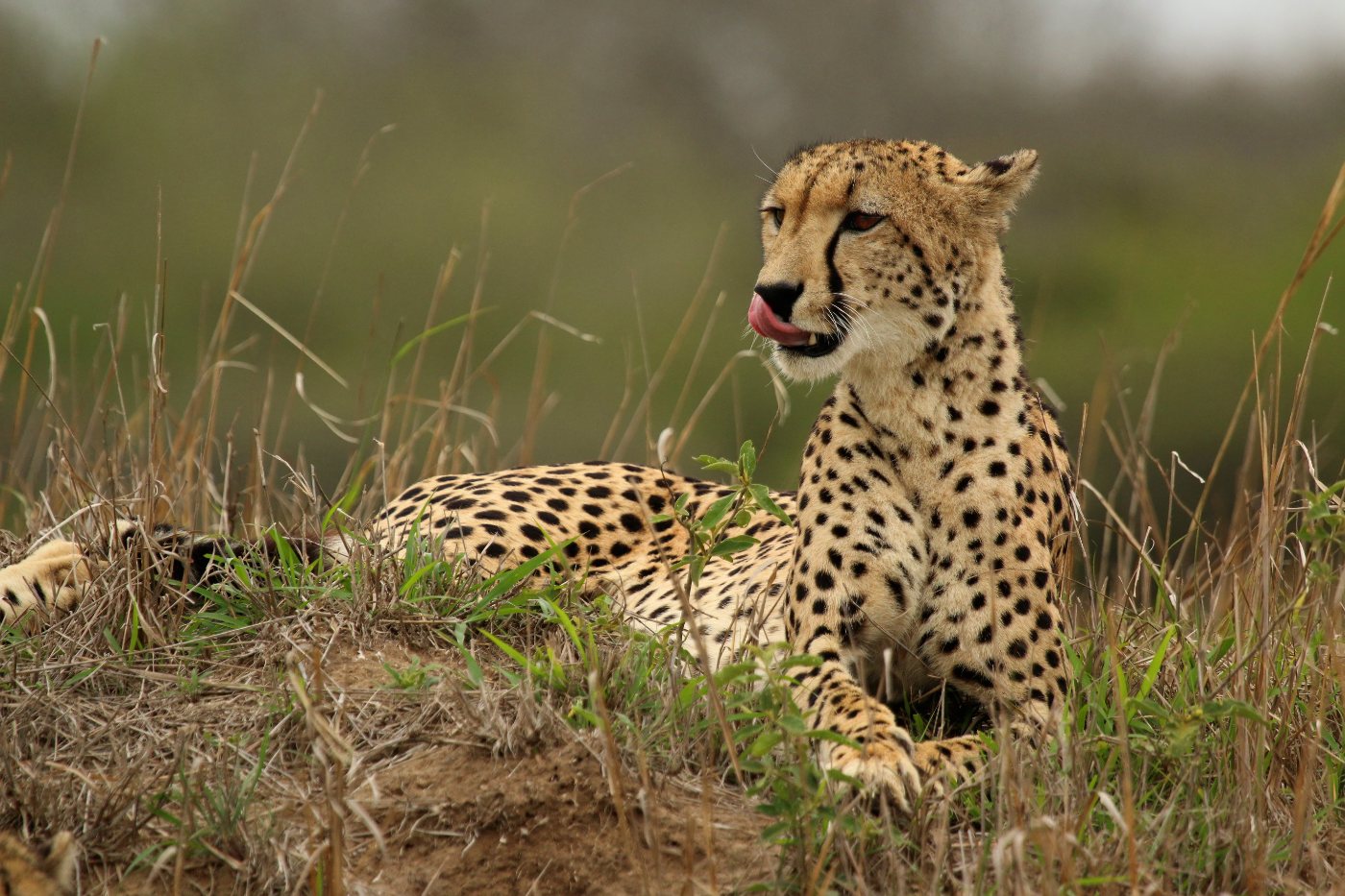
Cheetahs at a glance
| Scientific name | Acinonyx jubatus, the only living member of its genus |
| Family | Felidae, but in the small cat lineage rather than Panthera |
| Weight | 21 to 72 kg, typically 35 to 55 kg |
| Fastest measured | 25.9 metres per second, about 93 km per hour, in a wild hunting cheetah |
| Typical hunt top speed | About 14.9 metres per second, roughly 54 km per hour, held for one or two seconds |
| Acceleration | Up to about 13 metres per second squared, with deceleration up to 15 |
| Hunt success | 26 percent of measured runs in the wild ended in a kill |
| Social structure | Females solitary, males often in lifelong coalitions |
| Vocalisation | Purrs and chirps. Cannot roar |
| World population | About 7,100, across roughly 9 percent of the historic range |
| IUCN status | Vulnerable, with researchers arguing for Endangered |
What the collars actually found
For a century the cheetah’s speed was measured on captive animals chasing a lure in a straight line. That is where the famous numbers come from, and it is a bit like judging a rally driver on a drag strip.
In 2013 Alan Wilson’s team fitted five wild cheetahs in Botswana with collars carrying GPS and inertial sensors, and recorded 367 runs in full detail. The results rearranged what we thought we knew.
- The fastest run was 25.9 metres per second, about 93 km per hour. Genuinely the fastest land animal.
- But the average hunt peaked at 14.9 metres per second, around 54 km per hour, and even that was held for only one or two seconds.
- Most hunts were not flat out at all. Cheetahs routinely chose to run slower than they could.
- The decisive numbers were the other ones. Peak deceleration reached about 15 metres per second squared, higher than the acceleration figures, and lateral acceleration in turns reached about 13.
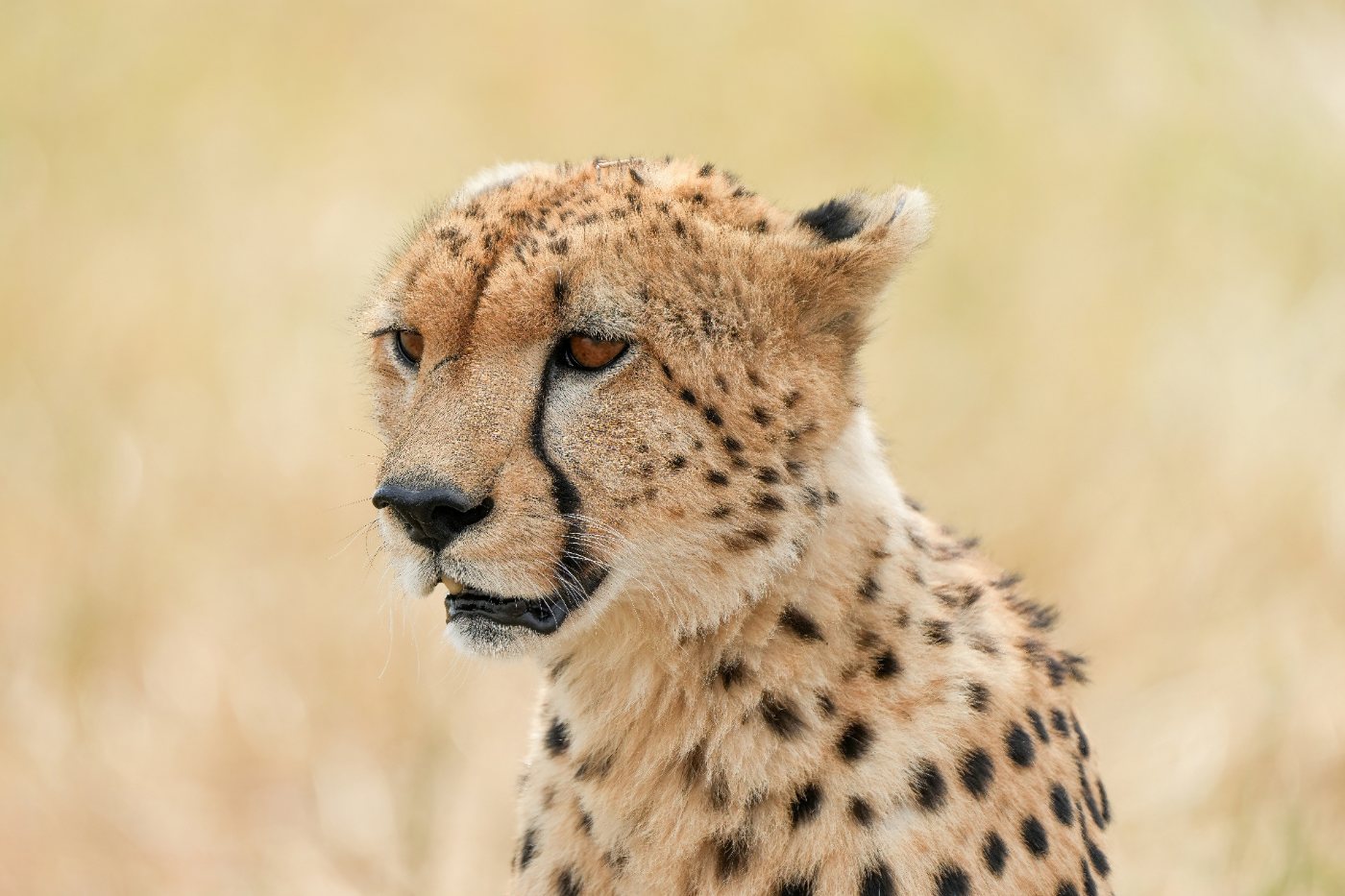
A cheetah can shed more than four metres per second of speed in a single stride. That is what wins hunts. Prey animals do not escape by outrunning a cheetah, because nothing outruns a cheetah. They escape by turning, and the chase is decided by whether the cat can turn with them.
The study also found that hunts were won or lost in the final stages rather than abandoned early, and that only 26 percent of runs ended in a kill. The equipment that makes this possible is genuinely unusual among cats: semi retractable claws with no protective sheath, which work as running spikes and give grip in the turn, plus a long muscular tail used as a counterweight to keep the body balanced through a change of direction at speed.
The endurance question is answered in how long can a cheetah run, the technique in how does a cheetah hunt its prey, and the power question in how strong are cheetahs.
The overheating myth
You have heard this one. A cheetah’s chase is limited to twenty or thirty seconds because its body temperature climbs so steeply that it must stop or die. Safari guides say it. Documentaries say it. It is not true, and the study that dismantled it is unusually clean.
Robyn Hetem’s team implanted temperature sensors in six cheetahs and tracked them for seven months, recording core body temperature through real hunts. If the overheating story were right, cheetahs should end failed hunts hotter than successful ones, because a failed hunt is the one they gave up on.
- Failed hunts ended at 38.3 degrees. Successful hunts ended at 38.4 degrees. Effectively identical, and both well within the normal daily range of 37.3 to 39.5.
- The temperature rise came afterwards, not during. In the forty minutes following a kill, temperature rose by 1.3 degrees. After a failed chase it rose only 0.5.
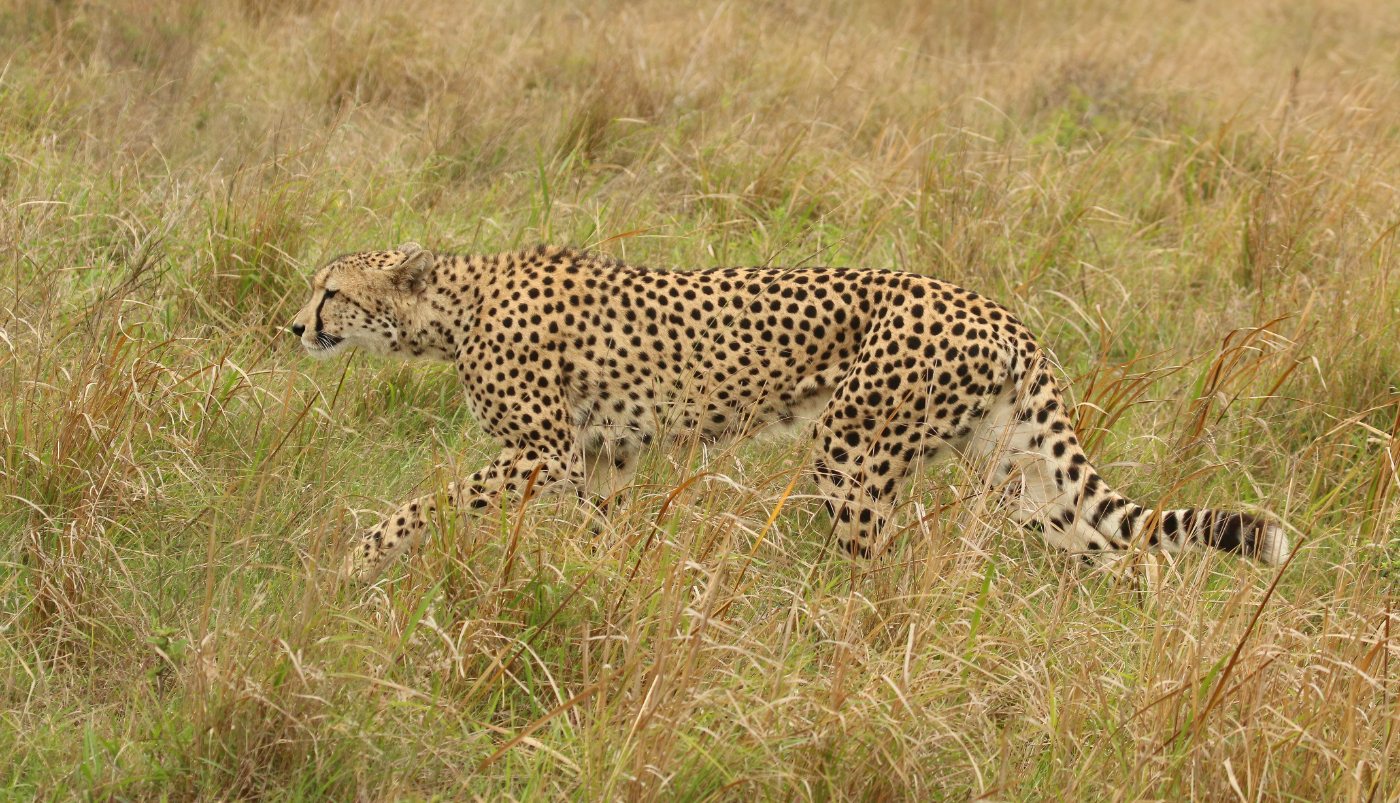
Read that the right way round. The cat gets hotter after it succeeds, and the more it has to lose, the hotter it gets. The researchers attribute this to stress rather than exertion. A cheetah standing over a fresh kill is at its most vulnerable moment: it is exhausted, it is conspicuous, and lions and hyenas are listening. The temperature spike is the physiology of being afraid, not of having run.
That reframes the animal completely. The cheetah’s problem was never the running. It is everything that happens in the ninety seconds after the running stops.
Built for one thing, at a cost
Almost every feature of a cheetah is a trade. It bought acceleration and paid in everything else.
- A small, light, aerodynamic head with reduced jaw musculature. Less weight to carry, and a much weaker bite than any comparable cat.
- Enlarged nasal passages for air intake, which crowd out the roots of the large canines, so the canines are small too.
- An oversized heart, lungs, liver and adrenals, and a very deep narrow chest.
- A flexible spine that acts as a spring, extending the stride enormously.
- Long thin limbs and a light skeleton, which is fast and also fragile.
- Semi retractable claws, permanently exposed. Excellent grip, useless as weapons compared with a leopard’s.
The result is a predator that can catch almost anything and then struggle to keep it. A cheetah cannot fight. It cannot drag a carcass up a tree the way a leopard can, and it cannot defend a kill against a hyena, let alone a lion. Estimates of how much of its food a cheetah loses to larger carnivores vary by site, but it is a substantial and recurring loss, and it is why cheetahs eat fast and abandon kills readily.
It also explains something that puzzles people: cheetahs hunt in daylight, often in the middle of the morning or late afternoon, while lions and leopards work the night. That is not a preference for the heat. It is avoidance. Hunting at a time when the competition is asleep is worth more to a cheetah than hunting in the cool.
Why a cheetah cannot roar
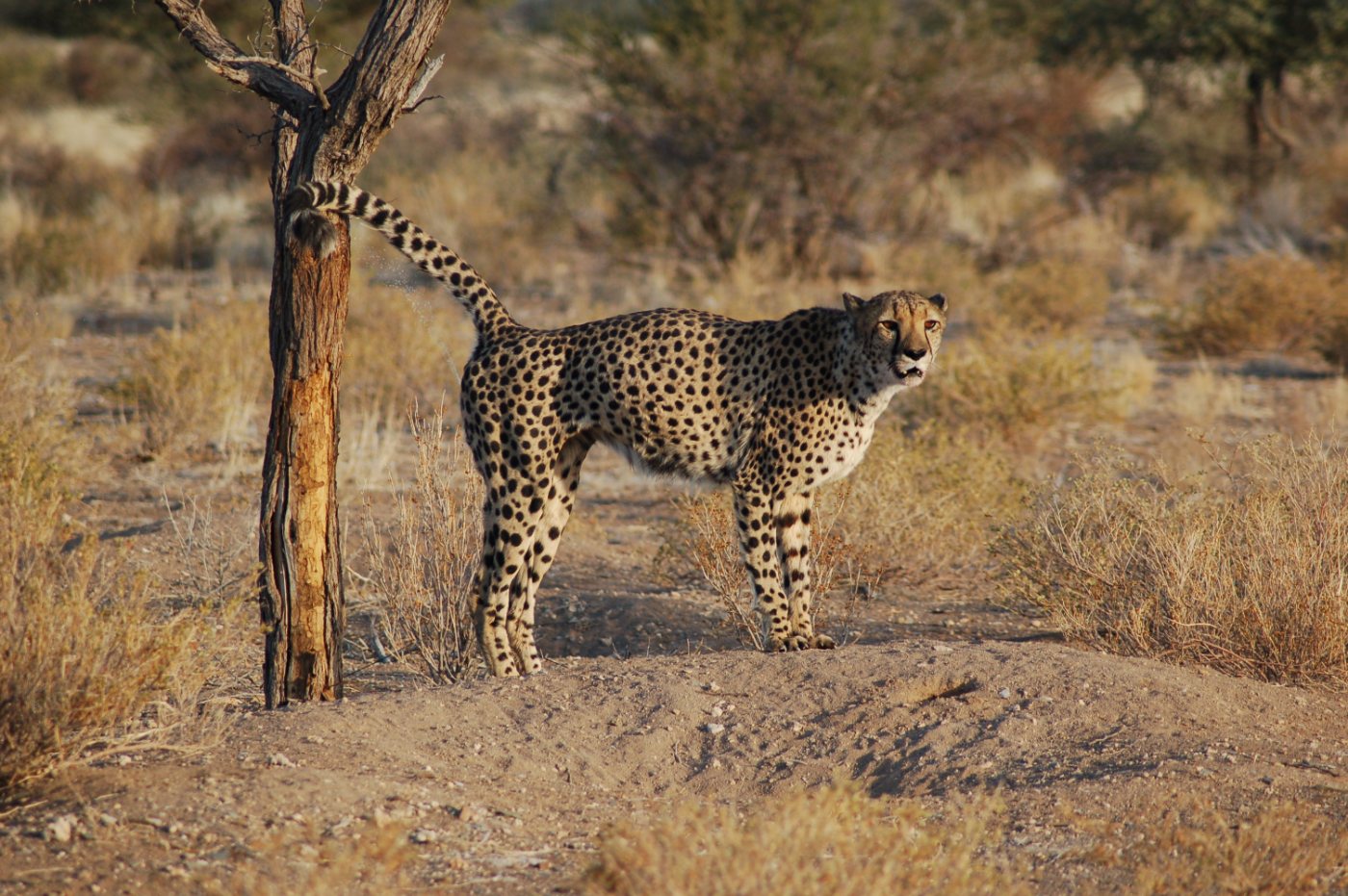
A cheetah purrs. Continuously, on both the in breath and the out breath, exactly like a house cat and quite unlike a lion. It also chirps, a high birdlike call that carries a long way and is used between mothers and cubs. What it cannot do is roar.
The standard explanation is the hyoid, the small bone assembly that supports the larynx. In the roaring cats of the genus Panthera, part of that structure is an elastic ligament rather than solid bone, which lets the larynx stretch. In cheetahs it is fully ossified and rigid.
That explanation is right as far as it goes, and it is worth knowing that it does not go the whole way. The snow leopard is a Panthera with the flexible hyoid and it still cannot roar, because roaring also depends on the structure of the vocal folds and a laryngeal pad that cheetahs lack. The bone is part of the answer, not all of it. My longer treatment is in why can’t cheetahs roar.
Alone, and not alone
Cheetah society is split down the middle by sex, and it is one of the more unusual arrangements in the cat family.
- Females are solitary, permanently, apart from the two years or so they spend raising a litter. They range widely and do not defend a territory so much as move through a very large area following the prey.
- Males often live in coalitions, usually formed by littermate brothers who simply never separate. A coalition of two or three holds a much smaller territory in good ground and defends it against other males.
- Coalition males live longer and breed more than singletons, which is the whole reason the arrangement persists. Single males exist, and they have a harder time.
So the answer to whether a cheetah lives alone is genuinely different depending on which cheetah you are asking about. It is covered in does a cheetah live alone.
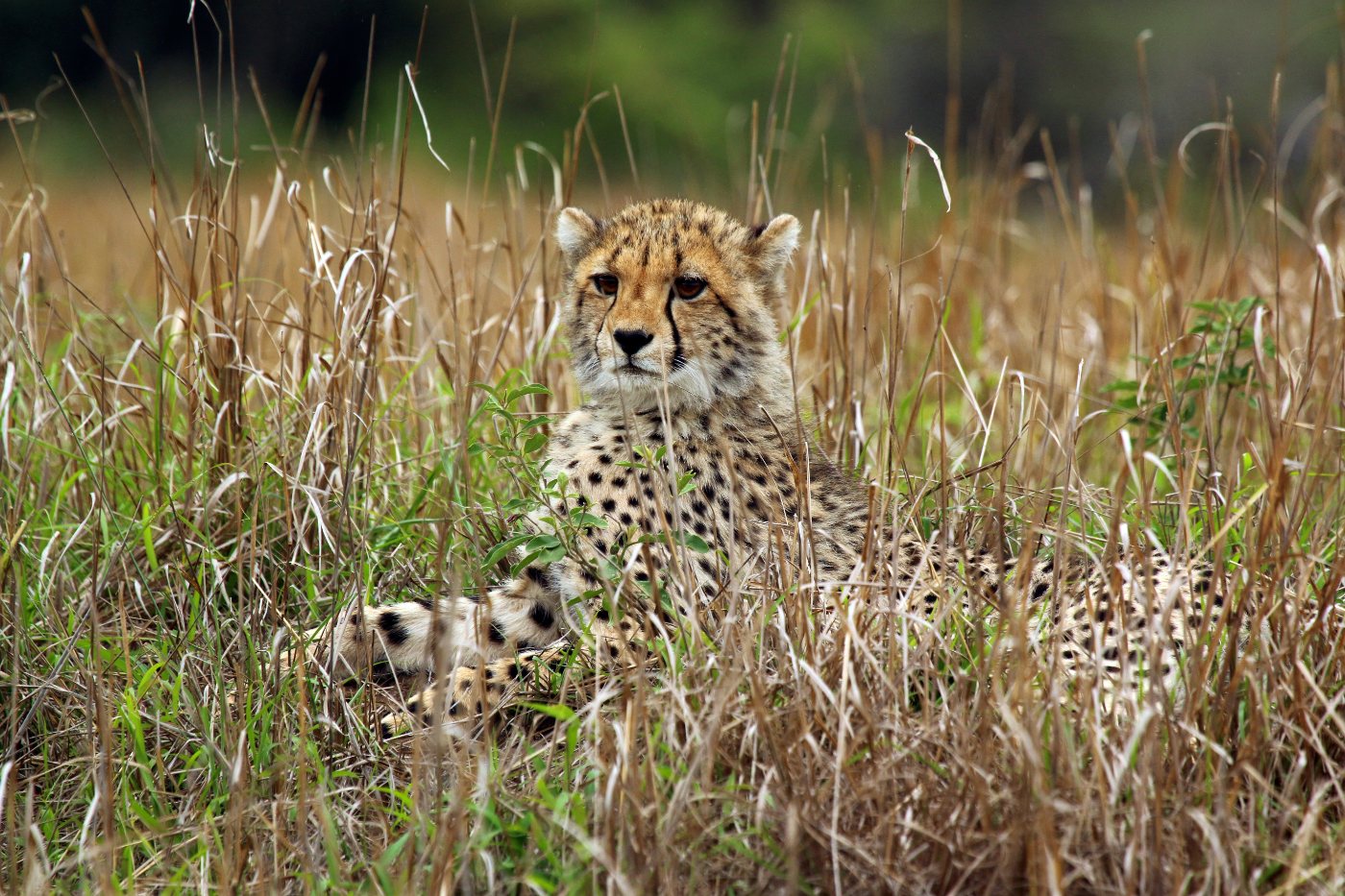
Cubs are where the arithmetic turns brutal. A female raises them alone with no help from any male, she has to leave them to hunt, and she cannot defend them against a lion. Cub mortality in open systems like the Serengeti is very high, with most litters lost before independence, and predation by lions is the largest single cause. A cheetah mother moves her cubs constantly for exactly this reason.
Young cubs carry a long silvery grey mantle of fur down the back, which fades as they grow. The most widely repeated explanation is that it mimics the honey badger, an animal nothing sensible attacks. That idea is plausible and frequently stated, but it is a hypothesis rather than a demonstrated fact, and the mantle may simply be camouflage in long grass.
The bottleneck
Around 11,000 to 12,600 years ago, at the end of the Pleistocene, the cheetah passed through a genetic bottleneck so severe that the species has never recovered from it. The timing lines up with the extinction wave that removed three quarters of large North American mammals.
The consequences are extraordinary, and they were discovered by accident.
- Cheetahs carry 90 to 99 percent less genetic variation than other cats. Roughly 93 percent of the genome consists of homozygous stretches.
- They do not reject each other’s skin. In a now famous experiment, cheetahs accepted skin grafts from unrelated cheetahs while rejecting grafts from domestic cats. Immunologically, unrelated cheetahs behave almost like identical twins.
- Males show around a tenfold reduction in sperm count, with roughly 70 to 75 percent of sperm malformed.
- Disease moves through them catastrophically. In 1983 a feline coronavirus outbreak infected all 45 cheetahs at one facility and killed 60 percent within three years. In domestic cats the same virus kills a small fraction of those infected.
It is worth being careful with what this means. The genetic uniformity is real and the disease vulnerability is real, but cheetahs have carried this for twelve thousand years and were abundant across Africa and Asia for most of that time. Low diversity did not doom them. It just removed the margin, and it means a population that gets small has very little to draw on.
Seven thousand left
In 2016 a team led by Sarah Durant published the first properly rigorous global assessment of the cheetah, and the number was worse than anyone had been working with: about 7,100 animals worldwide, occupying roughly 9 percent of the species’ historic range.
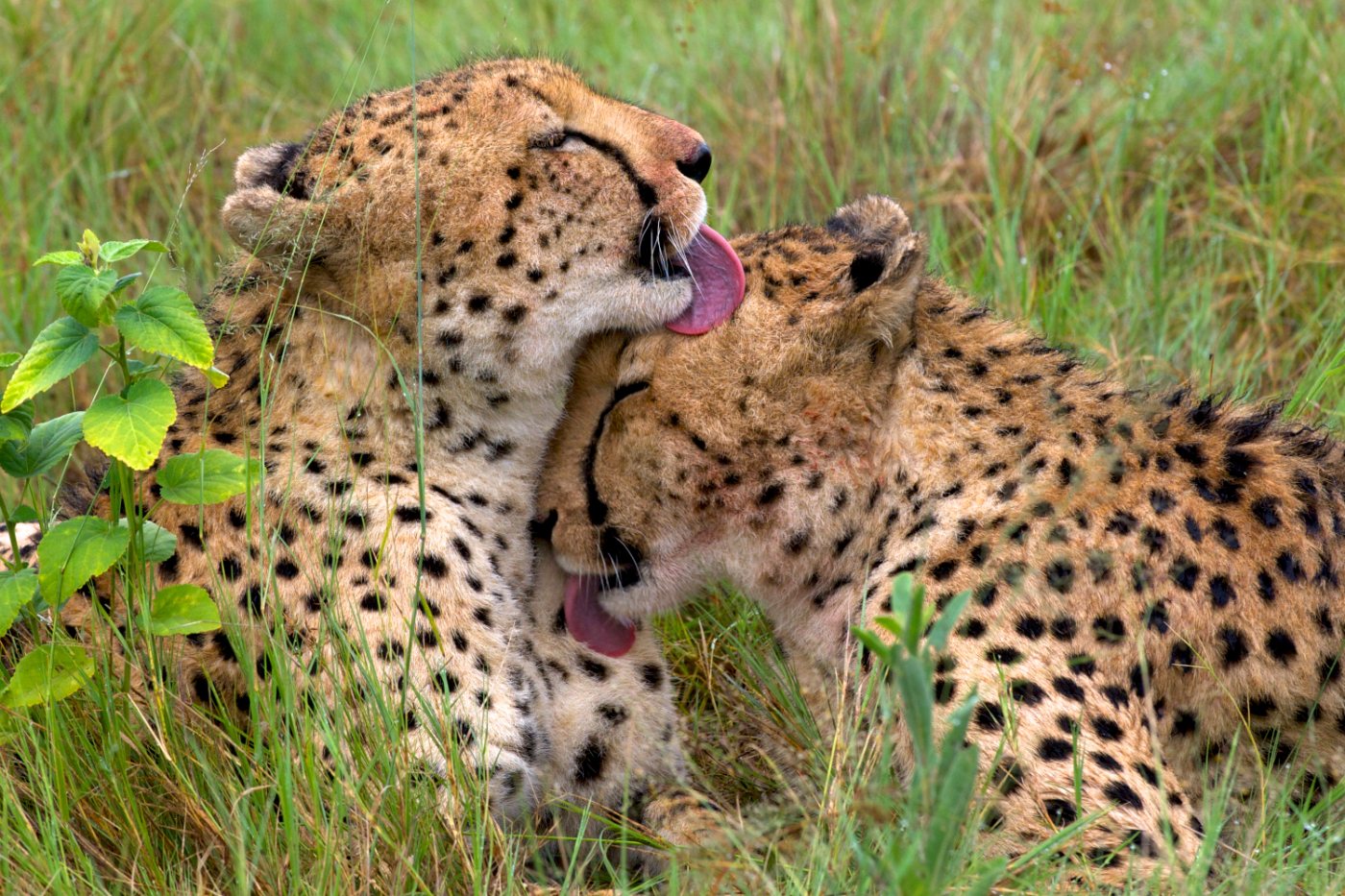
The finding that changed the conversation was not the total. It was where the cheetahs are.
Most cheetahs live outside protected areas. That is a direct consequence of being an animal that cannot defend its kills: national parks are full of lions and hyenas, so cheetah densities inside them are suppressed. The cheetah is pushed into the unprotected land between reserves, which is precisely the land being converted to farming and grazing fastest, and where a cheetah taking a goat gets shot.
This is why conventional protected area conservation works less well for cheetahs than for almost any other large carnivore, and why the authors argued the species should be uplisted from Vulnerable to Endangered.
- Habitat loss and fragmentation. Cheetahs need enormous ranges, and enormous ranges are the first thing to go.
- Prey depletion. Bushmeat hunting removes the gazelles and impala the cheetah lives on.
- Conflict with farmers. A predator living outside reserves lives next to livestock.
- The cub trade. Cubs are trafficked out of the Horn of Africa for the exotic pet market. Most die in transit.
- Competition with larger carnivores, which is natural, but becomes a trap when the only safe habitat is also the only protected habitat.
The Asiatic cheetah, once found from the Arabian peninsula to India, survives only in Iran and is down to a few dozen animals. It is one of the most endangered cats on earth. India’s reintroduction project at Kuno, which began in 2022 using African cheetahs, is an attempt to put the animal back into a landscape it lost in the 1950s, and it is genuinely contested among biologists, who disagree about whether the habitat, the prey base and the space are adequate.
Are cheetahs dangerous
Less than almost any other large predator, and the reason is structural rather than temperamental.
A cheetah is built so single mindedly for the chase that it is poorly equipped for a fight it did not choose. It has a light frame, a weak bite by big cat standards, blunt non retractable claws, and an overwhelming instinct to avoid injury, because an injured cheetah cannot run and a cheetah that cannot run is dead. Fleeing is not cowardice in this animal. It is the only survivable strategy.
Fatal attacks on humans by wild cheetahs are essentially unrecorded. The incidents that do exist overwhelmingly involve captive animals, hand raised animals, or people who cornered one. The fuller answer is in are cheetahs dangerous.
Common questions about cheetahs
How fast is a cheetah really?
The fastest speed recorded in a wild hunting cheetah is 25.9 metres per second, about 93 km per hour. But the average hunt peaks near 54 km per hour and holds it for a second or two. Cheetahs usually choose not to run flat out.
Do cheetahs stop hunting because they overheat?
No. Cheetahs end failed and successful hunts at essentially the same body temperature, 38.3 against 38.4 degrees. The larger temperature rise comes after a kill and is attributed to stress from the risk of losing it, not to exertion.
Why can’t cheetahs roar?
Their hyoid is fully ossified and rigid, unlike the elastic version in roaring cats, and they lack the vocal fold structure roaring requires. They purr instead, continuously, on both in breath and out breath.
Is a cheetah a big cat?
Not in the strict sense. Big cat usually means the genus Panthera, the cats that roar. The cheetah sits in its own genus, Acinonyx, on the small cat side of the family, and purrs.
How many cheetahs are left?
About 7,100 worldwide, in roughly 9 percent of the historic range, with most living outside protected areas. Listed as Vulnerable, though the researchers behind that count argued for Endangered.
Why are cheetahs so genetically similar?
A severe bottleneck around 11,000 to 12,600 years ago left them with 90 to 99 percent less variation than other cats. Unrelated cheetahs accept skin grafts from one another, which is how the uniformity was discovered.
Do cheetahs live in groups?
Females live alone except when raising cubs. Males frequently form lifelong coalitions with their brothers, which hold territory and outcompete single males.
What are the black lines on a cheetah’s face?
Tear marks, running from the inner corner of each eye to the mouth. The leading explanation is that they reduce glare from the sun, which matters for a predator that hunts in daylight, and they may also help focus vision along the muzzle.
Everything on this site about cheetahs
- How does a cheetah hunt its prey
- How long can a cheetah run
- How strong are cheetahs
- Why can’t cheetahs roar
- Does a cheetah live alone
- Are cheetahs dangerous
The cats cheetahs are most often confused with are covered at jaguars, lions and tigers, and for the rest of the animal guides start from mammals.
Sources
- Wilson, A.M. et al. (2013). Locomotion dynamics of hunting in wild cheetahs. Nature 498: 185 to 189.
- Hetem, R.S. et al. (2013). Cheetah do not abandon hunts because they overheat. Biology Letters 9: 20130472.
- Durant, S.M. et al. (2017). The global decline of cheetah Acinonyx jubatus and what it means for conservation. PNAS 114(3): 528 to 533.
- O’Brien, S.J. et al., and Charruau and subsequent genome work, summarised in Conservation genetics of the cheetah: lessons learned and new opportunities. Journal of Heredity 108(6): 671 to 677.
- IUCN Red List assessment for Acinonyx jubatus, Vulnerable, and the IUCN Cat Specialist Group species account.
From the shop
Gifts for people who love the wild
Wildlife themed t-shirts, notebooks, tote bags, bandanas and guides, designed by an ecologist.
Visit the shop