
Lions are the only cat that lives in a group, and almost everything unusual about them follows from that one decision. The mane, the roar, the shared hunt, the brutal arithmetic of male tenure, even the reason a lioness will nurse a cub that is not hers. Take away the pride and none of it makes sense.
I am a wildlife biologist with an MSc in ecology. The lion is one of the best studied large mammals on earth, so there is very little excuse for the vague writing that surrounds it. Every figure below is from a published study or a conservation assessment, and where a much repeated claim turns out to be softer than it sounds, I say so.
Lions at a glance
| Scientific name | Panthera leo |
| Subspecies | Two, since the 2017 revision: P. l. leo and P. l. melanochaita |
| Weight | 110 to 272 kg across the species |
| Body length | 137 to 250 cm, plus a tail of 60 to 100 cm |
| Social unit | A pride of related females, their young, and a coalition of males |
| Hunting | Mostly by females, often cooperatively, mostly at night |
| Roar | Up to 114 decibels close up, audible several kilometres away |
| Gestation | About 110 days, two to four cubs |
| Lifespan | Females into their late teens, males usually far less |
| African population | About 22,000 to 25,000 adults and subadults (2025) |
| Asiatic population | 891 in Gujarat (2025 census) |
| IUCN status | Vulnerable overall. P. l. leo is Endangered |
Two lions, not eight
You will still find pages listing Barbary lions, Cape lions, Katanga lions and Transvaal lions as separate subspecies. That framework was retired. In 2017 the Cat Classification Task Force of the IUCN Cat Specialist Group cut the lion down to two subspecies, and the split is not where anyone expected.
| Subspecies | Where | Status |
|---|---|---|
| Panthera leo leo | West and Central Africa and India. Formerly North Africa, the Middle East, southeast Europe and southwest Asia | Endangered |
| Panthera leo melanochaita | Southern and Eastern Africa | Vulnerable |
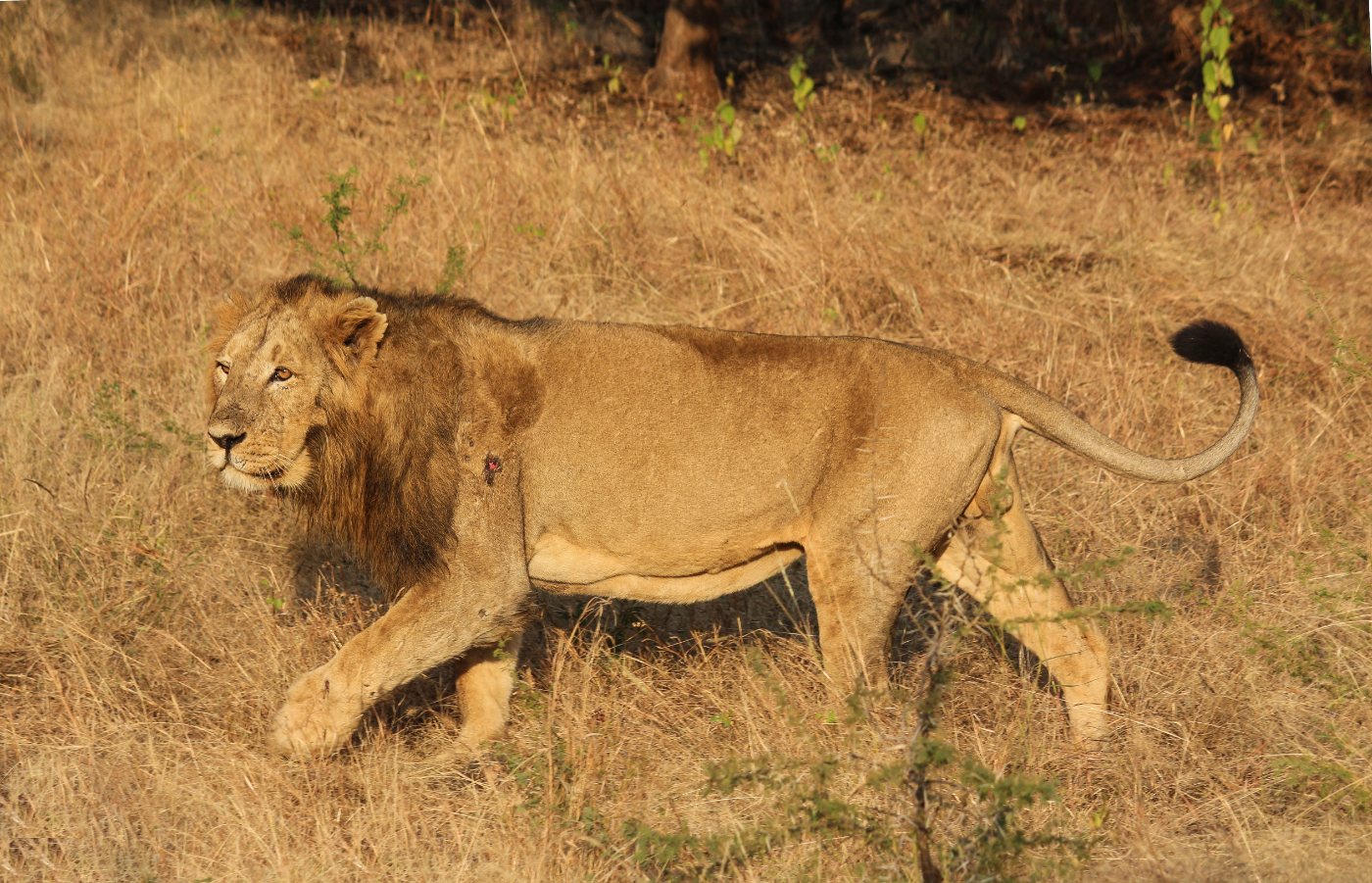
Look at that first row again. The lions of West Africa are more closely related to the lions of India than they are to the lions of the Serengeti. The old picture had an African lion and an Asiatic lion as the deep division. The genetics say the real division runs north to south through Africa itself, and that the Asiatic lion is simply the surviving eastern end of the northern group.
This matters practically. The northern subspecies, the Endangered one, includes the West African lions that are down to a few hundred animals scattered across a handful of parks. They are the most threatened lions in the world and they receive a fraction of the attention that East African lions do.
How much ground has been lost
The numbers here are stark and worth reading slowly. As of 2025:
- The African lion population is estimated at 22,000 to 25,000 adults and subadults.
- Occupied range is 566,675 square kilometres, which is 6.13 percent of the historical range.
- Across three lion generations, from 2004 to 2025, range declined by a further 34 percent.
Lions once ranged from South Africa to Greece and across to India. What is left is about one twentieth of that, and it is still shrinking by roughly a third every twenty years. There are more people living in a mid sized city than there are wild lions on earth.
The pride
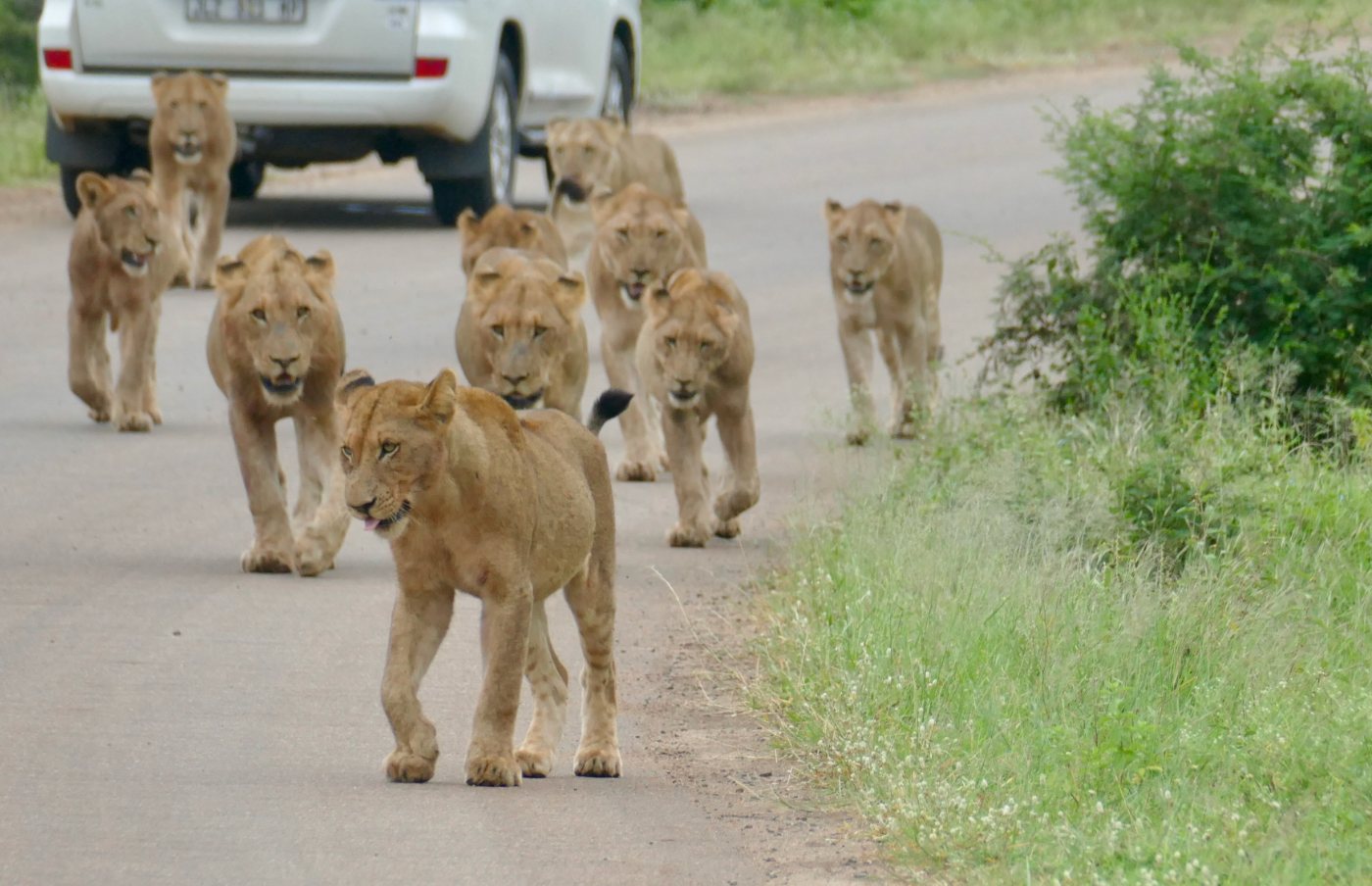
A pride is not a harem and it is not a pack. It is a group of related females, usually two to about twenty, who were born there and who will stay there for life. The males come and go.
The structure works like this:
- Females stay. Sisters, mothers, daughters, cousins. Daughters usually remain in the pride they were born into, which makes the pride a matriline that can persist for decades.
- Males leave. Young males are pushed out at around two to three years old and spend a nomadic period before trying to take a pride of their own.
- Males form coalitions. Brothers and cousins who left together, sometimes joined by unrelated nomads. A coalition of three or four will beat a coalition of one or two, so group size decides who holds territory.
- Tenure is short. A coalition may hold a pride for two to three years before being driven out by a stronger one. That is the window in which a male has to reproduce.
- Takeover means infanticide. Incoming males kill cubs they did not father, which brings the females back into oestrus within weeks instead of a year or two.
That last point is the engine behind almost everything else. A male has a two or three year window and a female represents a year and a half of investment per litter, so a male who tolerates another male’s cubs runs out of time. It is not cruelty and it is not a malfunction. It is the arithmetic of a short tenure, and the females respond to it with counter strategies of their own: synchronised breeding so that several litters arrive at once, communal nursing so cubs cannot be picked off individually, and mating with multiple males so paternity is uncertain.
The full structure is in the structure of lion prides.
The mane, and what it is really saying
The mane is the most obvious feature of a lion and, until 2002, nobody knew what it was for. Then West and Packer ran an experiment in the Serengeti with life sized dummy lions, varying mane length and mane colour independently, and published the answer in Science. It is one of my favourite pieces of field biology, because it is so simple and so decisive.
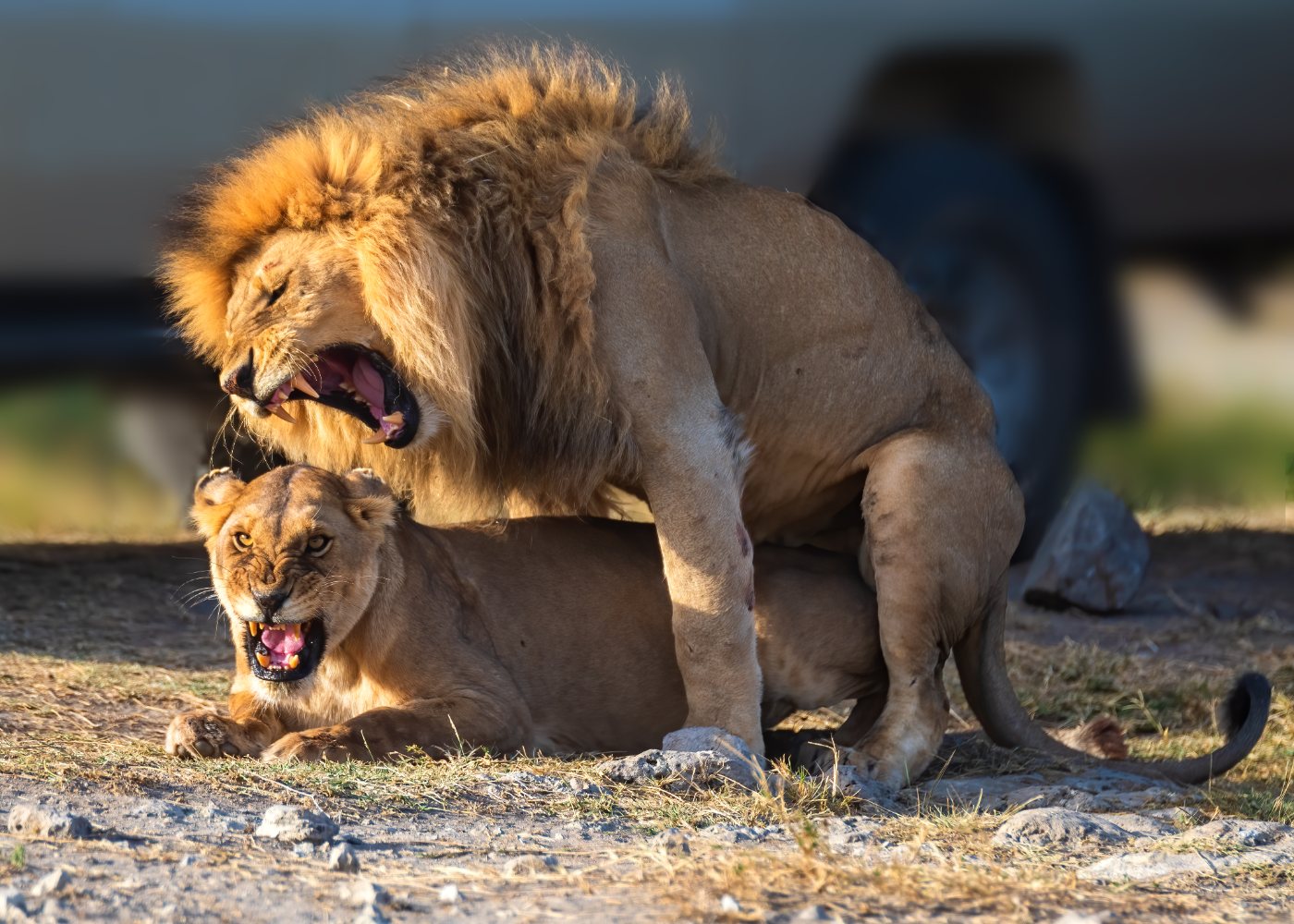
What darkness signals:
- Darker maned males had higher testosterone and were better fed across the year.
- They spent more time with prides, recovered better from wounds, and their cubs survived better.
- Females approached the dark maned dummy in 9 of 10 trials.
- Males avoided the dark maned dummy in 5 of 5 trials.
What length signals is different and narrower. Length tracks recent condition rather than lifetime quality: an injured male’s mane shortens. Males avoided the longer maned dummy in 9 of 10 tests. Females showed no clear preference for length.
So the mane carries two separate messages: how good this male is, and how well he is doing right now. Rivals read both. Females read mostly the first.
The cost, and the maneless lions of Tsavo
A dark mane is expensive. Dark maned males ran significantly hotter, showed significantly lower sperm motility, and ate less in hot weather. That is a real fitness cost, paid every day, which is exactly what makes the signal honest: a male who cannot afford it cannot fake it.
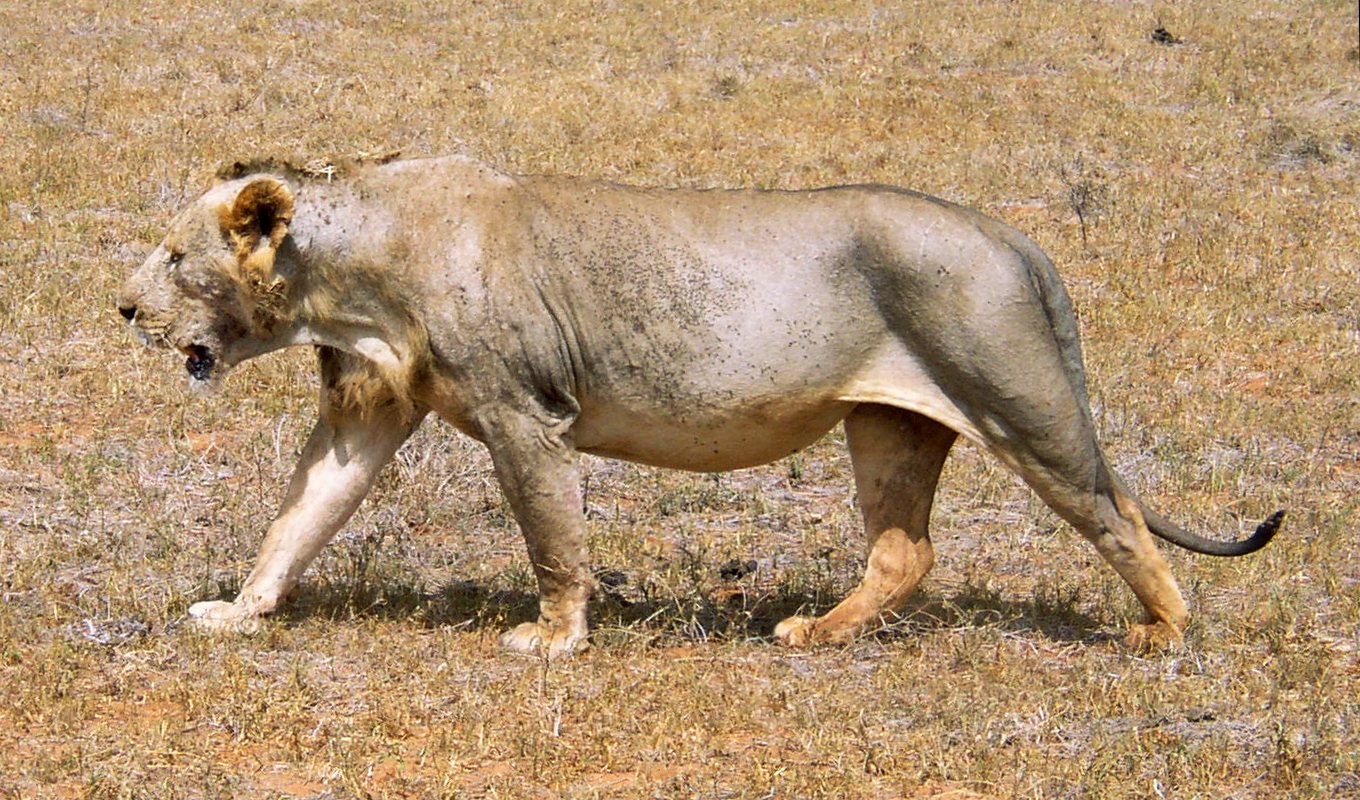
Push the temperature up far enough and the mane stops being worth having at all. In Tsavo, hot and humid, males grow almost no mane. And the effect is set early: Serengeti males born into warmer habitat kept shorter manes for life, wherever they later lived. The famous maneless man eaters of Tsavo were not freaks or a separate kind of lion. They were lions doing the sensible thing in a climate where a mane is a liability.
The roar
A lion’s roar is the loudest sound any cat makes, and the anatomy behind it was worked out properly only in 2011, by Klemuk, Riede and Titze in PLOS ONE.
Most mammals have triangular vocal folds. Lions and tigers have folds that are flat and square, thickened with a layer of fat that gives them that shape and protrudes them into the airway. The consequence is efficiency: a square fold deforms more readily under airflow, so the animal produces a much louder sound for much less lung pressure than its size would predict.
- Up to 114 decibels measured a few feet away, roughly 25 times as loud as a petrol lawnmower.
- Roars run between about 40 and 200 hertz in lions, low enough to travel a long way before the air absorbs them.
- The fat layer may also cushion the folds and help repair them, which matters for an animal that roars night after night.
A roar carries several kilometres across open country, and it is doing several jobs at once: advertising the coalition holding this territory, letting pride members locate each other after a night apart, and giving a nomadic male the information he needs to decide whether to approach or turn around. A full sequence usually starts with long moaning roars and tails off into a series of grunts, and neighbouring lions can tell individuals apart by voice.
Lions and tigers roar. Cheetahs and cougars cannot, because they lack the same larynx structure. The reasons behind the behaviour are in why do lions roar.
Hunting, and who actually does it
The familiar version is that lionesses do all the hunting while males laze about. It is mostly true and slightly unfair.
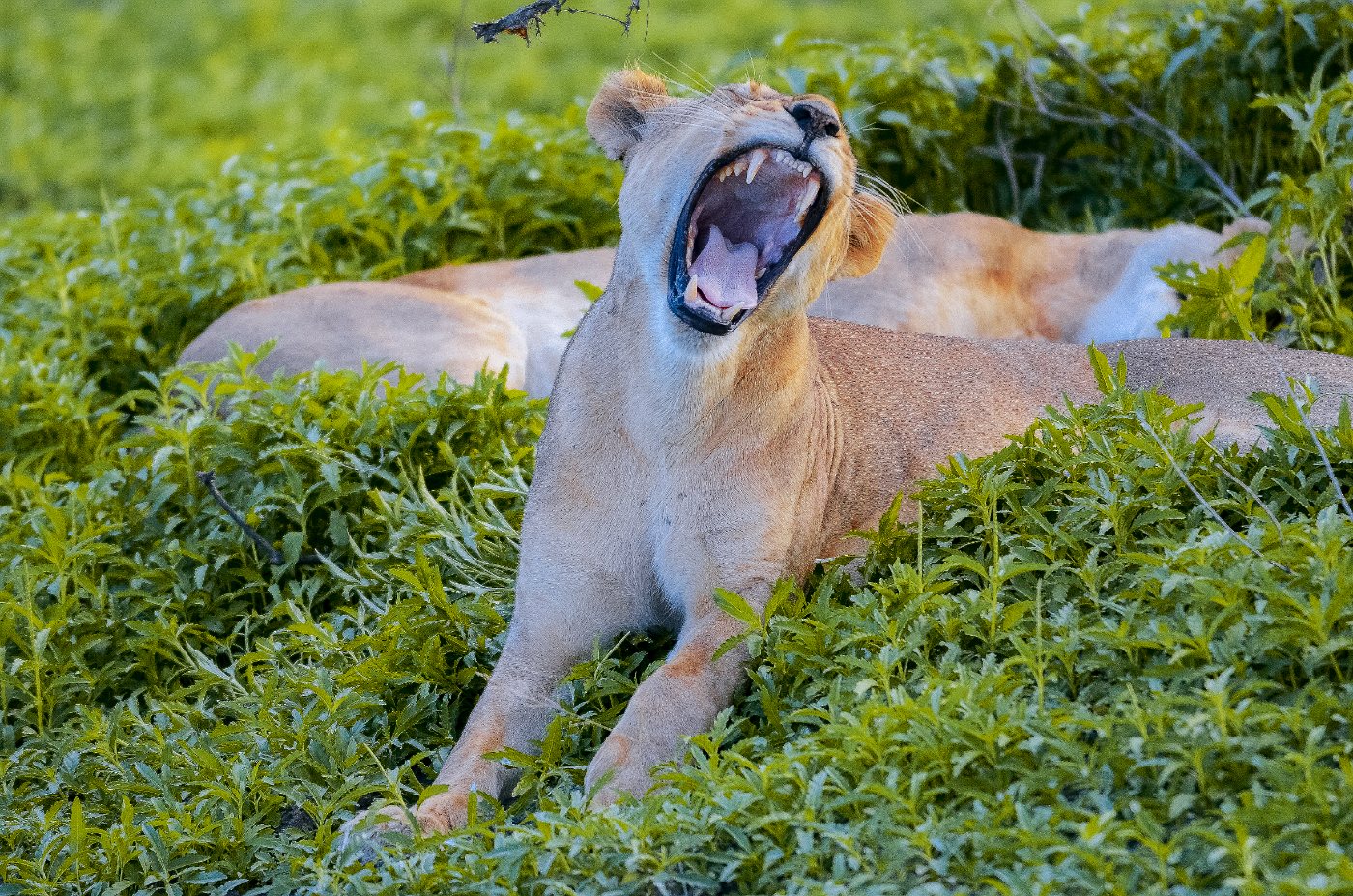
Females do the majority of hunting, and they do the kind that requires stealth and coordination. Males hunt less often but take on the largest and most dangerous prey, buffalo especially, where sheer mass matters more than finesse. And a male’s real job is not hunting at all: it is holding the territory that keeps another coalition from killing every cub in the pride. Measured by hours it looks like idleness. Measured by what happens when he fails, it is the more consequential role.
How the hunt works:
- Mostly at night. Lions see far better in low light than their prey does, and success rates fall sharply in daylight and on bright moonlit nights.
- Cooperative, with rough roles. Some females habitually take flanking positions, others the centre. It is not a plan in the human sense, but individuals do specialise.
- Close before committing. Lions are not built for a long chase. The stalk matters far more than the sprint.
- Most attempts fail. Success rates commonly land somewhere between a fifth and a third, better in groups and better in cover.
- Scavenging is normal. Lions steal from hyenas at least as often as the reverse. Neither species is above taking a free meal.
What a lion sees
Lions are not colour blind, but they do not see colour the way we do. Like most carnivores they are dichromats, with two cone types rather than three, so they separate blue from yellow but not red from green. Red and green collapse into similar muddy tones.
What they gained instead is night vision. A lion’s eye has a large pupil, a high proportion of rod cells, and a tapetum lucidum, the reflective layer behind the retina that bounces light back through it for a second pass and makes eyes glow in a torch beam. Estimates put lion night vision at several times better than ours. For an animal that hunts in the dark, trading colour discrimination for light sensitivity is an obviously good deal. More in are lions colour blind.
Strength and build
A lion’s canine bite force has been modelled at around 1,315 newtons, below a tiger’s roughly 1,472 newtons, which fits the modest difference in size between them. The killing method is usually suffocation rather than force: a bite to the throat or across the muzzle, held until the animal stops.
Where lions genuinely excel is in group power. A single lion struggles with an adult buffalo. Four lions do not. Most of the feats attributed to individual lion strength are really feats of coordination, which is the same trick the species pulls everywhere else. The detail is in how strong are lions, and the comparison people ask for most is in tiger versus lion size comparison.
Can lions swim?
Yes, and they generally would rather not. Lions swim competently when there is a reason, and in the Okavango Delta prides cross channels routinely because the alternative is going hungry. Elsewhere they avoid deep water, partly because crocodiles are a genuine risk to a swimming lion. Tigers, by contrast, seek water out. The full picture is in can lions swim.
Cubs
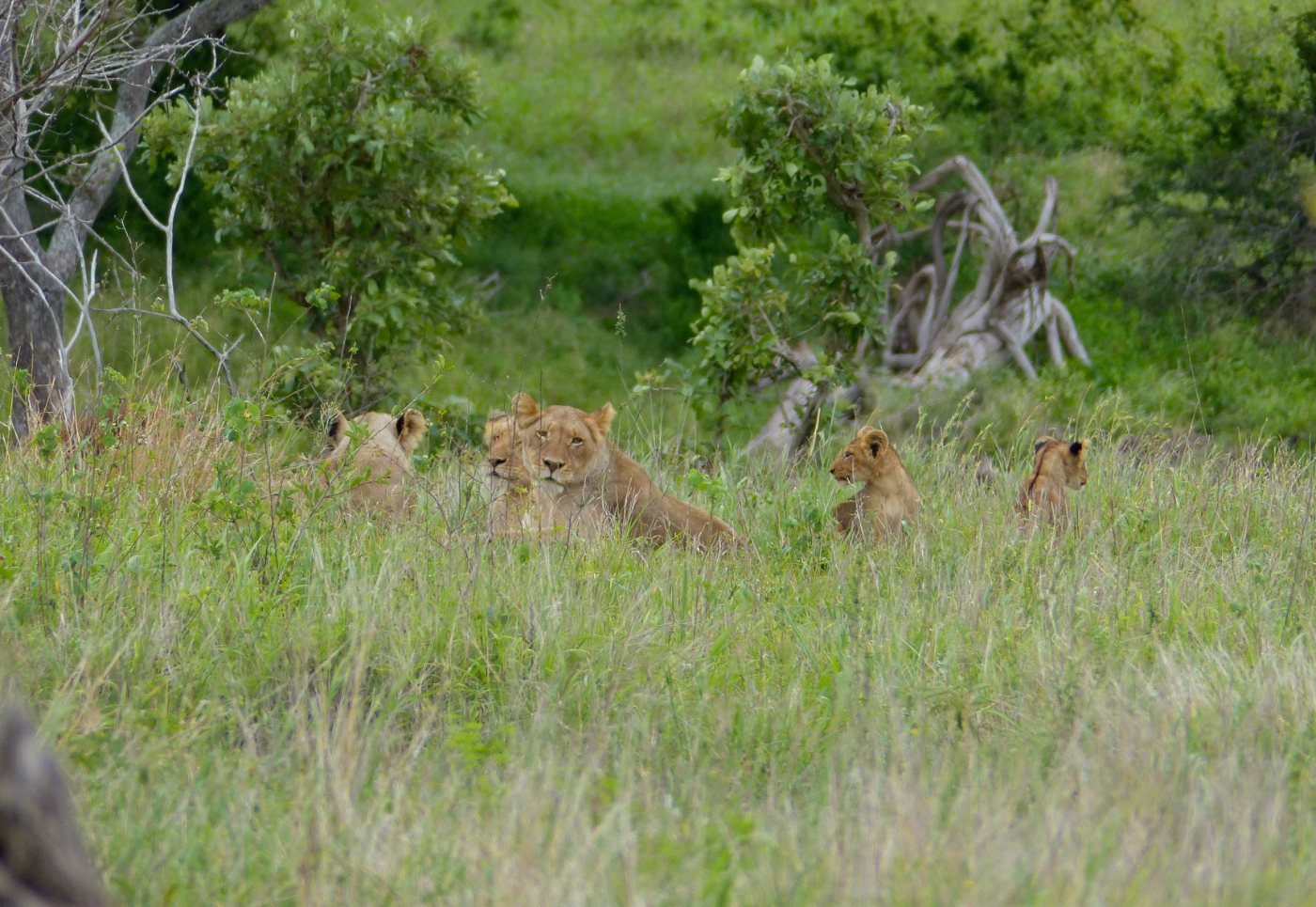
Gestation is about 110 days, short for an animal this size, and a litter is usually two to four cubs born blind and helpless in cover away from the pride. The mother keeps them hidden for six to eight weeks before introducing them.
- Births are synchronised. Females in a pride tend to come into oestrus together, so cubs arrive in a cohort and can be defended as a group.
- Nursing is communal. A lioness will let another female’s cubs suckle, which is rare among mammals and only makes sense because pride members are close relatives.
- Cub mortality is high. Often well over half die before two years old, from starvation, predation, and infanticide during takeovers.
- They eat last. At a kill, males feed first, then females, then cubs. In a lean season that ordering is what kills them.
- Independence at about two years, when young males are pushed out and the cycle starts again.
The physical and behavioural traits that carry a lion through all of that are covered in lion adaptations.
The Asiatic lion, and a genuine success story
In the 1880s the Asiatic lion was down to roughly a dozen animals in the Gir forest of Gujarat. Every Asiatic lion alive today descends from that handful.
The sixteenth Asiatic lion census, conducted over four days in May 2025 across 35,000 square kilometres, eleven districts and fifty eight talukas by around 3,000 people using beat verification, camera traps and radio collars, returned:
- 891 lions, up from 674 in 2020, a rise of 32 percent in five years.
- 196 males, 330 females, 140 subadults and 225 cubs.
- 384 inside Gir National Park and Sanctuary. 507 outside the protected area.
Read those last two numbers together, because they are the whole story. More than half of all Asiatic lions now live outside the protected area, among farms, villages, roads and railway lines. The recovery has been real and it has run out of park to expand into.
That creates two problems. The first is conflict: lions living alongside people means livestock losses, road and rail deaths, and open wells that animals fall into. Gujarat manages this better than most places would, and it works largely because local communities have tolerated it. The second is more dangerous and less visible. The entire subspecies sits in one landscape, descended from a dozen founders. One disease outbreak could take a very large share of it, which nearly happened with canine distemper in 2018. Establishing a second population somewhere else has been discussed for decades and has still not happened.
What is driving lions down
- Prey depletion. Snaring for bushmeat empties a landscape of antelope and zebra. A protected area with no prey holds no lions, however intact the trees look.
- Habitat conversion. Savanna becomes farmland and rangeland. This is the mechanism behind the loss of 94 percent of the historical range.
- Conflict with livestock owners. A lion that kills cattle is usually killed, often by poisoning, which also takes vultures, hyenas and anything else that feeds on the carcass.
- The bone trade. Lion bone has partially substituted for tiger bone in traditional medicine, creating a commercial market that did not exist a generation ago.
- Small isolated populations. Most remaining lion populations are small, fenced or effectively islanded, which brings inbreeding and requires active genetic management.
Trophy hunting is the argument people expect to see here. The honest position is that it is contested rather than settled. Badly run, it removes exactly the large dark maned males whose loss triggers takeovers and cub deaths. Well run, on land that would otherwise be converted to farming, it has funded conservation areas that hold lions. The evidence supports both statements depending on the country and the governance, and anyone telling you it is simple in either direction is arguing rather than reporting.
What does clearly work: prey protection, compensation and insurance for livestock losses, predator proof bomas, community owned conservancies where the people living with lions receive the income, and enough ranger presence to enforce any of it. If you want to be near lions with your money going to that end of the industry, I have written up the options in volunteering with lions in South Africa. The one thing to avoid is any facility offering cub petting or walking with lions, which feeds captive breeding and, in some cases, the bone trade.
Common questions about lions
How many lions are left?
Roughly 22,000 to 25,000 adults and subadults in Africa as of 2025, plus 891 Asiatic lions in Gujarat. Occupied range is about 6 percent of the historical range.
Do female lions do all the hunting?
Most of it, and most of the stealth work. Males hunt less often but take on the largest prey, and their main contribution is defending the territory that keeps cubs alive.
Why do male lions have manes?
As an honest signal. Darkness advertises testosterone and condition, and females approached the dark maned dummy in 9 of 10 trials while males avoided it in 5 of 5. Length signals current fighting condition. The signal is honest because a dark mane costs real heat stress.
How loud is a lion’s roar?
Up to 114 decibels close up, carrying several kilometres. Flat square vocal folds thickened with fat let lions produce that volume on very little lung pressure.
Are lions colour blind?
Not blind to colour, but dichromatic. They separate blue from yellow and not red from green, and in exchange they see far better than we do in the dark.
How many subspecies of lion are there?
Two since 2017. Panthera leo leo in West and Central Africa and India, and Panthera leo melanochaita in Southern and Eastern Africa. The older lists of eight or more are out of date.
Is Timon from The Lion King a lion?
No, and it is the question I get asked most often about lions. Timon is a meerkat, a small social mongoose relative of the African drylands, and Pumbaa is a warthog. I have written the full answer in what animal is Timon from The Lion King.
Everything on this site about lions
- The structure of lion prides
- Lion adaptations, physical and behavioural
- How strong are lions
- Why do lions roar
- Can lions swim
- Are lions colour blind
- Tiger versus lion size comparison
- Volunteer with lions in South Africa
- What animal is Timon from The Lion King
Lions are one of the big cats. The comparison people ask for most is with tigers, and for the rest of the animal guides on this site, start from mammals.
Sources
- IUCN Cat Specialist Group, species account for Panthera leo, including the 2017 Cat Classification Task Force revision and 2025 population and range figures.
- West, P. M. and Packer, C. (2002). Sexual selection, temperature, and the lion’s mane. Science 297: 1339 to 1343.
- Klemuk, S. A., Riede, T., Walsh, E. J. and Titze, I. R. (2011). Adapted to roar: functional morphology of tiger and lion vocal folds. PLOS ONE 6: e27029.
- Gujarat Forest Department (2025). Sixteenth Asiatic Lion Population Estimation.
- Christiansen, P. and Wroe, S. (2007). Bite forces and evolutionary adaptations to feeding ecology in carnivores. Ecology 88: 347 to 358.
🌿 Explore the Wild Side!
Discover eBooks, guides, templates and stylish wildlife-themed T-shirts, notebooks, scrunchies, bandanas, and tote bags. Perfect for nature lovers and wildlife enthusiasts!
Visit My Shop →