
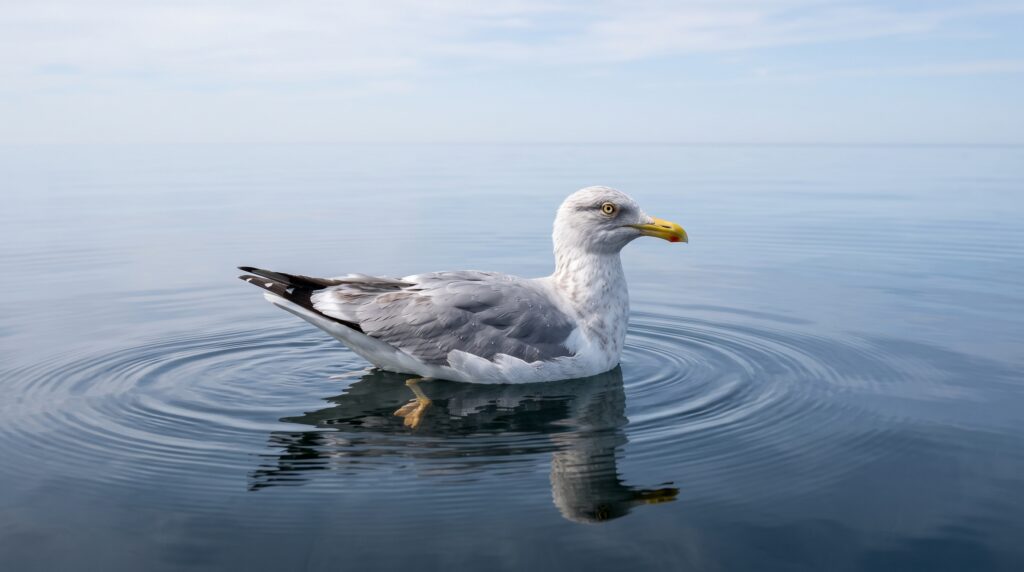
Seagulls swim well on the surface but aren’t built for diving. Their webbed feet paddle efficiently, and they float on air trapped in the structure of their feathers, an interlocking mesh of barbules with gaps too fine for water to pass. It is the architecture that keeps them dry, not the preen oil most people credit. They forage at the surface, snatching prey rather than pursuing it underwater. Juveniles face greater risk, as their plumage matures over one to four years and waterlogs more easily. Heavy surf exhausts them, and oil contamination destroys waterproofing, causing hypothermia and drowning. Their swimming serves survival, not sport. There’s more to understand about how they navigate danger.
Key Takeaways
- Seagulls swim using fully webbed feet as paddles with alternating strokes for propulsion and steering.
- Waterproofing is structural: interlocking feather barbules trap air and keep water out, while preen oil conditions that mesh rather than coating it.
- Gulls are built for surface swimming rather than diving, with long wings favoring flight over underwater pursuit.
- Juveniles swim less effectively due to immature, less waterproof plumage and clumsy technique until maturation.
- Breaking waves can swamp swimming gulls, causing waterlogged feathers, exhaustion, and drowning risk in surf zones.
How Seagulls Swim: Body Position and Buoyancy
Seagulls take to water with an ease that belies their aerial reputation. They float high on the surface, buoyed by air held inside the feather mesh, with preen oil keeping that mesh supple enough to go on holding it. This combination keeps them stable and dry.
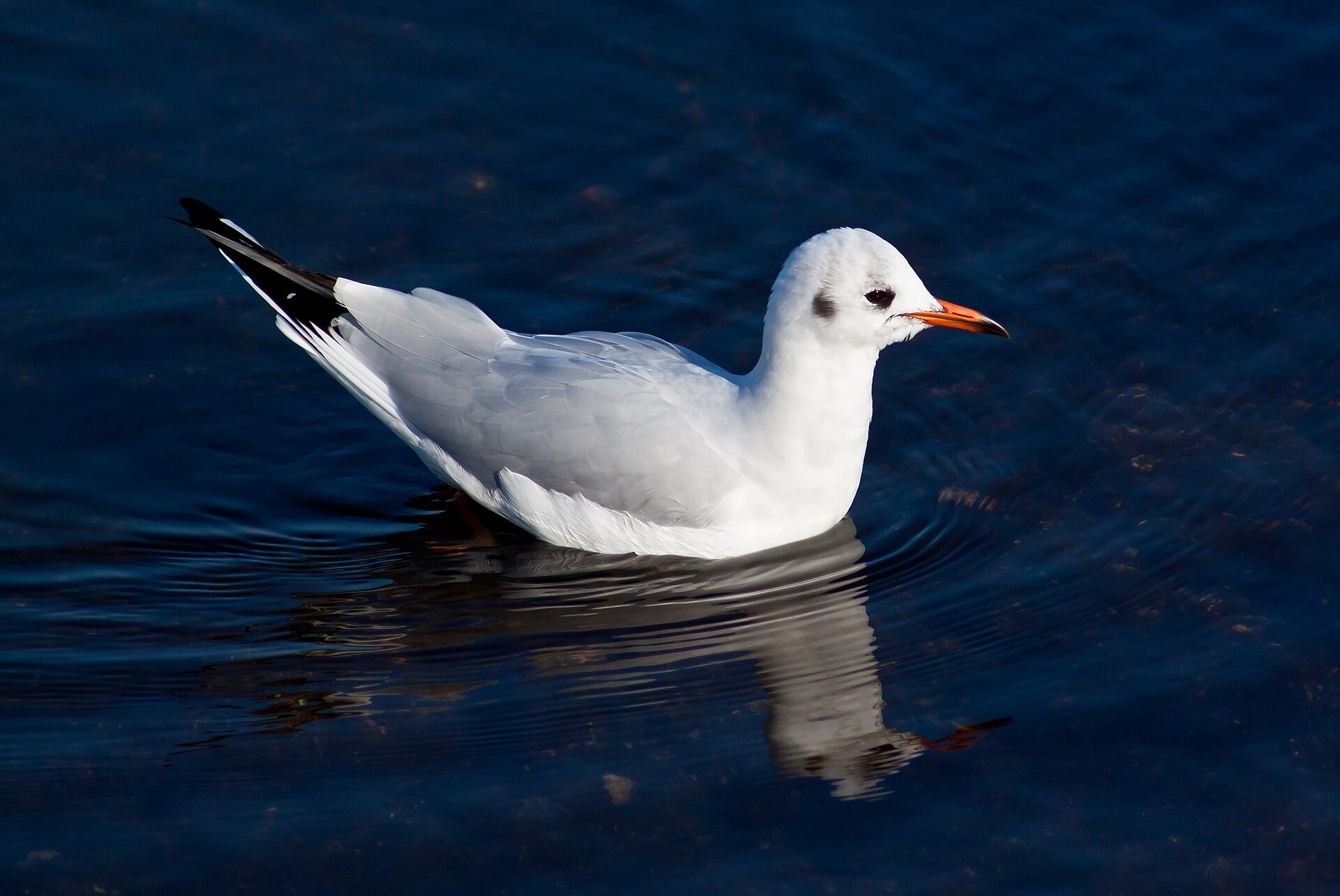
They tuck their legs close to the body. Their webbed feet provide subtle paddling and steering. Wings stay folded or slightly spread for balance. In turbulent surf, they ride waves and time brief bursts of foot propulsion rather than sustained strokes.
Young gulls or waterlogged juveniles face danger. The mesh floods, the trapped air escapes, and buoyancy goes with it. They become too heavy to fly, forcing a low, panicked swimming posture.
While resting, gulls hold heads upright for vigilance. They shift quickly to active paddling or takeoff if disturbed.
Webbed Feet and Paddle Power: Seagull Swimming Mechanics
Seagulls possess fully webbed feet, meaning their toes connect by skin membranes that expand surface area for pushing against water. The waterproofing that makes this possible is structural, not oily: International Bird Rescue explains that the feather barbules interlock into a mesh too fine for water to pass, and preen oil simply keeps that mesh supple.
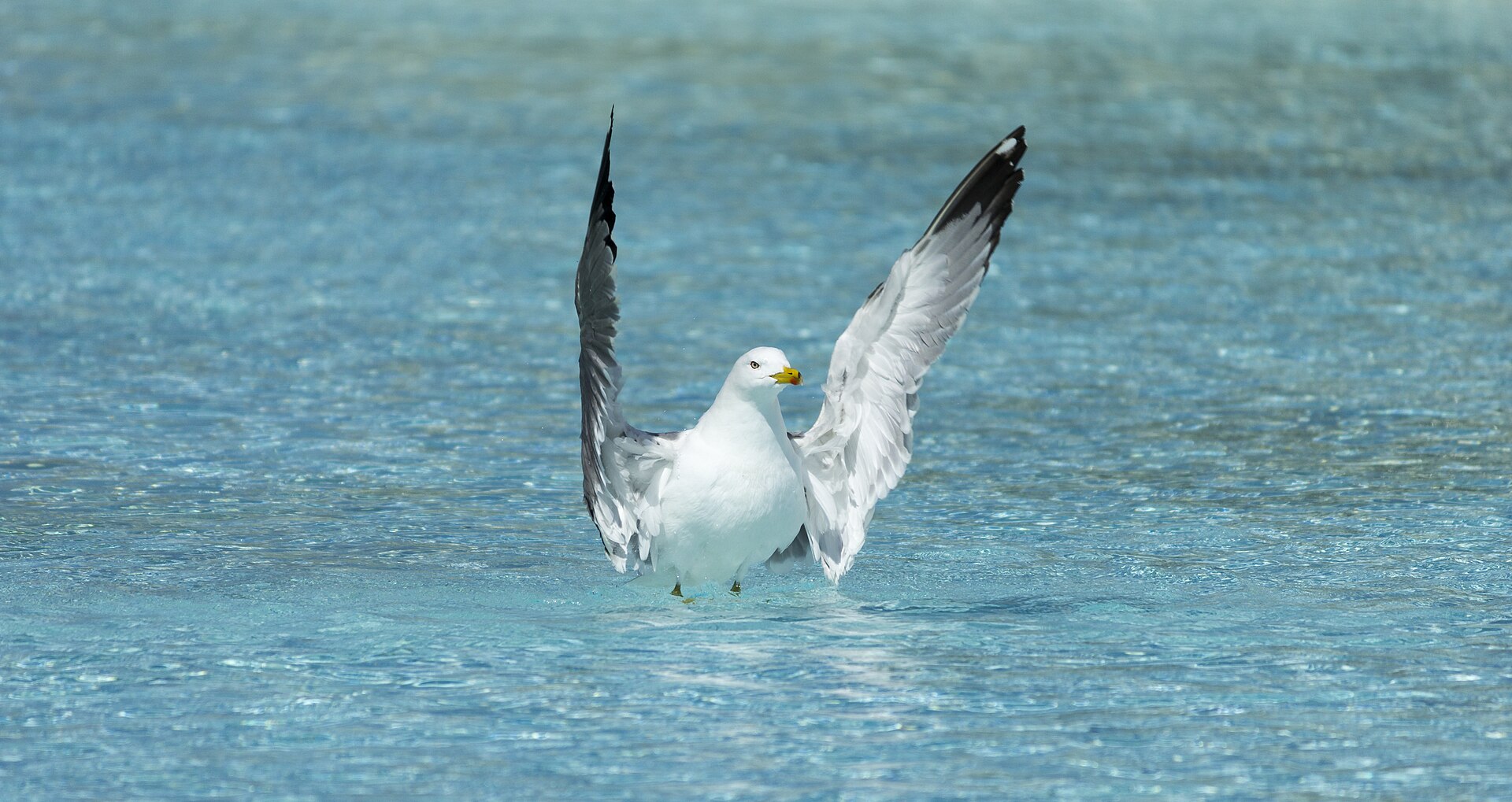
They rely on foot propulsion, paddling with these feet while wings stay tucked or slightly extended for balance, rather than using wings underwater.
This anatomy lets them float steadily and maneuver through rough waves, though they aren’t built for long submerged travel like penguins.
Anatomy And Adaptation
Webbed feet propel seagulls through water with surprising efficiency. Their fully webbed feet increase surface area and act like paddles. They provide propulsion and steering during surface based swimming.
Buoyant bodies help seagulls float with minimal effort. Water repellent feathers trap a layer of air against the body and maintain insulation. These features work together during paddling. Seagulls use alternating foot strokes to move across the surface.
Swimming serves scavenging and brief dives. Most species avoid sustained underwater travel. Foot propelled swimming lets gulls time foraging with waves and currents. They’ll paddle to hold position in turbulent water. They’ll ride oncoming waves to reach prey.
Younger juveniles face risks. Heavy immersion can waterlog their feathers. This reduces buoyancy and escape ability. Adults swim with greater skill and reliability.
Floating And Propulsion
Their movement through water depends on a simple but effective mechanism. Seagulls employ fully webbed feet as paddles. The toes and connecting membrane increase surface area. This design generates propulsion and steering during surface swimming.
Buoyancy comes from air held in the feather mesh. Gulls combine this with leg tucking and wing positioning. Drag reduces. Stability increases. They maintain surface swimming for extended periods to forage.
Webbed foot propulsion isn’t suited for deep diving. Most gulls paddle with rhythmic strokes. They surface scavenge and make brief submergences. Some species exploit turbulent water. Wave edges and boat wakes become accessible hunting grounds. Prey surfaces there.
This swimming method reflects adaptation, not specialization. It serves survival quietly. One observes function over flourish.
Why Gulls Don’t Dive Deep Like Other Seabirds
Although gulls appear equally at home on land, air, and water, they rarely pursue prey far beneath the surface. Gulls forage mostly at the surface of the water, snatching prey with their bills rather than chasing it downward. They aren’t wing propelled divers like auks or penguins.
| Bird | Typical dive depth | Why |
|---|---|---|
| Gull | Shallow plunge or surface dabbing, roughly a body length | Long wings built for flight and soaring, hollow light frame, high buoyancy |
| Northern gannet | 12 to 15 m | Plunges from height, folds wings back, but still a surface to mid water hunter |
| Atlantic puffin | Regularly 40 m, recorded to 60 m | Short stubby wings that work as flippers underwater |
| Imperial cormorant | Recorded to 46 m | Wettable outer plumage reduces buoyancy, so it sinks rather than fights to stay down |
| Short tailed shearwater | Recorded to 70 m | Slim body and wing propelled pursuit |
| Thick billed murre | Up to 210 m | The deepest diving flying bird, wing propelled, very low buoyancy |
The trait that makes a gull float is the same one that stops it diving. Buoyancy is an asset at the surface and an obstacle below it.
Those birds have short, stiff wings and heavy bones that help them “fly” underwater. Gulls lack these traits. Their long wings and lighter bones suit long distance flight, not deep pressure. They paddle with webbed feet instead. This gives maneuverability but little thrust for sustained dives.
Their feathers aren’t as waterproof as a penguin’s. Prolonged submersion risks waterlogging and cold. Many species survive through plunge diving just a few metres, scavenging, or stealing food. These methods work. Natural selection hasn’t pushed them deeper.
Wave Riding: How Gulls Surf Without Drowning
Riding breaking waves demands precise timing, and gulls have mastered this skill through practice and instinct.
Wave riding lets gulls surf without drowning. They use webbed feet to propel and steer through water. Timing matters. They surface to ride crests or move inshore on backwash. This exploits lifts and avoids being overrun.
- The feather mesh keeps holding air, and buoyancy, through brief immersion
- Cliff top updrafts and close to shore wave riding conserve energy during foraging
- Adults hold station near surf where waves concentrate food
- Juvenile inexperience in timing causes frequent wave related mortality
Juveniles can become waterlogged if they misjudge waves. Skill develops through learned behavior. Surfing isn’t innate; it’s survival.
What Gulls Eat While Swimming at the Surface
Gulls eat varied surface prey. Gulls take a wide enough range of prey to earn a place among the animals that eat fish.
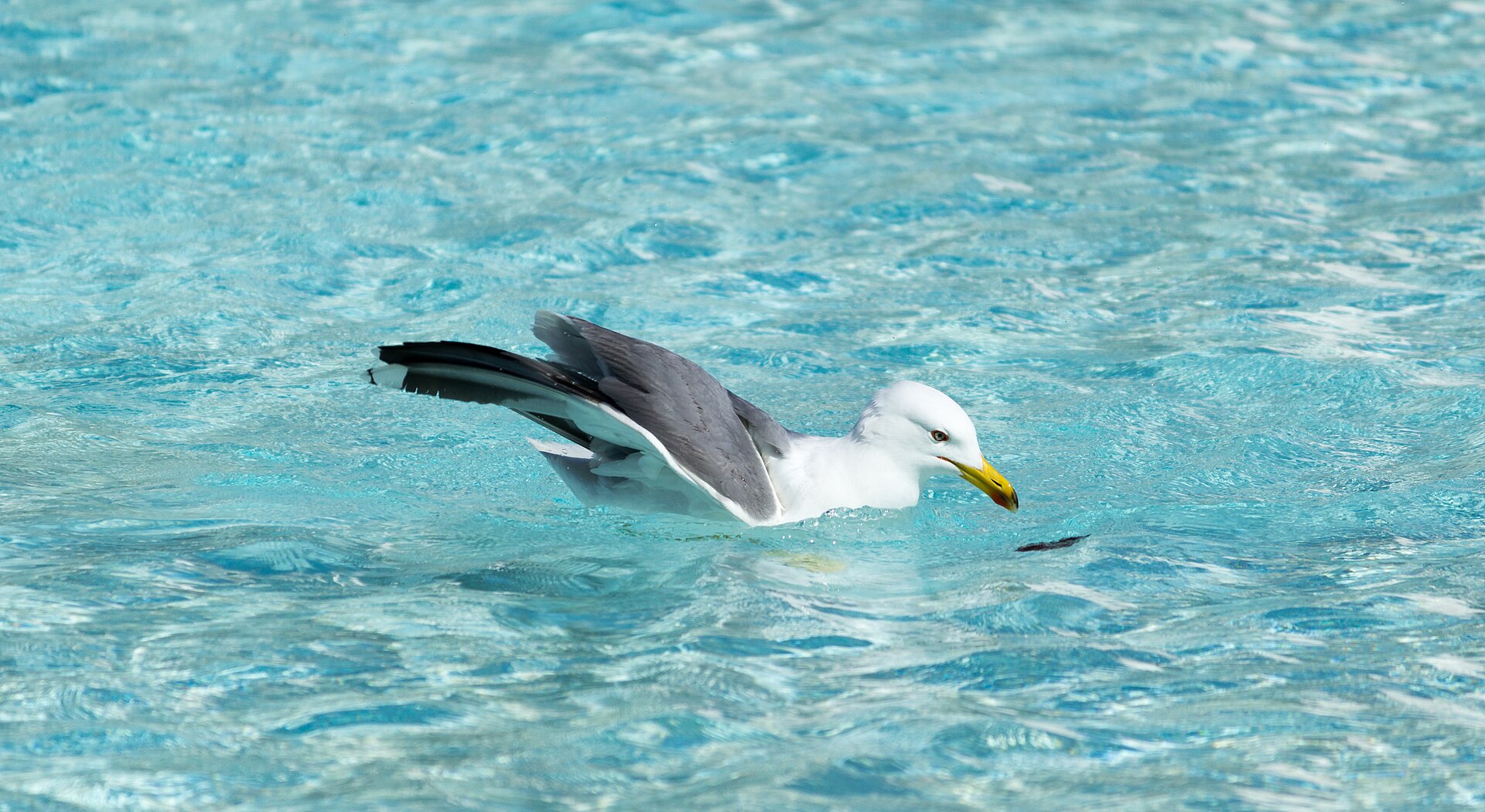
They snatch small fish, crustaceans like crabs, and molluscs while paddling.
They’ll also seize carrion, floating refuse, and food stirred up by waves.
Surface Prey Types
Surface foraging often dominates a gull’s daily feeding routine. Gulls exploit diverse surface prey while swimming, paddling, or floating at the waterline. They capture small fish like sand lance and sprats when these species rise or become disoriented near the surface. Crustaceans form another staple, with gulls seizing crabs, shrimps, and mussels exposed by waves or tidal fluctuations. They also consume molluscs and marine invertebrates stranded in intertidal zones.
Their diet expands through opportunism. Gulls congregate rapidly around vessels to claim fishery discards and floating offal. They gather carrion, bread, seeds, and insect swarms that wash to coastal surfaces. Some employ kleptoparasitism, stealing prey from other birds.
Key surface prey includes:
- Small fish such as sand lance and sprats
- Crustaceans including crabs, shrimps, and tidal mussels
- Marine invertebrates like polychaete worms and amphipods
- Fishery discards, offal, and terrestrial debris
This varied intake reflects adaptability. Gulls maximize energy return with minimal diving effort.
Foraging Techniques Used
Breaking waves and shifting tides set the stage for surface foraging. Gulls commonly forage while swimming at the surface, picking off floating fish, crustaceans, and carrion delivered by breaking waves or fishing boats. They time lifts and ride turbulent water, using waves to bring buried or dislodged prey into reach.
Many species exploit human food sources, scavenging refuse, discarded bait, and offal from ports and landfills while floating near shores or vessels. Gulls use kleptoparasitism, stealing recently captured fish or invertebrates from other birds. While capable of short dives, most surface foraging gulls prefer shallow plunges or surface dabbing rather than prolonged underwater pursuit. They rely on webbed feet and buoyancy to maneuver. This measured approach to foraging reveals adaptation, not limitation.
Can Gulls Sleep on the Water?
Often, gulls take to calm waters when they need rest. They float easily. Waterproofing comes from the physical structure of the feathers themselves, an interlocking mesh with gaps too fine for water to pass, and the preen gland oil that gulls work through their plumage is a conditioner that keeps that structure supple rather than a waterproof coating. Their supraorbital salt glands, small organs above the eyes, filter excess salt from seawater. This lets them rest on the water for hours.
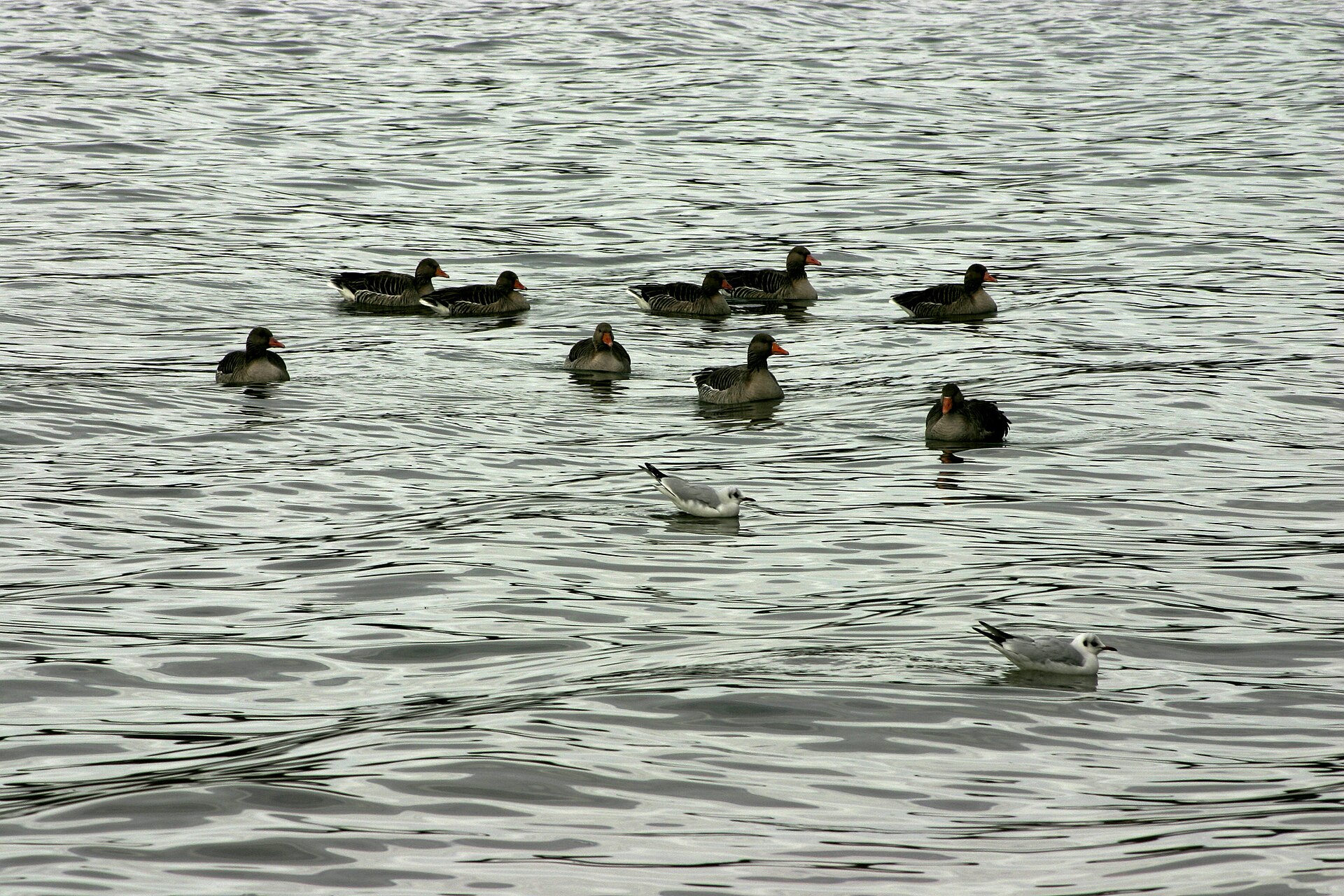
- Gulls tuck legs beneath bodies, extending wings slightly for stability
- Groups gather together, gaining safety through numbers
- They stay semi alert, waking fast to threats or waves
- Migration pushes them to sea for days at a time
Most sleep occurs on land. Cliffs, beaches, and rooftops offer familiar roosts. Yet the water remains an option. The world keeps moving. Gulls adapt, finding stillness where they can.
How Juvenile Gulls Learn to Swim
Fledglings don’t inherit swimming skill. Juvenile gulls begin paddling in sheltered nearshore waters soon after leaving the nest, using their fully webbed feet to stay afloat even when waterlogged. Learning unfolds partly through social observation: young birds follow adults at cliff top and shoreline feeding sites, imitating wave riding timing and surface snatching techniques. Herring gulls do not reach adult plumage until their fourth year, and the British Trust for Ornithology now red lists the species in the UK after a coastal decline of more than half. That slow start matters more than it used to. A herring gull that survives to breeding age can live around twelve years, but the species is now red listed in the UK after its coastal population fell by more than half between 1969 and the Seabird 2000 census, with further losses since. The bird most people treat as a pest is in serious trouble.
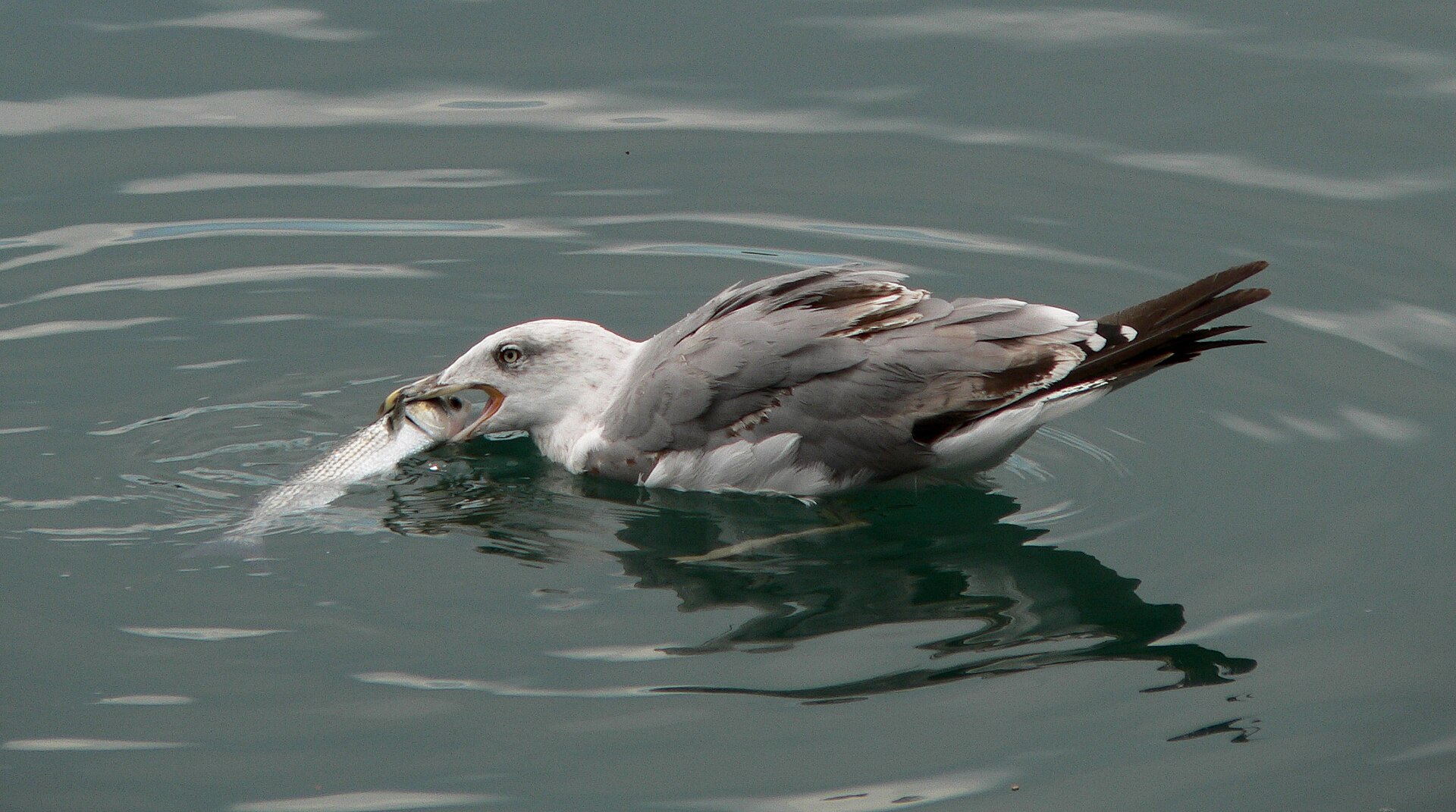
Plumage maturation takes one to four years in many species. Until then, juveniles remain less waterproof and somewhat clumsy. Soaked feathers can temporarily ground them, making rest spots essential. They exploit calmer inshore zones and cliff updrafts to dry their wings.
Older gulls demonstrate foot paddling and shell dropping methods. Juveniles gradually acquire these skills, improving both capture success and safety. Early survival depends on avoiding heavy surf while building competence.
When Swimming Fails: How Gulls Drown
Although gulls spend much of their lives on water, they’re built for floating rather than diving. Their swimming serves surface foraging, not sustained submersion. This is exactly why oil spills kill seabirds: NOAA sets out how a fouled bird loses insulation and buoyancy at the same time.
Several factors cause drowning in gulls:
- Juveniles develop waterlogged plumage through repeated immersion, losing buoyancy and flight capability
- Breaking waves swamp swimming birds, exhausting them in surf zones where panic prevents takeoff
- Failed plunge dives can trap adults underwater, especially when cold or debris restrict movement
- Oil contamination destroys feather waterproofing, causing hypothermia and sinking
Unlike social mammals, other gulls rarely assist drowning conspecifics. They forage nearby while inexperience claims solitary victims. Even strong adults perish when entanglement or oiling combines with waterlogged plumage.
The sea offers sustenance but demands caution. For gulls, swimming remains a calculated risk.
Helping a Struggling Gull: What to Do
Most of these calls happen in one narrow window. Gull chicks fledge through high summer, and it is in those few weeks that half grown birds end up on the water, on roads and in gardens, still three years away from adult plumage. Since distressed gulls rarely survive without intervention, anyone who finds a waterlogged juvenile near breaking surf needs to act with deliberate care. Rescue begins on shore, never in the waves. One moves slowly and quietly, guiding the bird to shelter away from wind and spray. Gloves protect both parties. A towel covers and calms the gull while one supports its body, pinning wings gently to prevent breakage. While you are at it, the kindest thing you can do at the water’s edge is stop feeding them: here is why bread is bad for birds.
The rehabilitator awaits news. Meanwhile, the rescuer places the bird in a well ventilated cardboard box or pet carrier lined with a towel over thick newspaper. The RSPCA gull rehabilitation protocol keeps bright, injured adults at ordinary room temperature and reserves supplementary heat for chicks and for collapsed or waterlogged birds, so resist the urge to warm an alert adult aggressively. Keep it quiet rather than sealed in the dark, and give it no food and no water. Shock threatens waterlogged birds. A licensed rehabilitator provides controlled warming, drying, and fluids. Release follows only at calm shores, if the bird stands alert and dry. Otherwise, professional care continues.
Gulls and Water: Common Questions
Can seagulls swim?
Yes. Gulls swim confidently on the surface, paddling with fully webbed feet in alternating strokes. What they do not do is swim underwater for any distance. They are surface foragers, not pursuit divers.
How do gulls float?
On air, held inside the structure of their feathers. Interlocking barbules form a mesh with gaps too fine for water at normal surface tension to pass through, and that trapped air provides the buoyancy. Preen oil is a conditioner that keeps the mesh supple. It is not the waterproof layer itself.
Why do not gulls dive deep like other seabirds?
Because the buoyancy that makes them such efficient floaters works against them below the surface, and their long wings are built for flight and soaring rather than underwater propulsion. A gull manages a shallow plunge of about a body length. A thick billed murre reaches 210 metres.
Can gulls sleep on the water?
Yes. They gather in loose rafts, tuck their legs beneath them and doze while staying half alert, which is safer in numbers than resting alone. Salt glands above the eyes let them handle seawater while they do it.
Can a seagull drown?
Yes. Drowning happens when the feather mesh floods and the trapped air escapes, which strips buoyancy and insulation at once. Oil contamination, detergents, heavy surf and simple inexperience in juveniles are the usual causes.
How long does it take a gull to reach adult plumage?
Around four years in herring gulls, which typically first breed at four. The mottled brown bird people often assume is a different species is usually the same species, two or three years younger.
What do gulls eat while swimming?
They take what is at or just below the surface: small fish such as sand lance and sprats, crustaceans, offal and discards from boats and ports, and scavenged human food. They dip the head under rather than diving after prey.
What should I do if I find a struggling gull?
Coax it ashore rather than going into the water. Put it in a well ventilated box lined with a towel over newspaper, keep it quiet, give it no food or water, and call a vet or a licensed wildlife rehabilitator. Keep an alert adult at room temperature and leave supplementary heat to the professionals.
Final Thoughts
Floating itself is close to free for a gull, but it is not literally costless: holding position in cold water still burns energy on staying warm, which is why long rests happen in sheltered, calmer water. This mirrors how they survive, not thrive.
Seagulls swim because they must. They do not master water like cormorants, those deep diving cousins. Instead, they exist between air and surface, finding enough.
Biodiversity, the variety of life in an ecosystem, allows such compromises. Gulls fill a narrow role. That is enough.
Even partial solutions sustain species.

Erzsebet Frey (Eli Frey) is an ecologist and online entrepreneur with a Master of Science in Ecology from the University of Belgrade. Originally from Serbia, she has lived in Sri Lanka since 2017. Eli has worked internationally in countries like Oman, Brazil, Germany, and Sri Lanka. In 2018, she expanded into SEO and blogging, completing courses from UC Davis and Edinburgh. Eli has founded multiple websites focused on biology, ecology, environmental science, sustainable and simple living, and outdoor activities. She enjoys creating nature and simple living videos on YouTube and participates in speleology, diving, and hiking.
🌿 Explore the Wild Side!
Discover eBooks, guides, templates and stylish wildlife-themed T-shirts, notebooks, scrunchies, bandanas, and tote bags. Perfect for nature lovers and wildlife enthusiasts!
Visit My Shop →