
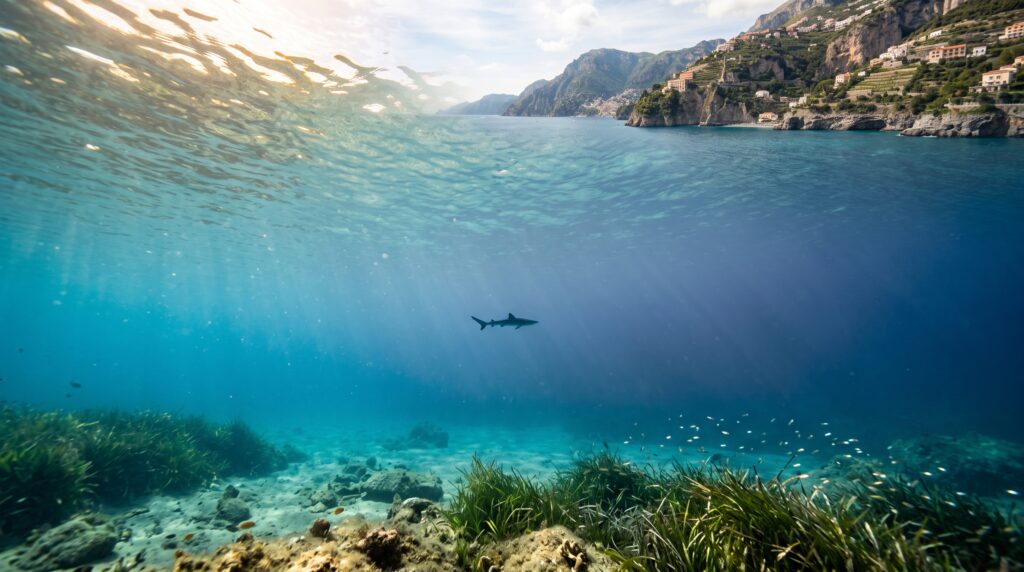
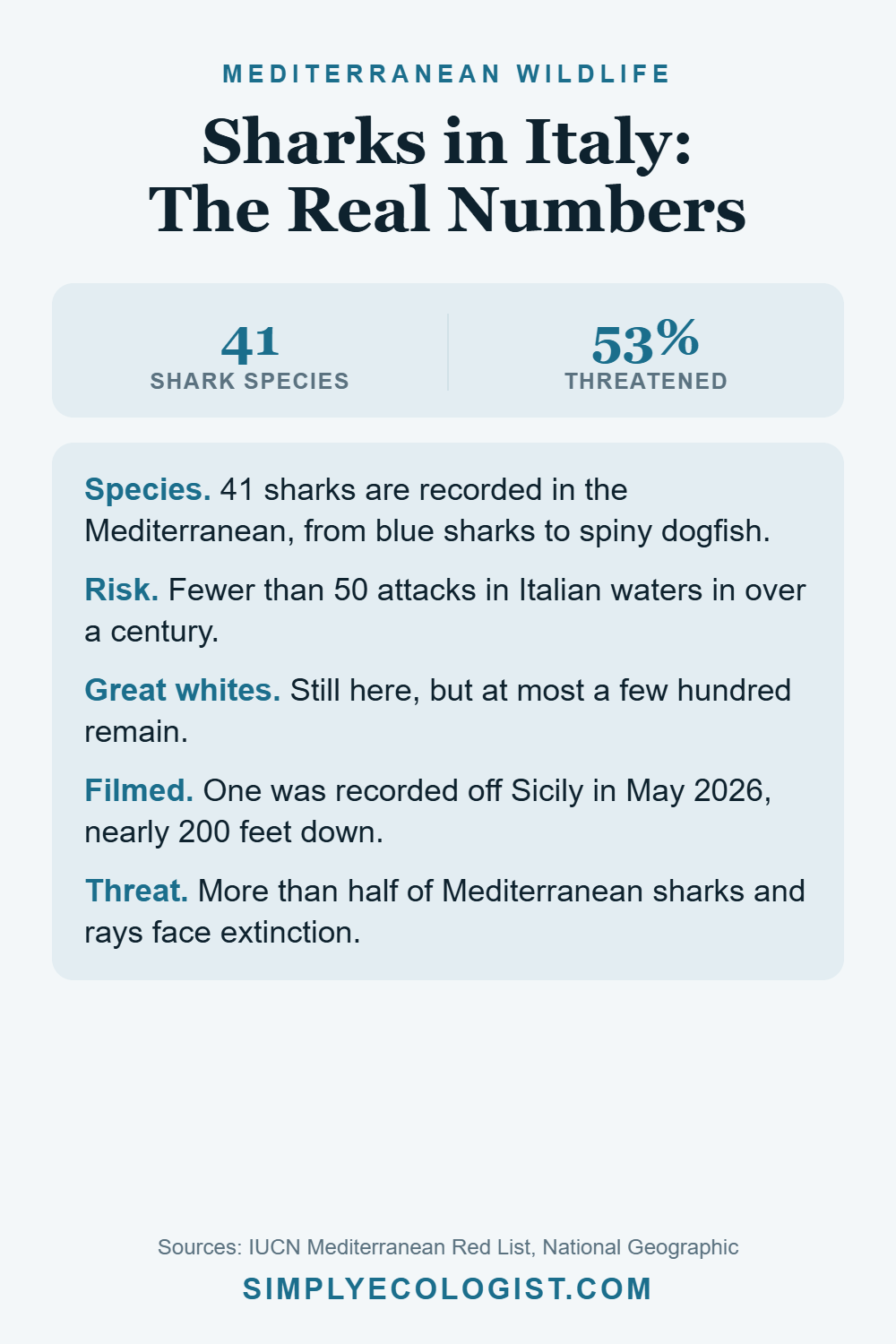
Forty one shark species are recorded in the Mediterranean, and Italian waters hold most of them. Pelagic hunters like the blue shark and shortfin mako patrol offshore currents, while coastal species such as the spiny dogfish occupy continental shelves. The great white shark, critically endangered with perhaps a few hundred left, finds refuge near Sicily and the Egadi Islands. Biodiversity, meaning the variety of living species in an area, remains significant yet declining. Most sharks pose minimal danger to swimmers. The Global Shark Attack File lists 73 incidents in Italian waters across the whole record from 1721 to 2026, 14 of them fatal, and most involved fishermen or spearfishers rather than beachgoers. Those curious about these predators will find fuller context ahead.
A note on where this comes from. I am an ecologist by training, with an MSc in ecology and field seasons behind me in Europe, South America and Asia, and the habit that matters most on a question like this one is separating what is recorded from what is repeated. Almost everything written about sharks in Italy leans on the same handful of half remembered numbers. So every figure below is tied to the body that published it, and where the evidence is one researcher’s estimate rather than a peer reviewed result, it says so.
Key Takeaways
- Over forty shark species inhabit Italian and broader Mediterranean waters.
- Coastal species like spiny dogfish have declined sharply from overfishing.
- Great white sharks are critically endangered with only a few hundred remaining.
- 73 shark incidents recorded in Italian waters between 1721 and 2026, 14 of them fatal.
- Most incidents involved fishermen, not recreational swimmers or beachgoers.
| Species | Where in Italian waters | How often encountered | Risk to swimmers |
|---|---|---|---|
| Blue shark | Offshore, open water | The pelagic shark most often taken as longline bycatch here | Negligible. 2 incidents on the whole Italian record |
| Shortfin mako | Offshore, deeper water | Uncommon and declining | Negligible |
| Thresher shark | Open water | Uncommon | None. It stuns prey with its tail, not its teeth |
| Great white | Strait of Sicily, Egadi, Pantelleria, Lampedusa | Very rare. A few hundred at most in the entire Mediterranean | Low, but the species behind 26 of the 73 recorded Italian incidents |
| Spiny dogfish | Coastal shelves | Once common, now sharply declined | None |
Species records from the IUCN Mediterranean Red List of sharks, rays and chimaeras. Incident counts from the Global Shark Attack File.
Sharks in Italian Waters: What Species Actually Live There
Italy’s waters shelter a surprising range of shark species, more than forty kinds have been recorded throughout the Mediterranean Sea. This count includes everything from small bottom dwellers to powerful open water hunters. The blue shark is the one encountered most often offshore, largely because it is the pelagic shark most frequently caught as bycatch by longline fisheries working these waters. It’s a slender, fast swimmer that follows currents and prey. The count comes from the IUCN Mediterranean Red List of sharks, rays and chimaeras, which records 41 shark species in the sea and finds 39 of the 73 species it assessed, more than half, to be regionally threatened.
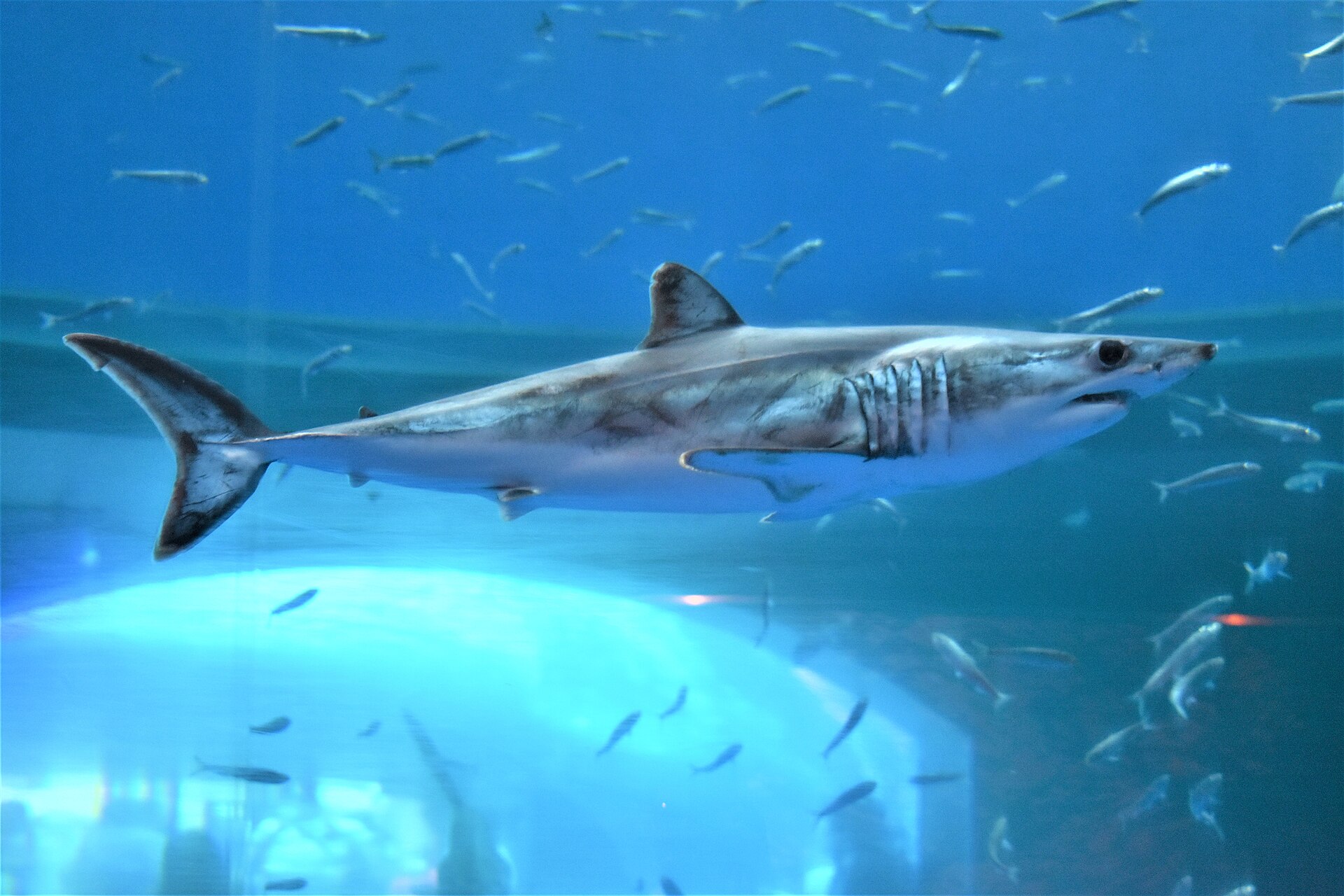
The shortfin mako also patrols these waters, though it’s seen less often. This species can reach exceptional speeds. Most remarkable is the great white shark. Its Mediterranean population is critically endangered, but it hasn’t vanished. Researchers have confirmed its presence through sightings and environmental DNA near Sicily, Lampedusa, and the Egadi Islands. The Strait of Sicily serves as a key refuge.
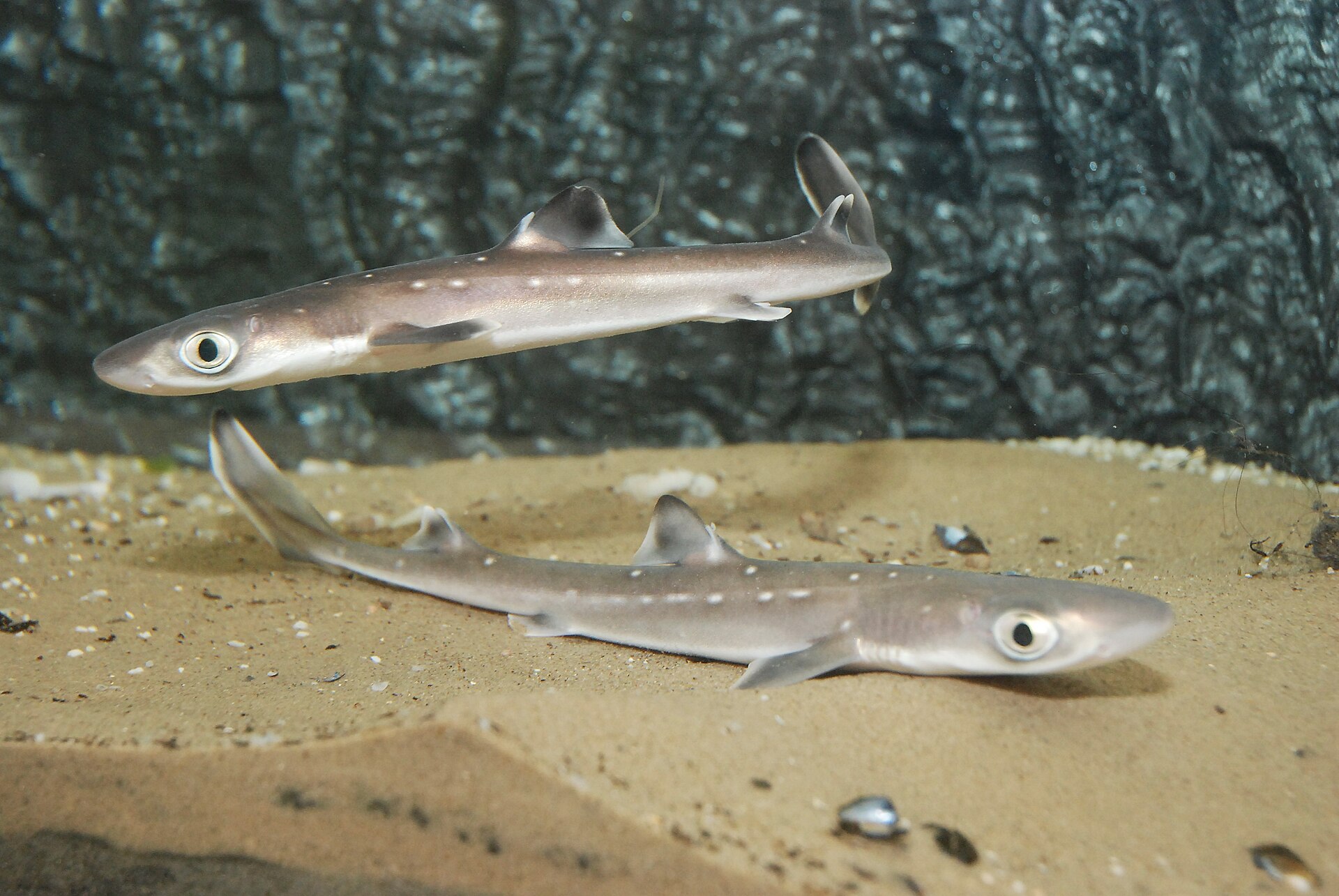
Coastal species like spiny dogfish and sandbar sharks have declined sharply. They face heavy fishing pressure and bycatch mortality.
Are Sharks in Italy Dangerous? The Real Risk to Swimmers
Swimmers rarely encounter sharks in Italian waters, and when they do, the animals usually pass without incident.
The full historical record holds 73 incidents, and they have become rarer with every passing decade. Most involved fishermen, not casual swimmers.
Mediterranean great whites exist here, but they’re critically endangered. Their numbers have collapsed so severely that sightings approach zero.
Most sharks in Italy, blue sharks, shortfin makos, threshers, prefer offshore depths.
Ordinary beachgoers swim in Italian waters with minimal risk. Practical steps help: swim in groups, avoid dawn and dusk, heed lifeguards, and stay out with open wounds. These precautions shrink an already tiny chance.
If someone spots a large shark, they should remain calm, avoid splashing, exit slowly while watching the animal, and report it.
The sea holds biodiversity, meaning the variety of living species. Respect replaces fear.
Great Whites in Italy: Rare, Real, and Critically Endangered
Great white sharks do swim in Italian waters. Scientists have confirmed them near Sardinia, Sicily, and smaller islands. National Geographic reported the encounter and the population estimates behind it.
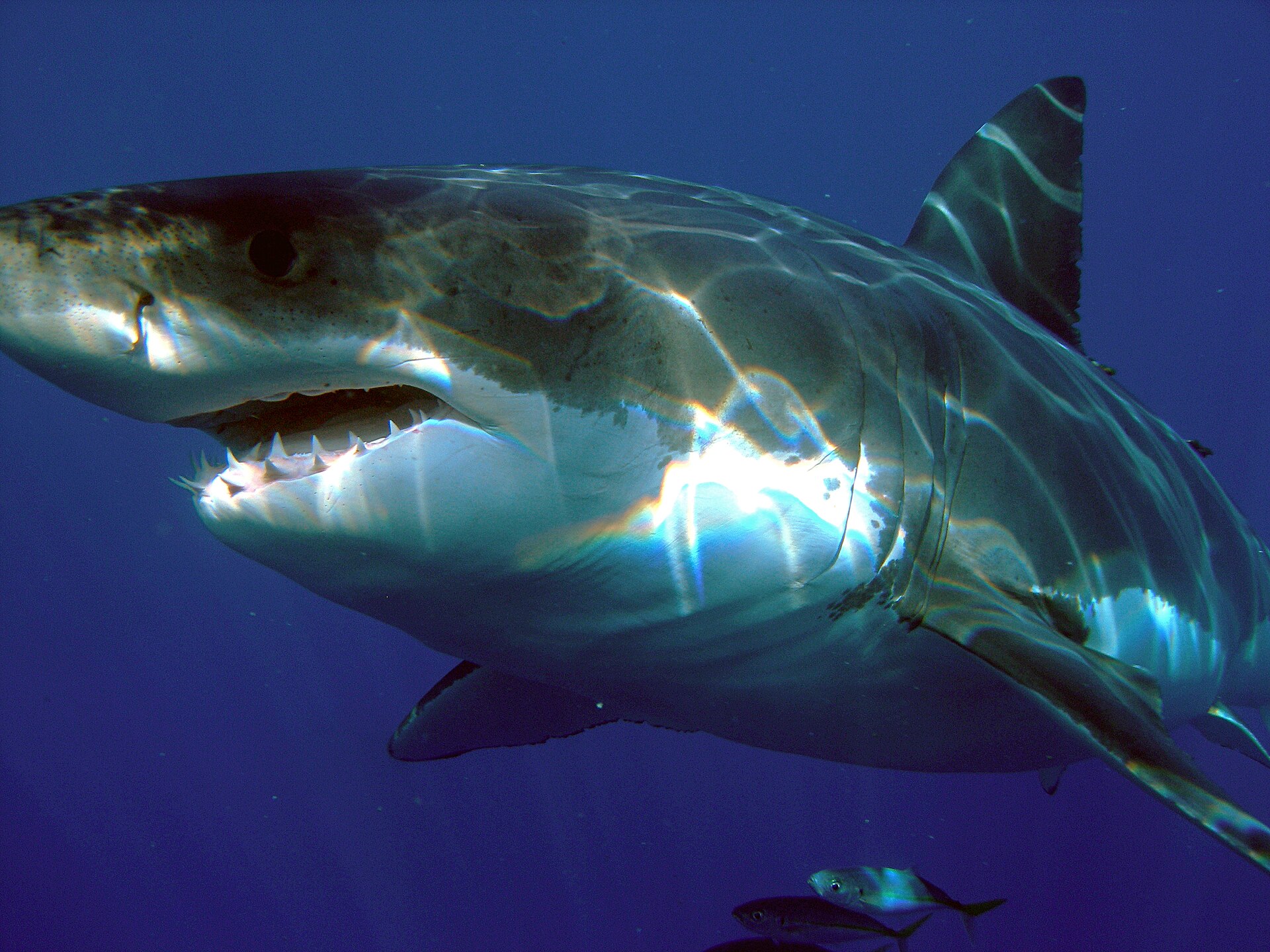
These animals aren’t visitors from the Atlantic; they’ve formed their own isolated population for over three million years, making them genetically unique. That uniqueness hasn’t protected them.
The shark researcher Alessandro De Maddalena puts the figure at a few hundred individuals at most across the whole Mediterranean, with a decline he suspects exceeds ninety percent over the last century. Peer reviewed estimates are more conservative and more uncertain: a 2019 assessment found a 61 percent decline since the second half of the twentieth century, and a 2024 study in Frontiers in Marine Science reported losses of 52 to 96 percent depending on the area. They’re locally critically endangered, which means they face an extremely high risk of disappearing from the Mediterranean entirely.
Confirmed Mediterranean Presence
Although they rarely appear where people can see them, great white sharks do live in Italy’s waters. The Mediterranean population maintains a fragile foothold here. Historical records document sightings near Sardinia and Sicily. Modern science confirms this persistence.
In mid May 2026 the diver Derk Remmers, working with the Healthy Seas Foundation and Ghost Diving to strip abandoned nets from a wreck, filmed an adult male roughly fifty miles offshore in the Strait of Sicily at close to 200 feet down. Environmental DNA detections around Pantelleria Banks, Lampedusa, and the Egadi Islands provide additional proof.
These sharks aren’t visitors. They’ve remained for millions of years. Yet they’re now critically endangered. Expert estimates suggest at most a few hundred individuals survive. Declines may exceed ninety percent over the last century.
Legal protections exist under international agreements. Enforcement gaps persist. Bycatch, illegal catches, and ghost nets continue killing animals we can barely find.
Genetic Isolation History
Because the Strait of Gibraltar closed and reopened repeatedly during ancient geological shifts, Mediterranean great white sharks became cut off from other ocean populations approximately 3.2 million years ago. This separation during the Pliocene created lasting isolation.
Genetic studies reveal something unexpected. Mediterranean great whites aren’t closely related to nearby Atlantic populations. Instead, they share more DNA with Pacific sharks. This suggests their ancestors arrived through the Central American seaway before it closed.
The Mediterranean great white population now shows high genetic similarity among individuals. Low diversity means limited ability to adapt. It’s biodiversity, the variety of life that helps species survive change, and they’ve lost much of it.
This ancient isolation shapes their vulnerability today. They’re running out of options.
Conservation Crisis Status
When the last glaciers retreated, these waters probably held thousands of great whites. Today, Mediterranean great white sharks number at most a few hundred. They’re critically endangered. This means they face extremely high risk of extinction in the wild.
The population has crashed over 90% in a century. Bycatch kills many. Bycatch means accidental capture in fishing gear meant for other species. Illegal sales continue despite treaties banning them. Ghost nets, abandoned fishing gear, also trap these sharks.
The Strait of Sicily matters deeply. Scientists believe it’s a nursery, where young sharks grow. Protecting this hotspot is urgent. Italy must enforce bans, remove ghost nets, and expand monitoring. The loss would be irreversible.
Blue Sharks and Shortfin Makos: Italy’s Most Common Encounters
While Italy’s coastal waters host a modest diversity of shark species, blue sharks and shortfin makos represent the nation’s most documented encounters with these ancient predators. These pelagic species, animals that live in open water rather than near the bottom, frequent offshore zones like the Strait of Sicily. Both feature in our roundup of animals that eat fish and the hunting strategies they use.
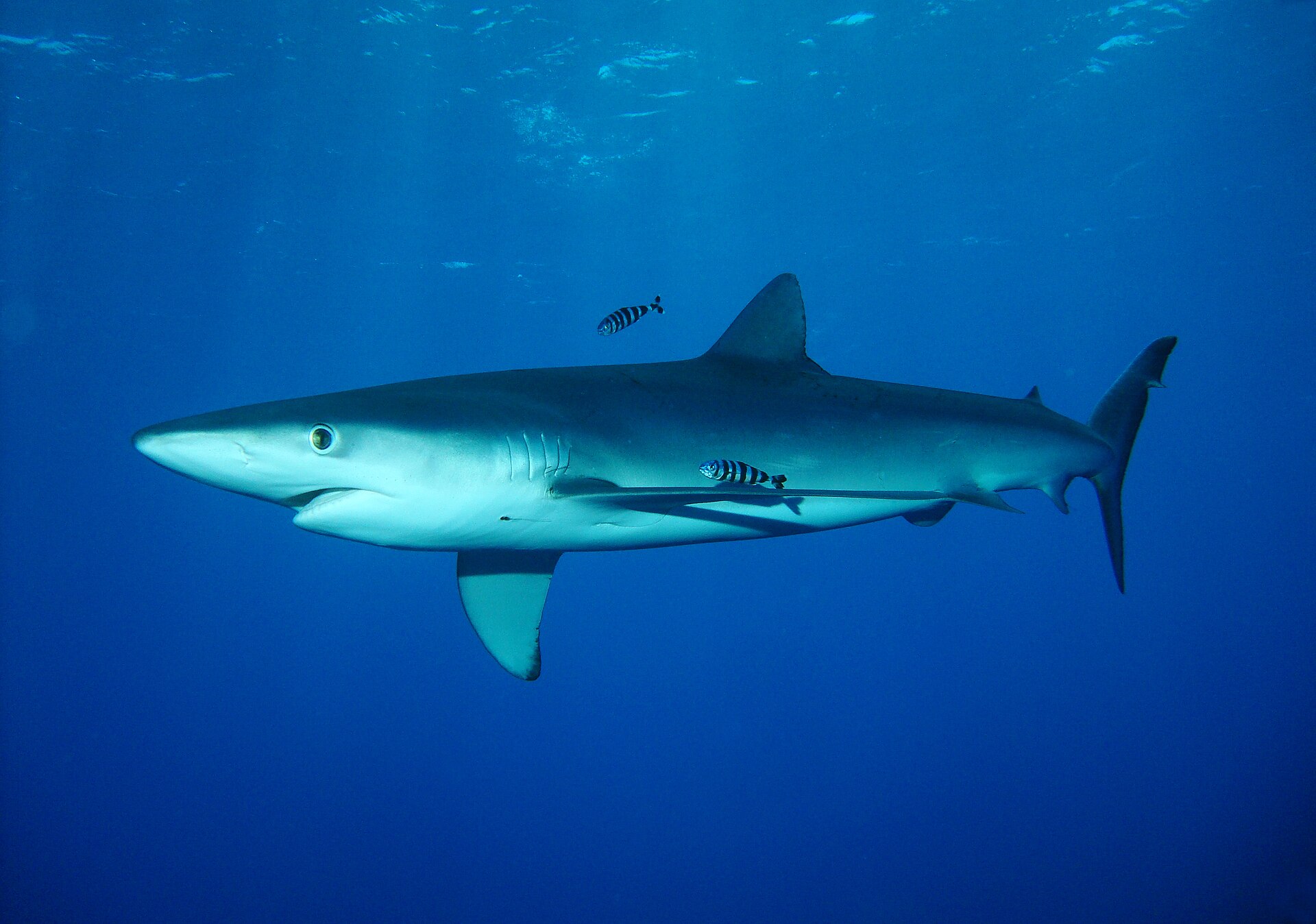
Blue sharks display slender bodies and long pectoral fins. Shortfin makos demonstrate remarkable speed and agility. Both prefer deep waters. They’re rarely seen by swimmers.
- Blue sharks approach Italian coasts seasonally but favor depths.
- Shortfin makos appear more often to fishermen than tourists.
- Neither species inhabits shallow bathing areas.
- Both face heavy fishing pressure and declining numbers.
Encounters happen mainly during boat trips or fishing operations. Casual beachgoers won’t meet them. This separation brings quiet relief.
Where Sharks Live in Italy: From Sicily to the Adriatic
Sharks aren’t confined to Italy’s offshore depths. They inhabit all seas surrounding the peninsula, from shallow bays to deep waters.
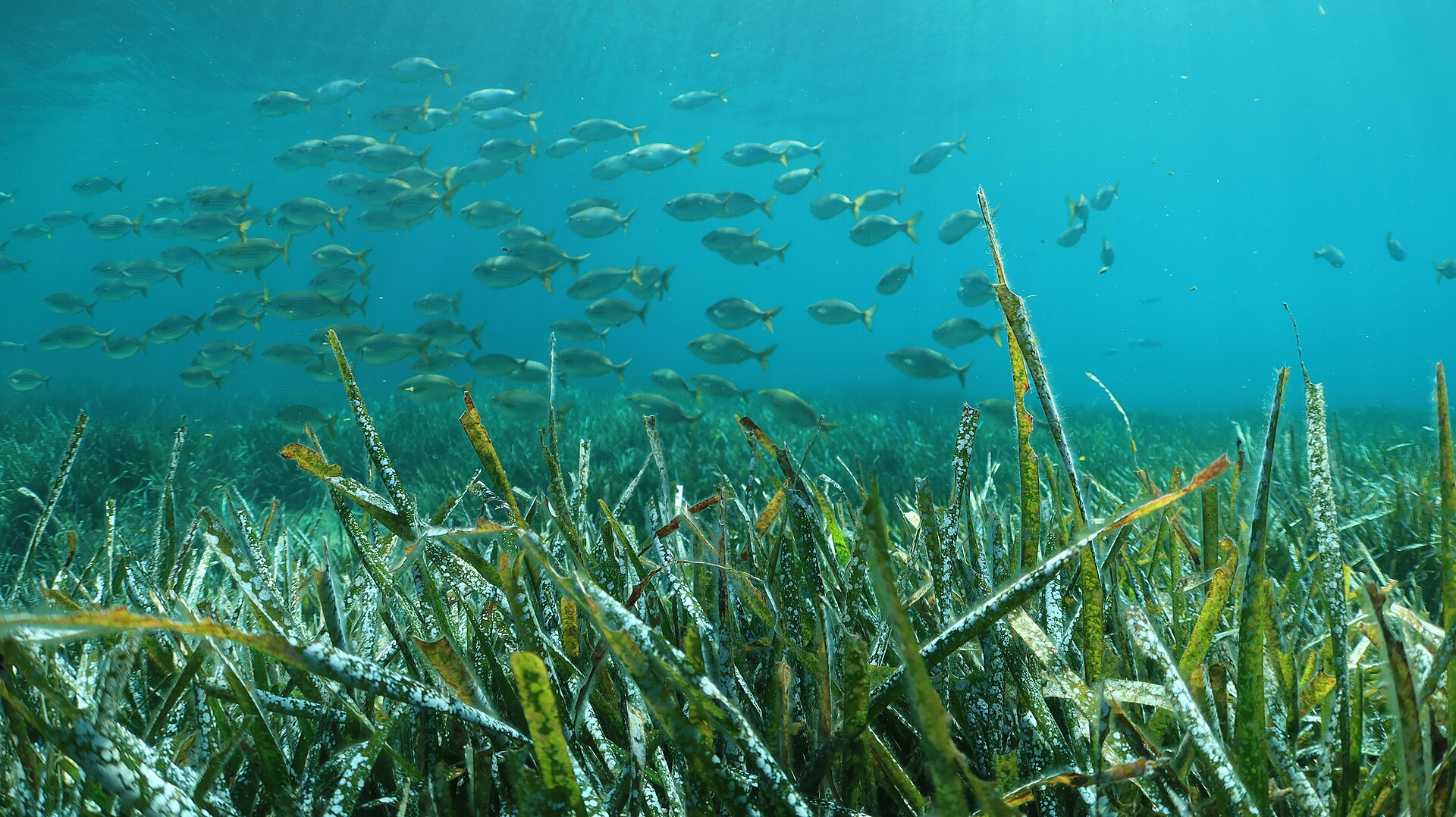
The Strait of Sicily stands out as a known stronghold, likely serving as a nursery area for great whites. Researchers have documented juveniles, pregnant females, and adults in these waters between Sicily, Tunisia, and Libya.
Environmental DNA surveys reveal great white presence around Pantelleria Banks, Lampedusa, and the Egadi Islands. Yet visual encounters remain exceptionally rare despite extensive monitoring.
Pelagic species like blue sharks and shortfin makos patrol open waters off Italy’s coasts. Smaller benthic species, those living on continental shelves and nearshore seabeds, occupy shallower zones.
The Adriatic Sea marks another significant area, with the eastern reaches off Croatia identified as nursery habitat. This connectivity shows sharks migrate across the central Mediterranean.
Shark Attacks in Italy: 73 in Three Centuries
The Global Shark Attack File, the long running incident registry, records 73 shark incidents in Italian waters between 1721 and 2026.
Most fatal incidents involved fishermen or boat interactions, not unprovoked bites on swimmers.
Modern safety context confirms that confirmed attacks on ordinary beachgoers remain exceptionally uncommon today.
Historical Attack Records
Although shark attacks capture headlines worldwide, Italian waters have recorded 73 documented incidents in three hundred years, roughly 60 of them since 1900.
A shark sighting near shore doesn’t mean danger follows.
Most attacks in Italy involved fishermen or boat interactions, not swimmers at beaches.
Sharks remain rarely seen by ordinary people.
The records recorded in the Mediterranean show mostly non fatal outcomes.
Serious bites against beachgoers are exceptionally uncommon.
Historical databases contain gaps.
Older reports lack reliable species identification.
Attribution to specific sharks, like great whites, remains uncertain.
Researchers interpret frequencies cautiously.
Key points about these records include:
- 73 incidents span three centuries of documentation, and white sharks account for 26 of them, blue sharks for 2 and porbeagles for 1
- Many cases involved fishing activities rather than recreational swimming
- Species identification in older reports often proves unreliable
- Database inconsistencies mean exact counts remain approximate
The Mediterranean hosts diverse marine life.
Biodiversity, meaning the variety of living species in an area, includes sharks as natural components.
Their presence indicates healthy ecosystems.
Fatal Incidents Overview
Because 14 of the 73 recorded Italian incidents were fatal across three centuries, fatal encounters stand out as genuinely exceptional events.
Most documented shark attacks involved fishermen handling catch or working from boats. These aren’t unprovoked attacks on swimmers.
Historical records often lack reliable species identification. Attributions to great whites remain uncertain.
Modern databases confirm most encounters were non fatal. Only a very small fraction resulted in death.
The scarcity of large coastal sharks makes fatal incidents rare. Individual risk while swimming is vanishingly small.
This reality reflects Italy’s marine biodiversity, meaning the variety of sea life present. Large predatory sharks simply don’t frequent coastal zones in significant numbers.
The data offers quiet reassurance. Swimmers face greater dangers from currents than from sharks.
Modern Safety Context
Shark attacks in Italian waters have remained exceptionally rare for over a century. Incidents cluster in the middle of the twentieth century and have run at roughly one a decade since 2000, and most involved fishermen or boats rather than ordinary swimmers. Many were non fatal outcomes. Historical records often lack reliable identification of shark species, so confirmed attacks by large predators like great white sharks are very uncommon. For sharks in the Mediterranean, Italy represents an extremely rare source of danger to humans.
Modern databases confirm that serious unprovoked attacks on tourist beaches are exceptionally uncommon.
Here are four key safety considerations for swimmers in Italy:
- Attack frequency stays remarkably low across 120 years of documentation
- Most incidents target fishing vessels, not recreational beachgoers
- Species identification remains uncertain in historical cases
- Standard beach precautions address actual risks, not shark fears
Biodiversity, the variety of living species in an area, includes shark populations that generally avoid human contact. Swimmers should respect local guidelines.
Why Sharks Are Vanishing From Italian Waters
Mediterranean waters have lost their apex predators at an alarming rate. Shark species in Italian waters have declined over 90% in some cases this past century. Overfishing drives this collapse. Bycatch, accidental capture, kills countless animals. Habitat loss compounds the damage. Coastal development destroys nurseries. Pollution poisons foraging grounds. Juvenile sharks can’t find safe shelter. Research published in Nature Africa found white shark DNA in only 5 of 159 seawater samples taken across the Sicilian Channel between 2021 and 2023.
Illegal catches continue. Historic bounties devastated populations. Recovery remains blocked. Mediterranean great whites dropped 61% since the late 20th century. They’re genetically distinct. This means low diversity. Populations rebuild slowly.
Ghost nets entangle survivors. Divers remove them. It’s not enough. Biodiversity, the variety of life, suffers. The ecosystem unravels. Stronger enforcement could help. Time runs short.
Abandoned Nets and Illegal Fishing: Threats to Italy’s Great Whites
Lost fishing gear drifts through the Strait of Sicily. These ghost nets, abandoned fishing equipment left behind by boats, entangle marine life across the Mediterranean. They pose a direct threat to Italy’s remaining Great whites. Divers from Ghost Diving and Healthy Seas conduct removal missions. They’ve documented Great white encounters while cleaning submerged wrecks.
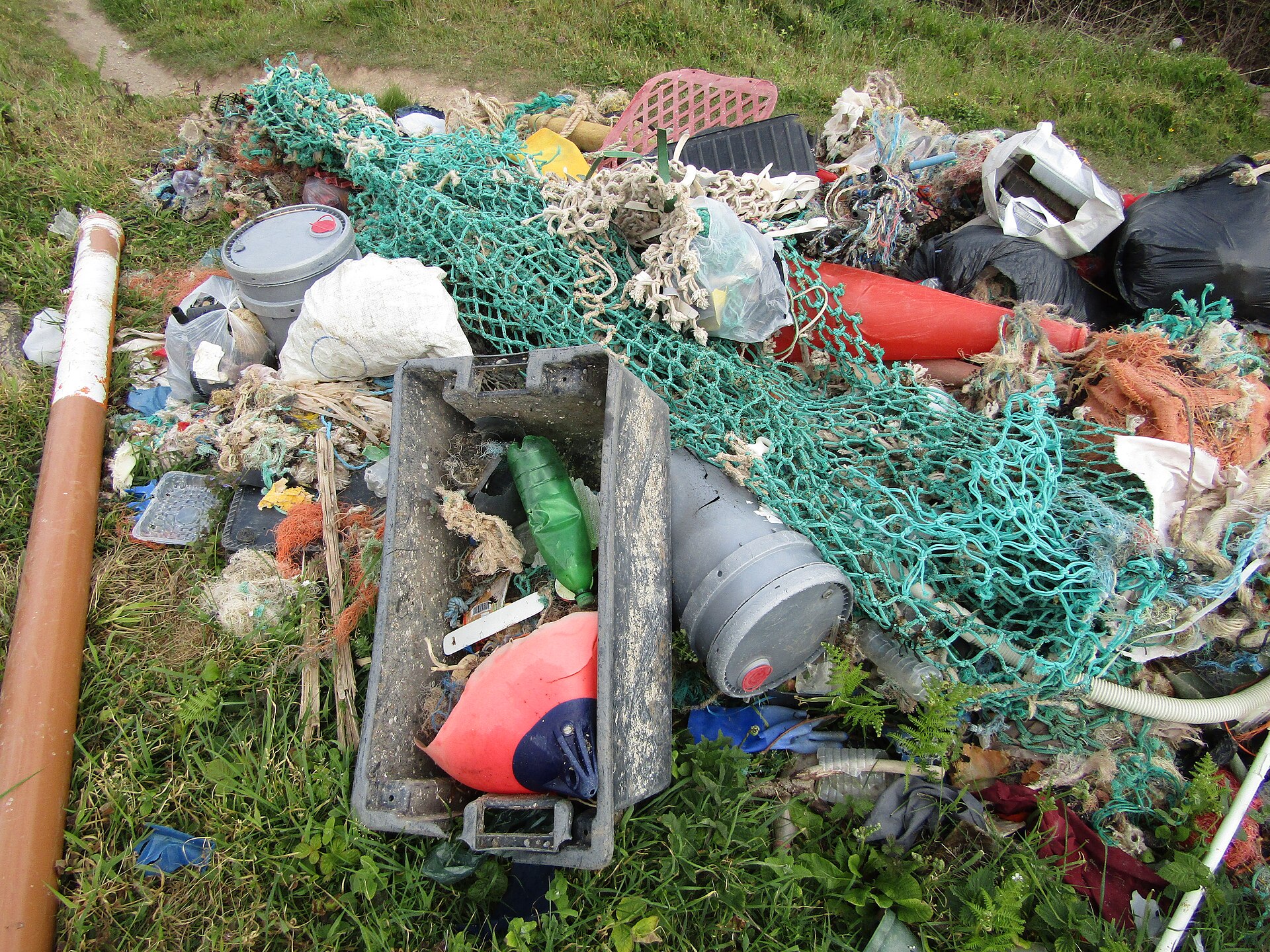
Illegal fishing compounds this crisis. Despite UN protections, Great whites still die as bycatch, animals caught unintentionally in gear meant for other species. Longlines snag them incidentally. Market checks in North Africa reveal illegal catches of large sharks. Enforcement gaps persist across Mediterranean countries.
Researchers prioritize four responses:
- Remove ghost nets from critical habitats
- Enforce laws against illegal catches
- Ban harmful gear like longlines
- Monitor Sicilian Channel hotspots through tagging and photo ID
These measures matter. The Mediterranean population is critically endangered.
Safer Swimming in Italy: Six Rules for Shark Awareness
Encounters with sharks in Italian waters remain uncommon, yet swimmers benefit from understanding how to share the ocean safely.
Anyone who spots a shark should stay calm and slowly leave the water. They must keep their eyes on the animal and avoid frantic splashing.
Swimmers should swim at supervised beaches and follow lifeguard warnings. Authorities sometimes close beaches after sightings.
People should avoid swimming alone, at dawn or dusk, or near fishing boats. These areas attract pelagic sharks like blue sharks and makos. Fish cleaning draws predators.
Swimmers with open wounds should stay out of the water. They should also avoid nursery regions like the Strait of Sicily where Mediterranean great whites and juveniles appear.
Reporting sightings to coast guard supports safety and conservation data collection.
Apex Predators: How Sharks Keep Italian Seas Healthy
Beyond knowing how to swim safely, it’s worth understanding why sharks matter at all. In the Mediterranean Sea, sharks serve as apex predators. They sit at the top of the food web. They regulate prey populations like tuna and smaller fish. This balance spans the Adriatic, Tyrrhenian, Ionian, and Sicilian Channel. This is a textbook trophic cascade, one of the key concepts in ecology that explains why removing a top predator reshapes everything below it.
- Blue sharks and shortfin makos control schooling fish abundance along migratory corridors, including the Strait of Sicily.
- Sharks prey on sick, old, or overabundant individuals. This reduces disease spread. It promotes healthier fish populations.
- Nursery areas in the Strait of Sicily, eastern Adriatic, and Gulf of Edremit sustain juvenile sharks. These young sharks later perform top down ecological roles.
- Overfishing and bycatch have devastated Mediterranean shark numbers. Great whites are now critically endangered locally.
Protecting sharks preserves ecosystem health.
Sharks in Italy: Common Questions
Are there sharks in Italy?
Yes. Forty one shark species are recorded in the Mediterranean and Italian waters hold most of them, from blue sharks and shortfin makos offshore to spiny dogfish on the coastal shelves. What almost never happens is a shark and a swimmer meeting.
How many shark species live in the Mediterranean?
Forty one, according to the IUCN Mediterranean Red List. The same assessment found 39 of the 73 shark, ray and chimaera species it evaluated to be regionally threatened, so more than half of the group is in trouble.
Are sharks in Italy dangerous to swimmers?
Very rarely. The Global Shark Attack File records 73 incidents in Italian waters across three centuries, 14 of them fatal, and the majority involved fishermen, spearfishers or boats rather than people swimming from a beach.
How many shark attacks have there been in Italy?
73 documented incidents between 1721 and 2026, of which 14 were fatal. White sharks account for 26, blue sharks for 2 and porbeagles for 1. Incidents peaked around the middle of the twentieth century and have run at roughly one a decade since 2000.
Are there great white sharks in Italy?
Yes, but only just. The Mediterranean population is critically endangered and estimated at a few hundred individuals at most. In May 2026 divers removing abandoned fishing nets from a wreck filmed an adult male roughly fifty miles off Sicily at close to 200 feet down.
Where in Italy are sharks most likely to be?
Offshore rather than inshore. The Strait of Sicily, the waters around the Egadi Islands, Pantelleria and Lampedusa are the areas where great white presence has been confirmed by environmental DNA, and pelagic species such as blue sharks and makos stay in open water well away from beaches.
Why are sharks disappearing from Italian waters?
Fishing pressure, above all. Sharks are caught deliberately and as bycatch in longline and trawl fisheries, and abandoned nets keep killing long after they are lost. A survey of the Sicilian Channel between 2021 and 2023 found white shark DNA in only 5 of 159 seawater samples.
How can I swim safely in Italy?
Swim during daylight, stay in groups, avoid river mouths and areas where people are fishing or cleaning catch, and do not wear high contrast jewellery in murky water. In practice the risk is so low that these are precautions rather than necessities.
Final Thoughts
Italy’s sharks face an uphill battle. Biodiversity, the variety of life in an area, depends on these predators. They’re disappearing faster than anyone imagined. Great whites number perhaps two hundred in the entire Mediterranean. Most encounters harm sharks, not humans. Six simple rules keep swimmers safe. The real danger isn’t fins in the water. It’s empty seas. Protection matters. Future generations deserve living oceans.

Erzsebet Frey (Eli Frey) is an ecologist and online entrepreneur with a Master of Science in Ecology from the University of Belgrade. Originally from Serbia, she has lived in Sri Lanka since 2017. Eli has worked internationally in countries like Oman, Brazil, Germany, and Sri Lanka. In 2018, she expanded into SEO and blogging, completing courses from UC Davis and Edinburgh. Eli has founded multiple websites focused on biology, ecology, environmental science, sustainable and simple living, and outdoor activities. She enjoys creating nature and simple living videos on YouTube and participates in speleology, diving, and hiking.
🌿 Explore the Wild Side!
Discover eBooks, guides, templates and stylish wildlife-themed T-shirts, notebooks, scrunchies, bandanas, and tote bags. Perfect for nature lovers and wildlife enthusiasts!
Visit My Shop →