
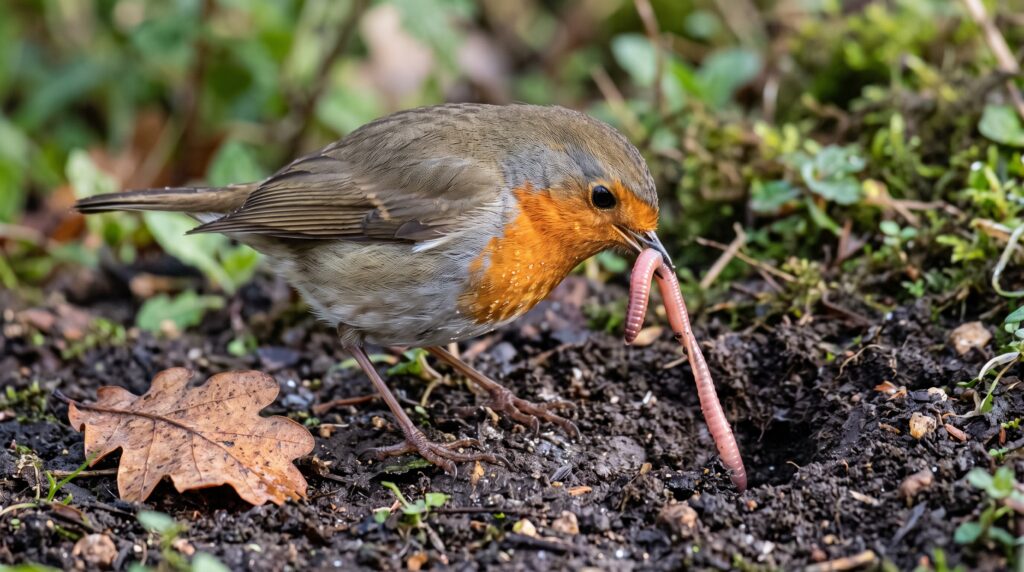
Birds, mammals, reptiles, amphibians, fish, and invertebrates all consume worms. Robins and thrushes tilt their heads to spot movement beneath soil. Crows hunt after rain when worms surface. Moles eat hundreds daily, tunneling through earth. Shrews eat between half and twice their body weight in food each day. Centipedes inject venom. Snapping turtles and crayfish strike quickly. Wasps parasitize caterpillars and grubs. This web of predators (biodiversity, the variety of life in an area) keeps ecosystems balanced. Each creature fills a role. There’s more to uncover about how they hunt.
Key Takeaways
- Birds like robins and thrushes use sight and sound to locate and pull worms from soil.
- Reptiles including snakes, lizards, and skinks hunt worms underground or in leaf litter.
- Amphibians such as toads and salamanders capture worms with sticky tongues or chemical sensing.
- Invertebrates like ground beetles and centipedes patrol damp habitats to seize surface worms.
- Fish, turtles, and crayfish consume aquatic worms and larvae in freshwater ecosystems.
Birds That Eat Worms: Robins, Thrushes, and Crows
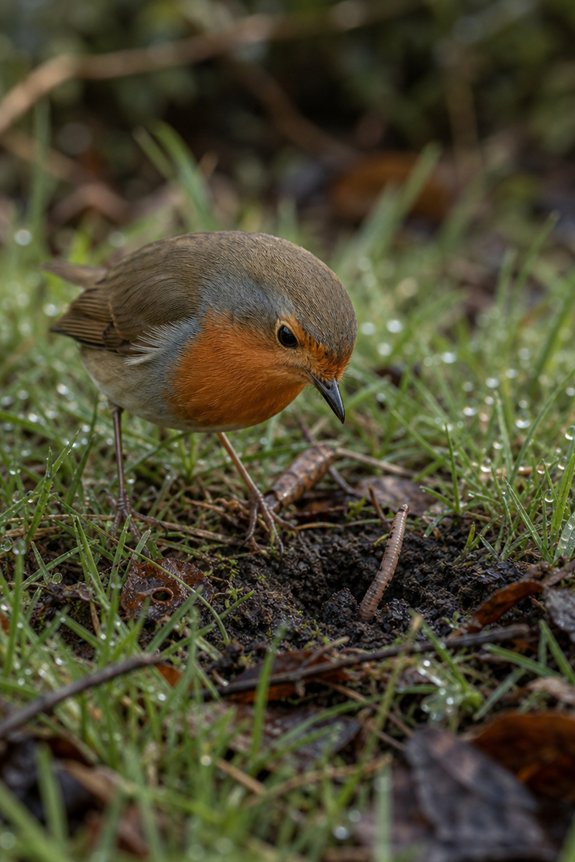
Birds frequently rely on earthworms as a steady food source, and several species have developed remarkable methods for finding them. American robins tilt their heads to spot worms moving just beneath lawns and fields. They pull hundreds daily to feed chicks in spring. Several thrush species, including the Wood Thrush, forage in leaf litter and moist soil. Their presence signals healthy, worm rich earth. American crows search open areas after rainstorms when worms surface. They include earthworms in their opportunistic diet.
Thrushes and robins specialize in ground foraging. They listen and watch for worm movement. Crows use visual cues and scavenging instead. During breeding season, robins and thrushes increase worm intake markedly. Earthworms become critical protein for growing nestlings. This dependency reveals how soil health connects directly to bird survival.
How Robins Use Sight and Sound to Find Earthworms
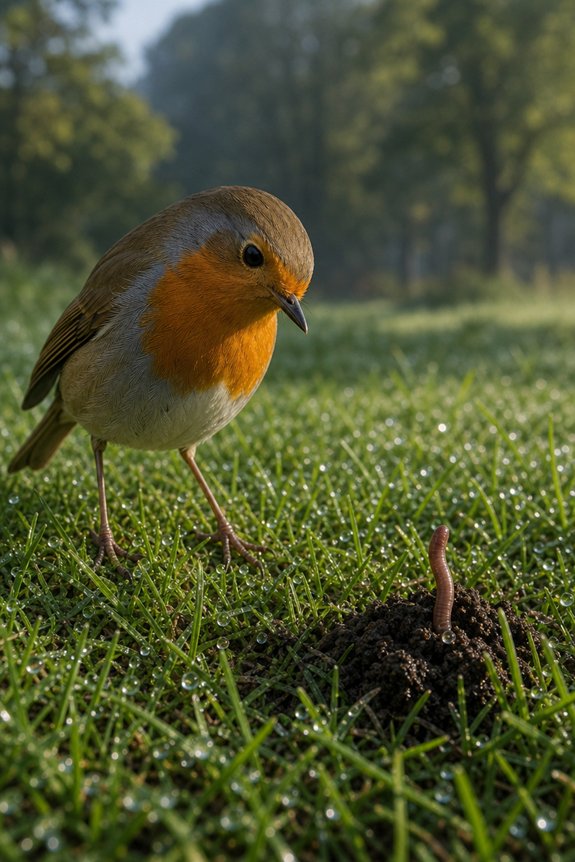
Tilting its head, a robin scans the ground for faint movement beneath the surface. It uses binocular vision, meaning both eyes focus forward to judge depth and distance. The bird stands motionless on lawns. It listens for vibrations. Worms moving through soil create faint sounds. Robins detect these with sensitive hearing. They combine sight and sound to triangulate, or pinpoint, exact locations.
After rain, success rates increase. Worms surface in wet conditions. A robin spots its target. It strikes quickly. The beak grasps and pulls. Parent robins collect hundreds daily in spring. They feed growing chicks. This method demands patience. It rewards efficiency. The strategy reflects adaptation, or beneficial trait development over time. Robins exemplify precise, multisensory hunting.
Why Crows and Thrushes Hunt Worms After Rainstorms
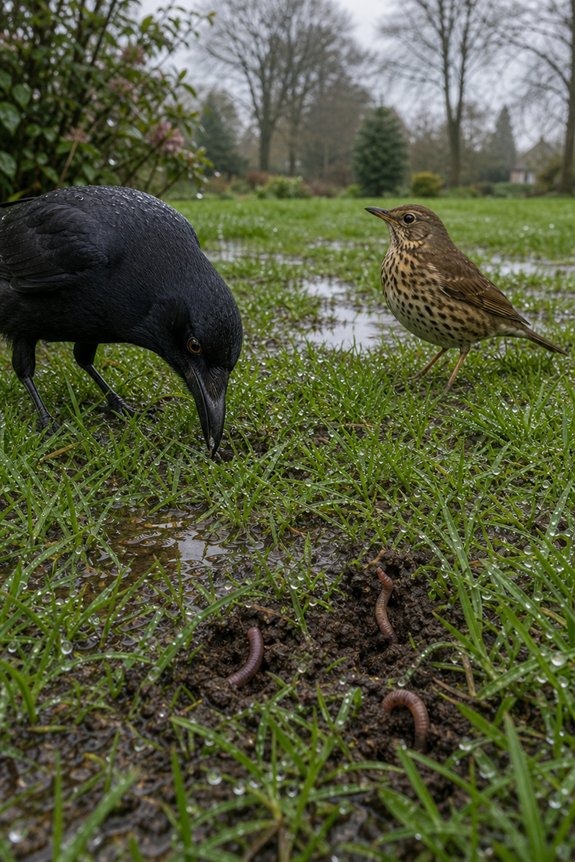
Heavy rainfall changes the ground beneath our feet. Rain brings earthworms to the surface, though not for the reason most people assume. They travel and look for mates on wet ground rather than fleeing water. This makes them easy prey.
American crows and thrush species know this pattern. They patrol lawns and fields after storms. Worm activity and visibility peak then. The birds capitalize on this moment.
Thrushes and robins use sharp vision. They tilt their heads to catch subtle movement. Worms stir just beneath wet soil. The birds strike quickly. They pull prey free.
Rain concentrates worms in open areas. The creatures can’t retreat into burrows. Predation success rises sharply.
These meals pack high energy. They fuel migration and breeding. They feed growing chicks. The timing matters. Storms create opportunity. Birds respond with instinctive precision.
Do Bats Eat Worms? What They Actually Hunt
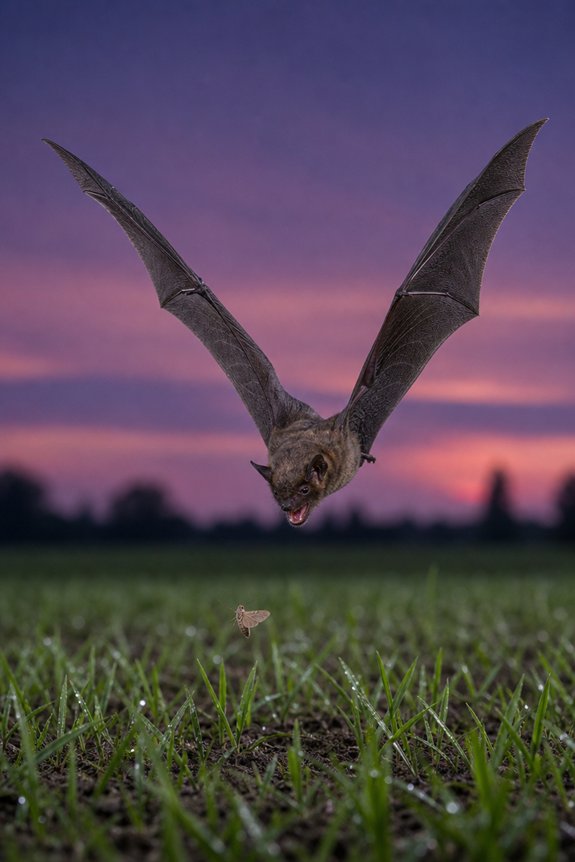
Bats belong in this post, but not as earthworm predators. No bat species is documented eating earthworms, and it is worth saying so plainly, because the confusion comes from the word itself. The pests farmers call cutworms, armyworms and corn earworms are moth caterpillars, not annelids. Bats hunt the adult moths that lay them.
That still makes bats one of the most important controls on the animals people mean when they say worms in a field. Insectivorous bats eat hundreds to thousands of insects a night. Mexican free tailed bats take tons of crop pests across their range, and by removing egg laying adults they break the reproductive cycle before the caterpillars ever hatch.
A widely cited estimate in the journal Science put the value of that service to United States agriculture at 3.7 to 53 billion dollars a year.
- Bats do not eat earthworms. They eat the moths whose larvae are called worms.
- A single bat takes hundreds to thousands of insects nightly
- Mexican free tailed bats consume tons of regional crop pests
- Removing adult moths prevents the next generation of cutworms
- Bat friendly habitat raises populations and pest suppression
Wasps and Beetles That Hunt Caterpillars and Grubs
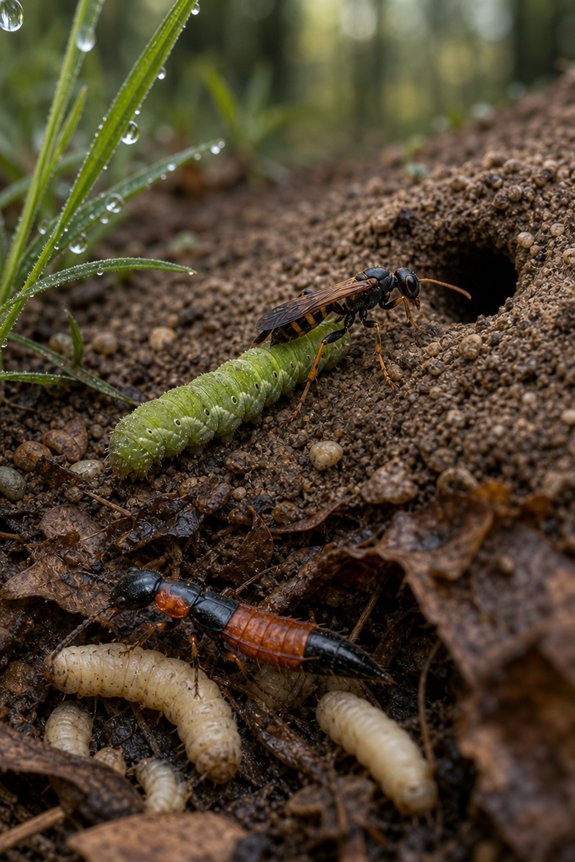
The same naming problem applies here. Parasitic wasps and predatory beetles are ferocious hunters of what gardeners call worms, but their prey is insect larvae: caterpillars, inchworms, webworms and grubs. They are not hunting earthworms.
Solitary wasps paralyse caterpillars with venom, then seal them in nests as living food for their young. Ichneumonid and braconid wasps inject eggs directly into inchworms and webworms, and the offspring consume the host from within. Ground beetles and rove beetles patrol soil and leaf litter at night, using powerful jaws to seize grubs and small caterpillars. This quiet violence keeps pest populations in check without fanfare.
Parasitic Wasp Species
Several parasitic wasp families target caterpillars and moth larvae, turning them into unwitting nurseries. These wasps play critical roles in natural pest control.
- Ichneumonidae and Braconidae wasps lay eggs inside caterpillars and moth larvae; the wasp larvae consume hosts from within, often killing them before pupation.
- Braconid wasps like Cotesia congregata parasitize tobacco hornworms, with dozens of wasp larvae emerging to spin cocoons on living hosts.
- Ichneumonid wasps such as Ophion species act as koinobionts, parasitoids letting hosts feed and grow while wasp larvae develop inside; they time host death to their own pupation.
- Tachinid flies deposit multiple eggs on single hosts, slashing pest populations dramatically.
- Solitary chalcid wasps penetrate soil dwelling scarab grub cuticles, offering natural biological control (reducing pests without chemicals) in agricultural soils.
Predatory Beetle Types
Rove beetles work differently. These slender predators search decaying wood and soil for concealed caterpillar and fly larvae. They’re patient hunters.
Some beetles target larger prey. Cleridae and elaterid larvae tunnel through soil to find white grubs. They consume these scarab larvae from within their burrows.
Parasitic wasps complement this predation. Ichneumonids and braconids locate caterpillars and moth larvae. They deposit eggs inside hosts. The parasitoid offspring consume the worm from within.
Together, these insects reduce agricultural pests markedly. Tachinid flies and wasps achieve documented biocontrol rates in crops. This matters: it is natural pest control without chemicals.
Fish That Feed on Aquatic Worms in Freshwater Systems
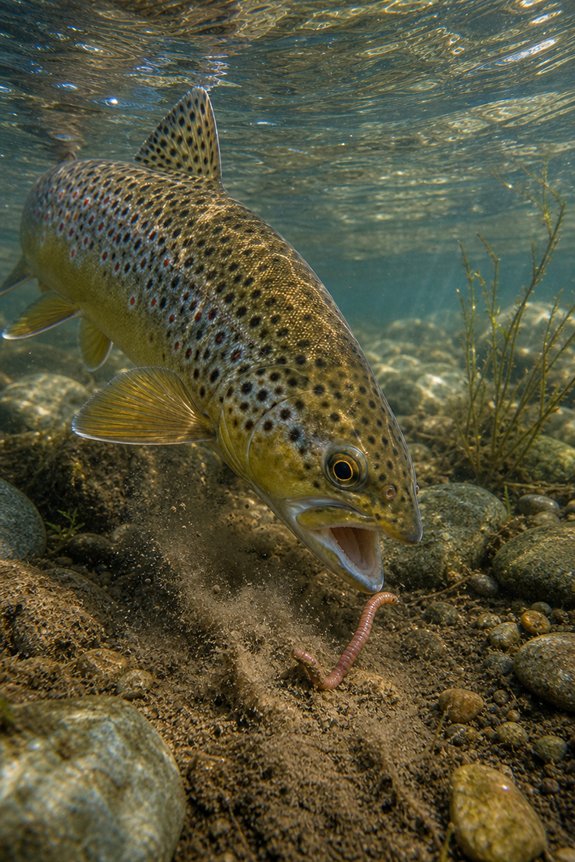
Freshwater fish frequently consume aquatic worms as a reliable food source, especially in habitats where these invertebrates (small spineless animals) thrive in sediments and debris. Many species rely on this protein. Trout, bass, catfish, and bluegill eat aquatic oligochaete worms and insect larvae. Juveniles need them most.
- Bottom feeders like carp and channel catfish sift sediment for benthic worms, using touch and taste to find prey
- Predatory fish such as largemouth bass and northern pike take worms opportunistically, especially after disturbances muddy the water
- Small forage fish including sculpins, dace, and chubs consume worm larvae, moving energy up the food web
- Consumption spikes during spring thaws and storms when worms surface
- This feeding supports rapid growth and spawning success in many species
The pattern is clear. Worms sustain freshwater ecosystems quietly, without recognition.
Frogs and Tadpoles That Eat Worms in Water and on Land
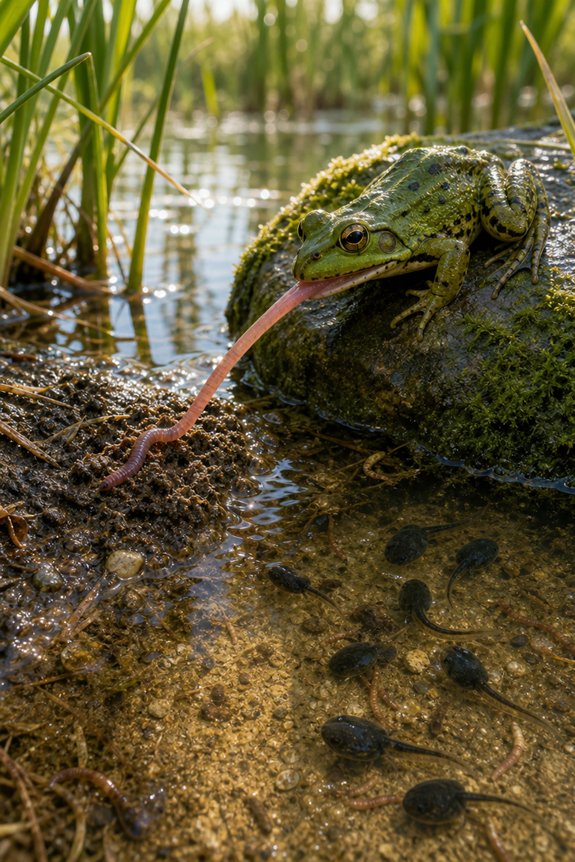
Adult frogs and tadpoles hunt worms across two worlds. Many adult frogs, including bullfrogs and green frogs, opportunistically consume aquatic and terrestrial worms. They’ll eat dozens in one feeding session.
Tadpoles of some species are omnivorous, meaning they eat both plants and animals. They ingest small aquatic worms or wormlike larvae alongside algae. As tadpoles grow, they expand their diet.
Aquatic frogs and tadpoles feed near sediment where oligochaete worms live. They use suction or rasping mouthparts to capture prey.
Terrestrial species employ different tactics. Treefrogs and toads use sticky tongues and rapid lunging strikes. They pull earthworms and caterpillars from leaf litter.
This predation shapes food web dynamics, the interconnected feeding relationships in ecosystems. It controls worm populations while fueling frog reproduction.
Freshwater Turtles That Hunt Worms for Protein
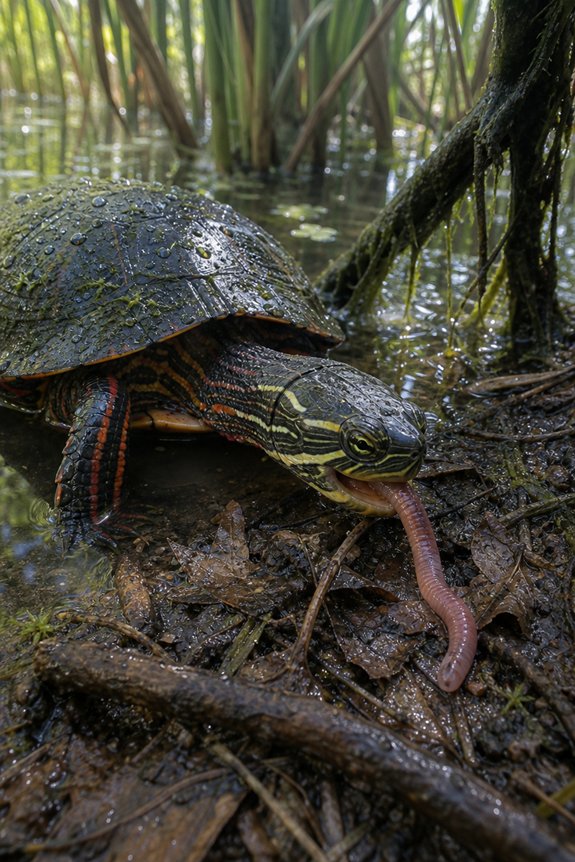
Freshwater turtles employ diverse hunting techniques to capture worms, blending sensory strategies with seasonal timing. Species like painted turtles and red eared sliders scan muddy banks at dawn, detecting earthworms through sight and chemical cues in shallow sediment.
This protein rich prey supports rapid juvenile growth and sustains adult turtles through energy demanding periods.
Turtle Worm Hunting Techniques
Probing the muddy margins of ponds and streams, freshwater turtles employ a patient, sensory driven approach to locate worms beneath leaf litter and sediment. Tactile and chemical cues guide their search. Painted turtles and snapping turtles probe shallow sediment. They strike quickly with their necks when worms surface. Many species forage at dusk or after rainfall. Worms are more active then. Juvenile turtles rely heavily on worms. They need protein for growth.
- Eastern Box Turtles forage along muddy banks using touch and smell to find earthworms
- Painted turtles probe sediment in shallow water and strike fast to grab surfacing worms
- Snapping turtles use quick neck strikes to capture exposed wormlike prey
- Aquatic turtles feed at dusk and after rain when worm activity peaks
- Juvenile turtles consume many small worms and insect larvae for protein during development
Freshwater Species Overview
Several freshwater turtle species rely on earthworms and aquatic worms as essential protein sources. The Eastern Box Turtle and various pond turtles seek these invertebrates most actively during spring and after rainfall when worms surface abundantly.
Painted turtles and mud turtles forage methodically. They hunt in shallow water and along sediment edges, capturing oligochaetes (a type of segmented worm) and insect larvae with quick strikes. Their feeding combines visual spotting with tactile detection of movement through mud and leaf litter.
Young turtles need more protein than adults. Hatchlings and juveniles may eat worms daily when available, fueling rapid growth through critical developmental stages.
Habitat shapes this behavior. Turtles in nutrient rich, slow moving waters consume more worms. Those in worm scarce environments adapt, relying instead on plants and other invertebrates to meet nutritional needs.
Protein Nutritional Benefits
Nutrition drives survival. Freshwater turtles understand this well. They hunt worms for concentrated protein.
- Eastern Box Turtles and painted turtles eat annelids for essential amino acids
- One large earthworm provides roughly 0.3 to 0.6 grams of digestible protein
- Juveniles capture multiple worms daily to fuel rapid growth
- Turtles forage in moist soil and leaf litter using visual and tactile cues
- Spring feeding increases when worms abound and breeding demands peak
Worms support shell development and muscle repair. Turtles don’t choose worms randomly. They respond to seasonal needs. Protein quality matters more than quantity. A varied predator community ensures worms remain available. This relationship feels ancient and necessary.
Crayfish and Dragonfly Nymphs as Aquatic Worm Predators
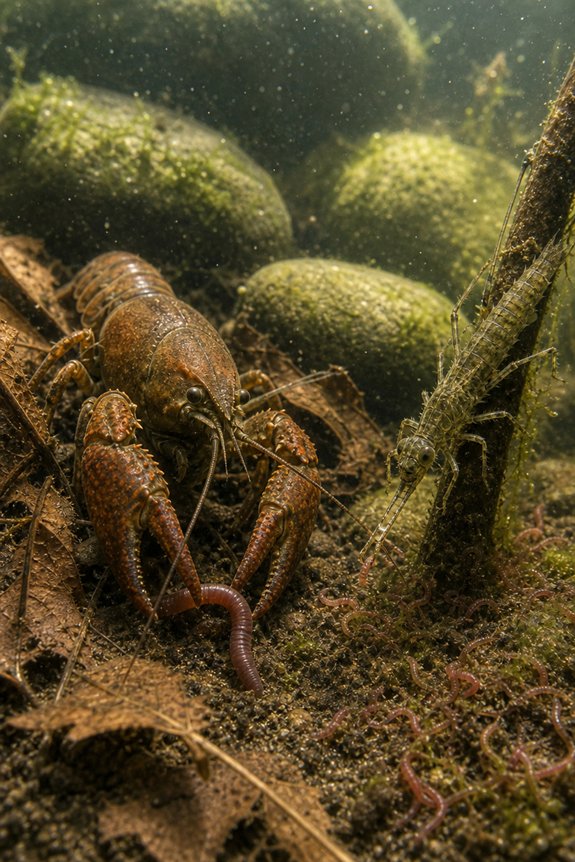
Scouring the bottoms of streams and ponds, crayfish and dragonfly nymphs rank among the most notable predators of aquatic worms in freshwater ecosystems. Crayfish tear prey with their claws. They consume multiple worms daily. Dragonfly nymphs strike with extendable mouthparts. Both hunt where worms gather: sediments and vegetation zones.
Disturbances like storm runoff increase predation. Worms become exposed. Juveniles target small species. Larger predators take bigger prey. These hunters shape underwater communities. Biodiversity depends on such relationships. Studies show crayfish mass feeding reduces worm densities markedly. Dense dragonfly populations suppress local abundances too.
The pattern is clear. Predators regulate their prey. They maintain balance in freshwater systems. This matters. Small creatures drive ecosystem health in ways we rarely witness directly.
Moles: Underground Specialists That Eat Mostly Earthworms
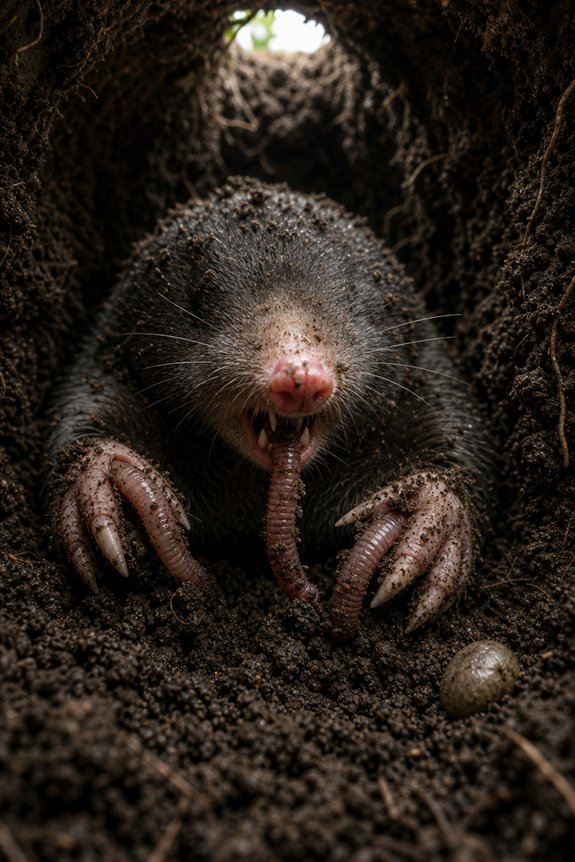
Moles rarely surface, spending nearly their entire lives in tunnel systems that weave through soil and intersect earthworm colonies. These mammals dig constantly. Their tunnels act as both home and hunting ground.
- A mole eats its body weight daily, hundreds of earthworms and other invertebrates fuel its rapid metabolism.
- Sensitive snouts and whiskers detect touch and vibration; moles don’t use vision to find prey.
- Earthworms dominate their diet, though moles also consume grubs, insect larvae, and occasional small vertebrates.
- Raised ridges and surface mounds mark their tunnel building while pursuing earthworms underground.
- Lawn damage reveals their feeding paths though moles remain hidden below.
Earthworms sustain these specialists efficiently. The mole’s entire existence depends on this single food source and the soil that contains it.
Shrews: Tiny Mammals That Consume Worms Constantly
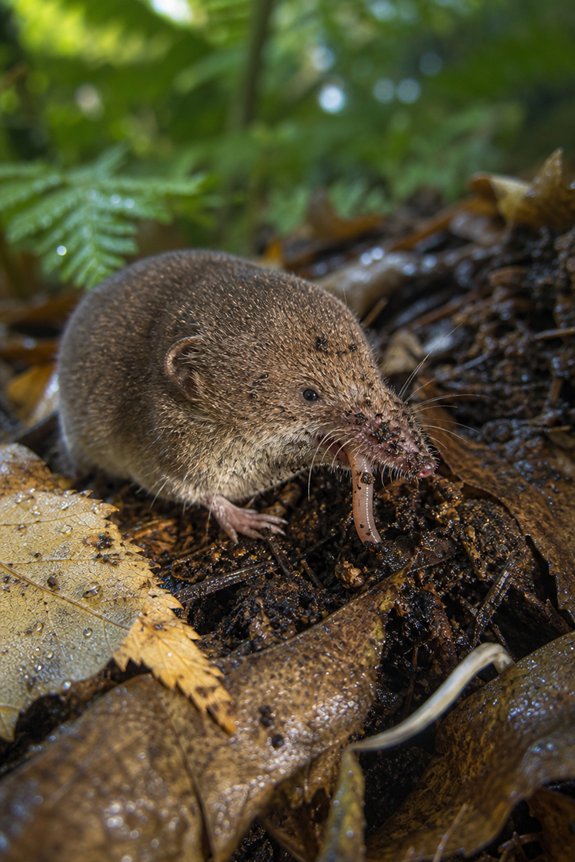
Shrews possess metabolic hunger drives that demand extraordinary fuel. They must eat between half and twice their body weight every day, with earthworms and soft bodied invertebrates supplying much of this energy.
These tiny mammals hunt underground constantly, using acute smell and touch to detect worms in leaf litter and shallow soil.
Metabolic Hunger Drive
Pound for pound, few mammals match the relentless energy demands of shrews. These tiny creatures eat between half and twice their body weight every day, and short tailed shrews have been recorded at up to three times. Their hearts race above 700 beats per minute, and the tiny Etruscan shrew has been measured at up to 1,511. This rapid metabolic rate, or the speed at which their bodies burn energy, drives constant foraging.
Shrews can’t store fat reserves. They feed day and night without rest. Earthworms provide dense protein and fat for this endless need.
- Shrews feed around the clock; worms fuel the cycle
- Heart rates exceed 700 bpm, demanding constant energy
- Small species must eat every few hours or starve
- Juveniles double in mass within weeks, increasing intake
- Without worms, shrews face rapid starvation
This biological reality, while stark, reflects nature’s precise engineering. Small mammals live brief, intense lives sustained by abundant, accessible prey.
Underground Hunting Tactics
Their bodies demand fuel without pause. Shrews possess extremely high metabolisms, forcing them to eat every few hours around the clock. Earthworms and soil invertebrates provide much of this sustenance.
These tiny mammals, weighing merely 3 to 15 grams, hunt without rest. They forage through day and night in moist habitats. Sensitive whiskers and acute smell guide their search. They can’t rely on sight. Instead, they detect worms by scent and movement.
Shrews probe leaf litter and shallow soil with long, pointed snouts. They extract earthworms and larvae from burrows through rapid, short hunts. They target juvenile and surface dwelling worms primarily.
This constant feeding regulates soil invertebrate populations. It also drives nutrient cycling, the movement of essential elements through forest and meadow ecosystems. Shrews work quietly, yet their impact runs deep.
Ground Beetles and Centipedes That Hunt Surface Worms
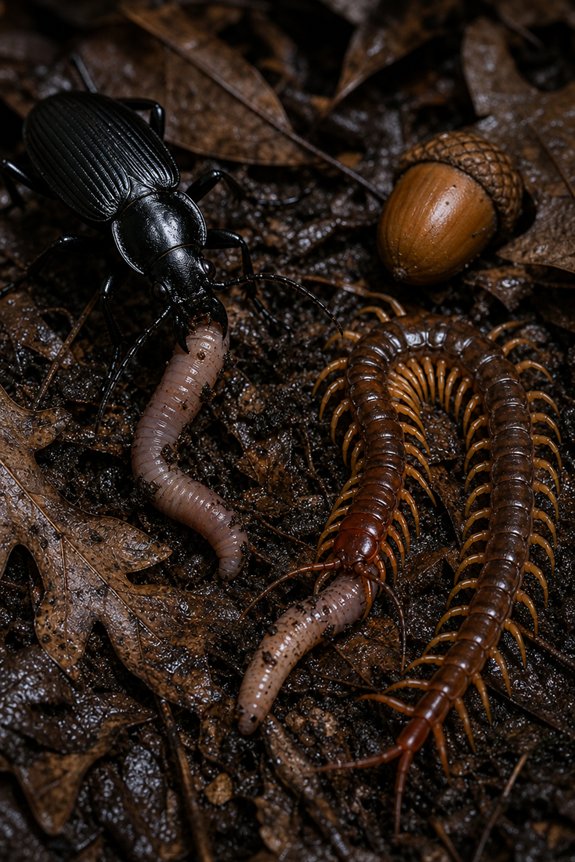
Ground beetles emerge after dark to patrol damp soil and leaf litter, their strong mandibles ready to seize any small earthworm or soft bodied larva that surfaces. They hunt after rains when juvenile worms surface. Their jaws macerate prey efficiently.
Centipedes, another nocturnal predator, use venomous forcipules (pincer like front legs) to grasp and immobilize worms. Larger species in damp microhabitats overpower soft bodied prey with speed and repeated bites. Both predators control young worm populations. Individual hunters consume multiple prey nightly.
- Beetles patrol moist turf post rainfall
- Mandibles crush worms mechanically
- Centipedes inject venom through forcipules
- Damp habitats under logs harbor hunters
- Nightly consumption rates vary by predator size
Salamanders That Stalk Worms in Moist Forest Habitats
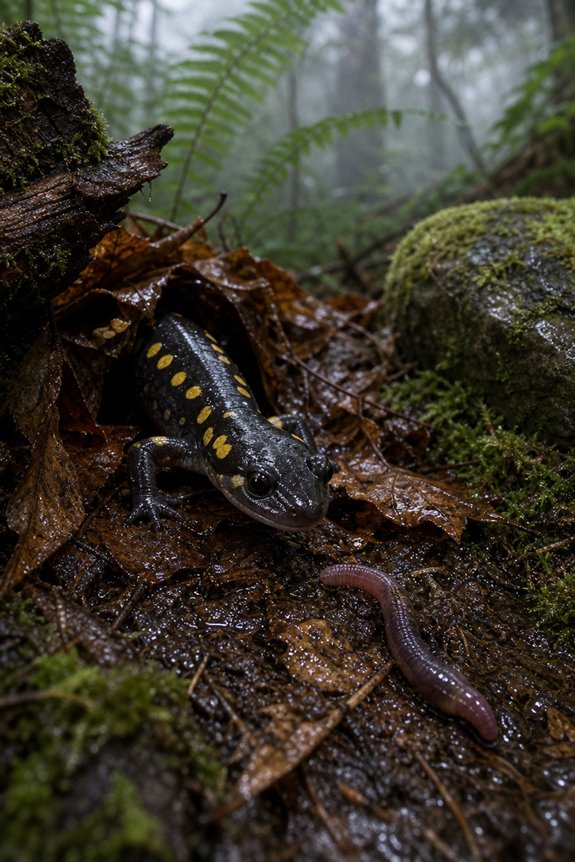
Beneath the same logs and damp leaf litter where beetles and centipedes hunt, salamanders patrol for similar prey. Lungless Plethodontids and mole salamanders stalk earthworms wherever the soil stays reliably damp. They flick tongues and probe with snouts to detect chemical and tactile cues.
Eastern Red backed Salamanders and spotted salamanders emerge on wet nights when worms surface. Small individuals consume several tiny annelids nightly. Larger species take substantial earthworms for protein. Moist skin demands cool, shaded microhabitats.
This creates overlap with earthworms under rocks and dense litter. Salamanders link soil invertebrates into forest food webs. They’re quiet predators. Their presence reminds us that unseen connections sustain woodland ecosystems.
Snakes and Lizards That Feed on Soil Dwelling Worms
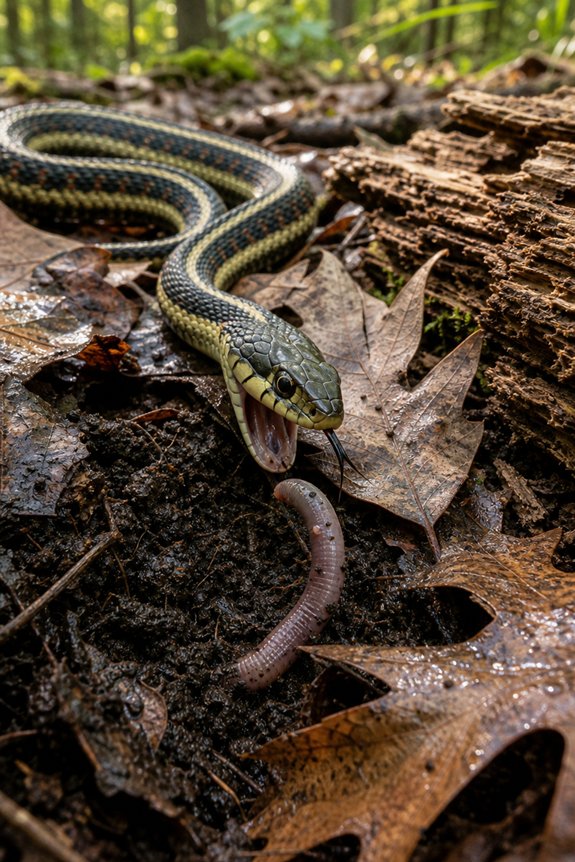
Slender snakes thread through soil tunnels where earthworms cluster. Blind snakes and worm snakes specialize on these soft bodied prey, using narrow bodies to navigate tight spaces and swallowing worms whole.
Many small colubrids, including juvenile garter snakes, add earthworms to their diet. They hunt in moist grass and under debris while birds search above. The eastern worm snake feeds primarily underground, locating prey by scent.
Lizards also consume soil dwelling worms. Skinks and small ground dwelling species forage through leaf litter, eating earthworms and larvae they encounter. These reptiles depend on damp conditions. Rain draws them out, increasing hunting success in wet microhabitats.
- Blind snakes and threadsnakes navigate soil tunnels to find earthworms
- Juvenile garter snakes hunt worms in moist grass and debris
- Eastern worm snakes locate prey underground using scent alone
- Skinks eat earthworms and larvae while foraging in leaf litter
- Rain increases reptile activity by bringing worms to the surface
Toads That Catch Worms With Sticky Tongues at Night
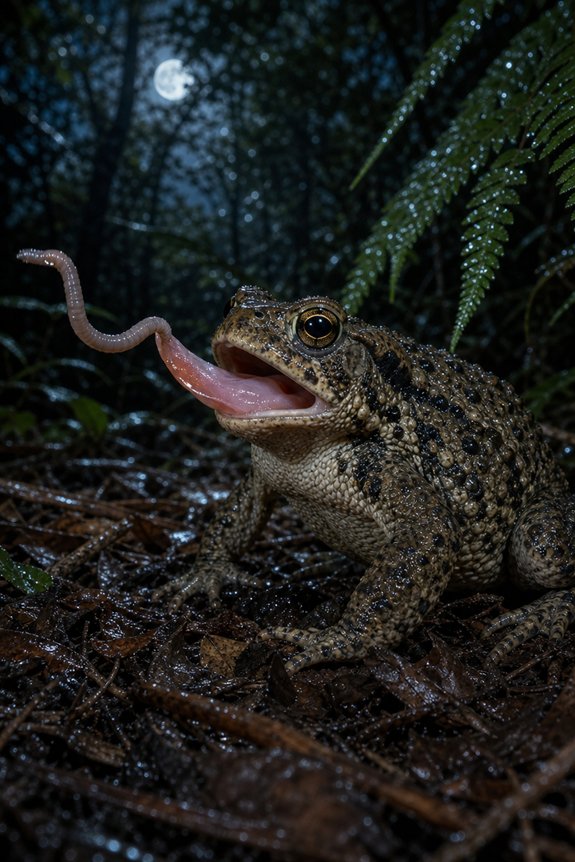
American toads hunt at night when earthworms surface in damp leaf litter. They flick their sticky, mucus coated tongues in under a second to snag prey.
This nocturnal strategy reduces competition and matches peak worm activity after rainfall.
Nocturnal Hunting Behavior
Often, American toads emerge after sunset to hunt. They rely on tactile and chemical cues more than vision, detecting worm movement and scent in damp soil and leaf litter. Nighttime humidity and cooler temperatures increase worm surface activity. Toads often forage after rainstorms when capture success peaks.
- Juvenile toads target tiny earthworm fragments and larvae
- Adults consume larger worms for nightly caloric intake
- Tactile and chemical cues guide hunting in darkness
- Post rainstorm foraging yields highest encounter rates
- Nocturnal humidity draws worms to the surface
This measured rhythm of predation sustains toad populations. It reminds observers that survival depends on timing, not force.
Sticky Tongue Mechanics
Because darkness conceals more than it reveals, the toad depends on a mechanism faster than sight. The American toad hunts earthworms at night using a projectile tongue. This tongue extends in about 70 milliseconds. That’s faster than a human blink.
The tongue’s surface holds a viscous mucous coating. Microscopic sticky papillae, small finger like projections, cover this surface. They adhere to slimy worms on contact. The tongue muscle and hyoid apparatus flatten and rotate rapidly. This action powers the extension.
Once the tongue touches prey, an adhesive bond forms. Mouth muscles retract quickly. They pull the worm into the toad’s mouth before escape is possible. Moist nighttime conditions help. Earthworms move more then. The toad’s sticky tongue meets them in the dark with quiet precision.
Habitat Preferences
When night falls and humidity rises, toads emerge from their daytime shelters to hunt. They seek moist, cool habitats where earthworms concentrate near the surface.
- Garden beds offer loose, damp soil where worms surface easily
- Leaf litter traps moisture and sheltering toads while concealing prey
- Damp lawns become active feeding grounds after evening rains
- Pond edges provide consistent humidity and retreat cover nearby
- Logs and rocks create ambush points with quick access to refuge
Toads hunt within small home ranges. They use their sticky, projectile tongues to capture worms in fractions of a second. After rainfall, feeding increases dramatically, worms surface in greater numbers, and toads locate them more readily. This nocturnal pattern reflects a practical adaptation: higher humidity protects toads from drying out while maximizing their hunting success.
Raccoons and Skunks That Dig Up Lawns to Eat Worms
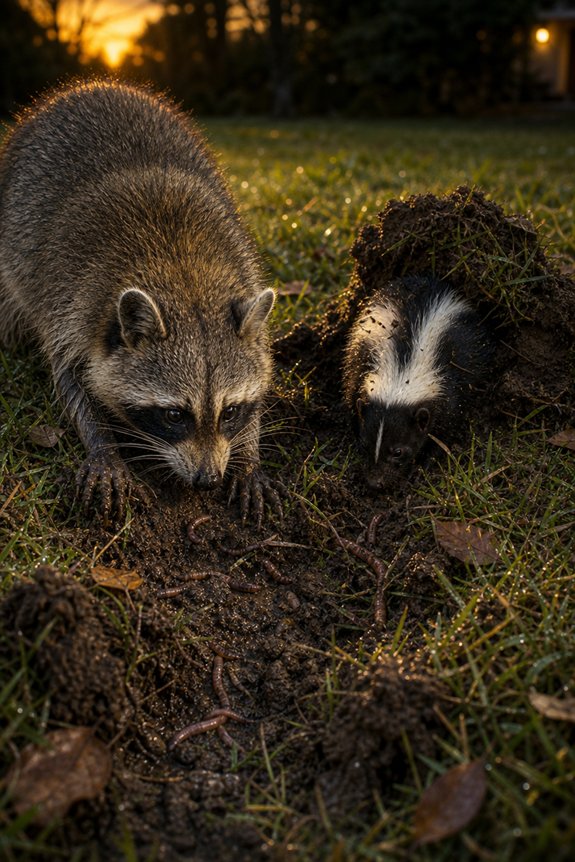
Although earthworms live mostly underground, they draw predators to the surface. Raccoons commonly dig small holes or rake turf with their front paws to unearth earthworms and grubs. They leave circular patches of disturbed soil, sometimes several inches across.
Skunks use their long, sharp claws to make shallow, evenly spaced “V”-shaped or parallel scratch marks. They create dozens of scratches per square yard while foraging.
Both mammals increase digging activity after rain when worms surface. Damage appears most often following wet weather or in spring and fall. The cosmetic harm (torn sod and exposed soil) rarely kills grass. Lawns look pockmarked, and owners may need re sodding.
Control methods include motion activated lights or sprinklers, fencing, and removing attractants. Habitat modification helps too. Reducing surface moisture and exposed compost discourages these diggers.
Foxes That Include Worms in Their Varied Diets
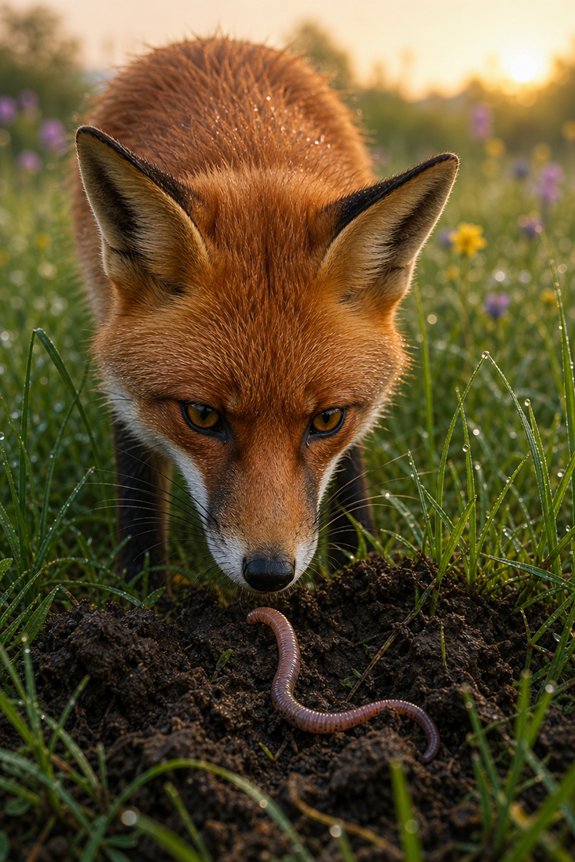
Foxes demonstrate remarkable dietary adaptability, consuming earthworms alongside small mammals, birds, and fruits as opportunity allows. They’ll dig through moist soil after rainfall, exploiting seasonal foraging patterns that peak in damp spring and fall conditions when worms surface in abundance.
This flexible approach guarantees young foxes and adults alike access protein when preferred prey grows scarce, a quiet tribute to survival through versatility.
Dietary Adaptability
Red foxes root through damp soil and leaf litter after rainfall, pulling earthworms to the surface with quick, precise digs. This behavior reveals their dietary flexibility. Foxes don’t depend on worms alone. They’ll shift between food sources as opportunities arise.
Their omnivorous nature (eating both plants and animals) lets them thrive almost anywhere. Worms simply fill gaps when other prey proves scarce. Young foxes and city dwellers especially favor this easy protein. One animal may consume dozens in a single session. The energy saved matters. Hunting rabbits demands far more effort than digging for invertebrates.
This adaptability explains their wide distribution. They persist where specialists cannot.
- Worms serve as backup nutrition, not staples
- Juveniles and urban populations rely more heavily on invertebrates
- A single foraging bout yields substantial protein
- Omnivory reduces competition with specialized predators
- Flexibility enables survival across farmland, suburbs, and forests
Seasonal Foraging Patterns
Rain and temperature shape when foxes turn to worms. Wet spring and early summer bring earthworms to the surface after rains. Foxes exploit this abundance most heavily during these months. They dig through soft turf and leaf litter to extract protein rich worms. This seasonal boost helps vixens nursing pups meet increased nutritional demands.
Dry periods shift fox priorities. They hunt more mammals and birds then. Yet rain events still trigger opportunistic worm foraging when other prey grows scarce. Young foxes learn hunting skills by probing soil for easy worms and grubs. These high energy, low risk targets build confidence during pup rearing season. Urban foxes exploit lawns and gardens after heavy rains. Concentrated worm activity there creates reliable seasonal food patches.
Rodents Like Mice and Rats That Eat Worms
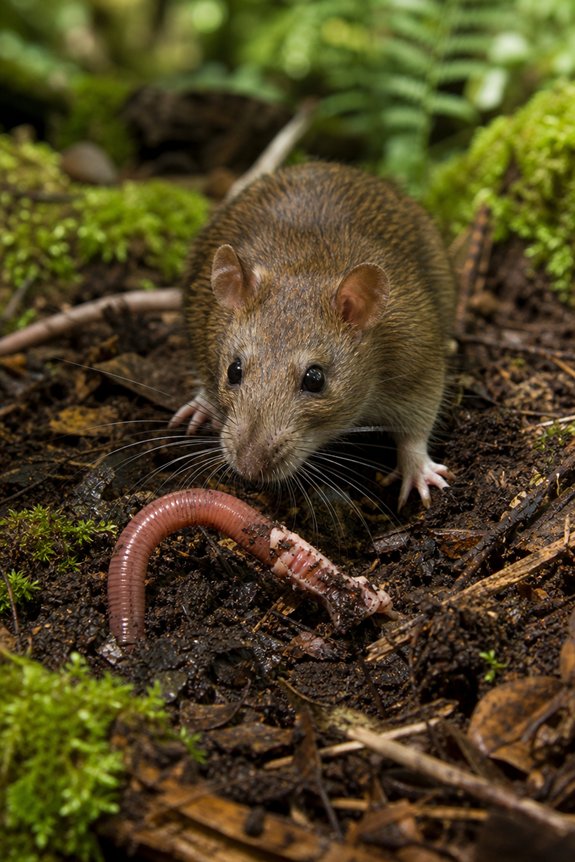
Scurrying through soil and leaf litter, mice and rats actively hunt earthworms as a reliable food source. These rodents seize opportunities after rainfall, when worms surface and become easy prey. House mice (*Mus musculus*) consume worms alongside seeds and insects, while Norway rats (*Rattus norvegicus*) and roof rats (*Rattus rattus*) seek them in moist, vegetated areas for protein.
Rodents dig small soil disturbances to extract worms and grubs. Young rodents, growing rapidly, need this protein for development and reproduction.
- Earthworms surface after rain, making them accessible targets
- House mice eat worms opportunistically with other foods
- Norway and roof rats find worms in damp, green spaces
- Rodents create small digs to uncover hidden prey
- Juvenile rodents rely on worms for growth needs
Why Worms and Their Predators Matter for Healthy Soil
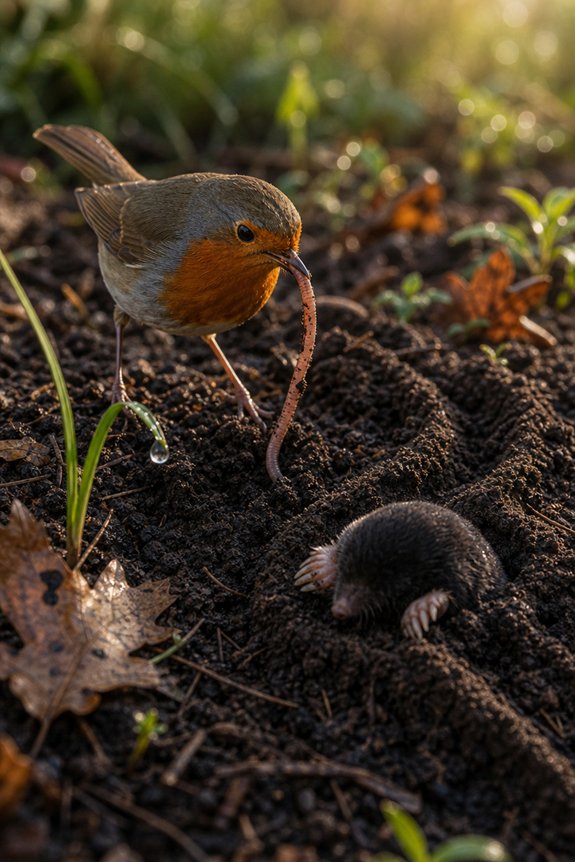
Balance in soil ecosystems depends on the interplay between earthworms and their predators. Earthworms accelerate soil formation and nutrient cycling by consuming organic matter and producing casts. Predators regulate worm populations. Robins, moles, and ground beetles prevent densities from becoming ecologically imbalanced.
Birds and mammals concentrate earthworm activity near tunnels and surface areas. This influences where nutrient rich casts deposit. Local soil structure changes. Aquatic predators like fish and frogs consume aquatic oligochaetes, affecting decomposition rates in sediments and riparian soils.
High predation pressure reduces bioturbation, or soil mixing. Organic matter incorporation slows. Soil aeration, drainage, and root penetration suffer in affected patches.
Diverse predator communities sustain balanced earthworm populations. Birds, small mammals, amphibians, reptiles, and insects support continuous soil turnover. Long term soil health depends on this relationship. It’s worth protecting.
How Worm Predators Maintain Ecosystem Balance
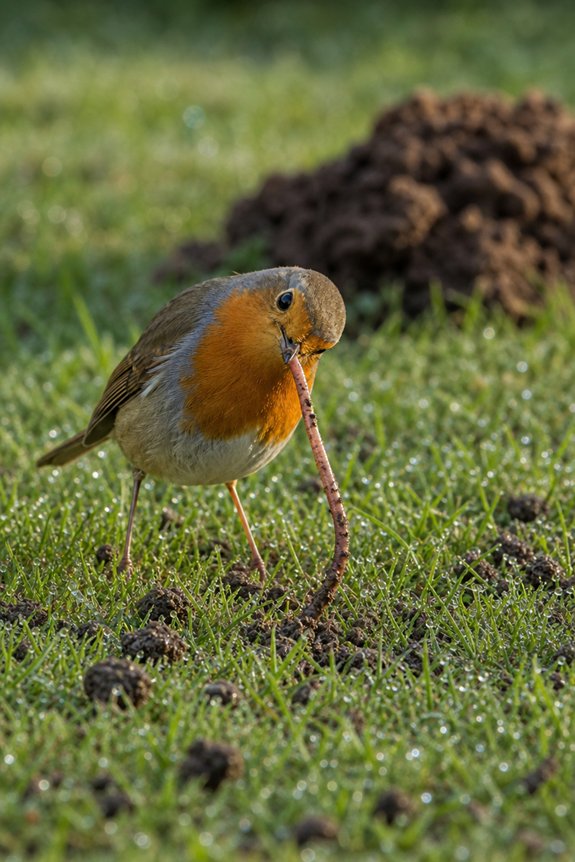
Because earthworms shape soil health so directly, their predators become essential managers of ecosystem function. They don’t merely hunt. They regulate.
- Robins and thrushes consume hundreds of worms per nesting season, controlling populations and indirectly managing soil aeration and nutrient cycling
- Moles, shrews, and raccoons redistribute soil and organic matter through digging, while their selective feeding limits local worm density and affects decomposition rates
- Fish, frogs, and dragonfly nymphs control detritivore numbers in waterways, balancing organic matter breakdown to maintain water quality
- Ground beetles, centipedes, and small salamanders target young or surface dwelling worms, shaping age structure and preventing surface overabundance
- Predation links multiple trophic levels (birds, mammals, reptiles, amphibians, insects) so predator abundance changes cascade through soil health, plant productivity, and nutrient dynamics
This interconnectedness matters. Remove one predator, and the system shifts.
When Worms Surface: Seasonal Patterns for Predator Watching
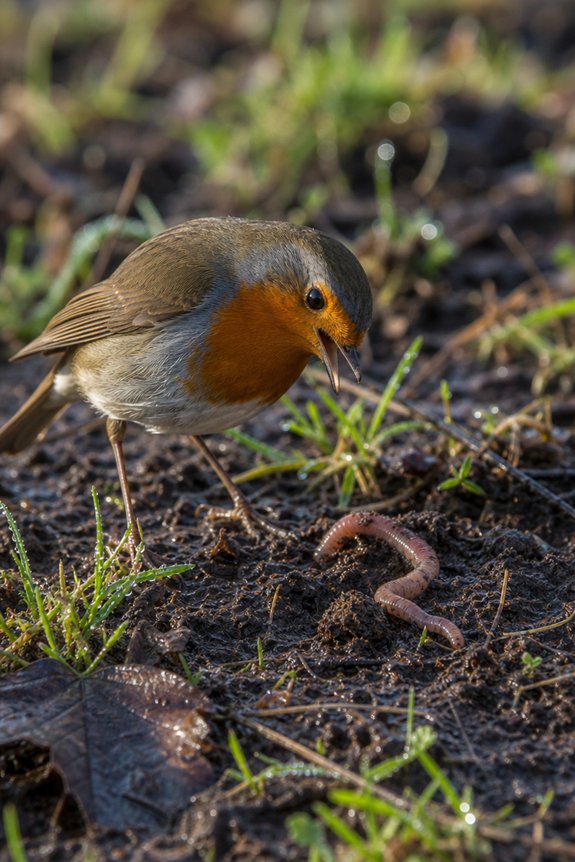
Surface emergence follows predictable rhythms, and predators learn them. Earthworms commonly surface after spring and fall rains. Bird predators like robins and thrushes exploit this pattern. They forage lawns and fields heavily for several days after storms.
During spring breeding, robins collect hundreds of earthworms. They feed nestlings during April through June. Worm surfacing events in these months lead to particularly intense bird activity. Warm, wet conditions after nighttime rain cause dusk and overnight surface activity. Nocturnal hunters such as toads, shrews, and crows increase predation the following morning.
Moles and ground beetles succeed near the surface after extended wet periods. Softened soil allows their tunnels to intersect worm habitats. Surface emergence peaks when soil temperatures moderate in spring and fall. Predator watching proves best in cool, moist seasons.
Why Rainstorms Trigger Worm Emergences and Feeding Frenzies
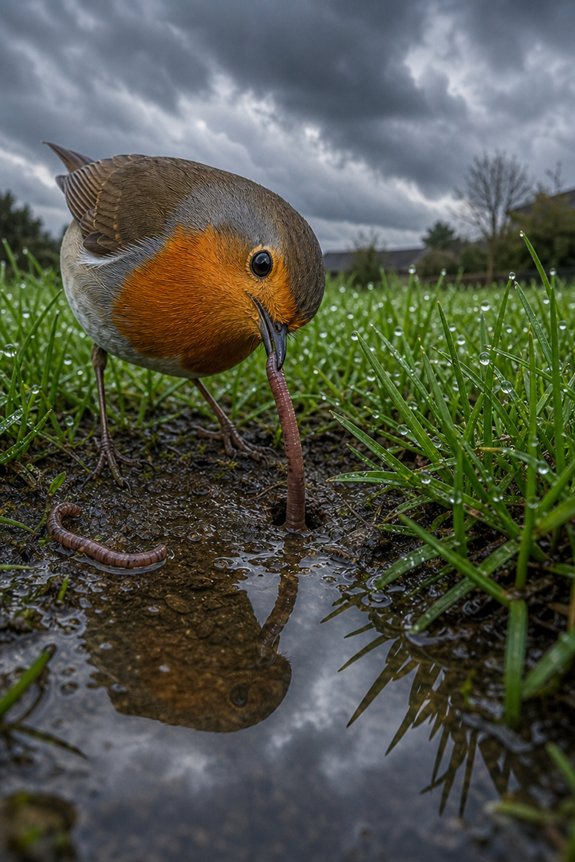
Rain does not drown earthworms out of the soil. That explanation is one of the most persistent myths in backyard natural history, and soil scientists have been correcting it for years. Earthworms breathe through their skin, they need moisture to do it, and they survive submerged for two weeks or more.
What rain actually does is make the surface safe to travel. Wet ground lets a worm move and find mates far faster than tunnelling can, and the drumming of raindrops may mimic the vibration of a digging mole. Rain reshuffles a whole soil community for a few hours, much as it does for the snakes that come out in the rain. Whatever the trigger, the result for predators is the same. A wet lawn becomes a temporary feeding ground, and birds and mammals arrive on a schedule they clearly understand.
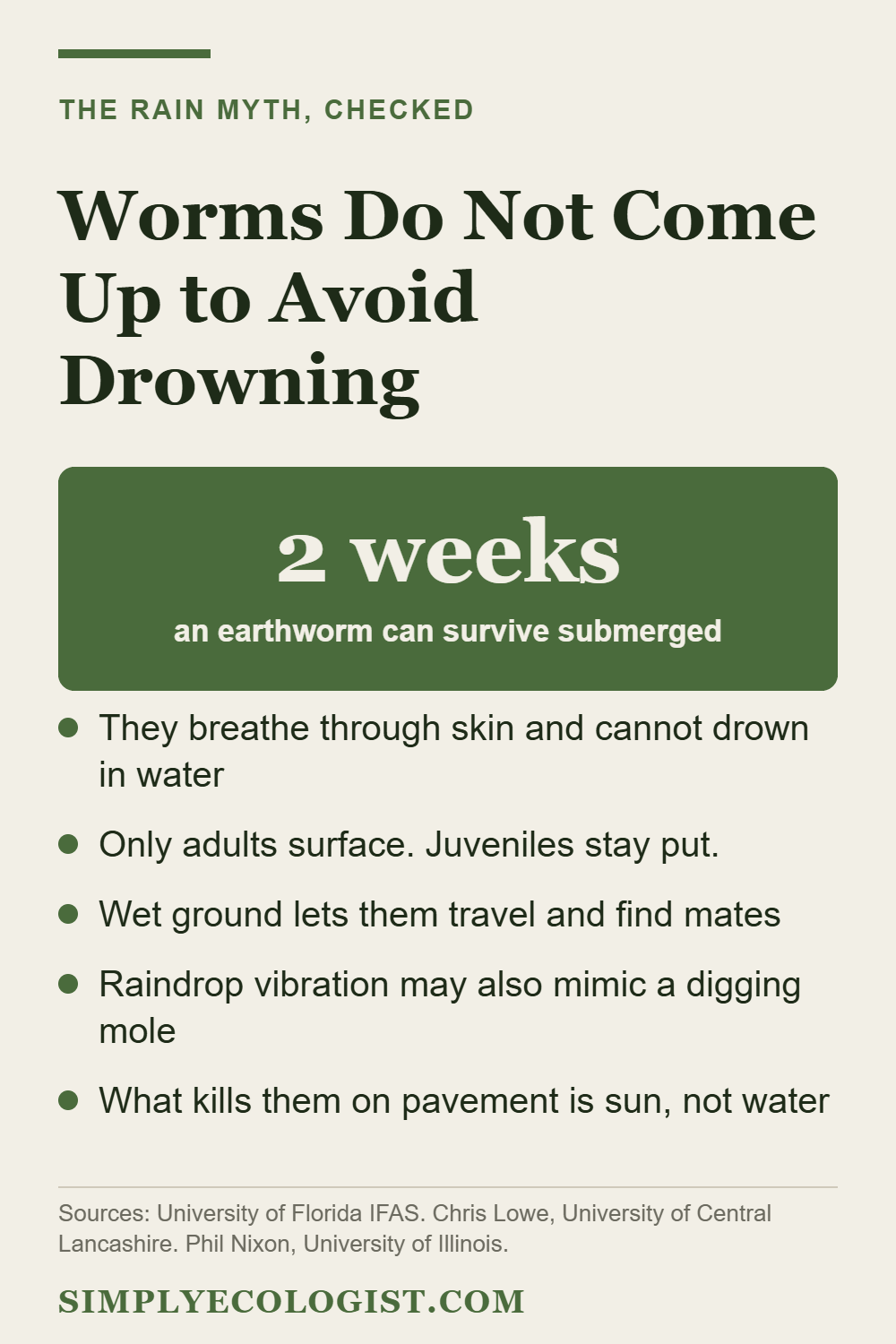
Why Worms Really Surface After Rain
The drowning story fails on its own terms. Earthworms have no lungs. They take in oxygen across damp skin, which is why dry soil kills them and wet soil does not. Researchers have kept earthworms submerged in oxygenated water for two weeks and longer without harm.
The University of Florida IFAS Extension states plainly that worms do not surface to avoid drowning. Chris Lowe, of the University of Central Lancashire, points out that skin breathing makes the drowning explanation implausible in the first place. And Phil Nixon, of the University of Illinois, adds the observation that settles it. Only adult worms emerge. If rain were a survival threat, juveniles would be surfacing too.
Three explanations are currently taken seriously:
- Dispersal. Moist ground lets a worm travel much further, and much faster, than burrowing allows.
- Mating. Surface travel on wet nights is how many species find partners.
- Vibration. Rainfall may mimic the drumming of a digging mole, triggering an escape upward.
What kills the worms stranded on your driveway is not water. It is sunlight and heat once the rain stops.
Predator Gathering Patterns
Heavy rains reliably transform quiet lawns into crowded feeding grounds. Saturated soil loses oxygen, forcing earthworms to surface and suffocation. This creates sudden prey density.
Robins exploit these emergences, collecting hundreds of worms during spring breeding. Crows and thrushes scavenge en masse. Ground beetles, toads, and salamanders increase hunting when moisture exposes larvae. Shrews join the frenzy.
Moles and skunks dig through softened tunnels, causing visible turf damage. Wet conditions concentrate food resources, boosting predator success. These cascades through local food webs (interconnected feeding relationships among species) matter most during nesting seasons. Protein rich meals support chick survival.
The pattern reveals how abiotic forces shape biological opportunity. Rain doesn’t merely disturb soil; it reorganizes entire communities. One observes nature’s efficiency with quiet respect.
How to Identify Worm Predators From Tracks and Field Signs
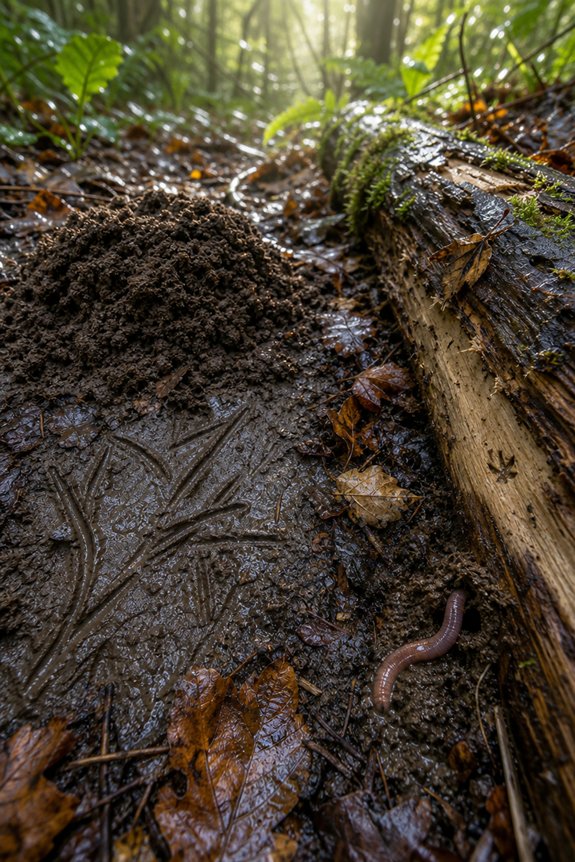
Often, the animals that hunt earthworms leave behind clear physical evidence of their presence. Observers can learn to read these signs. Each predator leaves distinctive marks.
- Small conical soil mounds and fresh tunnels (1 to 2 in. diameter) indicate moles, which dig extensively while hunting.
- Paired or single semi circular holes (~1 to 2 in. wide) with pulled up turf reveal robins and thrushes foraging after rain.
- Shallow, irregularly dug patches with overturned sod show where raccoons and skunks have rooted for grubs and worms near lawns.
- Tiny footprints near disturbed leaf litter, plus small hole entrances, suggest shrews or mice consuming worms rapidly to fuel high metabolisms.
- Scuffled mud edges and displaced vegetation near water signal fish, turtles, or dragonfly larvae preying upon aquatic worms.
Mole Tunnels, Bird Holes, and Other Evidence to Look For
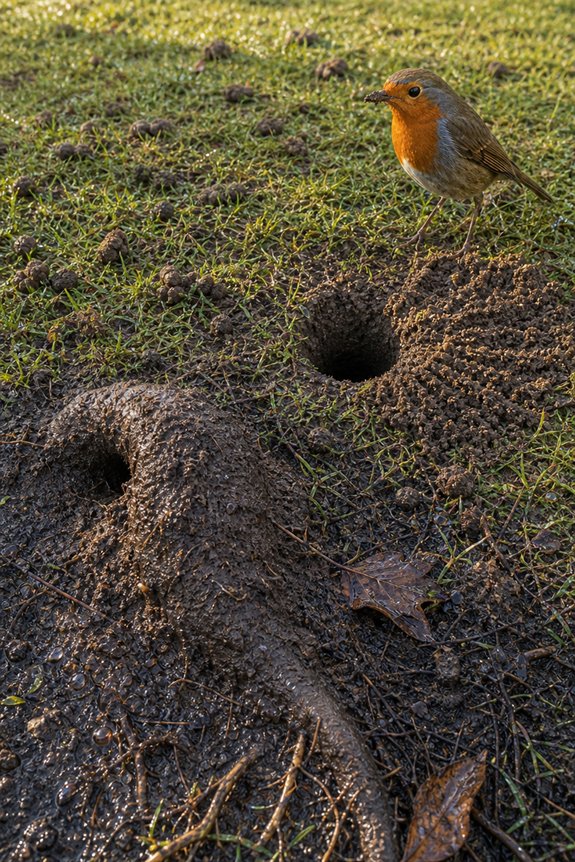
Different predators leave distinct traces. Moles create raised tunnels through earthworm rich soil, while robins and thrushes leave small, neat holes after rain as they peck worms from just below the surface.
These patterns reveal where hunting happens underground and where feeding signs appear above, helping observers map predator activity across a landscape.
Tunnel Patterns Underground
When soil shifts unexpectedly beneath a lawn, it usually signals hungry animals at work.
Different predators leave distinct signatures.
Moles push up raised ridges or linear mounds as they tunnel through soil layers, sometimes extending hundreds of feet while hunting earthworms. These shallow runs sit just inches below the surface.
Birds work from above. Robins and thrushes punch small, neat holes (one to two inches across) into damp ground after rain, pulling worms directly from the soil.
Other mammals dig deeper. Raccoons and skunks tear irregular, larger holes several inches deep, leaving overturned soil piles in their wake. Earthworms themselves leave clues: surface castings, those small coiled soil piles, indicate active populations below. Damp, compacted patches near logs or garden beds suggest salamanders, toads, and small snakes hunting in shallow crevices.
- Raised ridges or linear mounds from mole tunnels spanning hundreds of feet
- Small circular depressions one to two inches across from bird foraging
- Irregular larger holes with overturned soil from raccoons and skunks
- Coiled surface castings indicating active earthworm populations
- Damp compacted patches near logs from amphibians and small snakes
Feeding Signs Above
Surface evidence reveals who’s hunting below. Fresh mole tunnels (raised ridges one to three inches wide) appear overnight as moles actively pursue earthworms and grubs underground. Circular or crescent shaped holes, often one to two inches across, mark where robins and crows extract worms from turf. Scattered soil pellets accompany these excavations.
Small V shaped disturbances and peck marks in leaf litter indicate thrushes probing for prey. Patches of churned soil with multiple tiny holes and castings suggest toads, salamanders, or insect predators foraging in moist microhabitats, the small scale environments where moisture concentrates.
Repeated shallow excavations with tunnel networks and occasional worm fragments reveal ground beetles, shrews, or mice feeding on young worms near the surface. These signs connect observers to hidden activity. One learns to read landscapes carefully.
How to Attract Worm Eating Birds to Your Backyard
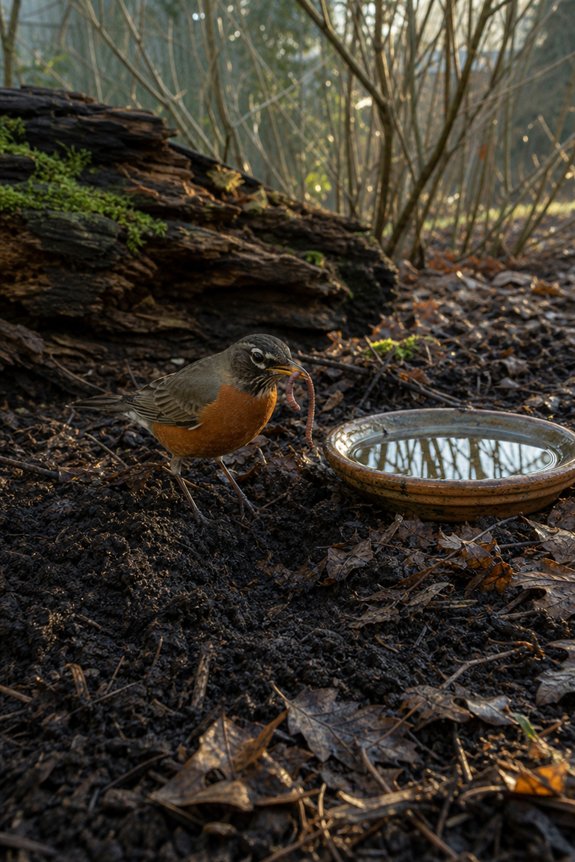
Backyard birding often rewards patience. Creating suitable habitat draws worm eating birds through deliberate choices.
- Water deeply and avoid soil compaction. Robins and thrushes hunt surfacing earthworms most actively after rain, especially during spring chick rearing.
- Plant diverse shrubs and trees, including fruiting species. Thrushes and warblers seek caterpillars in leaf litter and canopy layers.
- Install shallow water with sloping edges. Insectivorous birds and bats visit birdbaths and drippers to catch flying larvae.
- Reduce pesticides and chemical fertilizers. Soil invertebrates (earthworms, caterpillars) stay abundant, feeding crows, robins, and ground foragers.
- Preserve leaf litter, log piles, and native groundcover. These moist microhabitats support salamanders, toads, and birds that eat worms.
Such stewardship builds biodiversity. Quiet observation reveals results.
Protecting Worms When Managing Lawn Damaging Mammals
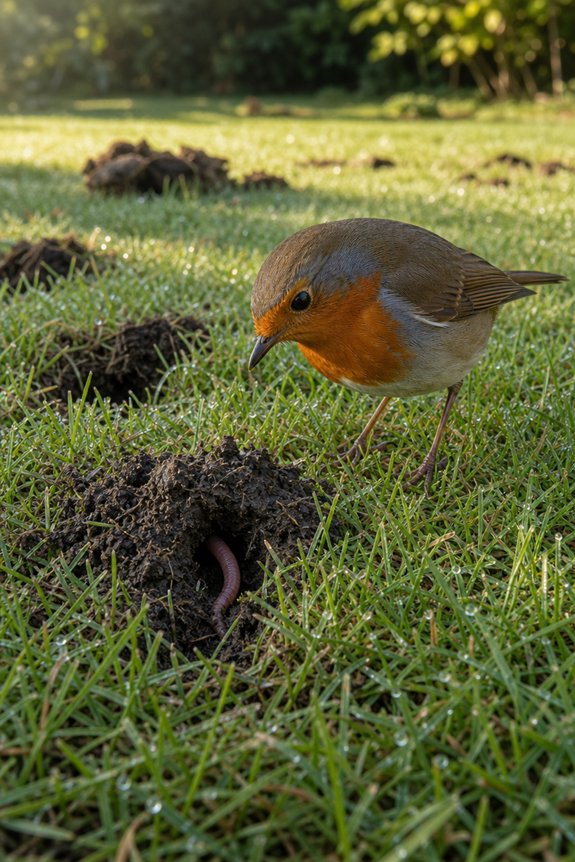
Managing lawn damaging mammals requires balancing pest control with soil health. Targeted control measures work best. Homeowners place traps or exclusion devices at specific tunnel entrances. They avoid broad soil treatments. This protects earthworms that aerate soil.
Removing surface food sharply reduces mammal visits. Fallen fruit, pet food, and grubs attract these animals. Less digging means less habitat destruction for worms.
Physical barriers help. Buried hardware cloth or lawn mesh around garden beds prevents damage. Most lawn stays intact for earthworm movement.
Grub management matters. Beneficial nematodes or Bacillus thuringiensis israelensis target specific pests. They spare soil dwelling worms. Broad spectrum insecticides do not.
Healthy worm habitat recovers faster. Organic matter supports this. Avoiding persistent chemicals and heavy tilling helps. Robust populations repair soil after localized control.
Creating a Backyard Habitat That Supports Worm Predators
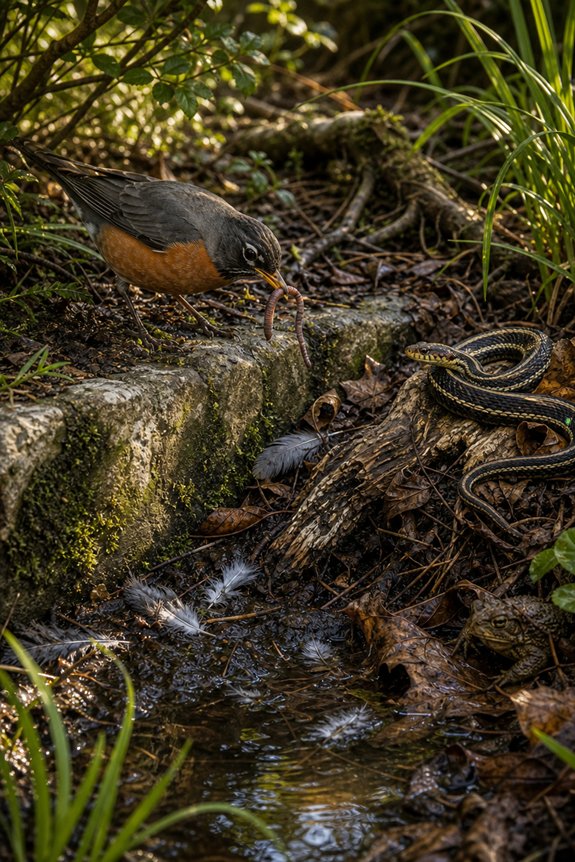
Designing a backyard that welcomes worm predators begins with understanding biodiversity.
Homeowners can cultivate this variety through deliberate choices. Native shrubs and small trees, such as serviceberry or dogwood, provide canopy cover. These plants attract warblers and thrushes. These birds hunt caterpillars and earthworms among the branches.
A patch of moist, mulched leaf litter creates shelter. Toads, salamanders, and ground beetles forage there.
Small ponds with sloping edges support frogs, dragonfly nymphs, and turtles. These predators consume aquatic worms.
Undisturbed soil and reduced lighting protect nocturnal hunters. Moles, shrews, bats, and night feeding birds need darkness to find worms and grubs safely.
- Plant native shrubs and trees for canopy and insect habitat
- Maintain moist, mulched leaf litter for ground dwelling predators
- Install small ponds with gentle edges for aquatic hunters
- Preserve undisturbed soil and limit light and pesticides
- Add perches and brush piles for birds to survey lawns
Final Thoughts
Worms pass quietly through soil, becoming nourishment for many creatures. This transfer of energy, called a food web, keeps ecosystems stable. Biodiversity depends on such connections. When robins, moles, and beetles share this resource, no single group dominates. Gardeners might notice this balance in soft earth after rain. Supporting these relationships means letting some lawns stay a little wild.

Erzsebet Frey (Eli Frey) is an ecologist and online entrepreneur with a Master of Science in Ecology from the University of Belgrade. Originally from Serbia, she has lived in Sri Lanka since 2017. Eli has worked internationally in countries like Oman, Brazil, Germany, and Sri Lanka. In 2018, she expanded into SEO and blogging, completing courses from UC Davis and Edinburgh. Eli has founded multiple websites focused on biology, ecology, environmental science, sustainable and simple living, and outdoor activities. She enjoys creating nature and simple living videos on YouTube and participates in speleology, diving, and hiking.
🌿 Explore the Wild Side!
Discover eBooks, guides, templates and stylish wildlife-themed T-shirts, notebooks, scrunchies, bandanas, and tote bags. Perfect for nature lovers and wildlife enthusiasts!
Visit My Shop →