
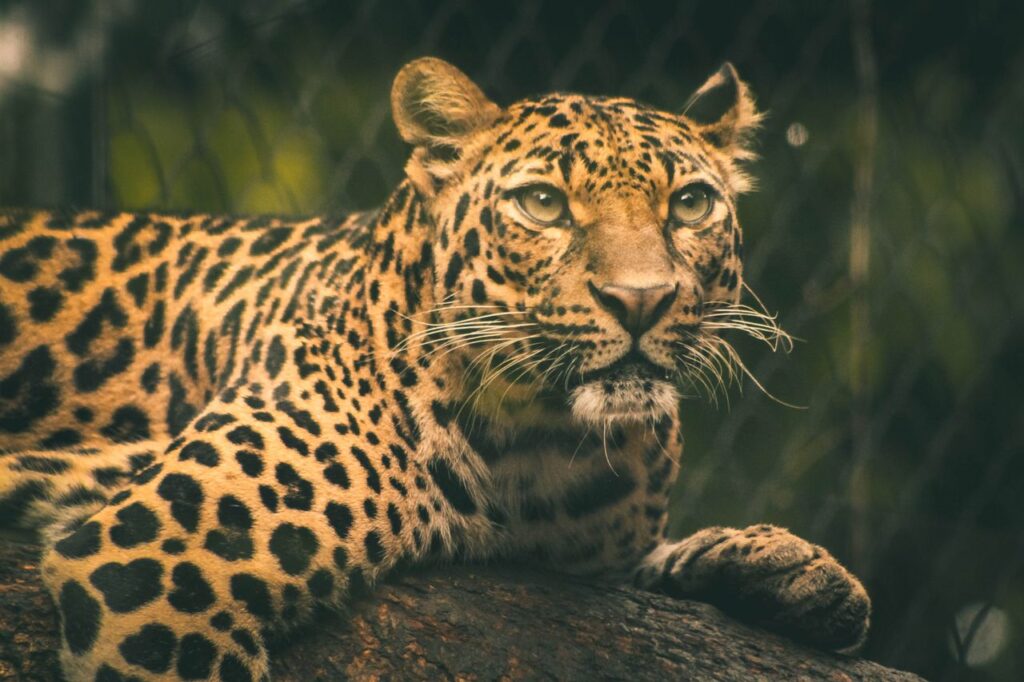
When people search for wild cat species, they are usually looking for a clear answer: how many species exist, how they are classified, and what separates one wild cat from another. Wild cats belong to the family Felidae and are broadly classified into big cats and small cats, with around 40 recognized wild species worldwide (as catalogued by the IUCN Cat Specialist Group), each adapted to specific habitats and hunting strategies. The following guide reveals the species and where dedicated wildlife enthusiasts might glimpse these elusive predators.
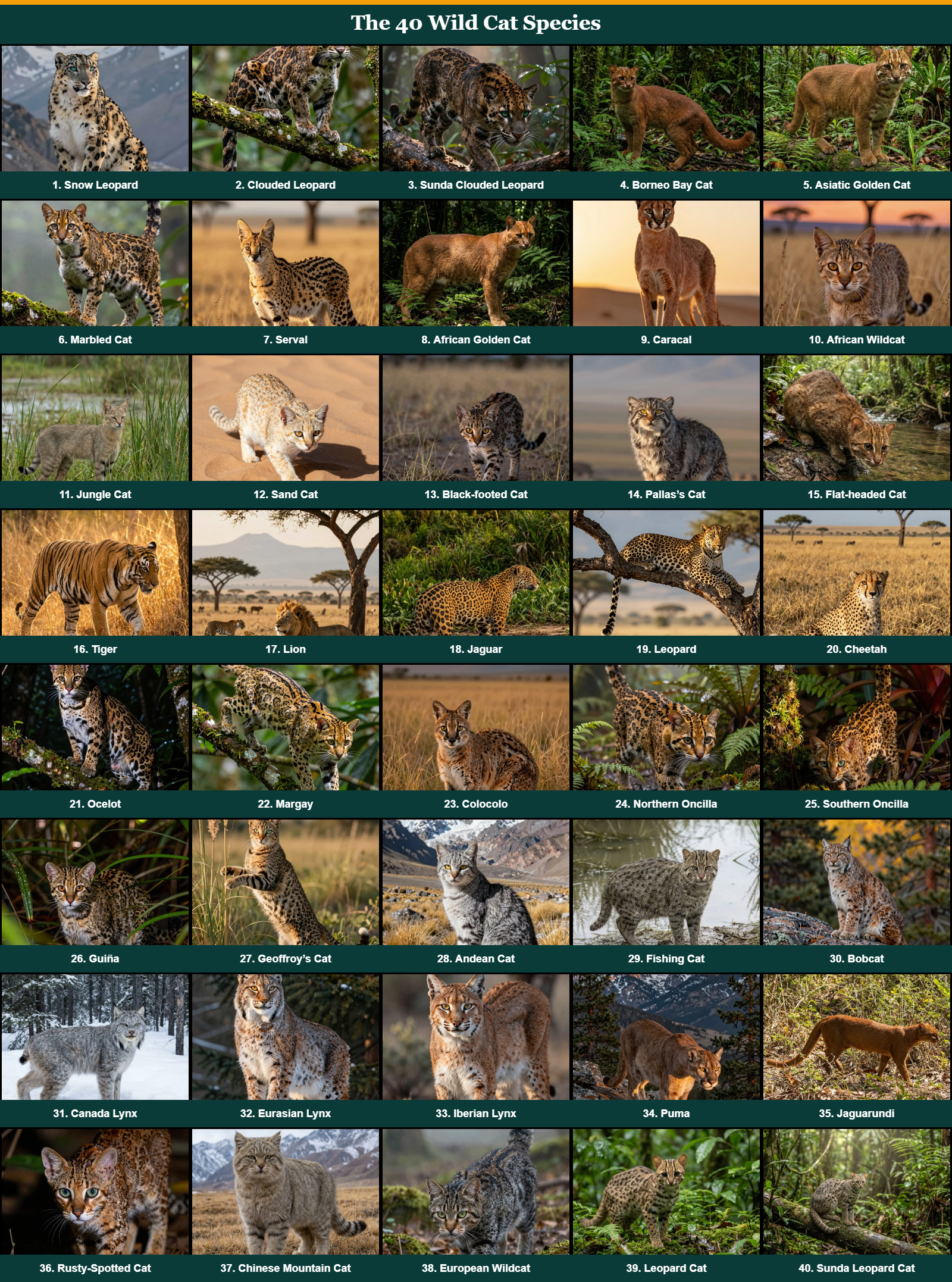
Wild Cat Species at a Glance
Here are all 40 wild cat species, their current IUCN Red List status, and a prime place to try to see each one. The full profiles follow below.
| Species | IUCN Red List status | Where to see it |
|---|---|---|
| Snow Leopard | Vulnerable | Hemis NP, India |
| Clouded Leopard | Vulnerable | Forests of NE India & SE Asia |
| Sunda Clouded Leopard | Vulnerable | Deramakot, Borneo |
| Borneo Bay Cat | Endangered | Borneo (rarely seen) |
| Asiatic Golden Cat | Near Threatened | Forests, India to Indonesia |
| Marbled Cat | Near Threatened | Deramakot, Borneo |
| Serval | Least Concern | Ngorongoro, Tanzania |
| African Golden Cat | Vulnerable | Central African rainforest |
| Caracal | Least Concern | South African reserves |
| African Wildcat | Least Concern | Africa & SW Asia |
| Jungle Cat | Least Concern | South Asian wetlands |
| Sand Cat | Least Concern | N Africa & Central Asian deserts |
| Black-footed Cat | Vulnerable | Botswana, Namibia & South Africa |
| Pallas’s Cat (Manul) | Least Concern | Steppes of Mongolia & Kazakhstan |
| Flat-headed Cat | Endangered | Wetlands of Malaysia & Indonesia |
| Tiger | Endangered | Ranthambore & Bandhavgarh, India |
| Lion | Vulnerable | Serengeti & Kruger |
| Jaguar | Near Threatened | Pantanal, Brazil |
| Leopard | Vulnerable | Kruger, Serengeti & Yala |
| Cheetah | Vulnerable | Serengeti & Maasai Mara |
| Ocelot | Least Concern | Barro Colorado, Panama |
| Margay | Near Threatened | Ecuador’s cloud forests |
| Colocolo (Pampas Cat) | Near Threatened | Southern Pantanal, Brazil |
| Northern Oncilla | Vulnerable | Northern Ecuador |
| Southern Oncilla | Vulnerable | Southern Brazil forests |
| Güiña (Kodkod) | Vulnerable | Chiloé Island, Chile |
| Geoffroy’s Cat | Least Concern | El Palmar NP, Argentina |
| Andean Cat | Endangered | Lauca NP, Chile |
| Fishing Cat | Vulnerable | Sundarbans, India |
| Bobcat | Least Concern | Great Smoky Mountains, USA |
| Canada Lynx | Least Concern | Boreal Canada & northern USA |
| Eurasian Lynx | Least Concern | Białowieża Forest, Poland |
| Iberian Lynx | Vulnerable | Andalusia, Spain |
| Puma | Least Concern | Torres del Paine, Chile |
| Jaguarundi | Least Concern | Southern Texas to Argentina |
| Rusty-Spotted Cat | Near Threatened | Western Ghats, India |
| Chinese Mountain Cat | Vulnerable | Tibetan Plateau, China |
| European Wildcat | Least Concern | Carpathians & Scottish Highlands |
| Leopard Cat | Least Concern | Widespread across Asia (night drives) |
| Sunda Leopard Cat | Least Concern | Deramakot, Borneo |
Snow Leopard: Finding the Ghost of the Himalayas
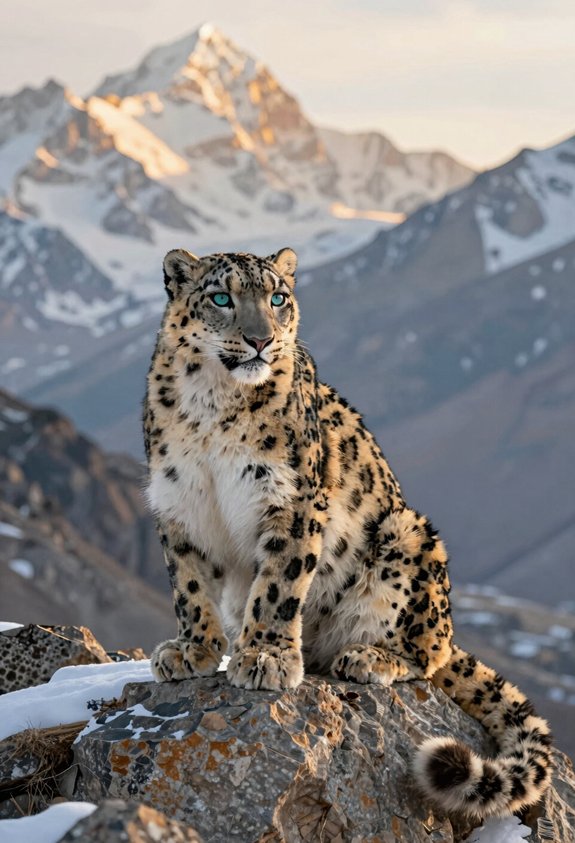
While many feline species attract attention with their flamboyance, the Snow Leopard (Panthera uncia) has earned its nickname “Ghost of the Mountains” through remarkable elusiveness.
These solitary cats patrol vast territories spanning hundreds of square kilometers across the high-altitude habitat of Central Asia’s rugged mountain ranges.
With a global population estimated between 3,920 and 6,390 individuals, snow leopard conservation efforts received positive news when the IUCN downgraded their status from Endangered to Vulnerable in 2017.
However, their protection remains essential as threats persist.
For wildlife enthusiasts hoping to glimpse this phantom feline, Hemis National Park in India offers among the best opportunities worldwide, though sightings are never guaranteed.
Weather conditions greatly influence viewing prospects.
Perfectly evolved for their harsh environment, snow leopards possess dense fur coats and oversized paws that act as natural snowshoes, allowing them to navigate steep, rocky terrain with remarkable agility.
Clouded Leopard: Tracking Asia’s Most Acrobatic Climber
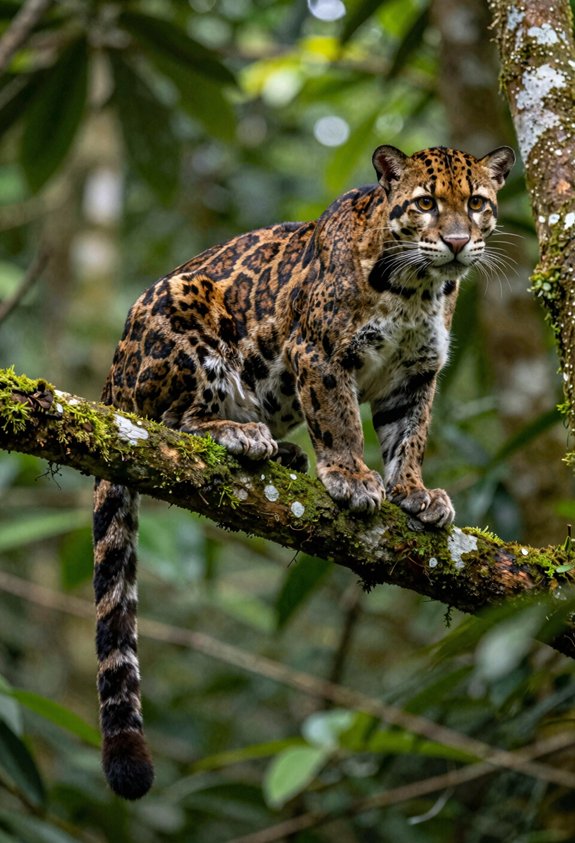
Moving from the “Ghost of the Mountains” to another enigmatic Asian feline, the Clouded Leopard (Neofelis nebulosa) represents nature’s perfect arboreal predator. Despite being the smallest of the big cats, this remarkable climber possesses the longest canines relative to body size among felids, a distinctive adaptation for hunting in its forest habitat.
Clouded Leopard behavior distinguishes it from other cats, it can purr and exhibits unparalleled climbing agility, allowing it to descend trees headfirst and hang from branches using its powerful paws. These elusive cats spend most of their lives in the dense canopies of Southeast Asian forests.
Clouded Leopard conservation faces significant challenges, with fewer than 10,000 mature individuals remaining in the wild. Classified as Vulnerable by the IUCN, populations continue to decline due to habitat destruction and poaching.
While occasionally spotted during wildlife safaris in India, their arboreal lifestyle and secretive nature make encounters exceedingly rare for even dedicated wildlife enthusiasts.
Sunda Clouded Leopard: Borneo’s Elusive Forest Predator
Once mistaken for its mainland cousin, the Sunda Clouded Leopard (Neofelis diardi) emerged as a distinct species only in 2006, despite having diverged genetically more than a million years ago.
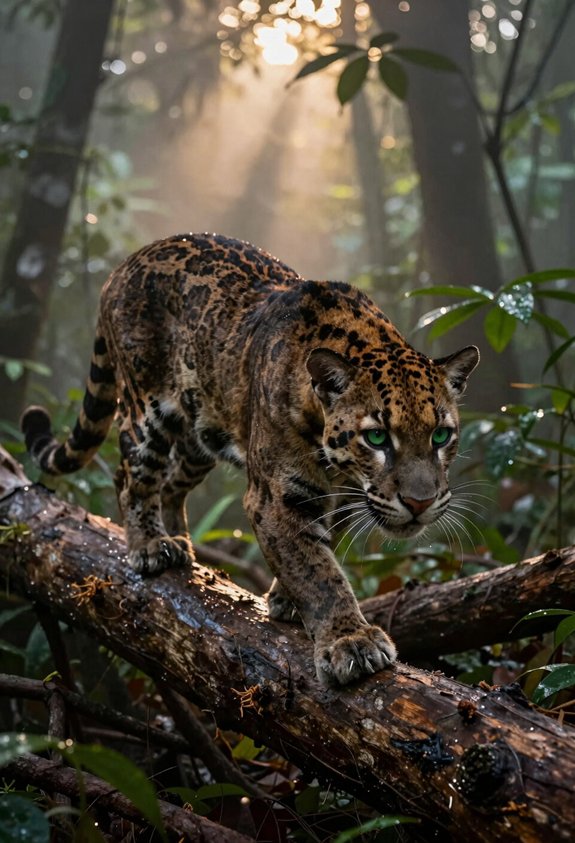
The Sunda Clouded remains one of the most challenging cats to observe in the wild, with its decreasing population and unpredictable behavior making encounters exceptionally rare.
This smaller, darker variant is renowned for its exceptional climbing abilities, secretive nature, and remarkably long canines, proportionally the largest among all big cats.
Deramakot Forest Reserve in Borneo offers occasional sightings of this elusive predator, though even dedicated wildlife enthusiasts should temper expectations.
The cat’s specialized adaptations to its forest habitats in Borneo have made it a perfect ambush hunter, yet these same traits that guarantee its survival also frustrate conservation efforts.
Borneo sightings are treasured moments in wildlife observation, representing glimpses of a vulnerable species increasingly pressured by habitat fragmentation.
Borneo Bay Cat: The Holy Grail of Wild Cat Sightings
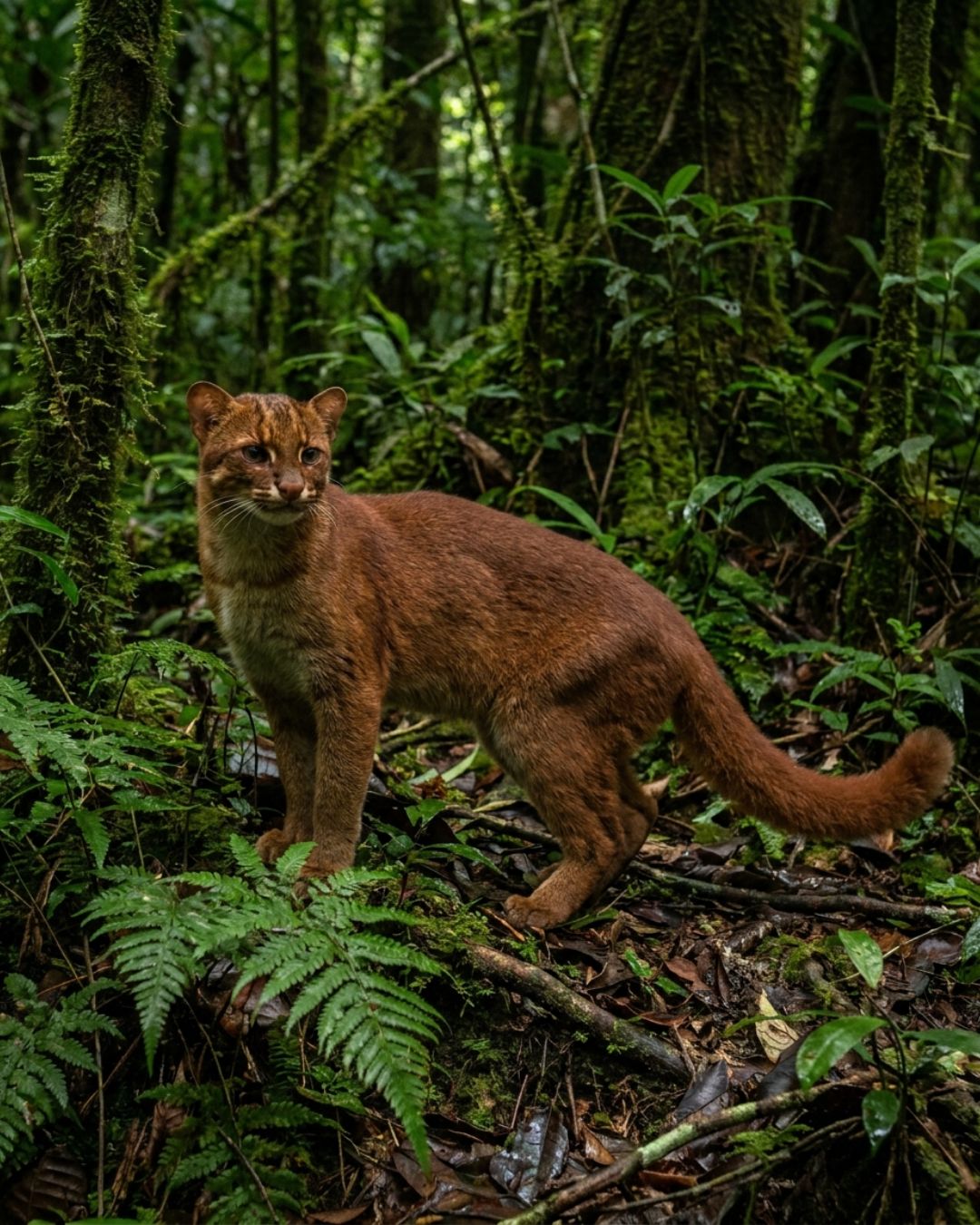
Shrouded in mystery and rarely photographed, the Borneo Bay Cat has earned its reputation as the “holy grail” of wild cat sightings since its scientific discovery in 1874. Endemic to the island of Borneo, this endangered feline remains one of the least studied wild cat species worldwide.
Catopuma badia exhibits secretive behavior, deliberately avoiding forest trails, which severely complicates research efforts. Unlike other wild cats, their elusive nature means that virtually no guarantees exist for spotting one in the wild, even for dedicated wildlife enthusiasts.
Borneo Bay Cat conservation faces significant challenges due to the limited knowledge about its ecological requirements and population status. Scientists have documented extremely few encounters with this species, leaving most aspects of Borneo Bay Cat behavior largely unstudied.
This knowledge gap creates additional hurdles for developing effective protection measures for this enigmatic species, whose continuing existence remains a reflection of Borneo’s still-intact forest ecosystems.
Asiatic Golden Cat: Asia’s Secretive Mid-Sized Hunter
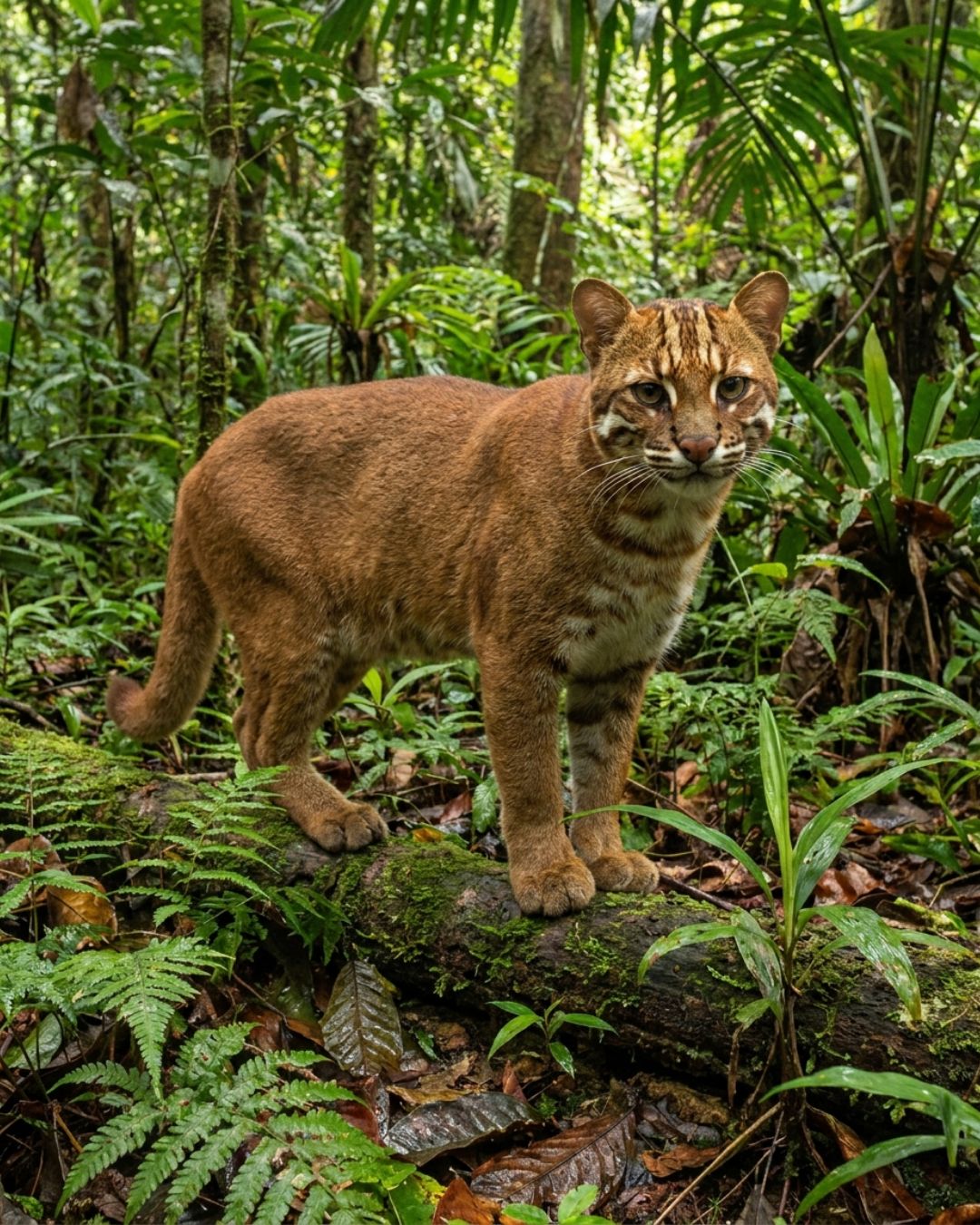
Formidable yet seldom seen, the Asiatic Golden Cat prowls through the dense forests of Asia as one of the continent’s most enigmatic mid-sized predators. Classified as Near Threatened by the IUCN, this powerful hunter maintains a patchy distribution stretching from India to Malaysia, preferring forested Asiatic habitats where it can remain concealed.
Despite its medium build, the Asiatic Golden Cat demonstrates remarkable hunting prowess, capable of taking down prey considerably larger than itself. Unlike many felines, it operates primarily during daylight hours and twilight periods, though human encounters remain exceedingly rare.
Indonesia represents the most likely location for accidental sightings of this secretive cat, though such occasions are still considered exceptional events.
Golden conservation initiatives have become increasingly essential as habitat fragmentation and loss continue to threaten population stability across its range, making the preservation of intact forest ecosystems crucial for this elusive species’ survival.
Marbled Cat: Spotting the Tree-Dwelling Artists of Southeast Asia
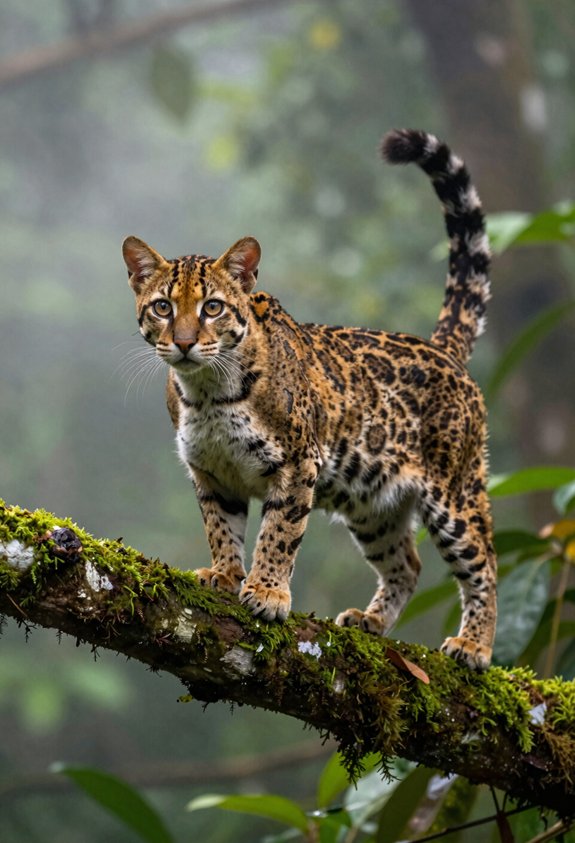
Elegantly draped across the canopies of Southeast Asian forests, the Marbled Cat represents one of the region’s most visually striking yet seldom-observed feline species. Its distinctive coat features cloud-like patterns providing perfect camouflage within its arboreal domain, stretching from the Himalayan foothills through Malaysia and its neighboring islands.
Marbled Cat behavior is mainly tree-oriented, with these felines spending the majority of their lives above ground. Their exceptionally long tails, often equal to their body length, provide essential balance for traversing branches with remarkable agility. This arboreal lifestyle contributes greatly to their elusiveness.
For wildlife enthusiasts hoping to glimpse these canopy artists, Deramakot Forest Reserve in Borneo offers rare sighting opportunities. However, encounters remain exceptionally uncommon.
Marbled Cat conservation has gained urgency as populations continue declining. Currently classified as Near Threatened by the IUCN, these beautiful felids face mounting habitat pressures, emphasizing the significance of protecting the intact forests they depend upon.
Serval: Where to Witness Africa’s Long-Legged Hunters
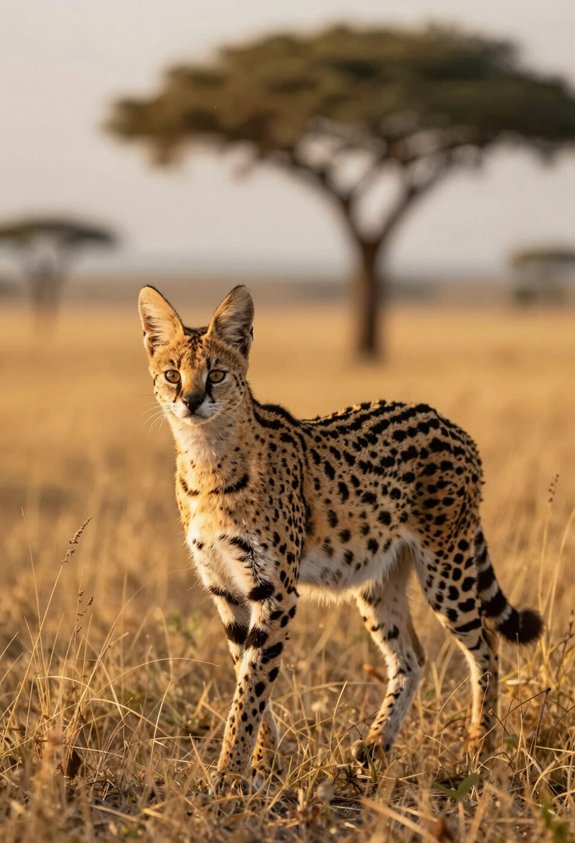
Standing tall on stilt-like legs across Africa’s sprawling grasslands, the Serval cuts a striking silhouette unlike any other wild cat. This elegant feline, scientifically known as Leptailurus serval, is instantly recognizable by its oversized ears, distinctive spotted coat, and unusually short tail.
The Serval habitat spans throughout Southern Africa, with particularly robust populations in Tanzania’s Ngorongoro Conservation Area. These cats thrive in savannas and semi-desert regions where their specialized anatomy serves them well.
Serval hunting techniques showcase remarkable athleticism. Using their extraordinary hearing to detect prey beneath the grass, these cats execute vertical leaps reaching 3.6 meters high to pounce upon unsuspecting rodents and birds. This specialized hunting strategy makes them perfectly adapted to their open environment.
Wildlife enthusiasts seeking these agile hunters should focus on grassy plains where their tall frame and distinctive silhouette can be spotted moving methodically through the vegetation at dawn or dusk.
African Golden Cat: Pursuing Central Africa’s Rarest Feline
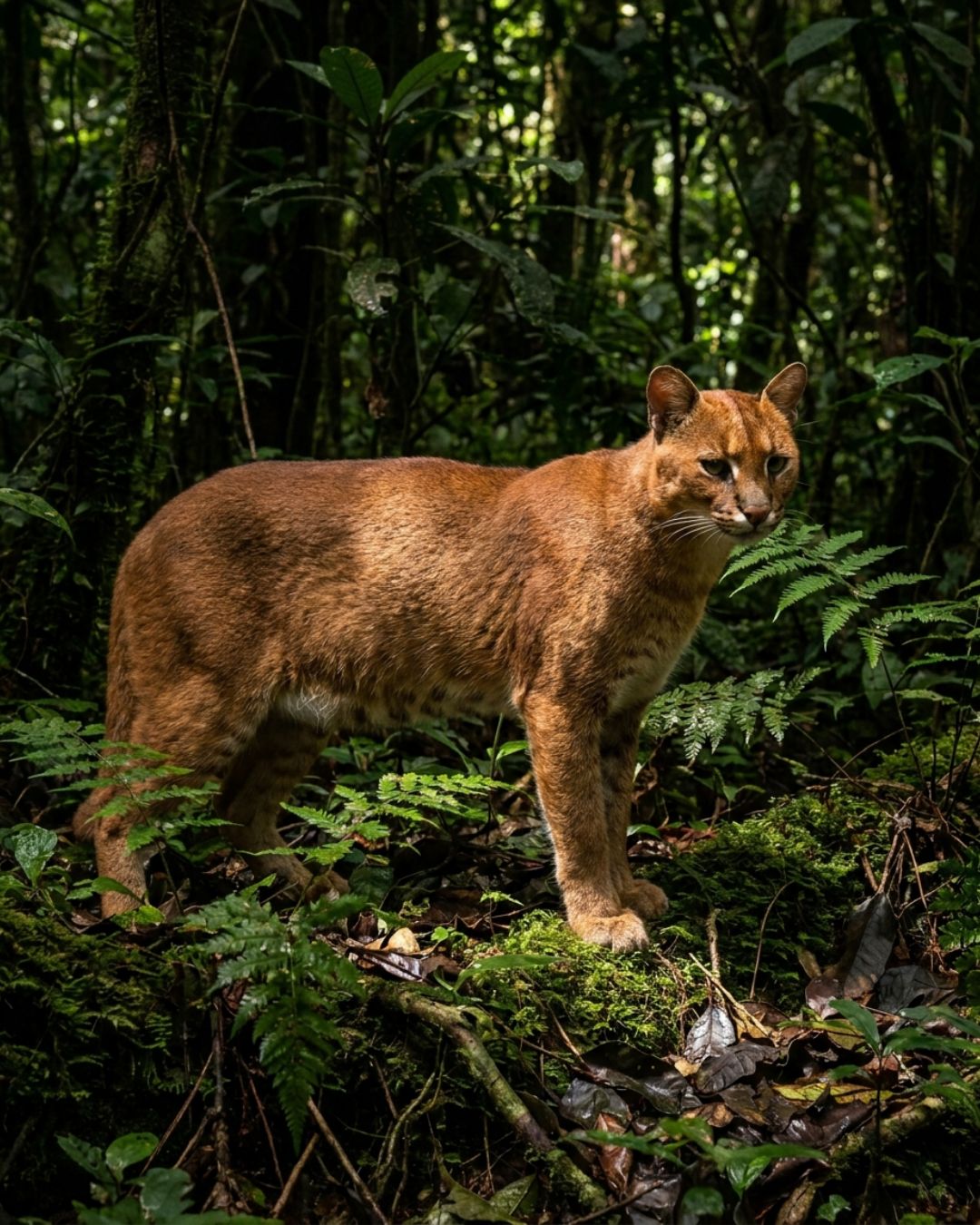
While most tourists scour African savannas for lions and cheetahs, the African Golden Cat (Caracal aurata) remains Central Africa’s best-kept secret, concealed within the shadows of dense rainforests across West and Central regions of the continent.
This elusive feline, the rarest wild cat in Africa, presents an extraordinary challenge for wildlife enthusiasts. Its patchy distribution throughout tropical forests makes encounters exceptionally rare, with recent sightings documented only in select areas like Cameroon’s Libongo Forest Concession.
The species displays impressive hunting capabilities, taking down prey considerably larger than itself, including duikers and monkeys.
However, its vulnerable conservation status highlights urgent concerns for its survival.
Feline conservation efforts focus on addressing primary threats: habitat loss, hunting pressure, and human encroachment.
Without targeted habitat preservation initiatives across its diminishing range, this remarkable golden predator may vanish before most wildlife enthusiasts ever glimpse its rare beauty.
Caracal: Encountering the Desert’s Tufted-Ear Specialist
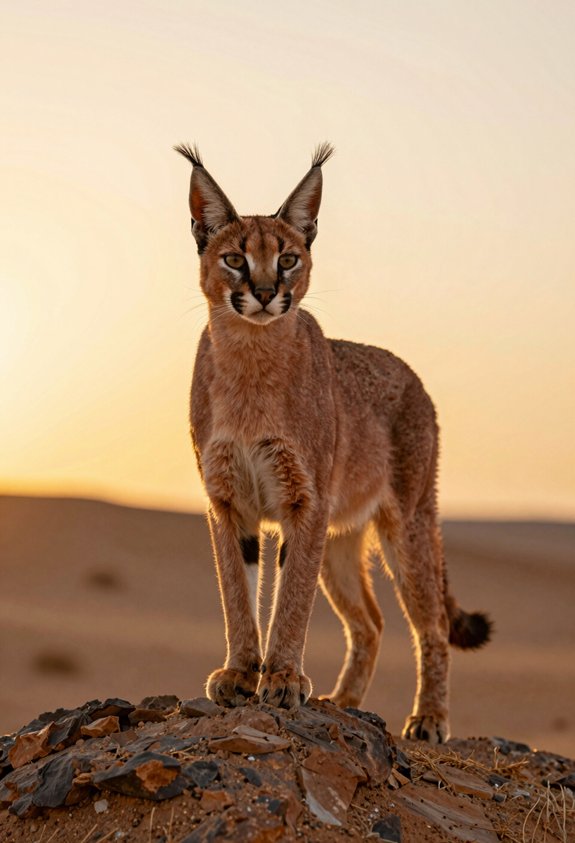
Among Africa’s most distinctive feline species, the Caracal commands attention with its striking black-tufted ears that rise like exclamation points from its reddish-gold coat. These impressive tufts can reach up to 5 centimeters in length, enhancing the cat’s already keen hearing capabilities.
The medium-sized wildcat thrives across diverse landscapes spanning Africa, the Middle East, and Central Asia. Caracal habitat preferences lean toward arid environments, with populations flourishing in savannas and semi-desert regions. Their adaptability to these harsh conditions has contributed to their stable conservation status, currently listed as Least Concern by the IUCN.
Caracal behavior reveals impressive hunting prowess, with these agile predators capable of taking down prey larger than themselves. They primarily target birds and small mammals, showcasing remarkable speed and precision.
Wildlife enthusiasts seeking glimpses of these elegant hunters should visit South Africa’s numerous parks and game reserves, where daytime sightings are relatively common.
African Wildcat: Meeting the Ancestor of Our Domestic Cats
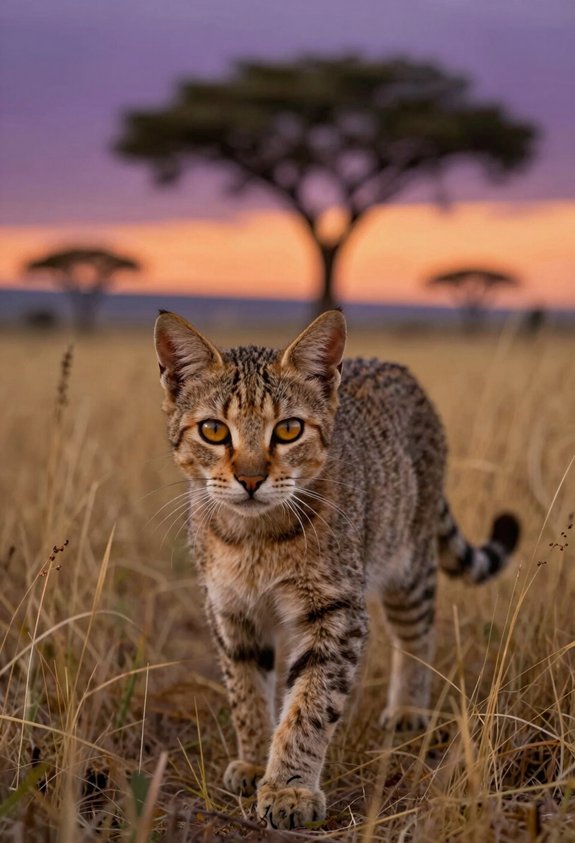
From the enigmatic caracal to the less conspicuous but perhaps more significant cat in human history, the African Wildcat represents the direct ancestor of domestic felines that share our homes today.
This adaptable species (Felis lybica) roams across Africa and parts of Asia, inhabiting diverse wildcat habitats from harsh deserts to lush forests and open savannas.
Genetic research confirms the close evolutionary relationship between these wildcats and domestic cats, placing them at a vital junction in feline evolution.
Despite their resemblance to tabby house cats, these nocturnal hunters maintain their wild instincts, efficiently stalking small mammals and birds with impressive stealth and agility.
Unlike many wild cat species facing population threats, the African Wildcat maintains a stable conservation status as Least Concern on the IUCN Red List.
Observing these animals in their natural habitat offers a rare glimpse into the ancestral roots of our domestic companions.
Jungle Cat: Observing Asia’s Wetland Specialists
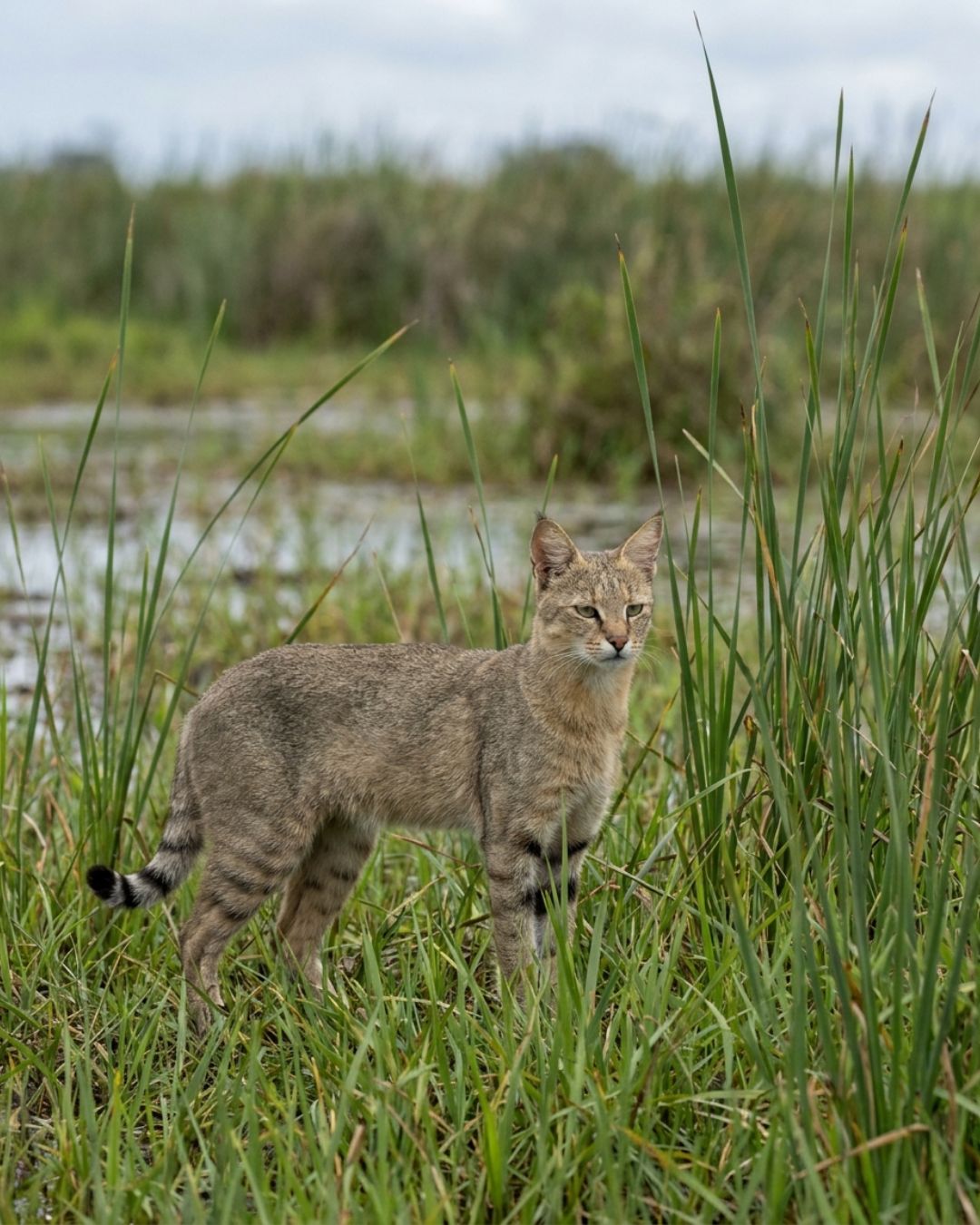
Despite its misleading name, the Jungle Cat (Felis chaus) rarely inhabits dense jungle environments, instead preferring wetlands across South and Southeast Asia. This adaptable feline is characterized by its distinctive long legs that facilitate movement through shallow waters, reeds, and marshes that define its primary habitat.
Jungle Cat behavior reveals a versatile predator that hunts small mammals, birds, and reptiles with equal proficiency. Their hunting strategies are particularly well-suited to wetland habitats, where they stalk prey with remarkable patience before executing precise attacks.
While maintaining a preference for wetland ecosystems, these cats demonstrate impressive adaptability by establishing territories near agricultural lands and human settlements. This flexibility likely contributes to their stable population status, currently classified as Least Concern.
For wildlife enthusiasts seeking to observe these specialists in their natural environment, the wetland areas of South Asia offer the best opportunities for sightings.
Sand Cat: Searching for the Desert’s Invisible Predator
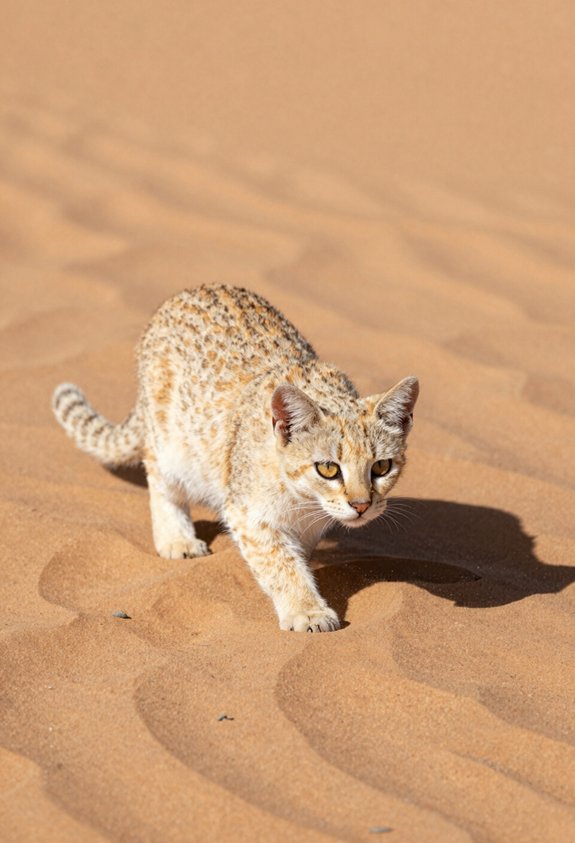
The Sand Cat (Felis margarita) represents one of nature’s most perfectly adapted desert specialists, vanishing almost completely against the sandy landscapes it calls home.
These elusive felines inhabit the harsh desert regions of North Africa and Central Asia, where temperatures fluctuate dramatically between scorching days and frigid nights.
Sand cat behavior is primarily nocturnal, allowing them to hunt efficiently while avoiding extreme daytime heat. Their remarkable desert adaptations include the ability to survive without drinking water, instead extracting moisture entirely from their prey of rodents and reptiles.
Their small stature and pale, sand-colored fur provide exceptional camouflage against their barren surroundings.
Despite being classified as Least Concern, studying these secretive predators remains challenging. Wildlife enthusiasts hoping to glimpse these “invisible” cats must venture into remote desert regions, often requiring specialized guides and considerable patience to spot nature’s ghost of the dunes.
Black-footed Cat: Tracking Africa’s Deadliest Small Predator
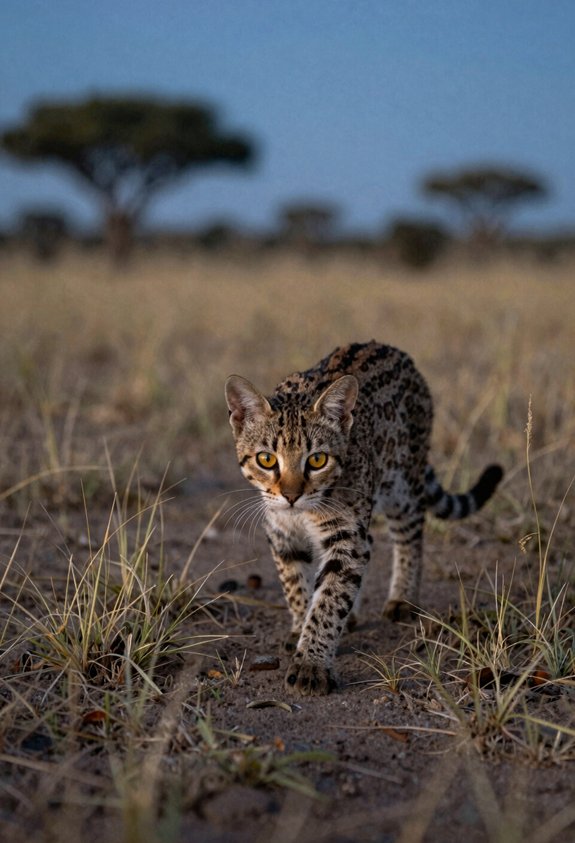
While the sand cat masters desert survival through invisibility, its diminutive African cousin employs lethal efficiency. The Black-footed Cat (Felis nigripes), weighing just 1.5-2.5 kg, has earned the title “Africa’s deadliest small predator” due to its exceptional hunting success rate.
This nocturnal hunter prowls the arid grasslands and savannas of Southern Africa, capturing small mammals, birds, and insects with remarkable precision.
Black-footed cat habitats primarily span Botswana, Namibia, and South Africa, where these cats have adapted to survive in harsh environments with limited water.
Despite their impressive hunting abilities, these cats face significant threats from habitat degradation and human encroachment.
Black-footed cat conservation efforts remain challenging due to their elusive nature and declining population, contributing to their Vulnerable status on the IUCN Red List.
For wildlife enthusiasts hoping to glimpse this rare feline, patience and specialized guides are essential, as these miniature predators remain among Africa’s least-observed wild cats.
Pallas’s Cat: Finding Central Asia’s Flat-Faced Mountain Dweller
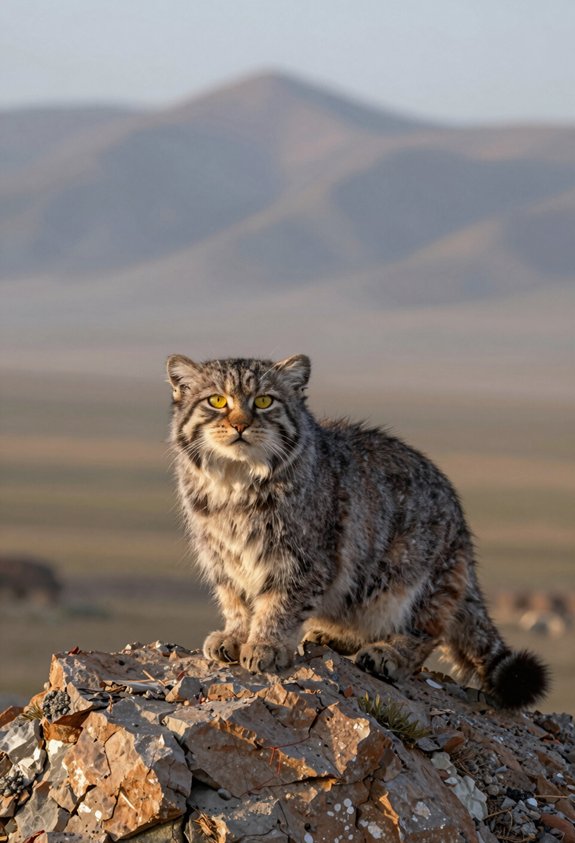
Seldom seen and perpetually grumpy-looking, Pallas’s Cat (Otocolobus manul) inhabits the cold, mountainous regions of Central Asia with remarkable adaptation to harsh conditions. Distinguished by its flat face and dense fur, this elusive feline prefers rocky, hilly terrain that provides natural camouflage, making wildlife encounters exceptionally rare.
Pallas’s Cat behavior is primarily nocturnal, with hunting activities focused on small mammals and birds across their native grasslands and steppes. Their secretive nature has complicated research efforts, though observers note they utilize rock crevices and abandoned burrows for shelter.
Pallas’s Cat conservation status remains concerning, with IUCN listing the species as Near Threatened. Habitat destruction and hunting continue to diminish wild populations.
For wildlife enthusiasts determined to glimpse this enigmatic creature, Mongolia and Kazakhstan offer the most promising opportunities, particularly in remote protected areas where dedicated guides can assist in tracking these mountain-dwelling felines.
Flat-headed Cat: Seeking Southeast Asia’s Endangered Fisher
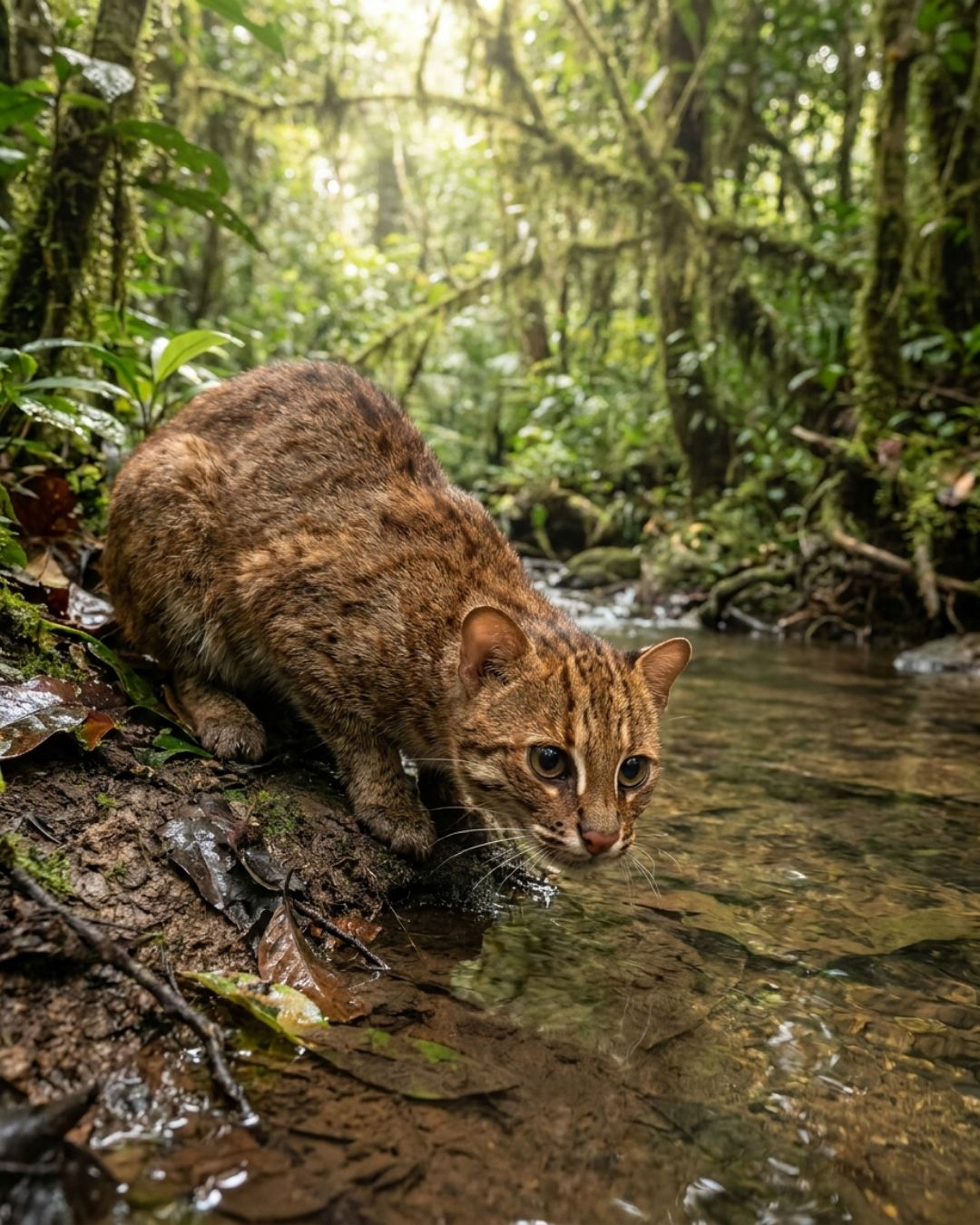
Among Southeast Asia’s most specialized yet endangered felines, the Flat-headed Cat prowls wetland margins with remarkable aquatic adaptations that distinguish it from all other wild cats. Its distinctively flattened cranium enables efficient hunting in freshwater habitats across Malaysia and Indonesia, where it captures fish and crustaceans with exceptional dexterity.
Flat headed cat behavior remains largely enigmatic due to its elusive nature, with few documented sightings in the wild. Researchers struggle to study this mysterious feline, complicating conservation efforts. The IUCN lists this species as Endangered, primarily due to widespread wetland destruction throughout its range.
Flat headed cat conservation faces significant challenges as Southeast Asian development continues to drain and convert vital wetland habitats. Without immediate protection of remaining freshwater ecosystems, this specialized hunter faces potential extinction.
Wildlife reserves that maintain pristine wetlands offer the best opportunity to glimpse this rare aquatic hunter and guarantee its survival.
Tiger: When and Where to Spot the World’s Largest Cat
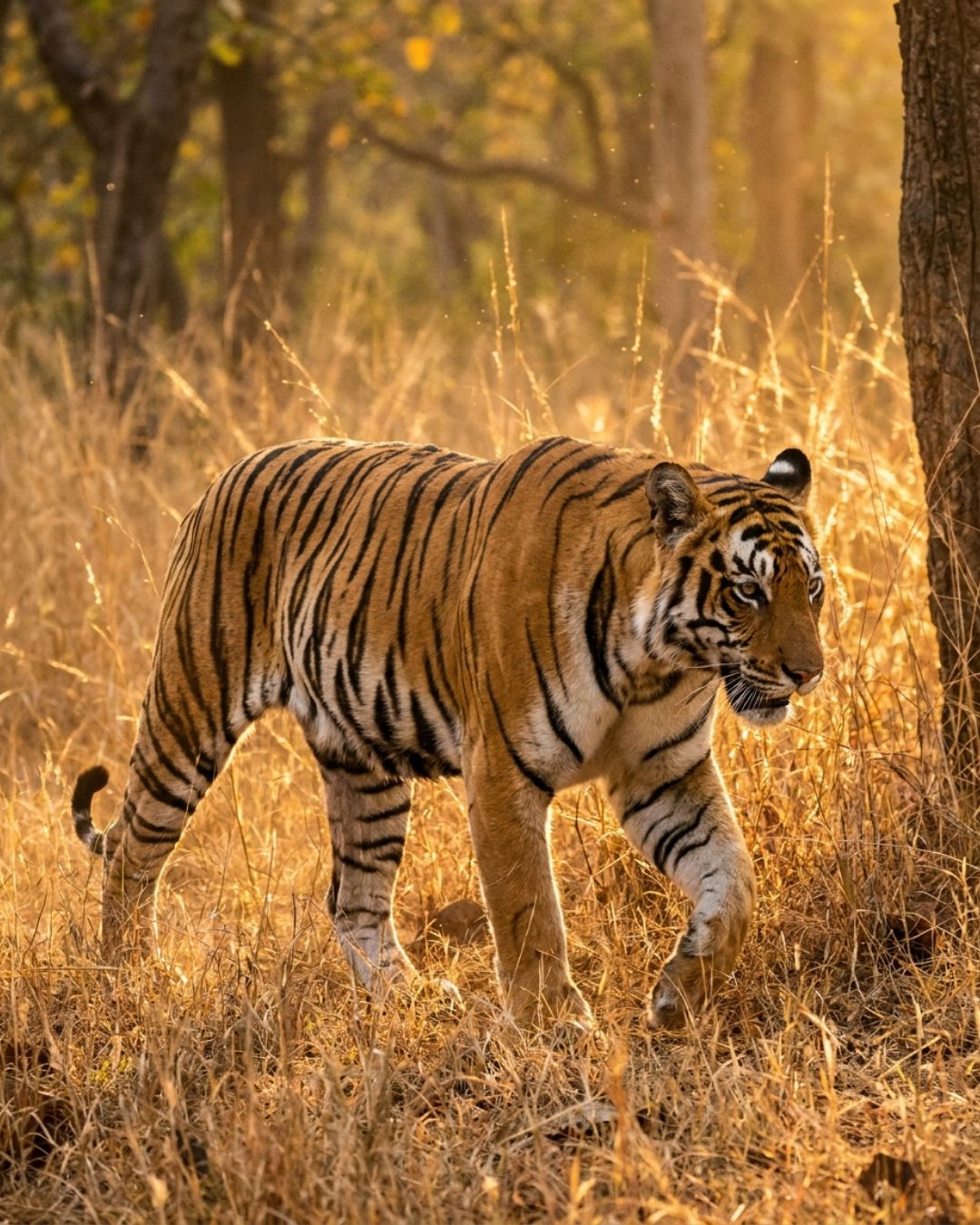
Magnificent and elusive, the tiger stands as the world’s largest wild cat, commanding awe through its impressive physicality and regal presence. Male tigers can reach weights of 660 pounds and stretch up to 10 feet long, including their tail, making them formidable apex predators in their ecosystems.
For wildlife enthusiasts seeking these striped hunters, prime tiger habitats include India’s Ranthambore and Bandhavgarh National Parks, along with the Sundarbans, the world’s largest mangrove forest.
The dry season (October to March) offers ideal viewing opportunities as tigers congregate around limited water sources. Dawn and dusk present the best timeframes for observation when these crepuscular hunters are most active.
Tiger conservation efforts have yielded encouraging results, with global wild populations now estimated at around 5,574 individuals, up from roughly 3,200 in 2010, according to the World Wildlife Fund.
Though still endangered, this represents a vital recovery for a species once on the brink of extinction in many regions.
Lion: Best Safari Locations for Pride Sightings
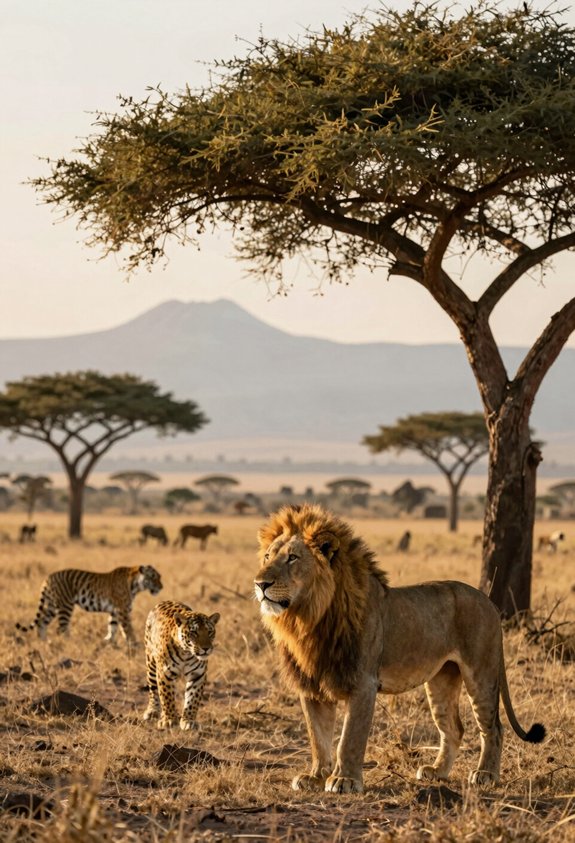
While tigers reign as the largest cats, lions command attention as Africa’s most social feline predators. For ideal pride sightings, the Serengeti National Park in Tanzania and South Africa’s Kruger National Park offer exceptional opportunities to observe lion behavior in expansive savanna landscapes.
The Ngorongoro Crater presents a unique lion-watching experience within Tanzania’s ancient caldera, where dense populations thrive in a contained ecosystem.
Kenya’s Masai Mara is strategically timed for the wildebeest migration when lions capitalize on abundant prey movements. For more intimate encounters, Zambia’s South Luangwa National Park features walking safaris bringing visitors remarkably close to these magnificent predators.
Botswana’s Okavango Delta provides a distinctive setting where lions adapt to seasonal flooding, observable via boat safaris.
These premier destinations not only showcase diverse lion behavior but also support critical lion conservation efforts across the continent, preserving these iconic predators for future generations.
Jaguar: Prime Viewing Spots in the Americas
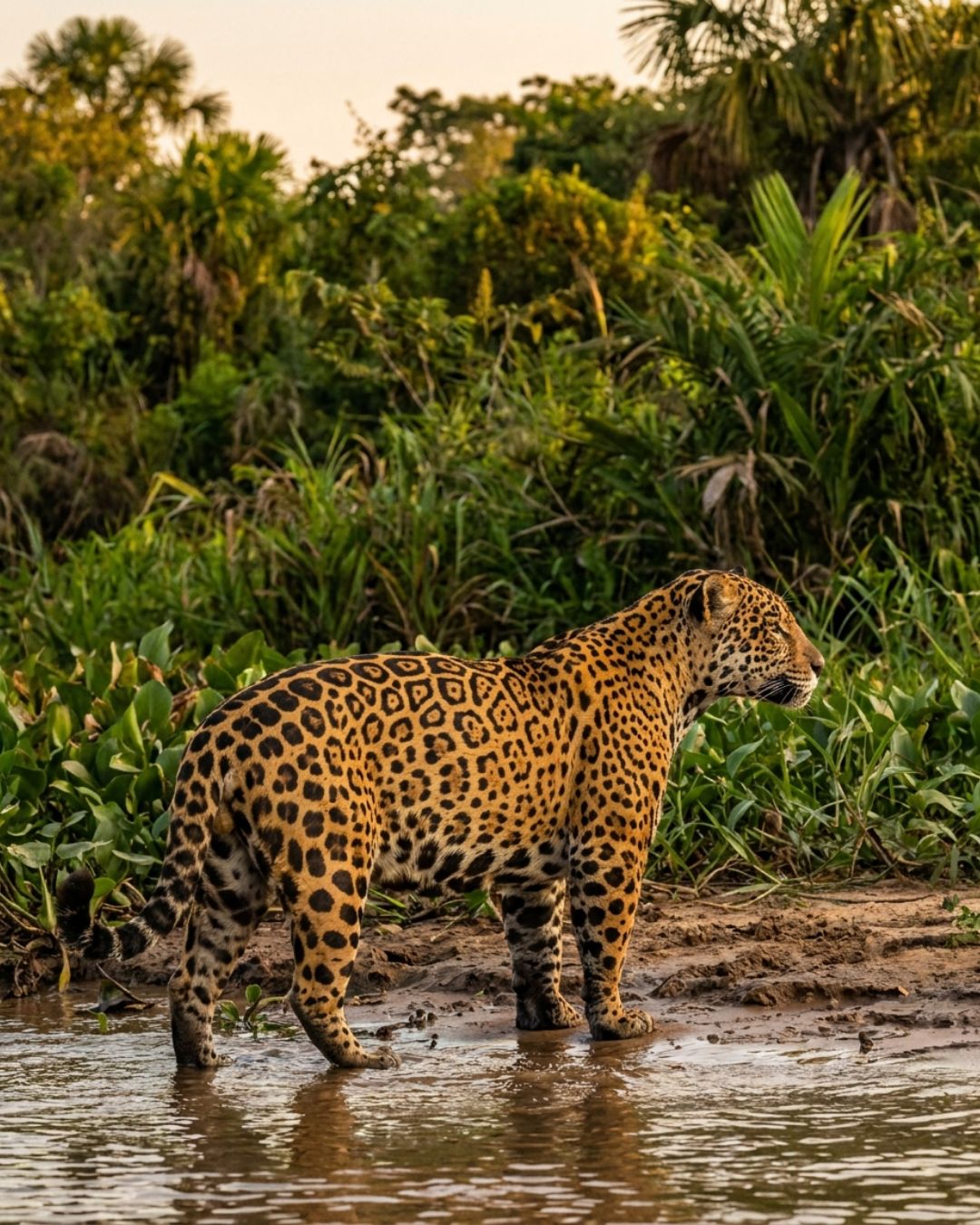
The largest wild cat in the Americas, the jaguar remains one of the most elusive predators to observe in its natural habitat. These magnificent creatures primarily inhabit the Amazon Basin rainforests, with Brazil’s Pantanal region offering exceptional sighting opportunities, particularly at the San Francisco Farm.
For ideal viewing, travelers should visit during the dry season (June to October) when jaguars are more active and vegetation thins out. These skilled swimmers frequently hunt near water bodies, making locations along the Cuiabá River perfect observation points.
Jaguar habitat extends to other notable viewing areas including Iguaçu National Park in Brazil and Belize’s Cockscomb Basin Wildlife Sanctuary, where guided tours enhance spotting chances.
With the species currently listed as Near Threatened by the IUCN, jaguar conservation efforts throughout Brazil and Central America are crucial for their survival. These initiatives help preserve critical territories while allowing wildlife enthusiasts to responsibly witness these remarkable cats in their natural environment.
Leopard: Top Parks for Daytime and Nocturnal Sightings
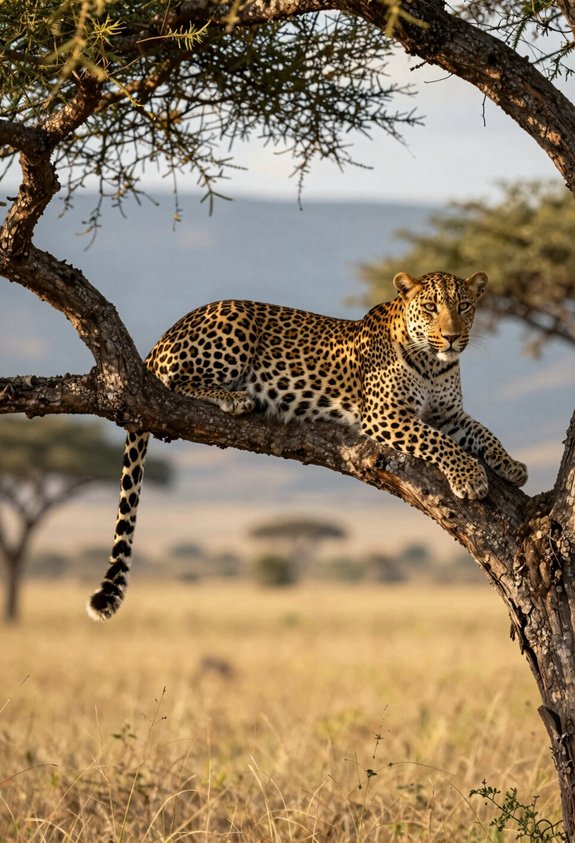
Unlike their jaguar cousins, leopards have mastered survival across diverse ecosystems spanning two continents, making them among the most adaptable big cats in the wild.
Their remarkable adaptability has enabled leopard populations to persist in savannas, rainforests, and mountainous regions throughout Africa and Asia, despite facing significant conservation challenges.
For ideal daytime viewing, Kruger National Park in South Africa and Serengeti National Park in Tanzania offer exceptional opportunities during dawn and dusk periods when leopard behavior shifts toward hunting activities.
Visitors should scan water sources and shaded trees during midday hours.
Nocturnal enthusiasts find success at Yala National Park in Sri Lanka, where leopards actively patrol territories after dark.
Ranthambore National Park in India presents a versatile option, supporting leopard conservation while providing both day and night viewing possibilities.
Understanding leopard behavior patterns, particularly their crepuscular nature, significantly increases spotting chances in these premier wildlife destinations.
Cheetah: Optimal Viewing Times for the World’s Fastest Cat
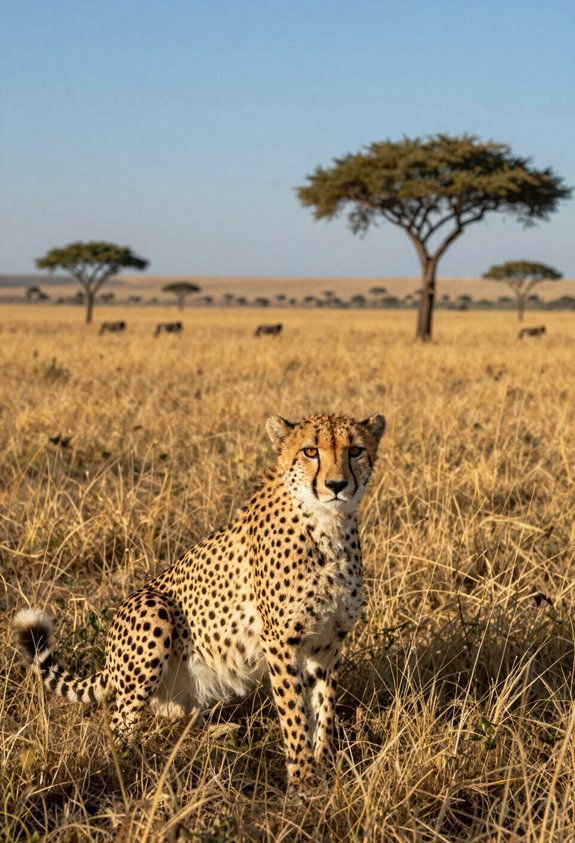
Known for their extraordinary speed, cheetahs captivate wildlife enthusiasts worldwide with their sleek bodies and lightning-fast pursuits. These magnificent cats are most active during early morning and late afternoon, making these periods ideal for observing their hunting techniques and social interactions.
For the best cheetah sightings, visit Tanzania’s Serengeti National Park or Kenya’s Maasai Mara Reserve during the dry season (June to October). During these months, prey concentrates around water sources, and reduced vegetation provides clearer visibility of cheetah behavior, including their spectacular high-speed chases that typically last under one minute.
Cheetah conservation efforts emphasize responsible viewing practices that don’t disrupt their hunting patterns. Observers should note the distinctive black tear stripes that reduce sun glare, enhancing these diurnal hunters’ vision.
This adaptation enables cheetahs to maintain visual acuity during daylight hours when they’re most active, offering wildlife enthusiasts prime opportunities to witness the world’s fastest land animal in action.
Ocelot: Night Spotting in the Americas’ Forests
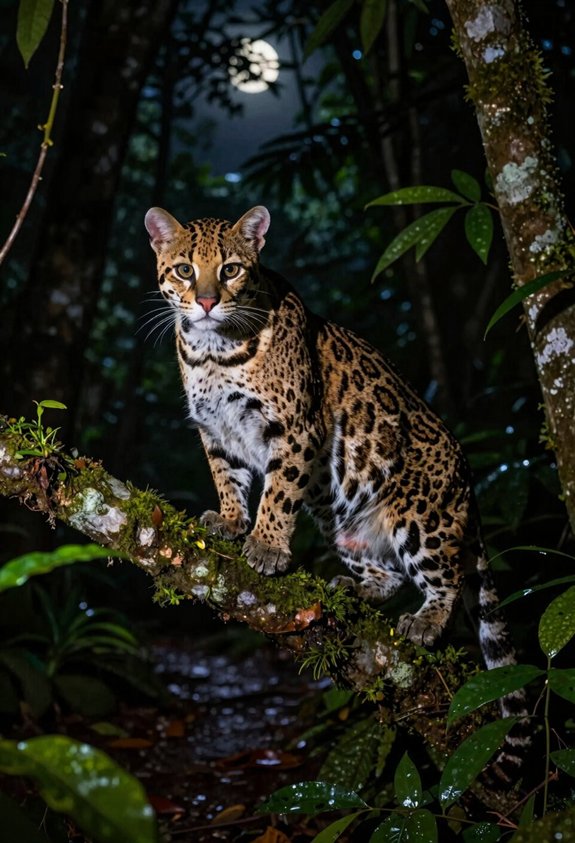
Few wild cats blend perfectly into their environment like the ocelot, a medium-sized feline with distinct spotted coats that provide exceptional camouflage in dense forests across the Americas. Their range extends from South America through Central America and Mexico, reaching as far north as southern Texas, making them one of the most widespread wild cats in the Western Hemisphere.
The ocelot’s nocturnal behavior makes nighttime the ideal period for wildlife enthusiasts hoping to glimpse these elusive hunters. Their camouflage patterns, rosettes and spots on a golden-brown background, serve as perfect concealment while stalking small mammals and birds through forest undergrowth.
Prime viewing locations include Panama’s Barro Colorado Island, which boasts the highest ocelot population density, and the southern Pantanal’s San Francisco Farm.
Unlike many wild cats, ocelots display a relatively relaxed demeanor around humans, occasionally permitting close-range observation during guided night excursions.
Margay: Locating South America’s Tree-Dwelling Acrobat
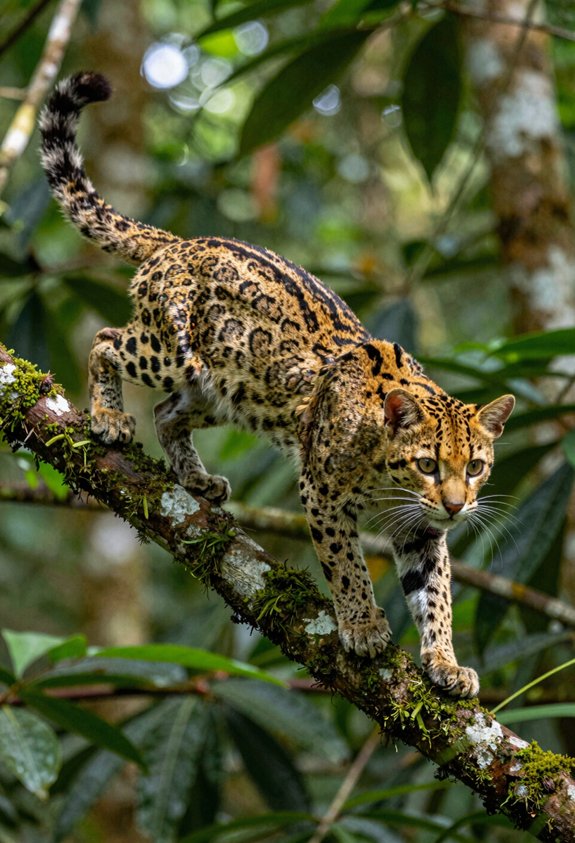
The arboreal virtuoso of the Neotropical rainforests, the Margay (Leopardus wiedii) represents nature’s engineering at its finest. Distinguished from its relative, the ocelot, by superior climbing abilities, this feline spends the bulk of its life traversing the forest canopy.
The Margay’s remarkable physiology includes uniquely flexible ankle joints that allow head-first descents from trees, a rare adaptation among felines that optimizes its tree-dwelling lifestyle.
Margay behavior is primarily characterized by arboreal hunting techniques, capturing birds and small mammals among the branches with impressive agility. Their specialized hunting strategy reflects perfect adaptation to their elevated margay habitat.
For wildlife enthusiasts hoping to glimpse this elusive climber, Ecuador’s Wildsumaco Lodge offers potential sighting opportunities due to its strategic location within the cat’s natural range.
Unfortunately, the Margay’s Near Threatened status from the IUCN underscores the pressing conservation challenges it faces from habitat fragmentation and deforestation across South America.
Colocolo: Finding Argentina’s Grassland Specialist
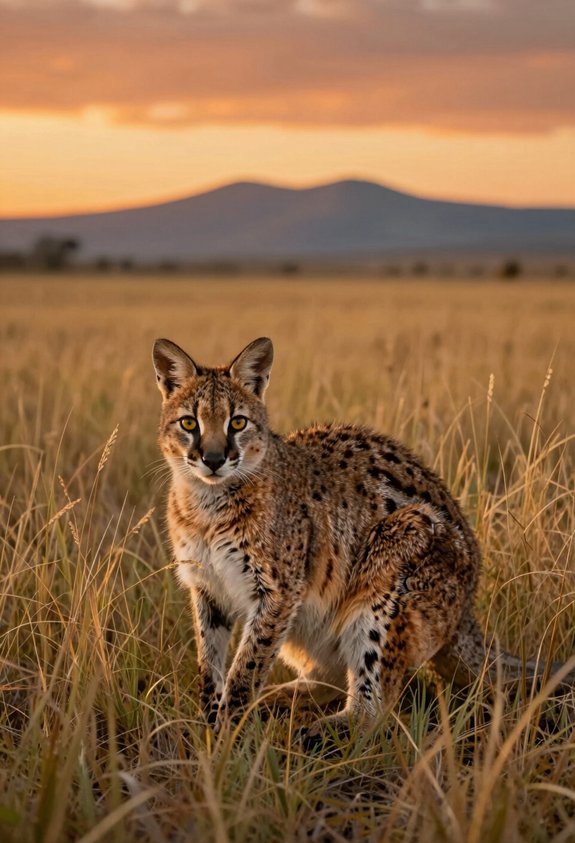
Among South America’s lesser-known wild cats, the Colocolo (Leopardus colocolo) navigates the continent’s grassland ecosystems with remarkable adaptability.
Previously classified as three distinct species, this small felid has established a presence across Argentina, Uruguay, Bolivia, Paraguay, Brazil, and Ecuador, demonstrating its versatility in Colocolo habitat selection.
Wildlife enthusiasts seeking this elusive cat face significant challenges, as sightings occur approximately once weekly in prime territories.
The Fazenda San Francisco in Brazil’s Southern Pantanal represents one of the most reliable locations for potential encounters with this grassland specialist.
Colocolo behavior remains poorly documented due to the cat’s secretive nature and declining numbers.
Currently listed as Near Threatened by the IUCN, the Colocolo faces mounting conservation challenges.
Its population trajectory suggests that without intervention, this adaptable grassland hunter may become increasingly difficult to observe in its natural habitat.
Northern Oncilla: Tracking Ecuador’s Miniature Tiger Cat
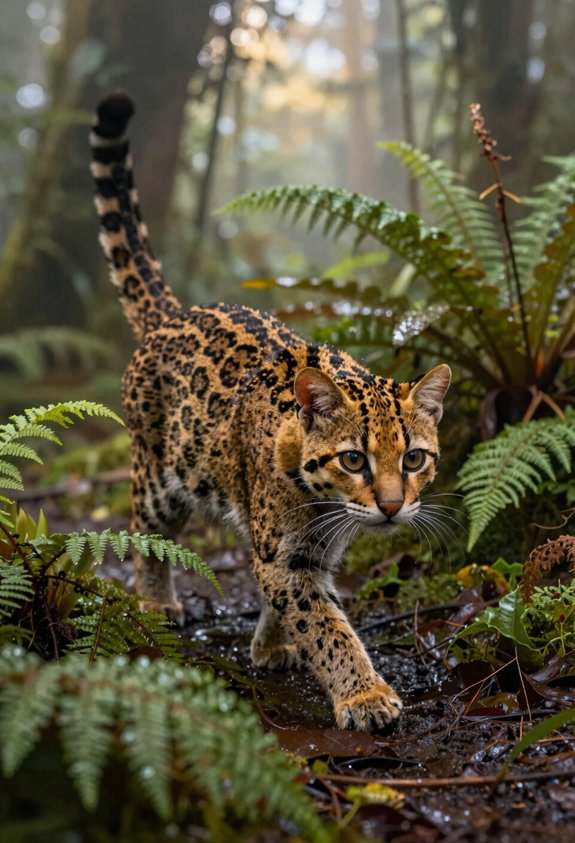
Diminutive in stature but striking in appearance, Ecuador’s Northern Oncilla (Leopardus tigrinus) presents wildlife enthusiasts with one of South America’s most challenging tracking experiences. This vulnerable species inhabits a range extending from Central America through Venezuela, Guyana, and into northeastern Brazil, with Ecuador offering rare viewing opportunities for the dedicated observer.
The species’ nocturnal behavior makes guided searches at dawn or after dark essential, with Bellavista Lodge and Cabanas San Isidro Lodge providing strategic viewing bases. Despite its diet specialization on small vertebrates, this elusive feline rarely reveals itself even in ideal conditions.
Successful sightings require focusing on intact forest habitats within northern Ecuador, where patient observers occasionally glimpse this “miniature tiger cat.”
The limited visibility and secretive nature of the Northern Oncilla explain why confirmed sightings are prized among wildlife enthusiasts tracking South America’s lesser-known wild cats.
Southern Oncilla: Spotting Brazil’s Little Spotted Cat
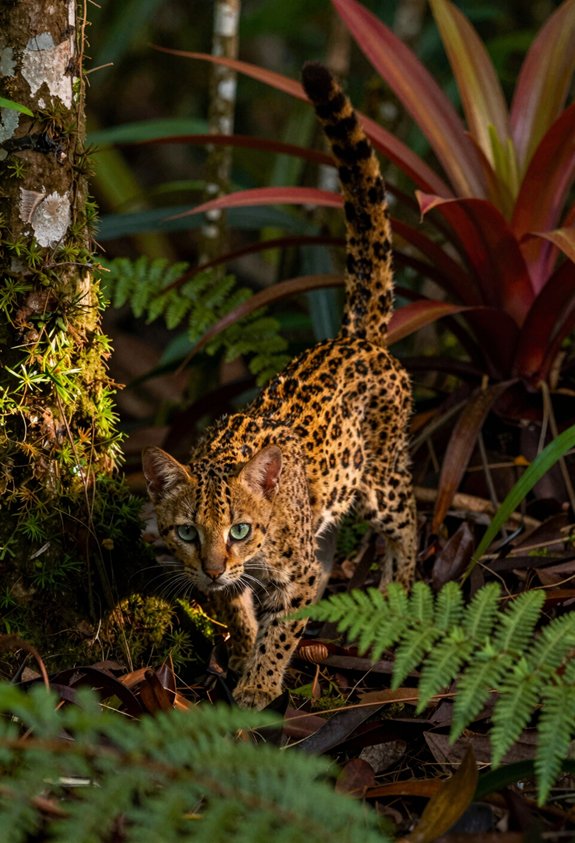
While its northern counterpart attracts attention in Ecuador, Brazil’s Southern Oncilla (Leopardus guttulus) presents an equally compelling wildlife challenge with distinctive characteristics.
This small, arboreal wild cat is listed as Vulnerable by the IUCN, with a range spanning central and southern Brazil, Uruguay, Paraguay, and northern Argentina.
Sightings of this elusive feline are exceptionally rare in Brazil, where its preference for dense forest habitats and tree-dwelling behavior make observation difficult.
Conservation efforts in the region primarily focus on combating habitat loss, which threatens the remaining populations of this diminutive spotted cat.
Researchers increasingly rely on camera traps to document the Southern Oncilla’s presence, as traditional tracking methods often prove ineffective.
The secretive nature of Leopardus guttulus, combined with its nocturnal habits, means that dedicated wildlife enthusiasts must exercise extraordinary patience when attempting to glimpse this forest phantom.
Guiña: Searching for South America’s Smallest Wild Cat
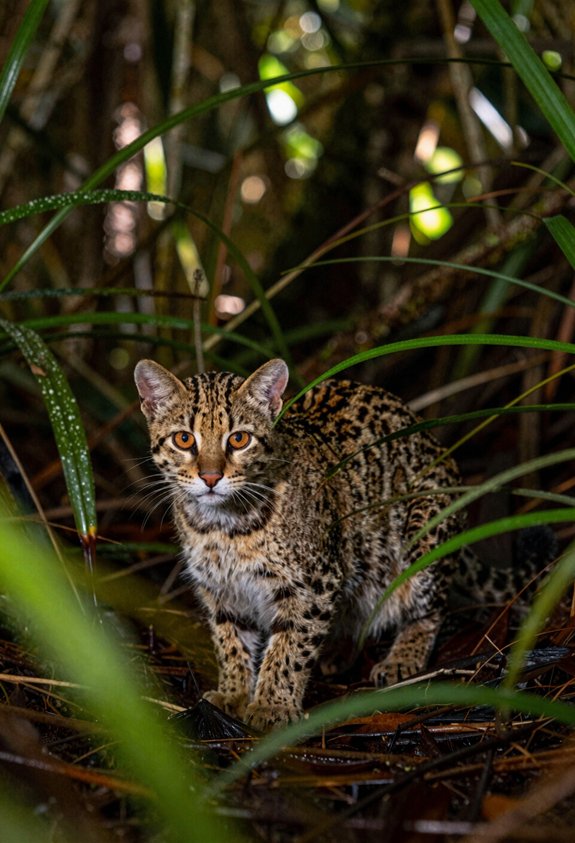
Deep in the temperate forests of southern South America lives the Guiña (Leopardus guigna), a secretive feline holding the distinction of being the continent’s smallest wild cat species. This vulnerable predator inhabits the forested regions of southern and central Chile, extending into parts of Argentina, where its forest camouflage makes it exceptionally difficult to spot.
The Guiña’s diet preferences include small mammals and birds, which it hunts primarily on the ground despite being an accomplished climber. Its remarkable agility allows it to navigate both terrestrial and arboreal environments with equal proficiency. Conservation efforts concentrate on protecting its remaining habitat from deforestation and human encroachment.
For wildlife enthusiasts hoping to glimpse this elusive cat, Parque Tepuhueico and various locations throughout Chiloe Island in Chile offer the most promising opportunities, as these areas maintain the dense vegetation essential for the Guiña’s survival.
Geoffroy’s Cat: Finding Argentina’s Upright Balancer
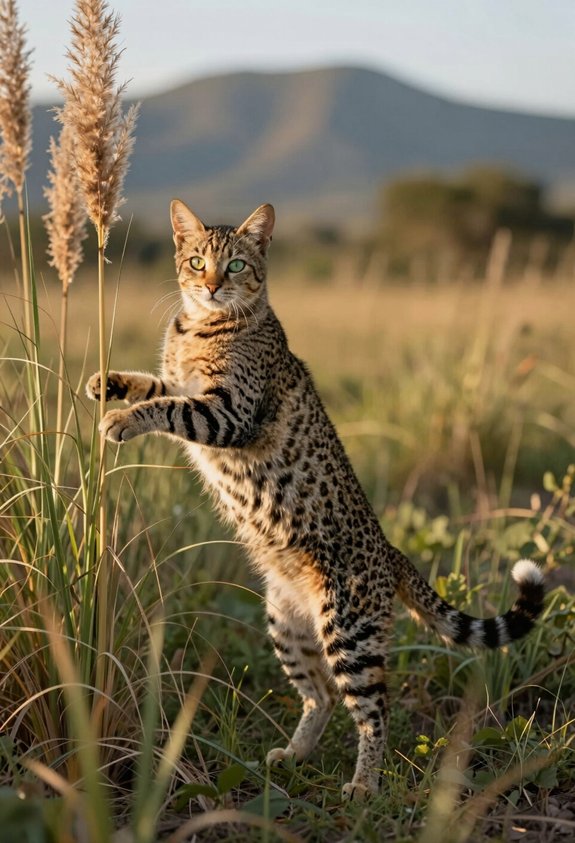
Across the diverse landscapes of South America roams the Geoffroy’s Cat (Leopardus geoffroyi), a resilient feline distinguished by its unique ability to stand upright using its tail for balance.
This unusual posture allows the cat to survey its surroundings in dense vegetation, contributing to its successful adaptation across a vast range from Southern Bolivia to the Straits of Magellan.
Despite being the larger counterpart to the Guiña within its genus, Geoffroy’s Cat remains elusive due to its preference for thick habitat dynamics and primarily nocturnal behavior.
Its adaptability has earned it a Least Concern conservation status from the IUCN, indicating relatively stable populations compared to other wild felids.
For wildlife enthusiasts hoping to glimpse this upright balancer, El Palmar National Park in Argentina offers promising opportunities.
However, patience is essential as these cats masterfully navigate their dense habitats, making even this common species a challenging but rewarding find.
Andean Cat: The High-Altitude Challenge of the Andes
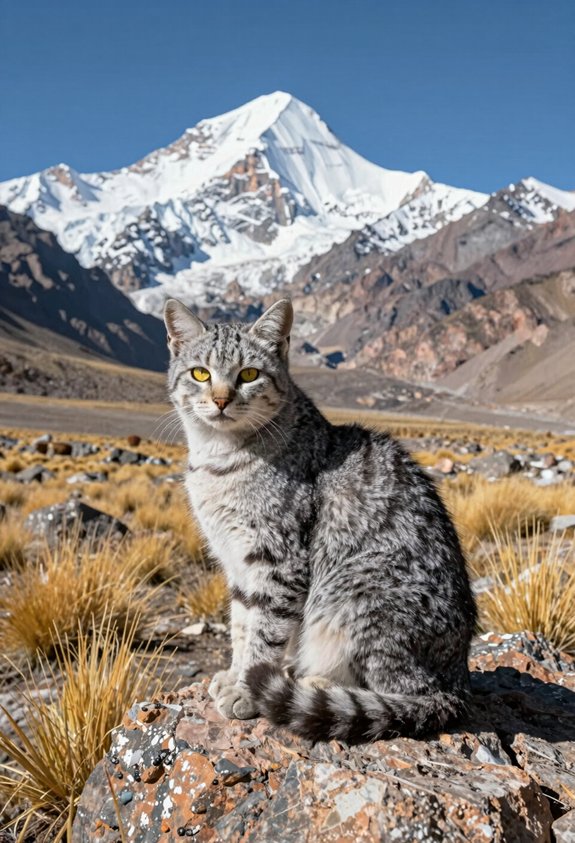
Perched among the most extreme environments of South America lives the enigmatic Andean Cat (*Leopardus jacobita*), perhaps the continent’s most elusive feline. Adapted with specialized altitude physiology that allows it to thrive in oxygen-thin environments, this endangered species patrols the high Andean regions across Peru, Bolivia, Chile, and Argentina.
Its preference for remote, rocky habitat in arid puna steppes at elevations often exceeding 3,000 meters makes encounters exceptionally rare.
The cat’s distribution is intrinsically linked to these harsh alpine ecosystems, where it hunts among steep terrain and scattered boulder fields.
For wildlife enthusiasts seeking this ghost-like predator, Lauca National Park in Chile offers minimal but possible sighting opportunities.
However, even dedicated researchers struggle to document this species in the wild, making it among the least photographed wild cats on earth.
Fishing Cat: Where to Observe Asia’s Aquatic Hunter
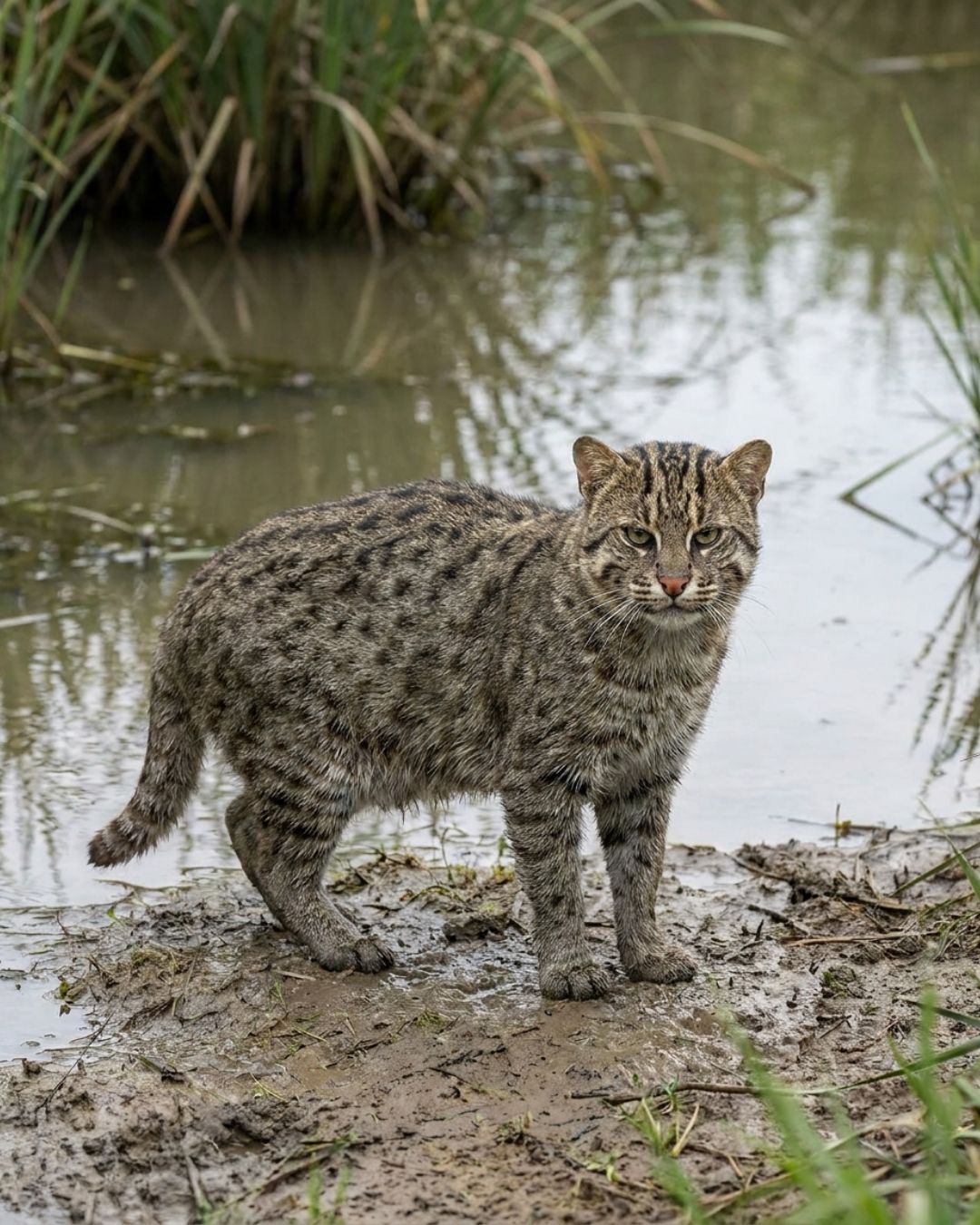
Wading through Asia’s densest wetlands and mangroves is the remarkable Fishing Cat (*Prionailurus viverrinus*), a medium-sized feline uniquely adapted for aquatic hunting.
This specialized predator thrives in flooded ecosystems from India to Southeast Asia, maneuvering complex wetland dynamics with exceptional swimming abilities.
Classified as Vulnerable by the IUCN, these cats face mounting challenges from habitat destruction and pollution impacts that degrade their aquatic hunting grounds.
Conservation efforts focus on protecting remaining wetland corridors throughout their range.
Wildlife enthusiasts seeking this elusive hunter should visit India’s Sundarbans or Kaziranga National Park, protected wetlands in Bangladesh, or specific conservation areas in Sri Lanka and parts of Indonesia.
Dawn and dusk provide ideal viewing opportunities when Fishing Cats emerge to stalk riverbanks and mangrove edges, hunting fish, amphibians, and crustaceans.
Their semi-aquatic hunting behavior, wading or swimming to catch prey, offers a rare glimpse into evolutionary adaptation within the cat family.
Bobcat: Best North American Wilderness Areas for Sightings
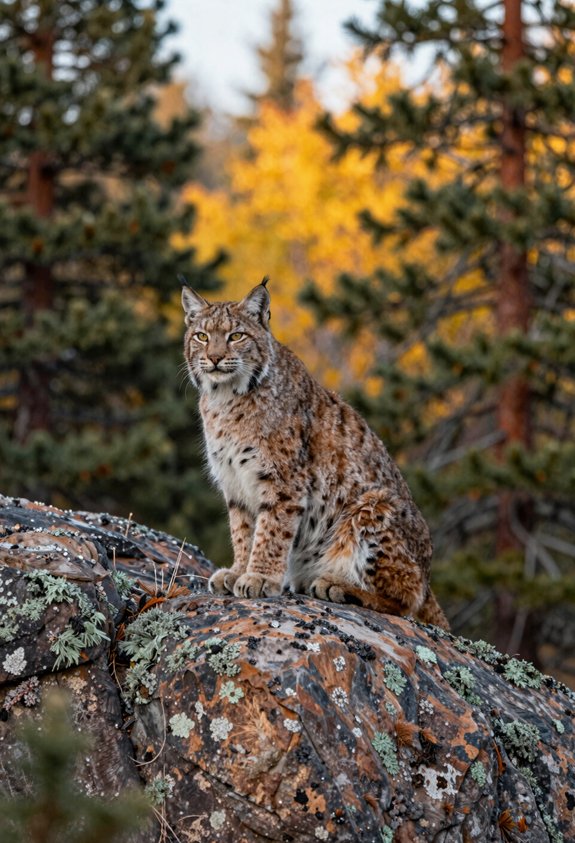
The North American bobcat (*Lynx rufus*) offers wildlife enthusiasts a more accessible wildcat viewing experience than Asia’s elusive Fishing Cat.
Despite their nocturnal behavior, several national parks provide reliable opportunities to spot these adaptable predators.
Great Smoky Mountains National Park stands out for consistent year-round sightings across its mountainous forests.
Yellowstone’s expansive wilderness, with its mix of dense timber and edge habitats, regularly rewards patient observers.
In Florida, Everglades National Park’s wetland mosaic aligns perfectly with bobcat habitat preferences, creating frequent encounters for visitors exploring by foot or boat.
Texas’s Big Bend National Park offers memorable, if sporadic, sightings across its remote desert-montane landscapes.
In the Northeast, Adirondack Park and surrounding wildlands provide seasonal viewing opportunities where bobcats thrive in dense forest environments.
These five regions represent North America’s premier destinations for witnessing these medium-sized wildcats in their natural settings.
Canada Lynx: Tracking Through Northern Boreal Forests
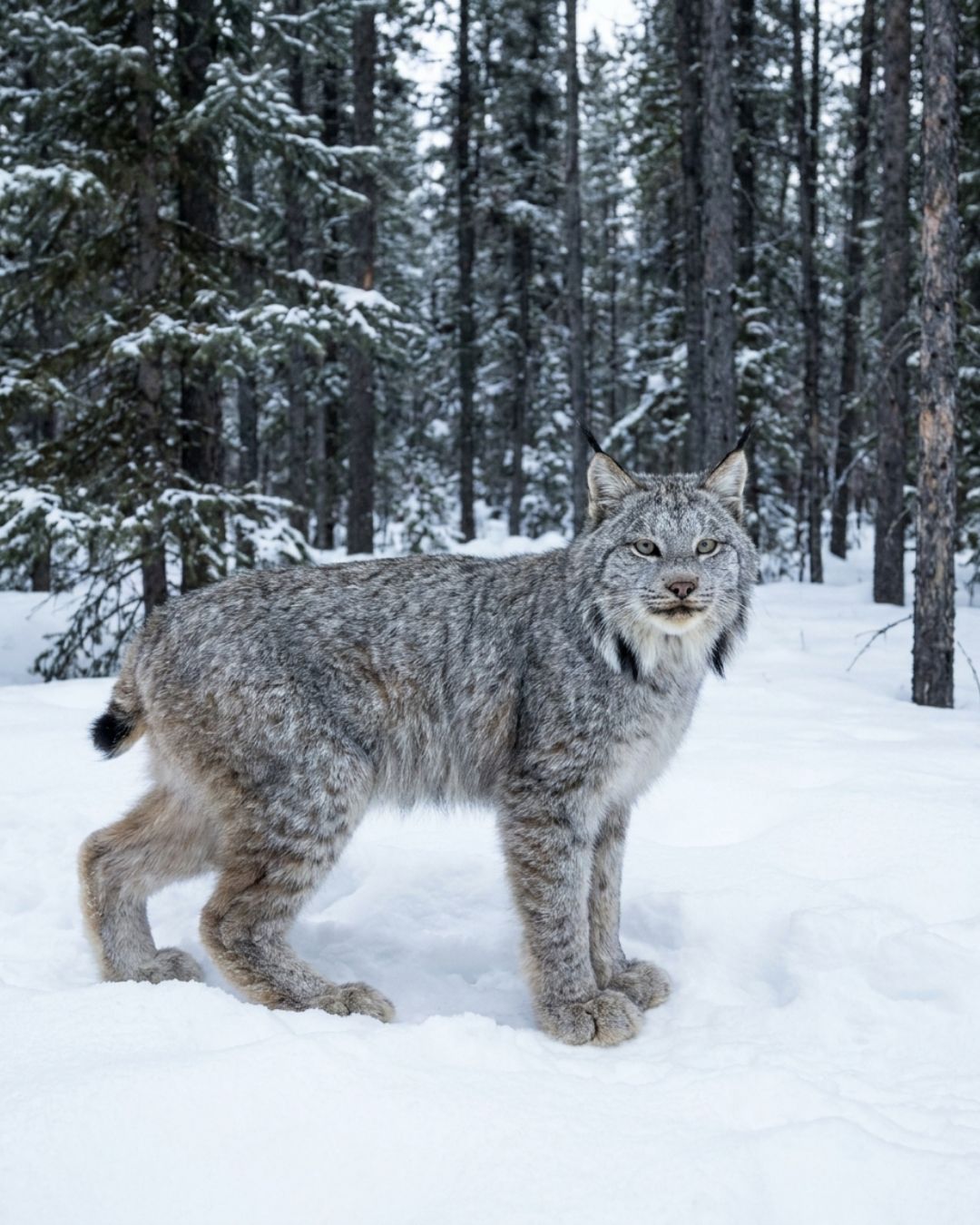
Tracking Canada lynx through North America’s boreal forests offers wildlife enthusiasts one of the continent’s most challenging yet rewarding wilderness experiences.
The elusive Lynx canadensis thrives in coniferous forests with deep snow cover across Canada and the northern United States, where its remarkable snowshoe adaptations, disproportionately large paws, allow efficient travel across snowy terrain.
Lynx populations fluctuate in predictable 8-11 year cycles, directly tied to snowshoe hare abundance.
These hare cycles create windows of opportunity for trackers, as lynx become more mobile and visible during peak hare years.
Though classified as Least Concern by the IUCN, local lynx populations remain vulnerable to habitat fragmentation.
Successful tracking requires recognizing key indicators: thoroughly scavenged hare-kill sites, solitary territorial markings, and understanding seasonal behavior shifts.
During heavy snow periods, lynx shift from crepuscular to nocturnal activity, requiring trackers to adjust accordingly when pursuing these secretive boreal predators.
Eurasian Lynx: Seeking Europe’s Largest Wild Cat
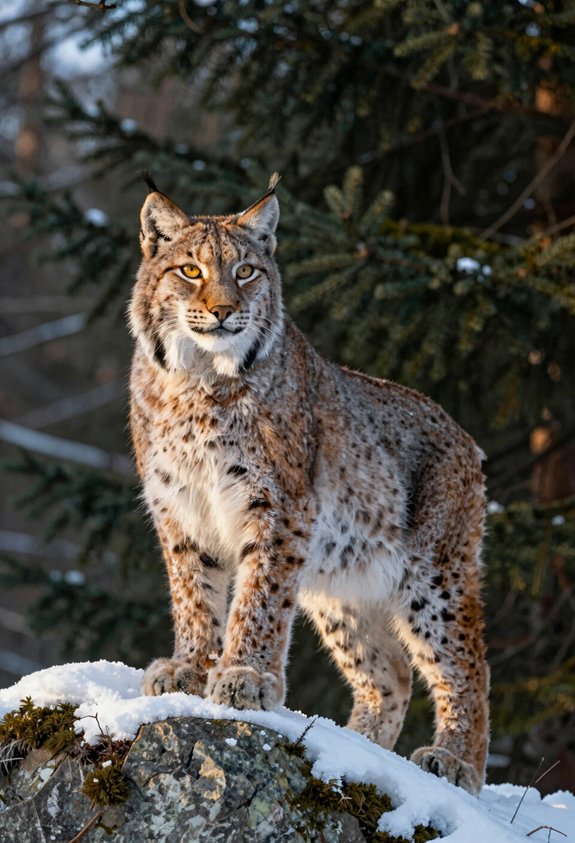
Across Europe’s diverse landscapes, from northern boreal forests to alpine meadows, roams the continent’s largest and most formidable wild cat, the Eurasian lynx (Lynx lynx).
This impressive predator measures up to 75 cm in body length and weighs between 18-30 kg, with its characteristic short tail and tufted ears making it unmistakable.
Though classified as Least Concern by the IUCN, the Eurasian lynx’s habitat range stretches from the Carpathian Mountains through parts of Siberia into Central Asia.
Wildlife enthusiasts seeking glimpses of this elusive hunter should focus on mature forests and rugged mountainous regions where prey like roe deer and chamois abound.
Prime viewing opportunities exist in Poland’s Białowieża Forest, throughout the Carpathians, and in Scandinavian protected areas.
Conservation efforts across European countries emphasize maintaining genetic diversity through strategic reintroduction programs and wildlife corridors.
Increasing the chances for patient observers with specialist guides to encounter this magnificent woodland predator.
Iberian Lynx: Europe’s Great Conservation Comeback
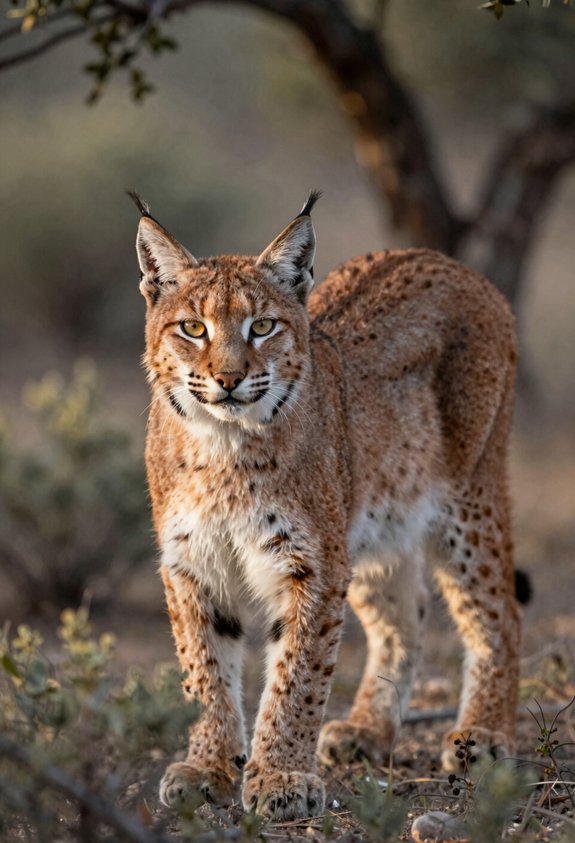
Once widespread across Spain and Portugal, the Iberian lynx (Lynx pardinus) has become one of the world’s greatest conservation comeback stories, though it remains rare and localized.
This recovering wild cat, downgraded by the IUCN from Endangered to Vulnerable in 2024, survives in isolated pockets of Mediterranean scrubland and dehesa habitats on the Iberian Peninsula.
The species’ decline correlates directly with the European rabbit’s disappearance, its primary prey, which has been devastated by disease and overhunting.
Conservation initiatives now focus on prey restoration through rabbit breeding programs and protecting critical feeding territories.
Since the early 2000s, an extensive captive breeding and reintroduction program has boosted wild numbers from just 62 individuals in 2001 to more than 2,000 by 2024.
Conservationists have established habitat corridors between isolated populations to facilitate genetic exchange and colonization of new territories.
These connected landscapes allow lynx to disperse safely while avoiding human-wildlife conflict.
Wildlife enthusiasts can occasionally glimpse these elusive cats in protected areas of Andalusia, Spain, where recovery efforts have been most successful.
Puma: Mountain Lion Territories Across the Americas
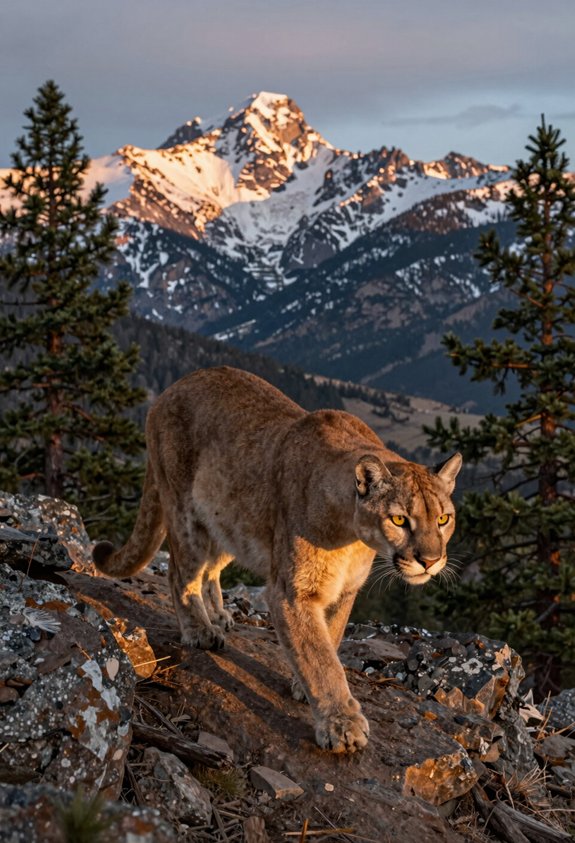
Where does the American wild cat with the most names, puma, cougar, mountain lion, panther, and catamount, actually live?
The Puma concolor has the most extensive range of any terrestrial mammal in the Western Hemisphere, stretching from Canada to the southern tips of Chile and Argentina.
As the largest wild cat in the Americas, the puma thrives across remarkably diverse landscapes, from dense forests and arid deserts to grassy plains and high mountain regions like the Sierra Nevada and Andes.
Their territory size varies dramatically based on prey density, ranging from 20 to 400 square kilometers.
Areas with abundant ungulates, particularly deer, their preferred prey, support smaller territories, while regions with scattered food sources necessitate larger ranges.
These adaptable predators are primarily crepuscular or nocturnal hunters, though their behavior shifts based on local conditions and prey availability throughout their pan-American domain.
Jaguarundi: Spottin the Otter-Like Cat of Central America
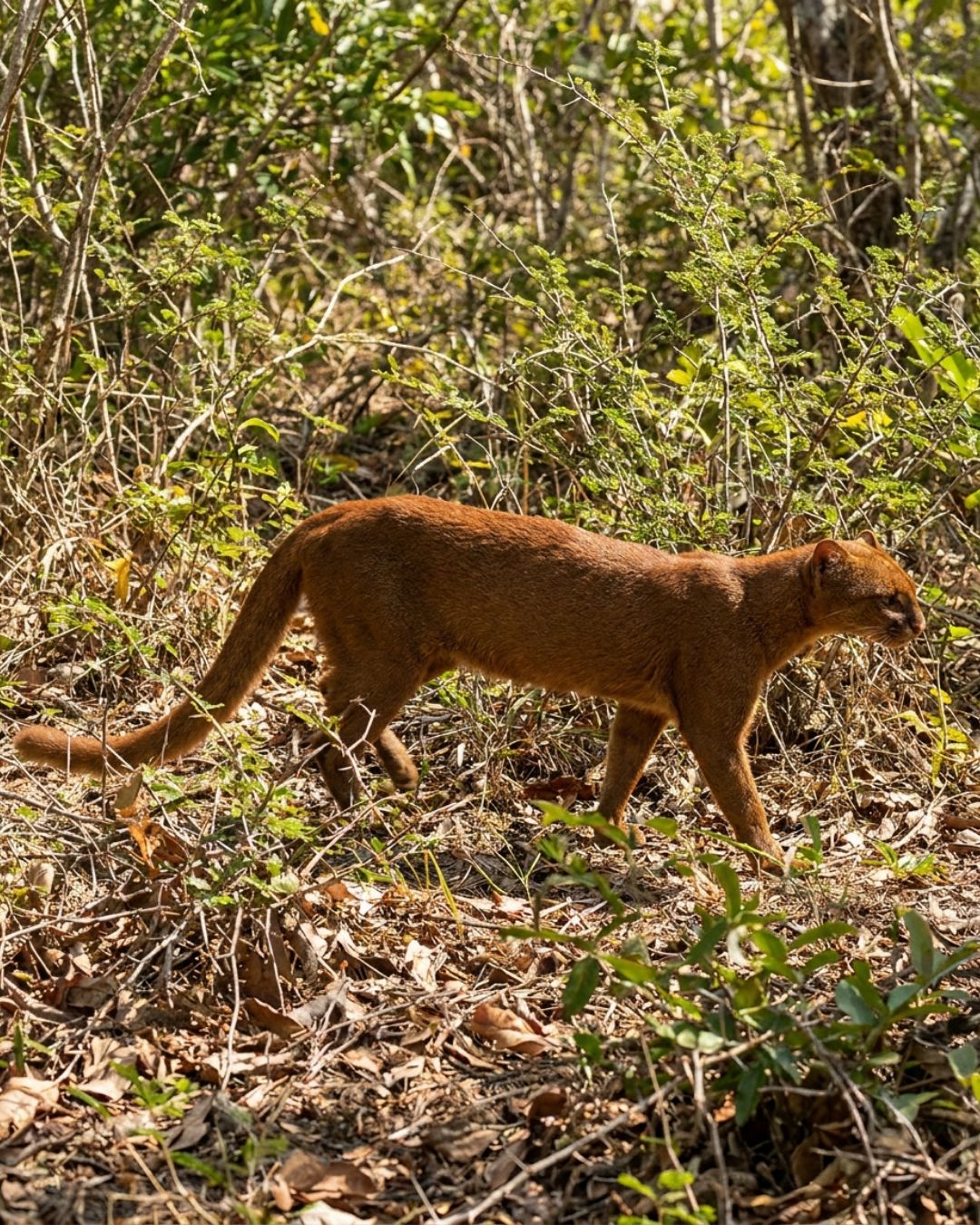
The jaguarundi stands as one of the most misunderstood cats in the Americas, often overlooked despite its distinctive appearance. With its elongated body, short legs, and sleek tail, this small wild cat earns its “otter-cat” nickname through a striking resemblance to its semi-aquatic namesake.
Ranging from southern Texas through Mexico and down to Argentina, the jaguarundi demonstrates remarkable habitat flexibility.
These adaptable felines thrive across tropical forests, scrublands, wetlands, and savannas, making them successful colonizers across diverse ecosystems.
Unlike many feline species, jaguarundis frequently hunt during daylight hours.
The species exhibits notable coat variation, with colors spanning from reddish-brown to gray, including melanistic black variants in certain regions.
Though classified as Least Concern by conservationists due to their widespread distribution, jaguarundis face localized population declines where habitat destruction encroaches on their territory, highlighting the ongoing challenge of preserving even relatively secure wild cat species.
Rusty-Spotted Cat: Locating India’s Miniature Hunter
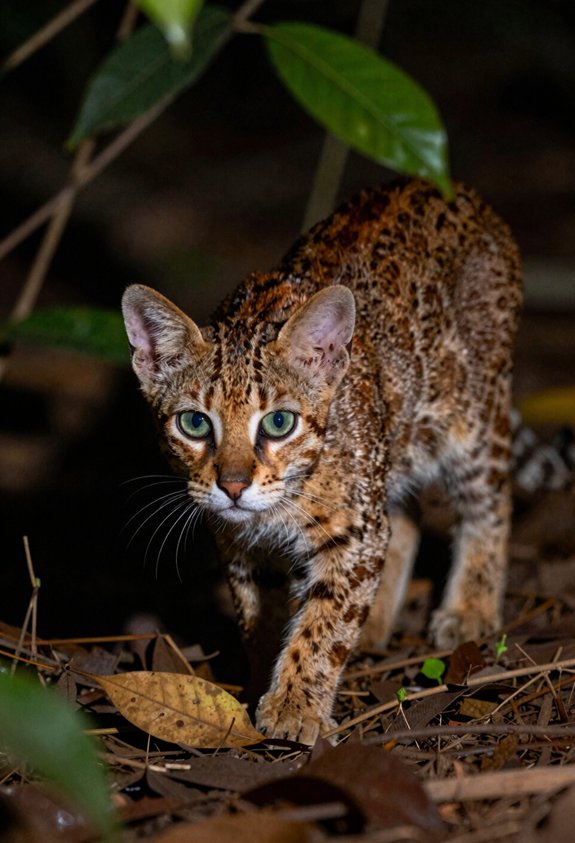
Aptly nicknamed “the hummingbird of cats,” India’s rusty-spotted cat holds the distinction of being among the world’s smallest felines, with adults rarely exceeding the size of a domestic kitten. This vulnerable species, weighing just 1-2.5 kg, inhabits dry deciduous forests and scrubland across central and southern India and Sri Lanka.
Observing this elusive nocturnal hunter requires extraordinary patience.
Protected areas in the Western Ghats offer the best opportunities, where dedicated camera-trap programs have revealed insights about their movements and habitat connectivity patterns.
Most scientific knowledge comes from these remote monitoring systems rather than direct sightings.
Diet analysis indicates they target small prey while maneuvering through dense undergrowth and rocky outcrops.
Successful spotting typically demands overnight safaris with experienced guides familiar with the cat’s secretive behavior.
For wildlife enthusiasts, the challenge of glimpsing this miniature predator represents one of India’s most rewarding yet difficult wildlife quests.
Chinese Mountain Cat: The Tibetan Plateau’s Rare Hunter
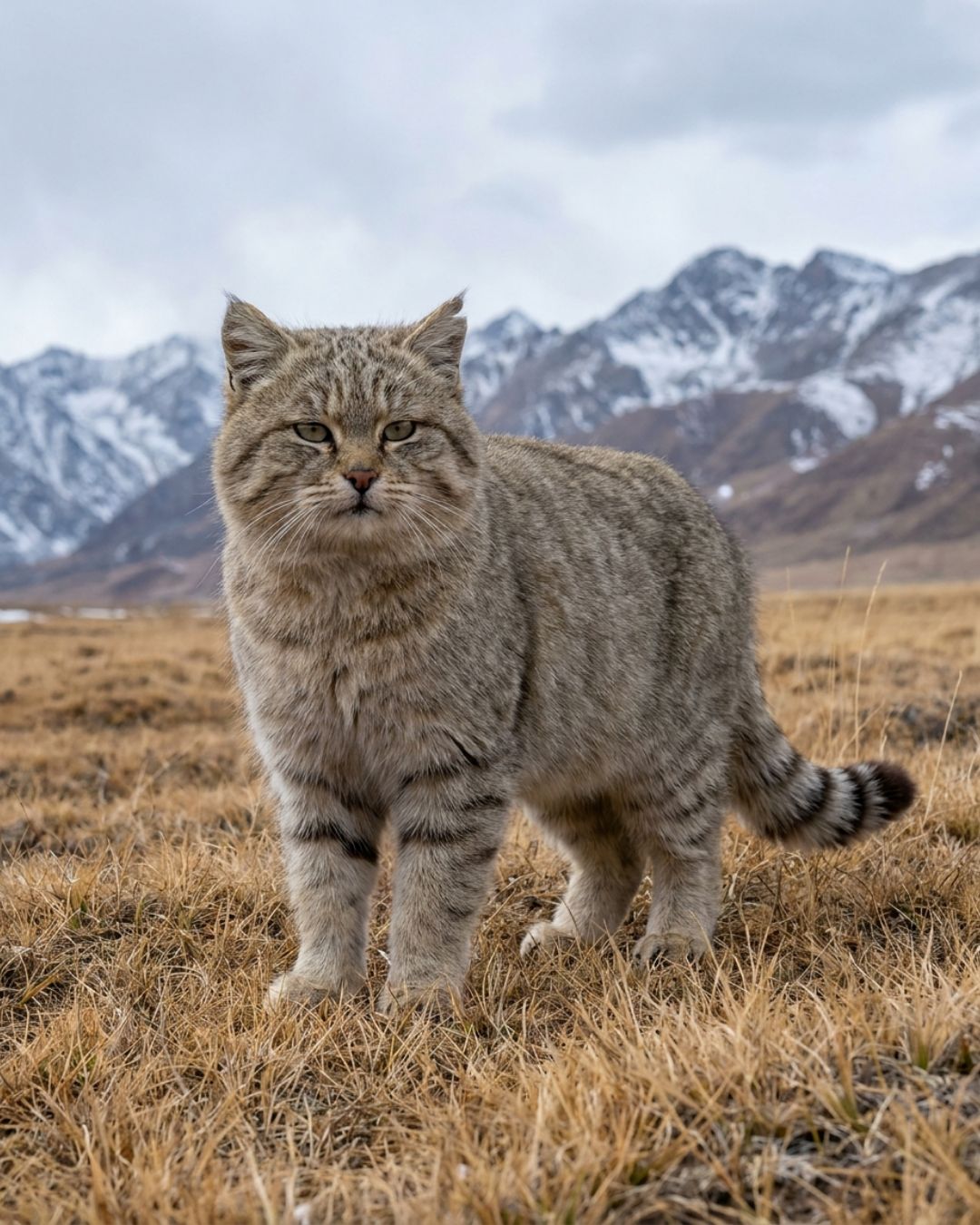
Rarely glimpsed amid the windswept expanses of Asia’s highest plateau, Chinese Mountain Cats (Felis bieti) represent one of Earth’s most enigmatic feline species.
This gray-brown hunter has developed remarkable altitude adaptations that enable it to thrive above 2,500 meters in the frigid environments of Tibet, Qinghai, and Gansu provinces.
Distinguished by their preference for rocky terrain, these solitary predators navigate the sparse vegetation of alpine steppes with specialized hunting behaviors.
Their diet primarily consists of plateau hares, rodents, and birds, with most hunting activity concentrated during dawn and dusk periods.
The species’ naturally limited range and elusive nature make sightings extraordinarily rare, even for dedicated wildlife observers.
Conservation efforts focus on habitat protection across the Tibetan Plateau, where changing land use threatens this specialist predator’s already fragmented population.
For wildlife enthusiasts, catching a glimpse requires extensive time in remote high-altitude wilderness areas.
European Wildcat: Discovering the Last Forest Cats of Europe
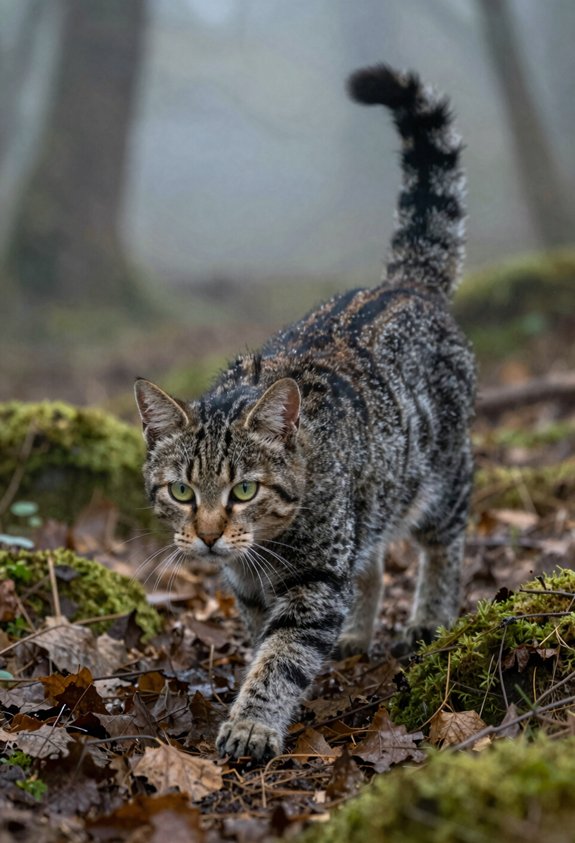
Across the continent’s ancient woodlands, the European wildcat (Felis silvestris silvestris) represents one of the last truly wild feline species native to Europe.
Ranging from the Iberian Peninsula to the Ural Mountains, these robust predators inhabit temperate forests throughout western, central and eastern regions.
Distinguished by their stocky build, bushy tails with distinctive black tips, and dark dorsal stripes, European wildcats measure 45-70 cm in length and weigh 4-8 kg.
These solitary, primarily nocturnal hunters prey on small mammals and birds.
The species faces critical threats, with habitat fragmentation severely limiting their range and connectivity between populations.
Perhaps most concerning is genetic introgression through hybridization with domestic cats, which threatens the purity of remaining wildcat bloodlines.
Conservation strongholds persist in the Carpathian Mountains, Spain’s Cantabrian range, and parts of the Scottish Highlands.
Protected populations offer hope for this iconic forest dweller’s survival.
Leopard Cat: Asia’s Most Widespread Small Feline
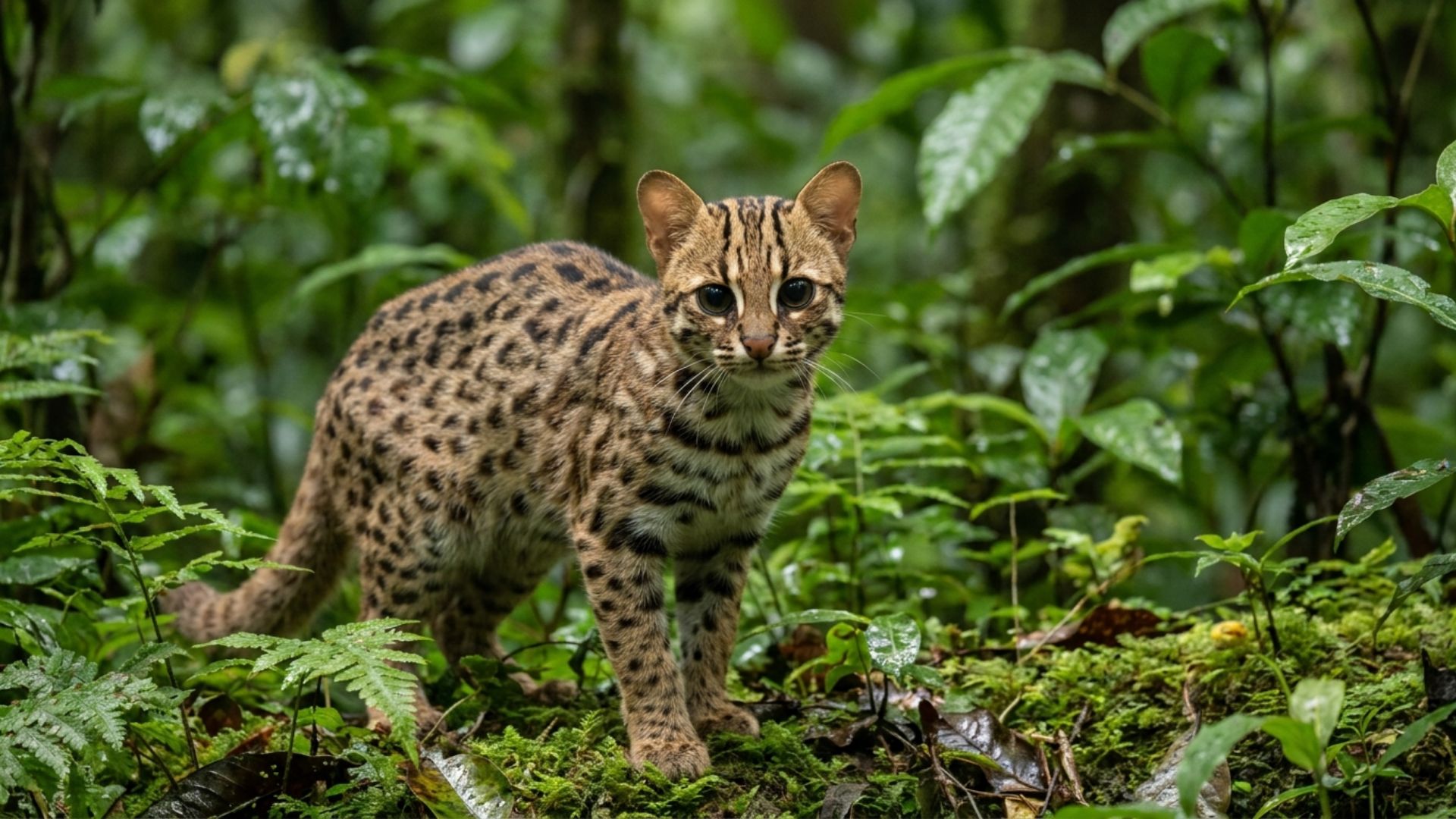
Often overlooked precisely because it is so common, the Leopard Cat (Prionailurus bengalensis) is the most widely distributed wild cat in Asia, ranging from Pakistan and India across China to the Russian Far East and the Japanese islands of Tsushima and Iriomote.
About the size of a domestic cat but slimmer and longer in the leg, it wears a tawny, boldly spotted coat that inspired its name. This adaptable hunter thrives in forests, farmland, and scrub, and it is the wild ancestor of the domestic Bengal cat breed.
Classified as Least Concern by the IUCN, the Leopard Cat remains widespread, though local populations face pressure from habitat loss and hunting. Primarily nocturnal, it is most often documented by camera traps, yet patient observers occasionally glimpse one on night drives through reserves across India and Southeast Asia.
Sunda Leopard Cat: The Leopard Cat’s Island Cousin
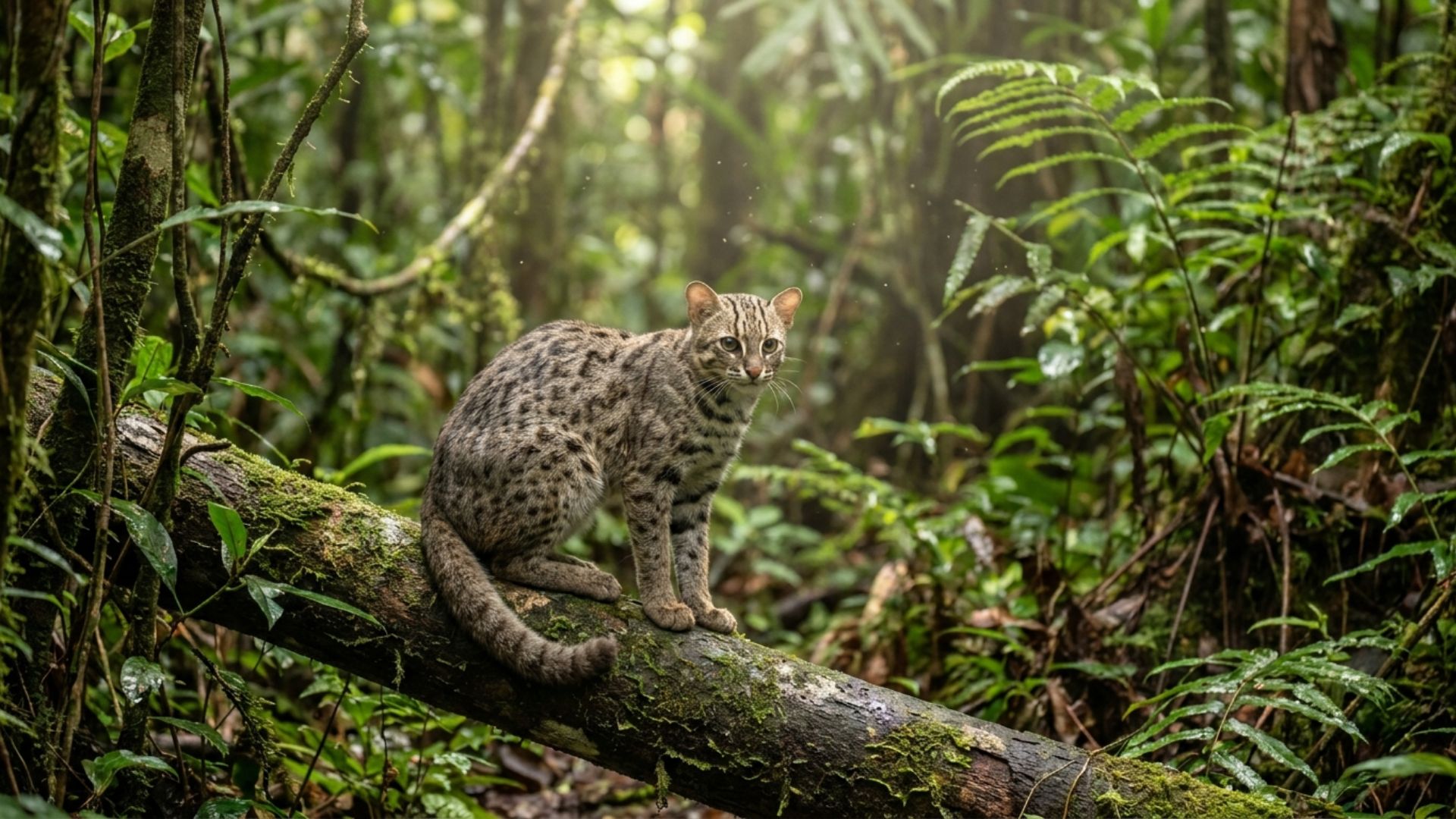
Long treated as the same animal as its mainland relative, the Sunda Leopard Cat (Prionailurus javanensis) was recognized as a distinct species in 2017, after genetic studies revealed a deep split between mainland and island populations.
It is native to the Sundaland islands of Java, Bali, Borneo, Sumatra, and the Philippines, where it occupies forests, plantations, and forest edges. Slightly smaller and differently marked than the mainland Leopard Cat, it fills the same nocturnal, small-prey hunting niche.
The IUCN lists the Sunda Leopard Cat as Least Concern, reflecting its wide island range, although deforestation and the pet trade remain concerns. Borneo’s Deramakot Forest Reserve and similar protected areas offer the best chance of a night-time sighting.
Frequently Asked Questions About Wild Cat Species
How many wild cat species are there?
There are 40 wild cat species recognized by the IUCN Cat Specialist Group (2017 taxonomy), plus the domestic cat. They divide into 7 big cats (subfamily Pantherinae) and 33 small cats (subfamily Felinae).
What is the smallest wild cat in the world?
The rusty-spotted cat of India and Sri Lanka is the smallest wild cat, weighing about 1 to 1.6 kg. The güiña, also called the kodkod, is the smallest wild cat in the Americas.
What is the largest wild cat?
The tiger is the largest wild cat. Big males can reach around 300 kg (660 lb) and roughly 3 metres in length including the tail.
What is the most endangered wild cat?
The flat-headed cat and Borneo bay cat are among the most threatened, both listed as Endangered. The Iberian lynx was once the most endangered cat but recovered enough to be downlisted from Endangered to Vulnerable in 2024.
Which wild cats are easiest to see in the wild?
Widespread species such as the bobcat, caracal, serval, and leopard cat are the most realistic to spot on a trip, while cats such as the Andean cat and bay cat are almost never seen.

Erzsebet Frey (Eli Frey) is an ecologist and online entrepreneur with a Master of Science in Ecology from the University of Belgrade. Originally from Serbia, she has lived in Sri Lanka since 2017. Eli has worked internationally in countries like Oman, Brazil, Germany, and Sri Lanka. In 2018, she expanded into SEO and blogging, completing courses from UC Davis and Edinburgh. Eli has founded multiple websites focused on biology, ecology, environmental science, sustainable and simple living, and outdoor activities. She enjoys creating nature and simple living videos on YouTube and participates in speleology, diving, and hiking.
From the shop
Gifts for people who love the wild
Wildlife themed t-shirts, notebooks, tote bags, bandanas and guides, designed by an ecologist.
Visit the shop