
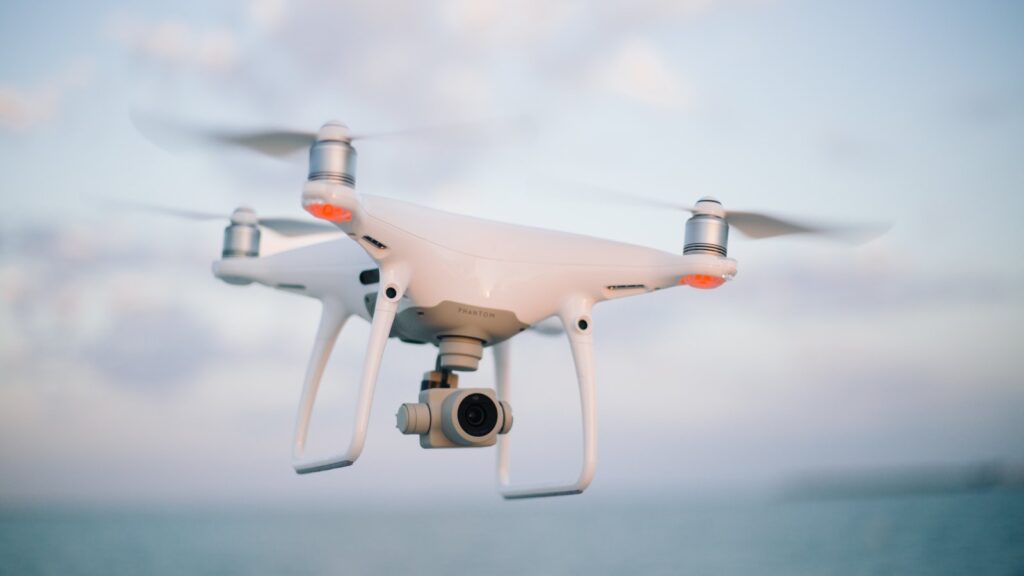
This post contains affiliate links from Amazon and other affiliate networks. As an Amazon Associate I earn from qualifying purchases, at no extra cost to you. I only recommend products I have used or researched.
When you’re filming wildlife, your drone choice can make or break the entire shoot. You’ll need equipment that’s quiet enough to avoid disturbing animals, yet powerful enough to capture those fleeting moments of natural beauty. From extended flight times to stabilized 4K+ cameras, today’s top models offer features specifically beneficial for nature documentarians. But which drones will actually deliver reliable performance while you’re deep in the wilderness with no charging stations in sight?
Last updated 29 August 2026. Every figure below is a manufacturer claim or a marketplace listing claim unless the text says otherwise. I have not flown these drones, so nothing here is offered as a flight test.
A nature note
People who spend at least two hours a week in nature report significantly better health and wellbeing, according to a Scientific Reports study of nearly 20,000 people. Nature themed things at home are no substitute, but they keep the reminder in view.
TL;DR
- Skipping DJI no longer skips the regulation. On 22 December 2025 the FCC added essentially all foreign produced drones and drone components to its Covered List, not only DJI and Autel. Every brand below is foreign produced, so all 15 of them now sit on the same list as DJI.
- If you film wildlife for money, weight does not save you. Federal law requires registration for every drone flown under 14 CFR Part 107, at any weight. The sub 250 gram exemption is written for recreational flight only.
- Drones are banned by default in United States national parks. A 2014 National Park Service policy memorandum directed every superintendent to prohibit launching, landing and operating uncrewed aircraft. A permit is possible at the superintendent’s discretion and it is rare.
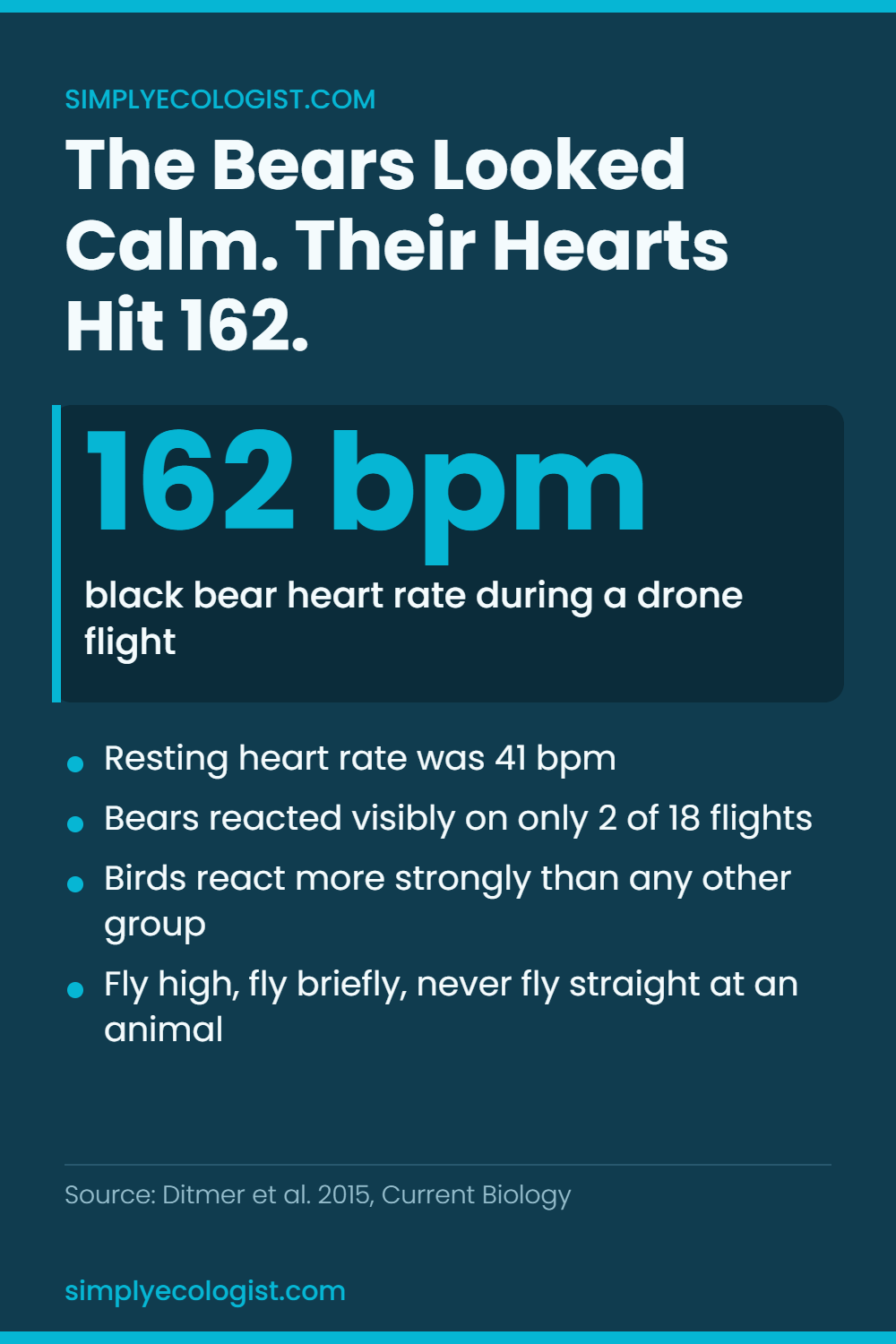
- Noise is the thing no spec sheet tells you. In a 2015 Current Biology study, a collared black bear’s heart rate rose from 41 to 162 beats per minute during a drone overflight, while the bears reacted visibly on only 2 of 18 flights.
- The short answer on gear. The Holy Stone HS900 has the strongest specification set here. The Potensic ATOM SE is the verified sub 249 gram option and has already been superseded by the Atom 2. Nothing in this list shooting 720p or 1080p belongs on a wildlife shoot.
Does buying a non DJI drone still avoid the problem in 2026?
No, and this article has to say so plainly. The premise it was built on, that you can sidestep the DJI question by buying almost anything else, stopped being true on 22 December 2025, when the Federal Communications Commission added essentially all foreign produced uncrewed aircraft systems and their critical components to the Covered List. Before that date the list named DJI and Autel. After it, the list covers the category.
Holy Stone, Potensic, DEERC, Ruko, Bwine and the unbranded models in this roundup are all foreign produced. That means every one of the 15 drones below now sits on the same Covered List as DJI, and the promise in this article’s title no longer describes a regulatory advantage. It describes a preference.
What it does not mean is that your drone is grounded. The Covered List operates through new equipment authorizations, so aircraft that were already authorized can still be sold and flown. The practical effects are narrower and slower than the headlines suggest: less certainty about which models stay available in the United States, and no reason left to pay a premium purely to avoid one brand name.
If your reason for avoiding DJI is a procurement rule rather than the Covered List, you are looking at a different shelf entirely, and the names that dominate it are Autel, Parrot, Skydio, HoverAir, BRINC and Freefly. None of them appear below, because this is a budget consumer roundup and those are not budget consumer drones. I am naming them so you know where to look if compliance rather than price is driving your decision.
Which of these 15 drones should you actually buy?
These calls rest on published specifications and on the two legal points above. They do not rest on flight testing, because I have not flown these aircraft.
- Best overall on the specification sheet: Holy Stone HS900. Holy Stone lists it at 48MP stills, 4K at 30fps and a 3 axis gimbal, and it is also the model LiveScience selects in its own 2026 wildlife drone roundup.
- Best sub 250 gram option: Potensic ATOM SE. Potensic gives a takeoff weight below 249 grams including battery and propellers, with a maximum flight time of 31 minutes per battery. Buy it knowing the Atom 2 has replaced it.
- Best claimed endurance: Bwine F7, listed by Bwine at 75 minutes across three batteries and a 2 mile control range. Both are manufacturer figures and neither has been independently verified here.
- Best budget pick: Holy Stone HS175D, and only because it is the one entry in this list that admits a claimed 46 minute total flight time works out at roughly 20 minutes per charge in real conditions. Honest numbers are worth more than large ones.
- Best quiet option: I cannot name one honestly. Not a single manufacturer here publishes a sound pressure figure and I have not measured any of them. The 2017 PLOS ONE review advises favoring low noise or small aircraft over noisier or larger ones, so the lightest model you can work with is the safer choice for the animal.
- Skip for wildlife work: the DEERC D20 and every other 720p or 1080p model here. They cannot hold a usable frame on an animal from a distance that leaves the animal alone, which is the whole job.
The 15 drones compared
Every number in this table is the manufacturer’s or the listing’s own claim. Where a listing states no figure, the cell says so rather than guessing. There is no noise column because no manufacturer here publishes a decibel figure and I have not measured one. Under 14 CFR Part 107 every drone in this table needs to be registered, whatever the weight column says.
| Model | Claimed weight | Claimed flight time | Claimed range | Camera claim |
|---|---|---|---|---|
| V11PRO Drone | 600 g | 80 min total, two batteries | 6 km | Listed as 8K, capped at 4K 30fps |
| Holy Stone HS900 | 249 g | Not stated | 6 km | 4K 30fps, 48MP stills |
| Holy Stone HS175D | Under 250 g | 46 min claimed, about 20 min per charge in real use | Not stated | 4K |
| DEERC D65 | 249 g advertised, 556 g on some configurations | 20 min | Not stated | 4K, 2 axis gimbal |
| Brushless 4K drone with propeller guards | Under 250 g | 32 min | Not stated | 4K |
| Foldable HD FPV mini drone | 445 g | 30 min | Not stated | 1080p |
| 1080p foldable mini drone | Not stated | 25 min | Not stated | 1080p |
| Bwine F7 | 550 g | 75 min total, three batteries | 2 miles | 4K, 3 axis gimbal |
| 1080p foldable beginner quadcopter | Not stated | 25 min | Not stated | 1080p |
| Potensic ATOM SE | Under 249 g | 62 min total, 31 min per battery | 4 km | 4K |
| Holy Stone HS710 | Under 0.55 lb (250 g) | 20 to 25 min per battery | Not stated | Sold as 4K, closer to 720p in practice |
| Ruko U11S | Not stated | 40 min total, 20 min per battery | Not stated | 4K, Remote ID built in |
| Foldable HD camera drone for beginners | Not stated | 15 min | Not stated | 1080p |
| DEERC D20 mini drone | Not stated | 20 min | Not stated | 720p |
| Brushless foldable 4K drone | 249 g | 60 min or more claimed | Not stated | 4K |
Factors to Consider When Choosing Drones for Wildlife Filming
When choosing the perfect drone for wildlife filming, you’ll need to weigh critical factors that directly impact your success in the field. Consider flight time and range for extended tracking, camera quality for crystal clear footage, noise levels to prevent disturbing animals, weather resistance for unpredictable conditions, and size for easy transport through rugged terrain. Your choice will ultimately determine whether you capture those rare, breathtaking moments or return with unusable footage.
The terms in this article, defined
- Gimbal. A motorized mount that keeps the camera level while the drone moves. A 3 axis gimbal corrects pitch, roll and yaw mechanically. A 2 axis gimbal corrects two of the three and leaves the rest to software.
- EIS. Electronic image stabilization. The camera crops into the sensor and shifts the frame in software to cancel shake, so it costs you field of view and it cannot rescue motion blur the way a mechanical gimbal can.
- Brushless motor. A motor with no carbon brushes rubbing against the rotor. It runs cooler, lasts longer and is quieter than a brushed motor, which is why it matters when your subject can hear you.
- FPV. First person view, meaning the live video feed sent from the drone to your phone or controller. The FPV feed is not always the same camera, or the same resolution, as the footage being recorded.
- Wind resistance level. A reference to the Beaufort scale. Level 4 is a moderate breeze, roughly 20 to 28 km/h. Manufacturers state the level at which the aircraft can hold position, not the level at which your footage stays usable.
- Remote ID. A signal the drone broadcasts giving its identity and position. The FAA requires it on drones that have to be registered, which under Part 107 means all of them.
Flight Time and Range
Nearly all professional wildlife photographers prioritize flight time and range when selecting drones for field work. You’ll need a model offering substantial air time, such as the V11PRO Drone which delivers up to 80 minutes of flight with two batteries. This extended capacity minimizes interruptions during critical filming moments.
Transmission range is equally important, look for drones capable of sending video signals up to 6 km (3.7 miles). This distance allows you to capture natural behaviors without disturbing your subjects.
GPS auto return features are essential safety measures that protect your investment in remote locations. When battery levels drop or signal weakens, these systems guarantee your drone returns to its launch point automatically.
For peak footage quality, choose models with strong wind resistance and 3 axis gimbals for stability in varied conditions.
Camera Quality and Stability
To capture breathtaking wildlife footage, camera quality and stability stand as non negotiable features in your drone selection. Opt for models with 4K or 8K resolution to guarantee you’re getting detailed shots of animals in their natural habitats.
A 3 axis gimbal stabilizer is essential for smooth footage, especially in windy conditions or during tracking shots. This technology, combined with Electronic Image Stabilization (EIS), minimizes vibrations and corrects abrupt camera movements.
Pay close attention to the sensor type, a 1/2.3″ CMOS sensor or larger will deliver superior image quality, particularly in challenging lighting situations when filming at dawn or dusk.
Don’t overlook digital zoom capabilities, which allow you to maintain a safe distance from wildlife while still capturing intimate details without causing disturbance.
Noise Level Consideration
Wildlife filmmakers often overlook drone noise levels, despite their noteworthy impact on animal behavior and filming success. When animals detect drone sounds, they may flee or display stress behaviors, compromising your natural footage.
The published science is more specific than that. In a 2015 study in Current Biology, GPS collared American black bears were fitted with cardiac biologgers and then overflown by drones. One bear’s heart rate rose from 41 to 162 beats per minute, and across the whole experiment the bears showed a visible behavioral response on only 2 of 18 flights. The researchers’ own conclusion is the line to carry into the field: without the biologger they would have concluded that bears only occasionally respond to drones. An animal that looks calm in your footage tells you nothing about whether you are harming it.
A 2017 systematic review in PLOS ONE (12(6): e0178448) collected the practical rules. Birds react more strongly than any other group, with flightless and large flying birds the most reactive of all. Fly at the highest altitude that still gives you the shot. Keep your ground control station 100 to 300 meters from the area you are filming. Prefer straight parallel passes over flying directly at an animal. Keep every flight as short as you can. And favor low noise or small aircraft over noisier or larger ones.
Select drones with brushless motors, which operate more quietly than brushed alternatives. High quality propellers and noise dampening designs also notably reduce operational sound. Pay attention to the frequency spectrum of your drone’s noise, certain wildlife species react more strongly to lower frequencies, while others might be less sensitive to higher pitches.
You’ll also want to take into account your filming altitude. Operating your drone at greater heights reduces the noise impact on wildlife below, allowing you to capture authentic behaviors without interference. This strategy, combined with quieter equipment, will help you document wildlife in their natural state.
Weather Resistance Features
When filming animals in their natural habitats, weather resistance becomes a critical factor in drone selection that can make or break your expedition. Look for models that can withstand winds up to 38 km/h (24 mph) to guarantee steady footage in varying conditions.
Your drone should feature waterproof or water resistant housing to protect internal components during unexpected light rain or moisture exposure. Temperature tolerance is equally important, select drones that operate reliably between minus 10°C and 40°C (14°F to 104°F), as battery performance considerably decreases in extreme temperatures.
Don’t overlook material quality. Durable, sunlight resistant construction prevents overheating and damage during extended outdoor filming sessions. These weather resistant features will keep your drone operational in changing conditions, making sure you capture those rare wildlife moments without technical interruptions.
Size and Portability
While venturing deep into remote habitats, the size and portability of your drone can considerably impact your wildlife filming experience. Lightweight models under 250 grams are sold as a way around FAA registration requirements, and for recreational flying that is true. It is not true for the work this article describes. Federal law requires every drone flown under 14 CFR Part 107 to be registered, at any weight, and the 250 gram exemption is written for recreation only. If you film wildlife for a client, a stock library, a paid commission or a monetized channel, you are a Part 107 operator and your 249 gram drone still needs a registration number on it.
Look for compact, foldable designs that you can easily pack and transport across various terrains when tracking wildlife subjects. These space saving configurations prove invaluable when you’re hiking through forests or traversing challenging landscapes with limited carrying capacity.
The best wildlife filming drones balance minimal size with maximum functionality. Their reduced footprint won’t burden your gear load, yet they still deliver the performance needed for professional footage. This balance guarantees you’ll have the right equipment when that perfect filming opportunity emerges in the field.
Autonomous Flight Capabilities
The best wildlife drones offer sophisticated autonomous abilities that transform how you capture animal behavior in the wild. With waypoint navigation and follow me modes, you’ll film hands free while maintaining focus on the subject rather than drone controls.
GPS auto return features provide essential safety, automatically bringing your drone back when batteries run low or signals fade, particularly valuable in remote filming locations. Intelligent flight modes like circle flight and point of interest help you maintain stable positions around wildlife subjects, capturing their natural behavior from ideal angles.
Pre programmed and custom flight paths let you plan your filming sessions precisely, while electronic image stabilization and gimbal systems guarantee your footage remains smooth despite autonomous movement. These features collectively enable more natural wildlife documentation with minimal human disturbance.
Safety and Legal Compliance
Responsible wildlife filming depends on your ability to navigate the complex landscape of drone regulations and safety protocols. You’ll need to register any drone over 0.55 pounds, which is 250 grams, if you are flying recreationally. If you are flying under 14 CFR Part 107, and any flight for a client, a stock library, a paid commission or a monetized channel is Part 107 flying, the FAA requires registration at every weight. There is no small aircraft exemption on that side of the rule.
Before flight, check local altitude restrictions and no fly zones, especially near protected habitats and wildlife preserves. Do not assume a permit is the normal route. Across the United States national parks drones are prohibited by default. A 2014 National Park Service policy memorandum directed every superintendent to use the authority in 36 CFR 1.5 to ban launching, landing or operating uncrewed aircraft inside park boundaries, and that ban is still the standing position. A special use permit is possible at a superintendent’s discretion and it is rare. Other conservation areas set their own rules, so check the specific unit before you travel rather than after.
Consider models with built in safety features like GPS auto return and geo fencing to prevent accidental intrusions into restricted airspace. Always monitor your drone’s noise levels, as excessive sound can disturb animals and alter their natural behaviors. These precautions aren’t just legal requirements, they’re essential practices for ethical wildlife documentation.
V11PRO Drone: 80 claimed minutes, and an 8K number that does not hold up
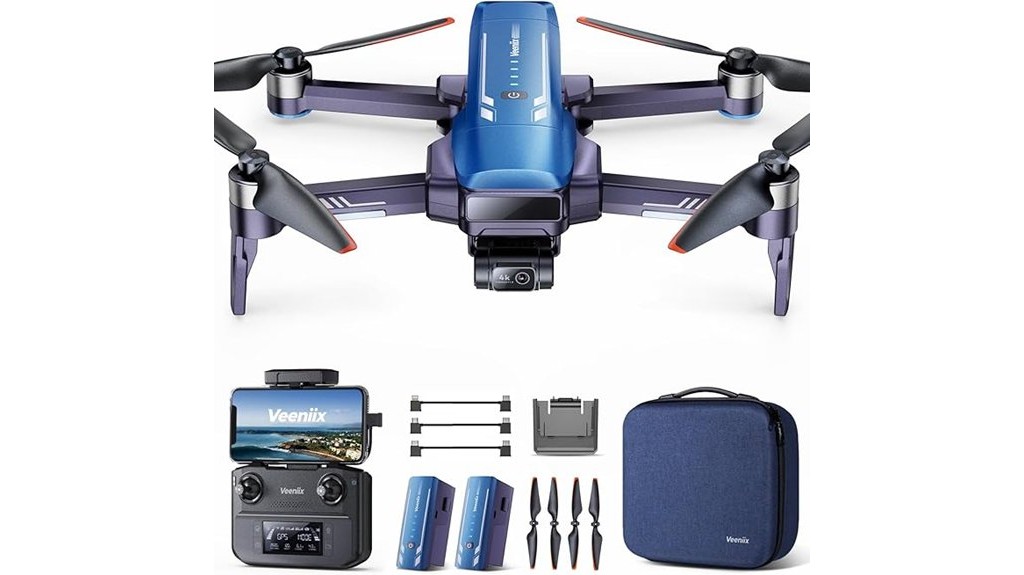
The V11PRO Drone stands out as an exceptional choice for wildlife filmmakers who need extended field time and professional quality footage. The V11PRO is listed at 80 minutes of flight time across two batteries, which is enough to sit out a long wait for an animal to show itself.
The listing calls this an 8K camera, and the same listing caps video at 30fps at 4K. The V11PRO is an unbranded Amazon model with no manufacturer specification sheet to check against, so treat 8K as an interpolated number rather than a sensor resolution. What is solid is the 3 axis gimbal with EIS stabilization, which keeps footage steady in difficult conditions, and a claimed 6km transmission range that lets you film from distances that will not disturb sensitive species.
Wildlife photographers will appreciate the intelligent flight modes like waypoint navigation and cruise control, allowing you to focus on composition rather than piloting.
Best For: Wildlife filmmakers, photographers, and nature enthusiasts requiring extended flight time, professional quality footage, and the ability to capture subjects from safe, non disturbing distances.
Pros:
- Exceptional 80 minute total flight time with two batteries provides extended field recording sessions
- 3 axis gimbal with EIS stabilization keeps footage steady in challenging conditions, whatever the 8K marketing figure turns out to mean
- 6km transmission range allows for safe distance filming of sensitive species without disturbance
Cons:
- At 600 grams (1.32 pounds), the drone may be bulky for extreme hiking or backpacking expeditions
- Limited to 30fps at 4K resolution, which may not be sufficient for capturing extremely fast wildlife movement
- Plastic construction, while keeping weight down, may be less durable in harsh outdoor environments
Holy Stone HS900: the strongest all rounder in this list
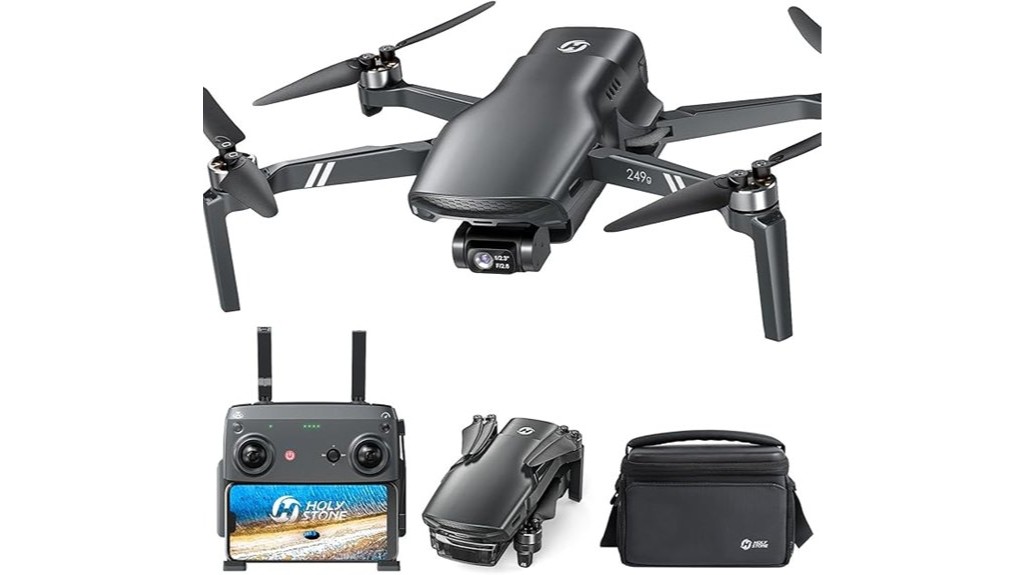
Wildlife photographers seeking professional quality aerial footage without FAA registration hassles will find the Holy Stone HS900 GPS Drone appealing, at least for recreational flying. At just 249 grams, this drone delivers impressive 4K/30FPS video through its SONY CMOS sensor and f/2.6 aperture.
The 3 axis brushless gimbal maintains stability even in winds up to 38kph, essential for capturing undisturbed wildlife. You’ll appreciate the 6km transmission range and GPS tracking features that help follow moving subjects without losing your drone.
Though some users report initial controller syncing challenges, the intuitive controls and automatic filming templates in the Holy Stone Sirius App make this an excellent choice for wildlife photographers of all skill levels.
Best For: Wildlife photographers and outdoor enthusiasts seeking professional quality aerial footage with a lightweight drone that is free of recreational registration and offers impressive stability and long range operation.
Pros:
- Weighing just 249 grams, it requires no FAA registration for recreational flight while still delivering high quality 4K/30FPS video and 48MP photos through its SONY CMOS sensor
- Features a 3 axis brushless gimbal that provides exceptional stability in winds up to 38kph, critical for capturing smooth wildlife footage
- Impressive 6km transmission range and GPS tracking capabilities including Auto Return make it ideal for following moving subjects without losing your drone
Cons:
- Some users report difficulties with initial controller syncing, which can be frustrating for first time users
- Limited battery options available for purchase, restricting extended filming sessions without additional accessories
- Occasional gimbal functionality issues mentioned in customer feedback may impact video stability in some cases
Holy Stone HS175D: under 250g, and honest about its real flight time
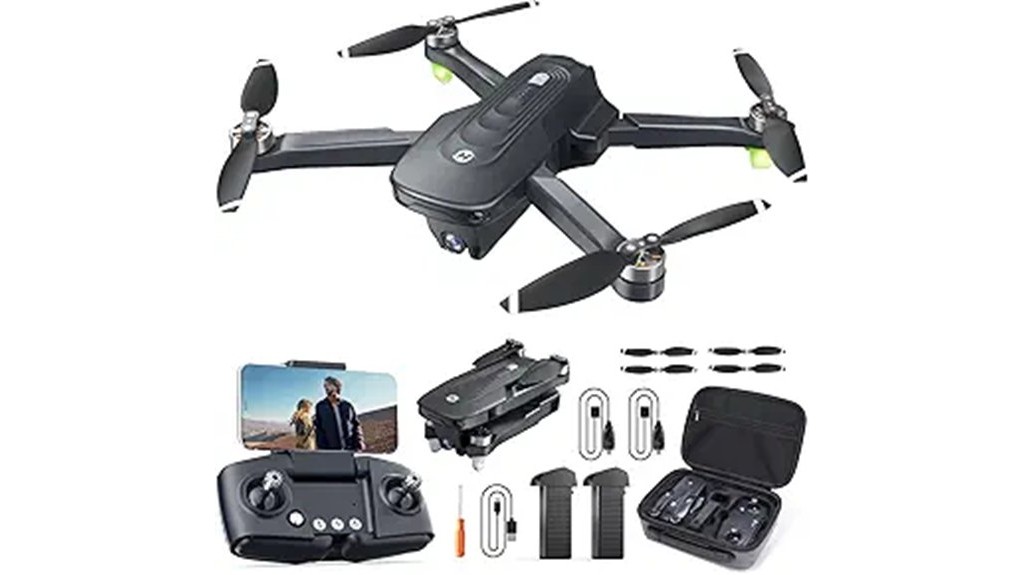
Weighing under 250g, the Holy Stone HS175D stands out as an excellent entry level drone for wildlife filmmakers who need portability without recreational FAA registration. Its 4K camera with 110° wide angle lens captures ultra clear footage while the adjustable 90° tilt offers versatile shooting perspectives.
You’ll appreciate the 46 minute total flight time from two batteries, though expect closer to 20 minutes per charge in real conditions. The GPS auto return guarantees your equipment returns safely if signals fade in remote locations. Wildlife tracking benefits from Follow Me mode and Waypoint Fly features.
Despite some stabilization issues at higher speeds, the HS175D’s compact foldable design and included carrying case make it ideal for field expeditions.
Best For: Wildlife photographers and videographers seeking a portable, lightweight drone with 4K capabilities that is exempt from registration for recreational flight, though not for Part 107 work.
Pros:
- Lightweight design under 250g removes FAA registration requirements for recreational flight only, and Part 107 work still requires registration. Claimed 46 minute total flight time
- GPS auto return and intelligent flight modes like Follow Me make wildlife tracking and filming more accessible for beginners
- Compact foldable design with included carrying case enhances field portability for wilderness expeditions
Cons:
- Video stabilization issues become apparent when filming at higher speeds
- Actual flight time averages around 20 minutes per battery rather than the advertised duration
- Requires additional SD card purchase with specific formatting requirements, especially for Mac users
DEERC D65: check the weight before you trust the 249g claim
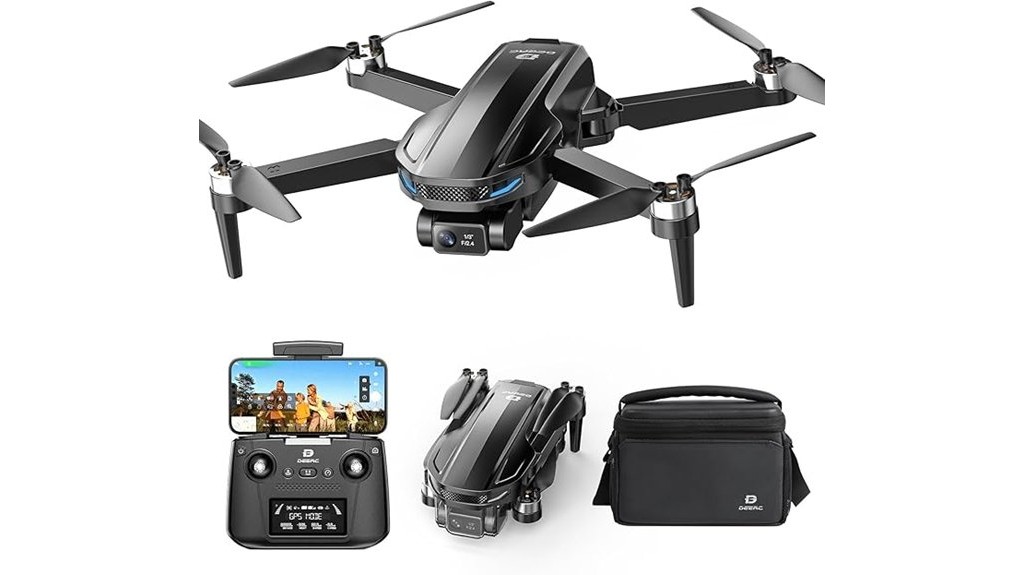
Designed for wildlife filmmakers seeking professional quality footage without the burden of heavy equipment, the DEERC D65 GPS Drone offers an impressive combination of portability and performance. DEERC advertises the D65 at 249g, one gram under the recreational registration threshold, but listings for this model also show a 556g configuration, and 556g requires FAA registration however you fly it. Confirm the weight of the exact variant before you rely on that number. The camera records 4K video stabilized by a 2 axis mechanical gimbal.
You’ll appreciate the intelligent flight modes, Follow Me, Waypoint Flight, and Orbit Mode, that let you focus on your subjects rather than piloting. With 20 minutes of flight time and level 4 wind resistance, you can capture stable footage even in challenging conditions. The automatic return feature guarantees your equipment’s safety when battery runs low or signal weakens.
Best For: Wildlife filmmakers, travel content creators, and drone enthusiasts who need professional quality aerial footage without carrying heavy equipment, provided they confirm which weight variant they are buying.
Pros:
- Advertised 249g weight sits just under the recreational registration threshold, and the 2 axis gimbal stabilizes the 4K video
- Intelligent flight modes (Follow Me, Waypoint Flight, Orbit Mode) allow hands free operation for more focused filming
- 20 minute flight time with Smart Return Home feature ensures the drone returns safely when battery is low or signal is lost
Cons:
- Listed weight is inconsistent. Some configurations weigh 556g, more than double the advertised 249g, and that needs FAA registration whoever is flying it
- Long charging time of approximately 4 hours limits multiple filming sessions in a single day
- Two axis gimbal provides less stabilization than the three axis gimbals found on more professional drone models
Brushless 4K Drone with Propeller Guards
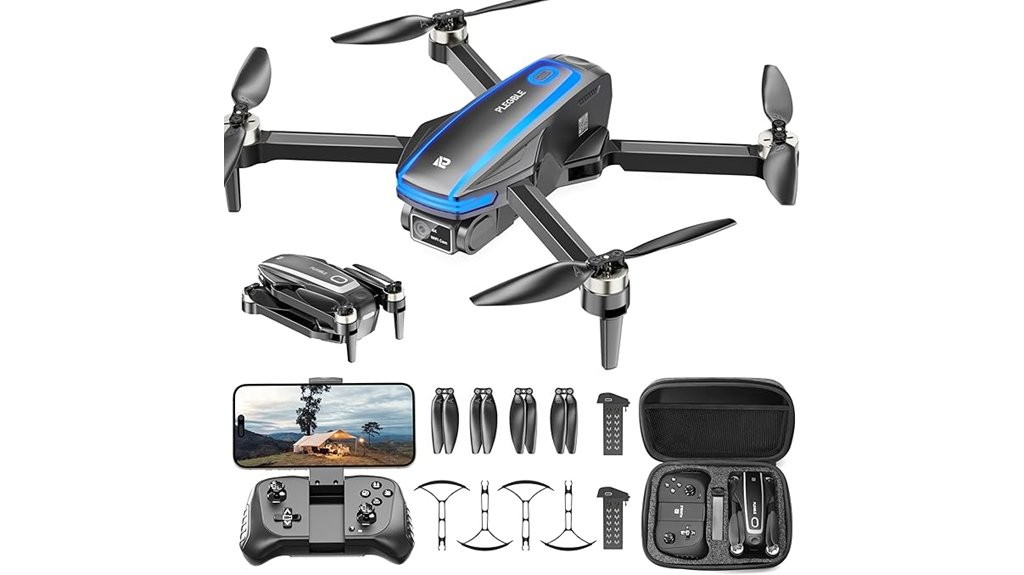
For wildlife filmmakers needing an entry level yet capable aerial camera system, the PLEGBLE PL 515 drone delivers impressive 4K UHD footage without recreational FAA registration. Weighing under 250 grams, it’s perfect for remote locations where equipment transport is challenging.
You’ll appreciate the 130° wide angle lens that captures expansive habitat shots, while the shock absorbing mount minimizes camera shake, essential for professional looking wildlife footage. The brushless motor provides quiet operation that won’t disturb sensitive animals.
With 32 minutes of flight time from dual batteries, you’ll have extended shooting sessions in the field. Its wind resistant design handles varying outdoor conditions commonly encountered during wildlife documentation.
Best For: Wildlife filmmakers, hobbyist nature photographers, and outdoor enthusiasts seeking a lightweight, registration free drone with good image quality for capturing expansive landscape and animal footage.
Pros:
- Lightweight design under 250g eliminates FAA registration requirements for recreational flight, making it ideal for spontaneous field shoots
- 32 minute total flight time from dual batteries provides extended shooting sessions without frequent battery swaps
- 4K camera with 130° wide angle lens and stabilization mount captures smooth, high resolution wildlife footage
Cons:
- Video output limited to 1080p despite having a 4K camera, reducing ultimate resolution quality for professional work
- May struggle in stronger wind conditions despite wind resistant claims, limiting usability in certain wildlife environments
- No obstacle avoidance technology included, requiring more careful piloting around trees and terrain in natural settings
Foldable HD FPV Mini Drone
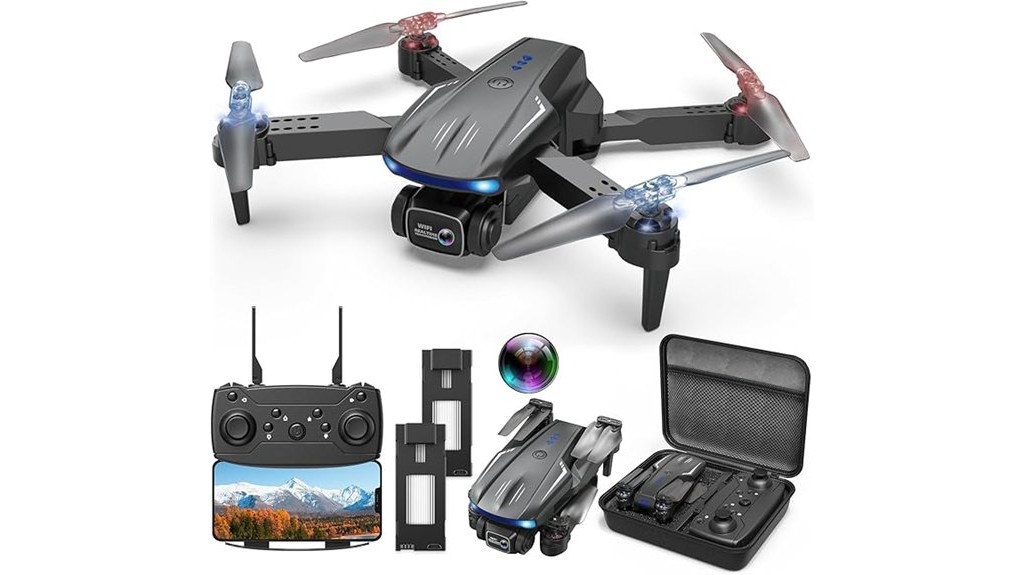
The Foldable HD FPV Mini Drone stands out as an entry level option for aspiring wildlife filmmakers who need portability without sacrificing quality. Its 1080P HD camera with 90° adjustment captures decent footage for beginners documenting wildlife.
You’ll appreciate the compact, foldable design when trekking through nature, along with dual batteries providing 30 minutes of flight time. The optical flow positioning and altitude hold functions help maintain stable shots of skittish animals.
While not professional grade, this 445g drone offers surprising value with features like waypoint flying and three speed modes that let you track moving subjects. The propeller guards add protection during close range wildlife filming attempts.
Best For: Beginners and hobby enthusiasts interested in basic wildlife photography who want an affordable, portable drone with decent camera capabilities and user friendly features.
Pros:
- Lightweight (445g) foldable design makes it highly portable for outdoor adventures and nature excursions
- Extended flight time with two batteries offering up to 30 minutes total, allowing for longer wildlife observation sessions
- User friendly features like optical flow positioning, altitude hold, and three speed modes help maintain stability for clearer wildlife footage
Cons:
- 1080P camera quality, while good for beginners, falls short of professional grade equipment needed for serious wildlife documentation
- Limited wind resistance makes it challenging to use in natural habitats with unpredictable weather conditions
- 30 minute total flight time (with both batteries) may be insufficient for tracking and documenting wildlife behavior over extended periods
1080p Foldable Mini Drone
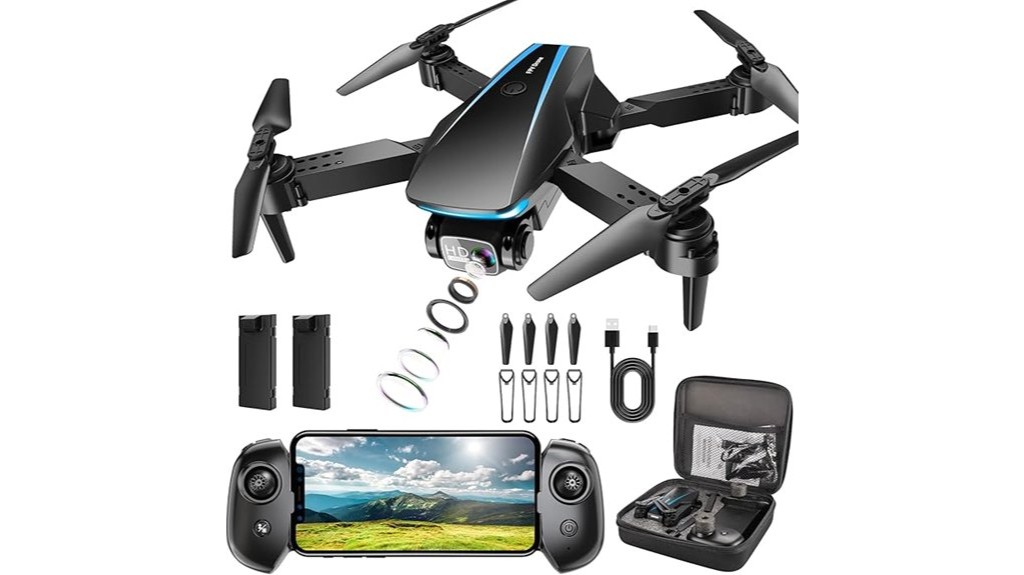
While amateur wildlife filmmakers will appreciate the Mini Drone with Camera’s 1080P HD resolution and impressive 100 meter range, its true standout feature is the user friendly design.
You’ll find the adjustable 90° lens captures decent aerial footage, though it struggles in low light conditions. The optical flow positioning guarantees stable shooting, essential for wildlife observation.
With approximately 25 minutes of flight time from two batteries and stability even in moderate wind, you’ll have ample opportunity to track animals from above.
The ODDIRE GO app lets you stream and save footage directly to your smartphone without an SD card.
Best For: Beginners and amateur wildlife enthusiasts seeking an affordable, user friendly drone with decent camera capabilities for casual aerial photography and observation.
Pros:
- Extended flight time of approximately 25 minutes with two rechargeable batteries
- User friendly controls with features like one key takeoff/landing and altitude hold that make it accessible for beginners
- Direct photo and video storage to smartphone via the ODDIRE GO app eliminates the need for an SD card
Cons:
- Camera performance is limited in low light conditions
- Some users report connectivity issues with the app
- Less durable construction may not withstand significant crashes or impacts
Bwine F7: 75 claimed minutes across three batteries
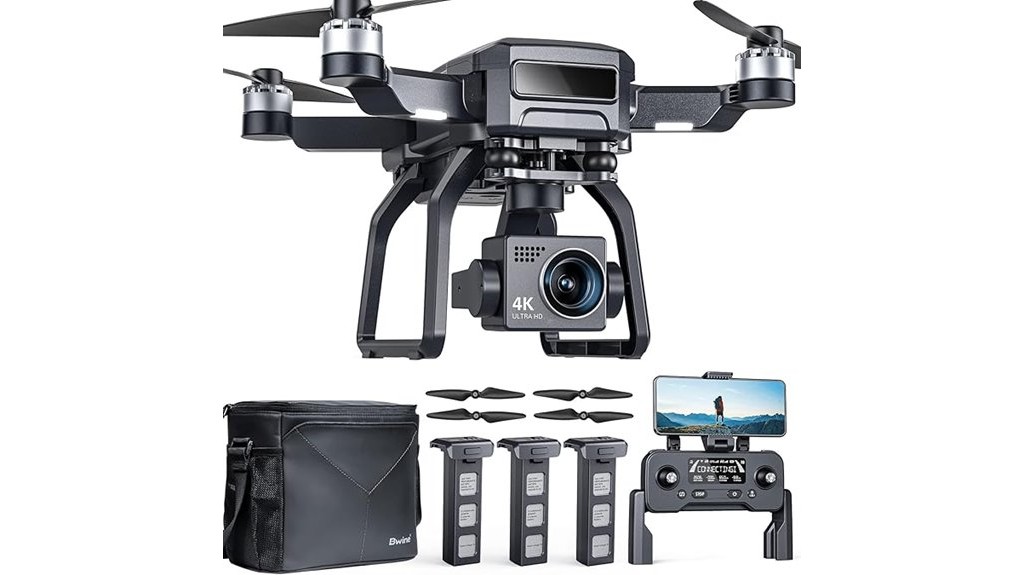
Professional wildlife documentarians seeking exceptional flight time will appreciate the Bwine F7 GPS Drone’s remarkable 75 minute capability using its three 2600mAh batteries.
You’ll capture stunning wildlife footage with its 4K camera mounted on a 3 axis gimbal, ensuring stable shots even in challenging conditions. The Bwine F7 has a claimed 2 mile control range, which gives you room to track animals from safe distances.
With FAA certification and built in safety features like automatic return, you won’t worry about losing your investment in remote locations. The carbon fiber construction makes it lightweight yet durable, handling winds at altitudes up to 2000m, perfect for diverse wildlife habitats.
Best For: Wildlife photographers and documentarians who need extended flight time, long range capabilities, and stable 4K footage in challenging outdoor environments.
Pros:
- Exceptional 75 minute flight time with three batteries allows for extended shooting sessions without frequent landings
- 3 axis gimbal with 4K camera provides remarkably stable footage even in windy conditions
- 2 mile control range and FAA certification ensure both operational freedom and regulatory compliance
Cons:
- Complete battery charging takes 6 7 hours, which may require overnight preparation
- Occasional camera alignment issues have been reported by some users
- At 550 grams (1.21 pounds), it’s heavier than some ultra portable alternatives, though still relatively lightweight
1080p Foldable Beginner Quadcopter
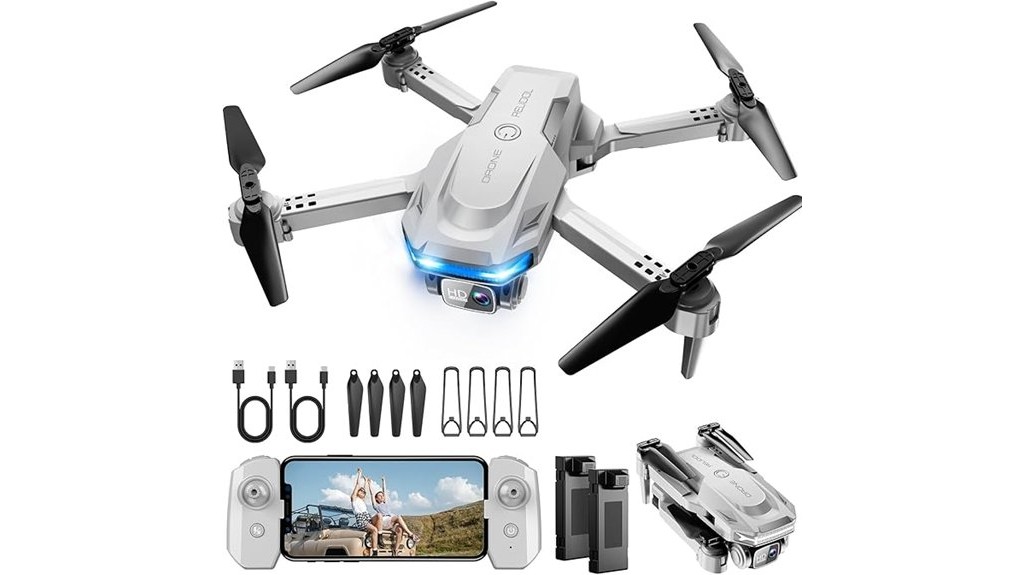
For beginners aspiring to capture wildlife footage without breaking the bank, this foldable X62 quadcopter offers an impressive balance of functionality and accessibility. The 1080P HD camera with 80° adjustable lens captures quality footage controlled via app or gesture commands.
You’ll appreciate the 25 minute extended flight time from two batteries, making longer wildlife observation sessions possible. One key start, altitude hold, and hover systems make controlling the drone intuitive while learning. The indoor friendly design and propeller guards increase safety for novice pilots.
While perfect for entry level wildlife filmmaking, you’ll eventually want upgrades for professional grade nature documentation.
Best For: Beginners and hobbyists seeking an affordable, user friendly drone for basic wildlife photography and videography with decent image quality and extended flight time.
Pros:
- 1080P HD camera with 80° adjustable lens provides good quality footage for entry level wildlife photography
- Extended 25 minute flight time from two batteries allows for longer observation sessions
- Beginner friendly features like one key start, altitude hold, and propeller guards make it easy to learn drone piloting
Cons:
- Camera quality is insufficient for professional grade nature documentation
- Some customers report issues with remote control quality and durability
- Limited customer service support, particularly regarding returns and replacements
Potensic ATOM SE: verified under 249g, now superseded by the Atom 2
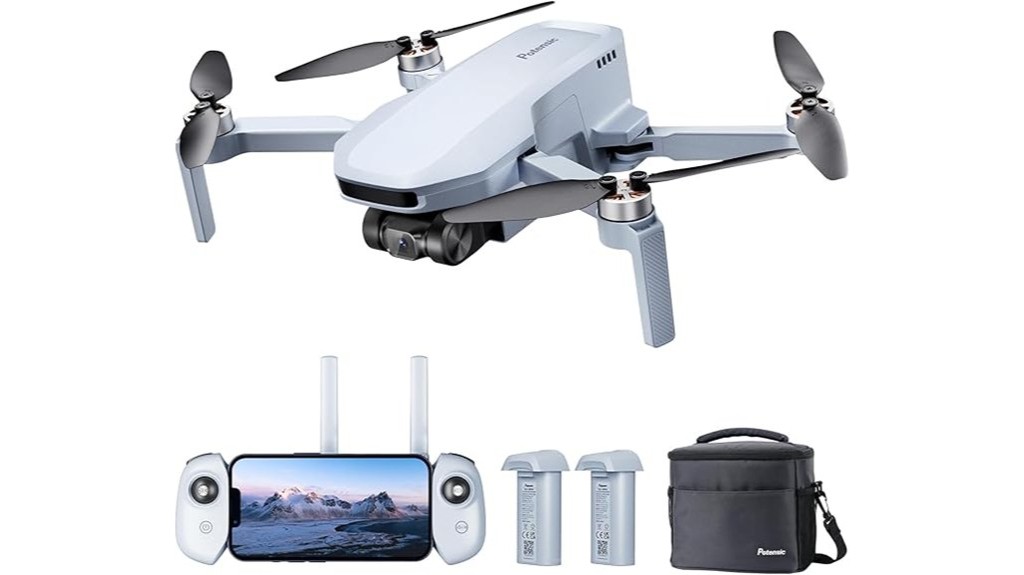
The Potensic ATOM SE GPS Drone stands out as an exceptional option for wildlife filmmakers who need portability without compromising image quality. Weighing under 249g, it doesn’t require FAA registration for recreational flight yet delivers impressive 4K/30fps footage with its Sony CMOS sensor.
You’ll appreciate its wildlife friendly features, including 62 minute total flight time from two batteries, 4KM control range, and autonomous modes like Follow Me and Waypoint Flight. The level 5 wind resistance guarantees stable filming even in challenging outdoor conditions.
The ShakeVanish technology produces smooth footage, essential when tracking unpredictable wildlife movements. Its user friendly interface makes it accessible for beginners while offering advanced capabilities professionals need.
Best For: Wildlife photographers, filmmakers, and outdoor enthusiasts seeking a lightweight, registration free drone with professional quality 4K imaging capabilities and extended flight time.
Pros:
- Lightweight design under 249g eliminates FAA registration requirements for recreational flight while maintaining impressive performance specs
- Exceptional 62 minute total flight time (31 minutes per battery) allows for extended filming sessions
- Advanced autonomous flight modes and level 5 wind resistance ensure stable footage even in challenging environmental conditions
Cons:
- 4K video limited to 30fps, which might not satisfy professionals needing higher frame rates for slow motion wildlife footage
- While stabilization is good, the smaller 1/3″ sensor may struggle in low light conditions compared to larger drone cameras
- Some users might find the maximum 256GB microSD storage limiting for extended 4K filming expeditions
Holy Stone HS710: sold as 4K, closer to 720p in practice
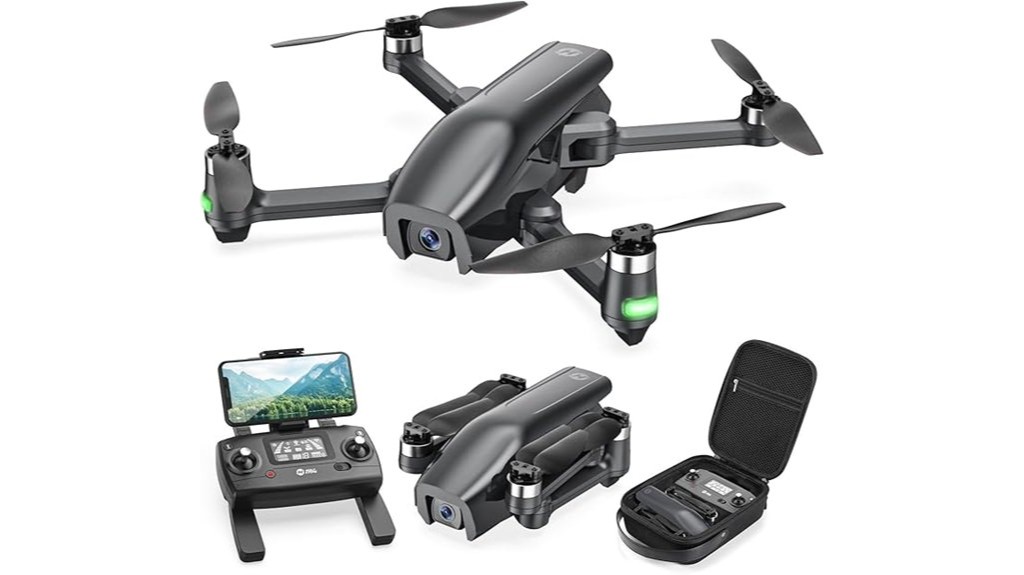
Wildlife photographers looking for an entry level drone should consider the Holy Stone HS710 4K GPS Drone with FPV Camera. This lightweight quadcopter (under 0.55 pounds) offers GPS stability even in 10 mph winds, essential for tracking wildlife movements.
You’ll appreciate intelligent flight features like Follow Me mode, Waypoint Flight, and Point of Interest, which are valuable for documenting animal behavior. The 120° wide angle lens with 90° adjustment helps frame your wildlife subjects effectively.
The camera is sold as 4K, but the output looks closer to 720p than true 4K. That is fine for learning to fly and not enough for wildlife footage you intend to publish. With 20 25 minute flight time and intuitive controls, you’ll quickly master wildlife drone photography basics.
Best For: Entry level wildlife photographers and drone enthusiasts seeking an affordable, lightweight drone with good stability and intelligent flight features for capturing basic aerial footage.
Pros:
- Lightweight design under 0.55 lbs, so no registration is needed for recreational flight, although Part 107 work still requires it, and wind resistance holds up to 10 mph
- Intelligent flight features including GPS Follow Me, Waypoint Flight, and Point of Interest make tracking wildlife movements easier
- Long flight time of 20 25 minutes per battery and intuitive controls that allow beginners to quickly master basic drone operation
Cons:
- Camera quality falls short of true 4K resolution, delivering footage closer to 720p quality
- Lacks stabilization features, resulting in shaky footage that may require post processing
- Mobile phone holder on the controller could benefit from improved design for better usability
Ruko U11S: 4K with Remote ID built in
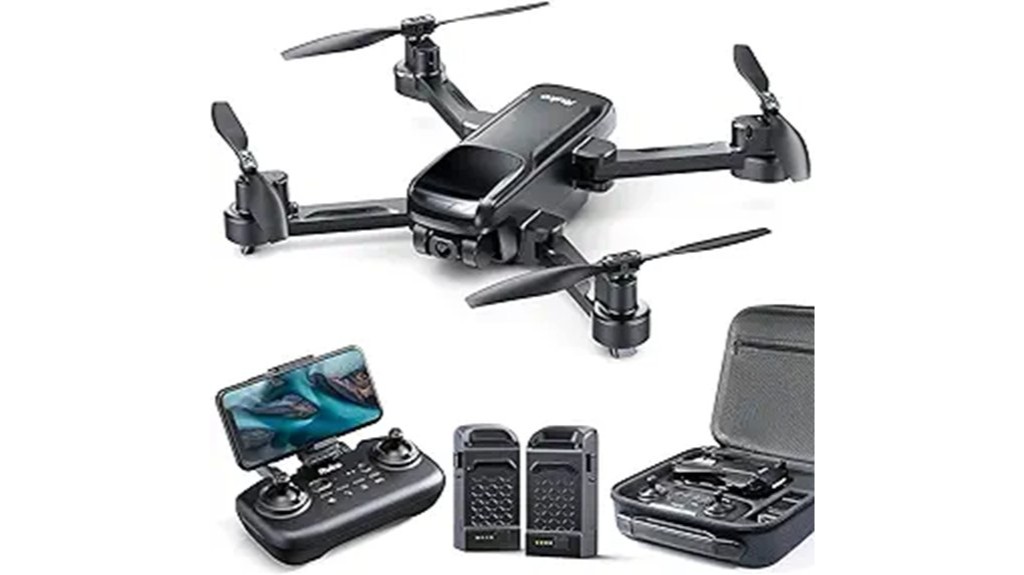
Beginners seeking an accessible entry into wildlife filming will find the Ruko U11S 4K Drone particularly appealing due to its user friendly design and essential features. Its 4K camera with 90° adjustable field of view captures decent wildlife footage, while the 40 minute total flight time gives you ample opportunity to track animal movements.
You’ll appreciate the Follow Me mode and Circle Fly capabilities when documenting wildlife behavior patterns. The foldable design makes transportation to remote locations hassle free. While some users report occasional video instability, the drone’s GPS positioning guarantees stable flight, important when filming unpredictable wildlife subjects. The included carrying case and spare parts keep you prepared for extended field sessions.
Best For: Beginning wildlife photographers and nature enthusiasts who want an affordable, easy to use drone with decent 4K recording capabilities and sufficient flight time for capturing animal behavior.
Pros:
- 40 minute total flight time (two 20 minute batteries) provides extended sessions for tracking and filming wildlife movements
- Follow Me mode and Circle Fly features enable automated filming of animal subjects without complex manual controls
- Compact, foldable design with included carrying case makes transportation to remote wildlife locations convenient
Cons:
- Some users report video stability issues, which could affect footage quality when filming moving wildlife subjects
- Battery life for the remote control may be insufficient for extended field sessions
- Occasional quality control issues like loose screws may require maintenance during field use
Foldable HD Camera Drone for Beginners
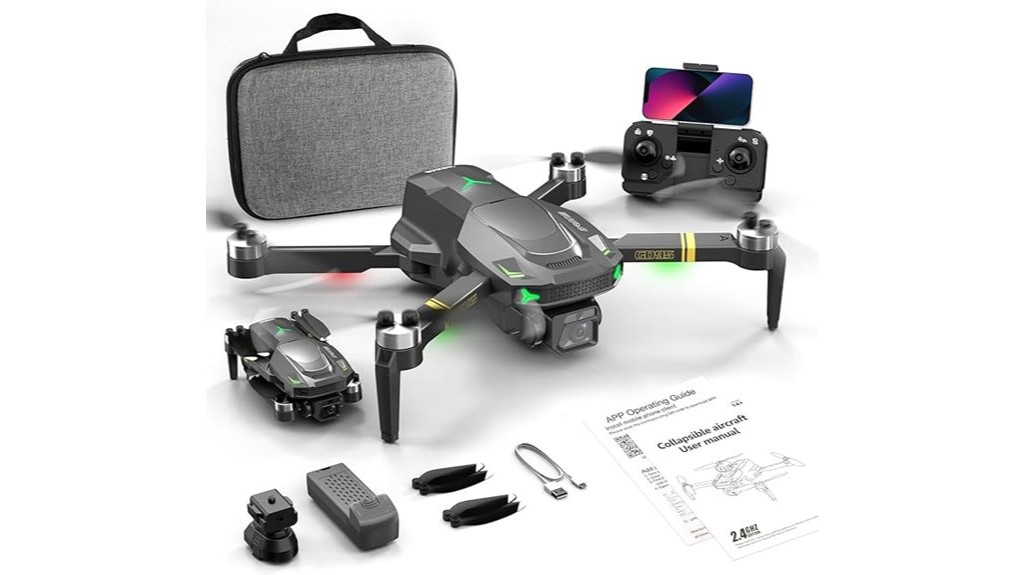
Aspiring wildlife filmmakers with minimal drone experience will find the Foldable HD Camera Drone an accessible entry point into aerial photography. Its 1080P HD camera with 90° adjustable lens captures decent footage while the intuitive controls, One Key Start/Landing and Headless Mode, make operation straightforward even in wilderness settings.
While not professional grade, this 1.25 pound compact drone offers practical wildlife filming features including live viewing via smartphone connection and three speed options. The 15 minute flight time from its 800mAh battery limits extended shoots, however.
Note the mixed customer ratings (2.2/5 stars) and flight control issues before relying on it for serious wildlife documentation.
Best For: Hobbyist photographers and beginners aged 12+ looking to explore aerial photography without investing in expensive equipment.
Pros:
- User friendly features like One Key Start/Landing, Altitude Hold, and Headless Mode make it accessible for first time drone users
- Compact, foldable design with carrying case allows for easy transport and storage
- Offers versatile photography options with 1080P HD camera, 90° adjustable lens, and live viewing via smartphone
Cons:
- Limited 15 minute flight time restricts extended photography sessions
- Poor reliability with documented flight control issues (reflected in 2.2/5 star rating)
- Not suitable for professional wildlife photography or videography in challenging environments
DEERC D20: a 720p drone for kids, not a wildlife camera
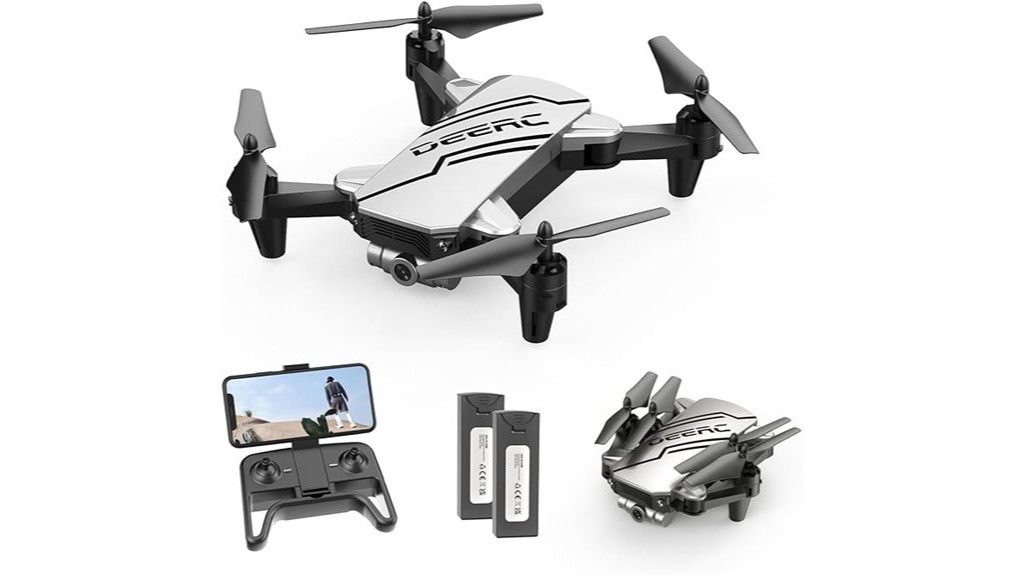
The DEERC D20 Mini Drone offers a starter wildlife filming option with its 720P HD camera, though it’s primarily designed for children and beginners rather than professional nature documentarians. The DEERC D20 sends an FPV feed to your smartphone so you can see what the camera sees.
You’ll appreciate features like Altitude Hold and One Key Start/Landing when tracking animals, but don’t expect professional results, the camera can be grainy and laggy. With two batteries providing up to 20 minutes combined flight time, you can capture brief wildlife interactions.
Avoid using this drone in windy conditions, as it struggles with stability. Consider it more as a learning tool before investing in higher end wildlife filming equipment.
Best For: Children and beginners looking for an entry level drone experience with basic photo/video capabilities and fun features like flips and voice control.
Pros:
- Easy to operate with beginner friendly features like Altitude Hold and One Key Start/Landing
- Includes two rechargeable batteries for extended flight time (up to 20 minutes combined)
- Durable design with propeller guards that can withstand minor crashes
Cons:
- Camera quality is grainy and laggy, unsuitable for serious photography or videography
- Poor performance in windy conditions limits outdoor usability
- FPV transmission and app control can be unreliable with noticeable lag
Brushless Foldable 4K Drone with a 60 minute flight claim
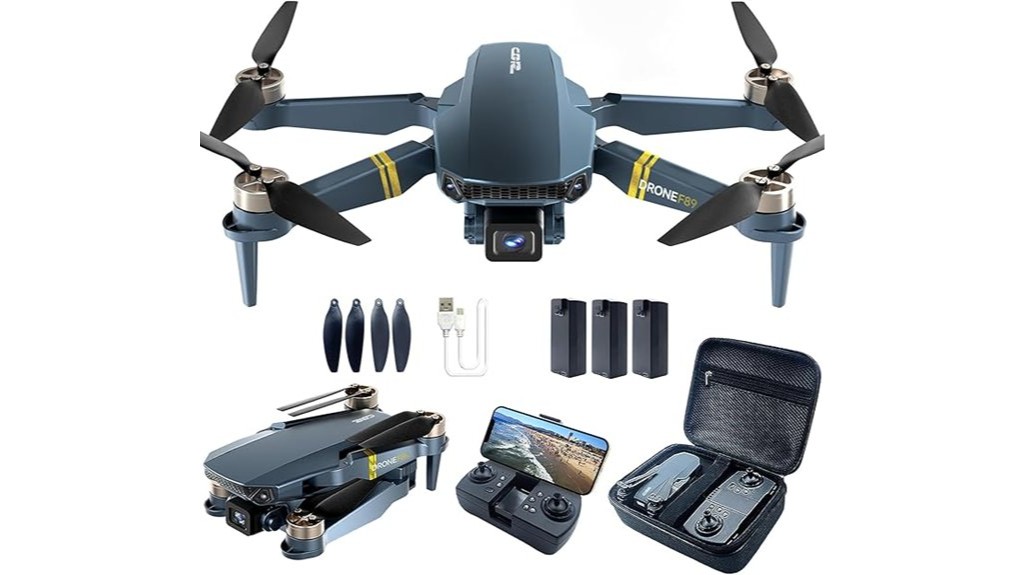
Wildlife filmmakers requiring extended shooting sessions will find their perfect match in the Brushless Foldable Drone with 4K Camera. Its impressive 60+ minute flight time from three batteries lets you capture extended wildlife behaviors without interruption.
You’ll appreciate the 120° wide angle 4K HD camera that delivers stunning footage with exceptional clarity. The brushless motors provide quieter operation, critical when filming skittish animals, while offering superior wind resistance.
Weighing under 249g, you won’t need registration, and its foldable design makes transport to remote locations effortless. The auto hover and follow me modes are particularly valuable when tracking moving wildlife subjects autonomously.
Best For: Wildlife photographers and filmmakers looking to capture extended, uninterrupted aerial footage of elusive animals in remote locations without disturbing their natural behaviors.
Pros:
- Exceptional 60+ minute flight time with 3 batteries allows for capturing extended wildlife behaviors without frequent landing interruptions
- Brushless motors provide quieter operation crucial for filming skittish animals while offering better wind resistance and longer service life
- Lightweight (under 249g) design with foldable structure makes transportation to remote wildlife locations convenient and requires no registration
Cons:
- 3.8/5 star rating suggests potential reliability or performance issues that could impact filming in critical wildlife moments
- No mention of stabilization features which may affect footage quality when filming in windy conditions
- Limited information about range capabilities could restrict filming distance for wildlife that requires observation from far away
Conclusion
Fifteen drones, and only a handful of them belong anywhere near a wild animal. Whether you’re tracking migrations or capturing rare behaviors, models like the V11PRO with its 80 minute flight time or Holy Stone’s portable 4K options will deliver stunning footage. Remember to prioritize flight time, camera quality, and minimal noise when making your choice. Your wildlife documentation is about to reach new heights.
Sources
Ditmer et al. 2015, Current Biology

Erzsebet Frey (Eli Frey) is an ecologist and online entrepreneur with a Master of Science in Ecology from the University of Belgrade. Originally from Serbia, she has lived in Sri Lanka since 2017. Eli has worked internationally in countries like Oman, Brazil, Germany, and Sri Lanka. In 2018, she expanded into SEO and blogging, completing courses from UC Davis and Edinburgh. Eli has founded multiple websites focused on biology, ecology, environmental science, sustainable and simple living, and outdoor activities. She enjoys creating nature and simple living videos on YouTube and participates in speleology, diving, and hiking.
🌿 Explore the Wild Side!
Discover eBooks, guides, templates and stylish wildlife-themed T-shirts, notebooks, scrunchies, bandanas, and tote bags. Perfect for nature lovers and wildlife enthusiasts!
Visit My Shop →