
New research (2025)
Insects are declining even in pristine, protected places. A 2025 analysis of long term monitoring data found losses in ecosystems far from farms and cities, which makes every insect friendly garden more valuable.
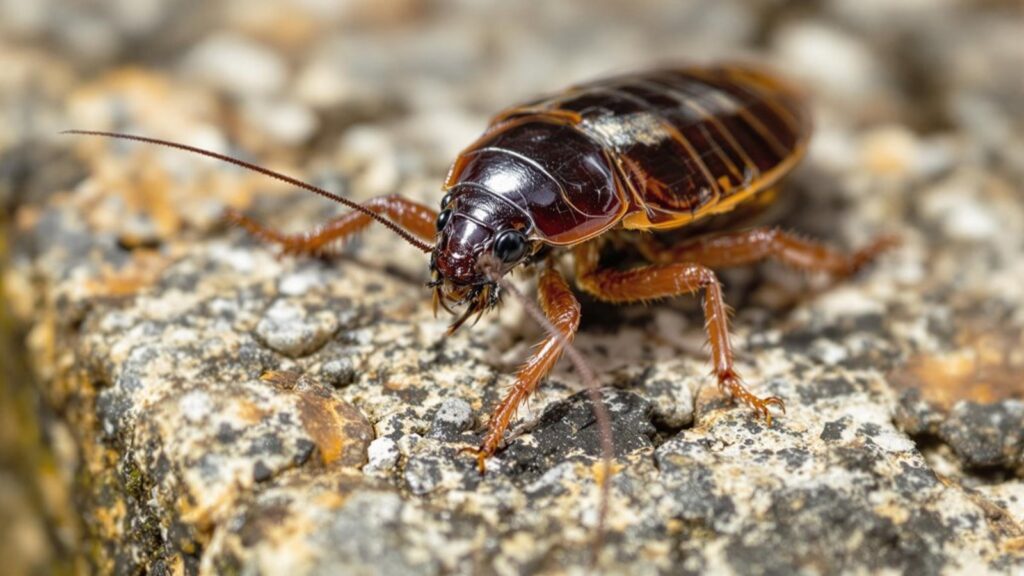
Cockroaches are the ultimate survivors, with 300 million years of evolutionary adaptations under their belt. Their tough exoskeleton, flat body design, and impressive respiratory system allow them to withstand extreme temperatures, low oxygen, and even radiation.
They reproduce rapidly, with a single female producing up to 400 offspring. Cockroaches thrive in diverse habitats worldwide, from deserts to cities, and can eat almost anything organic.
They’ve developed behavioral and physiological responses to acclimate to pollutants and chemicals. As you explore further, you’ll discover the fascinating ways these ancient insects have modified their bodies and behaviors to become nature’s ultimate survivors.
Evolutionary Adaptations
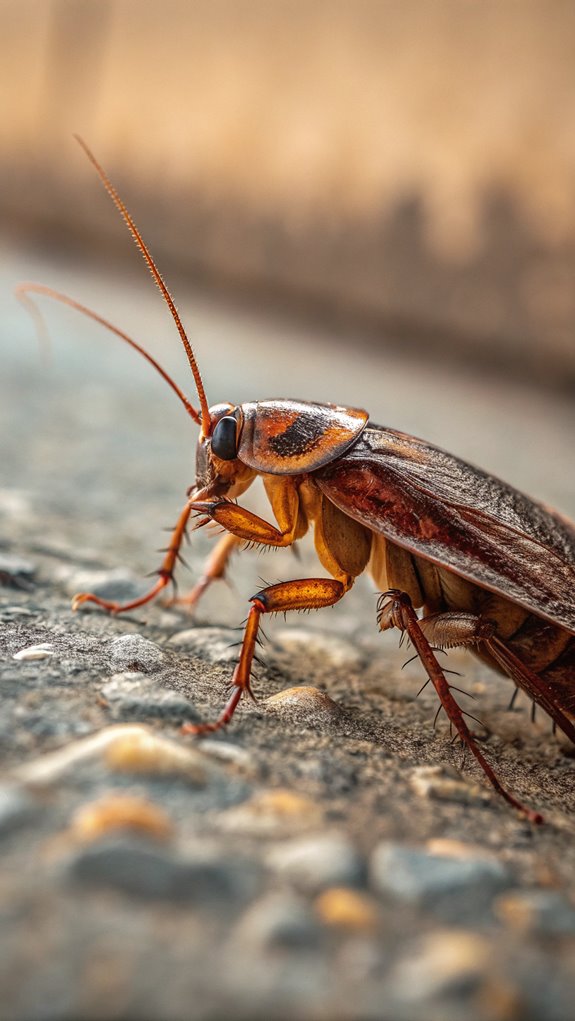
Cockroaches’ remarkable endurance stems from their evolutionary adaptations, honed over millions of years. You’ll find that German cockroaches, in particular, have evolved to exploit human-built environments. Approximately 2,100 years ago, they adapted to live indoors, taking advantage of the stable conditions and ample food sources provided by human habitats.
This adaptation has been a key factor in their successful colonization of six continents, closely tied to human activities and global trade. Analysis included DNA from cockroaches across six continents.
These resilient insects have also developed impressive stress tolerance, enabling them to survive extreme temperatures and resist many insecticides. Their ability to thrive in diverse environments, from tropical forests to urban cities, highlights the breadth of their adaptability. Cockroaches’ nocturnal habits further contribute to their survival by helping them evade predators.
Moreover, their flexible diets allow them to consume a wide variety of organic materials, including human food sources and trash. They’ve even adapted to survive without water for extended periods. This dietary adaptability, combined with their rapid reproduction rates, has enabled cockroach populations to flourish in the face of environmental challenges.
As human transportation continues to introduce cockroaches to new environments through infested items like furniture and moving boxes, these evolutionary adaptations will certainly continue to serve them well.
The German cockroach’s evolutionary history, intertwined with human habitats and activities, has shaped it into one of the most successful and persistent insect species on the planet.
Tough Exoskeleton
The cockroach’s tough exoskeleton is a remarkable feature that contributes considerably to its incredible survival abilities. It’s composed of hard, calcareous plates called sclerites, which are named tergites dorsally and sternites ventrally.
Each segment of the cockroach’s body has these plates, joined by a thin, flexible arthrodial membrane that allows for movement. The exoskeleton is secreted by the epidermis.
The exoskeleton isn’t just a protective barrier; it also supports the body structure, maintains shape, and provides a surface for muscle attachment. You’ll find that the exoskeleton is coated with wax, making it impermeable to water and helping the cockroach conserve this essential resource.
It’s divided into segments, each with its own sclerites, and the thorax bears three pairs of jointed legs and two pairs of wings. The abdomen is also segmented, with the first seven segments visible due to the covering by the tergum of the 7th segment.
The exoskeleton’s structure and material composition are adapted to withstand various environmental stresses, aiding the cockroach in various types of movement. It’s a defensive barrier against predators and plays a critical role in the cockroach’s survival.
The exoskeleton’s rigidity, support, and water conservation properties make it an indispensable component of the cockroach’s evolutionary success. It’s no wonder that these creatures have thrived for millions of years, thanks in part to their tough and versatile exoskeleton.
Resilience and Endurance
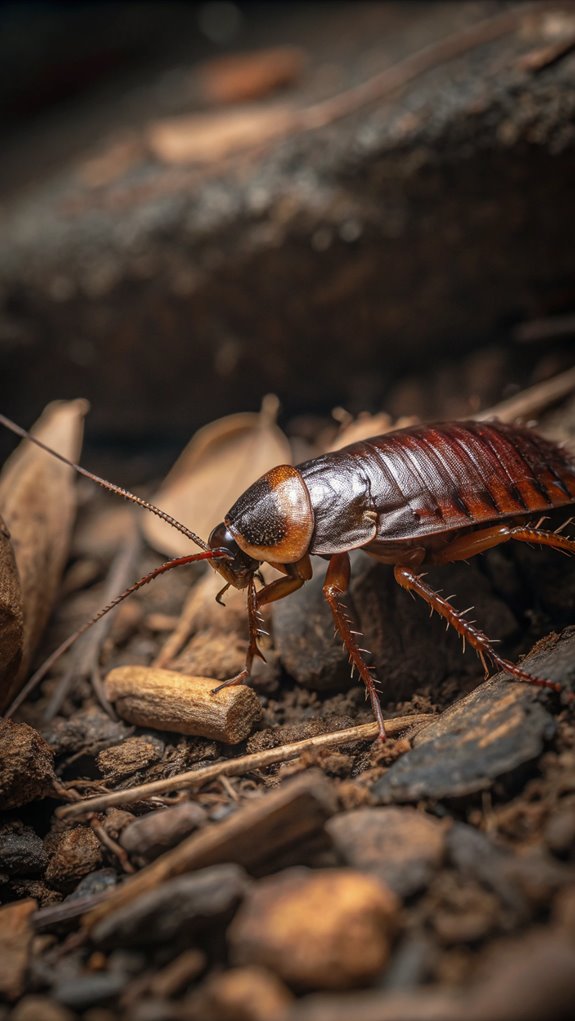
Beyond their tough exoskeleton, cockroaches possess an array of physiological adaptations that contribute to their remarkable resilience and endurance.
Their breathing mechanisms, facilitated by spiracles along their bodies, allow them to survive in confined spaces and low-oxygen environments. Cockroaches can hold their breath for up to 40 minutes, an impressive feat that showcases their respiratory adaptability.
They can close these spiracles to prevent water loss and open them to breathe, enabling them to withstand submersion in water. This respiratory adaptability is a significant factor in their ability to thrive in diverse habitats.
Cockroaches also exhibit resistance to levels of radiation that would be fatal to humans. Their efficient DNA repair mechanisms enable them to withstand high radiation doses, further contributing to their overall resilience in extreme conditions.
Moreover, cockroaches’ dietary flexibility is another vital aspect of their survival strategy. They’re not picky eaters and can consume a wide range of materials, including non-food items like glue, soap, and hair. This versatility helps them survive in urban environments where food sources vary.
Furthermore, cockroaches possess remarkable regenerative abilities. They can regrow lost limbs and survive for weeks without food or water by slowing their metabolism and conserving energy.
This regenerative capacity allows them to recover from injuries and endure harsh conditions.
Rapid Reproduction
Rapid reproduction is another key factor in cockroaches’ remarkable survival abilities. You’d be amazed at how quickly they can multiply under the right conditions.
Environmental factors like warm temperatures, high humidity, and plentiful food sources allow roaches to reproduce at staggering rates.
A single female German cockroach can pump out up to 6 oothecae in her lifetime, each packed with 30-40 eggs. In prime conditions, she can go from egg to reproductive adult herself in just over 3 months.
But here’s where it gets wild – social interaction between roaches, especially with other females, can accelerate their reproductive process even more.
Female roaches that simply hang out with other females or are exposed to female roach antennae experience faster egg development.
You can even stimulate quicker reproduction using artificial antennae, like duck feathers, to mimic the tactile stimulation they’d get from other roaches. Research has shown that the offspring of tactilely stimulated females grow faster and reach reproductive maturity sooner.
The key is short bursts of gentle, slow touches rather than rapid or drawn-out contact.
Diverse Habitats
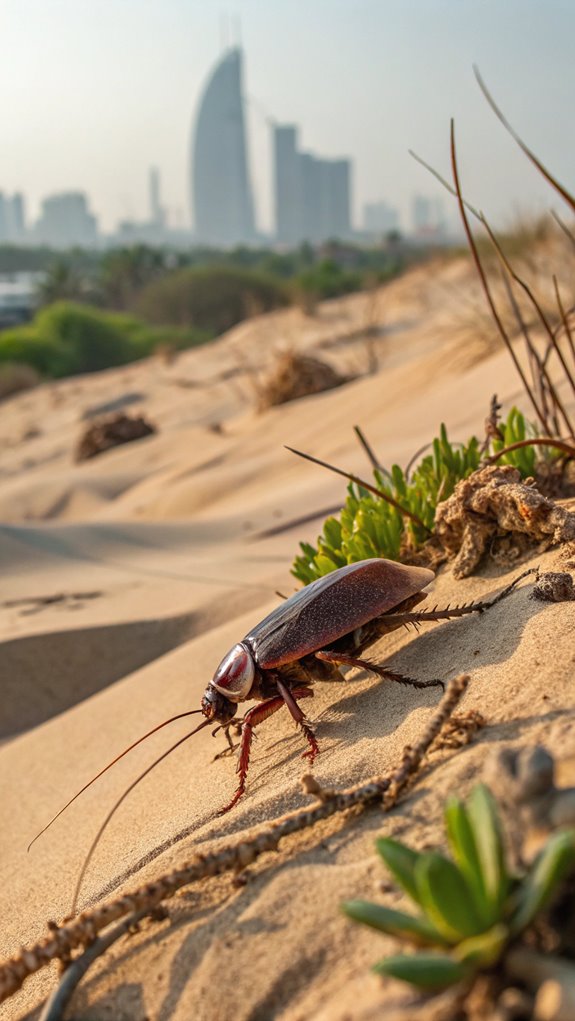
Where can you find cockroaches thriving? They’ve adapted to diverse habitats across the globe. You’ll spot some species in arid desert regions, where they’ve developed mechanisms to survive without water sources.
Others inhabit high elevations, such as 3,200 meters above sea level in the Himalayas and Andes. Aquatic varieties live near water surfaces, diving for food.
Certain species withstand extremely low temperatures, down to −122 °C, by producing glycerol antifreeze. They also tolerate high radiation and toxic substance levels. Cockroaches exhibit unique adaptations for specific environments.
You’ll find many cockroaches in leaf litter and vegetation stems. They inhabit rotting wood, stump holes, bark cavities, log piles, and debris.
Some live in the forest canopy, hiding in crevices, dead leaves, bird and insect nests, or among epiphytes. Urban landscapes, like kitchens and basements, are home to thriving populations. Specialized habitats include bromeliad phytotelmata and water bodies.
Cockroaches are abundant worldwide, especially in the tropics and subtropics. North America hosts 50 species across five families, while Australia boasts 450 species. India accommodates 72 genera and 181 species under 6 families. Some cold-tolerant species even survive in the Arctic.
Their survival traits are remarkable. Decapitated cockroaches can survive, with severed heads waving antennae for hours. Some species withstand 45 minutes without air. They can remain active for a month without food, surviving on limited resources like postage stamp glue.
Species like the Japanese cockroach hibernate during cold winters. Aquatic varieties survive underwater by carrying air bubbles under their thoracic shields.
Behavioral Adjustments
Cockroaches have mastered behavioral adaptations that promote their survival in diverse environments. They’re nocturnal, allowing them to forage and move about while avoiding predators and human activity. Being active at night reduces their chances of being spotted and killed.
This flexibility in activity patterns facilitates their survival across various habitats and helps them find and exploit food sources undetected. Cockroaches can survive for a month without food, further emphasizing their incredible resilience.
As omnivores, cockroaches exhibit remarkable food adaptability. They’ll consume both plant and animal material, enabling them to survive on a wide range of food sources.
While they prefer starchy foods and meats, they’re not limited to these options. Cockroaches will eat anything of plant or animal origin and can even consume decaying matter and garbage, further increasing their resilience.
Cockroaches employ rapid reproductive strategies to guarantee population growth and survival. Single females can produce an astonishing 300-400 offspring. They lay their eggs in protective capsules called oothecae, which increase the survival rate of the offspring.
Females can produce multiple batches of eggs, and the quick maturity of the offspring facilitates rapid population expansion.
Many cockroach species have adapted to live in close association with humans, thriving in the environments we provide. They can be found in homes, restaurants, hospitals, and other buildings, exploiting the resources available in human-dominated habitats.
German cockroaches, in particular, have evolved to live exclusively in human environments. This adaptation to human habitats further enhances their survival capabilities, allowing them to persist and flourish alongside us.
Physiological Responses
Beyond their behavioral strategies, cockroaches possess an array of physiological adaptations that further support their survival in diverse conditions. They can breathe through spiracles, allowing them to persist in oxygen-deprived environments.
Their robust set of genes encoding heat shock proteins helps protect against damage under extreme stress. An efficient stress response system involving hormonal signals like cortisol release facilitates rapid action when facing threats. Ganglia in the central nervous system modulate the cockroach’s escape response.
You’ll be amazed by the cockroach’s ability to regrow lost body parts, such as legs, demonstrating their high regenerative capacity.
They’re also resistant to radiation due to efficient DNA repair mechanisms. Sensory hairs on their body respond to air currents and tactile stimuli, while the anal cerci detect wind puffs, initiating the escape response.
Giant interneurons (GI’s) in the terminal abdominal ganglion rapidly relay this sensory information. The cockroach’s neural system quickly activates motor centers in the three thoracic ganglia for running, with the termination of escape behavior influenced by factors like entering shade.
Rapid activation of GI’s in response to sensory inputs and the ventral nerve cord facilitate rapid transmission of sensory information to motor centers. The central nervous system efficiently integrates and processes these signals to initiate escape, with specific shifts in leg positions informed by sensory hairs to prepare for running.
During threats, cockroaches release energy stores for a rapid increase in speed, with cortisol-like mechanisms enhancing glucose availability in the bloodstream for immediate action. Non-essential functions like digestion are suppressed, and they can survive for weeks without food and water by slowing their metabolism, efficiently conserving energy.
Acclimation Strategies
Impressive as their physiological adaptations may be, cockroaches also possess remarkable acclimation strategies that further enhance their survival in challenging environments.
You’ll find that they can rapidly harden themselves to temperature fluctuations, with prior exposure to high temperatures enhancing heat tolerance and survival, while exposure to low temperatures increases cold hardiness. They’re able to make adaptive physiological changes when temperatures gradually increase, generally acclimating between 15°C and 30°C.
When it comes to humidity, you’ll see cockroaches adapt through cuticular changes, with high humidity acclimation enhancing water conservation abilities and low humidity acclimation increasing water loss tolerance. They’ll make adaptive physiological modifications with gradual changes in relative humidity, maximizing survival when acclimating to ideal levels around 60% to 80%.
You’ll also observe behavioral adaptations in cockroaches coping with environmental stress. They’ll acclimate to light-dark cycles, influencing circadian rhythm and activity, and prior exposure to predator cues will enhance avoidance behaviors. They’ll adapt foraging and nesting behaviors to different substrates and maximize activity periods with temperature fluctuations.
Impressively, cockroaches can develop tolerance to insecticides through chemical acclimation. They’ll enhance food location abilities by acclimating to certain chemical cues, increase detoxification efficiency with prior exposure to toxic substances, and modify social behavior and aggregation by acclimating to pheromones.
You’ll find their sensitivity to repellents and attractants is influenced by chemical acclimation as well. All these acclimation strategies showcase the cockroach’s incredible adaptability and resilience.
Morphological Modifications
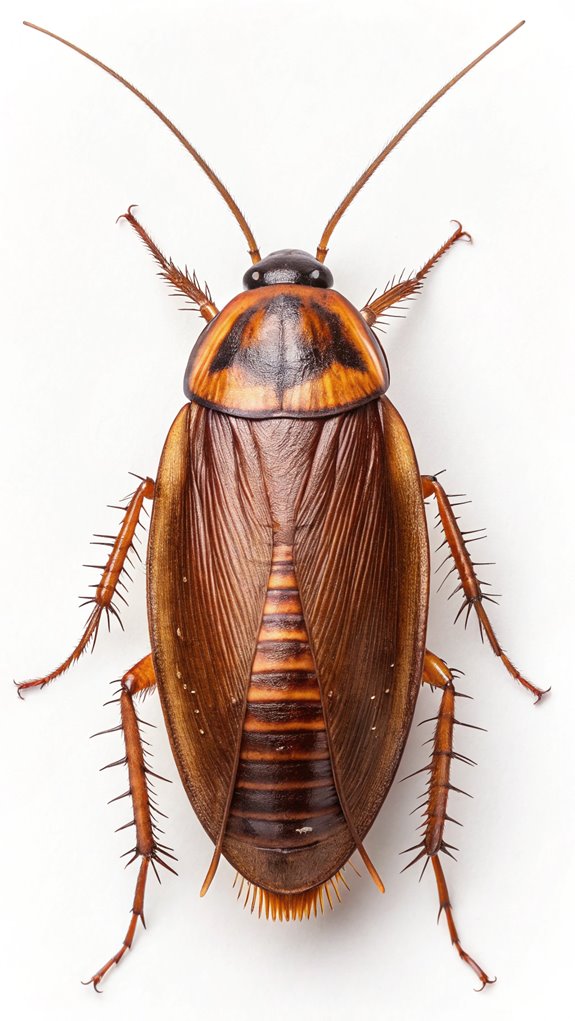
Not only have cockroaches developed impressive acclimation strategies, but they’ve also undergone remarkable morphological modifications that additionally contribute to their survival abilities. Their flexible exoskeleton, made of chitin, provides structural support, prevents water loss, and offers resistance to environmental hazards.
This tough outer layer, combined with their flat bodies, allows them to hide in narrow crevices and withstand physical damage. Their nocturnal behavior also reduces risks from predators and human activities.
You’ll find that cockroaches have a specialized respiratory system that enables them to breathe through small holes in their body segments.
With an open circulatory system, they can survive without their head for a short period. They’re capable of holding their breath for up to 40 minutes, conserving oxygen and energy in diverse environments.
As you examine their complex anatomy, you’ll discover that cockroaches have a segmented body composed of a head, thorax, and abdomen. Their essential organs, including the digestive system, reproductive organs, and respiratory system, are protected by the exoskeleton. A waxy outer layer on their exoskeleton acts as a barrier, preventing excessive water loss.
You’ll be amazed by the adaptive body traits of cockroaches. They can withstand extreme temperatures and radiation, seeking out warm areas to regulate their body temperature. Their specialized body shape enables them to hide in hard-to-reach places, while their rapid reproductive abilities make eradication efforts challenging.
Additionally, their unique biology allows them to efficiently detoxify and eliminate toxic substances from their bodies, contributing to their resistance to insecticides.

Erzsebet Frey (Eli Frey) is an ecologist and online entrepreneur with a Master of Science in Ecology from the University of Belgrade. Originally from Serbia, she has lived in Sri Lanka since 2017. Eli has worked internationally in countries like Oman, Brazil, Germany, and Sri Lanka. In 2018, she expanded into SEO and blogging, completing courses from UC Davis and Edinburgh. Eli has founded multiple websites focused on biology, ecology, environmental science, sustainable and simple living, and outdoor activities. She enjoys creating nature and simple living videos on YouTube and participates in speleology, diving, and hiking.
From the shop
Gifts for people who love the wild
Wildlife themed t-shirts, notebooks, tote bags, bandanas and guides, designed by an ecologist.
Visit the shop