
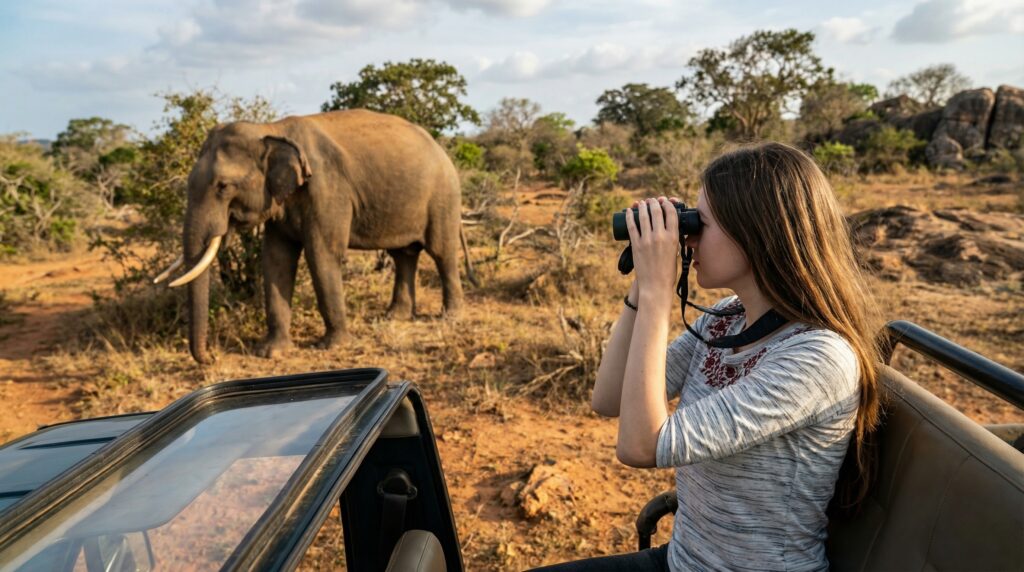
Wildlife conservation internships strengthen graduate applications by providing the field competencies, mentor relationships, and demonstrated commitment that admissions committees prioritize when evaluating candidates. These placements offer hands-on experience with data collection and experimental design—practical skills that distinguish applicants from those with classroom knowledge alone. Supervisors become sources of credible recommendation letters, while extended commitments signal serious dedication to conservation work. The experiences translate into portfolio materials and professional networks that reveal an applicant’s readiness for rigorous graduate research, and understanding which internship structures deliver these advantages proves essential for strategic planning.
Key Takeaways
- Internships develop research competencies including data collection, field methods, and experimental design that supplement classroom learning.
- Placements create mentorship relationships providing credible recommendation letters and professional guidance for graduate applications.
- Long-term conservation internships demonstrate sustained commitment, distinguishing applicants through field-based expertise and portfolio materials.
- Hands-on experience strengthens applications by showing practical application of theoretical knowledge in real conservation contexts.
- Internships expand professional networks and provide supervisors who can evaluate applicants’ research potential and work ethic.
The Core Value Proposition: Do Conservation Internships Actually Help?
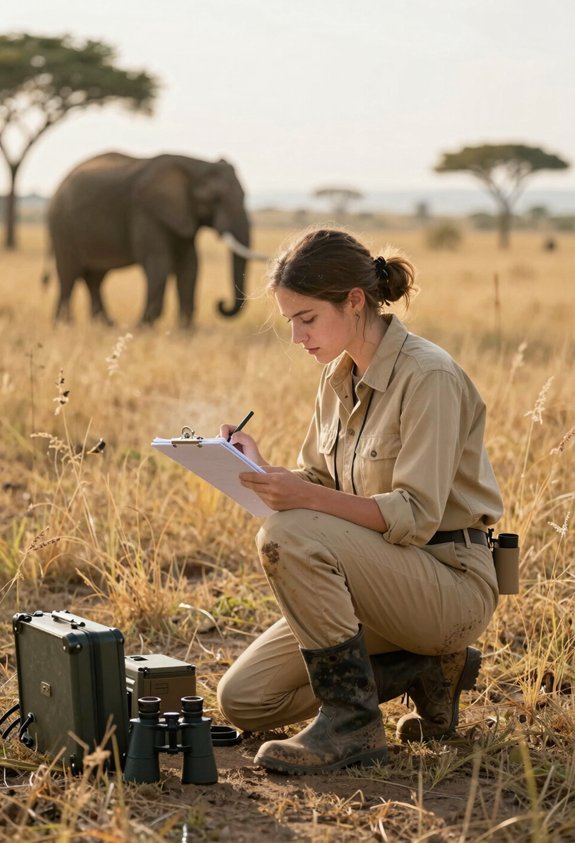
When students consider applying to graduate programs in conservation biology or wildlife management, they often wonder whether internships will meaningfully strengthen their applications—or if they’re simply adding impressive-sounding experiences that admissions committees have seen countless times before.
The answer hinges on opportunity cost, the trade-off between internship time and alternative uses like coursework or employment, and ethical considerations regarding unpaid labor in conservation.
Evidence suggests well-structured internships do substantially improve applications: they build research competencies through data collection and experimental design, create mentorship relationships that yield credible recommendation letters, and demonstrate sustained conservation commitment through long-term placements.
These experiences translate into portfolio materials, professional networks, and field-based expertise that distinguish applicants beyond academic transcripts alone. Internships typically span 3-6 months full-time, providing the extended duration necessary to complete meaningful conservation projects that yield publishable results or substantive case studies for graduate applications.
Field Experience Requirements for Top Conservation Graduate Programs
Understanding that internships strengthen applications leads naturally to a practical question: what specific field experiences do competitive graduate programs actually require students to have completed before they even apply?
Most conservation specializations mandate documented field courses from recognized biological stations, with institutions like the University of Virginia accepting experiences from Mountain Lakes Biological Station or Blandy Experimental Farm.
Programs typically require verification documentation—official transcripts showing courses like BIOL 3510 or detailed supervisor letters confirming internship hours—to prove candidates possess hands-on skills in animal identification, capture techniques, and habitat assessment.
Some universities maintain waiver policies for applicants demonstrating equivalent experience through professional research positions, though these exceptions demand thorough evidence of field competency across multiple ecosystems and taxa. Students completing conservation concentrations must formally declare their concentration like a major, using institutional forms that document their commitment to the specialization before graduation.
Where to Find Competitive Wildlife Conservation Internships
Where do aspiring conservation professionals actually locate the internships that’ll position them as competitive graduate school candidates? The search extends beyond general job boards—though platforms like Indeed and Conservation Job Board remain valuable starting points, listing positions from organizations like Sarasota County Wildlife Protection and Pennsylvania Game Commission with $15–$25 hourly rates.
Serious applicants also monitor niche newsletters from networks like The Nature Conservancy and National Wildlife Federation, which announce specialized opportunities before they reach broader audiences.
Regional conservation groups such as American Conservation Experience and Kent Wildlife Trust offer structured pathways with mentorship components, while corporate CSR (corporate social responsibility) initiatives occasionally fund lesser-known placements.
Organizations like Carolina Waterfowl Rescue in Indian Trail, NC provide wildlife rehabilitation internships with completion-based stipends ranging from $250 for part-time to $500 for full-time positions. Strategic candidates combine multiple discovery methods: subscribing to organizational alerts, networking through professional societies, and regularly checking aggregator sites like Top Conservation Internships.
Through Global Work & Travel, you can join vetted and ethical wildlife conservation internships, volunteering programs, and field jobs that go beyond tourism. From tracking elephants in Sri Lanka and monitoring lions in South Africa to protecting sea turtles in Costa Rica, these 32 opportunities connect you directly with scientists, rangers, and conservationists on the ground.
Whether you’re a wildlife biology student, a career switcher, or a nature-lover looking for purpose-driven travel, these experiences allow you to gain valuable field skills, make measurable impact, and live immersed in the wild — safely and responsibly.
Many wildlife conservation internships charge a program fee, not as profit, but to cover essential costs such as accommodation, meals, transport, permits, and the salaries of local conservation staff who guide your work. Choosing a reputable organization like Global Work & Travel ensures that your contribution truly supports ethical and sustainable projects.
They provide comprehensive support — including visa assistance, pre-departure guidance, 24/7 in-country and emergency help, and a dedicated trip coordinator. Every project is carefully vetted for animal welfare and conservation integrity, ensuring placements are in sanctuaries, rescue, or rehabilitation centers rather than exploitative settings.
You’ll also receive structured mentorship, feedback, and official certificates and recommendation letters from host organizations — valuable credentials for your career or academic path.
Plus, you’ll get $100 off automatically, and by adding the additional code ELI100 at checkout, you can save an extra $100, for a total of $200 off your Global Work & Travel wildlife internship adventure.
Ready to volunteer or intern abroad? Enter code ELI100 at checkout and get $100 OFF any internship or volunteer project worldwide.
Explore ProjectsResearch Fellowships vs. Standard Internships: Which Type Wins?
As students progress through their conservation education, they’ll inevitably face a strategic choice between pursuing research fellowships—which offer deeper immersion in specialized scientific inquiry—and standard internships that provide broader exposure to field operations and organizational workflows.
Fellowships demand graduate-level preparation and involve independent, researcher-proposed projects that may span several months to two years, often resulting in publications or presentations that strengthen doctoral applications. Standard internships, typically shorter and more accessible to undergraduates, emphasize skill portability through hands-on involvement in day-to-day conservation tasks.
Both pathways present ethical dilemmas: fellowships require addressing complex research questions with real-world implications, while internships expose students to organizational trade-offs between conservation ideals and operational constraints. Standard internships may run from two weeks to 24 weeks, allowing participants to build practical experience while maintaining flexibility for academic commitments. Neither option universally “wins”—the right choice depends on one’s current academic stage, career trajectory, and learning priorities.
Student Conservation Association Programs and Federal Career Pathways
For students seeking a structured bridge between academic preparation and federal conservation careers, the Student Conservation Association operates as a unique intermediary—one that doesn’t simply advertise internships but actively manages the entire placement process, from recruitment through performance evaluation.
Unlike typical job boards, SCA handles administrative complexities including background clearance processes, payroll, and liability coverage while partners focus on technical training and supervision.
Programs range from eight weeks to twelve months, strategically designed to accommodate academic schedules while providing substantive experience with agencies like the U.S. Forest Service and Fish and Wildlife Service.
This model circumvents the notoriously slow federal hiring timelines, allowing students to gain agency-specific skills—from GIS mapping to prescribed fire certification—that strengthen graduate applications while establishing professional networks within conservation organizations where they’ll eventually seek permanent positions.
Successful participants in AmeriCorps-eligible positions receive an Education Award upon completion, adding financial support for graduate studies alongside the professional experience gained.
International Conservation Internships vs. Domestic Opportunities
International conservation internships occupy a distinct category within wildlife career preparation—not inherently superior to domestic placements but calibrated toward students whose professional trajectories require cross-cultural fluency and experience traversing ecosystems radically different from North American landscapes.
Programs spanning Africa, Asia, Central America, and Oceania provide access to megadiverse systems—rainforests, savannahs, coral reefs—where research methodologies and community-based conservation differ substantially from domestic approaches.
Logistical barriers including travel costs, visa requirements, and health precautions, demand careful advance planning, while legal compliance with international research permits and host country regulations introduces procedural complexity absent from domestic internships.
Virtual alternatives emerged during travel restrictions, maintaining skill development without geographic displacement.
Students pursuing careers in international NGOs or transboundary conservation initiatives benefit disproportionately from these placements, whereas domestic-focused careers require comparable depth within regional ecosystems and policy frameworks.
Programs emphasize research methods and community engagement as foundational elements that distinguish field-based conservation work from purely observational experiences.
Optimal Internship Duration: 3 Months, 6 Months, or Year-Long?
Geographic scope matters less than temporal commitment once students have identified the ecosystems and organizational cultures aligned with their career goals, because the duration of an internship determines not only which skills reach fluency but also whether professional networks solidify into genuine employment pathways.
Three-month programs establish foundational competencies—camera trap setup, biodiversity surveys, mammal tracking—without significant burnout risk, though participants may plateau before mastering specialized techniques like radio telemetry or predator identification.
Six-month positions combine training with guaranteed work placements, allowing interns to shift from supervised learning to staff responsibilities while accumulating research-quality data across seasonal changes.
Year-long commitments enable participation in complete field cycles and credential acquisition, though extended durations require careful assessment of one’s capacity for sustained focus in remote environments where learning plateaus can trigger disengagement.
Programs structured around cost-of-living allowances and housing support help students extend field tenure without accumulating debt that would otherwise limit duration choices.
Timing Your Internship to Maximize Application Impact
Strategic calendar coordination transforms internship experience from simple résumé entries into persuasive evidence of commitment, because application reviewers assess not just what students accomplished but how deliberately they sequenced their professional development to demonstrate readiness for advanced study.
Deadline mapping—the practice of charting when programs accept applications alongside internship completion dates—reveals that summer internships ending in August or September provide ideal timing for fall graduate applications, allowing supervisors four to six weeks to compose detailed recommendation letters while experiences remain fresh.
Students must ensure more than 50% of their funded internship period occurs while enrolled at their undergraduate institution to maintain eligibility for awards that support these strategic timing decisions.
Calendar integration becomes particularly valuable when students align spring internships (January through May) with summer application seasons, or winter programs (November through February) with March submission deadlines, ensuring each internship contributes maximum impact by positioning completion strategically before reviewers evaluate candidates for competitive MSc and PhD programs.
Paid vs. Unpaid Programs: What Admissions Committees Notice
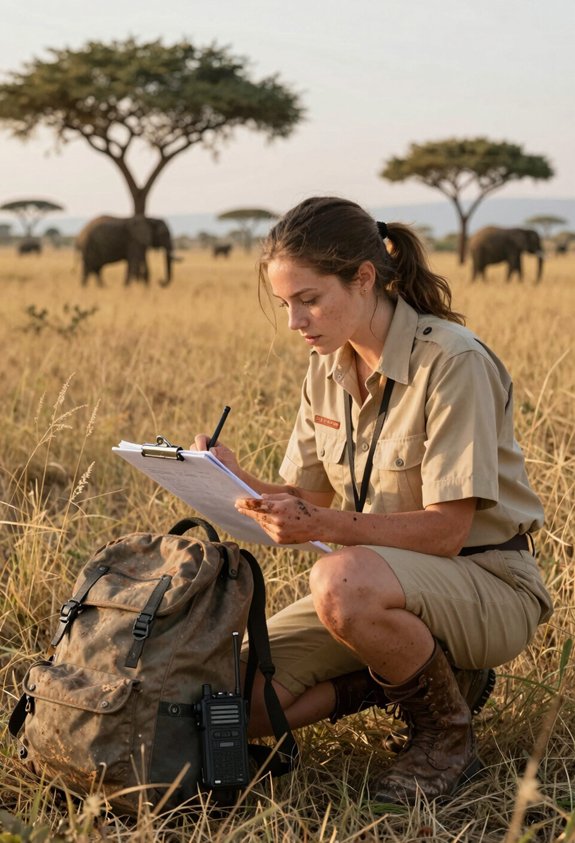
When graduate admissions reviewers examine internship sections on applications, they notice not only the tasks candidates performed but also whether organizations valued that work enough to provide compensation, because paid positions signal that supervisors trusted interns with responsibilities substantial enough to justify financial investment.
Research shows individuals with seven or more paid positions reach 69% probability of securing full-time wildlife employment compared to 20% for those with none, demonstrating clear career advantages that committees recognize.
However, unpaid internships create selection bias—systematically favoring applicants from affluent backgrounds who can afford working without income—which committees increasingly understand as equity signals that reveal structural barriers rather than candidate merit.
Marginalized-group respondents required approximately 25% higher pay than white students to consider accepting the same field positions, illustrating how inadequate compensation disproportionately excludes underrepresented candidates from career pipelines. Paid experience thus strengthens applications both through demonstrated skill acquisition and by indicating equitable access to professional development opportunities.
Wildlife Population Surveys: Building Quantitative Research Skills
Internship experience gains particular weight when candidates demonstrate proficiency in wildlife population surveys, which represent quantitative fieldwork that graduate programs value because these methods form the backbone of conservation decision-making and peer-reviewed research. Hands-on exposure to transect sampling, point counts, and mark-recapture techniques teaches interns how raw observations transform into density estimates—the numerical measures of how many individuals occupy a given area.
This work requires equipment calibration, ensuring that GPS units, radio telemetry receivers, and camera traps produce reliable data, alongside strict adherence to ethical protocols that minimize stress on study animals.
Graduate admissions committees recognize that candidates who’ve conducted distance sampling or analyzed nest success using the Mayfield method bring practical skills that accelerate research timelines, making them valuable contributors from day one of their degree programs.
Interns gain insight into the trade-off between sampling intensity and spatial coverage, learning that occupancy studies must balance the number of field sites visited against the number of survey years conducted to detect meaningful population trends.
GIS and Remote Sensing Skills That Distinguish Your Application
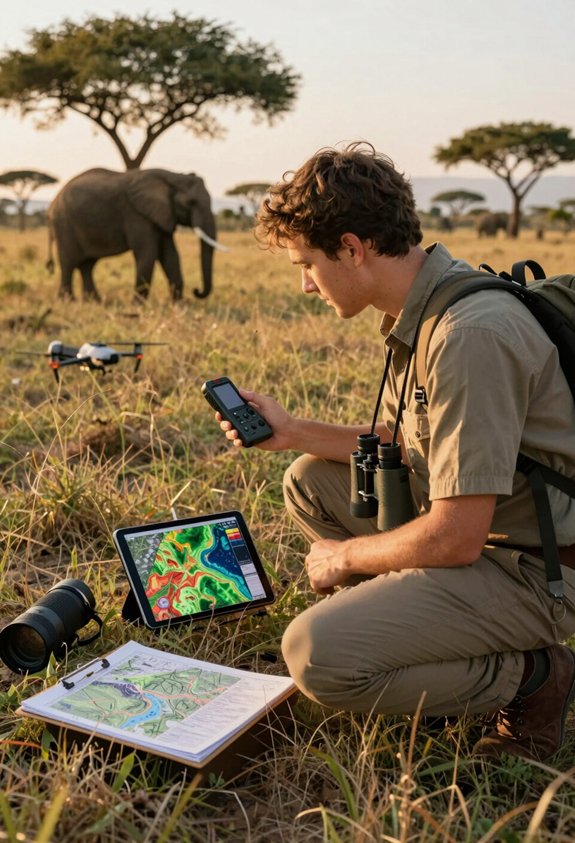
Because graduate programs in wildlife conservation increasingly expect applicants to arrive with digital mapping competencies, interns who develop GIS and remote sensing skills position themselves ahead of peers who’ve focused solely on fieldwork.
These technical abilities—ranging from habitat mapping using multispectral satellite imagery to invasive species detection through vegetation pattern analysis—demonstrate quantitative rigor that strengthens application portfolios considerably.
Internships offering training in LiDAR interpretation, which uses laser pulses to create detailed three-dimensional landscape models, or spectral unmixing, which separates mixed pixel signals into distinct material types, provide particularly valuable experiences.
Programs that emphasize wildlife corridor modeling prepare interns to identify optimal migratory pathways that connect fragmented habitats and support larger, more genetically diverse animal populations.
Such skills enable interns to contribute meaningfully to species distribution modeling, deforestation monitoring, and fire risk assessment projects, all areas where conservation organizations need competent analysts who can translate remote sensing data into actionable management recommendations.
Developing Statistical Analysis Capabilities in the Field
How effectively can an intern contribute to conservation decisions without understanding the statistical methods that transform raw observations into reliable conclusions?
Wildlife internships provide structured training in programs like R, Python, and MATLAB—tools that convert ecological datasets into meaningful patterns.
Interns learn power analysis, the process of determining whether sample sizes are large enough to detect real differences, while also mastering sensor calibration techniques that guarantee acoustic and tracking devices collect accurate measurements.
By analyzing decade-long rehabilitation records and processing bioacoustic datasets, interns bridge field observations with computational rigor.
They perform quality assurance checks, identify missing data, and support AI models with carefully prepared information—skills that graduate programs value because they demonstrate an applicant’s readiness to conduct independent research that yields defensible, reproducible results.
Programs emphasize time management skills as interns balance patient admissions, data collection, and community engagement activities in fast-paced rehabilitation environments.
Habitat Restoration Projects and Ecological Understanding
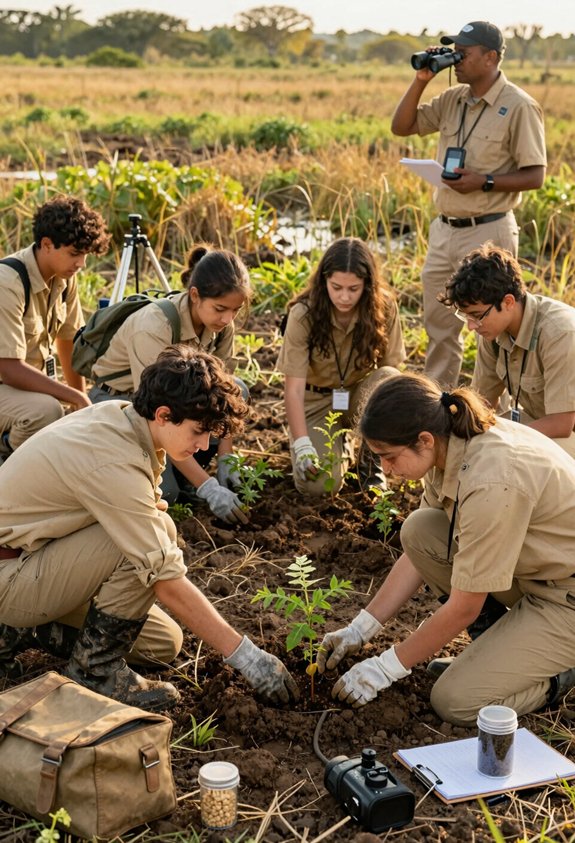
Restoring degraded ecosystems transforms interns from observers into active participants in measurable ecological recovery, because these projects demonstrate how deliberate interventions translate scientific understanding into tangible wildlife benefits. Seagrass and mangrove restoration yields fish populations matching natural sites within one to two years—outcomes that reveal successional dynamics, the predictable stages through which ecosystems recover after disturbance.
Oyster reef projects in Queensland increased fish numbers more than tenfold, illustrating trophic interactions, the feeding relationships connecting organisms across different levels of the food web. Interns monitoring these changes witness how habitat structure influences species diversity, understanding that restored sites support populations 61% larger and 35% more diverse than degraded areas, though variability across locations underscores ecology’s complexity and site-specific nature.
Restoration techniques such as planting native trees and repairing wetlands require interns to understand ecosystem resilience and adaptability, essential concepts for postgraduate research in conservation biology.
Scientific Writing Practice in Real Conservation Settings
Throughout the internship experience, writing transforms from a classroom exercise into a professional tool with immediate consequences, because conservation decisions increasingly depend on clearly communicated research findings that non-specialists can understand and act upon.
Interns develop this clarity through practical tasks that build publication-ready skills—drafting field reports for reserve managers, creating visual abstracts that distill complex ecological data into accessible graphics, and preparing local translation materials that make research meaningful to community stakeholders.
These assignments mirror the structured techniques that strengthen peer-reviewed manuscripts: short sentences in active voice, strong opening statements that preview content, and elimination of unnecessary terminology that obscures rather than clarifies.
Such deliberate practice addresses the writing proficiency gaps that limit conservation researchers, particularly in regions where English-language publication represents both opportunity and barrier for career advancement.
Mentorship programs that extend beyond data collection and into manuscript preparation demonstrate measurable improvements in analytical and publishing responsibilities, positioning early-career researchers to lead rather than support biodiversity studies.
Data Management and Database Skills for Graduate Research
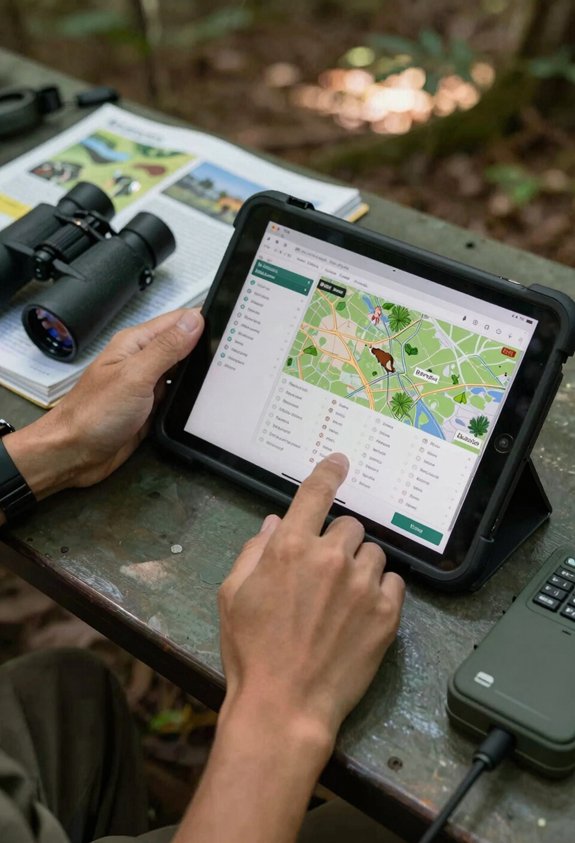
Managing ecological data—the structured records of observations, measurements, and specimens collected in the field—becomes a professional responsibility the moment an intern opens the first spreadsheet, because poor organization at the start multiplies into weeks of correction work later, erodes the scientific value of hard-won observations, and prevents collaboration with researchers who need standardized formats to combine datasets across regions or years.
Internships teach FAIR Compliance (making data Findable, Accessible, Interoperable, and Reusable) through practical application:
- Using Darwin Core terms and data dictionaries to guarantee consistent naming across projects
- Maintaining provenance tracking—the documented history of where each observation came from and who recorded it
- Building relational databases that allow queries across multiple field seasons
- Creating metadata files that explain measurement methods and context
These skills translate directly into graduate research efficiency. Platforms like Movebank demonstrate how proper data management enables automated animal tracking at scale, with thousands of active tags delivering over 3 million new data records daily that researchers can access, analyze, and integrate into collaborative studies.
Building Your Professional Network Through Conservation Work
Why do conservation internships consistently outperform other early-career experiences in building professional networks that lead directly to graduate school admissions and research positions?
These field placements connect aspiring researchers with experienced project managers, wildlife biologists, and conservation professionals who provide mentorship that extends far beyond technical training—these relationships often translate into graduate school recommendations, collaborative research opportunities, and career guidance.
Interns also develop connections with indigenous communities and local conservationists, strengthening cross-cultural communication skills essential for international fieldwork. Working in regions like Southeast Asia, which contains nearly a third of the world’s biodiversity hotspots, provides unparalleled exposure to globally significant conservation challenges.
Many programs integrate professional development components, including LinkedIn optimization strategies and conference etiquette training, that prepare participants to engage meaningfully with the broader conservation community. These relationships form lasting networks that support graduate applications through letters of recommendation, research collaborations, and introductions to academic programs.
Turn Your Field Supervisor Into Your Strongest Advocate
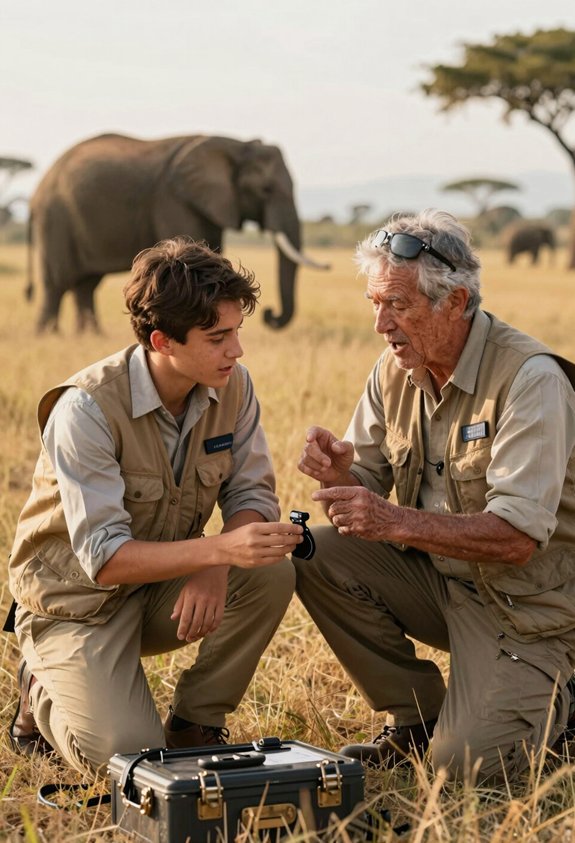
Among the many connections interns build during field placements, the relationship with a field supervisor stands apart as the single most influential factor in opening doors to graduate programs and research careers.
These mentors observe performance across entire field seasons—sometimes spanning nine to forty-eight weeks—which allows for authentic assessment of research capabilities, consistency, and professional growth.
This extended observation period creates what’s known as a Recommendation Pipeline, where supervisors accumulate detailed, evidence-based examples of an intern’s scientific thinking and problem-solving abilities.
Through Mentor Calibration, supervisors learn to articulate technical competencies developed through hands-on training:
- Direct documentation of GPS, GIS mapping, and wildlife handling proficiency
- Specific accounts of data collection methods and field adaptability
- Verified contributions to conservation research projects
- Demonstrated capacity for independent project management
Supervisors who jointly oversee trainees with university faculty provide particularly strong recommendations, as they can speak to academic integration alongside field competencies.
How Internships Help You Choose the Right Graduate Program
Choosing a graduate program without field experience resembles selecting a hiking trail based solely on photographs—the images reveal scenery but conceal the terrain’s actual demands, the stamina required for steep inclines, and whether the destination matches what a traveler genuinely seeks.
Internships spanning three to twelve months expose candidates to conservation’s practical realities, revealing whether specific specializations like wildlife biology or entomology align with personal strengths and intellectual interests.
This hands-on exposure clarifies Financial Fit by demonstrating whether low-paying field positions justify expensive graduate degrees, while extended placements test Lifestyle Fit through direct experience with remote locations, challenging weather conditions, and demanding physical work.
Mentorship from experienced personnel guides decisions about pursuing immediate graduate study versus gaining additional field experience, ultimately helping candidates identify programs offering relevant methodologies and research environments matching their working styles.
Programs that incorporate field biomonitoring activities alongside classroom instruction provide the most realistic preview of graduate research demands, allowing candidates to assess whether data collection methodologies suit their aptitudes before committing to multi-year degree programs.
Converting Field Data Into Published Research Before Applying
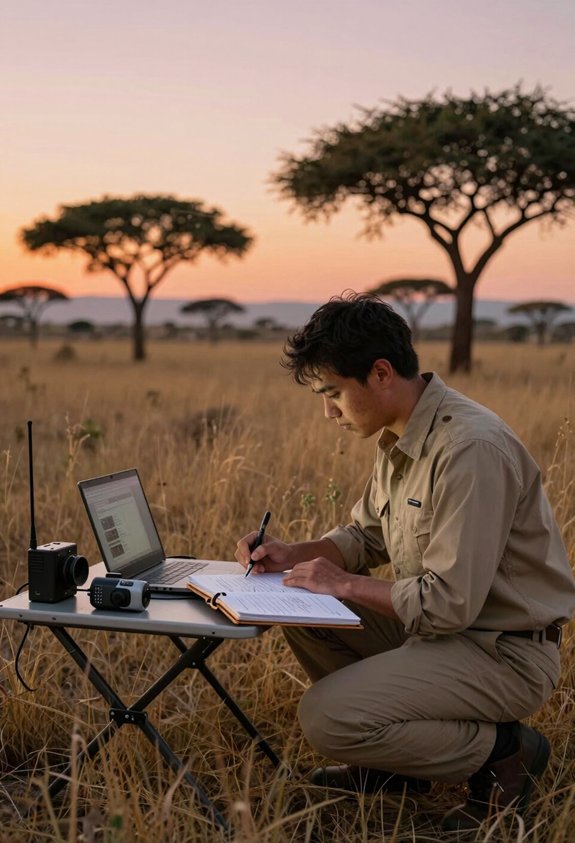
Field experience builds competence with collection protocols and observation techniques.
Yet the path from raw datasets to published findings—a process averaging 3.24 years in conservation research—determines whether internship work strengthens graduate applications or remains undocumented effort.
Converting field observations into manuscripts requires deliberate planning during internships:
- Discuss authorship negotiation early with supervisors, clarifying contribution thresholds and publication timelines before data collection concludes
- Implement FAIR principles (Findable, Accessible, Interopable, Reusable) from project start, organizing datasets for eventual repository submission with persistent identifiers
- Consider preprint strategy for sharing preliminary findings quickly, demonstrating research productivity before lengthy peer review cycles complete
- Document methodology transparently following ARRIVE 2.0 guidelines, creating detailed records that facilitate manuscript preparation after internships end
- Apply standardized naming conventions to field files—using date prefixes (YYYYMMDD) and avoiding spaces or special characters—to enable efficient data management when preparing datasets for publication
These practices transform temporary fieldwork into citable contributions that differentiate graduate applications.
Wildlife Photography and Field Documentation as Portfolio Evidence
Building a visual record of fieldwork transforms internship participation into tangible evidence that admissions committees can evaluate alongside transcripts and recommendation letters, particularly when applicants lack traditional research outputs like peer-reviewed publications.
Wildlife photography portfolios demonstrate both technical competence—mastery of composition, exposure, and focus—and genuine conservation passion through documented species encounters from diverse ecosystems.
Applicants should prepare field images for Print Presentation by selecting shots that showcase behavioral observations, habitat assessments, or monitoring protocols they’ve personally conducted.
Caption Ethics matter notably, requiring photographers to credit locations honestly, acknowledge collaborators who facilitated access, and resist digitally manipulating scenes to exaggerate wildlife proximity or abundance. Aspiring photographers should recognize that marketing skills often prove more important than purely photographic talent when building a professional career in conservation documentation.
Programs value portfolios that combine authentic documentation with thoughtful post-production skills learned through workshops, revealing readiness for visual communication demands within academic research and conservation outreach contexts.
Proving Independent Research Capability Through Internship Projects
Although internship portfolios showcase field presence through photographs and species checklists, graduate admissions committees increasingly scrutinize whether applicants have moved beyond observation into actual research design.
This includes the process of formulating testable questions, selecting appropriate methods, and executing studies that generate original data.
Conservation programs that permit independent projects offer invaluable preparation, allowing participants to demonstrate research autonomy through:
- Study design documentation showing hypothesis development and methodology selection for wildlife distribution analyses
- Decision logs recording why specific statistical approaches or field instruments were chosen over alternatives
- Failure reflection essays explaining setbacks during herpetology surveys or camera trap deployments—demonstrating adaptive thinking
- Co-authored publications proving contribution from initial experimental design through final report writing
These artifacts substantiate readiness for graduate-level investigation beyond supervised data entry. Programs offering proposal-writing training equip participants with frameworks to articulate research questions that admissions committees recognize as indicators of independent thinking capacity.
Writing Application Essays That Showcase Field Experience
Graduate admissions readers spend an average of eight to twelve minutes reviewing each application essay, which means they’re searching for concrete evidence rather than abstract claims about passion or commitment.
Applicants should employ narrative structure—the deliberate arrangement of events to create meaning—by opening with a specific field moment, then explaining the research methods used, and concluding with what that experience revealed about their scholarly direction.
Strong essays include ethical reflection, the practice of examining moral dimensions within conservation work, such as how community displacement affects endangered species protection or whether invasive species removal causes unintended harm.
When candidates describe challenges encountered during internships, like equipment failures or unexpected animal behavior, they demonstrate problem-solving abilities that committee members actively seek in prospective graduate researchers. Essays that reference population survey methodologies, such as walking transects used to estimate wildlife numbers, provide tangible proof of hands-on research capabilities.
Learning Land Trust Operations and Conservation Easement Monitoring
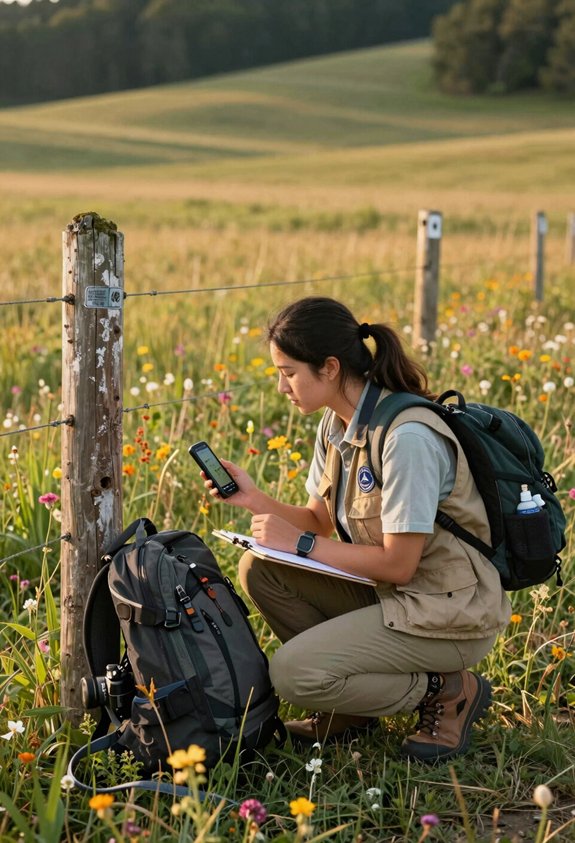
Exploring land trust operations provides interns with exposure to conservation work that functions outside traditional government agencies and research institutions, offering a complementary approach where private nonprofit organizations collaborate with landowners to protect ecologically significant properties.
Through internships focused on easement monitoring—the ongoing verification that protected lands remain consistent with agreed-upon restrictions—students gain practical understanding of perpetual conservation commitments.
These experiences demonstrate how conservation extends beyond immediate fieldwork into long-term relationship building and legal accountability.
Essential learning components include:
- Baseline Documentation processes that inventory ecological features before easement establishment
- Annual monitoring visits combining property inspection with landowner communication
- Stewardship Endowments that fund perpetual management obligations
- Compliance protocols balancing enforcement authority with cooperative landowner relationships
Graduate programs value applicants who understand conservation’s administrative dimensions alongside ecological fieldwork. Interns also learn how trust agreement terms establish the framework governing trustee responsibilities and beneficiary rights in conservation land trusts.
Grant Writing and Stakeholder Management at Conservation NGOs
Securing financial resources represents one of conservation’s most persistent challenges, with environmental nonprofits competing for merely 2-3% of total charitable donations despite addressing biodiversity crises that demand substantial, sustained funding.
Interns learn grant writing—a seven-step process from identifying matching opportunities through final submission—while discovering that success rates hover around one in ten proposals accepted.
This reality makes Donor Diversification essential: organizations can’t rely solely on governmental agencies, even though they provide 78.3% of project funding, because applications require extensive effort and months of waiting.
Small nonprofits often convert limited funds into effective, on-the-ground projects more efficiently than larger organizations with substantial bureaucratic overhead.
Effective Partnership Governance becomes equally critical, as stakeholder engagement substantially improves approval rates through stronger relationships with foundations, corporations, and community groups.
Interns who master these interconnected skills gain practical experience in resource mobilization, positioning themselves as candidates who understand conservation’s financial realities.
Working With Communities, NGOs, and Government Agencies
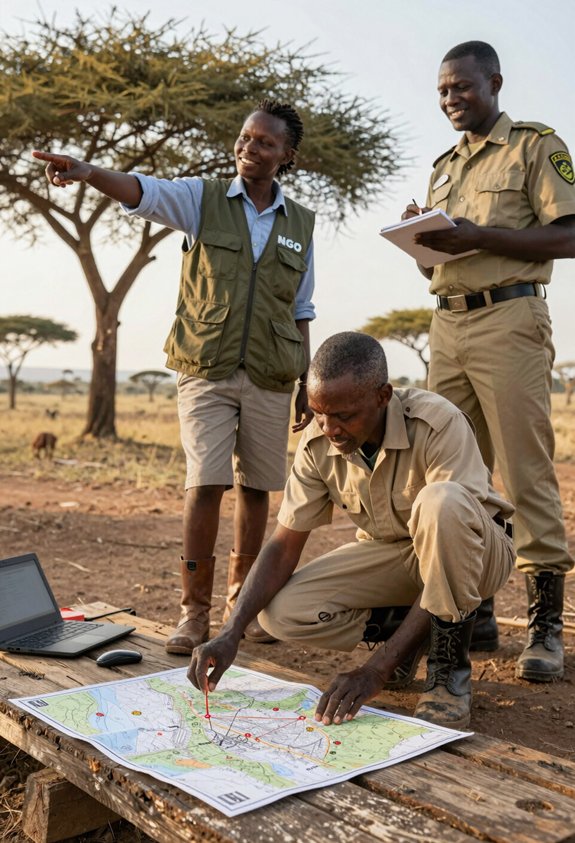
While grant proposals and budgets determine what conservation work becomes financially possible, the actual implementation of projects depends entirely on relationships—partnerships with the communities who live alongside protected habitats, collaborations with nonprofit organizations that provide infrastructure and expertise.
And coordination with government agencies that manage public lands and enforce wildlife regulations.
Interns develop these essential skills through:
- Ethical Engagement with historically underserved populations, reducing unsustainable firewood collection while respecting community needs
- Cultural Protocols when working alongside locals in habitat management, honoring traditional knowledge systems
- Partnerships with organizations like Student Conservation Association and National Wildlife Federation
- Placements at U.S. Fish & Wildlife Service refuges, contributing data that informs management decisions
These experiences demonstrate to admissions committees that applicants understand conservation’s inherently collaborative nature. Through fieldwork and data collection, interns work alongside conservation experts and community members from diverse backgrounds, developing the communication and teamwork abilities that graduate programs prioritize.
Why Communication Skills From Environmental Education Matter
Communication skills transform passionate concern for wildlife into tangible conservation outcomes, and environmental education programs provide the structured training that interns need to translate field observations into compelling narratives for diverse audiences.
These programs develop higher-level communication abilities essential for managing interpersonal relationships and solving complex problems in the field. Students gain confidence discussing climate change and ecosystem threats while learning conflict resolution—the ability to mediate disagreements between stakeholders with different priorities—which proves invaluable when working alongside communities, NGOs, and government agencies.
Equally important is audience tailoring, adapting technical findings for policymakers, journalists, or local residents who each require distinct approaches.
Programs specifically address students’ desire for training in culturally controversial topics, preparing interns to advocate effectively for conservation solutions while respecting diverse perspectives and building collaborative partnerships. Educational institutions increasingly establish partnerships with environmental organizations to provide real-world learning opportunities through internships and community-based initiatives that deepen conservation stewardship.
Study Abroad Conservation Programs and Global Perspectives
Study abroad conservation programs offer interns something no domestic placement can replicate: the chance to witness how ecological principles shift across continents, how communities in biodiversity hotspots navigate the tension between survival and preservation, and how conservation strategies must adapt to wildly different political, economic, and cultural landscapes.
Programs in Costa Rica, South Africa, Kenya, and Tanzania immerse students in tropical ecology, wildlife monitoring, and community-based conservation—experiences that demonstrate intercultural competence and field adaptability to admissions committees. Educational accreditation through partnerships with Universidad de Costa Rica, University of Cape Town, and School for Field Studies guarantees credits transfer while providing rigorous academic frameworks.
Before departure, thorough health preparations—vaccinations, antimalarial medication, travel insurance—signal the professionalism graduate programs expect from conservation practitioners working in remote ecosystems. Gaining hands-on experience in forests, oceans, wetlands, and deserts builds the field-based competencies that MSc and PhD programs prioritize in competitive applicants.
Ready to volunteer or intern abroad? Enter code ELI100 at checkout and get $100 OFF any internship or volunteer project worldwide.
Explore ProjectsThe 70% Alumni Career Success Rate: Why Program Quality Matters
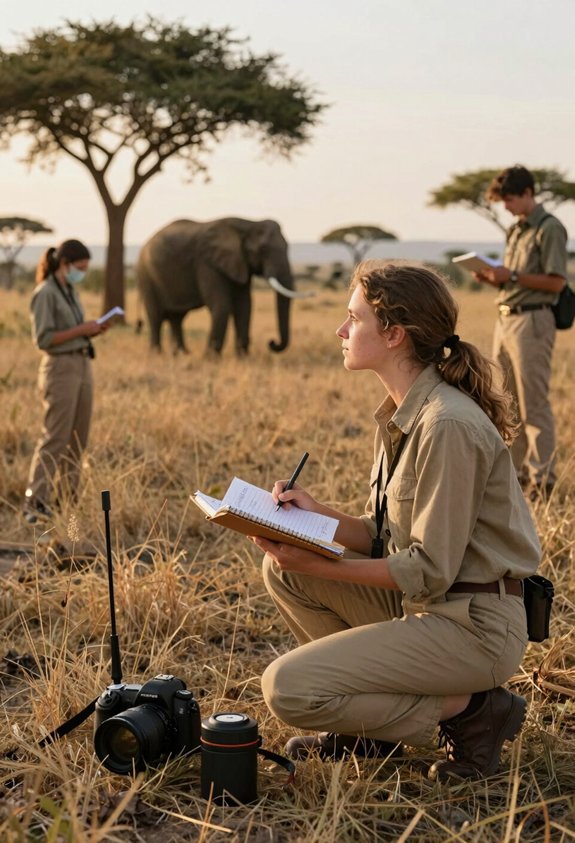
Although internship listings promise hands-on experience and meaningful conservation work, the programs that actually launch careers share a measurable trait: they produce alumni who secure positions in the field at rates substantially higher than national averages.
Research indicates that individuals with multiple paid wildlife positions achieve a 69% probability of full-time employment in conservation—a benchmark reflecting quality program outcomes rather than arbitrary thresholds.
Distinguishing features of high-performing programs include:
- Accreditation Standards that guarantee curriculum rigor and ethical fieldwork practices
- Employer Partnerships connecting interns directly with hiring organizations during placements
- Longitudinal tracking of graduate outcomes, demonstrating transparency about actual career trajectories
- Mentorship structures pairing participants with professionals already established in conservation roles
These elements collectively transform internships from isolated experiences into deliberate pathways toward graduate study and professional employment. Quality programs also ensure that participants avoid the Catch-22 of needing experience to gain experience by providing structured entry points that employers recognize as legitimate qualifications.
Government Agency Internships vs. NGO Experience
Choosing between government agency internships and nonprofit organization (NGO) placements represents one of the most consequential decisions aspiring wildlife professionals face, because each pathway develops distinct skill sets and opens different doors in conservation careers.
Government positions—like those with the National Park Service or US Fish & Wildlife Service—operate at broader operational scale, managing entire ecosystems across federal lands while emphasizing risk management protocols required for public accountability.
NGO internships, conversely, often focus on specialized research questions or community-based projects, building technical abilities in data science, GIS mapping, and grant writing. These programs typically produce tangible deliverables ranging from web applications and story maps to scientific papers and white papers that demonstrate applied conservation impact.
Both pathways strengthen graduate applications differently: federal experience demonstrates policy competence and professional readiness, while competitive NGO placements (some accepting only 6% of applicants) signal research capability through published outputs and concentrated expertise in conservation problem-solving.
Addressing GPA or Research Weaknesses Through Strategic Internships
When undergraduate grades fall below the 3.0 threshold that most wildlife graduate programs require, strategic internship experience becomes perhaps the most powerful tool for demonstrating research capability and professional readiness despite numerical deficits on transcripts.
Credential stacking—building multiple qualifications through sequential experiences—allows students to gradually strengthen applications while developing genuine competency in field methods, data management, and scientific communication that graduate advisors value.
Strategic approaches include:
- Targeting internships with quantifiable research outputs like poster presentations and written reports
- Seeking positions offering independent project components requiring data analysis
- Prioritizing experiences providing supervisor evaluations documenting analytical skills and initiative
- Selecting field-intensive roles demonstrating technical proficiency in GPS navigation, species identification, and database management
This confidence building through documented performance addresses admissions committees’ concerns about academic preparation. Employers and admissions committees recognize that hands-on experience through technician positions signals not only technical skills but also dependability and personality that cannot be assessed from transcripts alone.
Why Internship Setting Diversity Matters for PhD Applications
Graduate admissions committees increasingly evaluate applicants not just on grades and test scores but on the breadth of their scientific experiences, recognizing that exposure to different ecosystems, research methods, and organizational cultures signals adaptability—the capacity to shift between approaches and environments—that proves essential when PhD research encounters unexpected challenges or requires methodological pivots.
Internships spanning California’s reserves, Wisconsin fields, and international SFS sites build adaptive resilience, the ability to recover from setbacks by drawing on varied problem-solving frameworks learned across contexts.
Working with universities, nonprofits like Lake Michigan Bird Observatory, and government agencies through ACE EPIC placements develops methodological versatility—comfort moving between field surveys, bioinformatics pipelines, and community collaboration—that doctoral programs value because successful dissertations rarely follow single pathways, instead requiring researchers who navigate technical, geographic, and organizational boundaries with confidence.
Programs like Wisconsin’s DICI pair undergraduates with host conservation organizations for project-based internships that combine Monday-through-Thursday fieldwork with Friday professional development seminars, creating structured exposure to conservation career pathways while building the professional networks graduate schools seek in competitive applicants.
Converting Volunteer Experience Into Competitive CV Advantage
How does a volunteer position that required no application fee transform into the kind of credential that catches attention in a pool of 250 competing candidates?
The answer lies in Role Reframing—recasting duties as professional competencies—and Evidence Packaging, which means organizing accomplishments into quantifiable outcomes that selection committees value.
Consider these strategies for strengthening your curriculum vitae:
- Translate tasks into skills: Describe “helped with fieldwork” as “collected behavioral data across 400 hours, contributing to hydrology studies and vegetation monitoring.”
- Quantify contributions: Note specific outputs like “tagged 47 individuals” or “conducted outreach at three schools.”
- Align with program language: Mirror terminology from target applications, emphasizing analytical problem-solving.
- Demonstrate progression: Show increasing responsibility, from observation assistance to independent experimental design. Programs that culminate in staff presentations signal readiness for graduate-level academic communication.
Multiple Internships vs. One Extended Placement: Which Strategy Works?
Once a CV captures attention through well-framed experiences, the next consideration becomes strategic: whether to pursue multiple shorter internships across different organizations or commit to one extended placement that builds depth in a single setting.
Multiple internships reduce the opportunity cost of choosing wrongly—they expose students to diverse habitats, skills, and organizational cultures, helping clarify which conservation pathways genuinely resonate. However, extended placements accelerate the learning curve by allowing progression from supervised tasks to independent responsibilities, building specialized expertise that distinguishes graduate applications.
Each approach strengthens candidacy differently: breadth demonstrates adaptability and broad commitment, while depth signals reliability and research capacity.
Programs like SCA offer both models with stipends, and many organizations permit sequential roles, allowing students to combine strategies thoughtfully rather than choosing rigidly between them.
Internships through wildlife sanctuaries and national parks provide structured environments where students can develop these experiences while contributing to meaningful conservation work.
If you’re exploring hands-on experience in ecology or wildlife biology, don’t miss my complete guide to wildlife conservation internships with global work and travel, where I break down what’s worth your time, money, and long-term career goals.
References
- https://www.wildlifeheritage.org/conservation-intern/
- https://www.wfcb.ucdavis.edu/finding-internship
- https://www.conservation-careers.com/top-conservation-internships/
- https://www.worldwildlife.org/about/careers/people-and-culture/bridge-internships/
- https://www.conservationjobboard.com/job-type/conservation-internships

Erzsebet Frey (Eli Frey) is an ecologist and online entrepreneur with a Master of Science in Ecology from the University of Belgrade. Originally from Serbia, she has lived in Sri Lanka since 2017. Eli has worked internationally in countries like Oman, Brazil, Germany, and Sri Lanka. In 2018, she expanded into SEO and blogging, completing courses from UC Davis and Edinburgh. Eli has founded multiple websites focused on biology, ecology, environmental science, sustainable and simple living, and outdoor activities. She enjoys creating nature and simple living videos on YouTube and participates in speleology, diving, and hiking.
🌿 Explore the Wild Side!
Discover eBooks, guides, templates and stylish wildlife-themed T-shirts, notebooks, scrunchies, bandanas, and tote bags. Perfect for nature lovers and wildlife enthusiasts!
Visit My Shop →