
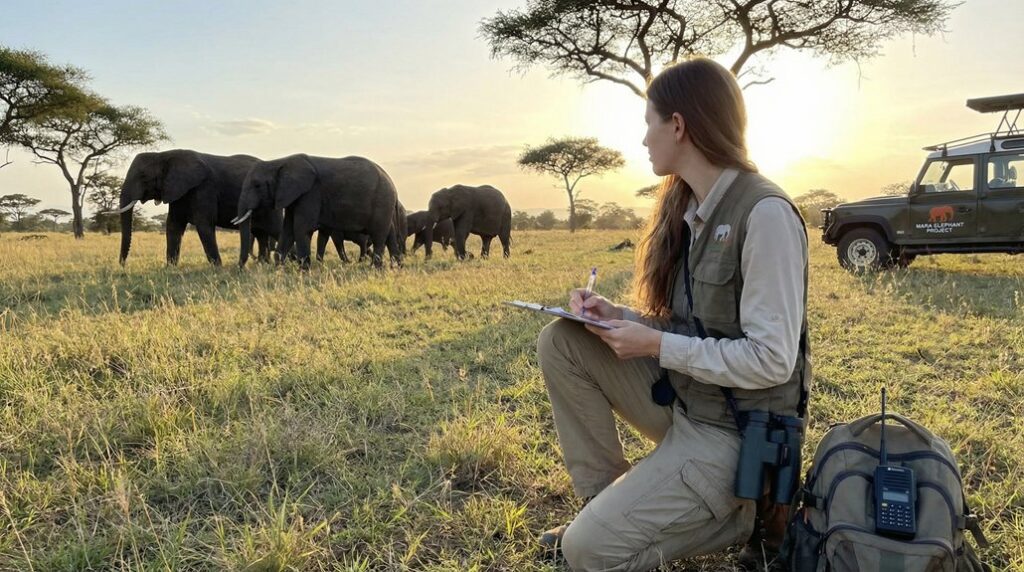
South Africa’s wildlife conservation internships offer university students, recent graduates, and career changers hands-on opportunities within a recognized Biodiversity Hotspot—a region where exceptional endemic species face significant habitat loss—through programs spanning Big 5 monitoring, monkey rehabilitation, marine research with PADI certification, and FGASA Field Guide training. Placements operate year-round across Eastern Cape reserves, Hoedspruit breeding facilities, and coastal dive sites, providing accommodation, meals, airport transfers, and expert instruction while participants contribute to anti-poaching efforts, species tracking, and data collection that supports peer-reviewed research. The sections ahead clarify eligibility requirements, seasonal considerations, and specific project details.
Why South Africa Is a Top Destination for Wildlife Conservation Internships
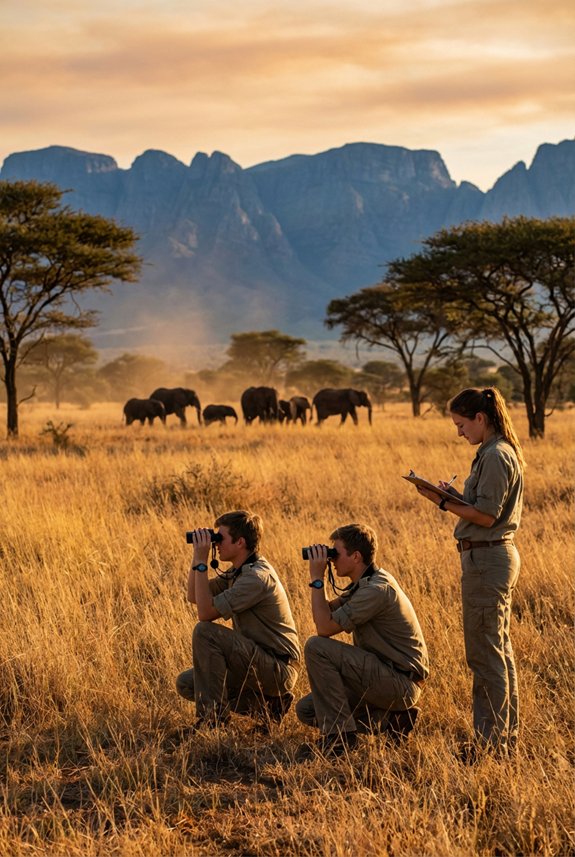
Because South Africa holds such remarkable biodiversity within its borders—from sprawling savannas to coastal forests—it’s become one of the world’s most sought-after locations for those wanting hands-on experience in wildlife conservation.
The country functions as a Biodiversity Hotspot, meaning it contains exceptionally high numbers of species found nowhere else on Earth, which creates unparalleled opportunities to work alongside endangered animals like rhinos, African wild dogs, and pangolins.
Interns don’t simply observe wildlife—they participate in daily tracking, habitat restoration, and anti-poaching efforts that directly impact survival outcomes.
Beyond fieldwork, Cultural Immersion enriches the experience: living within local communities, learning from indigenous conservation practices, and understanding how human needs intersect with environmental protection.
This combination of ecological significance and meaningful human connection makes South Africa an ideal classroom for aspiring conservationists.
Who Can Apply for Wildlife Conservation Internships in South Africa
Anyone with a genuine commitment to wildlife and a willingness to work hard outdoors can apply for a conservation internship in South Africa—no prior degree in biology is strictly required, though it certainly helps.
Most programs welcome university students, recent graduates, and career changers alike, setting minimal academic prerequisites beyond a high school diploma and a demonstrated passion for animal welfare. Language proficiency in English is generally necessary, as daily briefings, safety protocols, and field notes are conducted in English.
Some organizations may ask for a brief application essay or interview to assess motivation and readiness. Age requirements typically range from eighteen to thirty-five, though exceptions exist.
What matters most is a respectful attitude, physical stamina for outdoor work, and the maturity to follow guidance from experienced conservationists.
What’s Included in a South Africa Wildlife Conservation Internship Program
Once an applicant’s accepted into a wildlife conservation internship in South Africa, they’ll find that most reputable programs bundle together an all-inclusive package of services designed to ease the logistical burden and allow participants to focus on the work itself.
The package typically includes visa assistance—guidance from experienced coordinators who help navigate documentation requirements and approval processes—alongside detailed accommodation details covering meals and lodging at volunteer centers.
Participants also receive airport transfers, cultural orientation sessions that introduce them to local customs and project specifics, and certificates of completion that validate their efforts for future employers.
Additional support comes through dedicated trip coordinators, pre-departure guides with essential information, local team assistance throughout the placement, and access to organized excursions that deepen their understanding of South Africa’s natural heritage.
Plus you’ll get $100 off automatically, and by adding the additional code ELI100 at checkout, you can save an extra $100, for a total of $200 off your Global Work & Travel wildlife internship adventure.
Wildlife Conservation Projects to Join in South Africa
South Africa offers a remarkable variety of wildlife conservation projects that allow interns to engage directly with the country’s most iconic species and threatened ecosystems.
Those seeking hands-on experience can choose from programs that range from working alongside the Big 5—lions, leopards, rhinoceros, elephants, and Cape buffalo—to specialized initiatives like monkey rehabilitation centers where primates recover from injury or trauma.
Additional opportunities include marine conservation internships focused on protecting coastal habitats, field guide courses that teach ecological tracking and wildlife identification, and programs dedicated to endangered species that require intensive monitoring and care.
Work with Big 5 in South Africa
For those who’ve felt drawn to the wild heart of Africa—where lions patrol ancient grasslands and rhinos move through thorned acacia—this conservation internship offers something rare: the chance to work directly with the Big 5 on a 6,000-hectare private game reserve in South Africa.
Daily tasks include wildlife monitoring, which means observing and recording animal behavior, tracking lions across open terrain, and conducting game counts to assess population health.
Participants also witness conservation efforts like the legal removal of rhino horns to prevent poaching, a protective measure that saves animals from exploitation.
Through these activities, volunteers contribute to ensuring the next generation of wildlife survives in protected wild spaces.
Best For: Wildlife enthusiasts and aspiring conservationists seeking hands-on experience with Africa’s Big 5 animals while contributing to meaningful anti-poaching and wildlife monitoring efforts in a structured, safe environment.
Pros:
- Direct involvement in critical conservation work including lion tracking, game counts, and observing anti-poaching measures like legal rhino dehorning on a private 6,000-hectare reserve
- Comprehensive support system with guaranteed placement, full meals, comfortable accommodation, airport transfers, 24/5 emergency assistance, and dedicated project supervision
- Flexible booking policies including trip transfers without penalty and weekend excursions to coastal cities, historical sites, and Cape Town for a well-rounded South African experience
Cons:
- Significant additional costs beyond the program fee including flights, travel insurance, visa fees, vaccinations, and criminal background check requirements
- Shared single-sex dormitory accommodation only, with upgrades available at extra cost for those preferring more privacy
- Cancellation policy includes a 50% fee with 84 days notice, with remaining balance issued as store credit valid for only 2 years rather than a refund
Monkey Rehabilitation Program in South Africa
Working alongside a sanctuary that cares for over 500 injured and orphaned vervet monkeys offers an ideal match for volunteers who want hands-on rehabilitation experience in a setting where daily efforts directly support animal recovery and potential reintroduction to the wild.
Located in a remote corner of South Africa near national parks, the program addresses human-wildlife conflict caused by urban expansion—monkeys raid crops and property, becoming labeled as pests.
Volunteers prepare food, clean enclosures, repair infrastructure, administer medication, assist in sick-bay care, and bottle-feed babies during peak season, all while learning how rescue operations function under expert supervision and benefiting from pre-arranged airport transfers, communal accommodation, and three daily vegan meals.
Best For: Volunteers seeking immersive, hands-on wildlife rehabilitation experience who are comfortable with physical labor, communal living, and want to make a tangible impact on vervet monkey welfare while exploring South Africa’s natural landscapes.
Pros:
- Direct, hands-on involvement in all aspects of monkey care—from bottle-feeding orphaned babies to administering medication—provides meaningful rehabilitation experience with real impact on over 500 animals
- All-inclusive logistics with pre-arranged airport transfers, on-site accommodation, three daily vegan meals, and organized weekend excursions remove planning stress and allow full focus on volunteer work
- Expert supervision, on-site training, and unlimited local support ensure volunteers feel prepared and confident in their roles, even without prior animal care experience
Cons:
- Laborious physical duties including enclosure cleaning, infrastructure repair, and food preparation may be demanding for those expecting primarily animal interaction or less strenuous activities
- Communal twin-share wooden cabin accommodation may not suit volunteers who prefer privacy or more comfort-focused lodging (though private room upgrades are available)
- Remote location in Tzaneen, while offering access to natural beauty and national parks, limits immediate access to urban amenities and requires commitment to the structured schedule with only one day off per week
Work with Endangered Wildlife
Individuals who’ve felt drawn to the quiet urgency of protecting species on the brink of extinction—cheetahs whose habitats shrink year by year, rhinoceroses hunted relentlessly for their horns—will find meaningful purpose in this wildlife conservation program based in Hoedspruit, South Africa.
Volunteers work alongside experts at a vetted facility dedicated to researching and breeding endangered species, caring for orphaned and sick animals while minimizing human interaction to support recovery and potential reintroduction.
Participants gain hands-on experience in breeding programs, rehabilitation efforts, and wildlife education initiatives, contributing directly to species survival while developing practical conservation skills that extend far beyond the placement itself.
Best For: Wildlife enthusiasts and conservation-minded travelers aged 18-85 seeking hands-on experience with endangered species like cheetahs and rhinos while contributing to meaningful breeding, rehabilitation, and education programs in South Africa.
Pros:
- Direct involvement in critical conservation work with endangered species at a vetted facility, including breeding programs and rehabilitation efforts that support species survival and potential reintroduction
- Comprehensive support system including vetted placements, comfortable twin-share thatched hut accommodations, three daily meals, included excursions (bush walks, game drives, cultural experiences), and 24/5 emergency assistance
- Flexible trip durations from 2-12 weeks with cancellation options, plus access to a community of over 1 million travelers and networking opportunities with conservation professionals
Cons:
- Limited phone service at the accommodation site, though free WiFi is available at the project location
- Shared accommodations in twin-share thatched huts may not suit those preferring private lodging or more conventional amenities
Marine Conservation Internship in South Africa
This marine conservation internship offers aspiring conservationists a rare opportunity to combine scuba diving certification with hands-on research in one of South Africa’s most biodiverse coastal regions, making it an ideal choice for those who want meaningful fieldwork experience rather than passive observation.
Participants spend their first week earning PADI Open Water certification through classroom theory, pool skills demonstrations, and supervised ocean dives, then shift to daily research dives photographing nudibranchs—colorful sea slugs that serve as indicator species, meaning their presence and health reveal broader reef conditions and ocean warming trends.
Data collected underwater directly supports climate change research and marine conservation efforts, giving volunteers tangible scientific purpose beyond tourism.
Best For: Aspiring marine biologists, conservation-minded divers, or gap year students seeking structured fieldwork experience that combines professional scuba certification with meaningful contribution to climate change research in a social volunteer setting.
Pros:
- Includes full PADI Open Water certification in week one, eliminating separate training costs while immediately applying skills to real scientific research
- Collected photographic data directly contributes to peer-reviewed climate change and reef health studies, providing genuine research impact rather than manufactured volunteer tasks
- All-inclusive setup with meals, shared accommodation, airport transfers, and daily support removes logistical burden while keeping volunteers near beaches, bars, and local amenities
Cons:
- Weather and sea conditions may reduce dive frequency, potentially limiting data collection opportunities and underwater time during the internship period
- Shared accommodation with communal bathrooms and volunteer meal rotation may not suit those preferring privacy or guaranteed restaurant-quality dining
- Location near Richards Bay requires specific flight routing and offers less immediate access to major South African cities compared to Cape Town-based programs
Field Guide Course in South Africa
For aspiring conservationists who dream of transforming their passion into professional credentials, the Field Guide Course in South Africa offers an immersive eight-week pathway to earning the FGASA Level 1 Apprentice Field Guide qualification—a certification that’s recognized throughout the industry and serves as the foundation for a career in wildlife guiding.
Participants live within a 6,000-hectare private game reserve in the Eastern Cape, where theoretical study of geology, astronomy, and ecology blends seamlessly with practical bush exposure and wildlife monitoring that supports ongoing conservation efforts.
The structured curriculum builds through weeks of lectures, self-study modules, and hands-on fieldwork before culminating in rigorous assessments, ensuring volunteers return home not only with accreditation but with genuine storytelling material drawn from direct encounters with Africa’s remarkable wildlife.
Best For: Aspiring wildlife professionals and conservation enthusiasts seeking internationally-recognized field guide certification combined with hands-on bush experience in a structured, all-inclusive program.
Pros:
- Earn the industry-recognized FGASA Level 1 Apprentice Field Guide qualification through a comprehensive curriculum that balances theoretical learning with practical fieldwork in a genuine 6,000-hectare game reserve
- All-inclusive package covers accommodation, three daily meals, airport transport, expert instruction, and weekend excursions, eliminating logistical stress and allowing complete focus on the course
- Contribute to meaningful conservation work through wildlife monitoring and data collection while gaining real storytelling material from direct encounters with African wildlife
Cons:
- Eight-week minimum commitment required to complete the full qualification, which may be challenging for those with limited time availability or work obligations
- Shared, single-sex dormitory accommodation may not suit travelers who prefer privacy or are uncomfortable with communal living arrangements
- Trip bookings operate on a first-come, first-served basis, meaning delayed booking could result in missing preferred dates or optimal wildlife viewing seasons
Safari and Conservation Program in Premier Game Reserve
Those who seek meaningful engagement with wildlife conservation while supporting local communities will find this premier game reserve program in South Africa’s Eastern Cape wilderness particularly well-suited to their aspirations.
The placement operates as a strictly hands-off reserve—meaning volunteers observe and monitor wildlife without physical contact—which respects the animals’ natural behaviors while enriching participants’ understanding of ecological systems.
Daily responsibilities shift between managing various reserve aspects and assisting nearby communities, ensuring that each week brings new challenges and learning opportunities. Volunteers share comfortable accommodation with amenities including WiFi and a pool, prepare their own meals from stocked provisions, and enjoy weekly organized activities such as guided walks, canoeing, and even luxury lodge stays that deepen their connection to this remarkable landscape.
Best For: Conservation-minded travelers seeking hands-on involvement in wildlife monitoring and community development who value authentic wilderness experiences and are comfortable with self-catered accommodation and flexible daily schedules.
Pros:
- All-inclusive placement with pre-arranged secure accommodation, airport transfers, and weekly organized activities like canoeing, guided walks, and luxury lodge stays
- Dynamic daily responsibilities combining wildlife monitoring with community support work ensure varied experiences rather than repetitive tasks
- Comfortable shared volunteer house features modern amenities (WiFi, pool, BBQ area) with stocked pantry and weekends free for exploring nearby surfing, diving, hiking, and historical sites
Cons:
- Strictly hands-off wildlife policy means no direct physical interaction with animals, which may disappoint those expecting tactile experiences
- Self-catered meals require volunteers to prepare their own breakfast, lunch, and dinner from pantry provisions rather than having meals provided
- No standard daily itinerary demands high adaptability and comfort with uncertainty regarding specific tasks and schedules
Marine Science & Open Water Scuba Field Course in False Bay
Students seeking structured marine training alongside meaningful conservation work will find this month-long field course particularly well-suited to their goals, as it combines internationally recognized scuba certification with hands-on research experience in one of South Africa’s most biodiverse marine environments.
Based in Glencairn—a hidden corner just 30 kilometers from Cape Town—the program begins with SSI Open Water certification during the first week, then progresses through acclimatization dives, ecological lectures, and citizen science methodology before participants begin collecting data for ongoing research projects.
Daily schedules follow a consistent rhythm: morning briefings at headquarters, afternoon dive surveys with sampling equipment, and post-dive debriefings where students process data and complete logbook entries alongside their team of four to twelve peers.
Best For: Students and aspiring marine scientists who want to earn their scuba certification while gaining practical research experience in marine ecology and conservation within a structured month-long program near Cape Town.
Pros:
- Combines SSI Open Water certification with hands-on marine research training, delivering both an internationally recognized diving credential and practical field science experience in a single month-long course
- Progressive curriculum structure that builds from basic dive skills through to data collection and analysis, with lectures on local ecology, scientific methodology, and specialized workshops like GIS and freediving
- Daily immersion in False Bay’s biodiverse marine environment with consistent afternoon dive opportunities, team collaboration with 4–12 like-minded students, and convenient location just 30 km from Cape Town
Cons:
- Month-long commitment may be difficult for students with limited time availability or those unable to take extended leave from other academic or work obligations
- Diving frequency depends on weather conditions, which could reduce the number of practical dive sessions and data collection opportunities during periods of poor weather
- Group accommodation with multiple students and structured daily schedules (09:00–16:00) may not suit those preferring independent living arrangements or more flexible timing
Marine Science Scuba Field Course in False Bay
Immersing oneself in the underwater ecosystems of False Bay, this Marine Science Scuba Field Course suits aspiring marine biologists and conservation professionals who want hands-on research experience beneath the waves—not just classroom theory but actual data collection among kelp forests and rocky reefs.
Based in Glencairn, a coastal settlement thirty kilometers from Cape Town, participants spend a month conducting underwater surveys, tagging fish and sharks, sampling microplastics, and monitoring species diversity while honing scuba skills under the guidance of experienced dive instructors and field scientists.
The course progresses through weekly phases: initial dive training and acclimatization, followed by active data collection for ongoing research projects, then specialized workshops in geographic information systems and freediving techniques, culminating in lectures on shark physiology and population modeling tailored to participant interests.
Best For: Aspiring marine biologists and conservation professionals seeking hands-on underwater research experience in False Bay’s kelp forests and rocky reefs rather than traditional classroom-based marine science education.
Pros:
- Comprehensive month-long program combining structured scuba training, real research data collection (fish/shark tagging, microplastic sampling, species monitoring), and specialized workshops in GIS and freediving techniques
- Prime location in Cape of Good Hope region with daily access to diverse underwater ecosystems including kelp forests and rocky reefs, plus proximity to Cape Town for weekend exploration
- All logistics handled by partners including airport pickup, accommodation, equipment, on-site training, and expert guidance from dive instructors and field scientists throughout the program
Cons:
- Requires citizenship of eligible countries and clean criminal record from past 5 years, plus completion of dive medical questionnaire, potentially limiting accessibility for some interested candidates
- Significant time commitment of one full month living in a coastal wilderness setting, which may not suit those with inflexible work or academic schedules
- Structured daily schedules from 0900 to 1600 with mandatory dive surveys and data collection leave limited flexibility for those preferring self-directed learning or variable daily routines
Best Time of Year to Do a Wildlife Conservation Internship in South Africa
When should aspiring conservationists plan their journey to South Africa’s reserves and sanctuaries? The answer depends largely on migration timing and seasonal weather patterns that shape daily fieldwork experiences. South Africa’s dry winter months, from May through September, offer cooler temperatures and sparse vegetation—conditions that make wildlife observation considerably easier, as animals congregate around remaining water sources.
Summer, spanning October through April, brings lush landscapes and breeding activity, though higher temperatures and afternoon thunderstorms can complicate outdoor tasks. Many internships operate year-round, allowing participants to choose based on personal tolerance for heat and their interest in specific animal behaviors.
Spring months, particularly September and October, provide an appealing middle ground: moderate temperatures, emerging greenery, and increasing wildlife activity create ideal learning conditions for newcomers to conservation work.
Conclusion
A wildlife conservation internship in South Africa offers more than field experience—it provides a chance to contribute meaningfully to protecting endangered species while developing skills that last a lifetime. Whether someone’s drawn to hands-on research, habitat restoration, or community education, these programs welcome participants ready to learn and serve. The question isn’t whether to go, but when to begin this transformative journey into conservation work that truly matters.
Ready to volunteer or intern abroad? Enter code ELI100 at checkout and get $100 OFF any internship or volunteer project worldwide.
Explore ProjectsIf you’re exploring hands-on experience in ecology or wildlife biology, don’t miss my complete guide to wildlife conservation internships with global work and travel, where I break down what’s worth your time, money, and long-term career goals.

Erzsebet Frey (Eli Frey) is an ecologist and online entrepreneur with a Master of Science in Ecology from the University of Belgrade. Originally from Serbia, she has lived in Sri Lanka since 2017. Eli has worked internationally in countries like Oman, Brazil, Germany, and Sri Lanka. In 2018, she expanded into SEO and blogging, completing courses from UC Davis and Edinburgh. Eli has founded multiple websites focused on biology, ecology, environmental science, sustainable and simple living, and outdoor activities. She enjoys creating nature and simple living videos on YouTube and participates in speleology, diving, and hiking.
🌿 Explore the Wild Side!
Discover eBooks, guides, templates and stylish wildlife-themed T-shirts, notebooks, scrunchies, bandanas, and tote bags. Perfect for nature lovers and wildlife enthusiasts!
Visit My Shop →