
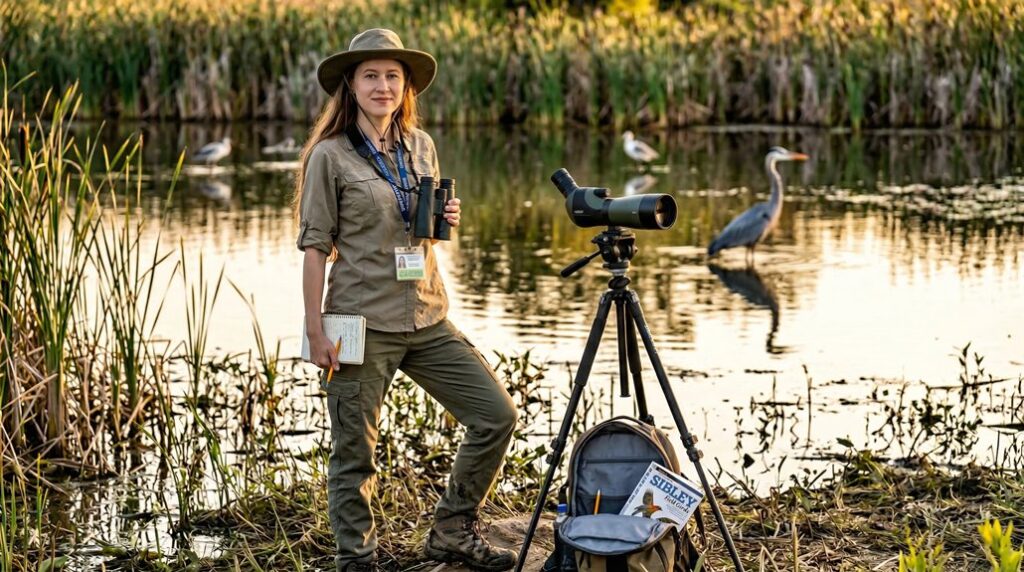
A wildlife biology resume with no experience can still impress by highlighting a B.S. in Wildlife Biology, relevant coursework such as Habitat Mapping and Population Dynamics, and volunteer field work that includes measurable outcomes and use of STAR method.
Embedding exact phrases from job postings, such as “environmental impact assessment,” “wildlife monitoring,” and “GIS/ArcGIS”, throughout work experience bullets and a skills section boosts ATS match, while quantifying each activity (e.g., mapped 45 acres of wetland) demonstrates impact and relevance, and the next sections will guide deeper refinement.
Understand the Wildlife Biologist Job Description
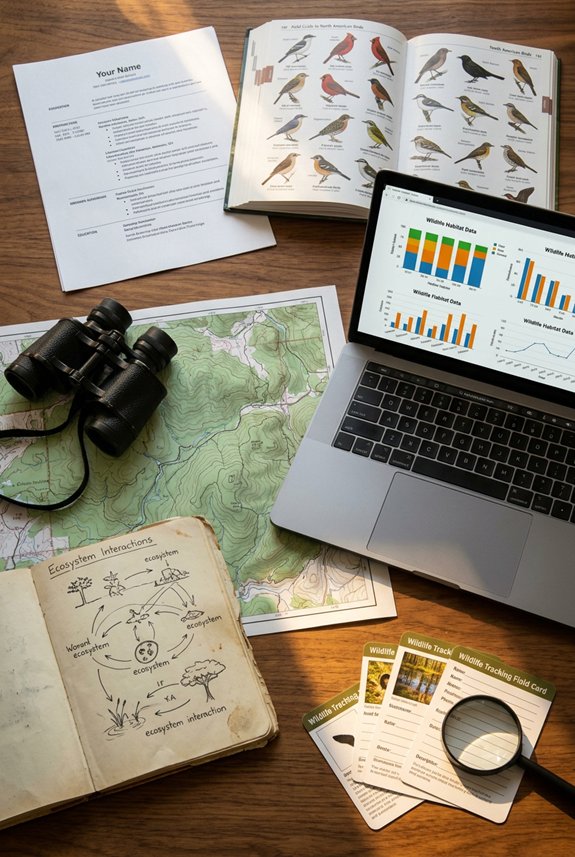
When reviewing a wildlife biologist vacancy, start by dissecting the Duties and Responsibilities section, because it reveals the exact tasks, such as conducting wildlife surveys, performing habitat assessments, creating GIS maps, and ensuring permit compliance, that the employer expects the candidate to execute, and by mirroring those phrases in the resume and cover letter you increase the chance of passing the applicant tracking system.
Understanding the job description means noting required qualifications, such as a degree in ecology, certifications like First Aid/Wilderness, and software proficiency in ArcGIS, then listing them clearly.
It also involves extracting measurable expectations, for example, field surveys up to 12 hours a day or managing a database of over 10 000 records, and translating those metrics into coursework or volunteer experiences.
Identify High Impact Wildlife Biologist Keywords in Federal Postings
Scanning recent USAJOBS postings for Wildlife Biologist GS‑5/7 positions reveals a core set of high impact keywords that recur at least five times across listings, terms such as “wildlife monitoring programs,” “habitat mapping,” “environmental impact assessment,” “GIS/ArcGIS,” “field work,” and “endangered species recovery.”
By extracting these exact phrases and embedding them in resume’s work‑experience bullets, education projects, and skills section, applicants can align their language with the federal job announcement and satisfy the applicant tracking system’s keyword matching algorithms.
The article advises candidates to list “Wildlife Biology” as a primary discipline, to note “GIS/ArcGIS” proficiency with concrete outputs like “mapped 120 sq mi of habitat,” and to describe “species monitoring” activities with metrics such as “tracked 15 endangered species weekly.”
Integrating these terms throughout the document demonstrates relevance and boosts ATS scores.
My free interactive tool where you input what you did, rewrites your experience into the resume ready to use bullets that you can just copy paste.
Write a Headline That Screams “Wildlife Biologist
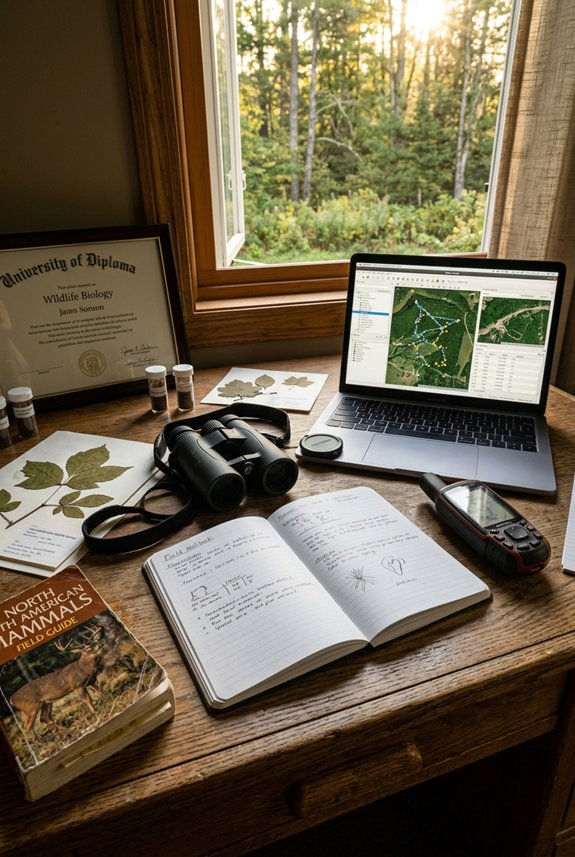
Crafting a headline that instantly signals “Wildlife Biologist” to both applicant systems and hiring managers begins with placing the exact job title at the forefront, followed by a concise qualifier that highlights the most relevant hard skills, such as GIS, ecological surveys, and data analysis—and, when possible, quantifiable achievements like “250+ hrs field surveys.”
For example, a strong headline might read “Wildlife Biologist — Entry‑Level | GIS, Habitat Mapping, 250+ hrs Field Surveys,” which mirrors common keywords from federal postings while keeping the line under ten words.
- Use the exact phrase “Wildlife Biologist headline” at the top.
- Add “Entry‑Level Wildlife Biologist” with key tools like GIS Ecological Surveys.
- Insert measurable metrics, e.g., “250+ hrs field surveys,” to prove experience.
These steps make certain the headline catches ATS filters and human readers alike, presenting a clear, concise, and compelling professional identity.
Draft a Summary That Blends Your Biology Degree With Client Service Expertise
The headline you just crafted now serves as a springboard for a summary that weaves together academic preparation and client service expertise, positioning you as a well‑rounded candidate for entry‑level wildlife biology roles.
A B.S. in Wildlife Biology, featuring coursework in wildlife management, GIS, and population ecology, culminated in a capstone project that conducted a 12‑week population survey of three songbird species and analyzed 1,200 observations, demonstrating data‑driven research skills.
Ten years of customer service experience, serving 40+ clients weekly, honed stakeholder communication, conflict resolution, and meticulous record‑keeping, while proficient use of ArcGIS and Excel enabled efficient scheduling and visualization, achieving 95 % on‑time service delivery.
Project coordination experience reduced supply waste by 20 % through inventory management and team scheduling.
Seeking an entry‑level Wildlife Biologist role where GIS, data analysis, and proven client‑stakeholder communication will support monitoring and conservation programs.
Highlight Coursework That Proves Wildlife‑Biologist Technical Competence
Showcasing the coursework that directly aligns with wildlife‑biologist duties lets hiring managers see both academic depth and practical skill.
The candidate highlights a semester‑long Wildlife Ecology class (A) where they completed an ArcGIS mapping project that produced a habitat suitability layer for a threatened salamander, and a Population Dynamics course (A‑) in which they used R for population modeling, analyzing nest‑survival data for 120 nests and generating predictive graphs.
A concise three‑item list illustrates tangible achievements:
- Capstone: six‑week point‑count bird survey across five sites, resulting in a 12‑page management report.
- Field Methods lab: 40 + hours of transect sampling, mist‑net processing for 60 birds, vegetation plot assessments.
- Presentation: habitat suitability model delivered to class and stakeholders, improving model accuracy by 15 % after feedback.
These examples demonstrate technical competence and communication ability.
Turn Lab Projects Into Quantifiable Wildlife‑Biologist Achievements
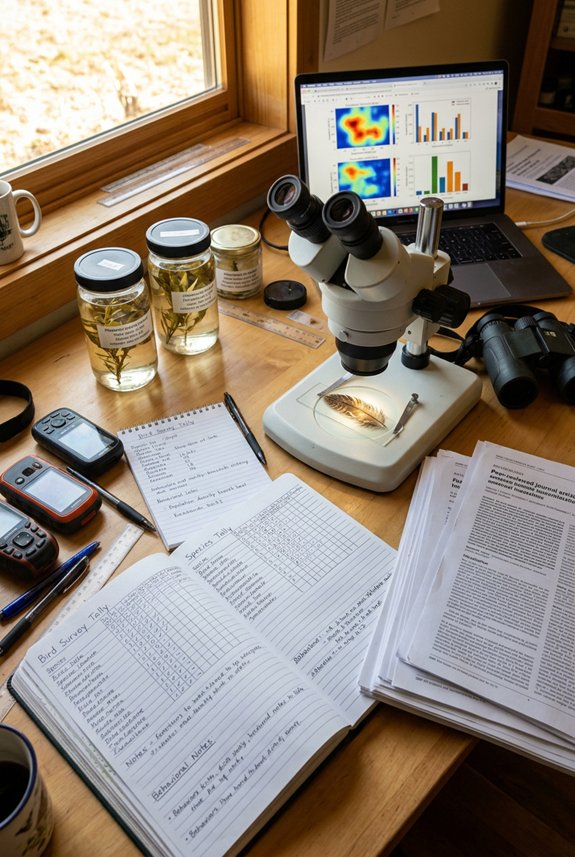
Transforming lab work into quantifiable achievements begins with framing each project as a concrete result that hiring managers can measure, so candidates should start by stating the purpose, the methodology, and the outcome in a single, data‑rich sentence; for example, “Designed and executed a 12‑week small‑mammal population survey using mark‑recapture methods, processing 240 trap‑nights and estimating population sizes with 95 % confidence intervals,” which simultaneously conveys the scope, the technique, and the statistical rigor.
By tailoring similar statements, a student can say they Analyzed 2,500 vegetation plot records in R, calculated species richness, and produced a GIS heat map that pinpointed three high‑priority restoration zones covering 18.4 acres.
They can also highlight that they Built a spatial database containing 500+ georeferenced species observations, boosting mapping speed by 40 % and supporting a literature review cited in a class brief.
These concise, metric‑driven bullets turn academic lab work into professional‑ready achievements.
Showcase Volunteer or Citizen Science Wildlife Work
Volunteering in wildlife projects, whether with a local conservation group, a national society, or an online citizen‑science platform, offers concrete evidence of field experience, data‑handling skills, and teamwork that hiring managers can verify through dates, hours, and measurable outcomes.
By listing each role with exact dates, total hours, and specific tasks—such as point‑count surveys, nest monitoring, or banding assistance—the applicant shows commitment and exposure.
Including citizen science contributions, like an iNaturalist record of 250 species across three parks, demonstrates the ability to collect, enter, and quantify data that feeds into county biodiversity reports.
The resume should also note technical tools (ArcGIS Collector, GPS mapping) and leadership moments (training six volunteers for invasive‑species removals).
- Volunteer Avian Surveyor, Audubon Society, Summer 2022 — 100 hours, point‑counts, nest checks.
- iNaturalist contributor, 2021‑2023 — 250 observations, data used in regional reports.
- Habitat restoration volunteer, 2022 — 40 hours, GPS transects, ArcGIS mapping.
Add Soft‑Skill Bullets for Teamwork, Problem‑Solving, and Outreach
Building on the technical competencies highlighted earlier, the resume should also showcase soft skill bullets that demonstrate teamwork, problem‑solving, and outreach, because employers value how candidates translate technical ability into collaborative results.
A bullet could read: “Coordinated weekly workshops for 10–15 participants, training four new staff members and fostering teamwork that improved session consistency.” For problem‑solving, note: “Collaborated with cross‑functional teams to address client concerns, reducing repeat complaints by 40 % through structured analysis, documentation, and process adjustments.” For outreach, include: “Organized twelve community events with 20–100 attendees, creating communication materials, measuring engagement via surveys, and expanding program visibility.”
Each bullet should use action verbs, quantify impact, and link soft‑skill achievements to measurable outcomes, reinforcing the candidate’s ability to contribute beyond technical expertise.
Apply the STAR Method to Wildlife Biologist Bullet Points
By structuring each accomplishment with the Situation‑Task‑Action‑Result (STAR) framework, a wildlife‑biology résumé can turn vague duties into compelling stories that hiring managers quickly grasp.
The candidate can showcase a Volunteer Surveys project by noting a seasonal shorebird decline (Situation), weekly point‑counts (Task), standardized transects with GPS logging (Action), and 120 hours of data that drove a 15 % habitat‑restoration boost (Result).
A GIS Mapping example follows: identify priority habitat (Situation), develop suitability maps (Task), layer landcover, elevation, and species data in ArcGIS and run a weighted overlay (Action), then produce a map guiding 50 km² of field surveys (Result).
Quantify Results (e.g., “Managed 30‑Client Schedule, Improving Efficiency 20%”)

Showcasing quantified results transforms vague duties into tangible achievements, and the key is to attach concrete numbers, percentages, or time frames to every claim. The applicant should quantify results by pairing Action Verbs with measurable outcomes, allowing the Skills section to echo those figures and demonstrate impact.
For example, “Managed a 30‑client schedule for a campus wildlife clinic, improving appointment efficiency 20 % over one semester,” or “Conducted weekly bird surveys across a 50‑acre wetland, increasing species detection rate 35 % through optimized transect placement.” Likewise, “Coordinated schedules for 200+ monthly clients, reducing no‑shows 18 %,” and “Organized a 45‑volunteer invasive‑species removal, restoring 10 acres and boosting native plant survival 40 %.” These precise statements turn abstract duties into compelling evidence of competence.
Describe GIS Mapping Assignments With Acreage, Software Version, and Outcomes
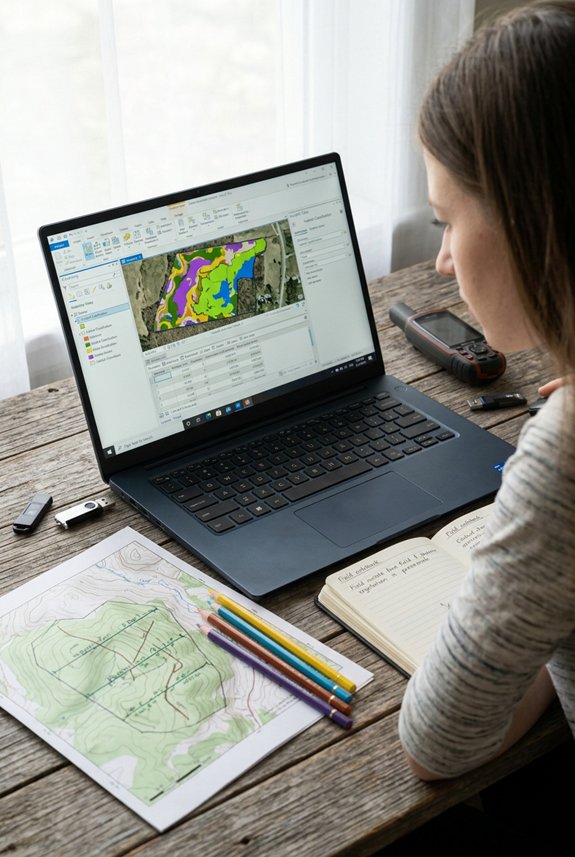
Because GIS projects often serve as the visual backbone of wildlife biology work, detailing the acreage, software version, and concrete outcomes helps hiring managers see both technical competence and real world impact.
The candidate’s GIS mapping portfolio showcases a range of scales and tools, from wetland habitat layers to corridor risk assessments, each tied to measurable results.
Highlights include:
- 120 acres of wetland mapped with ArcGIS Pro 3.1, producing a geodatabase and a 1:10,000‑scale suitability raster that guided site prioritization.
- 45 acres of restoration classified in QGIS 3.16, digitizing 150 polygons and calculating species percent coverage to direct invasive‑= species removal.
- 200 acres of land‑cover change mapped using ArcMap 10.8, revealing a 12 % native grassland loss and supplying metrics for the final report.
These examples illustrate clear procedural steps, software proficiency, and tangible conservation outcomes.
List Certifications and Training Relevant to Wildlife‑Biologist Roles
Holding a solid set of certifications and training not only demonstrates readiness for wildlife biologist positions but also signals a commitment to safety, technical competence, and regulatory compliance; consequently, the resume should group these credentials into clear categories, first‑aid and wilderness medical, technical software, permits and licenses, species specific field training, and analytical or laboratory proficiencies, each entry listing the issuing organization, date of issuance, expiration (if applicable), and a brief indicator of skill level or relevant tools.
Like this,
- Wilderness medical certification: Wilderness First Responder (NOLS), 80‑hour, Issued 06/2024 — valid 2 years.
- Field permits and licenses: Migratory Bird Banding Permit #MB‑2023‑045, U.S. Fish & Wildlife Service, Issued 03/2023.
- Wildlife training workshops: Avian Mist‑Netting & Banding Workshop, 24 hours, University of X, 08/2022 — species ID, net setup, safe handling.
Technical: ArcGIS Pro Certification, Esri, Completed 03/2023 — Intermediate (spatial analysis).
Analytical: R for Ecological Data Analysis, Coursera, 40 hours — dplyr, GLMs, ggplot2 (completed 11/2023).
You can read my blog post about BEST WEBSITES THAT ARE OFFERING FREE WILDLIFE BIOLOGY AND ECOLOGY ONLINE COURSES.
Include Professional Affiliations (e.g., Society of American Foresters)
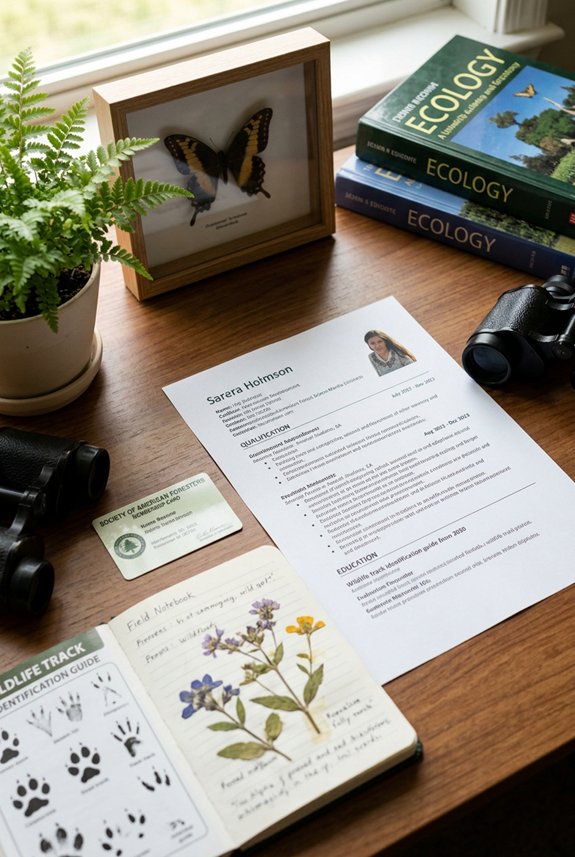
A well‑structured professional affiliations section can instantly signal a candidate’s ongoing engagement with the wildlife biology community, especially when it lists memberships in organizations such as the Wildlife Society, Society for Conservation Biology, American Fisheries Society, and Society of American Foresters, each accompanied by the join date to demonstrate current involvement.
By noting student or affiliate status, e.g., Student Chapter Outreach Coordinator (2022–2023), and any committee roles, the resume shows leadership and service while also highlighting certifications like Certified Wildlife Biologist® candidate or SAF membership with training dates that validate competencies.
Including conference presentations, such as “Urban Raptor Survey Results” presented at the Wildlife Society Annual Conference 2022, demonstrates communication skills and professional development.
Mentioning benefits used, job‑board access, mentoring, and webinars further prove active participation in professional affiliations.
You will be surprised to find out what counts as experience in ecology and wildlife biology.
Optimize the Education Block: Honors, Electives, GPA (If Strong)
When crafting the education block, start by listing the degree exactly as it appears on the diploma—such as “B.S. in Wildlife Biology, University of State, May 2024”—and include the cumulative GPA if it’s 3.5 or higher, or the major GPA if that figure is stronger, because a high GPA instantly signals academic competence to both applicant‑tracking systems and hiring managers.
- Academic honors – Dean’s List (Fall 2022, Spring 2023) and Cum Laude (2024) showcase consistent excellence.
- Relevant coursework – Wildlife Ecology, Habitat Assessment, Quantitative Methods in Ecology, GIS for Natural Resources demonstrate technical readiness.
- Capstone project – Senior thesis on amphibian population estimates, using mark‑recapture, yielded a 12 % revised abundance figure, illustrating applied research skill.
Adding certifications such as an ArcGIS Pro workshop (24 hrs) and First Aid CPR (valid 2026) reinforces current competence and aligns the résumé with job‑specific expectations.
Use a Two‑Column Modern Template That Keeps the Skills Section Visible
A two‑column modern resume layout, with a narrow left column occupying roughly thirty percent of the page for skills and education and a wider right column covering the remaining seventy percent for experience and projects, instantly showcases technical abilities to both hiring managers and applicant‑tracking systems.
The left side holds a concise Skills list, where a budding Wildlife Biologist can place eight to twelve targeted terms, ArcGIS, wildlife monitoring, ecological survey techniques, GPS data collection, and similar keywords, ensuring ATS scanners flag relevance.
Meanwhile, the right column details coursework, class projects, and volunteer roles, each entry noting dates, hours, and measurable outcomes.
Customize Each Resume for the Specific Posting’s Focus
If you read the job announcement closely, you’ll see that mirroring the exact title, such as “Wildlife Biologist”, and the required technical terms, like ArcGIS, ecological survey techniques, and Environmental Impact Assessment, dramatically improves the chance of passing automated screens. The applicant should then reshape each bullet to echo the posting’s focus, emphasizing measurable data collection, GIS mapping, and statistical analysis, while labeling transferable activities under a “Project & Volunteer Experience” heading.
This approach lets a candidate without formal field work showcase relevant competence.
- Replace generic duties with targeted phrases such as “mapped 50+ acres using ArcGIS.”
- Insert concise metrics that quantify scope, for example “analyzed 200+ survey responses in R.”
- Align every skill line with the exact terminology used in the posting.
Network With Wildlife Professionals Through Conferences, Webinars, and Local Groups
Frequently, the most effective way to build a professional network as an emerging wildlife biologist is to attend and actively participate in conferences, webinars, and local groups that bring together researchers, managers, and practitioners; for example, the Wildlife Society’s annual conference, which draws 2,000–3,000 attendees, offers opportunities to present a poster or give a short talk that can attract hiring managers and collaborators who are already posting job openings.
By volunteering at local land trusts or university labs, a candidate logs tangible hours that become conversation starters, while informational interviews after a webinar let them ask targeted questions and showcase a concise skill summary.
- Attend a regional conference and schedule a 15‑minute chat with a mid‑level biologist.
- Volunteer 50‑200 hours during a season to earn references and visibility.
- Join a local watershed group, ask a question during a Q&A, and follow up on LinkedIn.
Apply on Multiple Platforms: USAJOBS, Conservation Careers, Niche Wildlife Boards
Applying on multiple platforms, USAJOBS, Conservation Careers, and niche wildlife boards—greatly expands a graduate’s visibility, and the chances of landing a position that matches his or her emerging skill set.
A recent graduate should first create a detailed USAJOBS profile, using the Resume Builder to list hours per week, expand duty descriptions, and embed keywords such as Wildlife Biologist, ArcGIS, and field survey techniques, then upload a version tailored to each federal posting.
Next, the candidate should register on Conservation Careers and niche boards like The Wildlife Society job board, state DNR sites, and university seasonal job pages, where listings for seasonal technician or internship roles often require mist‑netting, radio‑telemetry, or point‑counts.
By monitoring agency listservs, social‑media groups, and university career pages, the applicant can also capture short‑term contracts and volunteer projects, adding them to a Conservation Careers profile and linking them to the resume.
This systematic, multi‑platform approach maximizes exposure and aligns the graduate’s emerging skill set with employer expectations.
Quick Tip: Join all the email lists when you are visiting job websites, to get notified first about job openings.
Track Applications, Note Feedback, and Refine Your Resume Continuously
Consistently tracking each application, using a simple spreadsheet that lists job title, agency, posting URL, date applied, resume version, hours per week (for federal jobs), and deadline, helps you see patterns that would otherwise stay hidden; by recording automated ATS feedback, such as pass/fail status or match scores, and any recruiter replies, you can calculate conversion rates, spot weak points, and decide what you need to work on.
Review and Update Your Resume Quarterly With New Coursework, Certifications, or Volunteer Achievements
Quarterly résumé updates, set on a calendar reminder every three months, guarantee that new coursework, certifications, and volunteer achievements are promptly reflected, keeping the document current and competitive.
She schedules a reminder, then lists each course title, institution, completion date, and credit hours—such as “Advanced Wildlife Ecology, 12 credit hours, Univ. of X, completed Mar 2024”—to showcase measurable progress.
After a field event, she records specific duties, volunteer hours, species surveyed, and data points, for example “40 volunteer hours conducting point‑count surveys for songbirds, 2023‑Q4,” and adds them to the Experience section.
When a certification like Wilderness First Aid is earned, she enters the credential, issuing body, and issue date in a Certifications section, ensuring the résumé aligns with job requirements and improves ATS keyword matching.
If you’re wondering how to turn your coursework and volunteer work into a real opportunity, read my step-by-step guide on how to get a paid biology internship or job with no experience.

Erzsebet Frey (Eli Frey) is an ecologist and online entrepreneur with a Master of Science in Ecology from the University of Belgrade. Originally from Serbia, she has lived in Sri Lanka since 2017. Eli has worked internationally in countries like Oman, Brazil, Germany, and Sri Lanka. In 2018, she expanded into SEO and blogging, completing courses from UC Davis and Edinburgh. Eli has founded multiple websites focused on biology, ecology, environmental science, sustainable and simple living, and outdoor activities. She enjoys creating nature and simple living videos on YouTube and participates in speleology, diving, and hiking.
🌿 Explore the Wild Side!
Discover eBooks, guides, templates and stylish wildlife-themed T-shirts, notebooks, scrunchies, bandanas, and tote bags. Perfect for nature lovers and wildlife enthusiasts!
Visit My Shop →