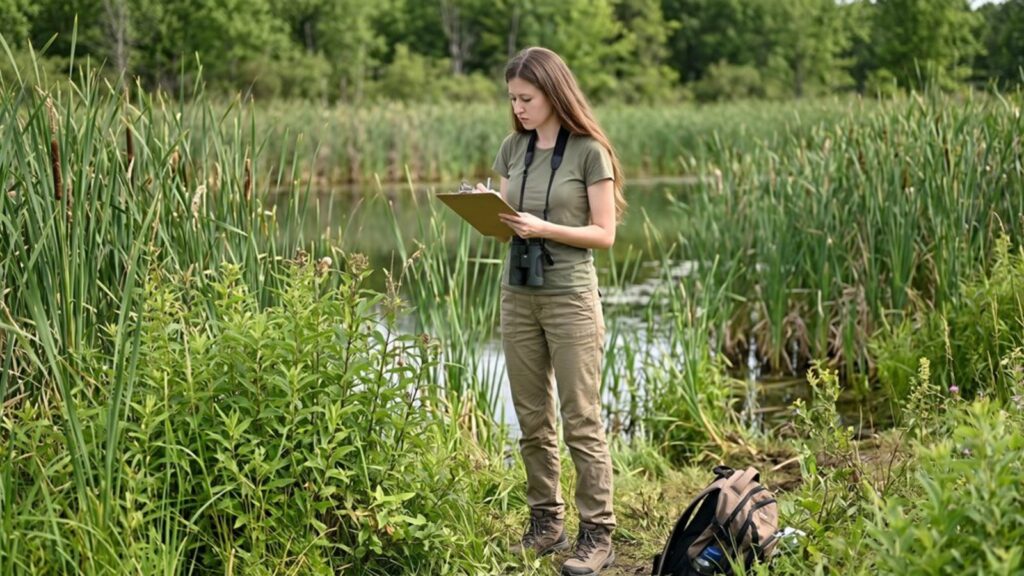
With an ecology degree, you can work as a field ecologist designing wildlife surveys, a restoration ecologist rebuilding damaged habitats, a wildlife biologist tracking animal populations, or an environmental consultant guiding companies through regulations like the Clean Water Act. Conservation scientists earn around $71,000 annually, while experienced field ecologists earn closer to $88,000. You’ll also find roles in science communication, natural resource management, and federal agencies like USFWS and NOAA. Understanding What Jobs Can You Do With an Ecology Degree can help you match your strengths to the right role.
Key Takeaways
- An ecology degree prepares you for field roles like wildlife biologist, marine biologist, field ecologist, and restoration technician working directly with ecosystems and organisms.
- Conservation scientists earn around $71,000 annually, while experienced field ecologists earn closer to $88,000 (U.S. Bureau of Labor Statistics).
- Environmental consultants conduct habitat surveys, develop mitigation plans, and ensure regulatory compliance, often working flexible contract roles.
- Science communicators and outreach specialists translate ecological research into public education programs, guided experiences, and accessible visual content.
- Natural resource managers oversee forests, wetlands, and rangelands, handling land stewardship, resource budgeting, and stakeholder engagement across agencies and nonprofits.
What an Ecology Degree Actually Prepares You to Do
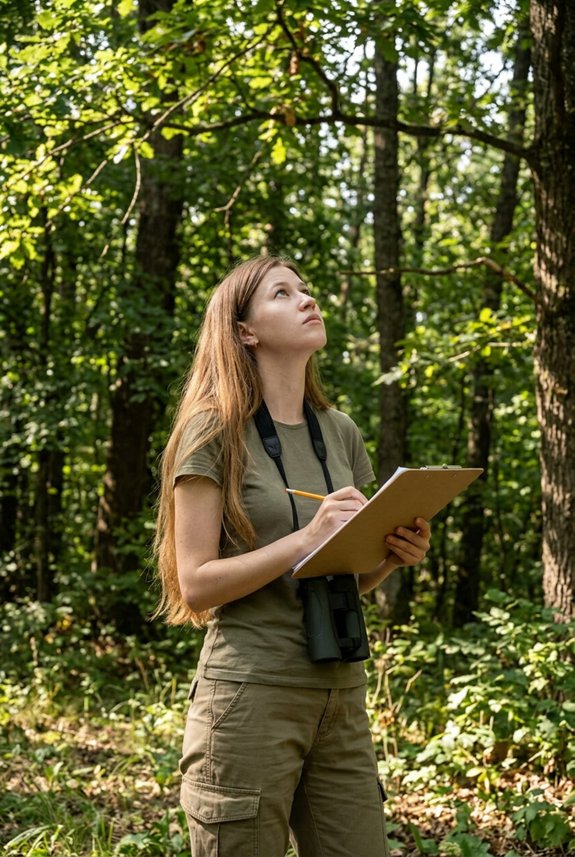
Earning an ecology degree shapes you into someone who can read the natural world like a map, understanding not just what lives in a forest or wetland, but why it lives there and how everything connects.
You’ll build real technical skills: field sampling, species identification, data analysis, and GIS mapping, which is software that tracks patterns across landscapes. These competencies support career shifts into research, conservation, consulting, or policy work.
You’ll also navigate ethics dilemmas around land use and environmental justice, think critically about work life balance in fieldwork heavy roles, and explore freelance opportunities in environmental communication or consulting.
Industry networking through internships and federal agencies like the USFWS connects classroom learning to meaningful professional pathways, grounding your degree in practical, purposeful work.
What Jobs Can You Do With An Ecology Degree?
Those technical skills and critical thinking habits your ecology degree builds don’t just shape how you see the world, they also open a surprisingly wide range of career paths, each rooted in genuine fieldwork, science, and stewardship.
You might work in ecosystem consulting, advising organizations on environmental impact, or explore urban ecology, studying how nature functions within cities.
Climate restoration draws ecologists who rebuild landscapes damaged by warming and erosion, while agroecology practices help farmers work with natural systems rather than against them.
Citizen science programs, where trained volunteers collect real environmental data, also need skilled coordinators and analysts.
From marine research to natural resource management, your degree equips you to contribute meaningfully across conservation, policy, education, and land stewardship roles, each path grounded in the same careful observation you’ve already been practicing.
Field Ecologist: Life and Work in the Wild
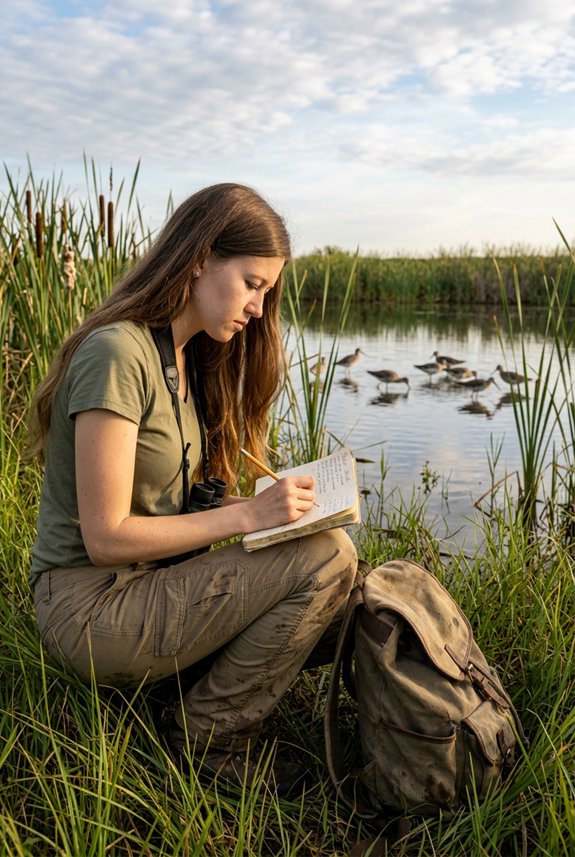
Picture yourself wading through a wetland at dawn, net in hand, recording exactly which species live there and why, that’s the daily reality of a field ecologist, a scientist who studies living organisms directly within their natural habitats.
You’ll design surveys, deploy equipment like traps and GPS units, and handle equipment maintenance, keeping your tools reliable and accurate.
Seasonal logistics, planning work around weather, migration cycles, and site access, shape your entire schedule. You’ll practice field safety constantly, traversing uneven terrain and unpredictable conditions with care.
Data validation, meaning the process of checking your collected information for errors, guarantees your findings hold up under scrutiny. Some projects even involve citizen science, welcoming trained volunteers to expand research reach.
Employers range from government agencies to universities, NGOs, and consulting firms.
Restoration Ecologist: Rebuilding Damaged Ecosystems
Rebuilding a damaged ecosystem takes patience, science, and a willingness to work with nature rather than against it, and that’s exactly what restoration ecologists do every day.
You’d assess degraded land, then design recovery plans using tools like GIS mapping and soil microbiome analysis, which means studying the tiny underground organisms that keep soil healthy.
Projects range from post fire regeneration, restoring forests after wildfires, to urban rewilding, reintroducing native plants and wildlife into city spaces.
You’d partner with community nurseries, local plant-growing operations that supply native species, and consider restoration economics, balancing ecological goals with funding realities.
Employers include government agencies, conservation nonprofits, and consulting firms.
Entry level technician roles and internships build the hands on experience that eventually leads to managing full restoration programs independently.
Wildlife Biologist: Tracking and Protecting Animal Populations
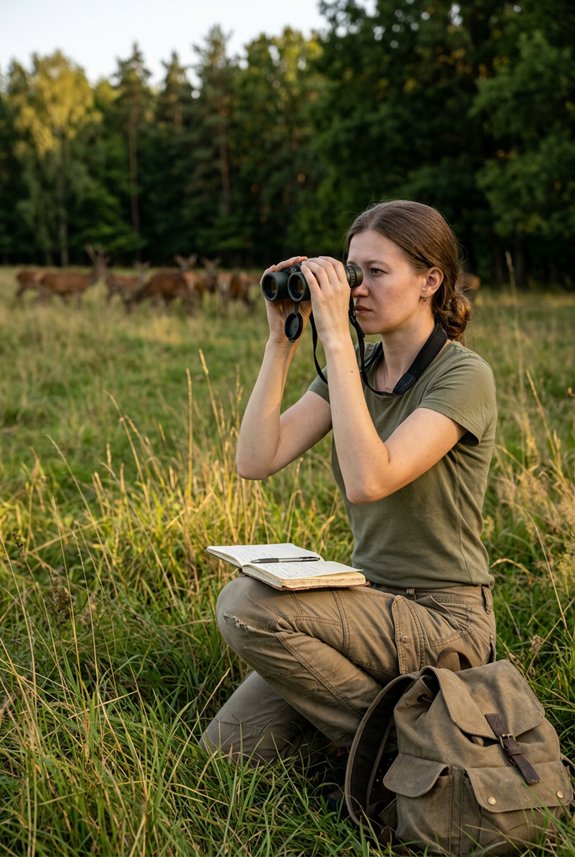
From the forest edge to the open tundra, wildlife biologists spend their careers tracking and protecting animal populations, working to understand not just where animals live, but how they’re surviving.
You’d use camera trap analytics, meaning data gathered from motion activated cameras, to monitor species movement and behavior across seasons.
Seasonal deployments take you into the field repeatedly, building accurate population records over time.
You’d also conduct disease surveillance, watching for illness that could threaten entire herds or flocks. Landscape connectivity, how well animals can travel between habitats shapes your management recommendations.
Community engagement matters too, as you’d communicate findings to agencies, landowners, and the public. Employers include federal bureaus, state agencies, and nonprofits, with most entry roles beginning as technician or seasonal positions.
Conservation Scientist: Fighting Species and Habitat Loss
When species vanish and habitats shrink, conservation scientists step in to slow that loss, designing protection plans and recovery strategies that can span millions of acres of both public and private land.
You’d likely work for federal agencies or nonprofits, conducting field surveys and using GIS and remote sensing, a form of remote monitoring that maps habitats from satellite data, to guide habitat prioritization, meaning deciding which lands need protection most urgently.
Population recovery efforts often require policy navigation, interpreting laws like the Endangered Species Act to keep projects legally sound.
You’d also prepare technical reports and practice stakeholder engagement, collaborating with landowners, businesses, and communities to balance conservation with everyday land use.
Entry-level roles typically require a bachelor’s degree, while leadership positions often expect a master’s or doctorate.
Marine Biologist: Ecology Careers Beneath the Surface

While conservation scientists focus much of their work on land, the world’s oceans, estuaries, and coastal wetlands hold ecosystems just as complex and vulnerable, and marine biologists are the ones studying them.
With an ecology degree, you can explore everything from plankton dynamics, meaning how tiny organisms drift and interact at the base of the food web, to deep sea communities thriving in almost total darkness. You’ll investigate trophic networks the feeding relationships connecting species across an ecosystem and contribute to estuarine restoration, rebuilding coastal habitats where rivers meet the sea.
Tools like acoustic telemetry, which tracks fish movement using underwater sound signals, become part of your daily work. Employers range from NOAA and universities to aquaria, with salaries growing markedly as your experience and credentials deepen.
Park Naturalist: An Ecology Career in Public Education
Teaching the natural world to people who’ve never thought much about it’s one of the most quietly powerful things an ecology degree can help you do. As a park naturalist, you lead guided hikes, wildlife talks, and junior ranger activities, turning habitat interpretation, helping visitors understand how local plants and animals relate to their surroundings into something meaningful.
Your work includes interpretive design, which means creating educational materials that make ecology accessible. Visitor engagement shapes every shift, and seasonal logistics, managing weekend schedules, varied weather, and changing programs, keep the role dynamic.
You’ll also handle volunteer coordination, organizing community members who support conservation efforts. Employers include national parks, state systems, and local nature centers, many offering both seasonal and long term positions focused on public learning.
Environmental Consultant: Where Ecology Meets Business
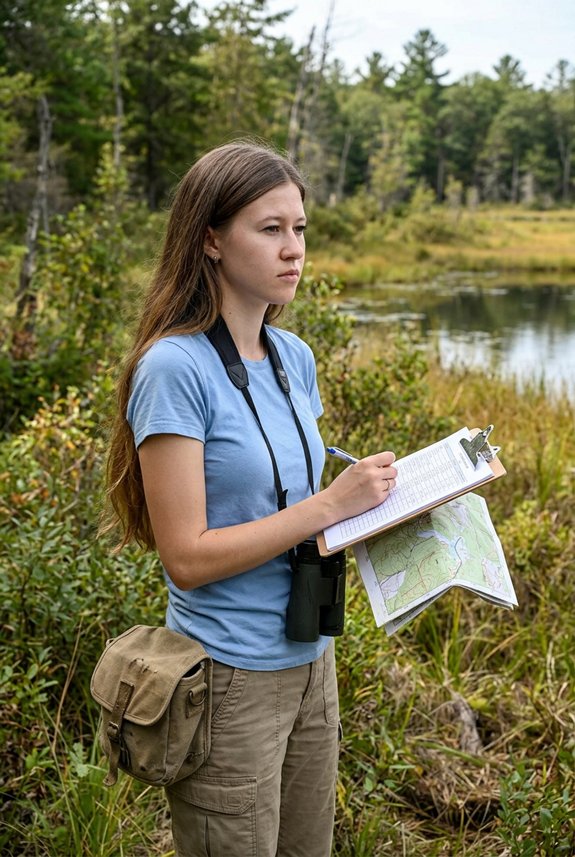
Park naturalism puts your ecology knowledge in front of curious strangers, but not every ecology career runs on public engagement, some run on contracts, field reports, and regulatory compliance. As an environmental consultant, you assess ecological risks for developers and corporations, conducting habitat surveys and translating your findings into mitigation plans that satisfy laws like the Clean Water Act.
Your work touches client relations, meaning you communicate risks clearly to non scientists, a skill called risk communication, while supporting corporate sustainability goals and sometimes participating in contract negotiation.
You’ll apply market strategy thinking when helping firms balance profit with environmental responsibility. Employers include consulting firms, engineering companies, and nonprofits, and core skills, GIS mapping, technical writing, and permitting knowledge, position you well for this quietly essential, intellectually demanding role.
Environmental Protection Specialist: Monitoring and Policy Work
Monitoring the health of our environment, tracking what’s in the water, soil, and air sits at the heart of what an environmental protection specialist does, and an ecology degree prepares you well for exactly this kind of work.
You’ll design regulatory sampling plans, meaning structured schedules for collecting water, soil, or air samples according to legal standards, then confirm accuracy through lab validation, which verifies that test results meet quality requirements.
Your role extends beyond data collection: you’ll contribute to climate monitoring, support community outreach by communicating findings clearly to the public, and occasionally assist with emergency response when pollution events require rapid assessment.
Employers range from federal agencies like the EPA to private consulting firms, and strong writing, analytical thinking, and regulatory knowledge will serve you consistently throughout this career.
Natural Resource Manager: Overseeing Land and Wildlife
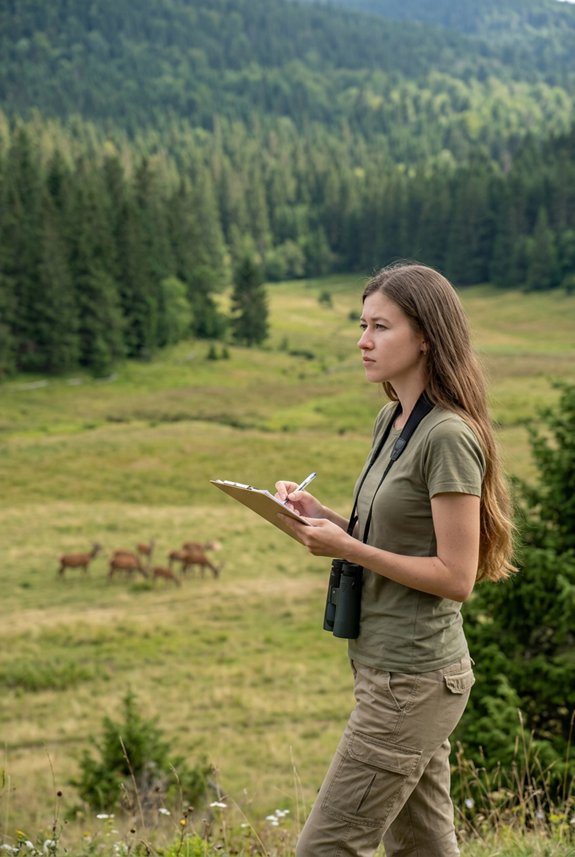
Overseeing land and wildlife means stepping into a role where you’re actively shaping how natural spaces are used and protected over time, and an ecology degree gives you a strong foundation for exactly this kind of responsibility.
You’ll practice land stewardship, caring for forests, wetlands, and rangelands as a long term commitment, while conducting habitat monitoring to track how ecosystems change.
Policy compliance keeps your work legally grounded, ensuring that land use follows federal and state regulations.
You’ll also handle resource budgeting, meaning you’ll plan how funding and natural assets are allocated wisely. Stakeholder engagement matters deeply here, as you’ll coordinate with agencies, communities, and landowners to align goals.
Employers like the National Park Service and Bureau of Land Management actively seek graduates with exactly these skills.
Which Government Agencies Hire the Most Ecologists?
Many federal agencies actively hire ecologists, and understanding where to focus your job search can save you real time and energy.
The Department of the Interior bureaus, including the U.S. Fish and Wildlife Service, National Park Service, USGS, and Bureau of Land Management, post the most ecology positions, covering field surveys, wildlife monitoring, and restoration work.
The EPA and state agencies offer regulatory roles, meaning jobs focused on environmental compliance and pollution monitoring.
Federal labs, like those within USGS, conduct ongoing research and welcome early career scientists.
If you’re just starting out, seasonal pathways, temporary field positions that often lead to permanent roles, are genuinely worth pursuing.
Agencies like USGS and USDA regularly offer paid internships that build both your experience and your professional network inside these organizations.
Nonprofit and NGO Careers for Ecology Graduates
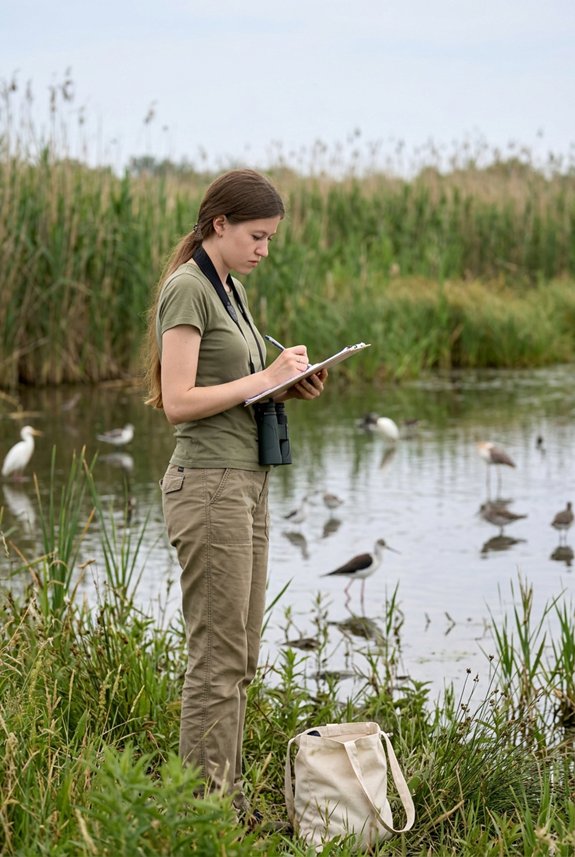
Nonprofits and NGOs, organizations that operate outside government and prioritize mission over profit offer some of the most meaningful entry points into ecology careers, especially if you’re drawn to hands on conservation work and community engagement. You might start as a field technician with groups like Pheasants Forever, gaining practical skills before moving into restoration or program coordination roles.
Along the way, you’ll likely encounter grassroots fundraising, volunteer coordination, and stakeholder mapping identifying and engaging the communities affected by conservation projects.
Mid career positions often involve impact evaluation, measuring whether restoration efforts actually work, and nonprofit governance, understanding how organizations make decisions responsibly.
Entry level salaries typically range from $40k–$60k, and while the pay is modest, the work connects your ecological training directly to landscapes, communities, and causes that genuinely need your attention.
Ecology Careers in Education and Science Communication
Not every ecology career keeps you in the field collecting data or restoring habitats, some of the most rewarding paths ask you to share what you know, helping others understand why the natural world matters.
As a park naturalist, science communicator, or outreach specialist, you’ll use storytelling techniques to make complex research feel personal and clear.
You’ll practice audience segmentation tailoring your message differently for farmers, students, or curious visitors and explore tools like visual mapping, which organizes ecological ideas into diagrams audiences can follow easily.
Podcast production lets you reach listeners beyond classrooms, while data translation means converting raw research findings into language anyone can understand.
These roles combine ecological knowledge with genuine human connection, making science feel less distant and far more alive.
Ecology Jobs That Use GIS and Remote Sensing

Mapping the natural world has become one of ecology’s most powerful tools, and if you’re drawn to data, patterns, and problem solving, a career in GIS, Geographic Information Systems, software that layers ecological data onto digital maps or remote sensing, which uses satellite and drone imagery to monitor landscapes from a distance, might fit you well.
You’d use habitat mapping to identify where species live, satellite classification to sort land cover types from orbit, and time series analysis, which tracks environmental change across months or years, to spot troubling trends.
UAV mapping, using drones to photograph restoration sites, pairs naturally with LiDAR analysis, a laser based tool that measures forest structure in fine detail. Roles exist with federal agencies, NGOs, and consulting firms, often welcoming ecology graduates with strong spatial thinking.
Can You Work in Environmental Law With an Ecology Degree?
If you’ve ever wondered whether an ecology degree could lead you into the world of environmental law, the answer is a thoughtful yes, with some important nuances worth understanding.
Your scientific background opens genuine legal pathways, particularly in roles where ecological knowledge drives decisions. Government agencies hire ecologists to provide expert testimony, meaning professional scientific evidence presented in legal or regulatory proceedings, during enforcement and permitting cases.
Consulting firms rely on you for permit support, preparing habitat assessments that guide legal approvals. You might also serve as a compliance liaison, helping organizations meet environmental regulations, or handle policy translation, converting complex science into language lawmakers can act on.
Adding credentials like a law degree or NEPA experience strengthens your position considerably in these roles.
Do You Need a Master’s Degree to Advance in Ecology?
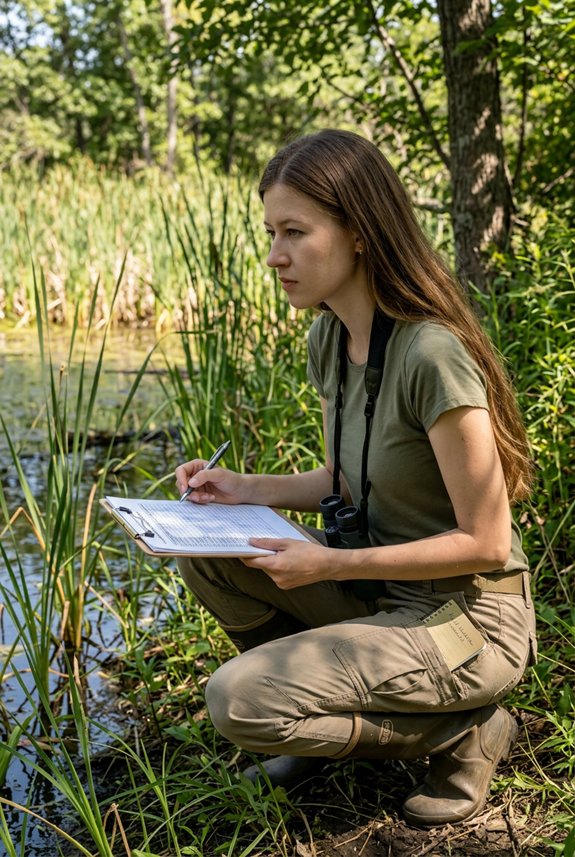
Beyond the legal and policy corridors that an ecology degree can open, there’s another question that tends to surface early in a budding ecologist’s career: do you need a master’s degree to move forward meaningfully? The honest answer depends on your career milestones and where industry expectations point.
Many entry level roles field technician, park naturalist, environmental consultant don’t require graduate study.
Skill based promotion, meaning advancement earned through demonstrated technical ability and experience, can carry you far in consulting or NGO work, where graduate alternatives like certifications and published fieldwork hold real weight.
However, supervisory natural resource positions and funding pathways for independent research typically favor or require a master’s. If you’re drawn toward leading grants or university research, a Ph.D. becomes necessary rather than optional.
What Ecology Jobs Actually Pay by Role
Salaries in ecology don’t follow a single pattern, and that’s worth understanding early, because the role you choose, the employer you work for, and the region you’re based in can shift your income substantially.
Field ecologists earn around $88,000 at the median, while conservation scientists average closer to $71,000 (BLS).
Intern pay often falls below $1,000 monthly, so budget carefully when starting out.
Contract roles, meaning short term project based positions, offer flexibility but less stability than salaried work.
Salary bands, the structured pay ranges employers use, vary considerably between federal agencies and private consultancies.
Some positions now include remote options, particularly in data analysis or environmental consulting.
Union trends are slowly influencing wage floors in certain public sector ecology jobs, gradually improving baseline compensation for early career professionals.
Entry-Level Ecology Jobs You Can Land Right After Graduation
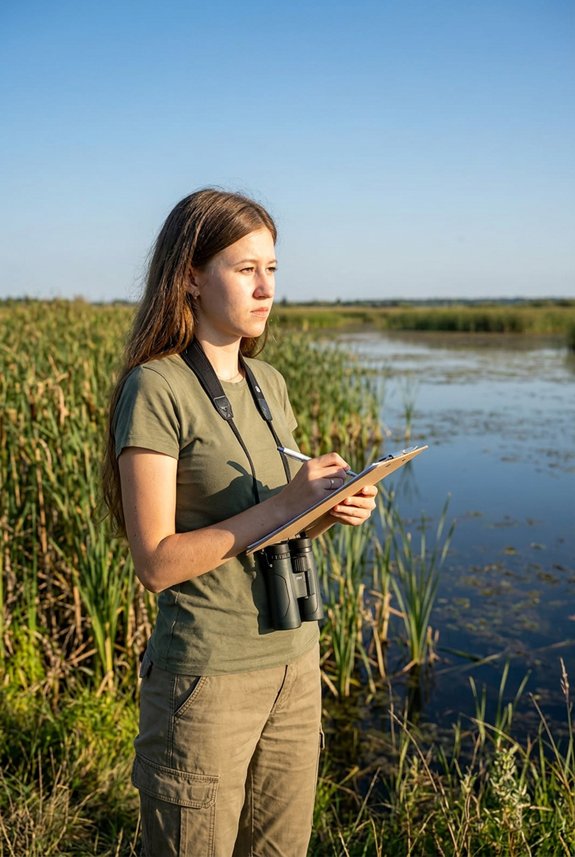
Graduating with an ecology degree often feels like standing at the edge of a wide field, you can see the landscape clearly, but you’re still deciding where to step first. Field ecologist roles, restoration technician positions, and park naturalist jobs all welcome recent graduates, and seasonal fieldwork, short-term contracts tied to specific seasons, gives you real experience quickly.
You’ll build equipment proficiency, meaning comfort with tools like GPS devices and water testing kits, which strengthens your resume naturally. Entry level networking, or simply connecting with colleagues on job sites and at workshops, opens unexpected doors.
As you grow, career progression becomes clearer, and salary negotiation feels less intimidating once you understand your field’s pay ranges. Start somewhere intentional, and trust that each role teaches you something worth carrying forward.
Internships and Fellowships That Lead to Ecology Jobs
Internships and fellowships can bridge the gap between classroom learning and a real ecology career, giving you structured, paid opportunities to work alongside scientists in the field before you’ve fully settled into a professional role.
Programs like USDA ARS and USGS fellowships offer stipend transparency, meaning clear salary ranges, sometimes $63,795–$79,012 annually, so you know what to expect. Habitat restoration internships pay roughly $22–$26 per hour, building skill pipelines that lead directly to land management roles.
Mentorship structures guide your growth through site placements in forests, wetlands, or research stations, where experienced scientists shape your thinking.
Watch application timelines carefully, since many deadlines fall in April. Resources like the ESA job board and ECOLOG-L listserv help you find opportunities across government, nonprofit, and consulting sectors.
The Skills That Get Ecology Graduates Hired
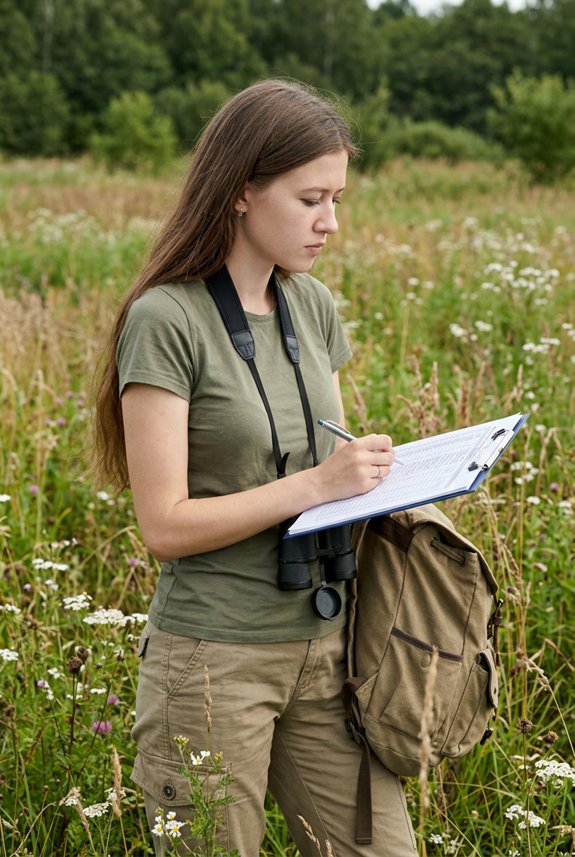
Landing an ecology job takes more than a diploma, it takes a specific set of skills that employers actively look for when they’re hiring. You’ll want strong quantitative abilities, meaning comfort with tools like R, GIS, and statistical modeling, which help you analyze environmental data clearly.
Technical writing, the ability to produce accurate, readable scientific reports, signals professionalism to hiring managers.
Field experience in surveying, sampling, and species identification remains essential, as does understanding ethical considerations around environmental law and responsible data collection.
Communication and teamwork open doors across federal agencies and NGOs. Pursue continuous learning through certifications and workshops, explore entrepreneurial opportunities in consulting, and build networking strategies through internships, fellowships, and professional groups like the Ecological Society of America connections that quietly shape long careers.
Best Job Boards for Finding Ecology Work
Finding ecology work starts with knowing where to look, and the job-hunting landscape, the full range of websites and platforms where positions are posted, is wider than most new graduates expect.
Niche platforms, meaning sites built specifically for environmental careers, offer the clearest starting point: ESA Jobs and USGS listings connect you directly to field ecologist, restoration ecologist, and park naturalist roles.
You’ll also find seasonal hiring cycles, volunteer pipelines that lead to paid positions, and occasional remote opportunities on broader sites like LinkedIn and Handshake, where custom alerts save you time.
For contracting roles short term positions with agencies or consulting firms, check GreenJobs.de and Academics.de.
Subscribe to ECOLOG-L for curated listings, and review BLS and O*NET to compare salaries and qualifications before applying.
How to Build an Ecology Resume That Gets Interviews
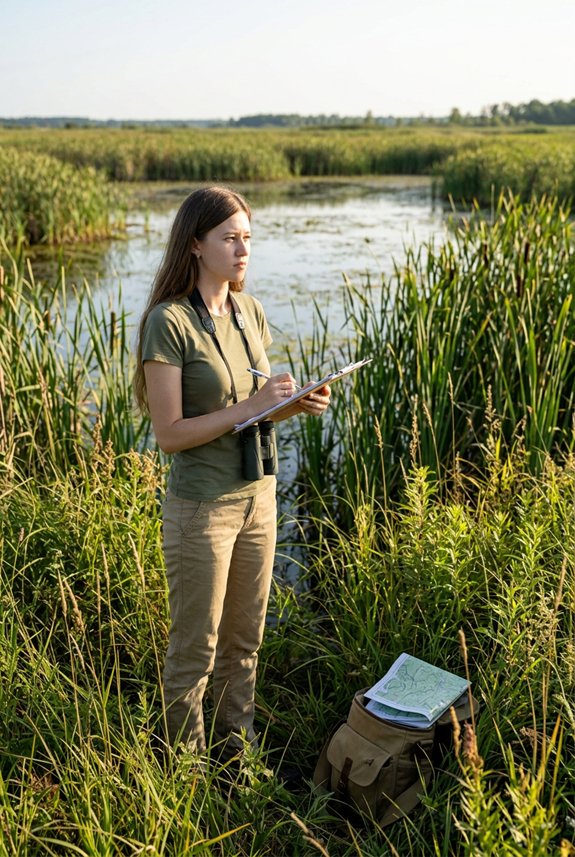
Once you know where ecology jobs are posted, the next step is making sure your resume, the document that summarizes your skills, experience, and qualifications, is strong enough to earn a closer look.
Start by building in tailored keywords drawn directly from each job posting, since many employers use software to filter applications before a person ever reads them. Highlight your technical skills with real numbers: hours spent in the field, hectares surveyed, sample sizes collected. Turn your project work into quantified achievements, a restoration that increased native plant cover, a survey completed across multiple sites.
Group your certifications clarity in a dedicated section so reviewers find them quickly.
Finally, state your field eligibility plainly, confirming you’re prepared for physically demanding, outdoor conditions.
How Ecology Careers Differ in Europe and Other Countries
Where you choose to build your ecology career matters as much as the skills you bring to it, because the job market looks quite different depending on whether you’re working in Europe, the United States, or another part of the world.
In Europe, EU funding through programs like Horizon Europe supports transnational research, and many roles require an MSc, strong degree recognition across member states, and regional language requirements for local positions.
Contract norms also differ, European jobs often include fixed-term agreements with negotiated benefits, while U.S. roles mix federal positions and consulting contracts.
You’ll find opportunities through regional networks and platforms specific to each country, so researching where and how ecologists find work in your target region genuinely shapes your chances of success.
How to Choose the Right Ecology Career for Your Strengths and Goals
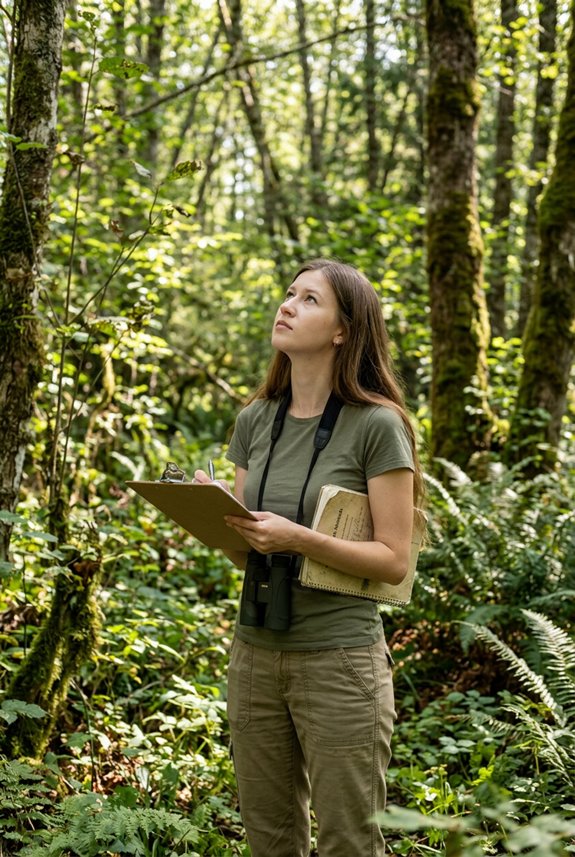
Choosing the right ecology career starts with an honest look at what you’re genuinely good at and what kind of work actually energizes you.
Begin with a strengths inventory, a simple, honest list of your skills, whether that’s field stamina, data analysis, writing, or public speaking.
Then practice values alignment by asking which work environments and missions feel meaningful to you.
If you love outdoor, organism level research, field ecologist or marine biologist roles suit your work life well.
If you prefer solving problems and managing projects, restoration or consulting paths fit better.
Use career mapping, which means connecting your strengths to specific roles and employers, and seek mentorship pathways through professors, ESA networks, or campus career services, people who’ve walked these roads can guide you thoughtfully forward.
Explore different ecology jobs, required skills, and career directions in this guide on ecology career paths.
Frequently Asked Questions
What Jobs Can Ecology Majors Get?
With an ecology degree, you can pursue field research, habitat restoration, wildlife management, environmental consulting, and conservation policy roles. You’ll find opportunities with government agencies, NGOs, consulting firms, and national parks.
What Jobs Pay $10,000 a Month Without a Degree?
You can hit $10,000/month through specialty trades, niche consulting, remote entrepreneurship, digital marketing, or the gig economy—think elevator installation, freelance cybersecurity, owner-operator trucking, or launching your own service-based business without needing a degree.
Are Ecology Degrees Worth It?
Over 50% of ecology grads find related work. Your career pathways, salary expectations, and long-term prospects improve with internship value and skill transferability—so yes, it’s worth it if you’re passionate.
What Jobs Can You Get From Ecology?
You can work as an environmental consultant, wildlife technician, conservation planner, restoration ecologist, or habitat manager. Your ecology degree also prepares you for marine biology, park naturalist, and natural resource management roles.

Erzsebet Frey (Eli Frey) is an ecologist and online entrepreneur with a Master of Science in Ecology from the University of Belgrade. Originally from Serbia, she has lived in Sri Lanka since 2017. Eli has worked internationally in countries like Oman, Brazil, Germany, and Sri Lanka. In 2018, she expanded into SEO and blogging, completing courses from UC Davis and Edinburgh. Eli has founded multiple websites focused on biology, ecology, environmental science, sustainable and simple living, and outdoor activities. She enjoys creating nature and simple living videos on YouTube and participates in speleology, diving, and hiking.
🌿 Explore the Wild Side!
Discover eBooks, guides, templates and stylish wildlife-themed T-shirts, notebooks, scrunchies, bandanas, and tote bags. Perfect for nature lovers and wildlife enthusiasts!
Visit My Shop →