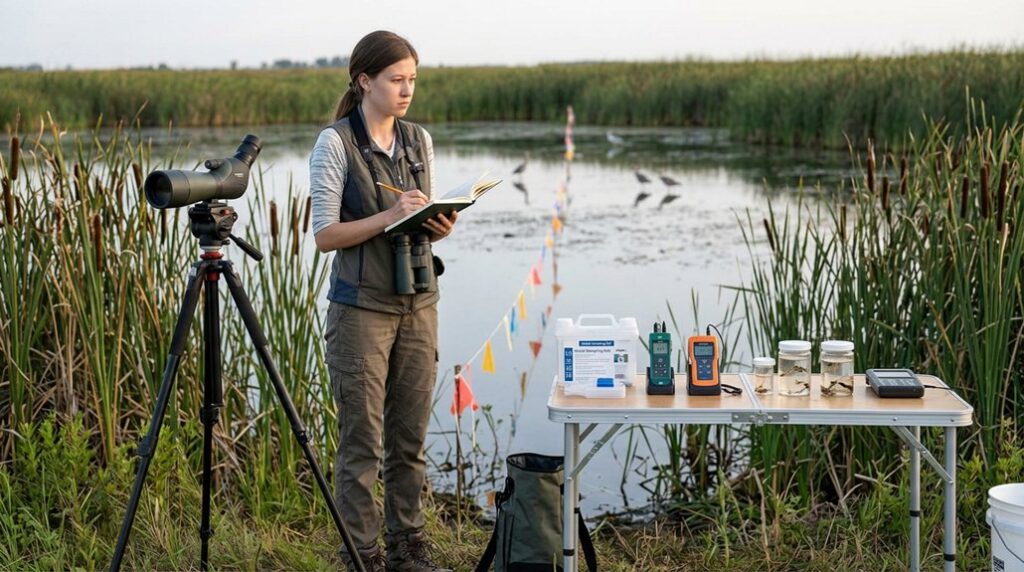
Hiring managers and graduate programs in biology and ecology value documented, hands-on work, think point counts, mist-netting, and surveys carried out across full field seasons lasting three to six months. Lab work, internships, and citizen-science contributions also count when carefully recorded with clear methods and measurable results. Those who dig deeper into each category will find a clearer picture of exactly how to build, and prove competitive experience in biology.
What Actually Counts as Biology and Ecology Experience
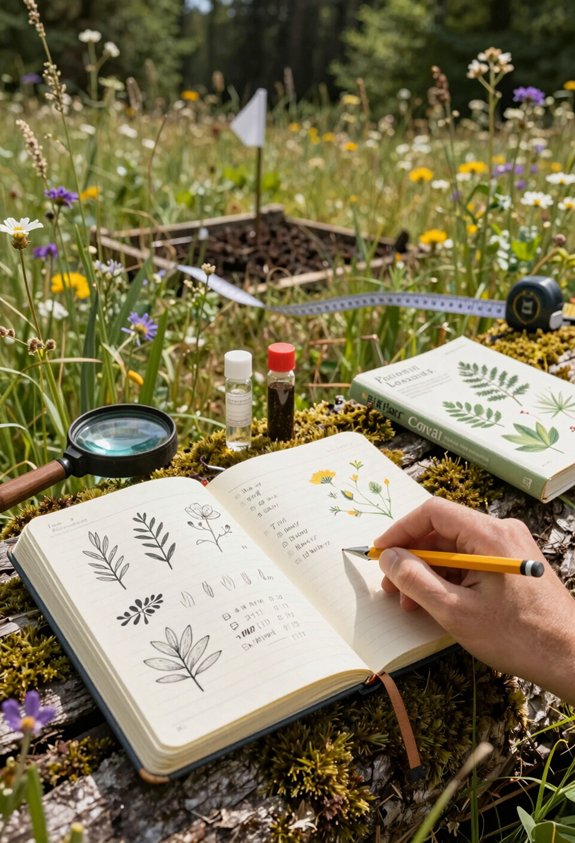
When it comes to building a career in biology and ecology, not all experience carries the same weight, and understanding that difference early can shape the entire direction of someone’s professional path.
Employers consistently value sustained, hands-on work: think point counts, mist-netting, nest checks, or wildlife surveys conducted across a full field season of three to six months or more. This kind of valuable field experience signals reliability since you are investing your time, it also shows your commitment, technical competence, and real-world problem-solving.
Short trips under four weeks, meanwhile, rarely impress hiring managers.
What truly stands out includes specific certifications—like GIS proficiency or animal handling credentials, alongside documented research, meaning work with clear methods, recorded data, and measurable results.
Before applying to my first-ever internship, which was actually abroad during my bachelor’s studies, I thought I had no experience and that my grades were average at the time. I wasn’t sure if I even had a chance. However, after seeing a poster hanging at my uni, I decided to apply. Imagine if I had let those thoughts get to me and just walked away.
By being questioned by IAESTE professionals, I realized I actually did have experience. I had participated in an environmental conference, helped with a science fair during my studies, taken a diving course and a climbing course, completed additional courses through different platforms, and joined a biologists’ association at my uni where we had fieldwork organized by members. It turned out I had way more than I thought. I got accepted and ended up traveling to Germany, having the best supervisor, helpful colleagues, and other students who came through the same organization, and became friends. Those memories will last a lifetime.
Internships are for learning. You will be trained. You don’t need to know everything. So my genuine advice to you is to sign up for as many extracurricular activities as you can at your uni or in your community.
Do not be afraid to go to institutions and ask for what you want. There are people out there who do want to help you.
Join different clubs, groups, and activities, even if it’s just a beach cleanup, as you never know who you can randomly meet. I learned a lot of skills from people I met. I learned GIS, from a person I met at a climbing club. It turned out he was from the Geography Faculty and used GIS daily for his work.
I was a broke student at the time and couldn’t afford any expensive courses. Actually, the courses I took were mostly free or discounted after applying for financial aid. Memberships and clubs were low-priced or free. It only took my time and commitment.
Ask people who have certain skills to teach you. You’ll be surprised how many will respond positively and be more than glad to help you out. If you need help with putting your experience into words in a way that employers value, you can use my free tool.
Field Research Skills That Employers and Graduate Programs Look For in Biology
Stepping into the biology job market or applying to graduate school requires more than a genuine love of the natural world, it demands a specific, demonstrable toolkit of skills that employers and programs can actually verify.
In fields like Ecology and Evolutionary Biology, hiring committees want candidates who’ve sustained fieldwork across at least one full season, roughly three to four months, not just brief two-week trips. They value hands-on proficiency with techniques like point counts, mist-netting, and transect sampling methods used to systematically observe and record wildlife.
Strong candidates also demonstrate data skills: cleaning records, running statistics in R, and mapping patterns using GIS software.
Certifications in diving, CPR, or animal handling further strengthen applications, as does evidence of independent leadership, like designing a project or coauthoring a published paper.
But don’t let this scare you, subscribe to my email newsletter so you can get notified when I publish a new post. Many upcoming posts will show you how to acquire that knowledge and even how you can gain field experience without an internship or relocating, all from right where you are.
Does Lab Work Count Toward Biology and Ecology Experience?
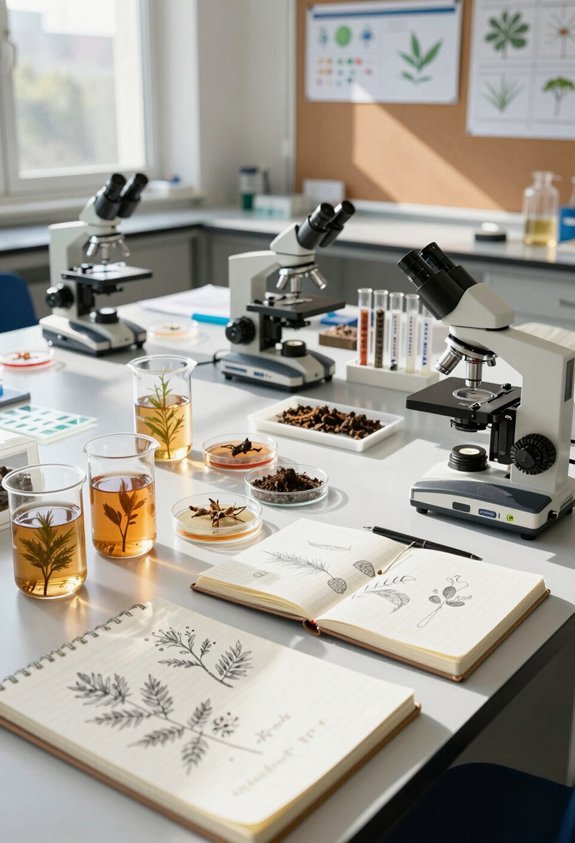
Lab work does count, and in many biology and ecology hiring decisions, it carries just as much weight as time spent in the field, provided it involved real responsibilities like designing experiments, collecting data, and running statistical analyses.
The strongest choices students make are those that produce concrete, visible outputs:
- A completed thesis or published paper
- Posters or presentations at scientific conferences
- Cleaned, well documented datasets ready for analysis
Employers also look closely at specific techniques—like PCR, which copies DNA for study, or spectrophotometry, which measures light to assess water or tissue chemistry.
Lab experience connected to field-relevant work, such as analyzing water quality or processing genetic samples, bridges both worlds naturally, quietly demonstrating that a candidate’s skills translate wherever the science leads.
I’m pretty sure you learned many methods while studying, so make sure to write all of those down, including what you were learning during lab practicals, as you can use them in your CV. Again, every lab has its own instruments and protocols, so I’m sure you will be trained. There’s no need to fear, trust me, I am probably the clumsiest person in a lab.
My biggest problem during my studies was that usually there was lots of demonstrations and only a few people got to try it, because of the price of the equipment and limited chemical resources. Even if you did get to try something in one class, you usually wouldn’t again, as there would be a new method for the next class, and I always felt like I didn’t get enough practice. But like my professor used to say, many students think they need more practice and less theory, when in reality, without theory there is no good experiment design.
My second internship in Brazil was in a lab. I didn’t have much experience when I applied; the only experience I had was GIS in Germany, and it wasn’t related. I remember I wrote in my application how much I wanted to learn that skill and how it would help me in my career. All the lab experience I had was from my studies, and I went to a chemistry focused high school, so I put that in the application. I got it, and I couldn’t have been luckier. The people there were the best, very kind and helpful. What can I say, Brazilians are one of my favorite nations in the world.
Which Courses Employers and Grad Programs Recognize as Real Biology Experience
Beyond the lab bench, coursework itself carries real weight, but only when it signals the kind of training that employers and graduate programs can actually use. Reviewing course information carefully reveals a clear pattern: upper-division classes in Ecology, Evolution, Statistics, and field methods labs such as BIOE 150, BIOE 150L, and BIOE 158L—appear consistently on hiring managers’ and admissions committees’ preferred lists.
These courses demonstrate that a student has moved beyond introductory material and engaged with the methods, meaning the tools and techniques, that professional biology actually requires. Statistics and field labs, in particular, show quantitative thinking and hands-on competence, qualities that coursework alone rarely proves.
When a transcript reflects this kind of deliberate, focused preparation, it quietly communicates readiness, and readiness, employers and programs agree, genuinely matters.
Internships, Volunteering, and Conservation Fieldwork That Build Ecology Credentials
For students serious about ecology, fieldwork experience, whether through paid internships, volunteer programs, or conservation projects, carries a weight that coursework alone simply can’t match. Employers don’t just want general duties listed; they want specific methods, species handled, and sample sizes documented clearly.
Three fieldwork entries that build strong credentials include:
- A single field season of bird banding or wildlife surveys, which employers often treat as 6–12 months of applied experience
- Multi-season projects supervising crews or managing data, sometimes considered equivalent to a bachelor’s degree
- Conservation roles where professional permits, like banding or handling permits, demonstrate verified technical competence
Information can be found in employer hiring matrices confirming that intensity and duration matter far more than brief, exotic study-abroad courses ever could.
Now if you do have some money to spend, you can pay for an internship, just make sure it is ethical and supports conservation and locals. You can read about Global Work and Travel Program here or download my list of 32 easy to join wildlife conservation internships.
Citizen Science and Independent Projects Worth Putting on a Biology Resume
Tracking birds through eBird, cataloging wildflowers on iNaturalist, or logging frog calls for FrogWatch, all these citizen-science contributions, when documented carefully, carry real weight on a biology resume.
Employers notice when someone has submitted over 100 checklists or observations backed by photo evidence, because that information demonstrates real identification skills, consistent effort, and time coverage across seasons.
Independent field projects matter equally: a vegetation survey covering 200 transect points, or water-quality sampling across 10 sites with quality-control notes, can substitute for formal coursework. Tangible outputs—meaning peer-reviewed papers, deposited datasets on platforms like Dryad or GBIF, or supervisor-signed reports—strengthen these entries further.
Longitudinal commitment also signals readiness: a full breeding season of monitoring, or 200 volunteer hours logged across multiple seasons, shows discipline that entry-level paid experience typically represents.
How to Write a Resume and Portfolio That Proves Field Competence in Biology
A strong biology resume doesn’t just list jobs, it tells a precise, verifiable story of what a candidate actually did in the field, and hiring managers read it with exactly that expectation in mind.
Candidates moving into a different field benefit most from quantifying their work specifically: noting “242 small mammals captured across 120 transects over 400 field hours” carries far more weight than vague descriptions.
You should name every tool and protocol used, including point-count surveys, mist-netting, ArcGIS mapping, and YSI sondes, which are water-quality instruments. Everything that you used.
Permits, like IACUC training and AAUS scientific diving certification, signal professional seriousness.
A supporting portfolio, containing supervisor contacts, published abstracts, and QA/QC records for thousands of data entries—transforms claimed experience into demonstrated, documented competence that reviewers can actually confirm.
Where to Find Field Positions, Internships, and Research Opportunities in Ecology
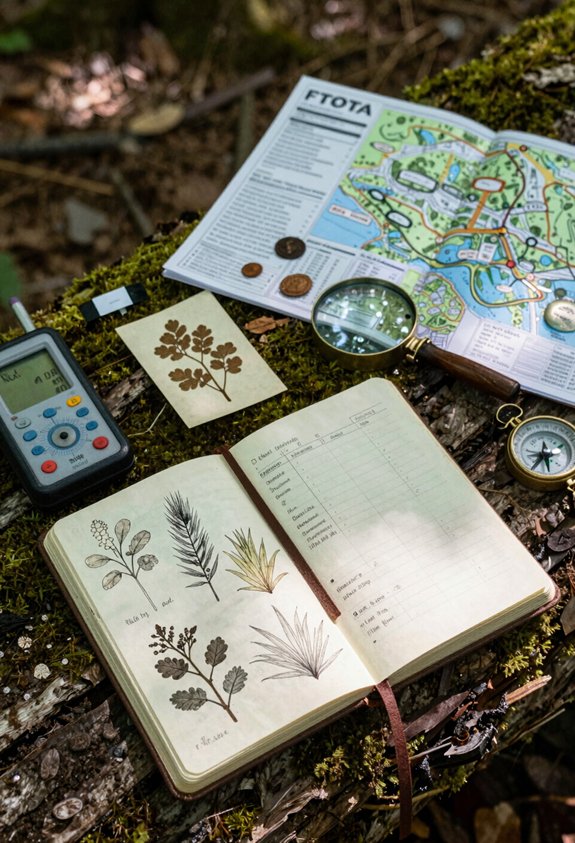
Finding field positions in ecology takes deliberate searching across several channels, and knowing where to look can make all the difference. Specialized job boards, government sites, and university networks each hold distinct opportunities worth exploring carefully.
- Job boards like WildlifeJobSearch, ConservationJobBoard, and EcoJobs post seasonal roles lasting three to six months, often listing required certifications upfront.
- Government vacancy sites such as USAJobs and state wildlife agency pages publish biological aide postings with clear deadlines and equivalency rules—meaning a master’s degree can substitute for one year of experience.
- University resources, including department listservs, faculty labs, and field study quarters, connect students to paid internships and multi-month research credits.
Networking with conservation NGOs and mining LinkedIn alongside professional associations like The Wildlife Society opens additional referral pathways worth pursuing.
There will be many resources on this blog that will show how to get experience, where to apply, how to make your application stand out.
Few more words
Building a biology and ecology resume takes time, and it’s worth remembering that even Renaissance-era naturalists started somewhere, sketching plants, counting birds, wading into marshes before anyone called it science.
Today’s employers and graduate programs recognize field hours, lab skills, citizen science contributions, and volunteer conservation work as genuine experience. If you are among those who document their efforts carefully, reflect on what they’ve learned, and seek out hands-on opportunities, you will find that meaningful credentials are closer than you think.
If you’re wondering how to turn your coursework and volunteer work into a real opportunity, read my step-by-step guide on how to get a paid biology internship or job with no experience.
Erzsebet Frey (Eli Frey) is an ecologist and online entrepreneur with a Master of Science in Ecology from the University of Belgrade. Originally from Serbia, she has lived in Sri Lanka since 2017. Eli has worked internationally in countries like Oman, Brazil, Germany, and Sri Lanka. In 2018, she expanded into SEO and blogging, completing courses from UC Davis and Edinburgh. Eli has founded multiple websites focused on biology, ecology, environmental science, sustainable and simple living, and outdoor activities. She enjoys creating nature and simple living videos on YouTube and participates in speleology, diving, and hiking.
🌿 Explore the Wild Side!
Discover eBooks, guides, templates and stylish wildlife-themed T-shirts, notebooks, scrunchies, bandanas, and tote bags. Perfect for nature lovers and wildlife enthusiasts!
Visit My Shop →