
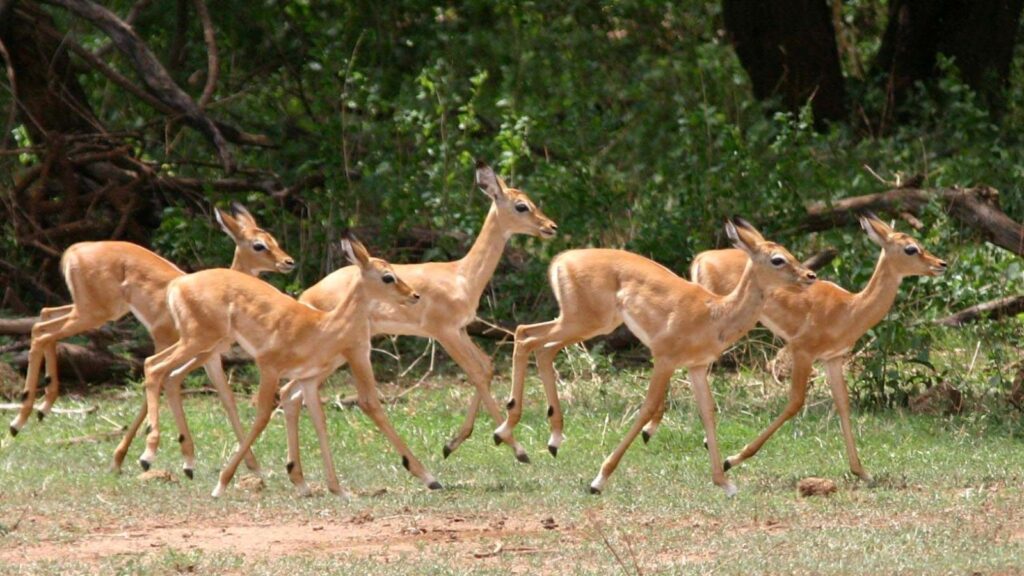
Every animal on this list has a reputation for cowardice, and every one of them is running a strategy that works. Fleeing, freezing, hiding and playing dead are not failures of nerve. They are the most common antipredator behaviours on Earth, for the simple reason that fighting a predator is usually a losing bet.
Two of the stories most often told about these animals also turn out to be false, so this is as much a myth correction as a list.
Key Takeaways
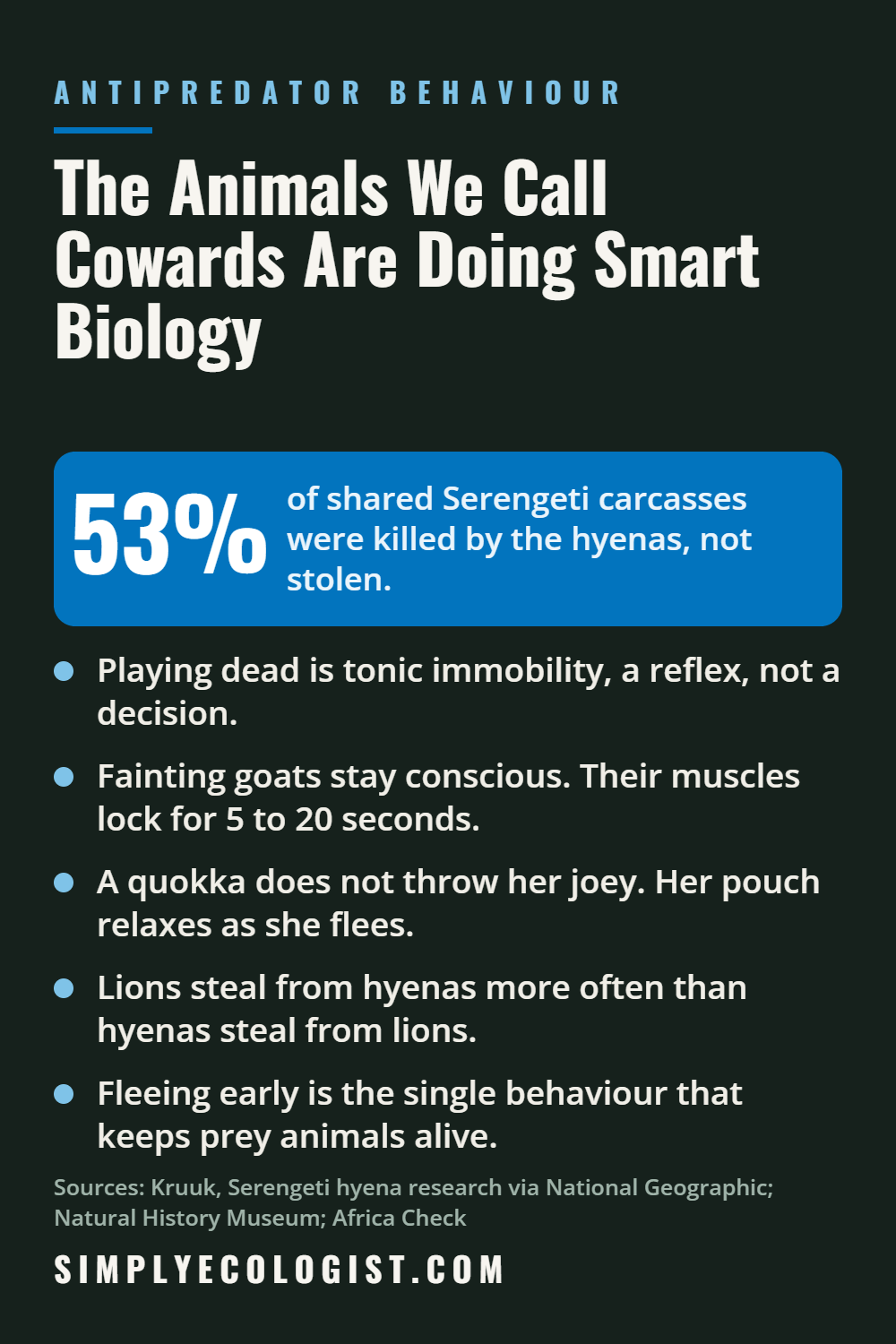
- Playing dead is a reflex called tonic immobility, not a decision an animal makes.
- Fainting goats never lose consciousness. Their muscles lock for 5 to 20 seconds because of a genetic disorder.
- Quokka mothers do not throw their babies at predators. The joey drops when the pouch muscles relax.
- Spotted hyenas are not scavengers living off lion kills. Lions steal from them more often than the reverse.
- Running away early is the single most reliable survival behaviour a prey animal has.
What Makes an Animal Look Cowardly
Behavioural ecologists talk about flight initiation distance, which is simply how close a threat can get before an animal runs. It is one of the most studied measures in the field, because it tracks how an animal weighs the cost of fleeing against the risk of staying. An animal that bolts early looks nervous. It is doing arithmetic.
Almost everything below is a version of that calculation, and the animals that get mocked for it are the ones that do it best.
Survey work makes the point better than any list can. Across years of counts in several countries, the large majority of animals I have recorded, I recorded because they were leaving. You end up learning species by the shape of a retreat: the freeze and then bolt of a rabbit, the flat committed run of a deer, the drop into cover a game bird makes before you have registered it was there at all. Fleeing is not the exception in wildlife. On foot, with a human in the landscape, it is most of what wildlife does.
1. Fainting Goats
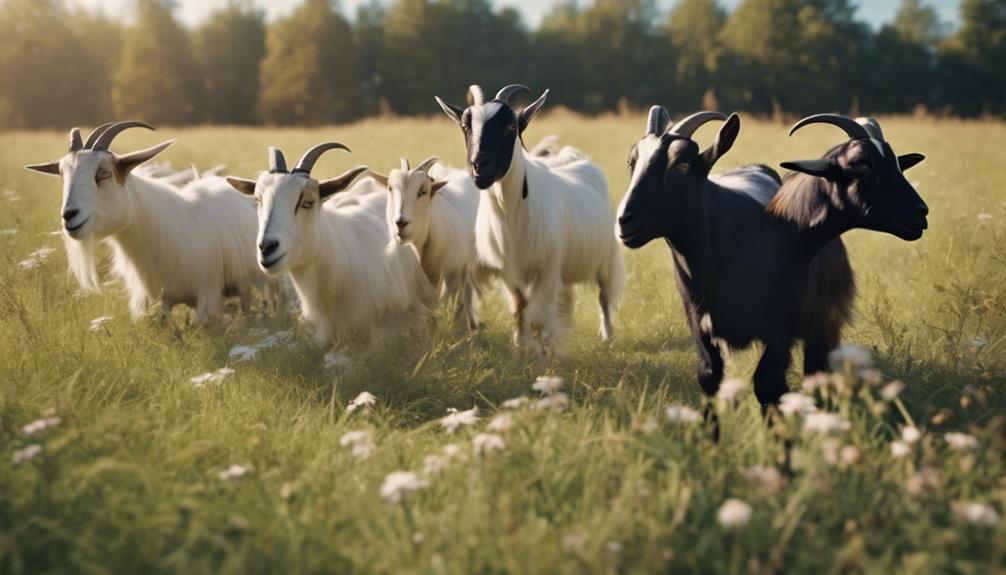
Start with the one that is not really a defence at all. Tennessee fainting goats carry a hereditary condition called myotonia congenita, which affects the skeletal muscles. When the goat is startled, its muscles contract and then fail to release on time, and it topples over.
Two details usually get left out. The Natural History Museum is explicit that the goats are not passing out from fright. They stay fully conscious the whole time, and the stiffness lasts only about 5 to 20 seconds, not the minute you often read.
And it is not an adaptation. Falling over in front of a predator is close to the worst possible response, and a wild population carrying this gene would not last. The trait survives because farmers kept it deliberately. This is a genetic disorder maintained by humans, not a clever trick.
2. Quokkas
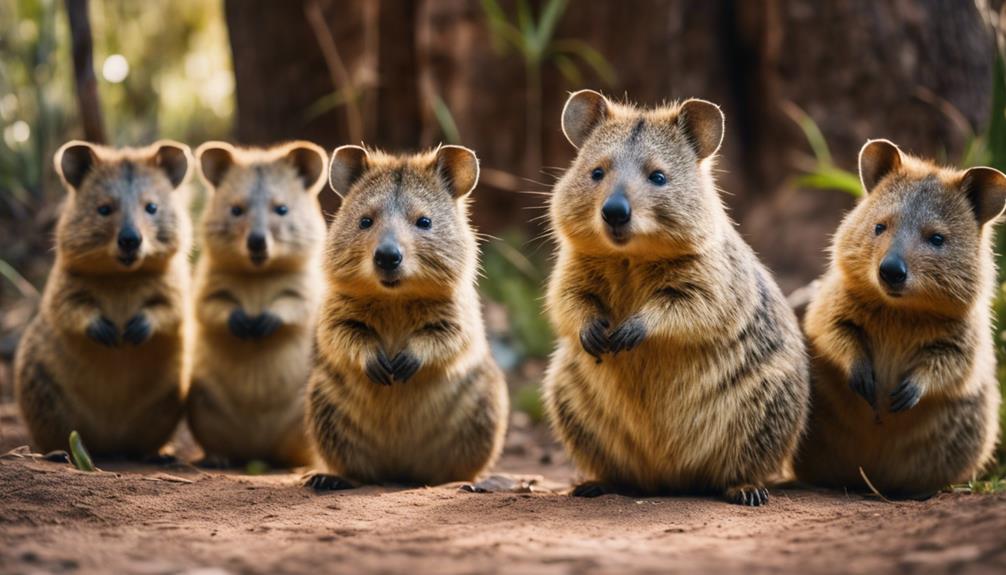
The story goes that a quokka mother will throw her joey at a predator and run. It is repeated everywhere, and it is wrong.
Africa Check put the claim to the specialists. Stephen Catwell, quokka species coordinator at Perth Zoo, states plainly that quokkas do not toss their babies at predators to escape. What actually happens, as Associate Professor Matthew Hayward of the University of Newcastle explains, is that a fleeing mother’s pouch muscles relax and the joey falls out. On the ground it writhes and hisses, which does distract the predator.
The outcome looks the same and the mechanism is completely different. There is no aim, no throw and no decision. The evolutionary logic still holds, because a proven breeding female is worth more to the population than one joey, but that logic operates on the pouch muscle, not on the mother’s intent.
3. Rabbits
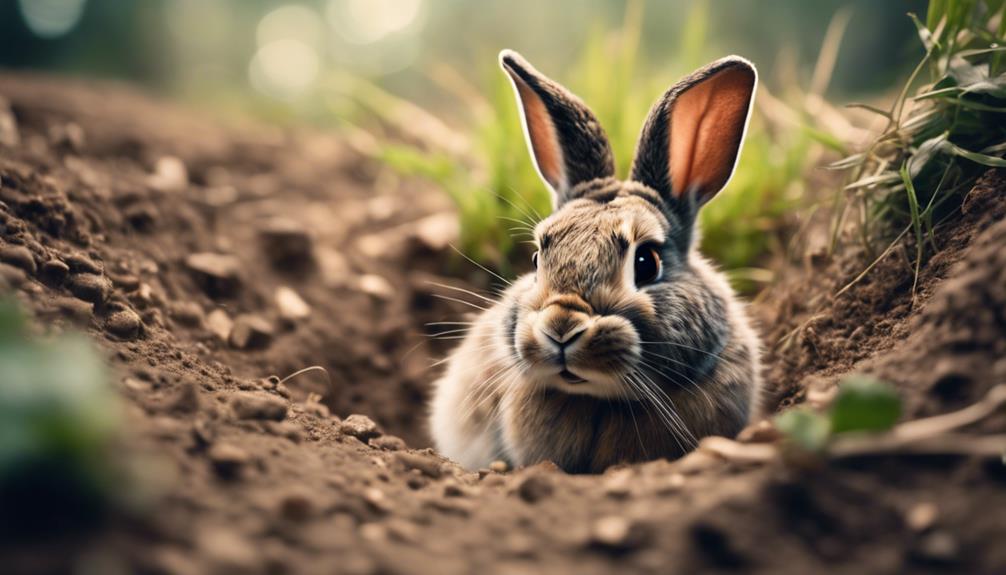
Rabbits are the textbook prey animal: eyes on the sides of the head for near panoramic vision, ears that turn independently, and a body built for one explosive escape. They freeze first, then run, and they run in zigzags.
They also show heightened levels of anxiety when kept alone. That is not fragility, it is a social animal missing the extra pairs of eyes it evolved to rely on. Group vigilance is the point of living in a warren, and a rabbit on its own has lost half its early warning system.
4. Hyenas

The hyena is on every list like this one, and it does not belong there. The idea that hyenas skulk around waiting for lions to leave a carcass is the most durable myth in African carnivore ecology, and the research killed it fifty years ago.
Hans Kruuk’s Serengeti work in the 1970s found that when spotted hyenas and lions shared a carcass, the hyenas had made the kill 53 percent of the time. Hyena kills are more likely to be stolen by lions than the other way around. Spotted hyenas hunt alone and in groups, take prey up to the size of buffalo, and kill the large majority of what they eat.
They are also, as the evolutionary anthropologist Christine Drea has pointed out, no more opportunistic than anything else out there. Any self respecting carnivore will scavenge given the chance, lions included. Read more on how their groups actually work in hyena clan dynamics.
5. Opossums
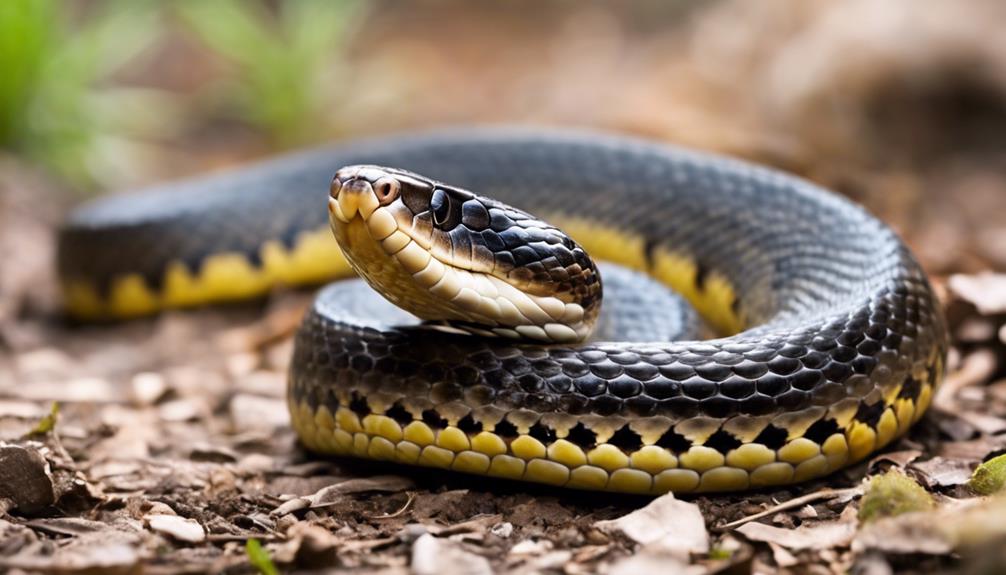
Playing possum is the most misunderstood behaviour on this list, because it is not playing and it is not a choice.
Under extreme threat an opossum enters tonic immobility, an involuntary physiological state. It collapses, its breathing and heart rate drop, its lips draw back, it drools, and its anal glands release a foul green secretion that smells like a rotting animal. The opossum cannot snap out of it on command and may stay down for minutes or hours.
It works because most predators are built to respond to movement and many avoid carrion they did not kill. Calling this cowardice is like calling fainting cowardice. The animal has no vote.
6. Eastern Hognose Snakes
The hognose runs the most theatrical bluff sequence in North America, in strict order. First it flattens its neck into a hood and hisses, doing a passable cobra impression. If that fails it strikes with a closed mouth, all threat and no bite.
And if the bluff still fails it rolls onto its back, gapes, lets its tongue hang out, sometimes smears itself with musk and faeces, and goes limp. The performance is committed enough that a hognose turned right side up will often flip itself back over, which is how they earned the nickname zombie snake.
Three graded defences, none of which involves fighting. It is a very small snake with a very good act.
7. Chickens
Chicken is a synonym for coward in English, which is hard on the bird. Domestic chickens descend from red junglefowl, a forest species that survives by staying near cover and reacting fast.
They have separate alarm calls for aerial and ground predators, and other birds respond differently to each: crouch and look up for a hawk, stand tall and look around for a fox. That is referential communication, meaning the call carries information about what the threat is, not just that there is one. Very few animals do it.
A bird that runs for cover the instant a shadow crosses the yard is not a coward. It is a prey animal with a working alarm system.
8. Deer
Deer complete the set because they flee from almost everything, including things that are obviously harmless. They also freeze, which is where the phrase about headlights comes from, and that freeze is the same tonic response that serves the opossum, interrupted by an artificial light no deer evolved to handle.
Their flight initiation distance is unusually flexible. Deer in hunted areas bolt at several hundred metres; deer in suburbs and parks will let people walk past at a few metres. Same species, same instinct, recalibrated to local risk. That flexibility is the whole reason deer thrive alongside humans while less adaptable large herbivores disappear.
The Eight at a Glance
| Animal | What it does | What the behaviour is called | Why it works |
|---|---|---|---|
| Fainting goat | Stiffens and topples for 5 to 20 seconds | Myotonia congenita | It does not. This is a genetic disorder kept by breeders |
| Quokka | Joey drops from the pouch as the mother flees | Passive pouch ejection | Distracts the predator and protects a proven breeder |
| Rabbit | Freezes, then bolts in zigzags | Freeze and flee, group vigilance | Unpredictable escape plus many pairs of eyes |
| Hyena | Takes over kills where it can | Opportunistic scavenging | Free calories, but it hunts most of its own food |
| Opossum | Collapses, drools, smells of death | Tonic immobility | Predators respond to movement and avoid carrion |
| Hognose snake | Hoods, bluff strikes, then plays dead | Graded bluff display | Three chances to end the encounter without a fight |
| Chicken | Runs for cover, calls the alarm | Referential alarm calling | The flock learns what the threat is, not just that there is one |
| Deer | Freezes, then flees early | Flexible flight initiation distance | Escape distance recalibrates to local risk |
Cowardice Is Just Survival With Bad Press
Predators fail most of the time. That is the fact the whole cowardice framing misses. Prey animals are not lucky and they are not timid, they are running behaviours refined over millions of years to make a predator’s job harder.
Bravery is a human idea about intent. None of these animals has any. What they have is a set of responses that got their ancestors through, which is the only test that has ever counted.
What makes an animal seem cowardly?
Relying on flight, freezing or hiding instead of fighting. All three are standard antipredator behaviours and all three work better than fighting for most prey species.
Is playing dead a sign of cowardice?
No, and it is not even a decision. It is an involuntary reflex called tonic immobility that many predators respond to by losing interest.
Which animals run away the most?
Prey species with a lot to lose and no weapons. Rabbits, deer and meerkats flee readily because escaping early is their best available strategy.
Do quokkas really throw their babies at predators?
No. Perth Zoo and University of Newcastle specialists confirm the joey drops out when the fleeing mother’s pouch muscles relax. There is no throw and no intent.
Are hyenas really just scavengers?
No. Hans Kruuk’s Serengeti research found hyenas had made the kill on 53 percent of carcasses shared with lions, and lions steal from hyenas more often than the reverse.
Do fainting goats actually faint?
No. They stay fully conscious. A hereditary condition called myotonia congenita locks their muscles for about 5 to 20 seconds.

Erzsebet Frey (Eli Frey) is an ecologist and online entrepreneur with a Master of Science in Ecology from the University of Belgrade. Originally from Serbia, she has lived in Sri Lanka since 2017. Eli has worked internationally in countries like Oman, Brazil, Germany, and Sri Lanka. In 2018, she expanded into SEO and blogging, completing courses from UC Davis and Edinburgh. Eli has founded multiple websites focused on biology, ecology, environmental science, sustainable and simple living, and outdoor activities. She enjoys creating nature and simple living videos on YouTube and participates in speleology, diving, and hiking.
From the shop
Gifts for people who love the wild
Wildlife themed t-shirts, notebooks, tote bags, bandanas and guides, designed by an ecologist.
Visit the shop