
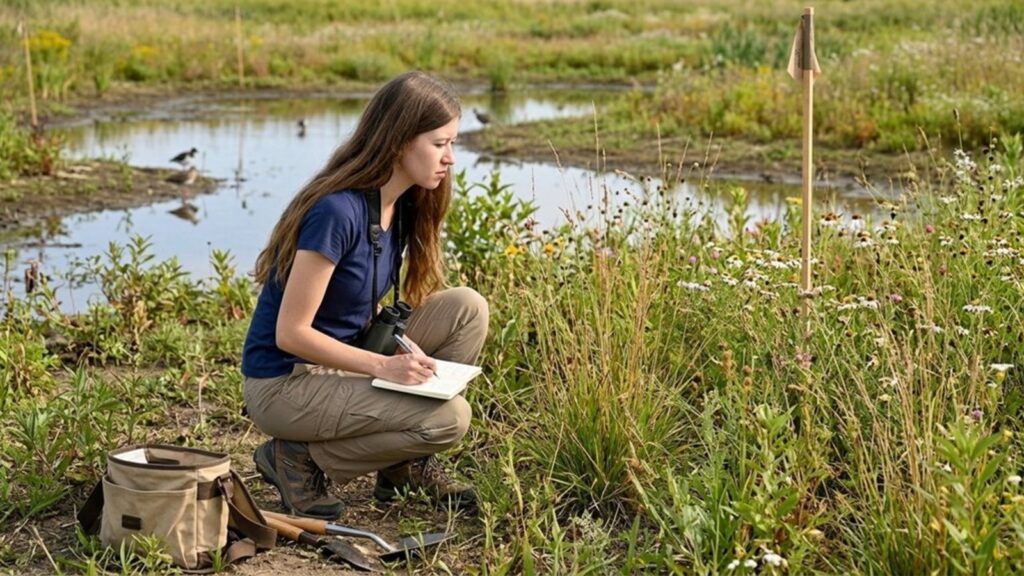
To become restoration ecologist, you’ll typically start with a bachelor’s degree in ecology or environmental science, then build hands-on experience through seasonal field technician roles, removing invasive plants, collecting data, and restoring native habitats. Certifications in wetland delineation or GIS mapping strengthen your candidacy considerably. Salaries range from roughly $56,500 at nonprofits to over $100,000 in senior roles. The field is growing, driven by increased funding for nature-based solutions. Keep exploring. There’s much more to unpack ahead.
Key Takeaways
- Start as a seasonal field technician through federal agencies like NRCS or USFWS, or via conservation nonprofit internships and apprenticeship programs.
- A bachelor’s degree in ecology or environmental science is the foundation; certifications in wetland delineation, GIS, or prescribed fire strengthen your candidacy.
- Core skills include native plant identification, GIS mapping, erosion control, permit navigation, and community engagement with landowners and Indigenous groups.
- Career progression moves from field technician to site coordinator, then senior roles managing budgets, supervising crews, and writing grants.
- US salaries range from roughly $56,500 at nonprofits to $90,000 $110,000 in senior municipal positions, varying by sector and region.
What Does a Restoration Ecologist Actually Do?
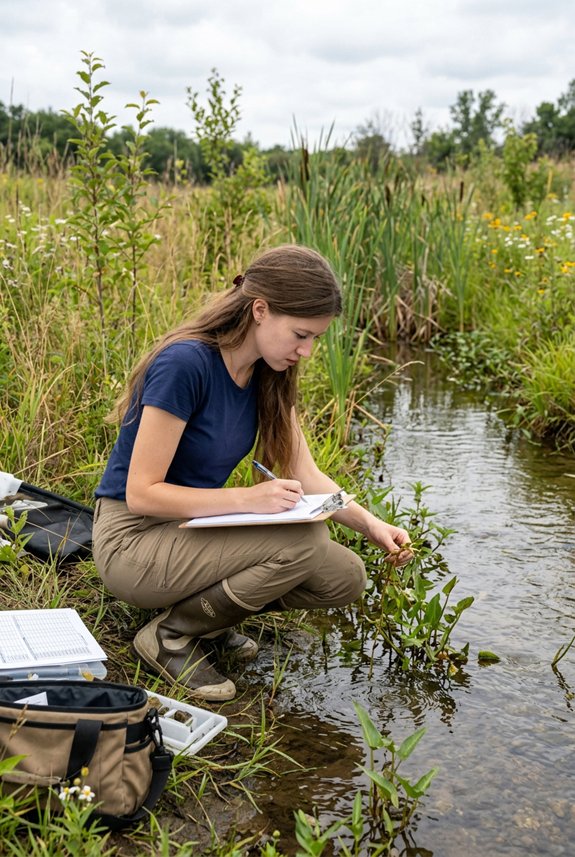
Before you can restore a landscape, you need to understand exactly what’s broken, and that’s where a restoration ecologist‘s work truly begins.
You’ll start by evaluating degraded sites through vegetation surveys, soil tests, and hydrology checks, which measure how water moves through an area.
From there, you’ll design treatment plans: planting native species, removing invasive plants, and sometimes conducting prescribed burns to reset an ecosystem.
Community engagement matters deeply here, as you’ll coordinate with landowners, agencies, and Indigenous groups whose traditional knowledge often reveals how a landscape once functioned.
You’ll also track progress using performance metrics (measurable targets that show whether restoration is succeeding) and write reports for funders and regulators.
Senior roles add budget management, grant writing, and policy work to these responsibilities.
Restoration Ecology vs. General Ecology: What’s the Difference?
While both fields study how living things interact with their environments, restoration ecology and general ecology differ in one fundamental way: purpose. General ecology seeks to understand how ecosystems (the complex webs of living things and their surroundings) function naturally, often through research, modeling, and observation. Restoration ecology, by contrast, asks you to actively repair what’s been damaged, whether that means replanting a forest, removing invasive species, or rebuilding a wetland.
This distinction shapes everything: your daily skills, your training path, and even your career perceptions, how others see your role and how you see yourself professionally. Restoration uses ecosystem terminology like adaptive management and mitigation banking, terms rooted in action rather than theory. Understanding this difference helps you choose the path that truly fits your goals.
What Education Does a Restoration Ecologist Need?
Once you know that restoration ecology is a field built on action (on actually fixing damaged landscapes rather than simply studying them), the next natural question is what kind of training prepares you for that work.
Most academic pathways begin with a bachelor’s degree in ecology, environmental science, or wildlife biology, covering coursework like plant identification, soil science, and GIS, which is software used to map and analyze landscapes. Many employers prefer a master’s degree for senior roles, particularly in specialized areas like wetland or fire ecology.
Beyond formal degrees, industry certifications (such as wetland delineation training or prescribed fire qualifications) strengthen your candidacy considerably. Practical field experience, gained through internships or volunteer restoration projects, often carries as much weight as your credentials, sometimes more.
The Best Degrees for a Restoration Ecology Career
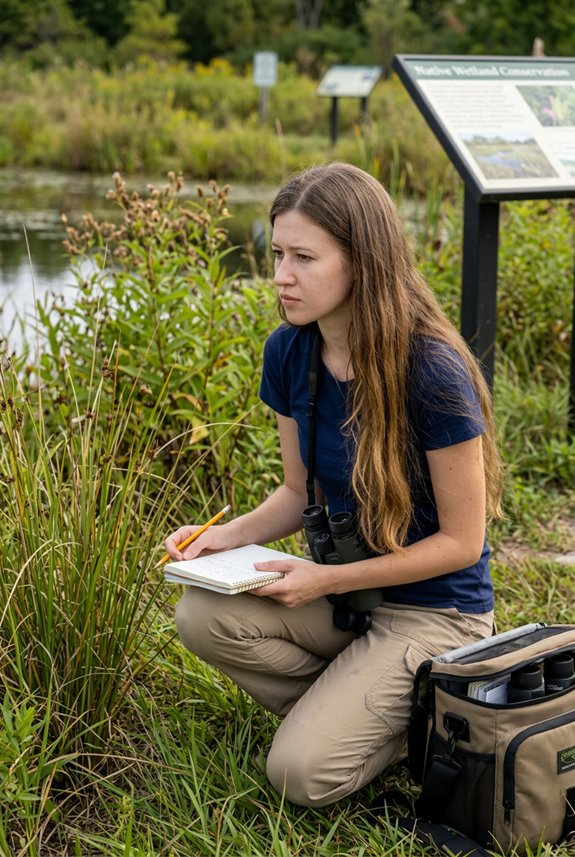
Choosing the right degree shapes not just what you learn, but the kinds of work you’ll be trusted to do early in your career. A bachelor’s in ecology, environmental science, or wildlife conservation gives you the foundational knowledge (soils, hydrology, plant communities) that restoration technician roles require. Some programs weave in environmental policy, meaning the rules and regulations that govern land use decisions, which deepens your usefulness to employers.
A master’s degree opens doors to senior positions, advanced design work, and competitive grant-writing. Whichever path you choose, pursue restoration internships (structured, supervised field experiences) as early as possible, because hands-on time with habitat assessment and monitoring methods builds confidence that coursework alone cannot. Your degree is a beginning, not a ceiling.
Should You Get a Master’s Degree in Restoration Ecology?
A master’s degree isn’t the only path forward in restoration ecology, but it’s often the one that opens the roles where the most meaningful decisions get made. If you want to design restoration plans, lead teams, or shape programs at federal agencies or NGOs, a master’s signals that you’re ready for that responsibility.
The cost-benefit calculation, though, depends heavily on career timing. If you already have solid field experience, certifications like wetland delineation or prescribed fire training, and strong technical skills, targeted work may carry you further than another degree right now.
But if you’re aiming toward research, university careers, or highly specialized work (stream geomorphology, for example), a master’s becomes less optional and more expected, a quiet prerequisite for the work you want.
How to Get Your First Restoration Ecology Field Experience
Getting your first real foothold in restoration ecology means thinking strategically about where entry-level opportunities actually live, and that’s almost always with federal agencies or conservation nonprofits.
Agencies like the NRCS, USFWS, and USDA Forest Service regularly hire seasonal field technicians, and organizations like The Nature Conservancy offer structured volunteer internships that build real, documented skills. These placements (planting natives, removing invasive species, and monitoring restored sites) often convert into paid roles when you perform well.
You can also explore apprenticeship pathways through programs like American Conservation Experience, which combine hands-on training with mentorship. Track your field hours carefully, because employers view documented experience as concrete evidence of commitment.
Starting here, with patience and genuine curiosity, positions you well for meaningful advancement.
The Technical Skills Every Restoration Ecologist Needs

Field experience opens the door, but the technical skills you build next are what keep it open.
You’ll want to develop strong native identification skills, meaning you can recognize local plants, grasses, and wetland species by sight in the field, distinguishing natives from invasives with confidence.
Alongside this, permit navigation becomes essential: understanding Clean Water Act Section 404, which governs wetland disturbance, helps you plan projects that meet legal requirements.
You’ll also benefit from learning GIS mapping, basic statistical analysis, and hands-on restoration techniques like seeding, erosion control, and prescribed fire basics.
Writing matters too. Monitoring reports and restoration plans communicate your work to agencies and communities.
Each skill builds on the others, and together, they shape you into someone restoration teams genuinely rely on.
Do Certifications Actually Help Your Restoration Ecology Career?
Certifications can feel like a puzzle when you’re early in your career, and it’s worth pausing to think carefully about which ones actually move the needle. Credentials like the Wildlife Society’s Associate Wildlife Biologist signal real competency to employers, especially in government and NGO settings.
Restoration-specific niche microcredentials (focused training in narrow skills like prescribed fire or wetland delineation) are often required for lead field roles or contract work, so they carry genuine weight. Pairing certifications with 1 3 years of field experience accelerates your path to coordinator positions.
Credential maintenance, meaning renewing certifications on schedule (sometimes every five years) demonstrates professional commitment and keeps you competitive. Combined with GIS skills and grant writing, certifications meaningfully improve your salary prospects and open doors that experience alone sometimes can’t.
Government, NGOs, or Private Sector: Where Restoration Ecologists Work
Once you’ve built up credentials and hands-on experience, the next natural question is where, exactly, you’ll put them to work, and the answer depends more on your values and work style than you might expect.
Federal agencies like the NRCS or USFWS offer stability and strong benefits, making public-private program delivery a reliable path.
Conservation NGOs, such as The Nature Conservancy, focus on grant-funded projects and community partnerships that connect people to land in meaningful ways.
Private consultancies and mitigation banking firms offer contract variety and client-facing work.
Tribal programs and state departments blend field implementation with deep community partnerships, often honoring culturally significant landscapes.
Each sector shapes your daily rhythm differently, so reflect carefully on what kind of impact you want your work to have.
How Much Do Restoration Ecologists Make?

Salaries in restoration ecology reflect a field that values both scientific expertise and practical skill, though what you’ll earn depends heavily on where you work, how much experience you’ve built, and whether you’re employed by a government agency, a nonprofit, or a private firm.
In the UK, entry-level technicians typically start around £24,000, while experienced ecologists can reach £50,000 or more.
In the US, roles range from roughly $56,500 at conservation nonprofits to $90,000 $110,000 in senior municipal positions. Salary transparency varies widely, so researching specific employers matters.
Canadian hourly rates span CAD $23 $56/hr depending on classification.
Freelance consulting offers flexibility and sometimes higher rates, though income becomes less predictable.
Generally, your earnings grow steadily as you gain experience, take on leadership, and pursue relevant certifications.
What Affects a Restoration Ecologist’s Salary?
Several factors shape how much you can expect to earn as a restoration ecologist, and understanding them helps you make smarter decisions about your training, your specializations, and the kinds of employers you pursue.
Your employer type matters considerably. Federal agencies and private consultancies tend to pay more than non-profits or academic positions. Where you work also influences your income, since regional incentives, like active habitat mitigation funding or strong state conservation programs, create more opportunities and higher wages.
Your credentials matter too: certifications in wetland delineation or GIS, which means mapping land using satellite data, signal specialized value to employers. Experience accelerates growth steadily, moving you from entry-level technician pay toward senior program salaries. Remote consulting, increasingly common today, can also expand your reach and earning potential beyond your immediate region.
Is the Job Market for Restoration Ecologists Growing?
How strong is the job market for restoration ecologists right now? It’s actually growing, and the reasons are worth understanding.
Funding trends (meaning the flow of money from federal programs, private investors, and climate initiatives) are increasingly directed toward habitat restoration and nature-based solutions, which creates real demand for skilled ecologists.
You’ll find that geographic hotspots, or regions with concentrated job opportunities, often include coastal states, the Pacific Northwest, and areas near major wetland or forest restoration projects.
Entry-level roles tend to be seasonal at first, but they build toward stable positions in government agencies, large nonprofits, and consulting firms.
Employment in related fields is projected to grow faster than average, so if you’re patient and intentional, the timing genuinely works in your favor.
From Field Technician to Director: The Career Path
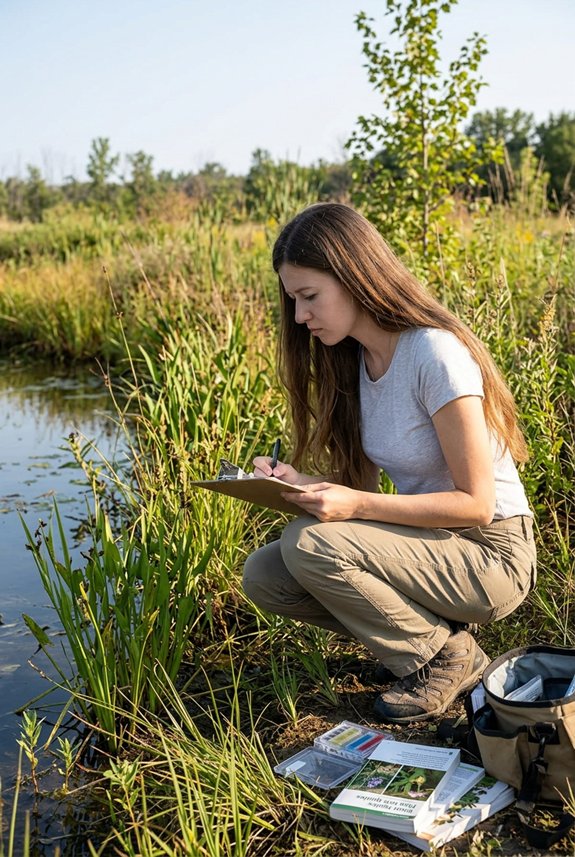
A growing job market means little if you don’t know where you fit within it or how to move forward over time, so it’s worth mapping out the actual shape of a restoration ecology career.
You’ll likely begin as a field technician, removing invasive plants, planting native species, and collecting baseline data. These early career milestones build the hands-on foundation everything else rests on.
Around years two to six, you’ll take independent ownership of sites, coordinating contractors and permits.
By years five to twelve, you’re managing budgets, supervising crews, and writing grants.
The leadership shift into senior or director roles comes naturally when you’ve paired field credibility with credentials like GIS proficiency or wetland delineation, skills that signal readiness for strategy-level responsibility.
Which Professional Organizations Should Restoration Ecologists Join?
Knowing which professional organizations to join can shape your career more than you might expect, because the right memberships connect you to standards, credentials, and people that textbooks simply can’t offer.
Start with the Society for Ecological Restoration, which offers the CERP credential (a recognized mark of professional competence) plus networking platforms that link you to global restoration communities.
If wildlife habitat is your focus, The Wildlife Society provides training and agency connections worth pursuing early.
In the UK, CIEEM offers routes to Chartered Ecologist status, which employers and planners genuinely respect.
Regional groups like state NRCS networks deliver hands-on experience through volunteer projects and wetland courses.
Cross-disciplinary memberships also open advocacy partnerships, meaning you’ll collaborate across fields to influence policy and secure funding that restoration work depends on.
How Restoration Ecologists Are Reshaping Land and Water Management
Restoration ecologists are quietly transforming the way we think about damaged landscapes, stepping into degraded wetlands, eroded streambanks, and stripped forests to rebuild the natural systems that communities and wildlife depend on.
Through community based restoration, meaning projects shaped by local knowledge and shared investment, they reconnect people to the land they rely on. They also work within market based instruments, financial tools like mitigation banking that fund restoration by assigning economic value to healthy ecosystems.
You’ll find them adjusting stream channels, reintroducing native plants, and coordinating prescribed burns to restore balance. Their work informs land-use planning, strengthens fisheries, and protects farmland from erosion, quietly weaving ecological health back into landscapes that once seemed beyond repair.
Restoration Ecologist FAQs
How much do restoration ecologists make?
In the US, restoration ecologists earn roughly $56,500 at conservation nonprofits up to $90,000 to $110,000 in senior municipal roles. UK technicians start near £24,000 and experienced ecologists reach £50,000 or more, while Canadian rates run about CAD $23 to $56 per hour.
What degree do you need to become a restoration ecologist?
A bachelor’s degree in ecology, biology, environmental science, or a related field is the standard entry requirement. A master’s degree helps for leadership, academic, or highly specialized roles.
How do you get your first restoration ecology field experience?
Pursue restoration internships and seasonal field technician roles as early as possible. Volunteering on projects like planting natives, removing invasive species, and monitoring restored sites often converts into paid work.
Do certifications help a restoration ecology career?
Yes. Microcredentials in narrow skills like prescribed fire or wetland delineation are often required for lead field roles, and the CERP credential from the Society for Ecological Restoration signals professional competence.
Is the job market for restoration ecologists growing?
Yes. Funding from federal programs, private investors, and climate initiatives is increasingly directed toward habitat restoration, which is driving demand for restoration ecologists.

Erzsebet Frey (Eli Frey) is an ecologist and online entrepreneur with a Master of Science in Ecology from the University of Belgrade. Originally from Serbia, she has lived in Sri Lanka since 2017. Eli has worked internationally in countries like Oman, Brazil, Germany, and Sri Lanka. In 2018, she expanded into SEO and blogging, completing courses from UC Davis and Edinburgh. Eli has founded multiple websites focused on biology, ecology, environmental science, sustainable and simple living, and outdoor activities. She enjoys creating nature and simple living videos on YouTube and participates in speleology, diving, and hiking.
For your next application
Keep applying and hearing nothing back?
The Biology Job Application Kit shows you which stage of your applications is failing and how to fix it. 46 guides, 22 editable templates, an application tracker and an ATS CV Creator licence.
See the Job Application Kit