
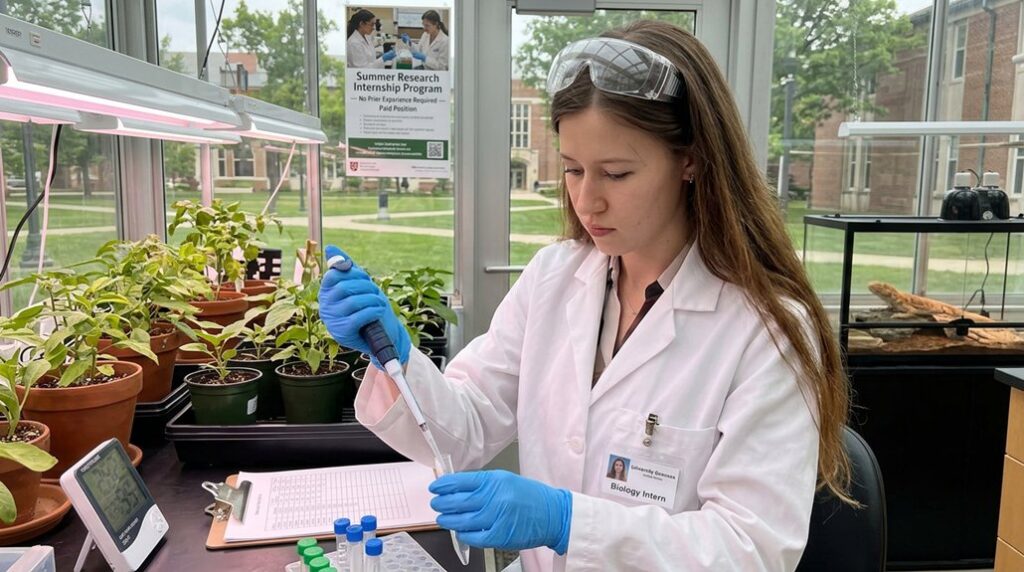
Many internships for biology majors explicitly welcome applicants with no prior lab or field experience, as they’re built to train you from the ground up in skills like lab techniques, surveys, sample processing, and data entry. Most pay between $17 and $25 per hour, and some summer research programs offer stipends of $4,000–$6,000 with housing included. Before you start complaining about how there are no opportunities and how this field is very competitive, I am 100 percent sure you will change your mind after reading this post till the end and a few others from this blog.
Employers typically expect relevant coursework or enrollment in a biology, related degree rather than a polished resume. Below, you’ll find specific programs, application timelines, and strategies worth exploring further.
What “No Experience Required” Really Means

When you come across a job posting that says “no experience required,” it’s worth slowing down to understand what employers actually mean by that phrase.
They’re telling you they won’t expect paid lab work on your resume—but they do typically expect relevant coursework like Biology I/II or Genetics, or enrollment in a biology related degree program. You’re not starting from zero; you’re bringing a foundation they can build on.
These positions serve as gateways to hands-on experience, training you in different skills.
Employers provide that on-the-job training intentionally because successful interns often advance into credit-bearing research roles or paid technician positions over time.
How Much Do Paid Biology Internships Pay?
Paid biology internships typically fall within a broad range, and understanding that range can help you set realistic expectations as you begin your search.
Most paid internships offer hourly wages between roughly $17 and $25 per hour, though some research-focused roles reach $30 or more.
You’ll also encounter positions structured differently, weekly rates around $700, or semester stipends like $3,400 for a 400-hour commitment.
Entry-level seasonal technician roles, which function much like internships, tend to pay $19–$23 per hour.
It’s worth noting that nonprofit organizations, museums, and zoos more often offer unpaid or credit-only positions due to a lack of funding, while industry, government, and larger research programs are where you’re most likely to find compensation.
Knowing these patterns helps you focus your search on opportunities that genuinely value your time.
Paid University Lab Tech Roles That Train You From Scratch

If you’re looking to break into lab work but feel held back by a lack of experience, university lab technician roles offer a practical way to start from scratch.
Many biology departments hire students, often requiring only current enrollment—to set up and break down course labs, with paid hourly compensation and roughly 5 to 15 hours per week.
You’ll receive on-the-job training in essential lab techniques: preparing reagents, sterilizing equipment, processing samples, and recording data accurately.
These skills build incrementally, meaning each week layers onto what you’ve already learned.
Over time, these positions can open doors to research-for-credit opportunities or summer research roles.
If you’re interested, a brief resume and a willingness to learn are typically all you need to apply.
Marine and Coastal Biology Internships Open to All Majors
The coastline itself can be a classroom, and several marine biology internships welcome students from any major who are willing to learn hands-on skills in the field.
CMERA’s Shark and Ray Research Project in Clearwater, FL, offers paid internships that pair morning lectures with full days of vessel-based fieldwork like identifying, tagging, and releasing sharks and rays all while providing furnished housing.
On Santa Catalina Island, Pennington Marine Science Center hires seasonal interns for animal husbandry, SCUBA, and small-boat duties, with a $1,000 scholarship available.
Gulf Specimen Marine Lab also runs paid internships covering aquarium care, sea turtle rehabilitation, and marine education across most semesters.
These programs train you from the ground up, so your curiosity matters far more than your transcript when pursuing marine biology through hands-on, paid internships.
NSF REU Programs That Welcome First-Timers
Surprisingly often, the research programs most willing to invest in you’re the ones designed specifically for students who haven’t done research before—and NSF REU sites, or Research Experiences for Undergraduates funded by the National Science Foundation, are among the best examples. These eight-to-ten-week summer programs pair you with a faculty mentor, place you in real lab or field projects, and include professional development like workshops and poster sessions.
Most REU applications require a resume, transcript, and personal statement, with deadlines typically in February or March. You’ll want to browse the NSF REU directory early, noting which sites explicitly welcome first-timers. Stipends commonly range from $4,000 to $6,000, and many programs cover housing and travel, making this a genuinely paid pathway into research.
Biotech Lab Internships You Can Start Before Graduating
Biotech companies are actively reaching out to students who haven’t yet finished their degrees, and many of these paid lab internships don’t require prior professional experience at all. Firms like Bridgemed Solutions in Irvine offer entry-level biotech roles at $20–$23 per hour, welcoming candidates with zero to one year of experience.
Smaller companies such as Quarry Bio hire interns to help build GxP-capable operations—meaning lab systems that meet FDA quality standards—giving you hands-on work with SOPs, or standard operating procedures, that guide consistent scientific processes.
These paid internships typically train you in core skills: micropipetting, reagent preparation, sample processing, and basic quality assurance data entry. You don’t need to wait until graduation to begin. Search company internship pages, university career portals, and quick-apply listings early, since positions fill fast.
Paid Zoo and Museum Biology Internships Worth Your Time
Zoo and museum internships often fly under the radar for biology majors, but they’re some of the most rewarding paid positions you can land before or during your degree.
These paid internships typically involve animal husbandry—the daily care and management of living creatures—and many programs don’t expect prior experience.
A few programs worth exploring:
- Gulf Specimen Marine Lab offers paid internships in aquarium husbandry and marine education most semesters.
- Pennington Marine Science Center provides seasonal paid opportunities with training, certifications, and a summer scholarship.
- Henry Doorly Zoo lists paid positions pairing hands-on animal care with structured learning.
- Regional natural history museums often post seasonal roles for biology students on their internship pages.
You’ll want to monitor institutional websites regularly, since openings fill quickly.
International PAID Internship Programs for Undergraduate Biologists
There are many organizations, and I will definitely make sure to write about them in my future posts. I want to suggest a few that I was part of and that helped me in my career. With IAESTE, I went and spent a few months in Germany learning GIS, and my second internship with them was in Brazil, where I was working in an Ecotoxicology Lab. I loved both of those experiences, and I am so grateful for them. I highly suggest you check them out!
My second internship was with AIESEC, an internship in ecotourism, which is what brought me to Sri Lanka, a beautiful tropical country where I am living today.
IAESTE Internships for Biologists
IAESTE (International Association for the Exchange of Students for Technical Experience) is a global organization that facilitates paid internship placements abroad for students in science, engineering, and applied arts.
While many people associate IAESTE primarily with engineering and computer science disciplines, the organization also offers a significant number of opportunities for biology students. These internships span a wide range of subfields, including molecular biology, microbiology, ecology, marine biology, genetics, biotechnology, and environmental science.
They are hosted by universities, research institutes, and companies in over 80 countries worldwide, giving biology students the chance to gain hands-on laboratory or fieldwork experience in an international setting.
Biology students who pursue IAESTE internships typically work on active research projects under the supervision of experienced scientists. For example, a student might spend several weeks in a European university laboratory studying gene expression patterns, assist with biodiversity surveys in a tropical research station, or contribute to pharmaceutical research at a biotech company in Asia.
These placements are paid, which helps cover living expenses, and IAESTE’s local committees in the host country assist with accommodation, cultural integration, and administrative matters such as visas and work permits. The duration of internships usually ranges from six weeks to twelve months, with most placements occurring during the summer.
To apply, biology students must be enrolled at a university in a country that has an IAESTE member committee. The application process typically involves submitting academic transcripts, a CV, and a motivation letter. Candidates are then matched to available offers based on their qualifications and preferences.
Because demand for placements can be high, strong academic performance and relevant coursework or prior lab experience can improve a candidate’s chances of being selected. Some national committees also conduct interviews as part of the selection process.
The benefits of an IAESTE internship for biology students extend well beyond technical skill development. Participants gain cross-cultural competence, build international professional networks, and develop the kind of adaptability and independence that employers and graduate programs value highly.
Many former IAESTE interns report that the experience shaped their career trajectory, leading to collaborative research opportunities, co-authored publications, or even long-term positions in the countries where they completed their placements.
For biology students considering careers in global health, conservation, or international research collaboration, an IAESTE internship can serve as a transformative stepping stone. For me and everyone I know, it was truly life-changing in the most positive way, and that is no exaggeration.
AIESEC Internships
AIESEC is the world’s largest youth-run organization, operating in over 120 countries and territories. Founded in 1948 in the aftermath of World War II, the organization was established with the mission of fostering cross-cultural understanding and developing leadership potential among young people.
AIESEC internships serve as the primary vehicle through which the organization fulfills this mission, offering university students and recent graduates the opportunity to gain professional experience abroad while immersing themselves in new cultures.
These internships are facilitated through partnerships with businesses, nonprofits, startups, and educational institutions around the globe, creating a vast network of opportunities that span virtually every industry and discipline.
AIESEC offers several distinct internship programs tailored to different goals and interests. The Global Volunteer program places participants in short-term projects, typically lasting six to eight weeks, that are aligned with the United Nations Sustainable Development Goals. These projects address issues such as quality education, environmental sustainability, and reduced inequalities.
The Global Talent program, on the other hand, focuses on professional development by matching participants with paid internships in foreign companies, usually lasting between six months and a year. There is also the Global Teacher program, which sends participants to teach languages or other subjects in communities around the world.
Each of these pathways is designed to challenge young people, push them out of their comfort zones, and help them develop competencies that are increasingly valued in the modern workforce.
The application and selection process for AIESEC internships is structured to ensure that both the intern and the host organization benefit from the experience. Candidates begin by creating a profile on the AIESEC platform, where they can browse available opportunities filtered by country, duration, and field of work. After applying to a specific project or position, applicants typically go through an interview process conducted by both their local AIESEC chapter and the hosting entity.
Once matched, AIESEC assists with logistical preparations such as visa guidance, cultural preparation seminars, and connecting the intern with a local support network in the host country. This infrastructure helps minimize the challenges of relocating abroad and allows participants to focus on making the most of their experience.
One of the most significant benefits of an AIESEC internship is the development of leadership skills and cross-cultural competence. Participants frequently report that living and working in a foreign country forces them to adapt quickly, communicate across language barriers, and navigate unfamiliar professional environments.
These experiences cultivate resilience, empathy, and a global perspective that distinguishes AIESEC alumni in competitive job markets. Many multinational corporations recognize the value of this kind of experiential learning, and AIESEC has built partnerships with companies such as Unilever, PwC, and DHL, which actively recruit from the organization’s talent pool. Beyond career advantages, many participants describe their AIESEC internships as transformative personal experiences that reshape how they see the world and their role in it.
AIESEC internships also play an important role in building a global community of socially conscious young leaders. Alumni of the program often remain connected through extensive networks, continuing to collaborate on projects, share professional opportunities, and mentor the next generation of participants. The organization itself is entirely student-run, meaning that the young people who coordinate internship placements, manage partnerships, and lead local chapters are simultaneously developing their own leadership abilities.
This dual structure, where participants grow through their internship experiences while organizational leaders grow through managing the programs, creates a self-sustaining ecosystem of development. Over the decades, AIESEC has produced a remarkable roster of alumni who have gone on to hold influential positions in government, business, and civil society, a testament to the lasting impact of its internship programs on individual lives and global leadership.
What are you waiting for? Go to visit your local IAESTE and AIESEC office.
What a Typical Day Looks Like in a Biology Internship
No two biology internships look exactly alike, but most share a rhythm you’ll quickly recognize once you’re in the middle of one.
Whether you’re logging 5–15 hours per week in a campus lab or working full-time in the field, your days will generally cycle through these core blocks:
- Morning briefings or lectures, short sessions where supervisors outline the day’s objectives and review protocols.
- Hands-on fieldwork or lab tasks, such as deploying sampling gear, running assays, or processing specimens.
- Data recording and quality checks, where you document measurements and verify accuracy.
- Administrative work, including safety training, onboarding paperwork, or preparing brief reports that support ongoing research.
You’ll find that this structure builds competence gradually, giving you real responsibility while keeping guidance close at hand.
Red Flags That Signal a Bad Biology Internship
While the previous section paints a picture of what a well-structured internship looks like day to day, it’s just as important to recognize when a listing is signaling trouble before you ever apply.
If a posting promises “hands-on experience” but is unpaid , or pays well below the $17–$25/hr range you’ll see in comparable roles, that’s a meaningful warning.
Watch for vague listings that omit supervisor names, program dates, or weekly hour expectations, since these gaps suggest a program without real mentorship.
Be cautious when ads require open-ended time commitments without specifying compensation, or when they advertise certifications without covering costs or timelines.
Strong internships don’t require prior experience, but they do clearly describe tasks, skill development, and outcomes, not just promises.
Why Labs and Field Sites Hire Beginners
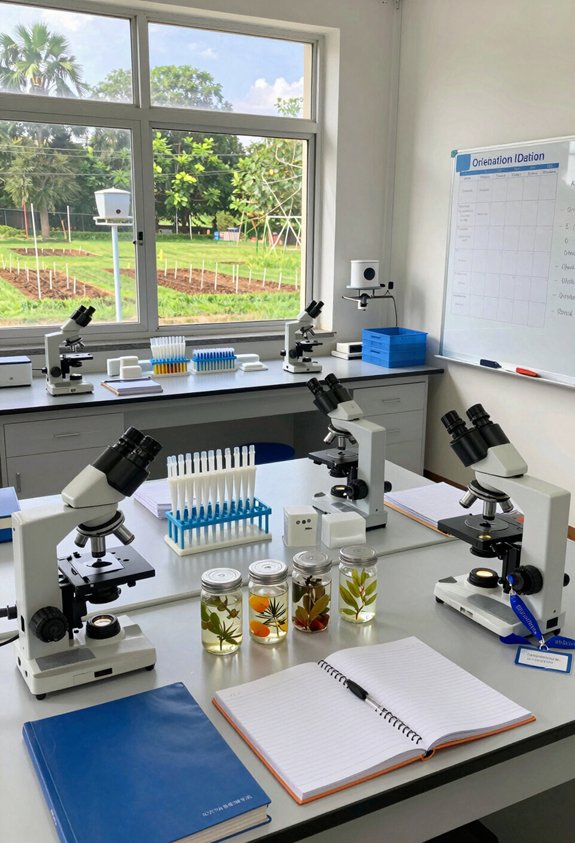
Knowing how to spot a bad internship is one thing, but understanding why legitimate programs actively seek out beginners can reshape the way you approach your search.
Labs and field sites hire novices because many essential tasks—preparing solutions, processing samples, assembling equipment, can be taught on the job without prior research experience.
Programs benefit from bringing you in for several practical reasons:
- Entry-level work expands workforce capacity at modest cost, with stipends or hourly pay rather than full salaries.
- Limited weekly hours let supervisors train you gradually without disrupting project timelines.
- Structured training, like SCUBA certification or animal handling, builds your skills during the placement itself.
- Hiring beginners creates a recruitment pipeline, where on-the-job learning leads to longer roles, academic credit, or independent projects funded by mentors.
How to Write a Cover Letter With No Research Background

Putting together a cover letter when you haven’t worked in a research lab can feel intimidating, but the truth is that most supervisors hiring for paid biology internships don’t expect applicants to arrive with a publication record or years of bench time.
Instead, they want to see that you’re ready to learn and contribute reliably to research projects. Structure your letter around four key elements:
- A clear opening that names the internship, your major, and your genuine interest in the biology focus area.
- Relevant coursework and lab skills you’ve practiced in class techniques like micropipetting or data entry in R. Read my blog post WHAT COUNTS AS EXPERIENCE IN ECOLOGY AND WILDLIFE BIOLOGY AND HOW TO GET PAID BIOLOGY INTERNSHIP OR JOB WITH NO EXPERIENCE. I am sure you will find these two blog posts helpful.
- Transferable experiences that show responsibility, such as volunteer roles or weekend shifts with specific hours noted.
- A concrete close listing your availability, contact info, and attached materials.
Another small pro tip for you is to just sound natural, not generic. Take the time to write about what that internship will mean for your career, and always do a little research on your supervisor, read their work, and mention their research papers. Explain why you want that particular internship and why that topic is so interesting to you. Those are things you can’t get from a generic ChatGPT response. And trust me, this will make you stand out.
Getting a Strong Recommendation Letter as a Beginner
Even before you’ve gained hands-on research experience, a well-chosen recommendation letter can speak powerfully to the qualities that matter most for entry-level paid internships, your reliability, your willingness to learn, and your ability to follow instructions carefully.
Please ask your recommender at least four to six weeks before the deadline, and provide a one-page summary that includes your resume, transcript, the internship description, and specific experiences worth highlighting.
Choose someone who’s directly observed your work ethic, a lab coordinator, course instructor, or volunteer lead, and give them concrete details they can reference, such as dates, hours committed, and examples of punctuality or teamwork. A strong recommendation doesn’t require technical depth: it needs honest, specific observations about your potential to grow in a hands-on setting.
If you’re reading my blog posts, then you know I’ve mentioned a hundred times how important it is to not be shy and just ask. I was so anxious when I had to ask my professor, I had chosen his subject because it was relevant for my internship, and I also had a good grade, but oh lord, I was having so much anxiety.
I remember thinking, how will he even remember me? There were 200 students in his class, and I was so worried about it. Well, I really did not want to miss my internship opportunities, so I finally asked, and guess what? He smiled. He was so happy that I asked, and he said, “You all think we can’t remember, but I do remember you — you were attending all classes without ever missing one.”
I was so happy, and he told me as well that he wishes more students would ask and apply. He even offered me to come again if I needed anything. So I’m pretty sure your professors will be more than glad to help you out. So if you do have thoughts I had, I hope this will remove your fears.
Application Deadlines You Cannot Afford to Miss

Because so many paid biology internships cluster their deadlines in late winter and early spring, you’ll want to start tracking dates no later than January.
Missing application deadlines by even a day can cost you an entire year of opportunity, especially for summer research programs that won’t reopen until the following cycle.
Keep these key windows in mind:
- February–March: NSF REU programs—federally funded summer research experiences—typically close during this period.
- Mid-March: National programs like the DCCC Summer Internship enforce firm cutoffs, such as March 14.
- Late March: Field-based programs may require tuition or enrollment payments by March 31.
- February–April: Corporate and industry internships post openings on rolling timelines, so check frequently.
Housing, Travel, and Hidden Costs to Plan For
Although landing a paid internship feels like the hard part, the financial details that follow your acceptance letter deserve just as much careful thought. Many programs offer furnished housing budget roughly $600–$1,200 per month for shared accommodations, but travel to your site can quietly consume a large portion of your stipend, especially for distant or international placements.
Factor in round-trip airfare, local transfers, and visa fees if you’re heading abroad. Beyond housing and travel, watch for hidden costs: SCUBA certifications, field gear, background checks, and liability insurance can add up quickly.
Since stipends range from roughly $17–$30 per hour, calculate your net income after all expenses. A good rule is estimating 10–25% above advertised costs, so you aren’t caught short when unexpected needs arise.
This is why I highly suggest IAESTE and AIESEC, stipendia covers all, enough money for food, transportation, housing, I only had to purchase a ticket, and additional costs were trips with other students. And yeah, there was a small application fee, very low, as staff provided support with visa and resume, cover letters. That was it. Go to your local office and get all the info.
Can a Paid Biology Internship Count for College Credit?

Earning both a paycheck and college credit from the same internship is possible in many biology programs, but it requires deliberate planning on your part, not every school or hosting organization allows it automatically.
To make it work, you’ll typically need to:
- Enroll in a designated internship course—such as Bio 93/193—through your department, which formally ties the experience to your transcript.
- Secure a faculty sponsor who’ll oversee your learning objectives and evaluate your progress.
- Submit required deliverables like a learning contract, timesheet, and final report before your registrar’s deadlines.
- Confirm that receiving pay alongside college credit won’t affect your financial aid or work-study status.
Credit hours usually reflect your weekly commitment—roughly five hours per week for one credit, ten for two.
From Internship to Co-Authorship and Grad School
Beyond earning credit and a paycheck, a paid biology internship can open a door that many undergraduates don’t expect the chance to see your name on a published scientific paper and to build a graduate school application that stands out.
When you commit 8–20 hours per week to field sampling, data analysis, or lab techniques, you’re generating substantive contributions that supervisors recognize. If you take on an independent project and document your work through lab notebooks or written reports, you create tangible evidence that supports co-authorship—being listed as a contributing author on a research publication.
Graduate programs value this kind of demonstrated initiative. A strong recommendation letter describing your technical skills and intellectual contributions can further distinguish your application from others.
Where to Find New Paid Biology Internships Each Semester

How do you actually find these opportunities when new ones appear every few months? The key is building a routine—checking sources consistently rather than searching in a single burst. Paid internships cycle seasonally, so you’ll want to revisit these channels each fall and spring:
- University and regional program listings—NSF REU deadlines, for example, typically fall in February through March.
- Institutional internship pages for labs like Gulf Specimen Marine Lab or Quarry Bio Life Sciences, which post seasonal roles with training included.
- Centralized portals such as DCCC Summer Program and corporate research internship announcements designed for students without prior experience.
- Departmental mailing lists and direct coordinator contacts, where positions are often shared before they’re publicly advertised.
So make sure when you check the web page, to subscribe to their email newsletter so you get updated first. That really works well and increases your chance drastically.
Make sure to subscribe to my list, too, if you enjoy reading content on this blog.
If you enjoy the content on this blog, make sure to subscribe to my list as well.
Few more thoughts
You don’t need a perfect resume to begin meaningful research, you just need to start looking. According to the National Association of Colleges and Employers, students who complete paid internships receive job offers at nearly double the rate of those who don’t.
That’s a compelling reason to explore every opportunity listed here, apply even when you feel uncertain, and trust that the experience itself will teach you what classrooms can’t.
Wild regards,
Eli

Erzsebet Frey (Eli Frey) is an ecologist and online entrepreneur with a Master of Science in Ecology from the University of Belgrade. Originally from Serbia, she has lived in Sri Lanka since 2017. Eli has worked internationally in countries like Oman, Brazil, Germany, and Sri Lanka. In 2018, she expanded into SEO and blogging, completing courses from UC Davis and Edinburgh. Eli has founded multiple websites focused on biology, ecology, environmental science, sustainable and simple living, and outdoor activities. She enjoys creating nature and simple living videos on YouTube and participates in speleology, diving, and hiking.
🌿 Explore the Wild Side!
Discover eBooks, guides, templates and stylish wildlife-themed T-shirts, notebooks, scrunchies, bandanas, and tote bags. Perfect for nature lovers and wildlife enthusiasts!
Visit My Shop →