
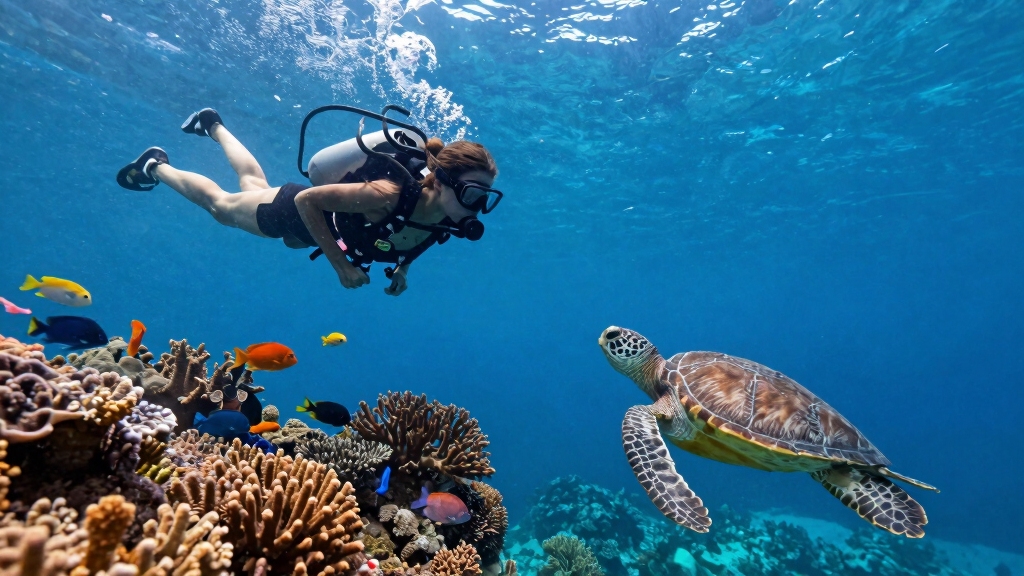
A marine biology internship in South Africa places volunteers on the KwaZulu-Natal subtropical coast, where they photograph nudibranchs—small, brightly patterned sea slugs that serve as indicator species for reef health—because these ectothermic animals respond to temperature changes within months, offering early warnings of ocean warming. The first week delivers PADI Open Water certification through classroom theory, pool skills, and open-ocean dives, preparing participants to conduct research dives starting at 08:30 each morning. The outline below traces training timelines, booking windows, and the support systems that frame this placement.
Why This Marine Biology Internship Focuses on Nudibranchs and Ocean Warming
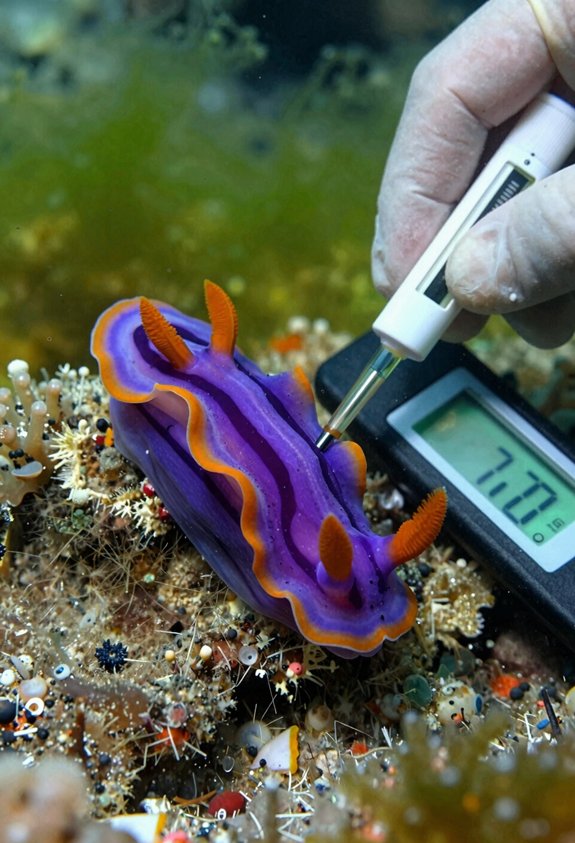
Why would scientists design an entire internship around sea slugs when oceans face so many urgent threats? The answer lies in what nudibranchs—colorful marine mollusks without shells—can reveal about climate change.
These animals make exceptional indicator species, organisms whose presence or absence signals broader environmental shifts, because their vibrant patterns allow reliable identification in photographs collected by citizen-science divers.
With over 3,000 species documented, many feed on specific prey and remain in small territories, so local population changes directly mirror reef health and warming impacts.
As ectotherms—animals whose body temperature matches their surroundings—with lifespans under a year, nudibranchs respond rapidly to temperature anomalies, offering early warnings that slower-growing corals can’t provide, making them cost-effective proxies for tracking climate-driven ecosystem transformations.
Where You’ll Be Based: South Africa’s Tropical Zulu Coastline Near Mozambique
Along the warm Indian Ocean where KwaZulu-Natal meets the borders of Mozambique and Eswatini, you’ll work in a traditional Zulu area that offers something rare in marine research—a subtropical reef system still revealing its secrets to scientists.
The project site occupies a relatively underexplored reef region where nudibranch monitoring and climate-change research on coral health take place daily, giving interns direct access to marine environments that matter for understanding ocean warming.
Accommodation consists of a shared volunteer house positioned about ten minutes from the beach by vehicle, within walking distance of local bars, restaurants, and shops.
Richards Bay serves as the nearest airport with included pickup and transfer to camp, while the coastal location provides convenient options for travel to Kruger National Park and other regional attractions during your time off.
Who You’ll Volunteer With: Vetted Partners and Fellow Conservationists
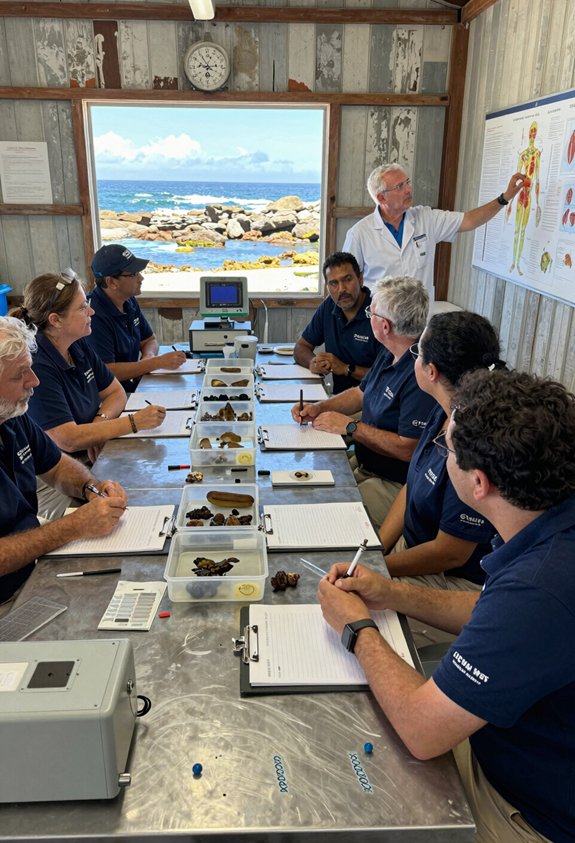
Your work alongside the subtropical reefs will connect you to a screened and vetted local partner organisation that operates the marine conservation project in this traditional Zulu coastal region, a collaboration arranged and confirmed before you depart so the in-country team knows you’re coming and has prepared your role in advance.
The placement includes regular check-ins from the project team and thorough on-site orientation, while a dedicated Trip Coordinator handles your pre-departure logistics and serves as your liaison with the partner.
You’ll join fellow conservationists whose ages typically span from eighteen to eighty-five, meeting them during an informal gathering on arrival that encourages teamwork and the exchange of knowledge.
Ongoing support features a twenty-four-hour emergency line—staffed five days each week—and in-country oversight to maintain safety and productive collaboration.
Week One: Earning Your PADI Open Water Certification Before Research Begins
Before the underwater surveys and reef monitoring tasks begin, each participant dedicates the entire first week to earning PADI Open Water certification—a globally recognized credential that confirms a diver’s competence to explore depths up to eighteen meters and establishes the baseline knowledge required for responsible marine research.
The week opens with classroom theory sessions covering dive knowledge and safety protocols, followed by pool skill sessions where participants must demonstrate required competencies before advancing to open-ocean dives.
After successful pool assessments, participants complete their ocean dives and, upon meeting all course requirements, receive their certification.
This first-week PADI course integrates into the placement structure, with costs implied within trip planning, and requires fitness to dive. Throughout training, the local team provides on-site support and emergency assistance.
PADI Training Breakdown: Classroom Theory, Pool Skills and Ocean Dives
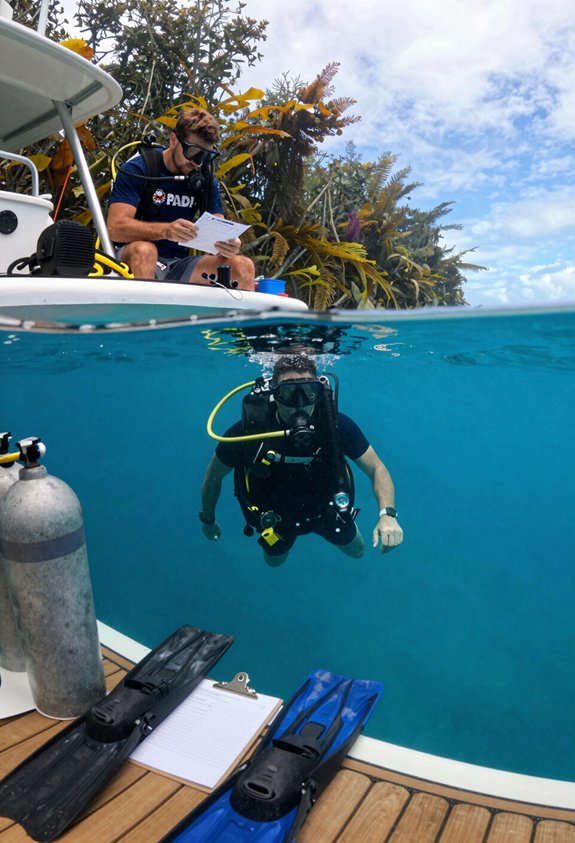
Mastering the fundamentals of scuba diving unfolds in three progressive stages—classroom theory, confined-water practice, and open-ocean application—each building upon the last to transform complete beginners into certified divers capable of conducting marine research at depth.
Theory sessions introduce dive principles, equipment function, safety protocols, and planning fundamentals through instructor-led lessons and quizzes that confirm comprehension.
Pool work follows, where candidates demonstrate essential competencies: clearing water from their mask, retrieving a dislodged regulator—the breathing apparatus—and executing controlled descents and ascents alongside buddy skills under close supervision.
Once pool assessments are passed, participants complete mandated ocean dives to apply these techniques in authentic conditions, practicing navigation, buoyancy control, and underwater communication. Meeting all requirements earns the PADI Open Water certification, typically by week’s end, clearing the path toward daily research dives.
Your Daily Dive Schedule After Certification: Morning Dives and Data Collection
Once the certification card is in hand, the rhythm of the program shifts entirely—theory and practice give way to consistent field research, and participants slip into a routine that mirrors the work of professional marine biologists conducting long-term environmental monitoring.
Mornings begin with a 07:30 departure from camp, followed by kit-up at 08:00 and an 08:30 in-water start.
The research dive centers on photographing nudibranchs—small, colorful sea slugs that serve as indicator species, meaning their presence and condition reveal information about reef health and ocean warming trends. During each dive, participants document location, depth, and underwater conditions while capturing close-up images for later analysis.
Back at camp around 11:00, the midday hours are reserved for uploading photographic data and observations into the project database, typically between 13:00 and 14:00, though schedules shift as weather or logistics require.
How Your Nudibranch Photos Contribute to Climate Change Research
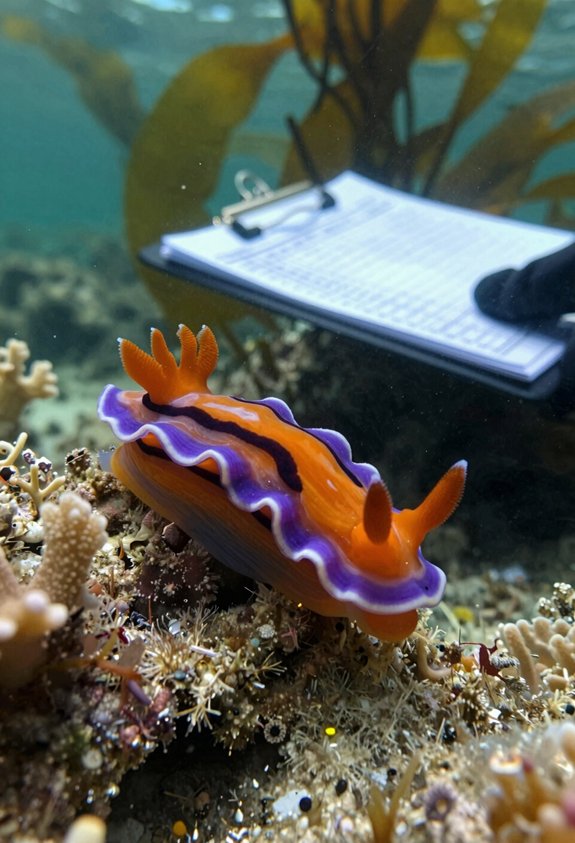
When volunteers surface from a morning dive and transfer their close-up images onto the project’s shared drive, they’re feeding data into a research effort far larger than any single expedition—one that tracks how quickly warming oceans are reshaping the communities of animals that live on tropical reefs.
Each photograph, stamped with date, GPS coordinates, depth, and water conditions, helps scientists map range shifts—changes in where species are found—and detect patterns linked to rising sea temperatures. High-resolution images allow researchers to confirm species identification and document shifts in abundance over time, building empirical evidence for biodiversity loss.
Because this South African coastline remains underexplored, volunteer records establish baseline data that improve climate-impact models and validate remote-sensing signals such as coral bleaching events, creating a cost-effective, long-term monitoring dataset.
Beach Clean-Ups and Conservation Activities Between Dives
Stepping off the boat after a morning dive doesn’t mark the end of a volunteer’s contribution to reef health—it simply shifts the focus from underwater observation to shoreline stewardship, where beach clean-ups tackle the visible debris that threatens the same ecosystems volunteers have just documented below the surface. These activities slot into non-diving days or afternoon windows after lunch and database entry, complementing the programme’s core structure with hands-on conservation work.
Teams partner with vetted local organisations to remove litter according to community guidelines, logging each item before proper disposal—data that feeds into ongoing research on human coastal impacts. The effort doubles as practical training in conservation protocols and community engagement, reinforcing that protecting marine life requires action both above and below the waterline.
Your Arrival Experience: Richards Bay Pickup and Camp Tour
How does one actually begin a marine biology placement halfway around the world—does it start with the first dive, or does the real shift happen the moment a volunteer steps off the plane into South African air?
The journey begins practically: airport pickup from Richards Bay delivers volunteers directly to camp, removing logistical uncertainty from those first hours.
Upon arrival, a guided tour reveals the facilities—accommodation spaces, communal areas, safety procedures—grounding newcomers in their temporary home.
That evening, the team hosts a traditional South African braai, a barbecue gathering that doubles as informal welcome.
Over beers and grilled food, volunteers meet their peers and local staff, easing into community before the work begins.
The on-site orientation follows, outlining daily expectations and practical details for the weeks ahead.
You’ll get $100 off automatically, and by adding the additional code ELI100 at checkout, you can save an extra $100, for a total of $200 off your Global Work & Travel wildlife internship adventure.
Ready to volunteer or intern abroad? Enter code ELI100 at checkout and get $100 OFF any internship or volunteer project worldwide.
Explore ProjectsComfort in a marine biology internship doesn’t mean luxury—it means having a functional, welcoming space where tired volunteers can rest between dives and field sessions without distraction.
The shared volunteer house provides exactly that: communal bedrooms with linen already arranged, shared bathrooms that accommodate rotating schedules, and a fully equipped kitchen where interns prepare meals together after long days analyzing specimens.
The lounge area becomes a natural gathering point for comparing field notes or simply unwinding.
Just next door, a bar and restaurant offers pool tables and evening entertainment when energy permits.
The location balances accessibility with practicality—a ten-minute drive reaches the beach, while local shops, restaurants, and bars sit within walking distance in a safe neighbourhood that allows volunteers to explore independently.
Three Daily Meals on Rotation: What You’ll Eat and Who Cooks
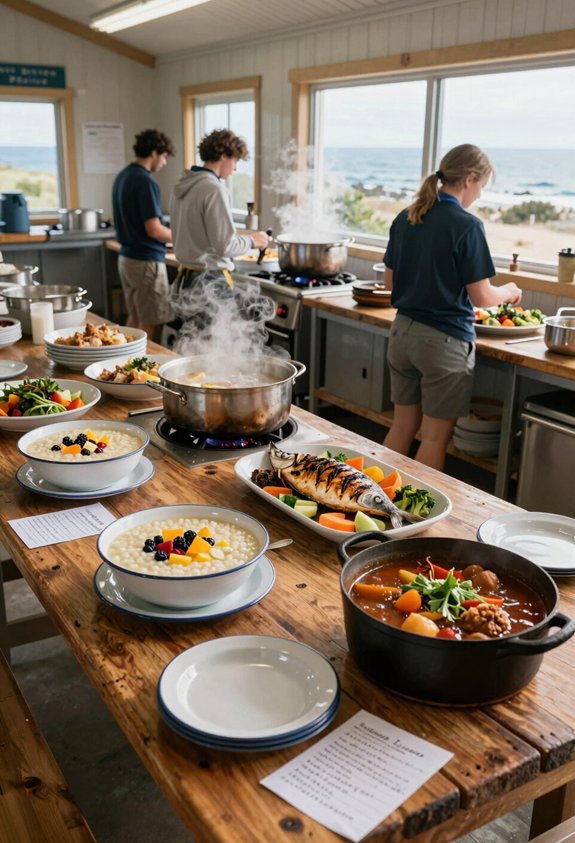
A welcoming house offers rest and refuge, but it’s the rhythm of shared meals that truly anchors daily life during a marine biology internship—and here, those meals aren’t catered or outsourced but prepared by the volunteers themselves on a rotating schedule.
Three daily meals are included in the program, with participants taking turns in the communal kitchen to plan, cook, and serve food for the group.
The experience begins on arrival day with a traditional South African braai—a barbecue gathering that doubles as both welcome meal and introduction to fellow volunteers.
From that point forward, the kitchen, lounge, and dining areas become shared spaces where meal preparation unfolds as a collective responsibility, fostering both practical coordination and the kind of group bonding that emerges naturally around food.
Do You Need to Be Fit to Dive? Health and Fitness Requirements
Whether you’re fit enough to dive isn’t a question of athletic prowess or peak physical condition—it’s about meeting baseline health and capability standards that guarantee safety underwater, where even minor medical issues can escalate quickly in an environment that demands steady breathing, calm problem-solving, and the physical capacity to manage equipment and currents.
Before starting the PADI Open Water course in week one, participants complete a medical questionnaire—positive answers require a doctor’s clearance. You’ll need basic swimming ability: 200 meters continuously or ten minutes of floating.
Cardiovascular and respiratory health matters deeply, as conditions like uncontrolled asthma or heart disease typically preclude diving. You’ll also carry gear weighing 10–20 kilograms, handle boat entries, and manage variable sea conditions—requiring reasonable strength and mobility.
Thorough dive insurance covering pre-existing conditions is mandatory.
What’s Included in Your Marine Biology Internship Fee
Understanding exactly what your program fee covers matters before you commit—not because the details are complicated, but because clarity about logistics, training, meals, and support systems allows you to focus your mental energy on the experience itself rather than worrying about hidden costs or unexpected gaps in what’s provided.
The fee includes airport pickup from Richards Bay, transfers to a shared volunteer house with communal spaces and bathrooms, and three daily meals throughout the stay.
First-week PADI Open Water certification—classroom sessions, pool practice, and ocean dives—is covered as required training before research work begins.
Pre-departure guidance from a dedicated coordinator, on-site orientation with a vetted partner organization, continuous project supervision, gWorld app access for trip details, and a 24/5 emrgency support line provide thorough support from planning through completion.
What You Pay Extra: Flights, Insurance, Visas and Spending Money
While the programme fee takes care of accommodation, meals, training, and in-country support, several important costs sit outside that structure and require separate planning on the participant’s end.
International flights to South Africa must be arranged independently, though the Travel Concierge stands ready to help navigate options.
Adequate travel insurance—covering both diving activities and medical evacuation—is mandatory but not included, so participants need to budget accordingly.
Visa requirements depend on nationality, and any application fees fall to the individual.
Beyond these essentials, it’s wise to set aside spending money for meals at local restaurants, souvenirs, and optional excursions.
Although airport pickup from Richards Bay is provided, travelers should account for any lodging or transport needed outside the official transfer window.
How Far in Advance Should You Book Your Spot?
Timing one’s application well can mean the difference between landing a coveted summer slot alongside migratory humpbacks and settling for whatever remains, so prospective interns should ideally book six to twelve months ahead—or even earlier if they’re targeting peak wildlife seasons.
Placements operate on a first‑in‑best‑dressed basis, which means the most desirable positions fill quickly and waiting leaves fewer options.
Once an intern submits the flexible low deposit, their spot activates and they gain access to gWorld resources, after which the Travel Concierge coordinates flights, transfers, and pre‑departure paperwork.
It’s wise to remember that the program requires a mandatory first‑week PADI diving course, so anyone needing medical clearance or visa processing should add extra lead time—and those concerned about cancellations should note the eighty-four‑day policy milestone for partial refunds or credits.
Your Trip Coordinator and 24/5 Emergency Support Line
A dedicated Trip Coordinator—one individual who’ll become the intern’s single point of contact throughout the booking journey—steps in as soon as the deposit clears, handling everything from visa queries to pre‑departure checklists so that no question goes unanswered and no detail slips through the cracks.
Working closely with the Travel Concierge, this coordinator arranges tickets, accommodation, and airport transfers well before departure, then collaborates with the in‑country team to guarantee orientation and placement logistics run smoothly upon arrival.
Once on‑site, interns gain access to a 24/5 emergency support line—available around the clock Monday through Friday—staffed by professionals ready to respond to urgent concerns, while the local partner team provides ongoing guidance throughout the placement for both peace of mind and practical problem‑solving.
Changing Your Plans: Deposit Transfers, Cancellations and Store Credit
Because circumstances shift—a semester schedule changes, a family obligation arises, or a new opportunity demands attention—the program builds flexibility into every booking through a suite of transfer and cancellation policies designed to honor both the intern’s evolving needs and the logistical realities of coordinating placements months in advance.
Under the Lifetime Deposit Guarantee, participants can move their deposit between trips or transfer it to a friend or family member, ensuring that initial commitment retains value even when plans pivot. Cancellations made with at least eighty-four days’ notice carry a fifty-percent fee, with refunds typically issued as Store Credit—funds held for future redemption across any program for up to two years.
The Travel Concierge assesses each situation individually, recognizing that pre-departure progress affects available options and that thoughtful guidance supports informed decision-making.
Typical Volunteer Age Range and Experience Levels
Overwhelmingly, the program attracts participants whose ages range from eighteen to eighty-five, a span that dissolves assumptions about who can contribute to marine research and replaces them with the practical truth that curiosity, physical fitness for diving, and willingness to learn matter far more than chronological milestones.
Complete beginners arrive regularly—the first week is devoted to PADI Open Water certification, establishing foundational skills before research dives begin.
Experienced divers and those with marine or scientific backgrounds also participate, often advancing more quickly to complex data-collection tasks.
Academic qualifications in marine biology aren’t required: students, gap-year travellers, career changers, and retirees all find their place. Medical fitness for diving remains the essential requirement, and on-site training guarantees every volunteer, regardless of prior experience, meets rigorous research standards.
Ready to volunteer or intern abroad? Enter code ELI100 at checkout and get $100 OFF any internship or volunteer project worldwide.
Explore ProjectsIf you’re exploring hands-on experience in ecology or wildlife biology, don’t miss my complete guide to wildlife conservation internships with global work and travel, where I break down what’s worth your time, money, and long-term career goals.

Erzsebet Frey (Eli Frey) is an ecologist and online entrepreneur with a Master of Science in Ecology from the University of Belgrade. Originally from Serbia, she has lived in Sri Lanka since 2017. Eli has worked internationally in countries like Oman, Brazil, Germany, and Sri Lanka. In 2018, she expanded into SEO and blogging, completing courses from UC Davis and Edinburgh. Eli has founded multiple websites focused on biology, ecology, environmental science, sustainable and simple living, and outdoor activities. She enjoys creating nature and simple living videos on YouTube and participates in speleology, diving, and hiking.
🌿 Explore the Wild Side!
Discover eBooks, guides, templates and stylish wildlife-themed T-shirts, notebooks, scrunchies, bandanas, and tote bags. Perfect for nature lovers and wildlife enthusiasts!
Visit My Shop →