
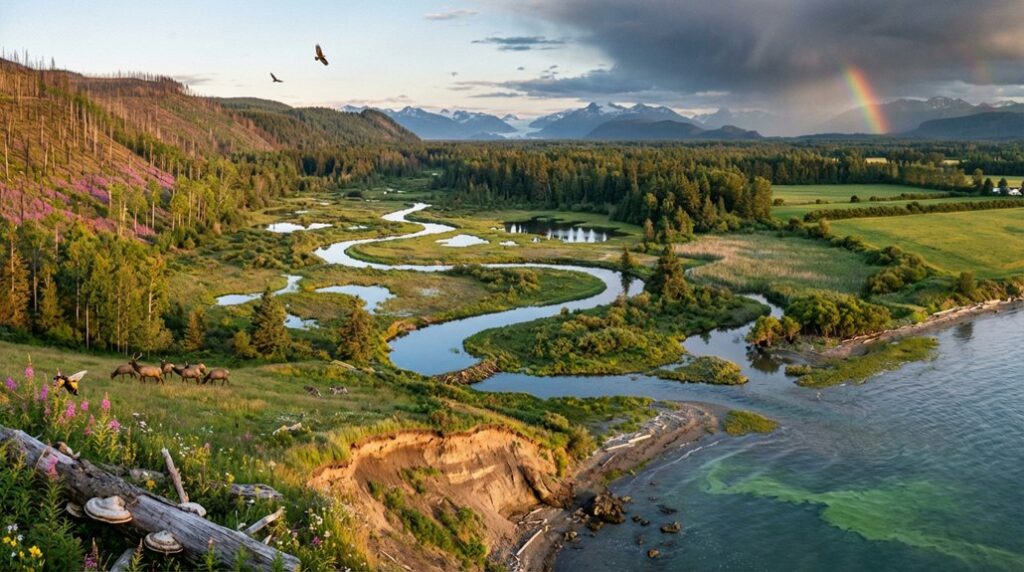
This guide surveys 25 key concepts in ecology with concrete examples. It begins with organisms, populations, then moves to communities, habitats, and major biomes. It explains ecosystems, energy flow, trophic levels, and primary productivity. Species interactions—competition, predation, herbivory, mutualism, and parasitism—are illustrated by coral symbiosis, apex predator cascades, and parasite-host dynamics. Succession, disturbance, and population strategies (r/K) show change over time. Practical cases span kelp forests to urban pigeons, setting up insights that unfold next.
Make sure to download the free guide that includes over 100 ecology terms explained clearly with examples.
Key Takeaways
- Energy flows from producers to consumers to decomposers; only ~10% transfers upward, shaping trophic pyramids (e.g., grasses → bison → wolves).
- Species interactions drive community structure: competition, predation, mutualism, and facilitation (e.g., bees pollinating flowering plants).
- Population dynamics depend on births, deaths, immigration, emigration, and resources (e.g., desert rodents fluctuate with rainfall).
- Habitat quality and complexity create niches, promote coexistence, and influence ranges (e.g., coral reefs supporting diverse fish communities).
- Primary productivity (GPP, NPP) sets ecosystem energy budgets, measured by eddy covariance and remote sensing (e.g., tropical rainforests with high NPP).
Foundations of Ecology
Foundations of ecology begin with clear definitions of the organism, the basic unit whose traits and behaviors shape interactions.
From individuals arise populations with measurable size, structure, and dynamics, which in turn assemble into communities defined by species interactions.
These groups inhabit specific habitats and function within ecosystems where biotic and abiotic components interact to regulate energy flow and nutrient cycles.
What Is an Organism in Ecology? Definition and Real-World Examples
An organism, in ecological terms, is any individual living entity—such as a bacterium, oak tree, or gray wolf—that maintains life processes and interacts with its environment.
Ecology examines organism diversity through organism classification, from microbes to mammals, emphasizing how form and function align with habitat.
For example:
Organism adaptations—like cactus water storage, antifreeze proteins in Arctic fish, or echolocation in bats—demonstrate survival strategies shaped by selective pressures.
Organism behaviors, including foraging tactics, territorial displays, or daily migration for light in plankton, influence energy gain and risk avoidance.
Organism interactions are central: lichens pair fungi with algae, clownfish shelter among anemones, and cleaner wrasses remove parasites from larger fish.
Each organism integrates physiology, behavior, and environmental feedback, anchoring ecological inquiry at the individual level.
Population in Ecology: Meaning, Characteristics, and Examples
Although individuals anchor ecological study, populations shift the lens to groups of the same species living in a defined area and interacting over time. A population is characterized by size, population density, distribution, age structure, and genetic variation.
These traits shape population dynamics—changes in numbers through births, deaths, immigration, and emigration—governed by resource availability and environmental conditions. Reproductive strategies (r- and K-selection) influence growth rates and resilience; for example, cod spawn prolifically while elephants invest in few offspring.
Examples clarify patterns: urban pigeons reach high population density where food is abundant; desert kangaroo rats fluctuate with rainfall, reflecting resource availability; pine beetle outbreaks surge under warm winters, then crash; and sea turtle age structure skews older due to juvenile mortality, affecting long-term recovery and management.
Ecological Community Explained
Community frames ecology at the level where multiple species interact within a shared environment, shaping one another’s abundance, behavior, and evolution.
An ecological community is defined by ecological interactions—competition, predation, mutualism, and facilitation—that collectively determine community structure. Species diversity, measured by richness and evenness, influences stability and the capacity to absorb disturbances.
Habitat complexity, such as layered vegetation or reef architecture, creates niches that partition resources and reduce direct competition. Trophic dynamics link producers, consumers, and decomposers into food webs, where energy flow and top-down or bottom-up forces regulate populations.
Keystone species and foundation species can disproportionately mold patterns of abundance. Disturbance regimes and succession further reorganize composition, allowing coexistence through time and space.
A clear real-world example of an ecological community is:
A coral reef community, which includes reef-building corals, reef fish, algae, sea urchins, mollusks, crustaceans, and microorganisms all living in the same area and interacting through feeding, competition, symbiosis, and habitat formation.
Because organisms persist only where their needs are met, habitat is the suite of physical and biological conditions that support a species’ survival and reproduction. Habitats vary by structure and resources: forests, grasslands, wetlands, deserts, rivers, coasts, and polar zones.
A tropical rainforest community made up of trees, understory plants, insects, birds, mammals, fungi, and soil microbes interacting through pollination, predation, decomposition, and competition, etc.
Habitat in Ecology: Definition, Types, and Why It Matters for Wildlife
Species habitat preferences determine where food, shelter, mates, and nesting sites can be found, shaping ranges and behaviors.
Habitat destruction impacts include fragmentation, pollution, and invasive species, which reduce quality and connectivity. Climate change effects shift temperature and moisture regimes, pushing species upslope, poleward, or into deeper waters.
Some exhibit urban wildlife adaptations—altered foraging, novel nesting sites, and tolerance of noise and light.
Habitat restoration strategies prioritize replanting natives, rewetting floodplains, removing barriers, controlling invasives, and reconnecting corridors to sustain populations.
Ecosystem Explained: Biotic and Abiotic Components Working Together
An ecosystem is a functional unit where living organisms interact with each other and with their physical environment to exchange energy and cycle matter. It includes abiotic factors such as light, temperature, water, and soil, alongside organisms engaged in biotic interactions like competition, predation, mutualism, and decomposition.
These interactions drive nutrient cycling, moving carbon, nitrogen, and phosphorus through food webs and detrital pathways. Producers capture energy, consumers transfer it, and decomposers return elements to reservoirs, sustaining ecosystem balance.
Habitat diversity within an ecosystem creates niches that partition resources and stabilize population dynamics. Feedbacks between biota and physical conditions regulate productivity and resilience to disturbance.
When abiotic constraints shift or species are lost, function can falter, reducing efficiency, stability, and recovery potential.
Biome Definition: Major Types of Biomes and Their Characteristics
Biome refers to a broad ecological unit defined by its dominant vegetation, climate patterns, and characteristic fauna, spanning large geographic regions. Major biomes are distinguished by temperature, precipitation, and seasonality, which shape plant structure and animal strategies.
Tropical rainforest characteristics include high, year-round rainfall, layered canopies, nutrient-rapid soils, and exceptional species richness.
Desert biome features center on scarce precipitation, extreme temperature swings, drought-tolerant shrubs, succulents, and nocturnal fauna.
A tundra ecosystem overview notes permafrost, short growing seasons, low-stature plants, lichens, and cold-adapted herbivores and predators.
Grassland types range from prairies to steppes and savannas, defined by seasonal rainfall, fire, grazing, and deep-rooted grasses.
Aquatic biome diversity spans freshwater and marine systems; salinity, light, and currents structure lakes, rivers, wetlands, coral reefs, and open ocean habitats.
Biosphere Explained: The Global Sum of All Ecosystems on Earth
The biosphere denotes the thin, life-supporting layer of Earth where atmosphere, hydrosphere, lithosphere, and living organisms interact. It integrates global ecosystems into a single, interconnected system driven by energy flow from the sun and nutrient cycling.
Biosphere dynamics emerge from feedbacks among climate, biogeochemical cycles, and ecosystem interactions, shaping productivity and resilience.
Real-world examples include carbon sequestration by forests, oxygen production by phytoplankton, and dust from deserts fertilizing the Amazon. Coral reefs and tropical forests function as biodiversity hotspots, concentrating species and ecosystem services essential to fisheries, water regulation, and cultural values.
Human activities—land conversion, pollution, and greenhouse gas emissions—alter these linkages. Monitoring satellite data and long-term field networks informs ecological sustainability, guiding restoration, protected areas, and climate adaptation.
Want to go deeper? Download the free guide with 100 essential ecology terms explained with real-world examples.
Ecological Niche Explained: How Species Use Resources and Coexist
Although species sharing a habitat may appear to overlap, each occupies an ecological niche—its multidimensional role defined by the resources it uses, conditions it tolerates, and interactions it maintains.
This framing clarifies ecological role significance and why species persist without excluding one another. Coexistence mechanisms arise when species reduce direct overlap through resource competition strategies such as temporal foraging shifts, microhabitat selection, or dietary specialization.
Classic niche partitioning examples include warblers using different tree strata and anoles segregating perches. In deserts, plants stagger rooting depth and water uptake. Marine predators split prey sizes or hunting times.
Such niche differentiation impacts population dynamics, stabilizes food webs, and buffers ecosystems against disturbance. When niches converge tightly, competitive exclusion intensifies; when they differentiate, diversity increases and ecosystem functions remain resilient.
Energy Flow and Biogeochemical Cycles in Ecology
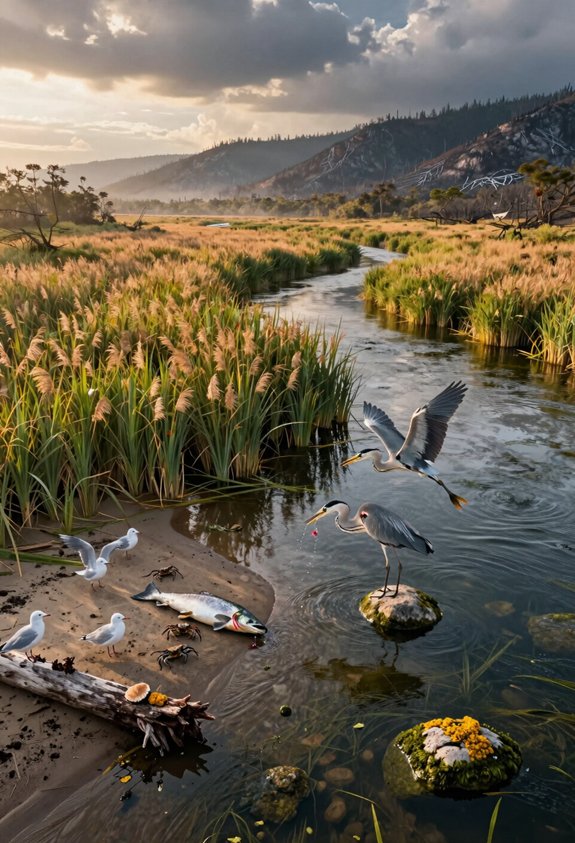
Energy moves through ecosystems from producers to consumers and finally to decomposers, shaping trophic dynamics and energy losses at each transfer.
Primary productivity—measured as GPP and NPP—sets the energy budget that supports food chains and complex food webs.
Concurrently, biogeochemical cycles of carbon, nitrogen, water, and phosphorus regulate the movement of essential elements that sustain these energy-driven interactions.
Energy Flow in Ecosystems: How Energy Moves Through Trophic Levels
Across ecosystems, sunlight captured by primary producers initiates a one-way flow of energy through trophic levels. Energy transfer mechanisms constrain how much captured solar energy becomes biomass and how much dissipates as heat.
Primary production efficiency varies with light, nutrients, and temperature, setting the baseline for trophic level dynamics. At each step, metabolic costs, incomplete consumption, and egestion reduce available energy, typically yielding about a ten percent transfer. These losses shape consumer resource relationships by limiting population sizes and interaction strengths.
Food webs consequently exhibit pyramidal energy structures, where scarce high-level energy governs predator abundance. Disturbances that alter productivity or respiration disrupt ecosystem energy balance, cascading through feeding links.
Real-world monitoring of grasslands and upwelling zones demonstrates how changing inputs shift energy pathways.
Trophic Levels Explained: Producers, Consumers, and Decomposers
Building on how energy moves through ecosystems, trophic levels classify organisms by their roles in capturing, transforming, and returning that energy and matter.
Producers convert light or chemical energy into biomass. Herbivores, carnivores, and omnivores follow as consumer classifications, transferring energy upward with marked losses at each step. Trophic pyramids significance lies in visualizing diminishing biomass and numbers as energy transfer efficiency typically hovers around 10%.
Decomposers—bacteria, fungi, and detritivores—close the loop by mineralizing organic matter, restoring nutrients to soils and waters.
Real-world examples clarify function: phytoplankton support zooplankton and fish; leaf litter sustains fungal networks in forests.
Ecological productivity models use these structures to predict biomass distribution, nutrient recirculation rates, and system resilience under disturbance.
Primary Productivity in Ecology: GPP, NPP, and Why They Matter
Although ecosystems vary widely, their capacity to capture and store energy is anchored by primary productivity. Gross primary productivity (GPP) represents the total carbon fixed by autotrophs via photosynthesis, while net primary productivity (NPP) equals GPP minus the respiration costs of producers. NPP indicates the rate at which biomass accumulates and is available for growth, reproduction, and ecosystem processes, underscoring its ecological significance.
Measurement techniques include light–dark bottle oxygen assays in aquatic systems, eddy covariance to track CO2 fluxes over landscapes, harvest methods to quantify biomass gain, and remote sensing indices such as NDVI to map spatial patterns.
Factors influencing productivity include solar radiation, temperature, water availability, nutrient supply, CO2 concentration, species composition, and disturbance regimes, which together shape temporal and geographic variation.
Food Chains and Food Webs in Ecology
From the energy fixed as NPP, that carbon moves through trophic pathways that link organisms into food chains and, more realistically, food webs.
Food chain dynamics describe linear sequences—producer to herbivore to carnivore—while food webs map the many intersecting trophic interactions that better represent nature. At each step, energy transfer is inefficient, typically shrinking biomass and constraining top predator abundance.
Predator prey relationships regulate populations, dampen outbreaks, and can trigger trophic cascades when altered. Generalists can buffer fluctuations by switching prey, enhancing ecosystem stability; specialists heighten sensitivity to change.
A grassland food chain:
Grass → Grasshopper → Frog → Snake → Hawk
Grass captures energy through photosynthesis, the grasshopper feeds on the plant, the frog eats the insect, the snake preys on the frog, and the hawk sits at the top as a predator. This simple chain shows one linear pathway of energy flow from producers to top consumers.
Another common example:
Phytoplankton → Zooplankton → Small fish → Tuna → Shark
This marine food chain illustrates how energy moves through ocean ecosystems, starting with microscopic producers and ending with apex predators.
Biogeochemical Cycles Explained: Carbon, Nitrogen, Water, and Phosphorus
Cycles stitch energy flow to matter’s movement, charting how carbon, nitrogen, water, and phosphorus circulate through organisms, atmosphere, hydrosphere, and lithosphere.
Carbon cycle basics show CO2 exchanged by photosynthesis, respiration, decomposition, and combustion, with oceans and soils as major sinks.
Nitrogen fixation processes convert N2 to ammonia via microbes, lightning, and industrial Haber-Bosch, followed by nitrification, assimilation, and denitrification that closes the loop.
Water cycle significance emerges through evaporation, condensation, precipitation, infiltration, and runoff, regulating climate, productivity, and pollutant transport.
Phosphorus sources include weathered rock, guano, and fertilizers; lacking a gaseous phase, phosphorus moves slowly through food webs and sediments.
Biogeochemical impacts arise when human activities accelerate fluxes, driving ocean acidification, eutrophication, altered hydrology, and soil nutrient imbalances.
If you’d like to strengthen your foundation, start with the Ecology Basics section to understand core concepts step by step. If you want to learn ecology fast and simply, the Ecology Flashcards are ideal for quick, focused learning. For a deeper reference, explore the Glossary of Ecology Terms with 1,500+ terms explained in very simple language, available as a PDF you can use on any device.
Species Interactions
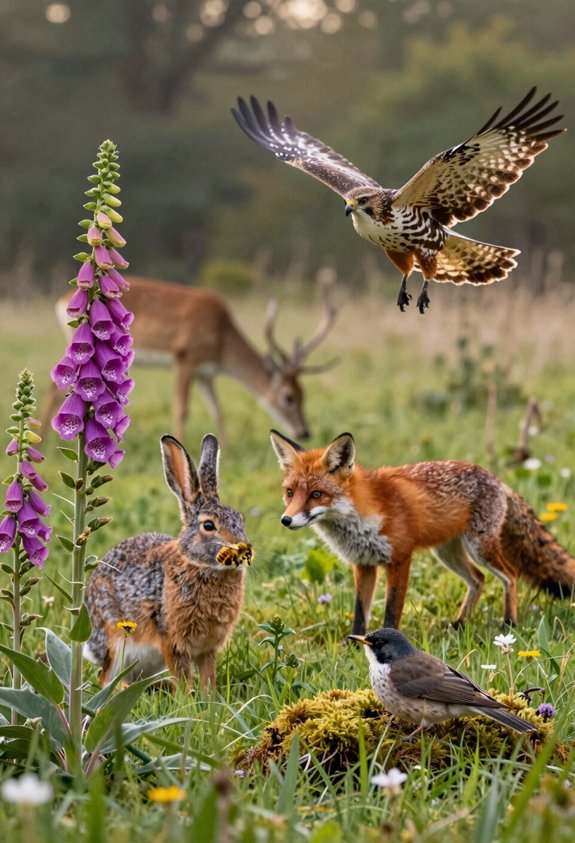
Species interactions shape population dynamics and community structure through competition, predation, herbivory, mutualism, and commensalism.
Competition ranges from intraspecific to interspecific forms, predation and herbivory regulate resources and drive adaptations, while mutualism and commensalism influence survival without equal costs.
Examining these relationships clarifies how energy use, resource partitioning, and coevolution maintain ecological balance.
Competition in Ecology: Types, Examples, and Ecological Effects
Although ecosystems teem with cooperation and neutrality, competition is a central force shaping who survives, reproduces, and where species persist.
Intraspecific competition occurs within a species as individuals vie for food, mates, or territory, often intensifying at high density and driving self-thinning in plants or smaller clutch sizes in birds.
Interspecific competition arises between species and can lead to competitive exclusion when one consistently outcompetes another under stable conditions.
Yet coexistence often emerges through resource partitioning and niche differentiation: Anolis lizards segregate by perch height, warblers divide tree foraging zones, and desert plants stagger water use over time.
Interference competition involves direct aggression or territoriality, while exploitative competition depletes shared resources.
These dynamics influence population sizes, community composition, and adaptive trait evolution.
Intraspecific Competition (within the same species)
Example 1: Deer competing for food
During dry seasons, deer of the same species compete for limited grass and shrubs. Individuals that cannot access enough food may grow more slowly or fail to reproduce.
Example 2: Trees of the same species competing for light
In a dense teak plantation, young teak trees compete with each other for sunlight, water, and soil nutrients, often resulting in slower growth or natural thinning.
Example 3: Male birds competing for mates
Male peafowl compete with other males for access to females during the breeding season through displays and territory defense.
Interspecific Competition (between different species)
Example 1: Lions and hyenas
Lions and hyenas compete for the same prey species on African savannas. Even though they are different species, they rely on overlapping food resources.
Example 2: Native and invasive plant species
Invasive plants like Lantana compete with native plant species for space, sunlight, and nutrients, often reducing native biodiversity.
Example 3: Birds competing for nesting sites
Different bird species may compete for limited tree cavities, such as woodpeckers and owls, especially in forests with few old trees.
Predation in Ecology: Predator–Prey Relationships Explained
While cooperation and competition both shape communities, predation directly links energy flow to population regulation. Predators convert prey biomass into their own, and prey losses constrain population growth, stabilizing ecological balance.
Predator adaptations—keen senses, camouflage, venom, speed, pack hunting—match prey defenses such as vigilance, armor, toxins, mimicry, and behavioral shifts. These reciprocal pressures provide classic coevolution examples: bats and moths countering echolocation with ultrasound jamming, or newts escalating toxins as snakes evolve resistance.
Predation’s impact on ecosystems extends beyond individual encounters. By suppressing dominant herbivores or mesopredators, apex predators enable trophic cascades that restructure vegetation, nutrient cycling, and habitat complexity.
Spatial and temporal refuges, prey switching, and functional responses modulate dynamics, preventing runaway oscillations and extinctions. Human-driven predator losses often unravel these regulatory feedbacks.
Terrestrial Predator–Prey Examples
- Lion → Zebra
Lions prey on zebras, helping regulate herbivore populations and prevent overgrazing in savanna ecosystems. - Wolf → Deer
Wolves prey on deer, influencing deer behavior and population size and indirectly supporting forest regeneration. - Snake → Frog
Snakes feed on frogs, linking aquatic and terrestrial food chains.
Aquatic Predator–Prey Examples
- Shark → Tuna
Sharks prey on large fish like tuna, maintaining balance in marine food webs. - Heron → Fish
Herons hunt small fish in wetlands, controlling fish populations and transferring energy between aquatic and terrestrial systems. - Octopus → Crab
Octopuses prey on crabs, affecting benthic community structure.
Insect Predator–Prey Examples
- Spider → Fly
Spiders reduce insect populations and play an important role in natural pest control. - Praying mantis → Grasshopper
Mantises prey on grasshoppers, influencing insect community dynamics.
Plant–Herbivore (Predation) Examples
- Deer → Young tree saplings
Deer browsing on saplings affects forest composition and regeneration. - Caterpillar → Leaves
Caterpillars consume plant leaves, often triggering plant defense mechanisms.
Herbivory in Ecology: Plant–Animal Interactions and Adaptations
Green mouths drive ecosystems. Herbivory shapes energy flow as plants convert sunlight into biomass and animals transfer it through food webs.
Plants are not passive; plant defenses include thorns, tough leaves, silica, toxins, and induced chemical signals. In turn, herbivore adaptations—specialized teeth, detoxification enzymes, symbiotic gut microbes, and selective feeding—enable consumption of defended tissues. Classic coevolution examples include milkweed cardenolides and monarch caterpillar resistance, or acacia spines matched by giraffe tongue morphology.
Grazing impacts ripple across landscapes. Moderate browsing can stimulate plant regrowth, enhance nutrient cycling, and maintain habitat heterogeneity, while overgrazing depletes vegetation, erodes soils, and alters fire regimes.
The resulting feedbacks influence pollination networks, predator distributions, and biogeochemical fluxes, reinforcing or destabilizing ecosystem balance depending on herbivore density and timing.
Mutualism Explained: Examples of Win–Win Species Interactions
Because many species gain more together than alone, mutualism describes interactions in which both partners increase fitness through exchange of resources or services. It spans nutrition, defense, and movement across ecosystems.
Classic pollination partnerships link flowering plants with bees, bats, or birds: nectar fuels the animal, while pollen transfer boosts plant reproduction.
Cleaning symbiosis shows fish or shrimp removing parasites from clients, improving health and securing food.
Seed dispersal by frugivorous birds or mammals relocates offspring to suitable sites while offering a meal.
Mutualistic fungi, such as mycorrhizae, enhance plant nutrient uptake in exchange for carbohydrates.
On coral reefs, corals rely on photosynthetic symbionts for energy, while providing shelter.
These reciprocal exchanges stabilize populations and shape community structure.
Commensalism in Ecology: Definition and Real-World Examples
Commensalism describes an interaction in which one species gains a benefit—such as food, shelter, or transport—while the other experiences no significant cost or advantage.
It sits among symbiotic interactions as distinct from mutual benefits, because only one partner gains. Classic commensalism examples include remoras riding on sharks to catch scraps and travel, barnacles attaching to whales for dispersal, and cattle egrets following livestock to feed on flushed insects.
In forests, epiphytic orchids use tree branches for support without drawing nutrients from the host species. Hermit crabs occupying discarded gastropod shells demonstrate shelter-based benefits.
Human-linked cases include house sparrows nesting in buildings.
These ecological relationships highlight energy and resource flow without measurable harm, shaping species distributions, movement, and microhabitat use across ecosystems.
Parasitism in Ecology: How Parasites Interact With Hosts
Although it differs sharply from commensalism and mutualism, parasitism is a symbiotic interaction in which one organism—the parasite—derives resources from a host, reducing the host’s fitness.
Parasites range from viruses and protozoa to helminths and arthropods, exploiting hosts for nutrients, shelter, and transmission. Many employ host manipulation, altering behavior or physiology to enhance disease transmission—for example, rabies increasing aggression, or Toxoplasma influencing rodent risk-taking.
Host defenses shape parasite evolution. An immune response selects for antigenic variation, immune evasion, or latency, while coevolution dynamics drive arms races between host resistance and parasite virulence.
Transmission modes—vector-borne, trophic, direct contact—affect virulence strategies and population impacts. Real-world outcomes include malaria shaping human genetics, brood parasites reducing bird reproductive success, and parasitic plants draining crop productivity.
Population and Community Dynamics
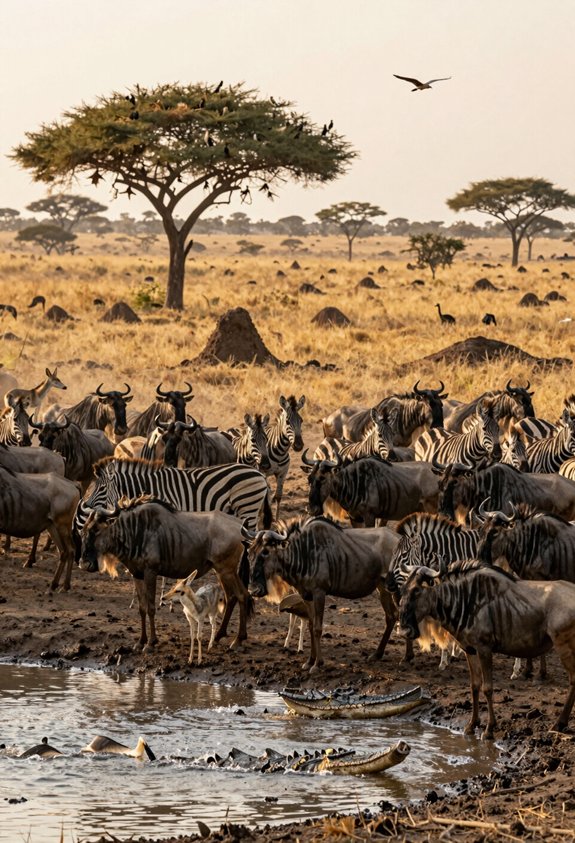
Population and community dynamics hinge on how density-dependent forces like competition and disease contrast with density-independent events such as drought or frost in regulating numbers.
These dynamics shape the tempo of ecological succession, distinguishing the species assembly of primary succession on barren substrates from the faster recovery of secondary succession after partial disturbance.
Natural events and human activities act as disturbances that reset communities, alter trajectories, and influence long-term ecosystem structure and function.
Population Regulation in Ecology: Density-Dependent and Independent Factors
When resources, interactions, and environmental forces intersect, they shape how numbers of organisms rise or fall. Density-dependent population control mechanisms include competition, predation, parasitism, and disease; their strength increases as population size grows, stabilizing numbers near carrying capacity.
Density-independent factors—such as drought, wildfire, hard freezes, or pollution—affect populations regardless of density, often causing sudden declines.
Real-world examples clarify ecological balance importance. A boom in deer density raises tick-borne disease and plant overbrowsing, prompting adaptive wildlife management strategies like regulated hunting.
In fisheries, quotas respond to stock assessments to prevent collapse. Human impact assessment tracks how urbanization and climate extremes alter both density-dependent and independent pressures.
Invasive species effects, such as zebra mussels filtering lakes, rewire competition and resource flow, reshaping native population trajectories.
Ecological Succession Explained: Primary vs Secondary Succession
Shifts in population size under density-dependent and independent forces set the stage for how communities reorganize after disturbance.
Ecological succession describes ordered change in species composition through ecological stages. In primary succession, life colonizes newly exposed substrates lacking soil, such as fresh lava flows or retreating glacial till. Pioneer species like lichens and mosses weather rock, build organic matter, and facilitate later arrivals.
In secondary succession, soil and seed banks persist after fire or farming, accelerating recovery. Disturbance effects influence which succession pathways unfold, but predictable patterns often emerge: herbs to shrubs to shade-tolerant trees.
Feedbacks among species and resources shape trajectories toward a relatively stable climax community, though local conditions may maintain mosaics. Real-world examples include Krakatau’s island flora and New England field-to-forest shifts.
Disturbance in Ecology: Natural and Human Impacts on Ecosystems
Although ecosystems often appear stable, disturbance is a fundamental driver of population and community dynamics, resetting resources, reshaping habitats, and altering species interactions. Natural disturbances such as fire, floods, storms, and insect outbreaks create patchiness that opens space for colonizers and promotes diversity through shifting competitive balances.
Human impacts, including deforestation, river regulation, pollution, and climate change, often amplify frequency or intensity, pushing systems beyond historical variability.
Ecosystem recovery depends on species life histories, connectivity, and the severity and scale of events. Resilience strategies include seed banks, dormant stages, dispersal corridors, redundancy among functional groups, and behavioral flexibility.
When thresholds are crossed, recovery may require active habitat restoration—reestablishing native vegetation, removing stressors, and rebuilding hydrology—to prevent regime shifts and sustain ecosystem services.
Biodiversity and Conservation
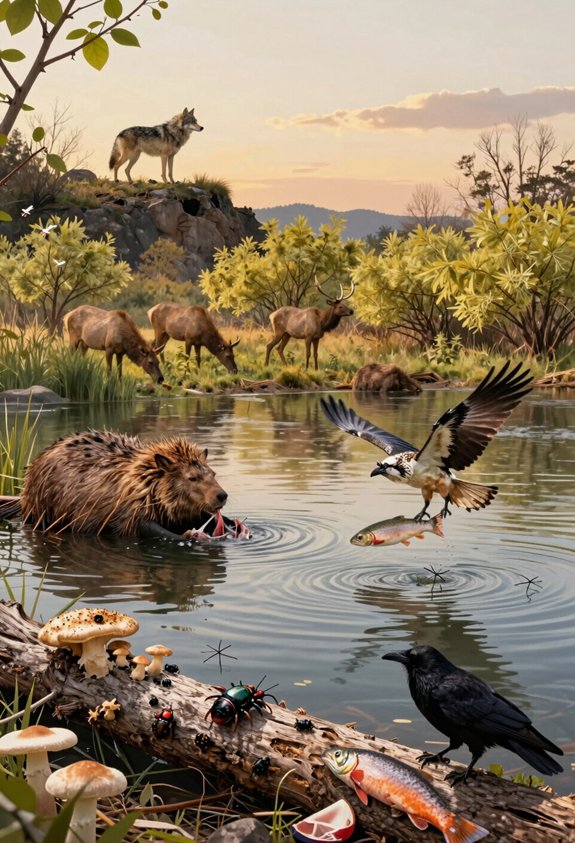
Biodiversity spans genes, species, and ecosystems, conferring ecological functions and conservation value that sustain services humans rely on.
Resilience describes how systems reorganize after disturbance, with diversity often buffering impacts and aiding recovery.
These dynamics operate within carrying capacity, which sets limits on population growth and informs sustainable management.
Biodiversity Explained: Levels, Importance, and Conservation Value
A tapestry of life spans genes, species, and ecosystems, and its pattern is what ecologists call biodiversity. It operates at three levels: genetic diversity within populations, species richness across communities, and the variety of ecosystems that host them. Each level underpins ecosystem services such as pollination, water filtration, carbon storage, and food production.
Conservation value increases where diversity and threat intersect. Biodiversity hotspots—regions with exceptional species richness and high endemism under severe pressure—offer efficient targets for conservation strategies.
Protecting habitat mosaics, curbing overexploitation, and integrating indigenous stewardship can secure both diversity and function. Real-world examples include safeguarding coral reefs that support fisheries, restoring prairie remnants to conserve pollinators, and preserving wild crop relatives that bolster agricultural resilience through valuable genes for drought, disease, and heat tolerance.
Ecological Resilience: How Ecosystems Recover From Disturbance
From the fabric of biodiversity arises a system’s capacity to absorb shocks and reorganize—its resilience.
Ecological resilience describes how ecosystems withstand disturbance effects and pursue ecosystem recovery without losing core functions. Resilience mechanisms include species redundancy, functional diversity, seed banks, soil microbial legacies, and spatial refugia that supply recolonists.
Following fire, serotinous pines release cones, and prairie grasses resprout from protected buds—clear adaptive strategies. In coral reefs, herbivorous fish suppress algal blooms, enabling biodiversity restoration after bleaching.
Wetlands attenuate floods, then reassemble via nutrient capture and plant regrowth. Human actions can enhance recovery by conserving keystone species, maintaining habitat connectivity, and removing chronic stressors like pollution.
Monitoring thresholds prevents shifts to alternative states that impede regeneration and services.
Carrying Capacity in Ecology: Limits to Population Growth Explained
Though populations can surge when resources are abundant, growth is ultimately bounded by carrying capacity—the maximum population size an environment can sustain over time without degrading its resources.
Carrying capacity emerges from resource availability, habitat space, and environmental pressures such as predation, disease, and climate variability. When numbers exceed population limits, individuals face increased competition, lowered reproduction, and higher mortality, restoring ecological balance.
Logistic growth models capture this dynamic, showing rapid expansion followed by stabilization near the limit.
Real-world examples clarify the concept: deer overbrowsing forests reduce understory plants, shrinking future forage; algal blooms fed by nutrients collapse when nutrients or oxygen run low; fisheries that exceed sustainable yield suffer stock declines.
Managing harvests, protecting habitats, and reducing pollution maintain species sustainability and long-term ecosystem function.
Conclusion
By exploring these 25 core ecology concepts, this article shows how energy flow, nutrient cycling, species interactions, and ecological dynamics shape how life functions in the real world. Linking theory to field-based examples reveals the feedbacks, limits, and trade-offs that influence populations, communities, and ecosystems.
Together, these concepts highlight why biodiversity matters not just ethically, but functionally — and why conservation is urgent in a rapidly changing world. Understanding these foundations helps scientists, practitioners, and informed citizens make better decisions, manage ecosystems responsibly, and support resilient natural systems that sustain both people and the planet.

Erzsebet Frey (Eli Frey) is an ecologist and online entrepreneur with a Master of Science in Ecology from the University of Belgrade. Originally from Serbia, she has lived in Sri Lanka since 2017. Eli has worked internationally in countries like Oman, Brazil, Germany, and Sri Lanka. In 2018, she expanded into SEO and blogging, completing courses from UC Davis and Edinburgh. Eli has founded multiple websites focused on biology, ecology, environmental science, sustainable and simple living, and outdoor activities. She enjoys creating nature and simple living videos on YouTube and participates in speleology, diving, and hiking.
🌿 Explore the Wild Side!
Discover eBooks, guides, templates and stylish wildlife-themed T-shirts, notebooks, scrunchies, bandanas, and tote bags. Perfect for nature lovers and wildlife enthusiasts!
Visit My Shop →