
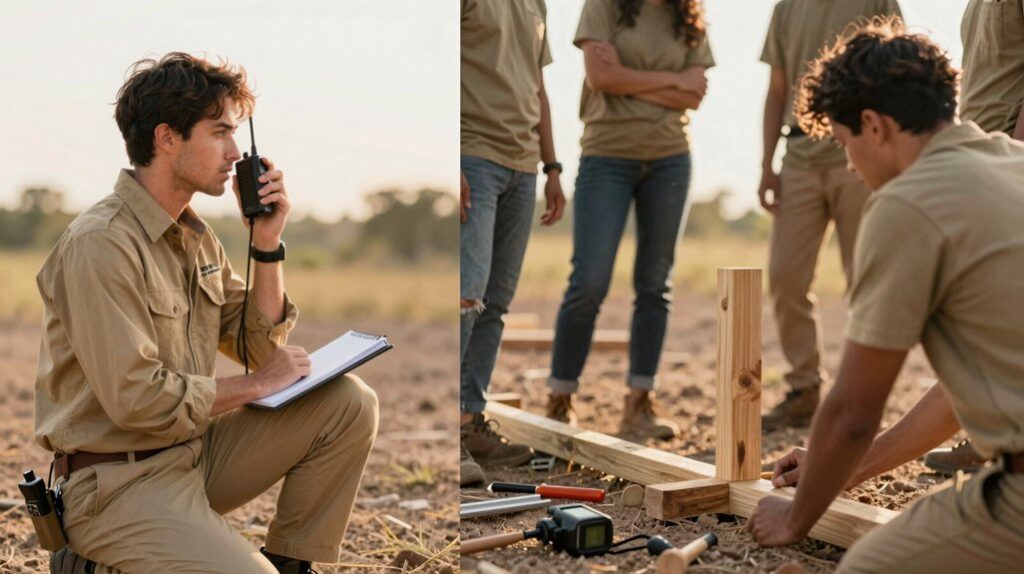
Volunteering in wildlife conservation is usually more flexible, open to all ages, and adaptable to shorter or less structured commitments, while internships are often spanning three to twelve months with stipends ranging from $15 to $19 per hour, competitive, and designed for students or early-career professionals seeking targeted training; however, many modern volunteering programs now also offer certifications, recommendation letters, academic credit, and hands-on field exposure, making them great not only to students but a practical pathway for career switchers, gap-year travelers, and those testing a new field before committing long-term.
Key Takeaways
- Internships prioritize career development with structured training and mentorship, while volunteering emphasizes immediate conservation impact and flexible engagement.
- Internships often provide stipends ($15–$19 hourly or $600–$700 weekly), housing allowances, and professional development like resume reviews and mock interviews.
- Federal internships can lead to direct hiring eligibility and show higher conversion rates to permanent positions, especially for BIPOC candidates.
- Volunteering requires shorter commitments (often one week minimum) versus internships (typically two weeks to twelve months) for greater scheduling flexibility.
- Internships build marketable skills in GIS, data analysis, and habitat management, while volunteering offers rapid deployment for time-sensitive conservation efforts.
Internships vs. Volunteering in Wildlife Conservation: Key Differences
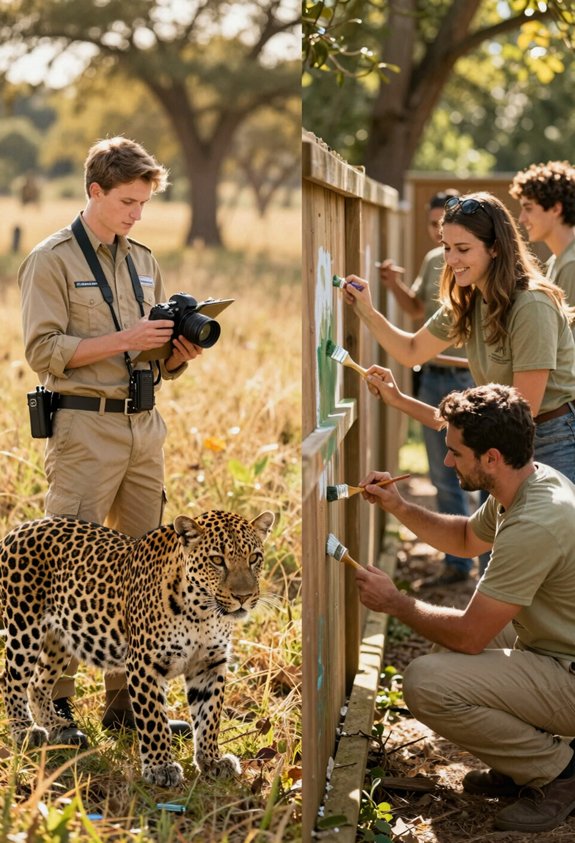
When someone first considers stepping into wildlife conservation, the choice between an internship and a volunteering opportunity can feel murky, yet understanding the core differences helps clarify which path aligns with one’s current goals and circumstances.
Internships prioritize skill development through structured training and mentorship, often requiring minimum two-week commitments and occasionally offering stipends, while volunteering emphasizes cause-driven support with flexible one-week minimums and no monetary compensation.
Internships build toward career progression—strengthening CVs, expanding professional networks, and sometimes leading directly to paid employment—whereas volunteering centers on task completion that advances organizational missions.
Both paths typically include insurance coverage and legal compliance protections, but internships demand deeper project immersion with supervisor oversight, making them ideal for those seeking competency building rather than simply contributing time to conservation efforts. Researching various conservation sectors such as wildlife, marine, or habitat restoration helps candidates identify which opportunities best match their interests and career aspirations.
Wildlife Conservation Internships Focus on Training for Career Entry
Wildlife conservation internships distinguish themselves through their primary commitment to professional development, positioning participants not merely as contributors but as learners preparing for long-term careers in the field. These programs emphasize hands-on training alongside experienced professionals, allowing interns to work on real conservation challenges within global organizations.
Through Employer Partnerships with zoos, wildlife agencies, and research centers, participants receive tailored education in wildlife care and conservation science directly from experts who understand current industry needs. Many initiatives also prioritize Diversity Initiatives, deliberately expanding access for young adults ages 18-30 from varied backgrounds to guarantee the conservation field remains relevant for 21st-century challenges.
Structured placements typically span three to twelve months, with paid positions offering hourly wages between $15 and $19, alongside housing allowances or dormitory accommodations that support participants’ full immersion in professional learning. Beyond immediate skill acquisition, these internships create valuable networking opportunities within chosen conservation specialties, connecting emerging professionals with established practitioners and potential employers.
Wildlife Volunteering Prioritizes Conservation Impact Over Career Training
Unlike internships that center on structured career preparation, volunteering programs in wildlife conservation direct their primary energy toward achieving tangible environmental outcomes, inviting participants to contribute their time and effort not as trainees building resumes but as active supporters of urgent ecological work. Volunteers can be any age, and can participate in collecting wildlife population data through monitoring activities, restore degraded habitats, and track animal migrations—actions that yield immediate biodiversity benefits rather than deferred professional credentials.
These hands-on contributions support ecosystem recovery through practical tasks like trail maintenance and species tracking, generating research data that conservation organizations use directly to protect endangered animals. Community-based projects funded through volunteer efforts, such as eco-stove installations that reduce firewood demand, alleviate pressure on natural habitats while producing measurable conservation achievements, including the successful removal of threatened sites from endangered heritage lists. Volunteering also fosters a sense of community among participants who share conservation goals and work collaboratively toward environmental protection.
Do You Want Career Development or Hands-On Conservation Impact?
How does one decide whether to pursue the structured training of an internship or the direct ecological action of volunteering in wildlife conservation?
The choice ultimately depends on personal values—whether one prioritizes building a professional pathway or contributing immediately to species preservation.
Internships excel at career development, offering networking, resume-building experiences, and pathways to permanent positions, particularly through programs like the USDA Forest Service where most participants move to employment.
Volunteering, by contrast, centers on hands-on conservation impact: protecting habitats, caring for wildlife, and addressing environmental challenges. Nowdays the line between volunteering and internship are quite blurred since many volunteering project offer great benefits such as certifications and expert mentors.
For long-term fulfillment, consider whether success means advancing through conservation professions or engaging deeply with on-the-ground biodiversity efforts. Programs emphasizing habitat management and animal tracking provide practical fieldwork that bridges both professional skill-building and direct conservation contributions.
When Wildlife Conservation Internships Make More Sense Than Volunteering
When career ambitions in conservation science extend beyond occasional fieldwork toward building a professional identity within the field, internships offer structured advantages that volunteering simply can’t replicate.
Project continuity—the ability to follow research from initial design through data analysis to publication—becomes possible when internships span complete field seasons rather than scattered volunteer weekends.
Organizations like the Student Conservation Association provide biweekly stipends, housing allowances, and liability coverage that protects participants during technical work with GPS equipment, camera trapping installations, and habitat restoration projects.
USDA Forest Service data reveals that interns convert to permanent positions at substantially higher rates than volunteers, particularly BIPOC candidates who benefit from formalized pathways.
The structured mentorship, specialized training in data collection methods, and connections with conservation professionals create measurable career advancement that informal volunteering rarely delivers.
Internships also develop wildlife communication skills that prove essential when engaging donors, policymakers, and local communities in conservation initiatives.
When Volunteering Works Better Than a Wildlife Conservation Internship
While internships create professional pathways through structured mentorship and credential-building, volunteering offers distinct advantages when participants prioritize immediate conservation impact, personal flexibility, or community connection over career advancement.
Volunteers mobilize quickly for time-sensitive habitat protection efforts, contributing meaningfully to wildlife population monitoring and ecosystem restoration without formal employment commitments.
This approach allows conservation organizations to allocate limited budgets toward essential equipment and land acquisition rather than compensation structures.
Volunteering also strengthens local empowerment by enabling community members to lead stewardship initiatives rooted in their environmental knowledge, while cultural sensitivity emerges naturally when volunteers work alongside populations who understand regional ecosystems through lived experience.
Additionally, over 80% of participants apply conservation learning to other life domains, extending ecological awareness beyond organizational boundaries and fostering grassroots environmental movements.
Volunteers function as opinion leaders within their social networks, leveraging increased self-efficacy to influence peers’ conservation behaviors and promote wildlife-friendly practices in their communities.
Should Recent Graduates Choose Internships or Volunteering?
Recent graduates face a distinct calculus when weighing internships against volunteering opportunities, one shaped less by philosophical preference and more by the practical realities of launching a career in wildlife conservation.
Paid internships like BRIDGE and MobilizeGreen offer structured pathways to federal hiring eligibility while providing living allowances that support mental health through financial stability.
These programs reduce employer training needs by building marketable skills in GIS, data analysis, and habitat management—competencies that strengthen resumes decisively. Programs with hands-on animal care opportunities further distinguish candidates by providing critical experience that translates directly to workforce readiness. Volunteering abroad, however, introduces visa logistics and costs starting at $3,595 for minimum four-week commitments, raising questions about value when paid alternatives exist.
For graduates seeking paid options, internships are great rather than unpaid experiences, paid internships tip the scales by combining compensation with career advancement in measurable ways. If you do have some money to spend for a good cause then volunteering can be great choice. You can learn same things from an experts in their field and you can be flexible with your dates and time.
Career Changers: Which Path Gets You Into Conservation Faster?
Career changers arriving at conservation from previous professions face a practical question that demands honest assessment: which pathway shortens the distance between their current position and gainful employment in wildlife work? Internships accelerate this shift through structured mentorship and direct organizational connections, offering career narratives that emphasize progressive skill development rather than scattered volunteer experiences.
The identity shift from previous profession to conservation practitioner requires demonstrable competency—something internships provide through measurable learning outcomes and field-specific training portfolios. While volunteering offers lower financial barriers, paid internships eliminate the extended timeline that volunteer roles create, positioning career changers as qualified candidates with targeted expertise. Internships typically require at least 4 weeks of commitment, ensuring sufficient depth to develop specialized conservation skills.
Organizations view internship completion as trial periods that reduce hiring risk, creating faster pathways to permanent positions for professionals rebuilding their professional identities.
Skills Required Before Starting a Wildlife Conservation Internship
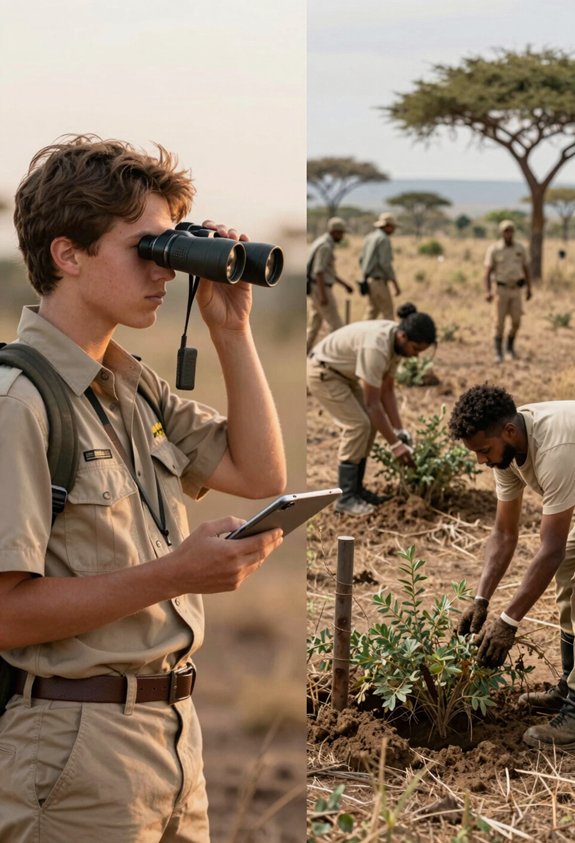
The decision to pursue conservation work, whether through career change or initial entry, meets a practical requirement: specific competencies that organizations expect before accepting interns into field positions.
The wildlife conservation field is quite competetive. In simple terms, wildlife conservation jobs are becoming more competitive because there is less funding available. Many conservation projects rely on government grants, donations, or short-term funding, and when that money is reduced, organizations can afford to hire fewer paid staff. As a result, there are more qualified people than available jobs, which makes positions harder to secure and often pushes organizations to offer short contracts, unpaid internships, or volunteer roles instead of permanent jobs.
Academic foundations in biology, environmental science, or related disciplines establish credibility, while technical abilities—GPS navigation, camera trap deployment, data collection protocols—transform theoretical knowledge into fieldwork capability.
Remote collaboration skills enable effective teamwork across dispersed locations, and data ethics guarantees responsible handling of sensitive species information.
Physical fitness for demanding terrain, first aid certification for safety protocols, and genuine passion demonstrated through prior volunteer efforts round out the profile.
Specialized marine conservation roles require additional qualifications such as PADI certification for underwater research and data collection activities.
Organizations prioritize candidates who’ve invested time building these interconnected competencies, recognizing that preparation determines both internship success and meaningful conservation contributions.
Can You Volunteer in Wildlife Conservation With No Experience?
How accessible is wildlife conservation volunteering for those without formal training or field experience?
Most organizations welcome beginners with enthusiasm and passion rather than credentials, valuing what volunteers bring through lived experiences and community perspectives.
Programs like The Nature Conservancy and African Conservation Experience accept all skill levels, offering tasks such as enclosure maintenance, food preparation, and habitat restoration—work that builds competence through hands-on learning.
Legal requirements typically involve age minimums, often eighteen for projects with dangerous wildlife, though family-friendly options exist for younger participants.
Mental readiness matters equally: volunteers should prepare for physically demanding days, emotional challenges when animals suffer, and patience with repetitive tasks. Beyond fieldwork, volunteers can contribute through skills-based volunteering opportunities like data analysis that support conservation goals from remote locations.
Organizations emphasize ethical practices, rejecting exploitative activities like cub-petting, ensuring contributions align with genuine conservation values while fostering personal growth and skill development.
Training Provided in Wildlife Conservation Internships vs. Volunteering
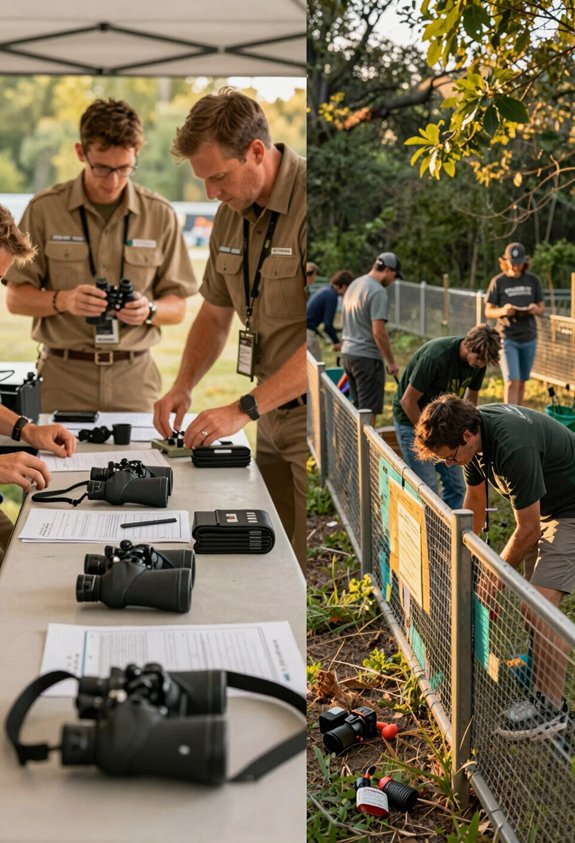
Aspiring conservationists often wonder what separates the training they’ll receive as interns from what they’d learn as volunteers, and the distinction matters more than scheduling alone might suggest.
Internships typically include formal seminar components—weekly cohort meetings, field trips, and structured curricula exposing participants to diverse conservation vocations spanning wildlife biology, ecology, and forestry.
Professional development support distinguishes these programs through mock interviews, resume reviews, and one-on-one mentoring from agency professionals.
Key training differences include:
- Safety training protocols embedded within internship orientation versus informal guidance in volunteer settings
- Technology integration through specialized equipment training for ecological monitoring and data collection
- Systematic skill-building in resource management techniques versus task-focused instruction
Volunteer positions emphasize direct animal care and basic conservation principles learned from expert staff, whereas internships prioritize more specific career-pathway skills including policy work and community outreach. However because of lack of funding in wildlife conservation, high quality and specialized volunteering projects became available.
Hands-on fieldwork in internship programs provides exposure to specialized techniques such as waterfowl banding, elk monitoring, and bear telemetry operations. However because of lack of funding in wildlife conservation, high quality and specialized volunteering projects became available as well.
Make sure to join my email list if you need more information about paid and unpaid internships or volunteering projects, plus application tips and more.
How Wildlife Conservation Internships Lead to Paid Ranger Jobs
Ifyou are from the USA and interested becoming a ranger this section is for you.
Beyond acquiring field skills and conservation knowledge, internships serve a more pragmatic function in wildlife careers—they create documented pathways into permanent ranger positions that would otherwise remain difficult to access. Programs like the Bureau of Land Management’s Wildlife Direct Hire Authority internships explicitly position participants for federal employment, offering $600-$700 weekly plus relocation support.
These experiences develop a leadership mindset through responsibilities like demographic surveys and habitat assessments, while daily collaboration with diverse field teams builds conflict resolution abilities—skills federal hiring managers actively seek. Many National Park Service staff began as Student Conservation Association interns, establishing professional relationships that influenced subsequent hiring decisions.
Completion of these structured programs provides the specialized expertise, documented experience, and internal connections that distinguish candidates in competitive federal selection processes. The Direct Hire Authority must be utilized within two years of graduation, creating an immediate timeline for transitioning from internship to permanent federal employment.
Why Wildlife Volunteering Rarely Leads to Employment
While wildlife volunteering demonstrates commitment to conservation causes, it functions primarily as a support mechanism rather than a credentialed pathway to employment.
This distinction becomes particularly evident when volunteers apply for the 36,500 conservation positions available worldwide each year.
Structural barriers that limit volunteer-to-career progressions include:
- Volunteer stigma—the perception that unpaid roles lack professional legitimacy—creates hesitation among hiring managers who separate volunteer experience from paid employment history. That is why is important to choose the right project, project with expert staff and valid certificates.
- Hiring bureaucracy within agencies like the U.S. Fish and Wildlife Service maintains distinct channels for 9,000 paid positions versus volunteer programs, preventing crossover advancement
- Skill gaps persist because volunteering offers general exposure rather than specialized training in habitat management or enforcement duties
Organizations increasingly promote internships over volunteering specifically because internships provide field-specific training that aligns with employer expectations for career progression.
Wildlife rescue and rehabilitation centers typically offer volunteer roles that support animal care and educational programs but position these experiences as prerequisites for competitive internships rather than direct employment pathways.
Building Your Resume: Do Internships or Volunteering Carry More Weight?
Understanding these employment barriers prompts a practical question for anyone preparing to enter wildlife conservation: when hiring managers review applications for field biologist positions or ranger roles, which experiences actually strengthen a resume? Research from the National Association of Colleges and Employers reveals that paid internships consistently outperform volunteering in securing job offers, though both surpass no experience at all.
Internships provide structured roles—biological monitoring, habitat restoration—that translate directly into marketable skills, while volunteering demonstrates foundational passion through community outreach and data collection. Organizations like the Land Trust Alliance accredited Wildlife Heritage Foundation offer conservation internships that combine fieldwork with nonprofit administration, giving candidates exposure to easement monitoring and environmental education programs valued by employers.
Formatting Tips matter here: listing internships with academic credit notation or transcript validation enhances legitimacy. Reference Strategies should emphasize quantifiable outcomes, like contributing data to peer-reviewed reports or completing minimum 200-hour commitments, which hiring managers recognize as genuine field preparation rather than casual participation.
How Long Should You Commit to a Wildlife Conservation Internship?
Before submitting applications, prospective interns face a strategic decision that shapes their entire experience: determining how many weeks or months they can realistically dedicate to fieldwork.
They must consider academic progress, financial stability, and personal obligations.
Most programs offer distinct timeframes tailored to different circumstances:
- Summer positions typically span 10 weeks, aligning perfectly with academic calendars while providing substantive learning opportunities
- Seasonal placements run 8-9 weeks during spring or fall, accommodating students seeking off-peak experiences
- Flexible arrangements range from 4-12 weeks with rolling start dates, particularly for international programs requiring visa logistics
Longer commitments yield deeper skill development and stronger professional relationships.
Mental wellbeing sometimes benefits from shorter initial experiences that allow gradual immersion into demanding conservation work before extended deployments.
Part-time options requiring minimum 24 hours weekly provide alternatives for those balancing other responsibilities during spring and fall sessions.
Minimum Time Commitment for Wildlife Volunteering Programs
Unlike internships that compress intensive learning into brief periods, wildlife volunteering programs establish longer baseline commitments that reflect the steady, incremental nature of rehabilitation work and the training investment organizations make in each participant.
Six-month minimums prevail at California Wildlife Center and Liberty Wildlife, requiring 16 hours monthly and weekly 2-4 hour shifts respectively, while one-year commitments anchor programs at San Diego Humane Society Project Wildlife and Sonoma County Wildlife Rescue—institutions where liability insurance costs and training resources necessitate sustained participation.
Site accessibility often determines scheduling: Liberty Wildlife offers morning or afternoon options seasonally, whereas Back to Nature Wildlife Refuge requires one consistent weekly day for animal care continuity.
Short-term opportunities exist primarily in specialized roles like sea turtle monitoring, which accepts six monthly sessions rather than year-round availability. Organizations typically request volunteers provide an email address during the application process to receive updates about animals and program opportunities.
Why Longer Wildlife Internships Deliver Better Career Outcomes
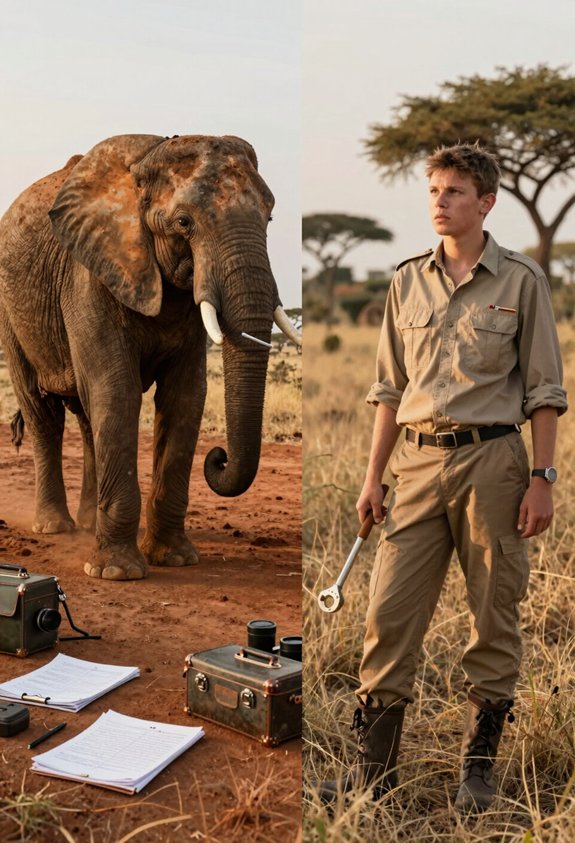
While volunteer positions offer valuable exposure to conservation fieldwork, longer internships—those spanning six months to a year—create the professional foundation that employers actively seek when hiring for permanent positions in wildlife management and research.
Extended programs develop systems thinking, the capacity to understand how wildlife populations, habitat conditions, and human activities interconnect across time, as well show your commintment, discipline and readiness to dedicate your time to a project and complete it.
This broader perspective proves essential when addressing conservation challenges that require coordinated responses.
Longer internships also cultivate ethical leadership through mentorship relationships that model decision-making in field emergencies and research integrity.
Participants gain hands-on experience with animal care, habitat monitoring, and data collection protocols that build practical competencies valued across conservation organizations.
Consider these career advantages:
- Direct conversion pathways to permanent federal positions through programs like Pathways Internship
- Peer-reviewed publications from multi-month research projects that strengthen resumes
- Formal certifications in wildlife first aid and specialized equipment operation
No-Fee Wildlife Internships: What’s Really Included?
How can an internship truly cost nothing when participants still need food, transportation, and medical clearance to begin their conservation work?
“No-fee” wildlife internships occupy a distinctive middle ground in the conservation employment landscape, offering significant support without eliminating all financial barriers—a reality that requires careful examination before applicants commit their time and resources.
Understanding what organizations actually cover requires reviewing several key elements:
- Stipend timing and structure—compensation ranging from $250 to $800 varies by program type, with some payments delayed until completion
- Included benefits versus personal expenses—room, board, and program travel often covered while vaccinations, insurance, and transportation to sites remain participant responsibilities
- Contract clauses and tax implications—stipends may carry different tax treatment than wages, affecting reporting requirements
Organizations with transparent cost breakdowns enable meaningful comparison before application. Programs typically require participants to arrange international and domestic flights independently, making flight costs a significant upfront investment regardless of other included amenities.
Paid Wildlife Conservation Internships: Where to Find Them
Searching for paid wildlife conservation internships demands strategic navigation across multiple platforms, each offering distinct advantages depending on career goals and geographic preferences.
Conservation Job Board and Indeed.com aggregate hundreds of listings, with Indeed featuring over 860 summer positions that filter specifically for paid opportunities.
Federal programs through MobilizeGreen—including the Resource Assistants Program and Public Lands Corps—connect aspiring conservationists with agencies like the U.S. Fish & Wildlife Service, which posts fellowships offering benefits, housing, and travel allowances.
Nonprofits such as World Wildlife Fund’s BRIDGE program and The Nature Conservancy provide stipends ranging from $15-$21 hourly.
Regional facilities like Carolina Waterfowl Rescue in Indian Trail, NC offer completion-based stipends of $250 for part-time and $500 for full-time wildlife rehabilitation internships.
International opportunities require attention to visa requirements—the legal permissions needed for working abroad—and tax implications, which vary substantially between domestic and overseas placements.
If you’d like more free guidance on paid vs unpaid internships, volunteering projects, and application tips, be sure to join my email list for regular updates and tips.
What Do Wildlife Volunteering Programs Actually Cost?
While paid internships cover expenses and provide income, wildlife volunteering programs operate on an entirely different financial model—one where participants themselves fund the opportunity to contribute.
Program fees vary considerably based on organization type and destination, ranging from $100 weekly to $3,000+ through international companies. Currency fluctuations can affect budgeting, particularly when programs price in euros or pounds, while selecting destinations with favorable local economies helps stretch resources further.
Weekly costs typically include:
- Shared accommodation, meals, training, and conservation materials bundled into base fees
- Regional variations—Asia programs ($150–600 weekly) versus Africa expeditions ($400–1,200+)
- Additional expenses covering visas, vaccinations ($50–400), insurance, flights, and discretionary spending
Programs offer flexible durations from one to twenty-four weeks, with specialized research roles requiring extended six-to-twelve-week commitments. Popular options include wildlife sanctuaries and rescue centers in Costa Rica, Thailand, and South Africa, where volunteers assist with animal care and rehabilitation efforts.
I would highly recommend to check out GLOBAL WORK AND TRAVEL, they offer ethical and expert lead wildlife conservation internships in many countries.
Every project is carefully vetted for animal welfare and conservation integrity, ensuring placements are in sanctuaries, rescue, or rehabilitation centers rather than exploitative settings. You’ll also receive structured mentorship, feedback, and official certificates and recommendation letters from host organizations — valuable credentials for your career or academic path. Plus, you’ll get $100 off automatically, and by adding the additional code ELI100 at checkout, you can save an extra $100, for a total of $200 off your Global Work & Travel wildlife volunteering experience.
Ready to volunteer or intern abroad? Enter code ELI100 at checkout and get $100 OFF any internship or volunteer project worldwide.
Explore ProjectsWhat GLOBAL WORK AND TRAVEL Fee Cover for Wildlife Volunteers
Volunteer Project Placement
They will score you a guaranteed volunteering placement so you can start making a difference to the world without waiting long time to get your applications reviewed.
Dedicated Trip Coordinator
Handpicked from an experienced team who’ve been there, done that and ready to guide you through your entire journey and leave no question unanswered.
Pre-Departure Guide
In-depth pre-departure guide will have all the information you need about your trip & destination, at your fingertips.
Trip Visa Guidance
Get your visa approved as cheap and easy as possible with advice and assistance from your Trip Coordinator.
Personal Travel Concierge
You’ll get a personal Travel Concierge to plan your flights, insurance or any add-ons to synchronise perfectly with your trip. Deal with a real human and get a personalised booking experience that ticks all your boxes.
Return Airport Transfers
To take you straight to your volunteer accommodation in Hoedspruit. Return transfer to the airport upon completion of your volunteer placement.
Meals and Accommodation provided
‘Welcome to your country choice’ Orientation
Head to your cultural orientation with the other volunteers, loaded with information about your project and the country of your choice. You’ll also get a guided tour of the project’s centre and be introduced to the project staff.
Local Cultural Experiences
You’ll join the other volunteers on a range of excursions, including a visit to national parks and other places.
Certificate of Completion
In recognition of your hard work and dedication throughout the experience, and, it goes very well with your future resume. Employers will love this addition!
Ongoing Local Team Support
Think of us as your family away from home. Whether you need advice or a shoulder to lean on, our team will provide you with unlimited support.
Global Emergency Line
Feel confident knowing we have a worldwide emergency team on standby, 24 hours a day, Monday to Friday.
gWorld Access
Stay organised with your personalised portal where you can keep all of your important documents and trip details in one spot and gain insider access to everything Global.
Marketplace Deals
Get exclusive access to deals and discounts through our online Marketplace. Save big on a huge range of products and services from our brand partners worldwide.
Global Academy
Gain access to an ever-growing range of skills & languages to learn before & whilst you travel.
Social
Travel alone but never lonely with Social! An exclusive social network inside their gWorld app to talk, share & meet-up with other Global Travellers in your region, with a dedicated Community Manager.
The fee structure directly supports local employment opportunities and community-driven conservation initiatives, ensuring contributions benefit both wildlife protection efforts and host communities.
Flights, Vaccinations, and Gear: Hidden Costs That Add Up
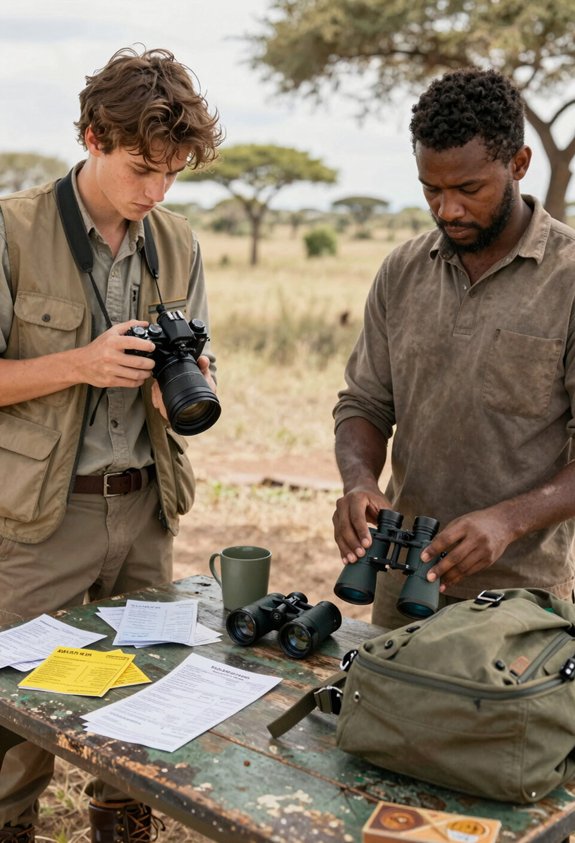
The program fees cover substantial logistical support, yet aspiring wildlife volunteers often discover that these costs represent only a portion of their total financial commitment.
International airfare alone can range from $200 to over $2,000 depending on departure location, while required vaccinations—tetanus, rabies, and hepatitis among them—combined with visa fees typically add $100 to $300 or more to upfront expenses.
Budget considerations beyond the obvious include:
- Travel insurance with emergency medical and evacuation coverage, which costs $50–$150 and remains mandatory for most programs
- Visa-on-arrival fees and work permit applications, which can reach $130–$165 depending on destination requirements
- Seasonal packing essentials and personal gear, since program fees exclude toiletries, appropriate clothing, and emergency contingencies
These additional expenses warrant careful advance planning. Weekend meal preparation requires self-catering provisions, as many conservation programs provide weekday meals only and expect participants to supply their own groceries outside scheduled feeding times.
Are Unpaid Wildlife Conservation Internships Worth Your Time?
When aspiring conservationists face the choice between paid and unpaid wildlife internships, the decision carries consequences that extend far beyond immediate budget concerns—it shapes career trajectories, professional networks, and the likelihood of securing full-time employment in an already competitive field.
Research reveals that paid positions strongly correlate with full-time wildlife employment, while unpaid experiences show no significant relationship to career advancement. Individuals with seven or more paid positions reach a 69% probability of securing wildlife jobs, compared to just 20% for those without paid experience. This is why your choice of a good volunteer projects is important.
Beyond career outcomes, unpaid internships often force participants to juggle additional paid work simultaneously, leading to declining grades and increased stress that affects mental health. Without legal protections guaranteeing fair compensation, unpaid positions create accessibility barriers that exclude talented early-career biologists. A succession of volunteer and low-paid temporary roles can prolong financial instability for years, constricting career pipelines in conservation science.
I wrote an extensive guide on this topic and you can read more about IS IT WORTH PAYING FOR A WILDLOFE CONSERVATION INTERNSHIP HERE.
Where Can You Intern or Volunteer in Wildlife Conservation?
Once you’ve weighed the financial and career implications of paid versus unpaid opportunities, geography becomes the next practical consideration—because wildlife conservation work doesn’t happen in abstract terms but rather in specific ecosystems.
These ecosystems are where particular species need protection.
Several regions stand out for their combination of biodiversity and structured programs:
- South Africa offers big game rehabilitation at Kruger National Park, where interns work with lions and cheetahs alongside reserve management projects
- Ecuador and Costa Rica provide access to rainforest conservation and Marine Sanctuaries, from the Galapagos Islands to Caño Negro’s wetland ecosystems
- Sri Lanka where I am, has a great project with Elephants if that is something you are interested in.
These locations and many others that are available transform conservation from concept into tangible, habitat-specific work.
Daily Tasks as a Wildlife Conservation Volunteer: Patrols and Hands-On Labor
Every project is diffrent and has its own shedule. This is written just to spark your imagination and get you closer to what you can be part of and that is a stunning world of wildlife and breathtaking nature.
Wildlife conservation volunteer work unfolds according to the rhythms of the species being protected, which means daily schedules often defy conventional office hours and instead align with when animals feed, hunt, nest, or travel.
Mornings typically begin before dawn with patrols to track endangered species—sea turtle nest surveys along beaches or telemetry work locating collared primates in rainforest canopies.
Afternoon tasks shift toward enclosure cleaning, preparing animal diets, and equipment maintenance like retrieving camera trap memory cards or repairing monitoring devices.
Trail safety becomes essential during forest expeditions to deploy conservation technology or remove invasive plants.
Evenings may involve night patrols surveying nocturnal wildlife or documenting illegal activity, depending on the project’s conservation priorities and the species’ active periods throughout each twenty-four-hour cycle. Field notes from each observation session must be transferred into digital databases to transform raw sightings into scientific records that inform management decisions.
Daily Tasks as a Wildlife Conservation Intern: Research and Skill-Building
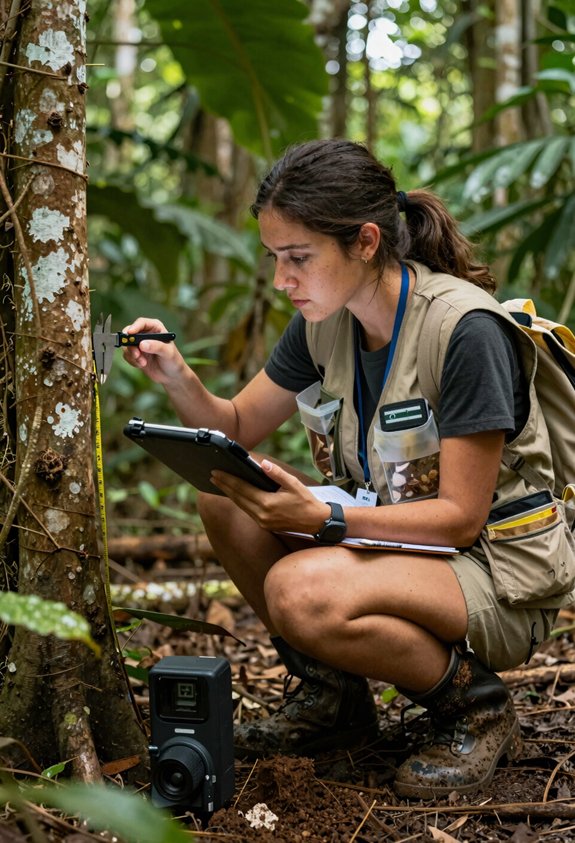
Moving from volunteer patrols to internship responsibilities shifts the daily focus toward systematic data collection and applied research, where interns don’t simply observe wildlife but instead build the evidence base that conservation strategies depend upon.
Interns conduct biodiversity surveys in rainforests, monitor camera traps for jaguars, and collect behavioral data on released macaws—tasks requiring careful attention to Data Ethics and accurate Field Photography.
They learn database management, input census information, and assist with preliminary analysis that informs rehabilitation protocols.
Key skill-building activities include:
- Training in radio telemetry to track animal movements and interpret footprints
- Designing research projects from initial proposal through scientific report completion
- Conducting behavioral scans to establish release criteria for captive animals
These responsibilities develop technical competencies that volunteers rarely access during shorter placements. Interns also participate in community education initiatives that teach local populations about sustainable conservation practices and alternative livelihoods.
Accommodation Differences Between Wildlife Internships and Volunteering
When aspiring conservationists evaluate opportunities in the field, housing arrangements often determine which positions remain financially accessible—and here, internships and volunteer programs diverge substantially in what they provide and what participants must secure independently.
Paid internships at White Oak include on-site housing to reduce career barriers, while programs like American Conservation Experience EPIC supply dormitory housing or allowances with cost-of-living payments.
Conversely, volunteer positions at Safari West and Gold Country Wildlife Rescue exclude housing entirely, requiring participants to manage arrangements independently.
Organizations like RAREC offer basic volunteer accommodation with meals, laundry, Wi-Fi, and recreational amenities, though pet policies and accessibility features vary by site.
U.S. Fish & Wildlife Service refuge internships typically pair housing with food stipends despite remaining unpaid, bridging the gap between fully supported and self-arranged models.
White Oak’s Wildlife Husbandry Internship provides housing for six-month terms working with species ranging from carnivores to antelope.
With Global Work and Travel you do not have to worry about your food or acommodation as it is covered. Depending from the project you can get shared or private rooms.
Ready to volunteer or intern abroad? Enter code ELI100 at checkout and get $100 OFF any internship or volunteer project worldwide.
Explore ProjectsHow Wildlife Conservation Internships Build Professional Networks
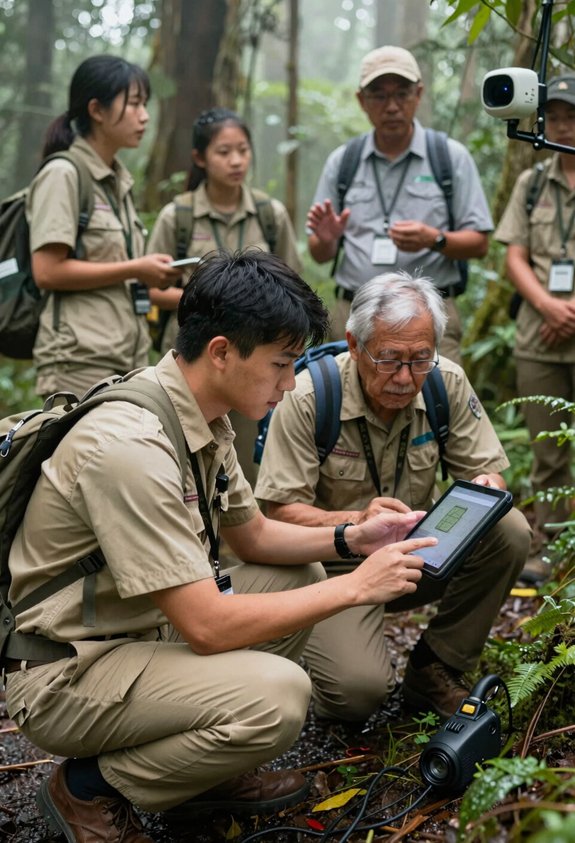
Beyond the technical skills and field experience that internships provide, perhaps their most enduring value lies in the professional relationships they create—connections that often determine which doors open in a competitive conservation job market.
Working alongside experienced professionals creates direct mentorship that extends beyond the program, as supervisors frequently become references and guides for future opportunities.
These collaborations facilitate skill development while establishing networks across Federal agencies, private consultants, and nonprofit organizations.
Consider these relationship-building advantages:
- Alumni platforms maintain connections with former interns who become colleagues throughout the conservation field
- Cross-departmental exposure introduces interns to professionals in education, policy, research, and communications
- Networking etiquette learned during professional interactions prepares interns for career advancement
Such connections transform internships into stepping stones toward permanent conservation employment.
Programs that emphasize community collaboration create additional networking opportunities by connecting interns directly with local conservation teams and on-the-ground problem solvers.
Why Wildlife Volunteering Creates Global Community Connections
While internships excel at building structured professional pathways within established conservation organizations, volunteering offers that plus something different—a chance to form community bonds that span continents and cultures, connecting people through shared purpose rather than formal career ladders.
Volunteers work alongside individuals from around the world, creating cross-cultural friendships while directly engaging with local communities who run conservation programs.
These connections enable intergenerational knowledge transfer, as traditional ecological practices pass between community elders and international participants. Programs are designed to create tangible, positive change regardless of how long volunteers can commit their time.
Over 4,000 volunteers trained since the 1990s have become “opinion leaders” who influence their social circles toward environmental causes, often sharing their experiences through digital storytelling that amplifies conservation messages across borders. This global network transforms individuals into advocates who carry ecological understanding home, strengthening both local communities and worldwide environmental movements.
Can Wildlife Conservation Internships Count Toward Academic Credit?
For students wondering whether their wildlife conservation work can serve dual purposes—both advancing their career skills and fulfilling degree requirements—the answer is often yes, though the path to academic credit requires careful planning and institutional approval.
Most programs require minimum hour thresholds, typically ranging from 80 to 135 hours depending on the institution, with specific documentation including advisor signatures and detailed field journals tracking weekly progress.
Key considerations for securing academic credit include:
- Hour requirements vary widely: some programs need 80 hours per credit while others require 90 or more
- Transcript notation typically reflects pass/fail grading rather than letter grades for internship experiences
- Grade implications remain minimal since most wildlife internships don’t affect GPA, though completion requirements like presentations or performance assessments still demand serious attention
Students should contact their faculty internship advisor early to understand their program’s specific prerequisites and submission deadlines. Beyond academic credit, quality internships should provide exposure to multiple aspects of the organization and include regular supervision meetings to maximize professional development opportunities.
The Physical Demands of Wildlife Conservation Work
Most people entering wildlife conservation quickly discover that the work demands far more physical stamina than they initially anticipated, transforming what might seem like peaceful nature observation into sustained athletic exertion across unpredictable terrain.
Fieldwork typically involves hiking ten-hour days through dense woods while carrying equipment, traversing remote areas without trails, and working through rain, heat, or snow without shelter. Hydration strategies become essential when spending extended periods far from facilities, requiring careful planning to maintain performance and safety.
Load management—the practice of distributing weight efficiently across one’s body and pack—prevents the back strain that causes most lost work time among conservation professionals. Field biologists must be prepared to carry up to 50 lbs of gear and samples while navigating rough terrain during surveys and monitoring activities.
Both interns and volunteers encounter these same physical challenges, making fitness preparation essential regardless of position type, and understanding that musculoskeletal resilience matters as much as scientific knowledge.
Can You Transition From Volunteering to a Conservation Internship?

Many people drawn to wildlife conservation wonder whether their volunteer hours can meaningfully position them for formal internship opportunities.
The encouraging reality is that numerous organizations explicitly design their programs to support exactly this progression.
Organizations structure these pathways intentionally:
- Conservation Ambassadors operates a three-month unpaid internship specifically for college students shifting from volunteer work, acknowledging that hands-on experience builds both technical skills and emotional readiness for demanding conservation roles
- Lindsay Wildlife Experience offers both volunteer opportunities and Animal Keeper Internships with structured application processes, allowing participants to develop a storytelling portfolio that demonstrates their growing competence and commitment
- Multiple organizations evaluate applicants’ volunteer experience as relevant background when reviewing cover letters and resumes for formal internship placements
The time investment varies significantly across conservation programs, with some requiring substantial commitments like 280 internship hours over multiple months while others offer more flexible arrangements of just several hours per week.
Should You Volunteer First, Then Intern? Strategic Sequencing
When someone stands at the beginning of a conservation journey, the question of sequencing—whether to volunteer first or jump directly into an internship—carries real weight because each pathway shapes not only skill development but also career trajectory and personal confidence in meaningful ways.
Volunteering for one or two weeks provides essential exposure without the family logistics complexities of extended absences, allowing individuals to test genuine interest before committing to four-to-six-month internships. This foundation-then-advancement approach addresses legal considerations around work permits and visa durations while building practical skills gradually.
Organizations benefit too, using volunteer periods to assess candidates’ reliability before investing resources in longer placements. Conservation groups often operate with under-resourced budgets, making careful candidate evaluation through initial volunteer phases a practical necessity. The sequential model—volunteer first, then intern—creates natural progression that strengthens both personal readiness and professional positioning within conservation networks.
Volunteering is also something you can do throughout your life and at any age, offering flexibility that internships often cannot. Personally, I would never stop volunteering if the cause feels meaningful, as it allows you to contribute directly to conservation, connect with people and make memories while continuing to learn and grow.
Red Flags That Expose Exploitative Wildlife Conservation Programs
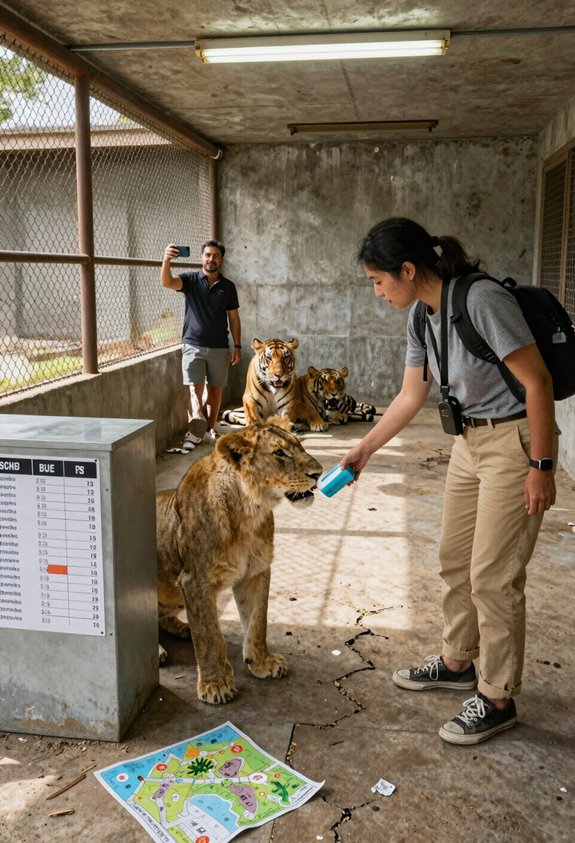
After identifying the right sequence for entering conservation work, prospective volunteers and interns face another responsibility—learning to recognize when a program exploits animals under the guise of conservation.
Several warning signs reveal facilities that prioritize profit over animal welfare, and understanding these patterns protects both participants and harm.
Critical red flags include:
- Forced Interaction With Wildlife – Encouraging touching, feeding, or staging photos with animals, especially with wild or rescued species.
- Lack of Animal Welfare Standards – Poor enclosures, signs of stress in animals, or ignoring basic veterinary care and ethical guidelines.
- No Educational or Research Component – Programs that offer no meaningful learning, training, or scientific contribution, only “fun” activities for participants.
- Unrealistic Claims – Over-promising results like “save endangered species in a week” or exaggerating the impact of short-term volunteer work.
- High Volunteer Turnover – Organizations relying on constantly rotating volunteers to maintain operations rather than trained staff who know proper animal care.
- No Transparency on Funding or Projects – Hiding budgets, sources of funding, or how funds are allocated.
- Non-compliance With Local Laws or Conservation Guidelines – Operating outside of wildlife protection regulations or ignoring ethical conservation practices.
- Focus on Profit-Generating Activities Over Conservation – Running gift shops, tours, or experiences that generate income but don’t contribute meaningfully to animal care or habitat protection.
Facilities genuinely committed to conservation prohibit these practices entirely.
10 Questions to Ask Before Joining Any Wildlife Program
How can someone distinguish between organizations that genuinely advance conservation and those that simply market themselves well?
Prospective participants should ask whether the program publicly shares its evaluation criteria and monitoring plans—a transparency that reveals accountability.
They should inquire about insurance coverage, ensuring protection during fieldwork activities.
Questions about data ownership matter too, since ethical programs credit participants’ contributions while maintaining scientific integrity.
Asking how the organization measures success through specific indicators, such as population density or habitat quality, demonstrates whether claims rest on empirical research or marketing alone.
Understanding whether community needs drive project decisions, rather than volunteer recruitment goals, exposes true priorities.
Reputable organizations may use standardized assessment frameworks that evaluate both ecological and socio-economic outcomes to demonstrate their commitment to evidence-based conservation.
Programs committed to long-term ecological outcomes welcome these questions, while exploitative ones often deflect or provide vague answers that prioritize participant experience over conservation impact.
Here are some questions you can ask
What is the organization’s primary mission?
Is the focus on animal welfare, habitat restoration, or scientific research—or mainly on tourism and revenue?
How are animals treated and cared for?
Ask about enclosures, handling, veterinary care, and daily routines to ensure welfare standards are met.
Are volunteers allowed or encouraged to handle wildlife?
Responsible programs limit direct contact and avoid activities that stress or endanger animals.
What kind of work will I actually be doing?
Ensure tasks are meaningful—like monitoring, habitat restoration, or data collection—rather than purely menial chores or photo ops.
Is there any educational or training component?
Internships and volunteering should include learning opportunities, mentorship, and skill-building.
How is funding used?
Ask for transparency: how are volunteer fees or donations allocated toward animal care and conservation projects?
Do you have partnerships or accreditation?
Check for connections with universities, recognized conservation organizations, or ethical tourism certifications.
Are volunteers or interns provided with clear expectations and supervision?
Good programs have structured schedules, training, and staff oversight to ensure safety and learning.
Can I get references, certificates, or academic credit?
Especially important if you’re aiming to build a career or resume in wildlife conservation.
What is your stance on tourism vs conservation?
Make sure programs prioritize ecological impact over social media photos, entertainment, or profit.
Which Option Matches Your Goals: A Decision Framework
How can prospective conservation participants determine which pathway aligns with their personal priorities when both internships and volunteering offer legitimate value? The decision framework depends on honest self-assessment across several dimensions, including risk tolerance—one’s comfort with career-focused commitments versus exploratory experiences—and personality match, which means understanding whether structured mentorship or independent contribution resonates more deeply.
Consider these guiding questions Internships vs Volunteering:
- Do immediate community impact and cultural immersion matter more than resume-building? Volunteering centers on direct cause contribution, while internships prioritize skill development toward employment.
- Can you commit extended time for deeper learning? Internships demand longer immersion, whereas volunteering allows flexible durations starting from one week.
- Are you exploring broadly or specializing professionally? Volunteering suits diverse project switches; internships target specific industry exposure with mentor guidance.
- Will the experience complement your academic requirements? Internships often provide structured opportunities for field data collection that can support dissertation research or fulfill curriculum mandates.
Social Experience: Building Connections as an Intern vs. Volunteer
Beyond identifying what you hope to gain from conservation work—whether hands-on learning or service-driven contribution—lies another consideration that shapes your experience just as profoundly: the people you’ll meet and the relationships you’ll form along the way.
Internships cultivate depth through structured mentorship, pairing participants with supervisors who guide career progression and facilitate connections with skilled professionals across projects.
These longer commitments, typically four weeks minimum, allow time for boundary setting—establishing professional limits that protect both personal wellbeing and working relationships—and developing conflict resolution skills within organizational contexts.
Volunteering, meanwhile, emphasizes breadth through community engagement, connecting participants with locals, fellow volunteers, and diverse program members.
Programs often involve collaboration with local community members to create sustainable employment alternatives that reduce reliance on animal-based work.
Short-term flexibility enables networking across varied groups without rigid commitments, though briefer stays naturally limit relationship intensity compared to internships‘ sustained, career-oriented professional networks.
Using Wildlife Volunteering for Cultural Immersion and Self-Discovery
What begins as a decision to contribute to wildlife conservation often unfolds into something far more personal: an opportunity to step outside familiar routines, encounter ways of life distinct from one’s own, and discover capacities within oneself that structured environments back home rarely reveal.
Wildlife volunteering opens pathways to identity exploration—the process of questioning assumptions about who one is and might become—through immersion in communities where daily rhythms differ markedly from home.
Volunteers engage in ritual participation, joining local customs and ceremonial practices that deepen cultural understanding, whether through hands-on workshops alongside community members in rural Japan or stays in rustic jungle camps in Zanzibar, where connection with both nature and local traditions fosters personal transformation, adaptability, and a lasting commitment to environmental stewardship. This appeal is particularly strong among millennials and Gen Z, who increasingly seek meaningful travel experiences that combine personal growth with tangible impact.
- Living with communities inaccessible to typical tourists
- Contributing visibly to conservation efforts, enhancing purpose
- Reconnecting with wild environments that support self-discovery
Turning Your Wildlife Experience Into a Paid Conservation Job
Anyone watching the job market for wildlife conservation in 2025 confronts a stark reality: paid internship positions dropped 43.8% year-over-year from March through September.
AmeriCorps roles—another critical entry point for aspiring professionals—fell 42% during the same period.
Despite these contractions, thoughtful candidates can still make the shift from volunteer or intern experiences to paid work by focusing on strategic career preparation.
Successful shifts require:
- Portfolio Development that documents field skills, research projects, and species monitoring work with photographs and detailed project summaries
- LinkedIn Optimization highlighting technical competencies like GIS mapping, radio telemetry, and habitat assessment alongside volunteer accomplishments
- Networking with supervisors who can recommend candidates for entry-level technician positions offering $35,000-$45,000 annually
These deliberate steps transform unpaid experience into marketable credentials.
The competition intensified substantially as jobseekers-per-job ratios climbed from 84 in 2024 to 117 in 2025, making differentiation through documented skills even more essential.
It’s not easy, but it’s not impossible to secure a job in this field, and there are many alternative options worth considering. I’ll be sharing detailed insights on different roles, essential skills, job opportunities, and alternative pathways—so make sure to join my email list to receive all the updates and guidance directly.
If you’re exploring hands-on experience in ecology or wildlife biology, don’t miss my complete guide to wildlife conservation internships with global work and travel, where I break down what’s worth your time, money, and long-term career goals.
References
- https://www.conservation-careers.com/conservation-internships-and-volunteering/
- https://globalnomadic.com/volunteering-vs-internships/
- https://www.volunteerhq.org/blog/internship-vs-volunteer/
- https://africaninsightacademy.co.za/10-compelling-reasons-you-should-join-a-wildlife-internship-or-volunteer-programme-after-graduating/
- https://www.conservation-careers.com/top-conservation-internships/
- https://www.usaconservation.org/epic/

Erzsebet Frey (Eli Frey) is an ecologist and online entrepreneur with a Master of Science in Ecology from the University of Belgrade. Originally from Serbia, she has lived in Sri Lanka since 2017. Eli has worked internationally in countries like Oman, Brazil, Germany, and Sri Lanka. In 2018, she expanded into SEO and blogging, completing courses from UC Davis and Edinburgh. Eli has founded multiple websites focused on biology, ecology, environmental science, sustainable and simple living, and outdoor activities. She enjoys creating nature and simple living videos on YouTube and participates in speleology, diving, and hiking.
🌿 Explore the Wild Side!
Discover eBooks, guides, templates and stylish wildlife-themed T-shirts, notebooks, scrunchies, bandanas, and tote bags. Perfect for nature lovers and wildlife enthusiasts!
Visit My Shop →