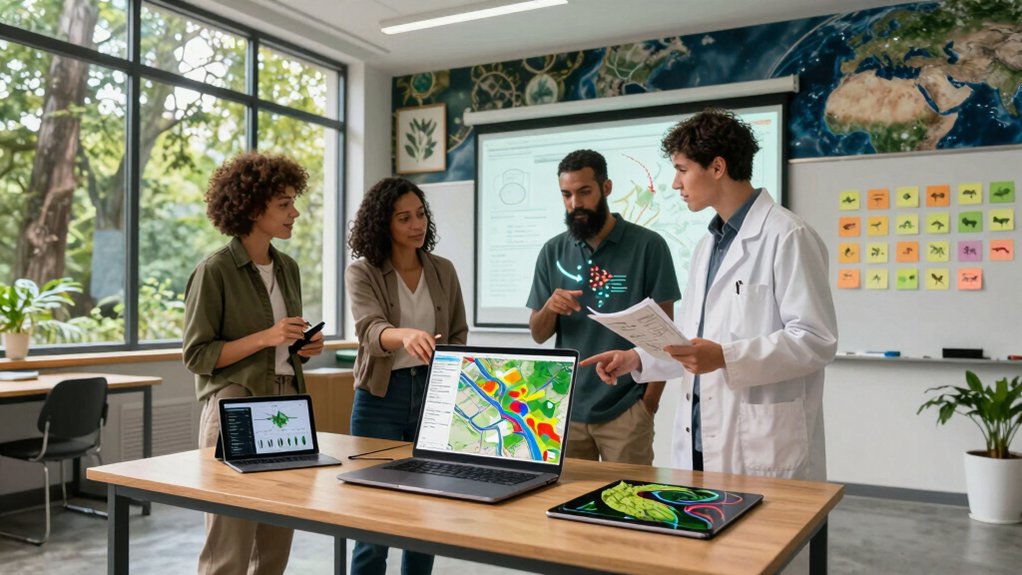
Ecologists can learn GIS online by taking free GIS courses with certificates, by completing short, self‑paced modules on Esri Learn, which grant instant PDF proof after brief quizzes, or by finishing my favorite Alison’s CPD‑accredited diplomas that require an 80 % score on each assessment and offer digital or printed certificates; open‑source QGIS tutorials also provide badges and downloadable manuals, while Coursera and edX let learners audit spatial‑analysis MOOCs for free, with optional paid verification for formal credentials. All these resources blend practical mapping tools with clear explanations of data quality, GPS positioning, and remote sensing, so participants build a solid skill set and a portfolio of verifiable work, and further exploration will reveal additional pathways.
Free GIS Platforms With Official Certificates
Explore the free GIS platforms that actually give you an official certificate, because a tangible credential can turn a self‑directed study into a recognized skill.
Esri’s Learn ArcGIS site offers short, self‑paced modules, each lasting two to four hours, where learners complete quizzes and receive instant PDF certificates, while UB affiliates can access over 500 e‑learning courses, including full 18‑24‑hour tracks, by registering through their institution.
Coursera and edX host free GIS MOOCs that let participants audit video lectures at no cost, yet the verified certificates, which confirm competency, usually require a modest fee; notable examples include Esri Academy’s “Going Places with Spatial Analysis” and university courses from UC Davis and Toronto.
The Open Source Geospatial Foundation and QGIS provide free manuals, workshop videos, and tutorials, some of which award badges or completion certificates through partner programs.
Alison offers a concise, free GIS courses that introduces fundamental concepts of geographic information systems, covering spatial data types, map projections, basic cartographic principles, and hands‑on exercises with popular GIS software. They offer courses for both beginners and advanced learners.
Together, these platforms blend accessible learning with formal proof of skill, helping ecologists demonstrate expertise in mapping, spatial analysis, and environmental monitoring.
Here are some of Alison’s Top Free Online Courses For GIS.
Introduction to the Geographic Information System (GIS)
Who’d benefit most from a free, beginner‑friendly GIS course? Students, volunteers, and early‑career ecologists who need to turn raw location data into clear, actionable maps will find this introduction essential, as it clarifies core GIS (Geographic Information System) concepts, tools that capture, store, and analyse spatial information, while distinguishing natural energy sources like wind from artificial ones such as solar panels.
The curriculum blends theory with hands‑on practice, guiding learners through Google Earth Pro to locate flood‑prone zones, then through QGIS to assess school accessibility in Liverpool, all while emphasizing visualisation, data management, and environmental problem‑solving.
Completion requires 80 % or higher on assessments, after which an official Alison Certificate, digital PDF or physical security‑marked copy can be earned, supporting CPD accredited career pathways and allowing custom team learning plans via Learning Advisors.
Best For: Students, volunteers, and early‑career ecologists who need a free, beginner‑friendly introduction to GIS for mapping and spatial analysis.
Pros:
- Completely free enrollment with downloadable offline content via the Alison App.
- Hands‑on training with Google Earth Pro and QGIS, covering real‑world environmental applications.
- CPD‑accredited certificate options (digital PDF or physical security‑marked) for career advancement.
Cons:
- Requires achieving 80 % or higher on assessments to earn the certificate.
- Physical certificates incur an additional purchase cost, although I highly recommend you get it.
- Limited to introductory content; advanced GIS topics may require separate courses.
GIS Data Quality and Geographic Positioning System
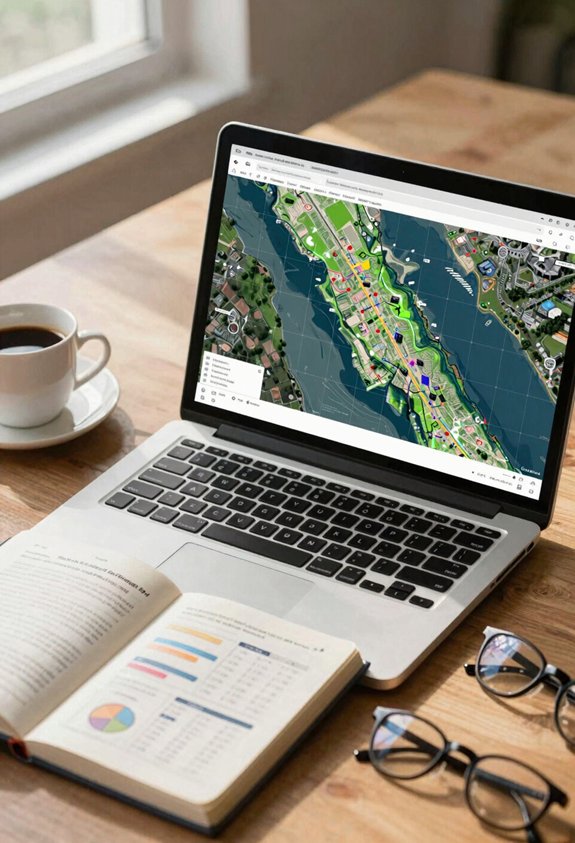
Ecologists who need reliable spatial data for habitat mapping, species distribution modeling, or field surveys will find this free GIS course the perfect match, because it blends data‑quality fundamentals with a clear introduction to the Geographic Positioning System, GPS, a satellite‑based tool that determines exact locations on Earth.
The curriculum starts with data quality basics, covering measures, assessment techniques, and error sources, then moves to map visualization, symbol selection, and data transformation to improve usefulness.
It also explains GPS history, satellite signals, common errors, and expands to GNSS, the broader Global Navigation Satellite System, while showing how QGIS integrates these tools.
Learners must score at least 80 % on each quiz, can download lessons offline via the Alison App, and may earn a digital or printed certificate to showcase on resumes or professional profiles.
Best For: Ecologists and environmental professionals who need free, certified training in GIS data quality, GPS/GNSS fundamentals, and QGIS basics for habitat mapping and spatial analysis.
Pros:
- Comprehensive coverage of data quality assessment, error sources, and spatial accuracy.
- Includes practical introductions to GPS/GNSS concepts and QGIS integration for real‑world mapping tasks.
- Free enrollment with optional digital or printed certificate and offline learning via the Alison App.
Cons:
- Requires achieving 80 % on each assessment, which may be challenging for beginners.
- Limited depth on advanced spatial analysis techniques beyond introductory QGIS functions.
- No live instructor support; learners rely on self‑paced materials and community forums.
Advanced Diploma in Geographic Information Systems
The Advanced Diploma in Geographic Information Systems is perfect for ecologists who want to turn raw field data into clear, actionable maps, because it blends essential GIS concepts, like data representation, which shows how information is organized, and data flows, which describe how data moves through a system, with hands‑on tools such as GPS, which pinpoints locations, and remote sensing, which captures images from satellites or high‑altitude aircraft.
The course covers databases, models, and spatial analysis, teaching learners to evaluate data quality and use software to derive meaningful patterns from geographic information.
Students must score at least 80 % on each assessment to earn a digital or physical diploma, and they can also obtain CPD accreditation, learner records, or verification for career advancement.
Flexible, free enrollment, mobile access via the Alison App, and personalized learning paths support thoughtful, self‑paced study.
Best For: Ecologists and environmental professionals who need to transform raw field data into actionable, spatially‑aware maps and analyses.
Pros:
- Free enrollment with optional digital or physical diploma and CPD accreditation.
- Hands‑on coverage of GPS, remote sensing, and spatial analysis tools relevant to ecological research.
- Mobile‑friendly access via the Alison App and personalized learning paths.
Cons:
- Requires a minimum of 80 % on each assessment, which may be challenging for beginners.
Representing the Real World in Geographic Information System
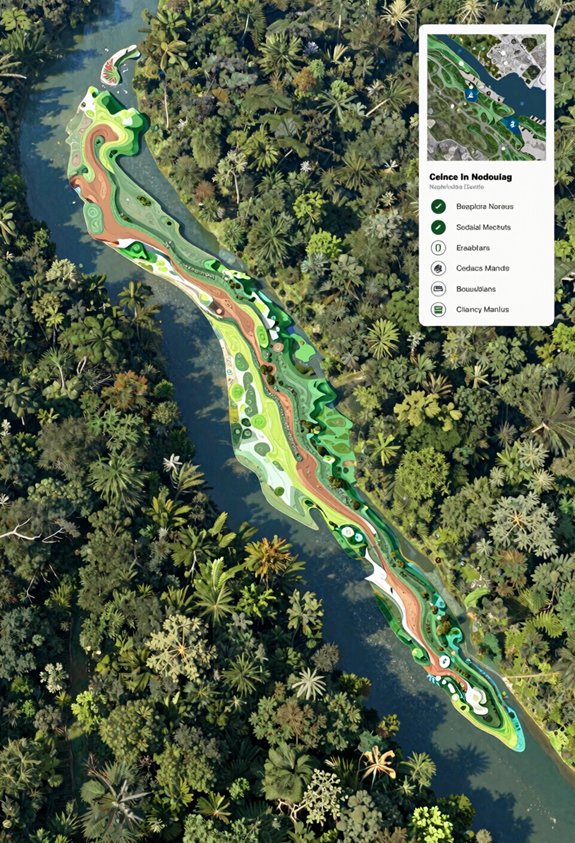
Students who need a practical bridge between ecological fieldwork and spatial analysis will find this free online GIS course especially fitting, because it blends clear explanations of data models, like the vector “spaghetti” format that stores points, lines, and polygons without explicit connections, and the topological version that records how those features relate, with real world examples that illustrate how terrain is captured as digital surface models (DSM) and digital elevation models (DEM).
The course outlines outcomes, offers a digital PDF certificate and a branded physical copy, and requires 80 % completion of assessments to earn an Alison Graduate label.
Learners explore data meaning, compare spaghetti versus topological vectors, and see surface models in practice, while georeferencing, projections, datums, and coordinate systems receive gentle, step‑by‑step treatment.
Maps, scale, and map identification are clarified with simple tools, and optional offline app access, career resources, and team‑learning paths support deeper engagement.
Best For: Ecologists and environmental scientists who need a free, practical introduction to GIS concepts and tools for linking field data with spatial analysis.
Pros:
- Free enrollment and access to all course materials, with a downloadable offline app.
- Clear explanations of vector and surface data models, plus hands‑on examples relevant to ecological work.
- Flexible certification options (digital PDF and branded physical certificate) after achieving 80 % assessment completion.
Cons:
- Requires a high assessment completion rate (80 %) to earn the Alison Graduate label.
- Limited depth on advanced GIS software (e.g., ArcGIS Pro) and professional‑level spatial analysis techniques.
- Physical certificate incurs an additional purchase cost and shipping time.
Soil Science and Technology – Advanced Technologies for Soil Applications
Pedologists and land management professionals who want to blend field data with cutting‑edge digital tools will find this free online GIS course the ideal next step, because it combines remote‑sensing basics, GPS error handling, and geostatistical modeling into a single, coherent curriculum.
The course, the final module in a suite on soil technology, guides learners through digital soil mapping—using maps that show soil properties across space, and teaches how to model both continuous variables like moisture and categorical variables like soil type.
It explains diffuse reflectance spectroscopy (DRS) and visible near infrared DRS, which measure soil composition by reflecting light, and portable X‑ray fluorescence (PXRF), a handheld device that detects elements.
Participants must score at least 80 % on all Alison courses, each assessment to earn an official Alison certificate, available as a PDF digital certificate or a branded physical copy, and they can showcase this credential on resumes or professional profiles to signal upskilled expertise.
Best For: Pedologists, land‑management professionals, and environmental researchers seeking to integrate GIS, remote sensing, and geostatistical modeling into soil science workflows.
Pros:
- Free enrollment with downloadable offline access via the Alison app.
- Comprehensive coverage of digital soil mapping, GPS error handling, and advanced sensing techniques (DRS, VisNIR‑DRS, PXRF).
- Official Alison certificate (digital PDF or branded physical) upon achieving 80 %+ on assessments, enhancing CVs and professional credibility.
Cons:
- Requires consistent high performance (≥80 %) on every assessment, which may be challenging for some learners.
- Limited interactive support; most guidance is through static course materials and occasional learning advisor access.
Diploma in Remote Sensing – A Theoretical Approach
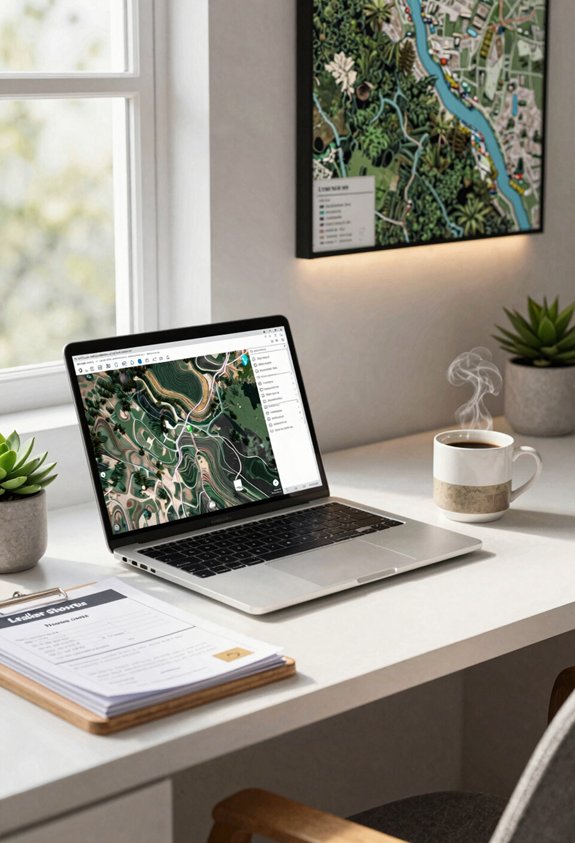
Ecologists seeking a solid, theory first grounding in remote sensing without needing prior GIS experience or specialized software, will find this free diploma the ideal entry point, because it builds the basics of non contact Earth observation, such as how sensors on satellites or drones capture data, before moving to image processing steps that turn raw pixels into analysis ready maps.
The Alison course, titled Diploma in Remote Sensing – A Theoretical Approach, covers sensor types, platforms, image products, and classification methods, explaining each technique in plain language, and requires no specialized software.
Learners must score at least 80 % on assessments to earn a downloadable digital diploma, a physical certificate, or a verified learner record, all of which bolster CVs and professional profiles.
The program, CPD accredited and open to anyone, offers XP rewards, mobile offline access, and a supportive community of millions, encouraging thoughtful participants to progress at their own pace.
Best For: Ecologists and beginners who want a theory‑first, free introduction to remote sensing without prior GIS experience or specialized software.
Pros:
- No prerequisites or software needed, making it accessible to anyone.
- CPD‑accredited with a downloadable digital diploma and XP rewards for career enhancement.
- Offline mobile access and a large learner community for flexible, self‑paced study.
Cons:
- Assessment pass mark of 80 % may be challenging for some learners.
- Limited hands‑on practice with industry‑standard software like ArcGIS or QGIS.
- Physical certificate and verified learner record require additional steps beyond the digital diploma.
Introduction to Biogeography
For anyone who wants to see how life spreads across continents and why certain species thrive in specific places, this free online GIS course offers a clear, map driven introduction to biogeography, an interdisciplinary field that studies the distribution of organisms on Earth and the environmental and historical processes that shape those patterns.
The course explains endemism, the fact that some species exist only in a particular region, and biogeographic zones, which are large areas sharing similar climate and life.
It also covers molecular biogeography, using DNA to trace species histories, and island biogeography, which examines how islands host unique communities.
Learners explore soil biology, urban environments, and conservation strategies, gaining skills for GIS, environmental planning, and conservation biology, while earning a CPD accredited certificate after achieving 80 % on assessments.
Best For: Ecologists, conservation planners, and GIS beginners seeking a free, CPD‑accredited introduction to biogeography and spatial analysis.
Pros:
- Comprehensive coverage of biogeographic concepts (endemism, zones, molecular and island biogeography) with GIS applications.
- Free enrollment and flexible self‑paced learning, with offline access via the Alison app.
- CPD‑accredited certificate upon achieving 80 % on assessments, enhancing professional credentials.
Cons:
- Assessments may be challenging for complete beginners lacking prior GIS experience.
- Limited interactive or instructor led support compared to paid platforms.
Apply Your New GIS Skills to Real-World Ecology
When you start applying the GIS tools you’ve just learned, you’ll find that mapping a habitat, calculating a species’ home range, or modeling habitat suitability becomes a concrete way to turn data into insight, because each step, whether you’re using Esri’s free ArcGIS lessons, QGIS’s open‑source tutorials, or R‑based spatial packages, lets you visualize patterns, test hypotheses, and communicate results with clear maps and story maps that can be shared with colleagues and stakeholders alike.
You can practice real world conservation workflows by completing Esri MOOCs, earning instant certificates that validate his ability to produce ArcGIS Online story maps.
You can follow the QGIS Training Manual and Harvard videos to build species distribution maps with open‑source tools, downloading datasets that mimic field surveys.
You can audit Coursera or edX courses such as “Going Places with Spatial Analysis,” applying structured assignments to ecological questions, and you can use R’s tidyverse and sf packages for point pattern analysis, creating density surfaces that showcase your competence to future employers.
Next Steps: Keep Learning and Expanding Your GIS Toolkit
If you keep building on what you’ve already learned, you’ll find that expanding your GIS toolkit becomes a natural next step, because each new skill, whether it’s an Esri Learn ArcGIS module that offers instant PDF certificates after a short exam, a QGIS Training Manual that teaches open source mapping without any software fees, or a Coursera or edX MOOC you can audit for free, adds a layer of competence that can be shown to future employers or grant reviewers.
If you’re wondering how to turn your coursework and volunteer work into a real opportunity, read my step-by-step guide on how to get a paid biology internship or job with no experience.
Final Thoughts
Like a seasoned guide leading a curious explorer through a vast, uncharted forest, these free GIS courses hand ecologists the map, compass, and lantern they need to illuminate complex environmental patterns, while the certificates act as sturdy boots that keep them steady on the trail; by mastering data layers, spatial analysis, and remote‑sensing tools, you can turn raw observations into clear, actionable insights, ensuring your work not only survives but thrives in the ever changing landscape of conservation.

Erzsebet Frey (Eli Frey) is an ecologist and online entrepreneur with a Master of Science in Ecology from the University of Belgrade. Originally from Serbia, she has lived in Sri Lanka since 2017. Eli has worked internationally in countries like Oman, Brazil, Germany, and Sri Lanka. In 2018, she expanded into SEO and blogging, completing courses from UC Davis and Edinburgh. Eli has founded multiple websites focused on biology, ecology, environmental science, sustainable and simple living, and outdoor activities. She enjoys creating nature and simple living videos on YouTube and participates in speleology, diving, and hiking.
🌿 Explore the Wild Side!
Discover eBooks, guides, templates and stylish wildlife-themed T-shirts, notebooks, scrunchies, bandanas, and tote bags. Perfect for nature lovers and wildlife enthusiasts!
Visit My Shop →