
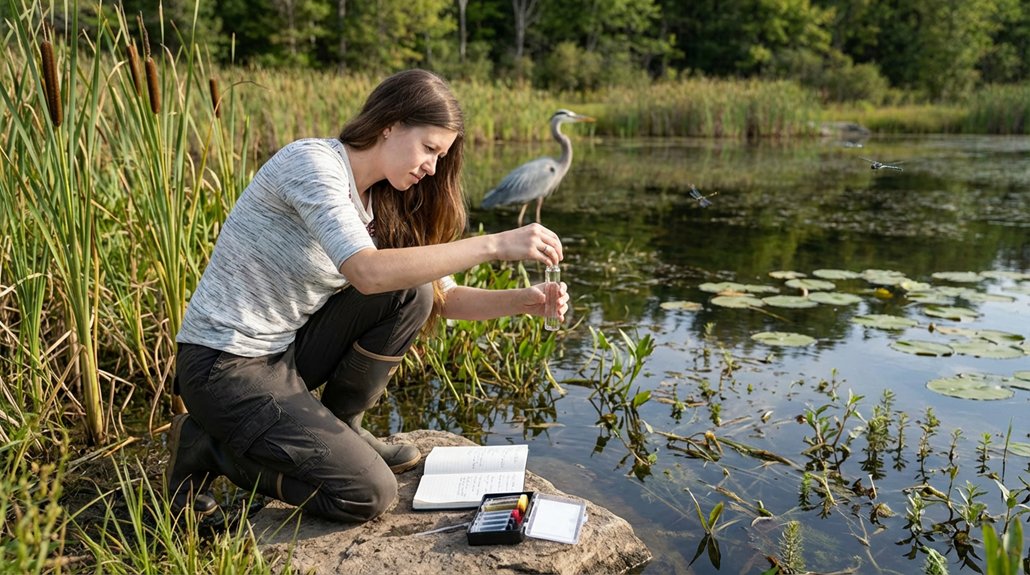
An ecosystem in ecology comprises all living organisms—plants, animals, fungi, and microorganisms—interacting with nonliving components such as water, air, soil, and sunlight within a defined area where energy flows and nutrients cycle continuously. This framework allows scientists to examine relationships among species and predict how changes ripple through communities, from tiny pond habitats to vast rainforests. Ecosystems provide essential services including clean water, pollination, and carbon storage, while also holding cultural and economic value. The sections below explore how these intricate systems function and sustain life.
Definition
An ecosystem, in its most fundamental sense, refers to a community of living organisms—plants, animals, bacteria, fungi, and other life forms—interacting with one another and with the non-living components of their environment, such as air, water, soil, and sunlight, within a defined area.
The definition scope of this term encompasses both the biological and physical elements that function together as an interconnected unit, where energy flows and nutrients cycle continuously.
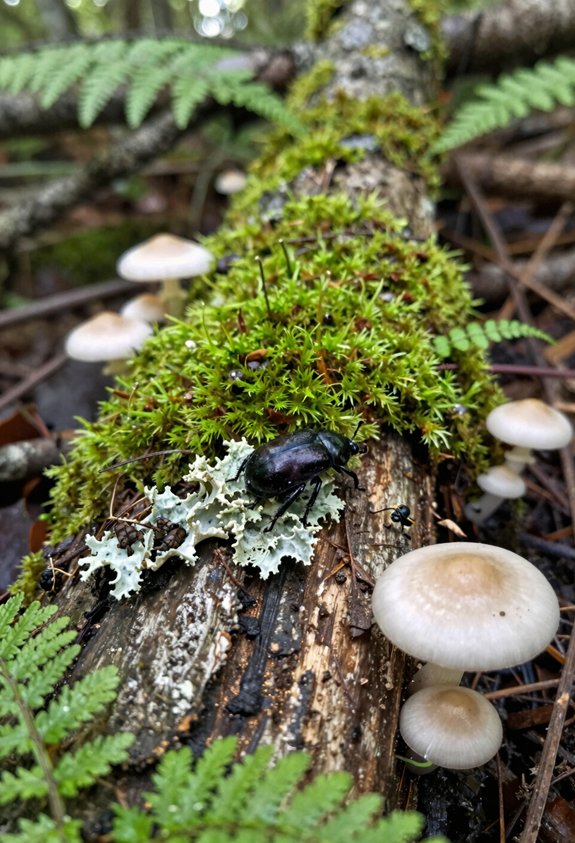
Concept clarification requires understanding that ecosystems exist at multiple scales: a rotting log sheltering beetles and moss represents an ecosystem just as surely as does an entire rainforest stretching across thousands of square miles.
What matters is not size but rather the presence of these essential relationships—the give-and-take between living things and their surroundings.
This framework allows ecologists to study how organisms depend upon each other and their habitat, revealing patterns that govern life across our planet.
Ecological significance
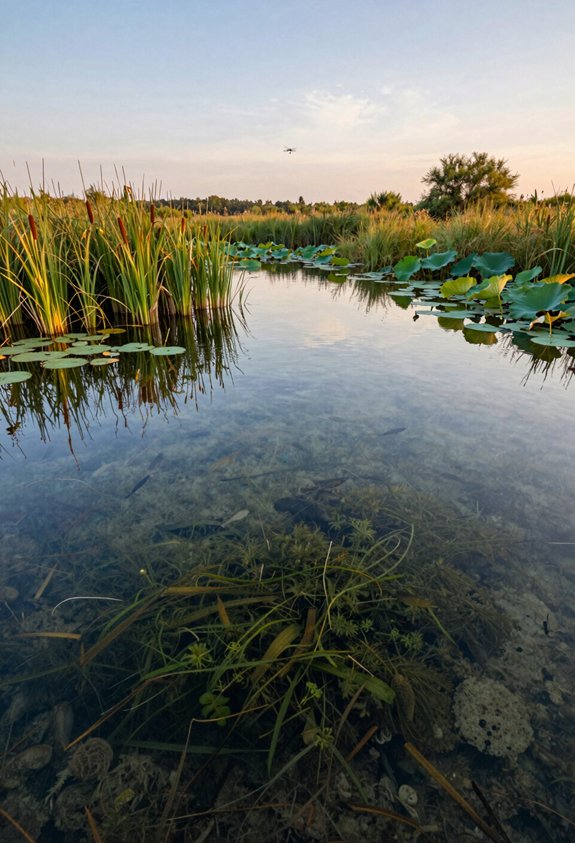
Why does the concept of an ecosystem matter so profoundly to our understanding of the natural world?
It provides a framework—a structured way of examining relationships—that reveals how organisms depend upon one another and their surroundings for survival.
This perspective allows scientists to predict consequences when one component changes, whether through human activity or natural events.
Ecosystems also carry economic valuation, meaning they can be measured by the services they provide: clean water, pollination of crops, carbon storage in forests.
Beyond material benefits, ecosystems hold cultural symbolism, representing sacred spaces or ancestral connections for communities worldwide.
Recognizing these dimensions helps society make informed decisions about conservation and resource management.
The ecosystem concept thereby bridges scientific inquiry and practical application, reminding us that nature operates as an interconnected whole rather than isolated parts, and that our actions ripple through these living networks in ways both measurable and meaningful.
Real World Examples
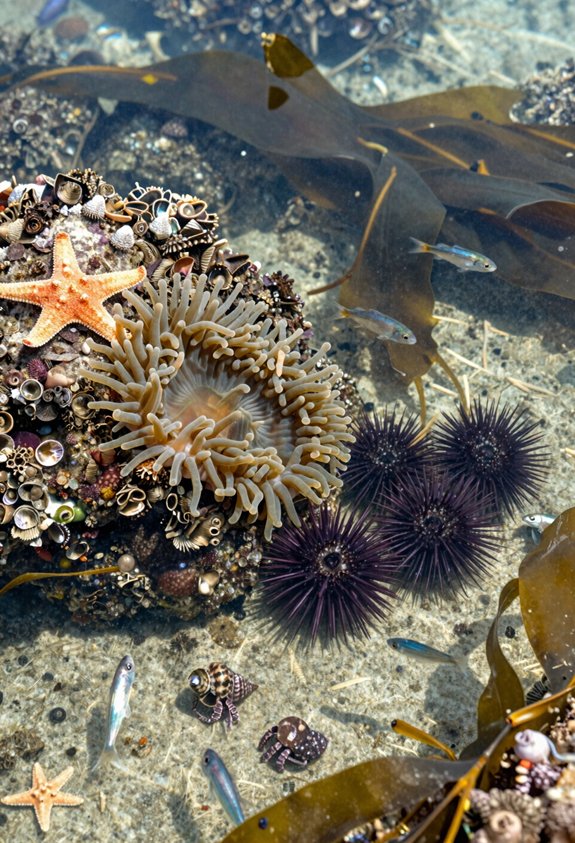
Examining concrete examples from different regions helps illustrate how ecosystems function as integrated communities of living organisms and their physical environments.
The Amazon rainforest demonstrates extraordinary biodiversity—the variety of plant and animal species in a given area—while coral reefs reveal intricate symbiotic relationships, partnerships where different species live in close association for mutual benefit.
From the structured food chains of African savannas to the water-filtering capacity of wetlands…
and the remarkable climate adaptations found in Arctic tundra regions, these ecosystems each showcase distinct patterns of energy flow, nutrient cycling, and species interaction.
Amazon Rainforest Biodiversity
The Amazon Rainforest stands as one of Earth’s most biodiverse ecosystems, containing approximately ten percent of all known species despite covering only about six percent of the planet’s land surface.
This extraordinary diversity manifests in intricate pollinator networks, where thousands of insect species facilitate plant reproduction through specialized relationships developed over millions of years.
The rainforest also functions as vast genetic reservoirs—living libraries of biological information that hold potential solutions for medicine, agriculture, and climate adaptation.
Scientists estimate that a single hectare may harbor over 400 tree species, each supporting countless organisms in complex interdependencies.
These relationships demonstrate how ecosystems maintain stability through diversity, with each species contributing to the whole system’s resilience and productivity in measurable ways.
Coral Reef Symbiotic Relationships
How do organisms not merely coexist but actively depend on one another for survival within Earth’s marine environments?
Coral reefs demonstrate this principle through mutualistic partnerships—relationships where both participants gain essential benefits.
The most essential example involves zooxanthellae interactions: microscopic algae that live within coral tissue.
These tiny photosynthetic organisms convert sunlight into sugars, providing up to 90% of the coral’s nutritional needs, while the coral offers them protected shelter and access to sunlight in shallow waters.
Another partnership involves cleaner shrimp, which remove parasites from fish that visit specific reef locations, creating what biologists call cleaning stations.
The fish receive health benefits while shrimp obtain reliable food sources.
These symbiotic relationships, interdependent connections between different species, form the foundation sustaining entire reef communities.
African Savanna Food Chains
Across the grasslands of East Africa, energy flows through communities of organisms in predictable sequences called food chains, linear pathways that trace how nutrients and energy transfer from one living thing to another.
A typical chain begins with grasses capturing solar energy through photosynthesis, continues as zebras consume vegetation, and progresses when lions hunt these herbivores—a pattern of grazing dynamics that shapes the entire landscape.
When predators finish feeding, scavenger roles become essential: vultures and hyenas consume remaining tissue, while bacteria decompose what remains, returning nutrients to soil where new grasses grow.
Each organism occupies a specific position, or trophic level, and approximately ten percent of energy transfers upward with each consumption event, limiting chain length and maintaining ecological balance across these vast plains.
Wetland Ecosystem Water Filtration
Where rivers meet coastlines and rainwater collects in shallow depressions, wetland ecosystems perform a critical environmental service that demonstrates nature’s capacity for self-purification: the removal of pollutants, excess nutrients, and sediments from water before it flows into larger bodies.
The Florida Everglades, for instance, filters agricultural runoff through vast sawgrass marshes, where microbial mats—thin layers of bacteria and algae—break down nitrogen and phosphorus compounds into harmless forms.
Similarly, peatland processes in Scotland’s Flow Country trap heavy metals and carbon within dense, waterlogged plant material that decomposes slowly over centuries.
These wetlands function as living filters, with vegetation slowing water flow while microorganisms transform contaminants, ultimately protecting downstream ecosystems and human water supplies through biological mechanisms honed across millennia.
Arctic Tundra Climate Adaptations
When temperatures plunge to minus forty degrees and sunlight vanishes for months at a time, the organisms inhabiting Arctic tundra ecosystems must employ extraordinary biological strategies to survive conditions that would prove lethal to most life forms.
Caribou develop dense, hollow-haired coats that trap air for insulation, while Arctic foxes change fur color seasonally—white in winter, brown in summer—to maintain camouflage against shifting landscapes.
The permafrost resilience of plants like cushion plants allows them to anchor shallow roots above permanently frozen soil, their low-growing forms reducing wind exposure.
Moss physiology demonstrates remarkable freeze tolerance: these simple plants can photosynthesize at temperatures near freezing and recover quickly after winter dormancy, forming dense mats that insulate the ground beneath them.
Desert Ecosystem Water Conservation
While Arctic organisms combat freezing temperatures and prolonged darkness, desert-dwelling species face an opposite yet equally formidable challenge: extreme heat paired with scarce water availability that demands adaptations just as specialized and remarkable.
Desert plants and animals have evolved ingenious mechanisms to capture moisture from seemingly arid air.
Certain beetles in the Namib Desert practice dew collection by positioning their bodies at strategic angles during early morning hours, allowing condensed water droplets to roll directly into their mouths.
Several plant species employ fog harvesting—the process of intercepting atmospheric moisture through specialized leaf structures or surface textures that channel collected droplets toward root systems.
These adaptations demonstrate how evolutionary pressure shapes organisms to exploit even the most minimal water sources, transforming inhospitable environments into functional ecosystems where survival depends on creative conservation strategies.
Temperate Forest Nutrient Cycling
How do nutrients move through an ecosystem where leaves fall by the millions each autumn, decompose across forest floors, and eventually return to nourish the very trees from which they descended?
In temperate forests, this cycling depends on decomposition rates—the speed at which dead material breaks down into simpler compounds—which vary with temperature, moisture, and the organisms involved.
Mycorrhizal fungi, which form partnerships with tree roots, accelerate nutrient uptake by extending far beyond what roots alone could reach, trading minerals extracted from decaying matter for sugars the trees produce through photosynthesis.
Earthworms, beetles, and bacteria work together to fragment fallen leaves, releasing nitrogen, phosphorus, and other essential elements back into soil where they become available again: a continuous loop sustaining forest productivity across generations.
Related concepts
Understanding ecosystems requires familiarity with several closely related concepts that share boundaries and intersect in meaningful ways, each offering a distinct lens through which scientists examine the natural world.
Apparent competition occurs when two species indirectly affect each other through a shared predator—one population’s abundance influences predation pressure on the other, creating effects that resemble direct competition without actual resource overlap.
Ecological traps emerge when environmental changes cause organisms to prefer habitats that appear suitable but actually reduce survival or reproduction, a mismatch between cues and reality.
Beyond these concepts, ecologists examine trophic cascades, where changes at one feeding level ripple through the entire food web, and keystone species, whose disproportionate influence maintains ecosystem structure despite relatively low abundance.
Biodiversity—the variety of life forms within a system—intersects with ecosystem stability.
Resilience describing how systems recover from disturbances, and succession patterns showing how communities change over time.
If you want to strengthen your ecology foundation, start with the Ecology Basics to understand core concepts step by step. Dive deeper with 25 Key Concepts in Ecology with Real-World Examples to see how theory applies in nature. If you prefer to learn ecology fast and simply, the Ecology Flashcards are perfect for quick, focused learning. For a complete reference, explore the Glossary of Ecology Terms with 1,500+ terms explained in simple language, available as a PDF for use on any device.
🌿 Explore the Wild Side!
Discover eBooks, guides, templates and stylish wildlife-themed T-shirts, notebooks, scrunchies, bandanas, and tote bags. Perfect for nature lovers and wildlife enthusiasts!
Visit My Shop →