

The ecological hierarchy organizes life from individual organisms to populations—groups of the same species—then to communities where different species interact, and finally to ecosystems that include both living things and their physical environment.
Each level builds upon the previous one, creating increasing complexity as energy flows and nutrients cycle through interconnected webs of life.
Understanding this structure helps scientists predict how changes at one level, such as a species disappearing, might cascade through others, affecting entire systems.
The hierarchy reveals patterns that guide conservation efforts across multiple scales, showing why protecting biodiversity requires attention to relationships between organisms and their surroundings, a framework that becomes clearer through specific examples.
Definition
The ecological hierarchy represents a system of organization that arranges living things and their environments into nested levels, each one building upon the last in increasing complexity and scale.
This framework of biological organization—the structured arrangement of life from smallest to largest—helps scientists understand how organisms interact with one another and their surroundings at different scales.
At the base, individual organisms form populations, which combine into communities where different species coexist and interact. These communities, paired with their physical environments, create ecosystems: self-contained units where energy flows and nutrients cycle.
Within ecosystems, organisms occupy distinct trophic levels, which are feeding positions that determine who eats whom and how energy transfers through the system.
The hierarchy continues upward through biomes—large regions sharing similar climate and vegetation—and culminates in the biosphere, Earth’s life-supporting layer where all ecosystems exist together as one interconnected whole.
Ecological significance
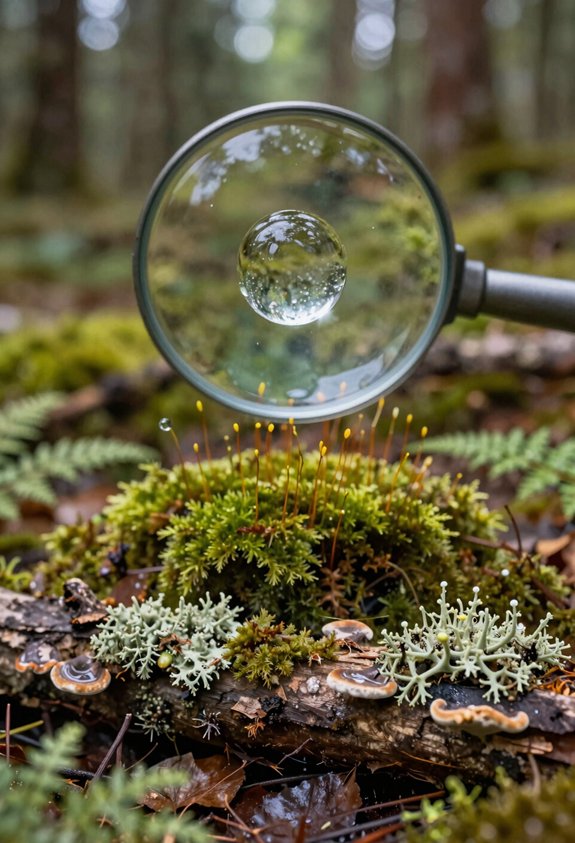
Understanding how the ecological hierarchy functions helps scientists predict what happens when changes occur at one level and ripple through others. When a single species disappears from a population, for instance, the effects don’t stop there—they cascade upward through communities and entire ecosystems, sometimes threatening ecosystem stability, which refers to an environment’s ability to maintain its structure and function over time.
This interconnectedness means that protecting one level often requires safeguarding others, making biodiversity conservation—the deliberate effort to preserve the variety of life forms—more effective when it considers multiple hierarchical levels simultaneously.
Scientists use this framework to identify which species play critical roles, where interventions will yield the greatest benefits, and how human activities might disrupt natural patterns. By recognizing that organisms exist within nested levels of organization, from individuals to the biosphere, researchers can develop strategies that address ecological problems at their appropriate scale, ensuring that conservation efforts produce lasting, meaningful results.
Real World Examples
Ecological hierarchy becomes more vivid and comprehensible when one examines actual ecosystems, where the principles of organization reveal themselves in patterns that have persisted for millennia.
Rainforest ecosystem layers demonstrate vertical stratification—the arrangement of distinct zones from canopy to forest floor—while coral reef communities show how biodiversity concentrates in relatively small spaces through intricate interdependencies.
Prairie food webs, meanwhile, illustrate how energy flows through multiple trophic levels, connecting producers like grasses to herbivores and predators in networks that sustain entire landscapes.
Rainforest Ecosystem Layers
When scientists study tropical rainforests in places like the Amazon Basin or the Congo, they observe that life organizes itself into distinct horizontal bands, each one stacked above the other like floors in a building.
This forest stratification—the vertical layering of vegetation—creates different light levels, temperature zones, and humidity conditions at each height.
The emergent layer rises highest, where individual trees breach the canopy structure to reach sunlight. Below that, the dense canopy forms a continuous roof of treetops, capturing most available light.
The understory exists in perpetual shade, home to smaller trees and shrubs adapted to low-light conditions.
Finally, the forest floor receives less than two percent of incoming sunlight, supporting decomposers and shade-tolerant plants that complete the rainforest’s ecological hierarchy.
Coral Reef Communities
Beneath tropical and subtropical ocean waters, coral reefs construct living cities from limestone, forming Earth’s most biodiverse marine ecosystems through partnerships between tiny animals and algae.
These communities demonstrate ecological hierarchy clearly: individual coral polyps—soft-bodied organisms related to jellyfish—cluster into colonies, which aggregate into reef structures spanning miles.
Coral biodiversity reaches staggering levels, with single reefs hosting thousands of species including fish, crustaceans, mollusks, and sea turtles that depend on intricate physical structures for shelter and feeding grounds.
The symbiotic relationship between corals and zooxanthellae, microscopic algae living within their tissues, powers these productive systems through photosynthesis.
Unfortunately, warming oceans and pollution threaten these fragile networks, making reef conservation essential for maintaining marine biodiversity and protecting coastlines from erosion.
Prairie Food Webs
Stretching across North America’s interior, grasslands support intricate food webs—interconnected feeding relationships among organisms—that reveal how energy flows from soil to sky through multiple pathways.
Prairie grasses anchor these systems through plant adaptations like deep roots that access moisture during droughts, converting sunlight into energy that herbivores consume. Bison graze alongside prairie dogs, which themselves become prey for swift foxes and ferruginous hawks, demonstrating how predator prey interactions create multiple connections within a single ecosystem.
When coyotes hunt ground squirrels, energy transfers upward through trophic levels—feeding positions within the web. Decomposers such as fungi and bacteria return nutrients to soil, completing cycles that sustain producers.
These overlapping relationships create resilience: if one species declines, alternative pathways maintain energy flow throughout the community.
Related concepts
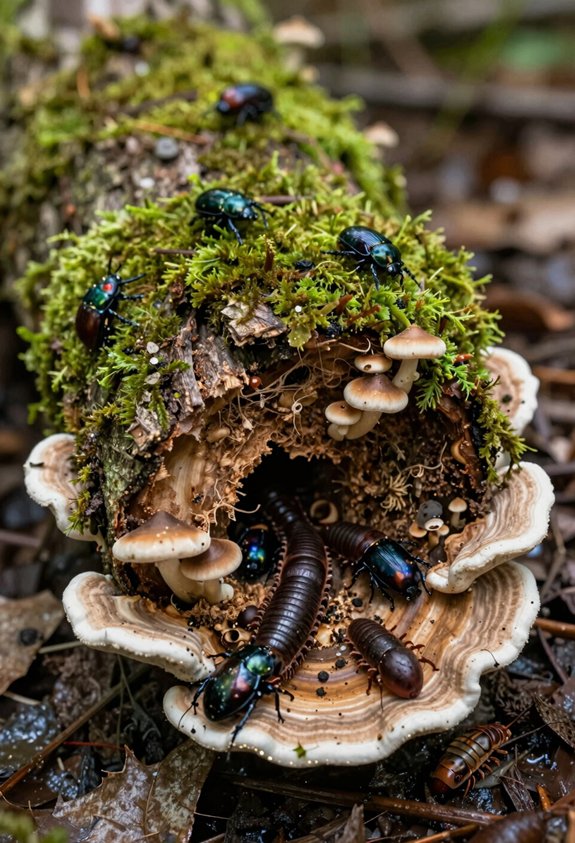
The ecological hierarchy doesn’t exist in isolation—it connects to several other frameworks that scientists use to understand the natural world.
One vital link involves trophic levels, which are feeding positions within food chains that help scientists map energy flow from producers through consumers. Understanding these levels allows researchers to see how changes at one tier—say, removing top predators—ripple through entire ecosystems, affecting populations at every organizational level.
Another connection emerges through biodiversity conservation, the practice of protecting variety in living things, which depends heavily on hierarchical thinking. Conservation biologists must consider not just individual species but also populations, communities, and ecosystems together, recognizing that preserving one level often requires protecting others.
The hierarchy also intersects with concepts like carrying capacity—the maximum population size an environment can sustain—and ecological succession, wherein communities change predictably over time, constantly reshaping the hierarchical structure.
If you want to strengthen your ecology foundation, start with the Ecology Basics to understand core concepts step by step. Dive deeper with 25 Key Concepts in Ecology with Real-World Examples to see how theory applies in nature. If you prefer to learn ecology fast and simply, the Ecology Flashcards are perfect for quick, focused learning. For a complete reference, explore the Glossary of Ecology Terms with 1,500+ terms explained in simple language, available as a PDF for use on any device.
🌿 Explore the Wild Side!
Discover eBooks, guides, templates and stylish wildlife-themed T-shirts, notebooks, scrunchies, bandanas, and tote bags. Perfect for nature lovers and wildlife enthusiasts!
Visit My Shop →