
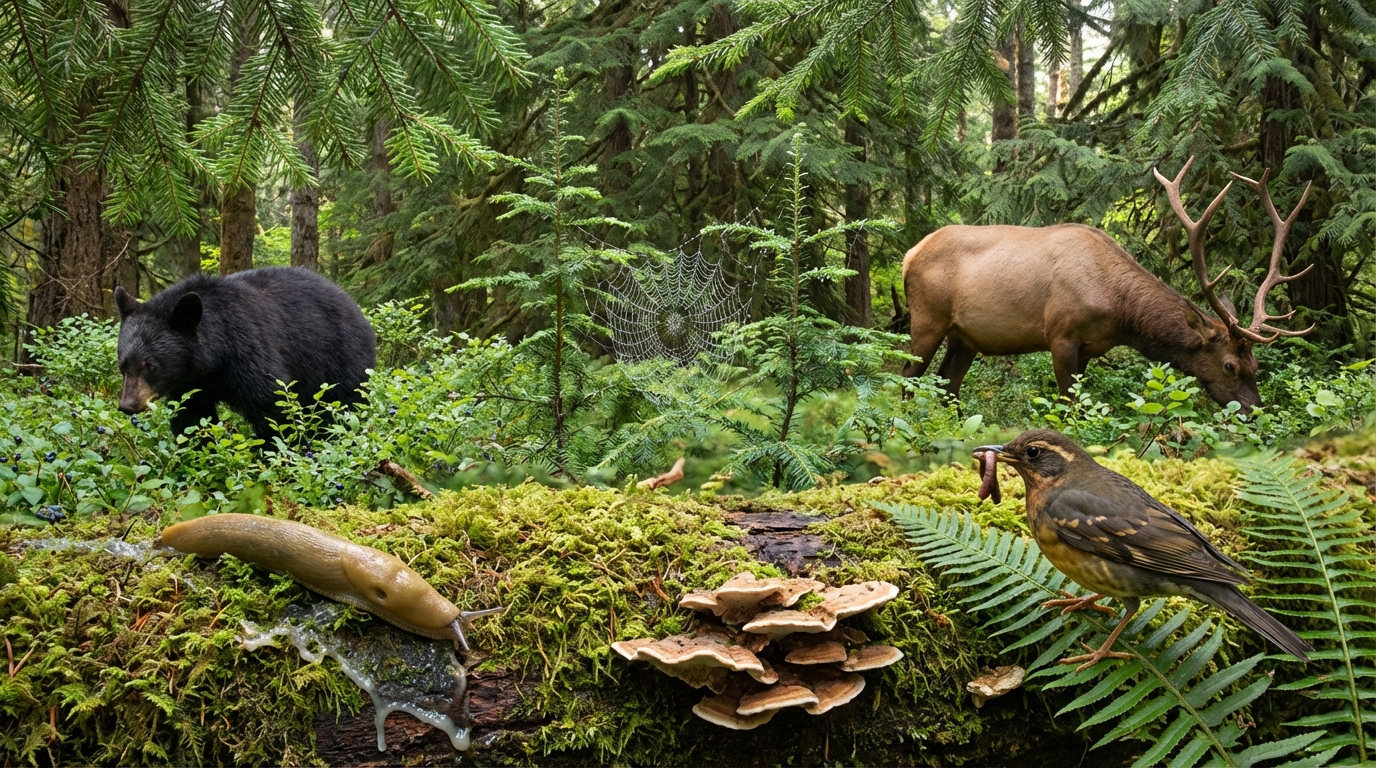
Biotic factors—the living components of an ecosystem, including plants, animals, fungi, and bacteria—interact through predation, competition, and symbiosis to shape the flow of energy and nutrients through natural environments. These organisms respond actively to their surroundings, creating relationships that determine population sizes and community structure: predators control prey numbers, competitors drive species to specialize in distinct ecological roles, and symbiotic partners form dependencies that benefit survival. The removal of even one species can trigger cascading effects throughout food webs, demonstrating how interconnected life truly is. Further exploration reveals the intricate mechanisms behind these dynamics.
Definition
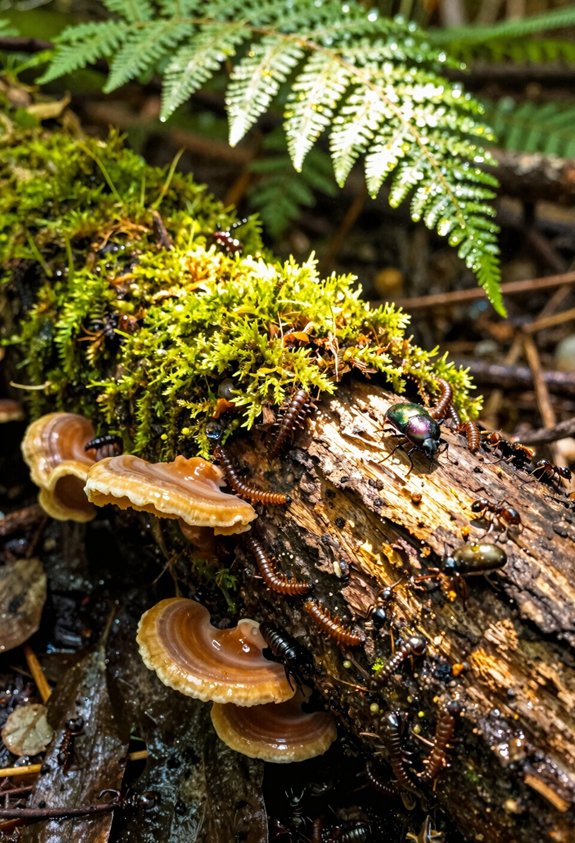
In every ecosystem—from a pond’s edge to a sprawling rainforest canopy—biotic factors represent the living components that shape how organisms interact, survive, and reproduce. These factors include all living things: plants that convert sunlight into energy, animals that consume other organisms, fungi that decompose dead matter, and bacteria that cycle nutrients through soil and water.
Unlike abiotic factors—the non-living elements such as temperature, water, and minerals—biotic factors actively respond to their surroundings and to one another. The web of biotic interactions, which encompasses predation, competition, symbiosis, and pollination, determines how energy flows and how populations grow or decline.
Species diversity, or the variety of different organisms within a habitat, directly influences ecosystem stability and resilience. When biotic factors shift—when a predator disappears or a new species arrives—the entire community adjusts, demonstrating that life itself serves as both sculptor and substance of ecological systems.
Ecological significance
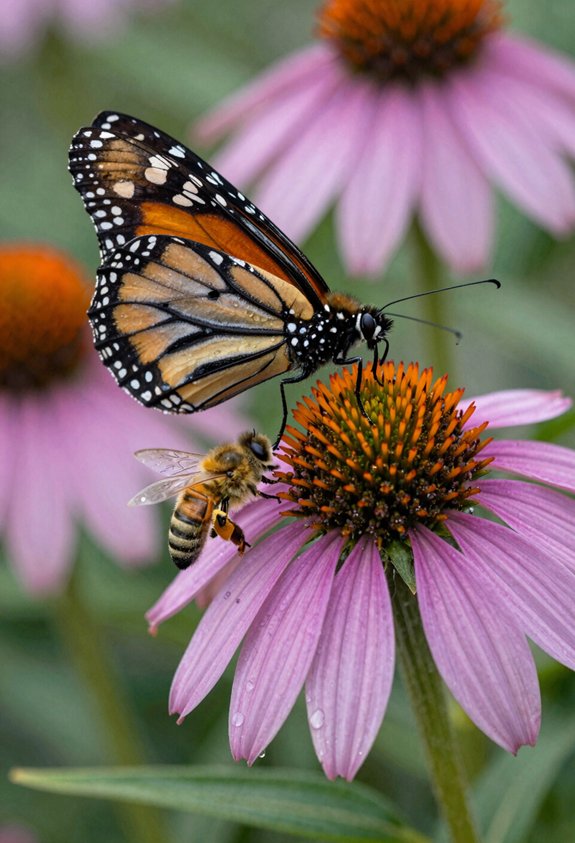
When ecologists study the significance of biotic factors, they’re examining how living organisms function as the primary drivers of ecosystem processes—the ongoing activities that sustain life across landscapes. These living components shape environments through ecological interactions, which include relationships like predation, competition, and mutualism.
A predator controlling prey populations, for instance, prevents overgrazing that would otherwise strip vegetation and destabilize soil. Species diversity—the variety of different organisms within an ecosystem—amplifies this significance considerably. Diverse communities tend to demonstrate greater resilience, meaning they recover more effectively from disturbances such as fires or floods.
When numerous species occupy different niches, or ecological roles, the system maintains function even if some organisms decline. This interconnectedness means that removing a single species can trigger cascading effects throughout the food web, altering nutrient cycles and habitat structure in ways that ripple across entire regions.
Real World Examples
Observing biotic factors—the living components of ecosystems—in actual environments reveals patterns that textbooks can only approximate.
These real-world cases demonstrate how organisms shape one another’s survival through direct interactions. Predator-prey relationships, such as the dynamic between wolves and elk in Yellowstone National Park, show how one species’ hunting behavior can transform entire landscapes by controlling herbivore populations.
Meanwhile, competition for limited resources like water, nutrients, or nesting sites pushes species to develop specialized adaptations.
Symbiotic partnerships—close associations between different species—create dependencies that benefit one or both participants, as seen when cleaner fish remove parasites from larger marine animals.
Predator-Prey Relationships in Nature
Across meadows, forests, and ocean depths, predator-prey relationships shape ecosystems through constant cycles of hunting and survival—interactions that reveal how energy flows through food webs and how populations naturally regulate one another.
Consider the lynx and snowshoe hare in Canada’s boreal forests: their population dynamics follow predictable patterns, with hare numbers rising until lynx populations increase in response, then hare numbers declining as predation intensifies.
These hunting strategies vary widely—cheetahs rely on explosive speed, wolves coordinate pack attacks, and archerfish shoot water jets to knock insects from overhanging branches.
Each method reflects evolutionary adaptations that balance energy expenditure with hunting success, demonstrating how predators and prey continuously influence each other’s survival, behavior, and ultimately their respective population sizes within shared habitats.
Competition for Limited Resources
While predators and prey engage in direct interactions where one organism consumes another, competition represents a different kind of biological struggle—one where organisms vie for the same limited resources without necessarily confronting each other face-to-face.
In African savannas, zebras and wildebeest both graze on grasses, requiring careful resource allocation to survive dry seasons when vegetation becomes scarce.
Similarly, oak and maple trees in temperate forests compete for sunlight, water, and soil nutrients—a competition that occurs silently over decades.
Through niche differentiation, species evolve to occupy slightly different ecological roles: warblers feeding at different heights within the same tree exemplify this strategy.
Competition shapes communities profoundly, driving species to specialize, migrate to new territories, or face population decline when resources can’t support all inhabitants equally.
Symbiotic Partnerships Among Species
Unlike competition where organisms struggle against each other for the same resources, symbiotic relationships involve close, long-term interactions between different species that often benefit at least one partner—and sometimes both.
Mutualistic relationships represent partnerships where both organisms gain advantages: bees collect nectar from flowers while simultaneously transferring pollen between plants, ensuring reproduction for both species. Clownfish find protection among sea anemone tentacles while keeping the anemone clean—a balanced exchange that sustains both partners.
Parasitic interactions, however, tell a different story: one organism benefits while harming its host. Ticks feed on mammal blood, weakening their hosts over time, and tapeworms absorb nutrients from intestines, depriving their hosts of essential sustenance.
These partnerships, whether beneficial or harmful, shape ecological communities in profound ways.
Related concepts
Since biotic factors don’t exist in isolation from other ecological principles, understanding their relationship to neighboring concepts helps clarify how living organisms shape and respond to their environments.
One crucial connection involves mutualistic interactions—cooperative relationships where both species benefit—which directly influence species diversity by creating stable niches that allow more organisms to coexist.
Population dynamics, the study of how group sizes change over time, emerges from countless biotic interactions like predation and competition.
Energy flow through food webs represents another related concept: as organisms consume one another, they transfer nutrients and energy across trophic levels, the feeding positions within an ecosystem.
Carrying capacity—the maximum population size an environment can sustain—depends largely on biotic pressures such as disease transmission and resource competition.
Finally, succession, the gradual replacement of species communities over time, occurs because biotic factors continuously modify their surroundings, preparing conditions for new arrivals.
If you want to strengthen your ecology foundation, start with the Ecology Basics to understand core concepts step by step. Dive deeper with 25 Key Concepts in Ecology with Real-World Examples to see how theory applies in nature. If you prefer to learn ecology fast and simply, the Ecology Flashcards are perfect for quick, focused learning. For a complete reference, explore the Glossary of Ecology Terms with 1,500+ terms explained in simple language, available as a PDF for use on any device.
🌿 Explore the Wild Side!
Discover eBooks, guides, templates and stylish wildlife-themed T-shirts, notebooks, scrunchies, bandanas, and tote bags. Perfect for nature lovers and wildlife enthusiasts!
Visit My Shop →