
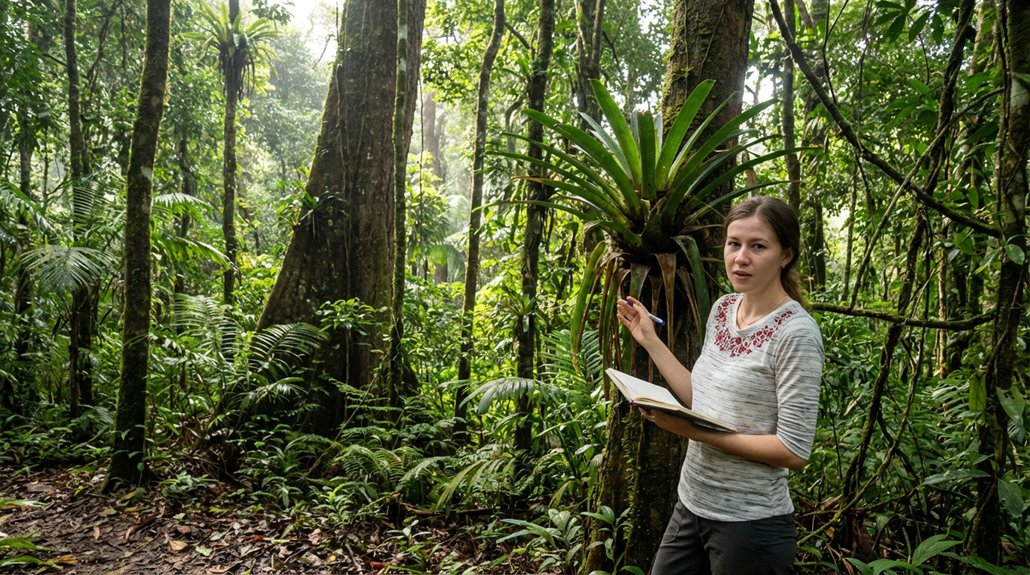
A biome represents one of Earth’s largest recognizable ecological units—a vast region defined by its characteristic climate, soil conditions, and the distinct communities of life that call it home. Average temperature ranges and precipitation patterns shape each biome’s identity, while dominant vegetation types give these regions their recognizable character. Biomes function as Earth’s major life zones, supporting biodiversity and cycling essential nutrients through interconnected systems. Exploring specific examples reveals how life adapts to remarkably different conditions.
Definition
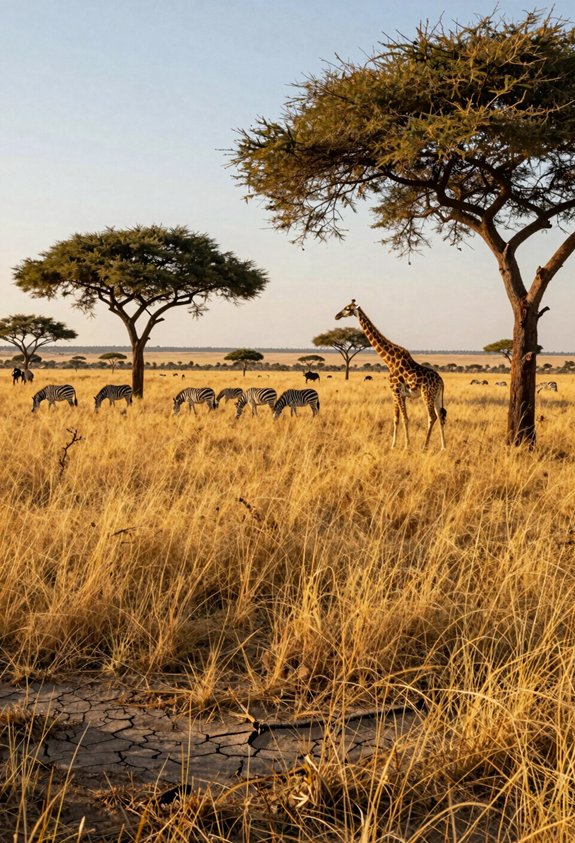
A biome represents one of the largest recognizable units of ecological organization on Earth—a vast region defined not by political boundaries or arbitrary lines on a map, but by its characteristic climate, soil conditions, and the distinctive communities of plants and animals that have adapted to thrive there.
Understanding definition basics helps clarify what separates one biome from another: scientists look at average temperature ranges, precipitation patterns, and the dominant vegetation types that give each region its recognizable character.
The terminology scope extends beyond simple labels like “desert” or “forest” to encompass the complex relationships between living organisms and their physical environment.
Ecologists use the term to describe broad ecological zones—areas where similar conditions produce similar biological communities, even when those areas exist on different continents.
This framework allows researchers to compare ecosystems across the globe and identify patterns in how life responds to environmental conditions.
Ecological significance
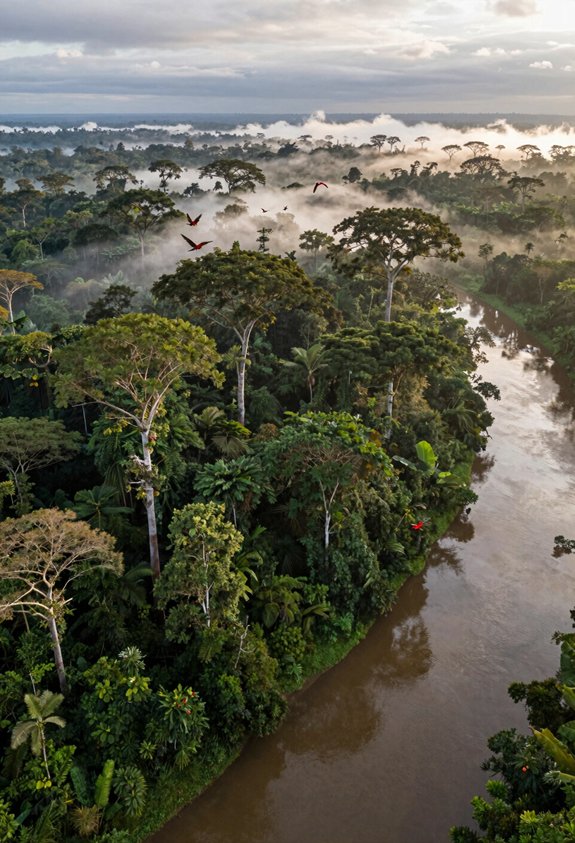
Because biomes function as Earth’s major life zones, they play a critical role in maintaining the planet’s ecological balance—supporting biodiversity, regulating climate patterns, and cycling essential nutrients through interconnected systems.
Each biome contributes uniquely to global processes that sustain life.
Forests, particularly tropical rainforests, excel at carbon sequestration—the process of capturing and storing atmospheric carbon dioxide in plants and soil.
This natural function helps regulate Earth’s temperature and slows climate change.
Grasslands and wetlands similarly store carbon while filtering water and preventing erosion.
Biomes also support intricate pollination networks, which are the relationships between flowering plants and the animals that transfer pollen between them.
These networks guarantee plant reproduction and food production across ecosystems.
When one biome degrades, its connected systems suffer: species lose habitat, nutrient cycles break down, and climate regulation weakens.
Understanding these connections reveals why protecting diverse biomes matters for planetary health.
Real World Examples
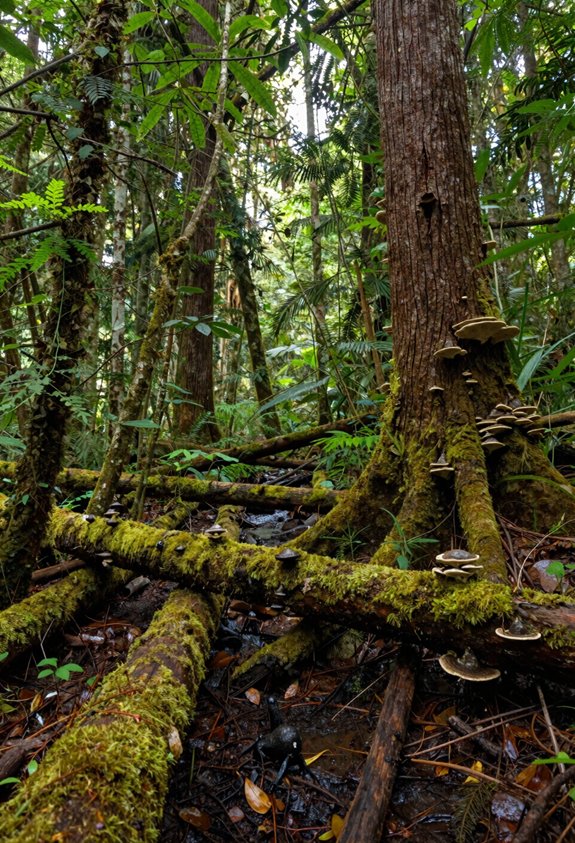
Examining specific biomes around the world helps illustrate how these large-scale ecological communities function in practice—from the staggering biodiversity of the Amazon Rainforest to the remarkable survival strategies organisms have developed in the Sahara Desert.
The Arctic tundra’s wildlife demonstrates resilience in extreme cold, while the African savanna’s ecosystems showcase the intricate relationships between grasslands, grazing animals, and predators.
Coral reefs, sometimes called the rainforests of the sea, represent marine biomes where thousands of species interact in warm, shallow waters to create some of Earth’s most productive and visually stunning habitats.
Amazon Rainforest Biodiversity
The Amazon rainforest stands as one of Earth’s most remarkable examples of biodiversity—the variety of living organisms found within a particular ecosystem—and it offers researchers and curious minds alike a window into how tropical biomes function at their fullest expression.
Scientists studying cacao genetics have discovered that wild cacao populations in the Amazon contain genetic variations absent from cultivated crops, revealing how rainforest diversity serves as a living library of biological possibilities.
The forest’s poison frogs demonstrate another dimension of this richness: these small, brilliantly colored amphibians have evolved potent skin toxins derived from their insect diets, illustrating how species develop unique survival strategies within complex food webs.
Each organism, from towering kapok trees to microscopic fungi, contributes to the intricate balance that defines this biome.
Sahara Desert Adaptations
While the Amazon rainforest thrives through abundance, the Sahara Desert demonstrates how life persists through scarcity—and the organisms that call this harsh landscape home have developed remarkable strategies for survival.
The fennec fox, with its oversized ears that release body heat, employs nocturnal strategies—hunting and foraging only after sunset when temperatures drop dramatically.
This behavioral adaptation allows creatures to avoid the deadly midday sun entirely.
Plants face different challenges, and many desert species rely on seed dormancy: seeds remain inactive in the sand for years, waiting for rare rainfall to trigger germination.
The addax antelope extracts moisture from the sparse vegetation it consumes, rarely needing to drink water directly.
These adaptations reveal nature’s quiet ingenuity in the face of extreme conditions.
Arctic Tundra Wildlife
From the sun-scorched dunes of the Sahara to the frozen expanses of the Arctic, life finds ways to endure—and the tundra’s wildlife faces challenges that mirror desert survival in unexpected ways.
In this treeless biome, animals have developed remarkable strategies for coping with extreme cold and scarce resources.
Caribou migration represents one of nature’s most impressive journeys, as these large deer travel hundreds of miles between seasonal feeding grounds, following routes their ancestors established over millennia.
Arctic foxes demonstrate equally clever adaptations: their fur changes color with the seasons, shifting from brown to white for camouflage against snow.
These foxes also possess compact bodies and small ears—features that minimize heat loss in temperatures that would prove fatal to less-adapted creatures.
African Savanna Ecosystems
Spanning nearly half of Africa’s landmass, savanna ecosystems—grasslands dotted with scattered trees and shrubs—support some of Earth’s most recognizable wildlife communities.
These landscapes host elephants, lions, zebras, and wildebeest, all participating in intricate food webs shaped by seasonal rainfall patterns.
Fire regimes, the recurring patterns of natural and human-set burns, play an essential role in maintaining savanna structure.
These periodic fires prevent forests from encroaching on grasslands, clear dead vegetation, and release nutrients back into the soil.
One remarkable relationship involves Acacia symbiosis—a mutually beneficial partnership between acacia trees and stinging ants.
The trees provide shelter and food for ant colonies, while the ants defend their host against herbivores and competing plants.
This cooperation illustrates how savanna species have evolved interconnected survival strategies.
Coral Reef Marine Life
Beneath the ocean’s surface, coral reefs form another type of ecosystem where partnerships between species determine survival—much like the acacia-ant relationships found in African savannas.
Reef symbiosis—the mutually beneficial relationship between coral and tiny algae called zooxanthellae—creates the foundation for these vibrant underwater communities.
The algae live within coral tissue, providing nutrients through photosynthesis while receiving shelter in return.
When ocean temperatures rise, this delicate partnership breaks down.
Coral bleaching occurs when stressed corals expel their algae partners, turning white and losing their primary food source.
Without intervention, bleached corals often die, and the countless fish, sea turtles, and invertebrates that depend on reef structures lose their homes.
These ecosystems remind us that survival rarely happens in isolation: connection sustains life.
Temperate Forest Seasons
Although coral reefs depend on stable temperatures to maintain their partnerships, temperate forests thrive precisely because conditions change—their survival strategy embraces transformation rather than resisting it. These forests experience four distinct seasons, and each one triggers specific biological responses that scientists can predict and study.
Leaf phenology—the timing of when leaves emerge, change color, and fall—serves as nature’s calendar in these ecosystems.
Trees respond to shifting daylight and temperature, withdrawing chlorophyll from their leaves each autumn and revealing brilliant yellows and reds beneath.
Winter brings its own rhythms: snow dynamics, meaning the patterns of accumulation and melting, insulate root systems and provide moisture reserves for spring growth.
When warmth returns, dormant buds awaken in careful sequence, ensuring the forest renews itself through this reliable cycle of rest and regeneration.
Grassland Grazing Patterns
Where temperate forests rely on seasonal transformation, grasslands depend on something equally powerful but far more mobile—the animals that graze them.
In Africa’s Serengeti, vast wildebeest herds follow rainfall patterns, their herd movement creating a constant rotation across the landscape.
This natural migration prevents any single area from being overgrazed, allowing grasses time to recover and regenerate.
Grazing intensity—the measure of how heavily animals feed on vegetation in a given area—shapes everything from soil health to plant diversity.
When grazers move frequently, they trim grasses without destroying root systems, actually stimulating new growth.
Their hooves break up compacted soil, and their waste returns nutrients to the earth.
This ancient partnership between grass and grazer maintains one of Earth’s most productive ecosystems.
Related concepts
The concept of a biome connects naturally to several related ideas that ecologists use to describe and organize the living world.
Understanding niche dynamics—the way species occupy specific roles and interact within their environment—helps clarify how organisms fit into larger biome patterns.
Trophic levels, which describe the feeding positions in a food chain from producers to top predators, reveal how energy flows through these vast ecosystems.
Ecologists also distinguish biomes from ecosystems: while a biome describes a broad category of communities sharing similar climate and vegetation, an ecosystem includes all living and nonliving components interacting in a specific area.
The concept of biotic provinces further refines our understanding by considering evolutionary history and geographic boundaries.
These related frameworks work together, each offering a different lens through which one can examine the remarkable organization of life across Earth’s diverse landscapes.
If you want to strengthen your ecology foundation, start with the Ecology Basics to understand core concepts step by step. Dive deeper with 25 Key Concepts in Ecology with Real-World Examples to see how theory applies in nature. If you prefer to learn ecology fast and simply, the Ecology Flashcards are perfect for quick, focused learning. For a complete reference, explore the Glossary of Ecology Terms with 1,500+ terms explained in simple language, available as a PDF for use on any device.
🌿 Explore the Wild Side!
Discover eBooks, guides, templates and stylish wildlife-themed T-shirts, notebooks, scrunchies, bandanas, and tote bags. Perfect for nature lovers and wildlife enthusiasts!
Visit My Shop →