
Coral Reef Fish Explorer: Hawaii
Watch Hawaii’s reef fish swim past. Hover over or tap any fish to see its name, where it lives and how to recognize it. Switch to Identify to name a fish you saw. How to use it
You have met 0 of 39 fish
Reef fish of Hawaii
39 fish
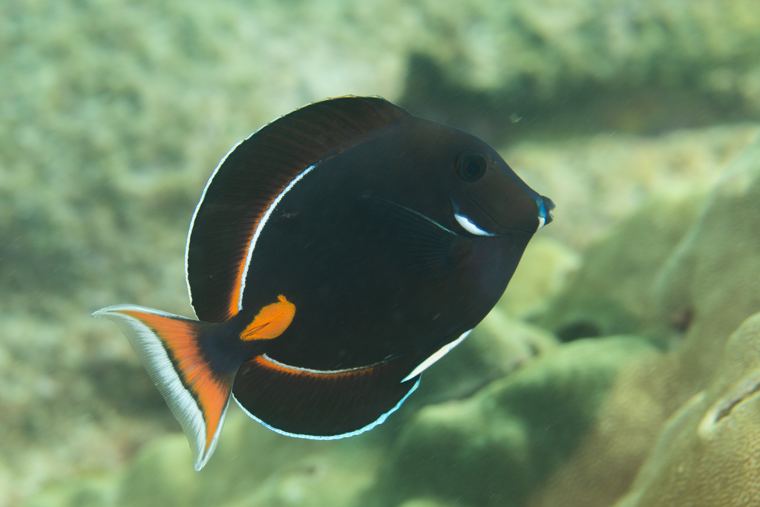
Achilles tang
Acanthurus achilles
Hawaiian name: Pākuʻikuʻi
How to spot it: Black body with a large orange teardrop patch at the base of the tail.
- Size
- up to 24 cm (9 in)
- Depth
- 0 to 10 m (0 to 33 ft)
- Eats
- Algae
- Where
- Shallow, wave washed reefs from the surface to about 10 m.
It defends its own patch of algae in the surge zone.
Family Acanthuridae. 920 GBIF records around Hawaii. FishBase GBIF IUCN Red List
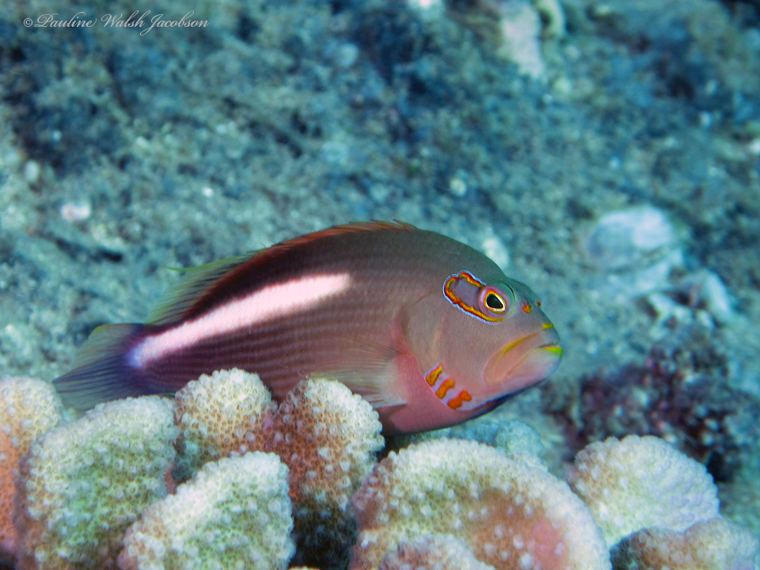
Arc eye hawkfish
Paracirrhites arcatus
Hawaiian name: Pilikoʻa
How to spot it: U shaped orange and blue arc behind the eye; often a white stripe on the rear body.
- Size
- up to 20 cm (8 in)
- Depth
- 0 to 91 m (0 to 299 ft)
- Eats
- Small invertebrates and fish
- Where
- Perched on coral heads, watching for prey.
It has no swim bladder, so it rests on coral instead of hovering.
Family Cirrhitidae. 9,626 GBIF records around Hawaii. FishBase GBIF IUCN Red List

Bigscale soldierfish
Myripristis berndti
Hawaiian name: ʻŪʻū
How to spot it: Red with very large dark eyes and an orange yellow upper back fin.
- Size
- up to 30 cm (12 in)
- Depth
- 0 to 159 m (0 to 522 ft)
- Eats
- Plankton
- Where
- Caves and ledges by day, open water over the reef at night.
Its big eyes collect light for feeding on plankton at night.
Family Holocentridae. FishBase name: Blotcheye soldierfish. 1,263 GBIF records around Hawaii. FishBase GBIF IUCN Red List
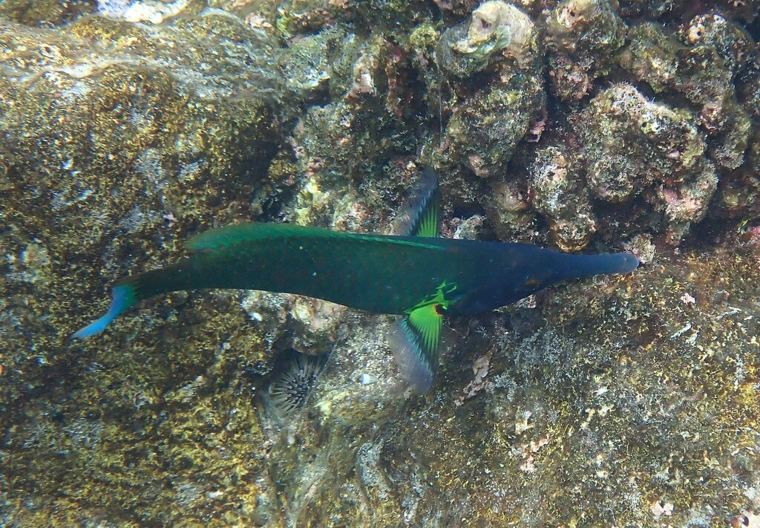
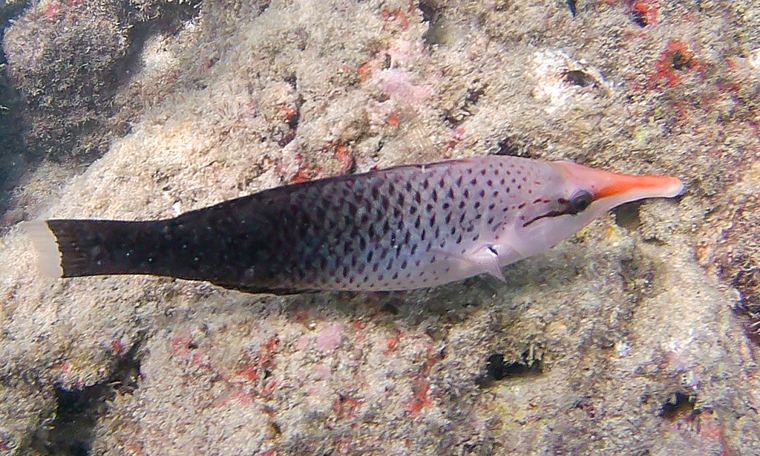
Bird wrasse
Gomphosus varius
Hawaiian name: Hīnālea ʻiʻiwi
How to spot it: Long curved beak of a snout; males are blue green, females pale in front and dark behind.
- Size
- up to 30 cm (12 in)
- Depth
- 0 to 35 m (0 to 115 ft)
- Eats
- Small invertebrates
- Where
- Coral reefs and reef flats from the surface to about 30 m.
It picks small crabs and shrimps out of branching coral.
Family Labridae. 4,902 GBIF records around Hawaii. FishBase GBIF IUCN Red List
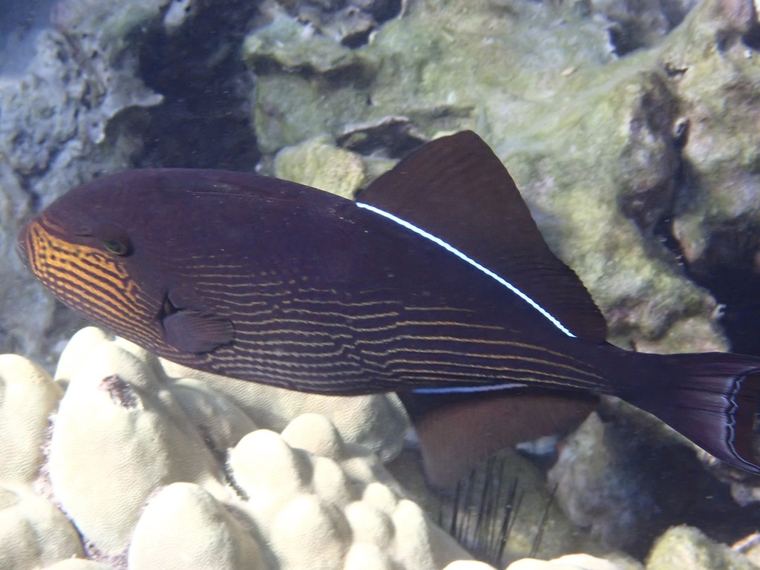
Black durgon
Melichthys niger
Hawaiian name: Humuhumu ʻeleʻele
How to spot it: Looks all black, with thin pale blue lines along the back and belly fins.
- Size
- up to 50 cm (20 in)
- Depth
- 0 to 75 m (0 to 246 ft)
- Eats
- Plankton and algae
- Where
- Outer reef slopes, often in loose groups above the reef.
In sunlight its black can show a deep green blue sheen.
Family Balistidae. FishBase name: Black triggerfish. 3,752 GBIF records around Hawaii. FishBase GBIF IUCN Red List
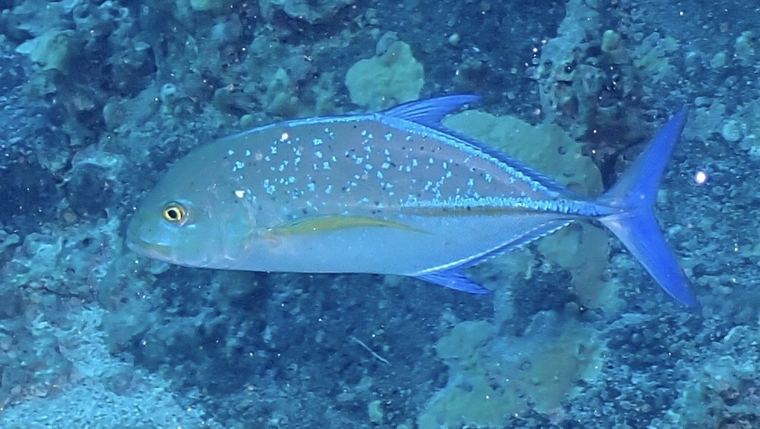
Bluefin trevally
Caranx melampygus
Hawaiian name: ʻŌmilu
How to spot it: Silvery body with small dark spots and bright blue fins.
- Size
- up to 117 cm (46 in)
- Depth
- 0 to 190 m (0 to 623 ft)
- Eats
- Fish
- Where
- Patrols reef edges and channels, sometimes in small groups.
It often hunts alongside eels and goatfish to catch fish they flush out.
Family Carangidae. 3,527 GBIF records around Hawaii. FishBase GBIF IUCN Red List
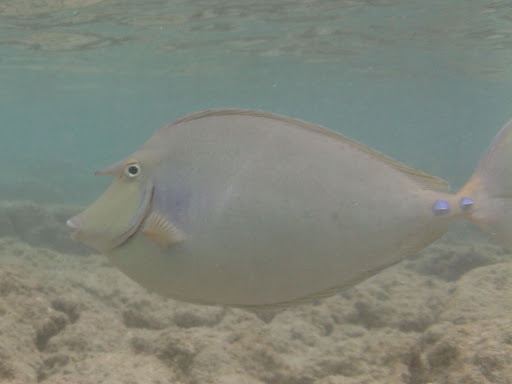
Bluespine unicornfish
Naso unicornis
Hawaiian name: Kala
How to spot it: Olive grey with a short horn on the forehead and blue spines at the tail.
- Size
- up to 70 cm (28 in)
- Depth
- 0 to 180 m (0 to 591 ft)
- Eats
- Algae
- Where
- Shallow reefs and surge areas, feeding on leafy seaweed.
It is one of the largest surgeonfish in Hawaii, up to 70 cm.
Family Acanthuridae. 6,041 GBIF records around Hawaii. FishBase GBIF IUCN Red List

Bluespotted cornetfish
Fistularia commersonii
Hawaiian name: Nūnū peke
How to spot it: Very long, slim and silvery green with a long thread from the tail.
- Size
- up to 160 cm (63 in)
- Depth
- 0 to 132 m (0 to 433 ft)
- Eats
- Fish
- Where
- Over sand and reef, often near the surface.
It can reach 1.6 m including the tail thread.
Family Fistulariidae. 1,216 GBIF records around Hawaii. FishBase GBIF IUCN Red List
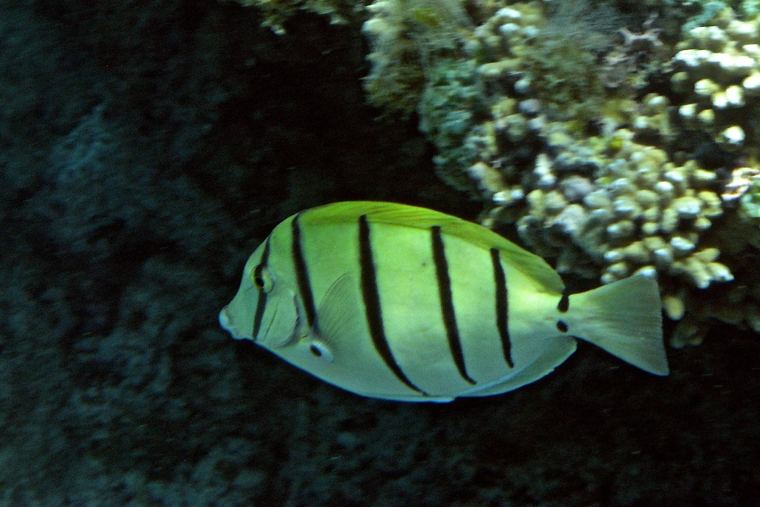
Convict tang
Acanthurus triostegus
Hawaiian name: Manini
How to spot it: Pale body with five or six thin black bars, like a striped uniform.
- Size
- up to 27 cm (11 in)
- Depth
- 0 to 90 m (0 to 295 ft)
- Eats
- Algae
- Where
- Shallow reef flats and tide pools, often in large grazing schools.
Big schools can overwhelm territorial fish to reach their algae.
Family Acanthuridae. FishBase name: Convict surgeonfish. 8,628 GBIF records around Hawaii. FishBase GBIF IUCN Red List
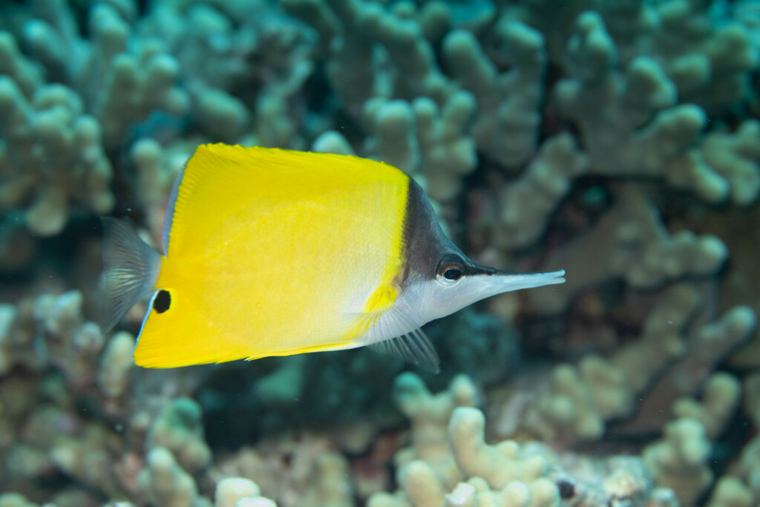
Forcepsfish
Forcipiger flavissimus
Hawaiian name: Lauwiliwili nukunuku ʻoiʻoi
How to spot it: Very long snout, black upper head and a small black spot under the tail.
- Size
- up to 22 cm (9 in)
- Depth
- 0 to 145 m (0 to 476 ft)
- Eats
- Small invertebrates
- Where
- Reef slopes and walls, from snorkel depth to well over 100 m.
Its snout reaches into cracks for tiny shrimps and worm parts.
Family Chaetodontidae. 2,226 GBIF records around Hawaii. FishBase GBIF IUCN Red List
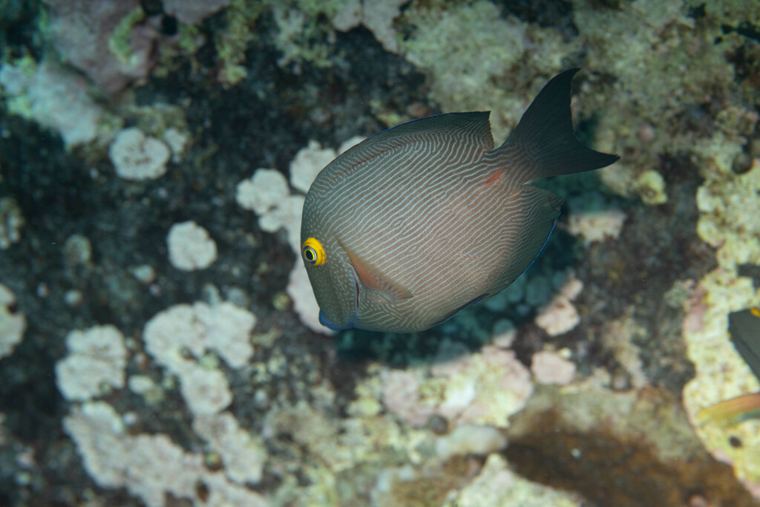
Goldring surgeonfish
Ctenochaetus strigosus
Hawaiian name: Kole
How to spot it: Brown body with fine blue lines and a bright yellow ring around the eye.
- Size
- up to 15.4 cm (6 in)
- Depth
- 1 to 113 m (3 to 371 ft)
- Eats
- Algae
- Where
- Shallow coral reefs, combing the reef surface.
Comb like teeth let it brush fine algae and detritus off rock.
Family Acanthuridae. FishBase name: Spotted surgeonfish. 14,148 GBIF records around Hawaii. FishBase GBIF IUCN Red List
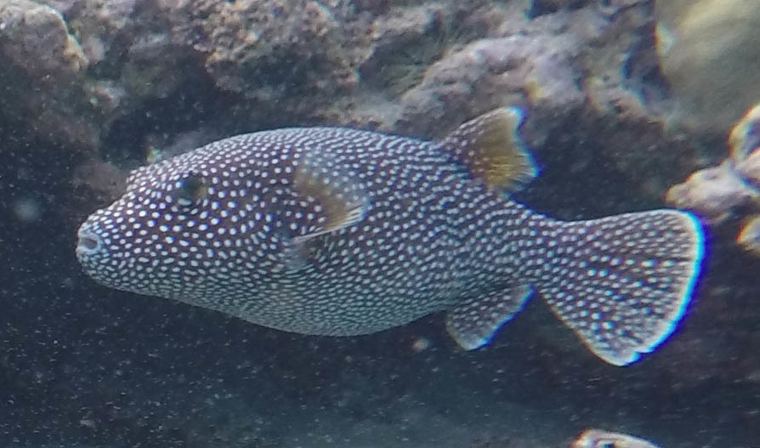
Guineafowl puffer
Arothron meleagris
Hawaiian name: ʻOʻopu hue
How to spot it: Dark body densely covered in small white spots.
- Size
- up to 50 cm (20 in)
- Depth
- 1 to 73 m (3 to 240 ft)
- Eats
- Coral polyps and small invertebrates
- Where
- Coral reefs and lagoons, from shallow water down to about 70 m.
A rare bright yellow color form also lives in Hawaii.
Family Tetraodontidae. 531 GBIF records around Hawaii. FishBase GBIF IUCN Red List
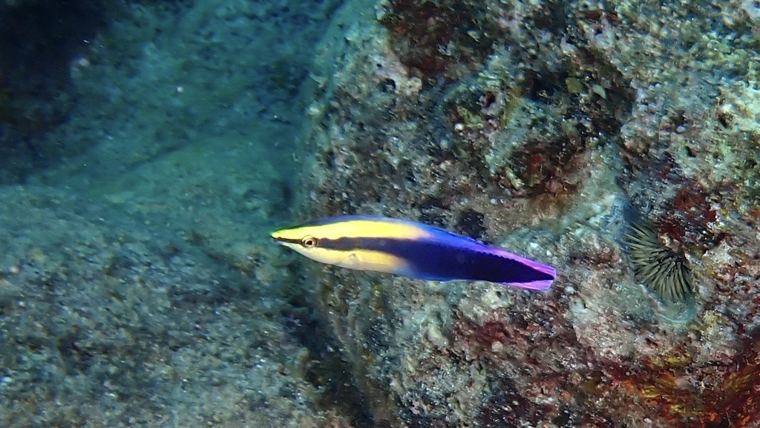
Hawaiian cleaner wrasse
Labroides phthirophagus
How to spot it: Small and slim, yellow in front, purple behind, with a black stripe that widens toward the tail.
- Size
- up to 12 cm (5 in)
- Depth
- 0 to 122 m (0 to 400 ft)
- Eats
- Parasites from other fish
- Where
- Cleaning stations on coral heads and ledges.
Other fish line up at its station to have parasites picked off.
Family Labridae. 3,469 GBIF records around Hawaii. FishBase GBIF IUCN Red List
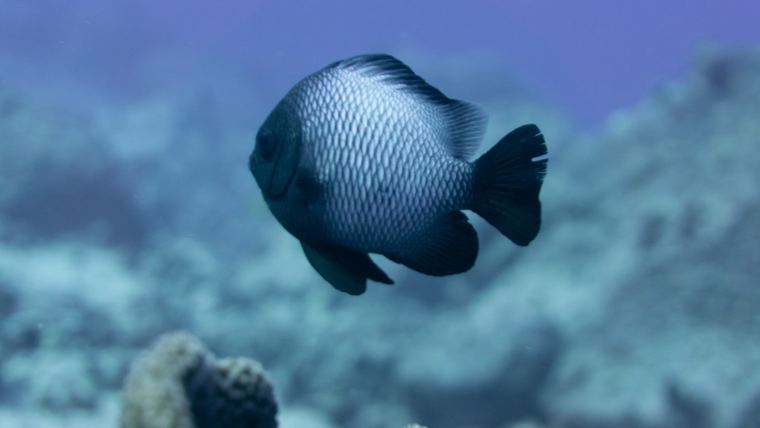
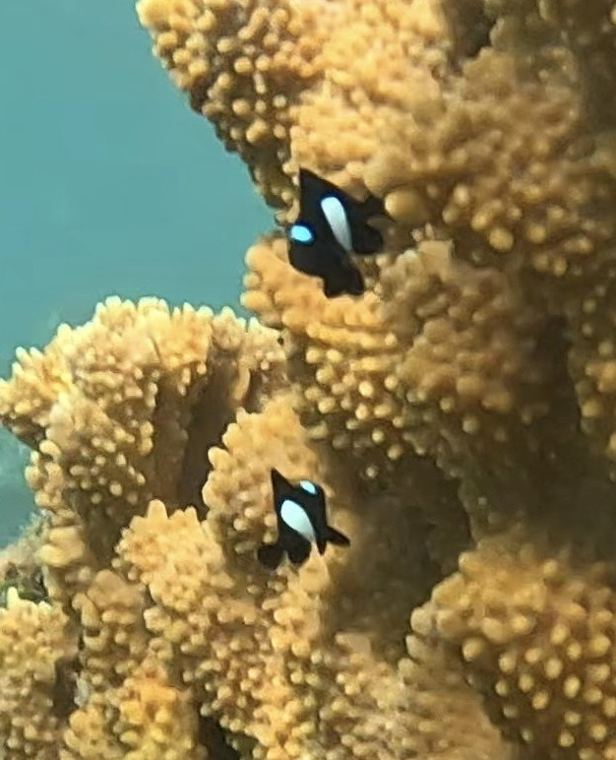
Hawaiian dascyllus
Dascyllus albisella
Hawaiian name: ʻĀloʻiloʻi
How to spot it: Dark, deep body with one white spot on each side.
- Size
- up to 13 cm (5 in)
- Depth
- 1 to 50 m (3 to 164 ft)
- Eats
- Plankton
- Where
- Around coral heads, darting into the branches when threatened.
It makes clicking sounds when defending its coral head.
Family Pomacentridae. 3,693 GBIF records around Hawaii. FishBase GBIF IUCN Red List
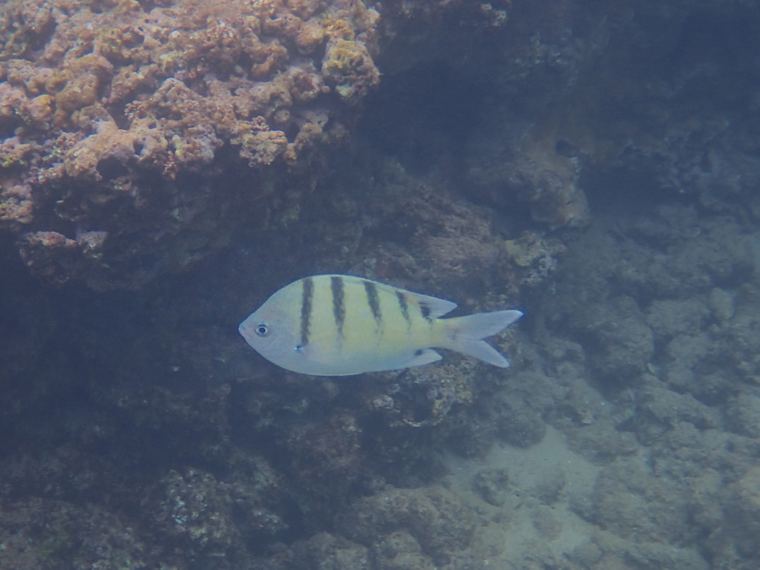
Hawaiian sergeant
Abudefduf abdominalis
Hawaiian name: Maomao
How to spot it: Pale yellow green body with four or five dark bars.
- Size
- up to 30 cm (12 in)
- Depth
- 1 to 50 m (3 to 164 ft)
- Eats
- Plankton and small invertebrates
- Where
- Shallow rocky reefs and harbours, schooling in mid water.
Males guard purple egg patches on rocks.
Family Pomacentridae. FishBase name: Green damselfish. 1,932 GBIF records around Hawaii. FishBase GBIF IUCN Red List
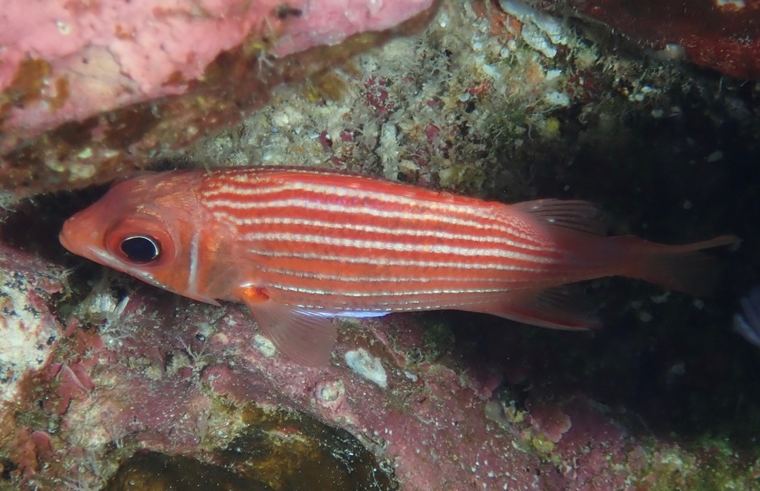
Hawaiian squirrelfish
Sargocentron xantherythrum
Hawaiian name: ʻAlaʻihi
How to spot it: Red with thin white lines along the body and big eyes.
- Size
- up to 17 cm (7 in)
- Depth
- 1 to 217 m (3 to 712 ft)
- Eats
- Small invertebrates
- Where
- Cracks and holes in the reef by day.
A sharp spine on each cheek protects it from predators.
Family Holocentridae. 347 GBIF records around Hawaii. FishBase GBIF IUCN Red List
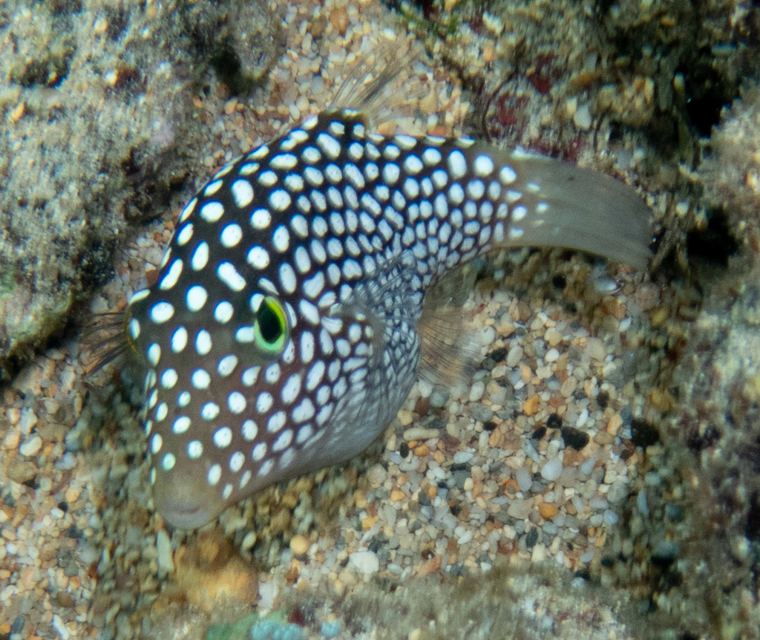
Hawaiian whitespotted toby
Canthigaster jactator
How to spot it: Tiny brown puffer covered in white spots.
- Size
- up to 9 cm (4 in)
- Depth
- 1 to 30 m (3 to 98 ft)
- Eats
- Algae and small invertebrates
- Where
- Shallow reefs and tide pools.
It is less than 10 cm long when fully grown.
Family Tetraodontidae. 7,550 GBIF records around Hawaii. FishBase GBIF IUCN Red List
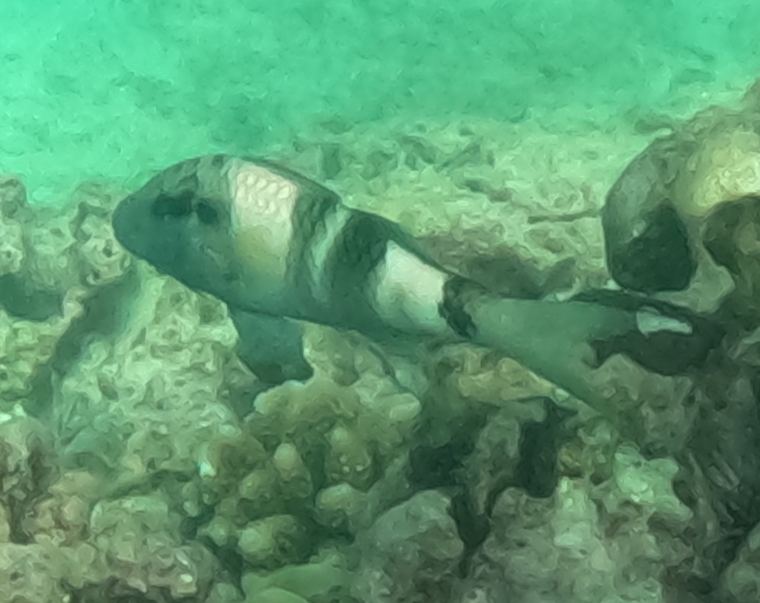
Manybar goatfish
Parupeneus multifasciatus
Hawaiian name: Moano
How to spot it: Pinkish body with dark bars toward the rear.
- Size
- up to 35 cm (14 in)
- Depth
- 0 to 161 m (0 to 528 ft)
- Eats
- Small invertebrates
- Where
- Sand, rubble and reef, probing with its barbels by day.
Other fish follow it to snap up prey it stirs up.
Family Mullidae. 11,015 GBIF records around Hawaii. FishBase GBIF IUCN Red List
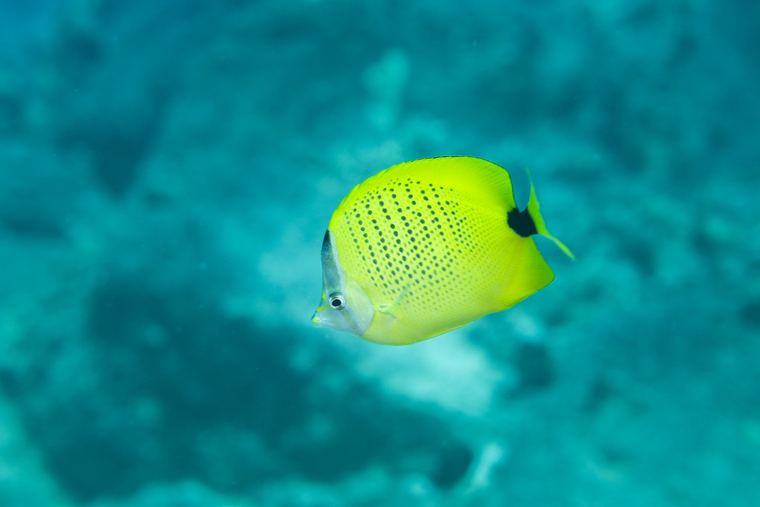
Milletseed butterflyfish
Chaetodon miliaris
Hawaiian name: Lauwiliwili
How to spot it: Yellow with rows of tiny dark dots, a black eye bar and a black spot at the tail base.
- Size
- up to 14.9 cm (6 in)
- Depth
- 0 to 250 m (0 to 820 ft)
- Eats
- Plankton
- Where
- Schools above the reef, feeding on plankton in open water.
It is one of the few butterflyfish that feeds on plankton in groups.
Family Chaetodontidae. FishBase name: Millet butterflyfish. 3,965 GBIF records around Hawaii. FishBase GBIF IUCN Red List
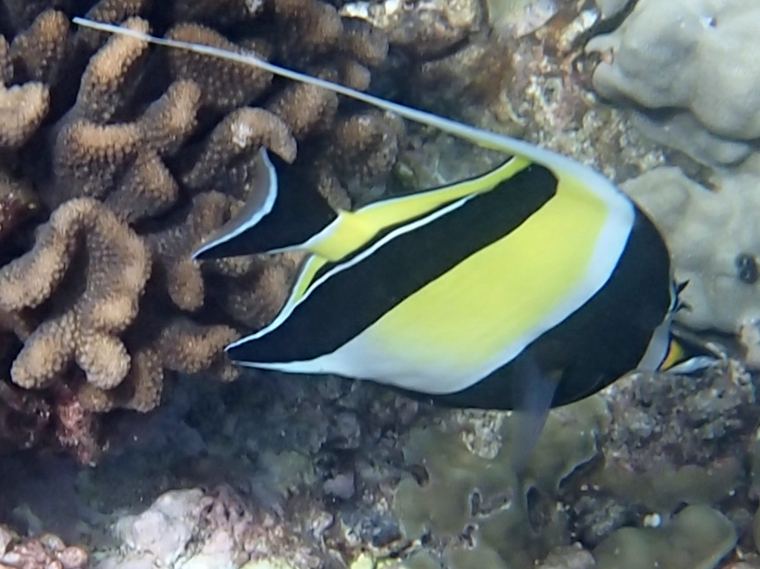
Moorish idol
Zanclus cornutus
Hawaiian name: Kihikihi
How to spot it: Two broad black bars, a yellow patch and a long white streamer from the back fin.
- Size
- up to 23 cm (9 in)
- Depth
- 0 to 182 m (0 to 597 ft)
- Eats
- Small invertebrates
- Where
- Reef slopes from shallow water to deep drop offs, usually in pairs or small groups.
It feeds mostly on sponges, picked with its tube shaped snout.
Family Zanclidae. 4,701 GBIF records around Hawaii. FishBase GBIF IUCN Red List
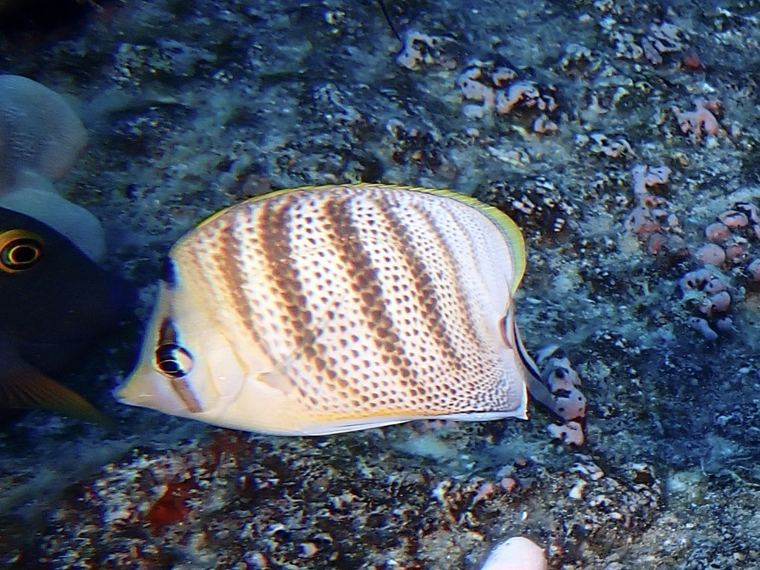
Multiband butterflyfish
Chaetodon multicinctus
Hawaiian name: Kīkākapu
How to spot it: Cream body with brownish bars, small spots and a black eye bar.
- Size
- up to 12 cm (5 in)
- Depth
- 5 to 114 m (16 to 374 ft)
- Eats
- Coral polyps
- Where
- Coral reefs, usually in pairs close to living coral.
Pairs nip coral polyps together and defend their coral patch.
Family Chaetodontidae. FishBase name: Pebbled butterflyfish. 4,403 GBIF records around Hawaii. FishBase GBIF IUCN Red List
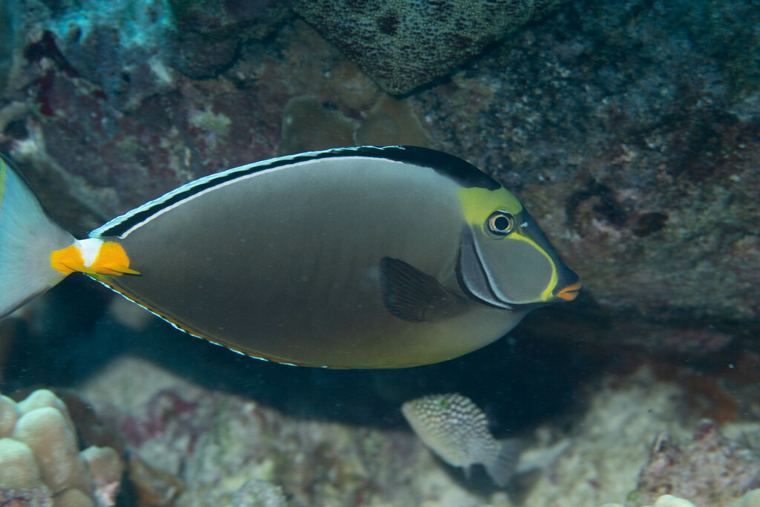
Orangespine unicornfish
Naso lituratus
Hawaiian name: Umaumalei
How to spot it: Two bright orange spines at the tail base and a yellow line from mouth to eye.
- Size
- up to 46 cm (18 in)
- Depth
- 0 to 90 m (0 to 295 ft)
- Eats
- Algae
- Where
- Reef slopes and lagoons, browsing on leafy seaweed.
Unlike its cousins, this unicornfish has no horn.
Family Acanthuridae. 5,845 GBIF records around Hawaii. FishBase GBIF IUCN Red List

Ornate butterflyfish
Chaetodon ornatissimus
Hawaiian name: Kīkākapu
How to spot it: Orange diagonal stripes on a white body and black bars across the face.
- Size
- up to 20 cm (8 in)
- Depth
- 0 to 36 m (0 to 118 ft)
- Eats
- Coral polyps
- Where
- Coral rich reefs, almost always in pairs.
It feeds only on living coral polyps.
Family Chaetodontidae. 3,076 GBIF records around Hawaii. FishBase GBIF IUCN Red List
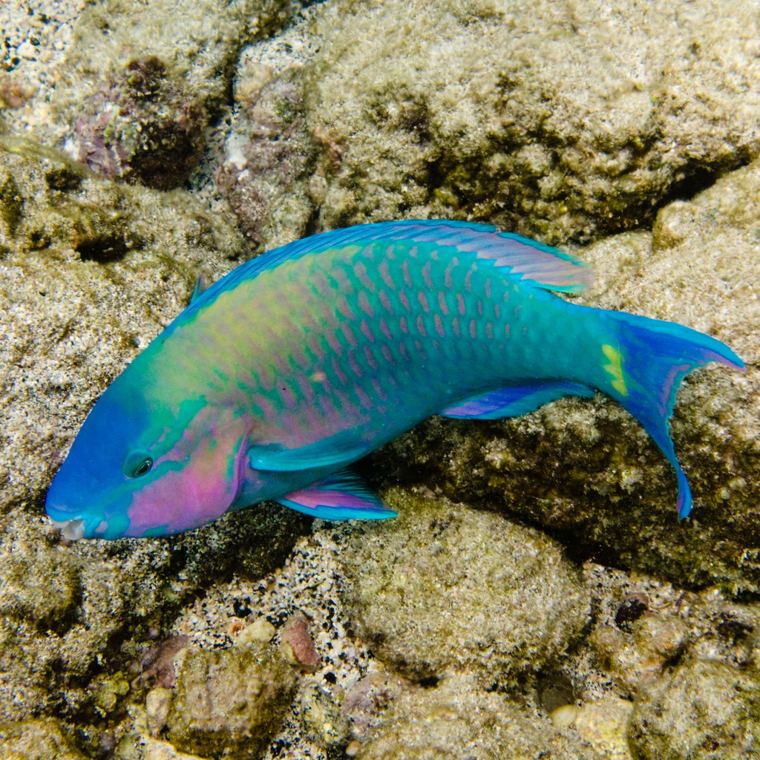
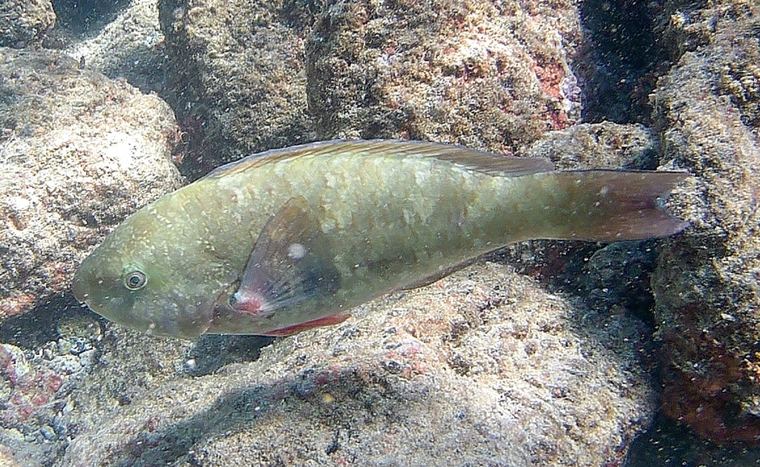
Palenose parrotfish
Scarus psittacus
Hawaiian name: Uhu
How to spot it: Males are green and blue with a pale snout; females are plain reddish brown.
- Size
- up to 43 cm (17 in)
- Depth
- 2 to 25 m (7 to 82 ft)
- Eats
- Algae
- Where
- Reef flats and slopes, scraping algae from dead coral.
Parrotfish grind coral rock as they feed and turn it into white sand.
Family Labridae. FishBase name: Common parrotfish. 3,174 GBIF records around Hawaii. FishBase GBIF IUCN Red List
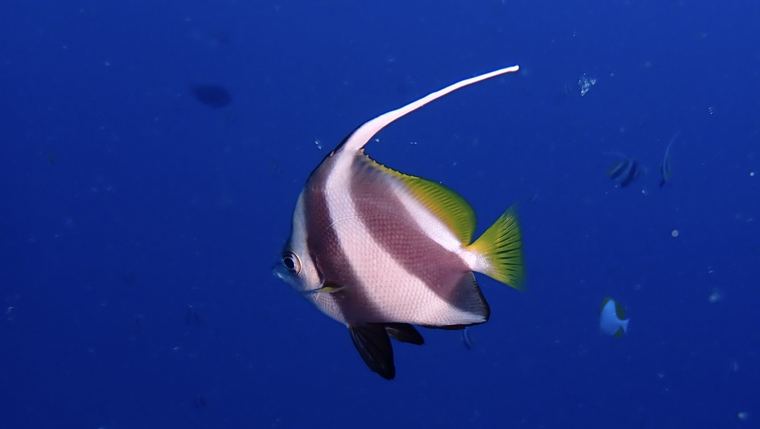
Pennant bannerfish
Heniochus diphreutes
How to spot it: Like a Moorish idol but with yellow rear fins and tail and no tube snout.
- Size
- up to 21 cm (8 in)
- Depth
- 5 to 210 m (16 to 689 ft)
- Eats
- Plankton
- Where
- Schools above deeper reef edges and drop offs.
Young ones sometimes clean parasites off larger fish.
Family Chaetodontidae. FishBase name: False moorish idol. 429 GBIF records around Hawaii. FishBase GBIF IUCN Red List
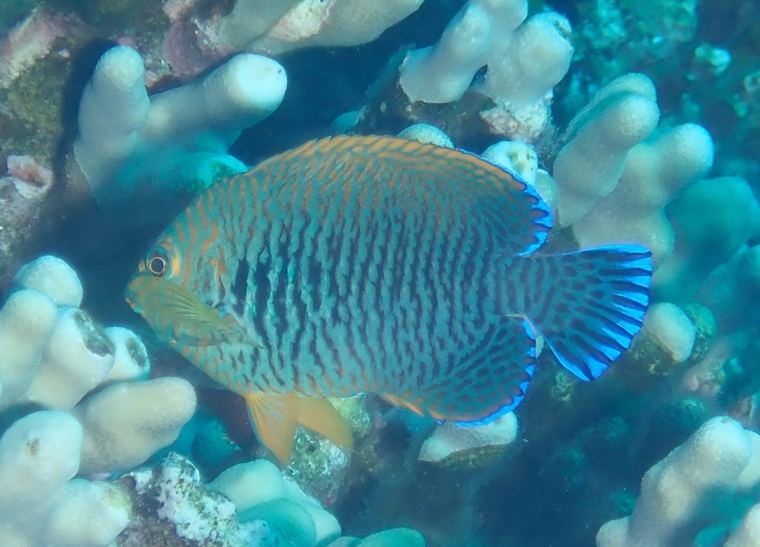
Potter's angelfish
Centropyge potteri
How to spot it: Small and orange with fine wavy blue bars and a blue rear end.
- Size
- up to 12.5 cm (5 in)
- Depth
- 5 to 138 m (16 to 453 ft)
- Eats
- Algae
- Where
- Rubble and coral at about 10 m and deeper, staying close to cover.
Each one starts life as a female and can later become male.
Family Pomacanthidae. FishBase name: Russet angelfish. 5,832 GBIF records around Hawaii. FishBase GBIF IUCN Red List
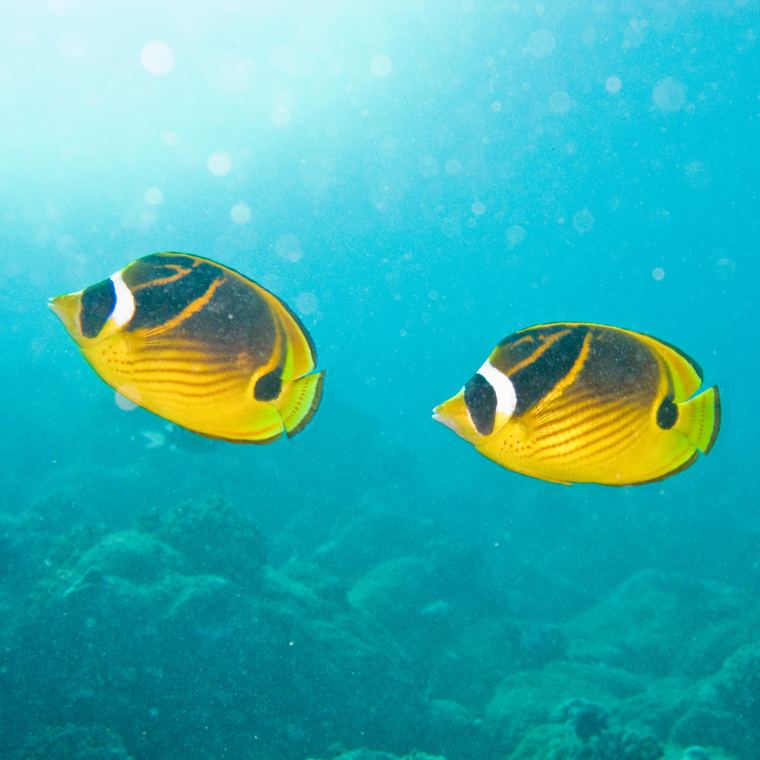
Raccoon butterflyfish
Chaetodon lunula
Hawaiian name: Kīkākapu
How to spot it: Black mask across the eye with a white band behind it, like a raccoon.
- Size
- up to 20 cm (8 in)
- Depth
- 0 to 170 m (0 to 558 ft)
- Eats
- Small invertebrates
- Where
- Shallow reefs, resting under ledges by day and feeding more at dusk.
It eats nudibranchs and the feeding tentacles of tube worms.
Family Chaetodontidae. 2,033 GBIF records around Hawaii. FishBase GBIF IUCN Red List
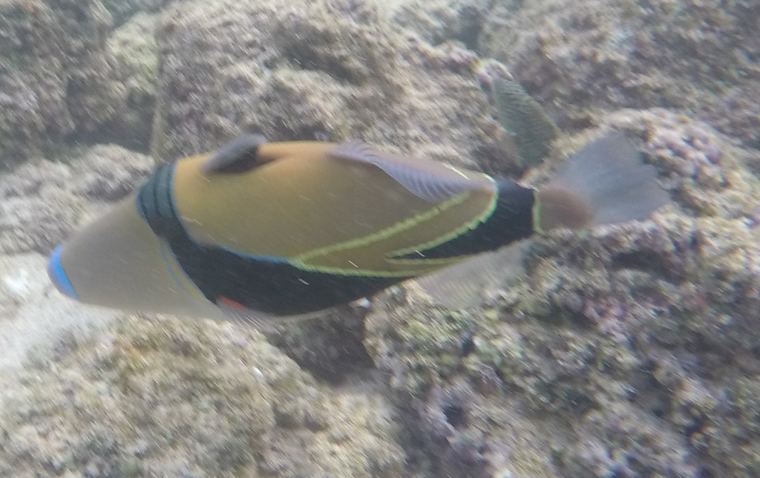
Reef triggerfish
Rhinecanthus rectangulus
Hawaiian name: Humuhumunukunukuāpuaʻa
How to spot it: Black wedge at the base of the tail and a dark diagonal band running down from the eye.
- Size
- up to 30 cm (12 in)
- Depth
- 0 to 20 m (0 to 66 ft)
- Eats
- Small invertebrates and algae
- Where
- Shallow reef flats and surge zones with sand and rubble.
Hawaii's official state fish.
Family Balistidae. FishBase name: Wedgetail triggerfish. 3,104 GBIF records around Hawaii. FishBase GBIF IUCN Red List
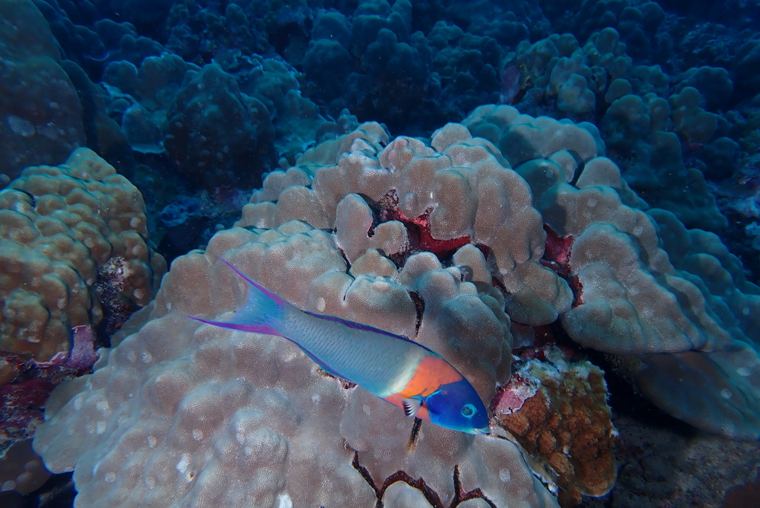
Saddle wrasse
Thalassoma duperrey
Hawaiian name: Hīnālea lauwili
How to spot it: Blue head, green body and an orange red saddle just behind the head.
- Size
- up to 28 cm (11 in)
- Depth
- 1 to 25 m (3 to 82 ft)
- Eats
- Small invertebrates
- Where
- Every shallow reef in Hawaii, from tide pools to about 25 m.
It is by far the most recorded fish in this list, with over 33,000 GBIF records around Hawaii.
Family Labridae. 33,872 GBIF records around Hawaii. FishBase GBIF IUCN Red List
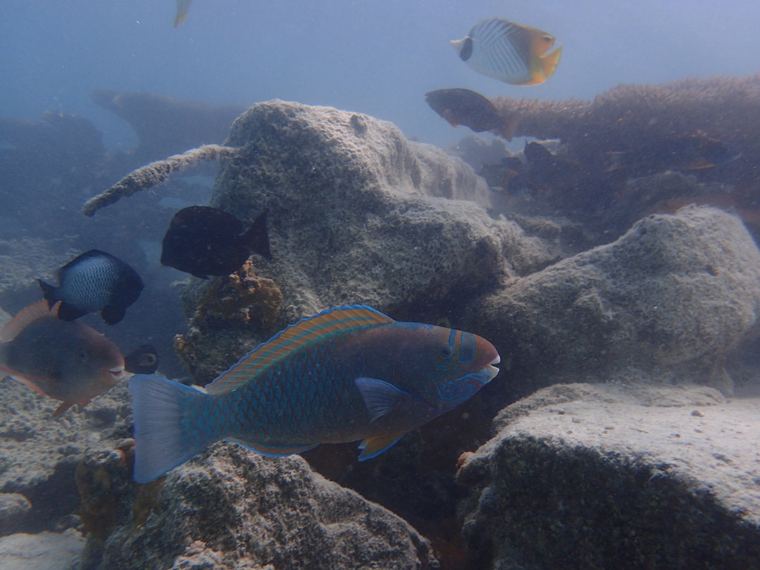
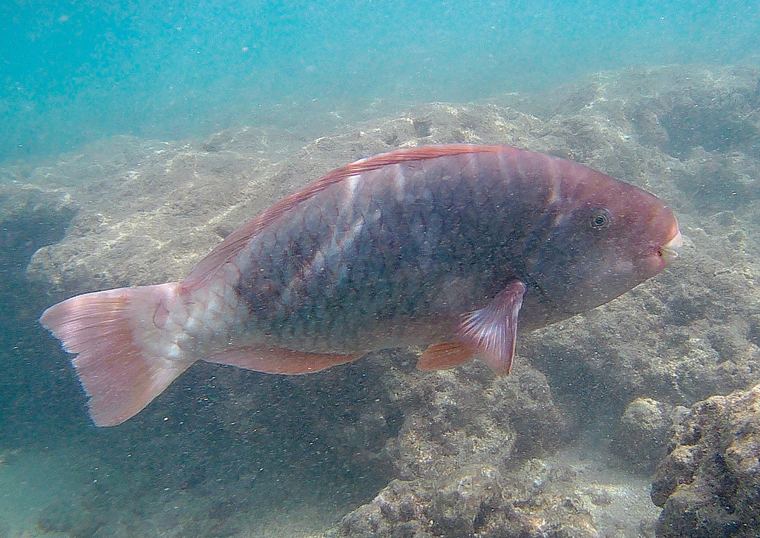
Spectacled parrotfish
Chlorurus perspicillatus
Hawaiian name: Uhu uliuli
How to spot it: Big blue green males have a dark band over the snout like glasses.
- Size
- up to 61 cm (24 in)
- Depth
- 1 to 71 m (3 to 233 ft)
- Eats
- Algae
- Where
- Outer reef slopes, often in small groups.
Females are reddish brown with a pale band on the tail.
Family Labridae. 8,504 GBIF records around Hawaii. FishBase GBIF IUCN Red List


Spotted boxfish
Ostracion meleagris
Hawaiian name: Moa
How to spot it: Box shaped body covered in spots; males have blue sides with yellow spots.
- Size
- up to 25 cm (10 in)
- Depth
- 0 to 30 m (0 to 98 ft)
- Eats
- Small invertebrates
- Where
- Coral and rocky reefs, hovering close to the bottom.
Its skin releases a toxin when it is stressed.
Family Ostraciidae. 2,070 GBIF records around Hawaii. FishBase GBIF IUCN Red List
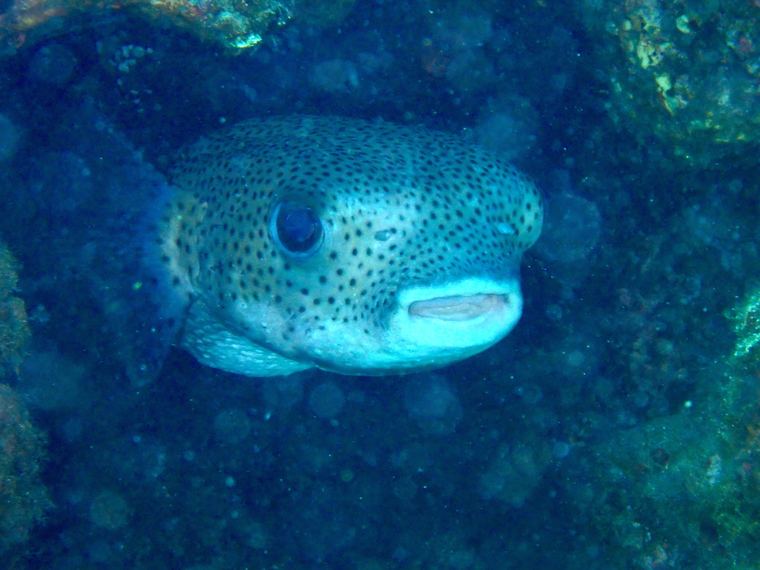
Spotted porcupinefish
Diodon hystrix
Hawaiian name: Kōkala
How to spot it: Tan body with black spots and spines lying flat until it puffs up.
- Size
- up to 91 cm (36 in)
- Depth
- 2 to 50 m (7 to 164 ft)
- Eats
- Small invertebrates
- Where
- Under ledges and in caves by day, out on the reef at night.
It crushes sea urchins and crabs with its strong beak.
Family Diodontidae. 580 GBIF records around Hawaii. FishBase GBIF IUCN Red List
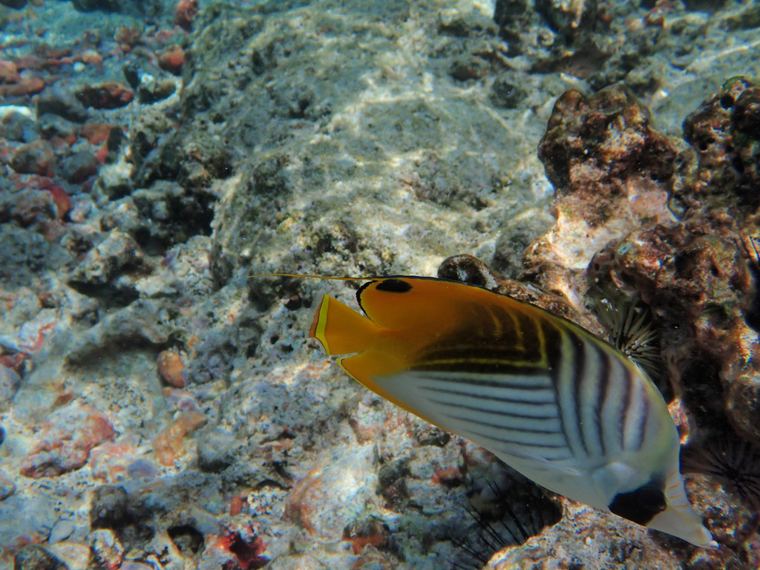
Threadfin butterflyfish
Chaetodon auriga
Hawaiian name: Kīkākapu
How to spot it: Fine crossed lines on a white front, yellow rear and a thin thread trailing from the back fin.
- Size
- up to 25 cm (10 in)
- Depth
- 0 to 60 m (0 to 197 ft)
- Eats
- Small invertebrates
- Where
- Reef flats, lagoons and rubble areas, usually in pairs.
Pairs often stay together for years.
Family Chaetodontidae. 2,376 GBIF records around Hawaii. FishBase GBIF IUCN Red List
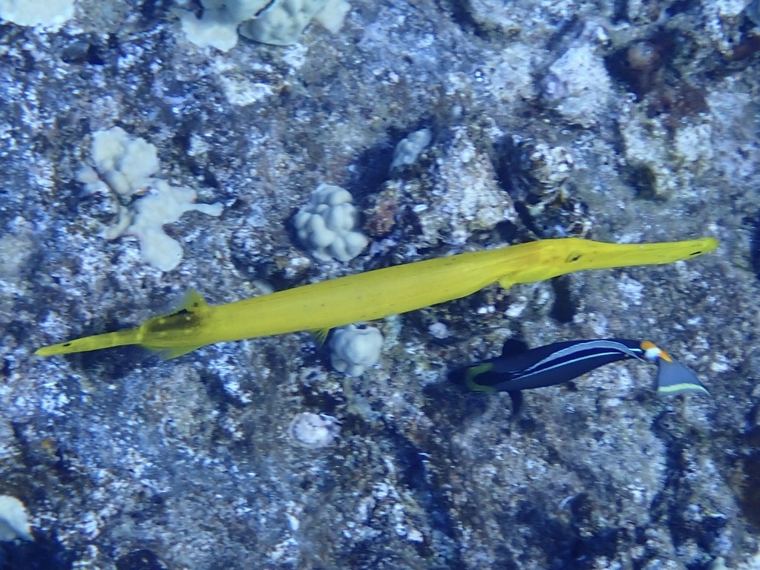
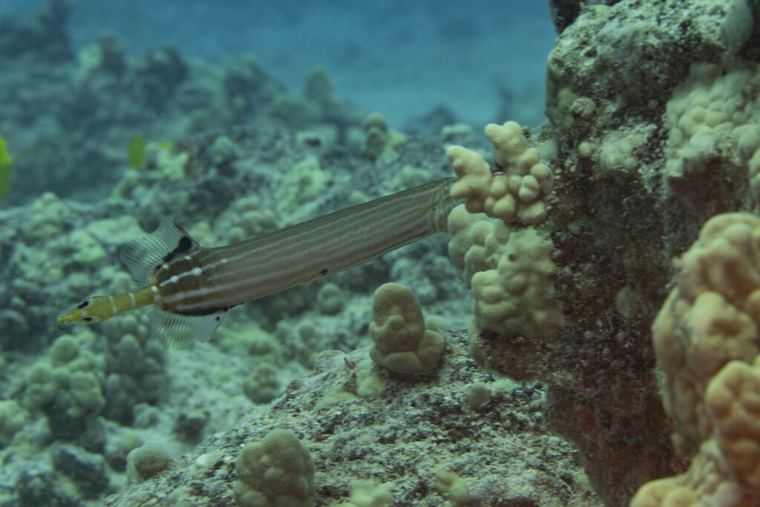
Trumpetfish
Aulostomus chinensis
Hawaiian name: Nūnū
How to spot it: Long tube body with a trumpet shaped snout; can be yellow, brown or bluish.
- Size
- up to 80 cm (31 in)
- Depth
- 0 to 122 m (0 to 400 ft)
- Eats
- Fish
- Where
- Hovers head down among corals or shadows other fish.
It hides behind bigger fish to sneak up on prey.
Family Aulostomidae. FishBase name: Chinese trumpetfish. 1,708 GBIF records around Hawaii. FishBase GBIF IUCN Red List

Whitemouth moray
Gymnothorax meleagris
Hawaiian name: Puhi ʻōniʻo
How to spot it: Brown body covered in small white spots; the inside of the mouth is white.
- Size
- up to 120 cm (47 in)
- Depth
- 0 to 51 m (0 to 167 ft)
- Eats
- Fish and small invertebrates
- Where
- Holes and crevices in shallow coral reef.
Morays open and close their mouths to pump water over their gills.
Family Muraenidae. FishBase name: Turkey moray. 1,526 GBIF records around Hawaii. FishBase GBIF IUCN Red List
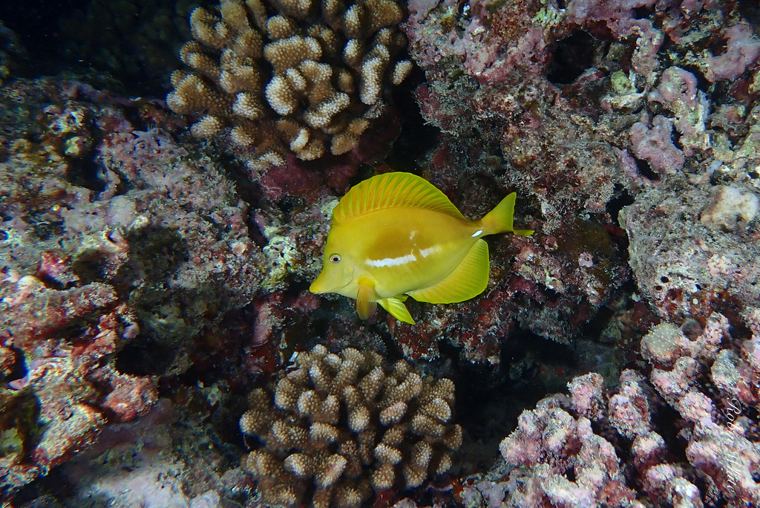
Yellow tang
Zebrasoma flavescens
Hawaiian name: Lauʻipala
How to spot it: The only fully yellow tang in Hawaii, with a white scalpel spine near the tail.
- Size
- up to 20 cm (8 in)
- Depth
- 2 to 46 m (7 to 151 ft)
- Eats
- Algae
- Where
- Coral rich reefs from a few meters down, often grazing in loose groups.
Its tall fins fold flat when it slips between corals.
Family Acanthuridae. 7,090 GBIF records around Hawaii. FishBase GBIF IUCN Red List
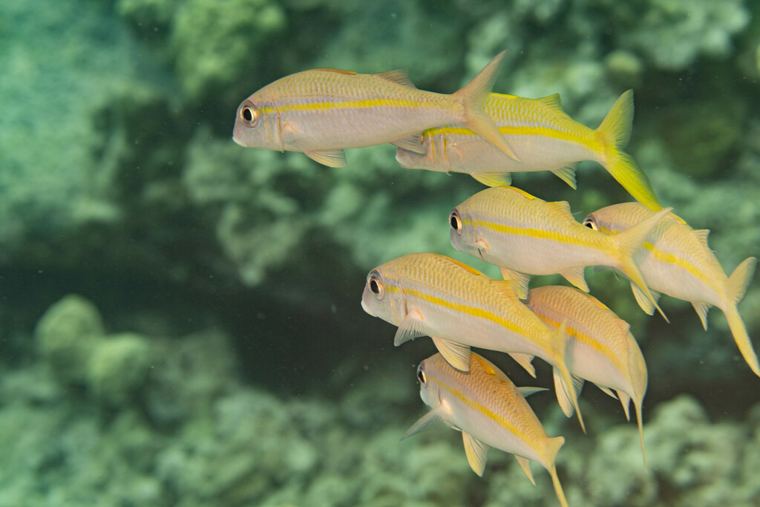
Yellowfin goatfish
Mulloidichthys vanicolensis
Hawaiian name: Weke ʻula
How to spot it: Pale pink white body with a yellow stripe, yellow fins and two chin barbels.
- Size
- up to 40 cm (16 in)
- Depth
- 1 to 113 m (3 to 371 ft)
- Eats
- Small invertebrates
- Where
- Rests in schools by day, spreads over sand at night to feed.
The barbels taste the sand to find buried prey.
Family Mullidae. 1,158 GBIF records around Hawaii. FishBase GBIF IUCN Red List

Yellowmargin moray
Gymnothorax flavimarginatus
Hawaiian name: Puhi paka
How to spot it: Mottled yellowish brown with a yellow green edge on the fins.
- Size
- up to 240 cm (94 in)
- Depth
- 0 to 150 m (0 to 492 ft)
- Eats
- Fish
- Where
- Reef holes and ledges from shallow water to deep slopes.
One of the largest morays in Hawaii, over 2 m long.
Family Muraenidae. FishBase name: Yellow-edged moray. 856 GBIF records around Hawaii. FishBase GBIF IUCN Red List
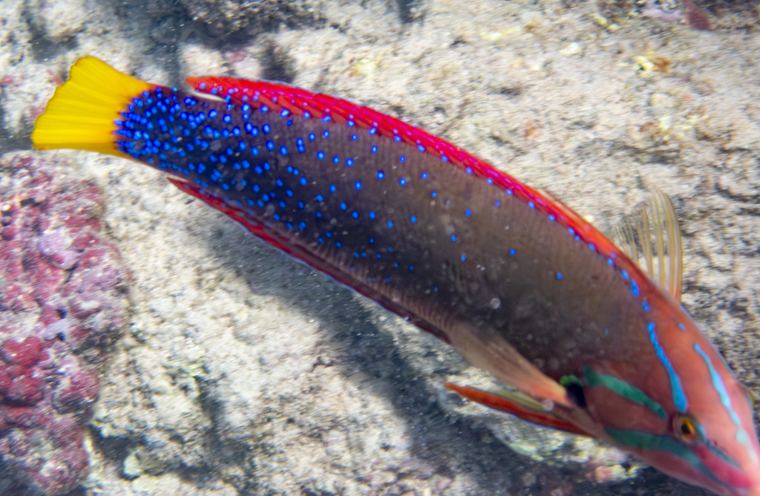
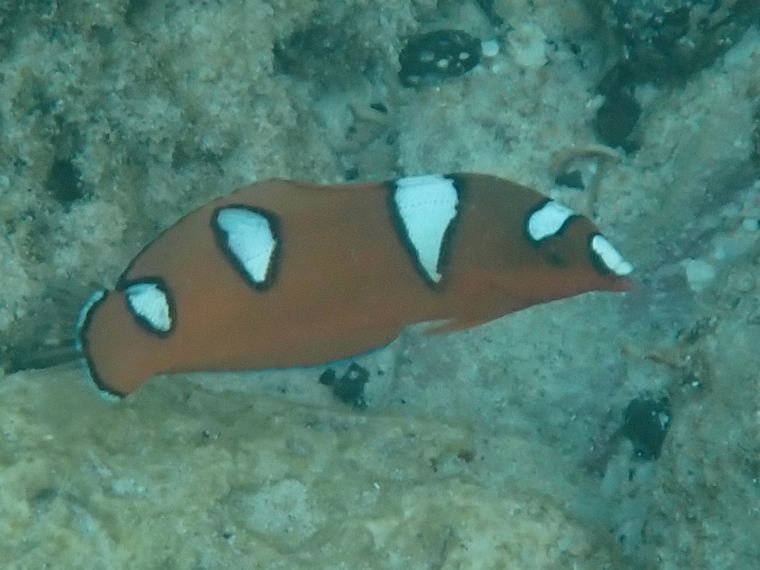
Yellowtail coris
Coris gaimard
Hawaiian name: Hīnālea ʻakilolo
How to spot it: Reddish body sprinkled with bright blue spots and a yellow tail.
- Size
- up to 40 cm (16 in)
- Depth
- 0 to 50 m (0 to 164 ft)
- Eats
- Small invertebrates
- Where
- Rubble and sand patches near reefs, flipping stones for prey.
Juveniles look completely different: orange with white saddles.
Family Labridae. FishBase name: African coris. 2,438 GBIF records around Hawaii. FishBase GBIF IUCN Red List
How to use the Coral Reef Fish Explorer
- Explore the reef. Fish drift slowly across the reef, and a new species swims in whenever one leaves. Hover over a fish, or tap it on a phone, to pause it and see its photo, name, Hawaiian name, size, depth, diet and an ID tip.
- Control the stream. Use Pause all, New fish and the speed slider under the reef. The counter shows how many of the 39 fish you have met so far.
- Identify a fish you saw. Switch to Identify a fish, then pick its main colors, body shape, pattern, size or diet. Only matching fish stay in the list, and only they swim across the reef. You can also search by English, Hawaiian or scientific name.
- Open the full card. Each card has a photo, ID tip, size, depth, habitat and links to FishBase, GBIF and the IUCN Red List. Where males, females or young fish look different, use the buttons under the photo to switch between them.
Hawaii’s reef fish in numbers
FishBase lists 470 native fish species in Hawaii that live on or around reefs. This explorer starts with 39 of the most familiar ones.
Wrasses lead Hawaii’s reef fish families
Native reef associated species per family. Source: FishBase 06/2026.
The saddle wrasse is the most recorded fish here
Occurrence records around Hawaii for fish in this explorer. Source: GBIF.org, November 2026.
Where the data comes from
Species list, size and depth
From FishBase (Froese and Pauly, version 06/2026). The list starts from the 470 fish species FishBase records as native to Hawaii and living on or around reefs. Maximum size and depth range on each card are from FishBase, used under its CC BY NC licence for free, non commercial education.
Records around Hawaii
From the GBIF occurrence search, November 2026: the number of records of each species between 18.5 and 29° N and 179 and 154° W. They include museum specimens, surveys and diver observations.
Photos
Research grade iNaturalist observations, mostly from Hawaii, shared under CC0 or CC BY licences. Each photo names and links its photographer.
Hawaiian names, notes and drawings
Hawaiian names are from the FishBase common names table. ID tips, habitat notes, filter tags and the fish illustrations are by Simply Ecologist, written from the sources above and reviewed by ecologist Eli Frey.
Conservation status
Follow the IUCN Red List link on each card for the current status of that species.
Names, ranges and records change as science moves on. Spotted a mistake? Let me know through the contact page.
From the shop
Gifts for people who love the wild
Wildlife themed t-shirts, notebooks, tote bags, bandanas and guides, designed by an ecologist.
Visit the shop