
Elephants are the largest land animals alive, and the most misdescribed. Almost every popular elephant page repeats a set of claims that are either unmeasured or wrong: that elephants never forget, that they are afraid of mice, that they run at 40 km per hour. The measured reality is stranger. An elephant cannot run at all, in the biomechanical sense. It inhales at close to the speed of a bullet train. And ivory poaching has been strong enough, in one park, to change which elephants are born with tusks at all.
I am a wildlife biologist with an MSc in ecology. Everything below is a measured figure from a published study or a clearly labelled estimate.
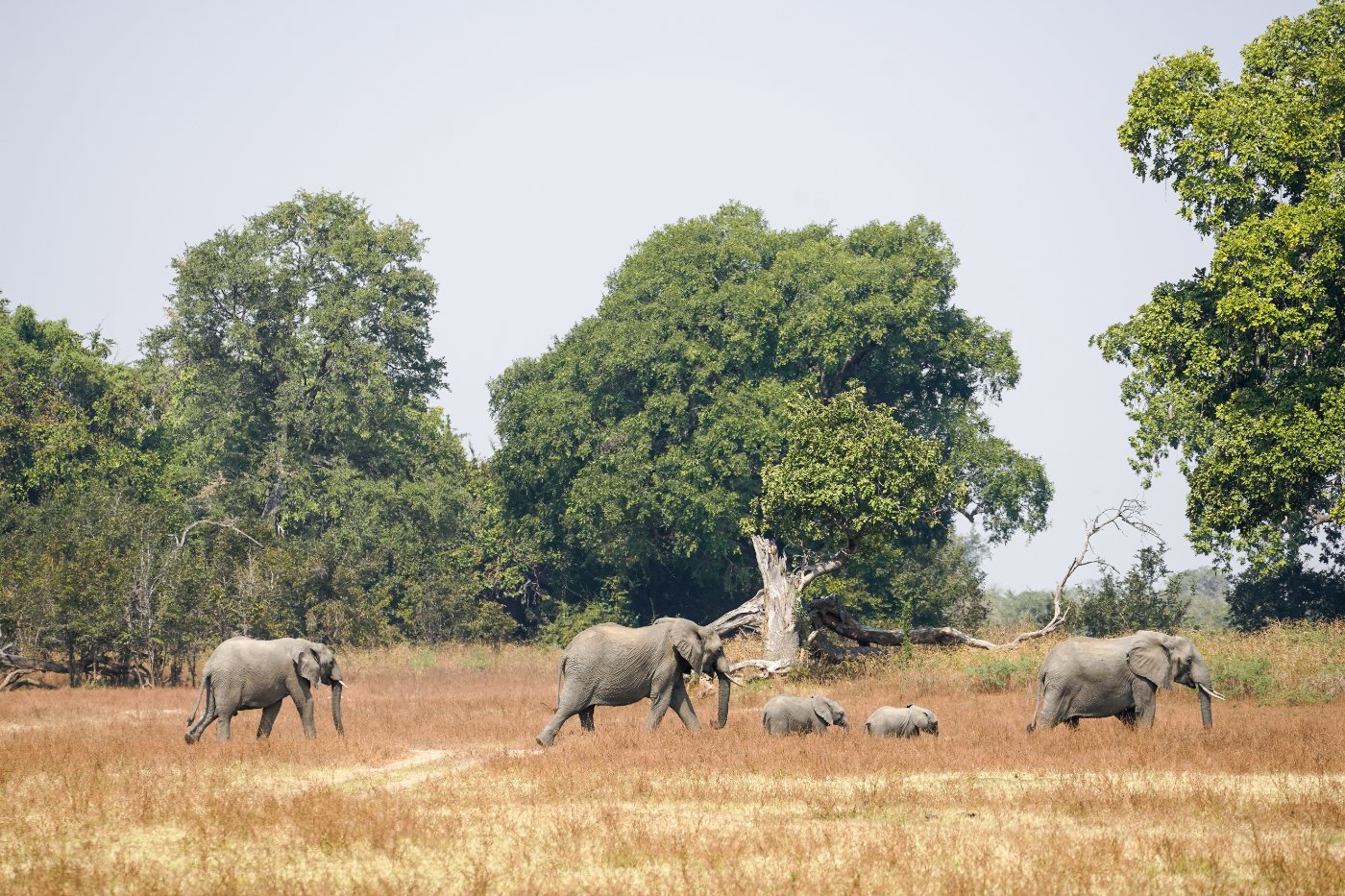
Elephants at a glance
| Living species | Three, since the 2021 split of the African elephants |
| Family | Elephantidae, order Proboscidea |
| Weight | African bush males to about 6,000 kg, Asian males to about 5,000 kg, forest elephants smaller |
| Shoulder height | Around 2.5 to 4 m depending on species and sex |
| Gestation | About 22 months, the longest of any mammal |
| Calves | One at a time, roughly every four to six years |
| Top speed | Just over 25 km per hour, and never with all four feet off the ground |
| Diet | Herbivore, 150 to 200 kg of plant material a day |
| Lifespan | Around 60 to 70 years in the wild |
| African population | About 415,000 across both African species (2016 estimate) |
| Asian population | Roughly 40,000 to 50,000 |
There are three species, not two
This changed recently enough that most sources have not caught up. On 25 March 2021 the IUCN assessed the two African elephants separately for the first time, on genetic evidence that they are distinct species rather than one variable one. The results were grim:
| Species | Where | Status | Decline |
|---|---|---|---|
| African bush or savanna elephant (Loxodonta africana) | Savanna and grassland across sub Saharan Africa | Endangered | At least 60 percent over 50 years |
| African forest elephant (Loxodonta cyclotis) | Congo Basin rainforest | Critically Endangered | More than 86 percent over 31 years |
| Asian elephant (Elephas maximus) | India, Sri Lanka, Southeast Asia | Endangered | Long term decline, roughly 40,000 to 50,000 left |
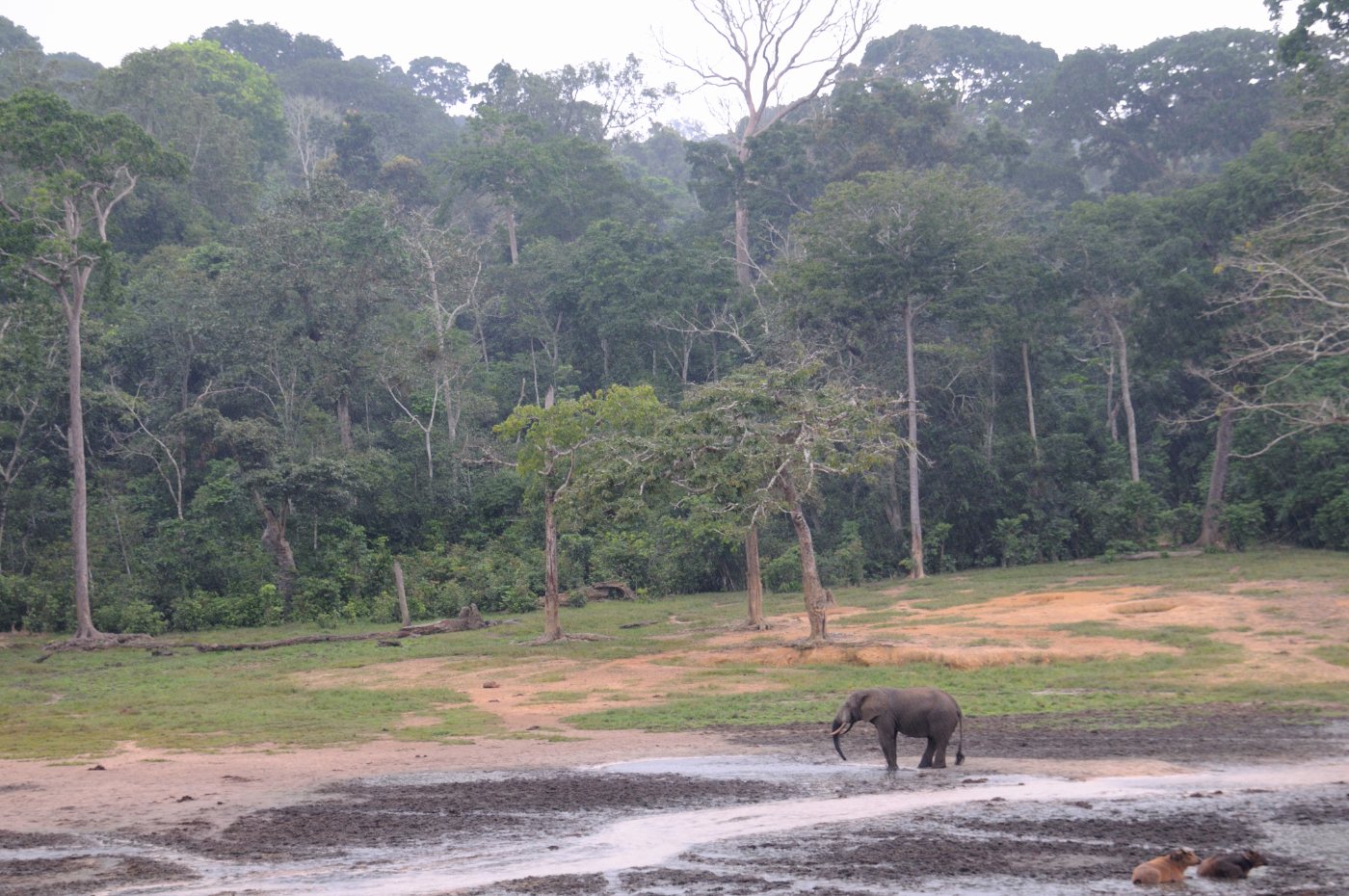
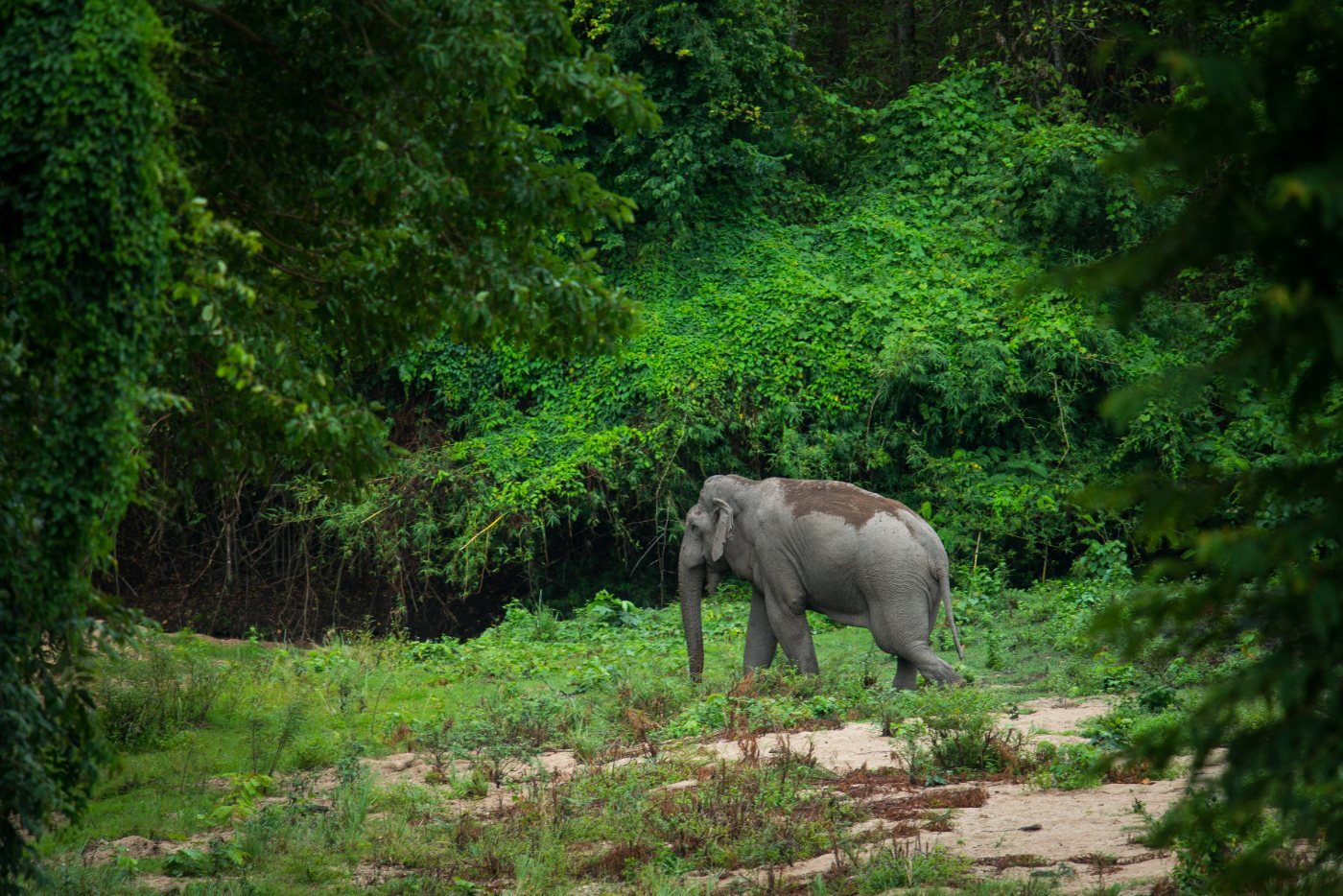
Before 2021 both African elephants were lumped together and listed as Vulnerable. Separating them revealed that the forest elephant had been hiding inside a healthier looking average, and that it has lost the great majority of its population within a single human lifetime. It is now one of the most threatened large mammals on earth, and far fewer people have heard of it than of the savanna elephant.
The differences are easy to see once you know: forest elephants are smaller, darker, with rounded ears and straighter, downward pointing tusks made of harder ivory. Asian elephants have smaller ears, a domed forehead with two bumps, and only the males usually carry tusks.
The trunk is the most remarkable organ in any land mammal
A trunk is a fused nose and upper lip containing roughly 40,000 muscle units and no bone at all. It has no skeleton to lever against, so it works like a tongue or an octopus arm, stiffening sections of itself to create temporary joints wherever they are needed.
What it can do was measured properly at Georgia Tech, published in the Journal of the Royal Society Interface:
- It inhales at up to 150 metres per second, roughly 330 miles per hour, about thirty times the speed of a human sneeze and comparable to a bullet train.
- It moves three litres of air per second.
- It holds up to 5.5 litres of water. In one test it drew up 3.7 litres in 1.5 seconds.
- It dilates its nostrils by up to 30 percent, which expands the internal volume by 64 percent, and that is how it achieves the suction.
At the tip, African elephants have two opposing finger like projections and Asian elephants have one. That is the difference between pinching a single blade of grass and curling around it. Both can also use suction to pick up food without touching it, which was not properly understood until this work.
Strength, and what it is actually for
Elephant strength claims online are almost all invented. Here is what is defensible.
- The trunk can lift objects in the region of 250 to 300 kg, and is used routinely to move logs and push over trees.
- The whole animal is built for pushing rather than lifting. Elephants uproot trees not by strength alone but by rocking them until the root plate fails, which is leverage and patience.
- The skeleton is the limiting factor. Elephant limb bones are held nearly vertical, like columns, because at six tonnes there is no way to run bent legged the way smaller mammals do.
- Digging matters more than people realise. Elephants excavate waterholes in dry riverbeds with their feet and tusks, and in a drought those holes are what keep zebra, buffalo and birds alive. This is why elephants are called ecosystem engineers rather than just large herbivores.
The worked examples, including how much an elephant can push and pull, are in how strong are elephants.
Elephants cannot run, and that is not a technicality
Hutchinson and colleagues filmed 42 Asian elephants across 188 trials moving through a measured course, and published the result in Nature. Two findings:
- The fastest individuals exceeded 15 mph, about 25 km per hour, which was 50 percent faster than anything previously recorded reliably.
- At that speed all four feet never leave the ground at once. The footfall pattern stays exactly the same as walking.
By the strict definition, running requires an aerial phase, a moment when the animal is airborne. Elephants never have one. What they do instead is bend their legs and let the body bounce while keeping contact, which the researchers nicknamed Groucho running, after Groucho Marx’s crouched walk. The mechanics look like running, the footfalls look like walking, and the animal is doing something that does not fit either category.
Two practical consequences follow. Elephants cannot jump, at all, because jumping needs the same airborne phase. And they are surprisingly good downhill and on steep ground, because a column legged animal that never leaves the ground is very stable. The full breakdown is in how fast can an elephant run.
Tusks, and how poaching changed them
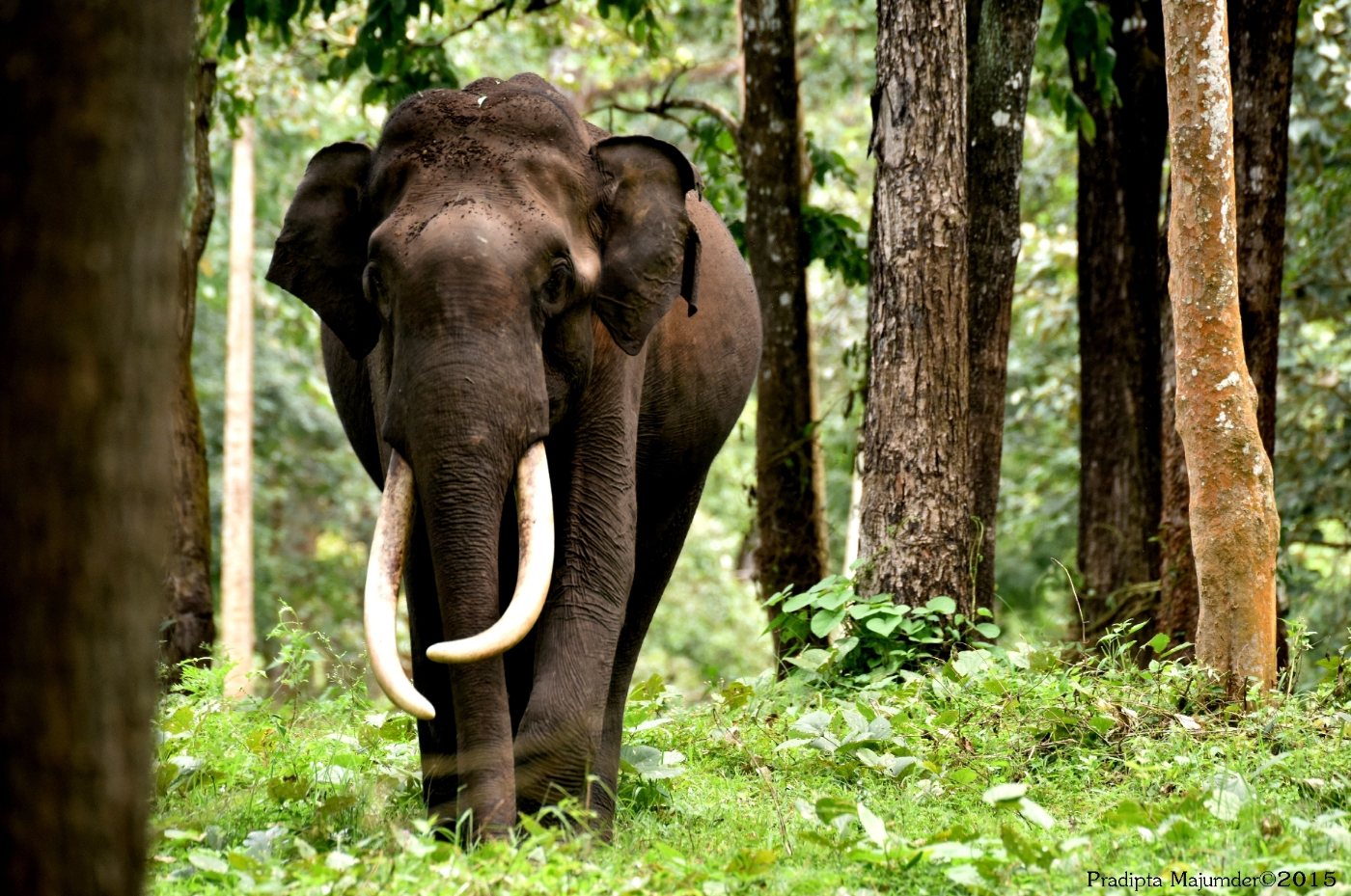
Tusks are upper incisors that never stop growing. They are used for digging, stripping bark, moving obstacles, fighting and display, and like human handedness an individual favours one side, so one tusk is usually shorter and blunter than the other.
Because tusks are what poachers want, they have become a liability, and there is now hard evidence of what that does over time. Campbell-Staton and colleagues published a study in Science on the elephants of Gorongosa National Park in Mozambique:
- During the Mozambican civil war, 1977 to 1992, ivory hunting cut the elephant population by about 90 percent.
- Among the survivors, the frequency of completely tuskless females rose sharply. Tuskless animals were the ones poachers walked past.
- There were almost no tuskless males, which pointed to a sex linked cause.
- Two candidate genes were identified, AMELX and MEP1a, both involved in tooth development, with an inheritance pattern consistent with an X linked dominant trait that is lethal in males.
That last point is the sting. A tuskless mother passes the trait to roughly half her daughters, and roughly half her sons do not survive to be born. Human hunting did not just remove elephants, it selected on the genome of the survivors within a single generation, and the population is still paying the cost in lost male calves decades after the shooting stopped. It is one of the clearest cases of human driven evolution ever documented in a large mammal.
More on tusk biology, growth rates and what ivory actually is in facts about elephant tusks.
Pregnancy and calves
An elephant is pregnant for about 22 months, the longest gestation of any mammal. Almost every source states that figure and stops. The interesting question is why, and the answer explains most of elephant social life.
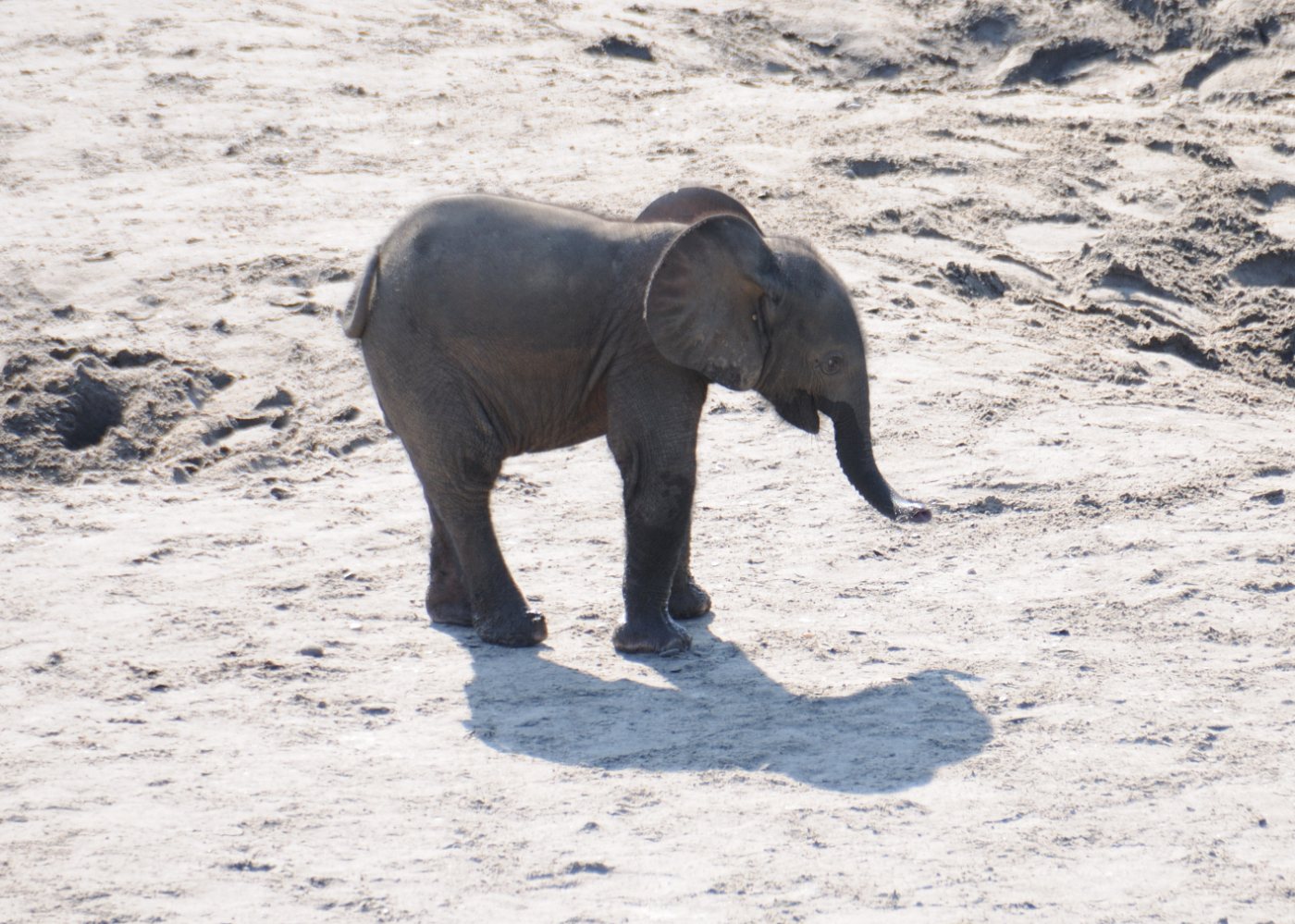
A calf is born weighing around 100 to 120 kg and is standing within an hour, because a newborn that cannot keep up with a moving herd will not survive its first day. Getting a brain and body to that state takes time, and elephant brains keep developing long after birth. The trade is a very long pregnancy in exchange for a calf that is functional immediately.
- One calf at a time. Twins occur in around 1 percent of births and rarely both survive.
- Four to six years between calves, sometimes longer in drought.
- Nursing lasts two to four years, occasionally longer.
- Calves suckle with the mouth, not the trunk, which they spend their first months apparently unable to control at all.
- Allomothering. Young females in the herd help care for calves, which is both useful to the mother and practice for the helpers.
Add it up and a female elephant may raise four to six calves in a sixty year life. That is an extraordinarily slow rate of replacement, and it is why a poached population takes decades to recover rather than years. More in how long elephant pregnancy lasts and baby elephant facts.
Herds, matriarchs and males
An elephant herd is a family of related females and their young, led by the oldest female. Males leave at around twelve to fifteen years old and live alone or in loose bachelor groups for the rest of their lives.
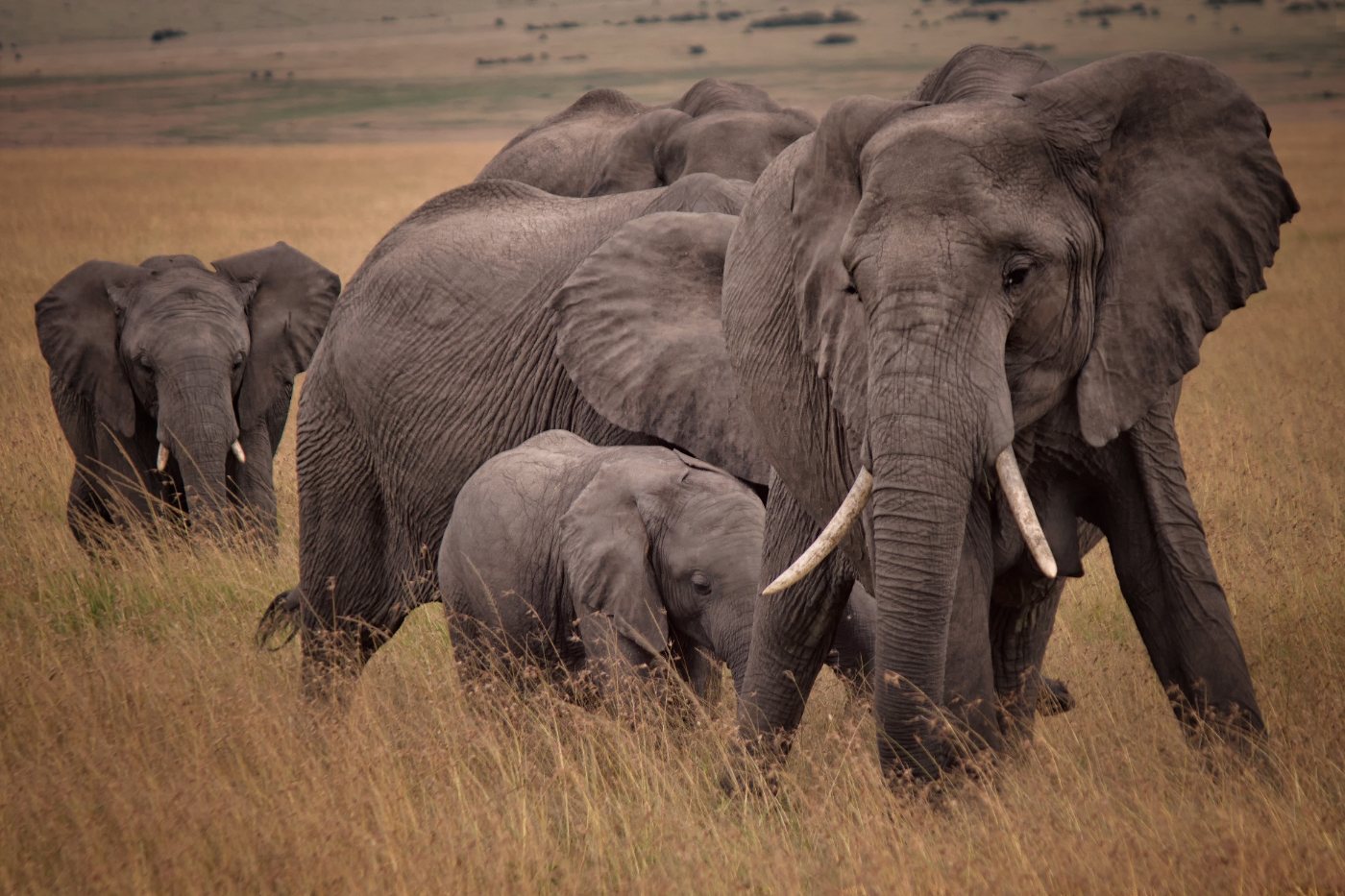
The matriarch matters more than the word suggests. She is not simply the boss, she is the herd’s memory. Older matriarchs know where water persists in the worst droughts, which routes are safe, and how to distinguish a genuine threat from a harmless one. Herds led by older females respond more appropriately to danger and raise more calves. This is the real content behind the cliché that elephants never forget: it is not that individuals have perfect recall, it is that a herd’s survival depends on decades of accumulated knowledge held by one animal.
Which is also why killing the largest animals, as trophy and ivory hunting does, damages a population beyond the arithmetic of the deaths. Remove the matriarch and the herd loses its map.
Adult males enter musth, a periodic state with testosterone up to sixty times baseline, marked by temporal gland secretion and continuous urine dribbling. A bull in musth outranks bulls that would otherwise dominate him and is genuinely dangerous. Most serious incidents involving captive elephants involve musth bulls, and it is not aggression in the ordinary sense, it is a physiological state.
How elephants talk over kilometres
Much of elephant communication happens below the range of human hearing. Their rumbles have fundamental frequencies down around 14 to 20 Hz, at or under the 20 Hz floor of human perception, which is why observers standing next to a herd often report an eerie sense that something is happening without being able to hear it.
Low frequency sound carries much further than high frequency sound before it dissipates, which is the whole point. Rumbles travel several kilometres through air, further at dusk and dawn when temperature layering in the atmosphere channels them. They also travel through the ground as seismic waves, and elephants appear to detect these through the feet and trunk, using bone conduction and pressure sensitive receptors in the foot pads. A herd can respond to a call from another herd it cannot see or smell.
Above that they also use trumpets, snorts, roars, ear position, trunk gestures and touch. The infrasound is the part that is genuinely unusual.
What elephants understand
Elephants are one of a very short list of animals to pass the mirror self recognition test, alongside great apes, dolphins and magpies. An Asian elephant marked on the head investigated the mark on its own body rather than treating the reflection as another elephant.
They also behave distinctively around elephant bones and tusks, touching and turning them with trunk and feet, and showing no comparable interest in the remains of other species. Calling this grief goes beyond what the data supports. Calling it nothing goes beyond it in the other direction. The honest statement is that elephants recognise the remains of their own kind and treat them differently, and that we do not know what the experience is like from the inside.
Documented alongside that: cooperative problem solving, tool use, distinguishing human languages and age and sex groups by voice alone, and, in at least one population, distinguishing the smell of a group that hunted them from a group that did not.
What is actually killing elephants
The threats differ sharply between the three species, and treating them as one problem produces bad policy.
- Ivory poaching. Still the primary driver for African elephants. It surged through the 2000s and 2010s, and while the closure of the Chinese domestic ivory market at the end of 2017 reduced demand measurably, the trade has not stopped, it has moved.
- Habitat loss and fragmentation. The main threat to Asian elephants, which live in the most densely populated part of the world. Their range is now a set of islands connected by corridors that are steadily being built over.
- Human elephant conflict. The threat that grows as the others are managed. Elephants raid crops, people are killed, and elephants are killed in return. In parts of India and Sri Lanka this now kills more elephants than poaching does.
- Logging roads. Specific to forest elephants. Roads cut into the Congo Basin for timber do not just remove habitat, they give poachers access to forest that was previously unreachable. This is a large part of that 86 percent decline.
What works is unglamorous: funded and staffed protected areas, corridors between them so populations do not become genetically isolated, compensation schemes that make a raided crop survivable rather than ruinous, and demand reduction at the consumer end. Fences, chilli rope, beehive fences and early warning systems all help at the field scale and none of them substitute for the four above.
Seeing elephants without harming them
This deserves a direct answer, because the tourism industry around elephants is genuinely split between good and bad, and the marketing language does not distinguish them.
Riding elephants, elephant painting, elephant shows and bathing sessions where you are handed a brush all depend on an animal that has been broken to accept close human handling. The process used to achieve that, particularly with young animals, is severe. A place that offers these things is not a sanctuary regardless of the word on the sign.
What a genuine facility looks like: no riding, no performances, no direct contact on demand, elephants in social groups rather than chained individually, visitors observing from a distance and on the elephants’ schedule rather than their own, and transparency about where each animal came from. Ask what happens to an animal that does not want to approach visitors. The answer tells you everything.
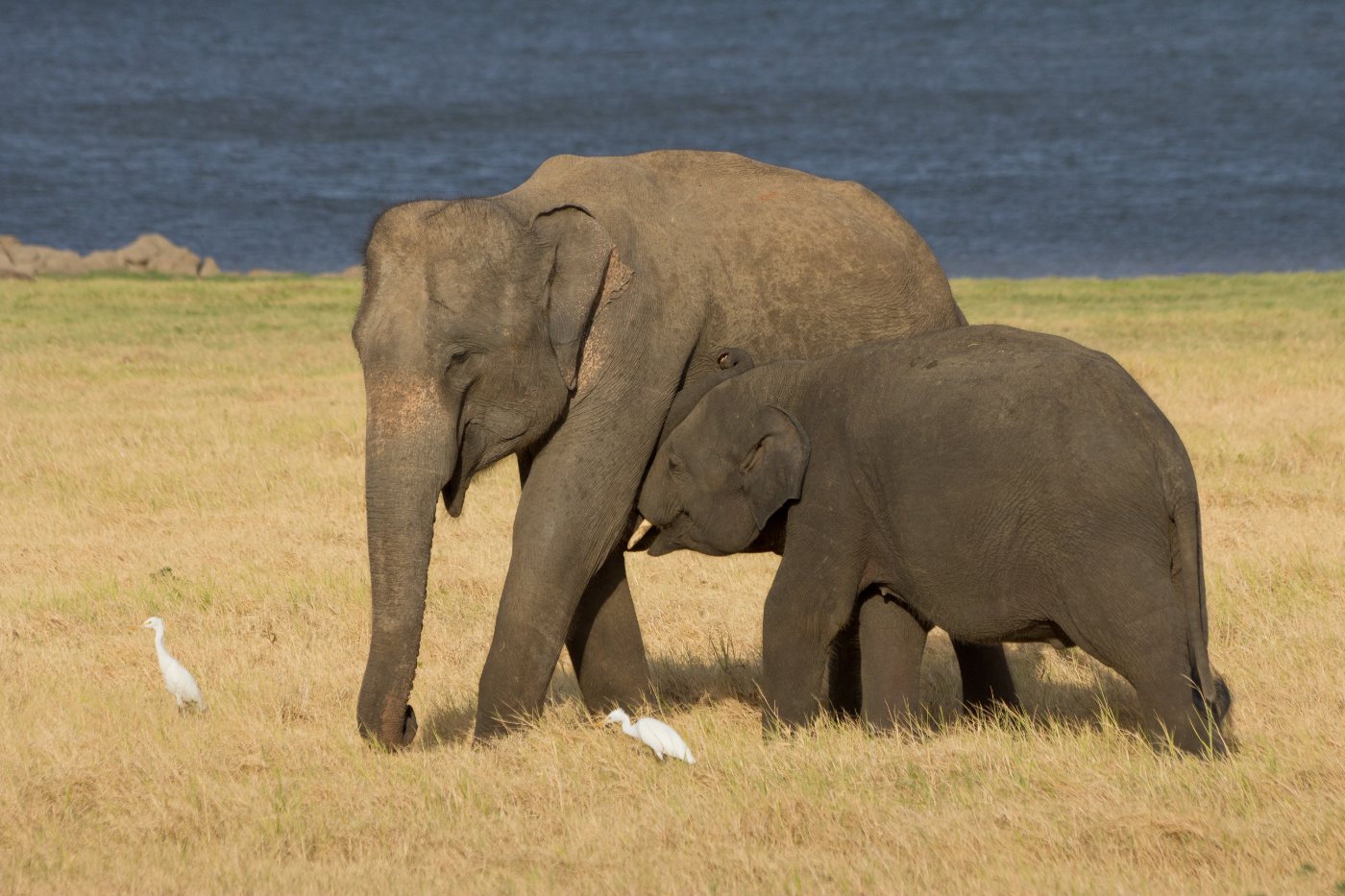
Best of all is seeing them wild in a national park, where the animal owes you nothing. I have written up specific options in best places to see elephants in Sri Lanka, and for people who want to work with them rather than watch, volunteering with elephants in Chiang Mai and an elephant internship in Sri Lanka.
Common questions about elephants
How long are elephants pregnant?
About 22 months, the longest of any mammal. One calf, born at around 100 to 120 kg and standing within an hour.
Can elephants run or jump?
Neither, strictly. They reach just over 25 km per hour but never lift all four feet at once, which is what running requires. For the same reason they cannot jump at all.
Are elephants afraid of mice?
No. They startle at sudden movement near their feet, as most large animals do, and the mouse story is a cartoon invention with no basis in observation.
How many elephants are left?
About 415,000 across both African species on the 2016 estimate, and roughly 40,000 to 50,000 Asian elephants. The African forest elephant is the one in the most serious trouble.
Why do some elephants have no tusks?
In heavily poached populations, tusklessness in females rose because tuskless animals were spared. In Gorongosa this is traced to genes on the X chromosome, and the same variant appears to be lethal in male calves.
Do elephants really never forget?
Not literally, but the idea points at something real. Older matriarchs hold decades of knowledge about water, routes and threats, and herds led by older females do better. The memory is the herd’s, held in one animal.
Is it ethical to ride an elephant?
No. Riding, performing and on demand bathing all require an animal broken to close handling. Observation at a distance, or a wild sighting, is the alternative.
Everything on this site about elephants
- How long elephant pregnancy lasts
- Baby elephant facts
- How strong are elephants
- How fast can an elephant run
- Facts about elephant tusks
- Best places to see elephants in Sri Lanka
- Volunteer with elephants in Chiang Mai
- Internship with elephants in Sri Lanka
- Gift ideas for elephant lovers
Elephants are the largest land mammals. For the rest of the animal guides on this site, start from mammals.
Sources
- IUCN (25 March 2021). African elephant species now Endangered and Critically Endangered on the IUCN Red List.
- Campbell-Staton, S. C. et al. (2021). Ivory poaching and the rapid evolution of tusklessness in African elephants. Science 374: 483 to 487.
- Hutchinson, J. R. et al. (2003). Biomechanics: are fast moving elephants really running? Nature 422: 493 to 494.
- Schulz, A. K. et al. Suction feeding by elephants. Journal of the Royal Society Interface.
- IUCN African Elephant Status Report (2016), continental estimate of about 415,000.
- IUCN Red List assessment for Elephas maximus.
- O’Connell-Rodwell, C. E. Keeping an ear to the ground: seismic communication in elephants. Physiology.
🌿 Explore the Wild Side!
Discover eBooks, guides, templates and stylish wildlife-themed T-shirts, notebooks, scrunchies, bandanas, and tote bags. Perfect for nature lovers and wildlife enthusiasts!
Visit My Shop →