
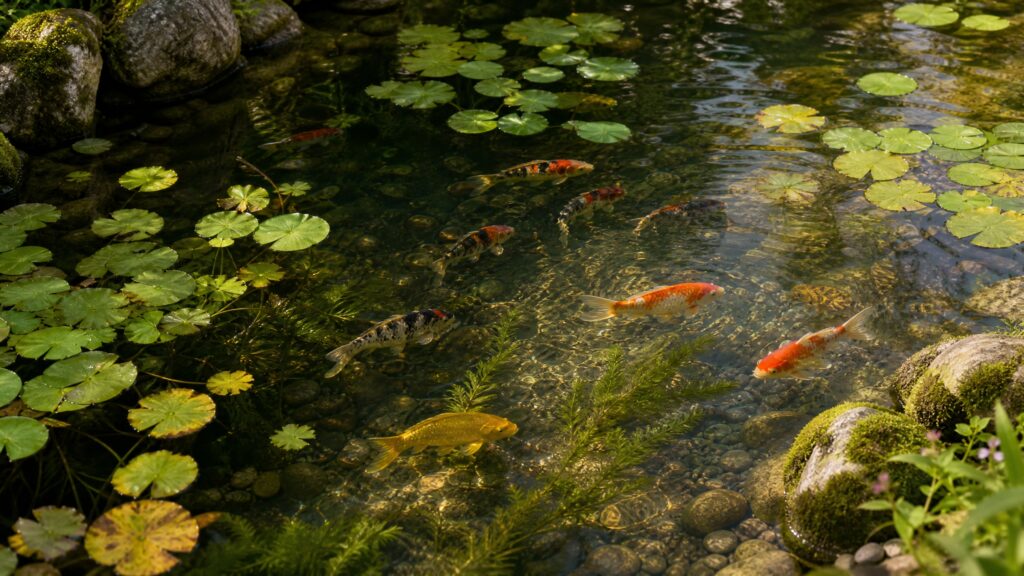
The best fish for outdoor ponds match water volume, climate, and equipment. Small ponds under 300 gallons suit White Cloud Mountain minnows, which tolerate temperatures near 50°F and eat insect larvae. Mosquitofish are often recommended for the same job, and they should not be: the US Fish and Wildlife Service rates the western mosquitofish a high risk invasive across the whole contiguous United States. Larger ponds of 500 to 1,000+ gallons accommodate goldfish and koi, though these need 24 inches to five feet of depth for winter survival. Tropical species require heated water or indoor relocation when cold arrives. Native fish often outperform exotics because local adaptation reduces disease and feeding costs. Layered stocking, surface swimmers, midwater schoolers, and bottom scavengers, creates biodiversity, meaning variety of life, which stabilizes water quality by distributing oxygen use and waste processing. The keeper who matches fish to conditions rather than forcing conditions to suit fish will find more follows on how to build this balance.
A note on where these numbers come from. I am an ecologist by training, with an MSc in ecology, and it is worth saying plainly that ornamental pond stocking figures are not research. No university or agency publishes a gallons per fish standard for garden ponds. What follows is hobbyist convention, which is reasonable and widely used, and I have said so wherever a figure appears rather than dressing it up as science. Where genuine published guidance exists, on winter oxygen depletion and on invasive species, it is cited.
Key Takeaways
- Match fish to your climate zone and pond depth to ensure winter survival without costly heating systems.
- Prioritize hardy native species that tolerate temperature swings and reduce disease risk naturally.
- Stock small, cold tolerant alternatives like White Cloud Mountain Minnows instead of goldfish in compact ponds.
- Layer surface, midwater, and bottom dwellers to balance oxygen use and minimize filtration demands.
- Include mosquito eating species such as Gambusia alongside floating plants for natural pest control and fry cover.
| Pond volume | Suits | Rough number | Winter depth |
|---|---|---|---|
| Under 100 gallons | Celestial pearl danios, shrimp | A small group, 2 to 6 | Not a winter pond in cold zones |
| 100 to 300 gallons | White Cloud Mountain minnows | A small shoal | 24 in for mild winters |
| 300 to 500 gallons | A few goldfish | 2 to 4 with aeration | 24 in minimum |
| 500 to 1,000 gallons | Goldfish, small ornamentals | Roughly 100 to 250 gal per medium fish | 24 in, more in hard freeze |
| 1,000 gallons and up | Koi | 250 gal or more per adult koi | 3 ft and up, deeper is safer |
These stocking figures are hobbyist convention rather than published research. No agency sets a gallons per fish standard for ornamental ponds. Depth guidance follows the oxygen depletion mechanism described by Penn State Extension.
One thing to get out of the way first. Mosquitofish are sold everywhere as natural mosquito control and they are the one fish you should not put in an outdoor pond. The US Fish and Wildlife Service rates the western mosquitofish high risk for the entire contiguous United States. Ponds overflow and get emptied, and a fish with a strong dispersal tendency only has to escape once.
Choose Fish for Outdoor Ponds: Start With Size, Climate, and Sunlight
Begin with pond size. Small patio ponds hold under 300 gallons. They suit tiny species like Celestial Pearl Danios or shrimp.
Larger ponds need 500 to 1,000+ gallons for goldfish and deeper still for koi and goldfish. Climate dictates overwintering depth. Cold water species need at least 24 inches, while koi often require five feet to survive freezing temperatures. Tropical fish can’t endure temperate winters outdoors.
Surface plants matter. Water lilies and hyacinth provide shade, reduce algae, and limit jumping.
Filtration capacity limits stocking. Robust systems handle roughly 100 to 250 gallons per medium ornamental fish. Start small, observe behavior, and adjust.
Success comes from matching the environment to the creature’s needs, not forcing adaptation.
Match Fish to Pond Volume: No Math Required
Although many guides overwhelm newcomers with complex formulas, matching fish to pond volume relies on simple visual cues and species habits rather than calculations.
A small pond under 100 gallons suits tiny species like Celestial Pearl Danios or shrimp. Keep groups small, perhaps 2 to 6 individuals, to prevent oxygen depletion.
Medium containers of 100 to 500 gallons accommodate several goldfish with modest aeration.
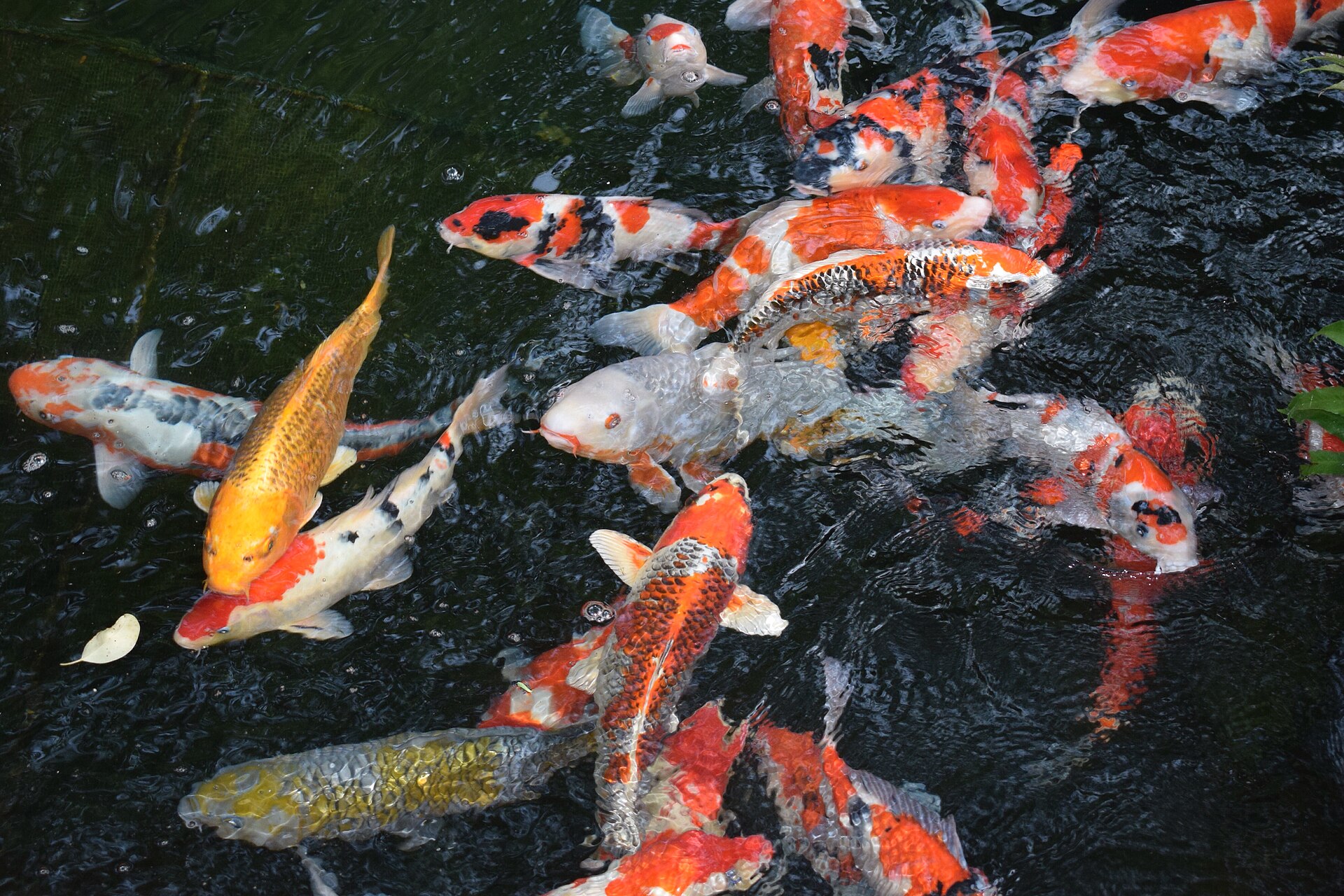
Large backyard ponds of 1,000 gallons or more handle multiple koi fish comfortably. Plan roughly 100 to 250 gallons per medium koi, and 250 plus gallons for adults.
Depth matters too: 18 to 24 inches suffices for goldfish in mild climates, but koi need five feet minimum for safe overwintering.
When stocking your pond, match additions to your filtration system capacity. Stronger filtration permits more fish without degrading water quality.
Observing your pond fish for small ponds daily reveals whether your choices fit the space.
Heater Free, Filter Free Fish for Small Outdoor Ponds
Once you have matched your fish to your pond volume, the next question becomes how to keep them alive without equipment.
Hardy cold water species like common goldfish and shubunkins tolerate temperatures down to 50°F. They need roughly 50 gallons per pair.
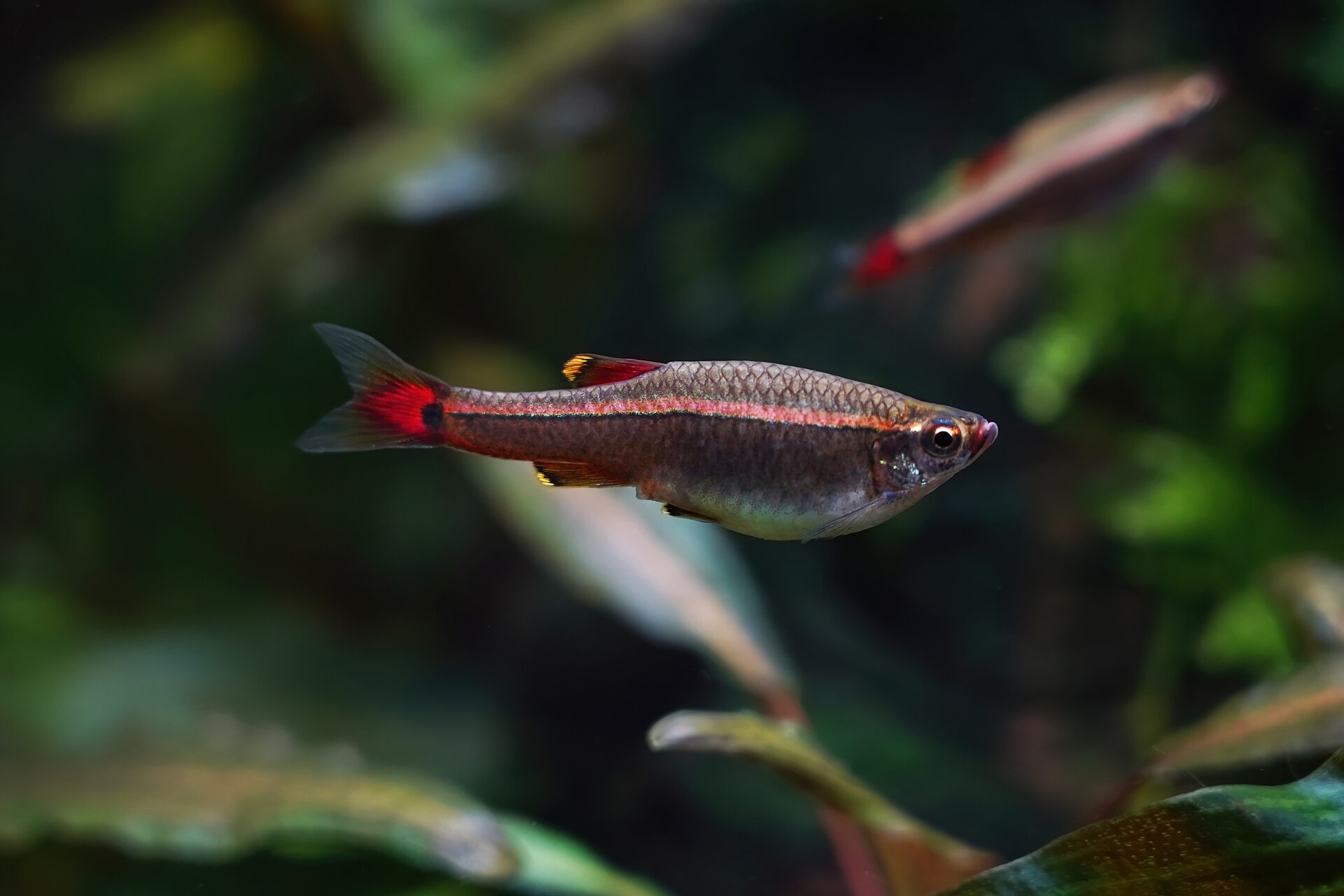
Small schooling fish such as white cloud mountain minnows add surface activity without overwhelming small ponds. Stock them lightly, five to ten fish per 100 gallons.
Mosquitofish control mosquito larvae but live only one year. They need dense plants for cover.
For algae control, snails and oto catfish work in mild climates without heating.
Low stocking levels matter most. One small fish per 25 to 50 gallons prevents oxygen crashes. Plants provide shade and stability.
Freezing requires indoor relocation.
Native Fish for Outdoor Ponds: Let Your Ecosystem Do the Work
Native fish offer clear advantages for pond owners. They’re already adapted to local conditions, so they’re less likely to get sick or die from temperature swings. A pond stocked with native species also feeds the wider garden food web, one of the key concepts in ecology worth understanding before you stock.
This means less work for you, and a healthier pond overall.
Native Species Benefits
Because they’ve evolved alongside local conditions, native fish often thrive where exotic species struggle.
Native species tolerate local temperature ranges and seasonal changes, which reduces winter losses compared to nonnative tropical fish that perish in cold months.
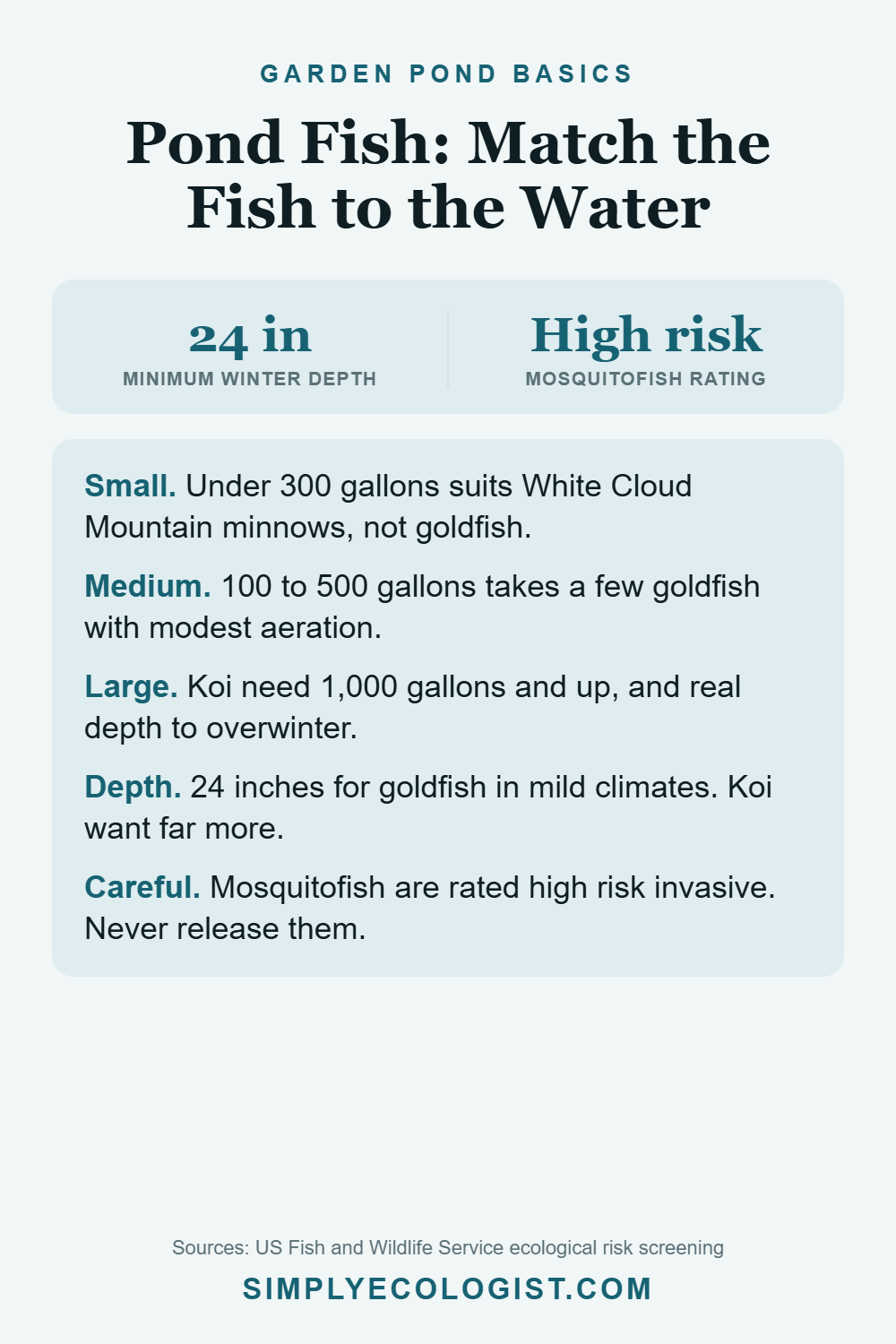
Local natives, such as Western Pygmy Perch, Western Minnows, and Murray River Rainbows, find food naturally in ponds.
They consume insects and larvae that appear seasonally, including mosquito larvae. This pest control happens without human intervention.
Native fish also coevolved with local predators, parasites, and plants.
Biodiversity, meaning the variety of living things in an area, strengthens when native fish integrate into existing food webs.
They adapt to local water chemistry and oxygen fluctuations.
Sourcing from reputable local suppliers guarantees genetic suitability and reduces disease risk.
Low Maintenance Ecology
Small bodied native fish often make the most practical choice for pond keepers who’d rather watch their ecosystem thrive than perform constant upkeep. Native small bodied fish tolerate wide temperature swings and eat natural insect larvae. They rarely need supplemental feeding.
Mosquitofish control mosquito populations by consuming larvae continuously. Females produce roughly sixty live young every few weeks. They’re short lived, however, and aggressive toward other small species.
Bottom dwellers like native gudgeons recycle waste and reduce algae. They scavenge uneaten food and organic debris. This lowers filtration demand markedly.
Stock lightly. Provide abundant plant cover, including floating plants and lily pads. Surface coverage prevents jumping and protects from predators. Plants supply shade and food sources.
Match species to climate and pond depth. Cold tolerant natives suit temperate regions. Tropical natives belong only in heated ponds. Overwinter survival depends on habitat suitability, not hardiness claims alone.
Skip the Goldfish: Smaller, Lower Maintenance Alternatives
Goldfish aren’t the only option for small outdoor ponds. White Cloud Minnows tolerate cold water down to 50°F and school in tight groups, while Corydoras Catfish clean the bottom and stay under three inches. Small Rasboras add movement near the surface, and together these species create biodiversity, the variety of living things that keeps an ecosystem stable without demanding much care.
White Cloud Minnows
Often overlooked in favor of flashier species, White Cloud Mountain Minnows offer a practical alternative for pond keepers seeking simplicity. These cold tolerant schooling fish thrive in outdoor ponds between 50 to 75°F. They stay small, reaching only 1 to 1.5 inches. This makes them ideal for small ponds where space matters.
They require groups of 6 to 10 individuals. Schooling behavior reduces stress and displays natural movement. They eat mosquito larvae, helping control pests. They also accept flakes and micro pellets. Spawning happens naturally in summer without intervention.
They coexist peacefully with plants and snails. Floating plants reduce jumping risk. Waste production stays minimal compared to goldfish. For those wanting understated beauty with genuine utility, these minnows deliver. They ask little and give steady, quiet presence.
Corydoras Catfish
Bottom dwellers with a gentle temperament, Corydoras catfish offer pond keepers a practical alternative to conventional choices.
Corydoras spp. grow 1 to 3 inches and thrive in small outdoor ponds with gentle flow and plant cover.
They’re schooling fish, so groups of six or more reduce stress and improve survival during brief temperature changes.
These scavengers prefer cool well oxygenated water between 68 to 78°F.
They eat leftover food and debris, providing natural detritus control without damaging plants.
Their lack of a swim bladder makes them poor jumpers, an advantage for patio setups.
Keep smooth gravel or sand to protect their barbels.
Provide shade through plants or driftwood.
Stock lightly and test water regularly.
They’re quiet workers, unassuming but effective.
Small Rasboras
Small rasboras step in where goldfish would overwhelm a space. These tiny fish reach only one to one and a half inches, fitting comfortably in patio ponds that would strain under larger species. They prefer heavily planted environments. Floating cover and marginal plants replicate their natural slow water habitats. This planting also curbs jumping and shields them from predators.
Small rasboras are schooling fish. Groups of eight to twelve display natural behaviors and reduce individual stress. They accept microfoods, crushed flakes, and mosquito larvae. Many species tolerate sixty five to seventy eight degrees Fahrenheit, though colder regions require indoor overwintering.
Outdoor water gardens suit them well. Their minimal waste output permits simpler filtration. This low maintenance profile makes them practical alternatives. Quiet observation rewards the keeper. Their subtle colors emerge in dappled light.
Tropical Fish for Outdoor Ponds That Breed All Summer
Warm summer water releases a remarkable reproductive rhythm in small tropical fish. Many tropical fish spawn outdoors readily when temperatures exceed 72°F and natural live foods abound.
Guppies reproduce prolifically, females bearing multiple broods of dozens each season. Heavy male chasing increases jumping risk.
Celestial Pearl Danios also breed continuously in patio containers. Fry survival improves dramatically with proper cover.
Floating plants and dense marginal vegetation shelter young fish. Snails and decomposing matter seed infusoria, microfauna that serve as critical first foods.
Shallow nursery zones reduce predation. The system sustains itself. Success requires minimal intervention. Observers note quiet satisfaction watching generations complete their cycle in contained ecosystems.
Mix Your Water Layers: Top, Middle, and Bottom Fish
Though any pond holds more water than fish, filling it thoughtfully across three levels creates something lasting. Surface feeders overlap with the wider cast of animals that eat fish, which is worth knowing if herons visit your garden.
Stocking your backyard pond with surface swimmers like Golden Orfe and mosquitofish exploits the top layer. These fish reach for floating food and oxygen. Gambusia, tiny livebearers measuring one to three inches, provide natural mosquito control.
Midwater species including White Cloud Mountain Minnows and shubunkins need open swim space. They require roughly fifty to one hundred gallons per fish.
Bottom dwellers such as Corydoras and plecos forage detritus and algae. They reduce waste accumulation. Layered stocking balances oxygen and feeding throughout the system.
Water temperatures determine survival. Cold water bottom fish tolerate fifty to seventy five degrees Fahrenheit. Tropical species risk winter loss without depth, heaters, or indoor overwintering.
One species deserves its own warning. Mosquitofish (Gambusia) are sold everywhere as a natural mosquito control and they are a genuinely bad choice for an outdoor pond. The US Fish and Wildlife Service rates the western mosquitofish high risk for the contiguous United States, citing established populations with documented harm to native species through predation and competition. Outdoor ponds overflow, flood and get emptied, and a fish with a strong dispersal tendency only has to get out once. Many states restrict them. Use native minnows instead.
Fish to Avoid in Outdoor Ponds: Jumpers, Grazers, and Giants
Surface jumpers pose a real risk in outdoor ponds.
Hatchetfish and most gouramis leap readily from shallow water.
Overactive grazers like certain plecos damage soft plants such as Water Wisteria.
These species demand careful exclusion from small setups.
Surface Jumpers
Certain fish leap from water without warning.
Surface jumpers pose genuine risks in small outdoor ponds. Hobbyists should avoid known jumpers including hatchetfish, most gouramis, male guppies, bettas, elephant nose, and many loaches. These species frequently jump from small outdoor ponds. They become lost or injured on hard ground.
Surface oriented fish display this behavior most. Athletic swimmers near the top feel vulnerable. They escape perceived threats by jumping. White cloud minnows remain acceptable choices. Fast surface feeders and surface dwelling schooling fish cause problems. They splash and leap during spawning.
Prevention matters. Full surface coverage reduces jumping incidents. Water lilies block escape routes. Marginal planting shades the surface. These measures protect fish during high activity periods. Careful selection prevents unnecessary loss.
Overactive Grazers
Jumping behavior isn’t the only threat to small pond balance. Overactive grazers present equal risk. Pond owners should avoid voracious grazers and soft leaf browsers. These fish consume aquatic plants faster than growth allows.
Large plecos and certain cichlids exemplify the problem. They tear through marginal and emersed vegetation. American Flagfish nibble moderately. Others destroy entire plantings. The damage disrupts water filtration. Plants naturally clean water. Without them, algae blooms proliferate.
Soft leaf browsers target delicate species like water lettuce or frogbit. They ignore tough leaved vegetation such as anubias or java fern. This selective destruction leaves ponds bare and ecologically unstable.
Experts wouldn’t recommend stocking these species in ornamental containers. Biodiversity, the variety of living things, collapses when grazers dominate. Choose plant safe fish instead.
Will Your Outdoor Pond Fish Survive Winter?
Because winter survival depends on matching fish to conditions, pond owners must first understand what their specific species can tolerate. Cold water species like koi and common or comet goldfish survive temperate winters if the pond sits deep enough, at least 24 inches, though 5 feet or more supports safer koi overwintering. It is worth understanding why depth matters, because it is not simply about the water freezing solid. Penn State Extension describes winterkill as an oxygen problem: ice and snow cut the light that submerged plants need, photosynthesis stops, and the oxygen already in the water gets used up with no way for more to enter from the air. Their comparison is blunt, a pond six feet deep is less likely to suffer winterkill than one three feet deep, and they recommend keeping about 30 percent of the ice clear of snow so some light still gets through. For a garden pond the practical floor is 24 inches in mild climates and more where ice sits for weeks. The five foot figure often quoted for koi is a safety margin rather than a published minimum.
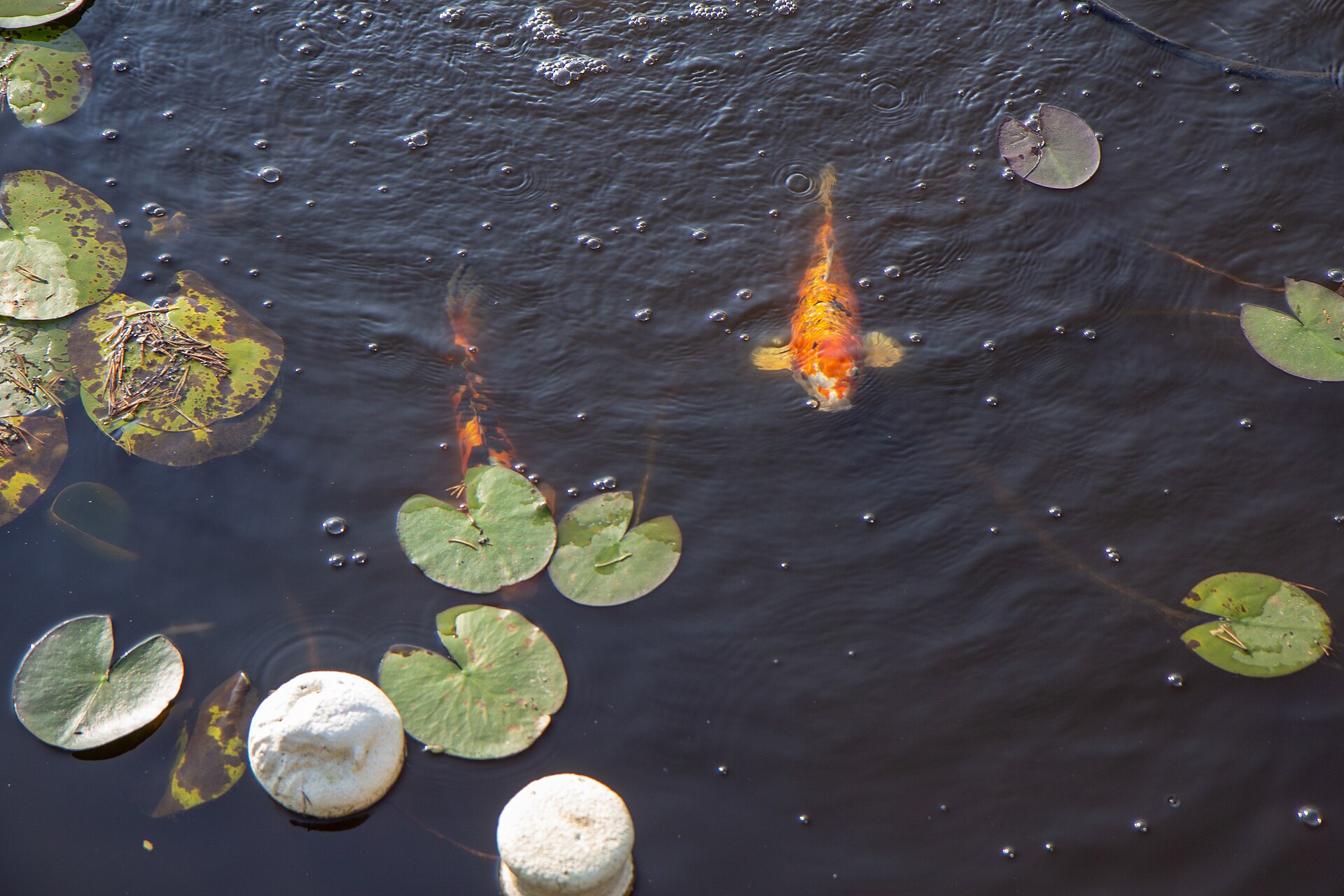
Water quality matters throughout. Aeration and a de icer maintain oxygen exchange beneath ice. Hardy small fishes, shubunkin, golden orfe, tench, tolerate cold near 50°F and benefit from depth’s temperature stability.
Tropical species and delicate fancy varieties won’t survive outside without heat. Owners must reduce feeding as metabolism slows, monitor conditions closely, and relocate vulnerable stock when hard freezes threaten. Preparedness prevents loss.
Cold Hardiness Ratings: From Zone 5 to Zone 10
Understanding how fish survive winter leads naturally to matching species with specific climate zones. Cold hardiness varies dramatically across regions. Check your zone against the USDA Plant Hardiness Zone Map before you buy, since it is the same data pond keepers use to judge freeze depth.
| USDA zone | Winter conditions | What works | Depth and kit |
|---|---|---|---|
| Zone 5 and colder | Ice for weeks | Goldfish in a deep pond, or bring fish indoors | Depth plus an aerator or de icer |
| Zone 6 to 7 | Ice forms, does not persist | Goldfish, White Cloud Mountain minnows | 24 in and a hole kept open in the ice |
| Zone 8 | Brief freezes only | Goldfish, koi in a large pond | 24 in is usually enough |
| Zone 9 to 10 | Rarely freezes | Most cold water species, koi comfortably | Depth for shade and heat, not ice |
| Any zone, tropicals | Not applicable | Tropical species summer out only | Bring indoors before nights drop below 60°F |
Zone boundaries follow the USDA Plant Hardiness Zone Map. The species recommendations are hobbyist convention, not agency guidance.
In Zone 5, winter temperatures plummet to -20°F. Only common goldfish and hardy koi survive here. They need 18 to 24 inches of depth for overwintering. Koi prefer five feet. Anything less risks death.
Zone 6 to 7 brings milder lows near -10°F. Shubunkins and mosquito fish sometimes endure. Depth remains critical. Aeration prevents total ice cover. Without it, toxic gases build beneath frozen surfaces.
Zone 8 allows golden orfe and native minnows. Two feet of water suffices with steady aeration.
Zone 9 to 10 rarely freezes. Cold tolerant tropicals join goldfish year round.
Match fish to typical winter minima, not averages. Deeper ponds forgive mistakes. Indoor overwintering protects sensitive breeds when doubt persists.
Outdoor Pond Fish: Common Questions
What are the best fish for a small outdoor pond?
White Cloud Mountain minnows are the standard answer for an unheated pond under about 300 gallons. They tolerate water down to around 50°F, eat mosquito larvae, stay small and do not need a heater. Avoid mosquitofish, which are rated a high risk invasive species.
How many gallons does a pond need per fish?
Roughly 100 to 250 gallons per medium ornamental fish, and 250 gallons or more for an adult koi. A pond under 100 gallons suits only very small species. Under stocking is always safer than over stocking, because oxygen and waste are the limiting factors.
How deep does a pond need to be for fish to survive winter?
At least 24 inches for goldfish in mild climates, and considerably more where the pond freezes hard. Depth matters more than surface area, because fish overwinter in the layer of water that stays liquid beneath the ice.
Can I keep koi in a small pond?
Not really. Koi reach a size that needs 1,000 gallons or more and substantial depth. A koi in an undersized pond is a fish with poor water quality and no thermal refuge, which is where most winter losses come from.
Are mosquitofish good for ponds?
No, and this is worth being firm about. The US Fish and Wildlife Service rates the western mosquitofish high risk for the contiguous United States, with documented harm to native species through predation and competition. Ponds overflow and get emptied. Use native minnows.
Do outdoor pond fish need a filter?
Not always. A lightly stocked, well planted pond can balance itself, which is the appeal of native and small species. Heavy stocking, koi in particular, needs filtration and aeration to keep up with the waste load.
Which pond fish should I avoid?
Jumpers that leave the pond, grazers that strip your planting, and anything that outgrows the water. Add invasive species to that list regardless of how well they behave in the pond itself.
Can pond fish survive without a heater?
Yes, if the species is matched to your climate and the pond is deep enough. Cold hardy fish slow their metabolism and overwinter near the bottom. Tropical species cannot do this and have to come indoors.
Final Thoughts
Fish complete an outdoor pond like the final brushstroke completes a painting. Choose species for your climate, your pond’s size, and its depth. Biodiversity, meaning variety of living things, strengthens the ecosystem. Layer your fish, top to bottom. Hardy natives reduce work. Small ponds need small fish. Winter survival depends on preparation. Match fish to conditions, and they’ll thrive.
Erzsebet Frey (Eli Frey) is an ecologist and online entrepreneur with a Master of Science in Ecology from the University of Belgrade. Originally from Serbia, she has lived in Sri Lanka since 2017. Eli has worked internationally in countries like Oman, Brazil, Germany, and Sri Lanka. In 2018, she expanded into SEO and blogging, completing courses from UC Davis and Edinburgh. Eli has founded multiple websites focused on biology, ecology, environmental science, sustainable and simple living, and outdoor activities. She enjoys creating nature and simple living videos on YouTube and participates in speleology, diving, and hiking.
🌿 Explore the Wild Side!
Discover eBooks, guides, templates and stylish wildlife-themed T-shirts, notebooks, scrunchies, bandanas, and tote bags. Perfect for nature lovers and wildlife enthusiasts!
Visit My Shop →