Bat guano can reach around 11% nitrogen and harbours Histoplasma fungi. Pigeon droppings corrode stone and spread Cryptococcus. Vultures consume anthrax laden carcasses with stomach acid that neutralizes toxins. Hagfish slime clogs gills in seconds while recycling whale falls. Hippos deposit about 17 kg of dung a day, half of it straight into the river. Rats carry a long list of pathogens. Seagulls transport bacteria across kilometers. Dung beetles cut the parasite larvae surviving in pasture. Polecats spray sulfur musk. Sloth moths live solely in fur and feces. Each species transforms waste into ecological function. There’s more beneath the surface.
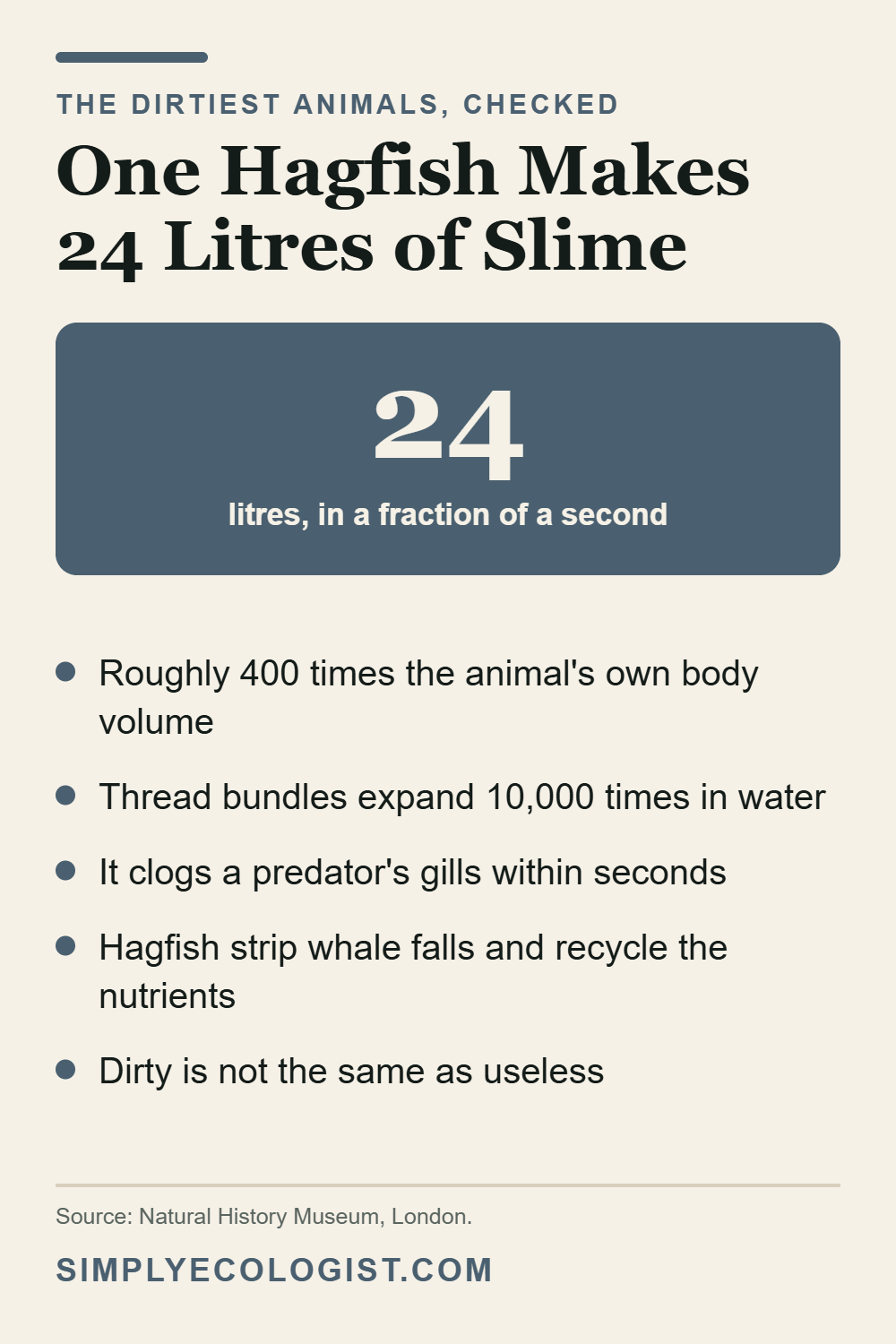
The short answer: by the usual measures, the hagfish. It coats itself and everything near it in roughly 24 litres of slime, feeds by burrowing inside dead whales, and lives surrounded by its own decomposing food. But dirty is doing a lot of work in that sentence. Every animal on this list converts waste into something an ecosystem needs.
Key Takeaways
- Rats and seagulls thrive in human waste, carrying pathogens including leptospirosis and hantavirus.
- Pigeon droppings contain uric acid, Cryptococcus, and Salmonella, corroding metal and weakening stone structures.
- Bat guano harbors Histoplasma fungi and accumulates hundreds of kilograms annually in colonies.
- Flies spread Salmonella and E. coli via body hairs, breeding rapidly in feces with hundreds of eggs per female.
- Feral pigs lack sweat glands, wallow in mud mixed with parasites, and cause erosion and water quality degradation.
1. Bats and Pigeons: Flying Factories of Fertilizer
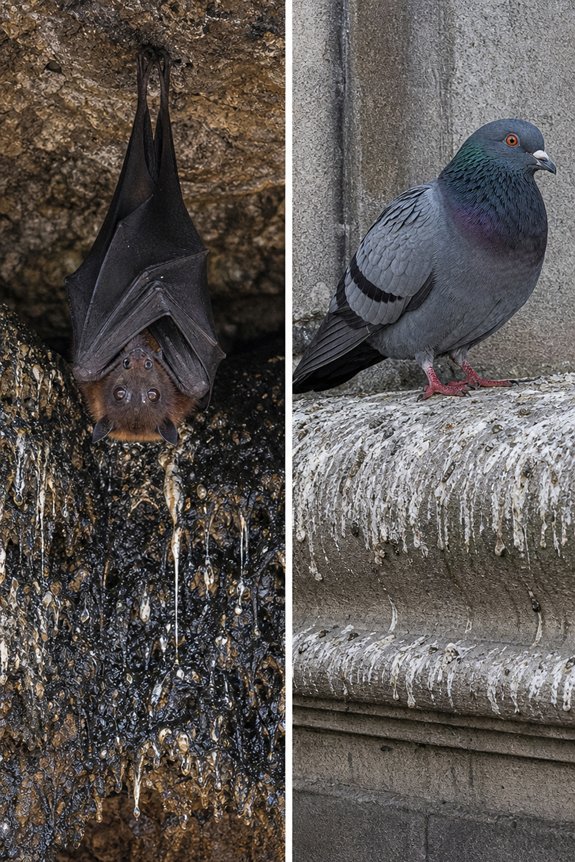
Bats and pigeons routinely transform their waste into ecological and economic resources. Bat guano nitrogen varies enormously by species, from under 1% to around 11%, alongside roughly 3 to 5% phosphorus. Farmers value this potent natural fertilizer. A single colony produces hundreds of kilograms annually. Cave soils grow rich. Nearby ecosystems thrive.
Pigeon guano differs. It’s high in uric acid and salts. Buildings suffer. Metal corrodes. Stone weakens over time. Urban parks and rooftops concentrate nutrients. Localized nitrogen loads increase. Pathogens accumulate.
Both species carry risks. Bat guano harbors histoplasma fungi. Pigeon droppings contain Cryptococcus and Salmonella. Handlers wear protection. The work demands respect.
These creatures illustrate an uneasy truth. Waste creates value. It also brings danger. Understanding both sides matters.
2. Vultures: The Dirty Job of Eating Death
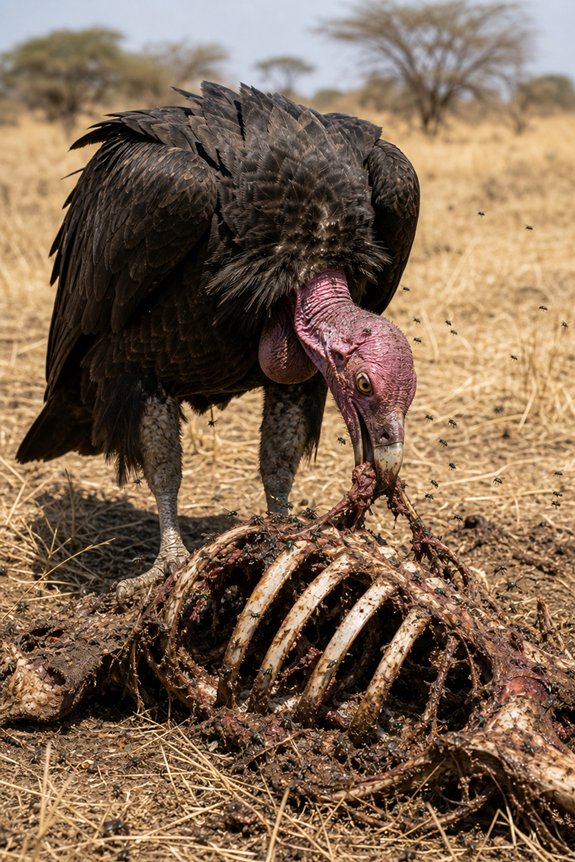
Flying animals leave their mark on the world in many ways. Vultures do so by consuming death itself. These obligate scavengers eat carrion, flesh left hours or days after an animal dies. Rotting carcasses breed pathogens, disease causing organisms that threaten other wildlife and humans. Vultures possess highly acidic stomachs and robust immune systems. These adaptations neutralize harmful bacteria and toxins. They digest rotting flesh that would sicken most creatures.
By stripping carcasses rapidly, vultures prevent disease spread. They stop anthrax, rabies and botulism from reaching new hosts. They are not alone in that work, and the wider cast of scavengers and specialist feeders keeps the same systems running. This service protects public health across ecosystems. Gyps vultures, a genus of Old World species, feed in groups. They can reduce a large ungulate to bones within hours. Nutrients recycle efficiently back into the food web.
Their decline brings consequences. South Asia lost over ninety five percent of its Gyps vultures between the 1990s and 2000s. Poisoning and veterinary diclofenac caused this collapse. Unremoved carcasses accumulated. Disease risks rose measurably. The loss of these birds demonstrates how ecosystems depend on creatures that handle what others cannot.
3. Hagfish: Slime, Rot and Ocean Cleanup
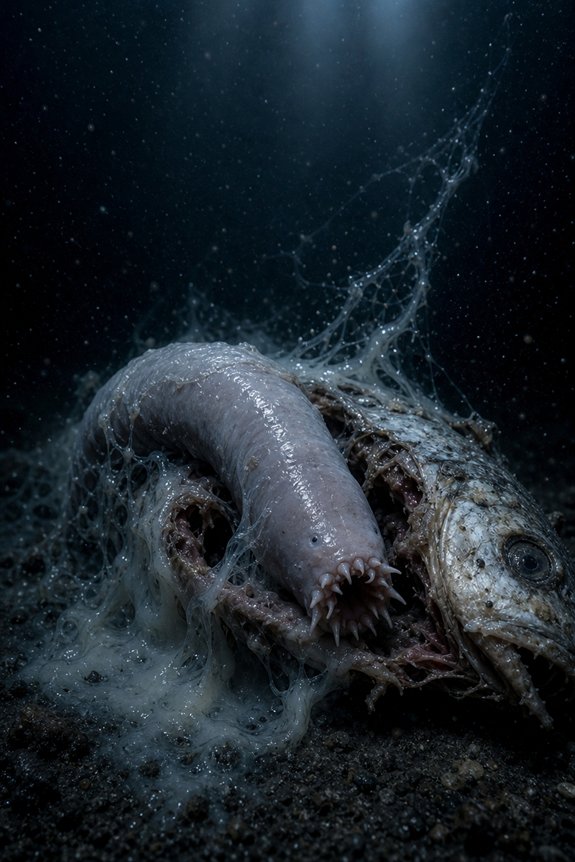
Hagfish defend themselves with remarkable slime. A single animal releases enough protein rich mucus to clog a predator’s gills within seconds.
They consume carrion too, entering dead whales and other marine animals to feed from the inside out. This scavenging isn’t mere opportunism. Hagfish perform essential cleanup in the deep sea, breaking massive carcasses into nutrient rich detritus that sustains benthic ecosystems, the communities of organisms living on and in the seafloor.
Their work recycles carbon across vast ocean floors. One whale fall can feed them for months. They survive these long intervals because their metabolic rate stays remarkably low.
Scientists now study hagfish slime for biomaterials, hoping to replicate its viscoelastic properties (how it stretches and flows under stress) in biodegradable fibers. These ancient creatures remind us that “dirty” work often keeps systems alive.
Slime Defense Mechanism
Often overlooked, hagfish occupy a unique ecological niche at the bottom of the ocean. A single hagfish can produce roughly 24 litres of slime, about 400 times its own body volume, in a fraction of a second. The thread bundles expand ten thousand fold on contact with seawater. Thousands of mucinous threads (slime threads) combine with mucus to create this barrier. The slime’s tensile strength, its ability to resist breaking under stress, and rapid expansion have inspired biodegradable fiber research.
The slime shapes deep sea life in stark ways:
- It drowns attackers slowly.
- It denies rivals food.
- It leaves predators gasping.
- It transforms the hagfish into something untouchable.
Hagfish aren’t dirty. They’re survivors, armed with threads finer than hair yet stronger than expectation.
Carrion Consumption Habits
Scavenging defines the hagfish’s existence. These jawless fish burrow into dead fish and marine mammals on the seafloor. They secrete copious slime, a proteinaceous mucous that expands rapidly. This slime clogs predators’ gills and deters rival scavengers.
A single hagfish consumes up to 20% of its body weight in one feeding. This enables rapid carrion removal. It limits pathogen spread in deep ocean habitats.
Hagfish slime contains mucins and millions of thread like keratin fibers. These hydrate into a dense matrix within seconds. The slime provides defense. It also helps monopolize carcasses by repelling competitors.
As obligate scavengers, hagfish convert soft tissues into detritus and faeces. This feeds benthic invertebrates (bottom dwelling animals without backbones) and microbes. Their work accelerates carbon and nutrient turnover around whale falls and shipwrecks.
Deep Sea Cleanup Role
Because they consume carcasses whole and excrete nutrients back into the sediment, hagfish serve as unassuming custodians of the deep. These jawless fish enter dead whales and fish through orifices or wounds. They eat from the inside out. Their slime (protein threads and mucins) deters predators and competitors alike. One hagfish produces liters of this viscous defense in minutes.
Hagfish accelerate nutrient recycling. They prevent anoxic zones, areas without oxygen that kill bottom dwelling life. Their work supports entire communities.
Consider their quiet impact:
- A single whale fall feeds scavengers for decades
- Sediments receive recycled nitrogen and carbon
- Microbial communities thrive on processed waste
- Life persists in darkness
They aren’t beautiful. They’re necessary.
4. Hippos: Rivers of Waste From Africa’s Deadliest Mammals
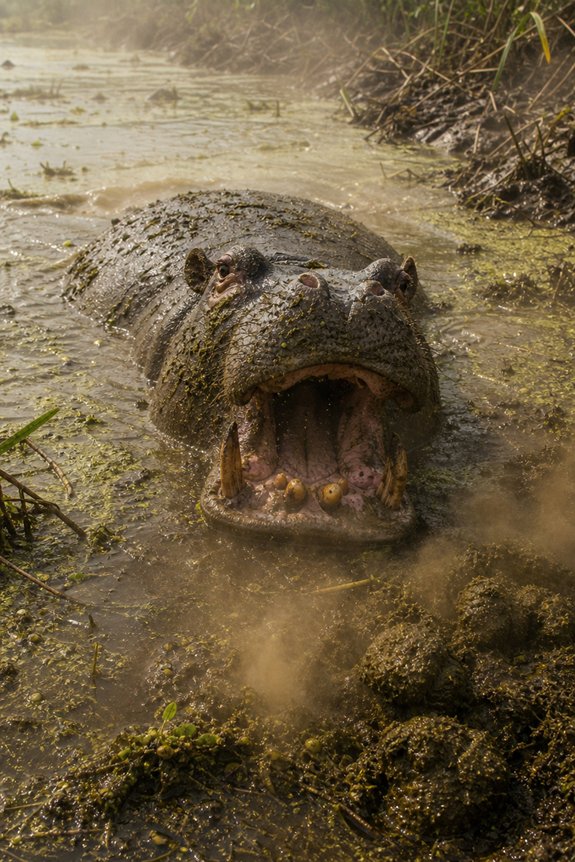
A single hippopotamus produces around 17 kg of dung daily, and deposits half of it in the water.
This waste transforms rivers into nutrient hotspots.
Hippopotamus groups alter entire ecosystems through collective waste output.
Daily Dung Output
Each day, a single adult hippopotamus releases around 17.4 kg of dung by wet mass, the figure measured in the Mara River studies, and about 8.7 kg of that goes directly into the river. This waste creates visible “fecal plumes” that drift downstream. The plumes carry organic matter and nutrients. They sometimes change water color and oxygen levels.
Hippos spend most of their lives submerged. They defecate directly into rivers and lakes. This behavior makes them key vectors. They move nutrients from land into water.
The emotional weight of this daily output becomes clear when one considers:
- The sheer volume, close to 40 pounds of waste from one animal every day
- The visible plumes clouding once clear waters
- Nighttime oxygen crashes that suffocate fish
- The quiet transformation of entire ecosystems by simple biological necessity
Hippo waste fuels food webs. It supports microbes and algae. These feed invertebrates and fish. Whole food webs depend on this nutrient flow.
River Ecosystem Impact
Though hippos spend their days half submerged in African rivers, they’re actively reshaping the waters beneath them.
A single adult produces around 17 kg of dung daily, roughly 38 pounds, with about half entering the water directly.
Hippos defecate in communal underwater latrines. These dense fecal plumes increase turbidity, clouding the water. They deliver pulses of nitrogen and phosphorus. This concentrated input fuels algal and microbial production.
Fish biomass can increase. However, decomposition consumes dissolved oxygen. Hypoxic events may follow.
Hippo mediated nutrient transfer creates “hotspots” of productivity. These support diverse food webs. Detritivores, fish, and waterbirds benefit downstream.
River food webs depend on these inputs.
Seasonal movements synchronize with rainfall. Temporal pulses shape riverine nutrient cycling. The system shows remarkable resilience.
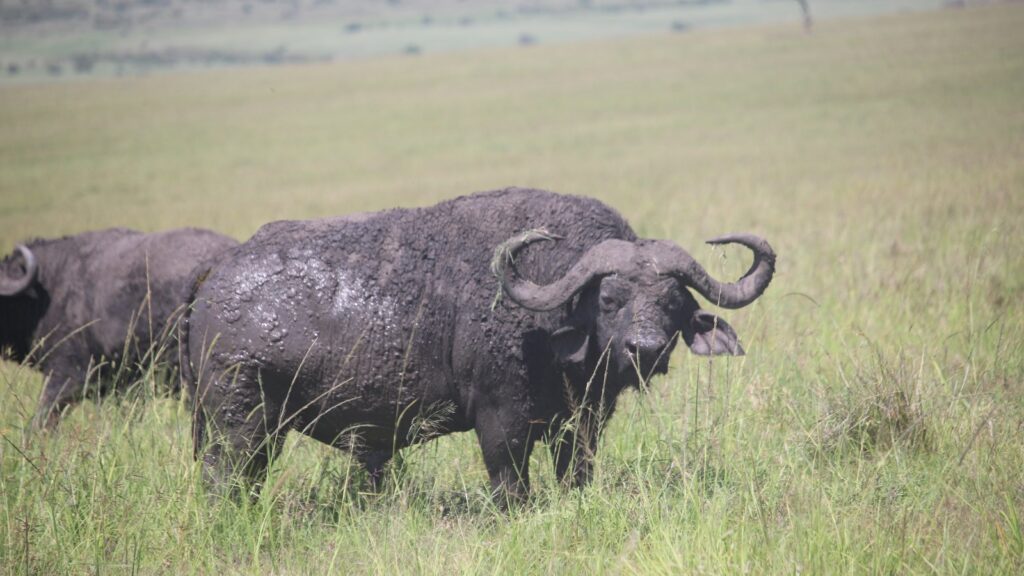
5. Pigs and Bison: Why Giant Mammals Love Mud
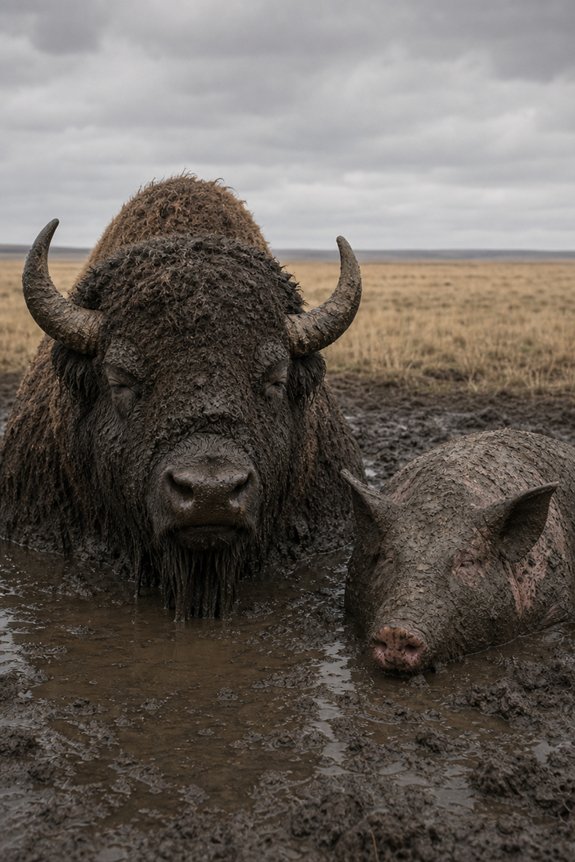
Often, the largest mammals in North America seek out mud with surprising urgency. American bison and feral pigs wallow to cool down. Pigs lack sweat glands. They coat themselves to survive heat.
- They suffer without relief. Parasites torment their skin. Mud soothes this pain.
- Their bodies bear marks. Sunburn and ticks damage them. Wallowing heals these wounds.
- They reshape the land. Their rolling creates pools. These pools become homes for frogs, insects and birds.
- They leave lasting traces. Nutrients enrich soil. Yet erosion follows too.
Bison wallows persist for years, in the way that any very large mammal reshapes the ground it uses. They create patches where plants diversify. Pigs root more destructively. Water quality suffers downstream.
These giants don’t choose filth. They choose survival.
6. Rats and Seagulls: Thriving in Human Filth
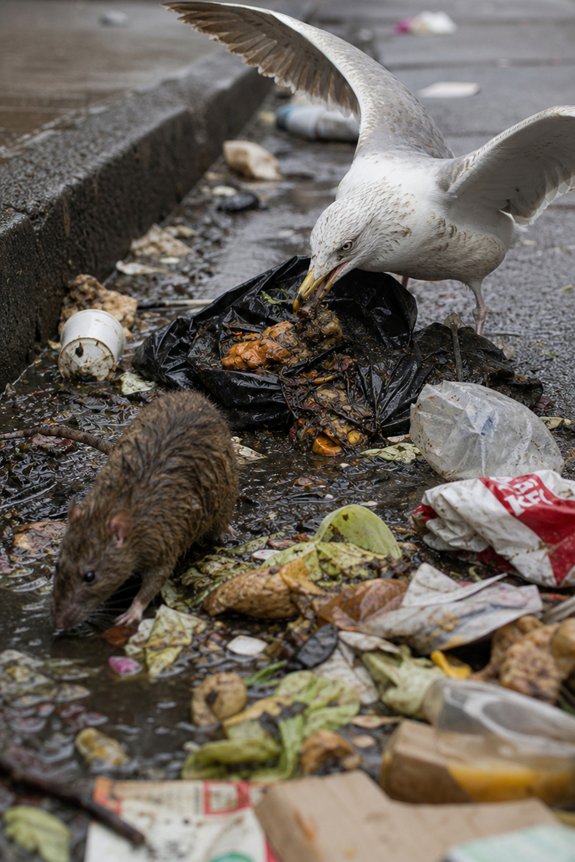
Adaptation drives survival in places others abandon. Rats and seagulls exemplify this principle. They flourish amid human waste.
Rats carry a large number of pathogens, leptospirosis and hantavirus among them. Females breed rapidly, producing 6 to 12 pups per litter multiple times yearly. Urban densities reach dozens per hectare.
Seagulls exploit refuse across several kilometers daily. They gather in flocks of hundreds at landfills. Both species act as mechanical vectors. They transport bacteria and parasites on bodies and in droppings. Seagull guano corrodes metal. Rat feces contaminates food stores.
City gulls now breed more successfully than wild counterparts. Control differs by species. Rodent management combines sanitation, exclusion, and baiting. Gull mitigation emphasizes waste reduction and nonlethal deterrents like netting.
Human wildlife conflict persists. These animals remind us that filth, once created, finds willing tenants.
7. Dung Beetles and Flies: Insects That Live in Feces
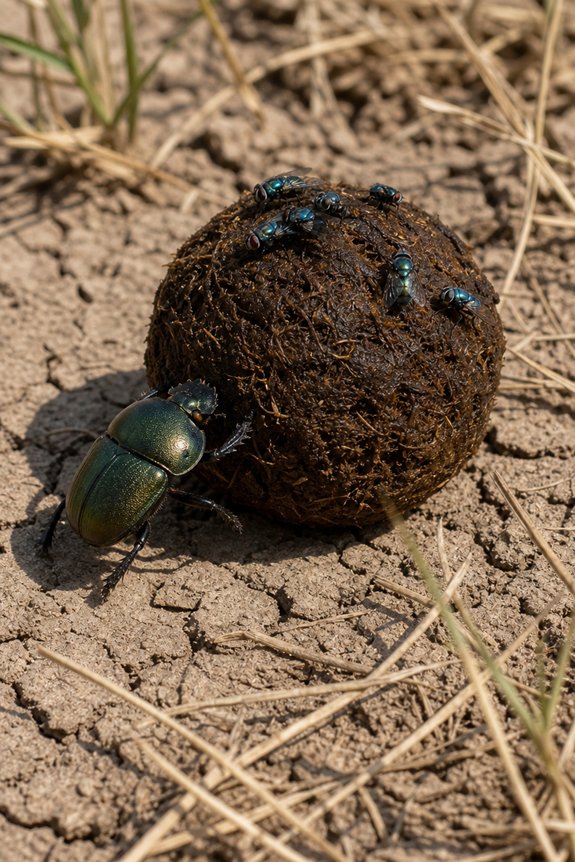
Living in waste demands specialized tools. Dung beetles are the strongest insects measured, with one horned species recorded pulling 1,141 times its own body weight to feed their young and enrich soil. Their tunnelling boosts nitrogen levels and measurably reduces the infective parasite larvae surviving around dung pats, though the effect washes out in heavy rain. Flies exploit feces differently. One female deposits hundreds of eggs maturing in seven to ten days, breeding swarms that spread Salmonella and E. coli via body hairs and vomit.
These insects evoke complex responses:
- Revulsion at their filthy habitat
- Awe at beetle strength and soil renewal
- Fear of disease transmission
- Gratitude for nutrient recycling
Together they decompose waste. Beetles restore soil quietly. Flies accelerate decay dangerously. Both serve ecosystems we’d rather ignore.
8. Striped Polecats: Chemical Weapons for Defence
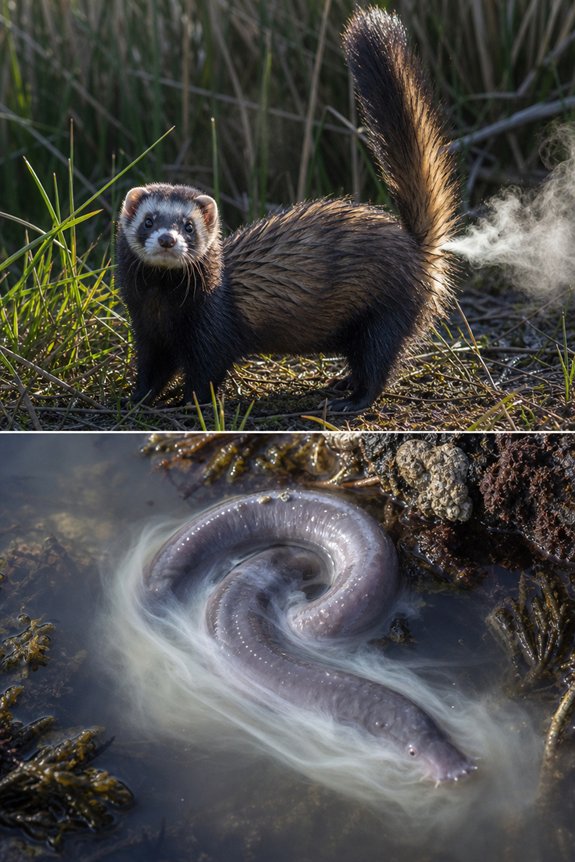
Striped polecats and hagfish deploy chemical defenses that repel threats without physical combat. Polecats eject potent musk from anal glands. It travels several meters. The spray contains sulfur and nitrogen compounds. These create foul odors. They irritate eyes and mucous membranes. The smell persists for days.
The polecat’s advantage is that it never has to fight. A predator that has been sprayed once learns the warning colours and keeps its distance afterwards.
The defence costs energy but it works. Polecats escape mammalian predators without a scratch. These mechanisms demonstrate adaptation. Animals evolve remarkable solutions. They avoid violence through chemistry.
9. Sloths and Koalas: Slow, Sleepy and Surprisingly Messy
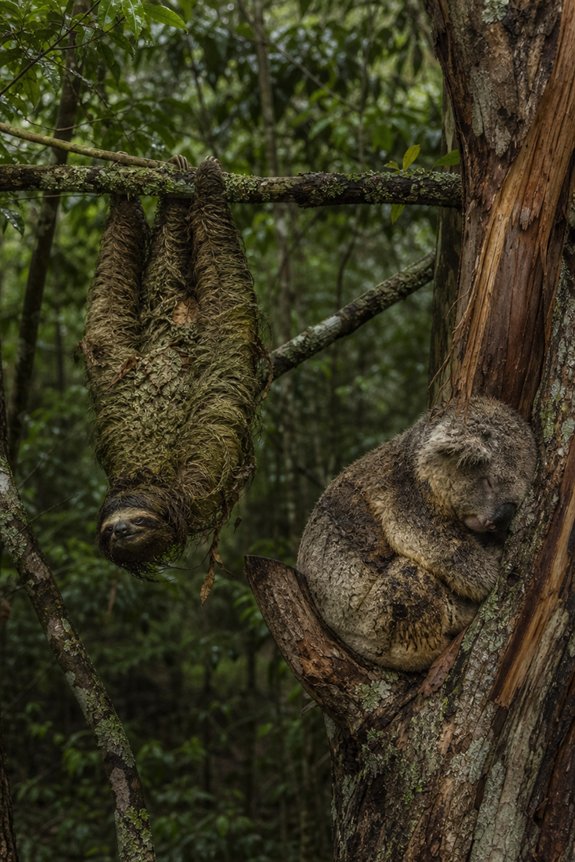
Sloths and koalas spend most of their lives motionless in trees, yet their waste habits create surprisingly complex ecological effects. Sloths descend weekly to defecate. Their nutrient rich feces sustain beetles, moths, and algae. Koalas reuse the same trees. This creates localized hotspots that increase parasites and alter microbes.
Consider what this means:
- Vulnerability: Sloths risk predation during weekly ground trips, making each descent potentially fatal.
- Dependence: Entire moth species complete their life cycles solely within sloth fur and droppings.
- Concentration: Koala waste buildup changes tree chemistry, limiting future food sources.
- Connection: these animals link canopy and soil in ways faster animals never do.
Their slowness isn’t laziness. It’s a different rhythm of ecological participation, measured in weeks rather than hours.
Final Thoughts
These animals redefine filth. Bat colonies drop hundreds of kilograms of guano a year. Vultures digest anthrax without harm. Hagfish produce two dozen litres of slime in a fraction of a second. Hippos flood rivers with waste. Each creature transforms disgust into ecological function. Ecosystems depend on such cleaners. Without them, ecosystems would collapse under rot and disease. Their messiness sustains the world.

Erzsebet Frey (Eli Frey) is an ecologist and online entrepreneur with a Master of Science in Ecology from the University of Belgrade. Originally from Serbia, she has lived in Sri Lanka since 2017. Eli has worked internationally in countries like Oman, Brazil, Germany, and Sri Lanka. In 2018, she expanded into SEO and blogging, completing courses from UC Davis and Edinburgh. Eli has founded multiple websites focused on biology, ecology, environmental science, sustainable and simple living, and outdoor activities. She enjoys creating nature and simple living videos on YouTube and participates in speleology, diving, and hiking.
🌿 Explore the Wild Side!
Discover eBooks, guides, templates and stylish wildlife-themed T-shirts, notebooks, scrunchies, bandanas, and tote bags. Perfect for nature lovers and wildlife enthusiasts!
Visit My Shop →