
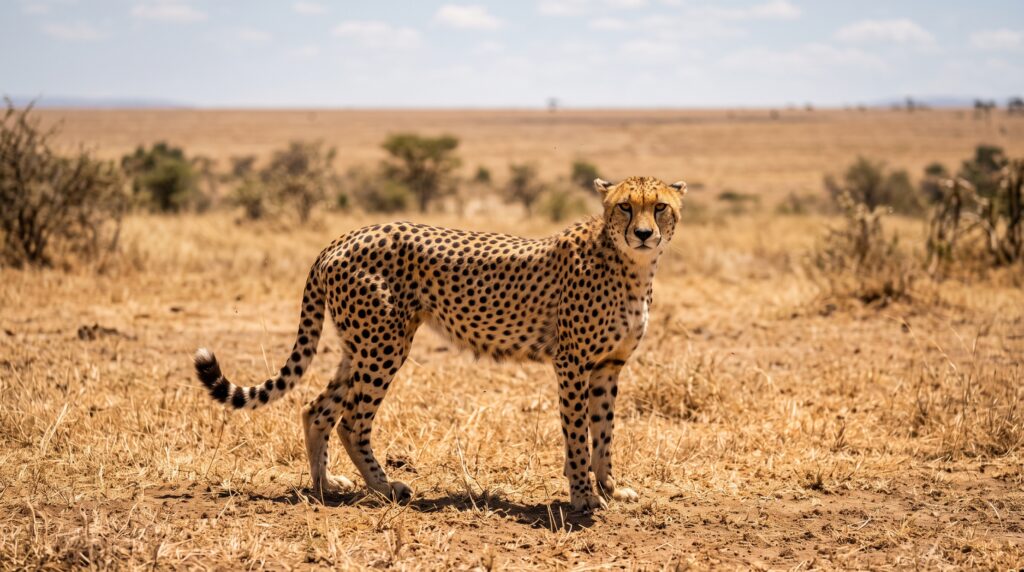
Cheetahs aren’t a serious threat to people. No confirmed case exists of a wild cheetah killing and eating a human, and wild attacks are virtually unheard of. Most incidents involve captive animals, like a fatal mauling in Belgium in 2007. At 75 to 125 pounds, with a bite up to a third weaker than a lion’s, cheetahs hunt gazelles and other prey under about 130 pounds instead. The greater danger runs the other direction, as the figures below show.
Key Takeaways
- Wild cheetahs almost never attack people, and no confirmed case exists of a wild cheetah killing and eating a human.
- Nearly all documented attacks involve captive animals, including a fatal 2007 mauling in Belgium and a 2021 volunteer injury in South Africa.
- Their light 75 to 125 pound frame, weak bite, and blunt semi retractable claws make humans unsuitable, risky prey.
- Cheetahs target small to medium ungulates under about 60 kg (130 pounds), killing by throat suffocation rather than crushing bone.
- Captivity stress, barrier breaches, and direct handling drive most incidents, so stay behind barriers and never enter enclosures.
Are Cheetahs Dangerous to Humans?
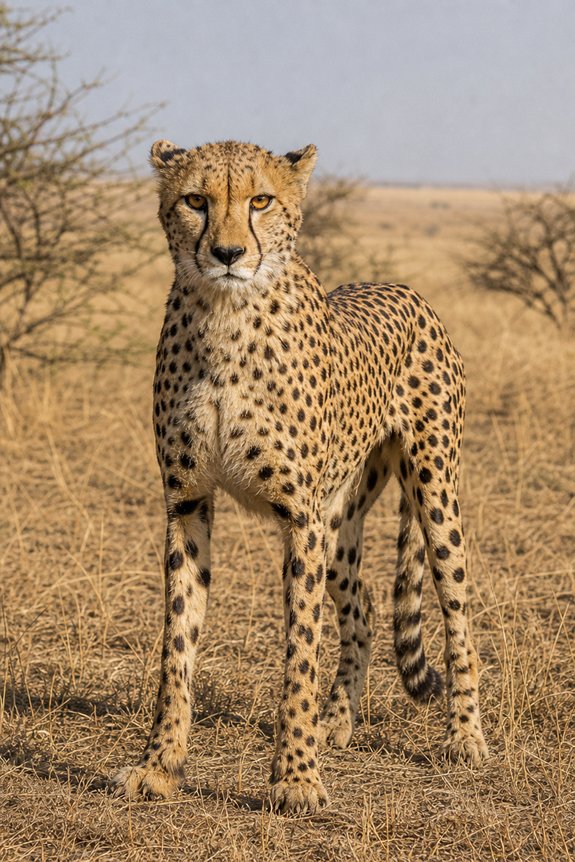
The short answer is no. Wild cheetahs don’t hunt people. Researchers have documented no confirmed cases of a wild cheetah killing and eating a human.
Their bodies explain why. A cheetah weighs about 75 to 125 pounds, and it’s built for speed rather than power. It has semi retractable claws, which means the claws stay partly exposed and can’t grip large prey well. Its bite is weaker than a lion’s or a leopard’s. Cheetahs target small, fast animals like gazelles and impala.
Most recorded attacks happened in captivity. A captive cheetah killed a visitor in a Belgian zoo in 2007, and another injured a person in South Africa in 2021. Stress and confined space can trigger defensive aggression.
Still, no wild animal encounter is risk free.
Has a Wild Cheetah Ever Eaten a Person?
No confirmed wild case exists. Wild cheetahs prefer small to medium ungulates, meaning hoofed animals like gazelles and impalas, and they don’t regard humans as normal prey.
Their bodies explain the pattern, since a cheetah’s bite is roughly a third weaker than a lion’s and its semi retractable claws favor speed over fighting power.
No Confirmed Wild Cases
Researchers have never confirmed a single case of a wild cheetah killing and eating a person. The literature calls such events virtually unheard of, and reviews of the documented cases find every fatality involved a captive animal.
Wild cheetah attacks on humans are few and far between, and none show the predatory pattern seen in leopards or tigers. Cheetahs hunt small to medium ungulates, meaning hoofed mammals like gazelles and impalas. A human simply doesn’t match that profile in the wild.
Their bodies explain part of the reason. A cheetah’s frame is light and built for speed, and its bite is weak compared with other big cats, so large or dangerous prey carries too much risk. Every documented mauling or death has involved captive animals, usually people who entered enclosures. That distinction matters more than people realize.
Prey Preferences Explain Why
Look at what a cheetah actually eats, and the answer becomes clear. Cheetahs hunt small, fast ungulates, meaning hoofed animals like gazelles, impalas and springbok. Most of their prey weighs under about 130 pounds, or 60 kg. That size matches the cheetah’s build.
A cheetah is light and speed optimized. Its claws are semi retractable, which means they stay partly exposed and work more like running spikes than grappling hooks. Its bite is relatively weak compared to a leopard’s or lion’s. So it kills by suffocation, not crushing force.
An adult human doesn’t fit that pattern. A person is larger, unfamiliar and likely to fight back, so the attempt would cost energy and risk injury.
Cheetahs choose efficiency over conflict. That preference, more than any fear of people, explains their record.
Speed Over Fighting Power
Consider what a cheetah’s body is designed to do. Everything about it serves sprinting. Cheetahs reach roughly 93 km/h (58 mph), and their light bones, slender frames, and semi retractable claws all support that acceleration. Semi retractable means the claws stay partly exposed, working like the spikes on a running shoe.
That grip helps in a chase, but it costs the cheetah in a fight.
Their bite is weak by big cat standards. Some estimates place it at about a third below a lion’s. Small claws and a light build make grappling risky, so a cheetah avoids large, resistant animals. Humans fall into that category.
There are no confirmed cases of a wild cheetah killing and eating a person. That absence seems less like luck and more like design.
How Often Do Cheetahs Attack Humans?
Although cheetahs look built for a chase, they almost never chase people. Researchers have documented no confirmed case of a wild cheetah killing and eating a human. Most recorded incidents involve captive animals. In 2007, a cheetah mauled a woman at a Belgian zoo, and in 2021, a captive cheetah injured a volunteer in South Africa. Captivity raises the risk because it removes the distance a wild cheetah normally keeps.
Their diet explains much of this pattern. Cheetahs hunt small to medium prey, such as gazelles and impalas, animals well under their own strength limits. Humans fall outside that range.
Even so, experts say fatal encounters can never be ruled out. That caution seems reasonable. Anyone near captive cheetahs should treat them as wild predators, not tame companions.
The “Cheetahs Have Never Killed a Human” Claim, Examined
This is the claim that sends most people to this question, usually phrased as the cheetah being the only big cat that has never killed a person. It is close to true, and the two words doing the work are “wild” and “big”.
Take them in turn. Cheetahs are not Panthera, the genus holding lions, tigers, leopards and jaguars, so calling them a big cat at all is a loose usage. And the accurate version of the claim is narrower than the meme: no confirmed case exists of a wild cheetah killing and eating a human. Captive cheetahs have killed, as the 2007 Belgian case shows.
So the honest statement is this. Wild cheetah predation on people is unrecorded, captive fatalities exist but are extremely rare, and the risk profile is nothing like a leopard’s. That is a more interesting fact than the meme, and it has the advantage of being right.
Why Humans Aren’t on the Cheetah Menu
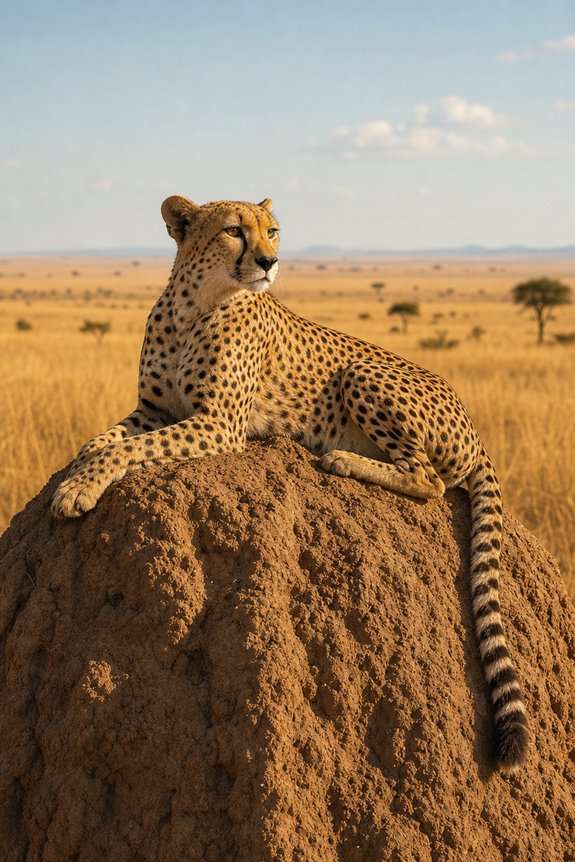
Cheetahs are built for speed, not combat. Their light frames and weak bite force suit hunting ungulates, hoofed animals like gazelles and impalas that often weigh under about 130 pounds.
Humans don’t match that profile at all, and it seems fair to say a cheetah gains nothing from the risk.
Built for Speed, Not Combat
Because evolution rarely gives an animal everything, the cheetah traded fighting power for pure speed. Its skeleton is light and slender. Long limbs and a flexible spine stretch each stride, which helps the cat reach roughly 93 km/h (58 mph). Those same traits weaken it in a struggle.
- Semi retractable claws grip the ground like cleats, but they tear poorly in a fight.
- Bite force sits about a third below a lion’s, limiting control of large, resisting animals.
- Reduced muscle mass and lighter bones make prolonged combat costly and risky.
- Hunts target small ungulates (hoofed animals like gazelles and impalas) not large defenders.
Leopards and lions carry the bulk for defensive aggression. Cheetahs don’t. The tiger vs lion size comparison shows what that extra bulk actually measures out to. It’s worth remembering that speed is a specialty, not an all purpose weapon.
Small, Easy Prey Preferences
That specialty shapes the menu. Cheetahs hunt small to medium sized ungulates, meaning hoofed grazing animals like Thomson’s and Grant’s gazelles or young impala. These animals are easier to catch and subdue. A cheetah’s speed peaks near 93 km/h (58 mph) in short bursts, and that acceleration works best against nimble, lightweight targets.
Its skeleton stays light and gracile, or slender, built for pursuit rather than grappling. Bite force is another limit. Cheetahs bite far weaker than lions do, so heavy prey turns a hunt into an injury risk.
Humans don’t fit the pattern. People are large, strong, and unpredictable compared with gazelles, so they aren’t part of the natural diet. It’s worth remembering that a cheetah’s caution is practical, not a kindness toward people.
The Prey Cheetahs Actually Hunt
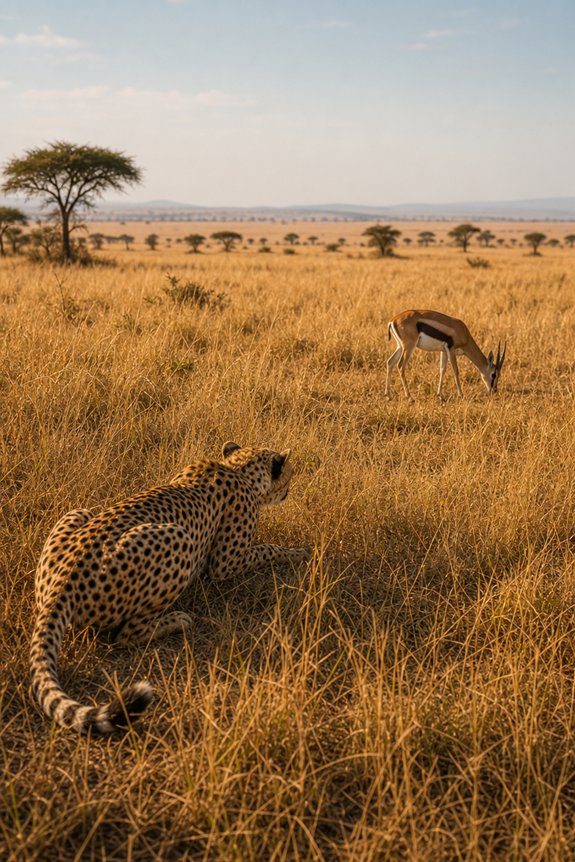
Usually, a cheetah’s menu is smaller than people expect. Most meals are ungulates, meaning hoofed grazing animals, weighing 20 to 60 kilograms, or 44 to 130 pounds. Thomson’s and Grant’s gazelles top the list. Young impalas follow close behind.
- A gazelle spotted from 200 meters away, unaware.
- A stalk that closes the gap to 100 meters.
- A sprint under 500 meters, ending in a trip.
- A bite to the throat, killing by suffocation.
Cheetahs don’t grapple prey or crush bone like lions do. They rely on speed, balance, and a narrow window of stamina. They’ll also take hares, birds, and juveniles of bigger species. Sometimes they scavenge or steal another predator’s kill.
Nothing about that diet suggests danger. It’s a narrow diet, and humans simply don’t fit inside it.
Why Big Prey Intimidates a Cheetah
A cheetah’s body isn’t built for fighting. Its slender frame and thin skeleton keep it light enough for 58 mph bursts, yet those same traits leave it fragile under real pressure.
The bite is roughly a third weaker than a lion’s, so an adult buffalo can absorb the attack and strike back, and that trade of power for speed seems worth remembering.
Slender Frame, Thin Skeleton
Look closely at a cheetah standing beside a lion, and the difference is obvious. The cheetah is built light. Its bones are thin and gracile, meaning slender and delicate rather than thick and heavy. That skeleton supports speeds near 93 km/h (58 mph), but it can’t absorb the strain of wrestling a 500 pound wildebeest.
- A cheetah weighs about 75 to 125 pounds, while a giraffe can exceed 2,000.
- Its bite force is weak, so it can’t crush heavy bone.
- Semi retractable claws grip the ground for traction, not large struggling prey.
- One broken leg ends a hunting career, and starvation follows.
Weak Bite Force
Bite force measures how much pressure an animal’s jaws can generate, and the cheetah’s numbers fall short. Studies place it at about a third below a lion’s. That gap matters in a fight. A cheetah’s skull and jaw muscles favor speed and a quick, precise bite rather than crushing bone, so it kills by clamping the throat and cutting off air.
This works well on gazelles and impalas, animals weighing under 130 pounds. It works poorly on adult ungulates, meaning hoofed animals like wildebeest or zebra, which can struggle for several minutes. Semi retractable claws give grip but not leverage. A cheetah simply can’t hold a large, kicking animal down long enough. That limitation explains something worth remembering. Big prey intimidates cheetahs because the risk of injury outweighs the meal.
Why Speed Costs Fighting Power
That weak bite isn’t a flaw. It’s a trade off. Evolution built the cheetah for speed, not for wrestling. Its lightweight skeleton and flexible spine allow bursts near 93 km/h, or 58 mph, but they leave little room for fighting muscle. Even the claws serve running first. They’re semi retractable, working like the cleats on a sprinter’s shoe rather than hooks for holding down struggling prey.
Large animals expose that limit:
- An adult giraffe can kick hard enough to break bones.
- Cattle outweigh a cheetah by several hundred pounds.
- A cheetah’s bite measures roughly two thirds of a lion’s force.
- One serious injury can end a cheetah’s hunting life.
Cheetahs Are Built for Speed, Not Fighting
Almost every part of a cheetah’s body serves one purpose: speed. Its skeleton is light and slender. A long, flexible spine lets the animal stretch its stride and accelerate, reaching 93 km/h (58 mph) in short bursts. Semi retractable claws, claws that stay partly exposed, work like cleats, gripping the ground for traction. Large nasal passages and lungs pull in oxygen quickly during a sprint.
These gains cost the cheetah elsewhere. Its bite force is weak for a big cat, often cited as roughly a third below a lion’s. Its light frame limits close combat power. So a cheetah chases down small to medium ungulates, hoofed animals like gazelles, and kills with a quick suffocating bite. That design impresses, but it also leaves the cat exposed.
How Fast Can a Cheetah Really Run?
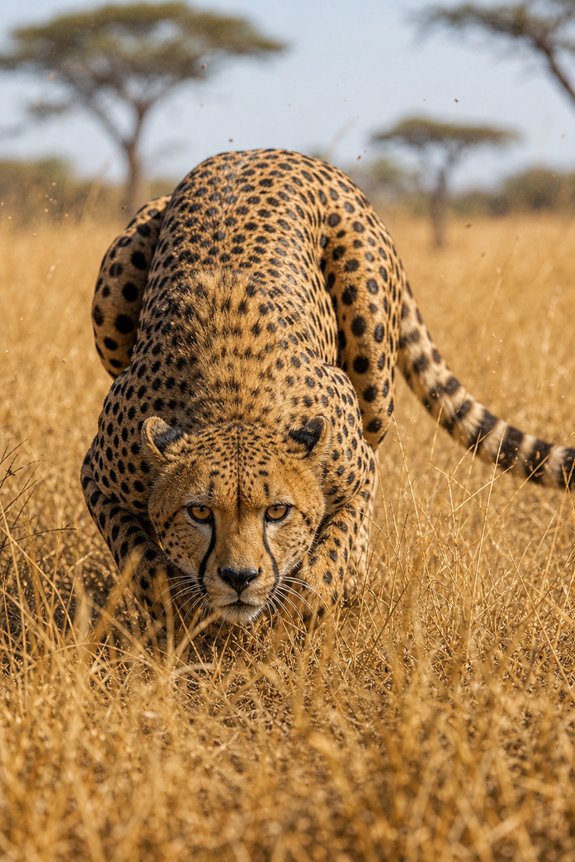
Cheetahs regularly earn the title of fastest land animal, and the numbers back it up. A sprinting cheetah has been measured at 93 kilometers per hour, or 58 miles per hour, in a GPS collar study of wild hunts published in Nature. That is the fastest speed ever recorded for a land animal. That speed comes at a cost.
- Acceleration: often quoted as 0 to 60 mph in three seconds, though instrumented studies have not confirmed a figure that high.
- Stride length: up to 7 meters, or 23 feet, per bound.
- Sprint duration: only 20 to 30 seconds before overheating.
- Anatomy: a lightweight frame, enlarged heart, and semi retractable claws for traction.
Their flexible spine stretches each stride, while those claws grip like cleats. Their oxygen reserves run out fast. Endurance isn’t part of the design.
Cheetahs stalk within 100 to 200 meters, then explode forward. Watching that burst, one senses speed built for hunting, not fighting.
Cheetah Claws Work Like Running Shoes
Look closely at a cheetah’s paw and you’ll notice something unusual. The claws stay partly exposed, even at rest. Most big cats retract their claws fully, keeping them sharp for grabbing and cutting. Cheetah claws are blunter and stiffer instead, and they work like the cleats on a sprinter’s shoe.
That design serves one purpose: traction. The claws grip the ground at speeds near 93 km/h (58 mph), which helps the cat accelerate and turn. Staying partly extended also reduces wear over time.
There’s a tradeoff here. A cheetah can’t grapple prey the way a lion does, so it relies on speed and a suffocating throat bite. Combined with its light frame, this makes cheetah claws poor weapons. That distinction matters when people ask about danger.
Cheetah Bite Force vs a Lion’s
A cheetah’s bite is weak for a big cat. Lions are usually quoted near 650 pounds per square inch, while cheetah estimates sit closer to 400 to 500.
The reason is design; a light skull and slim jaw muscles favor speed over force, so cheetahs suffocate smaller prey like gazelles instead of crushing bone, which strikes me as a sensible trade.
Bite Force Comparison
Bite force tells us a lot about how a predator hunts. Bite force means the pressure a jaw applies when it closes. A cheetah’s bite is roughly a third weaker than a lion’s. Lions are usually quoted near 650 psi, or pounds per square inch, while cheetahs are estimated closer to 400 to 500 psi. No peer reviewed measurement of a live big cat bite exists, so treat every psi figure as an approximation.
- A lion can crush bone; a cheetah usually can’t.
- Cheetahs grip the throat and suffocate smaller antelope.
- Their light skulls trade crushing power for speed and precision.
- Semi retractable claws help them hold prey, not overpower it.
That difference matters for people. A cheetah bite can injure, but it rarely carries the lethal force of a lion’s. Watching a cheetah run, one sees an animal built for pursuit, not for combat.
Built For Speed
Everything about a cheetah’s body serves acceleration. The skull is gracile, meaning lightweight and slender, so it doesn’t carry the heavy bone a crushing bite needs. That trade off shows in the numbers. A cheetah’s bite can be roughly a third weaker than a lion’s. Its claws are semi retractable, so they stay partly exposed and grip the ground like cleats during a sprint.
Speed does the work instead. A cheetah reaches about 93 km/h (58 mph), then trips a smaller antelope and clamps the throat to suffocate it. The whole method depends on the prey giving up quickly.
Against a large, struggling animal, that plan fails. Cheetahs aren’t built for extended grappling, and it’s worth remembering that a human falls well outside their usual prey size.
Weak Weapons, Small Prey
Compare the two cats jaw for jaw, and the gap shows up immediately. A cheetah’s bite is weak. Estimates put it near a third weaker than a lion’s, which limits what a cheetah can safely attack. Its claws are semi retractable, meaning they only partly pull back into the paw, so they grip the ground like running shoes instead of hooking prey.
- Cheetahs kill gazelles and impala, not buffalo.
- Their bites suffocate prey rather than crush bone.
- A gracile, lightweight skeleton breaks under real struggle.
- Long fights end badly for them, not their rivals.
Gracile means slender and lightly built. Jaw muscles and tooth leverage stay slim. That trade off buys speed and costs killing power. It’s worth remembering this when people picture cheetahs as ruthless killers.
Cheetah vs Leopard: Which Is More Dangerous?
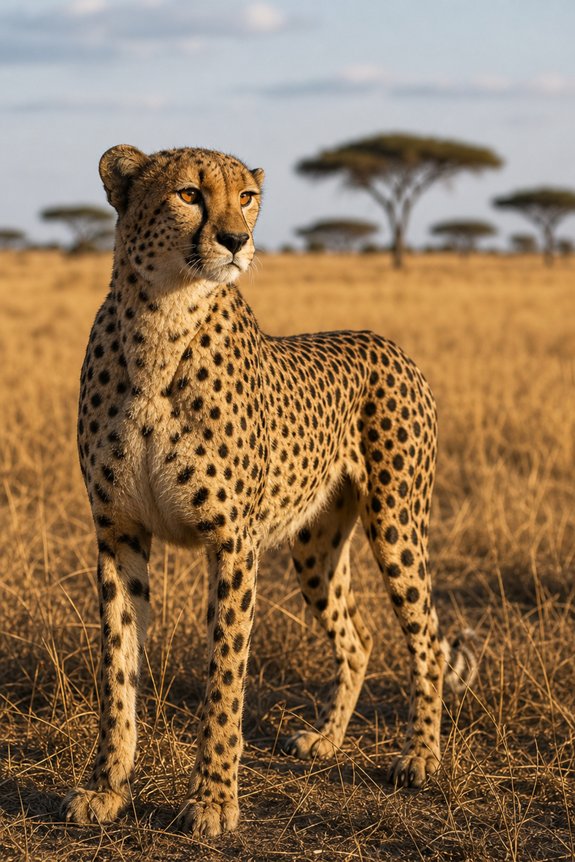
Although cheetahs and leopards often share the same grasslands, they don’t pose the same risk to people. Leopards attack and kill humans, with documented cases across Africa and Asia. Confirmed wild cheetah attacks are virtually unheard of.
The difference comes down to build. Leopards are powerful ambush predators, meaning they hide and strike at close range, and they take large, varied prey, including livestock. Cheetahs carry lighter skeletons, semi retractable claws, and a weaker bite, so they chase smaller ungulates like gazelles and impala.
Captivity raises risk for both. Fatal cheetah incidents stay rare and usually follow enclosure breaches or stress, while captive leopards show more aggression. Humans remain the real threat to cheetahs; farmers have killed thousands in some regions. For the other side of that trade off, see how a tiger’s sprint speed buys power at the cost of stamina. That imbalance deserves attention.
What Cheetahs Are Actually Afraid Of
Not people, particularly. A cheetah’s real problem is everything larger than it that wants its kill.
Lions and spotted hyenas take cheetah kills routinely, and lions kill cheetah cubs when they find them. Leopards do both. That pressure explains behaviour people misread as timidity: a cheetah eats fast, abandons a carcass rather than defending it, and avoids thick cover where an ambush predator could be waiting.
The same fragility that keeps humans off the menu applies here. A cheetah cannot afford an injury, so it does not fight for anything it can walk away from. Its whole strategy is built on avoiding the confrontation rather than winning it.
Why Captive Cheetahs Attack More Often
Captivity changes how cheetahs read danger. Small enclosures, constant noise, and daily contact with keepers and visitors keep stress hormones high, so a startled cat may lunge instead of flee.
The record is short but real, including a 2007 fatality at a Belgian zoo and a 2021 attack on a volunteer in South Africa, and those cases suggest the problem lies less in the animal than in the space it’s given.
Stress In Confined Enclosures
When a cheetah can’t put distance between itself and a perceived threat, its options narrow to freezing or fighting. Small enclosures remove escape routes. Chronic stress (long term strain on the body) builds when animals face repeated close contact with unfamiliar people, whether visitors or keepers. Enclosures that block natural behavior add frustration.
Four conditions raise the risk:
- Limited space that prevents high speed running, a cheetah’s main defense.
- No hiding spots, so the animal can’t retreat when crowded.
- Constant visitor noise and movement near fences.
- Inconsistent handling by rotating staff.
Two incidents illustrate this: the 2007 Belgian zoo mauling and the 2021 South African volunteer attack. Both involved cornered animals. Enclosure design matters. It’s worth remembering that the enclosure, not the cheetah, often sets the outcome.
Documented Captive Attack Incidents
Records show a clear pattern. Nearly all reported cheetah attacks happen in captivity, not in the wild. In 2007, cheetahs killed a 37 year old woman who entered their enclosure at a Belgian zoo outside opening hours. In 2021, a volunteer in South Africa was clawed and bitten during a close up encounter, and she needed hospital treatment.
These cases share common features. Someone crossed a barrier, or handled a cheetah directly, or worked without adequate protection. Keepers call these protocol failures, meaning breakdowns in the rules meant to keep people and animals apart.
Enclosures also limit escape. A cheetah that can’t run will defend itself with claws and teeth.
The numbers stay small compared with lions or tigers. Still, the risk never fully disappears, and that deserves respect.
The 2007 Belgian Zoo Mauling
Although wild cheetahs almost never harm people, one of the clearest exceptions happened behind fences. In 2007, a 37 year old woman entered a cheetah enclosure at a zoo in northern Belgium, outside opening hours. The animals mauled her, and she died. The case remains widely cited because it shows captivity changes the risk.
- A woman of 37 lost her life inside the pen.
- The cheetahs weren’t hunting prey in the wild; they were confined animals reacting inside a pen.
- Nobody witnessed the attack. She was found the following morning.
- Wild cheetah predation on humans is virtually unheard of, which makes this death harder to accept.
Captivity concentrates contact. That’s the lesson here. Reading about it, one feels the weight of a preventable choice.
The 2021 South Africa Volunteer Attack
Fourteen years later, another captive incident showed the same pattern. In 2021, a volunteer working with cheetahs in South Africa was attacked inside an enclosure. The animal clawed and bit the volunteer, and at one point lunged toward the throat. The injuries required hospital treatment.
Researchers who track these cases note that nearly all cheetah attacks on people happen in captivity, not in open habitat. Wild cheetah attacks on humans are virtually unheard of. That difference matters. A cheetah in an enclosure can’t retreat, so stress or fear often turns into defensive behavior, meaning biting or swiping to create distance.
Still, this case remains one of only a few recorded recent captive attacks. The risk is small, but for handlers it isn’t theoretical.
The 2012 Kragga Kamma Attack, and the Woman Who Played Dead
The best documented cheetah attack on record happened on 28 April 2012 at Kragga Kamma Game Park near Port Elizabeth, South Africa. It is worth telling in full, because it is the only case that comes with a survival lesson attached.
Violet D’Mello, a 60 year old from Aberdeen in Scotland, was in an enclosure with two hand reared cheetah brothers. Her husband Archibald was photographing her, which is why the sequence exists at all. One of the cheetahs grabbed the leg of a child standing nearby, Camryn Malan, who needed stitches for deep scratches. When D’Mello moved toward the child, both animals turned on her.
What she did next is the part worth remembering.
- She stopped moving completely. In her words, something told her not to move at all, not to react, just to play dead.
- She stayed down while the cheetahs bit her legs and struck her head with their paws.
- A guide reached in and pulled one animal off her.
Both she and the child survived. D’Mello was clear afterwards that the cheetahs were not being vicious so much as excited, which is precisely what makes the case instructive. These were tame, hand reared animals in a park that allowed public contact, and the situation still escalated in seconds. An Oregon woman later reported being attacked by the same two cheetahs in 2009.
Struggling would almost certainly have prolonged it. Stillness ended it.
Stress and Small Enclosures Trigger Attacks
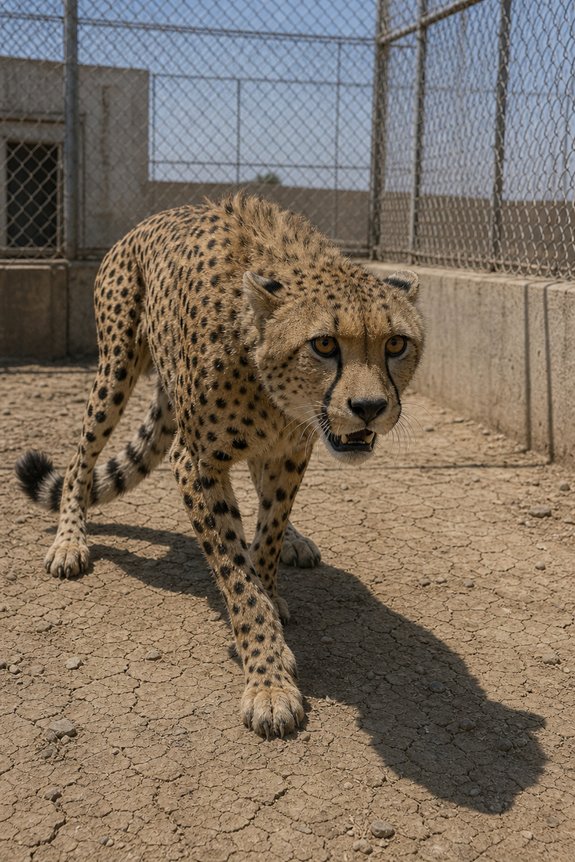
When a cheetah lives in a small enclosure, its body stays in a near constant state of alarm. This is chronic stress, meaning stress that never fully lets up. Cheetahs are built for sprinting, and cramped space blocks that natural exercise and hunting behavior. Frustration builds. A stressed cat reacts faster and harder than a calm one.
- Limited space stops high speed running, so frustration builds daily.
- People standing near the fence often look like threats.
- Defensive responses include biting and clawing, not playful contact.
- Two documented cases, Belgium in 2007 and South Africa in 2021, ended in death and injury.
Larger enclosures, enrichment, and fewer stressful human interactions lower these risks. That seems a small price for safety. Calmer animals usually mean fewer injuries overall.
Warning Signs a Cheetah Feels Cornered
Reducing stress lowers risk, but people still need to read the animal in front of them. A cheetah that paces rapidly, swishes its tail sharply, and stares hard is agitated. It likely feels cornered. Flattened ears, bared teeth, or open mouthed hissing are defensive signals, meaning the cat believes a threat is immediate.
Sudden crouching, a lowered head, or weight shifting onto the hind legs shows it’s preparing to lunge or flee. Vocalizations matter too. Loud growls, high pitched chirps, or cough like barks paired with movement toward a person suggest rising stress and a higher chance of attack.
Retreat is another clue. A cheetah backing away, seeking the smallest gap, or circling frantically against a wall feels trapped. Watching for these signs seems like basic respect.
How to Stay Safe Around Cheetah Enclosures
Because reading body language only helps from a safe distance, the first rule around captive cheetahs is simple: never enter the enclosure. Even brief, unplanned access can be fatal. In 2007, a woman who let herself into a Belgian zoo’s cheetah enclosure outside opening hours was mauled and killed.
- Stay behind public barriers and keep the posted viewing distance, so the cheetah never reads a person as a threat.
- Watch children closely and secure loose items, such as food, bags or toys.
- Never feed, touch or tease a cheetah, and don’t lean over barriers for photos.
- During an escape, follow facility emergency procedures and move calmly to designated safe areas.
Trained staff handle the animal. Visitors shouldn’t intervene. These rules can feel restrictive, but they protect people and cheetahs alike.
What to Do If a Cheetah Approaches You in the Wild
Wild cheetahs almost never approach people, and on safari the usual problem is the opposite one: a cheetah treating a vehicle as a convenient lookout and climbing onto the bonnet. That is not aggression. It is a cat using the highest flat surface available to scan for prey.
The guidance guides give is consistent:
- Stay still and stay seated. Sudden movement is what turns a curious animal into a startled one.
- Stay inside the vehicle, and keep arms and cameras inside it. A cheetah reads a moving limb the way it reads a moving animal.
- Do not run. Running triggers pursuit in a cat built entirely around pursuit, and you will not win that race.
- Stand tall and make yourself large if one does approach on foot, then back away slowly while facing it.
- If contact happens, the Kragga Kamma case suggests stillness beats struggle. A cheetah is not built to kill something your size and generally has no reason to try.
None of this is a substitute for distance. The reliable rule is that a cheetah you are not close to is a cheetah that will not hurt you.
Can You Keep a Cheetah as a Pet?
People have tried for a very long time. Cheetahs were tamed and used for coursing across Egypt, Persia and India for centuries, and Mughal emperors kept them in numbers for hunting blackbuck. They tame more readily than most big cats, which is exactly the problem.
That tractability drives a live illegal trade today. The Cheetah Conservation Fund campaigns against the pet trade specifically because cubs are taken from the wild to supply it, and most do not survive the journey.
Three things are worth being blunt about:
- Tame is not domesticated. Centuries of coursing never produced a domestic cheetah, because captive breeding almost never worked and animals were caught wild each generation.
- Every serious attack on record involved a hand reared animal in captivity, not a wild one. Tameness moves the risk closer, it does not remove it.
- The species is down to fewer than 7,000 in the wild. Demand for pets is part of why.
A cheetah that lets you touch it is not a safer cheetah. It is a cheetah with nowhere to retreat to.
Humans Kill Far More Cheetahs Than the Reverse
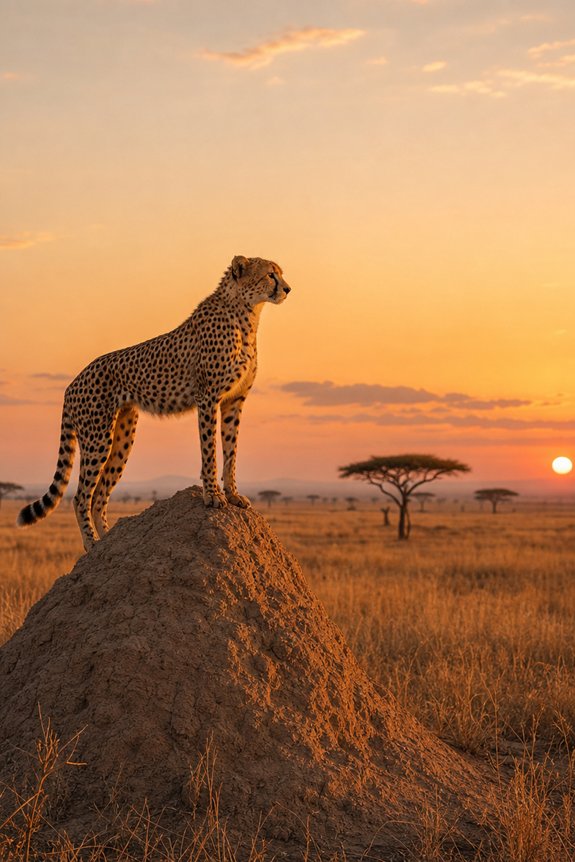
Although zoo safety rules matter, the bigger danger runs the other way. Humans kill far more cheetahs than cheetahs kill humans. Between 1980 and 1991, Namibian farmers shot or trapped roughly 8,000 cheetahs to protect their livestock. No one compiles exact global annual figures, so the true total stays unclear.
Conservation groups have worked to change that pattern. They teach farmers where cheetah hotspots sit, meaning the areas cats use most, and they advise where to keep herds. Livestock guarding dogs help too. Retaliatory killings, meaning killings done in revenge for lost animals, have dropped. Still, farmers occasionally shoot or trap cheetahs when they fear predation.
It’s worth remembering that people remain the far greater threat here. Human caused deaths still remain the species’ primary threat.
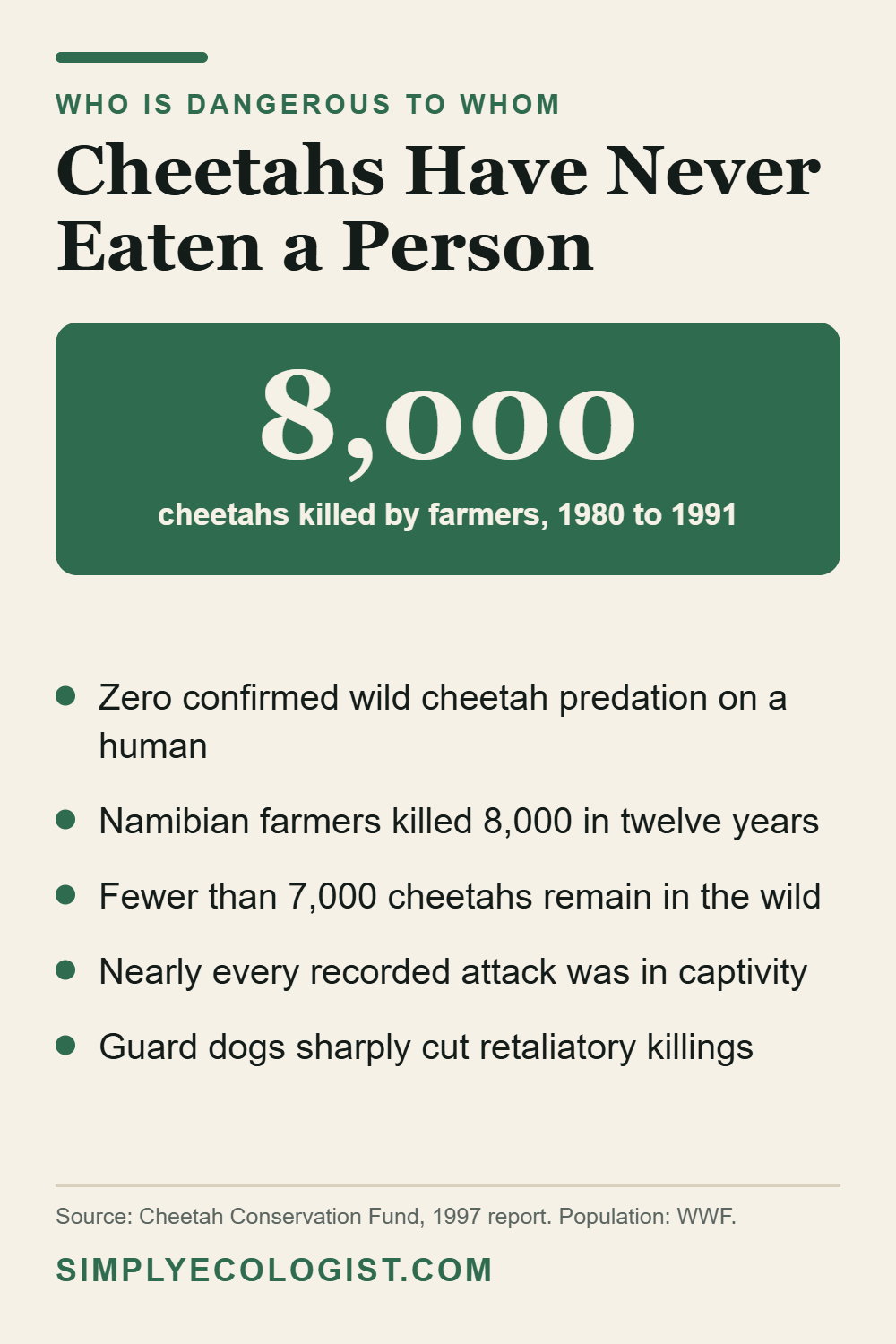
8,000 Cheetahs Killed by Namibian Farmers
That 8,000 figure deserves a closer look. A 1997 report, partly conducted by the Cheetah Conservation Fund, estimated Namibian farmers killed about 8,000 cheetahs between 1980 and 1991. Fear drove most of it. Farmers worried about livestock predation, so they shot or trapped cats they saw as threats.
- Roughly 8,000 cheetahs dead in twelve years.
- Most died from shooting or trapping.
- Local populations dropped sharply as a result.
- Many cheetahs killed had never touched livestock.
Those losses hit biodiversity, meaning the variety of living things in one area. Since then, farmer education, better livestock management, and guardian dogs have lowered conflict.
No global count of cheetah killings exists. Still, the number stays with anyone who reads it. It reflects fear more than actual danger.
Why Farmers Still Shoot and Trap Cheetahs
Fear still drives the trigger. Farmers worry about livestock predation, meaning the killing of farm animals by wild predators. Small stock is the main concern. Lambs and goats are easy targets, so a single loss can convince a farmer that cheetahs threaten his whole herd. Yet cheetahs prefer wild prey, such as gazelles and impala, and rarely rely on livestock.
Limited knowledge also plays a part. For decades farmers didn’t know where cheetahs traveled or when they hunted, so shooting and trapping seemed like the only defense. Education programs have changed that by mapping hotspots, the places cheetahs use most often.
Conflict hasn’t ended. It still happens occasionally, though far less than before. Understanding an animal’s habits, it seems, protects livestock better than a rifle does.
Guard Dogs Cutting Farmer and Cheetah Conflict
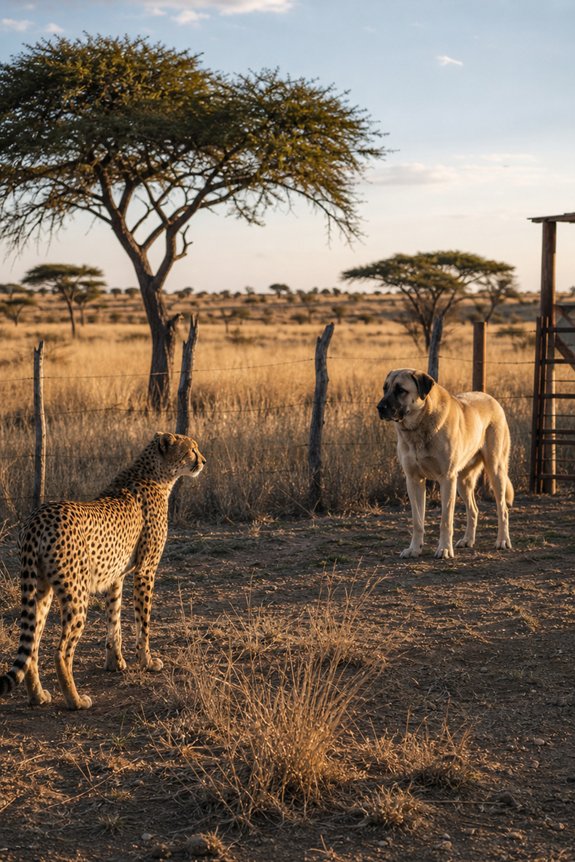
Guard dogs have become Namibia’s quietest defense against cheetah losses. Since the 1990s, farmers have raised Anatolian shepherds and Kangals alongside their herds. The dogs live with the smallstock, meaning sheep and goats, and they bark and leave scent that warns cheetahs away. No cheetah gets hurt or killed. Monitored pilot projects report losses dropping 80 to 90 percent.
- Fewer lambs lost to nighttime raids.
- Fewer cheetahs shot or caught in traps.
- Less financial strain on farming families.
- More cheetahs left to hold their place in the ecosystem.
Conservation groups also train farmers in dog care, herding, and safe night corrals. That training matters, because a poorly managed dog protects nothing. It’s a modest arrangement, and it seems to work well for both sides.
Final Thoughts
Cheetahs don’t hunt people. No verified record shows a wild cheetah killing a human. The danger runs the other way. Namibian farmers shot or trapped roughly 8,000 cheetahs between 1980 and 1991, and fewer than 7,000 remain in the wild today. Guard dogs now cut those losses. Their survival protects biodiversity, the variety of living things in an area. It’s worth remembering that a cat built for speed can’t outrun a rifle.

Erzsebet Frey (Eli Frey) is an ecologist and online entrepreneur with a Master of Science in Ecology from the University of Belgrade. Originally from Serbia, she has lived in Sri Lanka since 2017. Eli has worked internationally in countries like Oman, Brazil, Germany, and Sri Lanka. In 2018, she expanded into SEO and blogging, completing courses from UC Davis and Edinburgh. Eli has founded multiple websites focused on biology, ecology, environmental science, sustainable and simple living, and outdoor activities. She enjoys creating nature and simple living videos on YouTube and participates in speleology, diving, and hiking.
🌿 Explore the Wild Side!
Discover eBooks, guides, templates and stylish wildlife-themed T-shirts, notebooks, scrunchies, bandanas, and tote bags. Perfect for nature lovers and wildlife enthusiasts!
Visit My Shop →