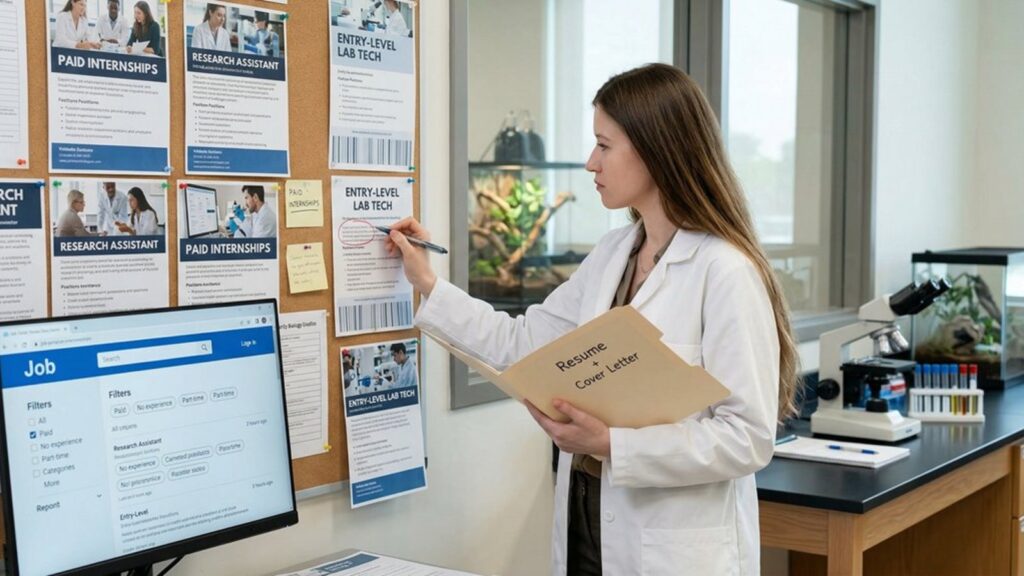
I hear so many students say, “I can’t get an internship because I have no experience, and I can’t get experience because I can’t get an internship.” WRONG, and I’ll tell you why.
You can get a paid biology internship or starter job by building proof of real work and that you can do even close to home: treat parks and wetlands like fieldwork, join volunteer surveys that record results, and keep notes, hours, GPS points, and photos, submit data to iNaturalist or citizen project databases. Run one small project, like weekly bird counts, then graph what you find. Learn job-ready basics, spreadsheets, simple stats, GIS mapping, and First Aid/CPR—and list outcomes on a ONE-PAGE resume.
Keep going, and the next steps will feel clear.
How to Get Ecology and Wildlife Biology Experience Without an Internship
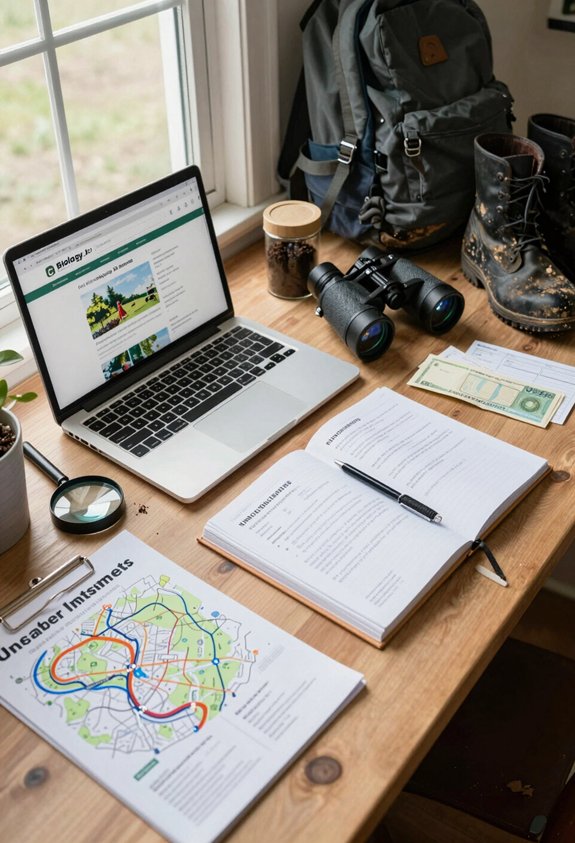
You can start building ecology and wildlife biology experience right where you live, by choosing nearby parks, wetlands, or nature centers and treating each visit as fieldwork, as real practice observing organisms in their habitat.
You can also create your own small research projects, like tracking bird visits or plant flowering times, and write up what you find in a simple report, because “data” just means the notes and numbers you collect in a consistent way.
When you volunteer, do it strategically by picking roles that teach you usable skills, and add short courses for specialized field skills, such as climbing or wilderness survival, so you’re safer, more capable, and ready for paid work.
When I applied for my first internship, I thought of myself as an average student with no experience. However, I was lucky enough to actually talk with a really nice lady from the international student organization where I was applying, and she helped me a ton. I used my university coursework, my lab projects from high school, climbing club, diving course, participation in a science fair, online courses I finished (many of them free), a small local volunteer project, and the fact that I was part of the Biology Association at my university.
As an Ecologist with 15 years of experience. wow, the years are going fast, I really want to give you some genuine advice: take on as many extracurricular activities during your studies as you can, join every group and club available, and if opportunities don’t come to you, create them. Go out and explore. And if you don’t know where to start, I’m here to help you.
I’m sure you already know a lot (check here what counts as experience in ecology and wildlife biology), you probably just need to express it in the right way on your CV. You can use the free tool I created to make your life easier.
Build Field Experience Without Relocating
Staying close to home can still open doors, because field experience, a time spent observing, recording, and solving real outdoor problems, doesn’t always require a formal internship or a move across the country.
Start by scanning your area for places where wildlife work already happens: city parks, nature centers, nearby forest patch, watershed groups, and land trusts that protect habitats. Even cities, you can use certain plants as bioindicators of air quality and many other projects. You can join weekend surveys, trail checks, or habitat cleanups, and you’ll learn field basics like GPS use, finding your location with satellites, and transects, which are straight survey lines you walk to count plants or animals.
Ask leaders for repeat tasks, because consistency builds trust and better skills. Keep brief notes after each outing, then add hours, methods, and outcomes to your resume with calm confidence.
Create Your Own Research Projects
Although formal internships can speed things up, a small, well-planned research project you design yourself can still show real ecology and wildlife biology experience, because it proves you can notice patterns, ask a clear question, and follow through.
Start with what’s around you, like a park pond or street trees, then choose one focused question: “Do bird species counts change after rainfall?” You get a point. If you have no idea, at least today AI is good to help you with that
Keep your method consistent, meaning you collect data the same way each time, and write it down in a simple table.
Add basic controls, small steps that reduce bias—such as counting at the same hour and using the same route.
Take photos, save GPS locations, and summarize results in a one-page report with a graph, noting limits and next steps.
Volunteer Strategically (Not Randomly)
A small self-made research project can prove you can plan and follow through, but strategic volunteering adds something different: it shows you are a team player and you can work inside real conservation or research systems, with shared goals, safety rules, and data standards.
Choose one cause and one place, then stay long enough to become useful, because consistency builds trust and better references. Look for roles tied to measurable work like monitoring (repeated checking of a site), data entry (careful typing of records), or habitat restoration (repairing damaged land)—so you can describe clear outcomes later.
Before you start, ask what problem they’re solving, what success looks like, and how your work gets recorded, since documented effort matters. And that is another major thing I wanted to mention, do not be shy to ask. You will be suprised how many people will gladly help you and teach you.
Keep notes on tasks, hours, and results, and request feedback early so you can improve quickly.
Gain Specialized Field Skills Through Courses
Learning a few specialized field skills, through courses in diving, climbing, or wilderness survival, can quietly change how hireable you look, because it signals you can work safely in the same rough conditions where ecology and wildlife biology actually happen. That you won’t start creating problems as soon as a mosquito bites you.
If you can dive, you’re ready for underwater surveys, meaning careful counts of plants or animals along a set path. If you can climb, you can reach nests or canopy plots, asmall study areas in treetops, without risking yourself or the team.
Wilderness survival training teaches navigation, first aid, and risk planning, which matters when you’re hours from cell service. Choose one skill that fits the habitats you want, get certified when possible, and note it on your resume with dates, hours, and the tasks you practiced.
Paid Biology Internships That Don’t Require Prior Experience
Often, the hardest part of finding a paid biology internship with no experience isn’t your ability, it’s knowing where to look, and recognizing that many programs are built for beginners who are ready to show up consistently and learn.
Start with structured listings from universities, museums, hospitals, and public health labs, where “intern” often means you’ll receive training while doing real, supervised tasks.
Check government and park agencies, too, because seasonal assistant roles can include pay and housing, even if you’ve never worked in the field.
For international options, look at AIESEC and IAESTE, which place students in paid projects abroad and guide you through visas and the basics. I went with IAESTE to Germany and Brazil and with AIESEC to Sri Lanka. My experience with both of these organizations was exceptional, and I can’t recommend them enough.
As you apply, keep your message simple: explain your curiosity, your reliability, and your willingness to learn.
Most In-Demand Skills in the Ecology and Wildlife Biology Job Market

Finding beginner-friendly paid internships is a strong start, but the next step is noticing what employers keep asking for, even in entry-level ecology and wildlife biology roles, so you can shape your time in the field with purpose.
You’ll see demand for solid field methods, like transects, which are straight survey lines you follow to count plants or animals, and safe animal handling, meaning you reduce stress and prevent injury.
Data skills matter too: you’ll log observations cleanly, use spreadsheets, and practice basic statistics, which is just finding patterns in numbers.
Many jobs want GPS use and GIS, or mapping software that links places to data.
Communication stays central, since you’ll write clear notes, brief the team, and talk with landowners.
Show reliability, patience, and strong ethics. You can read more in my blog post MOST IN DEMAND SKILLS IN ECOLOGY AND WILDLIFE BIOLOGY.
Free Online Courses That Build Real-World Biology Skills
You can build real-world ecology skills online, even before you’ve logged field hours, by choosing free or low-cost classes on edX, FutureLearn, Coursera, and Alison, Udemy can also fit when sales make tool-based lessons affordable.
In the sections ahead, you’ll focus on four practical tracks: ecology courses with expert instructors, R programming (a coding language you use to analyze data), GIS (digital mapping that links places to environmental patterns), and wildlife biology courses that end with a certificate you can list.
As you work through them, take notes on projects and assignments, because those concrete outputs, maps, datasets, short reports, all turn “no experience” into evidence you can show.
Free Online Ecology Classes With Expert Instructors
Building a strong ecology foundation doesn’t require a lab coat or a packed schedule, because free online ecology classes can guide you, step by step, through how ecosystems work, an ecosystem is simply a community of living things and their environment, and how conservation science turns those ideas into action when biodiversity (the variety of life) is at risk.
On FutureLearn, you can audit university-taught courses like Ecology and Wildlife Conservation, where you track species interactions, energy flow, and human pressures, then connect those patterns to practical protection choices.
On edX, you’ll find ecosystem and nature collections that widen your view, covering ecosystem-based adaptation (planning with nature to handle change), sustainability, and natural resources. There are plenty of Biology and Biotechnology courses, I am sure that no matter of your interests you will find what you are looking for. I am going to write about many courses in future posts, so make sure you join my newsletter. If you want a credential, apply for edX financial aid: you may earn a verified certificate for low cost.
Free R Programming Courses for Ecologists With Certificates
Often, the fastest way to move from “interested in biology” to “ready for real work” is to learn R, the programming language many labs and wildlife agencies rely on for statistics (math used to test patterns) and ecological modeling (computer-based predictions about nature).
Many entry-level roles now expect you to handle data, so a free, beginner-friendly R course on Alison can be a steady starting point, all courses come with certificates.
Look for courses that practice data manipulation (cleaning and reshaping tables), visualization (clear graphs), and statistical analysis with real datasets.
Then save your best work, species distribution models or camera-trap scripts on GitHub or appropriate databases, so employers can see growth, not just grades. Here is a list of the best R programming books if you are really serious in developing this skill.
Free GIS Courses for Ecologists With Certificates
A good GIS course can change how you see an ecosystem, because GIS—Geographic Information Systems, a set of tools for mapping and analyzing “where” data happens, turns scattered field notes and spreadsheets into habitat maps, movement corridors, and clear spatial patterns you can explain to a lab or agency.
Start with edX, where you can audit many GIS classes for free, learn core mapping ideas, and practice spatial analysis, meaning you compare locations, distances, and layers to find patterns in nature. You will get to work on real projects that are checked by Univerity professors. If you want a credential later, you can switch to a verified certificate track, and financial aid often makes it realistic.
Build confidence with hands-on practice: follow QGIS tutorials on YouTube, and use ArcGIS training modules to repeat skills until they feel automatic. If you want to learn, there is always a way. These are the GIS books you can purchase and start learning.
Free Online Biology Courses With Certificates
You’ll sometimes learn biology faster online than you expect, because a well-chosen course gives you a clear path through animal behavior, species interactions, and conservation strategy, quantitative bio statistics, terms that simply mean how animals act, how living things affect one another, and how we measure and protect populations and habitats over time.
Best Certifications for Wildlife Biology Students
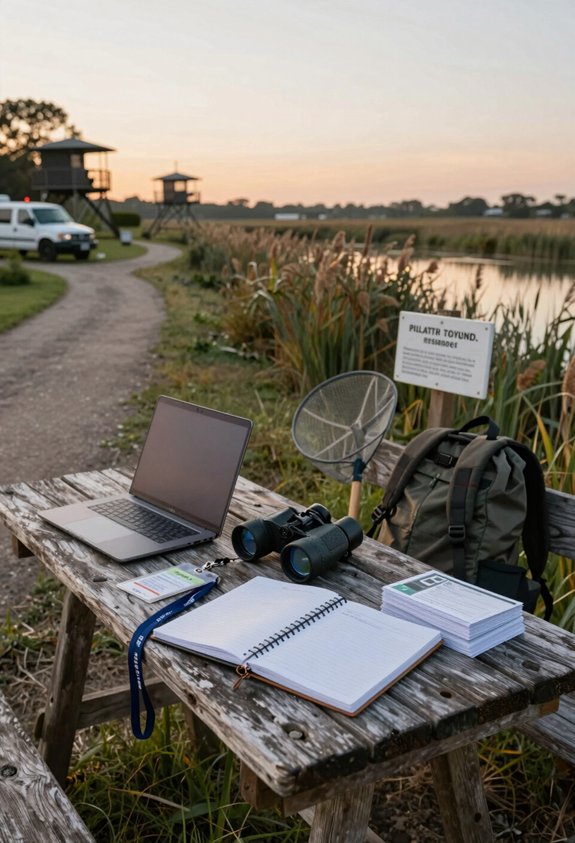
Choosing certifications with care can feel like laying down steady stones on a trail, each one signals real skills to an employer, even when your resume still looks “new.” For wildlife biology students, the best certifications usually do two things at once: they prove you can work safely and responsibly in the field, and they show you understand practical methods like data collection (recording observations in a consistent way so they can be trusted).
Start with First Aid/CPR, because emergencies don’t wait, then add basic wilderness safety if you’ll work far from roads. Consider HAZWOPER (hazardous waste operations training), which teaches you to handle contaminated sites safely, and FEMA ICS-100/200, which explains how incident command works during fires or disasters. If you handle wildlife, look for animal handling and telemetry basics—tracking animals using radio signals—so your field days run smooth.
How to Write a Biology Resume With No Experience
Certifications can back up your readiness in the field, but a resume is where you help an employer see how you’ll actually work day to day, even if you haven’t held a wildlife job yet.
Start with a clear header and a one-sentence summary that names your focus, like habitat surveys or animal behavior, then show evidence.
Put education near the top, and list relevant courses, labs, and projects, describing methods in plain words like “transect sampling,” meaning counting along a set line, or “GIS,” meaning mapping data on a computer.
Use a skills section that stays practical: data entry, note-taking, species ID, basic stats.
Add volunteering, club roles, and field trips, and write bullets with action verbs, outcomes, and tools.
This tool can help you put your words together in a way employers value.
Keep it clean, one page, tailored.
Step-by-Step Action Plan to Get Your First Paid Biology Internship or Job

Start by treating this search like a field project: take stock, make a plan, and move step by step, even if your resume doesn’t yet show a paid biology title.
First, name what already counts as experience—lab courses, field labs, volunteering, and self-led studies—then translate each into skills like sampling, note-taking, or data entry.
Next, build local ecology hours without an internship: run a backyard biodiversity survey, set a simple camera-trap study, and upload observations to eBird or iNaturalist, which are citizen-science databases.
Then apply to paid roles that welcome beginners, such as seasonal technician jobs, and spotlight your projects.
Keep adding in-demand tools, GIS, mapping software, and R, a statistics coding language—through free courses and certifications.
Finally, tailor a skills first resume, network steadily, and keep learning.
The Bottom Line
You don’t need a perfect resume to begin, you need steady practice and proof, small projects, short courses, and simple certifications that show you can collect data, meaning careful measurements you record and check.
Remember this: the National Association of Colleges and Employers reports over 60% of paid interns get at least one job offer, so aiming for paid roles isn’t naïve, it’s practical. Keep applying, revise your materials, and treat each attempt as fieldwork: patient, curious, and real.
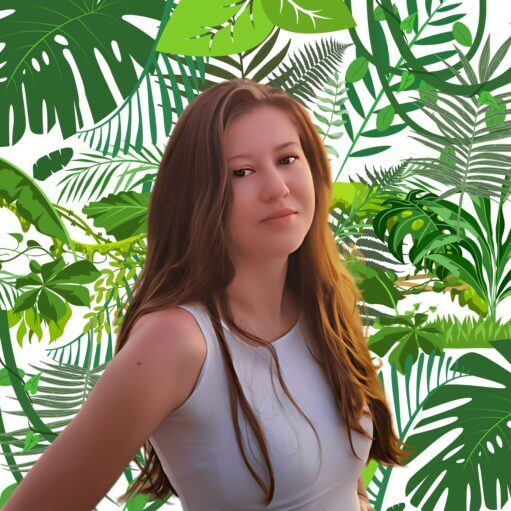
Erzsebet Frey (Eli Frey) is an ecologist and online entrepreneur with a Master of Science in Ecology from the University of Belgrade. Originally from Serbia, she has lived in Sri Lanka since 2017. Eli has worked internationally in countries like Oman, Brazil, Germany, and Sri Lanka. In 2018, she expanded into SEO and blogging, completing courses from UC Davis and Edinburgh. Eli has founded multiple websites focused on biology, ecology, environmental science, sustainable and simple living, and outdoor activities. She enjoys creating nature and simple living videos on YouTube and participates in speleology, diving, and hiking.