
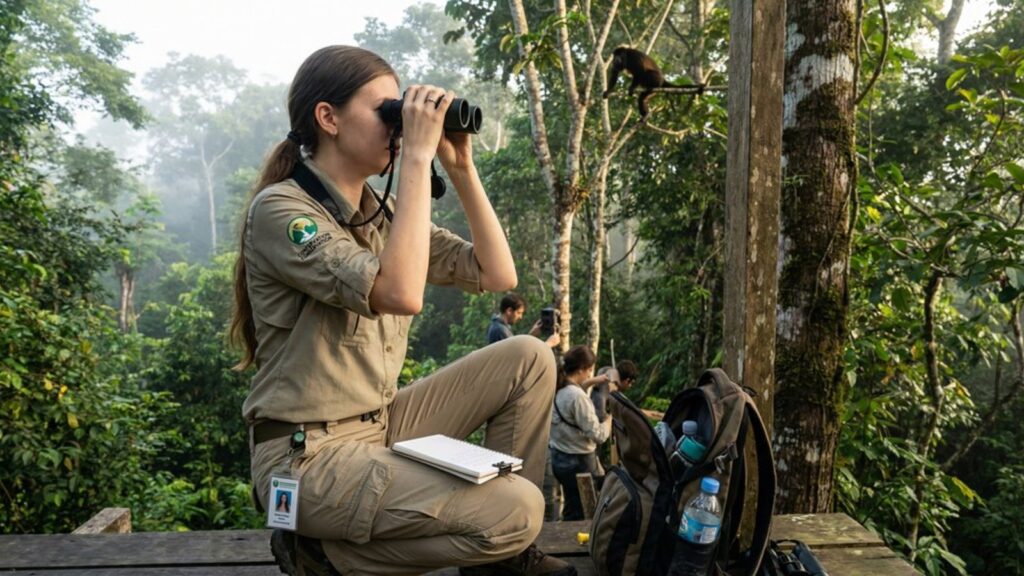
Wildlife conservation internships in South America invite undergraduate students, recent graduates, and career changers—typically eighteen or older—to contribute directly to protecting endangered species and restoring critical habitats across the Amazon rainforest and Galápagos Islands. Programs typically last two to twelve weeks and include hands-on tasks like rehabilitating rescued animals, planting native trees, monitoring wildlife populations, and supporting scientific research, with accommodations, meals, orientation, and local mentorship provided. The sections below outline eligibility requirements, program inclusions, project types, and ideal seasonal timing for those considering this pathway.
Why South America Is a Top Destination for Wildlife Conservation Internships
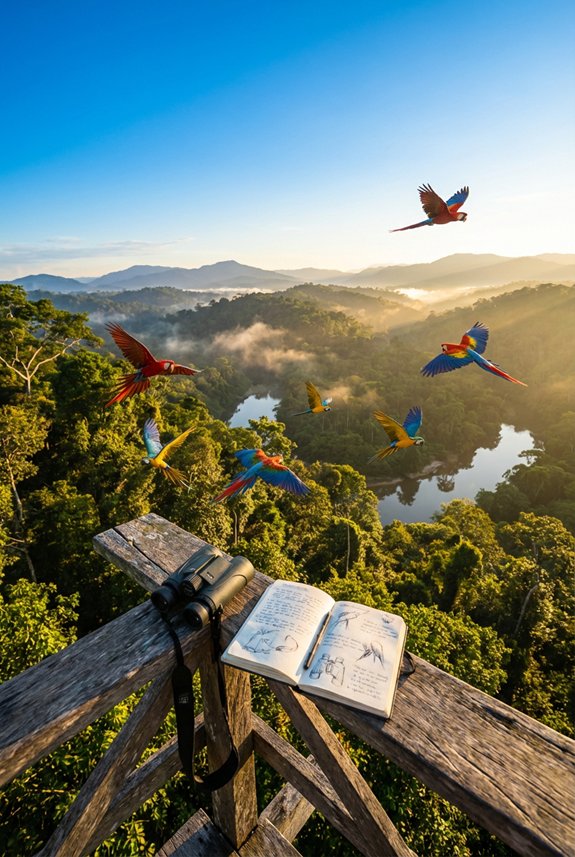
Because South America contains some of the planet’s most biologically diverse ecosystems—from the Amazon rainforest to the Galápagos Islands—it’s become a premier destination for aspiring conservationists seeking hands-on experience with endangered species and habitat protection. The continent functions as a biodiversity hotspot, meaning it supports an exceptionally high number of plant and animal species found nowhere else on Earth.
Interns working in these regions encounter jaguars, macaws, sea turtles, and countless other creatures requiring dedicated conservation efforts. What makes South America particularly valuable for learning is its growing emphasis on ecotourism integration—the practice of combining wildlife protection with sustainable tourism that funds conservation projects while educating visitors.
This model allows interns to understand how economic incentives and environmental stewardship can work together, preparing them for real-world conservation challenges.
Who Can Apply for Wildlife Conservation Internships in South America
Who exactly qualifies for wildlife conservation internships in South America—and what background do programs actually expect?
Most placements welcome a broad range of applicants: undergraduate and graduate students seeking hands-on research experience, recent graduates exploring career pathways, and even career switchers drawn to purpose-driven work in the field.
Age requirements typically start at eighteen, though some programs accept younger participants with parental consent, while upper age limits are generally flexible or nonexistent.
Language proficiency varies by location—basic Spanish or Portuguese helps with daily interactions and cultural immersion, but many reputable organizations, including Global Work & Travel, offer English-speaking coordination and don’t require fluency.
What matters most isn’t prior credentials but genuine enthusiasm, adaptability, and a willingness to learn responsibly under mentorship.
What’s Included in a Wildlife Conservation Internship Programs in South America
Once you’ve confirmed your eligibility and decided to commit, it’s natural to wonder what the program actually provides—and reputable wildlife conservation internships in South America typically bundle far more than just a placement at a project site.
Most programs include airport transfers, meals, accommodation, and a cultural orientation that introduces participants to both their host country and specific conservation work.
Participants receive visa guidance to navigate application requirements smoothly, plus access to a personal trip coordinator who answers questions throughout the journey.
Daily support comes from local teams who serve as mentors and advocates, while a completion certificate recognizes participants’ contributions at program’s end.
Additional resources often include pre-departure materials, language training through online academies, emergency support lines, and exclusive marketplace discounts—creating a robust support structure.
Plus you’ll get $100 off automatically, and by adding the additional code ELI100 at checkout, you can save an extra $100, for a total of $200 off your Global Work & Travel wildlife internship adventure.
Ready to volunteer or intern abroad? Enter code ELI100 at checkout and get $100 OFF any internship or volunteer project worldwide.
Explore ProjectsWildlife Conservation Projects in South America
South America offers several meaningful wildlife conservation projects that allow interns to contribute directly to environmental protection while gaining hands-on experience in some of the world’s most biodiverse regions. Those interested in marine ecosystems might join the Galapagos Conservation Program, where they’ll work alongside researchers to protect the islands’ unique species, while others who prefer rainforest environments can choose between internships at animal shelters in Peru’s Amazon or broader conservation efforts focused on preserving the Amazon’s delicate ecological balance.
Each project provides a distinct focus—whether caring for rescued wildlife, conducting field research, or supporting habitat restoration—so interns can select opportunities that align with their specific interests and career goals.
Join Galapagos Conservation Program
This conservation program offers an exceptional match for volunteers who seek meaningful environmental work in one of Earth’s most scientifically significant ecosystems, the Galapagos Islands, where species like giant tortoises, Galapagos penguins, and marine iguanas exist nowhere else on the planet.
Participants choose from three activity types—Community & Conservation work such as planting trees and supporting local farmers, Teaching assistance in classrooms, or Coaching sports for young people—with teaching and coaching placements requiring basic Spanish knowledge.
The all-inclusive experience handles every logistical detail: volunteers arrive at Quito International Airport for homestay orientation, then fly to the islands for structured weekday duties and free weekends exploring Darwin’s living laboratory through snorkeling and wildlife encounters.
Best For: Gap year students, career breakers, and adventure travelers ages 18–85 who want hands-on conservation work in a unique UNESCO ecosystem with full logistical support and no prior experience required.
Pros:
- All-inclusive program covers accommodation, meals, airport transfers, placement with vetted local partners, and 24/5 emergency support through a provider with four international offices and ~100 staff
- Unique opportunity to volunteer in the Galapagos Islands protecting species found nowhere else on Earth while enjoying free weekends for snorkeling, wildlife encounters, and exploring Darwin’s historic research sites
- Flexible 2–12 week durations with three volunteer activity types (conservation, teaching, coaching) allowing participants to match their interests and skills to meaningful local impact
Cons:
- Teaching and coaching placements require basic Spanish knowledge, limiting accessibility for volunteers without language skills to only community and conservation activities
- Remote island location means higher travel costs and longer journey times compared to mainland volunteer programs (requires international flight to Quito plus domestic flight to Galapagos)
- Limited meal flexibility with set Ecuadorian cuisine menu provided 6 days per week, which may not accommodate all dietary preferences or restrictions
Internship in Animal Shelter in Amazon Rainforest in Peru
For volunteers seeking hands-on experience with wildlife rehabilitation in one of Earth’s most biodiverse ecosystems, the Amazon Rainforest animal shelter internship in Peru offers an immersive opportunity to support injured Amazonian species while living directly on-site at a conservation center. Participants aged eighteen and older contribute to daily operations—feeding animals, maintaining enclosures, creating enrichment activities, repairing facilities, and educating visitors—while the habitat faces ongoing threats from mining and logging.
The program provides twin-share bungalow accommodation, three Peruvian meals daily, airport transfers from Padre Aldamiz International Airport, orientation sessions, and weekday volunteer shifts with evenings and one day off per week reserved for personal exploration, making it suitable for gap-year travelers or professionals on leave.
Best For: Gap-year students and professionals aged 18+ seeking immersive wildlife rehabilitation experience in a biodiverse rainforest setting who can perform physically demanding tasks and want all-inclusive accommodation with flexible placement durations.
Pros:
- All-inclusive package covers volunteer placement, twin-share bungalow accommodation, three daily Peruvian meals, airport transfers, orientation, and ongoing support from expert teams
- Hands-on conservation work directly supporting injured Amazonian wildlife rehabilitation with meaningful daily duties including animal care, habitat maintenance, and visitor education
- Flexible scheduling with evenings and one weekday off for personal exploration, plus options for trip durations ranging from 2 to 12+ weeks
Cons:
- Significant additional costs required beyond trip fee including international flights, travel insurance, visa, vaccinations, criminal background check, and personal spending money
- Physically demanding laborious tasks required daily in challenging rainforest conditions with no air conditioning in basic bungalow accommodation
- Habitat faces active threats from mining and logging activities, which may limit long-term conservation impact despite volunteer contributions
Amazon Rainforest Comservation in Peru
Wildlife conservation internships in Peru’s Amazon Rainforest offer an ideal opportunity for travelers who want hands-on experience protecting one of Earth’s most biodiverse ecosystems while living off the grid in a truly remote setting.
Participants spend their days planting native trees and orchids, removing invasive bamboo, monitoring wildlife populations, and assisting with scientific research—all essential tasks that contribute directly to reforestation efforts in the Madre de Dios region.
The program includes dormitory-style accommodation with mosquito nets, three vegetarian meals daily, and a thorough orientation in Cusco before the overnight bus and boat journey to the conservation site, where volunteers typically work four to eight hours daily, Monday through Saturday.
Best For: Travelers seeking immersive, hands-on conservation work in a remote Amazon Rainforest setting who are comfortable with basic dormitory accommodation and vegetarian meals while contributing to scientifically-backed reforestation and wildlife monitoring efforts.
Pros:
- Direct conservation impact through essential reforestation tasks like planting native species, removing invasive bamboo, and assisting scientific research in a globally significant rainforest ecosystem
- Comprehensive support including screened partner organization, project placement guarantee, airport pickup, homestay orientation in Cusco, and all meals and accommodation at the remote conservation site
- Flexible booking with low deposit, Lifetime Deposit Guarantee, Book Now Decide Later option with up to one year to choose dates, and trip swap or transfer options
Cons:
- Remote location requires 8–10 hours travel from Cusco via overnight bus and boat, making the site genuinely off-the-grid and difficult to access
- Basic dormitory-style accommodation with limited amenities and strictly vegetarian meals may not suit travelers preferring more comfort or dietary variety
- Limited availability operates on first-in-best-dressed model with booking recommended 6–12 months in advance, reducing spontaneity and last-minute options
Best Time of Year to Do a Wildlife Conservation Internship in South America
When considering the timing of a wildlife conservation internship in South America, aspiring participants should recognize that the continent’s vast geographic diversity—stretching from tropical rainforests near the equator to temperate zones in the south—means there isn’t a single ideal season that applies everywhere.
Instead, interns should align their schedules with specific weather patterns and breeding seasons relevant to their chosen project location.
For instance, dry seasons often facilitate easier access to remote field sites and increase wildlife visibility, while wet seasons may coincide with critical breeding seasons when conservation efforts prove most impactful.
Coastal marine programs typically peak during turtle nesting periods, whereas Andean projects might focus on migratory bird seasons—each requiring careful coordination with natural cycles that govern the ecosystems interns will support.
If you’re exploring hands-on experience in ecology or wildlife biology, don’t miss my complete guide to wildlife conservation internships with global work and travel, where I break down what’s worth your time, money, and long-term career goals.
Conclusion
South America’s wildlife conservation internships offer more than skill-building—they’re windows into understanding humanity’s relationship with the natural world. Participants who choose these programs, whether seasoned students or career-changers, will find themselves woven into meaningful work that bridges cultures, ecosystems, and conservation science. The continent’s biodiversity, combined with welcoming communities and flexible program structures, creates transformative experiences that shape both professional paths and personal perspectives on environmental stewardship.

Erzsebet Frey (Eli Frey) is an ecologist and online entrepreneur with a Master of Science in Ecology from the University of Belgrade. Originally from Serbia, she has lived in Sri Lanka since 2017. Eli has worked internationally in countries like Oman, Brazil, Germany, and Sri Lanka. In 2018, she expanded into SEO and blogging, completing courses from UC Davis and Edinburgh. Eli has founded multiple websites focused on biology, ecology, environmental science, sustainable and simple living, and outdoor activities. She enjoys creating nature and simple living videos on YouTube and participates in speleology, diving, and hiking.
🌿 Explore the Wild Side!
Discover eBooks, guides, templates and stylish wildlife-themed T-shirts, notebooks, scrunchies, bandanas, and tote bags. Perfect for nature lovers and wildlife enthusiasts!
Visit My Shop →